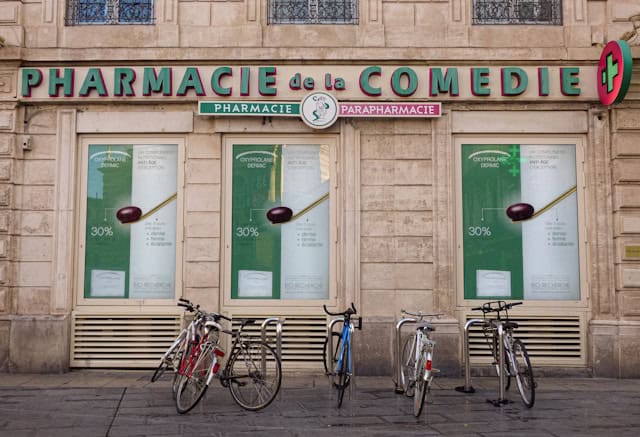
French pharmacy with bikes in front of it

How Does CPAM Work?

Note from the editor: Navigating the French healthcare system as an expat is no easy feat, so we’ve partnered with Fab French Insurance to hopefully make things feel a little more straightforward for our TAIP readers. Below, they’ve done a wonderful job of explaining what CPAM is and how you can benefit from it when you’re a full-time resident in France. Enjoy! — MS

Joining the French healthcare system is one of the biggest milestones after moving to France, but it is also one of the most confusing. Between CPAM, Assurance Maladie, the carte Vitale, mutuelles, and reimbursement rules, many newcomers struggle to understand where to begin and what happens after they arrive.

The good news is that while the administration can take time, the system itself is logical once you understand how the different pieces fit together. If you’re planning a move to France or have recently arrived, here’s what you need to know about how CPAM works and what to expect during your first months.

What Is CPAM?

CPAM (Caisse Primaire d’Assurance Maladie) is your local health insurance fund, responsible for managing public health insurance in your area. It forms part of Assurance Maladie, which is the French public health insurance branch of the social security system.

Once you are registered, CPAM manages your healthcare rights, processes reimbursements, and eventually issues your Carte Vitale, the green health insurance card used throughout France. Each département has its own CPAM office, although most day-to-day administration can later be managed online through your Assurance Maladie account.

Who Can Register with CPAM?

The way you access French healthcare depends on your personal situation. If you begin working in France, your healthcare rights can generally begin from your very first hour of employment through the French social security system.

If you are not working, including many retirees and visitor visa holders, you may still qualify under Protection Universelle Maladie (PUMa). Non-working residents may apply under PUMa once they meet the conditions of stable and regular residence, which generally means living legally in France for more than three months.

Because every situation is different, the documents required and the registration process will vary depending on whether you are employed, self-employed, retired, joining family members, or applying through another residence status.

How Do You Apply?

Most first-time applications are made using Cerfa n° 15763*02 – Demande d’ouverture des droits à l’assurance maladie, which is submitted to the CPAM covering your place of residence together with your supporting documents.

According to Assurance Maladie, applicants will generally need:

  • Cerfa n° 15763*02 application form
  • Passport or national identity document
  • Original birth certificate (or an officially certified copy), issued within the last six months, together with a certified French translation (traduction assermentée) dated within the last three months if the document is not already in French.
  • Proof of legal residence in France
  • Proof of address
  • French bank account details (RIB)
Depending on your circumstances, CPAM may also request additional documents, such as an employment contract, recent payslips, family documents, or evidence supporting your residence status. Providing a complete application from the outset is one of the best ways to avoid unnecessary delays.

How Long Does Registration Take?

Processing can take weeks or months, depending on the workload of your local CPAM office and whether your application contains all the required documentation. If further documents are requested during the process, this can extend the timeline.

During this period, many newcomers experience what is often referred to as the “healthcare gap,” the time between arriving in France and officially obtaining healthcare rights.

For this reason, private health insurance is often essential during your first months in France. In fact, many long-stay visas require applicants to hold health insurance covering medical expenses, hospitalization, death, and repatriation costs for the duration of their stay until they become eligible for the French healthcare system.

What Is the Carte Vitale?

Many people think receiving the carte Vitale is the moment they join the French healthcare system, but legally, the important milestone is the beginning of their healthcare rights.

The carte Vitale is simply the card that allows healthcare providers to transmit your reimbursement claims electronically, making the system much easier to use. Once you receive it, you simply present the card during medical appointments or at the pharmacy, and reimbursements are processed automatically in most cases.

How Do Reimbursements Work?

The French healthcare system does not usually reimburse 100% of your medical expenses.

Instead, Assurance Maladie reimburses a percentage of an official tariff established for many healthcare services. If your doctor charges more than this official amount, known as dépassements d’honoraires, the additional cost may remain partly or entirely at your expense.

This is why many residents choose to take out a mutuelle, or complementary health insurance.

A mutuelle helps cover some or all of the costs that remain after Assurance Maladie has reimbursed its share, particularly for hospital treatment, specialist consultations, dental care, optical expenses, and hearing aids.

Once linked to your CPAM account, reimbursements between Assurance Maladie and your mutuelle are usually handled automatically.

Do You Need a Médecin Traitant?

As soon as you are settled in France, it is advisable to choose and declare a médecin traitant, your regular doctor.

Although most people choose a GP, French rules also allow certain specialists to act as your médecin traitant. The declaration can be completed electronically by your doctor or by using the official Cerfa S3704 paper form, meaning you do not necessarily have to wait until you receive your Carte Vitale.

Declaring a médecin traitant is not compulsory. However, if you choose not to declare one or regularly consult specialists outside the parcours de soins coordonnés (coordinated care pathway), Assurance Maladie will generally reimburse a smaller percentage of your consultation costs.

Can You See a Doctor Before Your Registration Is Complete?

Yes. You do not need to wait for your carte Vitale before receiving medical treatment. You can still consult doctors, specialists, hospitals, and pharmacies if necessary.

Whether you can later obtain reimbursement depends on when your healthcare rights are officially opened and whether you have the appropriate supporting documentation relating to the treatment period. This is another reason why maintaining appropriate private health insurance during your first months in France is strongly recommended.

CPAM Is Worth the Wait

The administrative process of joining the French healthcare system can feel slow, especially when you are simultaneously dealing with visas, banking, housing, and countless other aspects of relocating to France. However, once your healthcare rights are established and your carte Vitale arrives, the system becomes remarkably straightforward to use.

Combined with a suitable mutuelle, CPAM provides access to a healthcare system that offers predictable costs, excellent continuity of care, and largely automated reimbursements. Like many aspects of French administration, it requires patience at the beginning, but once everything is in place, it becomes one of the foundations that make everyday life in France considerably easier.

Fab French Insurance helps expats navigate this transition, from medical insurance cover to full public healthcare with the right mutuelle, so you are protected from day one.

Photo by Jossuha Théophile on Unsplash

Did you enjoy this article? TAIP is 100% reader-supported through tipping. If you want to leave us a tip of any amount it would be highly appreciated.  These tips help support our efforts to keep TAIP an ad-free environment. Just like at a cafe, the tips are split evenly among the team.

french house

How to Find an Apartment in France as an American

Note from the editor: We are constantly asked by our readers: how to find an apartment in France as an American? In this guest post, TAIP has partnered with EasyFranceNow, a platform for Americans looking to relocate and build their life in France. Enjoy their very detailed breakdown below, and be sure to tell them TAIP sent you when you contact them for assistance! — MS

Key Takeaways

  • The file decides it, not the budget. French landlords select on the completeness of your rental dossier, not a US credit score or bank balance that they cannot verify.
  • Income must be shown in euros, monthly, and regular. Agencies want a stable monthly income of about three times the rent, in euros rather than dollar figures or assets.
  • The free state guarantor rarely fits Americans. Visale is built around French employment, so most Americans on a visitor or long-stay visa use a paid guarantor service or pay rent in advance.
  • Deposits are capped by law. The security deposit is one month of rent (excluding charges) for an unfurnished lease and two months for a furnished lease, per service-public.fr.
  • A state-labeled dossier helps. The free government tool DossierFacile builds a verified, watermarked rental file that French agencies recognize and trust.
  • Speed and silence are normal. Well-priced apartments in Paris, Lyon, and Bordeaux receive many complete files within hours, and agencies often go silent instead of sending a rejection.
  • Help is operational. A relocation team runs the French outreach, packages your dossier, and coordinates viewings, while final decisions rest with landlords and agencies.

What Finding an Apartment in France Actually Involves for an American

Finding an apartment in France as an American means assembling a French-readable rental file, proving regular income in euros, solving the guarantor question, and moving fast enough to win a place before a dozen other complete files do. Americans usually discover them one at a time, after the search has stalled.

In the United States, renting runs on a credit check and proof of employment. France works differently. There is no national tenant credit score to pull, so the agency reads a paper file, the dossier de location, and checks whether your income is regular and large enough relative to the rent. A one-time balance counts far less than a verifiable monthly income.

If you would rather handle everything yourself, our step-by-step playbook for renting in France as an American covers the do-it-yourself path in full. This article is about what changes when you bring in help.

Why the French Rental Market Treats American Applicants Differently

French agencies are cautious with American applicants because the usual reference points, a French employment contract, a French-paid salary, and a French guarantor, are often missing, and they must assess an unfamiliar income source quickly in a market where demand outstrips supply.

Most agencies stop reading an application the moment they cannot see a stable, euro-denominated income up front. A remote worker, a retiree on a US pension, or a freelancer invoicing American clients all have a good income. Still, the proof arrives in dollars on US statements that the agent cannot scan in ten seconds, and a file that takes effort to read loses to one that is instantly legible. Most agencies expect net monthly income of around three times the rent, including charges, though it varies by city and landlord.

The Dossier is the Product: What a France-Ready Application Looks Like

A France-ready rental dossier is one clearly ordered file proving your identity, your right to live in France, and your ability to pay the rent each month in euros. Submitting it as a single labeled PDF in the order the agency expects changes whether it gets read. The free government tool DossierFacile is built for exactly this: it assembles your documents into a verified, watermarked file that French landlords and agencies recognize, which removes the agent’s fear that the paperwork is incomplete. The core set most agencies ask for:

  • Identity: a valid passport, plus your long-stay visa or residence permit (the VLS-TS or carte de sejour).
  • Proof of income: recent pay slips, pension statements, or freelance invoices and bank statements, ideally with euro equivalents noted. A US employment letter stating monthly gross pay helps a remote worker.
  • Tax document: a recent US tax return, or a French avis d’imposition, once you have one.
  • Proof of current address: see our guide to what counts as proof of address in France when you are still in an Airbnb, because this trips up almost every new arrival.
  • Guarantee: evidence of your guarantor solution, whether a paid guarantor service certificate, proof of rent paid in advance, or a Visale visa if you qualify.

Convert your key income figures to euros on a cover sheet and state the exchange rate and date you used. You are doing the agent’s mental math for them, removing the friction that gets American files set aside.

Guarantor, Deposit, and Money Questions Americans Ask First

A guarantor (a garant) is a person or service that pays your rent if you cannot, and in a tight market, most agencies expect one even when the law does not. Visale is a free state guarantor from Action Logement, but most Americans on a visitor or long-stay visa do not qualify, because the scheme is built around French employment. A reform effective January 6, 2026 kept Visale free and broadened access for some older salaried workers, but it still centers on people with French job contracts. That leaves a few realistic paths, which we cover in our guide to renting in France with no French guarantor:

  • A paid guarantor service. Private companies act as your guarantor for a fee, typically 3.5 to 5 percent of the annual rent, so an apartment at 1,200 euros per month usually costs around 500 to 650 euros a year.
  • Paying several months of rent in advance. Some landlords accept this in place of a guarantor. It is negotiable.
  • Visale, if you genuinely qualify. Worth checking eligibility, especially if you are under 30 or starting a French employment contract.

The security deposit (the depot de garantie) is capped by law: one month of rent excluding charges for an unfurnished lease, two months for a furnished lease, according to service-public.fr. Protecting it starts on day one, which is why our guide to protecting your security deposit and the move-in inspection is worth reading before you sign. For a furnished apartment, budget day-one cash for the first month of rent, a deposit of up to two months, agency fees, a guarantor service, and renter’s insurance, which must be in hand at signing.

How We Help Americans Find an Apartment in France

At EasyFranceNow, we run the French side of the search for you: building a France-ready dossier, contacting agencies and landlords in French, coordinating viewings, and pushing each promising lead to a concrete next step. We are not a real estate agency and we do not sign leases on your behalf. We remove the friction that makes the search slow when you are doing it from another time zone, in a second language, against applicants who already know the rules.

The work breaks down into a clear sequence:

  • Translate your situation into a France-ready file. We turn your income, status, and timeline into a dossier that a French agency can approve at a glance, with income in euros and the guarantor question solved.
  • Run the French outreach. We contact agencies and landlords, write the messages that get responses, and handle follow-ups in French so leads do not go cold while you sleep.
  • Coordinate viewings. Whether you are on the ground or still in the US, we line up viewings and help you see places quickly.
  • Keep the process moving. We chase responses, push for file review and viewing slots, and keep you credible and fast when an agency engages.
  • Support the move-in. Once you secure a place, we sequence renter’s insurance, the inspection, and the first administrative steps after signing.

If you are already in France and the constraint is speed, our Housing Fast-Track service is built for exactly that, including moving from an Airbnb to a long-term lease. If you want a single point of contact coordinating housing alongside the rest of your move, our end-to-end relocation support covers the whole picture. We do this every week for Americans moving to France: a disciplined process, a coherent file, and consistent follow-up in French. Final decisions still rest with landlords and agencies, so no honest team guarantees a specific apartment.

A Realistic Timeline: From Search to Keys

A realistic search runs about two to six weeks of active searching once your dossier is ready, plus a short window for signing and move-in, and the biggest variable is whether your file is ready before you start. Well-priced apartments in Paris, Lyon, and Bordeaux receive dozens of complete files within hours, so silence usually means someone faster and more complete got there first. If you are arriving with temporary housing, plan the transition deliberately: our seven-day action plan for moving from an Airbnb to a long-term lease shows how to compress the search once you are on the ground.

Different American Profiles, Different Paths

The right strategy depends on which kind of American mover you are. Retirees should lead with pension and Social Security income as a regular euro-equivalent monthly figure rather than assets; our guide to retiring in France as an American covers how housing fits with visa, healthcare, and taxes. Remote workers have a strong income but an unfamiliar contract, so an employment letter, pay slips, and statements showing regular deposits make the case, while a paid guarantor service fills the gap left by Visale. Families face a tighter market for larger apartments and should anchor the search around schools and neighborhoods first; our overview of how to choose where to live in France as an American is a useful starting point. Students often qualify for Visale, and unmarried partners should expect each adult’s income and status to be assessed.

Common Mistakes to Avoid

Most failed American searches fail for the same handful of reasons, and nearly all are avoidable:

  • Showing income only in dollars. The most common reason a file stalls is income shown only in dollars, on US statements, no one at the agency can read quickly. Convert to euros and label it clearly.
  • Leading with assets instead of monthly income. French agencies weigh regular monthly income far more heavily, so lead with it.
  • Assuming a US guarantor will work. A relative co-signing from the United States is almost never accepted.
  • Treating silence as a maybe. No response usually means the place is gone, so keep applying in parallel.
  • Sending a messy file. Loose photos and out-of-order documents get set aside. Submit one clean PDF or a DossierFacile link.
  • Paying before viewing. Never transfer money to reserve a place you have not seen. The Ministry of the Interior’s guidance on protecting your rental documents and avoiding scams is worth reading.

When to Get Help

You can handle the search yourself if you have time, some French, and a flexible move-in date, and our renting playbook is written for the do-it-yourself route. Help earns its cost when you are searching remotely and cannot attend viewings, when a short-term stay is running down, or when your income profile keeps getting your file set aside. In those cases, a bilingual team running the outreach and packaging the file is often the difference between weeks of silence and a signed lease.

Finding an apartment in France as an American comes down to one idea: the market selects on a clear, complete, euro-legible file that arrives fast. Solve the dossier, the income, and the guarantor question before you start, move quickly when a good place appears, and treat silence as a signal to keep applying, not a personal verdict.

If you would rather not do the French outreach and follow-up yourself, that is exactly the part we take off your plate. When you are ready, start with our Housing Fast-Track service if speed is the constraint, or our end-to-end relocation support to handle housing alongside everything else. Either way, you will not face the French rental market alone.

Photo by Emily Baruffaldi on Unsplash

Did you enjoy this article? TAIP is 100% reader-supported through tipping. If you want to leave us a tip of any amount it would be highly appreciated.  These tips help support our efforts to keep TAIP an ad-free environment. Just like at a cafe, the tips are split evenly among the team.

cindy petitprez design details

Want to Renovate or Build a Property in France? Start Here

Note from the editor: Cindy Petitprez is an interior architect and decorator from the north of France, a place, she says, “where warmhearted people go hand in hand with beautiful landscapes.” Cindy contacted me with an interest in connecting with more American clients, as she would love to work with expats. She shared her work with me and I was blown away. Keep reading to discover her story and how to get in touch with her. — MS

Fifteen years ago, at twenty-five, I felt the urge to explore the world. Overnight, the decision was made — I was moving to New York. After a first experience as an exchange student in Atlanta, I wanted to dive in again, but this time on my own terms.

I found a room for rent in Brooklyn with roommates. I soaked up the New York vibe, explored every neighborhood, and felt amazed at every corner. I joined networking events because back then, I was dreaming of launching my own business. I met wonderful people. I fell for the simplicity and spontaneity of Americans — so easy-going, never overthinking it before talking to a stranger, complimenting someone on the subway about their outfit, wishing a passerby a great day in the street…

After that experience, I wanted to settle in the United States for good. Aside from my tiny chance at the green card lottery, I did not have many options. Unless I fell in love with a charming American… but that romantic quest turned out to be a total flop, even with my very dedicated detective work. Moving on!

Today, fifteen years later, I have unpacked my suitcases in the Pink City, Toulouse. I found my prince charming, but a French one. We have two wonderful children. We love our life here, with the mountains and the sea both within reach.

I became a freelance interior architect and decorator, a job I am truly passionate about. I mostly work with private clients, on projects ranging from renovations to new builds. I work all over the country.

My clients were 100% French until the day Chrissy and Michael contacted me from Texas — what a joy. They wanted to renovate their newly purchased apartment in Luchon, in the heart of the Pyrenees. I got started right away, and they were so enthusiastic. Michael would reply to my designs with “J’aime!!” So simple! No French person would ever answer “J’aime !!” In France, people tend to hold back.

Days went by, and Chrissy and Michael kept brightening them. On the morning of October 31st, my phone rang. It was Michael: “Happy Halloween Cindy!!” No one would have wished me a happy Halloween that day, but I was thrilled to receive that message. Michael had just made my day again.

Working with Americans is pure joy, and I’d love to do it more. Who’s in?

I am now looking to expand my services to expatriates who want to renovate or build property in France. I speak fluent English, which makes the process a lot easier. If you are American and you have a real estate project in France, I’d love to work with you. Let’s have fun while being serious!

I help you transform your new homes through a turnkey and highly personalized approach. My services include full renovation design, space planning, furniture and décor sourcing, bespoke joinery, and on-site coordination with trusted local artisans.

My aim is to offer expats a smooth and reassuring experience, helping you navigate French renovation standards, local suppliers and practical steps with clarity and comfort. The result is a refined and welcoming home that reflects your lifestyle! 

Discover my work as an interior designer in Toulouse and throughout France.

Cindy is reachable by email contact@cindypetitprez.com or through her Instagram account.

Photo of details of one of Cindy’s designs

Did you enjoy this article? TAIP is 100% reader-supported through tipping. If you want to leave us a tip of any amount it would be highly appreciated.  These tips help support our efforts to keep TAIP an ad-free environment. Just like at a cafe, the tips are split evenly among the team.

french outdoor market

Living in France on a Budget

Note from the editor: Writer Susan Jordan is an American who has been living on her own in Europe since she left the US in 2012. She has lived in France since 2019 and is currently working on her 10-year card application. As a lawyer in the US, she was accustomed to dealing with government bureaucracies and paperwork, but getting accurate information in a foreign country can be overwhelming. She has survived so far and now shares her knowledge with the hopes of helping others. — MS

Where to Live

Americans moving to France, if they are in a position to pay cash, ideally should buy a home here. Since that is not an option for me, I have lived in four French rental apartments in four different departments. I’ve heard that buying a home is much easier than renting, which would not be surprising given my experience.

As a “candidate” for an apartment, one must submit a dossier before viewing a potential rental. This will usually include a document showing monthly income paid in France, three utility bills for the past three months showing a French address, tax returns, an employment contract, and identification (a passport will do). A family guarantor (and resident of France) would be helpful. Sometimes commercial guarantors are acceptable. Of course, buying a home requires substantial paperwork, too, but if you are a cash buyer with sufficient proof of income, the path to moving in should be easier. 

How to Get Around

If you are comfortable with public transportation, living without a car in France is possible. Choosing a city with tram systems is best as many areas of France are quite car-dependent. Bus lines vary a great deal in scope and reliability depending on the commercial operator. French trains have increased their fares since the pandemic and service on some lines has even been dropped. For that reason, I like ride-sharing, otherwise known as covoiturage. 

For intercity travel, blablacar works well if you are selective about the drivers you choose, following reviews and ratings carefully. Flexibility in terms of travel dates and destinations also is helpful when using blablacar. I have known some French people who simply rent a vehicle when they need to travel as a family. This eliminates some bureaucracy involved with car ownership, insurance coverage, as well as the necessity of finding parking near one’s home. Why pay to maintain a deteriorating asset like a car when it can be rented as needed? 

What to Eat and Drink

Food and drink are often less expensive and of higher quality than what is available at the typical US supermarket. Even villages in France have weekly or bi-weekly marchés offering fresh fruit and vegetables in the center of town. Large chain supermarkets like Lidl, Aldi, Leclerc, and Intermarche are usually located on the outer rims of cities, requiring a bus for access. Lidl and Aldi are the best bets for low-priced but generally good-quality products. Sometimes small appliances and clothing can be found at Lidl and Aldi if you don’t mind some searching. 

How and Where to Shop

For furniture and other items for the home, Ikea and other home decor stores can be found on the outskirts of most cities. Brocantes (secondhand shops) and some marchés have less expensive secondhand furniture, with more style options and better quality. Or, if your French is sufficient, you can deal with individuals selling on sites like leboncoin.com but be careful that whatever you buy is actually functional. I prefer payment on delivery rather than ahead of delivery, which can be risky. 

This brings me to one basic French shop with which I have had good consumer experiences. Monoprix has frequent sales beyond the normal  January and June sales and, for my money, the best customer service.  Returning products is just not a common function of most French stores. However, if you show a sales slip (and one time it worked for me without one),  Monoprix will give a cash return within 30 days. Leclerc may give store credit within two weeks with a receipt but this is not a consistent practice across all Leclerc stores. They operate individually, despite the common ownership, so items must be returned only to the store where purchased. The concept of easy cash returns, so familiar to American consumers, has not crossed the Atlantic! 

Living in France on Minimum Wage

Although it’s no doubt more fun and less stressful to live in France with loads of disposable income, it is possible to live on SMIC (salaire minimum de croissance). At the time of writing, SMIC is 1500 euros per month, subject to change when the French budget is passed. If you are of a certain age, discounts can be found for train travel (30%) but not the cinema, oddly. If you have a carte vitale and are lucky enough to not live in a medical desert (at present, unfortunately, I do), most medical costs are covered, except dental and vision.

I am always looking for inexpensive solutions for day-to-day living in France. I will pass on tips as I find them, though that can be as quixotic as an untrained pig hunting for truffles. 

Photo by Jade Marchand on Unsplash

Did you enjoy this article? TAIP is 100% reader-supported through tipping. If you want to leave us a tip of any amount it would be highly appreciated. These tips help support our efforts to keep TAIP an ad-free environment. Just as at a cafe, the tips are split evenly among the team.

mini american and french flags in a cup on a wooden table

US Taxes for Americans Living in France

Note from the editor: One of our most asked questions here at TAIP is: how do I file my taxes as an American expat in France? Do you have any accountant recommendations? As such, I’ve made it a goal to come into contact with some reputable CPAs. Universal Tax Professionals specializes in US taxes for Americans living abroad. Josh Katz, CPA and Founder of UTP shared this very helpful overview of everything you need to know about filing as an expat in France, as well as ways UTP may be able to help. — MS

For Americans living in France, the issue of taxes can seem complex, as they need to address both French and US tax obligations. While living abroad provides many opportunities, it does not absolve US citizens from filing and paying US taxes. The US operates on a citizenship-based taxation system, meaning Americans must file a tax return annually, no matter where they live. 

Who Needs to File US Taxes?

All US citizens and Green Card holders living abroad must file a US tax return if they meet the below income thresholds:

  • $13,850 for single filers
  • $27,700 for married filing jointly
  • $5 for married filing separately
  • $20,800 for head of household
  • $400 for self-employed

This means if your worldwide income, including earnings from French sources, exceeds these amounts, you must file a US tax return, regardless of where you live.

Foreign Earned Income Exclusion (FEIE)

To reduce the burden of double taxation, the Foreign Earned Income Exclusion (FEIE) allows Americans living abroad to exclude a certain amount of their foreign-earned income from US taxation. For the 2023 tax year, this amount is $120,000. To qualify for this exclusion, you must pass either the Bona Fide Residence Test or the Physical Presence Test.

  • Bona Fide Residence Test: You must reside in a foreign country for an uninterrupted period that includes a full tax year
  • Physical Presence Test: You need to be physically present in a foreign country for at least 330 full days in any consecutive 12-month period

Foreign Tax Credit (FTC)

In addition to FEIE, US expats in France can also claim the Foreign Tax Credit (FTC). This credit allows you to offset taxes paid to the French government against your US tax liability. If you pay taxes in France, you may be able to avoid double taxation on the same income by claiming the FTC.

For instance, if you’re employed in France and pay French income taxes, the amount of tax you pay to the French government can be credited against the US taxes you owe. This credit applies to income, dividend, and interest taxes but not to social security contributions.

Reporting Foreign Bank Accounts: FBAR

If you have a foreign bank account, including accounts held at French banks, you may need to report this to the US government. The Foreign Bank Account Report (FBAR) is required if the total value of all your foreign financial accounts exceeds $10,000 at any point during the year. The FBAR must be filed electronically with the Financial Crimes Enforcement Network (FinCEN) by April 15 each year, though an automatic extension to October 15 is available.

FATCA Reporting

The Foreign Account Tax Compliance Act (FATCA) requires US expats to report their foreign assets if they exceed certain thresholds. For US taxpayers living abroad, the threshold is $200,000 for single filers and $400,000 for joint filers at the end of the year. This includes bank accounts, investment accounts, and other financial assets held in France.

FATCA reporting is done through Form 8938, which must be included with your US tax return.

Self-Employment Taxes

If you’re self-employed in France, you must pay US self-employment taxes, which cover Social Security and Medicare. The US self-employment tax rate is 15.3% of your net income. However, if you’re covered by the French social security system, the US-France Totalization Agreement can help you avoid paying social security taxes in both countries.

Under this agreement, if you contribute to the French social security system, you won’t be required to pay US self-employment taxes. However, you’ll still need to file your US tax return and report your income.

Double Taxation and the US-France Tax Treaty

The US-France Tax Treaty helps avoid double taxation by providing rules for which country has the right to tax specific types of income. For example, the treaty outlines how pensions, investment income, and wages should be taxed to prevent them from being taxed by both the US and France.

Understanding how the treaty applies to your situation is crucial, as it can affect your tax liability in both countries. 

Deadlines and Extensions

For Americans living abroad, the US tax filing deadline is June 15 — an automatic two-month extension beyond the standard April 15 deadline. However, if you owe any taxes, interest will still accrue from the April deadline. If you need more time, you can request an extension until October 15, but you must submit Form 4868 to do so.

Streamlined Filing Compliance Procedures

If you’ve fallen behind on your US tax filings while living in France, you may be able to catch up without facing penalties through the Streamlined Filing Compliance Procedures. This program is designed for expats who have not filed their tax returns due to non-willful neglect. To use the program, you must file three years of back taxes and six years of FBARs, along with a statement explaining your non-compliance.

How a Tax Professional Can Help with Your US Taxes

Handling US taxes while living in France can be challenging, especially with the complexity of filing requirements, credits, and exclusions available to expats. Working with a tax professional means you won’t have to worry about missing deadlines, filling out complicated forms, or determining whether you qualify for certain credits. They can help simplify the process and reduce the risk of penalties or overpayment.

Universal Tax Professionals has been offering tailored tax services to American expats in France for over ten years. Our experienced team specializes in US expat tax preparation, ensuring that you comply with US tax laws and maximize the credits and exclusions available to you. Whether you need help filing back taxes, claiming the right deductions, or understanding complex reporting requirements, UTP provides personalized support. Reach out to schedule a consultation today and let our team take the stress out of your US tax filing while living in France.

Photo by The Now Time on Unsplash

Did you enjoy this article? TAIP is 100% reader-supported through tipping. If you want to leave us a tip of any amount it would be highly appreciated. These tips help support our efforts to keep TAIP an ad-free environment. Just as at a cafe, the tips are split evenly among the team.

aerial photograph of buildings in monaco

A Weekend Guide to Nice, Monaco, and Cannes

Note from the editor: Toby Patrick is a freelance writer, currently interning with a Design Agency in Manchester, who has a love for traveling and writing. He has a love for traveling and writing and in this article talks about how to explore the glamorous side of France.

A large part of France’s beauty lies in the country’s ability to offer something for everyone. It’s no surprise that the nation’s capital is home to many of France’s most famous attractions, while Lyon offers a delightfully French experience, and Marseille is a great spot for a beach holiday. But if it’s glitz and glamor you want, there’s a clear winner.

The French Riviera, or Côte d’Azur as it’s known in its native tongue, isn’t just one of the most glamorous parts of France, it’s one of the most glamorous places in the entire world. Synonymous with high-profile events and five-star hotels, this part of the South of France is a popular choice with everyone from backpackers to honeymooners.

Whatever you’re reason for visiting, here’s how I’d spend a luxurious long weekend in the South of France.

Where to Start?

The beauty of the French Riviera is the close proximity of its towns and cities, allowing city hoppers and travel junkies to take in several parts of the region in a short space of time.

Nice is the main city and as such should form a big part of your visit to France’s most glamorous region. I’d recommend being based in Nice. Firstly, due to it being the largest city on the French Riviera and secondly, because you’ll find it nestled between Monaco and Cannes.

If you’re relying on public transport, you can travel to both Cannes and Monaco from Nice in under an hour.

Nice 

As the largest city on the French Riviera, you won’t be short of options when it comes to things to do in Nice. As one of the most scenic parts of France, it’s also great for backpackers and travelers on a tight budget; simply taking a stroll around Port Lympia, going for a run along the promenade, or working from one of Nice’s many wonderful cafes are affordable but enjoyable ways to spend your time there.

If you’re looking for something lively, you’ll find Nice offers a far more diverse nightlife than Monaco or Cannes. Whether it’s live music bars, rooftop cocktails, or buzzing nightclubs, Nice has something for everyone when it comes to nightlife including a famous beer festival every October.

The general consensus is that a day or two isn’t long enough in Nice, but if your visit is fleeting, you may want to focus your time on the famous Old Town. Here you can immerse yourself in the city’s historic culture by visiting the many churches and Cathedrals, take in a performance at the Nice Opera House, and sample the famous Cours Saleya market.

If you’ve recently tied the knot and are heading to Nice during your honeymoon, there are plenty of romantic activities you can partake in. I’d recommend checking out some of the vineyard tours on offer in Nice or, if you’re visiting in summer, consider a date night on one of Nice’s luxurious private beaches.

Monaco 

If you can time your visit with the F1 Grand Prix, you’ll probably find yourself rubbing shoulders with some of the world’s most famous faces as they enjoy the glitz and glamour of the world’s most famous race.

If not, you can still enjoy Monaco’s iconic F1 circuit. In fact, there’s something quite special about walking around such a famous track while the people of Monaco use the same roads to go about their daily lives. The track is around 4.5km (2.8 miles) so can easily be toured in an hour or so. Consider taking a walking tour which will stop at all the famous landmarks including Casino Square, La Rascasse, and the yacht-filled harbour.

If F1’s not your thing, other glamorous sightseeing stops include the Casino de Monte-Carlo and the Prince’s Palace. If you’re interested in learning more about the Monaco principality you may want to check out the National Museum of Monaco. Alternatively, the Museum of Stamps and Coins is another one of Monaco’s most well-known museums.

Finally, we couldn’t talk about Monaco without talking about wealth and luxury. Monaco has the largest density of millionaires, so where better to do some luxury shopping than in the home of luxury? At the La Promenade Monte-Carlo, you’ll find world-famous brands like Louis Vuitton, Dior, Prada, and Rolex.

Cannes

It might be best known for its film festival but there’s far more to see in Cannes. The Cannes and Cinema guided tour is a great option if you’re on limited time. This will take you to the most famous spots in the city, including its most famous hotels and casinos. This is a great way to see Cannes best bits in a couple of hours.

If Monaco is all about glamour then Cannes takes that and combines it with the vibrance of a seaside town. I’d definitely check out some of the fabulous beaches that Cannes has to offer for a very different experience to Monaco which in contrast only has one public beach. 

I’d also visit Le Suquet, or the Old Town, which is the perfect setting for a stroll or coffee date. There are plenty of cafes and bistros among the narrow, picturesque streets of what was formerly a fishing village. Like most places in this part of the world, you’ll find an array of wonderful places to eat offering stunning views. 

If you want to take in a few cities on your next visit to France, look no further than the French Riviera. While this part of France is well known for its glamour, don’t underestimate its history, culture, and abundance of things to do. 

Photo by Roxana Crusemire on Unsplash

Did you enjoy this article? TAIP is 100% reader-supported through tipping. If you want to leave us a tip of any amount it would be highly appreciated. These tips help support our efforts to keep TAIP an ad-free environment. Just as at a cafe, the tips are split evenly among the team.

Bir-Hakeim Bridge in Paris

Paris and its Bridges: A Story

Note from the editor: While not an American in Paris, guest writer and photographer Tayeb Bouzid lives in the French capital and is part of the Paris Greeters, which offers free tours of Paris in English and other languages. After he spent his youth in Algeria and 15 years in the Marseille area, he came to Paris in June 1988 for a 3-month-long job and is still here after 36 years. Passionate about photography, architecture, and Paris, here, Tayeb provides his expertise on one of the more fascinating parts of the City of Light: the bridges that cross the Seine, connecting two sides of the city to form one. Enjoy. — MS

Paris would not be Paris without its bridges, and there are 336! That many? Yes! But only 37 of them are along the Seine. The others are for pedestrians, trains, the métro, or to connect other streets.

Below we’ll look at some of those 37 spread over the 8 or so miles of the Parisian Seine. They’re real links between its banks, inhabitants, and historical monuments. Enjoy this non-exhaustive guide to Paris and its bridges, from the longest to the most graceful, the most revolutionary to the most futuristic. You may discover an anecdote or an unusual detail you’ve never seen before.

The Most Sumptuous 

Decorated with candelabra, street lamps, and copper and bronze sculptures, the Alexander III bridge majestically straddles the Seine between the 7th and 8th arrondissements. 

Born during the 1900 World’s Fair, at the time it also represented the new Franco-Russian alliance. On October 7, 1896, Tsar Nicholas II laid the first stone in the presence of the President of the Republic, Félix Faure. Boxed by monumental pylons ornamented at the top of a pegasus of gilded bronze, the metalwork draws a royal road to the Grand and Petit Palais. 

Classified as a historical monument, it’s often seen in films of famous directors (Michel Audiard, Woody Allen, and Luc Besson, to name a few).

The Most Filmed 

The Bir-Hakeim Bridge is also in great demand for commercials, television series, and films. 

Jutting out from both sides of the Île aux Cygnes, this metallic structure, designed shortly after the World’s Fair of 1900, connects the 15th and 16 arrondissements. It’s made up of two floors — the upper one is for the metro, and underneath is designated for cars, pedestrians, and bicycles.

The Most Famous 

Its name may be misleading, but the Pont-Neuf, or “new bridge,” in the 6th arrondissement is actually the oldest in Paris. 

Also classified as a historical monument, it’s famous for its medieval design that looks almost like a castle. On May 31, 1578, Henry III laid the first stone, finally connecting the two shores of the Seine. The first bridge in Paris made of stone and not wood, Pont-Neuf also once supported homes and other dwellings, as was customary at the time. Paris was already overcrowded, so they needed all the space they could find. 

Pont-Neuf is also the first bridge to be decorated with turrets. Its 384 macarons adorn its cornices, and an equestrian statue of Henri IV can be found in the center of the bridge.

The Most Graceful

Reserved for so-called “soft” transport (such as pedestrians and bicycles), the Simone de Beauvoir bridge is the 37th bridge in Paris. Completed by the Austrian architect Dietmar Feichtinger and inaugurated in 2006, its graceful steel and wooden structure uses the most advanced construction techniques. Composed of two curves that intersect, it connects the François-Mitterrand library in the 13th arrondissement to Bercy Park in the 12th.

The Most Revolutionary 

The Pont de la Concorde was built between 1787 and 1791 in the middle of the French Revolution. Even more revolutionary, it was built with some of the stones of the old Bastille prison that was destroyed during the insurrection of July 14, 1789. 

It allowed Parisians to walk over a symbol of the fallen royalty, as they crossed the Seine from the Place de la Concorde (formally named for Louis XV) to the National Assembly. Another interesting particularity: unlike the other bridges in Paris, it does not have ring moorings so as not to bring to mind the poor prisons who were chained to the wall of the Bastille.

The Most Futuristic 

Designed and built between 1993 and 1996 by architects Arretche and Karasinsky, the Charles de Gaulle Bridge is the most recent road bridge in Paris. With an elegant appearance of a white steel aircraft wing, it fits perfectly in the modern district of Bercy and the Bibliothèque nationale.

The Most Poetic 

The Mirabeau Bridge was immortalized by Guillaume Apollinaire (1880-1918) in his famous poem “The Mirabeau Bridge” published in 1913.

“Under the bridge Mirabeau flows the Seine (Sous le pont Mirabeau, coule la Seine)
And our loves (et nos amours)
Should he ask me? (Faut-il qu’il m’en souvienne ?)
Joy always came after sorrow… (La joie venait toujours après la peine…)”

Another bridge classified as a historical monument, the Mirabeau was built by engineers Jean Résal, Rabel, and Alby at the very end of the 19th century to connect the André-Citroen quai on the left bank to the Louis-Blériot quai on the right bank. 

The beautiful metallic masterpiece offers wonderful views of the City of Light. It’s adorned with four bronze sculptures made by the sculptor Jean-Antoine Injalbert, representing the City of Paris, Commerce, Navigation, and Abundance.

The Longest 

Spanning a little over 1,025 feet, the Aval Bridge is strictly for cars and is part of the highway that circles Paris, also known as the Boulevard périphérique. Inaugurated in 1968, it’s the longest bridge in Paris (the shortest being the Petit-Pont-Cardinal Lustiger, close to 105 feet long). 

Located between the 15th and 16th arrondissements, it doesn’t have an official name. Many do refer to it as the Pont aval (downstream bridge) as I do here, as it is the last downstream bridge you can take to cross the Seine and circle the west of the capital.

The Most Beautiful Metro Viaduct

Finally, the Austerlitz Viaduct is a railway bridge used by line 5 of the metro, connecting the Austerlitz and Quai de la Rapée stations. It’s a curved artwork in and of itself, measuring 246 feet wide and 360 feet long.

Construction took place between 1903 and 1904 and at the time, it was the longest Parisian bridge. Its design was entrusted to Jean Camille Formigé, who also designed parts of the métro. It features various marine-focused symbols, like fish, oars, anchors, and tridents, and the arms of Paris can also be seen at the bottom of the arches. It was listed as a historical monument on June 12, 1986.

Photo of the Bir-Hakeim Bridge taken by Tayeb.

Did you enjoy this article? TAIP is 100% reader-supported through tipping. If you want to leave us a tip of any amount it would be highly appreciated. These tips help support our efforts to keep TAIP an ad-free environment. Just as at a cafe, the tips are split evenly among the team.

yellow and orange buildings in perpignan

48 Hours in Perpignan

Note from the editor: Toby Patrick is a freelance writer, currently interning with a Design Agency in Manchester, who has a love for traveling and writing. In this article, he writes about one of his favorite places and future retirement home, Perpignan. — MS

When it comes to the South of France, the likes of Bordeaux, Monaco, and Marseille are usually the first recommendations on people’s lips. But nestled on the border of France and Spain in the historic territory of Catalonia is the hidden gem that is Perpignan.

Fabulously French with more than a hint of Spain, Perpignan really doesn’t get spoken about enough. With something for all ages and interests, and just over an hour-long train journey from the more talked about sights of Barcelona, it is also a great destination to fit into a tour of Europe. If you ever find yourself spending a couple of days in Perpignan however, here’s how I’d spend them.

The Cathedral of Saint John the Baptist 

Whether it’s for religious reasons, or just to admire the architectural beauty of this 14th-century masterpiece, paying a visit to the Cathedral of Saint John the Baptist should be top of your list of things to see. 

I’d recommend a tour of the cathedral to get a deeper understanding of its rich history. Admission is free too, so it’s a great activity to fit in if you’re working on a tight budget.

Palace of the Kings of Majorca

One thing I love about Perpignan is that its intriguing ancient history is still standing and well and truly still visible today. The Cathedral is a great starting point, but the Palace of the Kings of Majorca will leave you feeling like you’ve been transported back in time.

The palace was originally built for King Jacques II in the 13th century, and not a lot has changed! This means you can visit the same dining rooms, banquet halls, and the apartments where royalty once lived. 

Hôtel Pams

One of my favourite spots in Perpignan is Hôtel Pams. This 19th-century mansion is now owned by the city, but the building itself can be traced back to 1852 when it was purchased by the son of a successful businessman.

As for the luxurious mansion that you see today, you can thank French politician Jules Pams who remodelled the building in the late 1800s along with French architect Léopold Carlier. 

The interior will leave you in awe, and the grounds are the perfect place to take a short break before you carry on exploring the rest of what Perpignan has to offer.

Eat and Drink by Le Castillet 

Perpignan offers an abundance of plazas and squares, the main square being Place de la Loge, which gets pretty lively in the evening and is where younger visitors tend to end their nights. 

For a more relaxed atmosphere, and my personal favourite, head to the square located in front of Le Castillet. This isn’t as busy as some of the other squares yet still has plenty of shops, cafés, and bars. Le Castillet itself also offers a stunning backdrop to a lunchtime coffee or evening meal.

I find Perpignan’s food and drink scene to offer a great balance. The squares offer plenty of atmosphere without the hustle and bustle of the nation’s capital, yet also have that relaxed feel that’s synonymous with Southern France.  

French Sport

When it comes to French sport, Les Bleus (that’s France’s soccer team) are experiencing somewhat of a golden era at the minute. But in the city of Perpignan, it’s a different shaped ball that residents are more interested in.

I’d definitely recommend taking in a rugby game during your stay if you’ve got time, it’s a far more authentic French experience than heading to Paris to watch PSG which many tourists choose to do.

Your two best options are Perpignan Rugby Union team which plays in the Top 14 league, or the Catalans Dragons who play in the Super League, a rugby league competition made up predominantly of British teams.

So, whether you’re interested in architecture, history, food, and sports — if you’re in France I imagine you do — Perpignan is a wonderful place to spend a weekend.

Photo by Mathilde C on Unsplash

Did you enjoy this article? TAIP is 100% reader-supported through tipping. If you want to leave us a tip of any amount it would be highly appreciated. These tips help support our efforts to keep TAIP an ad-free environment. Just as at a cafe, the tips are split evenly among the team.

piggy bank next to gavel

Bank Accounts, Taxes, and New Legislation: a Quick Guide for the American Expat in France

Note from the editor: In this special guest post, Robert Levitt, a French licensed investment advisor at Levitt Capital Management, a tax and investment advisory firm established to work with US citizens in France and throughout Europe, shares news of two pieces of legislation that could have an impact on American expats in France. Follow the link above if you’re interested in working with Robert or his firm – MS

Americans who live in France may already know they are unique in the world of expats — they fall under two different tax regimes: the United States and France, and both tax you on your worldwide income.

You may also know that the US and France have some of the most favorable tax treaties in the world, especially when it comes to investment portfolio strategy. These treaties not only reduce double taxation but also allow you to take full advantage of the best of both countries’ tax rules.

So for most Americans in France, changes in US legislation can often be a huge setback, not an advance. At our investment and tax advisory firm, Levitt Capital Management, we closely follow the legislative activity in Washington that can impact expat Americans. Two proposals on the horizon are worth discussing.

New Legislation in DC Most Likely Won’t Impact Americans in France

A new bill, called the Overseas Americans Financial Access Act, is intended to provide relief for Americans who have trouble opening basic bank accounts in the country of their residence.  

I had the opportunity to catch up with Congresswoman Titus, the person who introduced the bill, and I’m impressed with her efforts. However, in my opinion, the bill will not be very helpful for a myriad of reasons.

Its basic premise, sometimes called the “Same Country Exemption,” proposes that Americans who live in a foreign country would not be subject to FATCA on their basic checking accounts open in the country where they live. 

Bills that provide relief for Americans abroad are a good thing and, again, I applaud Congresswoman Titus. But I don’t believe this particular bill will be helpful. Legislation in the United States famously doesn’t impact banks in Europe, and nobody involved seems to have asked the banks if it would change their view on Americans.  

I decided to do the research myself and have discussed the potential of a bill like this with banks throughout the UK and Europe. The answer? No, a bill of this type wouldn’t have any impact on what they do, because if they tried to determine who lived where it would just add to the bank’s burden. 

Most of the people I spoke with also mentioned there are logistical problems with the legislation as well. Each country has signed a specific agreement or treaty with the United States regarding FATCA. Meaning, that even if the bill were passed into law, it would not change the treaty agreement. 

It’s also an idea whose time has come and gone. Thankfully, opening a basic bank account is no longer an issue in Europe (particularly in France). Most banks have purchased the software needed to conform with the FATCA regulations. So, if a particular bank refuses an American, there are plenty of alternatives out there.

Better Legislation on the Horizon?

Far more interesting is legislation soon to be introduced called the Americans Abroad Tax Bill. It’s set to:

  • Combine tax and foreign bank and financial account reporting (FBAR and FATCA) 
  • Study and report on the simplification of currency exchange rates 
  • Increase the threshold for simplified foreign tax credit rules and reporting 
  • Give a time extension for persons outside the United States to request abatements of math errors 
  • Reduce the burden for lower-income dual citizens expatriates and more.  

Some of these issues are probably non-starters because combining the FBAR with the FATCA filings would be opposed by both the IRS and FinCEN, the financial crimes unit of the U.S. Treasury, so I’m not sure that portion will pass.

It’s complicated, but still, this is a bill that I can support and will advocate for in an upcoming trip to Washington — although it has a far better chance of passing in 2025 than in 2024.

There is far more involved in the bill, and if you’re interested in seeing the text, I’d be happy to discuss it with you. While tax and financial issues can seem overwhelming, more and more providers understand these issues and offer straightforward solutions. We are one of those providers, and would be happy to work with you!

In any case, whether these bills are passed or not, I applaud the efforts of all legislators who are trying to provide relief to Americans who live in France. It is needed and appreciated.

Photo by Sasun Bughdaryan on Unsplash

Did you enjoy this article? TAIP is 100% reader-supported through tipping. If you want to leave us a tip of any amount it would be highly appreciated. These tips help support our efforts to keep TAIP an ad-free environment. Just as at a cafe, the tips are split evenly among the team.

mortgage in France

Focus on Real Estate Loans for Expatriates / Non-Residents in France

Continuing with our theme of investing/putting down roots in France is this guest post about how mortgages here work. -Ed.

An essential financing tool for any real estate project, your loan can be structured in different ways, including:

The “fixed-rate amortizable loan.” This is the most common type of real estate loan in France. The borrowed capital is repaid monthly until the end of the loan term. The monthly installment includes the interest. 

Both French citizens and non-residents tend to prefer fixed interest rates over variable rates. The concept of variable rates is that they will be adjusted based on a reference rate (e.g., the European Central Bank’s ECB rate) every 3 years. Choosing a variable rate requires a bit more analysis of the market situation at the time of subscription. For example, during the period from 2005-2010, when average rates were at 3-4%, it was conceivable that rates could decrease. In contrast, during the period from 2015-2020, with average rates at around 1%, it is reasonable to assume that rates would not go much lower.

Technically, the loan term can be up to 25 years, but the standard is typically 20 years, with an additional 20+2 years for newly built properties. Extending the term helps strike a balance between rent and monthly installments and also reduces the impact of the debt-to-income ratio.

In most cases, the loan term can be renegotiated as early as the second year. The levers for this include making an early repayment with a substantial amount (e.g., 50,000 euros), which allows for the extension of the term and/or adjustment of the installments, or, conversely, after a period of 5-10 years of repayment, extending the loan over a longer period (which automatically lowers the installments). Banks may apply fees, but these are limited to six months’ worth of interest, so it is not a significant obstacle. However, there are nuances, so it’s important to compare several offers before committing.

The “in-fine” loan. This is widely used in neighboring Switzerland and Anglo-Saxon countries, and involves only paying the interest over the loan term and repaying the entire loan at its maturity. This type of financing is suitable for a more experienced audience because technically, you do not own the property! However, this arrangement is very attractive for rental properties where rental income exceeds interest expenses. The duration of this type of loan is generally 10 years and up to 15 years. The interest rates are fixed and higher than those of an amortizable loan (about +0.25%). 

N.B. Even a non-resident of France can think about real estate projects. You have access to the full range of financing options (within your capacity). 

The 6 Financing Steps

  1. Contacting your broker
  2. Signing the brokerage mandate
  3. Collection and analysis of your documents
  4. Submission of the loan application to the banks
  5. Review of offers, negotiation, acceptance of conditions
  6. Issuance of offers and release of funds

How to Get a Mortgage Loan in France?

Getting a mortgage can be a challenge, and it can be even more complex when you are an expat. Financial institutions may be more hesitant to grant a loan when living abroad, but that doesn’t mean it’s impossible. Below are some items the banks will consider.

Financial Stability

Just as for a resident, the bank first examines your financial situation. Since mortgage loans are not very profitable for banks, it is even more important, in their eyes, to ensure that you will be able to repay this loan. Therefore, banks favor borrowers with stable financial situations. For residents on an employement contract, they will pay particular attention to the type of contract and the employer.

It is recommended to contact a broker. The role of a broker is to streamline the procedures for you and to make banks compete in order to obtain the best financing terms. The borrower will have a single point of contact who will handle all correspondence on their behalf.

Brokers are paid on a success basis, meaning a commission is payable after the funds are released at your notary’s office.

Building a Strong Application

As long as eligibility criteria are met, it is advisable to assemble your loan application as quickly as possible. Our “Societe2Courtage” team is at your service. To facilitate the review of the application, many banks may request document translations. The contents of the application may vary according to the bank’s requirements, but it should always include, in as much detail as possible, the following elements:

  • Identity
  • Current address
  • Marital and family status
  • Exact income
  • Current employment contract
  • Financial situation (debt, existing loans, etc.)
  • Status of assets

Required Down Payment

It is also important to expect that loan conditions will be stricter and different from those for residents. 

To ensure they cover their costs, banks may, for example, require an initial down payment representing between 20% and 30% of the property’s value, while a standard loan for a resident usually only requires a down payment equivalent to 10%. 

The maximum debt-to-income ratio of 35% applies even to expatriates. The bank may also require a real guarantee to secure the loan. For example, they may request the establishment of a conventional mortgage on the property in question. 

Finally, the bank may require the applicant to subscribe to another profitable financial product, such as a savings account or life insurance, in exchange for the loan. 

Please be aware of the deadlines and commitments made with the sellers. Expect a 2-3 month timeframe to obtain the issuance of offers.

If you need help getting a loan, feel free to contact us at Loan Brokerage France, we’re here to help!

Photo by Tierra Mallorca on Unsplash

Did you enjoy this article? TAIP is 100% reader-supported through tipping. If you want to leave us a tip of any amount it would be highly appreciated. These tips help support our efforts to keep TAIP an ad-free environment. Just as at a cafe, the tips are split evenly among the team.