France riots 2023

Is it Safe to Visit Paris?

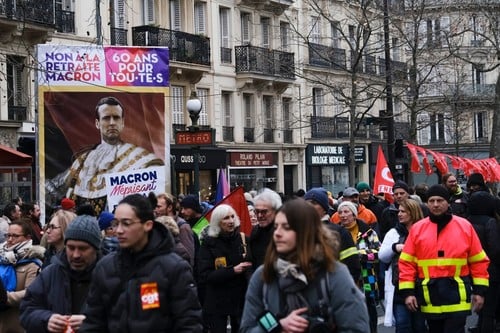
Some months ago, at the height of the transportation strikes, several well-meaning acquaintances messaged me with concern or asked on behalf of friends who were considering travel plans whether it was indeed safe to visit Paris.

These people didn’t need a speech from me, I thought. My safest answer was, “Yes; don’t believe everything you hear from the mainstream media, whose business is built on chaos.”

But by the third time I was asked, I blurted out, “The people asking this live in the country which must be the most dangerous one for children in the entire developed world.” My fellow Americans, blissfully self-absorbed and aloof from the world, wonder if it’s safe to travel to Paris, which was dealing with strikes and riots (nothing new, something I’ve experienced regularly since moving to France). Yet in America, children are regularly gunned down in classrooms and people are choked to death on subways or on routine traffic stops. Those things don’t happen in France.

My unsafe answer concluded, “It’s certainly safer to visit France than an American elementary school.”

Do the trite words of “Thoughts and prayers,” which automatically and thoughtlessly escape the lips of many of my fellow countrymen after every tragedy simultaneously obliterate their common sense to such a degree that they consider the glossy camera-ready images of protestors lighting trash on fire to be a real threat? Was a single person reported killed as a result of these riots? Does it deter them from going to Target to buy their seed oil and GMO-infested food in military-sized vehicles after the latest murderous rampage of a public shooter, himself almost always medicated on selective serotonin reuptake inhibitors?

Indeed, if travel is meant to be something other than the tropical stay-in-a-resort-and-drink experience so many Americans know well, perhaps the occurrence of riots and strikes is the perfect time to visit France. You might learn about why the locals are angry (they’ll be willing to tell you). I’ve shared that I have no sympathy for the math-optional entitlement that some of the rioters have, but I do understand the underlying instinctive rejection of weaponized globalism, which demands that our entire human experience become essentially economic: we are here to be cogs in the machines constructed and maintained by BlackRock and Goldman Sachs, whose risks and losses are subsidized by the American taxpayer.

Perhaps as Americans visit and are shocked by trash sitting in the streets because garbage men are striking in solidarity with transportation workers, the dawning of “why” might begin to light in a corner of their minds.

If they follow that light with a humility that assumes that we might have something to learn, they may see a truth Europeans have known through centuries of Christendom: life is not about work or earning money. It is about discovering your purpose for living. When you know that, all else falls into place. If you don’t know it, your entire life is a charade.

Is it safe to visit Paris? Not for those open to questioning the narratives of their lives. But our greatest growth in life rarely comes in moments of comfortable safety. Danger, even only the imagined type in faraway foreign lands, might perhaps alert us to the dangers at home, around the corner, in our elementary schools and in the moral sickness killing Americans every single day.

Did you enjoy this article? TAIP is 100% reader-supported through tipping. If you want to leave us a tip of any amount it would be highly appreciated. These tips help support our efforts to keep TAIP an ad-free environment. Just as at a cafe, the tips are split evenly among the team.

retirement in France

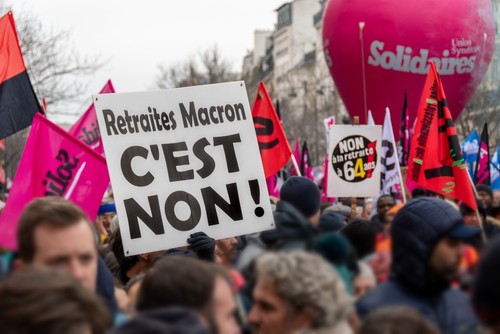
Retirement, Strikes, and Spring in France

Well, to understand these protests, you have to understand how the French see their life and work narrative,” I told a client last week. “They go to school, get a degree or certification, work until they are 62, and then expect to get paid out for the rest of their lives. This is a ‘right’ that they imply is part of French life, but in truth, is younger than their grandparents.” I went on to discuss a bit more about how the French hire vendors and protect workers from being fired, giving greater context to how retirement fits into the French world of work. These protests are not entirely understandable to those of us in the Anglo-Saxon world.

A soundbite that has made its way onto both French and English-speaking media came from a worker who said something along the lines of these protests being about “Wanting to enjoy our lives, not just work” as if the French wait until 62 to enjoy their lives. The French have a 35-hour work week, generous days off and significant vacation, and some of the most unbelievable work benefits you’ll see in the developed world. They are not “waiting until 62” to “enjoy their lives.” They might be waiting until 62 to voluntarily stop working, but that’s a truly novel concept.

In fact, the more I examine the pension programs of many so-called democracies, the more I’m confused as to why people expect consistency or accountability for what is essentially a legalized and government-backed Ponzi scheme.

In my country of citizenship, the US, our “Social Security Trust Fund” is non-existent. It was raided so many times by improvident legislators that all we have now in America is a pass-through system. What money is paid into the system by current workers every week (some of whom, by the way, are also receiving Social Security benefits) goes right out the door to retirees that same week. Social Security, set up as a way to give dignity to impoverished elderly citizens, is now a de facto retirement plan for hundreds of millions of Americans. It was never meant to be that and the strains on the system only underline that every day.

While France’s welfare promises lies don’t date back to the 1930s, but only to the establishment of the Fifth Republic, which is younger than my mother, the French seem to have it firmly in their mind that they are entitled to a retirement, and at an age relatively younger than almost every country around them in Europe. The same problems with this narrative exist in the US:

  • The entire Ponzi scheme depends on a steady stream of workers, ideally, an increasing number, but the US and French birthrates are indicating an aging population, which means that the financial problems are only going to get worse sooner and faster.
  • “Retirement” in which you get paid close to what you earned during your productive years, during which the state pays you to be non-productive, is an ahistorical fantasy with no real track record of success. Indeed, all we see now are countries scrambling to keep the promises they originally made by raising the retirement age. We can expect that age to be moved upwards again when reality and mathematics catches up to a given calendar year.
  • Aging populations, the apparently “responsible” and “hard-working” generations that raised us, provided zero leadership to deal with this train wreck in the making, and are now simply insisting that they get what they paid for (never mind that their contributions never come close, even with theoretical interest, to their withdrawals) and damn the generations to come.

Somehow in my ten years in France I’ve only ever skirted on the edges of protests. I was out of town when the Yellow Vests kicked off, and even during the last big transportation strikes, in 2019, I was only around for a week or so of what was a month of misery for many of my fellow Parisians. Indeed, the biggest effect of the transportation strikes in 2019 for me and many other Parisians was a significant movement towards bikes, both shared and private ones. However, this time, with rolling strikes over the last weeks, I’ve been seriously affected, sometimes cancelling trips to Paris due to logistical nightmares. Some larger context first.

Now that I live in Moret I regularly take the RER to get into Paris. It’s an easy 45 minutes on a fast train, when all things are normal. When they aren’t, and the twice-ever-hour, four-times-during-peak-hours trains are reduced by a third or more in frequency, enormous queues pile up from commuters anxious to make sure they get on a train and don’t have to wait hours for the next one.

To offer a personal insight into this I can share what happened a few Saturdays ago as I prepared to head into Paris to discuss King Lear with some fellow Shakespeare lovers. I was going to leave around 12h25 to get in to meet some other friends at 14h00 before the discussion at 16h00. But since I’m the opposite of tuned-in to the news, I found out about the strike when I rolled into the station at 12h00, about 20 minutes before the train I thought I would take.

As I scrolled through my options on Citymapper (the station window was closed — they were on strike too) I saw I could head further away from Paris and then catch another inbound RER which was running on time. The alternatives were to take replacement buses, which were not only significantly slower but would slightly complicate bringing along my bike which I had with me. Knowing that I had no idea what could happen, I locked up my bike at the station in Moret and took the chance on going further out to come back in. I messaged my friends that I wouldn’t be able to see them but I felt confident I could still make it in time for 16h00 and Lear. It was noon after all.

Or so I thought.

Twenty minutes later I found myself at Montereau, where the train that I would take to Sens, then change platforms and take directly to Paris with no stops, would leave from. In the meantime I sat in the sunshine and read a book. An hour later I casually made my way to the platform where the display indicated the on-time arrival of the train I wanted. Until it started showing delays.

When it first started showing a five minute delay, I shrugged it off as no problem, because I had 25 some minutes to change trains in Sens. Then the delays started stacking until it showed more than 35 minutes. I realized Plan A was not going to work.

I looked at the monitors and saw a train that would come to Montereau by 15h13, but that would mean it would be 16h30 at the earliest that I could meet my group, especially since I would need to rely on the Metro instead of my bike.

That train was on time and by 16h10 or so I was in the Metro system of Paris, trying to navigate to the cafe I was meeting everyone at. Thankfully, someone who was already going to help me moderate the discussion had committed to starting it without me, helping me avoid the horror of making everyone wait while I moved in slow motion through my transportation nightmare.

As I stepped onto my Line 8 change at Bastille, I heard the announcement say as the Metro doors were closing (too late!) that because of the street protests that were running down that street towards Republique that all the stations between there and Strasbourg-Saint Denis were closed. I shrugged, realizing that at least I was in Paris and not stuck waiting for a train. About 50 yards from the Strasbourg-Saint Denis stop, our metro stopped, waiting for more distance from the train just now leaving the platform. Our driver had neglected to lock the doors and a homeless man decided he wasn’t going to wait, opened the doors, and casually walked down the track.

A huge collective groan came from our car as we realized the entire train would be “locked down” until the man could be positively identified as being out of harm’s way. A French person explained the situation to a tourist rather humorously, “Even the homeless here in Paris are in a hurry.”

Thankfully, though, it seemed as though positive identification was relayed that the man was spotted coming out of the tunnel and leaving the station so, a few minutes later we were cleared to proceed further. That meant that I could then exit the station, rent an e-scooter, and head towards Maison Plisson, where everyone had already been talking, over coffee, wine, and cocktails, about one of Shakespeare’s more difficult plays for the last hour.

I joined the discussion, doing my best not to think about the fact that I had started a journey at 12h00 and it was now 17h15. I wanted to focus on whether we found Regan and Goneril’s poor treatment of their father justified or if Cordelia was lying when she said, “No cause, no cause” in Act V instead of wondering what the CGT and other unions hoped to get from me by destroying my Saturday plans.

Do they think I’m going to call the government now and say, ‘Please give in to their demands?’” I asked a French friend the week after. “No, Stephen,” she responded. “The idea is that the French presidents usually don’t do well with civil discontent or unrest, and the government will make a U-turn.” A lot of hay has also been made of the specific article of the constitution that was used to push the legislation through, but anyone paying the slightest bit of attention knows that this procedure has been used almost 100 times since the inauguration of the Fifth Republic. Not exactly breaking news.

Yet strangely, this make-him-u-turn strategy was a plausible one with this president, as he’s rarely put forward a policy that he hasn’t immediately U-turned on, all the way back to the Yellow Vests’ dramatic first protest over the rise in fuel duties. And yet, a president who has accomplished close to nothing in his 6+ years in office has decided that the one thing he isn’t going to U-turn on is this issue. Strange indeed.

You have to give credit where credit is due. It’s unsurprising that a trained banker like Macron is going to ignore grim financial reports, though, given the recent bank failures in America and Switzerland, perhaps that’s precisely what trained (and untrained) bankers do. Macron is insisting that the French accept that the Fifth Republic made a promise that it couldn’t possibly keep, because everyone is ignoring a major premise it was based on: a growing native population. To cope with crashing birth rates Europe has decided to import that growth through immigration, causing understandable frictions as those non-native populations fail (or refuse to) assimilate to their new cultures.

As for what the locals are doing and saying, I’ve seen graffiti in Paris saying “vive la commune” and road signs by the freeway in Burgundy saying “retraite a 60” (talk about doubling-down!). It is true that there is general discontent but discontent is not itself righteous. Indeed, what we are seeing is collective delusion among the French who have a good life and think the party will go on forever, despite the laws of mathematics.

After Mass this last Sunday some of us mulled over our plans for week ahead, as sunny skies heralded a change in season. We knew that the unrest among the people would continue for a while longer, perhaps scuttling some of those plans. But never underestimate the ability of the weather to weaken the French “resolve” on this (and any) issue. Yes, they are discontented, but more than once I’ve watched “protests” melt away as the weather has improved.

The French, after all, prefer to enjoy that weather on a terrace with friends or at a picnic in the park than spend it en marche. They want to “enjoy their lives” after all, and don’t let anyone in the media make you believe they have to wait until 64 to do so.

Photo by user HJBC on Shutterstock.

Did you enjoy this article? TAIP is 100% reader-supported through tipping. If you want to leave us a tip of any amount it would be highly appreciated. These tips help support our efforts to keep TAIP an ad-free environment. Just as at a cafe, the tips are split evenly among the team.
The Covid Location Test

The arrival of autumn last week was underlined by rain and punctuated by cold: summer is officially over in the City of Light.  It was, by all accounts, one of our quietest summers in recent history, as we were bereft of many of the non-European tourists that normally flock to our city.  But I had used that time to mull over an idea that had first occurred to me during lockdown: the Covid Location Test.

The test is simple.  Imagine that you were told that you could not leave your city (or if you’d like, country) for the next twelve months.  How would that make you feel?  Use those feelings to ponder the fundamental question: are you truly living the life you want to live?  If not, why not?

It certainly was a useful exercise for me.  While I was used to being location independent and sometimes having to work on an assignment for a client in the coffee shop du jour wherever I was in the world, I knew that remote work was a new and unwelcome experience for some of my friends, even the ones who had previously envied my ability to work from anywhere.  Hence, telling me that I could not leave Paris and would have to stay in my apartment didn’t qualify as punishment.  My home, after all, was designed as a refuge, a place for me to relax when I wasn’t working.  It fulfilled that purpose perfectly during March, April, and May of this year (even if it was also the place where I was working).

As for telling me that I couldn’t leave Paris, that wasn’t difficult to bear either.  I had perhaps traveled “too much” during my past seven years here, and some extended, unbroken time in Paris would be welcome.  Even if you told me I couldn’t leave for a year or more, it wouldn’t particularly trouble me: I was living in my dream city.

While I made a point to host a party at my house the very first week of deconfinement, I didn’t travel outside France until July.  I enjoyed my trips to the US, Croatia, Spain, and Andorra, despite the challenges of travel these days, but I took those trips not only opportunistically, because of work that presented itself, but because it was nice to travel around again and indicate by my actions that I refused to live my life in fear.

But something had changed.  In a world in which travel is a luxury, those who partake of it should feel quite privileged.  I very much felt fortunate to see places I had not previously been, and linger around some old haunts I knew well.  But for me the Covid Location Test was a reaffirmation of another privilege I feel fortunate to have in my life which I don’t take for granted: living where I want to live.

I encourage you to take the Covid Location Test yourself.  I suspect many of you have unwittingly taken it earlier in the year if you were locked down in any measure.  If you aren’t living the life you want to live now, why aren’t you?  What is holding you back?  We haven’t been promised that a similar situation won’t happen in the future and it’s folly to build a life assuming that history can’t repeat itself.  As I said in a previous article, at least as far as the EU is concerned, a residence permit = passport for freedom of movement, even in a pandemic, and that’s a powerful argument for those who felt trapped wherever they were.

Don’t be trapped.  Use the Covid Location Test to surface the feelings and sentiments you may have buried under the piles of routine and daily life.  Life the life you want to live now: you’re not promised tomorrow.

Photo by Khamkéo Vilaysing on Unsplash

TAIP is 100% reader-supported through tipping. If you want to leave us a tip of any amount it would be highly appreciated. These tips help support our efforts to keep TAIP an ad-free environment. Just as at a cafe, the tips are split evenly among the team.
Mailbag: the Non-Existent “American ban,” Work Possibilities with the PL Visa, & Snake Oil

In the last eight weeks I have received an avalanche of questions from those hoping to immigrate to France.  In the past when I received a lot of questions I would collect them into a post like this and call it the “mailbag.”  But since creating my Facebook group and videos on Visitor and Prof Lib status, I haven’t had to.  The last mailbag post was in 2016!  But there have been so many questions I’ve answered recently that I thought to collect just a few of them here to share.  The questioners have been anonymized and their questions have been corrected for spelling and grammar and/or redacted for privacy when necessary.

I keep hearing that due to COVID-19 Americans are not welcome in Europe right now.  Hence If I file for a long-stay visitor visa (greater than 1 year), am I wasting my time?

It is fake news that Americans are not welcome in Europe.  Very rarely, if ever, is an entire nationality banned from someplace, as that might also include expelling anyone of that nationality already in the country.  What the media isn’t saying, because it’s so intent on portraying an inept US response to Covid, is that US citizens, traveling for leisure, coming from the US, cannot currently enter France and some European countries.  Americans themselves are free to travel around Europe given that they have valid residence in a European country.  Those Americans who have never lived here but are confirmed on student status for this autumn are also welcome to come to France in particular and Europe in general.

That said, your application process will depend on where you are applying from.  In some countries consulates and embassies are running again at normal capacity, with certain safeguards in place, and in other places those consulates and embassies remain closed or unable to assist applicants at the moment.  But you won’t be denied just for being an American.

I have a long-term visitor visa but of course, I’m stuck here in the US. So I will have to renew it before 4/15/21 and I haven’t even left yet! Can you help?

Here you can again see the power of fake news at work.  Since the questioner only had access to mainstream news, she was paralyzed.  I explained to her that the long-term visitor visa, which for her became effective mid-April, gave her valid entry into France.  Even though she had never “lived” here, the visa gave her residence status, which was what she needed to travel.  After I assured her this would be fine she booked a ticket!  A late-breaking addition as of just this afternoon – a negative covid-19 test 72 hours before travel will be required on the US side before departure.  This may change in the weeks and months ahead, but as of now it’s a new requirement.

How many times can you renew a long-stay visitor visa? (Initial application would be for 1 year)

Indefinitely.  As I’ve said before, it’s one of the easiest visas to get, and even easier to renew and retain.  After five years and a language test, you can apply for a ten-year card.

What kind of work contract can one be hired under while on a VLS/TS Profession Libérale? I’m attempting to apply for this status as a video editor/motion graphics designer and animator. I’m unsure if this can be considered as a liberal profession, and moreover, my understanding is that audiovisual production companies hire people under CDDU (CDD d’usage contracts), meaning that it’s salarié. My hope is that I can get hired for contracted work under a different work contract. What kind of work contracts exist for your visa?

The Profession Libérale visa is a work visa, meaning you are allowed to work, but it is not the same as a salarié visa meaning the type of visa you get when sponsored by a company with which you have a CDI.  Should such a company wish to hire you, they would hire you as a contractor via your PL status.  As a contractor you don’t get any of the benefits of a regular employee, and rarely, if ever, sign “contracts” in the French work sense of the word (despite being a “contractor”).  You’re essentially acting as a consultant/freelancer.  That said, this could be an entrée into a job, as perhaps the company will like you enough and recognize that you have a set of skills that’s difficult enough to find in the job market that they are willing to go through the time and expense of sponsoring your work visa, to make you an employee.  To be clear, PL status does not allow you to be employed as an employee.  Should you get a bona fide job offer you are going to have to change visa status to accept it, which also means shutting down your URSSAF account and figuring out what to do with your pension (transition it or keep it in place).

Stephen….I am still weighing the pros and cons of freelance visas from about five different countries.  Could you please clarify something regarding the Profession Libérale?  Does France limit the amount of time that a Profession Libérale holder can physically be outside of France and still maintain his or her immigration status and path to citizenship?  Must a physical address always be maintained during Profession Libérale status (as opposed to a mailbox at the UPS store)? 

Once you have a long-term visa, be in Visitor or Prof Lib (or other classifications for that matter), there is not really any way that the French can track how long you are in the country.  For tax purposes you are essentially stating that you are in the country for 183 days+, but if you are there for less, the French wouldn’t know.  Now, I’m not encouraging you to do that, I’m just saying that for purposes of filing taxes and keeping your status, you have to assert that you are a fiscal resident of France.  There is no box on your French personal or business returns that asks you to indicate how many days you spent in France in the previous year.

To continue to renew your visa status as a long-term resident, regardless of your visa classification, you need to be a fiscal resident of France, and file returns here every single year.

You do need to maintain a physical address, as all correspondence (and trust me, there’s a lot) will be sent there until you get yourself set up virtually, and even then you’re going to receive a fair amount of physical correspondence from the agencies, like the Ministry of Finance, that still send paper notices for a number of things.  We don’t have a “UPS store” but there are various places that I know of that will allow you to maintain a physical address with them…for a fee.

Are you familiar with XXXXXXX XXXXXX, who also assists with visa applications and business formations, and if so, do you have an opinion about this person?   My wife and I were both getting a snake-oil-sales feeling about this person.

Yes, unfortunately I have heard many bad stories about this person, and XXXXXXX has a dreadful reputation in the Paris community.  This person is obsessed with Profession Libérale as the solution to every visa question, manages a Facebook group that is ruled like an absolute dictatorship (people get deleted for questioning/contradicting the narrative), and gives factually inaccurate advice by continuously asserting that a visitor visa does not allow you to have a remote job (it does, I’ve helped dozens of people to get visitor status who had a remote job as their proof of income), hence fueling the narrative that PL solves all.  Moreover, this person charges between $1800-$4900 to help you obtain a PL visa, despite the fact that this person married into his/her immigration status, and hence never had to obtain one of these visas on her own merit.  Your snake-oil feeling is confirmed.  I wouldn’t get within a country mile of this person, and it’s crazy to think that obtaining this visa should cost even 1/3 of what XXXXXXX charges.

TAIP is 100% reader-supported through tipping. If you want to leave us a tip of any amount it would be highly appreciated. These tips help support our efforts to keep TAIP an ad-free environment. Just as at a cafe, the tips are split evenly among the team.

My First Flight Since Lockdown (and Ten Things I Learned)

“You are?” my European friends responded, bug-eyed, to my disclosure that I was flying to America this week.  They had been watching CNN or some other similar network, in which the impression was being given that the country was burning to the ground a la Mad Max.  I knew better, and dodged the subject: “Well, the flights are really cheap, to be honest, and I can also do some in-person work for a client.”  Both reasons were true, but to be honest, the idea of flying post lockdown seemed purely theoretical to me until it actually happened today.

I arrived back in Paris the day before lockdown in March of this year.  I had cut short a business/ski trip in Bulgaria under advice from friends, though by Monday night, as I arrived back into Paris with all the shops in the airport already closed, it looked like wisdom.  Unbeknownst to any of us who came back that night or in the days after, we would not get to leave the country again for months, and even our daily trips out of our homes would be curtailed with the strange experience for those used to living in free societies: if stopped, we were expected to have “our papers” on us, explaining what we were doing, and why we were doing it, with consequences for “incorrect” answers.

I was delighted when confinement in Paris ended, almost a month ago now, and most of the city is quite “normal,” whatever that word means.  Masks are only really required on public transportation, and most Parisians comply, but out on the street, a dwindling minority voluntarily wears them even when not required by law.

My first attempted flight purchase for this trip had been abortive, with Turkish Airlines.  Turkish had been selling “ghost flights,” flights they had never intended to run but were happy to collect revenues for.  In fact, when I told a frequent flier friend about the ticket, he sounded dismayed. “Turkish.  I’m not sure they will actually honor that flight.”  Sure enough, they didn’t and two weeks after I had booked that flight and two weeks before I was supposed to fly, I was told that Turkish had cancelled my flight and yes, it might take 2-8 weeks to get a refund.  Chagrined that I was being used to help finance the airline’s working capital (yes, things are that bad) I was happy to find a comparably priced Aer Lingus ticket, though I had to shift my dates of travel slightly to make it work.  First rule of this current phase of travel: flights you buy might not actually happen.  Be prepared; stay flexible.

I had chosen a mid-morning flight out of Charles de Gaulle, but the terminal felt as though it was either very early in the morning or very late at night, and in some strange circumstance.  Almost every single shop was closed, everyone was masked, and there was no rush, no stress, no bustle.  

I made my way to Terminal 2A, which is not where Aer Lingus normally operates out of, but they had helpfully told me by email a couple of days before not to go to Terminal 1.  Second rule of this current phase of travel: pay extra attention to email alerts telling you where to go and what to do; it can be the difference between making and missing your flight.

I stood in a “socially distant” queue to check in, though luggage tends to naturally space us.  When I got to the check-in desk I slid my passport under the now ubiquitous plexiglass.  The agent took my luggage, handed me my boarding pass, and then asked me if I had filled out the “Covid form.”  Because she asked in such a nonchalant tone my brain didn’t go to red alert.  “No,” I answered.  “If you can wait here for my colleague, she will bring you a copy.”  I turned to my right and saw a small queue developing of other similarly clueless travelers.  Before too long her colleague did return with paperwork specifically from the government of the Republic of Ireland.  The form was intended to help with contact tracing, but for transiting passengers like myself, less information was needed.  Third rule of this current phase of travel: be prepared for extra paperwork that may be country-specific.  Be patient and don’t panic when confronted with something you didn’t hear about ahead of time.

Ireland

When I arrived in Dublin this morning I wasn’t permitted to stay in the airport and follow the signs to “connecting flights” but was directed to the border and airport exit where I turned in my form and got a stamp in my passport for my shortest stay in Ireland ever.  “Sorry I’m not staying,” I smiled.  “Next time,” she nodded.  Fourth rule of this current phase of travel: be prepared to have to “exit” the airport, even on a layover, and go through security again, and don’t forget to keep it snappy while doing so: there’s no guarantee they’ll hold the flight while you’re taking your time.

I left through baggage claim and went upstairs to departures and, like all the others on my flight who were continuing on to destinations after Dublin, had the great pleasure of going through security a second time, but this time with an Irish accent.  

I looked up at the screen and saw that I would get a gate number after passing through US Customs.  Ireland, like Canada, has a US Customs section which pre-clears incoming passengers to the US, allowing them to skip the line when they land.  There are always random additional security searches, but with so few passengers traveling to the US, your chances of being one of the random searches increase dramatically.  My lucky number came up and as I was unpacking my carry-ons for the third time today (there’s an additional security screening at the US border in these countries) I was told to follow some of the employees to a secluded part of what was already a ghostly reception area.  They made me turn on my laptops and ran bomb residue checks on my hands and almost every part of all my bags.  

Having passed my third security screening of the day, it seems that the authorities of three different countries, France, Ireland, and the United States, were satisfied that I was not a malefactor.  If you think about it, this makes sense.  At a time when so few people are traveling, it might be the perfect time to attempt an act of terror.  Fifth rule of this current phase of travel: each country you pass through on your trip may make you do additional screening that has nothing to do with your physical health.  Stay patient and stoic through the process.

Mostly Empty Plane

As we boarded the A330 for our transatlantic flight, the flight attendants told us that we could sit anywhere we wanted.  There would only be 39 souls on a flight that could seat 340.  But as we got closer to departure the purser announced that the seats had been allocated by the computer based on flight load, and there was a method to the random assignments: we needed to sit where we were assigned for takeoff and landing.  In between those times we could sit where we wanted in between.  I was one of the last ones to board and watched most of the plane walk past me to the back, where they were originally seated.  Sixth rule of this current phase of travel: be prepared to have a lot of space to yourself.  On the Dublin-Chicago segment I had a 4-seat row to myself, with no one sitting in the row in front of me nor in the three rows of window seats to my left.

I have a friend who works at Emirates who has kept me filled in on the lean and bare-bones conditions of the flights they are still running.  Hence, I was prepared to be tossed a box of cold food then watch the flight attendants disappear until right before landing.  This wasn’t the case.  Not only did we have a beverage service, but we had hot food (“Would you like chicken or beef?”), followed by tea and coffee service, followed by ice cream service.  Then, hot calzones and another beverage service before we landed!  Cheers, Aer Lingus.  Seventh rule of this current phase of travel: in-flight service might be the same.  Enjoy!

Masks

What wasn’t the same was the mask requirement.  We were told that we had to wear them the whole flight, but obviously we had to take them off to eat.  Since we were in an enclosed space, using recycled, non-medically-treated air for all seven hours of the flight, taking off the mask to eat would have been all the virus needed to get from one of us to all of us.  So, it’s a bit of security theater, like taking off your shoes when going through security, but I understand the airlines probably wouldn’t be allowed to fly if they didn’t participate in this charade.

Nevertheless, some of us lingered over our meal a little longer, enjoyed the “authorized” masklessness, but after the service the flight attendants were really only there if you hit a call button, so you could feel free to be as masked or unmasked as you wanted to.  I have only worn a mask when required to in Paris, which is to say, on public transportation, so these two flights were the longest I’ve ever worn a mask for any reason in my life, and that might be a challenge for some.  Eighth rule of this current phase of travel: be prepared to wear a mask the entire time you are on the plane, and perhaps when you are in the airport as well.  Make sure it’s a comfortable one.

Stateside

When we landed in Chicago I realized that the pre-clearance I had gone through in Ireland wasn’t entirely valid because of the additional measures being taken in the US.  We had to turn in a CDC form, similar in quality to the one that I had to turn in on arrival in Ireland.  However, it seems half of the passengers of our flight were given this CDC form at the gate and the rest of us grabbed one of the photocopies in the customs area when we landed.  

We then got into another line in which we were orally questioned as to whether we felt any symptoms or had been to China, Iran, or Brazil in the last 14 days.  After answering no to all of the above I was sent to another line where my temperature was taken contact-free (I was 97.5 F – the plane must have chilled me) and again asked where I had been in the last 14 days, specifically if I had been to one of the three aforementioned countries.  When I answered in the negative I was given a handout and told that I should “self-quarantine for 14 days.”  I smiled, nodded, and went to get my baggage.  Ninth rule of this current phase of travel: You might get to go through customs for the same country multiple times.  Bear with it.

Chicago isn’t my final destination, but flights to destinations that are not major hubs are two to three times more expensive at the moment, hence I’m on a DIY layover, in which I self-transfer to the domestic airport in Chicago, Midway, and take a $50 Southwest flight on to Kansas City.  Tenth rule of this current phase of travel: be prepared for a comedic sequence of planes, trains, and automobiles as none of the regular transfer/conveniences can be reliably counted on.  Don’t assume; call ahead.

What’s Next?

How long will this state of affairs last?  As you should know by now, nobody knows, and anyone who claims to know is just guessing.  But what is certain is that the chilling effect on travel as a whole is rippling out worldwide.  Those closed shops and empty queues and empty seats are harbingers of an untold disaster much worse than even the most hysterical headlines tell us.  In one way the disaster is economic, yes, but there’s a psychological toll as well which can paralyze people from even considering travel. 

I remember being told some time ago about research that showed people were more “happy” before and after a vacation: before because of the anticipation, after because of the revisiting of the memories.  In those pre-covid times we seemed unable to be present and savor the vacation while we were on it at least as much as we anticipated or revisited it.  But we are now in a time in which we can’t anticipate “normal” (again, whatever that term means) travel.  All we can do is plan lightly and curb our expectations.  If we can adopt the right attitude when we travel in the weeks and months ahead, not only can we start to create the necessary momentum to once again give our fellow friends and humans the confidence and desire to travel, but we can also take a moment to be grateful for the privilege of traveling when so much of the world is still locked down.  As we do so, we might recapture, however cautiously, however tentatively, that joy we take when seeing new places and old faces.

Photo was taken halfway through my flight from Dublin to Chicago.

This article also appeared on Dispatches Europe.

TAIP is 100% reader-supported through tipping. If you want to leave us a tip of any amount it would be highly appreciated. These tips help support our efforts to keep TAIP an ad-free environment. Just as at a cafe, the tips are split evenly among the team.
the old normal in Paris

The Old Normal is Alive and Well in Paris

I’ve spent my entire life in countries with unrestricted freedom of movement.  Not only did those countries let me go where I wanted, whenever I wanted, as long as I wasn’t breaking laws, the countries were indifferent to my location on a given day at a given time.  Insofar as my movement encouraged commerce and the support of local businesses, which in turn paid taxes, these governments might actually encourage me to get out and about.

I think it was because I’ve always taken freedom of movement for granted that I felt that energetic frisson in my bones and brain this last weekend, as our local parks opened and restaurants prepared to open their outdoor terraces here in Paris.  While there had been an energy and buzz in the air since the first days of deconfinement, this last weekend was different.  Normal service wasn’t quite restored, but it felt quite normal.  The streets and parks were packed (Buttes Chaumont, a very large park near my home, was as busy as I’ve ever seen it, and that was with its restaurants and bars closed).  The majority of the population across 6 arrondissements that I visited one day (specifically the 19th, 11th, 5th, 4th, 3rd, and 2nd) were unmasked and not social distancing.  Witnessing this has been like watching a light turn on in a dark room: one moment there was coronavirus, the next moment it was summer.

It’s important to note that it is only in and around Paris, and only for the next few weeks that we will continue to see these restrictions, which include: schools reopening with capped class sizes so some students will continue to attend remotely; swimming pools, campsites, and theaters closed; gatherings in public places limited to groups of ten (enforced by roving police).  The rest of France, host to fewer cases and a lower infection rate, is “back to normal.”

The much-mooted “second wave” which the media seemed to almost hope for so they could continue to be one of the few “essential” workers hasn’t materialized, and the president of the Scientific Council advising the French government has said that even in a worst-case scenario a second lockdown would be unacceptable for a number of reasons.  Given that sunshine and fresh air are extremely effective (and free) deterrents against viruses of all kinds, not just the recent celebrity Covid-19, one wonders why we didn’t deconfine sooner.  We were, in part, witness to the worst tendency of science throughout the ages: stubborn adherence to old beliefs and measures taken when we had very little data and information, combined with a refusal to modify hypotheses when in receipt of new information.  This tendency continues on into the private lives of some of my friends and acquaintances who have been scared into a private “extended edition” confinement.  I try to respect the turbulent emotions some of them have felt in the past months, so I avoid asking them: “If masks work, why do we social distance?  If social distancing works, why do we wear masks?  If both work, why did we lock down?”

Some of the fearful ones do venture out, with all the protection you can imagine: gloves, masks, gel, sometimes even a visor as well. Some of the younger set, determined to be as fashionable as they are “safe,” have bought designer cotton masks — not necessarily helpful against viruses, but they certainly go well with their summer outfits.  This is an unsurprising historical (and humorous) echo for anyone who has visited the Museum of the Liberation of Paris, which has stills of models sporting gas masks as accessories for that season’s release of new fashions.

I’ve even been witness to a few exchanges in which the French have lectured each other, imitating the health and safety briefings of the weeks gone by.  On the first day of deconfinement I was on a bus, masked.  A young man entered the bus without one.  About half a minute later, two middle-aged adults gave a muffled speech to complement their camouflaged disapproving looks.  “You need to wear a mask, sir,” she gently chided in French.  Her interlocutor, probably in his late 20s, gave her the typical gallic shrug.  “It’s not just for my protection, but yours too…” she droned on, and he listened politely, but in the vein of, “I’ve heard all the same stuff you have, lady, and I’ve decided to act otherwise.”

That’s the reality of a free country: you are continuously surrounded by others who differ from you in many ways.  In those first few days there was a tension of the “good” mask-wearers who wore them even though they weren’t required outside of public transportation or in certain stores in contrast to the “bad” mask-ignorers who only wore them when required to.  But as day passed on to day, and masks were optional in more and more shops and businesses, the French resumed their normal cultural attitudes, formed over centuries of living in this country.

No longer being legally required to stay home or forced to justify leaving them, the French interpret “optional” as “don’t bother.”  Mask wearing may have been hip two weeks ago, but as summer continues to come on, social pressure will work the other way, and it will take a deeply rooted moral conviction to remain masked, probably rooted in a Noah complex, that a flood is coming and we mask-ignorers are to be pitied for our ignorance.  I stopped predicting early on in this crisis, but I am willing to predict that we will have a summer this year, as long as we don’t conspire to ruin it for ourselves.

We’ll be harvesting lessons from the bad dream that was most of the last ten weeks for years, but it’s not too soon to draw a few now:

  • Given sufficient economic incentives, the French will obey the law.  Even the Yellow Vests, undeterred by Christmas, stayed home during the entire confinement.
  • Temporary natural crises do not make for permanent cultural changes.  Despite the claims of the “new normal” and “it will be a long road back” all appearances indicate that the current normal looks remarkably like the old normal.  In a few weeks (which seems rather short to those who were shut in for months) theaters will reopen and indoor service at restaurants will augment the outdoor service already happening.  Indeed, the biggest priority for many French, apart from standing in long lines to get back into IKEA, will be planning summer vacations, not just here in France, but in the greater EU.
  • Scientific theories ultimately come up against economic realities.  Now-leaked documents from both the German and Danish governments indicate that these authorities considered the reaction to the coronavirus to be overblown even as they implemented policies that directly contradicted these assessments.  France reopened not just because the number of sick was below a certain level, but because the money already committed to bailouts of the auto, tourism, and restaurant industries were mounting to unbelievable levels, and all those bailouts are premised on future tax dollars, which can only be generated by functional, not locked-down, economies.
  • Too many of us were willingly puppeted by the media.  As the slogans morphed from “stay home save lives” to “black lives matter” in the US and abroad, what was commonly prompted one week (avoid crowds, wear masks, social distance) immediately and seamlessly was opposed the following week (march in protest, gather in force, do what you want).  If such mass gatherings now don’t deliver a second wave, we may have the protestors to thank for volunteering to test a hypothesis: has COVID-19 disappeared or is at least in abeyance?

In the meantime, many of us are glad, after months of confinement, to get back to an important notion that should be taken for granted in a free society: the ability to make our own informed choices about what we do and how we conduct our lives.  No man is an island, and everything we do, even in the privacy of our homes, has an effect on our society as a whole, no matter how much those who deny the existence of the soul would tell us.  The states that slavishly imitated China’s extreme lockdown procedures would have us believe that they are so very different from the communist Chinese, but the past three months have shown us that the same lie that animates the Chinese government has spread and infected the West as well: the State knows best.  If those states were properly oriented toward the Permanent Things and eternity, perhaps we might believe them, but since they are manifestly not, we may not have to wait too long before they subject us to such a lockdown again…for our own good, of course.

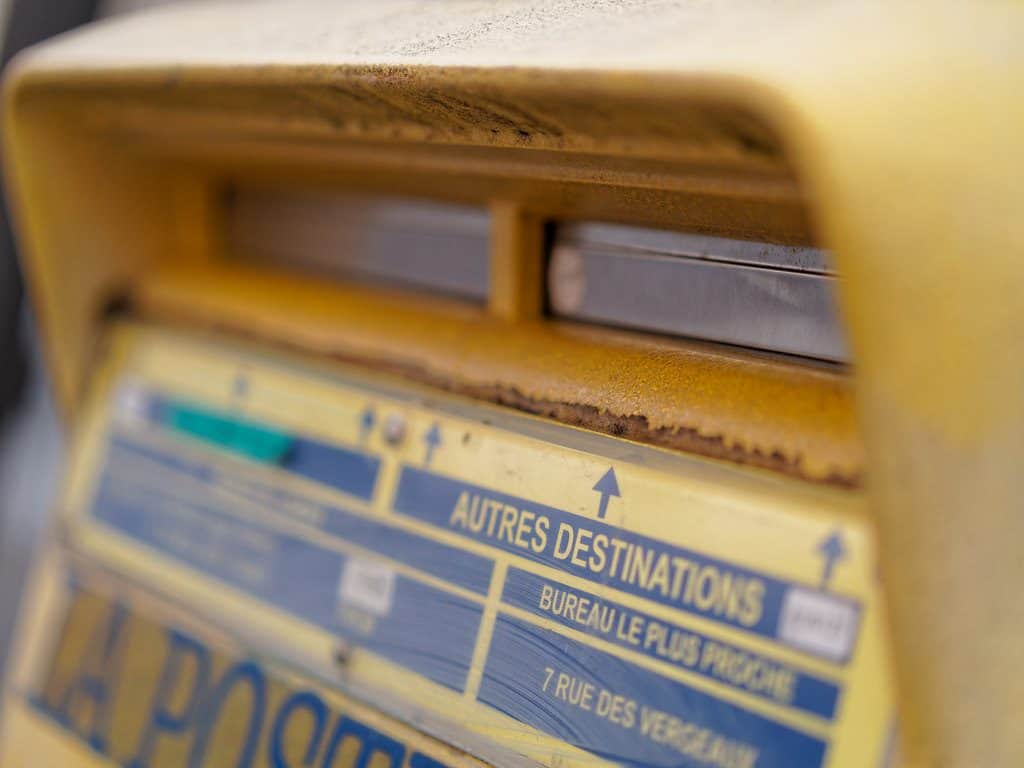
Photo taken at Café de la Poste, in the Marais, where I wrote this piece and broke my fast of sitting on a Paris terrasse.

This piece originally appeared on Front Porch Republic.

TAIP is 100% reader-supported through tipping. If you want to leave us a tip of any amount it would be highly appreciated. These tips help support our efforts to keep TAIP an ad-free environment. Just as at a cafe, the tips are split evenly among the team.

quarantine in Paris

Cracks in the Quarantine

Two weekends ago the weather was particularly lovely and while I was out for a Sunday stroll in my neighborhood what I had already been sensing over the previous weeks became crystal clear: many Parisians were not abiding by the draconian rules of quarantine that had been laid down in March, which almost seems like another lifetime ago now.  The French have received some favorable press abroad and even from the French Prime Minister for being generally “well behaved” during the lockdown, but there’s a good reason for that: they’ve been paid off.

Not Disciplined Normally

The French are not scrupulous rule-followers.  At all.  I know, I’ve lived here with them for years now.  If you want rule followers all you need to do is cross the border into Germany where people will wait on an empty street in the pouring rain rather than cross it without a proper signal.  Three of the four landlords I’ve had in my time in France have either wanted to be paid in cash or wanted me to conceal that I was paying rent (and hence avoid the taxes) by telling me not to put anything in the memo section of the monthly bank transfer.  I know at least half a dozen people who have used someone else’s payslip in order to qualify for the apartment that they live in now.  Then there’s the bragging about methods of tax evasion that can happen at a casual apéro during the week or when you are on vacation in Provence.  Did the French suddenly become rule-followers and acolytes of the government because of a viral scare, just weeks after a transportation strike that ruined Christmas and New Year’s plans for the entire country?  Non.

What the French did get, due to the systems and mechanisms in place, is money, and lots of it.  In almost every field the French were paid off so that they were not losing money at the rate that businesses in many other countries have been.  Those who needed additional aid had ways to apply for it, right down to small business owners like myself, as I wrote about earlier this week.  When you’re being paid to stay home, you can still get fresh bread, tobacco, alcohol, lottery tickets, and food, all while your high-speed internet is working, why fight?

Like the Occupation

It hasn’t even been 100 years since the Occupation of France during World War II, and while President Macron has famously evoked the term “war” to refer to what is going on in France and throughout the world, the reality is that the last war wasn’t really that rough on the capital and it was famously preserved by the commanding Nazi general because he was persuaded that the war was lost and Hitler had lost his mind (to learn more check out Is Paris Burning? and the film of the same name).

So too, life hasn’t really been that bad under the virtual house arrest we have been under for the last eight weeks.  Yes, we have to print out a humorous attestation in which we give permission to ourselves to be out for whatever reason, but we have had access to food, shelter, and information.  Our borders are closed and you must have permission to travel even inside the country.  Such restrictions over such a relatively short period as eight weeks are not the stuff of which revolutions are made (despite the fact that there have been a dozen forms of government in France since 1789).

More importantly, just like during the Occupation, the French have figured out the ways around the laws.  After the stings of fines in early weeks, Parisians have figured out when and where the police are patrolling and how to make sure they have a plausible story if caught.  More than a million fines have been handed out during the last eight weeks so you can reasonably guess that at least double that number were not caught by the police, which means there are literally millions of people in France not obeying the law (if you want to read some of the more creative excuses given to the police, The Local collected them in this article), so please, don’t tell me about how much the French are “respecting the quarantine.”

Different in America

While many are eager to exploit the current explosive and divisive politics of America to point out how “wrong” the US is getting public policy, I can only hope it has been an instructive civics lesson for those who are less familiar with how the United States has been governed since 1789 (when it tried out its third form of government, which is the one that still prevails).  While many thought the “states’ rights” question was answered in 1865, many more have started to see that this issue has always been the central question of how the US is governed (and indeed, is the intellectual framework of its founding).  It is the question that will not go away.  So you have coastal states that have used strict lockdown measures, other states that have milder forms of it, and some states that have not locked down at all, along with lawsuits against governors, with more to come under the aegis of the Department of Justice.  It turns out that state Governors, not the US President, have been the focus of the attention of many of the restless in the United States.

While the $1200 checks that went out eased some of the pain for some people, and some federal business loans and grants backed by the SBA helped some business owners, the United States is a large and sprawling country with hundreds of millions of inhabitants.  The health care system is famously broken in many ways and even with plenty of advance notice could not have done anything like what Germany has been doing or what France is planning in terms of mass testing.  Yet, even as heralded as France’s health care system is, there has been no system of testing, and as such the lockdown was simply a time-buying measure.  Things are different in America for many reasons, not just because of one man, no matter how much the media would like us to believe otherwise.

You Probably Had It

Several of my friends who, like me, were traveling in December and January, suspect that we might have had the virus already, but are asymptomatic.  We have 27 million visitors to Paris each year, and at least one-third of them are Chinese.  Is it likely that one of those millions brought the disease to France as early as December, that it has spread through the population, and that hundreds of thousands, if not millions, already have the disease and are asymptomatic?  Yes, quite.  But we won’t know until we test, and as we prepare to open up next week, I suspect that this upcoming weekend will have scenes like we saw just two weeks ago:

This video (featuring a Dalida song Laissez-moi danser released the year I was born), viewed almost 8 million times now, was of an impromptu dance party in Montmartre which the police came to break up but gave fines to absolutely no one.  It’s technically not illegal to dance on the street to music coming from someone’s apartment, and many people were observing some kind of social distancing.  Six weeks in, the police have learned which battles to fight and which to pretend they don’t see.

A story I tell along these lines was from Fete de la Musique in 2014 or 2015 when I was lounging in the lazy afternoon sun in Place des Vosges with some friends and one of the park guardians came up to let me know that alcohol could not be consumed inside this park.  But he said it in such a friendly way that I suspected that if I reached for a paper bag and put the bottle inside, he would consider his duty done.  I did precisely that and he smiled and said, “Merci” and walked off.

As I stroll around on Sundays there are groups of friends standing and talking in the sunshine, clearly ignoring the rule that they are not supposed to meet friends (or are we to believe that they all coincidentally came to the same spot in the sunshine?).  Others are a bit more covert: I saw three young men gathered around a car, all with takeaway food and while one sat in the passenger seat the other two stood next to him outside of the car, ostensibly so that if the police did come, they could say they were just eating some takeaway that had gotten and were getting ready to drive off.

As far as masks go, it’s a pretty even split outside, though inside the metro I’ve observed 75% of the people are masked or gloved, and as of Monday it’s going to be required if you want to use public transportation, though how so-called “social distancing” will be enforced at rush hour is less clear.  I’ll have to wear one for my (already scheduled) haircut this Tuesday.  My barber is talented enough to work around the ear straps (though I suspect they will be removed at a certain point during the haircut) and she’ll have plenty of practice for all the willing Samsons that will be lining up starting first thing this Monday.

The French have mostly kept their heads down for the last eight weeks, but who knows what will happen on Monday, when for the first time we will be permitted to be outside of our homes without our “papers”?  I’ve stopped predicting anything in these times, but I do know that without our restaurants and cafés, which are a core part of life here in France and not slated to be opened until June at the earliest, this will be the oddest May that has occurred in France in centuries.

Photo by Andrea Piacquadio from Pexels

TAIP is 100% reader-supported through tipping. If you want to leave us a tip of any amount it would be highly appreciated. These tips help support our efforts to keep TAIP an ad-free environment. Just as at a cafe, the tips are split evenly among the team.

French aid coronavirus

Coronavirus Financial Aid for Small Businesses Arrives

This is the time of year when I often have to remind non-EU nationals who live in France most of the year that they need to file taxes.  With all that has been going on I was particularly glad that not only had my US personal and corporate returns been filed, but that my American business accountant had quickly filed for the small business aid package offered by the US government and two of my US corporations had gotten the initial grant ahead of possible additional loan consideration.  Additionally the much-trumpeted $1200 American bailout check has arrived at a US address and will be deposited this week.  My French business has also received aid for the month of March.  At a time of year when I’m used to having to calculate what I owe to two different countries, it’s an odd feeling, to say the least, to be receiving funds from two different governments, but hey, when you pay taxes in two different countries, it’s not an unreasonable (nor undeserved) outcome.

French Small Business Aid

I’m a member of the National Union of Journalists (a UK-based organization) and the Paris chapter was incredibly helpful in getting information out to members early on and throughout the shutdown here in France.  The aid which came through from the French government last week was the result of a fairly straightforward form available at the French tax site.  You log into your account (which you have if you’ve ever filed a return here in France) and then navigate to your secure inbox and select a dropdown specifically designed for Covid-19 aid for your small business.

You are then taken to a one-page digital form in which you attest that:

  • Your business was open before 1 February 2020
  • It was not in liquidation before 1 March 2020
  • Its workforce was less than or equal to ten employees
  • Your turnover last year was less than 1,000,000 €
  • As a managing partner of the company, you did not take more than 60,000 € in dividend income last year
  • You do not hold either a CDI (employment contract) or a pension which results in your receiving more than 800 €/month
  • If you own multiple companies, you are still subject to the above attestations (meaning that if you had more than ten employees among your multiple businesses, or if their combined turnover was more than $1M, etc. you are disqualified)

You then fill in your name, address, email, phone number, and SIRET (tax ID number for your business) and then state whether your business was closed or suffered a loss of turnover of at least 50% from a comparable time last year.

Now interestingly enough the lockdown occurred in the middle of March and while it did interrupt the onboarding of a new writing client I had in Paris, my March 2020 wasn’t a particularly bad month, but March 2019 had happened to be a very good month for the business, and as such, I was able to apply for aid.  The money was directly deposited into my bank account last month, and I just repeated the same process for the month of April.  The French government has said that this program will be in place until the end of May, so that’s been a big help to small business owners like myself.

This program served as a gatekeeper for a second funding program, which offered assistance to anyone who didn’t qualify under the first program.  Since I had qualified for the first program I was ineligible to apply for the second program, but the application was simple and straightforward as well.  It was one page and was to be submitted through the URSSAF system.  The questions were more probing, however, as they wanted 2018 business income as well as certification that this was your only stream of income and that losing it jeopardized your ability to cover your basic needs.

Outside of small business owners, millions of French are on 75-85% of their regular pay (or more) due to government programs so while others have marveled at how “calm” the French have been during lockdown, I can guarantee that such calmness would not have been on display if these programs were not in place and being efficiently executed, which begs the question, if the French can have such efficient bureaucracy in a crisis, what’s the problem during “normal” times? 🙂

Photo by Matthew Waring on Unsplash

This article originally appeared as part of a series for Dispatches Europe.

TAIP is 100% reader-supported through tipping. If you want to leave us a tip of any amount it would be highly appreciated. These tips help support our efforts to keep TAIP an ad-free environment. Just as at a cafe, the tips are split evenly among the team.

Quarantined in the City of Light

While Paris started the year in the midst of a transportation strike that the strikers by and large lost in the end, there was only a brief respite for the hospitality industry as the specter of the global panic pandemic landed in Europe and then worked its way west.  It’s now our second week in a “lockdown” that seems to get progressively more stringent.

For those who follow the news you may be familiar with the attestation that now needs to be either written by hand or printed and filled out: it’s our “permission slip” we laughably sign ourselves and though I have not yet been asked for one, it will be the first time in my life someone other than a customs official has asked me for “my papers.”  It’s an unusual thought for someone who has spent most of his life in the West.  Out here in the 19th the instances of stopping by police (sometimes in plainclothes) are certainly less than what my friends who live in the Marais are seeing (5-10 stops per hour on one particular street).

Our permission slip states that we are outside (and asks us to check a box for) one of these reasons:

  • Essential work that cannot be done from home your work has to be on the “essential” list.  Restaurants are not considered “essential” but the most nimble of them have rapidly iterated to offer delivery and pickup service when they previously did not (like one of my faves, The Hood).
  • Shopping for “essential” items humorously tobacco shops are considered “essential” but wine shops are not, though to be fair, you can find alcohol in every single grocery store, which is an essential business where it looks and feels like, given the crowds, holiday shopping every single day.  I’ve only been shopping in there a few times in the last 10 days but it was amusing to see that when the French panic buy, it’s the yogurt, butter, and cheese that disappear, not the toilet paper and snack chips.  Even then, the very next day the shelves are restocked 100%.
  • Non-routine and urgent medical appointments (all routine appointments were ordered cancelled some time ago) or for urgent care for the elderly (“visiting” family isn’t permitted this is more like doing shopping for someone who is an invalid, etc.)
  • Reporting for a court or police appointment
  • The most flouted one  physical exercise.  Apparently it is permitted for a maximum of one hour, within 1 km of your home.  But there is no way to see if you’ve already been “checked” for the day so you could ostensibly be stopped 6 times per day and as long as you have a newly dated and timed attestation, the same officer didn’t stop you previously, or you’re constantly wearing different disguises, you could pull it off.  There are more than 100,000 fines that have been already been issued but that’s a minuscule number (think in terms of a country of 66 million, or even in a city of 2 million) who are willing to be caught without their permission slip or for insufficient cause.  Minimum fine is 135 €.  No thanks, I’ll just stay in and continue to work on projects and read.

On the governmental side of things there’s been some help, but no explanation of what happens next.  EDF (Électricité de France, our electric provider) has announced there would not be a bill this month, but not what would happen to that payment.  URSSAF, who is the governmental body that handles social payments from small businesses like mine, has said there would not be a payment this month, but not whether we would owe it later.  Even the Ministry of Finance has told us we can instruct our banks to refuse the monthly debit, or go into the online system and stop it for this month.  There’s money promised for small businesses but it’s not entirely clear yet how we would apply and even what would be forthcoming, as there’s no “date of return to normal” that anyone in government would even consider saying to the press.

I’ve been checking in with local friends periodically by text message.  This is new for many of us.  Though many of us were here during the bombings and restaurant shootings in November 2015, we either went out the very next night, or, as I did, hosted a gathering where some of us could share our thoughts over some wine.  My regular slew of book clubs and even my film clubs have continued on in virtual format, and after some basic explanations to some who’ve never used Zoom or been in any kind of online meeting with more than two people, we have enjoyed a bit of normalcy (discussing thoughtful books or films) in what is otherwise best characterized as strange times.

I honestly did not think the French (or the Italians) could stay indoors this long.  They are quintessentially café and restaurant people.  It’s only when the streets are dead silent (and it’s not August) that you realize just what an integral part everyday contact with humans plays in a city, and in a city like Paris above all.  Even some of my introverted friends who originally ironically rejoiced at their new “dreamy normal” have started to find a new desire to connect.

It was just announced this week that this lockdown will continue until Easter Week, more than two weeks from now, at a minimum.  For now, it seems like, just as during the strike, many Parisians are taking this stoically.  I’ve even learned it’s actually possible for French people to stand in a queue for something other than a baguette!  But, in all seriousness, it’s generally quiet here and while there are plenty of people like me who consider this the most draconian out of multiple options we could have pursued, there aren’t really too many voices of protest in the sometimes land of revolution.  Many of us are settling down with a good long read.

My fondest hope for many who are taking what is perhaps the most unexpected of “vacations” is the examination of whether their “normal” is something they ever want to return to.  If one good thing can come from this time it might be the chance to reflect and count our blessings.  Even in “lockdown” many of us have access to food and shelter, and there are many others in the world who can count on neither in the most “normal” of circumstances.

Photo by Matt Seymour on Unsplash

TAIP is 100% reader-supported through tipping. If you want to leave us a tip of any amount it would be highly appreciated. These tips help support our efforts to keep TAIP an ad-free environment. Just as at a cafe, the tips are split evenly among the team.

Strike Hype

So I should confess that I’ve mostly avoided any experience of the strikes here in Paris.  I flew out of Paris on December 4th for a long-planned holiday Down Under.  The next day, the strikes began.  I just arrived back a few days ago and the strikers, worn down by almost a month with no pay, have mostly given up.  Just yesterday all the métro lines were running (albeit for a limited service).

There are knock-on effects of a métro strike, of course.  With everyone pushed out of reliable public transportation, e-scooters (called trottinettes) are in high demand.  I spent 15 minutes yesterday walking to try to get a scooter and I was checking three different scooter apps as I did so.  So too today when I was taking the tram (3b) it was absolutely packed like I’ve never seen it before.

Friends have been messaging, asking about the strikes, and I try to remind them that just like the Gilet Jaunes, the international news media are in full hype mode.  The Gilet Jaunes have been in nonstop decline since their very first protest in November 2018.  French people (somewhat) understandably sided with them on the fuel tax, the government u-turned, and the public promptly lost interest.  Parisians have dealt with these outsiders showing up to our city (often committing acts of violence) week after week for over a year, but in ever dwindling numbers.  It’s all well and good to boast that it’s the XXth consecutive week of striking…but most of us go about our Saturdays not even remembering that anyone is striking about anything.

And as for this current transportation strike, it was again at its worst at the beginning, but it has been in nonstop decline ever since.  Public support continues to decline and the number of drivers returning to work continues to increase.  The problem is one of leverage.  The strikers thought that Macron would U-turn, but he didn’t, which meant everyone’s Christmas and New Year’s were affected.  There are no holidays in January, just people trying to work, and I haven’t met a single French person who would march in solidarity with the RATP workers for a “right to retire at 52.”  Sorry kids, life expectancy has gone up, which means you have to work longer, just like the rest of us do.  If Macron didn’t give in for Christmas, why would he give in now?

The strike has also hit hardest in Paris, as public transport in the other big cities of France is fully operational, and SNCF trains are now running at 85% of regular capacity or higher.  Can it go on much longer?  The question is how much have the transportation workers saved up.  There was a much bragged-about crowdfunder the other day that raised 1,000,000 euros for the workers, but if you divide that 1000 ways, you only have 1000 euros each, and there may be even more than 1000 workers staying out on an extended strike.  1000 euros isn’t going to make up for a month of missed pay that will not be paid in arrears whenever this ends.

What has impressed me is the willingness of the Parisians to just get on with things.  They are carpooling, buying or renting e-scooters, using the Vélib system, using the (more available than metros) buses, or simply walking more.  There’s also, in the background, the reality that lines 1 and 14 (which are run by computers, not humans) have been running for 100% of the entire strike, and with station upgrades for lines 4 and 11 which happened all of last year, we can’t be too far off from a future when automated lines remove the last bit of pressure these unions can apply.  The 2024 Olympics which we will host are creating an environment to accelerate the building of lines for express trains from Orly and CDG to come directly into the city.  We might see the same thing happen with the métro lines as well.

One thing remains clear to me, the media always manage to hype things up enough that my friends outside of France are more worried about the situation than those of us actually living here.  It’s just a strike.  The problem with the French doing it so often is that, like any “threat,” the overuse leads to indifference.  You can’t scare anyone in France with a strike, not least of whom, it seems, President Macron.

We will see what happens…

The photo is from a 2007 strike, on the line 9 stop for the Franklin Roosevelt station.

TAIP is 100% reader-supported through tipping. If you want to leave us a tip of any amount it would be highly appreciated. These tips help support our efforts to keep TAIP an ad-free environment. Just as at a cafe, the tips are split evenly among the team.