French pastries

The Life of a French Pastry Chef

If you’ve been following my life here on TAIP, you know that I got married last year not once, not twice, but a whopping three times (you can read about the first two times here and here). Yes, all to the same person. Who happens to be French. Who also happens to be a professionally trained pastry chef. 

The typical reaction I get when I tell someone what he does is, “Wow! You’re so lucky to get homemade French pastries at home!” I don’t have much of a sweet tooth (pass me a plate of fries over a plate of cookies any day, thank you) but I have to admit I do enjoy having access to homemade croissants, macarons, chouquettes, and more whenever the mood strikes.

The life of a French pastry chef is not for the faint of heart — something I witness on a daily basis because I live with one. What kind of training do you need, you may be wondering? Is it as glamorous as it seems? Is it hard waking up at 1am to go to work every day? Is it worth it?

Let’s find out.

A Baker Does Not A French Pastry Chef Make

I was originally going to call this article The Life of a French Baker but my husband stopped me before I even started. “Je suis pas un boulanger,” he told me. I am not a baker

In France, a baker and a pastry chef aren’t one and the same. The baker bakes the bread and the pastry chef makes the pastries. There’s even a third person you have likely never heard of who is in charge of viennoiseriecroissants, pain au chocolat, etc. — called a tourier

Of course, there are bakeries in France that don’t have all three experts on staff. My husband says that lots of bakers and pastry chefs know how to make viennoiserie, and many touriers can bake bread. Are you still with me?

As you’ll discover if you ever learn the French language, this is a country full of contradictions and exceptions.

Training, Degrees, and Certifications

Like all French people our age, my husband had to have an idea of what he wanted to do as a career by age 15. It’s a bit different these days, but at the time, he had to decide whether to continue on to high school or start a trade school.

He decided to go to Centre d’Excellence des Professions Culinaires (CEPROC) in the 19th arrondissement in Paris to study pastry. At the time, he worked toward le Brevet d’études professionnelles (BEP), a three-year diploma that required him to split his time between classes at school and a job in a local bakery. 

Today, aspiring French pastry chefs have the choice between a certificat d’aptitude professionnelle (CAP) or a baccalauréat professionnel (BAC pro). The former is a degree program like my husband did — he bypassed high school and went straight into culinary school — but that also means he does not have a high school diploma. You have to go to high school if you hope to be accepted into a BAC pro program. 

There are several other certifications you can get as a pastry chef. Le Brevet de Maîtrise Pâtisserie, for example, is the highest diploma a French pastry chef can obtain. 

You could also become specialized in different aspects of pastry. Chocolate, ice cream, and 5-star restaurant-quality desserts are just a few areas you could go into.

All of this being said, you don’t technically need a degree, certificate, or special training to be a pastry chef. Many begin at a very young age and learn as they go. 

The (not so) Glamorous Lifestyle

You may imagine the life of the French pastry chef to be filled with sweet aromas, sneaky taste tests, and constant praise and accolades. It’s not. 

My husband often has to be up at 1am to be out the door at 2am. That means that he has to go to bed around 7pm. Not ideal when you live in a tiny studio in Paris. I don’t have to (or want to) go to bed before the sun goes down so I either need to make myself scarce (and be quiet when I come home) or hunker down in the kitchen so as not to bother my very own sleeping beauty. 

Fortunately, we no longer live in such a small space so this is no longer an issue. At the time I couldn’t help but feel a bit grouchy when everyone told me how “lucky” I was to live with a pastry chef. Don’t get me wrong, I feel very lucky to be with my husband, but living on totally opposite schedules does have its challenges.

Another thing to note is that most French pastry chefs work in local bakeries, not five-star restaurants and hotels. Their salaries are average at best, and seeing as though there is a bakery on nearly every street corner in this country, most French people aren’t super impressed. 

Conversely, every time my husband meets an American they shower him with compliments. They want — need — to know everything about his job. To the outsider and the foreigner, a French pastry chef must live a glamorous lifestyle. They must!

As you can imagine the hubs would prefer to create pastries for people who appreciate it for the art form that it is. For that reason he once worked in a cooking school that catered to English-speaking tourists who are looking to learn more about French cuisine. It was a breath of fresh air. 

So, is it worth it? In true French fashion, my husband says, “mouais” (mmm, yeah). He goes on to say that if you love the craft, then yes it’s worth it. But, there has to be some sort of passion there to make it through all the hard work. 

The next time you’re in a bakery in France, take a few extra moments to appreciate the craftsmanship of what you’re about to eat before you gobble it down. Pay a compliment to the chef — you never know just how much they may appreciate it.

Photo by Valeriano G on Unsplash

Did you enjoy this article? TAIP is 100% reader-supported through tipping. If you want to leave us a tip of any amount it would be highly appreciated. These tips help support our efforts to keep TAIP an ad-free environment. Just as at a cafe, the tips are split evenly among the team.
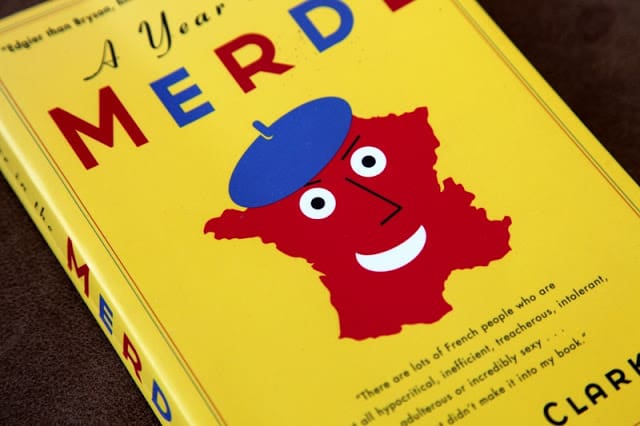
Book Club: A Year in the Merde, by Stephen Clarke

I read a lot of books about Paris and France before moving here and I’ve only recently realized I might do well to share them with you.  So, I’ll start with an old favorite.

It was the second week I was in Paris.  I had just gone to an Asterix exposition at the ugly BNF (Bibliotheque Francois Mitterand), with my friend Julien, who I had met in Adelaide, Australia, a year earlier (a story for another time).

“Stefan,” (this is how the French pronounce my name), “Stefan, do you know zis booke, ah, a year in dee Merde?”  I nodded that I had vaguely heard of it, but not much more.

He started laughing.  “Oh, you must read it!  It is soooo funny!  And it’s true!”  Julien is a great guy a real Anglophile to boot though he insists that when we go on ski trips I only speak French so I gave his recommendation its due importance and in time purchased and read the book.

It was, as he had warned me, absolutely hilarious.  One time I almost choked on my tongue while reading in the metro because I was laughing so hard.  Another time, while I was buying groceries at Franprix, I noticed that the checkout guy started to giggle quietly because he saw the book under my arm.  “C’est vrai?” I asked him, left eyebrow raised.  “Oui tout!” he responded.

So, Stephen Clarke, the author, invented this fictional Paul West character who comes to Paris for a job and gets caught in the life of apartments, work, and love.  It’s told from an Anglo perspective, and it’s particularly funny if you’ve lived in Paris for any period of time because the jokes hit on the realities of everyday life.  Some memorable lines from the book include:

Jean-Marie did the hugest shrug I’d ever seen, even outdoing the man in the electric shop.  His shoulders, arms, his whole rib cage, took off vertically in a gesture of infinite indifference.

and this

The Paris police are the best in the world at one thing sitting in buses.”

and this

Red lights are like queues,” he said scornfully, “They are for people who have time to waste.”

It’s not a perfect book, by any means, but it’s very revealing in its takedown of the French.

Clarke was a bit taken aback, I’m sure, by his success, and has gone on to write at least two other books on this theme, which I have, unfortunately, also read.  I say unfortunately because these books go beyond the playful fictional satirical conceit of the first book and just linger in stereotype that is, over time, increasingly unfunny.

Yes, it was funny that first time but if you want to keep going you’re going to have to go deeper.  In comedy, the analogue would be the first Austin Powers movie the first one was funny in so many ways the others were horrible.  Same with the sleeper Liam Neeson hit film Taken.  I love that movie.  Which is probably precisely why I hate the sequels so.

Perhaps we as moderns don’t understand that success can be solitary (witness Harper Lee being huckstered into releasing an inferior and revisionist novel in her dotage).  Success doesn’t mean having to repackage your great idea as something only slightly different.  Indeed, success is sometimes leaving well enough alone.

So, read this first one.  Skip the rest of Clarke’s catalogue.

Did you enjoy this article? TAIP is 100% reader-supported through tipping. If you want to leave us a tip of any amount it would be highly appreciated. These tips help support our efforts to keep TAIP an ad-free environment. Just as at a cafe, the tips are split evenly among the team.

French for “Customer Service”

“It’s not my problem”

accompanied by a shrug, said by almost every French person ever to a customer in need of help.

The quote above is a caricature, surely, but my French friends will admit it’s pretty close to the truth.  It’s my third year here in Paris, and when your expectations are so very low, when you get surprised, you want to share it.  So, here are two such stories.

Groupama

Groupama provides my renter’s insurance, something that is helpful in itself, but is also a requirement of most of my visa visits, including my recent one to move away from visitor status to a path to citizenship.

However, they, like many French insurers, make it impossible to cancel a policy online.  You have to go in person and provide a signed état de lieu as proof you have moved out.  Your word is not enough (same thing happens at the bank when you try to change your address).  Do you have proof?

In any event I had moved out of this place roughly 6 months before I managed to get to my insurer.  I took the blame, as other things always seemed to take priority.  Not only was the cancellation smooth, only taking a few minutes, but the agent marked the cancellation to the end of the lease, and credited my account with 6 months of premiums!

As the French write: “Waoh!

Decathlon

The next mission was already impossible in my mind before I attempted it, but in the spirit of “try everything once” I took back two inflatable mattresses to Decathlon.  I had purchased the first one for guests who might stay at my apartment and it worked fine for months.  Until it started to slowly deflate.  I spent some time trying to find the slow leak so I could patch it, but no dice.  It was only 15 € and I hadn’t kept the receipt.  I bought another.  This one started deflating almost immediately.

I called it a day on the inflatable mattress plan and bought a Japanese-style fold-out bed at Castorama.  No deflation possible!  But I still had two non-functional inflatable mattresses.

I suggested to a couple of French friends that I would try to return the beds without a receipt (I had idiotically not kept the second one, either).  They laughed derisively.

“I’ll just play the dumb American,” I said.  “Plus, I’m willing to accept store credit.”  Turns out I didn’t have to.

I arrived at the enormous subterranean Decathlon near the Madeleine (Americans, think Dick’s Sporting Goods or Sports Chalet) and got into the returns line.  When it got to be my turn I explained that I didn’t want an exchange, but that I wanted to return these mattresses for store credit.  The young girl called a colleague over, who then walked with me to the camping department, where the inflatable mattresses lived, in order to observe the malfunction.  And to my dismay, the same thing happened as whenever I brought an Apple device to an Apple store for troubleshooting: nothing.  I almost wonder if the Apple Store is a stern father figure for my Apple devices and they suddenly “behave” when they are at home.

I watched, bemused, as the inflated mattress which had deflated over and over in my home held the air intact.  We even tried sitting on it to force the leak.  Not a peep.  Resolute as Churchill on the beaches.

The kid read my incredulous expression.  “Don’t worry,” he said in French.  He walked me to the counter, got me a gift card for the value of both mattresses, and as I walked out of the store and held the gift card in my hand, contemplating the imposing facade of the Madeleine, I smiled.

Maybe there is a French word for “customer service” after all.

P.S.  Don’t worry, I have a horror story to share in the future for those who wish to further the paradigm of “the French just don’t care about customer service.” 🙂

Did you enjoy this article? TAIP is 100% reader-supported through tipping. If you want to leave us a tip of any amount it would be highly appreciated. These tips help support our efforts to keep TAIP an ad-free environment. Just as at a cafe, the tips are split evenly among the team.


The Myth of “Fluency”

Americans abroad sometimes beat ourselves up often on behalf of our fellow countrymen other times because of our own perceived shortcomings.  One of these is the famous lie: “Well everyone in Europe speaks at least 2-3 languages fluently.”  I’ve found this to be mostly a myth, for any number of reasons.

It is true that Europeans take up a 2nd and sometimes even a 3rd language outside of the language that they speak at home.  But Europeans are humans, like the rest of us, and fluency is like anything once attained, it must be maintained.

On the ferry from Morocco back to Spain some years ago I struck up a conversation with a Danish family.  We talked about socialized health care (Obamacare was much in the news at the time) and came on to education.  “What is she learning as her third language?” I queried.  “German.”  I was surprised I know they are geographically proximate but German is really only spoken in a couple of countries.  I didn’t want to ask why so I simply asked how she was doing.  “Ask her,” the father smiled.

“How’s your German?” I asked the 11-year-old.  She answered haltingly in her 2nd tongue, English: “I…it’s okay.”  “Do you practice with your friends who are also learning German?”  “No,” she admitted honestly, making a face that betrayed only slight shame, almost as if to say that practicing a non-native tongue with friends learning that same non-native tongue would be unusual.

Fluency, strictly speaking, is the ability to converse quickly and at a high level, within a language.  Fluency comprehends a large vocabulary, appreciates and can deliver puns, and has fun with wordplay.  It also has the ability to engage in high-level discussions say about the existence of God or the start of the universe.  I would never call someone fluent in a language who kept asking me the word for “planet” or “cosmos” or “uncaused cause.”

I might call them conversational those who can express themselves enough to order food, ask for directions or talk about basics about themselves.  Sometimes this brings with it a semi-literacy an ability to read signs and some announcements, but not enough to read an editorial in the local newspaper.

My most recent trip to Vienna left me with a few new friends, one of which was now a teacher in Vienna who confessed to me during our 30 km bike tour of the city that he had learned Italian and English in school but had lost them both.  I told him quite emphatically that his English was very impressive despite his not being a regular speaker.

While a big part of my mission during my time in France has been to attain fluency in this language, I have over the years come to appreciate even knowing a few words in any language.  The doors to another culture can open themselves so widely in just a few words.  We talked about the fact that the ß (eszett) in German is not often used.  “Indeed,” he replied, “the Swiss use a double s in its place.”  This is true, the Swiss are quite practical.  They use septante and huitante and nonante to denote 70, 80, and 90, respectively.  What do the French use?  soixante-dix (60 and 10, literally), quatre-vingt (four twentys, seriously), and quatre-vingt-dix (yup, four 20s and a 10, like you’re counting out change).

What I mean to get at is if you cannot attain fluency in a second language (or a third, etc.), don’t beat yourself up.  Many claim fluency in a second language, but what they mean is that they are conversational.  Someone who can seamlessly transition from language to language, preserving an accent native to that language, is rare.  And they are probably in diplomatic work.  The rest of us make do with “comment dit-ton” until we can get there.  And hey what’s the harm in working on fluency in your native tongue?  I daresay we’d see better grammar and spelling in our business and personal emails if we put that effort in! 🙂

Did you enjoy this article? TAIP is 100% reader-supported through tipping. If you want to leave us a tip of any amount it would be highly appreciated. These tips help support our efforts to keep TAIP an ad-free environment. Just as at a cafe, the tips are split evenly among the team.