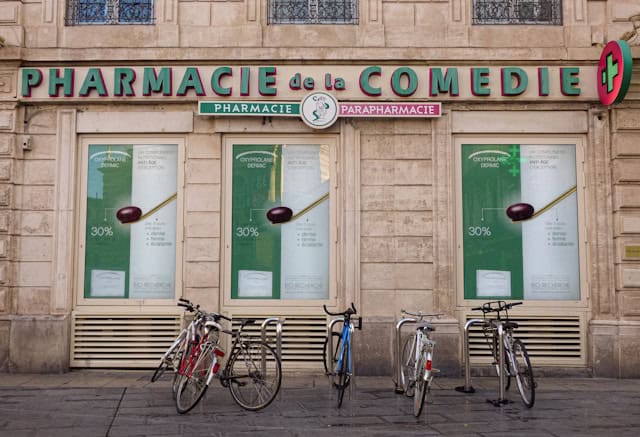
French pharmacy with bikes in front of it

How Does CPAM Work?

Note from the editor: Navigating the French healthcare system as an expat is no easy feat, so we’ve partnered with Fab French Insurance to hopefully make things feel a little more straightforward for our TAIP readers. Below, they’ve done a wonderful job of explaining what CPAM is and how you can benefit from it when you’re a full-time resident in France. Enjoy! — MS

Joining the French healthcare system is one of the biggest milestones after moving to France, but it is also one of the most confusing. Between CPAM, Assurance Maladie, the carte Vitale, mutuelles, and reimbursement rules, many newcomers struggle to understand where to begin and what happens after they arrive.

The good news is that while the administration can take time, the system itself is logical once you understand how the different pieces fit together. If you’re planning a move to France or have recently arrived, here’s what you need to know about how CPAM works and what to expect during your first months.

What Is CPAM?

CPAM (Caisse Primaire d’Assurance Maladie) is your local health insurance fund, responsible for managing public health insurance in your area. It forms part of Assurance Maladie, which is the French public health insurance branch of the social security system.

Once you are registered, CPAM manages your healthcare rights, processes reimbursements, and eventually issues your Carte Vitale, the green health insurance card used throughout France. Each département has its own CPAM office, although most day-to-day administration can later be managed online through your Assurance Maladie account.

Who Can Register with CPAM?

The way you access French healthcare depends on your personal situation. If you begin working in France, your healthcare rights can generally begin from your very first hour of employment through the French social security system.

If you are not working, including many retirees and visitor visa holders, you may still qualify under Protection Universelle Maladie (PUMa). Non-working residents may apply under PUMa once they meet the conditions of stable and regular residence, which generally means living legally in France for more than three months.

Because every situation is different, the documents required and the registration process will vary depending on whether you are employed, self-employed, retired, joining family members, or applying through another residence status.

How Do You Apply?

Most first-time applications are made using Cerfa n° 15763*02 – Demande d’ouverture des droits à l’assurance maladie, which is submitted to the CPAM covering your place of residence together with your supporting documents.

According to Assurance Maladie, applicants will generally need:

  • Cerfa n° 15763*02 application form
  • Passport or national identity document
  • Original birth certificate (or an officially certified copy), issued within the last six months, together with a certified French translation (traduction assermentée) dated within the last three months if the document is not already in French.
  • Proof of legal residence in France
  • Proof of address
  • French bank account details (RIB)
Depending on your circumstances, CPAM may also request additional documents, such as an employment contract, recent payslips, family documents, or evidence supporting your residence status. Providing a complete application from the outset is one of the best ways to avoid unnecessary delays.

How Long Does Registration Take?

Processing can take weeks or months, depending on the workload of your local CPAM office and whether your application contains all the required documentation. If further documents are requested during the process, this can extend the timeline.

During this period, many newcomers experience what is often referred to as the “healthcare gap,” the time between arriving in France and officially obtaining healthcare rights.

For this reason, private health insurance is often essential during your first months in France. In fact, many long-stay visas require applicants to hold health insurance covering medical expenses, hospitalization, death, and repatriation costs for the duration of their stay until they become eligible for the French healthcare system.

What Is the Carte Vitale?

Many people think receiving the carte Vitale is the moment they join the French healthcare system, but legally, the important milestone is the beginning of their healthcare rights.

The carte Vitale is simply the card that allows healthcare providers to transmit your reimbursement claims electronically, making the system much easier to use. Once you receive it, you simply present the card during medical appointments or at the pharmacy, and reimbursements are processed automatically in most cases.

How Do Reimbursements Work?

The French healthcare system does not usually reimburse 100% of your medical expenses.

Instead, Assurance Maladie reimburses a percentage of an official tariff established for many healthcare services. If your doctor charges more than this official amount, known as dépassements d’honoraires, the additional cost may remain partly or entirely at your expense.

This is why many residents choose to take out a mutuelle, or complementary health insurance.

A mutuelle helps cover some or all of the costs that remain after Assurance Maladie has reimbursed its share, particularly for hospital treatment, specialist consultations, dental care, optical expenses, and hearing aids.

Once linked to your CPAM account, reimbursements between Assurance Maladie and your mutuelle are usually handled automatically.

Do You Need a Médecin Traitant?

As soon as you are settled in France, it is advisable to choose and declare a médecin traitant, your regular doctor.

Although most people choose a GP, French rules also allow certain specialists to act as your médecin traitant. The declaration can be completed electronically by your doctor or by using the official Cerfa S3704 paper form, meaning you do not necessarily have to wait until you receive your Carte Vitale.

Declaring a médecin traitant is not compulsory. However, if you choose not to declare one or regularly consult specialists outside the parcours de soins coordonnés (coordinated care pathway), Assurance Maladie will generally reimburse a smaller percentage of your consultation costs.

Can You See a Doctor Before Your Registration Is Complete?

Yes. You do not need to wait for your carte Vitale before receiving medical treatment. You can still consult doctors, specialists, hospitals, and pharmacies if necessary.

Whether you can later obtain reimbursement depends on when your healthcare rights are officially opened and whether you have the appropriate supporting documentation relating to the treatment period. This is another reason why maintaining appropriate private health insurance during your first months in France is strongly recommended.

CPAM Is Worth the Wait

The administrative process of joining the French healthcare system can feel slow, especially when you are simultaneously dealing with visas, banking, housing, and countless other aspects of relocating to France. However, once your healthcare rights are established and your carte Vitale arrives, the system becomes remarkably straightforward to use.

Combined with a suitable mutuelle, CPAM provides access to a healthcare system that offers predictable costs, excellent continuity of care, and largely automated reimbursements. Like many aspects of French administration, it requires patience at the beginning, but once everything is in place, it becomes one of the foundations that make everyday life in France considerably easier.

Fab French Insurance helps expats navigate this transition, from medical insurance cover to full public healthcare with the right mutuelle, so you are protected from day one.

Photo by Jossuha Théophile on Unsplash

Did you enjoy this article? TAIP is 100% reader-supported through tipping. If you want to leave us a tip of any amount it would be highly appreciated.  These tips help support our efforts to keep TAIP an ad-free environment. Just like at a cafe, the tips are split evenly among the team.
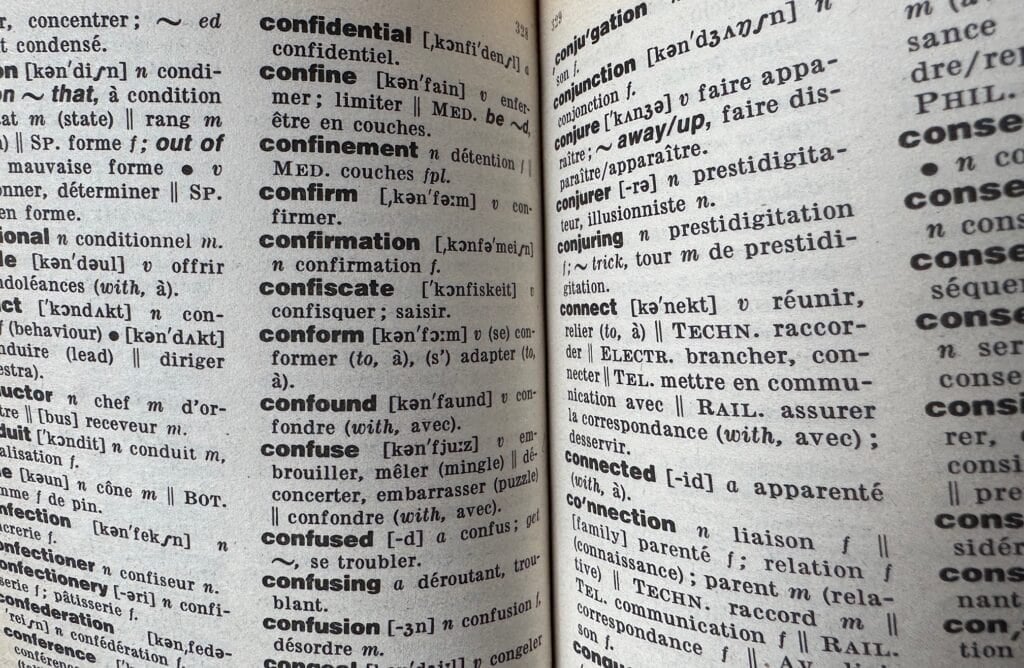

How to Find a Certified French Translator

My search for a certified French translator began when I decided to trade in my American driver’s license for a French permit. I am still in the middle of that process, thanks to a few mistakes I made in the documents I submitted as part of my dossier (French for file). However, that’s a reflection for another day. For now I want to share my journey of attaining a certified translation of my English documents from the United States for my numerous French bureaucratic ventures. 

My first bit of research led me to a company that created certified translations based in Dallas, Texas. The price was $62 for two pages, which felt reasonable. Great, I thought. As I already alluded to, I thought wrong. Yes, it’s true, I went on to purchase a certified translation; however, that certification was in the eyes of the US government — and not the French. I thought I was ahead of the game to try to start this process before I left the States, but I was mistaken. A certified French translator will most likely offer their services in French. I made the blunder of searching the internet in English. 

It was not until many months later that I realized my error on receiving a notification from ANTS (l’Agence Nationale des Titres Sécurisés) that my file was on hold due to “uncertified translation.” They informed me that I needed a “Traduction Assermentée,” a translation certified by a court-certified translator. Cue deep sigh. Their reply pointed me down a rabbit hole that ended in a PDF list of certified translators in France —a 356-page document with translators of every language imaginable. From the extensive list, I chose to reach out to two who were certified to translate from English to French. From one, I received no response. The other quoted me 66 € per page of translation. I had two pages, so this was going to be a 132 € expense for a translation I technically already had.

Solving the Problem

In the midst of my regret and indecision, I decided to search “traduction assermentée” on the internet to see what I could find, this time in French. Sure enough, I found plenty of translation services, with promises to have a quoted price before the end of the day. The first quoted me 66 € total, 39 € for my rights as a driver in the state of Texas, and 27 € to translate my driver’s license from English to French. Their reviews were fine and the price was right, so I used their services. Five days later I received an email with the translations attached. I added them to my driver’s permit request and reactivated the online request.

Recently in need of translation for documents concerning my upcoming marriage in France, the stakes felt much higher. Instead of using the company I had used previously, or even searching on Google, I searched on Trustpilot. I found companies with high reviews, quick turnarounds, and reasonable prices. I ended up going with ML Traduction. Though they claim a 48-hour turnaround, I received a digital copy of the translation I needed in less than 24 hours.

Additionally, in search of a full-time teaching position, it became apparent that I would need a translation of my university diploma. This process of approval for foreign studies requires a certified translation of the diploma and the corresponding transcript; however, the submission portal specifies that the certification can be made in the eyes of France or the issuing country. If this had also been the case for my driver’s license application, my original translation would have been as good as gold, but I digress. 

Takeaways

This may seem obvious — it certainly does to me in hindsight — but if you’re looking for a “traduction assermentée,” you’ll most likely be navigating a website originally in French and be charged in euros. Average prices run from 25-70 € a page, depending on the word count and complexity of the document in question. When seeking out a translation for a legal process, ensure that your document can be a digital copy, or find a service that will send you the original signed version by post. This additional service could cost somewhere between 3 and 15 €. For an American in Paris, or any part of France for that matter, you’ll likely find yourself in need of certified translation sooner or later. Finding a provider you trust is one less reason to stress as you navigate the kinds of legal procedures that require them. 

Have you acquired a certified translation while in France? Would you recommend your translator to our community? We would love to hear about your experience. 

Photo taken of an English to French dictionary by your truly. 

Did you enjoy this article? TAIP is 100% reader-supported through tipping. If you want to leave us a tip of any amount it would be highly appreciated.  These tips help support our efforts to keep TAIP an ad-free environment. Just like at a cafe, the tips are split evenly among the team.

View of Nice

Living in France as a Retiree: Part 1: Participating in Daily Life in France

In two previous TAIP posts (here and here), I explained all the steps needed to start a life in France as a retiree.

In the next three posts, I will explain what you need to take into consideration… very carefully. There are issues that may change your mind, much as you’d like to move to France. 

Public Transportation and Driving

In many parts of France, even in smaller towns, there will be some type of public transportation, even if it’s just a small bus. There are, however, areas such as small villages where buses may be scarce or even nonexistent, and in such cases you will need a car.

I live in Nice, in the city (albeit not downtown), and transportation is very good, especially the closer you are to the coastal area. As a senior citizen, you can get half off the monthly or yearly card. If you use buses and trams every day, transportation becomes very cheap. In a city like Nice, you can also walk to many places (good for your health!). Otherwise, one ride costs 1,70 €  — still not bank-breaking.

Paris and the surrounding areas have a fantastic transportation network: the famous métro, the very fast RER, and many SNCF trains further out to Fontainebleau or Beauvais (where there is a small airport mostly used by RyanAir).

If you need to drive (or just want to drive) and your US driver’s license is not from a state that has an agreement with France, after a year of residence you’ll have to get a French driver’s license. That is an expensive, time-consuming, and difficult proposition, albeit useful to understand French driving laws. If you don’t want to go through that, you need to plan at least a year in advance to obtain an accepted driver’s license, which could entail establishing residence in another state. You’d be surprised which states are not accepted, such as New York and California!

Note: Before you cancel your US car insurance, ask for a letter that shows your claims history (in theory, 14 years’ worth). Otherwise, you’ll be treated as a beginner driver when you buy a car and need to get insurance.

Participating in Demonstrations

Some of us are more political than others. We may wish to march in the street for a variety of reasons, but we have to be prudent when we are not in our own country (even in your own country you have to be careful, but that’s a different story for a different day). I read about an Italian semi-well-known person who was deported from France after she was seen demonstrating, even though she is a citizen of another European Union country; that surprised and worried me.

The good news is that French police are usually (not always) not too aggressive. I have seen demonstrations go by and the police remain close to observe in case of a problem. Otherwise, I have not seen them interfere.

Learning and Speaking French

If you never learned any other language than English in your life, it’s not easy to start learning French as an older adult. But if you are really motivated, you can reach a reasonable level of fluency. It will usually take several years. If you’re in a village with nobody around who speaks English, fluency will be achieved much sooner.

You cannot afford to be ashamed of your pronunciation or incorrect grammar. Practice is key, but so are good classes. It’s hard not to be discouraged when you are convinced you’re saying “une demi-baguette, s’il vous plaît” (a half baguette, please) correctly, and the boulangère (the baker or bakery lady) keeps on saying “Je ne comprends pas” (I don’t understand). Do try practicing “millefeuille” if you love Napoleons! 

There are classes for all kinds of budgets, from a private school in Villefranche to the free version of online language courses. Each person will find their fit according to their budget and learning style; more expensive doesn’t necessarily mean better, although some outlay of cash is necessary, as Duolingo, for one, only goes so far (but it’s a good start). 

Similar to Duolingo, there is Babbel, and several more. I have started using Skool, which has human instructors; this keeps you on your toes. Lawless French is another fantastic tool; Ms. Lawless is a stickler for grammar. Grammar is very important in French, and very complex. The main Lawless French site is free, and there is a paid Kwiziq add-on which is excellent (but don’t believe it when you are told that you have reached C1 level). And of course, there are many private instructors, in person or online. In the US, I used to teach via TakeLessons.

I’ve looked into YouTube videos, and it’s a mixed bag. Learn French with Alexa has proven useful to me as a French teacher. You can thank her by subscribing to her Patreon channel. Videos from some other creators had me seething with rage as they’re just clickbait.

Stay tuned for Parts 2 and 3 on health insurance and medical care as well as taxes and succession laws!

Photo of a view of Nice from a hill.

Did you enjoy this article? TAIP is 100% reader-supported through tipping. If you want to leave us a tip of any amount it would be highly appreciated.  These tips help support our efforts to keep TAIP an ad-free environment. Just like at a cafe, the tips are split evenly among the team.

True or False: Teaching English in France

When I first learned of TAPIF, the Teaching Assistant Program in France, it was the fall of 2023. I had been on the hunt for a way to work in France for a few months by that time and meeting someone who had done the program felt like an answer to my prayers. At the end of the day, whether or not teaching English was my passion, this was a short-term work contract that required a minimal level of French to give living in my dream country a go, without selling my freedom to a family as an au pair. Now, in the middle of my second year of teaching English in French public schools, you could say I’ve lost some of the starry-eyed perspective I had at first. Nonetheless, I can tell you I would do it again. 

TAPIF is the American Embassy’s face of a French government program that solicits young people from all over the world to teach their native tongue in French public schools. The program currently partners with 77 countries and in 2024 welcomed 2,992 language assistants to France from all over the world. Currently, applications for the next academic year are open to young professionals between the ages of 18 and 35. To learn more about TAPIF, its requirements, and this year’s deadlines, visit their official website here.

Thinking back to myself scouring the internet for information on TAPIF around this time just a few years ago, I am going to endeavor to give an honest and clear-eyed review as a second-year assistant. Bursting the bubble where necessary and reinforcing suspicions as able, here are some conclusions (true & false) that I have drawn from my experience. Let’s start with the false.

1. The program provides a livable wage.

False. During my first year, I burned through my savings with incredible speed. Inflation has hit France, and the wage of an assistant has not sufficiently taken this into account. About half of the 830 euros that hit my bank account each month go to pay my rent, and the other half pay for my groceries. Considering what it takes to move and settle into a new place, not mention in a new country, other expenses in the first two months should be expected. With six weeks of paid vacation during the school year, one naturally is going to want to travel, which is also not free. The French Education International boasts that language assistants have the right to demand lodging assistance by means of the CAF. However, even if you have your renter’s contract and all your paperwork submitted by October 1st, the wait for approval could be upwards of 2 months before receiving additional aid. 

2. It is a sustainable way to begin a long-term move. 

False. The proposal of TAPIF is not truly sustainable. It has a 3-year limit for renewing assistants and they clearly advise $3,000 in savings on top of the plane ticket to get here. Each year, assistants are obliged to return to their native country to renew their temporary work visa, an expense that is assumed by the assistant. Additionally, if French citizenship is the goal, you’ll need a long-term visa with renewable options. TAPIF is not that. Your yearly clock towards citizenship will not start with this program.

3. The paid vacation is generous. 

True. Today I am writing on day one of a two-week break in the middle of February, one of the four vacation periods that occur during the language assistant contract from October to April. Instead of favoring an extended summer, the public school system is built on six-week cycles that give students and teachers an opportunity to rest and refocus between periods. Being on paid vacation in Europe is certainly not a bad deal. I’ve taken advantage of these times by visiting many different parts of France, as well as its neighboring countries.

4. You will grow. 

True. One’s French can only improve in proportion to one’s courage to use it. In any case, you’re going to strengthen your resilience as you navigate French bureaucracy and the general discomfort that comes with living in a new country. Nothing causes growth like getting out of your comfort zone. I can assure you that living in a foreign country will mean getting out of your comfort zone.

5. It is the experience of a lifetime.

True. I have made friends for life and found a community that has become like family. This is by no means the experience of all who participate in TAPIF, but if you come with an open heart and seek out opportunities to integrate, you may just be shocked at the warm welcome you find. I was quick to join a choir, seek out a community of faith, and find other opportunities to explore my personal interests locally. I don’t know of an easier way to work less than part-time in a country as beautiful as France. Your bank account may not thank you, but your memory bank certainly will.

Have you participated in TAPIF or another teaching program in France? Share your wisdom with our community below. 

Photo by Ben Mullins on Unsplash

Did you enjoy this article? TAIP is 100% reader-supported through tipping. If you want to leave us a tip of any amount it would be highly appreciated.  These tips help support our efforts to keep TAIP an ad-free environment. Just like at a cafe, the tips are split evenly among the team.
a field of purple flowers

On Living Two Lives

I’ve heard of people going back home after living abroad for a while and feeling self-conscious, out of place. As if they can no longer relate to the people from their hometown. It’s isolating, I imagine, to feel disconnected from the people and the place that witnessed their formative years.

For me, going back home for the first time since expatriating was disorienting, but I had a different experience.

Stepping back onto the soil I knew so well — the smells of Texas, the long stretches of overpasses that led to shopping plazas or nothing at all, and that heat, my God, that heat — transported me back to my adolescence. 

This was the town I hit puberty in. The town where I first learned what it was to like someone so much it hurts. The town where I spent almost all my weekends at the age of fourteen at the roller rink. The same town that I knew like the back of my hand — I could still drive the same mindless routes to the superstores that my friends and I wandered around in when we had nothing better to do (and in the suburbs we almost never had anything better to do). 

This was the town that I hated, that I so badly wanted to flee from, the town I associated with boredom, ignorance, bigotry. I remember so vividly feeling like an alien on my home planet.

But also, it was the town that raised me. I thought I always knew there was life outside of Katy, Texas but I didn’t really get to experience it and truly understand everything that it encompassed until I left for a while.

When I came back home for the first time I was awoken, rather briskly, by the realization that there was this other person inside of me, one that walked with her chin held high and in a confident posture. I felt unafraid of the world. 

Because in Texas, I have no shame. These people don’t impress me. They don’t intimidate me. I know them for who they are — so easily placeable in a tight, little box. Film bro, sorority girl, liberal, conservative, someone who gets me, someone who doesn’t. 

I’m the funniest when I’m at home. The most reckless. I have no care in the world. I’m happy, I’m generous, I speak up for myself effortlessly. 

In Paris, another less familiar, less well-acquainted side comes out. I’m shy. My self-advocacy is easily thrown out the door. It’s something I have to think about. Put energy into. Relearn every day.

I’m drawn into myself. I’m self-conscious. I can come off as mean. I like to think it’s because I’m protecting myself, but really, it’s because of all my nerves and how scared I am. How hard it all is.

So at first, I was shocked and also liberated to come home and release this lighter, funnier, kinder version of myself into the spotlight again. I exhaled, so incredibly relieved. I am layered. I am complex. I am not this way, or that. No one can fit me in a box because I’ve moved away from that possibility of being stuck there for too long. 

And finally it all starts to make sense — I am nice, I am adventurous, I am brave — moving to Paris, becoming an expat has made me believe I was one way, it hardened me, convinced me I’d be like this forever, but my life here is just starting out. Of course I’m acting like this. Of course all I can think about are the differences between home and here. There’s still so much room for my life to change. 

I feel immensely fortunate to have been struck by this sense of duality. While I know fear and anxiety well, I also know assurance, confidence, comfortability. Not everyone gets to feel these things. I am so lucky to have two lives, one that can nourish the other while in pain. One that discovers something that helps revitalize the broken side of myself. Not everyone has this same experience being an expatriate and I will always count my lucky stars for this.

And I’m not saying I felt this ease and comfort right after I stepped off the eleven-hour plane ride. I remember initially wincing at the loudness of public spaces. The airport, coffee shops, malls. I’d cover my ears and buckle down — bracing myself for all that noise. It was the first time I truly recognized how loud Americans tended to be. 

But eventually I embraced it. I rejoiced in it. These are my people. My silly, ignorant, superficially sweet people. 

I learned to collect the noise, open my heart up to it, and embrace that cafe culture in America wasn’t just about working on your laptop. It was also about eavesdropping too.

I learned to feel completely and utterly at peace. Despite all the noise. Because while I know people can sometimes feel lost going back home, I felt revitalized.

Photo by Roberta Guillen on Unsplash

Did you enjoy this article? TAIP is 100% reader-supported through tipping. If you want to leave us a tip of any amount it would be highly appreciated.  These tips help support our efforts to keep TAIP an ad-free environment. Just like at a cafe, the tips are split evenly among the team.
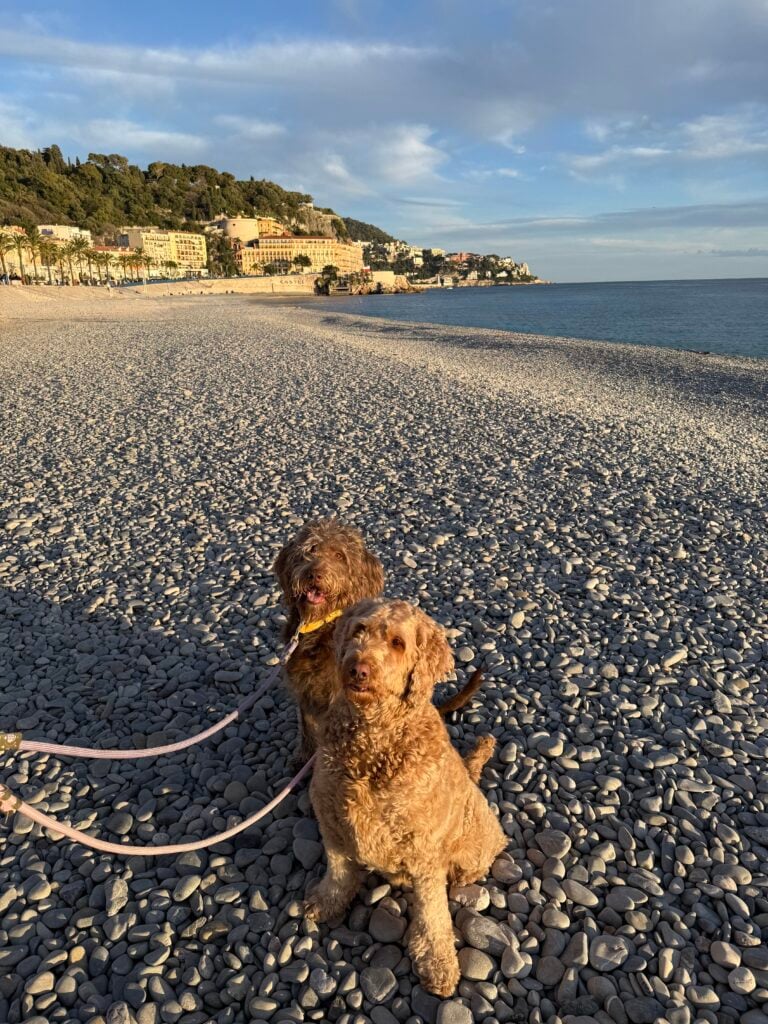
two dogs on a beach in Nice, France

Moving to France with Dogs: Finding a Dog-Friendly City and Apartment

About a year ago, my husband and I sat down at the dining room table and mapped out a checklist of the characteristics we wanted in our next city. “Dog-friendly city” was one of the first things we wrote down. We have two of our own and we felt it was essential that we move somewhere where they would be welcomed. 

We quickly Googled “most dog-friendly cities in Europe” and started checking out the various cities on the list. Nice, France was ranked number three and caught our attention as my husband has been studying French for many years. After lots of research, we felt confident that the atmosphere in Nice was perfect for us. 

Fast forward a year from that conversation and we are now living here with our two dogs. I would argue that Nice is the most dog-friendly city that I have ever experienced.

Dogs are welcome on public transportation, in restaurants, on the beach, and in many grocery stores. We have noticed a few grocery stores that discourage them in the store, but these places have a “dog garage,” which is essentially a designated area outside the store to hook up their leashes while you shop. Some well-manicured parks do not allow dogs, but these account for a relatively small percentage of the city’s available green space. Overall, they’re welcome in most public spaces around the city. The locals have also been very kind to our dogs, and it has been a great conversation starter when meeting new people in our area. 

Aside from Nice, France is known to be extremely dog-friendly as a whole. I remember visiting Paris many years ago and being surprised to see many dogs sitting outside a cafe while their owners enjoyed lunch. Americans love their dogs, but rarely do they bring them along on simple errands or outings. In contrast, the French seem to bring their dogs everywhere with them. We have only recently moved to France and have not had an opportunity to travel to many other cities with the dogs. However, I look forward to adventuring around the country with the dogs in the near future and I expect they will be embraced as they have been here. 

What French Law Says About Pets and Rentals

Apartment hunting is fun for a moment before it becomes daunting. The process is quickly complicated by looking for the perfect location, amenities, monthly payments, etc. The search becomes even more challenging when you remember that most landlords aren’t exactly fond of pets. We look at our dogs and think, “You are perfect, who couldn’t love that face?” A landlord looks at them and thinks, “ Stained carpets, scratched up walls, and dirt EVERYWHERE”. 

This is why many landlords in America include “NO DOGS, NO CATS” in their apartment listings. As pet owners, we simply have to frown at the listing and move on. However, this is not the case in France. It’s illegal in France for a landlord to forbid pets in a long-term rental. Some French listings may still include similar verbiage but the renter is not obligated to respect this clause thanks to French law. I am not encouraging you to sneak pets into your accommodations in France. However, it is known that many French citizens will simply not tell their landlord about their pets before moving in. Although French landlords can not forbid pets, it is important that the dogs do not cause damage or noise disturbances in the apartment. 

With all rules, there are exceptions. In this case, landlords do have the right to refuse dogs if they are either category 1 or category 2. These dogs are classified as “dangerous” under French law and include Stafford Terriers, American Staffordshire Terriers, Rottweilers, and Tosas.  

The French law is absolutely in your favor while searching for a long-term rental in France. Despite this, it is still extremely challenging for expats to secure a French apartment. Short-term “vacation” rentals are one of the options that I would personally recommend to anyone trying to start a new life in France. The eventual goal would be to find the perfect long-term rental, but it may take some time before everything falls into place.  

Start with a Short-Term Rental

Many people choose to start their French life on Airbnb for a multitude of reasons. The Airbnb website makes it very easy to browse accommodations, read reviews, and message owners. That said, Airbnb listings are considered “short-term” rentals, and therefore, the hosts can refuse to accept pets per French law. There is a feature of the Airbnb website to filter search by Airbnb hosts that allow dogs, but I would encourage you to look at all available listings. In my personal experience, I messaged an Airbnb host who did not allow dogs and asked them to make an exception. They accepted the rental offer with an agreement that I would hire their cleaner to clean the apartment every two weeks for a small fee. 

Life in France with Dogs

I am now sitting in my dog-friendly apartment in the dog-friendly city of Nice, France, writing this article. My dogs are napping, one on the couch and the other on the bed, without a care in the world. Getting to this point was not easy; it included hours of research and many moments of extreme frustration. However, it was 100% worth it, and I would do it again in a heartbeat. These moments are worth all the effort and more.

Photo of our adorable dogs on the beach in Nice

Did you enjoy this article? TAIP is 100% reader-supported through tipping. If you want to leave us a tip of any amount it would be highly appreciated.  These tips help support our efforts to keep TAIP an ad-free environment. Just like at a cafe, the tips are split evenly among the team.

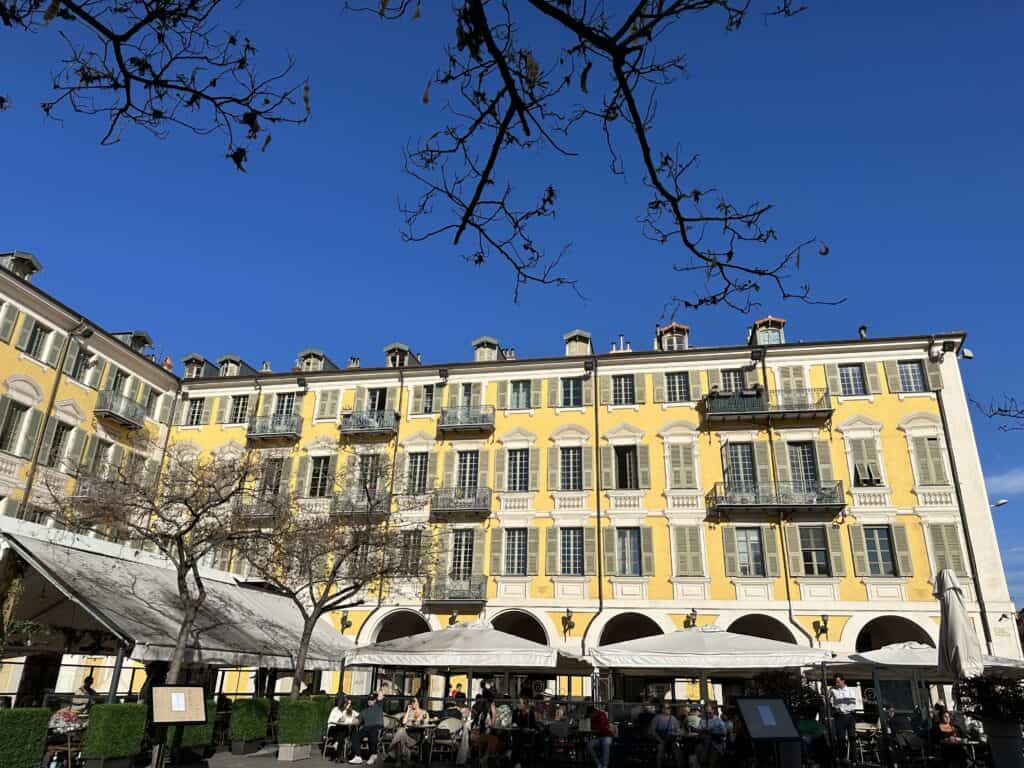
Place Garibaldi in Nice

Adventures and Misadventures in Renovating an Apartment in Nice, France

After trying for several months to find a long-term rental apartment in Nice (a losing proposition for various reasons), we decided to bite the bullet and purchase our home. We enjoyed living in Nice, having hopped from a Home Exchange to an Airbnb for several months, and pinpointed a couple of neighborhoods we liked.

Finally Finding the Apartment

We found an apartment near Mont Boron that had wonderful light and a large terrace, but it hadn’t been renovated in 50 years. The electrical setup was not compliant with current regulations and was in fact hazardous!

We stayed there in its original configuration for a month in order to get a feel for the space, and then started asking everyone we knew (not many people, at that point) if they knew trustworthy contractors. We ended up with quite a medley.

Note: Building and renovating is often a nightmare anywhere in the world. I don’t know of any building site that had zero problems (I used to work as an architect). However, you try to keep problems at an acceptable level.

Amongst the choices:

  1. A trio of professionals, who were accustomed to working together: an electrician, a plumber, and a mason, if I remember correctly. The electrician seemed very knowledgeable, but was also very bossy, so we were a bit worried and passed on the trio.
  2. Various contractors from Eastern European countries, who came recommended and whose prices were very low. We worried that the prices could change at any moment. In fact, on one estimate, it was clearly written that the prices could change!
  3. One “full” contractor who would handle everything except what we had already signed contracts for (double-glazed windows, shutters, and shades, and the kitchen outfitting).

Moving Forward with the Reno

We ended up deciding to hire the full contractor, even though his estimate was the highest. He was working on our upstairs neighbor’s apartment, and she had known him for several years. We felt it was worth the additional money to have someone with a lot of local experience (he wasn’t quite a local himself, as he was raised in the suburbs of Paris). We were asked to buy most of the materials ourselves: tiles, bathroom fixtures, and a couple of other things. He purchased plumbing infrastructure, electrical (except lamps).

He kicked us out of the apartment for 4 months, promising to be done by then. Luckily, we found a temporary vacation rental, about 15 minutes away on foot.

Once again, we asked around and researched outlets for flooring, bathrooms, and traipsed off all over town and to Cagnes-sur-Mer, about 15 km away, to make our choices.

The site was very dirty and messy, but we didn’t dare protest (we tried, but were shut down: “my workers need to be comfortable!” i.e., smoking cigarettes all over the place). Towards the end of the work, the kitchen installer came. He was a very strict and disciplined professional, and made a disparaging remark about the messiness. The next day, the apartment was cleaned up!

All in all, it was expensive, but there weren’t too many terrible incidents, and we remained within budget. Some reflections on our experience: 

  • We were shocked by the flimsiness of interior walls built in the 1970s: barely 7 cm thick, you could punch through them. We had to double up some for structural integrity.
  • The plumber assured us that we could use the bidet pipe for a toilet. He lied. After a few disgusting flooding incidents, we had to shut down the toilet. Fortunately, there are other toilets! When we protested to the main contractor, he answered that we had asked for the toilet. I was livid, but had no proof (see below).
  • The plumber (yes, him again) installed an “Insinkerator” (not my idea, but men like these things, I guess). It cost much more than his original quote, and then he told us we shouldn’t use it for more than a few seconds at a time because of the old building pipes.
  • The painters (I think) poured turpentine in the jasmine flower pot. The jasmine died.
  • The contractor promised the place would be perfectly clean when he left, but that wasn’t the case. We kept on finding bits and pieces of cement under the windows.
  • We bought toilets that are terrible at flushing. Every time I go to the US, toilets seem to flush without any issue.

However, all in all, it wasn’t too bad an experience, and our apartment is pleasant.

Feeling Lucky with Our Choice

A new friend arrived in Nice, speaking little French, and her luck was much worse, unfortunately. She went through several contractors, all flaky, leaving her in the lurch with unnecessary expenses. The first one came highly recommended from a member of an expat group on Facebook. As it turned out, he had only been hired until then as a handyman, not as a contractor. He was not prepared and had no equipment of his own. The next one wanted to go on vacation and wanted all his money, even though my friend was still waiting for the kitchen installers (the same ones I had used without a hitch), but parts were delayed. This contractor was so threatening that she gave up and paid him… and soon after he left, the bathrooms he installed were leaking.

The window installers (the same ones I had used) were delayed, but she couldn’t remain without windows, and they didn’t want to reimburse her deposit until she showed them the clause in their own contract.

The third contractor decided, after accepting to do the work, that he needed to go on vacation.

Well… months later, she is finally in her apartment, with a beautiful view, but what tribulations she went through! It seemed never-ending.

Another friend, who is French, returned to Nice from the United States and bought a beautiful old apartment. She hired a well-recommended contractor who ran into personal problems and disappeared with her money (I am not sure how much. A lot.) She didn’t react fast enough, and the police couldn’t help her. She had to hire another team, and fortunately, she now has an almost-finished apartment.

I’m not sure what other lessons to offer! One thing is certain: get as much as you can in writing. For example, if I had asked the plumber to put in writing that a toilet was feasible in that bathroom, he couldn’t pretend that I had insisted on a toilet.

In any case, if you do embark on a renovation journey… bon courage! You’ll need nerves of steel.

You could also hire an architect or an interior designer, budget permitting. Again, make sure you have a contract that specifies fees and what will be handled by the designer. The more detail, the better. I didn’t use one, as I was myself trained as an architect. I regretted giving away my T-square years ago and made do with a ruler and a triangle. It was very useful to lay out the tiles the way I wanted them, as well as the bathrooms. The kitchen outfitters handled the kitchen drawings (with our input and exact measurements).

If you need names of companies we used, please reach out.

Photo of Place Garibaldi in Nice

Did you enjoy this article? TAIP is 100% reader-supported through tipping. If you want to leave us a tip of any amount it would be highly appreciated.  These tips help support our efforts to keep TAIP an ad-free environment. Just like at a cafe, the tips are split evenly among the team.
people walking past paintings in the Louvre, Paris

You Have to Make Your Life

Having to stand up for myself in a country where I’m trying to establish the rest of my life has been no easy feat. 

A thin layer of perspiration has formed and now permanently coats my face simply because I’m trying to work up the nerve to ask a follow-up question. 

Standing up for myself takes everything out of me. It takes all my guts. 

And yet, I still decide to get up every morning and do it again. And again. And again. 

When I’m lying on my bed at night, thinking about what little ground I’ve covered, yet how much energy I’ve used to defend my honor, I’m struck, asking myself the question: When does one learn to do this? When does one learn how to stand up for themselves? Because I think I might’ve missed the memo.

As children, it’s our parents’ job to be our biggest advocate. Defend our rights. Speak to our needs.

During adolescence, we often wade in a state of constant humiliation, so much so that it feels like we’re drowning in it. We’re barely hanging on. Dogging-paddling to stay afloat. We couldn’t care less about fighting for our rights, what we deserve, we’re living day-by-day and our friends are our safety floats.

Then one day we wake up and come to the jarring realization that we’re the adults now. It seems as if we’ve just been living as passerbys to our own lives until suddenly we’re thrown into the wild, taught to fight it out, and see if we come out alive. 

In adulthood we’re confronted with the desire to carve out a life of our own. And if you want to do that — to make your own life — it means getting used to confrontation and passive-aggressive responses and learning to be your biggest protector. 

When I moved to Paris in my early twenties, my question changed in accordance with my new context. Having to deal with bureaucracy, confrontations on the street, and landlords all in a foreign language on a foreign land, I wondered, “But who stands up for us?” I felt that someone should. 

Sticking up for myself within a new identity became an even bigger challenge, yet increasingly vital. 

Initially, I relied on handling administrative tasks in a group effort, surrounded by my closest expat friends. This way, if we worked together, chainlinked our arms around one another’s, no one could take us down. 

One thing led to another and the group eventually did collapse. 

Someone would ask for a raincheck the day we planned to meet up and check things off our to-do lists, so we’d take it as a sign to put our tasks off for another week. Another would fill our souls with hope by promising to look into something for the group and relay their findings. In the end, they’d never get around to it.

Relying on others to help cushion the embarrassment by being there with you when you fall from grace is undeniably nice, but it also tends to be a huge waste of time.

I even tried relying on my boyfriend for this sort of support, telling myself that once he got home from work he would sit by my side and help me as I called CAF. When he would come home, we’d make dinner while listening to music or turn on the TV in the guise of just wanting to watch the news for a few minutes, then like magic, a movie would switch on and we’d get sucked in. 

We always told each other tomorrow. Tomorrow is when we’ll spend countless hours on hold together. 

The thing is, time moves slowly when you’re always waiting on others. 

I watched as people made their own lives around me. Big things were happening to people. Law school. Jobs in fields that nourished them and some that even paid them well. Marriage. An evolving social status.

It felt like nothing was happening to me. People were moving around me, things were moving around me, but I wasn’t. I was stuck in the middle of a whirlwind. 

I was with one of my expat friends at the Musée de l’Orangerie, wandering around the Berthe Weill exhibit and reading about her legacy and the kind of life she led in Paris. I remember feeling low at the time. Bad news kept toppling onto my lap. Yet again, I was passing nights lying on my bed, questioning everything. The central one being: why am I here? Every bright light at the end of the tunnel seemed to be misleading. Caveats adorned everything I pursued, ultimately preventing me from simply living in the city where I wished to be. I couldn’t feel any relief. But then I saw this quote plastered above some of Weill’s collection and a smile couldn’t help but creep upon my face. My stomach felt warm. My giddiness started to rise. 

“I started out with just 50 francs in hand and went into debt to pay the costs involved in opening a shop. Obviously, the situation wasn’t ideal, but I couldn’t back out now. Besides, what was the worst that could happen? Not being able to hang on? I WILL HANG ON!” – Berthe Weill

Be brave. Do the thing. Bear the challenge. If anything, it won’t wear you down; you’ll wear it.

In the end, I sucked it up. I put on my big girl pants, and I learned how to fight for my life and how to find pride in saying that I made it my own. Learning to stick up for yourself in a “ce n’est pas possible” culture is not my kind of fun. In fact, I used to take offense to it. With nearly every interaction, I have to fight for what I want. As an American, having arguments, even little ones, doesn’t just brush off my back. I don’t call that an interaction. I call that a dispute, and it makes me feel icky. They stick with me. I feel ashamed, or if I’m lucky, I learn to think of the other person as evil. 

Here, it’s almost like a game. Oh, you want something? You’re gonna have to beg me for it. 

I now treat it as such. Once I crack the code and win the game, receiving what is rightfully mine, I become overjoyed. It’s made the reward feel even better. It’s turned it into a testament to my wit, my charm, my insatiable persistence. 

Still, I find it demanding to stick up for myself and fight for what is rightfully mine, but I’m happy to say that I try to take it less seriously these days. Laughing more about it helps. What do you mean it’s not possible to do something that is very clearly possible? 

In doing the hard work, I’ve felt a strange conglomeration of feelings: being absolutely on my own, yet feeling powerful because of it. I’ve learned, reluctantly, that I can’t wait and sit back and watch how my other expat friends have done it or wait till my French boyfriend can help me.

If I want things to happen for myself, I need to make them happen. And in the meantime, regardless of what will happen with my life, I WILL HANG ON!

Photo by Diogo Fagundes on Unsplash

Did you enjoy this article? TAIP is 100% reader-supported through tipping. If you want to leave us a tip of any amount it would be highly appreciated.  These tips help support our efforts to keep TAIP an ad-free environment. Just like at a cafe, the tips are split evenly among the team.

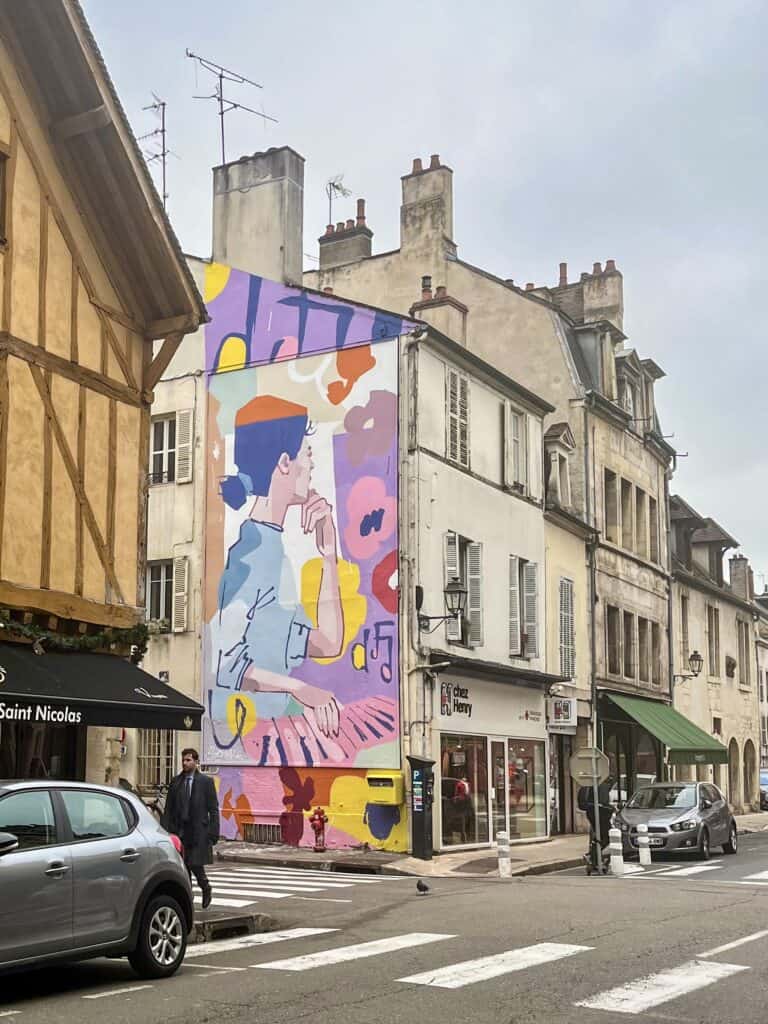
building in Dijon, France with hand painted mural

American Social Norms in France and Why They Don’t Always Translate

As children, we aren’t always taught that what is considered polite to you isn’t necessarily what is polite to another. As an American (especially one from the Midwest), I was raised with a distinct fear of being seen as rude, so when I moved to France this fear followed. It blossomed even more a few months into my new expat life when I realized that much to my surprise, what I was doing to be polite often had the opposite effect.

I did everything I had been taught to make connections, but time and time again conversations ended in tight, awkward smiles and a distinct feeling that things had not gone well despite my efforts. 

I would smile when passing someone by, and if greeted I would say bonjour and try to start a conversation with small talk on the weather or work. If you have spent much time in France maybe you can already see how this eagerness caught locals by surprise and didn’t help assimilation into the French lifestyle. 

Of course, I had been warned about the culture shock and mistranslations, but the sinking realization that I could speak the language but not communicate was heavier than anticipated. So much of what I knew to be polite at home came across as disingenuous, even tedious to my French peers. 

To be completely without cultural misunderstanding is unrealistic, but maybe knowing these social faux pas can help save you a headache or two.

General Conversation and Personal Questions

While living abroad, I found work to be a topic of conversation less welcomed in France. 

In America, work can be seen as a synonym for passion, and asking someone what they do for work is similar to asking what they’re passionate about, but in France that line is less direct. I once heard someone remark, “The French work to live and Americans live to work.” It’s a stereotype that rings true in my experience. 

When I would meet someone, one of the first questions I would ask was what they do for work. To be fair, this question is not always considered impolite, but more than once I would receive a look of someone humoring a child who didn’t know they had done something rude.

It wasn’t until I asked a coworker that they explained in France work is work and passion is passion; not inherently separate but never synonymous. So when asked what one does for a living, the underlying implication isn’t what are you passionate about? and more so, what is your social standing? which (for anyone wondering) is not polite. 

Personal Boundaries and Small Talk

Small talk is considered the necessary evil of getting to know someone in America. We ask questions to build connection, putting in effort and interest, which for many is a show of goodwill. 

However, this form of goodwill didn’t translate and more than once I caught myself outstaying the welcome of French pleasantries. I knew to say bonjour when entering a building, but I mistook this as an invitation for conversation as well, as it had been back home.  

The French show goodwill much longer after getting to know someone than Americans typically do when building a connection. They’re not the type to share as much with strangers and lack the knee-jerk reaction that Americans have to filling silence. Don’t be afraid to let silence sit, and know that most French people build relationships slowly, not through a lot of small talk. 

Performance Cues and Active Listening

Have you ever wondered why Americans do so much active listening? It wasn’t until I was comparing culture shock notes with another American expat that she brought up a conversation she had recently had with her French coworker. 

He mentioned how often Americans smile, nod, and mhmm in conversation and how silly it made them look. It’s true, active listening isn’t done as much in France, and the theories as to why we do this vary from America’s history as a country of immigration to the ever-present “corporate communication” in our daily life. In France however, the bobblehead-ness of active listening more often than not gives Americans an overly earnest appearance.

While at lunch a French friend once remarked that when we first met I had been akin to “Bambi the little deer,” wide-eyed and unsure. He credited the change to my growing confidence, but largely this difference came after I learned to converse without the constant show of attention.

Still show interest, but know the French don’t have to be convinced that you are listening to them. Additionally, know that just because a French person isn’t doing the typical actions we correlate with listening doesn’t mean they aren’t engaged.

Material Expression and Gift Giving

Even after I had finally gotten past the growing pains of forming a cross-cultural relationship, I found my way of showing politeness still tripped me up in terms of appearing overly concerned with material things and gift-giving. 

As an American, it’s often assumed the nicer (and more expensive) the item the better the sentiment. We go out of our way with housewarming events and holidays to show affection through gifts. In France however, the line between good taste and excessive wealth is much thinner. 

More than once I heard someone describe a neighbor or peer as boastful, and when asked why, they would mention something along the lines of how they only drink expensive bottles of wine, or post about fancy vacations and the expensive cars they drove.   

While gifts are still, of course, appreciated, there is more weight behind how much one might pay or “show off” in France. I once had a friend remark on the number of gifts I had given her. It was in an affectionate teasing way the French do when they like you, but it was also a reminder that something that felt so customary to me was not necessarily so for her. 

In all, it took me a while to really evaluate the type of politeness I was raised on and how Midwest manners might not mesh with the lifestyle and culture in France.

While what is polite does not always translate neatly, showing effort is at least a way to communicate that you mean well. When met with communication mishaps, that was one thing that could usually save me, and any expat will tell you all you can do is be patient and sincere in your efforts while living abroad.  

If you find yourself wanting to learn more about American vs French culture I highly recommend the book Cultural Misunderstandings: The French-American Experience by Raymonde Carroll. It’s a great resource and an interesting read filled with personal anecdotes by French anthropologist Carroll, who can possibly help explain why that interaction at the market ended so poorly.

Photo taken in Dijon, France

Did you enjoy this article? TAIP is 100% reader-supported through tipping. If you want to leave us a tip of any amount it would be highly appreciated. These tips help support our efforts to keep TAIP an ad-free environment. Just as at a cafe, the tips are split evenly among the team.

doctor and nurse figurines in front of another on a hospital bed

How Healthcare for Expats in France Really Works

We often get asked questions about healthcare for expats in France. This is especially true for our older audience — retirees hoping to move abroad, folks over 50 who decide to make a life for themselves in Paris or elsewhere — they want to make sure they’ll have coverage.

It’s no surprise that Americans are concerned about this as our healthcare system is one of the most complicated, expensive, and challenging ones in the world (I said what I said). For many, healthcare is one of the biggest unknowns when moving to France. 

The good news is that France consistently ranks among the best in the world for quality and accessibility of care. I have had nothing but good experiences with healthcare in France (okay, maybe I’ll admit the one dentist I saw wasn’t the best), and I found it easy to navigate once I got the hang of it. 

We’ve already written about our experiences with osteopaths and chiropractors, how to get a numéro provisoire to get your carte vitale and sign up for a mutuelle, and the differences between the CSS and top-up insurance, but I wanted to create a deep dive to hopefully help quell some of your worries.

While the system may seem intimidating at first, healthcare for expats in France is surprisingly affordable and reliable once you understand how it works.

The Basics of French Healthcare

France operates on a universal healthcare system called the PUMA (Protection Universelle Maladie). This means that every legal resident — yes, including legal expats — is entitled to coverage. When you go to the doctor or a hospital, the state pays a percentage of your medical costs and you’re responsible for the rest.

The golden ticket to benefiting from this system is the carte vitale. This small green health insurance card is tied to your French social security number, and when you hand it over at the end of appointments or at pharmacies your reimbursement is processed automatically. 

Once you arrive, securing this card is one of the first big steps toward fully integrating into life in France.

Who’s Eligible and When

Generally anyone with legal residence in France can access the system. Non-EU expats (like Americans) typically have to wait three months after their arrival before they can apply. 

Students, salaried workers, and retirees each have slightly different processes:

While you wait for approval, we typically suggest you stick to the private health insurance you were required to have for your visa application. Cigna Global has great options for expats, as does AXA.

What’s Covered and What Isn’t

One of the best surprises about healthcare for expats in France in my opinion is just how much is included. Doctor’s visits, specialist appointments, hospital stays, prescriptions, and maternity care all fall under the state system. Most GP visits cost around 25 €, and the government reimburses about 70% of that (color me surprised at my first appointment when I only owed 7.50 €!). Hospital stays are reimbursed at 80%, and chronic conditions are covered 100%.

The biggest gap is in dental care, eye care (including glasses and contact lenses), and certain specialists. I personally found the cost to be nominal coming from the US, but after some encouragement from my mother-in-law, who was choquée that I didn’t have top-up insurance to cover it, I did end up signing up for a mutuelle to help cover the costs (more on that later).

One thing to note if you’re still waiting on your carte vitale — save your receipts. You’ll be required to pay up front, but as soon as you receive your card, you can submit your feuilles de soins for reimbursement later. And yes, I can confirm they actually do reimburse you.

The Role of the Mutuelle

A mutuelle is France’s version of supplemental private insurance, or “top-up” insurance. You can think of it as the add-on that fills any gaps left by the state. A typical mutuelle covers the remaining 30% of GP visits, plus higher percentages of dental and eye care.

Don’t let the word “private” fool you, it’s still very affordable especially coming from the US. You can expect to pay anywhere from 30 € to 100 € per month, depending on the coverage you choose. I wear glasses and contact lenses so I decided to get a plan somewhere in the middle and paid around 45 € per month. Most, if not all, of my appointments were covered and my glasses and lenses were very inexpensive.

For any of our salarié readers, if you’re employed in France your company is legally required to provide a mutuelle, and it’s usually one with very good coverage. Freelancers, students, visitors, and retirees need to shop around for themselves. I like Harmonie Mutuelle myself.

Tips for Using the System

Once you’re set up with your carte vitale and mutuelle (if you choose), daily life within the French healthcare system is very straightforward:

  • Finding a doctor: USE DOCTOLIB. It’s the easiest way for expats to find a doctor, especially if you haven’t made French friends yet who can recommend one. You can even set filters for providers who speak English. If you’re in the Paris area, I loved my team at Ipso.
  • Appointments: Remember to bring your carte vitale so you are reimbursed automatically. Otherwise, save your receipts to submit later.
  • Pharmacies: You’ll also need your carte vitale to pick up prescriptions. Another thing to mention: don’t be afraid to ask your pharmacist for advice on medications. I’ve found that they are incredibly helpful and knowledgeable and they served as an invaluable resource for me.
  • Emergencies: Don’t call 911 and expect to receive help. Instead, dial 15 for the SAMU (medical emergency line that can connect you to ambulances).

The one caveat about the French healthcare system that I feel called to share is that not all French doctors are well-trained in bedside manner. I do believe this is changing as more time goes on, but like many things, don’t expect to receive the same exact experience as you would in the US. 

The care is just as good, don’t get me wrong, but you likely won’t be coddled in the same way you would in America. Honestly, this is good advice to heed when it comes to adjusting to life in France as a whole (just saying).

Healthcare for expats in France may seem intimidating at first glance, but once you take care of the necessary paperwork, it will quickly become one of the more reassuring aspects of life there. With universal coverage, reasonable costs, and a mutuelle to handle all of the extras, feel confident that if something happens, you’ll be well cared for.

Photo by Annie Spratt on Unsplash

Did you enjoy this article? TAIP is 100% reader-supported through tipping. If you want to leave us a tip of any amount it would be highly appreciated.  These tips help support our efforts to keep TAIP an ad-free environment. Just like at a cafe, the tips are split evenly among the team.