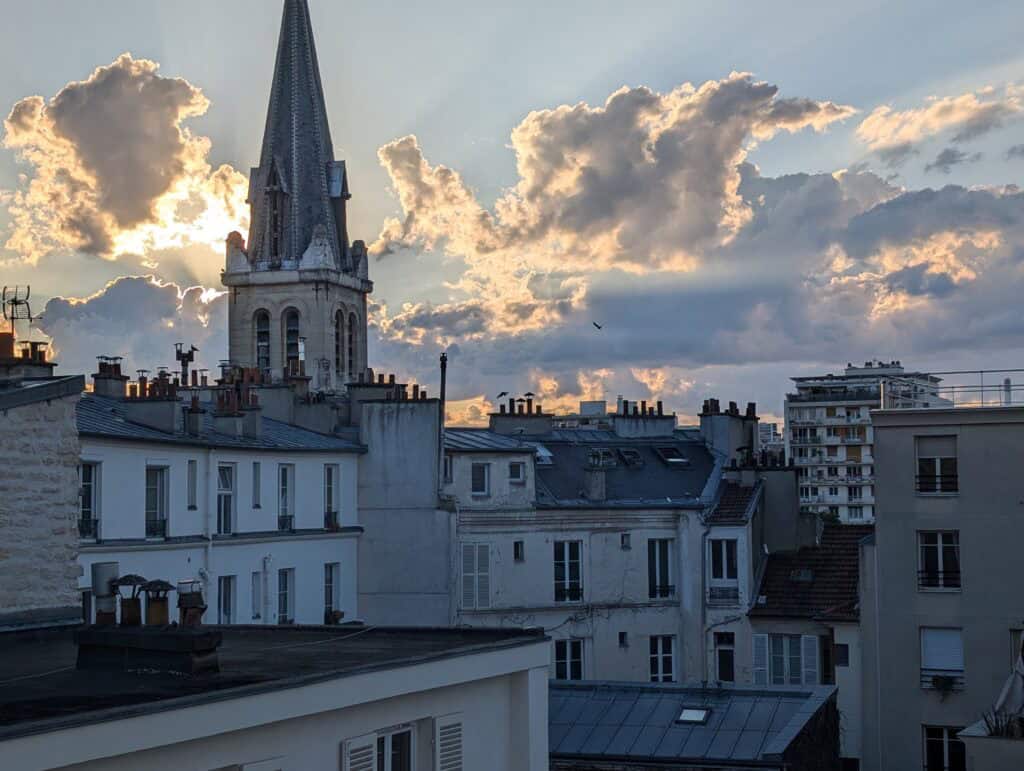
paris skyline

Finding an Apartment in Paris; It’s Not Them, It’s You. Tips to Secure Your Dream Digs

You’ve dreamt about this day for way too long. You’ve resent your application via La Poste (twice), you’ve signed the textbook-thick lease, and you’ve finally been given the keys to your dream Parisian home.

You walk up the 5 (read American 6) flights of stairs with a grin from ear to ear because when you reach the top level and insert that irreplaceable key into that beautiful door, you KNOW, it was all worth it.

Now lets go back, about 3-6 months, cue rewind montage.

Your time is ending in your Airbnb that you had to rent to fulfill the visa application requirements. You’ve had a great time playing house and are looking forward to bringing your own place to life with your own essence. But, where do you start?

Some might think you started a few weeks before you even moved over! But things are a bit different in our dear Paris. You see, finding an apartment in Paris, as a foreigner, is like finding a dinosaur fossil at an archaeological site. Not impossible, but it’s going to take time and you’re gonna need a fine-tooth comb. Yes, laugh, it’s okay, you’ll need to laugh to survive through this. 

Start Your Search

You have several options. The most popular route is renting a furnished flat through an agency. This is also the most expensive option because the rentals are overpriced from average, the furnishings are usually comfortable, but sometimes unkempt, and the agency takes a comfortable commission. The pros are that all communication is in English, you can access an online catalog and view the apartments online, making it much more streamlined to choose a place and have a “home” before you even step out of the CDG airport. A big con is that you don’t actually see the flat, or even the area in person, and that could yield an unfavorable disposition. Once you’ve signed a rental agreement, it’s nearly iron-clad, so breaking it is not much of an option.

Now, if you know a few things or two and are comfortable with speaking French, you might try your hand at sourcing a place on your own through the French version of Craigslist, Le Bon Coin. Here you can not only find your next dream apartment, but also a bicycle, clothes, instruments; absolutely anything under the sun has been or could be sold on Le Bon Coin. As the adventurous writer of this piece, who did not know a few things, I decided I didn’t need an agency and tried going down the rabbit hole of apartments listed by locals. And may I say, what. a. journey.

The Dossier

There are many inner workings to locking in a place, much more than scheduling a visit and meeting the owner. You can’t get any traction forward without a dossier, your application packet, essentially. You’ll learn quickly in this new French life that your dossier will be an invaluable collection of paperwork that you’ll use for finding a home, a job, opening a bank account, and more. The French like everything on paper and it’s important that you look excellent on paper.

But your experience and income may not translate through the language barrier. And if you don’t speak French, it will be difficult to garner confidence and gain trust that you, a foreigner, will be a worthy tenant who will never falter in paying their rent. If you’re wondering, no, I did not speak French at the time. It was just me and my blind confidence leading the way.

Asking For Help

After several weeks licking my wounds, I accepted that I needed a professional’s assistance, but I could not stomach paying the exorbitant fees of housing agencies, so I found a middle ground. A property search agency, Chasse immobilière, for freelancers and foreigners works exclusively with local realtors that speak English and know how to prepare an application packet best suited for a freelancer, non-native speaker, non-French person, and every other outside of the box scenario. They go through their network,  Le Bon Coin listings, and different realtor agency listings from all around the city (or country if you’re looking outside of Paris). I was fortunate enough to connect with a local realtor who sent me so many listings, made appointments, handled all communications with the owners, and honestly took off all of the burden. I just had to click through the photos, say yes or no, and we’d meet to view the listing. Thanks to her, I found my absolute dream apartment. With the big Brown door, on the top floor, with the gold lock, the ancient elevator, and the most Parisian view. There is a fee for this service, but I felt better knowing part of it went directly into my realtor’s pocket.

There is no wrong way to look for a home in Paris, but there are many more efficient ways, and I can’t recommend enough to consider hiring an agency to help you with the search. Alternatively, I’d be happy to recommend my realtor, now turned dear friend, who knows Paris inside and out.

Whatever path you choose, rest assured that your dream maison is waiting for you. Your Parisian home is only just around the corner.

Photo by Brian Potter

Did you enjoy this article? TAIP is 100% reader-supported through tipping. If you want to leave us a tip of any amount it would be highly appreciated.  These tips help support our efforts to keep TAIP an ad-free environment. Just like at a cafe, the tips are split evenly among the team.


a field of purple flowers

On Living Two Lives

I’ve heard of people going back home after living abroad for a while and feeling self-conscious, out of place. As if they can no longer relate to the people from their hometown. It’s isolating, I imagine, to feel disconnected from the people and the place that witnessed their formative years.

For me, going back home for the first time since expatriating was disorienting, but I had a different experience.

Stepping back onto the soil I knew so well — the smells of Texas, the long stretches of overpasses that led to shopping plazas or nothing at all, and that heat, my God, that heat — transported me back to my adolescence. 

This was the town I hit puberty in. The town where I first learned what it was to like someone so much it hurts. The town where I spent almost all my weekends at the age of fourteen at the roller rink. The same town that I knew like the back of my hand — I could still drive the same mindless routes to the superstores that my friends and I wandered around in when we had nothing better to do (and in the suburbs we almost never had anything better to do). 

This was the town that I hated, that I so badly wanted to flee from, the town I associated with boredom, ignorance, bigotry. I remember so vividly feeling like an alien on my home planet.

But also, it was the town that raised me. I thought I always knew there was life outside of Katy, Texas but I didn’t really get to experience it and truly understand everything that it encompassed until I left for a while.

When I came back home for the first time I was awoken, rather briskly, by the realization that there was this other person inside of me, one that walked with her chin held high and in a confident posture. I felt unafraid of the world. 

Because in Texas, I have no shame. These people don’t impress me. They don’t intimidate me. I know them for who they are — so easily placeable in a tight, little box. Film bro, sorority girl, liberal, conservative, someone who gets me, someone who doesn’t. 

I’m the funniest when I’m at home. The most reckless. I have no care in the world. I’m happy, I’m generous, I speak up for myself effortlessly. 

In Paris, another less familiar, less well-acquainted side comes out. I’m shy. My self-advocacy is easily thrown out the door. It’s something I have to think about. Put energy into. Relearn every day.

I’m drawn into myself. I’m self-conscious. I can come off as mean. I like to think it’s because I’m protecting myself, but really, it’s because of all my nerves and how scared I am. How hard it all is.

So at first, I was shocked and also liberated to come home and release this lighter, funnier, kinder version of myself into the spotlight again. I exhaled, so incredibly relieved. I am layered. I am complex. I am not this way, or that. No one can fit me in a box because I’ve moved away from that possibility of being stuck there for too long. 

And finally it all starts to make sense — I am nice, I am adventurous, I am brave — moving to Paris, becoming an expat has made me believe I was one way, it hardened me, convinced me I’d be like this forever, but my life here is just starting out. Of course I’m acting like this. Of course all I can think about are the differences between home and here. There’s still so much room for my life to change. 

I feel immensely fortunate to have been struck by this sense of duality. While I know fear and anxiety well, I also know assurance, confidence, comfortability. Not everyone gets to feel these things. I am so lucky to have two lives, one that can nourish the other while in pain. One that discovers something that helps revitalize the broken side of myself. Not everyone has this same experience being an expatriate and I will always count my lucky stars for this.

And I’m not saying I felt this ease and comfort right after I stepped off the eleven-hour plane ride. I remember initially wincing at the loudness of public spaces. The airport, coffee shops, malls. I’d cover my ears and buckle down — bracing myself for all that noise. It was the first time I truly recognized how loud Americans tended to be. 

But eventually I embraced it. I rejoiced in it. These are my people. My silly, ignorant, superficially sweet people. 

I learned to collect the noise, open my heart up to it, and embrace that cafe culture in America wasn’t just about working on your laptop. It was also about eavesdropping too.

I learned to feel completely and utterly at peace. Despite all the noise. Because while I know people can sometimes feel lost going back home, I felt revitalized.

Photo by Roberta Guillen on Unsplash

Did you enjoy this article? TAIP is 100% reader-supported through tipping. If you want to leave us a tip of any amount it would be highly appreciated.  These tips help support our efforts to keep TAIP an ad-free environment. Just like at a cafe, the tips are split evenly among the team.
people walking past paintings in the Louvre, Paris

You Have to Make Your Life

Having to stand up for myself in a country where I’m trying to establish the rest of my life has been no easy feat. 

A thin layer of perspiration has formed and now permanently coats my face simply because I’m trying to work up the nerve to ask a follow-up question. 

Standing up for myself takes everything out of me. It takes all my guts. 

And yet, I still decide to get up every morning and do it again. And again. And again. 

When I’m lying on my bed at night, thinking about what little ground I’ve covered, yet how much energy I’ve used to defend my honor, I’m struck, asking myself the question: When does one learn to do this? When does one learn how to stand up for themselves? Because I think I might’ve missed the memo.

As children, it’s our parents’ job to be our biggest advocate. Defend our rights. Speak to our needs.

During adolescence, we often wade in a state of constant humiliation, so much so that it feels like we’re drowning in it. We’re barely hanging on. Dogging-paddling to stay afloat. We couldn’t care less about fighting for our rights, what we deserve, we’re living day-by-day and our friends are our safety floats.

Then one day we wake up and come to the jarring realization that we’re the adults now. It seems as if we’ve just been living as passerbys to our own lives until suddenly we’re thrown into the wild, taught to fight it out, and see if we come out alive. 

In adulthood we’re confronted with the desire to carve out a life of our own. And if you want to do that — to make your own life — it means getting used to confrontation and passive-aggressive responses and learning to be your biggest protector. 

When I moved to Paris in my early twenties, my question changed in accordance with my new context. Having to deal with bureaucracy, confrontations on the street, and landlords all in a foreign language on a foreign land, I wondered, “But who stands up for us?” I felt that someone should. 

Sticking up for myself within a new identity became an even bigger challenge, yet increasingly vital. 

Initially, I relied on handling administrative tasks in a group effort, surrounded by my closest expat friends. This way, if we worked together, chainlinked our arms around one another’s, no one could take us down. 

One thing led to another and the group eventually did collapse. 

Someone would ask for a raincheck the day we planned to meet up and check things off our to-do lists, so we’d take it as a sign to put our tasks off for another week. Another would fill our souls with hope by promising to look into something for the group and relay their findings. In the end, they’d never get around to it.

Relying on others to help cushion the embarrassment by being there with you when you fall from grace is undeniably nice, but it also tends to be a huge waste of time.

I even tried relying on my boyfriend for this sort of support, telling myself that once he got home from work he would sit by my side and help me as I called CAF. When he would come home, we’d make dinner while listening to music or turn on the TV in the guise of just wanting to watch the news for a few minutes, then like magic, a movie would switch on and we’d get sucked in. 

We always told each other tomorrow. Tomorrow is when we’ll spend countless hours on hold together. 

The thing is, time moves slowly when you’re always waiting on others. 

I watched as people made their own lives around me. Big things were happening to people. Law school. Jobs in fields that nourished them and some that even paid them well. Marriage. An evolving social status.

It felt like nothing was happening to me. People were moving around me, things were moving around me, but I wasn’t. I was stuck in the middle of a whirlwind. 

I was with one of my expat friends at the Musée de l’Orangerie, wandering around the Berthe Weill exhibit and reading about her legacy and the kind of life she led in Paris. I remember feeling low at the time. Bad news kept toppling onto my lap. Yet again, I was passing nights lying on my bed, questioning everything. The central one being: why am I here? Every bright light at the end of the tunnel seemed to be misleading. Caveats adorned everything I pursued, ultimately preventing me from simply living in the city where I wished to be. I couldn’t feel any relief. But then I saw this quote plastered above some of Weill’s collection and a smile couldn’t help but creep upon my face. My stomach felt warm. My giddiness started to rise. 

“I started out with just 50 francs in hand and went into debt to pay the costs involved in opening a shop. Obviously, the situation wasn’t ideal, but I couldn’t back out now. Besides, what was the worst that could happen? Not being able to hang on? I WILL HANG ON!” – Berthe Weill

Be brave. Do the thing. Bear the challenge. If anything, it won’t wear you down; you’ll wear it.

In the end, I sucked it up. I put on my big girl pants, and I learned how to fight for my life and how to find pride in saying that I made it my own. Learning to stick up for yourself in a “ce n’est pas possible” culture is not my kind of fun. In fact, I used to take offense to it. With nearly every interaction, I have to fight for what I want. As an American, having arguments, even little ones, doesn’t just brush off my back. I don’t call that an interaction. I call that a dispute, and it makes me feel icky. They stick with me. I feel ashamed, or if I’m lucky, I learn to think of the other person as evil. 

Here, it’s almost like a game. Oh, you want something? You’re gonna have to beg me for it. 

I now treat it as such. Once I crack the code and win the game, receiving what is rightfully mine, I become overjoyed. It’s made the reward feel even better. It’s turned it into a testament to my wit, my charm, my insatiable persistence. 

Still, I find it demanding to stick up for myself and fight for what is rightfully mine, but I’m happy to say that I try to take it less seriously these days. Laughing more about it helps. What do you mean it’s not possible to do something that is very clearly possible? 

In doing the hard work, I’ve felt a strange conglomeration of feelings: being absolutely on my own, yet feeling powerful because of it. I’ve learned, reluctantly, that I can’t wait and sit back and watch how my other expat friends have done it or wait till my French boyfriend can help me.

If I want things to happen for myself, I need to make them happen. And in the meantime, regardless of what will happen with my life, I WILL HANG ON!

Photo by Diogo Fagundes on Unsplash

Did you enjoy this article? TAIP is 100% reader-supported through tipping. If you want to leave us a tip of any amount it would be highly appreciated.  These tips help support our efforts to keep TAIP an ad-free environment. Just like at a cafe, the tips are split evenly among the team.

people walking in front of a restaurant at night in Paris

Paris is Still Just a City

In my final year at university, amidst the chaos of final exams, graduation, and a future being all mine for choosing, moving to Paris was all I could really think about. I didn’t care about making a name for myself or carving out a place in the land of interns, waiting eagerly to climb the corporate ladder. All I cared about was getting out of Texas, seeing something new.

I dreamt of the days I studied abroad here, drinking absurdly cheap wine, eating fresh pastries, discounts at the cinema, free entries to museums. I dreamt of a life Paris had afforded me when I was younger. One that was reckless, one where I had no responsibility besides to fall in love with the city, new friends, even a cute boy. 

When I graduated, I remember the world seeming so big, and I felt so lucky to have all these possibilities laid out in front of me. I had a degree now, even though I could hardly remember how I got it, and I naively believed that things would continue just as smoothly for me as they had been, given my life thus far. So, I took the leap, did the big, courageous thing it was for a well-off girl like me to do, and I made the big move to Europe. 

I emerged from the metro at Place d’Italie on a busy Sunday afternoon, with a suitcase in my hand, and an overstuffed backpack hanging from my shoulders. Police sirens rushed past, pedestrians made way for themselves regardless of others, and there stood directly in my line of vision, a big, metallic, soulless shopping mall that was the point of reference for my new neighborhood. Some residents have the Eiffel Tower. I had Italie Deux. 

I looked down at my jean shorts and sneakers, then up at the Parisians sporting black slacks and light summer jackets. An elderly lady came up to me, asking for directions. For a while, I tried to help. I looked at where she wanted to go on my phone and attempted to explain directions in French. She appeared frustrated, not being able to understand me, and gave a look like I was wasting her time. She walked off and demanded the next stranger for help.

I was breathless after having dragged my suitcase up several flights of stairs to my new apartment. After having unlocked the door with my comically long skeleton key, I immediately sank to the wood-paneled floor. I sat there, looking up at the crown molding on the ceiling and felt completely happy. A wave of warmth rushed over me. This is what I wanted, I thought. Crown molding, how lucky am I? Sure, there was an unbelievable amount of dust and mold bordering the windows, and the previous tenants had left a bunch of clutter, but here I was finally in my new place in the city I’ve been dreaming about ever since I left.

Weeks passed and I put off essential errands that would make my life feel more real and viable here. I needed a bank account, a social security number, a phone number, WiFi. But I was scared. 

Hidden within my fear were my memories, and suddenly, they all came flooding back. My face felt hot. I suddenly remembered what I was so quick to forget: how humiliated I felt when I was studying here, trying to disguise my Americanness yet it was inescapable. How I was still incapable of mastering the language. How it felt like anxiety was always trailing me, hiding behind every corner ready to pop out and remind me that this was not my home, things work differently here, and they don’t really work for you. 

I broke out into a cold sweat. What was I doing? I came over signed to a nannying agency, meanwhile I had spent the majority of my life working with kids and after finally having a college degree, I was longing to do something else. What was I doing? I was wasting time while everybody was back home applying for jobs that they could actually get. 

My panic broke me. I applied to so many jobs and internships, all of which were hindered by the fact that I wasn’t yet bilingual, nor was I enrolled in higher education. I felt trapped. I felt trapped in this undeniably beautiful, bustling, and some might say, I know I sure did, magical city. 

I remember looking for signs to bring me back to America. A cop out. A scapegoat. I began applying to these outrageously prestigious Master’s programs in America whose acceptance rates were laughable and exclusively marketed for geniuses. I convinced myself into believing they were targeted at me. I told myself, if I get into one, then it’s destiny. Then I’m going home and never looking back. They need me. America needs me.

The advertisements that fluttered the walls in metro stations began speaking to me. Women and men, children and the elderly, all those whose faces were plastered on these posters, urged me, begged me to come back. “You’ll be safe there,” they teased. “Life will be easier. You’ll get a nice job, one that fulfills you.” I ran to catch the stalled train before the doors shut, wanting to give in but also not wanting to give up. Making that decision to move back home would feel like both.

The image I held in my head of my study abroad days no longer held up. The lights dwindled, the magic faded. Paris is beautiful, yes, but there’s a lot of dog poop smeared across the sidewalks. And cigarette butts. And trash. There’s almost no relief from the heat in the summer, so it’s best to get away, if you can afford it. People can be mean and creepy. All of these things are not just exclusive to American cities — they are caveats of every major metropolitan area, including Paris. 

It took me two years. Two years of indecisiveness, of failed dreams and miraculous resurrections, to realize that fighting to live in Paris is worth it. 

I can’t exactly say what the catalyst was to deciding that I was going to stay, that I’ll fight to carve out a life for myself here. Maybe it was the political climate in America, making my idealization of the country come to a screeching halt. Maybe it was the realization that nostalgia is often manipulating, a poison for the brain to make the past seem so alluring when that’s exactly what it’s meant to be: something that builds our story, but remains there, stuck. 

Maybe it was the realization that the job market is incredibly difficult everywhere right now. Maybe it was (it definitely was) that the cute boy and I started to become even more serious in wanting to integrate our lives with each other’s. 

It was probably all of those things that made me decide to stay, despite the hardships, despite the seeming impossibility of it all, despite the all-consuming nostalgia, and, at times, maddening cultural differences. I was overly confident two years ago, I have to admit. I thought I was ready to move my life abroad back then, but in fact it took me two years of living here to confirm exactly that. 

Paris has been a city that I hate(d), that I love(d), that I couldn’t/can’t seem to get over. Paris is still just a city, with all its flaws and glamour. But now, it’s my city.

Photo by Elric Pxl on Unsplash

Did you enjoy this article? TAIP is 100% reader-supported through tipping. If you want to leave us a tip of any amount it would be highly appreciated.  These tips help support our efforts to keep TAIP an ad-free environment. Just like at a cafe, the tips are split evenly among the team.

a boat on the seine river in Paris at sunset

Finally Sharing Why I Left Paris

I have been, understandably, hesitant to share the story of why I left Paris here on TAIP.  As the owner of a website with a title that suggests I am indeed an American living in Paris, it felt like a major bomb to drop on what has been not only a creative outlet for me, but a place to help other Americans interested in following their dreams of moving abroad. It felt scary, dangerous even. What if no one wanted to read anymore once they found out I wasn’t actually living in France?

I’ve also been dealing with feelings of shame ever since the decision to leave was made. While I love the expat community in Paris, most of that shame was deeply tied to an interesting phenomenon amongst that particular group. Expats who have lived in the city for 10, 15, 20, or even 30 years wear their time spent like a badge of honor. I’ve been here forever and I’m never going back, the badge says. I write this as someone who was proud of her own, 9.5-year-long badge. I thought I was going to be someone who “never left,” who felt so comfortable in her new life in France that thoughts of going back to the States would never even dream of entering her ether. I was the girl who moved to Paris. And stayed.

Then the pandemic happened. And then I got married. And then I realized how quickly my parents were aging and even if I committed to going “home” once a year for the rest of my life, it would mean only seeing them 10 or 15 more times for the rest of my life. They wouldn’t be able to get to know my yet-to-be-born children or my very-much-alive new husband.

The idea of leaving floated into my mind slowly and quietly. It decided to camp out every time I felt different or like the étrangère that I was. It set up house with a foundation when I found out my dad was sick. And it battened down the hatches every time I felt lonely, misunderstood, and when I came to the realization that while I no longer felt American, I knew I wasn’t fully French either.

Then, my husband (who is French) started dreaming of his own life abroad. As his wife, I could give him that gift, if he really wanted it. We started daydreaming about what it would be like to move to idyllic southern Rhode Island, where I was born and raised and where my family still lives. Wouldn’t it be nice to go to the beach whenever we wanted, we wondered. To breathe fresh air, to watch my nieces grow up, see my childhood friends become mothers, and finally, finally be able to live in a spacious home without having to provide the dreaded dossier to do so.

I can’t remember now a specific conversation in which we said, “we’re doing this,” but I do remember getting connected with an immigration lawyer in the US through a friend of mine. At this point, I was so well-versed in how to move to France, but I had no clue how to move to the US as a foreigner. I remember having that first initial call with the lawyer, getting excited about our options, and booking a one-way flight almost immediately after. I guess that was the defining moment. “Yes, we’re actually doing this.”

We also ultimately knew that after Covid, we wanted everyone in our little family to have the same passport. I still didn’t have French nationality, but we knew that would be relatively painless, thanks to all of the years I had lived in France, having a master’s degree from a French uni, and the real golden ticket: being married to a French person. We also knew that getting Pierre a green card and then American nationality would likely be a bit painful. Might as well do the more difficult step first, right?

And so we packed up our apartment in Montmartre and moved in with my in-laws (again) for the last month we were to spend in France. We traveled around the country to say goodbye to Pierre’s family and then came back to Paris for a few weeks to celebrate with friends. We ended up having two farewell parties because one wasn’t enough. As our departure date grew closer, the more real it began to feel. Was I actually doing this? Was I actually leaving this dream life of mine that I built completely on my own, brick by brick?

Panicking, I told everyone the move back WASN’T PERMANENT, NO, DON’T WORRY, I’LL BE BACK BEFORE YOU KNOW IT! Those feelings of shame inadvertently caused me to downplay the move, act as if it were just a duty I was called to do. The mixture of emotions I experienced was incredible. One minute, I was so excited to be able to call my mom whenever I wanted to; the next, I wanted to scream that I felt like everything I had worked for was being taken from me.

I also knew that in order for Pierre and I to pursue this life we had been talking about pretty much since we met, we had to live in the US for at least a few years. We wanted to split our time between the two countries, as evenly as possible. To do that we both needed double nationality. And that required moving back for some time, dream life in Paris or not.

Now that there are three years between me and that decision, three years between a girl full of shame for hiding a part inside her that was aching to go home, three years between feeling like the world I had built was crashing down all around me, three years between feeling like a failure because I didn’t “have the guts” to stay, I’m finally talking about what it felt like to leave said dream life.

I’m happy to say that things feel so much less final than they did back then. As we get closer and closer to being able to apply for Pierre’s nationality — and strangely, being able to apply for my French nationality from the US — I’m realizing that we’re getting closer and closer to the original dream: spending half the year in France and the other half in the States. We can almost taste it, and it’s made the pain I felt leaving France in 2022 not seem as painful.

I’ll never be the girl who decided to leave everything behind for a brand new life, no matter the cost, again because that girl doesn’t exist anymore. But, she wouldn’t have existed even if I had decided to stay in France and never come back to the US again. That girl was my 23-year-old self, and I have now become me, my almost-34-year-old self. And that’s okay. Change is okay. Letting go of that brave, fearless girl is okay. Because who I am now is brave in ways that 23-year-old Molli would never believe. And I have that 11-years-in-the-past me to thank for a lot of that bravery.

So, dear readers, as I embark on this new chapter, I’d love to take you along with me. TAIP will always be a part of my life because France will always be a part of my life. I can’t wait to share all about getting my French nationality (from the US… crazy), deciding where to live when we do go back to France, and how to navigate a life truly split between two countries. We will of course continue to publish articles on visas and all of that good stuff, as something else that will always be a part of my life? A desire to help others pursue their hopes and dreams.

Thank you for following along until this point, and I’m so excited for what’s in store.

If you prefer video, I’m releasing a four-part series on why I left Paris over on our YouTube channel, taip on tape. Be sure to subscribe so you don’t miss a thing 🙂

Photo by Joe deSousa on Unsplash

Did you enjoy this article? TAIP is 100% reader-supported through tipping. If you want to leave us a tip of any amount it would be highly appreciated.  These tips help support our efforts to keep TAIP an ad-free environment. Just like at a cafe, the tips are split evenly among the team. 

top floor apartment in paris

What No One Tells You About Finding an Apartment in Paris

We often talk about the lengthy and sometimes complicated process of applying for a visa to live in France, what it’s like to move away from friends and family, and better ways to learn French. But, something we’ve discussed only a handful of times is perhaps one of the most important — and potentially most frustrating — parts of moving to France: finding an apartment in Paris.

The good news is that it’s not just you. Apartment hunting in Paris really is that hard. 

Thinking about all of this, a story comes to mind. Stephen and I have worked together on so many different things, from walking tours and picnics to Airbnb and beyond. One of those random projects and gigs included showing apartments in Paris together. He had some contacts with people who wanted someone trustworthy to actually show places to potential tenants and serve as an initial judge of whether said tenants would make a good fit.

He gave me RDV on rue Jacob in the 6th arrondissement — coincidentally right around the corner from where I lived as a student during my semester abroad and one of my favorite areas to walk around to this day. I was excited to go back to my old haunts and earn a little extra cash from helping him out.

I rounded the corner of the rue Bonaparte and saw a massive line of people, seemingly waiting to enter the Ladurée boutique. I kept walking towards the address I wrote down, and noticed that the line snaked up the street in the exact same direction I was going. Weird, I thought — but chalked it up to it being a busy part of town. Imagine my surprise when I saw the line of people waiting outside the address that Stephen told me to meet him at.

I skirted around them and headed up the stairs — I knocked on a door that was left slightly ajar and told Stephen about the line. He said he wasn’t surprised, there was a lot of interest. When all was said and done, we showed the place to more than 40 people.

So, why am I telling you this? Because this little walk down memory lane is a perfect example of how competitive the real estate market is in Paris, even for rentals. Now, that’s not to say it’s impossible. I’ve never been homeless in Paris, but I have had to shift my expectations since living there. 

And today, I’m sharing everything I’ve learned along the way so you don’t make the same mistakes I did.

Know What You’re Really Getting Into

As I’ve alluded to in the form of my story above, finding an apartment in Paris is nothing like what you may be used to in the US, or even elsewhere in Europe. Things move a lot more slowly, and it’s very competitive.

Many listings are already taken by the time you send your first message, and the best places are often only available if you know someone. You might tour an apartment, think it went great, and never hear from the landlord again (been there). As a note, French landlords can be extremely picky, especially with foreigners and expats. There’s a fear that you’ll just “leave the country” and never pay your rent. In a way, I get it.

Some also want proof that you already live in Paris and pay your current rent on time before they’ll rent to you. Like so many other French administrative processes (like getting a bank account or cell phone, though those are much easier nowadays), you basically need an apartment to get an apartment. 

Another big surprise? An unfurnished apartment likely won’t even have kitchen appliances (yes, not even a stove), and also means committing to a three-year lease, minimum

Decide Where (and How) You Want to Live

As we’ve noted in our Paris neighborhood guide series and in a recent YouTube episode, every arrondissement is different, boasting its own unique charm, vibe, lifestyle — and budget. So, before you really start your hunt, it’s important to have a general idea of where in the city you’d like to live and what kind of housing would work best for you.

Here are just some of the options:

  • With roommates (often called a ‘flatshare’ or colocation in French)
  • A small studio apartment (usually under 20m² or 215 square feet)
  • A chambre de bonne (tiny top-floor former maid’s quarters with shared bathrooms)
  • A traditional apartment (if you’ve got the budget/dossier for it)

You could also do what Stephen did for his most recent apartment. He couldn’t find anything, so he went to Airbnb to see if a host would be willing to rent to him more long-term. He met them for a coffee, talked things through, saw the apartment in person, and signed the lease. It’s an excellent example of how, sometimes, you need to be willing to be scrappy to snag the Parisian apartment of your dreams.

Now, as mentioned, finding an apartment in Paris isn’t always easy, so you also need to be prepared to take what you can get. I don’t mean you should settle for a shack in the middle of nowhere, but if you can’t find what you’re looking for in, say, the 5th arrondissement, be willing to look in, say, the 19th.

The All-Important Dossier

If you’ve managed to apply for and obtain a French visa, you already know the importance of paperwork in this country. France wants proof for everything — you can’t just show up for an apartment tour and say you’re a great tenant. They want to know your name, date of birth, occupation, how much you make, where you’ve lived in the past, and all of your deepest hopes and dreams. Okay, the last one is an exaggeration, but you get the gist.

In fact, most landlords or rental agencies will ask to see your dossier before they’re willing to even speak to you. At minimum, it should include:

  • A copy of your passport and visa
  • Proof of income (French pay stubs are strongest, or bank statements)
  • A work contract or school enrollment letter
  • Recent utility bills or proof of address
  • A French bank account to prove you have one
  • A ‘garanteur’ or someone who makes more money than you, who is willing to back you up, like a parent or relative

Here’s the catch: even people with great salaries or a chunky savings account struggle. French landlords want to see French paperwork, and without that, they may see you as too much of a risk. And, the truth is, I also know dozens, if not more, French people who struggle to provide solid dossiers too. I know many who use fake pay stubs and bank statements to make them look better off than they are. That’s how competitive this is!

There are services in place for foreigners or folks without well-off family members, like GarantMe or Visale, but I also know there are some landlords who won’t accept them.

I know it’s not fair, but it’s how the system works.

Where to Look

There are several rental platforms to choose from, but I’ve had the best luck personally on SeLoger, PAP, and Facebook. Craigslist Paris is also worth checking out, but it is full of scams, so be careful. HiPParis has some cool options, but mostly only for buying. Don’t forget Stephen’s Airbnb trick too. There are also rental agencies that specialize in helping expats (if there’s an interest, I can do some digging on ones to try!).

Your best bet? It’s all about word of mouth and people you know.

I know, I know — but, Molli, what if I just moved to Paris and I don’t know anyone yet? I get it! Building community and finding your people takes time, but once you do, a whole new world will open up to you. You never know who you may meet, who may have a friend looking for someone to take over their lease, or an aunt who needs someone to stay in their apartment for a year while they travel.

Like anything else, getting to a point where you can simply ask around and find an apartment in Paris will take some time.

And a lot of times, just when you think it’s never going to work out, it does. You’ll get the call. You’ll sign the lease. You’ll move in.

Prefer video? Watch us discuss finding an apartment in Paris on YouTube!

Photo by Doctor Tinieblas on Unsplash

Did you enjoy this article? TAIP is 100% reader-supported through tipping. If you want to leave us a tip of any amount it would be highly appreciated.  These tips help support our efforts to keep TAIP an ad-free environment. Just like at a cafe, the tips are split evenly among the team. 

students cleaning the kitchen at restaurant d'application ferrandi in paris

Upscale Dining at Low-Scale Prices: Dine in a French Restaurant School (École d’Application)

France has a reputation for great food, and she intends to keep it that way!

How does France keep up its reputation for good food? Where do all the great chefs come from? Would you like to dine on the knowledge that the student-chef of today’s meal might just be one of the great 4-star chefs of tomorrow?

Relatively confidential, there are a myriad of restaurant schools in Paris where the public can come and dine. 

Logically, if students are to learn to cook for restaurants, they must be able to practice cooking for restaurant-sized numbers of guests. But when they do so, who is going to eat the meal? And how can they learn to serve correctly? That, therefore, is the basis of the “restaurant d’application.”  The general public can reserve tables at these restaurants where the quality tends to be high and the cost low.

Some are private and students pay for their studies, some are part of the public high school (and post-high school) system, some are specifically for dropouts from school or from society altogether, or for the handicapped, and aim to train the students in a profession where they are sure to find work. 

So that students can practice their skills regularly, these schools have restaurants where the students are in charge under the very watchful eyes of their teachers: they check your coat, greet and seat you, create the cocktails of the day, get your wine choice, and serve. Out of sight, they do all the cooking.

As these restaurants are schools, many of them only serve lunch, and almost all of them follow the French school year and are therefore closed on the weekends and during French school vacations.

In most cases, menus are announced in advance; they can be fixed or offer some choice, but drinks are most often extra.  

RESERVATIONS ARE A MUST, and should be made well in advance. It is best to reserve as close as possible to the day that a restaurant opens its reservations for a particular date, which may be more or less a month before, as tables fill up very quickly.

Let’s take a closer look.

Ferrandi

This is France’s most sought-after restaurant school. Some of France’s greatest chefs began at Ferrandi. At the same address, there are two restaurants, both gastronomique, the 28 and Le Premier, that differ only in the students’ class level. At the latter, food is prepared and served by students studying for the equivalent of a high school diploma in food service, while at the former, students will be working toward a bachelor’s degree. There is also a year-long international section, which is taught in English. The students are expected to be highly conscientious and professional in their work.

Seating for a five-course lunch takes place at 12:30pm, and the lunch from amuse-bouches through to dessert and mignardises (a kind of smaller, second dessert) will finish at around 3pm. Reservations open three weeks before the lunch date, which can become full within minutes. However, after chatting with the director of the international program, he has suggested that an email can be sent to try and get a reservation for the time you will be in Paris. In this case, be sure to ask for English-speaking students, who will be happy to prepare their wait service specially for you in English. 

Address: 28 Rue de l’Abbé Grégoire, 75006 Paris, France

Restaurant d’Application Belliard

Like for Ferrandi, there are two restaurants here: Sesame and Paprika. The former is where first-year students learn to bake bread, cook, and serve, and to study wine and coffee. It was kindly explained that the objective of Sesame is to give young people a first professional experience of this trade and to inspire them to continue in this career. The latter is for more advanced students studying for a degree in restauration. 

Address: 135 rue Belliard, 75018 Paris, France

La Table d’Albert de Mun

With a small vase of fresh flowers on each one, this vocational high school has round tables throughout for groups of 5-6, with some square ones along the walls for smaller groups. Beyond the main general restaurant curriculum, the school offers three specializations: pastry and bread baking, as well as chocolates and wines, where proof of the learning is in the eating (and drinking!).

Menus are announced on the site, so reservation dates best made a month in advance can be made according to taste. When reserving, do indicate if anyone in the party has allergies and that you would like a menu in English — the students have a course in translating menus, and the teachers are happy to have English speakers as guests on whom the students can practice their language skills. 

It is important to note that the school will ask for a credit card number for a reservation; in case of a no-show with cancellation less than 48 hours in advance, 15 € will be deducted from the card. 

Address: 3 Rue Pierre Leroux, 75007 Paris, France

Lycée Hôtelier Guillaume Tirel

From the name only, it can be seen that this is a vocational high school. In fact, its courses include both food service and hotel accommodation. Lycée Hôtelier Guillaume Tirel has three restaurants with different levels of service: Brasserie Orée, Côté Jardin, and Astérie. Brasserie ORée and Coté Jardin offer a vocational high school degree in food service, and Astérie, an advanced degree. Both lunch and dinner menus and dates are fixed and published with their prices on the site for the month to come.  

After lunch at the Coté Jardin, the four student chefs all came out to see how we enjoyed the meal. They are proud of how their school is somewhat smaller than others and of the importance of working together closely in teams. We were informed that there is a vegetable garden in the back courtyard of the school, which is the mainstay of each year’s “project”; i.e., the graduating class takes away whatever vegetables are left after the school year, and the next class decides what vegetables they want to grow for their year. These vegetables then find themselves in guests’ dishes — to our eating delight!

The hotel displays very modest prices (for Paris) for its few rooms. It is only open during the school year, on school days, and as can be expected, the service is provided by the students.

Address: 237 Bd Raspail, 75014 Paris, France

Mederic

Different from the other vocational school restaurants, Mederic‘s menu is not pre-set; diners can eat more or less depending on their appetite. Menus offer a small choice for each of their three courses: appetizer, main, and dessert. Also, diners can choose to order only one course, two, or all three, and will only be charged accordingly. 

Address: 20 Rue Médéric, 75017 Paris, France

La Salamandre

Lost in the east end of Paris in the 20th arrondissement and so named for the large sculpture hanging on the building across the street (well worth looking up for), La Salamandre serves lunch on Tuesdays and Thursdays. Also, at the end of a school term, it serves a dinner on Wednesday as the final exam for the students. Because it is a private organisation and not attached to the French school system, it is open all year round. Now and then, it opens for a brunch on the weekend, mainly serving salads and pastries. A relatively inexpensive bag of mixed breads can be ordered in advance to be picked up at mealtime and taken home. Typically, this will include a baguette, some special bread, and various breakfast breads, depending on the day’s production. 

Many speak very highly of Thierry Marx, the renowned chef who has founded this private-run, free school for those who have fallen out of the mainstream labor system and want to learn a profession. It seems that Marx comes from a working-class background and is devoted to helping those who want to raise themselves in today’s workforce. He has also opened a “bouillon” (a low-cost restaurant serving traditional French dishes) in Clichy, but that is another story.

Address: 3 Rue Albert Marquet, 75020 Paris, France

A Few More Vocational Restaurants

Too many food service schools, too many meals to be eaten, this article is in no way exhaustive. It only reflects my dining during this school year. There are many other restaurant schools in and around Paris and beyond. Below is an incomplete list of a few more. Check them out to see how they present, find the menus and prices.  

  • Restaurant d’Application A. Dumas: 29 bis rue de Cronstadt 75015 Paris
  • Vatel: 122 Rue Nollet 75017 Paris. The restaurant does both lunch and dinner. It is most known for its dessert trolley.
  • Far out at Paris limits to the west is the La Fontaine  EPMT: 6 rue Louis Vierne 75017 Paris. This restaurant also does dinner on days that are specified on its site.

Do give this very French culinary experience a try; it can become addictive. Bon appétit!

Photo features students busy cleaning up their kitchen at Ferrandi.

Did you enjoy this article? TAIP is 100% reader-supported through tipping. If you want to leave us a tip of any amount it would be highly appreciated.  These tips help support our efforts to keep TAIP an ad-free environment. Just like at a cafe, the tips are split evenly among the team. 

several euro bills in an envelope

Cost of Living in Paris vs. Other French Cities

Something that always seems to shock other Americans is when I tell them how low the cost of living in France is compared to the US. You pay HOW MUCH for internet?! I’m usually met with, when I tell people I’ve never paid more than about 30€ per month.

Internet, phone bills, groceries, going out, restaurants, housing, health care… the list goes on and on, and the one thing they all have in common is that they come at a much lower price tag when I look at what many of my compatriots have to pay in the States.

Now, all of this being said, the cost of living in Paris as compared to other French cities is quite high in the scheme of things. If you’re coming from an already-expensive area, you may not seem phased. You may even decide to stay in the capital because at the end of the day, it’s more affordable than someplace like New York, San Francisco, or Boston.

But, if you’re interested in looking into other areas, the good news is that Paris isn’t your only option. France is a diverse, well-connected country with cities that boast rich culture, excellent food, and plenty of charm in their own right.

Housing

Almost always the single largest expense in France (or anywhere else, really), and Paris is known for its higher prices. If you want to rent a one-bedroom apartment in the center of the city, you can expect to pay anywhere from 1,300-2,800€, depending on the neighborhood. Even a studio can easily reach 1,000€ or more.

In comparison, cities like Lyon, Bordeaux, Montpellier, Rennes, and Nantes have much more breathing room — in square meters and budget. In most of these cities, a similar one-bedroom will range from 600-1,200€, or even less if you choose somewhere outside of the center.

Of course, the trade-off is location and lifestyle, but there is still plenty to do and see in places like Bordeaux (where nearly half of all my formerly-Parisian friends now live) and Lyon. A lot of the time, what you give up in cultural activities, you gain back in space, quiet, and a slower pace.

Groceries & Other Essentials

The difference in cost between Paris and smaller cities re: groceries is more subtle but still worth noting. Grocery bills in the capital can definitely run higher than in provincial cities.

However, local markets tend to have more options. Differences in produce and specialty items might even be better in smaller cities, where the supply chain is shorter and prices are less inflated simply because they’re in Paris. 

For example, a kilo of tomatoes might cost 3.50€ in a Parisian market and 2.50€ in a small-town marché.

Utility costs (electricity, gas, water) are pretty similar across France (thanks socialism!), but older Parisian buildings almost always have poor insulation, which makes winter heating costs higher. Internet is around €30-40/month in Paris, while some smaller towns may have deals as low as €20/month, especially if fiber optic hasn’t made it out there yet.

Transportation Costs

One of my favorite things about living in Paris is the robust metro system. I hated being a car owner in the US, so being able to survive vehicle-free has been a major blessing. What’s more, public transportation here is a fraction of what some friends of mine pay in places like NYC. 

My handy Navigo pass covers unlimited metro, bus, tram, and RER (suburban trains) within the Île-de-France region, and currently costs 86.40 € per month.

Other French cities like Lyon, Rennes, or Strasbourg typically have monthly transit passes that cost between 40-65€. If you’re living in a more rural area, you’ll almost certainly need a car, which can get expensive. Gas is around 1.80-2€ per liter, and French car insurance is higher than what you’ll see in the US.

Going Out and Socializing

Another one of my favorite parts of French life is its café culture and general attitude toward socializing. 

Interestingly enough, the price difference for a cup of coffee is very noticeable once you leave Paris. One in the city of lights could set you back 4.50-6€, especially somewhere like Café Flore. In places like Rennes or Angers, that same coffee might only cost 2.50-3.50€.

The same applies to dining out, drinks, and other entertainment. Smaller cities will have more affordable menus and the overall cost of a night out is generally lower. That said, Paris of course gives you more variety… but it comes at a premium.

Healthcare

France’s universal healthcare system, AKA the sécurité sociale ensures that medical costs are fairly consistent across the country. Whether you live in Paris or a countryside village, your reimbursements for doctor appointments and medication will follow the same rates.

The only real caveat here is that finding an English-speaking doctor will likely be much more difficult as opposed to in Paris. If you speak French well, this shouldn’t be an issue.

Paris does boast an unmatched blend of history, culture, and access — but it’s not the only French city worth looking into. 

Ultimately the choice isn’t only about the finances. You need to really think about the kind of life you want to build in France. I know for myself, Paris is irreplaceable and I do not regret a minute I’ve lived here. That said, looking toward the future, now that many of my friends have moved away, I’m no longer in my 20s, and even my French in-laws are planning to move, I do have my eye on some different French cities and towns.

Luckily, there are so many places to choose from, right? 🙂

Photo by Markus Spiske on Unsplash

Did you enjoy this article? TAIP is 100% reader-supported through tipping. If you want to leave us a tip of any amount it would be highly appreciated.  These tips help support our efforts to keep TAIP an ad-free environment. Just like at a cafe, the tips are split evenly among the team.

fresh produce in baskets

How to Shop at an Outdoor Market in Paris

Visiting the marché is one of my favorite weekly activities, and I especially love going with either my French husband (a professional chef) or my French mother-in-law (an incredible cook herself). They seem to know exactly where to go, who to talk to, and what to choose. 

It’s almost as if they’ve lived here their whole lives… oh, wait.

Outdoor markets are a staple of daily life in France and Paris is no exception. You’ll find everything from farm-fresh produce to artisanal cheeses and even household goods, depending on where you go.

Shopping at an outdoor market in Paris is a must, whether you live here too or are just passing through. Here are a few things I wish I had known before going for the first time.

When to Go

Paris markets have specific opening times, so knowing when to go is the first step in planning your visit. Most operate two to three days a week, and the hours can vary from one market to another. Typically, they’re open in the morning and close by early afternoon — usually around 1 or 2pm.

I hate to say it for all of my fellow night owls, but to beat the crowds and get the best selection, you have to get there early in the morning when the vendors are just setting up. My mother-in-law lives and breathes by this. Oftentimes, if she can’t get there by 8am (her market opens at 7am), she won’t go at all. Quel est l’intérêt ? “What’s the point?” she’ll shrug when asked.

Now, there is a caveat to this if budget is a real concern. The other option would be to head out just before closing, as many vendors will be eager to clear out their stock before the next day — at reduced prices to boot.

To find the exact days and hours of the markets you’re interested in, check online or use the app Marcoo.

What Stalls to Expect

If you’ve never been to an outdoor market in Paris before, you’ll notice there’s a wide variety of stands that offer all kinds of things. Wandering through one is truly a feast for the senses — I don’t recommend shopping while you’re hungry or you may end up with a lot more than you originally planned for.

Here’s what you can typically find:

  • Seasonal fruits, vegetables, and herbs.
  • High-quality cuts of meat, poultry, fresh fish, and seafood.
  • A selection of French cheeses, farm-fresh eggs, and sometimes butter.
  • Freshly baked bread, pastries, and viennoiseries.
  • Rotisserie chicken, roasted potatoes, paella, and other prepared foods.
  • Olives, nuts, honey, jams, and spices.
  • Some also have stalls with flowers, kitchenware, linens, and apparel.

One of my top questions when shopping with my French fam is: how do you know which vendor to choose? There are often several stalls that sell the same or similar items… how can you tell which one is the best?

After insisting that, “Well I’ve been coming here so long I just know,” didn’t satisfy my curiosity, my husband broke it down a bit further.

Freshness and quality matter. Take a good look at the state of the produce — bright, vibrant colors and firm textures usually mean it’s fresh. Stalls with steady lines of locals are a great place to start, and if the vendors are talkative and friendly (yes, they exist in France) it’s also a good sign. Prices will vary, but steer clear of drastically lower ones as that could indicate, well, lower quality.

And, in the quintessentially French manner, the hubs says very simply that le feeling (the vibe, the ambiance) he gets when stepping in front of a stall determines where he’ll spend his money. 

I’ve somewhat stopped trying to understand what that really means, but that’s another story for another article.

How to Choose Your Produce

Shopping at a French market is different from grabbing groceries at a supermarket. Vendors take pride in their products, and bien sûr, there’s a bit of etiquette involved.

  • Look for seasonal produce: French markets focus on in-season fruits and vegetables, so don’t expect to find strawberries or tomatoes in December.
  • Check for quality: Remember to look for vibrant colors and firm textures, as well as fresh smells.
  • Know Thy Categories: Some markets label produce by origin — bio (organic), local, or imported. I typically go for the organic local stuff over anything imported, unless it’s from Spain, Italy, or another closeby country.
  • Let vendors choose for you: Unlike in the US, it’s considered rude to handle the produce yourself. Nothing against you or your cleanliness, but in France, interacting with the vendors is all a part of the experience. Tell them what you want, and they’ll pick the best items for you.
  • Ask for recommendations: They also know their products well. Don’t hesitate to ask which melon is the sweetest or what’s best for a recipe you have in mind.

The Best Outdoor Markets to Visit in Paris

There are more than a whopping 80 markets in Paris going on in a given week — from small neighborhood spots to sprawling marchés with stall after stall of goods. Here are a few of the most popular ones, plus one of my personal favorites:

  • Marché Bastille (75011): One of the biggest, with everything from organic produce to artisan bread.
  • Marché des Enfants Rouges (75003): The oldest covered market in Paris offers a mix of fresh produce, international foods, and one of the best sandwiches I’ve ever tried from Alain Miam Miam. Trust.
  • Marché d’Aligre (75012): Known for affordable produce and antiques.
  • Marché Raspail (75006): Great if you love organic food and other high-quality products.
  • Marché de la Place Monge (75005): My top choice for its intimate, small neighborhood feel and high-quality produce, fresh seafood, and cheeses. It’s right near the Arènes de Lutèce in the 5th arrondissement.

Before you walk out the door, make sure you have cash and reusable bags, and get ready to practice your French. A polite bonjour here and there will get you a really long way. So will a French friend, so bring one of those if you’ve got ‘em too.

Photo by Anurag Arora on Unsplash

Did you enjoy this article? TAIP is 100% reader-supported through tipping. If you want to leave us a tip of any amount it would be highly appreciated. These tips help support our efforts to keep TAIP an ad-free environment. Just as at a cafe, the tips are split evenly among the team.

The Museum Passes for the Louvre and the Orsay

One of the oldest articles for this blog is one I wrote on the Paris Museum Pass and whether you should get it when visiting as a tourist. My answer then and now is: only get it if you’re really into art.

That idea of being “really into art” segues nicely into today’s topic, which will cover the two museum annual passes that I have held at different times, the Amis du Louvres and the Orsay’s Carte Blanche. You used to have to go in person to get the cards the first time, but the Orsay has since introduced digital membership and renewal, and the Louvre is in the process of doing both, I think.

Some of the marketing behind such passes is that you will have “broken even” on the cost for these annual passes on the 2nd or 3rd visit. But I think that marketing misses the point entirely. Do not get these passes if you are only going to go to the Louvre or the Orsay a few times in a year. I recommend these cards for those who are going to go a minimum of 12 times in a year. Hear me out.

People save money and wait years so that they can come to these museums sometimes once in their lives. As a resident of the city, and someone who loves art, and has easy access to go during times that are not crowded for a bargain basement price, you’d be silly to pass up on these cards. Let me share a few reasons why you should consider getting them.

You Get to See the Whole Place

While the Orsay can be seen, from start to finish, in one long day, it will take you weeks to accomplish the same thing in the Louvre. Why stress yourself out when you can see both museums at your own pace, dividing your visits into floors and wings, spending an hour or so seeing what you want to see, and then getting out? While you could see the entire Orsay over 2-3 leisurely visits, it took me 10 well-planned visits to see all of the Louvre.

You’ll never do this without a plan, so before you buy these, designate a day you’ll go (e.g. 3rd Thursdays, 2nd Saturdays) and just block that out for the rest of the year. People who just say, “Oh, I’ll go sometime” never end up using these cards.

Exhibitions are Free

Those special rotating temporary exhibitions that everyone else has to pay for? Those are included in your subscriptions. Just flash your card and get your ticket. You’re never confined only to the permanent exhibitions. Even better, with the Amis du Louvre card you get discounts at other museums and with the Carte Blanche you get free access to the Orangerie anytime. The Carte Blanche also offers a discount at the bookstore, while the Amis du Louvre gives a 10% discount in the Carrousel, the mall built under the Louvre.

You Can Bring a Friend

The Orsay used to allow you to bring a friend for free on Wednesday nights. They seem to have removed that benefit but added a new ongoing benefit of entry 30 minutes early (that’s a treat!) as well as “duo” cards which always allow you to bring an additional person with you anytime. The Amis du Louvre card has always allowed free entry on Friday nights (a fantastic time to go, I’ve taken many a friend during this time slot when the weary tourists have given up and have cleared out) even if you only have a solo card. Indeed, if you have a “duo” Amis du Louvre card you’re probably allowed to bring two friends with you.

You Will Sink Into the Art

When you become as familiar with these museums as the layout of your own home, you get to enter into the art in a way that so few can. How many times have I sat and simply people-watched in front of David’s Coronation of Napoleon, one of the largest paintings in the Louvre, and one which is a spectacular accomplishment of memory (and propaganda), and simply enjoyed watching people encounter this canvas for the first time? More than I can remember.

Something else I really enjoyed doing was engaging my friends in conversation to purposely distract them while we were coming up on the staircase that houses Winged Victory. When I knew it was about to come into view, I’d casually say, “Oh, what’s that?” and bask in the pleasure of seeing people take in their breaths as they see a piece of art presented in a stunning manner. We’d then be able to talk more about it as we got closer and I’d quiz them about which wing on the statue is original and which had been reconstructed (you can tell…just take your time looking).

Just as when you revisit great books or films, you’ll find something new, so it is with great art. I’ve gained so many insights just sitting with paintings, sculptures, and objets d’art in an unhurried manner.

You’ll notice that I don’t list “save money” as one of the reasons to get these because that’s not why you’re buying them. You’re buying them for the kind of access that people around the world dream of, and people in Paris take for granted, but you have decided to invest in, on your own behalf (and of your friends), to get serious about the treasures in these museums. You may not renew after a year of access (indeed, I only held both of these cards for one year) but that year that you hold them is going to be a special one.

Photos of my cards.

Did you enjoy this article? TAIP is 100% reader-supported through tipping. If you want to leave us a tip of any amount it would be highly appreciated. These tips help support our efforts to keep TAIP an ad-free environment. Just as at a cafe, the tips are split evenly among the team.