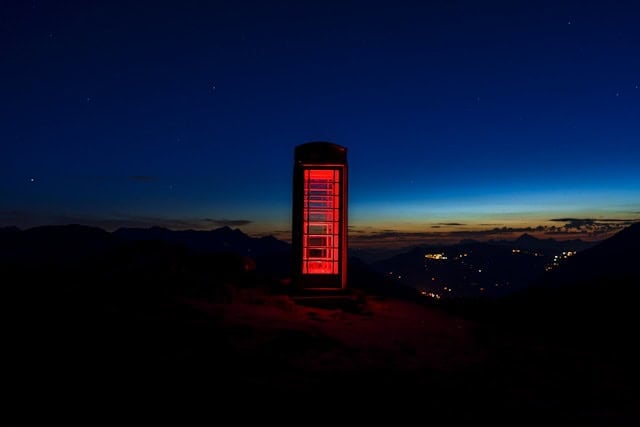
a red phone booth on top of a mountain

How I Keep My American Phone Number While Living in France

My first year of living abroad in France, I was quick to get a French phone number. Not only is it necessary for banking and other local services, but French phone plans are very reasonably priced. However, instead of ditching my American number, I decided to keep it as well. After all, I still had my American bank, and with 2-factor authentication everywhere these days, having an American number remained essential. I was on T-Mobile’s Experience Beyond plan at the time, which came with plenty of foreign data every month, and no up-charges for being abroad. Since my phone has a dual e-SIM capacity, like most new smartphones, living with two numbers was a no-brainer. Thus, my double number life began. 

While I was in the States this summer, my family and I decided to all switch to AT&T for our phone plans. I followed the crowd and thought the package would be comparable on the foreign front. I was wrong. On arriving back in France, I received a notification that I would be charged $10 a day while traveling. That simply was not going to work for me, so I turned off my American number and looked into what my options were after I finished unpacking. 

Solving the Problem

My research led me to find US Mobile and Tello, both cost-efficient mobile companies that boast good customer service and cell service while abroad. I opted for Tello, bought a cheap $6 a month plan to test it out, and tried to activate the new e-SIM. The prompts online and on my phone made it look pretty easy, but after a moment it was clear that my new number wasn’t going to activate on its own. I gave customer service a call on my French number and explained my situation. They were kind and regretted to inform me that an American number could only be activated on American soil. I wouldn’t be able to start using my newly purchased number until I was back in the States. 

I accepted the reality and swallowed my pride. After all, it was my own fault for not being more proactive about this from the outset. Thankfully, I had a trip planned back to the States in three months, so I transferred my iMessage account to my French number, asked all my friends and family to contact me through WhatsApp, and lived without my American number until my return. 

Once back in the US, I did my research, updated my account through Tello and activated the number that had been patiently waiting for me. I called another friendly customer service representative and asked her all the details about how foreign roaming would work on my account when I was back in France. I purchased the additional “buy as you go” credit that is necessary for their foreign travel (this was a $20 charge) and I took a deep breath — grateful to have my phone problems behind me, or so I thought. 

Rubber Meets the Road

When I landed in Paris a week later, I turned off airplane mode to find only my French number receiving service. The American number showed no signal. I searched in my phone settings and enabled roaming while abroad on the new number. Hours later, and still nothing. 

Frustrated, a week later I finally logged into my Tello account to see what the issue was. I scrolled through my settings to discover that I had missed checking the box to authorize foreign service while abroad. I checked the box, hit refresh, laughed at myself, and turned off my phone for the reset. When I turned it back on a few minutes later, there were those little bars I had been searching for the last three months. 

So far, I have had both numbers activated on my phone for a week. As my French phone plan is my primary source of data, I have only used five cents worth of data on my Tello plan. This is incredibly reasonable for a safety net in case I should need to receive pass keys or other identifying information that can only be sent to an American number. Overall, I am very pleased with my experience with Tello, minus the hiccups of getting my service activated in the beginning. 

Whether you are traveling abroad or starting a new life for yourself in France, be sure to do research on the allowances of your phone plan well before you land on the other side of the ocean. You may even consider activating a new SIM beforehand accordingly. We live and we learn, so with all this learning I guess I can be sure that I’m living. Do you have another American service provider that you’ve used abroad? We’d love to hear about your experience. 

Photo by Maxence Pira on Unsplash

Did you enjoy this article? TAIP is 100% reader-supported through tipping. If you want to leave us a tip of any amount it would be highly appreciated.  These tips help support our efforts to keep TAIP an ad-free environment. Just like at a cafe, the tips are split evenly among the team.

a pond in giverny France with water lilies and tress

Best Day Trips from Paris for Summer 2025

This may be an unpopular opinion, but I love Paris in the summer. Spring gets all the credit in books, poetry, and songs, but Paris in the summertime holds such a special place in my heart. 

Is it hot? Yes. Is it kind of miserable in the métro and on the bus? Of course. But, if you commit to walking wherever you can, have a can of spray mist for face on hand, and some tissues to wipe the sweat off your upper lip (or is that just me?), it can be really enjoyable.

Now, that’s not to say I blame the Parisians who choose to leave every August — I was one of them at one time. Visitors who dislike the heat or have visited Paris before are also likely in need of some ideas for places to go and things to see. Or, maybe a few of you reading are local expats with friends in town, hoping to show them more than just the capital.

Luckily, one of the best things about Paris is how easy it is to escape from, even if just for the day. From art and history to forested trails or a fun champagne tasting, I tailored this guide to the best day trips from Paris for summer travelers looking for a quick and manageable but memorable getaway.

I’ve separated the list into “true” day trips that are under two hours away from Paris and others that are a bit further, but definitely worth the extra effort if you’re up for an early start.

True Day Trips from Paris (under 2 Hours)

Giverny to see Monet’s Gardens

This is one of my most-visited day trips. Just over one hour away, Giverny is the perfect summer day trip from Paris for art lovers and gardening enthusiasts. The world-famous water lilies, Japanese bridge, and Monet’s charming little house really do come to life between late spring and mid-July if you can get there.

Trains run regularly from Gare Saint-Lazare to Vernon, where you’ll find an easy shuttle to the gardens.

Fontainebleau to visit the chateau and forest

If you’ve seen Versailles already, visit Fontainebleau instead. The castle and grounds are often overshadowed by its more-famous counterpart, but I actually prefer it — especially in the busy summer months.

Fontainebleau is never as crowded, and the surrounding forest is shaded and breezy in the summer heat. It’s a quick train ride from Gare de Lyon, and the town is very walkable and relaxed. Perfect for a quiet day of exploring.

Provins to step back into medieval times

My husband and I love this one — I have so many good memories from a long weekend we took there once to celebrate an anniversary. It’s also quiet and relaxed, but the medieval town really comes alive in the summer with regular festivals, falconry shows (!!), and craft fairs.

Only 90 minutes from Paris by train, it’s also a UNESCO World Heritage site that has somehow maintained its “hidden gem” vibe. Be sure to give yourself enough time to wander around and soak in the medieval architecture.

Reims to sip on authentic champagne

If your idea of the perfect summer afternoon involves sipping cold champagne in a cellar followed by lunch in the sun, we can be friends. And we can definitely take a day trip to Reims together to do just that.

Just 45 minutes by TGV, you can tour famous houses like Tittinger or Veuve Clicquot, or you can head to my favorite, Pommery. Head to the cathedral next, and you can be back in Paris before dinner.

Chartres to admire the cathedral and a light show

Chartres is best known for its cathedral — it boasts incredible stained glass windows and Gothic architecture — but during the summer months, you’ll be treated to a stunning son et lumière (sound and light) show that gets projected on its façade each night.

During the day? You can enjoy a riverside picnic, a cool drink in a quiet café, or simply wander around and soak up the small French town charm, just over an hour away by train.

Auvers-sur-Oise to see where Van Gogh lived

So many famous artists lived in France at some point, and Vincent Van Gogh is one of them. He lived out the last few months of his life in Auvres-sur-Oise, and the area clearly inspired his final paintings.

The peaceful village is less than an hour away from Paris, where you can visit his final resting place, tour the Auberge Ravoux (the inn he lived and ate in), and wander the countryside that clearly captured his imagination.

Versailles, but in the summer

Just because I like Fontainebleau doesn’t mean I’m skipping Versailles, another one of my favorites, especially when it’s warm enough to fully explore the gardens and grounds. Choose your day wisely as it’s not smart to go during a canicule (heat wave), but there are plenty of shaded spots to take breaks throughout the day. 

Rent a bike to explore with ease, lie out a picnic in the grass, or admire the musical fountains. You could even rent a rowboat — I’ve done it a few times and it was so fun (and offered a great photo op). It’s only a 45-minute RER ride from central Paris, too.

Longer Day Trips from Paris (if You’re Motivated)

Étretat for some coastal cliffs and sea air

If you’re hoping to trade the Seine for the sea, Étretat in Normandy boasts white chalk cliffs and turquoise water that makes it worth the 2.5-hour trek. This one is actually still on my list! I can’t wait to visit one day, and have heard amazing things about the cliff-side hiking trails and pebble beaches.

You’ll need to take a train to Le Havre and then a shuttle or taxi to get all the way there, but the cool breeze on a hot summer day makes the effort well worth it.

Deauville for something a little more glamorous

One of the families I used to nanny for had a second home in Deauville and I never really understood just how chic the little town is until they shared photos of said home. It reminded me of the seaside town I lived in before moving to France — Newport, Rhode Island. If you know, you know that Deauville has the same vibe. Almost like vintage Riviera vibes.

Only two hours from Paris and teeming with striped umbrellas, seafood restaurants, and a well-known boardwalk to stroll along, Deauville also hosts summer festivals and horse races. If you want to get in touch with your inner European prepster, head here.

Tips for Summer Travel from Paris

  • Book trains ahead for the best prices and seat options, especially on weekends. Don’t sleep on the OUIGO TGV!
  • Remember to pack sunscreen, refillable water bottles, and comfortable walking shoes. Choose stylish ones if you don’t want to scream, I’m an American tourist.
  • Try to leave early to maximize your time. Many towns come alive before lunch, but don’t forget the summer daylight lingers late in France — some nights in late June and early July, the sun doesn’t go down until after 9pm.

Whether you want to explore nature, learn about the history of France, or sample some of its world-famous champagne, these day trips from Paris are the best way to enjoy summer in France.

Did I miss anything?

Photo by Gregoire Baron on Unsplash

Did you enjoy this article? TAIP is 100% reader-supported through tipping. If you want to leave us a tip of any amount it would be highly appreciated.  These tips help support our efforts to keep TAIP an ad-free environment. Just like at a cafe, the tips are split evenly among the team. 

a white car parked on a street corner in France

BlaBlaCar: a Nomad’s Best Friend

When I first used BlaBlaCar in 2024, I knew I was taking my chances: getting in a complete stranger’s car for a three-and-a-half-hour drive through the French countryside, with the better part of my belongings. It was stressful enough moving to a foreign country, and I accepted that trusting strangers along the way was going to be a beautiful, necessary part of the process. What would have been an expensive, long, and indirect train route to my destination became a few hours’ drive thanks to this ride-sharing app (and the generous soul who shared their trip for the exact day and time I was hoping to travel). 

What is BlaBlaCar?

Think of it like Uber or Lyft in reverse. Instead of ordering a driver to take you from point A to point B, BlaBlaCar connects drivers already planning to be on the road with potential passengers. Every day people can post a route they plan to take, at a certain time, to a certain place, and offer empty space in their car to passengers who want to join them for a small fee. This fee helps compensate the cost of gas and tolls, allowing drivers to minimize or eradicate traveling costs while simultaneously helping people who don’t have a vehicle to travel with convince and efficiency. This is carpooling on a whole new level. 

Is it Safe?

In my personal experience, yes. There are a few features that help ensure the safety of drivers and passengers alike. Users can verify themselves with a form of ID and choose only to interact with users who have done likewise. Women can also choose to only ride with women drivers, men with men, etc.  

I’ve never felt unsafe during a trip using BlaBlaCar. However, I know someone who has. They reported the incident, and BlaBlaCar was quick to not just apologize, but promptly remove the driver from their system. The app’s active response time reassured my confidence in the service they provide. This is the only negative experience I have heard of among the many people I know who use the app. 

You can get a sense of someone’s character based on their recent reviews (left by both drivers and passengers). Preferences can also be displayed by users who prefer not to drive in a smoking environment or travel with pets. Most importantly, you can see a driver’s dependability in how often (if ever) they’ve canceled a trip. 

Ride-Sharing on the Rise

The ride-sharing market size in France is estimated at $2.64 billion in 2025, and is expected to reach $4.20 billion by 2030, according to a study by Mordor Intelligence. Cultural environmental concerns and governmental pricing regulations have kept prices down and users active. The practical and environmental benefits of ride-sharing are evident. BlaBlaCar is present in many European countries and has since expanded into the international bus and local daily commuting scene.

Tips from a Pro

After just a few months of using the app, BlaBlaCar bumped my level of experience from “beginner” to “expert.” To be fair, I had traveled a considerable distance using their service and had a number of 5-star reviews.

To use BlaBlaCar in France, I’d recommend having a minimum of A2 level French. This would make practical directions clearer and navigating cultural differences smoother. However, like anything in France, the better your understanding of the language, the better your experience will be. When drivers have seen that I am a foreigner, they often express interest in my journey and have given me a generous welcome. 

Drives are often posted no more than a week or two in advance of the travel date and can go up as late as a few days before. I’d advise starting to search for a route no more than two weeks in advance and booking the most suitable option no later than 3 days before you are looking to travel. Good spots do go quick, so if you see something that works well for you, don’t hesitate to claim the space. However, I have broken my own advice with success, occasionally booking a drive only 24 hours beforehand in a pinch. 

If you are planning to travel with more than a personal item, it is always good to inform the driver of your luggage situation in your first request to join the drive. This way, if they don’t have space for your bags, they can refuse the request, and you won’t be charged for a ride you can’t take. I’ve never been refused a ride due to my bags, but when I am traveling less light, I keep an eye on the size of the car the person is driving. In my experience, even when someone has shown up unexpectedly loaded down, I’ve seen many drivers and co-passengers handle these situations with grace.

Should I Really Try This?

Like any form of transportation, ride-sharing offers a number of benefits, not without risks. Though I’ve never had a ride canceled on me, it is possible. Like any drive, a ride is also susceptible to traffic and road conditions. Travelers with tight timetables may opt for trains to minimize this risk. However, I’ve never seen BlaBlaCar drivers strike, and if your travel day is on a suspected SNCF strike day, you may want to consider opting for a ride-share with this in mind.

Have you used BlaBlaCar or another ride-sharing service in France? Leave us a comment and share your experience! 

Photo by Zhu Yunxiao on Unsplash

Did you enjoy this article? TAIP is 100% reader-supported through tipping. If you want to leave us a tip of any amount it would be highly appreciated.  These tips help support our efforts to keep TAIP an ad-free environment. Just like at a cafe, the tips are split evenly among the team. 

How to Spend a Day in Lyon

Only a 2-hour train ride from Paris, Lyon is a great city for exploring the southeastern side of France. With an accessible airport, well-connected train stations, and an exceptional metro, I’d argue that it is the most visitor-friendly city in the country. 

Living in the South myself, I’m grateful to have this beacon of civilization within arm’s reach. In the past six months alone, I’ve had the opportunity to meet up with three friends passing through Lyon, each on separate occasions.

The first person to show me around the city was a true Lyonnais. I’ve used his blueprint of how to spend a day there on multiple occasions, with little tweaks and variations along the way. If you haven’t explored this ancient city yet, let this be your sign; now is the time.

How to Get Around

You don’t need to wait in line for a metro pass, hassle with an app, or keep track of tickets. Simply scan your touchless payment method (card or phone) at the entry of any public transport and you’re good to go. This applies to all busses, lifts, undergrounds, and trams. It is by far my favorite part about Lyon’s transportation system.

Start at Place Belle-Cœur

In the heart of the city, this square offers a variety of shops and an impressive view of the Fourvière Basilica to the west (your next stop). Surrounded by shops and alleys to get lost in, this uptown center puts its best foot forward. During my most recent trip, I was introduced to La Procure St. Paul, an enchanting bookstore in the plaza with an impressive selection of philosophy and children’s literature. 

Begin the Ascent

After a little browsing, make your way out of the square and across the Saône River on the Bonaparte Bridge. Take in the view on your way. Continue straight to the entrance for the funiculaire. This metropolitan lift offers a direct ride to the foot of the Fourvière Basilica. Scan your touchless payment method at the entrance and be on your way up. 

The Basilique Notre-Dame de Fourvière

Spectacular in every sense, this basilica is sure to take your breath away. But before entering, follow along the left side to take a look out at the entire city. The two rivers that divide it, the Saône and the Rhône, can be seen from this vantage point. You’ll also notice the sea of red rooftops, a hallmark of Lyon.

Return to the front to enter the Basilica and brace yourself for more beauty. While inside, don’t miss the crypt entrance inside of the church on the right. 

The Gallo Roman Theatre

When you’re ready to move, take a five-minute walk to the neighboring Roman ruins. This open-air theater is free to explorers. Make your way down from top to bottom. For true history enthusiasts, the Lugdunum Museum offers more on its archeological findings.

Ready to head back down the hill, I’d suggest taking another ride on the funicular. The F1 line, just next to the theater, will take you directly to the Vieux Lyon (old town). On exiting the metro, turn left.

Cathédrale Saint-Jean-Baptiste

While in old town, a stop inside the Cathedral of St. John the Baptist is indispensable. This magnificent building is home to an astronomical clock, at the end of the left wing. Tracking not only the time, but the years, the days, and the moon, it is a work of art in and of itself. I recommend landing there on the hour, to have the privilege of its full display.

Continuing straight through the square will take you down to the center of the old city.

Old Lyon

This cobblestoned corner is designed for the pedestrian. Riddled with restaurants and shops, Vieux Lyon is an excellent area for getting lunch and spending an afternoon. Cultural references to the city’s history are around every turn — marionette puppets, Lyon’s own Antoine of Saint-Exupéry’s Le Petit Prince, and odes to cinema, to name a few. 

With the invention of the Lumière cinematograph in 1885, Lyon was ground zero for the reproduction of moving images and the movie industry as we know it today. The Cinema and Miniature Museum, as well as the Lumière Museum, offer cinematic histories to true movie fans.

Having walked the breadth of old town, you can cross back to the city’s center on the Feuillée Bridge. This road will lead you directly to Lyon’s city hall. 

Hôtel de Ville and the National Opera of Lyon

Lyon’s city hall is an iconic spot, surrounded by cafés and restaurants centered around the celebrated Bartholdi Fountain. Just around the corner lies the National Opera. For the more courageous, head to its panoramic terrace for a drink — no reservations needed.

Let the Adventure Continue

In a city as vibrant and expansive as Lyon, this proposed itinerary just barely touches the surface of all there is to see and do. There are many theaters, experiences, and museums to explore that I have not had the pleasure of visiting. There’s even a zoo! Don’t be afraid to follow your nose and forge your own path around this lively metropolis.

Photo from my first proper trip to Lyon in 2024. 

Did you enjoy this article? TAIP is 100% reader-supported through tipping. If you want to leave us a tip of any amount it would be highly appreciated.  These tips help support our efforts to keep TAIP an ad-free environment. Just like at a cafe, the tips are split evenly among the team.

My Favorite Food App in Paris (and Europe): Too Good to Go

As we all know, the French take their food very seriously. But it might not be as well known that they take food waste pretty seriously as well. In 2016 they passed a law that banned large grocery stores from throwing away unsold food that could be donated to charities. Think produce, bread, milk, yogurt. Whenever you see expiration dates there will often be an “anti-gaspi” (anti-waste) section in the store where people can find great deals on products that in a few days will otherwise be donated to charity. Even better, in a country that isn’t known for creating public-private partnerships that win, the law provides a tax break, up to 60%, on the inventory value of the donated food. There are so many wins in this value chain:

  • consumers who are willing to buy products that are close to expiration (most products are good for 5-6 days beyond their expiration) save money
  • supermarkets who donate this food get a tax break
  • NGOs get a reliable source of donations
  • homeless (known in France as SDF) and other economically impacted people get help they need

Even with laws like this in place, France wastes about 18% of its food. Any guesses as to what America wastes? Leave your guesses in the comments.

The Danes Step In

I love hearing about idealistic young entrepreneurs who set out to solve a problem with a business. In this particular case I want to recognize them by name because I so appreciate what they’ve done:

  • Thomas Bjørn Momsen
  • Stian M. H. Olesen
  • Klaus Bagge Pedersen
  • Lucie Basch
  • Jamie Crummie

Back in 2016 they put their heads together to find a solution for the wasted food in buffet restaurants in Denmark. So they created an app that would connect food businesses with people who were willing to buy surplus food.

The concept is simple. I’ll use a boulangerie as that’s the most frequent use-case for me in Paris. The boulangerie advertises as a “surprise bag” which may have anywhere from 8-18 items in it. They can price it at anywhere from $3.99-$5.99. They then specify a pickup window, say from 18h00-20h00. You buy it in the app, show a code when you arrive at the boulangerie, and they pack up a bunch of stuff for you that they didn’t sell and would otherwise have probably given away to friends and family, but now make at least some money from due to the app. You’re also encouraged to bring along your own bags to help minimize the costs of the business owner. Win-win-win.

I’ve often used this app when tasked as the person bringing bread to a dinner party. Not only will I have plenty of baguettes (and sometimes other gourmet breads) but I have extra croissants and pain au chocolats that I then gift to friends to take home, usually telling them about the app in the process.

The app now runs in 18 countries across Europe and is slowly spreading in America. It has 95 million registered users as of the date of this article and 160,000 partnered businesses.

And just like that, a problem created by capitalism and its endless search for growth has a solution, all because some people decided to do more than talk. Neither the French food law nor the Danish app is perfect, but together, they are helping all of us with that necessary challenge we all face every day: what to eat (and how to pay for it).

You can find Too Good to Go in the US Apple App Store here and on Android here.

Did you enjoy this article? TAIP is 100% reader-supported through tipping. If you want to leave us a tip of any amount it would be highly appreciated. These tips help support our efforts to keep TAIP an ad-free environment. Just as at a cafe, the tips are split evenly among the team.

aerial photograph of buildings in monaco

A Weekend Guide to Nice, Monaco, and Cannes

Note from the editor: Toby Patrick is a freelance writer, currently interning with a Design Agency in Manchester, who has a love for traveling and writing. He has a love for traveling and writing and in this article talks about how to explore the glamorous side of France.

A large part of France’s beauty lies in the country’s ability to offer something for everyone. It’s no surprise that the nation’s capital is home to many of France’s most famous attractions, while Lyon offers a delightfully French experience, and Marseille is a great spot for a beach holiday. But if it’s glitz and glamor you want, there’s a clear winner.

The French Riviera, or Côte d’Azur as it’s known in its native tongue, isn’t just one of the most glamorous parts of France, it’s one of the most glamorous places in the entire world. Synonymous with high-profile events and five-star hotels, this part of the South of France is a popular choice with everyone from backpackers to honeymooners.

Whatever you’re reason for visiting, here’s how I’d spend a luxurious long weekend in the South of France.

Where to Start?

The beauty of the French Riviera is the close proximity of its towns and cities, allowing city hoppers and travel junkies to take in several parts of the region in a short space of time.

Nice is the main city and as such should form a big part of your visit to France’s most glamorous region. I’d recommend being based in Nice. Firstly, due to it being the largest city on the French Riviera and secondly, because you’ll find it nestled between Monaco and Cannes.

If you’re relying on public transport, you can travel to both Cannes and Monaco from Nice in under an hour.

Nice 

As the largest city on the French Riviera, you won’t be short of options when it comes to things to do in Nice. As one of the most scenic parts of France, it’s also great for backpackers and travelers on a tight budget; simply taking a stroll around Port Lympia, going for a run along the promenade, or working from one of Nice’s many wonderful cafes are affordable but enjoyable ways to spend your time there.

If you’re looking for something lively, you’ll find Nice offers a far more diverse nightlife than Monaco or Cannes. Whether it’s live music bars, rooftop cocktails, or buzzing nightclubs, Nice has something for everyone when it comes to nightlife including a famous beer festival every October.

The general consensus is that a day or two isn’t long enough in Nice, but if your visit is fleeting, you may want to focus your time on the famous Old Town. Here you can immerse yourself in the city’s historic culture by visiting the many churches and Cathedrals, take in a performance at the Nice Opera House, and sample the famous Cours Saleya market.

If you’ve recently tied the knot and are heading to Nice during your honeymoon, there are plenty of romantic activities you can partake in. I’d recommend checking out some of the vineyard tours on offer in Nice or, if you’re visiting in summer, consider a date night on one of Nice’s luxurious private beaches.

Monaco 

If you can time your visit with the F1 Grand Prix, you’ll probably find yourself rubbing shoulders with some of the world’s most famous faces as they enjoy the glitz and glamour of the world’s most famous race.

If not, you can still enjoy Monaco’s iconic F1 circuit. In fact, there’s something quite special about walking around such a famous track while the people of Monaco use the same roads to go about their daily lives. The track is around 4.5km (2.8 miles) so can easily be toured in an hour or so. Consider taking a walking tour which will stop at all the famous landmarks including Casino Square, La Rascasse, and the yacht-filled harbour.

If F1’s not your thing, other glamorous sightseeing stops include the Casino de Monte-Carlo and the Prince’s Palace. If you’re interested in learning more about the Monaco principality you may want to check out the National Museum of Monaco. Alternatively, the Museum of Stamps and Coins is another one of Monaco’s most well-known museums.

Finally, we couldn’t talk about Monaco without talking about wealth and luxury. Monaco has the largest density of millionaires, so where better to do some luxury shopping than in the home of luxury? At the La Promenade Monte-Carlo, you’ll find world-famous brands like Louis Vuitton, Dior, Prada, and Rolex.

Cannes

It might be best known for its film festival but there’s far more to see in Cannes. The Cannes and Cinema guided tour is a great option if you’re on limited time. This will take you to the most famous spots in the city, including its most famous hotels and casinos. This is a great way to see Cannes best bits in a couple of hours.

If Monaco is all about glamour then Cannes takes that and combines it with the vibrance of a seaside town. I’d definitely check out some of the fabulous beaches that Cannes has to offer for a very different experience to Monaco which in contrast only has one public beach. 

I’d also visit Le Suquet, or the Old Town, which is the perfect setting for a stroll or coffee date. There are plenty of cafes and bistros among the narrow, picturesque streets of what was formerly a fishing village. Like most places in this part of the world, you’ll find an array of wonderful places to eat offering stunning views. 

If you want to take in a few cities on your next visit to France, look no further than the French Riviera. While this part of France is well known for its glamour, don’t underestimate its history, culture, and abundance of things to do. 

Photo by Roxana Crusemire on Unsplash

Did you enjoy this article? TAIP is 100% reader-supported through tipping. If you want to leave us a tip of any amount it would be highly appreciated. These tips help support our efforts to keep TAIP an ad-free environment. Just as at a cafe, the tips are split evenly among the team.

yellow and orange buildings in perpignan

48 Hours in Perpignan

Note from the editor: Toby Patrick is a freelance writer, currently interning with a Design Agency in Manchester, who has a love for traveling and writing. In this article, he writes about one of his favorite places and future retirement home, Perpignan. — MS

When it comes to the South of France, the likes of Bordeaux, Monaco, and Marseille are usually the first recommendations on people’s lips. But nestled on the border of France and Spain in the historic territory of Catalonia is the hidden gem that is Perpignan.

Fabulously French with more than a hint of Spain, Perpignan really doesn’t get spoken about enough. With something for all ages and interests, and just over an hour-long train journey from the more talked about sights of Barcelona, it is also a great destination to fit into a tour of Europe. If you ever find yourself spending a couple of days in Perpignan however, here’s how I’d spend them.

The Cathedral of Saint John the Baptist 

Whether it’s for religious reasons, or just to admire the architectural beauty of this 14th-century masterpiece, paying a visit to the Cathedral of Saint John the Baptist should be top of your list of things to see. 

I’d recommend a tour of the cathedral to get a deeper understanding of its rich history. Admission is free too, so it’s a great activity to fit in if you’re working on a tight budget.

Palace of the Kings of Majorca

One thing I love about Perpignan is that its intriguing ancient history is still standing and well and truly still visible today. The Cathedral is a great starting point, but the Palace of the Kings of Majorca will leave you feeling like you’ve been transported back in time.

The palace was originally built for King Jacques II in the 13th century, and not a lot has changed! This means you can visit the same dining rooms, banquet halls, and the apartments where royalty once lived. 

Hôtel Pams

One of my favourite spots in Perpignan is Hôtel Pams. This 19th-century mansion is now owned by the city, but the building itself can be traced back to 1852 when it was purchased by the son of a successful businessman.

As for the luxurious mansion that you see today, you can thank French politician Jules Pams who remodelled the building in the late 1800s along with French architect Léopold Carlier. 

The interior will leave you in awe, and the grounds are the perfect place to take a short break before you carry on exploring the rest of what Perpignan has to offer.

Eat and Drink by Le Castillet 

Perpignan offers an abundance of plazas and squares, the main square being Place de la Loge, which gets pretty lively in the evening and is where younger visitors tend to end their nights. 

For a more relaxed atmosphere, and my personal favourite, head to the square located in front of Le Castillet. This isn’t as busy as some of the other squares yet still has plenty of shops, cafés, and bars. Le Castillet itself also offers a stunning backdrop to a lunchtime coffee or evening meal.

I find Perpignan’s food and drink scene to offer a great balance. The squares offer plenty of atmosphere without the hustle and bustle of the nation’s capital, yet also have that relaxed feel that’s synonymous with Southern France.  

French Sport

When it comes to French sport, Les Bleus (that’s France’s soccer team) are experiencing somewhat of a golden era at the minute. But in the city of Perpignan, it’s a different shaped ball that residents are more interested in.

I’d definitely recommend taking in a rugby game during your stay if you’ve got time, it’s a far more authentic French experience than heading to Paris to watch PSG which many tourists choose to do.

Your two best options are Perpignan Rugby Union team which plays in the Top 14 league, or the Catalans Dragons who play in the Super League, a rugby league competition made up predominantly of British teams.

So, whether you’re interested in architecture, history, food, and sports — if you’re in France I imagine you do — Perpignan is a wonderful place to spend a weekend.

Photo by Mathilde C on Unsplash

Did you enjoy this article? TAIP is 100% reader-supported through tipping. If you want to leave us a tip of any amount it would be highly appreciated. These tips help support our efforts to keep TAIP an ad-free environment. Just as at a cafe, the tips are split evenly among the team.

photography gallery in Paris

Seeing Fine Art Photography in Paris

Photography is the process of making pictures by means of the action of light.” Clearly defined as a technique, how then should it be typecast: reporting, remembrancer, art … ? 

While her work may be exhibited implicitly as art, the photographer,  Tina Modotti, explicitly rejects the designation as an artist, and is “considerably affected” should the words “art” and “artistic” be applied to her work:  “I consider myself a photographer, nothing more. If my photographs differ from that which is usually done in this field, it is precisely because I try to produce not art but honest photographs…” (1929). On the other hand, the impact of documentary photography is dependent upon its aesthetic value. 

So when does photography become art? And if photography is to be considered an art, where then does it stand in a classification of the arts? 

In the 19th century, Hegel defined five arts: architecture as the first, sculpture as the second, painting as the third, music as the fourth, and poetry as the fifth. By the 20th century in the European-centered art world, it was considered that there were ten arts:

  • Architecture
  • Sculpture
  • Painting/Visual Arts
  • Music
  • Literature
  • Performing Arts
  • Film and Cinema
  • Media
  • Comics
  • Digital art forms in general

This is open to debate and there is still no consensus on the possibility of more classes to include culinary art, fashion … Interestingly, at a meeting of photography aficionados, no one knew which ordinal had been applied to photography. And this is for a very good reason: in fact, while cinema/film-making gets its own ordinal as the seventh art (as defined by the French Ministry of Culture), photography might be subsumed under media or visual arts, depending. Under United States copyright law, photography is specifically included as a work of visual art.

In fact with so much that can be done with photographs today — they can be painted or embroidered on, be multiply exposed, colored, incorporated into mixed media artworks, lens-based or not — it would seem that photography merits an ordinal of its own.

Lydia Melamed Johnson, Executive Director of the 2023 Photography Show in New York “believes the best days of photography have yet to come.” And Anna Planas, artistic director of ParisPhoto considers that “Whether a reflection of reality or a product of imagination, photography has certainly established itself as one of the most opened (sic) medium onto the world, in direct and frontal contact with the author’s environment, be it true or staged…It is the material element that enables communication between its different actors: namely, the subject, the photographer, and the beholder. It is through this trio that the image fundamentally exists.”

The French, as a group, have always been particularly interested in photography well in advance of other cultural groups. In fact, the French Ministry of Culture takes photography very much to heart by promoting photographic creation and its dissemination through its support of photo fairs and institutions that sustain photographic art collections. It even has a specific delegué assigned to photography. Curiously it has not assigned a specific ordinal to photography. Might it be because photography would be forced too far down the list?

Museums

Today, “the art gallery context [for photography] looms larger and larger as the site where image-making is taken seriously and can take on serious value.” (Ben Davis 2024)

Maison Européene de la Photographie & Jeu de Paume

The Maison Européene de la Photographie (MEP) and the Jeu de Paume are the two main photography museums in Paris offering temporary exhibits. The MEP was the first institution in France to be fully devoted to photography and features contemporary, usually living, artists. On the other hand, the Jeu de Paume will show any important photographic art ranging from the nineteenth century to the present day.

Centre Pompidou

The Centre Pompidou devotes a room on its lower floor to small temporary photo exhibits which are free to the public at all times. It has also had a few large photography exhibitions on its main temporary exhibition sixth floor requiring an entrance fee.

Le Bal

Le Bal is a nonprofit organization that focuses on the eighth art of media and spotlights documentary photography, video, and film.

Henri Cartier-Bresson Foundation & Maison Doisneau

There exist two private museums within Paris devoted to specific artists: the Henri Cartier-Bresson Foundation and the Maison Doisneau. Both museums showcase their eponymous photographers but also present exhibitions of contemporary photographers. The HCB Foundation offers an exceptional type of book event more or less monthly called “feuilletage,” roughly translated as “leafing” in the sense of leafing through a book. This is a presentation by a contemporary photographer of his or her book whereby they leaf through a book of theirs commenting on the context of the photographs therein. The audience is shown each picture directly through the use of an overhead projector. And if you are willing to go just a little farther afield, there is the la Maison Doisneau in Gentilly, just outside Paris which can be reached by the RER B (a suburban subway line).

La FAB

La FAB (Fondation Agnès B),  displays works from Agnes B’s personal art collection of which photographs comprise 60%. Thus, at any time there are always photographs on show, and oftentimes an exhibit devoted to photography, such as the extraordinary “histoire” de la photographie that I had the chance to see.

Albert Kahn Museum

The Albert Kahn Museum is free every first Sunday of the month (reservation recommended). Its “Archives of the Planet” presents “a kind of photographic inventory of the surface of the globe, occupied and organized by man, such as it presents itself at the beginning of the 20th century.” Come to see what photographs are on view; stay to wander through the extensive botanic gardens, and maybe find an art exhibition therein.

Photo Fairs

In November the Paris art world goes all out for photography. It’s the Month of Photography in France with the photography trade fair, ParisPhoto, as its heart. As one of the most important photography art fairs in the world, it endeavors to present a broad spectrum of the most significant photography to be had. Its innumerable participating galleries offer an array of photographic art ranging from that by the foremost classic photographers ever, to today’s emerging artists working in all forms of the medium using all types of supports. Here can be found traditional gelatin silver prints and digitally printed photos, photographic works with or without a camera, reworked numeric photography, and video art. In fact, so much is on offer here that it can be overwhelming.

Its free satellite fair, Photo Discovery, in a smaller space with table-top stands, puts the visitor in more convivial contact with its dealers who are happy to discuss the photos on offer.

During this time, many galleries, not necessarily specialized in photography, give way to photography exhibits. Photo St Germain is a walking, free photography festival where many of the galleries throughout the area opt into the art flavor of the month. The Photo St Germain organization puts up a daily program online, and during the month offers free guided tours of chosen galleries exhibiting photography in the area. Often, when such a group arrives, the gallerist will take a moment to present the photography on view. Probably the highlight of this open-air fair is a visit to the hotel, La Louisiane, which reserves its third-floor rooms for photographers to show their work, one photographer per room. Beds might be removed to create a gallery-type space, remain as a horizontal showcase, or even be used as part of an installation. It is as much fun to visit the exhibition for the photography as to meet with the artists or just to see the rooms of this famous hotel.

Auction houses, too, may have a special photography sale during this month. 

As the name implies, Biennale de la Photographie du 13e is a photography fair that is hosted by the town hall of the 13th arrondissement of Paris every two years. It aims to exhibit together photographs by well-known photographers, those by young professionals at the beginning of their careers, and others by amateurs all following a given theme. In their program, they offer guided tours of the exhibit and various workshops in photography. 

Galleries

Paris, where photography was born, boasts more and more galleries specializing in photography scattered throughout the city. As photography becomes more and more prevalent as collectors’ art, such galleries have become fixtures of the art scene with some located in the heart of the gallery districts and others independent of of Paris’ art nexus.

Camera Makers

The makers of photographic materials have gallery spaces featuring photographers using their material — of course. These include Leica in the chic rue Boissy d’Anglas, Nikon Plaza on the Boulevard Raspail, and Pentax in the 10th arrondissement with its photo galleries. There can be found Les Douches la Galerie, created above a former public shower. The exhibitions are of top quality and worth the visit and you can count on being seriously ignored if you are not there as a purchaser. So enjoy the photography! Smaller but much more friendly is the stimulating Miranda gallery. 

Magnum

The renowned Magnum photographer collective and agency, founded in Paris and New York in 1947 on the heels of the horrors of World War II, has opened a gallery in the 11th arrondissement of Paris. There it hosts four to five temporary exhibits of vintage prints and/or photographs of younger members in a modular, industrial décor.  In a well-lit corner visitors can comfortably read or browse the books, and then buy some should they so desire. Thus we might say here can be found a library/librairie. Once a year it holds a square-print sale of moderately-priced, 6 x 6” original, signed prints readily available for purchase. Although somewhat off the beaten path of art galleries (as are most specialist photo galleries), it is still located in the heart of Paris and a must for any photography enthusiast.

Galérie l’Embrasser & Galérie Clémentine de la Ferronnière

Very centrally located on the Ile St Louis and situated on the same street, St Louis en Ile, are Galérie l’Embrasser and the Galérie Clémentine de la Ferronnière.  The former, whose exhibitions are mostly of young emerging photographers is easily accessible to walk in. It also doubles as a tea shop. The latter, supporting its photographers on a long-term basis, is well worth the effort to find and visit. To enter, go through the porte-cochère where on the right is the intercom. Scroll to the “gallery,” ring and you will be let in. The gallery is all the way through to the second courtyard (an interesting site in itself), where the photographs on display can already be seen through the large bay windows. Feel free to go ahead in and look around. 

Roger-Viollet

The Roger-Viollet agency, situated on the rue de Seine, almost in front of the river itself, has existed in its present premises since 1936. The walls are lined with labeled green boxes from floor to ceiling. Signs are posted asking visitors to please not open the boxes. Temporary exhibits according to given themes follow one after another. Reprints of the exhibited photographs, or for that matter of any of the six million photographs that make up its archives (i.e. what is in the green boxes), are available for purchase for a nominal sum on request. 

Polka

Polka Gallery, well-known by the eponymous photography magazine, is mainly devoted to traditional photography by well-known photographers. There, crowds descend on opening night for the art, the animated exchanges among photographers, and the beer. 

Speaking of magazines, it’s important to mention the free magazine The Classic. As the name implies, it runs particularly interesting articles on classic photography, exhibiting galleries, museums, and fairs, and comes out twice a year. It is published by Bruno Tartarin of Photo Discovery, The Place, a space located in the 2nd arrondissement and where hard copies can be picked up. 

Galérie Thomas Zander & GalleryC

The small Zander Gallery in the 6th arrondissement always has a photography-related exhibit on show that is worth the detour. GalleryC which has a number of contemporary artistic photographers on its roster is well worth a visit where Tom will be glad to discuss the works being shown and the artists behind it.

Galérie 291

The tiny but exceptional Galérie 291 in the 14th district specializes in pictorialist photographs. At a time when photography was in its infancy photographers were dabbling in all kinds of chemical processes to develop their photographs. The aesthetic philosophy of this school of photography which had its heyday from the 19th to the beginning of the 20th century,  was based on the idea that a photograph should incite an emotional reaction. The gallerist will kindly explain and present the beautiful photos of this period that he has in this tiny shop.

Fluctuart Urban Art Gallery

The Fluctuart urban art gallery which is located on a riverboat near the Invalides now has a sister ship with a photography gallery up the Seine from the Austerlitz train station, Quai de la photo – Centre d’art photographique. While upstairs can be found a café where you can contemplate the boats going by,  downstairs is where the temporary photography exhibitions will be found. 

PhotoHouseParis

And a very confidential photography space is PhotoHouseParis located in a beautiful house in a courtyard in the sixth arrondissement of Paris. A space well worth the visit if you can get an invitation there.

Street Exhibitions

In recent years the various protective railings surrounding monuments of Paris have become the support of street exhibitions, there for the unexpected pleasure of unwary passers-by or for intentional visits. The first ever of these monumental outdoor photography exhibits was Arthus’ “Earth from Above,” where photographs of 2×3 meters were mounted on the railing around the Luxembourg Park from the St. Michel gate to the Odéon gate. This exhibit created an enormous buzz, and many exhibits have followed. The powers that be in charge of other monuments then followed suit including the Hotel de Ville which hangs exhibitions on its fence along the rue de Rivoli.  Among other important “railing exhibitions”  is Unesco’s which can be found along the rue Suffren up to its visitors’ entrance. 

It is also a welcome surprise to come upon the photography exhibitions to be found on the walls along the metro platform at Hotel de Ville on Line One of the métro. Sometimes they concern an important exhibition taking place in a Paris museum, such as the Vivien Maier exhibition that took place in the Luxembourg museum. Other times, galleries arrange such exhibitions for their artists, as was the case for the amazing exhibition of Patty Carroll’s satirical photographic works of women overwhelmed.

So take a metro ride, take a walk, and discover why the French are considered the photo aficionados of the world.

Photo taken by me while admiring photography in Paris.

Did you enjoy this article? TAIP is 100% reader-supported through tipping. If you want to leave us a tip of any amount it would be highly appreciated. These tips help support our efforts to keep TAIP an ad-free environment. Just as at a cafe, the tips are split evenly among the team.

Sotheby April 2024 evening sale

Art Fairs and Auctions to Explore in Paris

If you are thinking of collecting art, much thought should go into your choices before purchasing. First, you need to know what you like, what moves you. Visit galleries, go to art exhibitions and fairs. Discuss art with friends; define your tastes. Then you can follow artists that interest you. 

Trade Fairs

Fairs are a concentrated marketplace for art. The visitor can see much of what is currently occurring internationally within a given time and place. 

Paris hosts a number of art trade fairs during the year where booths are set up for galleries to display their wares.  The major fairs typically occupy the Grand Palais during their short tenure, although between 2021 and April 2024, while the Grand Palais underwent massive renovations, they relocated to the Grand Palais Ephémère. Other regular fair sites include the Carreau du Temple and the Carrousel du Louvre

As a rule, many fairs will take place at the same time, organized as satellites around a renowned central fair, thus creating an “art week” with its overwhelming offer of fairs, exhibitions, and events throughout the city. If you are lucky enough to find a way to beg, borrow, or steal a VIP pass to the main fair, you will also be invited to free museum entrances, private visits to artists’ studios, museum exhibitions, and various openings. Even without the coveted pass, art weeks can become quite an overwhelming whirlwind of art with all that is happening during the same short week.

There are two major art weeks in Paris: the first built around Paris+ by Art Basel which takes place in October, and the second around ArtParis which occurs at the beginning of April. 

Of the two, Paris+ is THE major art fair in France with the world’s most high-flying galleries participating. While this very exclusive fair is particularly parsimonious with its invitations (even a reporter friend was not let in free of charge), there are enough satellite events to keep the most hyperactive of art lovers sufficiently busy.

For example, in 2023 satellite fairs (some of which are free) included Moderne Art Fair, AsiaNow (at the Monnaie museum), Paris Internationale (free), AKAA (Also Known as Africa), Offscreen (free — mainly showing video art and situated interestingly in a garage with the advantage of having no stairs but ramps up to the various floors of the “showroom”), and Art Shopping (free with invitation on its internet site). Traditionally during the Paris+ art week Palais d’Iena (free) offers an exhibition of renowned artists, the Tuilleries (free, outdoor) is turned into a contemporary sculpture park and galleries show off the best of their blue-chip artists.

Art fairs covering specific art media are Salon du Dessin and ParisPhoto, each with their satellite exhibitions, some free some for a fee. Salon de Dessin is the central exhibition with Drawing Now as the secondary one. During drawing week (La semaine du dessin), free visits are offered for the general public in various museums and institutions if you sign up quickly enough after they are announced. Orbiting around ParisPhoto is the gallery fair, Photo St. Germain where many galleries give their space over to photo exhibitions. Another is the Urban Art Fair, with no satellites (to my knowledge) although many galleries will give themselves over to urban art at the time of the fair.

The historical Salon de Paris and the Salon des Independants seem to have receded into a more general contemporary art fair known as Art Capital, which is subdivided into four constituent art fairs. For the most part at each of these fairs’ works are arranged according to various themes, and only a few pieces of any given artist will be found. Such an agglomeration of so many little-related artists can be quite mind-boggling.

While most fairs are more often than not an aggregate of galleries, the atmosphere at a fair is generally more hard-sell than at the galleries’ premises. Prices are rarely posted, but there is always a sheet nearby with a price list or the gallery’s representatives have a crib sheet of prices on hand. And whether you are a purchaser or not, it is a great pleasure to see all the art concentrated in a single, limited space. Of all the thousands of works on view, see what styles, palettes, strokes, forms, lines, and movements grab you — and which do not. They are a great place to clarify your personal taste.

Auctions

Auctions are the number crunchers of the art world. They are the reference point of the value of an artist’s work which is calculated according to the latest prices paid for pieces created by that artist. Auctions are the kings of the secondary art market, i.e. when works are not sold directly by an artist or their gallery, but by previous owners of the work in question whether they had bought it at a gallery or through auction.

Visit a pre-exhibition of an auction and the plate describing the work will typically offer an estimation of its value in the form of a price bracket. This valuation is typically set on the suggestion of the auction house’s expert as compared to other works by the same artist previously sold at auction.  Bidders, then, are the final decision-makers concerning the value of an artwork.

There are a number of auction houses in Paris. The big names include Sotheby’s, Cristie’s, Artcurial, Piasa, Tajan, Bonhams, and Aguttes. All of these have their own premises to exhibit and auction off art. These auction houses will announce the type of art they will be selling, e.g. Modern and Contemporary, Works on paper, Urban art, and 17th-19th-century art. Often a sale may consist of a given individual’s complete collection. Depending on your interests, these exhibits are well worth visiting for your viewing pleasure.

Of particular interest to everyone, whether a potential purchaser or not, there are times when an auction house hosts the sale of a single artist’s work. The exhibit before this type of sale can be especially enticing as it is equivalent to a museum’s temporary exhibition of the artist. I will never forget Artcurial’s sale of Utrillo — three floors of nothing but this artist’s works, none of which I could afford, but a wonderful exhibit all the same.

And just like for trade fairs, if you can get on to a big auction house’s VIP list, there are invitations to openings of a sale’s exhibit, whereby a pleasant visit of the works can be enjoyed, full champagne glass in hand. 

Hotel Drouot, often considered a monolithic auction house, is in fact a building consisting of 16 rooms where 70 independent auction firms affiliated with the Hotel Drouot exhibit and hold their auctions. They maintain offices elsewhere, for the most part, nearby. Thus there is a large turnover as to who will be occupying the various rooms in the building on any given day. One might pop in to see particular works that have been advertised, or just to take a look around at whatever might be on sale. I once went for just a look around and ended up bidding on and winning a beautiful Christian Lacroix set of dishes for twelve, which I set out every Thanksgiving and for other special occasions. 

Auctions are not the place to start collecting. Once you have an idea of those artists you would like to collect you can register on the Drouot site and ask to be alerted to sales of those artists. A myriad of auction houses throughout Europe have enrolled with Drouot and register their upcoming catalogs with them. The site scans all the artwork for sale and sends out alerts when the work of an artist or category of art you have subscribed to comes up for sale. 

Bidding at auction can be done in person, by phone, or online. Concerning auctions, it is recommended to see the work before it goes up for bidding. Check for flaws — ask to pick up a piece or to see the back of a work which will often have information about galleries from which it was sold, or even other auction sales. Think ahead on your ceiling price keeping in mind the added fees which will include tax and commission, typically 30% above the hammer price. During the auction, you will need to make up your mind very quickly, within seconds, as concerns the price — raise or drop out? It is hard to resist the temptation from within and from the auctioneer to go higher than the maximum you have set. On the other hand, I have mourned years for some works I have let get away.  

And of course, be careful. I have just heard from a friend who was watching an auction online at Christie’s, and it seems that just as he was cleaning his touch-screen, he found himself the top bidder for a work he did not particularly want. He is now figuring out what he wants to do with the work. Personally, I like it, and he got it (albeit unwillingly) under the low estimate. He might have made the right purchase for the wrong reason, but that waits to be seen.

Sometimes the lower estimate acts as the reserve price, the price below which the consignor will not sell. While sometimes the reserve is even less than this estimate, the reserve cannot, by law, be higher. 

One interesting possibility, on the other hand, is not to take part in the auction at all, but to wait to see if the work sells. If it does not reach its reserve price, it is considered unsold. In this case, you can contact the auction house and make an offer within a few days; this is called an after-sale offer. The auction house will contact the consignor to see if they accept. One reasonable offer is the low estimate commission included, which means 30% lower than if you’d taken part in the bidding war. A friend often offers 50% of the lower estimate, plus commission. It’s for you to decide on an acceptable price for you and for the consignor to accept or not.

When considering the secondary market, some ask, “Which is better, buying at auction or from galleries?” As a friend once said, “In an auction, the price only goes up; in galleries, you can negotiate down.” True, but… galleries sometimes put prices up higher than an auction estimate. On the other hand, galleries sometimes let you pay over time, or even trade from your collection to offset the price of a work. Also, you can take time to think. Auction houses demand full payment within a few weeks, as they need to pay the consignor. Obviously, this all depends on how much you want a work, and how much you can afford.

Investing in art is a bit like the stock market: works can go up or down in price. But contrary to cold numbers you get the pleasure of living with a work that speaks to you. 

And remember, too, should you be stirred by art (purchaser or not) and thirsty to learn more, art fairs and auctions, while they exist for selling, are also great places to see art that will soon be outside the public domain. Take advantage of these possibilities, and enjoy!

Photo taken at Sotheby’s April 2024 evening sale.

Did you enjoy this article? TAIP is 100% reader-supported through tipping. If you want to leave us a tip of any amount it would be highly appreciated. These tips help support our efforts to keep TAIP an ad-free environment. Just as at a cafe, the tips are split evenly among the team.

flying during lockdown

Flying During Lockdown

While many of my planned trips this year evaporated in the spring, there were still some trips I chose to take for business and personal reasons.  During a brief window in the summer when PCR tests weren’t required, I went to visit family and friends in the States.  Inside Europe I managed short trips to Croatia, Mallorca, and Andorra.  I did all this on my US passport, despite the alleged “American ban” in Europe, and even without my French carte de séjour.  But I still had a final business trip on the calendar for 2020: Salzburg in November.

As you do when traveling in Europe these days, I was checking the ReOpen EU site regularly, to see what new regulations were in place.  I don’t remember exactly when I found out I was going to need to take the dreaded PCR test, but when I did, I immediately made an appointment at a lab in the 11th.  In early October the appointments were at least 2 weeks out and I needed a test that was done fewer than 72 hours before my arrival in Austria, in early November.  I managed to get an appointment for the right day and time and I showed up to a virtually empty clinic.

COVID-19 Testing

This was to be my third COVID-19 test.  The first had been at my doctor’s request during lockdown, when I described the flu-like symptoms I had earlier in the year.  The second had been before a summer trip to Croatia, when I thought they might ask for a test even though I was coming from France, not the US.  But those had been blood tests.  The PCR test was “invasive,” I had heard, but I hadn’t really read much more about it.

When I came to the clinic I was ushered right to a receptionist who verified my appointment and asked for my Carte Vitale.  Since the summer the French government had started fully covering the cost of Covid testing so I wasn’t asked for any money out of pocket.  After a few minutes I was handed a printout and some stickers which would ostensibly go to the lab with my swab.

Personne suivante,” came a calm voice from behind a mostly closed door.  I came in and sat down in the chair that she beckoned me towards.  She told me I would need to remove my mask, which I did.  She then asked if I had done this before.  I shook my head and she told me to sit back and relax and that it would not take long.

I assumed the pose that I normally do at my dentist’s.  Relaxed, head back, remembering that the person who is doing this does this all the time, professionally, and is not interested in hurting me.  For those of you who are unfamiliar with the PCR test, it involves sending a swab about three inches into your nose to grab some samples of upper respiratory mucus.  As you might guess, this is not a pleasant feeling.

This is not so much a question of pain as unpleasantness.  Your nerves in this area sound an alarm: what is this thing doing here?  When she had inserted the probe the entire way in she actually moved it around a bit, ostensibly to make sure she collected enough of a sample.  She saw me tighten up and after withdrawing it she waited a beat before asking if I was ready for the “next one.”

Then I realized she meant the other nostril.  Okay, I know what to expect this time.  I braced myself and a few moments later it was over.  I thanked her, got my stuff, and headed home.  I got the results by email the next day, which I then printed out so I could present it in Austria when I landed.

Arriving in Austria

As I said, the trip was originally planned for Salzburg, and had the trip occurred one week before that would have been fine.  But in the days leading up to the trip Austria announced a lockdown and this led to many hotels and Airbnbs closing their doors (as the government promised to make them mostly whole if they complied).  Not wanting to take a risk of being in Salzburg without a place to stay, I decided to improvise and go to another location where I knew I could stay, outside Vienna, close to where my colleague on this trip actually lives.  But there was an additional wrinkle.  Austria had asked for a 10-day quarantine on visitors, even those with a negative test.  I decided to chance it.  My trip was scheduled for 7 days and if they made me stay an additional 3 days in Austria, I wouldn’t fight them.  Though, my business involved me working in the same room as my colleague, so if they actually planned to enforce this quarantine, my trip would be pointless.

The flight was about 80% full and during the flight we filled out contact tracing paperwork (which they collected) as well as an “Entry and Transit Declaration” (which they did not collect).  This document asked for:

  • Name, Nationality, Date, and Country of Birth
  • Flight Details
  • Stays in the previous 10 days
  • Address in Austria for the next 10 days
  • Contact details

I was asked to sign and date this form, next to a declaration that said, “I hereby confirm that I will self-quarantine at home or in suitable accommodation for a period of ten days, that I will cover the costs of any such accommodation and that I will not leave home or this accommodation for the duration of the quarantine.”  The flight attendants said to keep this form on us and that we might be asked for it at anytime.  I considered that curious, as if the form were true, the only place I could be asked for it would be inside an isolated accommodation.

At the very bottom of the document it said, “The details provided here will be sent to the health authorities of the province where you will be staying for the next ten days and, at the end of this time, destroyed.”  So, this form was supposed to be turned into someone, not carried with me inside an isolated accommodation in case a police officer stopped by, who couldn’t possibly know I was staying there unless I had turned it in in the first place.

No matter, the main concern for the Austrians for those of us arriving was a valid PCR test.  They had military personnel, not customs agents, looking at our passport and PCR test.  Because of the perfunctory manner in which the soldier dealing with me looked at my paperwork, I realized he was looking for two things: a name match, and a valid 72-hour window.  That meant that anyone who wanted to forge up an official-looking test could easily do so.  There was no electronic scanner to verify that this was an actual lab which had administered an actual test.  It was a simple check of paperwork using the technology of 1920, not 2020.  He handed back my paperwork and my passport.

I then proceeded to the passport window.  Surely, I’ll be checked, I thought.  Vienna had just had a terrorist attack the previous week.  But no, the lady at the window was busy on her phone and just waved me through.  The Austrians didn’t care what my purpose was in their country or if I even had a valid purpose to be there.  They only worried if I had a valid PCR test, which I could easily have forged, it seems.  As has been the case for most of this year, I was watching biosecurity theater, and not even good theater at that.

“Lockdown” in Austria

A friend picked me up at the airport and we headed back to his place to have lunch.  As we walked into his apartment building I marveled at the people not wearing masks.  “Is there no mask mandate?” I queried.   “Not outdoors, that’s weird!” he said.  Indeed it is, I thought to myself, but felt like a kid on Christmas day just because I wouldn’t have to wear a mask outdoors all week.  We had had an outdoor mask mandate in France for some months now.

Later in the week I was walking around Vienna with another friend when I realized that pretty much all the shops were open and a lot of restaurants were offering takeaway service.  I tried to explain that in France “lockdown” meant I couldn’t leave my house without a permissible reason, that I could be stopped and asked to justify myself at any time, and all this was to take place within 1km of my house, outside of particular extenuating circumstances (although, just as in late spring, the French were not taking this seriously at all).  He wrinkled his nose.  “We had something like this back in the spring, but not now.”  While it seems that since my visit Austria has been put into a much stricter lockdown, I was happy to take the opportunity to, among other things, get my hair cut while I was there, as I didn’t know when I would have the opportunity again in France.

Coming Home

When I came back home to France I presented my passport at the border.  The agent scanned it and after some time my linked carte de séjour showed up digitally on his screen and he waved me through.  No tests, no quarantine, and not even any paperwork pretending to enforce either.

So, traveling during lockdown?  If you’re worried about how to do it, don’t (the authorities clearly have no idea what they’re doing).  Just have your paperwork in order and be ready to be patient and smile.

Photo by Ashim D’Silva on Unsplash

TAIP is 100% reader-supported through tipping. If you want to leave us a tip of any amount it would be highly appreciated. These tips help support our efforts to keep TAIP an ad-free environment. Just as at a cafe, the tips are split evenly among the team.