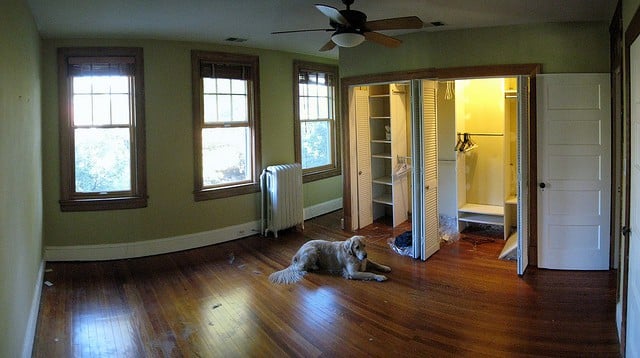
Coming down Mont Boron in Nice

Living in France as a Retiree: Part 2: Health Insurance, Medical Care, and Nursing Homes

Don’t miss Part 1 of this series on Living in France as a Retiree

Health Insurance

When you first apply for your long-stay visa for your first year in France, you are required to prove that you have health insurance. The less expensive way of getting it, for me, was via the visa website; it cost about $500 for the entire year, but it was not comprehensive, i.e., not for preventive healthcare, but rather for emergency situations.

Be aware that basic Medicare covers nothing outside of the United States. Some supplemental plans may cover expenses in other countries after a deductible is met.

After you have been residing in France for three months, you can apply for a numéro de sécurité sociale (social security number, which is not the same as Social Security in the United States). You’ll need proof of residence, a birth certificate, and your passport/visa. Usually the application is mailed to the local CPAM office. CPAM (Caisse Primaire d’Assurance Maladie: national health insurance) will probably request additional information by mail or have you fill in a questionnaire. 

The process can be quite daunting and appear illogical. You may be asked for the same document again and again, and then suddenly discover that you’ve been covered for a year! (You can request reimbursement for expenses incurred in the meantime.)

To apply:

  • Your name must be the same on your birth certificate and your passport. If not, you will need to prove that you are the same person through your consulate, and if there’s no consulate only an embassy.
  • If you live with someone without being married or “PACS‘ed” (officially partnered) you may be considered a concubine. It doesn’t have the same connotations as in English, or at least it’s not limited to those connotations. 
  • The CPAM agents usually answer any questions you may have on the phone, and while they are very polite they have little time to speak at length. Telephone number: 3646 (within France). You can request an English speaking agent when you call.
  • You’ll need a French RIB (Relevé d’Identité Bancaire, or bank identity) in order to be reimbursed.
  • To find your local branch, use the Adresses et Contacts (addresses and contacts) section on the Ameli website.
  • More information on French healthcare in English.

Once you have your French social security number, you must request the carte vitale, the health insurance card, which will then be mailed to you. The card is used by medical providers to enter your information, when you fill a prescription or visit a doctor.

Some areas of France are medical deserts, with few medical facilities. In larger towns, you’ll find many hospitals and medical practices, but wait times for specialists can be long and some don’t accept new patients. In Nice, where I live, it’s hard to find a dermatologist — they are often busy with cosmetic procedures!

There are different tiers of medical practices; for some, you don’t need to pay anything over the basic reimbursement offered by health insurance; for others, you’ll pay more. For tier 1 medical practices, you will often pay nothing out of pocket; the national health insurance will handle it.

You can also buy supplemental insurance, through a mutuelle, in a dizzying array of levels. A basic mutuelle subscription might cost €40 a month, and help pay for hospital stays, which can be very expensive. Higher premiums will help pay for hearing aids, glasses, higher-tier medical practice fees… the second year, I used a broker to help me choose.

Nursing Homes and Assistance for the Elderly

In the US, nursing homes often cost much more than many of us can afford, especially in larger cities on the coasts. In France, they are not inexpensive, but appear to be more affordable. There are a variety of systems.

There are senior living facilities for seniors who are well enough not to need assistance, mainly for people who would like to have a community, and in-house facilities.

EHPADs (Établissements d’Hébergement pour Personnes Âgées Dépendantes) are like our medicalized nursing homes. They are meant for people over 60 who need daily assistance. As far as I know, in 2025 they cost about €4,000 a month, but it varies. If you don’t have enough income, you may be able to stay at a lower cost, but when you pass, the difference will be taken out of your estate.

  • Public (government-run) homes cost less than privately-owned homes (nonprofit or for profit).
  • For more information (in French)
  • For a list of locations separated by area: Assistance Retraite (in French)

There are also agencies offering in-house care for a fee. I’m not sure, but if your income is below a certain level, and you are disabled or recovering from a hospital stay, you may be eligible for help paying for a nurse or a cleaning person.

In general, France is a good country to age in, once you have surmounted the bureaucratic hurdles! In my personal view, single-payer insurance is much better than the US system of many disparate for-profit insurance companies, especially as so many get left behind.

Some additional informational websites:

Photo of Mont Boron in Nice

Did you enjoy this article? TAIP is 100% reader-supported through tipping. If you want to leave us a tip of any amount it would be highly appreciated.  These tips help support our efforts to keep TAIP an ad-free environment. Just like at a cafe, the tips are split evenly among the team.

7 Days Before I Put LA in My Rear View

This is part of a series of articles about the final days of preparing for moving to France and what happens when you get here, and those articles are part of a promotional series launching our new book, 29 Days to France, a book that all the writers wish they had had before we started our French adventures.  It’s now available for preorder, and those preorders come with a free 15-minute Q&A personal session about your French immigration plans.  Click here to learn more.

This is Vince’s final in a trilogy of articles counting down his move to France from Los Angeles.  Part 1 can be found here, Part 2 here.

A professional film set requires a period before the actual shooting called pre-production. Prep for short, it involves not only the glamorous departments like camera or costumes to be primed for the demands of the film shoot, but equally, the mundane tasks like organizing payroll and the on-set office supplies.

As a 1st Assistant Director, my prep starts with breaking down the script by scenes and their associated departmental elements and parsing them out for all the allotted shoot days. I present a rough plan in a company-wide meeting, after which I continue to revise the plan, gathering as much information through departmental meetings…all working toward an ideal plan of attack.

I also analyze contingencies, as there will always be surprises, for instance when the shark didn’t work in Jaws or when Tarantino deviates from the script with a sudden idea not scheduled for work that day.

The secret to successful film production — content value notwithstanding — is good prep. Being prepared for 85% of the possible scenarios of that shoot is good prep for me.

A week before principal photography, prep exponentially accelerates. The screws get tighter. The work days start earlier. They become even longer. People’s true colors surface as pressure to make the creatives happy begins to build.

There’s a lot of hurry up and wait for new information to come in, but in between, there are intermittent smoke-break-sized moments of calm. It never feels totally tranquil, because taking your foot off the gas exposes you to moments in which something falls through the cracks. When I am distracted by my personal issues I’m more susceptible to sloppy decision-making.

Prepping Paris

I was approaching the move like prepping a film. Gathering information, making a plan, gathering different information, listening to the specialists about various aspects of the move, being surprised by new discoveries and bad intel, dealing with incompetence but also the serendipity of having nice people help me along — also being distracted by my own personal life — causing me to make questionable decisions at times. It was madness. Some of it in my own head.

A French Dress Rehearsal in Hollywood

Of course, as I do, I put yet even more on my plate and that sets me back even further, timewise. In the first week of November, at Paris minus 14 days, I shoehorned a week-long French Film Festival called COLCOA (City of Lights City of Angels) held at the Directors Guild of America (DGA) headquarters. I had too much on my plate, bien sûr, but French films, French film community, French people for a whole week? I surmised that investing time for COLCOA might very well give me the head-start for Paris that would make Phase 2 a little easier. Besides, DGA headquarters was the epicenter of my long film career. At the very least, it deserved a proper farewell.

I saw a few French films such as Eiffel, ate some fromage with Sancerre and of course, had some café allongé and beignets. I even tried out my French with Nicolas Maury (Hervé on the Netflix comedy Dix Pour Cent, called Call My Agent in America) who was at COLCOA for a movie he directed. I asked him a question in French about his directing approach and he was kind enough to suffer through my French, but sensing he was in a bit of a rush, I panicked and reverted to English…but in a French accent. With my good friend Antoine as a guide to things French, COLCOA was absolutely the perfect full-dress Paris rehearsal — a perfect way to say goodbye to Hollywood and bonjour to Paris in the building that has been in my professional life for over two decades.

P-6: One Week Left Before My Flight to Paris

It was now seven days before Paris Day: P-Day. That made today P-6 (six working days left to prep). I was feeling on edge as I typically do in the last week of prep on any show, except in this show, I didn’t have a team. I had my cat Maddey, my French friends overseas, and expats on Facebook casually passing on advice.

The following big-ticket items remained on the board:

  • shoving my entire life in five boxes
  • storing, selling, giving, or throwing away what didn’t make the cut for Paris
  • getting Maddey’s USDA certificate and prepping her for the twelve-hour flight
  • continuing my L.A. Goodbye Tour
  • reconciling domestic accounts.

Simultaneously, I was still maintaining my normal life: writing projects, creative coaching sessions with clients, and training for future tennis tournaments. Overstretched on multiple fronts, I was struggling to keep all the plates spinning on my fingers while wrestling with the emotions of leaving my hometown, the anxiety of moving to a new one, and the grief of both losing my mom earlier this year and breaking up with Sarah who was, just three months prior, the other half of our to-be-determined Paris dream. As such, I was losing control over all the systems that were orchestrating and executing my Paris move.

It wasn’t a type of control in wanting everything my way or seeking elusive perfection. At my college gymnastics meets, I fell off the pommel horse a lot, so I am not one who is accustomed to any notion of perfection. But I am accustomed to pursuing high standards. I orchestrated the McDreamy car crash in Grey’s Anatomy. I was a tank platoon leader managing four M1-A1 tanks and sixteen men. I threw a double-back somersault with a full-twist on-the-floor exercise event. In fact, what I was feeling was less about control and more about the conscientiousness needed to maximize my odds of a successful fresh start.

I have big dreams for myself in Paris and unfortunately, I’m not Emily in Paris where it all goes swimmingly. As a man with a Filipino upbringing, I’m not quite the typical American in Paris, n’est-ce pas? I was bracing to face many hardships.

Jumping right into the poorly-built program I mentioned in my piece being 90 days out was a result of not being in control. If I had been in control, I would’ve seen the hundreds of complaints about the owner of this program who was such a polarizing figure that an entire Facebook group was created from the cascade of people who left her page. Her Facebook page was called Americans in France. The breakaway group was called Americans in France: The Open and Kind Group. How could I have missed this blatant clue? In my right mind, I would’ve have seen that train wreck a mile away and instead found TAIP and other non-scammy resources much earlier in the planning process, resources that show a genuine exuberance and passion for helping Americans settle in France. Instead, I dumped a chunk of money I could have used for essentials I needed to flourish in one of the more expensive cities in the world. I got sloppy.

I couldn’t — cannot — afford to be sloppy. With so many moving pieces to manage for a successful life in Paris, a few potential situations relative to scarcity can bite me in the butt and have me back on a plane to the States if I don’t ground myself and take better control of my chessboard.

It wasn’t until now, seven days before Paris, that I was starting to get more locked in. I was well aware I’d only be crossing the finish line for Phase 1. Once I’d get to Paris, Phase 2 would commence and be more intense than Phase 1.

Phase 2 had been lurking in the back of my mind; after all, Paris wasn’t a vacation. I was going to live there, which meant mundane tasks such as validating my visa in France, registering my coaching business in the French system, establishing a bank account, acquiring a carte vitale (for health insurance), getting a French phone number, and perhaps most importantly, generating revenue — getting my coaching business back up and running with my American clients. Just as important for my well-being, I would need to get back to a regular tennis training schedule.

I was probably struggling through a post-project depression after running on adrenaline (and fumes) to obtain my profession libérale visa a few weeks ago. That entire ordeal was intense.

I was still raw from unpredictable emotions triggered by who knows what. I’d be driving on the 405 Freeway, for example, listening to a song lyric like guard your innocence from hallucination, and I’d lose it, driving in the fast lane at 75 mph, tears gushing down my face, because I was cathartically relieved that Paris was finally in my sights, or I’d be missing Sarah, or I was pondering the complexity of my relationship with my mom and her final six months. After fifteen minutes of a good cry, I’d wipe my eyes like nothing happened.

I knew I needed a long break to recharge but at P-6, just like in last week of prep to make a movie, I was burning the candle at both ends to keep up.

Getting Maddey Ready for Paris

For weeks I was jarred awake by nightmares in which my cat Maddey wasn’t being allowed into France by a nonplussed Inspector Clouseau-like customs officer. Another nightmare entailed Maddey slipping out of my grasp while carrying her through the metal detector, zipping toward the far end of the terminal, and disappearing, which causes me to miss my flight, as if it was the last one ever for Paris.

Early Tuesday morning, I took Maddey to the veterinarian to begin the health certificate process. Thanks to heads-up advice from an expat named Jena, I saved invaluable time, which I needed because only three business days remained for the USDA to receive the certificate from the vet, endorse it, then send me the physical copy. As I would not be able to get Maddey on the plane without it, I was nervous. I called and e-mailed the L.A. office multiple times in the next two days to obtain updates, to no avail.

Packing My Life in Five Boxes

I started weeks ago by casually making piles of things I was bringing to Paris but reducing my life to five containers felt so daunting that I kept putting it off. Because I didn’t want to manage too many pieces of luggage at the airports on both ends AND look after Maddey, I paid $450 for a shipping service called Send My Bag to pick up and ship 3 16x16x16 boxes. I stayed up until 4:00 AM to finish packing the boxes in time for their pickup the next morning.

I had read stories about how Send My Bag might not show up on the arranged pick-up day (I planned for this scenario by allowing a buffer of a few days) or that the boxes might get held up at customs for reasons like packing too many items with lithium batteries (TSA only permitted one), or getting stopped over prescription bottles (forbidden), or tearing or breaking in transit, or getting delivered at the wrong place. “Just follow the instructions to the T, and it will be fine,” an expat on Facebook told me.

Even so, I also learned that Send My Bag was just the middleman. FedEx, who had recently traumatized me in delivering my visa, was actually picking up my boxes. I went into crisis prevention mode, only sleeping four hours that night to visualize possible not-so-ideal scenarios and devising more contingency plans. As such, I didn’t pack anything in the boxes that I’d need to access within seven days after my arrival.

P-5

Sleep-deprived, I put the boxes outside the gate of my townhouse (the gate phone didn’t work) with a big sign for FedEx to call me because I wanted to make sure I handed the driver the paperwork as per the instructions. The driver didn’t call; he just took the boxes and went on his way. If I hadn’t left out the boxes, the driver would have reported that I wasn’t available for pickup. As in the case of my visa, FedEx was up to no good once again and yet again, I had to stay ahead of them.

My beloved U2 books, favorite spatula, 1988 Dodger jersey, microphone, ten pairs of shoes, blender, and label maker were heading to Paris which genuinely meant that the move was truly happening.

Later that day, Sarah texted me. I hadn’t heard from her for months, but she broke radio silence because she felt weird about not saying goodbye. It was a sweet text, and, another reminder that Paris was becoming real. I pleaded for one last in-person goodbye, but she didn’t respond. I was a wreck.

P-4

Sarah sent me a video on the Marco Polo app telling me that a sixty-second video was the best she could do. Experiencing her face and voice brought me to tears. I sent back a long Marco Polo, pleading to see her. She told me she had worked hard to get over me and it would be a massive setback to see me in person. She reinstated her radio silence.

I shut down for a couple of hours, until I was jarred out of my stupor, having just remembered that Maddey’s certificate still hadn’t yet arrived with only one more business day remaining to receive it before my flight.

I called the main USDA office in Sacramento, expecting more indifference. To my surprise, someone picked up. After patiently listening to a five-minute plea, desperate for the certificate before my flight on Tuesday, she said to me, “Are you Vince?”

“YES!” I said.

“I’m filling it out right now. It’ll go out to FedEx today and you should be getting it by Monday.” A sighed a deep exhale of relief, but still, Monday was cutting it too close — I was flying out Tuesday morning. The next most important document besides my visa would be arriving on the last possible day with my favorite shipping company, Federal Express? It was an exercise in extreme patience.

I went to tennis practice later for a bit of release but as it was my last day at Silva Tennis Academy with my young teammates, I cried as I said goodbye to them. Training with them for the past year, I rediscovered the passion to go for big dreams again the way a teenager goes for dreams, and now that this special time was over, I continued to cry the entire forty-minute drive home.

That night, with all the mishigas of the last few days, I went on a bit of a bender. Beaucoup sake and gin and tonics were consumed deep into the night. Part release, part celebration of my last days in America.

P-3

At a tennis match the next morning, I received a text:

“Hey man, I have your wallet. It was in the gutter and I saw it as I was getting in the Uber.”

This was the sort of thing that I was afraid of — getting derailed by the small stuff.  I was grateful — and quite lucky — for the kindness of strangers.

P-2

I threw a Celebration of Life gathering in which friends from various parts of my life came to see me off; solid proof that one should have their Celebration of Life when alive, not at their funeral.

P-1

Monday was the last day before my flight. I waited outside the gated fence at 9 am for the FedEx driver with Ruthie, my childhood pal, hours I actually needed to finish packing my suitcases; but I was not going to let FedEx screw things up. By 11:30 am, the driver arrived with Maddey’s endorsed certificate, and voila, I had everything I needed for Paris. I could finally let my guard down a bit.

That night, I took Maddey to the actual airline terminal for her final rehearsal and asked the information desk clerk where the nearest pet rest area was located; he hadn’t a clue it existed. I anticipated that. Searching for the rest area on the actual travel day for her to do her business just hours before we hopped on the plane would’ve thrown things off track. This is what scouts and rehearsals are for: minimizing surprises.

I took Maddey out of her carrier and cradled her in my arms to see how she might react. This was a full-dress rehearsal — she was wearing the harness and leash just like she would on the day. She didn’t squirm, didn’t seem on edge. She was calm, quiet, and pensive and so was I. We were 100% ready for Paris.

Prep was officially over. P-Day was upon us in less than ten hours. I didn’t get to tie all my loose ends, but overall, it was a good prep. I achieved about 85% on my checklist. Maddey and I were both sad we didn’t say goodbye to Sarah in person, but I had a feeling that the door wasn’t closed forever.

I took my last Los Angeles hours to spend time with my 95-year-old grandma. We sat in relative silence. She can’t speak English. I can’t speak Filipino. Reflecting on her life, I was sad for her. She had never had any romantic love since I had known her and she had been acrimonious with my mom — her daughter — up until mom suffered her stroke. Grandma didn’t get to say goodbye to her, same as me. I never really got to know my grandma and I wanted to ask questions about her. But there was no more time. I hugged her tightly and told her I loved her. She knew those words. I sighed. I accepted that I might never see her again.

Paris Day

A friend told me, “You can come back. It’s not like you’re leaving forever.”

Anything’s possible. I don’t see myself coming back to the States for a long, long time. Paris is the grand experiment for me to stay on my authentic path and pursue the big audacious dreams of expressing my authentic voice toward something meaningful. Paris is going to be my home now and its joie de vivre is the butterfly moment I vowed to experience more often since I tried to die. If I cultivate the right support community and don’t get in my own way, my Paris story could be everything I want it to be.

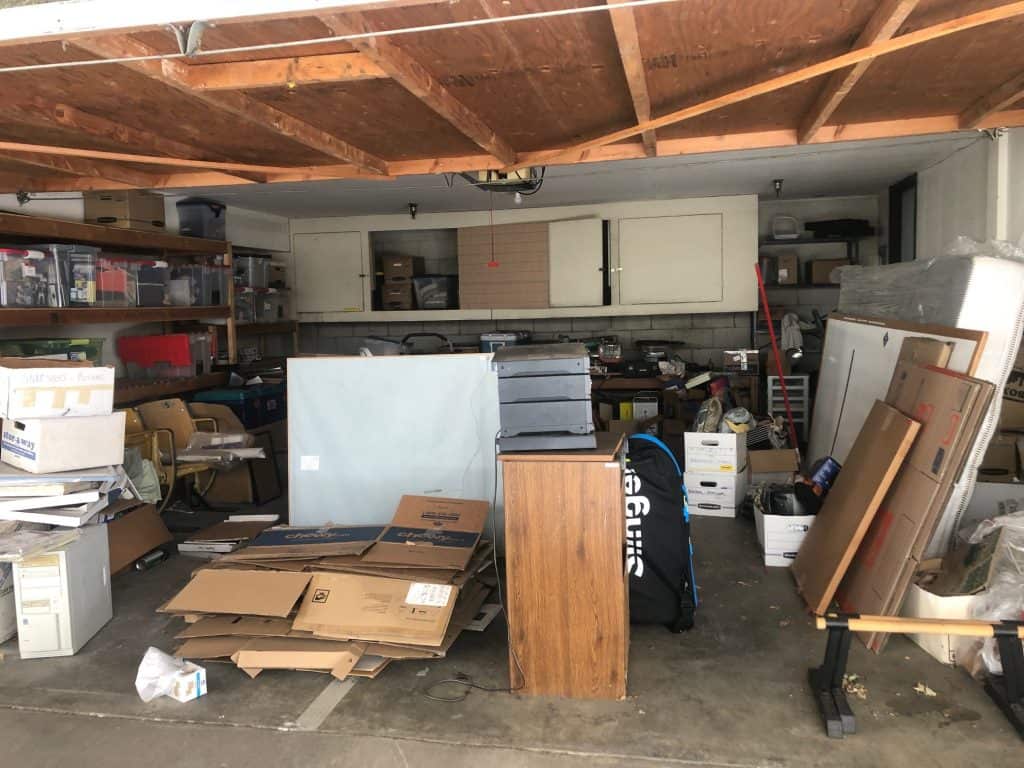
Photo of my garage fifteen days before having to ship my life in five boxes.

Did you enjoy this article?  TAIP is 100% reader-supported through tipping.  If you want to leave us a tip of any amount it would be highly appreciated.  These tips help support our efforts to keep TAIP an ad-free environment.  Just like at a cafe, the tips are split evenly among the team.

30 Days Out: “Are You Excited About Paris Yet?”

This is part of a series of articles about the final days of preparing for moving to France and what happens when you get here, and those articles are part of a promotional series launching our new book, 29 Days to France, a book that all the writers wish they had had before we started our French adventures.  It’s now available for preorder, and those preorders come with a free 15-minute Q&A personal session about your French immigration plans.  Click here to learn more.

You can find Vince’s first article in this series, when he was three months out from a move, here.

“Are you excited about Paris yet?”

It’s an innocent enough question. 

I’m pacing around my room while on the phone with my friend Anne: “Nope. Not excited one bit. Paris isn’t real until the visa is real,” I deadpan. It is October 7, and I think I’m unofficially five weeks out from my Paris move. I’m still not fully confident I’m actually going to Paris, actually. I haven’t heard news about my visa since I submitted the application back two weeks ago. 

I hope Anne didn’t take my answer as a snarky one.  52-year-old me was trying to be like water and quell the anxiety generated last week by my inner child — the eight-year-old version of me — who had been having a series of micro-meltdowns, worried that my visa application was anything but “foolproof,” even though I bleeping spent 1,900 € to make it so. I was still a bit raw from my mom’s passing and the end of my relationship with Sarah, as well as all the purging and the anticipation of all the major changes.

“It’s going to happen,” she assures me. I say nothing. I know she means well. “Why do you think you’ll have an issue?” she asks. I tell her what happened at my visa application appointment. 

Flashback to September 27, the visa appointment at the VFS office.

The young clerk at the VFS office (the third-party company designated to pre-process the applications on their way to the French Consulate in Washington D.C) reviews my application and notes that it is incomplete but that she’d send the application anyway, as-is. “Wait, why are you writing that?” I plead.

“It says here on the checklist that since you are starting a business you need these documents, and you don’t have them.”

“I’m not starting a conventional business in Paris,” I say, “so, I don’t need a copy of a commercial lease agreement or proof of a credit balance from an account.” She takes a few moments to process this, but I can tell by her fidgeting that this situation is deviating from her script. This was probably above her pay grade to solve problems any more than a drive-thru clerk taking orders at a fast-food joint where you can’t have it your way. I give her a curious look that means, “Surely, you’ve dealt with other Profession Libérale visa applications in the past.”

“Since you don’t have the paperwork — even if you say you don’t need them — I can’t cross this off the checklist on the computer, so it won’t show that the application is complete,” she says. “So for me to send the application, I need to write a note.”

I want to pull the good ol’ American I’d like to speak to your supervisor, please, but I don’t want the VFS office to spit in my soup and sabotage my chances for approval. I bite my tongue instead, and tell eight-year-old me, “we’re going to have to trust the process.”

“But I walked out of the office with a massive knot in my stomach, ” I told Anne.

“It’s gonna be great,” she reassures me. I roll my eyes, when I notice an email that just popped up in my inbox, entitled: MISSING DOCUMENTS. It’s from the French Consulate.

“I gotta go.” I hang up the phone. My stomach is in knots again.

I close my eyes, take three deep breaths to keep me from going nuclear, and then open the e-mail. 

Please provide the following documents in order to complete processing for your visa application:

– Your last 3 months’ bank statements showing your full name and enough funds to pay for your trip and expenses 

– Proof of income related to your business activity in France (letter containing draft work contract with remuneration indicated)

– A housing lease or your host’s property deed

Please carefully read the following instructions on how to respond to this email:

– Please scan these documents directly back to this e-mail address in the next 7 days. Send them all in one email.

– Do not send the documents you already provided at your VFS appointment. We have already reviewed those and have deemed them to be insufficient or inadequate. If you send the same documents again, your visa will likely be denied.

– Only send your documents once and please refrain from writing to inquire if we received your documents. Too many e-mails received disrupt the organization of the visa department and result in longer processing times for applications.

Imagining being spoken by a French bureaucrat, I read the e-mail trying not to be annoyed by the surface politeness disguising the indifference, rigidity, vagueness, and trickiness, all of which French bureaucracy was infamous for. Too late.

“Nooooo!” I scream up to the sky. “I paid two grand for a service to deal with this!  And now I have seven days to get the right docs!”

I’m livid. I leave the house for some air. I passed by my 95-year-old grandma in the living room reminding myself that I had yet to tell her I was leaving for Paris.

Why was I so incensed? Before I submitted the application back in September, I scheduled a one-hour consultation call with Franceformation to review my application, but in the actual call, she didn’t review or comment on any of the other parts of my visa application except for the business plan. The entire reason I paid her the exorbitant fee sight unseen was for her allegedly expert eyes to ensure my entire application was foolproof from top to bottom, not just the business plan. I emailed her a message expressing my concern. This was her response:

Your supporting documents are fine. Your business plan needs some serious work if you would like it to be accepted in a visa application. I would strongly advise against submitting it without taking into account many of the recommendations I made on our call. Please note that the guarantee included with your package is that I would help you revise and review your visa application again if it does not get approved the first time (this has never happened to any of my clients who followed the Complete French Business Incubator process). If you do not take into account any of my recommendations prior to submitting your application, I will not be providing additional feedback if it is rejected.”

As you can see by the Consulate’s e-mail above, they approved my business plan, which to be clear, I revised on the astute suggestions of expats from Facebook and other friends with expert knowledge, NOT incorporating any of Franceformation’s notes, which were similar in tone and expertise to the kind of advice my father gave me as a 13-year-old regarding how to throw a fastball, having only read a library book called The Official Little League Way to Play Baseball and watched baseball on TV but had never actually played baseball, because well, they didn’t have baseball in the Philippines when he was a kid.

Note that Franceformation stated my “supporting documents are fine,” yet based on the Consulate’s email of my MISSING DOCUMENTS, my supporting documents were clearly NOT fine. Even if she was willing to provide additional feedback, based on every single interaction I had with her, odds were quite high that she was not going to put the work into my documents besides insisting that her advice was correct, which she was/is infamous for doing on her Facebook group, where, whenever comments go off script, they get deleted.

Thanks to the generosity and experiences of the expats on the Facebook group pages and the TAIP Facebook community, I was able to decipher the Consulate’s requests. My landlord didn’t have immediate access to the property deed, so I sent copies of her electric bill and property tax documentation instead. As far as proof of income, I whipped up contracts with my current clients.

Because I wasn’t confident they would get the stamp of approval, however, until my visa was in my hand, my brain simply would not commit to expending concentrated energy on the move. Even being only five weeks out, I put off my Paris to-do list and allocated most of my time either continuing my Goodbye L.A. tour or being a Dodger fan watching every inning of their playoff games either on TV or watching games at Dodger Stadium until they finally lost in the National League Championship Series, which I secretly hoped would happen, because Dodger baseball alone ate up at least sixty hours. I spent sixty hours training tennis at Silva Tennis Academy as well.

Every day, I’d spend hours checking my email and social media accounts for signs of my ex-girlfriend Sarah, hoping that she’d get in touch with me to see each other before leaving for Paris. It was horribly co-dependent of me, but that’s what it was.

Live music ate up another sixty hours, because with all the deaths, Covid, and purging that had happened this year, live music was my religion. In addition to a series of local acts at the Hotel Café, I saw Pearl Jam and the Lumineers a few weeks ago and saw Wilco twice in October. The lyrics from “Shot in the Arm,” Maybe all I need is a shot in the arm, and What you once were isn’t what you want to be anymore… totally encapsulated why I was moving to Paris. I played that song every day on repeat as I waited for my visa…

Two Weeks Later, the Biggest E-mail of My Life 

The consulate sent me an e-mail merely notifying me that a FedEx package was on its way to me. They didn’t indicate whether my application was approved.  

No matter. The most important FedEx package of my life containing the prospects for my future is due to arrive in my lap in less than three hours. I’ve cleared my entire schedule for the day to be home to sign for the package. After a couple of hours go by, I receive a text that FedEx tried to deliver the package, but I was not home, and they would attempt a second delivery the following day. Actually, I am home, but they didn’t bother to call. I want to scream.

What occurs next is a series of tragically comedic events in which I talk to three different customer service representatives for over five cumulative hours  — all outsourced to call centers in other countries merely reading a script — to directly manage the delivery. I don’t trust their delivery process. The next morning, I drive fifteen miles to the FedEx facility.

Finally, the moment of truth is in my hand. It is anti-climactic, really, this nondescript FedEx envelope that held the promise of the rest of my life. I rip open the envelope. There’s nothing inside except my original passport. I brace myself for rejection and get ready to tell my inner child a narrative that the Universe is telling us it isn’t yet our time for Paris, then get my assistant director part of my brain to get past the disappointment quickly in order to plan for potential scenarios. I open the passport…and there it is, my profession libérale visa. I break into tears of relief and joy. It’s happening. I’m finally going to Paris. I am officially thirty days out.

I call Anne back. “Okay, now I’m excited.” “But just a little,” I added.

After I got my visa, urgency was everything. I booked my flight for November 16, four weeks from that moment. I secured a place for my cat Maddey on the plane. I confirmed my Airbnb reservations. I reviewed the procedures to obtain Maddey’s health certificate. I finally took the new suitcase I bought months ago out of the shipping box and laid it out with my two other suitcases.

Twenty days before my November 16th flight, my grandma was in the kitchen eating a Filipino dish of cow liver and rice when I finally told her I was moving to Paris. “Huh? Where are you going?” she asked in her shrill, Filipina from the poor province-laden accent. Her hearing was severely diminished, and she was too stubborn to wear a hearing aid.

“Paris,” I said.

“Where?”

“Paris.”

“Where?”

“France.”

“Frince?”

“France.”

“Frunce?”

“FRANCE.”

“Oh. France. That’s far.”

“Yes it is.”

“How long you going?”

“I’m not sure. A long time, probably.”

“Three months?”

“Probably longer.”

“Oh, so you don’t stay here anymore?”

“No, grandma.”

She started laughing. “Oh, maybe you stay there for a year!” More laughing. I wasn’t sure why she found all of this funny, but I said, “Yes, grandma, for a year.” And with that, she went back to the TV and started flipping channels. In retrospect, I don’t think she knew how to process the news that I was leaving. She was incapable of processing with nuance. At least outwardly. 

After my mom’s stroke this year and enduring the trauma of not being given the chance to reconcile my relationship with her, I moved in with my grandma as a sentimental gesture to connect and say farewell after I was forced to leave the home Sarah and I made together. Grandma is 95 years old, and she just isn’t moving well anymore. We have cousins and aunts who will look after her, but I’m the grandchild of two closest to her. My sister lives two hours south in San Diego but she has her hands full. Besides, my grandma doesn’t trust my sister after the way she handled the responsibility as the executor of the power of attorney over my mom’s affairs. I feel horrible that I’m leaving grandma for Paris, but every day I’m here, I’m losing more of my sanity, and I simply need to leave if I’m going to stay alive. Not kidding. I gave her a hug, she hugged me back, and as my emotions started to stir and make me feel raw again, I disappeared into the garage with my nose back to the grindstone and turned on a little Wilco to get me through a tedious night of deciding what was going to make it into the five pieces of luggage that would be my Paris life.

Photo: A day in South Pasadena where everything was fine, and then a moment came when I felt like maybe Paris wasn’t in the cards.

Did you enjoy this article?  TAIP is 100% reader-supported through tipping.  If you want to leave us a tip of any amount it would be highly appreciated.  These tips help support our efforts to keep TAIP an ad-free environment.  Just as at a cafe, the tips are split evenly among the team.

How to Get a Long Term Stay Visitor Visa (VFS and Covid-19 edition)

Note from the editor: In light of new guidance on remote working in France as shared by the official French tax office in June 2025, we have also officially changed our stance on remote working for a US company while living in France under the visitor visa. Read more here, and contact us with any questions or concerns. We’re here to help! — MS

Those in our Facebook group know that for some time I have been seeking an updated version of my 2013 article on how I got my original visitor visa.  While that article was one of the cornerstones of this site and while certain principles of it still apply, since the advent of VFS taking over not just France’s, but other countries’ visa processes, and with Covid-19 limiting in-person meetings, I wanted an updated article from one of my visa clients who went through the process very recently, knowing that this would become an article that would be referenced for years to come.  Luke Middleton was kind enough to do just that for me and I enclose his very detailed story below.  For my video course that breaks down some of these steps in even more detail, click here.  If you’d like to read more of his writing you can do so here.

I also note that Luke got his visa while explicitly stating that he would be working his US job remotely, which once again undermines the misinformation peddled by Allison Lounes, that you cannot have a remote job on a visitor visa.  I stated as much when I applied (and renewed) such a visa almost a decade ago, long before remote work was something everyone knew about, and Luke has just done the same last month.  Alas, that means you don’t have to accept her narrative and drop $2000-$4000 using her services to get a Prof Lib visa, but I don’t suspect you’ll be upset about that.  -SH

How to Apply for a Long Stay Visitor Visa

After a long period of disruption due to Covid-19 the French authorities in the United States resumed processing all categories of visa applications in June 2021, including the visiteur category that Stephen has discussed so many times on this blog. 

The application process has changed from the one he encountered in 2013. Probably the biggest difference is that the French have now partnered with a third-party service provider which handles a portion of the application. While this arrangement may have streamlined things on the backend, some initial amount of confusion may result from having to interact with two completely different websites that have no evident connection to each other. And neither of these websites happens to be the website for a French consulate, which is where you might have started your Google search. In fact, there are nine consulates (and one embassy) in the US and each has its own page, presenting information in a slightly different way. All the information you need is ultimately out there but it certainly wasn’t as plainly presented as any might like. 

Let’s start with the two websites I mentioned earlier: 

The first is france-visas.gouv.fr (I will call it France-Visas going forward). This is where you will fill out and submit your visa application form. 

The second is VFS Global. (I will simply call it VFS after this).  This is the third-party provider with whom you will make an appointment to hand in your application form, passport, and other documents. Note that VFS handles visa applications to and from a wide variety of countries, not just for Americans going to France. So when you are on their website, make sure you are looking at the correct information. 

Here is the recommended order of steps as described by France-Visas: 

  1. Create an account at France-Visas.
  2. Fill out the online visa application form. Until you have “submitted” this form it can be saved and you are free to go back and edit it (well, you can edit some of it). You can even download a PDF version which will have a large “DRAFT” watermark on it. Once it has been submitted the DRAFT watermark will be removed and importantly at this point you are unable to edit, delete or recall the form. You are supposed to submit the form before proceeding to the next step, but I recommend you wait and will explain why shortly. 
  3. Next we need to go to the VFS website and book an appointment at one of the 9 VFS visa application centers. Here again they will ask in ALL CAPS if you have already submitted your form on France-Visas. I recommend you proceed with scheduling the appointment and only afterwards go back and submit your application at France-Visas.  
  4. Attend your VFS appointment where you will hand in your application form, various supporting documents as well as your passport, and have your biometrics taken. 
  5. After your appointment VFS will mail your documents and passport to the consulate in Washington DC (the only time the French authorities get involved). At this point your application is either approved or denied and your passport is mailed back to you. 

That is the recommended order and the one I followed but here is a potential problem: when you fill out the visa application form on the France-Visas website, you must specify which VFS application center you will be going to. I live in Kansas so I chose the center in Chicago since various internet searches told me that Chicago is the “consulate for my region” (in fact that is true, but it doesn’t matter as we will see).  Having completed the form on France-Visas I submitted it and only then went over to VFS to book my appointment. That is when I discovered to my dismay that the Chicago office had no openings available for as far forward as it would let me look. But once the application form on France-Visas has been submitted it can no longer be edited, and I had already told them I was going to Chicago! Also I wasn’t sure if I was even allowed to go to a different office. 

In the olden days, including when Stephen applied, you had to book an appointment at the French consulate for your region — you couldn’t just choose any one you felt like. But today we are not booking an appointment at the consulate, we are booking an appointment at a VFS Global Visa Application Center. These application centers just so happen to be located in the same cities as the French consulates (with the exception of New Orleans), but they are not the same thing! For example in Chicago the VFS center is about seven blocks away from the French consulate. 

With this change it no longer matters what VFS center you go to, you are free to choose whichever one you prefer. There are nine located in the following cities: Atlanta, Boston, Chicago, Houston, Los Angeles, Miami, New York, San Francisco, and Washington D.C.

Since you have to tell France-Visas which VFS center you are visiting, and you won’t know which ones have availability until you book an appointment, I recommend the following:

  1. Go ahead and fill out the application form on France-Visas so you are sure you are able to answer all the questions, but don’t submit it yet — just “save” it instead.
  2. Now go to the VFS site and book an appointment. 
  3. Then return to France-Visas and “submit” your form. If you had to select a different location, you will actually need to fill out a new form on France-Visas since it will not permit you to edit the location field. At least you will already know the answers to all the questions, and after you submit the correct form you can delete your earlier draft. 

This is not the recommended order but you will avoid what happened to me: since I couldn’t change my submitted application for Chicago, VFS instructed me to create and submit a second application. I managed to reserve an appointment in Houston and prayed I hadn’t hopelessly confused their computer system (it all worked out in the end). 

I am told that VFS posts new appointment availabilities on their website once a week, and they don’t open appointments more than a couple of months in advance. So if you really must go to a specific city you can also just keep checking back each week. 

Now let’s look at each step in more detail. 

Step 1: Begin the France-Visas Application Form

Create an account at France-Visas and start a new application. Most of the form is self-explanatory but I will highlight some important items here: 

  • Place of submission of application: for many TAIP readers, this is going to be the United States of America
  • City of submission of application: this is where you select one of the nine VFS cities, make sure you can get an appointment there first! 
  • Visa type requested: we are applying for Long-stay (1 Year+)
  • Your plans: this is actually where the visa type is specified. We want to select Visitor
  • Main purpose of stay: there are two options, Visitor (adult) or Visitor (minor). Most of us are presumably going to be adults, unless you are bringing your children with you in which case you will be creating a group application that includes forms for each person. 
  • Planned date of arrival in French territory: remember that you can not submit your application more than 3 months prior to your planned arrival date.  You don’t have to arrive in France on the day your visa begins, you simply can’t arrive before that day.

Further into the application you will be asked to give your Host person or organization. Since we are visiteurs, I selected the option to provide the Name of hotel or place of accommodation. And since my place of accommodation is an apartment I just typed in Appartement for the name, and then provided the address. If you don’t have a residence lined up yet enter the name of the hotel or other lodging you plan to stay at. 

Another section is titled Funding of travel costs. Once again we see various options that make more sense for visa types other than the one we are applying for, here are the ones most relevant for our purposes: 

  • Credit card
  • Cash
  • Other

I checked Credit Card, Cash, and for Other I put USA Employment Income since I am keeping my US job while living in France. There is also an option to give them the name of a French guarantor, which I suspect most of us will not have. 

Note: in several places you will need to provide a US address (for your current residence; where you were born; the address of your American employer if you have one, etc). Of course this form having been designed by the French you will only be given a City field, but not a State field. Type both the city and state in the City field. 

Another note: pay attention as well to date fields and remember that the French put the day first and then the month. I found that the VFS website also used this French convention. 

Ok, we’ve made it through the application form, but as discussed above let’s just “save” it and hold off on “submitting to the visa center” until we complete the next step. 

Step 2: Book an Appointment at a VFS Global Center

Next, create an account at VFS Global and schedule an appointment. Hopefully you created the account from the correct section of the site in which case you will be relieved to see that it knows you are an American applying for France, and not something else. During this process you will select which VFS city you want to go to. It will also ask you for your Appointment Category which in our case will be Long Stay Visitor

In general I found the VFS website to be unrefined and buggy. When it asked for my US location it forced me to select a city from a predetermined list which strangely did not include my actual city, the largest in the state. The list did however include several obscure towns out in the boonies that no one has ever been to (I just selected one at random, it doesn’t seem to have mattered in the end). Multiple times the site croaked, showed errors, or just directed me to blank pages (maybe this was to prepare me for French life?), and I had to fortify myself with whiskey before I could log back in. But persevere and eventually you should be able to make an appointment. 

Note: at the conclusion of this process VFS will provide you with an appointment receipt or “appointment letter” which will also be emailed to you. This letter will indicate the time and date of your appointment as well as the address of the VFS office. You need to print this letter and bring it with you to your appointment.

Step 3: Go Back and Submit Your France-Visas Application

Now that you know where you are going for your appointment, return to France-Visas and “submit” your application form for real. If you have to change your appointment city from what you originally specified, you will need to create an entirely new form. Save a PDF copy of your first draft so you have your prior answers, delete that application, use the draft to help you fill in the new one, and when done, submit it. 

Download the PDF of the final, submitted form and print it out (it should have no “DRAFT” watermark). This PDF will include three things — the completed application form, an application receipt, and a list of required documents to bring to the VFS appointment.

Note: depending on how you answered certain questions when filling out the application, there may be additional required documents not listed on the receipt, but which will be described nonchalantly in a wall of text on the confirmation page after you submit the application. So read that page well, because once you leave that screen you will never see it again.

If you, like me, answered “yes” to the question “Have you previously resided for more than three months in a row in France?” bring a copy of that previous visa.

Step 4: Show Up to Your VFS Appointment

Now you need to present yourself to the VFS office at the appointed hour, bringing with you all the supporting documents required. Don’t worry, this meeting will be in English and your documents can be in English as well.  As Stephen often reminds us, the visa interview is in the language of the country you are applying from.  They don’t assume you already speak French.

As already mentioned the required documents are listed in the same PDF as your France-Visas application form, but let’s go through them one by one: 

VFS Appointment Letter
This is not actually on the list, but I am repeating it here because you need to bring it.

Signed and dated application form
This is your France-Visas application. In my case the VFS person I dealt with already had a copy of this form on her computer and she preferred to use it instead of mine. All the same, bring your own copy since that’s what they tell you to do.

Receipt France-Visas
This is included in the same PDF file as your France-Visas application form, so you should already have printed it out. 

A travel document
The exact wording follows: “issued less than 10 years ago, containing at least two blank pages, with a period of validity at least 3 months longer than the date on which you intend to leave the Schengen Area or, in the case of a long stay, at least three months longer than the expiry date of the visa requested. Be sure to transmit (scan) ALL PAGES of your travel document containing visas, entry and exit stamps or any other inscription.” is included in the same PDF file as your France-Visas application form, so you should already have printed it out.” 

Clearly you need to bring your physical passport, which you will hand over to VFS and which will be returned to you later by mail. The language about transmit and scan I believe refers to the option to submit some documents electronically.

Although it is not explicitly stated, I remembered that Stephen was asked to bring a photocopy of his passport in addition to the original. Just to be safe I did the same thing (making copies of the title pages as well as all other pages with entries). The VFS lady took my copies without seeming to think that was unusual, so I would recommend you do the same. 

ID photograph
They are referring here to a passport photo. In my area of the country the usual place to get these are pharmacies. Your mileage may vary, but I went to two Walgreens stores and got terrible pictures both times (low resolution), but the ones from CVS were sharp and clear. White backgrounds are common so do not wear a white shirt or they may decline to take your picture as your head will appear to be floating in space.

As it turns out VFS will also be taking your photo as part of the biometric collection (in addition to your fingerprints). The photo that ended up on my visa is the one VFS took, not the one I provided. However it is listed as a requirement and they did ask me to hand it over, so whether they want to use it or not, bring one (I brought two but they only asked for one).

Letter from the employer or proof of business ownership/business license (if self-employed). If retired, pension certificate.
I am employed by an American company and I got my boss to sign a letter that made the following points:

  • so and so is indeed an employee at our company
  • we are aware that he is seeking French residency
  • he has our approval to do so
  • his relocation to France will not cause any change to his employment status since he is free to work remotely
  • his salary is $X which at the current exchange rate equals Y€ per month.

I had my boss sign multiple copies of these letters in case I need them for something else later, and gave VFS an original. I am less able to speak about the other cases, though presumably the student category should not apply to those of us applying for a visitor visa. What ramifications self-employment might have for the next item probably depends on what you do; if you need advice I would suggest posting your questions on the TAIP Facebook group.

Promise not to exercise any professional activity in France
I provided a signed letter declaring on my honor (as the French like to do) that I would “not exercise any paid professional activity in France.”  The fact that this follows directly after “letter from employer” means that the French do not consider your remote work “paid professional activity” for purposes of this visa.

Travel health insurance certificate
The text continues: “issued by the insurance company (covering any possible costs for medical repatriation, and emergency and/or hospital treatment, for a minimum amount of 30,000 €, valid in France for the whole stay. A copy of your American health insurance card is not acceptable proof of adequate coverage).”

For this requirement I chose to purchase an International Health Insurance plan from Cigna Global as Stephen did so many years ago.  This is a process in itself, but I will try to restrict my comments to the basics. They offer three levels of coverage which they call Silver, Gold, and Platinum. Even the lowest Silver level offers 800,000 € coverage for inpatient and emergency care, which is 30X above the French requirement. Gold and Platinum have increasingly higher coverage levels and also include maternity care. In addition to selecting the three coverage levels you also specify your desired deductible ($0-$10,000), percentage of cost share (0%-30%), and out-of-pocket maximums ($0-$5,000). Higher levels of these selections will reduce the price of your premium but will of course increase the sticker shock if you ever actually ever use the insurance. You can also choose to pay monthly, quarterly, or annually, with the latter two options offering a slight discount. Even without the discount it makes sense to buy a one-year policy since you need to show coverage for the full period of your visa.

After these selections you will be presented with various optional add-ons such as outpatient coverage, vision, and dental, etc. but don’t glaze over this section because you will absolutely need to purchase the “International Evacuation & Crisis Assistance Plus” add-on to meet the French requirement for medical repatriation coverage.

While the cost may vary based on your age, gender, and other factors, as a point of reference I chose the absolute cheapest Silver plan, maxed-out deductible, cost sharing, and out-of-pocket levels, with no other add-on except the international evacuation feature, and earned the discount for paying for an entire year upfront. My total came to $900. 

Several minor frustrations are encountered during this process. At the beginning of the insurance application they ask what country you will be living in, which is obviously France. Later you have to provide your mailing address and at this point the form will only accept a French address. Even if you know this address in advance (and some won’t), by definition we are not living in France yet and we may not want mail going there. However they do provide the option to receive communication electronically which solves the mail problem. If you don’t yet know your future French address you can just put down the address of your hotel.

A second frustration is that Cigna will not allow you to schedule your coverage start date more than 45 days into the future, but it is entirely possible you will need to buy it more than 45 days prior to your departure. This means your one-year policy period may not overlap exactly with your one-year visa; in my case it was off by about one month.  But ultimately that’s no big deal.  You may, like Stephen, end up ditching Cigna immediately and buying a much cheaper private French policy.

Finally after having forked over your money and waited several days for your Cigna account to populate, you will be able to download a one-page certificate of insurance. What concerned me is that this certificate does not explicitly describe the coverage levels: it showed that I had purchased the “Cigna Global Silver” plan, but who knows what “Silver” represents? I wrote several emails to Cigna asking if they could give me a more detailed cover letter, and never got a response. Afraid this would be a problem I printed off the entire 40-page Cigna Customer Guide and brought it to the appointment. I discussed the issue with the VFS representative and she thought the basic cover letter “should probably be enough.” My visa was approved so apparently it was. 

Proof of accommodation in France
The text continues: “property title deed, tenancy agreement or any other supporting document. Or proof that accommodation will be provided by a person residing in France, or if not, a document explaining the accommodation arrangements planned for France.

By various undeserved miracles I was fortunate enough to have an apartment lined up in advance and was therefore quite pleased with myself to be able to hand over a copy of my French contrat de location (rental contract). But my self-congratulation immediately ended with the next question: “Do you have a copy of your landlord’s identification?”

Uhm no, I did not. To my relief the lady once again said, “That’s ok, I think the contract will be sufficient.” And it was, but if this applies to you and you are able to obtain a copy of your landlord’s ID and electricity bill, it definitely won’t hurt.

If you don’t yet have housing arrangements made you will want to write a small letter explaining your plans to do so. 

Proof of enough resources to cover all expenses during trip
The requirement says bank statements and that is what I was asked for, so bring them whether they prove anything or not. Thankfully having now met the literal requirement I was permitted to provide other documentation as well; I gave them pay stubs from my employer and my savings account statement.  If you’re a pensioner that statement will come in handy.

If, like me, you decide you need to move funds around to present the best possible financial picture, make sure to plan ahead for the time it will take to make those transfers as well as for the statement to be produced from whatever account you move them to, since all of that will need to be done prior to your appointment.

After requesting each of these items in turn, my interviewer finished by asking “Do you have anything else you want to give me?” I did not. You don’t have to volunteer anything that is not requested, but by all means if there is something you think will help your case then provide it.  As Stephen often notes, have more documentation than you are asked for with you, but don’t hand it over unless they ask for it.  More does not necessarily equal better.

All that remains at this point is to pay for three things which will be combined into a single charge to your credit card (cash and checks not accepted): the visa application fee, a service fee to VFS, and the cost of overnight FedEx service to return your passport. Unlike in Stephen’s day you do not need to bring a pre-paid envelope with you, you will purchase it at the appointment. For me the total cost came to roughly $200 but no doubt this will fluctuate. 

Step 5: Wait for Your Passport to be Returned

At this point VFS will forward your application, passport, and documents to the French embassy in Washington DC where your case will be approved or denied. The VFS agent informed me at the time that they were currently very busy processing student visas (my appointment was in August) and she could neither guarantee nor estimate how long it would take to receive a response. She did say the consulate typically strives for a turnaround of two weeks. 

She also said that if the French authorities needed any more information they would contact me directly and if I didn’t want my application to end up in a forgotten pile somewhere I should respond as quickly as possible. 

In the end the French never asked for anything else and my approved visa was in my hands a mere seven days later. 

The visa appears as a large sticker on one of the pages of your passport. It will have a start date which in my case was two weeks earlier than the planned departure date I put down on my application.

Included in the envelope with my passport/visa were two miniscule slips of paper: 

  • The first informed me that upon arrival in France I would need to go online and register and validate my visa. This will be the subject of a future blog post
  • The second referred to current Covid travel regulations. Since these seem to change from week to week there is no point discussing them here, just check before you go and hope for the best. 

Whew! If you’ve made it this far and your visa was approved, congratulations — you’re going to France!

Final Thoughts

Start preparing early and try to think ahead as much as you can. Since you can’t submit the application more than three months prior to departure, and the recommendation is to schedule your VFS appointment at least 1 month prior to leaving, it can start to feel like a lot of activity is getting crammed into a very short period of time. Needless to say, these last few months are already going to be hectic with moving preparations. But there is nothing stopping you from starting to gather documents prior to the application process, and you will thank yourself for any groundwork you were able to do in advance. Bonne chance!

The process may be different now but the sticker in your passport will still look substantially similar to the featured photo above.

TAIP is 100% reader-supported through tipping. If you want to leave us a tip of any amount it would be highly appreciated. These tips help support our efforts to keep TAIP an ad-free environment. Just as at a cafe, the tips are split evenly among the team.

student visa

Obtaining a Student Visa for France

Over the summer I gave a series of webinars on moving to France (recordings available on Nomadic Matt’s Patreon).  One of the strategies I suggested for coming to France in the short term (given that some visa windows were indefinitely closed) was the student visa.  A “student” visa doesn’t necessarily mean getting enrolled in a degree-seeking program.  It just means any course of study.  France continued to rubber stamp these all throughout 2020, despite the fact that many of the programs were online, meaning that even though you didn’t have to physically come to France to “take” the course, France still approved you for transit.  I concluded that France wanted to continue to signal that they were making a conscious choice to at least appear to allow education to continue even as they forbade commerce and leisure travel.

One of my friends and colleagues in my years here in France, Molli Sébrier, has gone through the student visa process twice and I asked her to write a guest post on the process.  She also does consulting on the process, so her information is at the bottom of the post should you wish to learn more. – SH.

The first time I ever stepped foot in France was as a student in 2012. I was there to do the elusive “study abroad semester,” which has a reputation of being more about soaking in the culture of wherever you go rather than taking classes. Spoiler alert, the rumors are true. Although I will say I attended most of my classes, they were nothing compared to the workload I was used to at my university. I had an architecture course in which the professor actually took us around Paris to explain treasures like Notre Dame and Les Invalides. Interesting? Extremely. Do I remember everything about the architecture I learned about? Seeing as we didn’t have any exams, no. 

In addition to 2012 being the first time that I stepped foot in France, it was the first time that I had ever left the United States. I never really considered myself a homebody or uninterested in travel, but an international trip was just not on my radar at the time. I didn’t even have a passport. 

Fast-forward to 2020, and in total, I have about seven years of French living under my belt, three student visas, one au pair visa (when that still existed), and one that allowed me to stay for a year after my master’s degree. Now, I’m on a visa I have courtesy of my French fiancé. I’ll soon find out what the newest chapter in my immigration journey, marriage, will be like. 

Whether you’re in the same situation as I was in 2012, or you have a bit more international travel experience, navigating the world of French bureaucracy can be intimidating. This is the country that is known around the world for its “red tape.” And, to be honest with you, it is a lot to figure out especially if you don’t speak French or have never applied for a visa before. 

In these unpredictable Covid times, the easiest (and most plausible unless you are in a relationship with a French person) way to move to France as an American for more than 90 days is through a student visa. Don’t let the word “student” scare you, especially if you’re not a teenager or in your twenties anymore. You could take a French language course, a culinary program, or simply shoot for another degree…for 1/10th of the price of American schools.

In an effort to help those interested navigate these sometimes murky waters, I’ve come up with this basic guide to obtaining a French student visa. 

Step 1: Determine your program

The most important thing you’ll need to do before you get started on the path to obtaining a French student visa is to find a program. It’s important to note that not all programs will make you eligible for a visa. You will need to be enrolled in classes that are between 18-20 hours per week or more. Here are a few examples of the types of programs you should be looking for:

  • A study abroad or exchange program (if you are currently enrolled in a college or university this is your best option)
  • A degree-granting program 
  • French language program (please note that the program must be FLE accredited)
  • A specialized school in France

You must be accepted into the program of your choice before you move on to Step 2. And, remember, don’t get discouraged if you don’t want to take French classes or go back to college. As mentioned, if you love to cook or are interested in wine, there are several options. Does the famous Le Cordon Bleu, ring any bells? Channel your inner Julia Child and check out their options. 

You won’t be able to apply for your student visa until at most 3 months before your program starts, so keep that in mind as you continue on through the process. 

Step 2: Apply through Études en France and Campus France

Once you’ve been accepted into your program, you’re ready to start the process of applying for your student visa. First, you’ll need to make an account on Études en France, a platform that was created by the French government to make applying for a visa easier. 

Once you create your account you’ll have to follow the instructions on the site. It involves knowing the name of your program and finding it on a list, entering your personal information including your name and passport number, and other administrative information. There is an option for “students not yet accepted,” but I do recommend that you wait until you have been accepted to begin the process as it’s much easier. 

Études en France and Campus France are connected so after you’ve filled in all of your information, you’ll be able to directly submit it to Campus France via the Études en France platform. You will also have to pay a fee of $190 (subject to change) to Campus France. It can take up to 3 weeks for Campus France to review your application. You will receive a confirmation email if and when you are approved.

Step 3: Apply for a student visa via the France-Visas platform

Once your application has been approved by Études en France and Campus France, you will move to the next platform, France-Visas. You already know that you need a student visa, so feel free to skip the “Do I need a visa?” step. Create your account and fill out the application form. Here you’ll note that “Visa applications cannot be submitted more than 3 months prior to the start of your trip for a long stay visa, and 6 months for a short stay visa” as I mentioned. Please also note that you will need to pay another fee of $37.15 (subject to change) when you’ve finished filling out your application.

Step 4: Make an appointment at the VFS Global Center closest to your home

After you’ve submitted your application on France-Visas, you’ll be able to directly book an appointment at the VFS Global Center closest to your home. It’s recommended on the site that you make your appointment at least 15 days before the date of your departure. In my experience, the longest I’ve had to wait to receive my visa was 7 days, but, I was also in Boston.  Your consulate’s waiting time may vary.

Step 5: Go to the appointment and then wait to receive your visa

You’ve made it this far and for that, I congratulate you! But, you’re not out of the woods yet, as you still need to attend your in-person appointment where you’ll need to present a fair amount of paperwork in order to obtain your visa. You will need:

  • France-Visas Visa application form
  • France-Visas receipt of payment
  • ID Photograph (please note that this needs to be a “European-size passport-style headshot” which is 1.4 inches by 1.8 inches)
  • If you are a non-U.S. citizen, proof of your legal status in the U.S.
  • Passport
  • Campus France USA confirmation email
  • Études en France electronic acceptance letter
  • Proof of accommodation in France (this can be an Airbnb or hotel while you look for something more permanent)
  • Proof of sufficient funds for your time in France

Pro tip? Bring at least 3 copies of everything. It’s a lot, I know. But you’ll have to get used it this amount of paperwork if you’re going to be living in France. At your appointment, they’ll ask you pretty standard questions such as why you want to move to France, why you chose your program, etc. Try not to be too nervous and just be honest.

Step 6: Begin preparing for your trip to France!

Now for the fun part: preparing for your long-awaited new life in France. Consider where you want to live, what you want to bring along, and your new daily routine. The road to the French student visa may be long, but it isn’t as complicated as it looks! 

Molli offers private consultation services which range from help with visas and adjusting to life abroad to Paris travel itineraries. Fill out the contact form to learn more.

Photo by Siora Photography on Unsplash

TAIP is 100% reader-supported through tipping. If you want to leave us a tip of any amount it would be highly appreciated. These tips help support our efforts to keep TAIP an ad-free environment. Just as at a cafe, the tips are split evenly among the team.
Which Long Term Visa to Pursue: Visitor or Profession Libérale?

Note from the editor: In light of new guidance on remote working in France as shared by the official French tax office in June 2025, we have also officially changed our stance on remote working for a US company while living in France under the visitor visa. Read more here, and contact us with any questions or concerns. We’re here to help! — MS

Often when people schedule a consultation with me about the profession libérale visa, they do so convinced that this is the right path for them, but on more than one occasion, after asking the right questions, I’ve helped them understand that what they should probably do is obtain (or renew) a visitor visa instead.  This original misapprehension is due in part to an unclear understanding of immigration and the visa process in general, and other times it’s due to a lack of clarity as to the why and how of the client’s projected time and future in France.  So this article is a hopeful corrective to the confusion about which visa to get.

In brief, I characterize “visitor” status as easy, option-oriented, but repetitive, and “profession libérale” status as all-in, with a path to citizenship, but challenging, as it involves starting an actual business.

Visitor

People consider it a “hassle” to show up once a year with a predictable and easy list of paperwork so that you can continue to legally live in a country in which you have no citizenship.  But it’s not a hassle.  It’s pretty easy once you get used to it, and it becomes something seasonal, like putting up Christmas decorations.  It’s a chore, but you’re so happy when it’s done.

Visitor status does not provide a path to citizenship.

Visitor status requires you to file taxes, even though your visa status ensures you won’t be paying taxes.

Visitor status gives you access to the EU, as you are a French resident.  Technically you should be in France the majority of the calendar year, but the French have no real way to verify this, and don’t really care, as long as you fulfill your legal requirements.  I know of someone who lives in Malta most of the year, but for some reason has chosen to have French visitor status and flies in for his prefecture appointments.

Visitor status allows you, after the first renewal, to switch to another visa, at any time.  You’re not stuck with this status forever.  If at any point you want to wind things up, simply leave France.  No additional paperwork required: you’ll just expire out of the system.

Profession Libérale

Profession Libérale status (not to be confused with “auto-entrepreneur,” which is a tax classification, not an immigration status and hereafter PL) was a dream fit for me for a number of reasons: I’m a veteran business owner, I want French citizenship, and I wanted the possibility of a multi-year card.

People get very interested in this visa status because of the citizenship path but ignore or downplay that you have to start and validate a business.  This means you will enroll in a number of French agencies that will continue to bill you forever. This includes your social charges, health care charges, and your pension, to say nothing of taxes.  Visitor status is just about obtaining the right to live in France, whereas PL is about living AND working, and the paperwork is correspondingly more onerous, both in application, verification, and renewal.

If at any point you decide this (by “this” I mean France or running a business) isn’t for you, you’ll need to close your business, close down your bank account, and de-register at all the agencies you are registered at, which otherwise will continue to bill or charge you indefinitely.  It also means that your visa will expire at the end of your current term.  In that sense, it’s not as traumatic as a traditional work visa, in which you lose your residency rights within 60 days of losing your job, but it does mean that unlike a Visitor visa, a PL visa is connected with something other than your simple will and desire to live in France: it relies on your ability to maintain and keep a business, which is an entirely different set of skills from obtaining a basic visa or having a “regular job.”

Now, if you already have a successful or growing business/freelance career, you would simply start billing your clients through your French entity and such pressures are obviated.  Otherwise, if you are starting a business from scratch, you add the pressure of business startup to an immigration visa.

Whatever visa you decide to pursue, remember to banish panic and fear and replace it with knowledge and calm.  This process is only as scary as you let it be.

TAIP is 100% reader-supported through tipping. If you want to leave us a tip of any amount it would be highly appreciated. These tips help support our efforts to keep TAIP an ad-free environment. Just as at a cafe, the tips are split evenly among the team.

Goodbye to Living in the 2nd Arrondissement

So, here’s the thing.  I never actually planned to live in the 2nd.  After a year on the eighth floor in the 17th, it had come time for me to graduate to a “real” Parisian apartment instead of just living in former servants’ quarters.  My search first led me to a ground-floor apartment in the 15th, near the Sevres-Lecourbe Métro on line 6.  I was not such an established Right-Banker at the time, with routines and rhythms that I preferred, and I really loved that apartment and the neighborhood.  Alas, during the application process I was competing against an American college student who also wanted the apartment, who first raised her offer (the apartment was going for 1200 €/mo and she offered 1400 €/mo) to try to beat me.  When I matched, she pulled out the nuclear option and had her father pay the entire year’s lease in advance.  I couldn’t come close to matching it, didn’t want it that badly, and let it go.

I tell people there are two rules in Parisian real estate rentals: 1) you don’t get the apartment you want, you get the apartment you get, and 2) it’s always better to jump before you’re pushed.  I’ll start with the second rule first.

Dig Your Well Before You’re Thirsty

It’s not an exaggeration that getting an apartment in Paris is tough.  As I’ve shared here before, there are many applicants for the most desirable locations, and there may be nothing wrong with your dossier someone else’s may just be slightly better.  Hence, if you know you’re going to move, don’t wait until your lease is up.  Get active start looking, and bargain with both your current and new landlord as needed.  When I got my place in the 2nd, there was a lag of about six weeks in between when my lease was up in the 17th and the new apartment was available.  I had been on good terms with my previous landlady (pay your rent on time and this becomes simple) and so we easily negotiated a six-week extension to get me to my move-in date at the new place, and my new landlady was kind enough to give me the keys a week before my move-in as she was going to be out of town.  I had liked this apartment in the dead center of Paris (Metro Réaumur-Sébastopol, on Lines 3 and 4) after being used to a 10-15 metro ride to get to Châtelet, but I was rather hoping the American girl would find out the apartment in the 15th wasn’t for her, nor was Paris, and I’d be there to comfort that landlord by moving in right away.  I negotiated a one-year lease with a 60-day notice to end it with no penalty, and I moved into the apartment in the 2nd, seeing it as a temporary hardship.

I have to say, I didn’t realize just how wrong I was in those early days.  Those first three months were spent rearranging everything.  I now had a kitchen that was almost the size of my entire previous apartment.  I no longer had to take the Métro into central Paris, as I was in central Paris.  I could have friends over for dinner parties or board game nights (and did!).  It was one night months later, the apartment in the 15th long forgotten, as I was pushing open the enormous old door to the set of buildings that comprised my apartments, that I realized, “Wow, I love this neighborhood.”  My address was on Rue Saint-Denis, an ancient pilgrimage route but now home to many of the trendiest restaurants in the center of Paris as well as adjacent to a whole host of cocktail bars that were part of the nascent mixology culture here in the capital.  I had gone from 8 square meters to 39 square meters, from the quiet and wealthy outskirts of the 17th to the bohemian beating heart of the 2nd.  I was never going to leave…or so I thought.

About a year ago my landlady told me of some changes in her personal life that would necessitate a sale in the medium term the next 2-3 years and she was floating the idea of selling to me because, by law, I had first right of refusal as the current tenant if she planned to sell, but also because we had developed an exceptional relationship tried by all the challenges you could have (like leaks) in a landlord/tenant relationship.  We split standard wear/tear items 50/50 (like a broken faucet) and she 100% covered irregular items (like the stove, washing machine, dishwasher, and hot water heater all breaking during my three-year stay).  I would maybe have to meet the delivery man (or occasionally, help him carry these backbreakingly-heavy appliances up 5 flights of stairs) but she was prompt and courteous which from horror stories told by my fellow denizens is not the norm in this town (or perhaps, anywhere).

I weighed the decision to buy, but it was mostly academic, because of the cost, and started to cast around for an alternative.  I found it in September of last year and signed a lease.  A friend of mine only needed an apartment for a few months before leaving for an internship in New York, and so she moved in right away and helped to defray the cost before I moved in last weekend, in the waning days of my lease, and she moved into my old apartment, with a prearrangement with my (now former) landlady for special 60-day extension of my old lease, to cover my friend until the day she was leaving Paris.

You Can Have What’s Available

When I say you “don’t get the apartment you want,” I don’t mean that you can only get into undesirable places, but rather that the idea of picking a neighborhood and style of apartment you want is an irrational act of hope rather than a thoughtful and realistic strategy.  Paris is a very particular market because it features almost-fixed inventory against enormous demand.  There are very few new buildings going up inside the Périphérique, and hence rents have to escalate in order to deal with demand.  So when I say you “get the apartment you get,” I also refer to happy accidents like my place in the 2nd.  It was perfectly adequate as an apartment, but the secret I didn’t know (because I was still too new in town) was what an amazing neighborhood it was.  That is true for many parts of Paris, not just the part that was formerly “mine.”

As the weeks approached for my move it began to weigh on me…I was “missing it already” and telling my friends any chance I could get.  I was probably pre-grieving.  The funny thing is I wasn’t moving out of Paris but I knew that when I moved I would settle into the same routine I did in the 2nd.  When I first moved to the 2nd, I made trips out to my familiar haunts in the 17th, especially one of the first cafés I fell in love with (Le Poncelet: good, simple, no-fuss food, staff that smiled and knew your name, and never got mad when I sat and wrote for hours).  But over time, that kind of behavior dies as you develop new routines, and begin to love the three blocks around your apartment.  Most of Paris is really just a collection of neighborhoods within neighborhoods in that way.  This was my place for the last three years of my journey, and I will miss it.

But the new beginning, and the new neighborhood, is already winning me over.  More about that, soon.

Photo by Yannis Papanastasopoulos on Unsplash

Did you enjoy this article? TAIP is 100% reader-supported through tipping. If you want to leave us a tip of any amount it would be highly appreciated. These tips help support our efforts to keep TAIP an ad-free environment. Just as at a cafe, the tips are split evenly among the team.
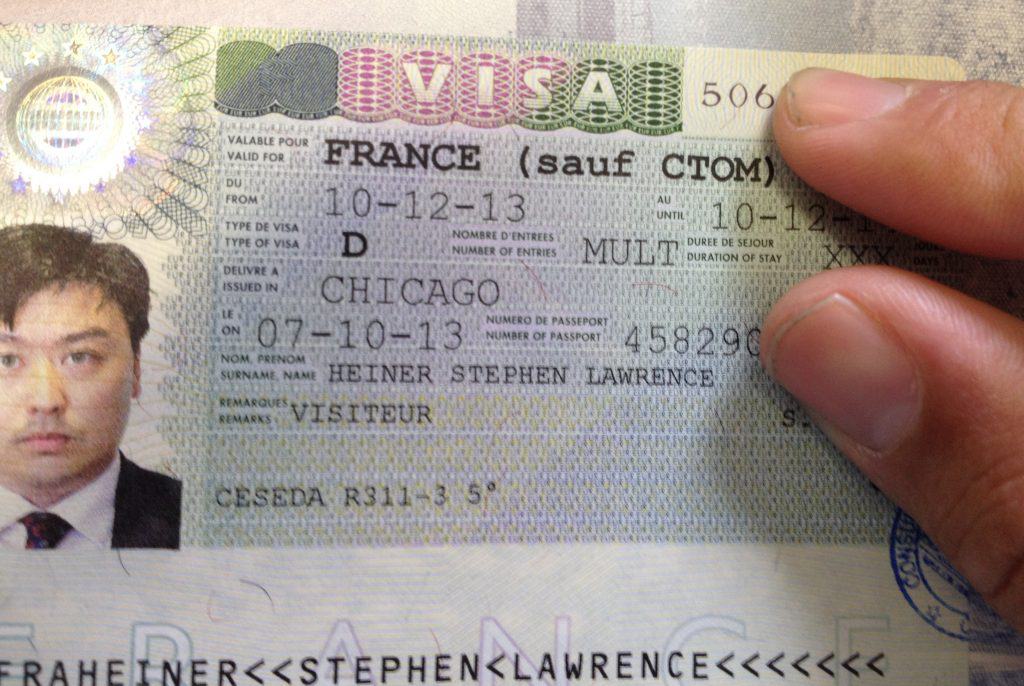
The Path to French Citizenship Begins, or “Visitor No More”

Note from the editor: In light of new guidance on remote working in France as shared by the official French tax office in June 2025, we have also officially changed our stance on remote working for a US company while living in France under the visitor visa. Read more here, and contact us with any questions or concerns. We’re here to help! — MS

I saw her place the green and white paper on top of my file.  It was the paper used to print a récipissé (the temporary document one uses for identification while waiting to get a permanent identity card).  Externally I remained stoic.  Internally my jaw dropped and I wanted to shout out.  That enormous dossier that I had handed over 15 minutes earlier had worked.  Not only had I successfully jumped the track from the hamster-wheel of visitorhood to the track to an EU and French citizenship, but this had been the shortest prefecture visit since I moved to France in 2013.  From start to finish it had been thirty minutes.  I had felt supremely confident in my dossier but this was France, after all.  There could always be something objectionable.

Still dumbstruck, I silently handed over my photos.  As the big printer hummed, she clipped out one of them, handed the rest back to me, then dutifully affixed it to my récipissé.  She then gave it all the stamps and signatures it needed after I had verified all the information and signed it myself.

Today is eight days after I successfully changed to a Profession Libérale visa.  As long as I earn a certain income over the next five years and pay the requisite taxes, I’ll be eligible to apply for French citizenship (note: that does not mean I’ll get it).  I’m officially allowed to work in France, now.  I had to go to URSSAF yesterday to do more paperwork, and I need to come back in 90 days to give the prefecture that paperwork, but that’s literally paper pushing, rather than the complex compilation of a dossier.

Could I have taken this path immediately in 2013 instead of taking the visitor route?  Yes.  Indeed, if there are any of you out there interested in taking this path, I can help consult you through this process as someone who has successfully completed it and has a winning template.

And yet, the answer for me is also No.  I could not have taken this route myself, knowing as little as I did about France in 2013.  I didn’t even know what I didn’t know, and my plans and ideas about my time in France were so inchoate when I landed here.  Yes, eight days ago I took a bulletproof dossier to the Prefecture…but I knew it was bulletproof because of my last two visits there and what I had learned about the French and their expectations in the last three years.

It’s also been marvelous to hear from people I’ve met because of this blog not just those who needed help regarding the visitor visa but those who have started to meet with me to strategize about what I’ve just successfully done: a transition to the citizenship route.  A few of their testimonials are here.

Thanks for continuing this journey with me.  Last Thursday was the end of the beginning.


Did you enjoy this article? TAIP is 100% reader-supported through tipping. If you want to leave us a tip of any amount it would be highly appreciated. These tips help support our efforts to keep TAIP an ad-free environment. Just as at a cafe, the tips are split evenly among the team.

Unexpected Consequences of an International Move: Instant & Ongoing Decluttering

I’ve mentioned before on this blog that the Four Hour Work Week is a major influence on my life and was a big part of the “how” portion of the massive quality of life upgrade that was my move from America to Europe.  In the book Tim puts forth a notion called “mini retirements” in which instead of working and saving until some mythical age to sell everything and move to Thailand (for example) why not do that now for a few weeks and see if you actually like it.  There are other reasons to take mini-retirements, including not assuming you’re in control of your health or when you die, but what I want to focus on is Tim’s insistence that you dump pretty much everything.

Stuff.  It can define us.  And Americans in particular have so much room that nothing stops us from buying more.  We even define our “national holidays” by sales of stuff.  We even have a very healthy business category of self-storage, which is an embodiment of our hoarding mentality.  Alas, that industry is now kicking off in Paris (and probably greater France as well).

Tim’s points were simple: get rid of everything that doesn’t have a particular or sentimental value.  You can always buy another couch, or plates, but maybe you can’t buy that one pan Grandma taught you to cook with.  Dump the other stuff, keep that.

I decided pretty quickly that my “must keeps” consisted of roughly 100 framed prints that had mostly been painstakingly transported from Europe over the years and adorned all the spaces of my then-home in America, as well as the 4000 books that I had collected over many stops of library book sales and used and new bookstores over the years.  I spoke to a friend in Canada who had a large amount of space in a new home he had recently moved into, and who also happens to homeschool his kids.  He would get a teaching and parenting resource for free, as well as for his own enjoyment, and I would have free and safe storage of my treasures.  We agreed on a 5-year term, after which time we could discuss what was to follow.  I knew after 5 years in Europe (I’m 2 in now) I would either have a place to ship the books or have a long-term plan about what to do with them.

So books and art sorted.  I rented a large truck about 6 months before I left the USA and drove the books to Canada.  As a note, if you do this, the Canadians will ask you for a value, so they can tax you…on stuff you already own…because hey, you might choose to sell it!  So, cynically (and in keeping with American, and what I would find out, French traditions), I assessed the 4000 books at a value of $.01 each and the art at $1.00 each, to a value of roughly $200, which I still had to pay tax on.  Small price to pay honestly, but it does add an extra 30-45 minutes to your border crossing.

I then proceeded to dump all the furniture I had painstakingly picked out during my “I’m a grown-up now with a real salary” phase when my college furniture found the curb.  These were the delicious dark wood headboards, the plush suede couches, the tasteful (and useful) ottomans.  I even had a lovely Victorian double-sided desk.  All gone: happily mostly sold to friends and friends of friends, and what was still left over went onto Craigslist.  For the very last items (what was I doing with my own power drill?), I left them with my sisters to sell on their own or keep.

That left me with roughly 20 resealable tubs into which I mostly, but not exclusively, put items of real sentimental value.  Stuffed animals I had as a child which I kept in really great condition and which I wished to pass on to my children or to my nieces and nephews.  A report on birds I wrote as a ten-year-old.  A drawing my sister made for me.  That kind of stuff.  Some dear friends have been kind enough to keep those tubs in a spare room in their home.  I plan to keep reducing the quantity of tubs in that room every time I visit, loaded with goodies from Europe for my gracious caretakers.  And each year that passes that I don’t miss the stuff in those tubs, it makes it that much easier to get rid of when I do see it again.

In truth, limiting myself to the four full-sized pieces of luggage I ended up bringing to France was an enormous task that I totally underestimated.  I flew American Airlines to France in December 2013 and at that time the policy was: 1st bag free, 2nd bag $100, and bags 3-10, $289 each.  Hard to believe, but this is actually the cheapest and fastest way to move your stuff.  I checked into freight, believe me, and either my calls weren’t returned, or my emails weren’t returned, or it was prohibitively expensive when I did manage to get a price sheet.  Same for UPS, sea-freight even.  And then you have to go to Le Havre to pick it up.  Yeah, skip that.  Pack it with you.  It’s really cheap, comparatively.

Now, when you’re bringing that much stuff (my aforementioned four pieces of luggage…I won’t even share the absurd limits of carry-on that I stretched), you find a way to bring too much, so I want to encourage you to spend one month packing these 4 pieces (or fewer).  You’ll take more stuff out as you work on it every day and keep asking “Do I have to have this?”  I know when I showed up at the airport that I was at least five pounds over on each bag.  But I knew how to get around this: the skycap.

This profession doesn’t exist in Europe, oddly, though it is exactly the sort of profession you expect to exist there.  They are (for my Euro friends who might be reading) men and women who stand on the curbside to help those who wish to “skip the line” get boarding passes and check bags there instead.  For this “convenience” you are expected to tip anywhere from $5-$25/bag.

That morning that I left Kansas City the skycap picked up all 4 of my bags and gave a slight grunt for the last one, the heaviest.  “Where ya goin’?”  “Paris.”  His eyes widened as he looked back over the bags, quickly calculating how much it was going to cost me.  “I’m moving.”  “Ah.”  He started weighing the bags, and I watched each bag on the digital readout.

53 lbs

57 lbs

52 lbs

61 lbs

“They are all over.”  He was reminding me of the 50-pound weight limit I was already aware of.  Overweight would add $150 to each bag.  I nodded, putting on a guilty and downtrodden look.  I wanted my silence to speak.

“I can take care of this for you, if you make it worth my while,” he said after a beat or two.  I tried not to beam and high-five myself, as this was the exact response I was banking on.  I took out my last bit of American currency I was carrying, a $50 bill, and put it on the counter.  I still said nothing.

Given that he was about to save me $600, he was expecting more, I’m sure, but he probably realized that $50 was good pay for 5 minutes and a few key strokes that indicated that yes, these bags weighed no more than 50 pounds.

We were operating in that shadow economy, and little did I know that this was precisely the kind of hustle I needed to survive and thrive in my new country.

So, to sum up:

  1. Get rid of mostly everything.  Try to come up with creative, trade-based, non-recurring monthly cash flow ways of storing the rest.  You need to spend as little as necessary in your new country when you first get there.
  2. Take a long time to pack what you are bringing, in order to have a critical instead of a stressed and harried eye to look it over with.
  3. Don’t hesitate to leverage American idiosyncrasies to bring what you want.
  4. However, do be pragmatic and take the time necessary to figure out what you really need vs. what you can buy when you get there.

A giant move out of the country can be the impetus for that Spring Cleaning you always aspire to do (and which my sister Clare does roughly every 3 months) but never get around to.  Which is yet another reason to move abroad.

And when you do get here, the housing in Paris is small enough to prevent you from restarting that life of stuff you left behind.  When you shop, you constantly ask yourself, “where would I put that?” which is a practical question that you don’t have to answer in always too-big America.

* * *

For a great video to share with kids or anyone who cares about our planet and the absurd and unsustainable way of life in the First World, check out the work that these guys have been doing.

Photo from jsmjr.  Labeled for reuse.  What a cute dog.

Did you enjoy this article? TAIP is 100% reader-supported through tipping. If you want to leave us a tip of any amount it would be highly appreciated. These tips help support our efforts to keep TAIP an ad-free environment. Just as at a cafe, the tips are split evenly among the team.

You Can(‘t) Go Home Again

“What do you miss the most?”  My friends smile, anticipating a favorite dish, a favorite place, or a particular time of year.  “Well, you guys, of course,” I say quickly, hoping to deflect the question from my true answer: “Nothing.”

Of course there are things that are wonderful that one could miss but I “miss” them in the same way that I “miss” anything from a place I have been to like missing dim sum in Hong Kong or missing walking the beaches of Sydney.  But I don’t miss anything in the “think about it all the time” way that I think they probably mean.  But in fairness to a country that played host to many happy years of my life, I miss walks in the Huntington Gardens in California.  Food trucks in Austin.  Baseball in Saint Louis.  Hot chicken in Nashville.  The squares of Savannah.  BYOB restaurants in Montreal.  Autumn in New Hampshire.

Next month will mark the beginning of my third year in Paris and I’m “in between.”  America is no longer “home” for many reasons but I still can’t believe I really get to call this place home.  I’m Parisian in my bones in a way I always have been and I marvel every day that I get to live in my dream city.  I’ve often been alone on a quiet street and stifled a laugh as I took in that crooked winding view of centuries.  Two years on, I still have “pinch me” moments.

Going to the United States has become a rather elaborate production.  As part of my visa requirements, I have to spend at least 270 days a year in France, so you can’t go back for too long but if you’re going to cross an ocean, it’s 3 weeks’ minimum for me.  I’ve also hit upon the strategy of visiting my friends and family during “non-holiday” periods so I don’t have to share them with other commitments they have.  I’ve also found this makes for finding absurdly cheap flights (I just booked the cheapest Europe-America flight of my life recently).

I haven’t yet chosen to ditch seven years of medical/dental/accounting services and technology and occasional travel stateside means I don’t have to.  The PPO (insurance plan) I once had in the United States cost $135/month and covered me for pretty much everything for years.  The “affordable care act” in America has not only cancelled that plan, but the closest current equivalent costs $570/month.  So I just pay cash to see my old doctors for my annual checkup, etc.

Dental insurance remains extremely reasonable ($35/month in my case) so it’s cheaper to retain it solely for your cleanings twice a year.  Just those two cleanings will cost more in cash than the entire annual premium for your insurance and that’s assuming you have no other problems.  Do the math.

I couldn’t help but laugh at the times I would put a car into park and then stare mutely at the dashboard, wondering if I hadn’t forgotten to do something.  Not driving for months and months makes you a bit cagey when you do finally slip behind the wheel again.

***

The more assertive variation on the question “What do you miss?” is “When are you coming back?”  This led to a very long and fruitful exchange with a close friend in which I enunciated advantages I have now that effectively prevent me from returning to the United States for the foreseeable future.

  1. Physical health I finally gave in and got a Fitbit to document what I’ve always suspected: I walk a moving average of 10 km/day.  I do this at various speeds, up and down stairs, on cobblestones or grass, all around this city.  Not only did this regime of walking contribute to my losing 30 lbs/13 kg when I moved here, but it has established a new weight standard which would be impossible for me to retain in most American cities.  During my recent visit to Kansas City, I experimented by refusing to take and elevators, and as often as I could remember I parked my vehicle as far away from a store entrance as possible.  I even tried not to use carts to carry my purchases.  With these “extreme” measures I couldn’t even get close to 4km/day as an average.  I’m simply healthier here in Europe.
  2. Access to Europe I used to treasure an annual trip to Europe to see places new and old.  But now that I live here, all of Europe is at my doorstep, for pennies, either by flight, train, bus, or ridesharing (think uber but for long distances).  When living in America I experienced a variation on these sorts of fun possibilities only during my two years in New Hampshire, when Boston, Philly, NYC, and even Montreal were just road trips away, and in some cases, by train or bus too!  On this recent trip I had some business up by Chicago and elected to take the train (Amtrak) but perhaps had forgotten that there’s only one departure a day and when it gets delayed, it really gets delayed.  An engine on the train coming to Kansas City blew up in Arizona and they had to run another engine out there from California.  It delayed my journey by 7 hours and Amtrak had to pay to transport me to and from a hotel and put me up in it so I could connect to the bus to Rockford in the morning.  Not too shabby a recovery from the taxpayer-supported Amtrak, but a far cry from the dozens of departures and arrivals all around Europe every day.
  3. Constant challenge of language Every day I make progress in French, but my work and life brings me into contact with the whole world.  During the summer I had a date with a Brazilian girl who didn’t speak English and we laughed our way through our makeshift Spanish and an occasional assist from Google Translate.  Expressing yourself in a foreign language is one of the most difficult, fun, rewarding, humbling, and interesting experiences in life.  You get opportunities like that every day here.
  4. A built life Next year I transition from my visitor visa to one that puts me on the path to citizenship.  I continue to maintain that the EU passport is simply the most valuable passport obtainable by the average person in the world.  The only ones more valuable are the Vatican and Swiss passports and they are very, very difficult to obtain for various reasons (as an aside I was recently asked at a dinner party what I liked most about having an American passport and I replied that it was the knowledge that Navy Seals will come for me if Somali pirates ever commandeer a vessel I’m on.  I’m sorry, no country can top that!).  I’ve started something wonderful here, and it would be nuts to leave it especially when I’ve gone through all the hard stuff.  Indeed, as I looked over the list of requirements for my dossier for my new visa which will be far more difficult to obtain than the visitor one I said to a friend, “Is this it?”  The list had 28 requirements.  I realized after 2 years I am simply unfazed by the French government.

So my answer to my friend was, “Why would I come back?  I’m healthier and happier than I have been for many years, possibly more than I have ever been in my life.”

The caveat is, of course, family.  My nieces and nephews continue to grow by leaps and bounds and I measure their skill in their improvements in art and coloring, Parcheesi, and sports.

On more than one occasion I’ve heard someone say, “I have to live here, because I love my family.”  I get that, I truly do.  But ultimately I moved because I placed my happiness first.  Of course I’m happy when I am with my family but I know that part of the reason I get to contribute to their lives, bring them presents from all around the world, and share great stories with them, is precisely because I’ve built and chosen an intentional path for my life that doesn’t defer a dream life to some unknown future that no one has guaranteed that I will live to obtain.

There’s no right answer here and I’m not proposing that I have the right one.  I can only say that I can spend more quality time with my family now and treasure it more deeply because I know our opportunities are so precious and limited and because I am well and truly happy, and that speaks volumes to children.

***

There’s nothing more satisfying than waking up every day knowing in your bones that you are on the right path.  And while two years isn’t yet enough for me to claim “Parisian” status yet, it does feel like home.

The picture is of one of the fountains in one of the many lovely squares of Savannah, Georgia.

Did you enjoy this article? TAIP is 100% reader-supported through tipping. If you want to leave us a tip of any amount it would be highly appreciated. These tips help support our efforts to keep TAIP an ad-free environment. Just as at a cafe, the tips are split evenly among the team.