Applying for a Temporary Work Visa, TAPIF Edition

I am approaching the end of my second year teaching English in France as a language assistant through TAPIF, the Teaching Assistant Program in France. You can learn more about the program or read my demystifying reflections on teaching in France, respectively. However, today I want to zoom in on the visa application process that takes place after acceptance. This was extremely intimidating to me the first time I applied. My second go around, I took it so casually I almost messed the whole thing up. You could say I’m like Goldilocks, over-prepared, under-prepared, and finally — just right.

What Do You Need?

Language Assistants through TAPIF are eligible for a visa travailleur temporaire P2 VLS-TS. It is generally good for eight months, from September to June, depending on your personal travel plans and the entry date of the plane ticket presented by the assistant at the appointment. Considering that the work contract is from October to April, this leaves about a month buffer on either side of teaching. The golden ticket for this visa is the “arrêté de nomination” (official work contract) signed and provided by the language assistant’s hiring academy. An academy in France is the equivalent of a regional school district. These work contracts are distributed on ADELE, the teaching assistant application platform. In the best-case scenario, a hiring academy will provide this before the August vacations start, and most teaching assistant managers (though not all) are sensitive to the need to provide it sooner rather than later. The visa application process should not be launched until you have this in hand. 

Choosing a Visa Center

As of 2026, there are ten French visa application offices in the United States operated by TLS Contact, an outsourced management company. The office closest to me during both years of application was in Houston, Texas. In 2024, the building was dingy and cramped. I honestly wondered if I had the right address on my arrival. In the second year in 2025, the French application center had a change of address, and the building was remarkably well kept with less overlap of services between other countries. There was even free sparkling water and coffee in the waiting room, but you didn’t hear it from me.

The Timeline

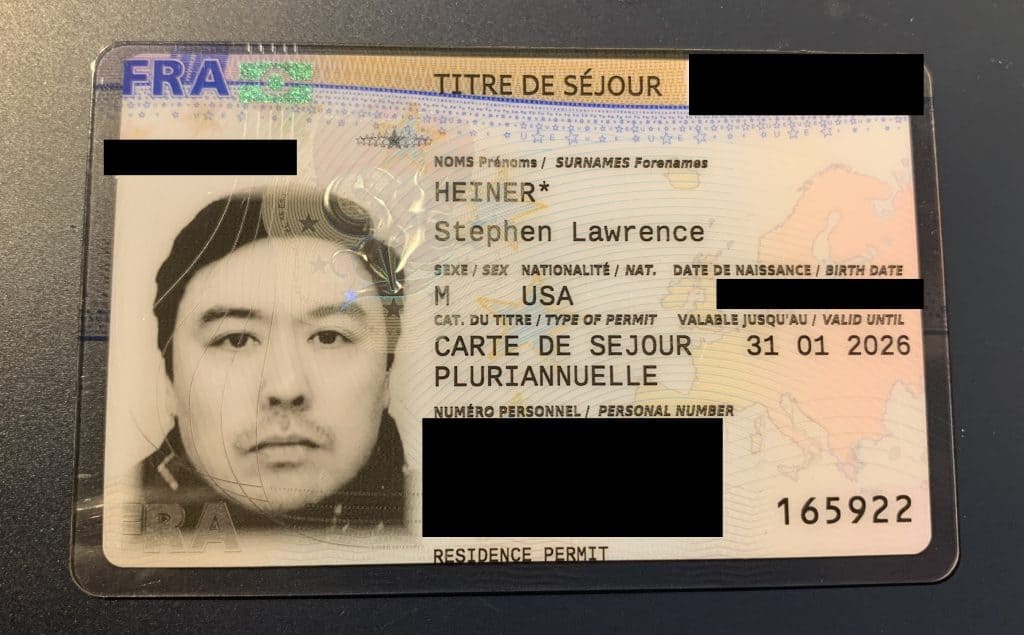
Given the longterm cooperation of the US embassy with this program, the documents required for application are admittedly less than for other temporary situations. For example, language assistants don’t need proof of prior accommodation nor pay the TLS appointment fee. In 2025, a fee exemption letter was provided by my employer that I emailed to TLS upon booking my appointment through their portal. I received my work contract in July, which then permitted me to launch my visa application through France-Visas and to book a TLS appointment in August, roughly one month before my purchased flight to Paris in September. The tightness of this timeline certainly gave me reason to stress, but both years I received my temporary visa (a sticker inserted into my US Passport) by mail within a week of my appointment date with no issues. 

Confessions

My first year of application, I had all my ducks in a row. The second time around, I made the blunder of forgetting to hit the final submit button on my visa application until 72 hours before my appointment. You may wonder, how did that happen? I forgot that in the application process, when you are triggered to book an appointment with TLS, it requires you to exit the France-Visas website. After registering your visa application number and booking your appointment with TLS, the person is required to return to the France-Visas website to hit submit a final time. I was traveling at the time of submitting my paperwork and I’ll blame my error on being out of my normal environment and therefore, slightly distracted. A few weeks later, I double-checked my submission the week of my appointment to make sure that everything was correct. That was when I realized my mistake. I hit submit and thankfully there were no issues at my appointment three days later. I would not recommend testing the system as I have.

Other Tips

Both years, I opted to have my visa photo taken at the TLS office during my appointment. This removed the stress of wondering if an outside-provided photo would have been accepted, due to lighting, hair placement, recentness, etc. This extra service is totally worth the $20 charge and took less than a minute on site. Come to your meeting with extra copies of your proof of work (diplomas, emails, plane ticket receipt, and that golden arrêté). You’ll be grateful when you don’t need the extras, and even more so if you do. Lastly, take a deep breath. You’re gonna be just fine. 

Photo by Ian Taylor on Unsplash

Did you enjoy this article? TAIP is 100% reader-supported through tipping. If you want to leave us a tip of any amount it would be highly appreciated.  These tips help support our efforts to keep TAIP an ad-free environment. Just like at a cafe, the tips are split evenly among the team.

french flag

How to Renew the Passeport Talent

Bonjour tout le monde! I’m excited to share with you a brief guide to the beloved (read dreaded) passeport talent renewal process for first timers. I’m new around here, so I’ll share a bit of backstory.

Initially, my passeport talent was approved for 12 months; this time frame is different for everyone. Some people receive two to four years their first time; it’s mainly dependent on what subcategory you fall into and your work experience.

My renewable visa was approved for 18 months, which is less than I had hoped, but reasonable as they wanted to give me more time to grow my business.

When your renewal application is being processed, several factors are taken into consideration, not only how much income was earned and if it met the minimum 70% of the French minimum wage. But also, what type of work did you do? For example, if you are a musician and the majority of your declared work was as a barista, then that income might not count towards your renewal. Your visa will clearly stipulate what kind of work you’re allowed to do. If it states you can only receive income as a musical performer, then you’d be hindering yourself by accepting work as a barista.

My particular visa was passeport talent artistique et culturelle. As a producer, I could do photography, video, writing, and consulting as long as it fell within the scope of a production entertainment agency. I drafted a business plan explaining the breadth of what I could accomplish in France along with a track record of what I had already done in the US. I made this intentionally because I wanted to have more options on how to earn an income. As a producer, I knew I could get the projects done, but I needed the flexibility to show that on paper.

When the time for renewal came, I provided proof of all my work and it was successful. So, let’s dive in, step by step, into how I obtained the renewal for myself and my husband.

Step 1: Know Your Timeline! 

You are eligible to apply for your visa renewal up to four months before its expiration BUT NO LESS THAN two months before its expiration. Confusing? Welcome to France!

If you submit your renewal application within 60 days of its expiration, you are now in a penalty period and will be charged a late fee for the now late processing of your application. Ask me how I know…

So, familiarize yourself and understand your active dates so that you aren’t paying extra fees and so that you give yourself enough time to collect and produce all your documents appropriately. 

Step 2: Read the Directions and Then Double It

Review the application rules thoroughly, but use it as a guide, not a bible. In my experience, the more proof provided, the more perceived readiness your dossier has. When applying for my first visa, I submitted a business plan, but this was not requested in the application. During my appointment with the consulate, they reviewed it and asked for an additional copy, which I gleefully provided; thankful for the tedious research I had done beforehand, making copies of everything. When renewing, you want to show how well you did during your first season in France; sometimes that is difficult to do as an artist or performer, or in a non-traditional career. But nothing is impossible! 

I know, how dare I bring that attitude around here, but it’s true. I provided printed screenshots of Instagram DM’s with potential and locked clients, reaching out asking for services and availability. I included written letters explaining my work and expertise and hyperlinked to videos produced, photoshoots, etc, so that if my documents were reviewed on a computer, the agent could click the hyperlink and view my work. Did they do this? Who knows! But I wanted to ensure that if there was a way to prove myself, they could see it in every medium.

Additional documents in my dossier were letters from former, current, and future clients. This was important because it showcases that I made a footprint in Paris and garnered interest in my work.

When reviewing the application guidelines, you’ll see that they simply request proof of work, which could have been sufficient with a copy of an invoice and a bank statement showing payment received.

My intention was to provide as much as possible from the beginning to reduce requests for additional paperwork. Essentially, if you deem it relevant to your work or portfolio, make a copy and send it in. You have everything to gain.

Step 3: Don’t Worry About the Trees

Since you’re renewing your visa, you should already know this, but here is your reminder. The French LOVE paperwork, now is not the time to conserve and submit only what’s necessary. Ensure that you make at least one copy of every document you are submitting and print everything in a simple font, one-sided, and in the correct size. For example, when you submit a photocopy of your carte de séjour, it must not be thumbprint size, nor should it be two pages wide. Keep it looking clean, smart, and orderly. Ideally the true size, or half page, usually is a good rule of thumb for image copies.

Step 4: Print the RIGHT Photo

How naïve I was in the early years. I assumed the metro photo booths provided passport photos exclusively. Now we all know that you have several options alongside the fun vertical keepsake.

When selecting the required passport-sized photos for your application, ensure that you select the option for visa renewal for foreigners. I had to redo this because I got too confident and subsequently lost 10 euros’ worth of metro rides to the photobooth.

Step 5: Submit Certified Mail

When you’ve finally collected all your documents and are standing in the never-ending La Poste line, know that everything should be sent via certified mail. This is your French life at stake! Keep a track of it and rest easy at night knowing that if something gets lost, it’s not on you, and you have a copy.

Step 6: Be Patient, All Good Things Come to Those Who Wait!

Is this the hardest part? Maybe you’ll hear back in one month; maybe in 4, maybe your current visa will expire, and they’ll give you an extension while they review your case, and you’ll be floating in a nervous limbo. This is when you laugh and eat your croissant and take a deep breath. Tout va bien, it’s all good!  You’ll know when you know, and hopefully, that beloved email notifying you of a new message in your account will be the light to illuminate your next chapter. The one where you get to stay and keep living where you want to be.

Photo by Amin Zabardast on Unsplash

Did you enjoy this article? TAIP is 100% reader-supported through tipping. If you want to leave us a tip of any amount it would be highly appreciated.  These tips help support our efforts to keep TAIP an ad-free environment. Just like at a cafe, the tips are split evenly among the team.

French Tax Office Rules Against Remote Work

In the United States, when there is ambiguity about a tax law, if enough accountants and people ask about, the IRS will give guidance which then means people will have to, at least from that time forward, act accordingly. For example, when crypto came into its own some years ago, the IRS gave guidance for how to deal with it. That guidance is publicly listed on an official government website so everyone knows.

Just a few days ago, Emma Pearson of The Local wrote a very helpful article sharing new guidance on remote working in France. While I am unclear as to why the French Tax office would choose to “exclusively clarify to The Local” a rather important tax rule, instead of publishing and publicizing it themselves on a government website, we are grateful for Emma’s work regardless, as the guidance is clear.

This is the key quote:

“The French tax authorities (DGFiP) consider that work is carried out in France when it is physically performed from French territory, regardless of the employer or location of the clients. So if you’re an employee or freelancer working for a company based abroad, but physically carrying out your tasks from France, this constitutes work carried out in France for tax purposes.”

Our position at TAIP for many years has been that since we have guided many people through successful visa applications in which a letter from employers stating that the applicant was remote working, that as far as immigration authorities are concerned, remote work in France is legal. That is still our position. The ruling of the tax authorities cannot overrule another equivalent (or possibly higher) department of the government: immigration. A ruling or clarification would still need to come from there.

However, this clarification from the tax authorities makes such visa applications now impractical, as once you get here, the tax authorities play an oversized role in your ability to stay in France. Various attestations, including the P-237 which I had to submit for my French citizenship application, all need to come from them and you want to be in their good graces. You couldn’t be in their good graces in the face of this new clarification.

Practical Effects

What does this mean for you? Here are some scenarios we have considered as of today, when we are officially amending our advice on visitor visa applications:

Current Visitor Working Remotely

Our advice is for you to transition to a Profession Libérale visa, freelancing in the field you already work in. This may be straightforward in some fields. For example, if you are a bookkeeper, you could simply set up a French bookkeeping practice with this visa, and your now-employer could then transition to using a foreign contractor. On the American side, this will be relatively painless, as they don’t have to enter the French labor market. They are simply hiring a foreign freelancer. The tax implications are on the freelancer. You can start working on the paperwork now (we have courses and consultations to assist), and then when renewal comes, you can simply apply for a “change of status” and present your application then.

Hopeful Visitor Who Wanted to Work Remotely

As we noted above, this door is now officially barred so you’ll have to consider Passeport Talent or Profession Libérale as alternatives, and our website is full of advice on both.

Person Who Decides to “Risk It For the Biscuit”

Okay, so you’ve done your own French taxes for years, and you’ve correctly reported your foreign-sourced income. There’s no real way for the tax authorities to know you work remotely, as we’ve always noted (there are no tax authority digital police roaming around, no matter what the Karens say…or believe!). But your long-term future in France doesn’t offer solid possibilities. To get a ten-year card you will need to prove financial anchorage in France, which you can’t do with mostly (or entirely) foreign-sourced income (N.B.: we have seen exceptions to this principle made for retirees). The bar is even higher for citizenship. So, you can potentially get away with this indefinitely, but you’ll be stuck with only ever getting one-year cards forever. Not a pleasant prospect.

Reflections

Other nations like Croatia and Spain have created much more progressive visas in which immigration and the tax authorities work together, so there could never have been any ambiguity about visas because one department considered remote working legal and the other illegal. That’s neither good nor bad, as every country has a right to run itself as it sees fit, but it’s unfortunate for those who would like to live in France but don’t wish to start a business, get into a relationship with a French person, or have the particular set of skills that would lead a French company to pay a one-time bounty + a percentage of every paycheck indefinitely just to hire you when they could hire a European. This ruling from the tax authorities excludes many people from France who would otherwise have come to the country, paid into the economy, possibly learned French, and made friends (and maybe found a spouse).

In a time of global uncertainty, such a stance cannot be considered welcoming from a country that prides itself on hospitality and showcasing its treasures. And why the tax authorities have chosen to effectively speak for French immigration, I’ll never know. However, it’s not our duty to like official rulings, but to comply with them and advise our clients to do so, as we always have here on TAIP.

Photo courtesy of Wikimedia Commons.

Did you enjoy this article? TAIP is 100% reader-supported through tipping. If you want to leave us a tip of any amount it would be highly appreciated. These tips help support our efforts to keep TAIP an ad-free environment. Just as at a cafe, the tips are split evenly among the team.

paperwork

How to Get a Ten-Year Residency Card in France

I had originally planned to write this article earlier this year, but with my focus on submitting my citizenship application (more on that soon) and the fact that I wasn’t even two years into my new four year card meant that the administration would not have looked approvingly on a request for an “early” renewal just to transition to ten-year status. In any case, I’m happy that Chris, a new writer for TAIP, had recently gone through the process and has written the article I would have wanted to.

Eye rolls, heavy sighs, hand gestures demonstrating a sense of resignation: these are just a few of the non-verbal responses I receive when I discuss l’administration francaise (French administration) with my French friends. And for good reason; for many years, and still to this day in many tasks, the process of getting governmental approvals in France has not exactly been a model of efficiency. Ask me sometime about my experience of exchanging my Maryland drivers’ license for a French one. And if you want a French satirical take on the frustration of getting official business done, check out this clip.

While some French laws and processes seem to not have changed since the 17th Century, others have taken huge leaps into the 21st Century. When I first renewed my visitor visa back in 2019, there was an antiquated online appointment reservation system that could make even the calmest of souls go berserk. Back then, new appointment slots to apply for visa renewals at our local préfecture were supposedly opened online every Sunday at midnight. But without fail they would all be gone within nanoseconds, thus restarting another week’s worth of time and stress wondering if I would ever get an appointment. 

Long-Term EU Residency Card

Thankfully, the visa renewal process has received a much-needed facelift through a website that has made everything much more streamlined. A relatively intuitive online portal means it’s no longer makes it necessary to plan for an in-person appointment at the préfecture to submit the documents needed for a visa renewal

While the streamlining of visa renewals is a welcome development, an even greater sense of relief is open to those who have lived in France for a minimum of 5 continuous years: an EU long-term (10-year) residency card. With the submission of a few extra documents beyond what is required for a long-term visitor visa, a 10-year card can be delivered, of which the benefits go well beyond the freedom from the annual visa renewal process.

Besides the length of validity, the biggest difference, between a long-term visitor visa and the EU long-term resident card is that the ten-year card makes it possible for its holders to work in France. As a result, income is no longer limited to foreign salaries or other non-French employment sources. The other major benefit of the EU long-term residency card is that it allows its holders to legally stay in certain states of the European Union beyond 3 months without a long-stay visa.  Even better? You can be gone up to three consecutive years of the ten, and avoid being a fiscal resident during that time, if you wish.

The Application Process  

While the Étrangers en France website is intuitive for long-term visitor visa renewals, it is less so when it comes time to applying for a ten-year residency card. In fact, nowhere is it indicated that you can even apply online for an EU long-term residency card. I personally made the mistake of taking this to mean that I needed to print out and send my application, along with all the supporting documents, by mail, to the préfecture. However, when my application was sent back to me in its entirety, I learned that to apply for the coveted ten-year card, I had to go about it as though I were renewing my long-term visitor visa. The only thing I needed to do differently was to write in the comments box that I was requesting a 10-year residency card. (Do be careful however, as the EU long-term resident card web page seems to imply that in some cases applications need to be sent by mail. Be sure to check with your local préfecture.) 

The beauty of the EU long-term resident application process is that there are only two proofs required above and beyond what is needed for 1-year visitor visas: (1) proof of residency in France for 5 consecutive years and (2) a language proficiency exam. 

Proof of Residency

The documents required to show proof of continuous residency in France for 5 years are the applicant’s avis d’impôts sur les revenus (French tax returns). Simply log in to your espace particulier on impots.gouv, click on the documents tab and separately download each of your avis d’impôts sur les revenus for the past five years. 

Proof of Language

Applicants seeking an EU long-term residency card, must also have a minimum of an A2 level in French proficiency. There are three ways for applicants to prove their A2, or above, level of language proficiency: (1) a linguistic certification; (2) a diploma attesting a minimum A2 level in French; (3) a national diploma with a minimum level 3 of professional certifications. For more details, click here.  

Within a couple of weeks of submitting my application, I received a link to upload the proof of continuous residency and language proficiency documents. A small frustration came in the form of only being able to upload one document through that link. This added a small, but what felt like an unnecessary, step of collating all the pages together before uploading them.   

The Wait

As my long-term visitor visa was set to expire, I received, without having to request it, an attestation de prolongement d’instruction, a document which extended the validity of my visa. Accompanied by my long-term visitor visa, this attestation allows me to continue to reside legally in France and to freely travel within the Schengen area while my application for the EU long-term residency card is being reviewed.

It’s been three months since I submitted my application for the EU long-term residency card, and I am still waiting for it to be approved. With the fêtes de fin d’année (holidays) right around the corner, I anticipate that it will be well after the New Year until I receive word that my residency card has been granted. After five years of living in France as an adult (I spent the majority of my childhood here), I have begun to learn that the slow process of government approvals will work itself out in due time. So I might as well enjoy a bûche de Noël (Yule log) instead of stressing about when I will finally have my card in hand.  

To read more of Chris’ musings on international living, click here.

Did you enjoy this article? TAIP is 100% reader-supported through tipping. If you want to leave us a tip of any amount it would be highly appreciated.  These tips help support our efforts to keep TAIP an ad-free environment. Just like at a cafe, the tips are split evenly among the team. 

7 Days Before I Put LA in My Rear View

This is part of a series of articles about the final days of preparing for moving to France and what happens when you get here, and those articles are part of a promotional series launching our new book, 29 Days to France, a book that all the writers wish they had had before we started our French adventures.  It’s now available for preorder, and those preorders come with a free 15-minute Q&A personal session about your French immigration plans.  Click here to learn more.

This is Vince’s final in a trilogy of articles counting down his move to France from Los Angeles.  Part 1 can be found here, Part 2 here.

A professional film set requires a period before the actual shooting called pre-production. Prep for short, it involves not only the glamorous departments like camera or costumes to be primed for the demands of the film shoot, but equally, the mundane tasks like organizing payroll and the on-set office supplies.

As a 1st Assistant Director, my prep starts with breaking down the script by scenes and their associated departmental elements and parsing them out for all the allotted shoot days. I present a rough plan in a company-wide meeting, after which I continue to revise the plan, gathering as much information through departmental meetings…all working toward an ideal plan of attack.

I also analyze contingencies, as there will always be surprises, for instance when the shark didn’t work in Jaws or when Tarantino deviates from the script with a sudden idea not scheduled for work that day.

The secret to successful film production — content value notwithstanding — is good prep. Being prepared for 85% of the possible scenarios of that shoot is good prep for me.

A week before principal photography, prep exponentially accelerates. The screws get tighter. The work days start earlier. They become even longer. People’s true colors surface as pressure to make the creatives happy begins to build.

There’s a lot of hurry up and wait for new information to come in, but in between, there are intermittent smoke-break-sized moments of calm. It never feels totally tranquil, because taking your foot off the gas exposes you to moments in which something falls through the cracks. When I am distracted by my personal issues I’m more susceptible to sloppy decision-making.

Prepping Paris

I was approaching the move like prepping a film. Gathering information, making a plan, gathering different information, listening to the specialists about various aspects of the move, being surprised by new discoveries and bad intel, dealing with incompetence but also the serendipity of having nice people help me along — also being distracted by my own personal life — causing me to make questionable decisions at times. It was madness. Some of it in my own head.

A French Dress Rehearsal in Hollywood

Of course, as I do, I put yet even more on my plate and that sets me back even further, timewise. In the first week of November, at Paris minus 14 days, I shoehorned a week-long French Film Festival called COLCOA (City of Lights City of Angels) held at the Directors Guild of America (DGA) headquarters. I had too much on my plate, bien sûr, but French films, French film community, French people for a whole week? I surmised that investing time for COLCOA might very well give me the head-start for Paris that would make Phase 2 a little easier. Besides, DGA headquarters was the epicenter of my long film career. At the very least, it deserved a proper farewell.

I saw a few French films such as Eiffel, ate some fromage with Sancerre and of course, had some café allongé and beignets. I even tried out my French with Nicolas Maury (Hervé on the Netflix comedy Dix Pour Cent, called Call My Agent in America) who was at COLCOA for a movie he directed. I asked him a question in French about his directing approach and he was kind enough to suffer through my French, but sensing he was in a bit of a rush, I panicked and reverted to English…but in a French accent. With my good friend Antoine as a guide to things French, COLCOA was absolutely the perfect full-dress Paris rehearsal — a perfect way to say goodbye to Hollywood and bonjour to Paris in the building that has been in my professional life for over two decades.

P-6: One Week Left Before My Flight to Paris

It was now seven days before Paris Day: P-Day. That made today P-6 (six working days left to prep). I was feeling on edge as I typically do in the last week of prep on any show, except in this show, I didn’t have a team. I had my cat Maddey, my French friends overseas, and expats on Facebook casually passing on advice.

The following big-ticket items remained on the board:

  • shoving my entire life in five boxes
  • storing, selling, giving, or throwing away what didn’t make the cut for Paris
  • getting Maddey’s USDA certificate and prepping her for the twelve-hour flight
  • continuing my L.A. Goodbye Tour
  • reconciling domestic accounts.

Simultaneously, I was still maintaining my normal life: writing projects, creative coaching sessions with clients, and training for future tennis tournaments. Overstretched on multiple fronts, I was struggling to keep all the plates spinning on my fingers while wrestling with the emotions of leaving my hometown, the anxiety of moving to a new one, and the grief of both losing my mom earlier this year and breaking up with Sarah who was, just three months prior, the other half of our to-be-determined Paris dream. As such, I was losing control over all the systems that were orchestrating and executing my Paris move.

It wasn’t a type of control in wanting everything my way or seeking elusive perfection. At my college gymnastics meets, I fell off the pommel horse a lot, so I am not one who is accustomed to any notion of perfection. But I am accustomed to pursuing high standards. I orchestrated the McDreamy car crash in Grey’s Anatomy. I was a tank platoon leader managing four M1-A1 tanks and sixteen men. I threw a double-back somersault with a full-twist on-the-floor exercise event. In fact, what I was feeling was less about control and more about the conscientiousness needed to maximize my odds of a successful fresh start.

I have big dreams for myself in Paris and unfortunately, I’m not Emily in Paris where it all goes swimmingly. As a man with a Filipino upbringing, I’m not quite the typical American in Paris, n’est-ce pas? I was bracing to face many hardships.

Jumping right into the poorly-built program I mentioned in my piece being 90 days out was a result of not being in control. If I had been in control, I would’ve seen the hundreds of complaints about the owner of this program who was such a polarizing figure that an entire Facebook group was created from the cascade of people who left her page. Her Facebook page was called Americans in France. The breakaway group was called Americans in France: The Open and Kind Group. How could I have missed this blatant clue? In my right mind, I would’ve have seen that train wreck a mile away and instead found TAIP and other non-scammy resources much earlier in the planning process, resources that show a genuine exuberance and passion for helping Americans settle in France. Instead, I dumped a chunk of money I could have used for essentials I needed to flourish in one of the more expensive cities in the world. I got sloppy.

I couldn’t — cannot — afford to be sloppy. With so many moving pieces to manage for a successful life in Paris, a few potential situations relative to scarcity can bite me in the butt and have me back on a plane to the States if I don’t ground myself and take better control of my chessboard.

It wasn’t until now, seven days before Paris, that I was starting to get more locked in. I was well aware I’d only be crossing the finish line for Phase 1. Once I’d get to Paris, Phase 2 would commence and be more intense than Phase 1.

Phase 2 had been lurking in the back of my mind; after all, Paris wasn’t a vacation. I was going to live there, which meant mundane tasks such as validating my visa in France, registering my coaching business in the French system, establishing a bank account, acquiring a carte vitale (for health insurance), getting a French phone number, and perhaps most importantly, generating revenue — getting my coaching business back up and running with my American clients. Just as important for my well-being, I would need to get back to a regular tennis training schedule.

I was probably struggling through a post-project depression after running on adrenaline (and fumes) to obtain my profession libérale visa a few weeks ago. That entire ordeal was intense.

I was still raw from unpredictable emotions triggered by who knows what. I’d be driving on the 405 Freeway, for example, listening to a song lyric like guard your innocence from hallucination, and I’d lose it, driving in the fast lane at 75 mph, tears gushing down my face, because I was cathartically relieved that Paris was finally in my sights, or I’d be missing Sarah, or I was pondering the complexity of my relationship with my mom and her final six months. After fifteen minutes of a good cry, I’d wipe my eyes like nothing happened.

I knew I needed a long break to recharge but at P-6, just like in last week of prep to make a movie, I was burning the candle at both ends to keep up.

Getting Maddey Ready for Paris

For weeks I was jarred awake by nightmares in which my cat Maddey wasn’t being allowed into France by a nonplussed Inspector Clouseau-like customs officer. Another nightmare entailed Maddey slipping out of my grasp while carrying her through the metal detector, zipping toward the far end of the terminal, and disappearing, which causes me to miss my flight, as if it was the last one ever for Paris.

Early Tuesday morning, I took Maddey to the veterinarian to begin the health certificate process. Thanks to heads-up advice from an expat named Jena, I saved invaluable time, which I needed because only three business days remained for the USDA to receive the certificate from the vet, endorse it, then send me the physical copy. As I would not be able to get Maddey on the plane without it, I was nervous. I called and e-mailed the L.A. office multiple times in the next two days to obtain updates, to no avail.

Packing My Life in Five Boxes

I started weeks ago by casually making piles of things I was bringing to Paris but reducing my life to five containers felt so daunting that I kept putting it off. Because I didn’t want to manage too many pieces of luggage at the airports on both ends AND look after Maddey, I paid $450 for a shipping service called Send My Bag to pick up and ship 3 16x16x16 boxes. I stayed up until 4:00 AM to finish packing the boxes in time for their pickup the next morning.

I had read stories about how Send My Bag might not show up on the arranged pick-up day (I planned for this scenario by allowing a buffer of a few days) or that the boxes might get held up at customs for reasons like packing too many items with lithium batteries (TSA only permitted one), or getting stopped over prescription bottles (forbidden), or tearing or breaking in transit, or getting delivered at the wrong place. “Just follow the instructions to the T, and it will be fine,” an expat on Facebook told me.

Even so, I also learned that Send My Bag was just the middleman. FedEx, who had recently traumatized me in delivering my visa, was actually picking up my boxes. I went into crisis prevention mode, only sleeping four hours that night to visualize possible not-so-ideal scenarios and devising more contingency plans. As such, I didn’t pack anything in the boxes that I’d need to access within seven days after my arrival.

P-5

Sleep-deprived, I put the boxes outside the gate of my townhouse (the gate phone didn’t work) with a big sign for FedEx to call me because I wanted to make sure I handed the driver the paperwork as per the instructions. The driver didn’t call; he just took the boxes and went on his way. If I hadn’t left out the boxes, the driver would have reported that I wasn’t available for pickup. As in the case of my visa, FedEx was up to no good once again and yet again, I had to stay ahead of them.

My beloved U2 books, favorite spatula, 1988 Dodger jersey, microphone, ten pairs of shoes, blender, and label maker were heading to Paris which genuinely meant that the move was truly happening.

Later that day, Sarah texted me. I hadn’t heard from her for months, but she broke radio silence because she felt weird about not saying goodbye. It was a sweet text, and, another reminder that Paris was becoming real. I pleaded for one last in-person goodbye, but she didn’t respond. I was a wreck.

P-4

Sarah sent me a video on the Marco Polo app telling me that a sixty-second video was the best she could do. Experiencing her face and voice brought me to tears. I sent back a long Marco Polo, pleading to see her. She told me she had worked hard to get over me and it would be a massive setback to see me in person. She reinstated her radio silence.

I shut down for a couple of hours, until I was jarred out of my stupor, having just remembered that Maddey’s certificate still hadn’t yet arrived with only one more business day remaining to receive it before my flight.

I called the main USDA office in Sacramento, expecting more indifference. To my surprise, someone picked up. After patiently listening to a five-minute plea, desperate for the certificate before my flight on Tuesday, she said to me, “Are you Vince?”

“YES!” I said.

“I’m filling it out right now. It’ll go out to FedEx today and you should be getting it by Monday.” A sighed a deep exhale of relief, but still, Monday was cutting it too close — I was flying out Tuesday morning. The next most important document besides my visa would be arriving on the last possible day with my favorite shipping company, Federal Express? It was an exercise in extreme patience.

I went to tennis practice later for a bit of release but as it was my last day at Silva Tennis Academy with my young teammates, I cried as I said goodbye to them. Training with them for the past year, I rediscovered the passion to go for big dreams again the way a teenager goes for dreams, and now that this special time was over, I continued to cry the entire forty-minute drive home.

That night, with all the mishigas of the last few days, I went on a bit of a bender. Beaucoup sake and gin and tonics were consumed deep into the night. Part release, part celebration of my last days in America.

P-3

At a tennis match the next morning, I received a text:

“Hey man, I have your wallet. It was in the gutter and I saw it as I was getting in the Uber.”

This was the sort of thing that I was afraid of — getting derailed by the small stuff.  I was grateful — and quite lucky — for the kindness of strangers.

P-2

I threw a Celebration of Life gathering in which friends from various parts of my life came to see me off; solid proof that one should have their Celebration of Life when alive, not at their funeral.

P-1

Monday was the last day before my flight. I waited outside the gated fence at 9 am for the FedEx driver with Ruthie, my childhood pal, hours I actually needed to finish packing my suitcases; but I was not going to let FedEx screw things up. By 11:30 am, the driver arrived with Maddey’s endorsed certificate, and voila, I had everything I needed for Paris. I could finally let my guard down a bit.

That night, I took Maddey to the actual airline terminal for her final rehearsal and asked the information desk clerk where the nearest pet rest area was located; he hadn’t a clue it existed. I anticipated that. Searching for the rest area on the actual travel day for her to do her business just hours before we hopped on the plane would’ve thrown things off track. This is what scouts and rehearsals are for: minimizing surprises.

I took Maddey out of her carrier and cradled her in my arms to see how she might react. This was a full-dress rehearsal — she was wearing the harness and leash just like she would on the day. She didn’t squirm, didn’t seem on edge. She was calm, quiet, and pensive and so was I. We were 100% ready for Paris.

Prep was officially over. P-Day was upon us in less than ten hours. I didn’t get to tie all my loose ends, but overall, it was a good prep. I achieved about 85% on my checklist. Maddey and I were both sad we didn’t say goodbye to Sarah in person, but I had a feeling that the door wasn’t closed forever.

I took my last Los Angeles hours to spend time with my 95-year-old grandma. We sat in relative silence. She can’t speak English. I can’t speak Filipino. Reflecting on her life, I was sad for her. She had never had any romantic love since I had known her and she had been acrimonious with my mom — her daughter — up until mom suffered her stroke. Grandma didn’t get to say goodbye to her, same as me. I never really got to know my grandma and I wanted to ask questions about her. But there was no more time. I hugged her tightly and told her I loved her. She knew those words. I sighed. I accepted that I might never see her again.

Paris Day

A friend told me, “You can come back. It’s not like you’re leaving forever.”

Anything’s possible. I don’t see myself coming back to the States for a long, long time. Paris is the grand experiment for me to stay on my authentic path and pursue the big audacious dreams of expressing my authentic voice toward something meaningful. Paris is going to be my home now and its joie de vivre is the butterfly moment I vowed to experience more often since I tried to die. If I cultivate the right support community and don’t get in my own way, my Paris story could be everything I want it to be.

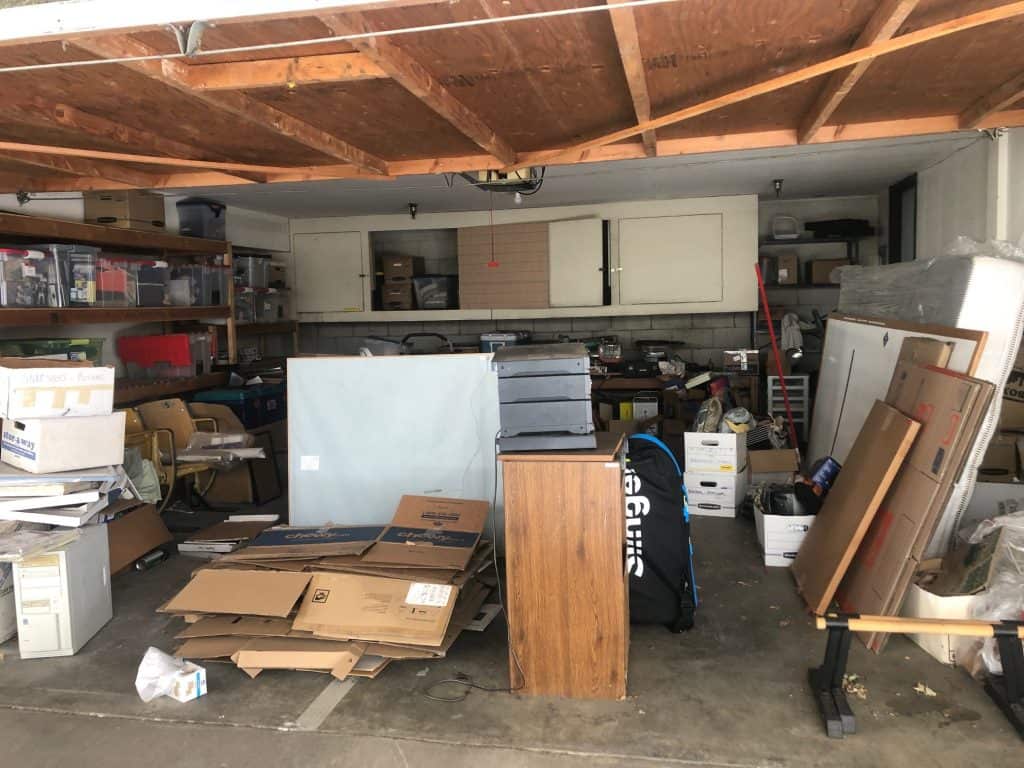
Photo of my garage fifteen days before having to ship my life in five boxes.

Did you enjoy this article?  TAIP is 100% reader-supported through tipping.  If you want to leave us a tip of any amount it would be highly appreciated.  These tips help support our efforts to keep TAIP an ad-free environment.  Just like at a cafe, the tips are split evenly among the team.

30 Days Out: “Are You Excited About Paris Yet?”

This is part of a series of articles about the final days of preparing for moving to France and what happens when you get here, and those articles are part of a promotional series launching our new book, 29 Days to France, a book that all the writers wish they had had before we started our French adventures.  It’s now available for preorder, and those preorders come with a free 15-minute Q&A personal session about your French immigration plans.  Click here to learn more.

You can find Vince’s first article in this series, when he was three months out from a move, here.

“Are you excited about Paris yet?”

It’s an innocent enough question. 

I’m pacing around my room while on the phone with my friend Anne: “Nope. Not excited one bit. Paris isn’t real until the visa is real,” I deadpan. It is October 7, and I think I’m unofficially five weeks out from my Paris move. I’m still not fully confident I’m actually going to Paris, actually. I haven’t heard news about my visa since I submitted the application back two weeks ago. 

I hope Anne didn’t take my answer as a snarky one.  52-year-old me was trying to be like water and quell the anxiety generated last week by my inner child — the eight-year-old version of me — who had been having a series of micro-meltdowns, worried that my visa application was anything but “foolproof,” even though I bleeping spent 1,900 € to make it so. I was still a bit raw from my mom’s passing and the end of my relationship with Sarah, as well as all the purging and the anticipation of all the major changes.

“It’s going to happen,” she assures me. I say nothing. I know she means well. “Why do you think you’ll have an issue?” she asks. I tell her what happened at my visa application appointment. 

Flashback to September 27, the visa appointment at the VFS office.

The young clerk at the VFS office (the third-party company designated to pre-process the applications on their way to the French Consulate in Washington D.C) reviews my application and notes that it is incomplete but that she’d send the application anyway, as-is. “Wait, why are you writing that?” I plead.

“It says here on the checklist that since you are starting a business you need these documents, and you don’t have them.”

“I’m not starting a conventional business in Paris,” I say, “so, I don’t need a copy of a commercial lease agreement or proof of a credit balance from an account.” She takes a few moments to process this, but I can tell by her fidgeting that this situation is deviating from her script. This was probably above her pay grade to solve problems any more than a drive-thru clerk taking orders at a fast-food joint where you can’t have it your way. I give her a curious look that means, “Surely, you’ve dealt with other Profession Libérale visa applications in the past.”

“Since you don’t have the paperwork — even if you say you don’t need them — I can’t cross this off the checklist on the computer, so it won’t show that the application is complete,” she says. “So for me to send the application, I need to write a note.”

I want to pull the good ol’ American I’d like to speak to your supervisor, please, but I don’t want the VFS office to spit in my soup and sabotage my chances for approval. I bite my tongue instead, and tell eight-year-old me, “we’re going to have to trust the process.”

“But I walked out of the office with a massive knot in my stomach, ” I told Anne.

“It’s gonna be great,” she reassures me. I roll my eyes, when I notice an email that just popped up in my inbox, entitled: MISSING DOCUMENTS. It’s from the French Consulate.

“I gotta go.” I hang up the phone. My stomach is in knots again.

I close my eyes, take three deep breaths to keep me from going nuclear, and then open the e-mail. 

Please provide the following documents in order to complete processing for your visa application:

– Your last 3 months’ bank statements showing your full name and enough funds to pay for your trip and expenses 

– Proof of income related to your business activity in France (letter containing draft work contract with remuneration indicated)

– A housing lease or your host’s property deed

Please carefully read the following instructions on how to respond to this email:

– Please scan these documents directly back to this e-mail address in the next 7 days. Send them all in one email.

– Do not send the documents you already provided at your VFS appointment. We have already reviewed those and have deemed them to be insufficient or inadequate. If you send the same documents again, your visa will likely be denied.

– Only send your documents once and please refrain from writing to inquire if we received your documents. Too many e-mails received disrupt the organization of the visa department and result in longer processing times for applications.

Imagining being spoken by a French bureaucrat, I read the e-mail trying not to be annoyed by the surface politeness disguising the indifference, rigidity, vagueness, and trickiness, all of which French bureaucracy was infamous for. Too late.

“Nooooo!” I scream up to the sky. “I paid two grand for a service to deal with this!  And now I have seven days to get the right docs!”

I’m livid. I leave the house for some air. I passed by my 95-year-old grandma in the living room reminding myself that I had yet to tell her I was leaving for Paris.

Why was I so incensed? Before I submitted the application back in September, I scheduled a one-hour consultation call with Franceformation to review my application, but in the actual call, she didn’t review or comment on any of the other parts of my visa application except for the business plan. The entire reason I paid her the exorbitant fee sight unseen was for her allegedly expert eyes to ensure my entire application was foolproof from top to bottom, not just the business plan. I emailed her a message expressing my concern. This was her response:

Your supporting documents are fine. Your business plan needs some serious work if you would like it to be accepted in a visa application. I would strongly advise against submitting it without taking into account many of the recommendations I made on our call. Please note that the guarantee included with your package is that I would help you revise and review your visa application again if it does not get approved the first time (this has never happened to any of my clients who followed the Complete French Business Incubator process). If you do not take into account any of my recommendations prior to submitting your application, I will not be providing additional feedback if it is rejected.”

As you can see by the Consulate’s e-mail above, they approved my business plan, which to be clear, I revised on the astute suggestions of expats from Facebook and other friends with expert knowledge, NOT incorporating any of Franceformation’s notes, which were similar in tone and expertise to the kind of advice my father gave me as a 13-year-old regarding how to throw a fastball, having only read a library book called The Official Little League Way to Play Baseball and watched baseball on TV but had never actually played baseball, because well, they didn’t have baseball in the Philippines when he was a kid.

Note that Franceformation stated my “supporting documents are fine,” yet based on the Consulate’s email of my MISSING DOCUMENTS, my supporting documents were clearly NOT fine. Even if she was willing to provide additional feedback, based on every single interaction I had with her, odds were quite high that she was not going to put the work into my documents besides insisting that her advice was correct, which she was/is infamous for doing on her Facebook group, where, whenever comments go off script, they get deleted.

Thanks to the generosity and experiences of the expats on the Facebook group pages and the TAIP Facebook community, I was able to decipher the Consulate’s requests. My landlord didn’t have immediate access to the property deed, so I sent copies of her electric bill and property tax documentation instead. As far as proof of income, I whipped up contracts with my current clients.

Because I wasn’t confident they would get the stamp of approval, however, until my visa was in my hand, my brain simply would not commit to expending concentrated energy on the move. Even being only five weeks out, I put off my Paris to-do list and allocated most of my time either continuing my Goodbye L.A. tour or being a Dodger fan watching every inning of their playoff games either on TV or watching games at Dodger Stadium until they finally lost in the National League Championship Series, which I secretly hoped would happen, because Dodger baseball alone ate up at least sixty hours. I spent sixty hours training tennis at Silva Tennis Academy as well.

Every day, I’d spend hours checking my email and social media accounts for signs of my ex-girlfriend Sarah, hoping that she’d get in touch with me to see each other before leaving for Paris. It was horribly co-dependent of me, but that’s what it was.

Live music ate up another sixty hours, because with all the deaths, Covid, and purging that had happened this year, live music was my religion. In addition to a series of local acts at the Hotel Café, I saw Pearl Jam and the Lumineers a few weeks ago and saw Wilco twice in October. The lyrics from “Shot in the Arm,” Maybe all I need is a shot in the arm, and What you once were isn’t what you want to be anymore… totally encapsulated why I was moving to Paris. I played that song every day on repeat as I waited for my visa…

Two Weeks Later, the Biggest E-mail of My Life 

The consulate sent me an e-mail merely notifying me that a FedEx package was on its way to me. They didn’t indicate whether my application was approved.  

No matter. The most important FedEx package of my life containing the prospects for my future is due to arrive in my lap in less than three hours. I’ve cleared my entire schedule for the day to be home to sign for the package. After a couple of hours go by, I receive a text that FedEx tried to deliver the package, but I was not home, and they would attempt a second delivery the following day. Actually, I am home, but they didn’t bother to call. I want to scream.

What occurs next is a series of tragically comedic events in which I talk to three different customer service representatives for over five cumulative hours  — all outsourced to call centers in other countries merely reading a script — to directly manage the delivery. I don’t trust their delivery process. The next morning, I drive fifteen miles to the FedEx facility.

Finally, the moment of truth is in my hand. It is anti-climactic, really, this nondescript FedEx envelope that held the promise of the rest of my life. I rip open the envelope. There’s nothing inside except my original passport. I brace myself for rejection and get ready to tell my inner child a narrative that the Universe is telling us it isn’t yet our time for Paris, then get my assistant director part of my brain to get past the disappointment quickly in order to plan for potential scenarios. I open the passport…and there it is, my profession libérale visa. I break into tears of relief and joy. It’s happening. I’m finally going to Paris. I am officially thirty days out.

I call Anne back. “Okay, now I’m excited.” “But just a little,” I added.

After I got my visa, urgency was everything. I booked my flight for November 16, four weeks from that moment. I secured a place for my cat Maddey on the plane. I confirmed my Airbnb reservations. I reviewed the procedures to obtain Maddey’s health certificate. I finally took the new suitcase I bought months ago out of the shipping box and laid it out with my two other suitcases.

Twenty days before my November 16th flight, my grandma was in the kitchen eating a Filipino dish of cow liver and rice when I finally told her I was moving to Paris. “Huh? Where are you going?” she asked in her shrill, Filipina from the poor province-laden accent. Her hearing was severely diminished, and she was too stubborn to wear a hearing aid.

“Paris,” I said.

“Where?”

“Paris.”

“Where?”

“France.”

“Frince?”

“France.”

“Frunce?”

“FRANCE.”

“Oh. France. That’s far.”

“Yes it is.”

“How long you going?”

“I’m not sure. A long time, probably.”

“Three months?”

“Probably longer.”

“Oh, so you don’t stay here anymore?”

“No, grandma.”

She started laughing. “Oh, maybe you stay there for a year!” More laughing. I wasn’t sure why she found all of this funny, but I said, “Yes, grandma, for a year.” And with that, she went back to the TV and started flipping channels. In retrospect, I don’t think she knew how to process the news that I was leaving. She was incapable of processing with nuance. At least outwardly. 

After my mom’s stroke this year and enduring the trauma of not being given the chance to reconcile my relationship with her, I moved in with my grandma as a sentimental gesture to connect and say farewell after I was forced to leave the home Sarah and I made together. Grandma is 95 years old, and she just isn’t moving well anymore. We have cousins and aunts who will look after her, but I’m the grandchild of two closest to her. My sister lives two hours south in San Diego but she has her hands full. Besides, my grandma doesn’t trust my sister after the way she handled the responsibility as the executor of the power of attorney over my mom’s affairs. I feel horrible that I’m leaving grandma for Paris, but every day I’m here, I’m losing more of my sanity, and I simply need to leave if I’m going to stay alive. Not kidding. I gave her a hug, she hugged me back, and as my emotions started to stir and make me feel raw again, I disappeared into the garage with my nose back to the grindstone and turned on a little Wilco to get me through a tedious night of deciding what was going to make it into the five pieces of luggage that would be my Paris life.

Photo: A day in South Pasadena where everything was fine, and then a moment came when I felt like maybe Paris wasn’t in the cards.

Did you enjoy this article?  TAIP is 100% reader-supported through tipping.  If you want to leave us a tip of any amount it would be highly appreciated.  These tips help support our efforts to keep TAIP an ad-free environment.  Just as at a cafe, the tips are split evenly among the team.
90 Days Out From Leaving Los Angeles for Paris

This is part of a series of articles about the final days of preparing for moving to France and what happens when you get here.  This is the first of two promotional series launching our new book, 29 Days to France, a book that all the writers wish they had had before we started our French adventures.  It’s now available for preorder, and those preorders come with a free 15-minute Q&A personal session about your French immigration plans.  Click here to learn more.

Vince was someone I met first as a visa consulting client who has come to be a friend and now, writer for TAIP.  You will find he takes our blog in a more personal direction than we may have previously gone here, and I think that’s a good thing, and a sign of more to come, not just from Vince, but from all of us.  -SH

I’d been considering a move from Los Angeles to Paris since Autumn 2016, but through the years, I got sidetracked by one thing or another. Still, it was a fifty-plus year odyssey, all somehow interconnected to finally get to this point…

The Origin Story

I was born in Flushing, New York, in 1969. My heritage is Filipino but for years, I regarded that as a technicality that burdened my existence. I was the stereotypical red, white, and blue American kid, engrossed in girls, sports, video games, movies, and American pop music.  I even went to West Point for college for an intense immersion into historic American leadership and subsequently served in the Army for a short stint, until I settled into Hollywood as an assistant director, running film sets, overseeing the logistical planning and execution of making movies and TV series.

Meritocracy was my religion. I was deeply convinced that passion and dedication would result in the realization of my American dreams as advertised; that my brown skin and ethnicity would be non-factors.

All my life, while I had glimpses into accomplishing my dreams — what I affectionately called chasing greatness — I’d find a way to sabotage those dreams, whether it was by pushing the rules of the system, chasing love, not completing personal projects, alienating people by pushing them too hard, or perhaps, innocently making an impish comment at the wrong time for a cheap laugh.

Especially compared to my contemporaries, I felt like a failure. Was my own brain and growing up Filipino the hindrance to myself?

Since I was ten, whether through friends, sports coaches, therapists, psychiatrists, or life/career coaches, I looked to outside sources for support to fill the gaps in my manhood whether it be gathering knowledge, repairing my behavioral flaws, or improving my emotional intelligence.

My family didn’t nurture me. My dad was more interested in horse racing and not feeling emasculated while my mother and sister were more inclined to let Jesus take the wheel than solve complex problems or learn the intricacies of the human condition.

In 2012 I felt I was headed on a path of mediocrity. I plummeted into depression. Rather than have anyone be sucked down into my darkness, it was easier for all parties concerned that I isolate myself to fight my fight, which included breaking up with my fiancée Julia in April 2016. I often thought of suiciding to relieve the pain — for me and my loved ones.

Katia, an old friend from Paris who was vacationing in L.A. with her family, invited me over their Malibu Airbnb for an evening soirée. I was still in my own mental quarantine, but I dragged myself out because anything can happen when Katia is involved. We were drinking a nice Bordeaux when she casually mentioned, “My Paris apartment is opening up in July. Might you know anyone interested in a short-term or long-term rental?”

“Who among my friends might be interested, able, and daring enough to live in Paris for three months?” I pondered. Then, my eyes got big….and on a whim, I said:

“I’ll take it.”

Ici c’est Paris

From July through September 2016, I lived on the east side of Paris, in the 20th Arrondissement, surrounded by an eclectic culture of hipster Parisiens and immigrants from various North African countries, including Morocco, Tunisia, and Algeria. American tourists weren’t generally coming to the 20ème, so I became a local quite quickly. I spoke French as much as possible, forcing myself not to be subconscious about making mistakes.  

By the kindness of existing friends and strangers who became close friends, I experienced a bonafide joie de vivre — a pure joy for life — in all of Paris’ distinct neighborhoods.

Dikran, a Lebanese-Armenian immigrant who spoke five languages, walked me all over Madeleine through Strasbourg Saint-Denis. Andrea and I darted through the streets of Montmartre down to Opéra on his scooter. Alex led me deep into the rabbit holes of the Pigalle nightlife. I picnicked with Nico and Solène at Jardin du Luxembourg, where everywhere in the garden, I saw pockets of genuine community. I played tennis with Thomas in the terre battue of the courts in Montreuil. At Closerie des Lilas, I enjoyed some Sancerre with Hemingway’s ghost where he told me, “Take the time to fall into whatever cracks and crevices happen in front of you and see how it changes your work.” The Cinémathèque Française in Bercy rekindled my love for French cinema, inspiring me to seek artists interested in making daring and genuinely personal kind of stuff, not the types seeking fame or Hollywood significance, like I was surrounded by in Los Angeles. I even directed a short film about love in Paris as an experiment to express my authentic voice.

I acquired a love for getting lost. As someone whose life’s work relied on efficiency and execution, taking the wrong path steered me to discover little gems such as the gorgeous doors in Le Marais or the intimate bar Le Lapis in the 2ème.

I learned the essence of c’est la vie. It was not, how we Americans view this cliché: Welp, that’s life, I guess I have to suck it up,” shrugging our shoulders to tolerate the misery, but rather, “This is life. Even walking up seven flights of stairs every day is part of it,” with the point punctuated by inhaling a cigarette and a sip of wine.

As music is my church, in two subsequent 2018 Paris trips for concerts by U2, Arcade Fire, and Ben Harper, I was captivated by the Parisiens’ love for music, an energy that vibrated higher than at L.A. concerts.

After my initial 2016 trip, L.A. was exponentially becoming less my close-knit hometown, mutating more into an unrecognizable sprawl of people elbowing each other to snatch higher stations in life; confused with what to do, what to wear, where to be, how to be, and who to know. All of it was a monolith of noise. I yearned for the soul of Paris. Permanently.

Moving to another continent, however, felt intimidating. How does an American even legally immigrate to France? What could I do for work? Could I get a bank account without being fluent in French? Could I play tennis in the winter? What about my cat Maddey? Daunted, I returned to my regularly scheduled programming until answers emerged. The years flew by.

A few notable events shaped my path between Paris 2016 and August 2021: I suffered a two-hour mini-stroke in 2017; I discovered my true personality (INFJ) from the Myers-Briggs test; I worked on a few more meaningless TV shows, one of which prompted me, a day before my 50th birthday, to attempt suicide. (I wasn’t successful.) Upon the aftermath of the George Floyd murder, I came to the realization as a Filipino-American, that I had been drinking the kool-aid of the American Dream my whole life. A sublime butterfly moment in Costa Rica (which I’ll talk about in a future article) jolted me into making the resolution to move to Paris by the end of 2020.

Plot Twists in a Time of Love and Covid

But when February 2020 began, a long-forgotten crush named Sarah found me and we quickly fell in love. Paris took a back seat again, because while she loved the idea of moving to Paris with me, she had never traveled outside of the United States; knowing how tough Paris could be for an American, I thought we’d start with Sarah’s first Paris trip to see how they would get along.

Then we went into lockdown. Paris was canceled indefinitely. Not all was lost, however; the global pause allowed me to develop my coaching practice, Stay on Your Path, which became the solution to making money in Paris. I spent all of 2020 beta-testing my program while Sarah and I waited for the pandemic to subside.

Meanwhile, I intended to reconcile my estranged relationship with my 75-year-old mom but in January of 2021, a massive stroke got to her before I did. She was immediately rendered unresponsive, and I painfully watched her lie in bed for months, barely human, until her passing in July. I was deeply traumatized by how things ended between us, that for much of 2021, I was not my best self.

In April 2021, Sarah broke up with me. I precipitated the situation with some asinine behavior, but in connecting those dots with other selective dots about our relationship on a global level (not incorporating dots that were integral to my narrative), she was done. I reacted with venom, spurred by my abandonment issues, which were already triggered in full tilt by mom’s stroke.

It was a tumultuous first half of 2021…but this unfortunate series of events became the catalyst that reignited my Paris dream into reality. I started to draft a plan…

Paris, I Am Finally Coming

Fully aware that any Paris flat would be a third smaller than a two-car parking garage, I planned to compress my 52-year-old life into five medium-sized boxes. But out of five decades worth of stuff — books, files, photos, memorabilia, a massive comic book collection, DVDs, CDs, clothes, and such — what would make the cut?

I hired an organizer to help me purge. I held yard sales and online sales which were part revenue-generating, part pop-up museum, part exorcism, part wake, and celebration of life. The stories behind every item unpredictably triggered me and cathartically so.

An acquaintance named Jimmy showed up at one of the yard sales and introduced me to a book called Foolproof Visas, serendipitously facilitating the next tangible step in my Paris move. 

Francemortified

I assumed from old wives’ tales and past experiences dealing with French bureaucracy that getting my French visa would be out-of-reach complicated. Cajoled by Foolproof Visas and the marketing campaign about the author’s online course called Franceformation, and also assured that her approach to prepare my application was virtually guaranteed, (no way was I staying in America for another three to six months to re-start the process), in June, I signed up on the spot and sent her 1900 €.

I found her program courses crude and confusing. Seeking clarification was difficult to come by. I’d soon discover that there were many before me who had similar experiences. 

Lacking confidence in her intel’s accuracy, I had to fight through my disdain for doing mundane research and forced myself to obsessively peruse the internet as well as post questions on the Facebook expat pages; these were all things that I had wanted to avoid by purchasing her program. An expat named Virginia led me to TAIP, where the blog entries not only proved incredibly valuable, but the information was FREE.

In July, I made the leap and secured a visa appointment to submit my paperwork for a profession libérale visa. I wanted a September 24 appointment, but December 7th was the only date available, so, all logistics considered, I earmarked the end of January 2022 for my flight to Paris, which was six months out.

Forced into action, I set out to pursue the myriad of required documents. I spent hours writing a business plan for my coaching practice complete with modest projections and a SWOT analysis. I sought proof that I had potential sources of income in France. I obtained a background check from the FBI to verify my clean record. I obtained travel insurance. The whole process was anxiety-inducing.

Not only was I paranoid that I was handling it all wrong, I was also nursing a broken heart, and having already postponed my dream for a year and a half, six more months rotting in L.A. felt like an eternity.

I was, in fact, still emotionally and mentally unsettled about leaving. I was reluctant to release myself from secure (and hard-earned) opportunities of the present in exchange for vague (and uncertain) opportunities of the future, particularly as a fifty-two-year-old, brown-skinned Filipino-American male plunging long-term into a new culture with its own rules and language. Money was a serious concern in particular, having weaned myself from the film business to focus on my fledgling coaching practice.

To add to my endless checklist, I also needed to get my cat Maddey to Paris. An EU-compliant chip and a current rabies certificate were required as part of the USDA requirements of Maddey’s health certificate, the validity of which was tied to a ten-day window within my actual flight, the date of which was tied to the approval of my visa, the date of which was tied to both my appointment and to the whims of the French Consulate.

I started doing mock run-throughs with Maddey in my car to prepare her for a long twenty-hour day in her carrier and her first-ever plane flight.

With six months to go, I started my Goodbye L.A. Tour, meeting old friends while simultaneously paying homage to my favorite L.A. haunts while introducing them to my French homie Antoine, a Parisien who recently moved to Los Angeles from Paris (via Shanghai). Antoine would rapid-fire French at me, giving me moments of oh merde, it’s serious now.

I crammed in as much French as possible, anxious that I wasn’t acquiring French fast enough to be capable of deftly handling the French administration upon arrival. I read L’Equipe and Slate.fr articles; I’d listen to a podcast called Little Talk in Slow French and watched Dix Pour Cent episodes in French subtitles to refine my listening and pronunciation skills.

A month after booking my initial appointment, I checked the VFS site again to see if more dates were available, and voila, September 24 was possible!  

It was time to batten down the hatches. Instead of four months, I now had only a month to assemble all my documents before my visa appointment, and, assuming my visa would be approved, only two more months to tie every single loose end before my new life – my authentic path – would finally begin. I was already feeling quite raw, and now, an emotionally and logistically tumultuous period loomed ahead as Paris was becoming very real.

Photo was of me and my mother on Mother’s Day 2021.  

Did you enjoy this article?  TAIP is 100% reader-supported through tipping.  If you want to leave us a tip of any amount it would be highly appreciated.  These tips help support our efforts to keep TAIP an ad-free environment.  Just as at a cafe, the tips are split evenly among the team.

​​How to Get the APS (Autorisation Provisioire de Séjour) Visa in France

When I first came to live in France in 2014, I originally planned on staying for one year as an au pair. One year quickly turned into 2.5 years with the same family, which turned into three more years at a French university. The first was an intensive 20-hour per week program to learn French, and the last two years were to complete my master’s degree

At that point, I knew that I wanted to stay in France for the long haul, but I was at a loss as to how to do so legally. I didn’t want to be a student anymore, but I also didn’t have any major job opportunities lined up yet, at least, not with a company willing to sponsor a work visa for me.

Enter: the Autorisation Provisioire de Séjour (APS) visa. This type of visa is basically an extension of a student visa after obtaining a higher education diploma. In other words, the perfect visa for someone like me! 

Requirements to obtain an APS visa

The APS visa allows foreign students in France to stay in the country for one year after they graduate for a variety of different reasons. If you’re granted the visa, you have all of the rights that you had as a student, which means you can keep that student job of yours in the meantime as well!

Here are the requirements to obtain an APS visa:

  • Graduated with a licence professionelle (an undergraduate degree)
  • Graduated with a master’s degree, or equivalent. This can include an engineering, political science, or accounting degree
  • Graduated with an undergraduate or master’s degree with the desire to open your own company in France

How to apply for an APS visa

There are two situations in which you can apply for an APS visa:

  • You need an extension on your student visa to finish your final exams
  • You need an extension on your student visa after you have already passed your final exams

You can apply for an APS visa with your local prefecture. As usual, you’ll have to come prepared with a pile of paperwork. 

If you need an extension to finish your final exams, get in touch with the prefecture at least 15 days before your visa expires. This type of extension is free. You’ll need to physically go to the prefecture with the following documents (don’t forget to make copies, too):

  • Official letter from your university stating the date of your final exams
  • Your passport
  • Your residence permit (carte de séjour — étudiant)
  • Proof of address less than three months old

If all goes well you’ll receive a récépissé de prolongation de droit au séjour en qualité d’étudiant, which will give you the right to stay in France until you’ve finished your exams. As a note, if you want to stay even longer once you’ve obtained your degree, you’ll have to follow the procedure below.

If you need an extension to look for a job after you’ve obtained your degree OR you want to open your own company in France, you also need to physically go to the prefecture before your visa expires. This type of extension costs 75 € in “timbres fiscaux.” You know what that is if you already have a visa to be in France. Bring the following documents (and those copies!):

  • Your passport 
  • Your residence permit (carte de séjour — étudiant)
  • Proof of address less than three months old
  • 3 photos
  • Your diploma
  • Proof of health insurance
  • If you hope to open a company in France, a business plan

If you have all of the correct documents, you’ll receive a récépissé while the prefecture goes over your application. If you’re approved, you’ll be called back to the prefecture to pick up your new APS visa!

What to do when your APS visa expires

When your APS visa expires and you’ve either obtained a job or created a French company, you’ll have to change your status and ask for a new residence permit. Here is what you’ll need to have accomplished in order to change your status and stay in France for even longer:

  • If you’ve landed a CDD (a contract for a set amount of time, for example, six months or one year) or CDI (a contract for an indefinite amount of time, also known as the Holy Grail in France), it must be validated by the DIRECCTE (Direction régionale des Entreprises, de la Concurrence, de la Consommation, du Travail et de l’Emploi Regional Department of Competition, Consumption, Work, and Employment). You also must earn 1.5 times the minimum wage per month. If you meet these requirements you can apply for a “temporary employee” resident permit.
  • If you’ve created your company and can prove its viability, you can apply for a “temporary freelance entrepreneur” residence permit or a multi-year “freelance entrepreneur talent passport” resident permit.
  • If you are a researcher and have landed a research gig, you can apply for a multi-year “researcher talent passport” resident permit.

It’s important to note that if you do land a job or your company takes off that you change your status as soon as possible. Don’t wait until your APS visa expires! And, of course, if you haven’t obtained a job or opened your would-be company, you must leave France. 

As for me, I was lucky in that I met my now-husband by the time my APS visa ran out and I was able to change my status thanks to my relationship with a French person. I didn’t find a job with the requirements above, but I did open my own small business in France and officially became an auto-entrepreneur. I’m not sure what I would have done if I hadn’t met my husband in the meantime, but believe me, I’m glad I did. The moral of the story is that if you have a desire to stay in France legally do some serious digging well before your current visa expires. There is usually a way to do so if you go through the correct processes and have a passion for paperwork.

Molli offers private consultation services which range from help with visas and adjusting to life abroad to Paris travel itineraries. Fill out the contact form to learn more.

Photo by Seyi Ariyo on Unsplash

Did you enjoy this article?  TAIP is 100% reader-supported through tipping.  If you want to leave us a tip of any amount it would be highly appreciated.  These tips help support our efforts to keep TAIP an ad-free environment.  Just as at a cafe, the tips are split evenly among the team.
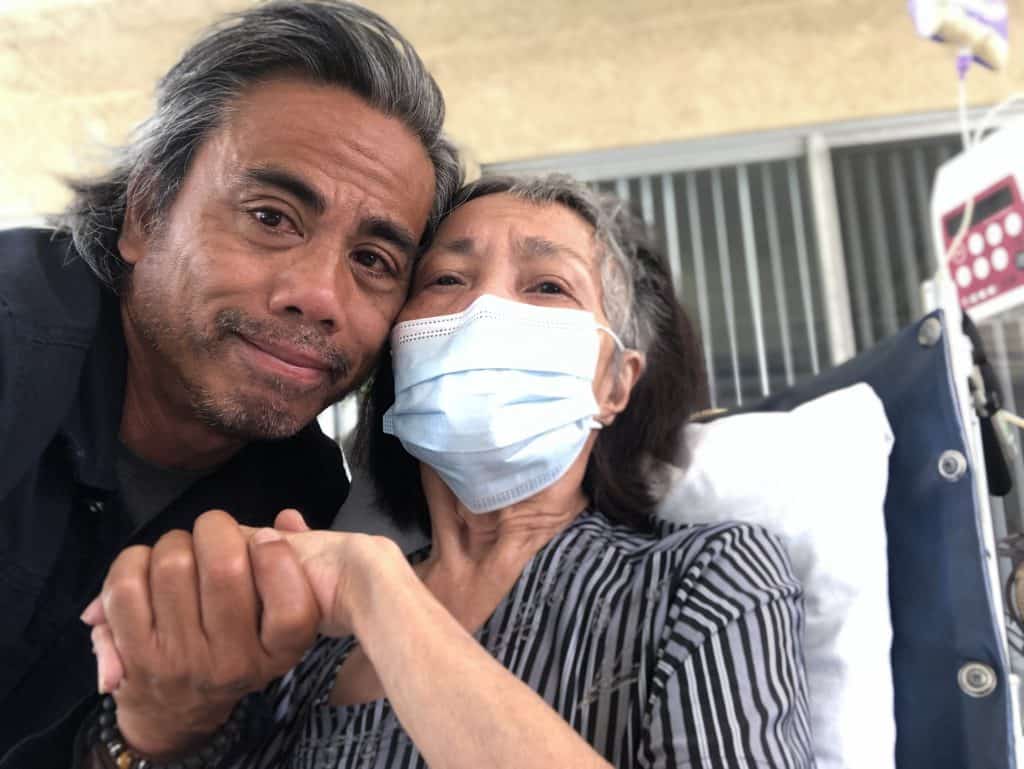
prof lib visa renewal

How to Renew a Four Year Profession Libérale Visa

I always tell readers of the blog that getting a visa is usually much more challenging than renewing one, for the simple reason that for the former you are trying to prove to the French that something is at least plausible (this business will work, I am enrolled in this school, I am in a relationship with this person).  For the latter you are simply offering evidence that their original judgment was correct.

I remember how I felt in 2017 when I got a four-year card for the first time.  After three years of building my entire travel schedule for each year around a renewal, the idea of not seeing the immigration office for four years was a dream.  I said so at the time.

I’d like to say this article was four years in the making, but that isn’t true.  This is just the soonest I could write to tell you about a renewal.  And there’s not too much to say.

Below are a few key facts you should know about renewing your Profession Libérale Visa.

One Year Probation

All of us, when originally applying, are given a one-year visa (what attracts a lot of people to Passeport Talent is that it gives you the possibility of a four-year card to start).  With Prof Lib the French are using the “trust but verify” mentality: can you actually do what you said you could do in your original business plan?

Now, there’s nothing published on the internet from the French government about this (one of the many reasons this blog exists in the first place, to fill a gap of information), but if you don’t have a good first year, you are only going to get a one-year renewal, and are effectively on a sort of probation.  What does a “good first year” mean?

The French expectation is that your Prof Lib business does at least the SMIC, which at the time of this article is 1269€/month, or 15,228€/year.  For those who don’t know, SMIC is the nationally-established minimum wage.  The thinking in the French bureaucracy is, if you’re going to bother to start your own business, you should at least make the minimum wage.

Now, this doesn’t mean that if you have a “bad” first year you’ll lose your visa status.  If it’s very bad, you may.  Meaning, if you only bring in something like 2,000€ for the whole year, the French will consider this essentially a scammy method for you to stay in France, and without a wonderful explanation about how new clients are just around the corner or that you have had a major personal/professional issue, you will not get a renewal and will have to leave the country in 60 days.

But if it’s anything north of say, 12,000 € for the year, you have a decent chance of at least getting a one-year card, with the expectation that you make it above the SMIC the following year.  If it’s significantly above the SMIC, let’s say at 22,000 €/year or more, you have a good chance of getting a four-year card on your first renewal, as I did.

Renewing the Four-Year Card

Renewing the Four-Year Card follows the exact same process as obtaining it in the first place.  Your main evidence, apart from the usual proof of address, renter’s insurance, etc. will be your tax forms* and invoices.  The tax forms will be a shorthand for the health of your business and the person looking over your dossier can see in an instant your topline revenue and your take-home profit.

Many small businesses in France had an off year in 2020 (understandably) and it seems the authorities have been willing to give a pass on that year to pretty much everyone, as long as in 2021 there was an increase in revenues compared to 2020 and that there’s a through-line narrative from your previous years as well.

One reason I have seen people not get a four-year card for a few years was a lack of diversity of clients.  If you only have one whale client and no others, the French consider your business very fragile.  This doesn’t mean you need to have dozens, you just can’t have only one or two and expect them to necessarily sign off on a four-year card.

The big difference for me this time from 2017 was that instead of going to the big Paris prefecture I had come to know through two different visa classifications and three renewals, I would be going to Melun because of my recent move to the Seine-et-Marne department (77).  It would be a completely new experience for me, but that experience turned out to only differ in Covid-19 restrictions pushing a security guard out front to forbid entry to any people not already cleared on a list.

Two Complications (That Weren’t Really Complications)

I went for my appointment in September 2021 with the thought that surely I would get a new card before my planned three-month visit to the United States which would begin in January 2022.  That didn’t end up happening.

Yet, I wasn’t worried insofar as I had traveled without my residence card during the pandemic (because the card had been stolen and I didn’t want to pay to replace it) and the US authorities, which guarded the border I was focused on crossing next, didn’t care about my status in another country.

The récépissé I was given had a six-month validity, which was double the length I had been used to in the past, but I didn’t actually expect them to use that entire time. I thought to mitigate this by getting a new récépissé before leaving, but since you cannot apply for a new récépissé unless it’s 60 days from expiration, with a 17 March expiry that meant I couldn’t apply for a new one until 17 January, when I would already have been in America two weeks.  I found this out the hard way when they cancelled my appointment to get a new récépissé the morning of that appointment with an “ineligible” note in the cancellation.

As you can see from the featured image for this article, the date of my new card is from 31 January of this year, but it wasn’t until 23 February that I received the text message from the government that I was welcome to pick up my new card and could I please bring a fiscal stamp to cover the 225 € it cost them to make it (you can purchase said stamp here; what a world of difference from 2014 when I bought a bunch of stamps at the tabac!).  You still need to make an appointment to pick up the residence card, and while I’ve heard that’s been hard to do lately in Paris, in Melun they had plenty of slots for me to book.  So from start to finish, it was six months from when I showed up for my renewal to when I could pick up a new card.

So the complications were:

  1. I didn’t have my residence permit: all I had was a police report which stated that my residence permit had been stolen.  I had carried that around while traveling for the last couple of years.  As I’ve shared elsewhere, I’ve come to realize that you need your residence card for exactly zero things in France and carrying it around only risks adding one more headache if your wallet is lost or stolen.  Keep it at home.  If and when you do need to show “ID” your passport will always win and if you want you can always store a picture of the front and back of the card in the cloud.  And as I told someone recently who worried that having her passport with her new visa sticker inside stolen invalidated her visa: your right to live in France lives inside the French bureaucracy, on a computer, not in your passport/residence card.
  2. My récépissé would expire on 17 March, but I wasn’t due to land in France until 1 April.  I knew the system well enough to know that I could flash my expired récépissé, with the text message, with the convocation that I had printed out to pick up the CDS, IF I was asked.  What happened at the French border?  Was I asked for my vaccination status?  No.  Was I asked for a PCR test?  No.  He asked me to remove my mask and stamp, I was in, just like old times.  As I often say: be prepared for the French to ask for everything, but realize they may not ask for anything.

So, like I said, there were two complications that weren’t really complications.

Today I picked up the card and voila, here’s the article explaining what you need to do to renew the card.

Now some of you may be thinking…wait, Stephen didn’t you take the A2 test last year so that you could get your ten-year card?  Yes.  But I also realized then that this was the last piece of the Prof Lib story I hadn’t told.  That if you had gotten a Prof Lib, renewed it, and gotten a four-year card, you would need to renew one more time before you were eligible to apply for a ten-year card (at least five years of fiscal residency)  Part of why I started this blog in the first place was to give information that isn’t out there, and I don’t think there’s an article on renewing a four-year card, so here it is, as brief as it might be.  I figured I could wait a bit before moving on with my own next step to put together an article with this info.

Related to a willingness to wait to apply for my next big status upgrade in France is that I’m no longer in a rush.  The pandemic has proven to me that residence gives you 99% of the privileges of citizenship, at least in France, as I was able to come and go as I pleased, and was even eligible for personal and business aid from the government.

When I first moved here, I was in a hurry to get citizenship, as I was under the delusion that the French were looking for any excuse to deport me at any moment, whether I mispronounced a word or forgot a piece of paper in my dossier.  Ten years have shown me the naïveté that that was and I try to pass on a sense of calm to people who hire me to consult with them or who take my courses**.  Citizenship is no guarantee that you won’t lose your rights (ask the Americans of Japanese descent what their citizenship meant in America after Dec 7, 1941, or what happened to people of a certain race in France the following year, in 1942) and the term “permanent resident” is a misnomer for the vast majority of resident visas worldwide: almost all require some kind of residence over some period of time, and then need to be renewed…not exactly “permanent” by any definition.

Just realize you’re going to be a foreigner in France for at least a while, and get comfortable with the “odd” feeling of being a long-term guest.  You may be kicked out at any time, but rest assured, it’s not going to be because you forgot a piece of paper in your dossier, and in fact, it’s not likely to happen at all.

What’s next for me, of course, is citizenship and/or a ten-year card.  Stay tuned; I’ll keep you in the loop and try to provide a template you can follow, as always.

I am certainly happier than the photo would indicate, but as you may know, you are not permitted to smile in official French photos. 🙂

*I don’t know how many times I have to say this: you MUST FILE TAXES if you live in France, even if you don’t earn any income in France!  I know it’s not told to any of us when we get here by the French government (I only learned, as I’ve learned so many important bits of information over the last decade, due to the newsletters of Jean Taquet), but your proof of filing taxes every year are the most important documents you must have if you ever want to apply for a ten-year carte de resident or for citizenship.

**Anyone who charges more than 1000 € to help you get a profession libérale status is probably running a scam.

Did you enjoy this article?  TAIP is 100% reader-supported through tipping.  If you want to leave us a tip of any amount it would be highly appreciated.  These tips help support our efforts to keep TAIP an ad-free environment.  Just as at a cafe, the tips are split evenly among the team.

moving to Paris

Why I Moved to Paris and How I Made It Happen

If you’d like to learn a bit more about Alexa you can click here.

During the first lockdown I was living alone in Princeton, New Jersey, and when the opportunity to move to Upstate New York presented itself, I took it without hesitation. I expected to be part of a creative and supportive group of friends, inclusive, and fun. My experience in that area was, to be polite, different.

I can appreciate that people move thousands of miles to live in the Hudson Valley and find what they’re looking for. Yet, despite our similar goals, there was little compatibility between me and them. If I had stayed, I would’ve melted into oblivion.

It turns out Paris is what I wished New York could have been.

A Time to Search and a Time to Give Up As Lost

I had the summer off from work in 2021, right as France reopened their borders. I needed change, so I called a friend living in Paris and asked for her insider knowledge. “Is it actually safe there?” She was very reassuring. Remember, at this point during the pandemic, traveling was taboo. But I made up my mind and got in touch with her friend who rents out his studio to visitors in Montmartre. I could stay for the entire month, so I booked my flight.

From idea to reality, it was about two and a half weeks until I arrived in France.

Unsurprisingly, I wanted to move here as soon as I arrived. I chalked it up to being whimsical or naïve, but it was like going to a pet store and saying, “I’m just looking.” I should have known better since that was how I ended up with my childhood dog (RIP Julie).

It wasn’t my first time toying with the idea of moving to France either. Five years earlier, I was living in Turin and took a bus to Paris for the weekend. I wanted to stay forever. It rained the whole time, but I only saw sunshine — it was le coup de foudre. Love at first sight. In retrospect, I wasn’t ready then, so I didn’t take it seriously.

An integral part of why I fell in love this time had to do with old friends from the States living close by in Montmartre. Days before I arrived, they moved to an apartment down the street from where I would be. I was immediately embraced by them and their friends.

From Day One, (Unlike New York for Me), It Was Easy to Love and Be Loved in Paris

One day, at the aforementioned friend’s house, she starts telling me about a situation needing figuring out. Her friend across town was away visiting family and needed someone to feed her goldfish. Unfortunately for this fish, his secondary caretakers were also going to be away longer than he could stand without food. I was available that weekend, so I offered to take care of Harald the fish for this girl I’d never spoken to before. I got her key and number, and she gave me the rundown of how to take care of him and his tank.

I found it all kinds of comical and wanted to see this girl who I’d met through a fish, so we made dinner plans for when she returned to Paris. We didn’t need much of an introduction, despite having never met before in person.

I should mention that on my way to her place while grabbing moelleux au chocolat and berries for dessert, I settled in my heart that I wanted to stay permanently. I was going to take it seriously this time. Walking down the steps to Lamarck-Caulaincourt I remember begging God to let me live here. I guess that prayer worked because it was this dinner that officially started it all.

A Time to Keep and a Time to Throw Away

She mentioned to me that her friend was in need of a sublessor for her apartment for a year starting in October and that I should take it. Of course I was interested, but it came down to impossible timing. Although I did text a friend back in the States to see if anyone in his group could take over my lease in New York, I would need to get my documents in order, find remote work, apply for a long-stay visa, and obtain said visa in two or three months. Plus, I’d already agreed to return to the family I was working for in the autumn. If I was going to do this, I wasn’t about to burn bridges and leave everyone in a dramatic tizzy.

I came away from this conversation knowing two things:

  1. what was out there for me
  2. where I was wanted

To be sure of the second, I wanted further evidence. Was this a casual or halfhearted invitation? For months I kept my eye out for proof that I found the kind of friendships I’d been looking for, being careful not to project my own hopes and ideas onto them.

My first tip came in August, a month after I left France. I was on a bus in Croatia looking out of the window wondering: Would I be supported in this move? Would I be a burden? I wanted clarity, and soon clarity would come. When my phone connected to WiFi that afternoon, I noticed a missed call from a French number I didn’t know accompanied by a text which read “Just wanted to say welcome.” I was stunned, not only by the sweet sentiment, but by the impeccable timing.

We share mutual friends, and she was under the impression that I had already moved to France. Nevertheless, it showed me what I needed to see.

A couple of months later I found cheap tickets from New York to Paris and went for a weekend in November to visit friends (yes, a weekend trip is possible.)

I wanted further proof that I wasn’t forcing this move, but rather that it was organic and healthy. I arrived, was invited to meet people the next day, and stumbled upon the last and final piece of evidence. I had met everyone that evening, but it was like we’d known each other for years. It felt like home. I was being encouraged to move and reassured everything would work out. It wasn’t empty words either. My friend who I was visiting offered to let me stay with her long-term until I got on my feet. She was willing to host me and prepare all the documents necessary. She went above and beyond anything I could have ever expected, even ordering me a SIM card for my arrival.

A Time to Plant and a Time to Uproot What Was Planted

The process of applying for a tourist visa was actually quite easy. I can’t say what it was like pre-Covid because I never looked into it. During the pandemic the timeline of events went like this:

  1. Submit the visa application form online
  2. Make an appointment with the nearest VFS
  3. Gather the following documents:
  • visa application and checklist
  • copies of my passport and license
  • three months of bank statements (I also included my meager 401k and volatile crypto investment accounts)
  • proof of additional income (from June 2021 until June 2022 I will receive $500 of guaranteed income per month, so I included this letter in my file)
  • proof of employment (I had my company write a stamped letter stating my salary)
  • expat health insurance (WorldTrips was quick and easy, they also provided me a confirmation of coverage in French upon request)
  • a sworn statement that I would not take up employment in France
  • visa cover letter explaining why I wish to come to France, including my intentions to return to the US
  • Attestation d’hébergement (including my friend’s lease and copy of her passport)

If you purchase the special VIP package with VFS like I did, they will make high-quality copies for you along with taking your picture for the biometric visa. I came prepared with my own photo to be on the safe side, but in the end I didn’t need it.

I researched for months which extra documents I thought they wanted, read countless blog articles (including TAIP), and called friends of friends of friends to learn every detail. If I could go back in time, I would tell myself to calm down and follow the simple checklist included in the visa application. That’s all they required.

Due to the pandemic, all consulates are closed, so the visa application center (VFS) has taken over. They are incredibly nice, but it’s worth mentioning they have no influence over whether your application is accepted or not. Their job is to organize your file, make sure it has all the needed documents, take your biometrics, and send it along to the embassy.

Still, I was stressed out on the day of my appointment. I was having these irrational fears that they would take one look at me and think “I don’t like your face” and dismiss me without taking my file. That didn’t happen. The process was painless. They even took me before my scheduled appointment time. I believe it was 30 minutes from start to finish.

My appointment was on Friday the 14th of January and my Long Sejour Temporaire 12-month visa was delivered on Wednesday the 26th of January. 12 Days in total.

A Time to Embrace

I’ve been here nearly three weeks, and I’ve landed a new job, a roommate, and beautiful friends. All in all, I’ve found what I was looking for.

I brought what could fit in my Osprey backpack, a carry-on, and a personal item. I donated everything I owned, minus some sentimental furniture I left with my grandparents. It was worth it.

Forgetting the Things Behind and Stretching Forward to the Things Ahead

Next on the agenda is finding a permanent apartment and figuring out how to change my visa type for my new job.

But I’ll save all that for a future article.

Photo was taken while vintage shopping in Les Halles.

Did you enjoy this article? TAIP is 100% reader-supported through tipping. If you want to leave us a tip of any amount it would be highly appreciated. These tips help support our efforts to keep TAIP an ad-free environment. Just as at a cafe, the tips are split evenly among the team.