city view of paris

Paris Neighborhood Guide: the 18th Arrondissement

When most people think of the 18th arrondissement in Paris, one image comes to mind: cobblestoned Montmarte, with the white-domed Sacré-Cœur Basilica watching over the city, the Place du Tertre and its artists and easels, and cafés that look like they’re straight out of an Impressionist painting. 

I can’t blame them because I was one of them. Until I moved to the 18th and realized it was so much more. Don’t get me wrong, I love Montmartre (and wrote an entire article about it), but I would be remiss if I didn’t share all of the other things to see and do in the area.

Whether you know the dix-huitième like the back of your hand or you’ve only ever wandered next to the Sacré-Cœur, this arrondissement deserves a closer look.

Beyond Montmartre

Okay, Molli, we get it… the 18th is more than Montmartre! …is probably what all of you are thinking at this point, but let me explain.

While it’s true — Montmartre is one of the most famous spots in Paris, and for good reason. But if you limit yourself to the hilltop that looms over the rest of the city, you’ll miss a lot of the complexity and authentic, this-is-where-Parisians-actually-live energy to be found in the 18th.

This arrondissement has long been known for its artistic history and working-class roots. I mean, La Commune de Paris, a revolutionary government that seized power in Paris in 1871 did begin in Montmartre. Not to mention, Pablo Picasso, Claude Monet, Piet Mondrian, and Vincent Van Gogh all lived and worked there.

It should come as no surprise that today the area remains an eclectic mix of young families, immigrants, students, and creatives. Neighborhoods like Jules Joffrin (my stomping grounds!), Lamarck-Caulaincourt, Marx Dormoy, and Château Rouge all have their own unique vibe.

Once you get past the souvenir stands that crowd the area around the Sacré-Cœur, you’ll find winding streets and staircases where real Parisians spend their time in bakeries, cafés, local shops, and markets. It offers a good glimpse into real Parisian life.

Monuments in the 18th

I can’t talk about the 18th arrondissement without mentioning some of its most recognizable landmarks:

  • Sacré-Cœur Basilica: With its bright white façade and Byzantine architecture, the basilica is quite different from the other gothic cathedrals in the city. I definitely recommend stepping inside, even if there’s a line ot enter. Where the Notre-Dame is dark and moody, the Sacré-Cœur is bright and airy. You can also visit the dome, or simply enjoy a cup of coffee on the steps to admire the view.
  • Le Mur des Je t’aime (The I Love You Wall): Just outside the Abbessess metro station you’ll find the deep blue tiled wall with the words I love you written in hundreds of languages. It’s a touristy spot for sure — but also a great meeting place before going to one of the bars down the street. Le Chinon is my favorite local place, if you’re wondering.
  • Saint-Pierre de Montmartre Church: So few people know about this one! But, the Saint-Pierre is one of the oldest surviving churches in Paris. It’s a great place to spot in for some quiet respite, meditation, or prayer when the streets get too hectic.
  • Montmartre Cemetery: Much less intimidating than the Père Lachaise Cemetery, here you’ll find famous graves like Dalida and François Truffaut. You’ll also discover a community of cats, taken care of by a local charity group (really).

My Favorite Museums & Bookstore

While there aren’t a ton of museums in the 18th, there are still a few worth checking out, including one of my top recommendations for a fun day date:

  • Musée de Montmartre: I love taking visitors to this one as it’s so unexpected. Once you walk in off the bustling streets, you’re brought to a quiet and peaceful garden and a beautiful historic home (once occupied by the artist Renoir) that houses the museum. 
  • Dalí Paris: My now-husband and I went here for one of our earliest dates so it always brings back memories. If you love surrealism, you’ll want to pop inside this small but so fascinating museum. It’s just off the Place du Tertre and is full of sculptures, engravings, sketches, and even some films.
  • Halles Saint Pierre: Tucked away at the foot of the Sacré-Cœur, Halles Saint Pierre is a bookstore specializing in art books, exhibition catalogues, art publications, and books on design and architecture. There’s also a café — and thanks to the massive windows there’s also plenty of natural light to read by.

More Things to Do in the 18th Arrondissement

Just like nearly every arrondissement in Paris, there are monuments and museums to explore… but what I love most about the 18th is that it’s one of the rare areas in Paris that has maintained its “village within a city” feel. It’s also very multicultural and a good representation of what the actual population of France looks like.

The Goutte d’Or is a must-visit if you’re into cooking. The rue Dejean market is open daily and offers fresh produce, spices, and African specialties you won’t easily find elsewhere in the city.

The rue des Abbesses just may be the epicenter of the Montmartre “village” and is lined with cafés, bakeries, boutiques, and wine bars. It’s a perfect place to settle in for an afternoon people-watching or to pick up pastries from Maison Aleph or bread from Le Grenier à Pain (trust).

The Square Maurice Kriegel-Valrimont right in my Jules Joffrin neighborhood is the exact opposite of the touristy spots on the butte de Montmartre. A short walk from the rue du Poteau market street and surrounded by Haussmannian buildings, it’s my favorite place to take a midday break and admire everyday life unfold before my eyes. 

When I start dreaming of living in other places in Paris (Saint-Germain-des-Prés will always hold a special place in my heart), I let myself get caught up in the dream. Until I remember how incredible the 18th arrondissement is. I think I’ve found my favorite place for life.

Photo by Daniel Bi on Unsplash

Did you enjoy this article? TAIP is 100% reader-supported through tipping. If you want to leave us a tip of any amount it would be highly appreciated.  These tips help support our efforts to keep TAIP an ad-free environment. Just like at a cafe, the tips are split evenly among the team.

rue cler street sign

Paris Neighborhood Guide: the 7th Arrondissement

Home of undoubtedly the most famous Parisian landmark (she peeks out from the Haussmannian buildings to say coucou), the 7th arrondissement certainly does not get skipped by tourists.

But, this Left Bank quartier boasts so much more than the Eiffel Tower. You’ll also find the Orsay, Les Invalides, the Musée du Quai Branly, Le Bon Marché, and plenty of other less famous monuments, attractions, and sites to see.

Like the 6th arrondissement, I spent a lot of time here when I was a student. The 7th abuts the 6th and it’s easy to lose yourself, forgetting where les frontières begin and end. It’s relatively quiet and residential (once you get out of Madame Eiffel’s neighborhood), and as such is a wonderful place for a stroll.

If you’ve never explored the 7th at length, or are wondering if you may have missed something the first time around, this guide outlines exactly what there is to see, do, and eat.

The Eiffel Tower and Champs de Mars

I won’t spend too much time going over the Iron Lady — I’m assuming most TAIP readers have already visited. But, there are some fun facts that bear repeating to keep up your sleeves the next time someone is in town and you’re looking for something to do.

Built for the 1889 Paris Exposition and designed by Gustave Eiffel, it was actually quite controversial at the time. For starters, it was bright red and many feared it would dominate the city with its height and color. Many Parisians thought it was too expensive, and they also rejected it as a symbol of modernization.

Today the Tower is of course celebrated as the symbol of Paris — if not France — around the world. It’s close to 1,000 feet tall and 2.5 million rivets hold it together. It’s surrounded by the Champs de Mars gardens, which are usually teeming with tourists and picnickers alike, especially as it gets warmer and the sun starts setting later. If you do decide to picnic, grab une tradition from the PariSeven Boulangerie. Trust me.

There are several playgrounds, a merry-go-round, and a puppet theater for those with children. It’s also a wonderful place to watch the Eiffel Tower sparkle once the sun does go down.

Les Invalides

Here you’ll find the Army Museum and Napoleon’s comically enormous tomb, as well as sections of the area that are still used by the French military today. This was actually one of my last-explored monuments when I initially moved to Paris as I’m not that interested in military pomp and circumstance, but even I have to admit that it’s impressive.

The Dôme church where Napoleon is laid to rest has a beautiful interior and the massive gold dome itself is just as striking up close. There are also several fountains outside of the Invalides’ main building worth noting — Napoleon had them designed to compete with those in Rome.

I spend the most time here in the summer months as the grass lawns are open to the public and tend to be less crowded than the Champs de Mars, and less dirty than the riverside paths along the Seine. It’s also an excellent place to watch the fireworks on Bastille Day; again, it’s a lot less chaotic and crowded than squishing into the Champs gardens.

More Museums

I would be remiss not to mention all of the other museums in the 7th arrondissement:

  • Musée d’Orsay: One of my favorite Parisian museums by far, the Orsay is housed in a former railway station. Visit for its collection of Impressionist and Post-Impressionist masterpieces by Monet, Van Gogh, Degas, and more.
  • Musée Rodin: Another one of my preferred places to spend an afternoon, this museum is dedicated to the iconic French sculptor Auguste Rodin. Visit to see The Thinker and The Kiss in an 18th-century mansion with an equally beautiful garden.
  • Musée du quai Branly: Outfitted with an impressive vertical garden, the Branly highlights the indigenous art and cultures from Africa, Asia, Oceania, and the Americas. 
  • Musée Maillol: Tucked away in a Parisian townhouse and dedicated to the artist Aristide Maillol, here you’ll find a collection of sculptures, paintings, and prints.
  • Musée National Eugène Delacroix: Once the home and studio of Eugène Delacroix (whose works can also be seen in the Louvre), this museum displays the artist’s paintings, drawings, and personal objects.

Rue Cler

Similar to the rue Mouffetard in the 5th arrondissement, the rue Cler is a market street lined with cafés, boulangeries, fromageries, and specialty food shops. It’s pedestrian-friendly as well, so you don’t have to worry about getting run over while you peruse the shops filled with high-quality, fresh, and often local ingredients.

You can find anything from artisan cheeses and cured meats to flower stalls, gourmet chocolate, and wine. I usually head here when I get invited to a dinner party — I always feel good bringing along something fresh. Go to La Fromagerie Cler for cheese and Pralus for chocolate and pastries and you can’t go wrong.

Le Bon Marché

Finally, another place in the septième that’s perfect for strolling is none other than Le Bon Marché, the city’s oldest and arguably most stylish department store. It’s full of designer clothing (and people who like to buy designer clothing) and even carries items for the home. If you’re willing to splurge, it’s worth a stop. And if you’re not, it’s great people-watching.

It’s also home to the Grande Épicerie, a sprawling food hall. They carry everything from fresh seafood, cheese, and charcuterie to pastries and fine wines. The few times I have bought things from Le Bon Marché, they always came from the épicerie section. Again, they make for great gifts.

There are even places you can pick up sandwiches, specialty coffee, or other prepared foods if you’re craving something a little more luxe for a picnic. 

As with all of our neighborhood guides, this is just an overview of all there is to see in the 7th arrondissement in Paris. Give yourself a morning or afternoon to wander the streets yourself. You never know what you may see.

Photo by Tim Wildsmith on Unsplash

Did you enjoy this article? TAIP is 100% reader-supported through tipping. If you want to leave us a tip of any amount it would be highly appreciated. These tips help support our efforts to keep TAIP an ad-free environment. Just as at a cafe, the tips are split evenly among the team.

french author allan kardec's grave in pere lachaise cemetery

Paris Neighborhood Guide: the 20th Arrondissement, Part 2

Note from the editor: Be sure to read Paris Neighborhood Guide: the 20th Arrondissement, Part 1 if you haven’t already — MS

In 1859, the 20th arrondissement was the last of the outlying neighborhoods to be integrated into Paris. It is the highest of the Paris arrondissements and is even higher than Montmartre — the reason the first telegraph was built here and why the metro stop nearby has been named “Télégraphe.” 

Here I have been living for most of my Paris life and have no plans of moving until I go out feet first, and even then considering that Père Lachaise cemetery is also located in this arrondissement, I hope to stay around.

Père Lachaise and a Little-known Cemetery

Père Lachaise is the 20th arrondissement’s most famous and visited landmark. The cemetery is enormous and is worth an afternoon’s walk. It is built on a hill, with the main entrance on the rue de Repos at the highest point near the Gambetta metro station. The Père Lachaise metro station is at the lowest point on the boulevard Mesnilmontant. To plan a visit to the resting place of the celebrities buried here it is recommended to have a map of the cemetery. An official map of graves is free to take at the Conservation Center inside the cemetery near the Mesnilmontant entrance. Many maps are also available online.

Graves are scattered throughout the cemetery with no division among religion or nationality. On the other hand, there is a section reserved for homage to those murdered in the concentration camps of World War II and to those who died during the Commune

Among the many famous buried here are Edith Piaf, Yves Montand and Simone Signoret, Balzac, Sarah Bernhardt Alain Kardec the spiritist… the avenue where Delacroix is buried is named after him. Once I had an enlightening morning on a tour of Proust and his friends, along with those who served as the exemplars of his characters. 

Women had been kissing the Sphinx sculpture on Oscar Wilde’s grave, dirtying it with their lipstick marks in the hope of having a wish come true, for years. Ultimately, the tomb was cleaned up and a plexiglass protection was put in front of it to keep it clean. Lipstick kiss marks are now to be found on the easily cleaned plexiglass protection. 

Sadly, Jim Morrisson’s tomb is surrounded by barriers and you cannot get very close. When I first visited it in 1980 on a sunny, untouristic weekday, autumn afternoon, I found two guys having a picnic on his tomb. I wished them “bon appétit” and continued my tour. I do not think he would like to know that he has been so isolated from his fans.

Looking at the names and dates can be amusing: on my first visit, I found a Mr. Boney. Unfortunately, this was long before digital cameras so I have no picture and no idea where to find him now.  

From an art point of view, there are beautiful constructions of chapel-sized monuments with stained glass and handsome sculptures to appreciate.

On the subject of cemeteries, the Église St Germain is the last church in Paris to still have a cemetery attached to it. A pleasant visit will take you up and up from the rue de Bagnolet to the rue Stendahl and to the entrance of the Ferme de Charonne

La Petite Ceinture

This is the name of the former railway line that went around Paris. In various areas of the outer arrondissements of the city, the abandoned tracks are still visible. The land has been left fallow for the sake of bio-diversity and, where open, the track lines are inviting areas for a stroll. For the moment it is not possible to follow the former track line uninterruptedly around the city but it is exactly to this end that the association promeneurs de la Petite Ceinture are battling for.

The tracks are visible in three different areas of the 20th arrondissement. From street level over a bridge on the rue Menilmontant, they can be viewed and then accessed by a stairway at number 79 or by the stairless but sloping street at 11 Rue de la Mare. Just before the liberation of Paris, the French resistance attacked two Nazi trains and forced the soldiers to surrender at precisely this section of track. 

Over the tracks, at 102 bis rue de Bagnolet La Fleche d’or cultural center has taken up residence in the former Gare de Charonne station of La Petite Ceinture. The tracks can be seen from an inside window above, but there is no access down.

A second access to the abandoned railway is through the recently created Jardin de la gare de Charonne. An easy entrance through the park toward the tracks for those with reduced mobility and prohibited bicycles (but…) is at 63 boulevard Davout. 

Waterways

Another curiosity is the vestiges of an underground medieval water system permitting water to flow down from the higher hamlets of Mesnilmontant and Belleville in the east of Paris into the city. Two of the small structures built to monitor water flow and quality as well as the workings of the system can still be seen. On the rue des Cascades, just at the corner of the rue de Savies stands the Regard St Martin. Right next to it is the staircase street rue Fernand Raynaud, which runs along the Jardin des Petites Rigoles from the rue des Cascades to the rue de l’Hermitage. In a far corner of this tiny park can be perceived the Petite Rigole, a particularly small,  fenced-in water monitoring structure (un)reachable via a locked staircase. 

Guided tours of the arrondissement’s waterways are sometimes offered by the association AHAV, (Association d’Histoire et d’Archéologie du Vingtième Arrondissement) for members only, during the year and the Journées du Patrimoine for the general public. 

Art

At the corner of Mesnilmontant and Pyrénées street is the town hall’s free cultural center, Le  Pavillon du Carré de Baudouin. Before entering through the small garden, its outside walls typically host a photography exhibit. Inside, it accommodates an art gallery and an auditorium. Here can be seen art linked to the 20th arrondissement, whether by theme or by the artist’s attachment to the quarter.  The auditorium serves as a place for free talks and films. 

Tucked away on the little street for which it is named, the Espace Monte Cristo houses wonderful themed exhibitions centered around the Collection Fondation Villa Datris whose main and sister institution is located in the south of France in the Vaucluse départemement somewhat east of Avignon. Exhibitions are always free and the guided tours offer significant insight into the chosen theme, the artworks, and the artists who created them. Besides works from the Datris collection, the exhibitions often include works lent from collectors, galleries, and the artists themselves. Most of the works on temporary display are by living artists who sometimes offer a hand to install their works.  

Le Grand Belleville brings together a young community of art to be found in the 19th, 20th, and 11th arrondissements.

In the 20th there are two emerging galleries to be found. The Crevecoeur gallery is located in a lovely courtyard with its own patio sporting tables and chairs. The gallery space is luminous on a sunny day with its skylights and picture windows. The Marcelle-Alix gallery, just off the rue de Belleville offers installations and other works on its ground floor and a basement that can be reached by a wonderful staircase, which has mirrored floors as landings. There, when I admitted that I was not much into installations,  I was informed that this art has been around for the past 50 years. Not far, on rue Francis Picabia is the “Atelier des Artistes.” 

Once a year, typically in May, the artists of the Belleville area celebrate Portes Ouvertes. On this weekend they open the doors to their studios whereby the general public can come, visit, see (and purchase if they like) the artists’ works. 

Albeit somewhat removed from Paris’ illustrious center, this seldom-visited arrondissement has much to contribute to the city’s culture.

Photo of French author and educator Allan Kardec’s grave taken in Père Lachaise cemetery.

Did you enjoy this article? TAIP is 100% reader-supported through tipping. If you want to leave us a tip of any amount it would be highly appreciated. These tips help support our efforts to keep TAIP an ad-free environment. Just as at a cafe, the tips are split evenly among the team.

parc de belleville in the 20th arrondissement

Paris Neighborhood Guide: the 20th Arrondissement, Part 1

How did I land here, so comfortably that there are no plans to leave? In fact, I was looking to buy a house in Paris; yes, I did say “house.” According to an article I once read in Capital magazine, there are 3,200 houses in Paris. My criteria? Minimum two rooms, with garden, within Paris itself, not expensive. When one becomes sensitive to houses in Paris, you will realize that they exist in every arrondissement; however, some neighborhoods are more expensive than others! 

Lost on the outskirts of Paris the 20th arrondissement has lots going for it: it has the most number of associations of all the arrondissement of Paris, lots of unexpected greenery, and areas with a small town atmosphere. 

Le Parc de Belleville

This is the largest park in the 20th arrondissement, on a hill whose high point is where rue des Envierges, rue du Transvaal, and rue Piat meet. From this belvedere stretches a view of Paris all the way to the Eiffel Tower on the other side of the city. The belvedere itself is an open mosaiced, graffitied pavilion with many promenaders rambling around. On a sunny day, it is pleasant to sit in one of the cafés overlooking the park before starting along the grassy, flower-strewn, winding walks passing a tiny vineyard, a children’s playground accompanied by a waterfall fountain leading ever downward, to 47 rue de Couronnes. Or do things the hard way: come up 600 feet from below and time the climb to arrive at the top as the sun is going down to behold all of Paris at its rosiest.

L’hermitage

A lovely quiet little flower-filled park (there are even flower boxes across the top of the recycle garbage shed) away from the maddening crowd. A spray mister is installed near the children’s play area which was greatly appreciated on our visit on a very hot day. There are also public toilets for visitors’ comfort (when they work). In one corner can be found the last Regency folly. I have been told that the French term for such a structure comes both from the idea of leaves, feuilles, because they would typically be constructed deep in the park belonging to a stately mansion, and folie where gentlemen’s mad, or folle, carousing would transpire.

La ferme de Charonne

This unique parcel of land is devoted to organically growing small plants: flowers, herbs, and, most famously micro-greens, which can be purchased in their boutique. On entering, can be seen a large perspective of the “farm” with all types of plants, flowers, and a large greenhouse to the left. An employee will be glad to take you on a visit to the greenhouse and even have you taste some of the micro greens. On our visit, we tried the radishes and the mustard greens. We were also taken to where they prepare their beautiful, good-smelling, black compost which they sell at a very low price. In the middle of the gardens, there are small tables around which visitors can sit and take in the air of a miniature field seemingly far from city life. 

Neighborhood Plantings

In this heavily built-up city, Parisians have found a number of ways to satisfy a need to work the soil and grow things. 

Community gardens have been popping up wherever empty lots have been found. Requests to use such plots can be submitted by a group of gardening enthusiasts who have formed a legally recognized association where they will work together growing flowers and vegetables. Schedules are set up to work the garden and new members are often welcome to join. It is a pleasure to visit and chat with the members about how their gardens grow. Any tiny bit of unused land will do. Usually, they can be visited on Saturday afternoons. Should one feel the need to work the soil, it is often possible to join the association that tends these gardens. 

One such example is the space to be found between two buildings at 54 rue St Blaise. This strip of land between two high buildings is being worked by a very friendly group who have chosen whatever plants can be grown in the shade. I do remember during a jasmine malady in Paris I had seen the workers cutting it way back. I was happy to visit this tree now some 5 years later to see it growing, albeit only up to knee level. 

With such limited growing space, some people have found ways to turn rooftops into what is known as “suspended gardens,” as they are suspended far above ground. In the 20th, at the top of Collège Flora Tristan, 2000 square meters of garden are being cultivated by students and members of the garden staff. Visiting days for the general public are scheduled and it is best to reserve by sending a short email to the organizers. Beginning in May and until November, their produce is put on sale at their “Marché de la Salamandre” located on the Square de la Salamandre. 

The metal grids set into the earth around the foot of the trees along the streets were originally considered protection, although dogs have found them very handy for their needs. Since 2015, Paris has little by little taken them out as Parisians have signed up to use these tiny spaces to create vegetation. Parisians enthusiastic about greening Paris streets have built low fences and have planted all kinds of flowers at the base of the trees. The Place Edith Piaf is especially well-endowed with circumambient plants around three tree trunks, and other plantings just across the rue Belgrand. Keep your eyes peeled for what is growing and blooming. And when hollyhock and four-o’clock seeds are ripe, anyone with a green thumb can pick the seeds and then grow their own plants. 

Townhouses and Small-town Constructions

Scattered throughout the 20th are the remains of small-town life in the form of single-family residences, many of which were built with the help of bank loans for the working class. It seems, according to a friend, they wanted to house the working class as far from the center of Paris as possible.

The most famous of these is the “campagne à Paris” (the country in Paris).  Here, protected by Paris urban planning, is a concentration of single-family homes. Offering a pleasant stroll around three cobblestoned streets, overgrown rose bushes and honeysuckle meet the eye, nose, and face when walking on the narrow sidewalks. Originally built with the help of a mutual trust bank to house working-class families, it is now the most expensive area of single-family dwellings in the 20th arrondissement. A former president has bought a house here and can sometimes be seen at the local market where he is politely greeted as Mr. President. This is a favorite place for cinematographers to shoot scenes for middle-twentieth-century films and here can be found Serge Gainsborough’s recording studio. 

La rue des Vignoles is mainly known for the many cul de sacs that run perpendicularly off this street from approximately numbers 28 to 42. The narrow walking lanes are a pleasure to visit with their greenery, decked patios, and decorated doors. In the same section on the street itself can be found a number of cafés and socio-cultural venues. Just off 42 rue des Vignoles is the short street, Michel-de-Bourges, which leads to the Jardin Casque d’Or where visitors can relax in quiet. At the top of the street is the Place de la Réunion, a market square on Thursday and Sunday mornings and a pleasant place to have a drink at one of the surrounding cafés. 

Welcome to the 20th, the last of the Paris arrondissements, where tourists rarely tread. Here, hiding in plain sight, are stretches offering a getaway from the big city without ever passing the city limits. 

Photo taken at the Parc de Belleville, just before sunset.

Did you enjoy this article? TAIP is 100% reader-supported through tipping. If you want to leave us a tip of any amount it would be highly appreciated. These tips help support our efforts to keep TAIP an ad-free environment. Just as at a cafe, the tips are split evenly among the team.
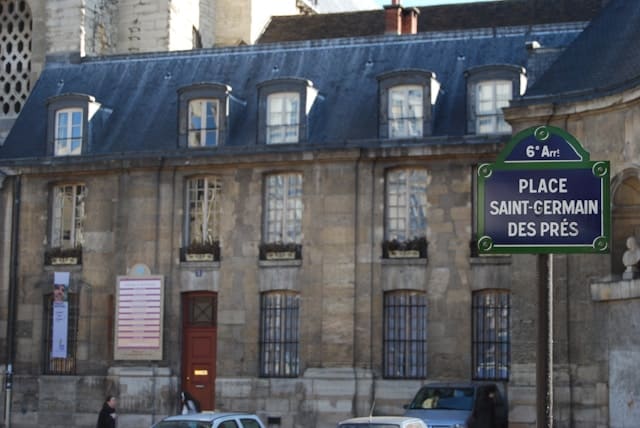
A security guard standing outside La Sorbonne in Paris 5th

Paris Neighborhood Guide: the 5th Arrondissement

The Latin Quarter, La Sorbonne, Rue Mouffetard, the Panthéon, the Jardin des Plantes and so much more — that’s what you’ll find in the 5th arrondissement of Paris. I spent a lot of time here when I was a student. It makes sense: the Latin Quarter is colloquially referred to as the quartier des étudiants, or the student quarter.

Like the 6th arrondissement, it boasts a “quintessentially Parisian” look and feel. Haussmannian buildings as far as you can see, small manicured gardens and squares, cafés that line every street corner, and of course, plenty of boulangeries

Home to La Sorbonne (another, obvious, reason the area is teeming with young people), it’s also a place of so much history. Home to universities, colleges, and prestigious high schools since around the 12th century when the University of Paris was created, it’s easy to see why. 

The 5th is another one of the older areas of the city that dates back to ancient times. You can find bits and pieces of this at what’s left of the local Roman amphitheater (oh, does your town not have one of those?) the Arènes de Lutèce, and at the thermal baths at the Cluny Museum.

Now that you know what the cinquième once was — and continues to be, really — it’s time to learn more about what’s going on in the 5th these days. As with all of our neighborhood guides, I suggest you give yourself a least a few hours to visit all of the monuments, with enough time to wander and stroll too.

The Latin Quarter

When discussing the 5th arrondissement of Paris, le quartier latin certainly deserves its own section. As I’ve explained already, it’s a hot spot for students for a few different reasons. First, it is home to several schools, including Paris’ most famous (cough, La Sorbonne, cough). Secondly, there are tons of bars, cafés, and restaurants that cater to the younger crowd so they’re very affordable.

That means it’s a great place for visitors on a budget, or expats who are sick of paying an arm and a leg for a cup of coffee. I like any place on the rue Soufflot for its prices and view of the Panthéon and le Jardin de Luxembourg

Speaking of the Panthéon, yes, you’ll find that in the 5th too. I recommend popping in to look around — in case you didn’t know, it’s where many of France’s greats are buried, including Victor Hugo, Marie Curie, Jean Moulin, Rousseau, and Voltaire, to name a few.

La Sorbonne is also worth walking around to admire its rich history and architecture. And who knows, maybe you’ll be able to catch a glance inside if you time it right. In Paris, it pays to keep an eye on empty alleyways and open doors.

Rue Mouffetard

This now-famous street has become popular for tourists over the past 10 or 15 years but has managed to maintain its authentic vibe, at least in my opinion. Rue Mouffetard is known as one of Paris’ oldest and most vibrant streets and is home to a permanent outdoor market.

Here you’ll find cheesemongers, bakeries, butchers, fishmongers, florists, bistros, cafés, wine sellers, and more. I used to love hanging out here in my very early Paris days — again, it’s quintessentially Parisian and makes you feel like you’re walking through a movie set.

Place Monge, which is just next door, is a nice place to sit and admire the views, and perhaps munch on whatever you just bought from the market. You’ll find the Grande Mosquée de Paris a few steps away, which is a lovely place for hot green tea and delicious Middle Eastern pastries. The architecture of its little outdoor terrasse is something to be seen as well.

You may want to head out to rue Mouffetard one morning, market bag in hand, to stock up on some fresh produce for a picnic. And if you’re feeling peckish and want something more substantial, my favorite place for lunch is Au P’tit Grec, a crèperie with one of the best vegetarian crepes I’ve ever had.

Le Jardin des Plantes

The first time I visited the Jardin des Plantes I was with the children I used to nanny. Speaking of which, it’s a great place to spend a morning or afternoon with kids — not only is there plenty of space to run around but there’s also a Natural History Museum

You’ll also find a zoo, greenhouses, a labyrinth, a dinosaur museum, and a myriad of botanical gardens to wander through. I think it’s such a great idea for visitors who come with kids and need a break from your standard tourist attractions. 

On a nice day, you’ll be able to admire the Seine or go for a walk through the sculpture garden that has transformed one side of the river. If you’re taking the Batobus water taxi to get around, there’s a stop right in front of it.

Of course, this is just an overview of what you’ll find in the 5th arrondissement in Paris. Again, make sure to give yourself enough time to wander up and down the winding streets. Give yourself permission to get lost here — you never know what kind of courtyard or historical building you may end up in front of.

Photo by Robin Ooode on Unsplash

Did you enjoy this article? TAIP is 100% reader-supported through tipping. If you want to leave us a tip of any amount it would be highly appreciated. These tips help support our efforts to keep TAIP an ad-free environment. Just as at a cafe, the tips are split evenly among the team.
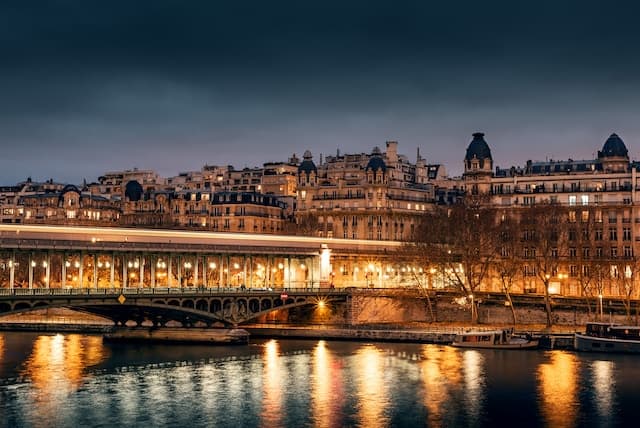
6th arrondissement

Paris Neighborhood Guide: the 6th Arrondissement

The 6th arrondissement, or as I like to call it, quintessential Paris-ville, is one of the most central neighborhoods in the city. It’s also one of the oldest — the Left Bank of the Seine has been inhabited since ancient times and was once called Lutetia — and is home to the Église Saint-Germain-des-Prés, one of the oldest churches in Paris.

It also happens to be the first place I lived, the first time I lived in Paris when I did my semester abroad here. I call it “quintessential Paris” because it looks exactly as you would imagine Paris to look if you’ve never visited before. Haussmanian buildings line the streets, Ernest Hemingway and F. Scott Fitzgerald were known to congregate in a few of the cafés, and there’s no shortage of picturesque photo opportunities. 

While I could never imagine myself living in the area now for a myriad of different reasons, it remains one of my favorite areas to walk around. I don’t know if it’s nostalgia for a simpler time, or a desire to walk in the footsteps of some of my preferred literary stars, but I’ve spent many an afternoon in the sixième.

There’s much to see in the 6th arrondissement for both expats and tourists alike. My advice? Check out a few of the touristy attractions, then give yourself a few hours of free time to wander.

Saint-Germain-des-Prés

Visit the (recently restored) church and the neighborhood-within-a-neighborhood. Saint-Germain-des-Prés is a small quartier in the 6th. You’ll of course find the église (that was built in the 6th century AD), as well as some famous cafés that are known for their famous clientele:

  • Café de Flore: Centrally located on the boulevard Saint-Germain, Café de Flore has been frequented by intellectuals, writers, and artists since the 19th century. Jean-Paul Sartre, Simone de Beauvoir, Albery Camus, and Pablo Picasso are just a few. The terrasse is great for people-watching, but be prepared to pay for it.
  • Les Deux Magots: Just next door to the Café de Flore is Les Deux Magots. Like its neighbor, it was a gathering place for great thinkers, philosophers, writers, and artists. Hemingway and Fitzgerald, as well as James Joyce and André Gide, were all regulars.

My personal favorite place for people-watching in Saint-Germain-des-Prés is a very unassuming café on the corner of rue des Saints-Pères and rue Jacob called Le Comptoir des Saints-Pères. It’s usually quiet — except on the random nights they have live music.

Musée d’Orsay

Unpopular opinion: if you’re only in Paris for a few days or a week, skip the Louvre and go to the Orsay instead. 

I know a lot of people probably wouldn’t agree, but unless you have an obsession with Egyptian art (the Louvre’s collection really is incredible), or have a burning desire to see what all of the fuss about the Mona Lisa is about, I don’t recommend going to the Louvre. It’s always crowded, overwhelming, and honestly kind of a letdown. I prefer the Orsay ten times over.

It’s the home to famous pieces by Manet, Renoir, Rodin, Degas, van Gogh, and more. I’m always moved when I see “Starry Night Over the Rhône” by van Gogh and “Bal du moulin de la Galette” by Renoir in person.

When visitors ask me which museum they should visit first, I always say the Orsay.

Shakespeare and Company

A guide on the 6th arrondissement wouldn’t be complete without a shoutout to the OG English bookstore of Paris. While its current location isn’t the same as its first incarnation, the store lived in the 6th for many years. Now, it is technically in the 5th arrondissement… but let’s call it the 6th for the sake of this article.

Shakespeare and Company was first opened by Sylvia Beach in 1919 and was soon a gathering place for writers like Gertrude Stein, Hemingway, Fitzgerald, Joyce, and many others. Beach actually took it upon herself to publish Joyce’s Ulysses when no other publishers would take the risk.

The bookstore shut down during the German occupation of Paris during World War II, and was reopened in 1951 by George Whitman in its current location, 37 rue de la Bûcherie. Today it’s made up of a café and a separate shop exclusively for antique books and some small apartments that budding writers can stay in (though I’ve heard the application process is a bit erroneous). 

It also hosts events, chats with writers, and book signings, and there’s an area upstairs to read in. The first book club I ever joined in Paris met there every Sunday — it really was the perfect place for it.

Jardin du Luxembourg

Finally, the massive green space that is the Jardin du Luxembourg. There are plenty of paths to wander, fountains, sculptures, and playgrounds for children. The French Senate is housed in the Luxembourg Palace on the edge of the park, with the Musée du Luxembourg just next door.

It gets very crowded on nicer days as the garden is smack dab in the middle of student central — La Sorbonne is a few streets over. But, I have enjoyed many peaceful moments here, away from the throngs of étudiants.

As such there are a ton of inexpensive cafés and places to grab food that surround the Jardin du Luxembourg. A crêpe stand, aptly called Crêperie at 34 Rue Gay-Lussac (though technically in the 5th arrondissement) was a favorite of mine and my classmates during our semester abroad.

There are of course many other things to discover in the 6th arrondissement that I haven’t covered — the Églist Saint-Sulpice, Marché Saint-Germain, Pont des Arts, and the Institut de France are all located there as well — but use this guide as a jumping-off point before you go. 

And don’t forget to give yourself ample strolling time to discover everything else there is to see in the area. You’re going to need it.

Photo by Emilio Sánchez Lozano on Unsplash

Did you enjoy this article? TAIP is 100% reader-supported through tipping. If you want to leave us a tip of any amount it would be highly appreciated. These tips help support our efforts to keep TAIP an ad-free environment. Just as at a cafe, the tips are split evenly among the team.

Paris Neighborhood Guide: the 16th Arrondissement

If you’re new here, the French capital comprises 20 “arrondissements,” a fancy French word for neighborhoods. They begin with the 1st arrondissement in the city’s center, and the others spiral out, resulting in what looks like a snail’s shell. It’s a nice image when you consider that escargots seem synonymous with French cuisine (eating snails isn’t as popular as you may think, but that’s another story for another article). 

Nestled in the western corner of Paris is the 16th, or seizième, arrondissement. It’s fairly residential when compared to other areas, especially the lively 10th and 11th arrondissements, and of course, neighborhoods 1-7, which boast monuments such as the Louvre, Notre-Dame de Paris, Panthéon, and Quartier Latin.

I lived in the 16th arrondissement for two years when I was a student. While it is certainly quiet, it’s one of the things I liked most about living there. And, “quiet” doesn’t mean totally removed from the hustle and bustle of Paris. The Place du Trocadero, which overlooks the Eiffel Tower, is in the 16th and was only a five minute walk from my apartment at the time.

There are a few other places in the 16th that are worth checking out, especially for those of you who either live here full-time or are a tourist looking to do things that are off the proverbial beaten path. 

Le Bois

Two large parks bookend Paris — the Bois de Boulogne to the west and the Bois de Vincennes to the east. Another reason why I loved living in the 16th so much was that I had such easy access to such a massive green space in an otherwise relatively urban landscape. Bois means “wood” in English, an apt word to describe it. The Bois de Boulogne covers an area of about 2,090 acres. 

There are walking paths, fields, lakes, smaller parks within the woods, places to exercise, restaurants, a nightclub (yes, you read that right), the Longchamp Hippodrome (a famous horse racing track), and bike paths. It’s a wonderful place to spend a sunny weekend, and you’ll often see Parisians out exercising or spending time with family.

You’ll also find one of my favorite museums, the Fondation Louis Vuitton. Designed by architect Frank Gehry, who is also responsible for the Guggenheim Museum Bilbao in Spain, it opened in 2014, the first year I came to Paris as an au pair. It’s a contemporary art museum, and some memorable exhibits I saw there include The Shchukin Collection, which highlighted artists like Picasso, Matisse, and Gaugin, as well as a collaboration with the MoMA in New York City. 

The modern building stands out amongst the oak and poplar trees — some Parisians don’t like it — so you won’t be able to miss it. 

More Museums

The Fondation Louis Vuitton isn’t the only museum in the 16th arrondissement. In fact, there are more than a dozen. I won’t bore you with information about them all (although I know most of you wouldn’t be bored!), but there are a few that I recommend you visit the next time you’re in the area.

  • Musée du Vin: Housed in a historic cellar, the Musée du Vin, or Wine Museum, boasts a rich collection of artifacts, tools, and more that trace the history of winemaking and its cultural significance in France. You can explore the cellars, gain insights into vine cultivation, enjoy tastings, and essentially immerse yourselves in the art and heritage of France’s preferred drink.
  • Musée Marmottan: Originally a private mansion, the Musée Marmottan houses the world’s largest ensemble of Claude Monet’s works, alongside pieces by other renowned artists. It’s located in a former hôtel particulier (a fancy name for a city mansion), meaning the building itself is just as impressive as the art inside it. Don’t forget to go downstairs — that’s where you’ll find the majority of Monet’s works. Stephen is a big fan of Berthe Morisot and he was first introduced to her at this museum.
  • Musée d’Art Moderne de Paris: Filled with contemporary and modern art, the Modern Art Museum of Paris has one of my favorite permanent collections in Paris. Works by artists like Picasso, Fernand Léger, Frida Khalo, Modigliani, and Sonia Delaunay grace the halls — I’ve spent many an afternoon admiring them.
  • Palais de Tokyo: Located just à côté of the Modern Art Museum is the Palais de Tokyo. Now, I must admit this museum isn’t my favorite as I don’t love contemporary art, but if you do it’s a must-visit. The large space is dedicated to avant-garde creativity at its utmost, and hosts ever-changing exhibitions, performances, and installations.

Take a Stroll

Like all Parisian neighborhoods, the seizième is a wonderful place to wander. There are plenty of places to grab a coffee or a bite — Le Franklin near the Passy métro station is great for people-watching, and Langousta is great for seafood — otherwise, take the time to admire the classic Parisian architecture as well as the local resident’s taste in clothing. 

If you’ve seen the movie Inception, you’ll likely recognize the Pont du Bir Hakeim. Cross it and you’ll find yourself in front of the Eiffel Tower. About halfway across the bridge, take a moment to walk down the stairs to explore the Île des Cygnes — technically in the 15th arrondissement — and admire a unique view of the Tower from there.

While I no longer live in the 16th it holds a special place in my heart. I can’t help but feel like I’m home whenever I get off the line 6 at Passy.

Photo by Karl Köhler on Unsplash

Did you enjoy this article? TAIP is 100% reader-supported through tipping. If you want to leave us a tip of any amount it would be highly appreciated. These tips help support our efforts to keep TAIP an ad-free environment. Just as at a cafe, the tips are split evenly among the team.

Place de la Bastille

Paris Neighborhood Guide: the 11th Arrondissement

When most tourists visit Paris, places like the Eiffel Tower, the Louvre, and the Moulin Rouge are often on the itinerary. There’s nothing wrong with that — especially if it’s your first time in the City of Light. But, those of us who live here know that there is so much more to discover. 

Many of those places can be found in one neighborhood in particular: the 11th arrondissement. Located to the east of the Seine River, it’s nestled between the Place de la Bastille, Père Lachaise, Belleville, and Place de la Nation. Lots of locals hang out in the 11th (read: good restaurants, few tourists) as opposed to, say, the 1st. The crowds are young, cool, and possess an actual je ne sais quoi that everyone’s always going on about.

Known amongst Parisians for its nightlife, concert venues, and restaurants, there is much to see and do in the onzième.

Bastille

There are small quartiers (quarters) within every arrondissement in Paris. Don’t get confused just yet — it’s similar to the American practice of designating separate villages within certain cities or towns.

Let’s begin with the most well-known quarter of the 11th arrondissement: Bastille. Home to the Place de la Bastille, a square that once held the famous Bastille prison. Said prison was stormed on July 14, 1789, an event that would mark the official beginning of the 18th-century French Revolution, a topic that will get my fellow TAIP author Stephen going, if you’re up for a coffee or a whiskey.

Today there is a monument called the Colonne de Juillet in the center of the place. After you’ve admired it up close, turn to see the Opéra Bastille, but know that the opera house is technically in the 12th arrondissement. 

From there I recommend heading to the Marché Bastille if it’s a Thursday or a Sunday — the market is open from 7am on both days. Take a shortcut through the picturesque cour Damoye to head to the rue de la Roquette. Continue to wander the small, winding cobblestone roads until you get lost. 

Oberkampf

When I was an au pair, Oberkampf was the place to go out. Drinks and food are cheap, there are a ton of young people, and there are several venues for live music. If that sounds like your vibe, head to the rue Oberkampf to start.

Keep your eyes peeled for street art as there is plenty of that in the area. The Bataclan is amazing for live shows — you likely recognize the name as it was unfortunately the target of a terrorist attack in 2015. Don’t let that keep you from buying tickets for a show. There is now a small memorial out front that’s dedicated to those who were lost if you’d like to pay your respects before you go inside.

My favorite Italian restaurant of all time is located in the Oberkampf area. It’s unassuming and very easy to miss and you must make a reservation if you hope to get in. No, it’s not the ultra-Instagram-famous Ober Mamma. It’s called L’Osteria Dell’Anima and the quality of the meals I’ve enjoyed there rivals actual Italian food I’ve eaten in Italy. Yes, it’s that good.

If you do want to go out and hit the town running, head to Oberkampf any time after 9pm and you’ll find students, au pairs, and other young people bar hopping. Follow the sound of laughter and the smell of cheap beer — you’re in the right place. 

Charonne

Charonne holds a special place in my heart. I spent a lot of time there with my now-husband when we first got together, as in a former life I frequently cleaned an Airbnb property there. It’s quaint, lively, and full of terraces that are perfect for people-watching.

It’s another Parisian neighborhood that’s made up mostly of locals. Duke, a café on the corner of rue de Charonne and Boulevard Voltaire, is located just outside the Charonne metro station and is a great option for coffee. 

Le Palais de la Femme further down the street is a homeless shelter for women that often hosts large vintage sales and other indoor markets to raise money. Waly Fay on rue Godefroy Cavaignac is one of my favorite places for West African food in the city. Septime La Cave, just a few minutes away on rue Basfroi, is my go-to wine bar in the 11th. If you want to get fancy, you can go to the Michelin-starred Septime (same owners, different location), but keep in mind reservations are weeks out, so you can’t just rock up and hope to get a table.

On the other side of the Boulevard Voltaire there’s Comets, a café and vinyl store that I’ve spent many a rainy afternoon in. Bar Outland, on a small side street, specializes in beer on tap and natural wines — it’s a fun place for a first date. 

When you’re done, continue to stroll down rue de Charonne until you reach the Père Lachaise, and officially cross the border into the 20th arrondissement, which is also full of sites to see. But, that’s another neighborhood for another blog article. 

Photo by VENUS MAJOR on Unsplash

Did you enjoy this article? TAIP is 100% reader-supported through tipping. If you want to leave us a tip of any amount it would be highly appreciated. These tips help support our efforts to keep TAIP an ad-free environment. Just as at a cafe, the tips are split evenly among the team.

the 10th arrondissement

Paris Neighborhood Guide: the 10th Arrondissement

Ah, le dixième. One of my favorite Parisian neighborhoods (after my beloved Montmartre, of course), you’ll often find me there on a given weekend. It’s one of the least “touristy” areas in the city — I lived in Paris for a full six months as a student back in 2012 and never even knew it existed — and I love spending time in these small pockets of unspoiled places in Paris. Well, maybe not completely unspoiled but you get the idea.

And while I’d love to keep the 10th arrondissement all to myself, I’m no gatekeeper. For those of you coming to Paris to visit, or maybe Paris residents who, like me in 2012, never ventured up to the tenth, here are some spots to add to your to-see lists.

Les Gares

The Gare du Nord and Gare de l’Est aren’t necessarily “sights to see,” but they are in the 10th arrondissement and you’ll likely need to access them at some point if you plan on doing some traveling. 

Both are known as being on the “sketchy” side but I have never personally had any issues there. Pay attention and keep your belongings close and you shouldn’t have a problem. Gare du Nord will get you to places in northern Europe (as well as merry old England) and Gare de L’Est will get you to places in eastern Europe (and beyond), respectfully. 

Le Canal Saint Martin

If you have spent time in the 10th arrondissement, I’m willing to bet it was along the Canal Saint Martin. This little waterway that flows from Bastille all the way up to La Villette in the 19th arrondissement has often been a sanctuary for me, particularly on those sweltering August nights, as the leaves begin to fall in autumn, and even during a drizzle in the colder months. 

When the weather cooperates, there are plenty of places to sit down next to the canal with a good book. If you don’t feel the need to be directly on the canal, there’s a lovely park called the Jardin Villemin with lots of grass to sit on. 

My yoga studio is along the canal (Jivamukti Yoga Paris if you’re interested), and I will often make the 40-minute walk from my place in the 18th arrondissement to get there. 

The bar Le Comptoir Général is a vibe and is my go-to when I want to impress friends in town visiting. Chez Prune is a bit more on the casual side (and more authentically French, in my opinion), and I’ve shared many a glass of wine/charcuterie board there over the years. Ten Belles for coffee, always, and Maria Belza for tapas. Trust me.

For those who love a good story, the Canal was also where Earful Tower host Oliver Gee heard the story that led to his first children’s book, Kylie the Crocodile in Paris. It makes a fun gift for kids who might be interested in the City of Light.

Le Marché Saint-Quentin

There are a myriad of marchés (markets) to be found in Paris — some are static, like the rue Mouffetard or le marché des Enfants-Rouges, while others set up shop just a few times a week.

Like le marché des Enfants-Rouges, le marché Saint-Quentin is a covered market. It’s one of the largest and oldest markets of its kind in the city (first built in 1835, destroyed in 1852, and rebuilt in 1866), and is home to produce sellers, butchers, florists, fishmongers, cheesemongers…there are even places to buy beer and wine. 

While this isn’t my favorite marché in the city (I have a penchant for rue Mouffetard myself), it’s worth a visit if you get there early enough to beat the crowds. Doors open at 8am every day.

Cour des Petites Écuries

The 10th arrondissement is not short on nightlife. I like places that are cool and cozy with a big enough terrasse to fit me and all of my friends. I first started hanging out on the cour des Petites Écuries because a friend of mine worked at a small bar there. That was about five years ago and I often find myself returning on a Thursday or Friday evening.

The street is tiny, only about 850 feet long. Nestled along the cobblestones are about a dozen cafés, bars, and restaurants to discover. And, if you venture off the street you’ll find dozens more. It’s a good option if you like to bar-hop and wander. Most places are very affordable if you’re on a budget. 

Like most Parisian neighborhoods, the 10th arrondissement is also a wonderful place for a stroll. Use the places I mentioned above as a jumping-off point and then explore on your own. You just may get lost for a few hours, but that’s never a bad thing in Paris.

Photo by Florencia Potter on Pexels

Did you enjoy this article? TAIP is 100% reader-supported through tipping. If you want to leave us a tip of any amount it would be highly appreciated. These tips help support our efforts to keep TAIP an ad-free environment. Just as at a cafe, the tips are split evenly among the team.