Bir-Hakeim Bridge in Paris

Paris and its Bridges: A Story

Note from the editor: While not an American in Paris, guest writer and photographer Tayeb Bouzid lives in the French capital and is part of the Paris Greeters, which offers free tours of Paris in English and other languages. After he spent his youth in Algeria and 15 years in the Marseille area, he came to Paris in June 1988 for a 3-month-long job and is still here after 36 years. Passionate about photography, architecture, and Paris, here, Tayeb provides his expertise on one of the more fascinating parts of the City of Light: the bridges that cross the Seine, connecting two sides of the city to form one. Enjoy. — MS

Paris would not be Paris without its bridges, and there are 336! That many? Yes! But only 37 of them are along the Seine. The others are for pedestrians, trains, the métro, or to connect other streets.

Below we’ll look at some of those 37 spread over the 8 or so miles of the Parisian Seine. They’re real links between its banks, inhabitants, and historical monuments. Enjoy this non-exhaustive guide to Paris and its bridges, from the longest to the most graceful, the most revolutionary to the most futuristic. You may discover an anecdote or an unusual detail you’ve never seen before.

The Most Sumptuous 

Decorated with candelabra, street lamps, and copper and bronze sculptures, the Alexander III bridge majestically straddles the Seine between the 7th and 8th arrondissements. 

Born during the 1900 World’s Fair, at the time it also represented the new Franco-Russian alliance. On October 7, 1896, Tsar Nicholas II laid the first stone in the presence of the President of the Republic, Félix Faure. Boxed by monumental pylons ornamented at the top of a pegasus of gilded bronze, the metalwork draws a royal road to the Grand and Petit Palais. 

Classified as a historical monument, it’s often seen in films of famous directors (Michel Audiard, Woody Allen, and Luc Besson, to name a few).

The Most Filmed 

The Bir-Hakeim Bridge is also in great demand for commercials, television series, and films. 

Jutting out from both sides of the Île aux Cygnes, this metallic structure, designed shortly after the World’s Fair of 1900, connects the 15th and 16 arrondissements. It’s made up of two floors — the upper one is for the metro, and underneath is designated for cars, pedestrians, and bicycles.

The Most Famous 

Its name may be misleading, but the Pont-Neuf, or “new bridge,” in the 6th arrondissement is actually the oldest in Paris. 

Also classified as a historical monument, it’s famous for its medieval design that looks almost like a castle. On May 31, 1578, Henry III laid the first stone, finally connecting the two shores of the Seine. The first bridge in Paris made of stone and not wood, Pont-Neuf also once supported homes and other dwellings, as was customary at the time. Paris was already overcrowded, so they needed all the space they could find. 

Pont-Neuf is also the first bridge to be decorated with turrets. Its 384 macarons adorn its cornices, and an equestrian statue of Henri IV can be found in the center of the bridge.

The Most Graceful

Reserved for so-called “soft” transport (such as pedestrians and bicycles), the Simone de Beauvoir bridge is the 37th bridge in Paris. Completed by the Austrian architect Dietmar Feichtinger and inaugurated in 2006, its graceful steel and wooden structure uses the most advanced construction techniques. Composed of two curves that intersect, it connects the François-Mitterrand library in the 13th arrondissement to Bercy Park in the 12th.

The Most Revolutionary 

The Pont de la Concorde was built between 1787 and 1791 in the middle of the French Revolution. Even more revolutionary, it was built with some of the stones of the old Bastille prison that was destroyed during the insurrection of July 14, 1789. 

It allowed Parisians to walk over a symbol of the fallen royalty, as they crossed the Seine from the Place de la Concorde (formally named for Louis XV) to the National Assembly. Another interesting particularity: unlike the other bridges in Paris, it does not have ring moorings so as not to bring to mind the poor prisons who were chained to the wall of the Bastille.

The Most Futuristic 

Designed and built between 1993 and 1996 by architects Arretche and Karasinsky, the Charles de Gaulle Bridge is the most recent road bridge in Paris. With an elegant appearance of a white steel aircraft wing, it fits perfectly in the modern district of Bercy and the Bibliothèque nationale.

The Most Poetic 

The Mirabeau Bridge was immortalized by Guillaume Apollinaire (1880-1918) in his famous poem “The Mirabeau Bridge” published in 1913.

“Under the bridge Mirabeau flows the Seine (Sous le pont Mirabeau, coule la Seine)
And our loves (et nos amours)
Should he ask me? (Faut-il qu’il m’en souvienne ?)
Joy always came after sorrow… (La joie venait toujours après la peine…)”

Another bridge classified as a historical monument, the Mirabeau was built by engineers Jean Résal, Rabel, and Alby at the very end of the 19th century to connect the André-Citroen quai on the left bank to the Louis-Blériot quai on the right bank. 

The beautiful metallic masterpiece offers wonderful views of the City of Light. It’s adorned with four bronze sculptures made by the sculptor Jean-Antoine Injalbert, representing the City of Paris, Commerce, Navigation, and Abundance.

The Longest 

Spanning a little over 1,025 feet, the Aval Bridge is strictly for cars and is part of the highway that circles Paris, also known as the Boulevard périphérique. Inaugurated in 1968, it’s the longest bridge in Paris (the shortest being the Petit-Pont-Cardinal Lustiger, close to 105 feet long). 

Located between the 15th and 16th arrondissements, it doesn’t have an official name. Many do refer to it as the Pont aval (downstream bridge) as I do here, as it is the last downstream bridge you can take to cross the Seine and circle the west of the capital.

The Most Beautiful Metro Viaduct

Finally, the Austerlitz Viaduct is a railway bridge used by line 5 of the metro, connecting the Austerlitz and Quai de la Rapée stations. It’s a curved artwork in and of itself, measuring 246 feet wide and 360 feet long.

Construction took place between 1903 and 1904 and at the time, it was the longest Parisian bridge. Its design was entrusted to Jean Camille Formigé, who also designed parts of the métro. It features various marine-focused symbols, like fish, oars, anchors, and tridents, and the arms of Paris can also be seen at the bottom of the arches. It was listed as a historical monument on June 12, 1986.

Photo of the Bir-Hakeim Bridge taken by Tayeb.

Did you enjoy this article? TAIP is 100% reader-supported through tipping. If you want to leave us a tip of any amount it would be highly appreciated. These tips help support our efforts to keep TAIP an ad-free environment. Just as at a cafe, the tips are split evenly among the team.
First Visit to Paris: Arc de Triomphe

I sometimes share with people that I moved to Paris on eight total days of evidence: three days in 2009, two days in 2010, and three days in 2012.  It wasn’t until the third trip that I had any truly developed idea of possibly ever living in this city, and was thus, on the previous trips, engaged in the typical “see all the things” behavior of the tourist afraid he/she is never coming back.  But since living here I’ve been asked countless times for my recommendations, not just for monuments and museums, but for restaurants, secret places, coffee shops, etc.  I’ve written down all these places on a list that I would have handed to Stephen back in 2009 with a note at the top which would have read: “I can’t promise you two more visits, but I can promise you that you’ll remember this one a lot more if you slow down.”  In this occasional series I’ll share the places on that list with you.

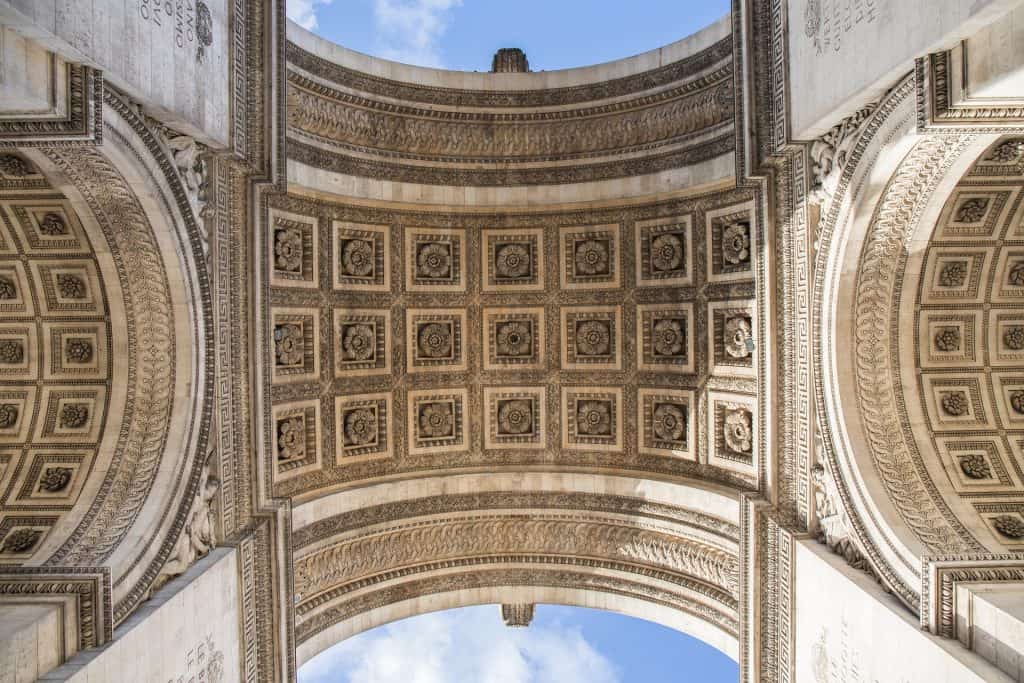
The Arc de Triomphe

Yes, I know it’s touristy.  But it’s important for so many reasons.  It lies along something called the Axis of History, which runs from the Grande Arche de la Défense, built in 1989 for the bicentennial of the wretched Revolution, all the way to the Arch de la Carrousel, which was also built by Napoleon, but is topped by statuary commemorating the Bourbon Restoration.  This axis, which also runs through the formerly blood-ridden square at Place de la Concorde and ends at the Pyramid in front of the Louvre, encapsulates centuries of French history.  On a clear day, as long as that terrible Ferris wheel is not at the entrance of the Tuileries, you can easily see all the way to the Arc de Triomphe from the Louvre-side entrance to the gardens.

The Arc(h), built to handle the monumental hubris and ego of Napoleon, himself being crowned in one of the reliefs on its front side, was not completed in his lifetime.  Indeed, it was only completed under the reign of Louis Philippe.  Anyone familiar with Napoleon can’t help but smile at the idea of a giant monument to what is arguably the greatest military victory of all time (Austerlitz, in 1805) being completed decades after the “empire” declared by Napoleon was gone and defeated.  Indeed, for a while at least, thanks to the Congress of Vienna and Count Metternich, Europe was as it was, with no marauding French armies bringing “democracy” at the point of a bayonet to all of Europe.

The Arc became a military monument and it now has the Tomb of the Unknown Soldier beneath it.  It is Ground Zero for Armistice Day celebrations, held on November 11th with great pomp and solemnity (arrive early in the morning if you want a seat on the bleachers).  Americans who never experienced Nazi invasion of our land will find it hard to imagine those same Nazis marching around this monument, celebrating the surrender of the city, to the despair of the residents, who did not know when they would have a free city once again.

It’s also a great vantage point to observe Haussmannian architecture and the extent of the bulldozing that had to take place in order to bring about Napoleon III’s vision of Paris.  The twelve roads that terminate in this roundabout of Chevy Chase’s nightmares create a graceful chaos, and will provide you with an opportunity to see one of the rare times that incoming traffic to a roundabout has the right of way.

It’s definitely worth it to pay to go to the top of the Arc, not because it has the best view of Paris (that’s at the top of the Montparnasse Tower) but because there’s a small but helpful museum before you walk up the last few stairs to the terrace that documents the building and history of the Arc.

Practical Information

It’s best seen early in the morning when you can have it to yourself, before all the selfie sticks show up.  You access it by a subterranean tunnel which you’ll find just a few steps forward from the Qatari embassy on the Champs.  If you see a line in that tunnel, it’s to buy tickets to go to the top, so if you don’t intend to do that, just follow alongside the line until it goes towards a ticket booth on the left and you continue on, on their right, and ascend the steps to street level.

It’s just as lovely, graceful, and imposing at night as in the evening, and at 18h30 every evening the flame is rekindled by one of the many Veterans Associations in France, and it’s worth seeing if you’ve never done so.

If you’re staying on the other side of the city, but near an RER A stop, you can turbo boost your way to the Etoile stop in roughly 5-10 minutes using it instead of Line 1.  Same cost, different method.

What are your favorite things about this monument?  Share in the comments.

Image by Anton Lovász from Pixabay

TAIP is 100% reader-supported through tipping. If you want to leave us a tip of any amount it would be highly appreciated. These tips help support our efforts to keep TAIP an ad-free environment. Just as at a cafe, the tips are split evenly among the team.
August in France

It is quiet.  Wonderfully quiet.  Not just in Paris but everywhere you go in France.  On July 15th, after some national holiday that will go unnamed, the French decide that it’s been a solid 10.5 months of work, and that it’s close enough to 12 to round up and call it a year.  They depart in all directions, with a plan to return on or around September 1st.

Effectively this means you’re on your own if you choose to stay in your particular part of France.  90% of the local restaurants and shops close, and here in Paris, it’s the tourists who now outnumber the locals.  Everything feels slower because everything is slower.  Normally I would say this is in part due to the weather, but given the fluctuations of the last six months, I’m uncertain as to whether there is a correlation any longer between the season of the year and the expected climate.

My Second Card

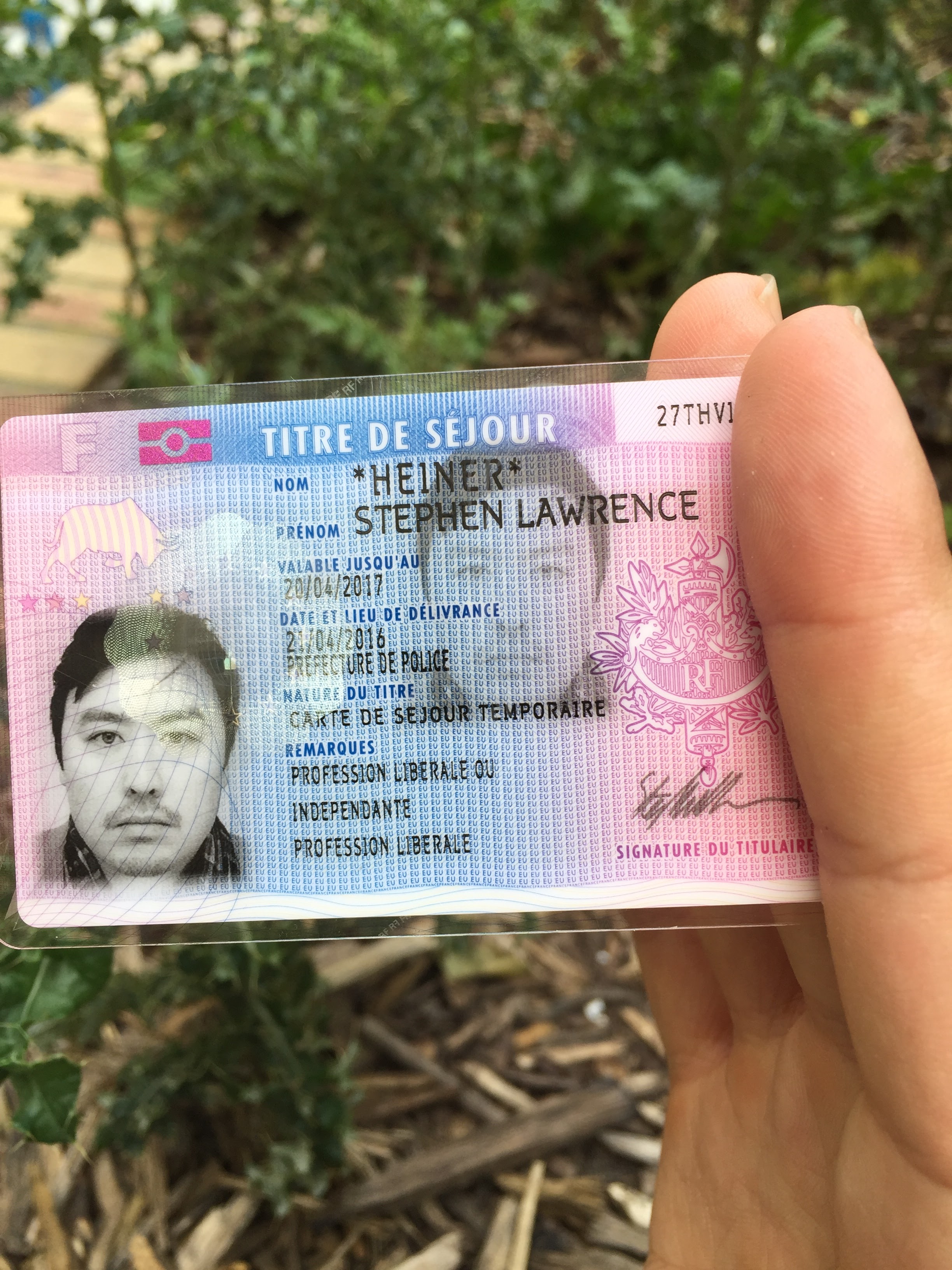
The last card said “Visitor” and specifically prohibited working.  This one recognized my new status and interestingly was dated from the date of my follow-up visit to the Prefecture in April, not the date I received my first récépissé, in January.  This permanently shifts my renewal date to April, which is nice as I can now avoid the end-of-the-year congestion that I have grown used to.  You’ll also see a new permanent entrance to the Prefecture at Cite.

It ostensibly provides more safety via a double-doored security-controlled entrance.  It’s just to the right, about 50 meters from the entrance you are used to.

IMG_2499

No, I’m not mad, bro.

Interestingly, the lady who issued me my carte took about five minutes (which felt longer due to the dread) rechecking all the paperwork from the previous two visits.  I remained stoic and impassive, and I kept telling myself, “Don’t sweat it, you’ve got everything in order.”  Sure enough, she stamped and signed all that was needed and that was “case closed.”

Please don’t make too much of my facial expression.  You’re specifically prohibited from smiling in official French photos. 🙂

Grand Train

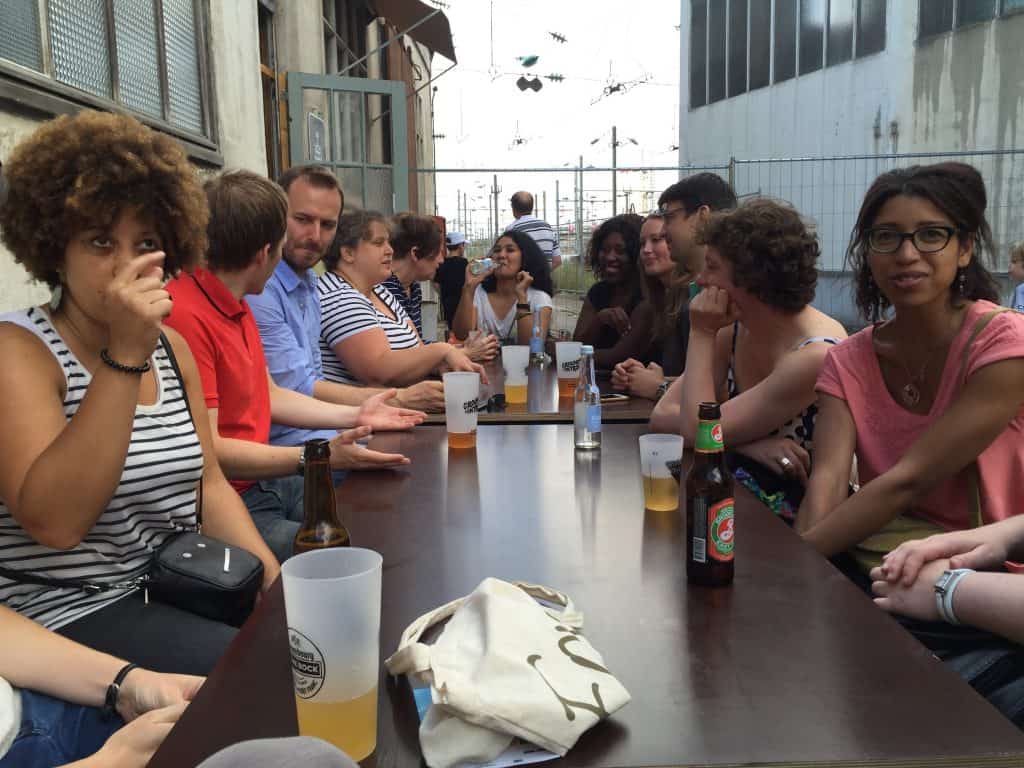
Last weekend I took one of my meetup groups to Grand Train.  It’s part of an 8-year redevelopment project and rather than just have a boring old construction site, some smarties got together and created essentially a pop-up party that reminded me of the gently convivial atmospheres of the ruin pubs of Budapest.

Entrance is free and in addition to numerous train exhibits there are pop-up food shacks and indoor and outdoor seating galore.  It runs through October and you would do well to get in early (around 15h-17h) and leave early (before 22h) as it starts to get very crowded at that point.

Outdoor Film Festival is Back on…But Not Outdoors

La Villette, on the edges of the 19th, usually plays host to an outdoor film festival all summer long.  However, following the attacks in Nice, the Mairie de Paris laid down specific security expectations for outdoor events and the film festival couldn’t comply and it was tentatively suspended “until further notice.”  After a couple of weeks of hand-wringing it was decided not to waste all the planning that had gone into selecting the films and organizing showing dates and the festival has been moved indoors to the Grand Halle.  If you want to join our Film and Supper Club we are going to watch Akira Kurosawa’s Ran next week.

Happy to be Here

Despite this being my third year in France, this is my first full August in Paris, as the last two summers I was working in Switzerland.  Alas, they passed a law that went into effect earlier this year that restricted the number of non-EU persons that could work on temporary summer contracts, and my wings were clipped.  I was certainly down the first week I got the news, back in March, but the summer has proved what I suspected to be true back then: more opportunities would arise while I was in Paris, not in Switzerland, during July and August, and I would have more of a chance to explore parts of France that I have not before.  There are still two weeks to go before the Rentreé and I’m very glad to have these quiet summer days pretty much to myself (or to accompany friends who have never had Five Guys to taste their first one).

Photo was taken in the middle of multiple conversations at Grand Train.

Did you enjoy this article? TAIP is 100% reader-supported through tipping. If you want to leave us a tip of any amount it would be highly appreciated. These tips help support our efforts to keep TAIP an ad-free environment. Just as at a cafe, the tips are split evenly among the team.
moon

Book Club: Paris to the Moon, by Adam Gopnik

My favorite book written about Paris from the expat perspective is the series of essays written for The New Yorker by Adam Gopnik that was later compiled into a book called Paris to the Moon.  As the book’s magical title promises, it is a thoughtful and earnest look at a city Gopnik never intended to permanently live in, but experienced more deeply in six years than some people do in a lifetime. 

Gopnik has gifted me with some ways to express feelings and sentiments I have in my new country, from saying that we “breathe in our native language, but swim in our second,” to his chapter on “Distant Errors” in which he deconstructs, albeit kindly, the French tendency to look at problems or errors as distant as something external rather than related to their own thinking and behaving, to his explanation of “white helicopter” thinking among the French (in contrast to the American “black helicopter” idiom, which is a meme for conspiracy theories) that there is always the possibility that a future government will offer a higher pension and a lower retirement age.

Adam’s approach to life in France is certainly one I wish to emulate, though my French needs to improve in order to do so.  He is at home as the American he will always be, while truly attempting to live life as the French do, day in and day out, in dealing with strikes, protesting the takeover of a favorite restaurant, by enjoying holidays enthusiastically (I wonder sometimes if the French love the planning and anticipation more than the holiday itself), and even in the ceremony of childbirth, which both he and his wife participate in.

I’ll leave you with a quote from the book particularly germane to the subjects covered in this blog: “Everything about moving to Paris has been wonderful, and everything about emigrating to France, difficult.”

As it perhaps, should be.  This life should only be available to those who truly want it.

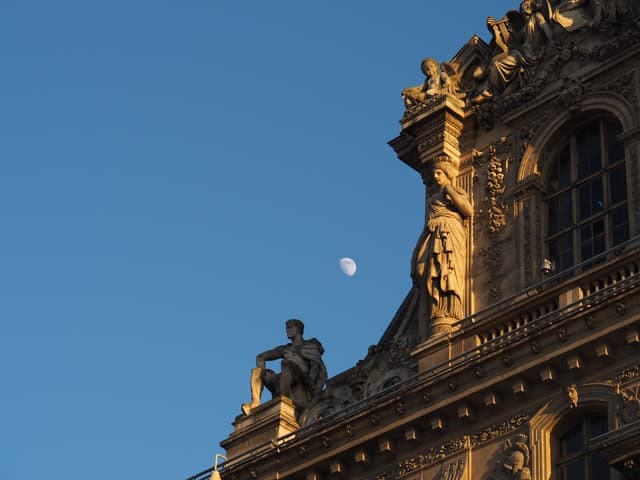
Photo by Rafael Garcin on Unsplash

Did you enjoy this article? TAIP is 100% reader-supported through tipping. If you want to leave us a tip of any amount it would be highly appreciated. These tips help support our efforts to keep TAIP an ad-free environment. Just as at a cafe, the tips are split evenly among the team.

jill jonnes

Book Club: Eiffel’s Tower, by Jill Jonnes

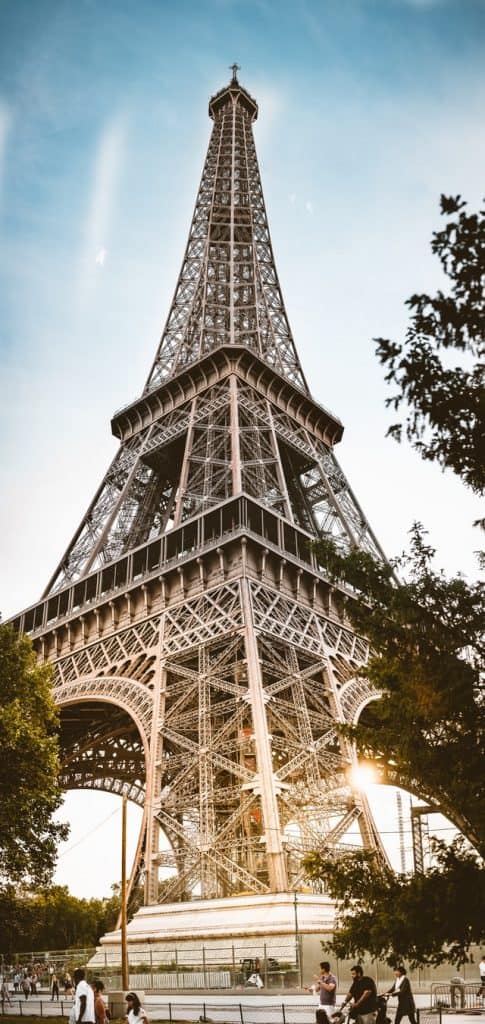
“But there’s no such thing as Paris without the Eiffel Tower,” said my friend Florence the other day.  Locals have complicated views about the tower of iron, but perhaps she is right.  But the beginning of pondering that question should
start with Jill Jonnes’ fascinating book, Eiffel’s Tower: The Thrilling Story Behind Paris’ Beloved Monument and the Extraordinary World’s Fair That Introduced It.

In this book you learn just how much it took for Eiffel to overcome in order to build this true architectural achievement of its time.  It stood as the world’s tallest building for 30 years, and took only 2.5 years to complete (perhaps one of the few French building projects ever completed on time).  In contrast the previous “tallest building” in the world was the Washington Monument in Washington D.C., which was half the height of the Eiffel Tower and took 40 years to complete.  Mind you, there was a little thing called the War Between the States during that 1848-1888 period of construction, but still, you can imagine many Americans, including Thomas Edison, felt a bit of envy to have the French claim a technological achievement before America did.

Edison was feted when he visited the Tower he was the great man of innovation and ideas and Eiffel toasted him with champagne at the summit of the Eiffel Tower.  But he emptily boasted that for the upcoming Chicago World’s Fair that they would build something twice as tall at half the price.  The French raised their eyebrows, understandably so when what ended up being invented for that event was not some tall tower, but the Ferris Wheel.

Jonnes writes a compelling narrative, bringing all the characters together in a cohesive story that is, oddly, suspenseful, especially given that we already know how events turned out.  I shared this book with some local Parisians and they told me it forever changed how they saw and understood the Tower, which is just the sort of antidote you need, especially when you’re walking past the Selfie Nation on the Champs de Mars.

But perhaps you will be most edified to learn how well Eiffel bore up under the most vile and vicious attacks, before, during, and well after the construction of the Tower.  It is his entrepreneurial genius something the French could allow to flourish a bit more these days that is the true story behind this great little book.

Photo by Mika Baumeister on Unsplash

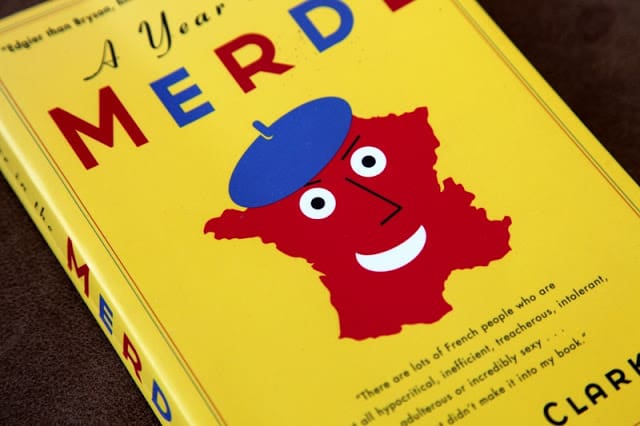
Book Club: A Year in the Merde, by Stephen Clarke

I read a lot of books about Paris and France before moving here and I’ve only recently realized I might do well to share them with you.  So, I’ll start with an old favorite.

It was the second week I was in Paris.  I had just gone to an Asterix exposition at the ugly BNF (Bibliotheque Francois Mitterand), with my friend Julien, who I had met in Adelaide, Australia, a year earlier (a story for another time).

“Stefan,” (this is how the French pronounce my name), “Stefan, do you know zis booke, ah, a year in dee Merde?”  I nodded that I had vaguely heard of it, but not much more.

He started laughing.  “Oh, you must read it!  It is soooo funny!  And it’s true!”  Julien is a great guy a real Anglophile to boot though he insists that when we go on ski trips I only speak French so I gave his recommendation its due importance and in time purchased and read the book.

It was, as he had warned me, absolutely hilarious.  One time I almost choked on my tongue while reading in the metro because I was laughing so hard.  Another time, while I was buying groceries at Franprix, I noticed that the checkout guy started to giggle quietly because he saw the book under my arm.  “C’est vrai?” I asked him, left eyebrow raised.  “Oui tout!” he responded.

So, Stephen Clarke, the author, invented this fictional Paul West character who comes to Paris for a job and gets caught in the life of apartments, work, and love.  It’s told from an Anglo perspective, and it’s particularly funny if you’ve lived in Paris for any period of time because the jokes hit on the realities of everyday life.  Some memorable lines from the book include:

Jean-Marie did the hugest shrug I’d ever seen, even outdoing the man in the electric shop.  His shoulders, arms, his whole rib cage, took off vertically in a gesture of infinite indifference.

and this

The Paris police are the best in the world at one thing sitting in buses.”

and this

Red lights are like queues,” he said scornfully, “They are for people who have time to waste.”

It’s not a perfect book, by any means, but it’s very revealing in its takedown of the French.

Clarke was a bit taken aback, I’m sure, by his success, and has gone on to write at least two other books on this theme, which I have, unfortunately, also read.  I say unfortunately because these books go beyond the playful fictional satirical conceit of the first book and just linger in stereotype that is, over time, increasingly unfunny.

Yes, it was funny that first time but if you want to keep going you’re going to have to go deeper.  In comedy, the analogue would be the first Austin Powers movie the first one was funny in so many ways the others were horrible.  Same with the sleeper Liam Neeson hit film Taken.  I love that movie.  Which is probably precisely why I hate the sequels so.

Perhaps we as moderns don’t understand that success can be solitary (witness Harper Lee being huckstered into releasing an inferior and revisionist novel in her dotage).  Success doesn’t mean having to repackage your great idea as something only slightly different.  Indeed, success is sometimes leaving well enough alone.

So, read this first one.  Skip the rest of Clarke’s catalogue.

Did you enjoy this article? TAIP is 100% reader-supported through tipping. If you want to leave us a tip of any amount it would be highly appreciated. These tips help support our efforts to keep TAIP an ad-free environment. Just as at a cafe, the tips are split evenly among the team.