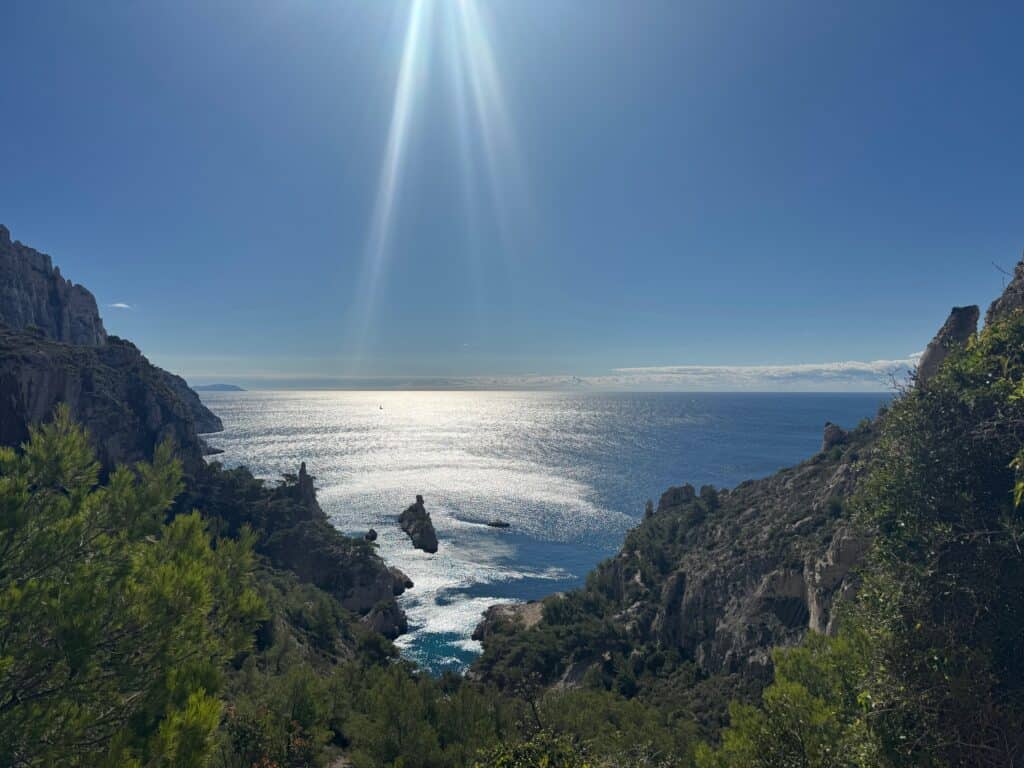
The Most Beautiful Place in France

I know the title may be a contestable claim, and so I will add a tiny disclaimer. The Calanque de Sugiton is the most beautiful nature reserve in France that I have seen with my own eyes.

What is a calanque anyway? It is a geologic formation of a steep valley, submerged in part by the ocean. The Calanque de Sugiton is about a 45-minute drive southeast of the Marseille Saint-Charles train station, positioned on the Mediterranean Sea. 

Of the many calanques found in this region, my local friends advised that I see this one in particular for a few reasons. The first being its beauty. Secondly, as I did not have a car during my stay, it is reachable by public transit (and a bit of willpower). Apart from their advice and a pin on Google Maps, I did no research on where to go once I arrived at my final bus stop. This was admittedly very outside my type-A tendencies. In this guide, I will recount the roundabout way I eventually got where I was trying to go and hopefully provide a clearer path for those looking to explore this magnificent nature preserve.

Getting to the Water

When I got off the B1 bus at the stop “Luminy – Parc National des Calanques,” thankfully, I was not alone. On a Thursday morning at 11 am there were about 15 people headed into the park. We were all equipped with our hiking gear, a backpack of snacks, and water for the journey. Although Google insisted that I stay on the road to arrive at the head of the path, I followed the crowd uphill on the sidewalk to a foot path that was marked with a map of the calanques. At this point, I knew I was in the right place. The wide path continued straight ahead, and so did I. 

About a 30-minute walk through the shaded forest led me to a gravel lot with three options of where to go. To my right led a lookout over the calanque. I was anxious to get down to the water and eat my picnic, so I saved the lookout for later and headed left. I chose a path that was marked for pedestrians only. I figured this must be the way to go. The descent led me around an opening in the cliffs. The view was spectacular in the truest sense. Eventually, I reached another fork in the road. To the right was a steep rocky path that offered a shorter descent to the western beach. However, to the left was a slightly longer path to what was marked as the eastern beach. I figured a longer distance would mean fewer people, and so I continued east on the less steep road. 

My instinct was right; there were fewer people, but the smooth descent soon turned into a tricky maneuver along the cliff and over an unwelcoming patch of rocks. My climbing skills were tested and a friendly older woman, who clearly knew her way around, showed me how to get down onto the farther beach. She continued on her way, and I had the rocks and the ocean to myself — for a moment. 

Since it was a little after noon, I started to eat my salad on the shore. I was a few bites in when I noticed a man coming around the rocks I had just come from. A moment later he emerged from around a carving in the shore, now completely naked, to inform me that I was at the nudist beach. He was nice enough to leave me laughing to myself as I packed up my lunch and headed back to the rocky path. I remember thinking, “That’s what I get for not doing my research!”

I retraced my steps and found my way to a shaded overlook above what I could see was the western beach. I sat on the rocks, finished my lunch, and took in the magnificent scenery. When I finally had the courage to continue my search for the right path, I made my way to the last fork in the road that I remembered was labeled with the path to the west. I found a steep rocky way up that rejoined with the road. When I arrived at the road, I turned around to see that the path I had come from was explicitly labeled for the beach I was looking for. Confused, I asked for directions from some fellow hikers beginning their descent. They said that I had come from the correct path, but to hug the right as I made my way down. 

This time I noticed a red marking on the rocks that indicated a steeper descent. Just when I thought I was going too far right and surely going off the path, I happened upon a set of cement stairs that led the way down securely. Finally, this was promising! My hopes were not disappointed and in no time I was at the calm waters, with many a happy pilgrim that had beat me there. I scoped out a spot to leave my things and got in the water as fast as I could. 

When to Go

Being the middle of September, the water was particularly cold, but the sun remained strong enough to encourage me to dive in. I enjoyed a swim around the rocks in the cleanest water I have ever been in. When I made it back to the shore, I warmed up in the sun with a book. At this point I was surrounded by people of all tongues and cultures, fellow explorers and locals alike. It’s hard to keep beauty a secret. I was thankful that it was during the week and off-season. I learned later on that if I had come in summer or even the weekend before, I would have needed to make a reservation. 

After enjoying a few hours by the water, I packed up my things, said goodbye to my moment in paradise, and made my final ascent. After the 30-minute hike uphill, I opted to detour to the lookout that I skipped at the beginning. It was a stunning view and well worth the 40 minutes it took me to get out and back. It was about 4pm by the time I returned to the gravel lot, ready to make the final 30-minute stroll through the forest to return to the bus stop. I arrived with just a 10-minute wait to catch a ride back into town. 

Words of Wisdom

For those willing and able, the Calanque de Sugiton is a generous reward for a day’s hike. The challenge of arriving there revived my spirit of adventure, and I reckon it has done likewise for many. There is no cell signal once the descent begins, so I’d recommend turning your phone to airplane mode and planning a truly unplugged afternoon. If public transit is your chosen method, I’d also advise reviewing bus times in advance to ensure a smooth return.

Have you been to the calanques in Southern France? Has your experience come with other insights? Better yet, do you have another hike in France you recommend? I’d love to hear in the comments below. 

Photo by yours truly, taken before my descent to the water.

Did you enjoy this article? TAIP is 100% reader-supported through tipping. If you want to leave us a tip of any amount it would be highly appreciated.  These tips help support our efforts to keep TAIP an ad-free environment. Just like at a cafe, the tips are split evenly among the team.

a pond in giverny France with water lilies and tress

Best Day Trips from Paris for Summer 2025

This may be an unpopular opinion, but I love Paris in the summer. Spring gets all the credit in books, poetry, and songs, but Paris in the summertime holds such a special place in my heart. 

Is it hot? Yes. Is it kind of miserable in the métro and on the bus? Of course. But, if you commit to walking wherever you can, have a can of spray mist for face on hand, and some tissues to wipe the sweat off your upper lip (or is that just me?), it can be really enjoyable.

Now, that’s not to say I blame the Parisians who choose to leave every August — I was one of them at one time. Visitors who dislike the heat or have visited Paris before are also likely in need of some ideas for places to go and things to see. Or, maybe a few of you reading are local expats with friends in town, hoping to show them more than just the capital.

Luckily, one of the best things about Paris is how easy it is to escape from, even if just for the day. From art and history to forested trails or a fun champagne tasting, I tailored this guide to the best day trips from Paris for summer travelers looking for a quick and manageable but memorable getaway.

I’ve separated the list into “true” day trips that are under two hours away from Paris and others that are a bit further, but definitely worth the extra effort if you’re up for an early start.

True Day Trips from Paris (under 2 Hours)

Giverny to see Monet’s Gardens

This is one of my most-visited day trips. Just over one hour away, Giverny is the perfect summer day trip from Paris for art lovers and gardening enthusiasts. The world-famous water lilies, Japanese bridge, and Monet’s charming little house really do come to life between late spring and mid-July if you can get there.

Trains run regularly from Gare Saint-Lazare to Vernon, where you’ll find an easy shuttle to the gardens.

Fontainebleau to visit the chateau and forest

If you’ve seen Versailles already, visit Fontainebleau instead. The castle and grounds are often overshadowed by its more-famous counterpart, but I actually prefer it — especially in the busy summer months.

Fontainebleau is never as crowded, and the surrounding forest is shaded and breezy in the summer heat. It’s a quick train ride from Gare de Lyon, and the town is very walkable and relaxed. Perfect for a quiet day of exploring.

Provins to step back into medieval times

My husband and I love this one — I have so many good memories from a long weekend we took there once to celebrate an anniversary. It’s also quiet and relaxed, but the medieval town really comes alive in the summer with regular festivals, falconry shows (!!), and craft fairs.

Only 90 minutes from Paris by train, it’s also a UNESCO World Heritage site that has somehow maintained its “hidden gem” vibe. Be sure to give yourself enough time to wander around and soak in the medieval architecture.

Reims to sip on authentic champagne

If your idea of the perfect summer afternoon involves sipping cold champagne in a cellar followed by lunch in the sun, we can be friends. And we can definitely take a day trip to Reims together to do just that.

Just 45 minutes by TGV, you can tour famous houses like Tittinger or Veuve Clicquot, or you can head to my favorite, Pommery. Head to the cathedral next, and you can be back in Paris before dinner.

Chartres to admire the cathedral and a light show

Chartres is best known for its cathedral — it boasts incredible stained glass windows and Gothic architecture — but during the summer months, you’ll be treated to a stunning son et lumière (sound and light) show that gets projected on its façade each night.

During the day? You can enjoy a riverside picnic, a cool drink in a quiet café, or simply wander around and soak up the small French town charm, just over an hour away by train.

Auvers-sur-Oise to see where Van Gogh lived

So many famous artists lived in France at some point, and Vincent Van Gogh is one of them. He lived out the last few months of his life in Auvres-sur-Oise, and the area clearly inspired his final paintings.

The peaceful village is less than an hour away from Paris, where you can visit his final resting place, tour the Auberge Ravoux (the inn he lived and ate in), and wander the countryside that clearly captured his imagination.

Versailles, but in the summer

Just because I like Fontainebleau doesn’t mean I’m skipping Versailles, another one of my favorites, especially when it’s warm enough to fully explore the gardens and grounds. Choose your day wisely as it’s not smart to go during a canicule (heat wave), but there are plenty of shaded spots to take breaks throughout the day. 

Rent a bike to explore with ease, lie out a picnic in the grass, or admire the musical fountains. You could even rent a rowboat — I’ve done it a few times and it was so fun (and offered a great photo op). It’s only a 45-minute RER ride from central Paris, too.

Longer Day Trips from Paris (if You’re Motivated)

Étretat for some coastal cliffs and sea air

If you’re hoping to trade the Seine for the sea, Étretat in Normandy boasts white chalk cliffs and turquoise water that makes it worth the 2.5-hour trek. This one is actually still on my list! I can’t wait to visit one day, and have heard amazing things about the cliff-side hiking trails and pebble beaches.

You’ll need to take a train to Le Havre and then a shuttle or taxi to get all the way there, but the cool breeze on a hot summer day makes the effort well worth it.

Deauville for something a little more glamorous

One of the families I used to nanny for had a second home in Deauville and I never really understood just how chic the little town is until they shared photos of said home. It reminded me of the seaside town I lived in before moving to France — Newport, Rhode Island. If you know, you know that Deauville has the same vibe. Almost like vintage Riviera vibes.

Only two hours from Paris and teeming with striped umbrellas, seafood restaurants, and a well-known boardwalk to stroll along, Deauville also hosts summer festivals and horse races. If you want to get in touch with your inner European prepster, head here.

Tips for Summer Travel from Paris

  • Book trains ahead for the best prices and seat options, especially on weekends. Don’t sleep on the OUIGO TGV!
  • Remember to pack sunscreen, refillable water bottles, and comfortable walking shoes. Choose stylish ones if you don’t want to scream, I’m an American tourist.
  • Try to leave early to maximize your time. Many towns come alive before lunch, but don’t forget the summer daylight lingers late in France — some nights in late June and early July, the sun doesn’t go down until after 9pm.

Whether you want to explore nature, learn about the history of France, or sample some of its world-famous champagne, these day trips from Paris are the best way to enjoy summer in France.

Did I miss anything?

Photo by Gregoire Baron on Unsplash

Did you enjoy this article? TAIP is 100% reader-supported through tipping. If you want to leave us a tip of any amount it would be highly appreciated.  These tips help support our efforts to keep TAIP an ad-free environment. Just like at a cafe, the tips are split evenly among the team. 

a white car parked on a street corner in France

BlaBlaCar: a Nomad’s Best Friend

When I first used BlaBlaCar in 2024, I knew I was taking my chances: getting in a complete stranger’s car for a three-and-a-half-hour drive through the French countryside, with the better part of my belongings. It was stressful enough moving to a foreign country, and I accepted that trusting strangers along the way was going to be a beautiful, necessary part of the process. What would have been an expensive, long, and indirect train route to my destination became a few hours’ drive thanks to this ride-sharing app (and the generous soul who shared their trip for the exact day and time I was hoping to travel). 

What is BlaBlaCar?

Think of it like Uber or Lyft in reverse. Instead of ordering a driver to take you from point A to point B, BlaBlaCar connects drivers already planning to be on the road with potential passengers. Every day people can post a route they plan to take, at a certain time, to a certain place, and offer empty space in their car to passengers who want to join them for a small fee. This fee helps compensate the cost of gas and tolls, allowing drivers to minimize or eradicate traveling costs while simultaneously helping people who don’t have a vehicle to travel with convince and efficiency. This is carpooling on a whole new level. 

Is it Safe?

In my personal experience, yes. There are a few features that help ensure the safety of drivers and passengers alike. Users can verify themselves with a form of ID and choose only to interact with users who have done likewise. Women can also choose to only ride with women drivers, men with men, etc.  

I’ve never felt unsafe during a trip using BlaBlaCar. However, I know someone who has. They reported the incident, and BlaBlaCar was quick to not just apologize, but promptly remove the driver from their system. The app’s active response time reassured my confidence in the service they provide. This is the only negative experience I have heard of among the many people I know who use the app. 

You can get a sense of someone’s character based on their recent reviews (left by both drivers and passengers). Preferences can also be displayed by users who prefer not to drive in a smoking environment or travel with pets. Most importantly, you can see a driver’s dependability in how often (if ever) they’ve canceled a trip. 

Ride-Sharing on the Rise

The ride-sharing market size in France is estimated at $2.64 billion in 2025, and is expected to reach $4.20 billion by 2030, according to a study by Mordor Intelligence. Cultural environmental concerns and governmental pricing regulations have kept prices down and users active. The practical and environmental benefits of ride-sharing are evident. BlaBlaCar is present in many European countries and has since expanded into the international bus and local daily commuting scene.

Tips from a Pro

After just a few months of using the app, BlaBlaCar bumped my level of experience from “beginner” to “expert.” To be fair, I had traveled a considerable distance using their service and had a number of 5-star reviews.

To use BlaBlaCar in France, I’d recommend having a minimum of A2 level French. This would make practical directions clearer and navigating cultural differences smoother. However, like anything in France, the better your understanding of the language, the better your experience will be. When drivers have seen that I am a foreigner, they often express interest in my journey and have given me a generous welcome. 

Drives are often posted no more than a week or two in advance of the travel date and can go up as late as a few days before. I’d advise starting to search for a route no more than two weeks in advance and booking the most suitable option no later than 3 days before you are looking to travel. Good spots do go quick, so if you see something that works well for you, don’t hesitate to claim the space. However, I have broken my own advice with success, occasionally booking a drive only 24 hours beforehand in a pinch. 

If you are planning to travel with more than a personal item, it is always good to inform the driver of your luggage situation in your first request to join the drive. This way, if they don’t have space for your bags, they can refuse the request, and you won’t be charged for a ride you can’t take. I’ve never been refused a ride due to my bags, but when I am traveling less light, I keep an eye on the size of the car the person is driving. In my experience, even when someone has shown up unexpectedly loaded down, I’ve seen many drivers and co-passengers handle these situations with grace.

Should I Really Try This?

Like any form of transportation, ride-sharing offers a number of benefits, not without risks. Though I’ve never had a ride canceled on me, it is possible. Like any drive, a ride is also susceptible to traffic and road conditions. Travelers with tight timetables may opt for trains to minimize this risk. However, I’ve never seen BlaBlaCar drivers strike, and if your travel day is on a suspected SNCF strike day, you may want to consider opting for a ride-share with this in mind.

Have you used BlaBlaCar or another ride-sharing service in France? Leave us a comment and share your experience! 

Photo by Zhu Yunxiao on Unsplash

Did you enjoy this article? TAIP is 100% reader-supported through tipping. If you want to leave us a tip of any amount it would be highly appreciated.  These tips help support our efforts to keep TAIP an ad-free environment. Just like at a cafe, the tips are split evenly among the team. 

The Secret of the South: Le Puy-en-Velay

“Le Puy-en-what?” This is often the response I receive when asked where I am living in France. Even many of my French friends from other regions of the country are unfamiliar with it.

As I write during my return flight to the US for the summer, I can tell you that just this morning a French travel inspector in Paris asked me what I had been doing in France and where I was going. I explained that I had been teaching English in a town called Le Puy-en-Velay. She seemed convinced I made it up, until I explained where it is on a map. 

Two hours south of Clermont-Ferrand and two hours west of Lyon, you could say it is in the middle of nowhere. I fell in love with Le Puy-en-Velay on my arrival, but what I didn’t realize then is that I was far from the first to be taken by the charm of this little village in the valley. While visiting the Orsay Museum in Paris last year, I stumbled across not one but two different works of art depicting scenes from my new town. After stumbling across the second, I remember thinking, “Okay, maybe I’m not crazy for loving this place.” 

Decidedly picturesque, Le Puy (as it is called for short) is riddled with impressive monuments and little alleys. Tucked in the heart of the French countryside, this medieval starting place for the Camino de Santiago has attracted artists and pilgrims seeking respite for centuries. This peaceful region, once dominated by volcanic activity, is now a haven of striking rock formations and ancient history. 

If it’s So Great, Why is it Still a Secret? 

Le Puy is not well connected by public transit. It’s relatively far from bigger cities, and even trains to Clermont and Lyon are not direct. Most locals have cars and visitors would be most comfortable renting one for an extended stay. The perk of this inconvenience is that the town has remained quiet and protected from the casual passerby. 

But as you may note by the grandeur of its Cathedral or its medieval architecture, there was a time this quiet town wasn’t so quiet. 

What to See

Notre Dame de France

When coming into Le Puy, the statue of Our Lady of France may just catch your eye. She’s situated on the center peak of town, and at night she casts a glow over the whole city. Made with the metal of 213 cannons taken from the Russians during the Crimean War, the statue was gifted to the city of Le Puy en Velay by Napoleon III in 1860. It was the tallest statue in the world until it was surpassed by the Statue of Liberty. I’ll remind you that it was a gift to the US from France. 

Cathedral du Puy

A famous site for pilgrimage since the 400s, its varied architecture reveals a history of construction over the centuries. Even Charlemagne made multiple visits to the Cathedral in the 8th century, and Isabelle Romée (the mother of Joan of Arc) made an appearance in 1429. Every morning from April to October, the Cathedral offers a send-off blessing for those embarking on the Camino de Santiago. I don’t want to give too much away, but I will say the “trap door” opening at the end is impressive. 

St. Michel’s Rock & Chapel

Come for the views, stay for the culture. The construction of this chapel in the sky was approved by Bishop Godesclac, the first person to walk to Santiago from outside of Spain in 961. A stone staircase of 268 steps brings you from the access road to its Romanesque entrance. A small museum kept by Le Puy’s office of tourism recounts the geographic anomaly of the mountain before you make your way up. 

St. Joseph of Good Hope Sanctuary

Built on the site of a chateau fortress in 1910, this Basilica provides a magnificent panoramic view of the valley (as pictured). Inside the church, a colorful tapestry behind the altar depicts the life of this remarkable saint. Pilgrims can visit a cave chapel beneath the statue, or even step inside the statue itself as of its reopening in 2025. 

Enjoy Nature

Surrounded by rich landscapes, Le Puy-en-Velay offers no shortage of excursions for nature lovers. Picture perfect lakes, off-the-path waterfalls, colorful mountains and a suspended forest bridge are all within an hour’s drive away. I’ll leave a list of recommendations here. 

When to Come

I may have lived here through the winter, but I can vouch that Le Puy shines in the summer. Literally, the whole town is illuminated at night from July to September. With a higher elevation, the region can see snowfall from late fall to early spring. Most of the tourist sites close or have very limited hours from October to March, so I would recommend coming outside of this window. Thanks to the market in the town center, Saturday mornings have become my favorite moment of the week. If you can swing being here during a weekend, you may have more fun.

Now, if you’re looking to celebrate with the locals, every year the town hosts a candlelit procession to the Cathedral on August 15th. This holiday in the French calendar marks the Assumption of Mary into heaven. Though I haven’t had the privilege of witnessing the celebration myself, many have told me this is a sight to see. 

Ever dreamed of living in the middle ages, or wondered what that would be like? Le Puy has hosted a renaissance festival called the Roi de l’Oiseau for over 40 years. The third weekend of September, the town transforms into a medieval village. My first week in town happened to land at this time and the spirit of imagination in the air was mesmerizing. Hotels and hostels fill up, so be sure to book early. 

Every November Le Puy hosts a weekend of hot air balloon lift-offs. This is not a cheap way to see the city, but I’ve heard it is magnificent. The town becomes magical as colorful spots fill the sky. My jaw dropped on the sidewalk when I stepped out of work and saw this surprise last year.

Should I Visit?

Now I’m not saying Le Puy should be your first place to visit in France, maybe not even your fifth. It’s pretty hard to get here, so you’ll likely have to stop at a few other cities on the way. However, if you’re looking to explore the countryside and can swing a central France getaway, I’m glad that this little gem is now on your radar. 

Learn more about Le Puy’s history and upcoming events at its official tourism website.

Photo of Le Puy-en-Velay taken on film from the viewpoint of St. Joseph’s Sanctuary

Did you enjoy this article? TAIP is 100% reader-supported through tipping. If you want to leave us a tip of any amount it would be highly appreciated.  These tips help support our efforts to keep TAIP an ad-free environment. Just like at a cafe, the tips are split evenly among the team. 

How to Spend a Day in Lyon

Only a 2-hour train ride from Paris, Lyon is a great city for exploring the southeastern side of France. With an accessible airport, well-connected train stations, and an exceptional metro, I’d argue that it is the most visitor-friendly city in the country. 

Living in the South myself, I’m grateful to have this beacon of civilization within arm’s reach. In the past six months alone, I’ve had the opportunity to meet up with three friends passing through Lyon, each on separate occasions.

The first person to show me around the city was a true Lyonnais. I’ve used his blueprint of how to spend a day there on multiple occasions, with little tweaks and variations along the way. If you haven’t explored this ancient city yet, let this be your sign; now is the time.

How to Get Around

You don’t need to wait in line for a metro pass, hassle with an app, or keep track of tickets. Simply scan your touchless payment method (card or phone) at the entry of any public transport and you’re good to go. This applies to all busses, lifts, undergrounds, and trams. It is by far my favorite part about Lyon’s transportation system.

Start at Place Belle-Cœur

In the heart of the city, this square offers a variety of shops and an impressive view of the Fourvière Basilica to the west (your next stop). Surrounded by shops and alleys to get lost in, this uptown center puts its best foot forward. During my most recent trip, I was introduced to La Procure St. Paul, an enchanting bookstore in the plaza with an impressive selection of philosophy and children’s literature. 

Begin the Ascent

After a little browsing, make your way out of the square and across the Saône River on the Bonaparte Bridge. Take in the view on your way. Continue straight to the entrance for the funiculaire. This metropolitan lift offers a direct ride to the foot of the Fourvière Basilica. Scan your touchless payment method at the entrance and be on your way up. 

The Basilique Notre-Dame de Fourvière

Spectacular in every sense, this basilica is sure to take your breath away. But before entering, follow along the left side to take a look out at the entire city. The two rivers that divide it, the Saône and the Rhône, can be seen from this vantage point. You’ll also notice the sea of red rooftops, a hallmark of Lyon.

Return to the front to enter the Basilica and brace yourself for more beauty. While inside, don’t miss the crypt entrance inside of the church on the right. 

The Gallo Roman Theatre

When you’re ready to move, take a five-minute walk to the neighboring Roman ruins. This open-air theater is free to explorers. Make your way down from top to bottom. For true history enthusiasts, the Lugdunum Museum offers more on its archeological findings.

Ready to head back down the hill, I’d suggest taking another ride on the funicular. The F1 line, just next to the theater, will take you directly to the Vieux Lyon (old town). On exiting the metro, turn left.

Cathédrale Saint-Jean-Baptiste

While in old town, a stop inside the Cathedral of St. John the Baptist is indispensable. This magnificent building is home to an astronomical clock, at the end of the left wing. Tracking not only the time, but the years, the days, and the moon, it is a work of art in and of itself. I recommend landing there on the hour, to have the privilege of its full display.

Continuing straight through the square will take you down to the center of the old city.

Old Lyon

This cobblestoned corner is designed for the pedestrian. Riddled with restaurants and shops, Vieux Lyon is an excellent area for getting lunch and spending an afternoon. Cultural references to the city’s history are around every turn — marionette puppets, Lyon’s own Antoine of Saint-Exupéry’s Le Petit Prince, and odes to cinema, to name a few. 

With the invention of the Lumière cinematograph in 1885, Lyon was ground zero for the reproduction of moving images and the movie industry as we know it today. The Cinema and Miniature Museum, as well as the Lumière Museum, offer cinematic histories to true movie fans.

Having walked the breadth of old town, you can cross back to the city’s center on the Feuillée Bridge. This road will lead you directly to Lyon’s city hall. 

Hôtel de Ville and the National Opera of Lyon

Lyon’s city hall is an iconic spot, surrounded by cafés and restaurants centered around the celebrated Bartholdi Fountain. Just around the corner lies the National Opera. For the more courageous, head to its panoramic terrace for a drink — no reservations needed.

Let the Adventure Continue

In a city as vibrant and expansive as Lyon, this proposed itinerary just barely touches the surface of all there is to see and do. There are many theaters, experiences, and museums to explore that I have not had the pleasure of visiting. There’s even a zoo! Don’t be afraid to follow your nose and forge your own path around this lively metropolis.

Photo from my first proper trip to Lyon in 2024. 

Did you enjoy this article? TAIP is 100% reader-supported through tipping. If you want to leave us a tip of any amount it would be highly appreciated.  These tips help support our efforts to keep TAIP an ad-free environment. Just like at a cafe, the tips are split evenly among the team.

aerial photograph of buildings in monaco

A Weekend Guide to Nice, Monaco, and Cannes

Note from the editor: Toby Patrick is a freelance writer, currently interning with a Design Agency in Manchester, who has a love for traveling and writing. He has a love for traveling and writing and in this article talks about how to explore the glamorous side of France.

A large part of France’s beauty lies in the country’s ability to offer something for everyone. It’s no surprise that the nation’s capital is home to many of France’s most famous attractions, while Lyon offers a delightfully French experience, and Marseille is a great spot for a beach holiday. But if it’s glitz and glamor you want, there’s a clear winner.

The French Riviera, or Côte d’Azur as it’s known in its native tongue, isn’t just one of the most glamorous parts of France, it’s one of the most glamorous places in the entire world. Synonymous with high-profile events and five-star hotels, this part of the South of France is a popular choice with everyone from backpackers to honeymooners.

Whatever you’re reason for visiting, here’s how I’d spend a luxurious long weekend in the South of France.

Where to Start?

The beauty of the French Riviera is the close proximity of its towns and cities, allowing city hoppers and travel junkies to take in several parts of the region in a short space of time.

Nice is the main city and as such should form a big part of your visit to France’s most glamorous region. I’d recommend being based in Nice. Firstly, due to it being the largest city on the French Riviera and secondly, because you’ll find it nestled between Monaco and Cannes.

If you’re relying on public transport, you can travel to both Cannes and Monaco from Nice in under an hour.

Nice 

As the largest city on the French Riviera, you won’t be short of options when it comes to things to do in Nice. As one of the most scenic parts of France, it’s also great for backpackers and travelers on a tight budget; simply taking a stroll around Port Lympia, going for a run along the promenade, or working from one of Nice’s many wonderful cafes are affordable but enjoyable ways to spend your time there.

If you’re looking for something lively, you’ll find Nice offers a far more diverse nightlife than Monaco or Cannes. Whether it’s live music bars, rooftop cocktails, or buzzing nightclubs, Nice has something for everyone when it comes to nightlife including a famous beer festival every October.

The general consensus is that a day or two isn’t long enough in Nice, but if your visit is fleeting, you may want to focus your time on the famous Old Town. Here you can immerse yourself in the city’s historic culture by visiting the many churches and Cathedrals, take in a performance at the Nice Opera House, and sample the famous Cours Saleya market.

If you’ve recently tied the knot and are heading to Nice during your honeymoon, there are plenty of romantic activities you can partake in. I’d recommend checking out some of the vineyard tours on offer in Nice or, if you’re visiting in summer, consider a date night on one of Nice’s luxurious private beaches.

Monaco 

If you can time your visit with the F1 Grand Prix, you’ll probably find yourself rubbing shoulders with some of the world’s most famous faces as they enjoy the glitz and glamour of the world’s most famous race.

If not, you can still enjoy Monaco’s iconic F1 circuit. In fact, there’s something quite special about walking around such a famous track while the people of Monaco use the same roads to go about their daily lives. The track is around 4.5km (2.8 miles) so can easily be toured in an hour or so. Consider taking a walking tour which will stop at all the famous landmarks including Casino Square, La Rascasse, and the yacht-filled harbour.

If F1’s not your thing, other glamorous sightseeing stops include the Casino de Monte-Carlo and the Prince’s Palace. If you’re interested in learning more about the Monaco principality you may want to check out the National Museum of Monaco. Alternatively, the Museum of Stamps and Coins is another one of Monaco’s most well-known museums.

Finally, we couldn’t talk about Monaco without talking about wealth and luxury. Monaco has the largest density of millionaires, so where better to do some luxury shopping than in the home of luxury? At the La Promenade Monte-Carlo, you’ll find world-famous brands like Louis Vuitton, Dior, Prada, and Rolex.

Cannes

It might be best known for its film festival but there’s far more to see in Cannes. The Cannes and Cinema guided tour is a great option if you’re on limited time. This will take you to the most famous spots in the city, including its most famous hotels and casinos. This is a great way to see Cannes best bits in a couple of hours.

If Monaco is all about glamour then Cannes takes that and combines it with the vibrance of a seaside town. I’d definitely check out some of the fabulous beaches that Cannes has to offer for a very different experience to Monaco which in contrast only has one public beach. 

I’d also visit Le Suquet, or the Old Town, which is the perfect setting for a stroll or coffee date. There are plenty of cafes and bistros among the narrow, picturesque streets of what was formerly a fishing village. Like most places in this part of the world, you’ll find an array of wonderful places to eat offering stunning views. 

If you want to take in a few cities on your next visit to France, look no further than the French Riviera. While this part of France is well known for its glamour, don’t underestimate its history, culture, and abundance of things to do. 

Photo by Roxana Crusemire on Unsplash

Did you enjoy this article? TAIP is 100% reader-supported through tipping. If you want to leave us a tip of any amount it would be highly appreciated. These tips help support our efforts to keep TAIP an ad-free environment. Just as at a cafe, the tips are split evenly among the team.

France 365

In December 2020 I took a business trip to Eindhoven to check in with the editors of Dispatches Europe, which syndicates some of our content here at TAIP.  In November 2021 I took a two-week business trip to Hungary.  That means this week I hit 365 days in France out of the last 380 or so days, a feat I haven’t come remotely close to touching in my near-decade living in France.  As this milestone loomed, an uninterrupted period of time in France with almost no international travel, I was struck by a surprising idea: I didn’t miss it.

Let me give a bit of context first.

I am not a newshound.  I cultivate deliberate ignorance about current events and I do not seek to be “informed” about the “news.”  I have plenty to keep track of with my businesses and my own passions and pursuits without being told about issues that have nothing to do with me and which I can do nothing about.  I’ve only doubled down on that since March 2020.  That has allowed me to use the last two years to focus on what truly mattered to me, and one of those happened to be reading.  Last year I got to read around 150 books.  This year I’ll hit 200.

With that many books comes a flood of inspiration for personal and professional projects, none of which have required me to travel.  So, there’s been nothing to miss on that front.  A lot of time I used to spend traveling went right into reading.

I also did a lot of traveling here in Europe, from the very first month I landed in Paris.  I took my first international trip (to London, my favorite European city outside Paris) within two weeks of moving to Paris and my travels only expanded from there.   The twelve months leading up to March 2020 were the busiest travel period of my entire life, which included trips to Australia, New Zealand, Singapore, and the United States.  I have not been idle with the opportunity to travel in the past decade.  I’ve even used that experience to create a course teaching others how to travel cheaper, better, and longer.

Travel means many things to many people, but for me travel is first and foremost an opportunity to learn about cultures, other people, and myself.  I’ve taken the time I used to spend traveling and spent it working on personal projects, one of which has been a four-year project to read and discuss every Shakespeare play with a group in Paris.  I have been “traveling” with this group since January 2020, and we’ve learned so much together.

So why don’t I miss international travel?  Because I’ve got a lot of great stuff going on in my life, and I’m happy with who I am and where I am going.

A quote I often share is that you should “build the kind of life you don’t need to take a vacation from.”  Unfortunately, for a lot of people, travel represents what they imagine as their “real lives.”  While traveling they get to be who they want to be, do what they want to do, live where they want to live.  After this burst of exhilaration, they return to a life they don’t want, and start planning their next escape.

But if you are living the life you want to live and living where you want to live, what’s the rush to leave it?

Do I miss the opportunity to learn more about other cultures, other peoples, and about myself?  Sure.  But international travel is only one means to obtain those ends, and for most of my time here in Europe has been a very easy way to do so.  But the last two years have reminded me that there are many other such ways to learn, almost none of which involve scanning governmental and news websites for ever-changing rules or lining up to, for perhaps the only time in your life, get medically tested for something you are almost 100% certain that you don’t have.

That isn’t to say I didn’t continue to discover France this year.  I finally made it down to Montpellier after hearing people rave about it for years.  I was not disappointed.  I also got to explore Brittany more, including Vannes, the Gulf of Morbihan, and the dramatic seascape at Le Yaudet, just to name a few places I got to see for the first time.

Remember that wherever you travel to in the world, you’ll be bringing yourself, and if you’re not at peace with the person you are and are becoming, that should be the first order of business, not the wonderful sights and sounds that this world has to offer.  They’ll all be there waiting for you when you’re ready.

My best wishes for the next 365 days, wherever you are.

Photo by Pedro Lastra on Unsplash

Did you enjoy this article?  TAIP is 100% reader-supported through tipping.  If you want to leave us a tip of any amount it would be highly appreciated.  These tips help support our efforts to keep TAIP an ad-free environment.  Just like at a cafe, the tips are split evenly among the team.
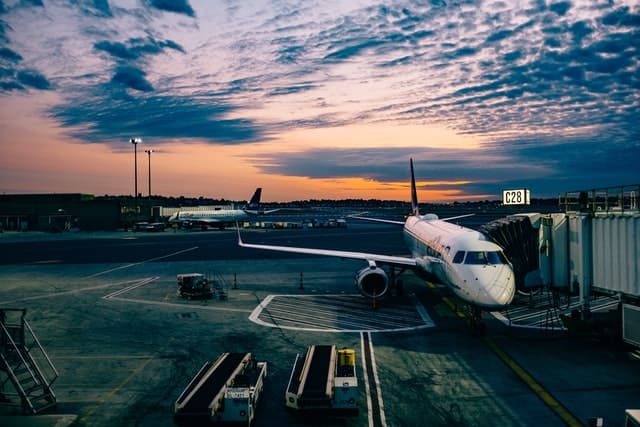
flying during lockdown

Flying During Lockdown

While many of my planned trips this year evaporated in the spring, there were still some trips I chose to take for business and personal reasons.  During a brief window in the summer when PCR tests weren’t required, I went to visit family and friends in the States.  Inside Europe I managed short trips to Croatia, Mallorca, and Andorra.  I did all this on my US passport, despite the alleged “American ban” in Europe, and even without my French carte de séjour.  But I still had a final business trip on the calendar for 2020: Salzburg in November.

As you do when traveling in Europe these days, I was checking the ReOpen EU site regularly, to see what new regulations were in place.  I don’t remember exactly when I found out I was going to need to take the dreaded PCR test, but when I did, I immediately made an appointment at a lab in the 11th.  In early October the appointments were at least 2 weeks out and I needed a test that was done fewer than 72 hours before my arrival in Austria, in early November.  I managed to get an appointment for the right day and time and I showed up to a virtually empty clinic.

COVID-19 Testing

This was to be my third COVID-19 test.  The first had been at my doctor’s request during lockdown, when I described the flu-like symptoms I had earlier in the year.  The second had been before a summer trip to Croatia, when I thought they might ask for a test even though I was coming from France, not the US.  But those had been blood tests.  The PCR test was “invasive,” I had heard, but I hadn’t really read much more about it.

When I came to the clinic I was ushered right to a receptionist who verified my appointment and asked for my Carte Vitale.  Since the summer the French government had started fully covering the cost of Covid testing so I wasn’t asked for any money out of pocket.  After a few minutes I was handed a printout and some stickers which would ostensibly go to the lab with my swab.

Personne suivante,” came a calm voice from behind a mostly closed door.  I came in and sat down in the chair that she beckoned me towards.  She told me I would need to remove my mask, which I did.  She then asked if I had done this before.  I shook my head and she told me to sit back and relax and that it would not take long.

I assumed the pose that I normally do at my dentist’s.  Relaxed, head back, remembering that the person who is doing this does this all the time, professionally, and is not interested in hurting me.  For those of you who are unfamiliar with the PCR test, it involves sending a swab about three inches into your nose to grab some samples of upper respiratory mucus.  As you might guess, this is not a pleasant feeling.

This is not so much a question of pain as unpleasantness.  Your nerves in this area sound an alarm: what is this thing doing here?  When she had inserted the probe the entire way in she actually moved it around a bit, ostensibly to make sure she collected enough of a sample.  She saw me tighten up and after withdrawing it she waited a beat before asking if I was ready for the “next one.”

Then I realized she meant the other nostril.  Okay, I know what to expect this time.  I braced myself and a few moments later it was over.  I thanked her, got my stuff, and headed home.  I got the results by email the next day, which I then printed out so I could present it in Austria when I landed.

Arriving in Austria

As I said, the trip was originally planned for Salzburg, and had the trip occurred one week before that would have been fine.  But in the days leading up to the trip Austria announced a lockdown and this led to many hotels and Airbnbs closing their doors (as the government promised to make them mostly whole if they complied).  Not wanting to take a risk of being in Salzburg without a place to stay, I decided to improvise and go to another location where I knew I could stay, outside Vienna, close to where my colleague on this trip actually lives.  But there was an additional wrinkle.  Austria had asked for a 10-day quarantine on visitors, even those with a negative test.  I decided to chance it.  My trip was scheduled for 7 days and if they made me stay an additional 3 days in Austria, I wouldn’t fight them.  Though, my business involved me working in the same room as my colleague, so if they actually planned to enforce this quarantine, my trip would be pointless.

The flight was about 80% full and during the flight we filled out contact tracing paperwork (which they collected) as well as an “Entry and Transit Declaration” (which they did not collect).  This document asked for:

  • Name, Nationality, Date, and Country of Birth
  • Flight Details
  • Stays in the previous 10 days
  • Address in Austria for the next 10 days
  • Contact details

I was asked to sign and date this form, next to a declaration that said, “I hereby confirm that I will self-quarantine at home or in suitable accommodation for a period of ten days, that I will cover the costs of any such accommodation and that I will not leave home or this accommodation for the duration of the quarantine.”  The flight attendants said to keep this form on us and that we might be asked for it at anytime.  I considered that curious, as if the form were true, the only place I could be asked for it would be inside an isolated accommodation.

At the very bottom of the document it said, “The details provided here will be sent to the health authorities of the province where you will be staying for the next ten days and, at the end of this time, destroyed.”  So, this form was supposed to be turned into someone, not carried with me inside an isolated accommodation in case a police officer stopped by, who couldn’t possibly know I was staying there unless I had turned it in in the first place.

No matter, the main concern for the Austrians for those of us arriving was a valid PCR test.  They had military personnel, not customs agents, looking at our passport and PCR test.  Because of the perfunctory manner in which the soldier dealing with me looked at my paperwork, I realized he was looking for two things: a name match, and a valid 72-hour window.  That meant that anyone who wanted to forge up an official-looking test could easily do so.  There was no electronic scanner to verify that this was an actual lab which had administered an actual test.  It was a simple check of paperwork using the technology of 1920, not 2020.  He handed back my paperwork and my passport.

I then proceeded to the passport window.  Surely, I’ll be checked, I thought.  Vienna had just had a terrorist attack the previous week.  But no, the lady at the window was busy on her phone and just waved me through.  The Austrians didn’t care what my purpose was in their country or if I even had a valid purpose to be there.  They only worried if I had a valid PCR test, which I could easily have forged, it seems.  As has been the case for most of this year, I was watching biosecurity theater, and not even good theater at that.

“Lockdown” in Austria

A friend picked me up at the airport and we headed back to his place to have lunch.  As we walked into his apartment building I marveled at the people not wearing masks.  “Is there no mask mandate?” I queried.   “Not outdoors, that’s weird!” he said.  Indeed it is, I thought to myself, but felt like a kid on Christmas day just because I wouldn’t have to wear a mask outdoors all week.  We had had an outdoor mask mandate in France for some months now.

Later in the week I was walking around Vienna with another friend when I realized that pretty much all the shops were open and a lot of restaurants were offering takeaway service.  I tried to explain that in France “lockdown” meant I couldn’t leave my house without a permissible reason, that I could be stopped and asked to justify myself at any time, and all this was to take place within 1km of my house, outside of particular extenuating circumstances (although, just as in late spring, the French were not taking this seriously at all).  He wrinkled his nose.  “We had something like this back in the spring, but not now.”  While it seems that since my visit Austria has been put into a much stricter lockdown, I was happy to take the opportunity to, among other things, get my hair cut while I was there, as I didn’t know when I would have the opportunity again in France.

Coming Home

When I came back home to France I presented my passport at the border.  The agent scanned it and after some time my linked carte de séjour showed up digitally on his screen and he waved me through.  No tests, no quarantine, and not even any paperwork pretending to enforce either.

So, traveling during lockdown?  If you’re worried about how to do it, don’t (the authorities clearly have no idea what they’re doing).  Just have your paperwork in order and be ready to be patient and smile.

Photo by Ashim D’Silva on Unsplash

TAIP is 100% reader-supported through tipping. If you want to leave us a tip of any amount it would be highly appreciated. These tips help support our efforts to keep TAIP an ad-free environment. Just as at a cafe, the tips are split evenly among the team.
passport pages

Traveling Without My French Resident Card

So in an earlier post I shared that I had been pickpocketed late last year and hence no longer had my physical four-year carte de séjour, which was perhaps the hardest-earned French document in my possession.  In that same article I noted that it really wasn’t such an important document in terms of daily life in France, and after this most recent theft, I had a number of trips in which an EU residence card had no relevance: visits to Australia, New Zealand, Singapore, the UK, Italy, then Bulgaria.  However, then a little thing called lockdown happened and when we were finally deconfined, the EU residence card took on a new meaning.  I knew in the back of my mind that I should have some kind of replacement document, but knowing that I was putting in for my ten-year card quite soon led me to rely on my confidence in how the system worked and my inherent knowledge of and patience with French immigration.

First Flight Back

The end of July saw me at the Aer Lingus counter in Chicago, following a whirlwind three-week trip to the US which I took because of a convergence of very low airfares and the possibility of doing some work with a client as well as on one of my business projects.  I’d also get some family time.  I was tired, but the accomplished-a-lot-and-feeling-good kind of tired.  The agent at the counter asked for my passport and then she asked if I had residence in France.  I said that I did and handed her a photocopy of my residence card.  She didn’t really know her way around it so I pointed to the expiration date, which is in September of next year.  She nodded, but slowly.  A colleague hovered nearby.  “No way a photocopy is good enough,” he said in a voice probably intended to be low enough that I couldn’t hear, but I did.  “Legit, I think he needs to have the actual card.”  She seemed swayed by this and asked me to wait while she “checked on something” (read: go ask my boss).  She came out after a few minutes during which time I continued to smile and look composed.  She didn’t seem to look too dire when she came back, but wanted a bit more context.

“I understand where you’re coming from,” I said, “but here’s the police report noting it was stolen, and obviously since lockdown I haven’t gotten an appointment for a replacement.”  I smiled and simply gave the attitude that this was not a problem at all.  I live in France, I lost my card, leave this to the French.  For their part, an airline that incorrectly transports someone without entry rights has to bear the cost of repatriation, so she was not being unreasonable in pushing back a bit on me, but the fact that she didn’t really put up a fight was an indication of something I would continue to see: a willingness of those to be “understanding” to travelers in this time period.

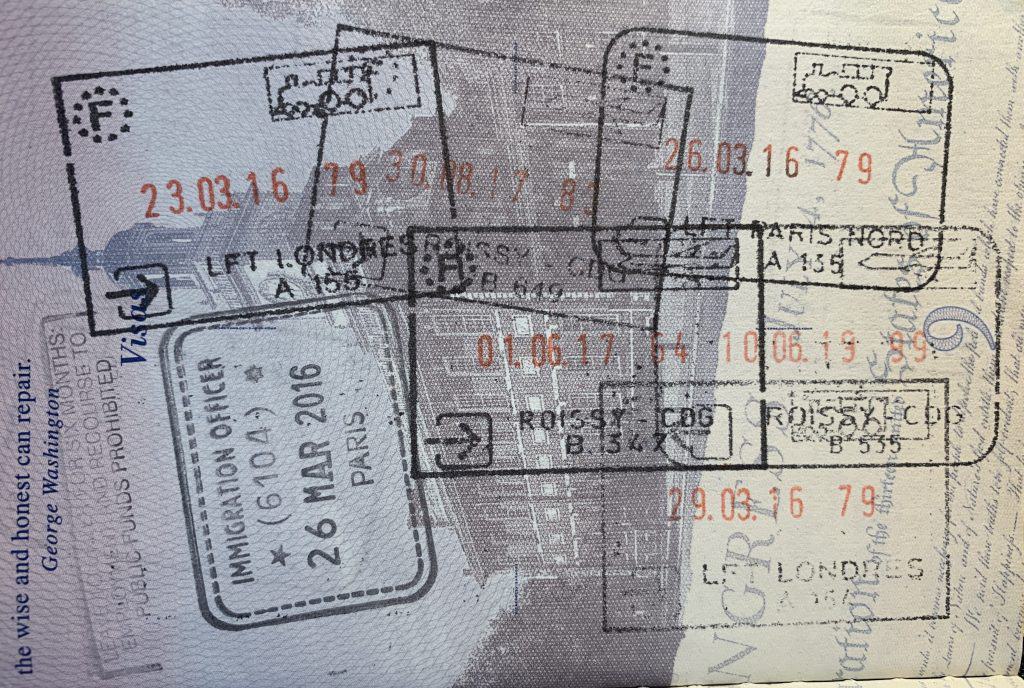
Landing in Dublin turned out to be no big deal, as this was an inbound EU flight so I was just able to do a simple transfer within the airport.  I wasn’t forced out through customs as I had been on the way into the US.  Next stop: the French border.  I handed over my dark blue passport.  The border policeman’s eyebrow immediately flicked up as he saw the emblem of the eagle which grasped olive branches and arrows in its claws.  He assumed English and asked: “Why are you visiting France?”  “J’habite ici,” I smiled and answered in French.  “Ah,” he said, and asked for my residence card.  “Malheuresement…” I explained that I had been pickpocketed and handed him copies of the police report and a copy of the residence card.  He frowned.  He continued in French, asking why I had not gone to get a new card (he noted that the police report was dated November of last year).  I told him I had been traveling, and then afterwards there had been lockdown.  He pointed out that there had been deconfinement and I countered, smiling and polite, that it was hard to get an appointment (I knew from friends; I hadn’t actually tried myself).  He looked at some colleagues who had been obviously listening in.  They shrugged.  He flipped to an already crowded page and stamped.  “Merci; bonne journée,” I smiled.  No documents?  No problem.

Not asked for?  The contact tracing form that Aer Lingus insisted we fill out before arrival.

The Croatian Question

I had planned to do some work in Salzburg with a client in August when an opportunity came up for us to do the work in Croatia instead.  Salzburg is still on my list to visit, but summer on the Adriatic is hard to beat.  Croatia was one of the countries that was “open” to Americans with a valid negative Covid test within 48 hours of arrival and proof of accommodation.  But, would they treat me as an American citizen or as an EU resident?  Surely, I couldn’t use the photocopy again?  Should I get a Covid test just in case they decide to treat me like an American?  Life continued on in Paris and a few days before the flight I decided to wander down to the Paris Plages to get one of the free tests they were giving out (the blood test used a pinprick and a few drops, with results in 15 minutes, the PCR test had a minimum 5 day waiting period for results I opted for the quick result blood test).  The philosophy I have with French administration (always be prepared for everything they might ask for) guided me and while the negative test result printout I was handed didn’t look as “official” as I would like, I felt it would satisfy the Croats.

It was a fairly full flight to Zagreb (unlike domestic US flights, there seems to be zero insistence on the vacant middle seat) and I was one of the first off the plane and hence one of the first in line for passport checks.  When I handed over the American passport he asked where I had come from.  “Paris,” I answered.  “Transiting?”  “No, I live there.”  “Ah, where is your residence card?”  I handed him the photocopy of my residence card.  His face betrayed skepticism.  “It was stolen, here’s the police report.”  I handed it over to him.  I didn’t know if he could read French but his eye caught the filing date: “This was in November.”  “Yes, and we had lockdown so I didn’t get a replacement.”  He looked at everything again to satisfy himself, it seemed, then started flipping my passport pages to find a place to stamp me through.  He handed me a piece of paper with contact information for all the places I could get tested if I wanted.  No demand to self-isolate.

Not asked for?  Proof of accommodation, negative covid test, or contact tracing form.

Coming Home to France

Before March 2020, when I came home to France through passport control, the agents would scan my passport and lazily stamp it, usually while talking to their colleague.  They didn’t ask if I was a resident, because they didn’t care.  When I presented that passport, they assumed I was a tourist and just stamped me through.  I could have always bypassed this process by handing them a resident card along with my passport.  This would mean my passport would not be stamped.  But I never bothered with this.

When I handed my passport to the border agent his eyes flicked up at me as he perceived the dark blue US book.  He scanned it and after looking at his screen for a moment, handed it back to me.  I gave the usual, “Merci; bonne journée,” and walked through.

The only way he would have handed my passport back to me without stamping it?  If the record he was looking at on my screen indicated that I had a legal carte de séjour, and hence was a resident of France.  No need to stamp the passport of someone returning home.  Had it always been this way and the border agents just assumed if I didn’t hand them my card I was just a tourist, and they didn’t look any further at my record?  Or is this a new level of digitization that’s been achieved by the French, something we’ve seen a lot of during Macron’s tenure?

Either way, I was home, and it was my fastest way through yet.

Not asked for?  Carte de séjour.

I’m not saying that you should, as I have, push your luck.  Next week I’m going to stop putting it off and get a récépissé which will serve as a temporary ID until I get the appointment for my ten-year card.  What I am saying is if you don’t feel like you’ve gotten everything just so during this period of travel, don’t let that deter you.  A ready smile, a good attitude, a fair number of documents, and a plausible explanation might just see you through.

The photo is one of my passport pages.  As you can see, the French don’t really care whether there’s “room” for a new stamp. 🙂

TAIP is 100% reader-supported through tipping. If you want to leave us a tip of any amount it would be highly appreciated. These tips help support our efforts to keep TAIP an ad-free environment. Just as at a cafe, the tips are split evenly among the team.

My First Flight Since Lockdown (and Ten Things I Learned)

“You are?” my European friends responded, bug-eyed, to my disclosure that I was flying to America this week.  They had been watching CNN or some other similar network, in which the impression was being given that the country was burning to the ground a la Mad Max.  I knew better, and dodged the subject: “Well, the flights are really cheap, to be honest, and I can also do some in-person work for a client.”  Both reasons were true, but to be honest, the idea of flying post lockdown seemed purely theoretical to me until it actually happened today.

I arrived back in Paris the day before lockdown in March of this year.  I had cut short a business/ski trip in Bulgaria under advice from friends, though by Monday night, as I arrived back into Paris with all the shops in the airport already closed, it looked like wisdom.  Unbeknownst to any of us who came back that night or in the days after, we would not get to leave the country again for months, and even our daily trips out of our homes would be curtailed with the strange experience for those used to living in free societies: if stopped, we were expected to have “our papers” on us, explaining what we were doing, and why we were doing it, with consequences for “incorrect” answers.

I was delighted when confinement in Paris ended, almost a month ago now, and most of the city is quite “normal,” whatever that word means.  Masks are only really required on public transportation, and most Parisians comply, but out on the street, a dwindling minority voluntarily wears them even when not required by law.

My first attempted flight purchase for this trip had been abortive, with Turkish Airlines.  Turkish had been selling “ghost flights,” flights they had never intended to run but were happy to collect revenues for.  In fact, when I told a frequent flier friend about the ticket, he sounded dismayed. “Turkish.  I’m not sure they will actually honor that flight.”  Sure enough, they didn’t and two weeks after I had booked that flight and two weeks before I was supposed to fly, I was told that Turkish had cancelled my flight and yes, it might take 2-8 weeks to get a refund.  Chagrined that I was being used to help finance the airline’s working capital (yes, things are that bad) I was happy to find a comparably priced Aer Lingus ticket, though I had to shift my dates of travel slightly to make it work.  First rule of this current phase of travel: flights you buy might not actually happen.  Be prepared; stay flexible.

I had chosen a mid-morning flight out of Charles de Gaulle, but the terminal felt as though it was either very early in the morning or very late at night, and in some strange circumstance.  Almost every single shop was closed, everyone was masked, and there was no rush, no stress, no bustle.  

I made my way to Terminal 2A, which is not where Aer Lingus normally operates out of, but they had helpfully told me by email a couple of days before not to go to Terminal 1.  Second rule of this current phase of travel: pay extra attention to email alerts telling you where to go and what to do; it can be the difference between making and missing your flight.

I stood in a “socially distant” queue to check in, though luggage tends to naturally space us.  When I got to the check-in desk I slid my passport under the now ubiquitous plexiglass.  The agent took my luggage, handed me my boarding pass, and then asked me if I had filled out the “Covid form.”  Because she asked in such a nonchalant tone my brain didn’t go to red alert.  “No,” I answered.  “If you can wait here for my colleague, she will bring you a copy.”  I turned to my right and saw a small queue developing of other similarly clueless travelers.  Before too long her colleague did return with paperwork specifically from the government of the Republic of Ireland.  The form was intended to help with contact tracing, but for transiting passengers like myself, less information was needed.  Third rule of this current phase of travel: be prepared for extra paperwork that may be country-specific.  Be patient and don’t panic when confronted with something you didn’t hear about ahead of time.

Ireland

When I arrived in Dublin this morning I wasn’t permitted to stay in the airport and follow the signs to “connecting flights” but was directed to the border and airport exit where I turned in my form and got a stamp in my passport for my shortest stay in Ireland ever.  “Sorry I’m not staying,” I smiled.  “Next time,” she nodded.  Fourth rule of this current phase of travel: be prepared to have to “exit” the airport, even on a layover, and go through security again, and don’t forget to keep it snappy while doing so: there’s no guarantee they’ll hold the flight while you’re taking your time.

I left through baggage claim and went upstairs to departures and, like all the others on my flight who were continuing on to destinations after Dublin, had the great pleasure of going through security a second time, but this time with an Irish accent.  

I looked up at the screen and saw that I would get a gate number after passing through US Customs.  Ireland, like Canada, has a US Customs section which pre-clears incoming passengers to the US, allowing them to skip the line when they land.  There are always random additional security searches, but with so few passengers traveling to the US, your chances of being one of the random searches increase dramatically.  My lucky number came up and as I was unpacking my carry-ons for the third time today (there’s an additional security screening at the US border in these countries) I was told to follow some of the employees to a secluded part of what was already a ghostly reception area.  They made me turn on my laptops and ran bomb residue checks on my hands and almost every part of all my bags.  

Having passed my third security screening of the day, it seems that the authorities of three different countries, France, Ireland, and the United States, were satisfied that I was not a malefactor.  If you think about it, this makes sense.  At a time when so few people are traveling, it might be the perfect time to attempt an act of terror.  Fifth rule of this current phase of travel: each country you pass through on your trip may make you do additional screening that has nothing to do with your physical health.  Stay patient and stoic through the process.

Mostly Empty Plane

As we boarded the A330 for our transatlantic flight, the flight attendants told us that we could sit anywhere we wanted.  There would only be 39 souls on a flight that could seat 340.  But as we got closer to departure the purser announced that the seats had been allocated by the computer based on flight load, and there was a method to the random assignments: we needed to sit where we were assigned for takeoff and landing.  In between those times we could sit where we wanted in between.  I was one of the last ones to board and watched most of the plane walk past me to the back, where they were originally seated.  Sixth rule of this current phase of travel: be prepared to have a lot of space to yourself.  On the Dublin-Chicago segment I had a 4-seat row to myself, with no one sitting in the row in front of me nor in the three rows of window seats to my left.

I have a friend who works at Emirates who has kept me filled in on the lean and bare-bones conditions of the flights they are still running.  Hence, I was prepared to be tossed a box of cold food then watch the flight attendants disappear until right before landing.  This wasn’t the case.  Not only did we have a beverage service, but we had hot food (“Would you like chicken or beef?”), followed by tea and coffee service, followed by ice cream service.  Then, hot calzones and another beverage service before we landed!  Cheers, Aer Lingus.  Seventh rule of this current phase of travel: in-flight service might be the same.  Enjoy!

Masks

What wasn’t the same was the mask requirement.  We were told that we had to wear them the whole flight, but obviously we had to take them off to eat.  Since we were in an enclosed space, using recycled, non-medically-treated air for all seven hours of the flight, taking off the mask to eat would have been all the virus needed to get from one of us to all of us.  So, it’s a bit of security theater, like taking off your shoes when going through security, but I understand the airlines probably wouldn’t be allowed to fly if they didn’t participate in this charade.

Nevertheless, some of us lingered over our meal a little longer, enjoyed the “authorized” masklessness, but after the service the flight attendants were really only there if you hit a call button, so you could feel free to be as masked or unmasked as you wanted to.  I have only worn a mask when required to in Paris, which is to say, on public transportation, so these two flights were the longest I’ve ever worn a mask for any reason in my life, and that might be a challenge for some.  Eighth rule of this current phase of travel: be prepared to wear a mask the entire time you are on the plane, and perhaps when you are in the airport as well.  Make sure it’s a comfortable one.

Stateside

When we landed in Chicago I realized that the pre-clearance I had gone through in Ireland wasn’t entirely valid because of the additional measures being taken in the US.  We had to turn in a CDC form, similar in quality to the one that I had to turn in on arrival in Ireland.  However, it seems half of the passengers of our flight were given this CDC form at the gate and the rest of us grabbed one of the photocopies in the customs area when we landed.  

We then got into another line in which we were orally questioned as to whether we felt any symptoms or had been to China, Iran, or Brazil in the last 14 days.  After answering no to all of the above I was sent to another line where my temperature was taken contact-free (I was 97.5 F – the plane must have chilled me) and again asked where I had been in the last 14 days, specifically if I had been to one of the three aforementioned countries.  When I answered in the negative I was given a handout and told that I should “self-quarantine for 14 days.”  I smiled, nodded, and went to get my baggage.  Ninth rule of this current phase of travel: You might get to go through customs for the same country multiple times.  Bear with it.

Chicago isn’t my final destination, but flights to destinations that are not major hubs are two to three times more expensive at the moment, hence I’m on a DIY layover, in which I self-transfer to the domestic airport in Chicago, Midway, and take a $50 Southwest flight on to Kansas City.  Tenth rule of this current phase of travel: be prepared for a comedic sequence of planes, trains, and automobiles as none of the regular transfer/conveniences can be reliably counted on.  Don’t assume; call ahead.

What’s Next?

How long will this state of affairs last?  As you should know by now, nobody knows, and anyone who claims to know is just guessing.  But what is certain is that the chilling effect on travel as a whole is rippling out worldwide.  Those closed shops and empty queues and empty seats are harbingers of an untold disaster much worse than even the most hysterical headlines tell us.  In one way the disaster is economic, yes, but there’s a psychological toll as well which can paralyze people from even considering travel. 

I remember being told some time ago about research that showed people were more “happy” before and after a vacation: before because of the anticipation, after because of the revisiting of the memories.  In those pre-covid times we seemed unable to be present and savor the vacation while we were on it at least as much as we anticipated or revisited it.  But we are now in a time in which we can’t anticipate “normal” (again, whatever that term means) travel.  All we can do is plan lightly and curb our expectations.  If we can adopt the right attitude when we travel in the weeks and months ahead, not only can we start to create the necessary momentum to once again give our fellow friends and humans the confidence and desire to travel, but we can also take a moment to be grateful for the privilege of traveling when so much of the world is still locked down.  As we do so, we might recapture, however cautiously, however tentatively, that joy we take when seeing new places and old faces.

Photo was taken halfway through my flight from Dublin to Chicago.

This article also appeared on Dispatches Europe.

TAIP is 100% reader-supported through tipping. If you want to leave us a tip of any amount it would be highly appreciated. These tips help support our efforts to keep TAIP an ad-free environment. Just as at a cafe, the tips are split evenly among the team.