a pond in giverny France with water lilies and tress

Best Day Trips from Paris for Summer 2025

This may be an unpopular opinion, but I love Paris in the summer. Spring gets all the credit in books, poetry, and songs, but Paris in the summertime holds such a special place in my heart. 

Is it hot? Yes. Is it kind of miserable in the métro and on the bus? Of course. But, if you commit to walking wherever you can, have a can of spray mist for face on hand, and some tissues to wipe the sweat off your upper lip (or is that just me?), it can be really enjoyable.

Now, that’s not to say I blame the Parisians who choose to leave every August — I was one of them at one time. Visitors who dislike the heat or have visited Paris before are also likely in need of some ideas for places to go and things to see. Or, maybe a few of you reading are local expats with friends in town, hoping to show them more than just the capital.

Luckily, one of the best things about Paris is how easy it is to escape from, even if just for the day. From art and history to forested trails or a fun champagne tasting, I tailored this guide to the best day trips from Paris for summer travelers looking for a quick and manageable but memorable getaway.

I’ve separated the list into “true” day trips that are under two hours away from Paris and others that are a bit further, but definitely worth the extra effort if you’re up for an early start.

True Day Trips from Paris (under 2 Hours)

Giverny to see Monet’s Gardens

This is one of my most-visited day trips. Just over one hour away, Giverny is the perfect summer day trip from Paris for art lovers and gardening enthusiasts. The world-famous water lilies, Japanese bridge, and Monet’s charming little house really do come to life between late spring and mid-July if you can get there.

Trains run regularly from Gare Saint-Lazare to Vernon, where you’ll find an easy shuttle to the gardens.

Fontainebleau to visit the chateau and forest

If you’ve seen Versailles already, visit Fontainebleau instead. The castle and grounds are often overshadowed by its more-famous counterpart, but I actually prefer it — especially in the busy summer months.

Fontainebleau is never as crowded, and the surrounding forest is shaded and breezy in the summer heat. It’s a quick train ride from Gare de Lyon, and the town is very walkable and relaxed. Perfect for a quiet day of exploring.

Provins to step back into medieval times

My husband and I love this one — I have so many good memories from a long weekend we took there once to celebrate an anniversary. It’s also quiet and relaxed, but the medieval town really comes alive in the summer with regular festivals, falconry shows (!!), and craft fairs.

Only 90 minutes from Paris by train, it’s also a UNESCO World Heritage site that has somehow maintained its “hidden gem” vibe. Be sure to give yourself enough time to wander around and soak in the medieval architecture.

Reims to sip on authentic champagne

If your idea of the perfect summer afternoon involves sipping cold champagne in a cellar followed by lunch in the sun, we can be friends. And we can definitely take a day trip to Reims together to do just that.

Just 45 minutes by TGV, you can tour famous houses like Tittinger or Veuve Clicquot, or you can head to my favorite, Pommery. Head to the cathedral next, and you can be back in Paris before dinner.

Chartres to admire the cathedral and a light show

Chartres is best known for its cathedral — it boasts incredible stained glass windows and Gothic architecture — but during the summer months, you’ll be treated to a stunning son et lumière (sound and light) show that gets projected on its façade each night.

During the day? You can enjoy a riverside picnic, a cool drink in a quiet café, or simply wander around and soak up the small French town charm, just over an hour away by train.

Auvers-sur-Oise to see where Van Gogh lived

So many famous artists lived in France at some point, and Vincent Van Gogh is one of them. He lived out the last few months of his life in Auvres-sur-Oise, and the area clearly inspired his final paintings.

The peaceful village is less than an hour away from Paris, where you can visit his final resting place, tour the Auberge Ravoux (the inn he lived and ate in), and wander the countryside that clearly captured his imagination.

Versailles, but in the summer

Just because I like Fontainebleau doesn’t mean I’m skipping Versailles, another one of my favorites, especially when it’s warm enough to fully explore the gardens and grounds. Choose your day wisely as it’s not smart to go during a canicule (heat wave), but there are plenty of shaded spots to take breaks throughout the day. 

Rent a bike to explore with ease, lie out a picnic in the grass, or admire the musical fountains. You could even rent a rowboat — I’ve done it a few times and it was so fun (and offered a great photo op). It’s only a 45-minute RER ride from central Paris, too.

Longer Day Trips from Paris (if You’re Motivated)

Étretat for some coastal cliffs and sea air

If you’re hoping to trade the Seine for the sea, Étretat in Normandy boasts white chalk cliffs and turquoise water that makes it worth the 2.5-hour trek. This one is actually still on my list! I can’t wait to visit one day, and have heard amazing things about the cliff-side hiking trails and pebble beaches.

You’ll need to take a train to Le Havre and then a shuttle or taxi to get all the way there, but the cool breeze on a hot summer day makes the effort well worth it.

Deauville for something a little more glamorous

One of the families I used to nanny for had a second home in Deauville and I never really understood just how chic the little town is until they shared photos of said home. It reminded me of the seaside town I lived in before moving to France — Newport, Rhode Island. If you know, you know that Deauville has the same vibe. Almost like vintage Riviera vibes.

Only two hours from Paris and teeming with striped umbrellas, seafood restaurants, and a well-known boardwalk to stroll along, Deauville also hosts summer festivals and horse races. If you want to get in touch with your inner European prepster, head here.

Tips for Summer Travel from Paris

  • Book trains ahead for the best prices and seat options, especially on weekends. Don’t sleep on the OUIGO TGV!
  • Remember to pack sunscreen, refillable water bottles, and comfortable walking shoes. Choose stylish ones if you don’t want to scream, I’m an American tourist.
  • Try to leave early to maximize your time. Many towns come alive before lunch, but don’t forget the summer daylight lingers late in France — some nights in late June and early July, the sun doesn’t go down until after 9pm.

Whether you want to explore nature, learn about the history of France, or sample some of its world-famous champagne, these day trips from Paris are the best way to enjoy summer in France.

Did I miss anything?

Photo by Gregoire Baron on Unsplash

Did you enjoy this article? TAIP is 100% reader-supported through tipping. If you want to leave us a tip of any amount it would be highly appreciated.  These tips help support our efforts to keep TAIP an ad-free environment. Just like at a cafe, the tips are split evenly among the team. 
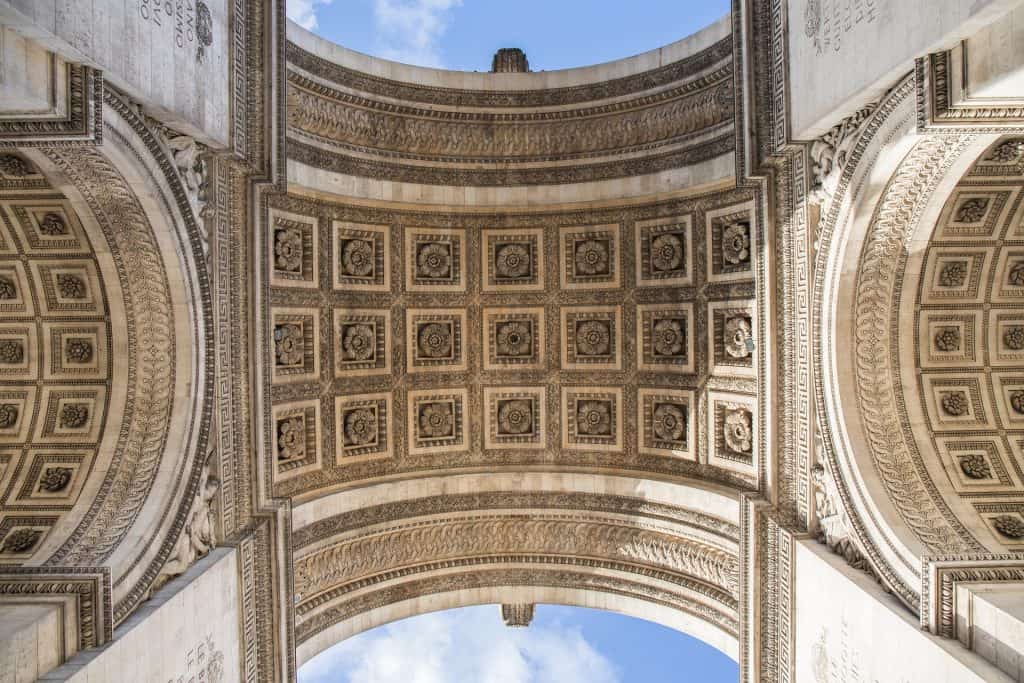
First Visit to Paris: Arc de Triomphe

I sometimes share with people that I moved to Paris on eight total days of evidence: three days in 2009, two days in 2010, and three days in 2012.  It wasn’t until the third trip that I had any truly developed idea of possibly ever living in this city, and was thus, on the previous trips, engaged in the typical “see all the things” behavior of the tourist afraid he/she is never coming back.  But since living here I’ve been asked countless times for my recommendations, not just for monuments and museums, but for restaurants, secret places, coffee shops, etc.  I’ve written down all these places on a list that I would have handed to Stephen back in 2009 with a note at the top which would have read: “I can’t promise you two more visits, but I can promise you that you’ll remember this one a lot more if you slow down.”  In this occasional series I’ll share the places on that list with you.

The Arc de Triomphe

Yes, I know it’s touristy.  But it’s important for so many reasons.  It lies along something called the Axis of History, which runs from the Grande Arche de la Défense, built in 1989 for the bicentennial of the wretched Revolution, all the way to the Arch de la Carrousel, which was also built by Napoleon, but is topped by statuary commemorating the Bourbon Restoration.  This axis, which also runs through the formerly blood-ridden square at Place de la Concorde and ends at the Pyramid in front of the Louvre, encapsulates centuries of French history.  On a clear day, as long as that terrible Ferris wheel is not at the entrance of the Tuileries, you can easily see all the way to the Arc de Triomphe from the Louvre-side entrance to the gardens.

The Arc(h), built to handle the monumental hubris and ego of Napoleon, himself being crowned in one of the reliefs on its front side, was not completed in his lifetime.  Indeed, it was only completed under the reign of Louis Philippe.  Anyone familiar with Napoleon can’t help but smile at the idea of a giant monument to what is arguably the greatest military victory of all time (Austerlitz, in 1805) being completed decades after the “empire” declared by Napoleon was gone and defeated.  Indeed, for a while at least, thanks to the Congress of Vienna and Count Metternich, Europe was as it was, with no marauding French armies bringing “democracy” at the point of a bayonet to all of Europe.

The Arc became a military monument and it now has the Tomb of the Unknown Soldier beneath it.  It is Ground Zero for Armistice Day celebrations, held on November 11th with great pomp and solemnity (arrive early in the morning if you want a seat on the bleachers).  Americans who never experienced Nazi invasion of our land will find it hard to imagine those same Nazis marching around this monument, celebrating the surrender of the city, to the despair of the residents, who did not know when they would have a free city once again.

It’s also a great vantage point to observe Haussmannian architecture and the extent of the bulldozing that had to take place in order to bring about Napoleon III’s vision of Paris.  The twelve roads that terminate in this roundabout of Chevy Chase’s nightmares create a graceful chaos, and will provide you with an opportunity to see one of the rare times that incoming traffic to a roundabout has the right of way.

It’s definitely worth it to pay to go to the top of the Arc, not because it has the best view of Paris (that’s at the top of the Montparnasse Tower) but because there’s a small but helpful museum before you walk up the last few stairs to the terrace that documents the building and history of the Arc.

Practical Information

It’s best seen early in the morning when you can have it to yourself, before all the selfie sticks show up.  You access it by a subterranean tunnel which you’ll find just a few steps forward from the Qatari embassy on the Champs.  If you see a line in that tunnel, it’s to buy tickets to go to the top, so if you don’t intend to do that, just follow alongside the line until it goes towards a ticket booth on the left and you continue on, on their right, and ascend the steps to street level.

It’s just as lovely, graceful, and imposing at night as in the evening, and at 18h30 every evening the flame is rekindled by one of the many Veterans Associations in France, and it’s worth seeing if you’ve never done so.

If you’re staying on the other side of the city, but near an RER A stop, you can turbo boost your way to the Etoile stop in roughly 5-10 minutes using it instead of Line 1.  Same cost, different method.

What are your favorite things about this monument?  Share in the comments.

Image by Anton Lovász from Pixabay

TAIP is 100% reader-supported through tipping. If you want to leave us a tip of any amount it would be highly appreciated. These tips help support our efforts to keep TAIP an ad-free environment. Just as at a cafe, the tips are split evenly among the team.

Don’t Buy the Paris Pass

I really think that Americans in particular don’t leave enough unscheduled, unstructured “white space” in their European travels.  They run around, convinced that they will never return, and so they have to see everything.  I know.  I get it.  That was me once upon a time as well.  But while that allows you to mentally “check off” the big sites, it doesn’t really allow you to enjoy Europe and Paris the way these destinations are truly inviting you to enjoy them.  Here’s a sample of said freneticism, from an email I received from someone planning a trip:

Upon our arrival we are spending most of the day on the 26th at the Louvre.  On the 27th we are traveling to Versailles.  On the morning of the 28th I would love to accomplish two things, a quick tour of the catacombs and then a stroll in the areas of the fashion houses.  Is that at all possible to accomplish both?

I had only been in Paris a few months at the time, and I already knew that her itinerary was problematic, to say the least.  The lady had prefaced this by saying she had waited 28 years to come to Paris.  And this was her plan?  Alas she refused to take my advice to cut one or more things from her crazy itinerary.

This “do all the things!” trend seems to be endemic to Americans.  They want to see everything and are overwhelmed with advice and information (half of it terrible) from friends, family, blogs, and TripAdvisor.  If this attitude sounds familiar (no need to raise your hand!) the key is to focus and craft a schedule with the really important things you hope to do.  Add “white space” to the schedule: time to just relax and enjoy the city and the magic moments that can happen, instead of rushing around to see “the next thing.”

This leisured manner of sightseeing, that leads to lasting memories instead of a confused blur, is something you are unlikely to do with the Paris Pass, something designed for the FOMO-obsessed visitor who has to see everything.  So, to underline my perspective, here are four reasons you shouldn’t drop hundreds of euros on this tourist trap of a product.

1.  It’s overpriced.  As with most “deals,” you spend your time trying to knock out the big-ticket items so you can prove to yourself you got a deal, even if you have only the vaguest interest in said item.  Do you think they bundled all this together to save you money?  The Pass is about convenience, and they want to get paid for that.  Anyone who actually saved money using this thing only did so by running around the city at top speed.

2.  The bundled Museum Pass isn’t for everyone.  Yes, I’m an art lover and in a past life I gave private tours of the Orsay and the Louvre, but plenty of visitors are not that obsessed with art and museums, and are happy to just go to a few of the museums in Paris; they don’t want the weight of obligation (or the rushed timeline) that having a “pass” puts on you.

3.  You won’t use the metro nearly as much as you think.  This comes with an all-you-can-use Metro pass for a set number of days, which is a huge waste of money.  People have no idea that Paris is so walkable and beautiful to walk.  If you’ve walked enough, you can opt for the shared Velib bikes or the ubiquitous electric scooters.  If and when you need to use the Metro, use an easily refillable Navigo Easy.  If you are going to be here for more than a week, and plan to head out of Zones 1 and 2 a lot (Versailles, Disneyland, Fontainebleau, etc.) starting on a Sunday, Monday, or Tuesday, stop in and get a Navigo Decouverte.

4.  You will be stressed, not aided, by their 120-page book.  They boast entrance into places that are too varied and uneven in their characters to be “must-sees” for every single guest.  Even one of my favorite Parisian buildings (and included in the Paris Pass), the Garnier Opera House, is not a “must-see” on your first visit to Paris.

So, save yourself time, money, and stress by NOT buying the Paris Pass.  it’s for people interested in frantically running around the city so they can later tell people what a “deal” they got by buying some overpriced card, or for people who think Rick Steves knows what he’s talking about.  If you’re interested in taking this city on at a reasonable pace, with white space sprinkled throughout the day, and are willing to not see “all the things,” you should avoid the Paris Pass (and its advocates).  Paris is a place to be experienced, not a checklist to be achieved.

Did you enjoy this article? TAIP is 100% reader-supported through tipping. If you want to leave us a tip of any amount it would be highly appreciated. These tips help support our efforts to keep TAIP an ad-free environment. Just as at a cafe, the tips are split evenly among the team.

Ars et Metiers Museum Paris

Making the most of Free Museum Sundays

A large number of museums in Paris are free on the first Sunday of the month.  Some budget-minded travelers know this and schedule a visit to Paris around such a date to knock out some museums for free.  Is this a good strategy?  Yes and No.

I’ve done over 20 Free Museum Sundays (as I call them) since I arrived in Paris, and I’ve come to the conclusion that whether you’re a local or a tourist, this day is great to use for short, targeted visits to the little-known museums that go under the radar for people on a Museum Pass rampage, and also don’t draw big crowds on the 1st Sunday of the month. Don’t use it to go to the Orsay or the Louvre.  Trust me on this.

You can find the list of the dozens of museums that are free here, but here are three suggestions that I can make for you that would be good uses of your time.

The Gustave Moreau Museum

Moreau was born in 1826 and lived during a period of great change in France following the 1st Napoleonic era.  His art draws on too many influences to neatly fit into a school that you might know, and as such is singular in appearance.  As I think upon his body of work now, some pieces are too unfinished to even be “impressionistic,” and yet some, like his Orpheus, which often hangs on the first floor of the Orsay (when it’s not out on loan) recalls the Academic style so favored by the Salon.

This marvelous 3-story house, with a lovely and elegant preserved staircase to take you to the top floor, is the perfect showcase for this unique artist.  Even a gentle wander should run you at least 30 minutes.  A true visit should run you 60-90 minutes.

The Eugene Delacroix House

Delacroix is probably best known for his Liberty Leading the People, an image that hangs in a gallery in the Louvre roughly 30 meters from a beautiful painting of St. Joan of Arc at the coronation of the Dauphin.  I point out to my guests that this is an example of a contradiction the French are comfortable with: two women of power one supporting the monarchy, another leading the French over the bodies of the defenders of the monarchy.  The two Frances (one Catholic and royalist, the other anticlerical and republican) are on display for you in that gallery, if you just give yourself some time to make the connection.

But even royalists like myself can appreciate Delacroix, especially for his famous Dante and Virgil in Hell (which also hangs in the same aforementioned gallery in the Louvre, not far from Gericault’s Raft of the Medusa) and also for the ongoing transformation and maturation in his work and technique.  This museum is much smaller than the Moreau museum, but features a lovely garden to rest in.  A quick run can be done in 30 minutes, but no need to rush.

Arts et Metiers

This museum is the largest of the three I’m recommending today, and will take at least 2 hours of your time to see properly.  I call it the “Nerds’ Museum” because it has all sorts of wonderful inventions and gadgets from many different eras in it (think everything from the first barometer to a Cray supercomputer), including the highlight: Foucault’s Pendulum.  In 1851 Foucault used this device to prove that the Earth rotates.  Additional good news?  Every Thursday the museum is also free from 18h00-21h30.  So you don’t even have to wait for the first of the month.

Paris has over 50 museums.  No better time than the beginning of a new year to start seeing some of them.

Did you enjoy this article? TAIP is 100% reader-supported through tipping. If you want to leave us a tip of any amount it would be highly appreciated. These tips help support our efforts to keep TAIP an ad-free environment. Just as at a cafe, the tips are split evenly among the team.

arc de triomphe paris

The Paris Museum Pass: Worth it?

One of the things I’ve come to appreciate about working with accountants and lawyers over the years is their most frequent response to what a layman would consider a fairly innocent and straightforward question: “It depends.”

That “it depends” has many possible follow-ups.  “It depends on what you want your tax exposure to be,” or “It depends what your long terms goals are,” etc.  The “it depends” for the Paris Museum Pass isn’t dependent on how much you like art, but rather on how quickly you like to see your art.

For those who want to see their art “efficiently” (which was me once upon a time), read on for why the Paris Museum Pass is for you.  For those who prefer to see their art slowly, don’t worry, I’ve still got some helpful suggestions for you.

You Get to Skip the Line

For some of the museums there is a special entrance just for pass holders the one at the Louvre is particularly skip-tacular.  If there’s one thing no traveler really enjoys, it’s standing in long lines to get into places.  Often this is down to poor planning as today so many places offer online booking and so many internet reviews tell people exactly when the lines get ridiculous.

It Covers Monuments and Museums that Are Short Visits

When people hear the word “Museum Pass” they may think of museums, but they don’t think of National Monuments be they the Arc de Triomphe or Sainte-Chapelle.  Both of those are excellent short visits (your Museum Pass gets you to the top of the Arc, one of the best views of the city) and can be accomplished in under 30 minutes, if you time your entrance well.  Separate admission to these two places alone goes a long way to covering the value of your Pass.

Then there’s a museum like the Orangerie, which has a decent permanent collection but a spectacular “custom-designed” collection of Monets, which you can fully appreciate within half an hour.  There’s also Petit Palais, which does have a magnificent permanent collection, and can be comfortably seen in 2-3 hours, and that’s even with a break in its lovely inner courtyard.

You Save $$$/€€€/£££

The Museum Pass allows you to get into the “biggies” (think Louvre + Orsay + Invalides) but also gets you into dozens of lovely and under-appreciated museums as well.  This is a testament to Paris itself, as a city like New York doesn’t have anything like it, despite having many wonderful museums.  The existence of such a pass in a city known for its territorial curators is almost unbelievable.  Someone herded all the art cats into a room and got them to agree on this idea, to the benefit of all of us.

For locals, the next best thing to the Museum Pass is Free Museum Sunday (the first Sunday of the month).  That’s when we get into almost all the museums for free (the Louvre is seasonally on that list).  Serious value seekers have been known to time their Museum Passes to expire the day before that Sunday and add one more day onto their museum binge.  However, it’s a very crowded day so consider using Free Museum Sunday as a day to circle back to places you might have already seen, or luxuriously use it as a way to go into a place, see one or two things, then leave.

It Doesn’t Commit or Obligate You

When you buy tickets ahead of time for particular days and times at specific museums, you sometimes feel trapped should you feel ill or like doing something else on the appointed day(s).  If you realize the true value of the Paris Museum Pass, plan the three or four visits upon which you will immediately recoup the cost: you will see each additional visit as extra gravy for your Parisian “meal” of culture.

But It Doesn’t Cover Every Place Worth Visiting

Three favorites of mine that are not covered by the Museum Pass are the Musee Marmottan Monet, on the edge of the 16th, the Caillebotte Estates in Yerres, and Monet’s place in Giverny.  This is to say nothing of the Museum of the Liberation of Paris, the newly opened Bourse de Commerce, or the (finally) re-opened Carnavalet Museum in the Marais, one of the very best museums in the city.  And, just like the best things in life, all three of those are free.

Photo by Marcos Pena Jr on Unsplash

Did you enjoy this article? TAIP is 100% reader-supported through tipping. If you want to leave us a tip of any amount it would be highly appreciated. These tips help support our efforts to keep TAIP an ad-free environment. Just as at a cafe, the tips are split evenly among the team.
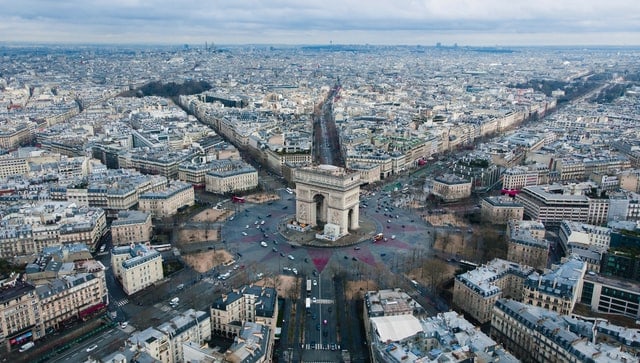
Paris in summer

August: Dead For Parisians, But Plenty Lively For Visitors

When I first came to Paris I was told that the city was deserted in August.  I bemusedly nodded my assent to the theory of a “group vacation” because, like most Americans, it was hard to conceive of the concept of a month-long vacation at the end of summer, much less a city-wide version of one.  But in many ways, it’s a self-fulfilling prophecy.

You come out of your flat in the morning to head to your patisserie and your morning bread fix.  But it’s closed.  So is your backup a street over.  And your third choice.  Your pharmacy is closed.  Your fruit market.  The gal who cuts your hair.  The guy who cuts your keys.  Yes, even the cobbler.  The gardien(ne) of your building (if you have one) is on the act too.  You start to ask yourself, “What the heck am I doing here?  I should probably go too!”  And just like that, many years ago, the August holiday was born.

What does all this mean for those visiting Paris for whom August is perfect for any number of reasons related to their personal and work lives?  Well, keep in mind that there are always two Parises: the tourist Paris and the working Paris.  There are major intersections between the two, like the Champs, the Tuileries, Rue Montorgueil, and the Luxembourg Gardens, to name a few.  With fewer Parisians in Paris in August, the tourists will have a bit more space to themselves, though they’ll hardly notice.  Yes, some restaurants and shops will be closed, but almost everything a visitor wants to see here will be open.

And, if you venture out to the less touristy parts of Paris, like Stalingrad or Montparnasse, you’ll find a subdued and sleepy atmosphere that will give you an entirely different impression than the heaving bustle that the city normally offers.

I maintain that the shoulder months of May and September are the best to see Paris for a number of reasons but the weather in August is still lovely, the sunsets are spectacular, and Versailles does water shows unavailable any other time of the year.

So come, and have the place to yourself.  If you want to see what I’m talking about, I don’t know if anything captures the languorous August mood (just as much for the mournful notes from Sidney Bechet as for the shots picked by Darius Khondji) better than the opening montage from Midnight in Paris.  

Photo by Rodrigo Kugnharski on Unsplash

Did you enjoy this article? TAIP is 100% reader-supported through tipping. If you want to leave us a tip of any amount it would be highly appreciated. These tips help support our efforts to keep TAIP an ad-free environment. Just as at a cafe, the tips are split evenly among the team.

paris metro

The Paris Metro: 6 Things To Keep In Mind

In any city in which there is a well-established mass-transit system there will be an enormous group of people going about their daily lives without clogging the streets with extra vehicles.  This makes sense for our planet, for their pocketbooks, and for our traffic sanity.

Paris has an excellent system of buses, trams, and trains when the dear people who operate them aren’t on strike.  Now, mind you, they are not often on strike, but that kind of interruption, along with train breakdowns, station closures, or just plain crowded carriages are things that you need to factor in when planning your travel in Paris.  There are a few other things you should keep in mind as well.

1.  Don’t overly rely on the Metro

Paris, after all, is a city that deserves to be walked.  The sights, sounds, and smells good and bad inform your experience, and sometimes tourists develop a point-to-point mentality of the Metro so that they get to know the cavernous (and not particularly attractive) underground of Paris and miss the lovely passages (alleys), rues (streets), and boulevards.  Don’t be overly reliant on it.

2.  Don’t expect lots of elevators and escalators

“Step-free access,” as it’s known, is still developing in the metro system, though it gets better and better every day.  The vast majority of stations have neither an elevator nor an escalator for your ascents or descents.  As stations get upgraded these are become less of a rarity, much to everyone’s relief, particularly parents with strollers or those in wheelchairs.

3.  Be aware of peak times

Some people say to completely avoid the Metro from 08h00-10h00 and from 16h00-19h00 and I understand why.  But if you’re visiting Paris it doesn’t make sense to force yourself to avoid the rhythms of our daily life here.  Make your plans and simply deal with the crowds if you need to be on the metro during those times.  You will get some appreciation for what we experience as Parisians and you will definitely be “immersed” in the Paris experience.  You’ll also push (or learn) your boundaries of comfort, and that’s always worth doing.

4.  Ask the staff

Don’t be afraid to ask the kind person at the desk for help.  Remember to always say, “S’il vous plait, parlez-vous anglais?”  They will usually say at least “a little” and you don’t need a discourse to get your answer, usually.  If the answer is “Non” try to explain using a metro map (always free) and using gestures.  You didn’t play all those games of Charade for nothing!

5.  Be yourself, but be watchful

You don’t need to turn into a paranoid person because of fear of pickpockets.  I remember my first visit to Barcelona, where I had been told that Las Ramblas was essentially a den of thieves.  After being ultra-paranoid my first day, because of this advice, hardly enjoying myself as I took in that walk down one of the quintessential streets of Barcelona, I remembered that my relevant documents and devices were not in places where they could be snatched off my person in broad daylight.

Instead of paranoia, opt for awareness.  We have thieves here, as does any major city, but you’re generally safe in most parts of Paris.  If you are keeping valuable items in your pockets, keep your hands in them at all times and try to stand in a place in which you have your back to the wall or a door so that no one can reach behind you without your seeing it.

6.  Get a good app

Paris is one of the cities featured in the amazing and free Citymapper app (available on iOS and Android), so use it instead of Google Maps to get many more options of travel, not just in the metro, but across multiple modes, like shared bikes, scooters, and rideshares.  If you are walking or biking you can also opt for “quiet/regular/fast” routes to adapt your journey to your mood and schedule.

Enjoy the convenience of the Metro which will whisk you around the City of Light significantly cheaper (and often faster) than private transport could ever dream of.  While our system is not as clean as Singapore’s nor are our trains as modern as London’s, the Paris Metro is a world-class system with almost smothering coverage of all 20 arrondissements. It is easily one of the best in the world for utility and price.

Photo by Anastasia Zhenina on Unsplash

Did you enjoy this article? TAIP is 100% reader-supported through tipping. If you want to leave us a tip of any amount it would be highly appreciated. These tips help support our efforts to keep TAIP an ad-free environment. Just as at a cafe, the tips are split evenly among the team.