
people walking past paintings in the Louvre, Paris

You Have to Make Your Life

Having to stand up for myself in a country where I’m trying to establish the rest of my life has been no easy feat. 

A thin layer of perspiration has formed and now permanently coats my face simply because I’m trying to work up the nerve to ask a follow-up question. 

Standing up for myself takes everything out of me. It takes all my guts. 

And yet, I still decide to get up every morning and do it again. And again. And again. 

When I’m lying on my bed at night, thinking about what little ground I’ve covered, yet how much energy I’ve used to defend my honor, I’m struck, asking myself the question: When does one learn to do this? When does one learn how to stand up for themselves? Because I think I might’ve missed the memo.

As children, it’s our parents’ job to be our biggest advocate. Defend our rights. Speak to our needs.

During adolescence, we often wade in a state of constant humiliation, so much so that it feels like we’re drowning in it. We’re barely hanging on. Dogging-paddling to stay afloat. We couldn’t care less about fighting for our rights, what we deserve, we’re living day-by-day and our friends are our safety floats.

Then one day we wake up and come to the jarring realization that we’re the adults now. It seems as if we’ve just been living as passerbys to our own lives until suddenly we’re thrown into the wild, taught to fight it out, and see if we come out alive. 

In adulthood we’re confronted with the desire to carve out a life of our own. And if you want to do that — to make your own life — it means getting used to confrontation and passive-aggressive responses and learning to be your biggest protector. 

When I moved to Paris in my early twenties, my question changed in accordance with my new context. Having to deal with bureaucracy, confrontations on the street, and landlords all in a foreign language on a foreign land, I wondered, “But who stands up for us?” I felt that someone should. 

Sticking up for myself within a new identity became an even bigger challenge, yet increasingly vital. 

Initially, I relied on handling administrative tasks in a group effort, surrounded by my closest expat friends. This way, if we worked together, chainlinked our arms around one another’s, no one could take us down. 

One thing led to another and the group eventually did collapse. 

Someone would ask for a raincheck the day we planned to meet up and check things off our to-do lists, so we’d take it as a sign to put our tasks off for another week. Another would fill our souls with hope by promising to look into something for the group and relay their findings. In the end, they’d never get around to it.

Relying on others to help cushion the embarrassment by being there with you when you fall from grace is undeniably nice, but it also tends to be a huge waste of time.

I even tried relying on my boyfriend for this sort of support, telling myself that once he got home from work he would sit by my side and help me as I called CAF. When he would come home, we’d make dinner while listening to music or turn on the TV in the guise of just wanting to watch the news for a few minutes, then like magic, a movie would switch on and we’d get sucked in. 

We always told each other tomorrow. Tomorrow is when we’ll spend countless hours on hold together. 

The thing is, time moves slowly when you’re always waiting on others. 

I watched as people made their own lives around me. Big things were happening to people. Law school. Jobs in fields that nourished them and some that even paid them well. Marriage. An evolving social status.

It felt like nothing was happening to me. People were moving around me, things were moving around me, but I wasn’t. I was stuck in the middle of a whirlwind. 

I was with one of my expat friends at the Musée de l’Orangerie, wandering around the Berthe Weill exhibit and reading about her legacy and the kind of life she led in Paris. I remember feeling low at the time. Bad news kept toppling onto my lap. Yet again, I was passing nights lying on my bed, questioning everything. The central one being: why am I here? Every bright light at the end of the tunnel seemed to be misleading. Caveats adorned everything I pursued, ultimately preventing me from simply living in the city where I wished to be. I couldn’t feel any relief. But then I saw this quote plastered above some of Weill’s collection and a smile couldn’t help but creep upon my face. My stomach felt warm. My giddiness started to rise. 

“I started out with just 50 francs in hand and went into debt to pay the costs involved in opening a shop. Obviously, the situation wasn’t ideal, but I couldn’t back out now. Besides, what was the worst that could happen? Not being able to hang on? I WILL HANG ON!” – Berthe Weill

Be brave. Do the thing. Bear the challenge. If anything, it won’t wear you down; you’ll wear it.

In the end, I sucked it up. I put on my big girl pants, and I learned how to fight for my life and how to find pride in saying that I made it my own. Learning to stick up for yourself in a “ce n’est pas possible” culture is not my kind of fun. In fact, I used to take offense to it. With nearly every interaction, I have to fight for what I want. As an American, having arguments, even little ones, doesn’t just brush off my back. I don’t call that an interaction. I call that a dispute, and it makes me feel icky. They stick with me. I feel ashamed, or if I’m lucky, I learn to think of the other person as evil. 

Here, it’s almost like a game. Oh, you want something? You’re gonna have to beg me for it. 

I now treat it as such. Once I crack the code and win the game, receiving what is rightfully mine, I become overjoyed. It’s made the reward feel even better. It’s turned it into a testament to my wit, my charm, my insatiable persistence. 

Still, I find it demanding to stick up for myself and fight for what is rightfully mine, but I’m happy to say that I try to take it less seriously these days. Laughing more about it helps. What do you mean it’s not possible to do something that is very clearly possible? 

In doing the hard work, I’ve felt a strange conglomeration of feelings: being absolutely on my own, yet feeling powerful because of it. I’ve learned, reluctantly, that I can’t wait and sit back and watch how my other expat friends have done it or wait till my French boyfriend can help me.

If I want things to happen for myself, I need to make them happen. And in the meantime, regardless of what will happen with my life, I WILL HANG ON!

Photo by Diogo Fagundes on Unsplash

Did you enjoy this article? TAIP is 100% reader-supported through tipping. If you want to leave us a tip of any amount it would be highly appreciated.  These tips help support our efforts to keep TAIP an ad-free environment. Just like at a cafe, the tips are split evenly among the team.

french outdoor market

Living in France on a Budget

Note from the editor: Writer Susan Jordan is an American who has been living on her own in Europe since she left the US in 2012. She has lived in France since 2019 and is currently working on her 10-year card application. As a lawyer in the US, she was accustomed to dealing with government bureaucracies and paperwork, but getting accurate information in a foreign country can be overwhelming. She has survived so far and now shares her knowledge with the hopes of helping others. — MS

Where to Live

Americans moving to France, if they are in a position to pay cash, ideally should buy a home here. Since that is not an option for me, I have lived in four French rental apartments in four different departments. I’ve heard that buying a home is much easier than renting, which would not be surprising given my experience.

As a “candidate” for an apartment, one must submit a dossier before viewing a potential rental. This will usually include a document showing monthly income paid in France, three utility bills for the past three months showing a French address, tax returns, an employment contract, and identification (a passport will do). A family guarantor (and resident of France) would be helpful. Sometimes commercial guarantors are acceptable. Of course, buying a home requires substantial paperwork, too, but if you are a cash buyer with sufficient proof of income, the path to moving in should be easier. 

How to Get Around

If you are comfortable with public transportation, living without a car in France is possible. Choosing a city with tram systems is best as many areas of France are quite car-dependent. Bus lines vary a great deal in scope and reliability depending on the commercial operator. French trains have increased their fares since the pandemic and service on some lines has even been dropped. For that reason, I like ride-sharing, otherwise known as covoiturage. 

For intercity travel, blablacar works well if you are selective about the drivers you choose, following reviews and ratings carefully. Flexibility in terms of travel dates and destinations also is helpful when using blablacar. I have known some French people who simply rent a vehicle when they need to travel as a family. This eliminates some bureaucracy involved with car ownership, insurance coverage, as well as the necessity of finding parking near one’s home. Why pay to maintain a deteriorating asset like a car when it can be rented as needed? 

What to Eat and Drink

Food and drink are often less expensive and of higher quality than what is available at the typical US supermarket. Even villages in France have weekly or bi-weekly marchés offering fresh fruit and vegetables in the center of town. Large chain supermarkets like Lidl, Aldi, Leclerc, and Intermarche are usually located on the outer rims of cities, requiring a bus for access. Lidl and Aldi are the best bets for low-priced but generally good-quality products. Sometimes small appliances and clothing can be found at Lidl and Aldi if you don’t mind some searching. 

How and Where to Shop

For furniture and other items for the home, Ikea and other home decor stores can be found on the outskirts of most cities. Brocantes (secondhand shops) and some marchés have less expensive secondhand furniture, with more style options and better quality. Or, if your French is sufficient, you can deal with individuals selling on sites like leboncoin.com but be careful that whatever you buy is actually functional. I prefer payment on delivery rather than ahead of delivery, which can be risky. 

This brings me to one basic French shop with which I have had good consumer experiences. Monoprix has frequent sales beyond the normal  January and June sales and, for my money, the best customer service.  Returning products is just not a common function of most French stores. However, if you show a sales slip (and one time it worked for me without one),  Monoprix will give a cash return within 30 days. Leclerc may give store credit within two weeks with a receipt but this is not a consistent practice across all Leclerc stores. They operate individually, despite the common ownership, so items must be returned only to the store where purchased. The concept of easy cash returns, so familiar to American consumers, has not crossed the Atlantic! 

Living in France on Minimum Wage

Although it’s no doubt more fun and less stressful to live in France with loads of disposable income, it is possible to live on SMIC (salaire minimum de croissance). At the time of writing, SMIC is 1500 euros per month, subject to change when the French budget is passed. If you are of a certain age, discounts can be found for train travel (30%) but not the cinema, oddly. If you have a carte vitale and are lucky enough to not live in a medical desert (at present, unfortunately, I do), most medical costs are covered, except dental and vision.

I am always looking for inexpensive solutions for day-to-day living in France. I will pass on tips as I find them, though that can be as quixotic as an untrained pig hunting for truffles. 

Photo by Jade Marchand on Unsplash

Did you enjoy this article? TAIP is 100% reader-supported through tipping. If you want to leave us a tip of any amount it would be highly appreciated. These tips help support our efforts to keep TAIP an ad-free environment. Just as at a cafe, the tips are split evenly among the team.

An Expat Discussion of Study Abroad Experiences

Editor’s Note: In these articles, Molli Sébrier (MS) & Gracie Bialecki (GB) discuss their study abroad experiences, particularly in the light of later on becoming Paris residents.

MS: I was never someone who imagined herself in a foreign country. But, when I found myself in the study abroad office of my university in the fall of 2011 and the advisor suggested Paris in January 2012, I said yes. When I think back to that gloomy afternoon on my New England campus, I know now that it was a defining moment in my life. If I had never said “yes” to Paris almost ten years ago, I most likely would have never gotten my master’s degree, learned a foreign language, or said “yes” to my French husband

I’m getting ahead of myself. I needed a passport (I never had the need for one before), to apply for financial aid, tell my parents, quit my job…all of these seemingly onerous tasks stood in the way of me and my great escape. But, none of that mattered because I was going to Paris. The more I thought about it, the more I realized how much I did want to live abroad. I had just never let myself have those feelings because it seemed impossible. A lesson in never saying never, for sure. 

Gracie, did you always know that you wanted to study abroad, or was it a spur-of-the-moment decision like it was for me? What prompted you to spend a semester in Paris?

GB: I’m pretty much on the exact opposite end of the study abroad spectrum. At age twelve, I decisively chose to study French over Spanish, and I fell even more in love with the country when I visited with my family the following year. On that trip, I also met our French family friends who continue to play an integral part in my life and my expat experience.

Clearly, I had the France bug from a young age, and I continued to study it in college with the goal of spending a semester abroad. There were programs in other French cities and countries, but I was all eyes on Paris. To me, it was incredible to have an opportunity to live in the city for an entire semester, and it was something I’d wanted to do for as long as I could remember.

I’m interested in what you imagined Paris would be like before you left — did you have a clear idea of what you were getting into? Any specific hopes and dreams for your first extended stay outside of the US?

MS: I honestly went into the entire experience blindly, with next to zero expectations. The week before I was set to leave, it suddenly hit me that I was actually going to be living in a foreign country for the next 6 months, and I got really emotional about leaving friends and family behind. I was so caught up in spending time with everyone, that I didn’t really have time to imagine what I was getting myself into!

I definitely did have certain expectations once I did arrive in Europe — I remember getting to my host family’s apartment with my roommate and we were both really disappointed. We looked out of our window, looked at each other, and said, “We can’t even see the Eiffel Tower from here!” when in reality, we were in the beautiful and quintessentially Parisian neighborhood Saint-Germain-des-Prés.

But, looking back, I’m happy that I didn’t spend much time imagining what Paris was going to be like (other than assuming that you could see the Eiffel Tower from every window in the city). Going into it so blindly meant that I was shocked and awed by nearly everything I saw. One thing that I loved about Paris at the time (and still do!) is the fact that everything is just so old. I’m from New England, the oldest part of the United States, but nothing can compare to the thousand-year-old buildings that are around every corner here.

I imagine that you must have had certain expectations about France since you had been dreaming about coming here for years. Did Paris live up to your expectations? Did anything surprise you about living abroad? 

GB: My study abroad experience was quite stereotypical in that it had a mixture of joyful-loving-Paris highs as well as frustrated-at-foreign-living-lows. Unlike you, my host family lived in Boulogne which is in the west of Paris at the end of the Line 9. While the subway goes there, it’s not in an arrondissement and wouldn’t be considered part of Paris proper. 

So while you could walk many places from Saint-Germain-des-Prés, I was at least a forty-minute subway ride from everything I wanted to do. On top of that, the métro closes around midnight on the weekdays at one a.m. on the weekends. This meant I was constantly watching the clock and making sure I could get home. Keep in mind that I studied abroad before Uber, electric scooters, and all the transportation options we have today. And at that time, there was no way I could’ve afforded a taxi from the center of Paris out to Boulogne.

Transportation struggles aside, I did the most I could to immerse myself in French language and culture. I spoke exclusively French with my host family and prioritized spending time with my French friends. My main goal was to be as “French” as possible. Many of the other students in my program spent all their time together, which meant they were speaking English and exploring the city in a way that felt overly touristy. As I mentioned in my other article on studying abroad, I only took one class at a French university, so I struggled a bit with being in a program that was teaching us about the city while also not necessarily integrating us into it.

On a personal note, I was also in a relationship with my boyfriend who lived in Los Angeles which is nine time zones away from France. It was hard to be that far apart and I spent a lot of time and energy missing him even though I was only gone for three months. It’s interesting that your program was twice as long as mine. How did you feel after six months in Paris? At the end of your stay, did you consider yourself comfortably “Parisian”?

MS: At the end of my program a group of friends and I actually ended up moving to the South of France because we weren’t ready to go back to America and reality. I wasn’t ready to leave my newfound French life behind just yet! 

But, funnily enough, I was a lot like the other students in your study abroad program — I stuck with the group and didn’t have any French friends until I moved to the south. I think a lot of it had to do with the fact that I was so comfortable in our little “English bubble,” and breaking away from that felt scary! I barely spoke French and had a hard enough time trying to communicate with my “host mom” that just the thought of trying to make friends in French made me break out into a cold sweat.

So, in that way, I don’t think that I felt Parisian after my 6-month study abroad program, no. I feel much more French and Parisian now after my 7+ years here, mostly because I had a completely different mindset the second time I moved to France. But, that’s another story for another article

You mentioned that your host family was located outside the city. Were you disappointed when you learned that or excited that you were going to be with a “real” French family in a “real” Parisian suburb? I already told you that I was pretty terrified of my host mom, what was your relationship with your host family like?

GB: I had mixed feelings about living in Boulogne rather than Paris “proper.” Part of me was quite disappointed to be that far outside of the city, especially since other students on the program were located centrally, like you in Saint-Germain-des-Près. To anyone familiar with Paris, it seems cruel and unfair. At the same time, my other French “family,” who I met through my father when I was thirteen, also live in Boulogne. So in a crazy coincidence, I ended up having both my official and my unofficial French parents in the same neighborhood. That said, being so far outside of Paris did significantly change my experience, and I think it’d be hard for anyone to get the most out of the city while navigating métro closings and public transportation schedules, especially in the time before smartphones. 

My relationship with my host family was fairly cordial — they were considerate and certainly took good care of me, though they didn’t seem particularly interested in learning about my life or my American perspective. They’d been hosting students for many years, and it felt more like a way to fill an empty room in their house than to have a cultural exchange. In retrospect, this is totally reasonable, though going into the program, I expected to be greeted with slightly more open arms. Then again, that’s also a cultural difference. My family had two sons who lived at home, and though they weren’t around much, they always chatted with me. Everyone spoke French which gave me lots of practice — I don’t remember ever once reverting to English. In that regard, being immersed with a family who doesn’t speak much English can be a blessing. Since the easy way to improve a language is to slog through the daily communication in order to be understood. Overall, I’m grateful for my experience and the way my French improved in those three short months.

Do you have any final thoughts on your time studying abroad in France? Any takeaways that stick out to you as you look back?

MS: The major takeaway for me is how important it is for anyone to leave their home country and live abroad. I mentioned that it was never something that I thought I would do, I wasn’t encouraged to do it by my family, or by anyone around me, really. If it wasn’t for that one persistent study abroad advisor, I honestly don’t know where I would be today! 

Studying abroad was totally life-changing for me. That’s not to say that I think everyone who studies abroad should eventually leave their home country for good, but it is an eye-opening experience. Even going from one Western country to another, there are immense differences between France and the United States, and it was really important for me to see that with my own eyes. I think this is especially true for Americans. We tend to grow up in a bubble, quite separate from the rest of the world — both in terms of geography and in terms of mindset. It can be helpful to realize that there are other ways of life out there.

So, if you’re waiting for a sign — this is it! We encourage everyone reading this article to visit the study abroad offices at their university and to think seriously about their options. You never know where a semester or two in a foreign country could lead you.

Photo was taken from the bell towers of Notre Dame, when such views were available to anyone willing to stand in line.

Did you enjoy this article?  TAIP is 100% reader-supported through tipping.  If you want to leave us a tip of any amount it would be highly appreciated.  These tips help support our efforts to keep TAIP an ad-free environment.  Just like at a cafe, the tips are split evenly among the team.

The Path to French Citizenship Begins, or “Visitor No More”

Note from the editor: In light of new guidance on remote working in France as shared by the official French tax office in June 2025, we have also officially changed our stance on remote working for a US company while living in France under the visitor visa. Read more here, and contact us with any questions or concerns. We’re here to help! — MS

I saw her place the green and white paper on top of my file.  It was the paper used to print a récipissé (the temporary document one uses for identification while waiting to get a permanent identity card).  Externally I remained stoic.  Internally my jaw dropped and I wanted to shout out.  That enormous dossier that I had handed over 15 minutes earlier had worked.  Not only had I successfully jumped the track from the hamster-wheel of visitorhood to the track to an EU and French citizenship, but this had been the shortest prefecture visit since I moved to France in 2013.  From start to finish it had been thirty minutes.  I had felt supremely confident in my dossier but this was France, after all.  There could always be something objectionable.

Still dumbstruck, I silently handed over my photos.  As the big printer hummed, she clipped out one of them, handed the rest back to me, then dutifully affixed it to my récipissé.  She then gave it all the stamps and signatures it needed after I had verified all the information and signed it myself.

Today is eight days after I successfully changed to a Profession Libérale visa.  As long as I earn a certain income over the next five years and pay the requisite taxes, I’ll be eligible to apply for French citizenship (note: that does not mean I’ll get it).  I’m officially allowed to work in France, now.  I had to go to URSSAF yesterday to do more paperwork, and I need to come back in 90 days to give the prefecture that paperwork, but that’s literally paper pushing, rather than the complex compilation of a dossier.

Could I have taken this path immediately in 2013 instead of taking the visitor route?  Yes.  Indeed, if there are any of you out there interested in taking this path, I can help consult you through this process as someone who has successfully completed it and has a winning template.

And yet, the answer for me is also No.  I could not have taken this route myself, knowing as little as I did about France in 2013.  I didn’t even know what I didn’t know, and my plans and ideas about my time in France were so inchoate when I landed here.  Yes, eight days ago I took a bulletproof dossier to the Prefecture…but I knew it was bulletproof because of my last two visits there and what I had learned about the French and their expectations in the last three years.

It’s also been marvelous to hear from people I’ve met because of this blog not just those who needed help regarding the visitor visa but those who have started to meet with me to strategize about what I’ve just successfully done: a transition to the citizenship route.  A few of their testimonials are here.

Thanks for continuing this journey with me.  Last Thursday was the end of the beginning.


Did you enjoy this article? TAIP is 100% reader-supported through tipping. If you want to leave us a tip of any amount it would be highly appreciated. These tips help support our efforts to keep TAIP an ad-free environment. Just as at a cafe, the tips are split evenly among the team.

transferwise

Taxes and Wise

I recently had the opportunity to meet with one of the readers of the blog over lunch.  We discussed some of his strategies for staying in France but since he had just recently arrived I asked him to check with some of his connections (he had done work at an accounting/consulting firm) about getting taxes filed.  That’s right as an American, even if you’re here on a visitor visa and prevented by the terms of your visa from working for a French company in France, the French government requires you to file a tax return.

You read that correctly.  Now, despite the fact that you don’t owe any taxes, you still have to prepare the taxes, in French, according to French accounting laws.  If you don’t have these intersecting skill sets, let me know and I can connect you with an amazing firm that did this for me for the 2014 tax year.  If this has slipped through the cracks for you, let me know ASAP and I will try and connect you there’s no fine and no fee to pay (as ostensibly, you don’t have taxes to pay) but you don’t want the French government catching you doing something you are supposed to do.  Better late than forgetting altogether.

2015 will be the last year that I will be considered a “non-fiscal” resident as part of the path to citizenship (which involves my new visa) is paying taxes.  If you aren’t married to a French person, and don’t pay taxes for five consecutive years, you aren’t on the path to citizenship.  I still can’t say I “look forward” to paying taxes, but I do look forward to “being on the path.” 🙂

* * *

Early on in this blog’s life I talked about getting a French bank account.  It’s honestly something you’re going to need to do if you plan to stay here for longer than 6 months.  However, again pursuant to your visa status, you really only want wire transfers coming in from yourself, not from employers even if those employers are outside France this will just cause questions at the Prefecture should they look closely at your bank accounts when you come for your appointment.

Wire transfers are “old-fashioned” in our modern age and carry old-fashioned fees.  The originating bank charges the sender (i.e. YOU sending to yourself), the receiving bank charges the receiver (again, YOU), and then there are currency exchange fees.  However, this system is in the midst of being disrupted by a company started by the guys who built Skype and bankrolled by the likes of Sir Richard Branson.  It’s called Wise.  If you click this link your first transfer is free so you can try it for yourself with no risk.  To learn more about how they do this, and circumvent the wire transfer system, watch this funny video.

Hope you enjoy the service as much as I do.  I’m an unabashed user, though I can’t imagine my US or French banks have been happy to miss out on all those fees I used to pay them 🙂

Did you enjoy this article? TAIP is 100% reader-supported through tipping. If you want to leave us a tip of any amount it would be highly appreciated. These tips help support our efforts to keep TAIP an ad-free environment. Just as at a cafe, the tips are split evenly among the team.
You Can(‘t) Go Home Again

“What do you miss the most?”  My friends smile, anticipating a favorite dish, a favorite place, or a particular time of year.  “Well, you guys, of course,” I say quickly, hoping to deflect the question from my true answer: “Nothing.”

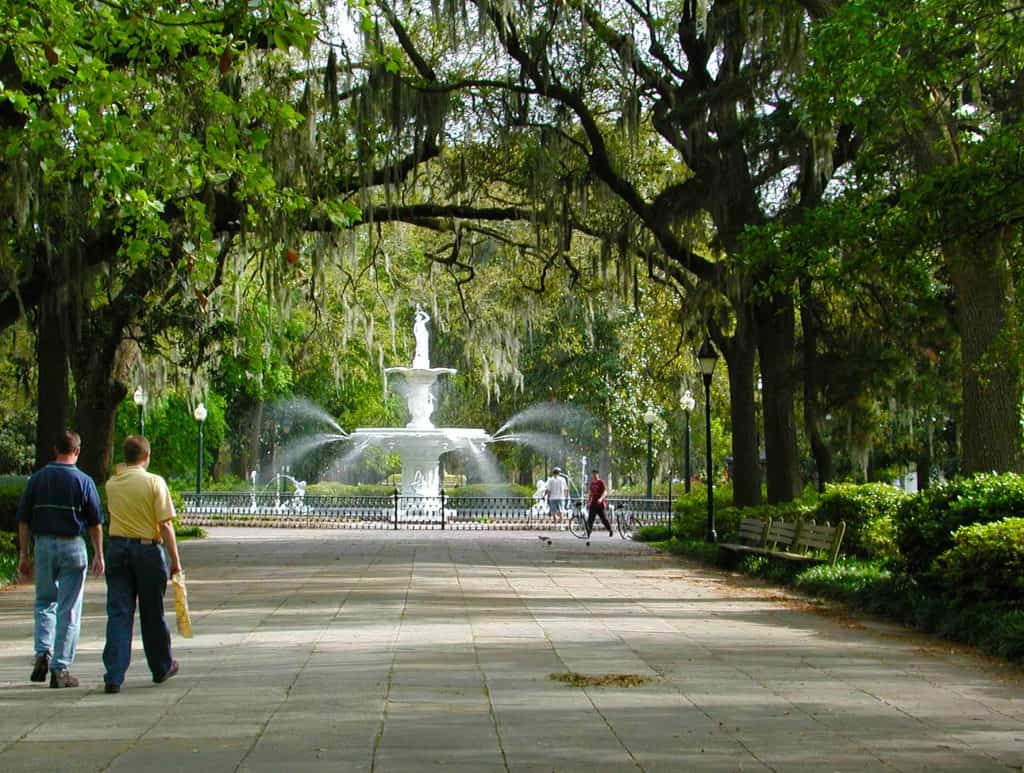
Of course there are things that are wonderful that one could miss but I “miss” them in the same way that I “miss” anything from a place I have been to like missing dim sum in Hong Kong or missing walking the beaches of Sydney.  But I don’t miss anything in the “think about it all the time” way that I think they probably mean.  But in fairness to a country that played host to many happy years of my life, I miss walks in the Huntington Gardens in California.  Food trucks in Austin.  Baseball in Saint Louis.  Hot chicken in Nashville.  The squares of Savannah.  BYOB restaurants in Montreal.  Autumn in New Hampshire.

Next month will mark the beginning of my third year in Paris and I’m “in between.”  America is no longer “home” for many reasons but I still can’t believe I really get to call this place home.  I’m Parisian in my bones in a way I always have been and I marvel every day that I get to live in my dream city.  I’ve often been alone on a quiet street and stifled a laugh as I took in that crooked winding view of centuries.  Two years on, I still have “pinch me” moments.

Going to the United States has become a rather elaborate production.  As part of my visa requirements, I have to spend at least 270 days a year in France, so you can’t go back for too long but if you’re going to cross an ocean, it’s 3 weeks’ minimum for me.  I’ve also hit upon the strategy of visiting my friends and family during “non-holiday” periods so I don’t have to share them with other commitments they have.  I’ve also found this makes for finding absurdly cheap flights (I just booked the cheapest Europe-America flight of my life recently).

I haven’t yet chosen to ditch seven years of medical/dental/accounting services and technology and occasional travel stateside means I don’t have to.  The PPO (insurance plan) I once had in the United States cost $135/month and covered me for pretty much everything for years.  The “affordable care act” in America has not only cancelled that plan, but the closest current equivalent costs $570/month.  So I just pay cash to see my old doctors for my annual checkup, etc.

Dental insurance remains extremely reasonable ($35/month in my case) so it’s cheaper to retain it solely for your cleanings twice a year.  Just those two cleanings will cost more in cash than the entire annual premium for your insurance and that’s assuming you have no other problems.  Do the math.

I couldn’t help but laugh at the times I would put a car into park and then stare mutely at the dashboard, wondering if I hadn’t forgotten to do something.  Not driving for months and months makes you a bit cagey when you do finally slip behind the wheel again.

***

The more assertive variation on the question “What do you miss?” is “When are you coming back?”  This led to a very long and fruitful exchange with a close friend in which I enunciated advantages I have now that effectively prevent me from returning to the United States for the foreseeable future.

  1. Physical health I finally gave in and got a Fitbit to document what I’ve always suspected: I walk a moving average of 10 km/day.  I do this at various speeds, up and down stairs, on cobblestones or grass, all around this city.  Not only did this regime of walking contribute to my losing 30 lbs/13 kg when I moved here, but it has established a new weight standard which would be impossible for me to retain in most American cities.  During my recent visit to Kansas City, I experimented by refusing to take and elevators, and as often as I could remember I parked my vehicle as far away from a store entrance as possible.  I even tried not to use carts to carry my purchases.  With these “extreme” measures I couldn’t even get close to 4km/day as an average.  I’m simply healthier here in Europe.
  2. Access to Europe I used to treasure an annual trip to Europe to see places new and old.  But now that I live here, all of Europe is at my doorstep, for pennies, either by flight, train, bus, or ridesharing (think uber but for long distances).  When living in America I experienced a variation on these sorts of fun possibilities only during my two years in New Hampshire, when Boston, Philly, NYC, and even Montreal were just road trips away, and in some cases, by train or bus too!  On this recent trip I had some business up by Chicago and elected to take the train (Amtrak) but perhaps had forgotten that there’s only one departure a day and when it gets delayed, it really gets delayed.  An engine on the train coming to Kansas City blew up in Arizona and they had to run another engine out there from California.  It delayed my journey by 7 hours and Amtrak had to pay to transport me to and from a hotel and put me up in it so I could connect to the bus to Rockford in the morning.  Not too shabby a recovery from the taxpayer-supported Amtrak, but a far cry from the dozens of departures and arrivals all around Europe every day.
  3. Constant challenge of language Every day I make progress in French, but my work and life brings me into contact with the whole world.  During the summer I had a date with a Brazilian girl who didn’t speak English and we laughed our way through our makeshift Spanish and an occasional assist from Google Translate.  Expressing yourself in a foreign language is one of the most difficult, fun, rewarding, humbling, and interesting experiences in life.  You get opportunities like that every day here.
  4. A built life Next year I transition from my visitor visa to one that puts me on the path to citizenship.  I continue to maintain that the EU passport is simply the most valuable passport obtainable by the average person in the world.  The only ones more valuable are the Vatican and Swiss passports and they are very, very difficult to obtain for various reasons (as an aside I was recently asked at a dinner party what I liked most about having an American passport and I replied that it was the knowledge that Navy Seals will come for me if Somali pirates ever commandeer a vessel I’m on.  I’m sorry, no country can top that!).  I’ve started something wonderful here, and it would be nuts to leave it especially when I’ve gone through all the hard stuff.  Indeed, as I looked over the list of requirements for my dossier for my new visa which will be far more difficult to obtain than the visitor one I said to a friend, “Is this it?”  The list had 28 requirements.  I realized after 2 years I am simply unfazed by the French government.

So my answer to my friend was, “Why would I come back?  I’m healthier and happier than I have been for many years, possibly more than I have ever been in my life.”

The caveat is, of course, family.  My nieces and nephews continue to grow by leaps and bounds and I measure their skill in their improvements in art and coloring, Parcheesi, and sports.

On more than one occasion I’ve heard someone say, “I have to live here, because I love my family.”  I get that, I truly do.  But ultimately I moved because I placed my happiness first.  Of course I’m happy when I am with my family but I know that part of the reason I get to contribute to their lives, bring them presents from all around the world, and share great stories with them, is precisely because I’ve built and chosen an intentional path for my life that doesn’t defer a dream life to some unknown future that no one has guaranteed that I will live to obtain.

There’s no right answer here and I’m not proposing that I have the right one.  I can only say that I can spend more quality time with my family now and treasure it more deeply because I know our opportunities are so precious and limited and because I am well and truly happy, and that speaks volumes to children.

***

There’s nothing more satisfying than waking up every day knowing in your bones that you are on the right path.  And while two years isn’t yet enough for me to claim “Parisian” status yet, it does feel like home.

The picture is of one of the fountains in one of the many lovely squares of Savannah, Georgia.

Did you enjoy this article? TAIP is 100% reader-supported through tipping. If you want to leave us a tip of any amount it would be highly appreciated. These tips help support our efforts to keep TAIP an ad-free environment. Just as at a cafe, the tips are split evenly among the team.
A Trip to the Police Station

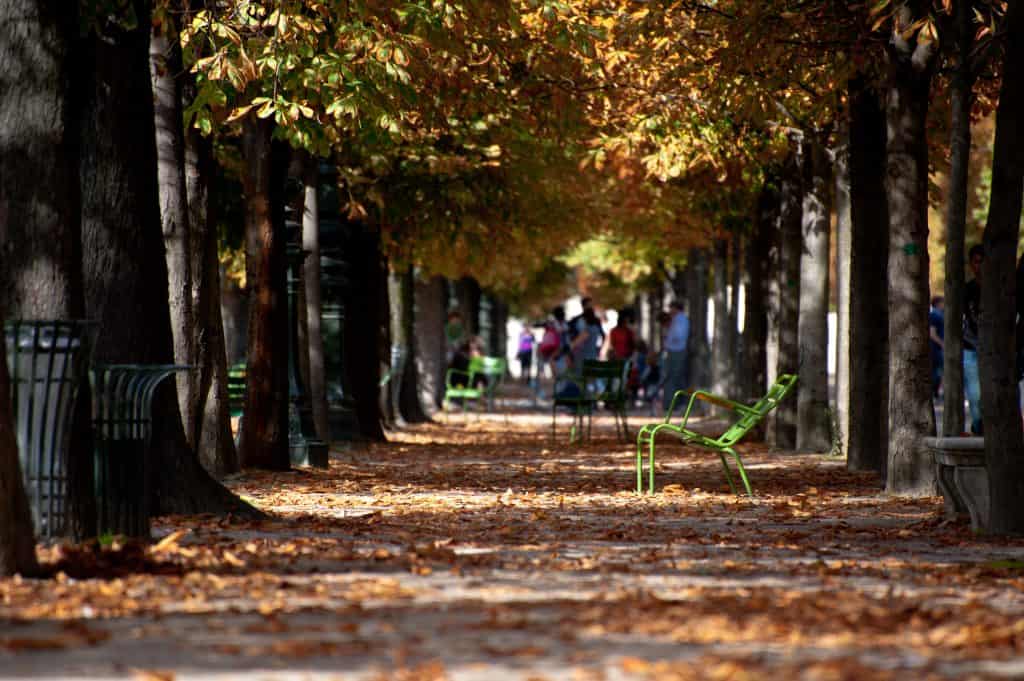
I apologize for the very long break from the blog.  It was an amazing summer my second spent working in the spectacular beauty of Switzerland (here’s one of my favorite images from that time).  I kept a journal, but didn’t have Parisian reflections to share with you.  But I am back in my beloved city and regular programming will resume 🙂

On my travels I was stupid to lose my wallet, which contained things that were by and large replaceable, but which contained my French identity card, which allows me to travel passport-free inside the Schengen area.  For those who face the calamity of losing a wallet, in addition to shutting down all your cards and getting new ones you need to go to the main Police station of the arrondissement you live in ideally this address should match the one on file with OFII.  I have said this before but do everything you can to maintain a consistent address throughout the immigration process you’ll be surprised that many gardiennes are willing to keep your mail for you even after you’ve moved out if, of course, you maintained a positive relationship with him/her (who am I kidding, there’s no such thing as a male gardienne in Paris!).

Once you’ve identified which station is yours, bring your passport and/or another form of ID (remember the rule of always overwhelming the French with documentation, thereby removing their ability to intimidate you).  If you show up around 15h00 on a Friday (as I did last week), the whole process should take about 5 minutes.  You will need to clarify whether you lost it or it was stolen.  If it’s the latter, be prepared for a lot more in terms of questions (where did you lose it, what else did you lose, etc?).

You will then obtain a “récépissé de déclaration” which will allow you to apply for a new identity card.  Since I’m only 2 months away from renewal I’m not going to drop the 100 some euros to get a replacement but will simply wait to get a new one when I get my new visa.

What would you like me to write about this next year?  #YearThree in Paris begins December 11th.  I have so much to share with you but am also happy to write about your thoughts/questions/concerns.

Featured photo comes from Daxis on Flickr.  Labeled for reuse.

Did you enjoy this article? TAIP is 100% reader-supported through tipping. If you want to leave us a tip of any amount it would be highly appreciated. These tips help support our efforts to keep TAIP an ad-free environment. Just as at a cafe, the tips are split evenly among the team.
Forgetting My Passport

A huge pit formed at the very bottom of my stomach.  A hot flash of embarrassment started at my chin, ducked below my eyes, and lurched forward onto my forehead, spilling down my cheeks.  These physical reactions usually accompany the realization I have done something catastrophically wrong.  I said the words to myself, just for effect:

I forgot my passport.

I rehearsed quickly what I would tell my French cab driver, which would start with an apology and a request that he immediately turn around.

But my brain had already run ahead of me (as it is wont to do), presenting two factuals:

1)  If you turn around now, you will certainly miss your flight.

2)  On several occasions you have flown within the Schengen zone and not been asked for your passport.

This stood against the conditional:

1)  How do you know they will ask for your passport?

Since turning around to get my passport offered the same risk as trying to board my scheduled flight and being turned away (missing my flight), I decided to proceed.  My brain asked the conditional “But what about returning” question but answered it within seconds saying: “Let’s worry about this first.”

If the driver had looked back during the two-minute colloquy that had begun with that flush of embarrassment, he might have seen my furrowed brow accompanying my eyes glancing out the back window, moving side-to-side in a slow calculus, because surely part of me was wishing I took a short international flight more seriously than a bus ride.

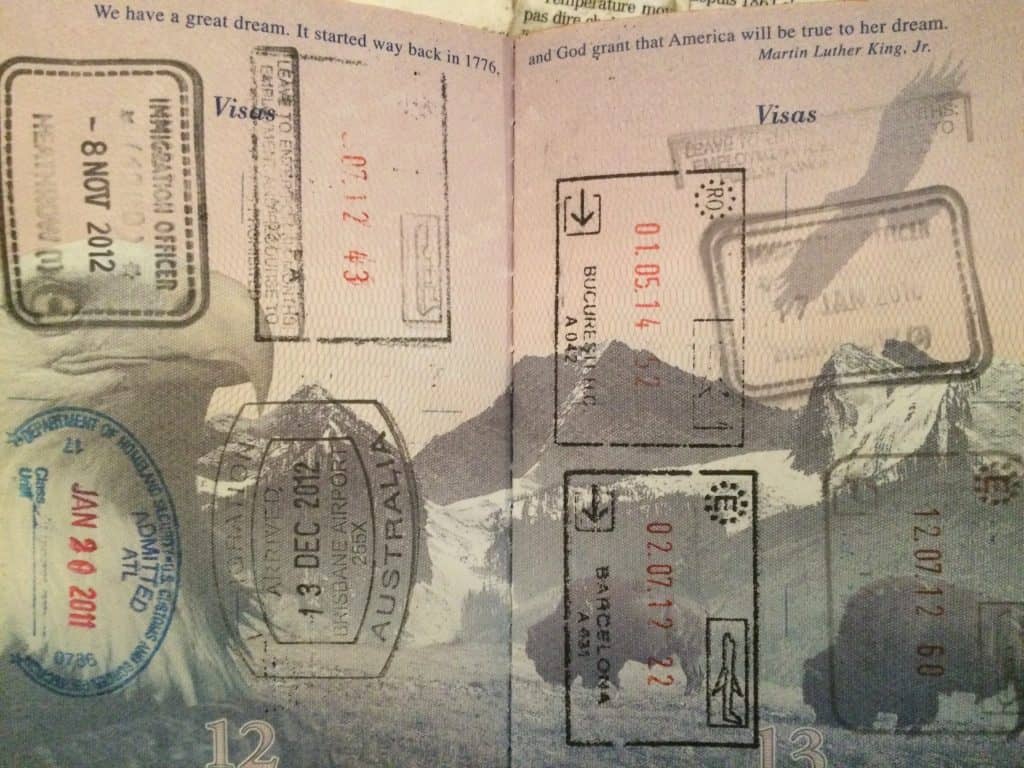
Worse I still didn’t have my permanent carte de séjour I wouldn’t have it until April.  All I had was my temporary récépissé, which simply indicated that I would get an ID.

I showed up at Paris’ southern airport, Orly, about 30 minutes before boarding time.  It was a 07h20 flight to Rome.  It was my grad school friend Donald’s birthday, and he was due to be in Italy for a few days, so I thought to join him for dinner before coming back to Paris the next day.

As I passed through security the only thing they asked for was my boarding pass, which I was carrying electronically in Passbook.  I cleared security with a little bit of private nervous laughter.  As I moved towards the front of the boarding queue, I unfolded my récépissé and steeled myself with a confident insouciance (imagine a “What, I need a passport?” type of look).  The gate staff were really only looking to see that my name matched the one on the ticket so I’m not certain she even realized what class of ID I was presenting.  I shook my head after I passed through and wondered why I had been conditioned to think that in a 1st world country it was vitally important to always show ID.  Grateful for the nonchalance of the gate agents I started planning for hitting the ground in Italy.

Donald had booked a cooking class beginning at 10h00.  Since I was due to land a bit before 09h00 I knew I would have to take a cab.  Traffic cooperated and I arrived there and had a 6-hour culinary experience of learning, prepping, cooking, and eating.  It was lovely.

Since the theme of this blog has always been focused on Paris and France, I’ll perhaps share the details of the Rome trip at another time and in another place.  For now, know that I am writing this to you somewhere over northern Italy.  On my return to France the Italian gate agent had taken exception to my récépissé, but fortunately two (quite lovely) Russian ladies who also did not bring their passports had already been asked to stand aside while a supervisor was called.  I was asked to stand with them and we started speaking in French about the Schengen area.  “I didn’t forget,” said the older one, “I simply didn’t bring it.  You don’t need it in Europe.”  I shared that I had needed it in Romania, Poland, and Croatia, but then added, “but I’m not an EU citizen, you know, so I never go in your line.”  “Ah yes, she nodded.”  The gate agent returned and waved us through.

This time the cool wave of relief started at the top of my forehead and slid slowly and luxuriously down my head, cascading over my shoulders, and down the rest of my body.  I flipped to “music” on my iPhone, tabbed to David Gray, put on Shine, and slipped my noise-cancelling headphones on.

***

Moral of the story: write a huge note to yourself of DON’T FORGET YOUR PASSPORT YOU NON-EU CITIZEN and put it on your computer monitor the night before any international flight, Schengen or not.

Photo taken of some of the pages in my passport.

Did you enjoy this article? TAIP is 100% reader-supported through tipping. If you want to leave us a tip of any amount it would be highly appreciated. These tips help support our efforts to keep TAIP an ad-free environment. Just as at a cafe, the tips are split evenly among the team.

high line NYC

NYC: Parisians’ Delight

I’m always curious to know what fellow Parisians think of their visits to my beloved United States.  Often they have been to America, and usually, they have been to New York.  Now, when most people tell me they’ve visited New York, I tend to ask, “where” because I don’t assume they mean NYC.  And I certainly don’t mean what Parisians mean, which is Midtown Manhattan.

While Midtown has its own striking features, it’s hardly “New York” and worse, it’s hardly worthy of the answer to my follow-up question of “Why do you like it?” which is “Because it’s the most European city in America.”

The one time I was eating when someone said this to me I almost choked.  That statement is so untrue on a number of levels, and I usually have to ask a number of follow-up questions to clarify why my acquaintance or friend has come to such a strange point of view.  Some commonalities:

1.  NYC is the only American city he/she has visited

2.  While there, he/she never visited Brooklyn, Queens, or the other boroughs.

3.  He/she was there for a week or less

These circumstances, combined with an ignorance about what other American cities have to offer, or worse, an ignorance about European cities, inevitably lead some of these Parisians to an idolization of NYC which is unwarranted.

Don’t get me wrong.  I love the Cloisters.  And the High Line.  And Brooklyn.  The Park.  Washington Square.  The MET and all the things that make NYC great.  But it’s not our finest city.  That title firmly belongs in the hands of San Francisco (but that article is for another time).  For now I’ll confine my remarks to NYC.

The Cityscape Itself

NYC is part of an elite group of skyscraper cities, which includes Tokyo, Shanghai, Singapore, and the like.  There is nothing European about streetscapes and cityscapes of massively tall buildings that create wind tunnels.  Indeed, in Paris all such buildings are clustered outside the city limits, at La Defense, as if to say build these if you must, but please don’t invade our living space.

I’m not arguing that skylines need to look like Florence’s, where the majestic Duomo and the competing Medici Tower dominate and all other buildings rise to about the same level, significantly below both those buildings.  But NYC’s cityscape matches none in Europe.

The Melting Pot

On this point it’s important to note that London and Paris, like NYC, fall into the category of “international cities.”  Surely you will learn about England and France, respectively, upon visiting those cities, but if you want to really know Britain, you need to go out into the shires.  Or to neighboring countries within the United Kingdom, like Wales.  If you would know France you should visit Bordeaux.  Or Bayeux.  Or Grenoble.  Or Strasbourg.  Those are all “European cities.”  But they are not multi-cultural melting pots.

London and Paris are playgrounds for those of us who love to learn about other cultures, but as “European cities” they are outliers.  Most European cities have a dominant language, ethnic majority, cuisine, and culture.  And at least, at the end of the day, London and Paris can claim their own culture too.  But what is NYC, but the cathedral of change and the bastion of commercialism and the consumer culture?  NYC is in its own way, a celebration of no identity and no heritage and no culture because of the mistaken belief that since all cultures are “equal” (whatever that means) that a melange of all is a culture in and of itself.  It’s not, and the banal and ubiquitous “I love NY” shirts is perhaps representative of what NYC can be at times: tourist hype.

The Cost of Living

One of the magical things about Wimbledon is that it’s still one of the major sporting events that you can buy tickets for the day of, at face value.  You’ve got to queue, but that’s really a minor inconvenience. 🙂  It allows the groundlings to mix with the elite who never needed to queue to have an assured place.

A European city still has a place for the least affluent in our society (and I’m not talking about the homeless here: they manage to find spots all over the world).  Paris is on the margins of affordability, but NYC is in another solar system by comparison.

This is all to say that my fellow Parisians might look for some treasures off the beaten path the next time they decide to visit the US.  This HuffPo list might be the place to start.

NYC: hardly the most European city in America.  It’s not even the most American city in America. 🙂

Photo by Elizabeth Villalta on Unsplash

Did you enjoy this article? TAIP is 100% reader-supported through tipping. If you want to leave us a tip of any amount it would be highly appreciated. These tips help support our efforts to keep TAIP an ad-free environment. Just as at a cafe, the tips are split evenly among the team.

Lifestyle Design: My Own Case Study

The Four Hour Work Week has been out for many years now and in fact, the author, Tim Ferriss, has gone on to author the Four Hour Body, Four Hour Chef, etc.  Of course “four hour” is not literal.  It’s about a mentality.

While Ferriss presents a number of interesting assertions in the book, a number of which I disagree with, I accept the central premise on which the entire book is based: lifestyle design.  The upshot of the idea is that you control what kind of life you want to live through your own choices.  So design that life along with a  means to make an income that fits into that lifestyle.  Such a concept doesn’t just turn traditional 9-5 on its head, it throws it out the window after lighting it on fire.  It discards the idea of having a “good job” or “good business” as a priori considerations.

What do you want to do with your life?

How do you want to live it?

Ferriss says that only after you answer these questions have you earned the right to then ask yourself how you’re going to make a living.  Indeed, these questions are deeply revelatory, and I’m always surprised to share this concept with people older than myself who cannot answer these questions (or worse, have never asked themselves anything remotely close).  They’ve just taken to living their life perhaps very successful lives in many measures but there’s not an intentionality behind those lives.  Lifestyle Design demands that intentionality (and accountability).

As I said, I reject several of Ferriss’ assertions, such as the idea that the truth of a religion cannot be known or some of the gimmicky advice he gives regarding automating a certain type of internet business.  The meta with Ferriss is what matters.  There are dozens hundreds dare I say thousands of ways to make a living.  Be bold and fearless and you will reap the rewards. And even failure will teach you so much more than conventional success will.  Ask for safety and 3-4-5 weeks of vacation a year and you may – or may not – get it.  And even if you get it you may lose it.  The days of 20 years at one company may be gone but there have never been more fun and innovative places to do something you’re passionate about or more cool opportunities to start your own thing.

Ferris encourages, as a starter plan, making a low to median First World income and then living in Second World situations (Thailand, for some reason, is a popular pick, which is odd as I’ve always considered it to fit well within the “nice to visit” oeuvre), using time differences to your advantage and the saved income as arbitrage towards your next venture.

Ferris holds this out to the everyman, just as the excitable Amway dupe does when he draws circles for you on a flip chart in someone’s home. But lifestyle design, much like entrepreneurship, is not for everyone nor can it be accomplished by everyone.

There are dozens of inspiring case studies (even for my married-with-kids friends who would call this impossible), none of which I can say I’ve ever read – mostly because I didn’t need proof to believe that this would work.

***

In October 2012 I sold a business.  It was not the first I had built or said goodbye to, either at a profit or at a loss, but it was the largest profit I had ever made, and after such a long and hard push (6 years) I took some time off.  Starting in November I went to Grand Cayman, London, and then Paris.  In December I arrived in Australia for a 34-day, 5-state, 2-territory trip of a lifetime.

As I stood on top of Mount Wellington in Tasmania, at the very bottom of the world, in the opening days of 2013, I was overcome with emotion at how deeply God has seen fit to bless someone so unworthy.  I resolved to continue to try to be worthy every single day.

Throughout all these trips I had the opportunity to be deeply grateful, meet amazing new friends, and think about my life up to this point, and reflect on what was ahead.

Rather impetuously in January, while still in Oz, I had settled on a move to Paris.  It had been a city of my dreams for so long.  If not now, when, I mused.

It took one full year (all of 2013) and all of my effort, concentration, and focus to pull it off.  And I submit that had I not bought a one-way ticket in January of that year I might not have actually done it.  More than once last summer I thought if only I could delay this a few more months…  Living in America, as an American citizen, is desperately easy and cheap.  As articles on this blog have pointed out and continue to do so: life in France is “harder” and more expensive in many ways most Americans would find unacceptable and intolerable.

There is also the issue of a built life. It is no accomplishment for the unattached, still-keep-stuff-at-my-parents 20-something to quit a job and see the world.  But someone in his/her 30s, with big boy/girl furniture not self-assembled, with a deep and rich social network, memberships to art museums, subscriptions to the ballet and symphony, etc. would find it hard to leave all these things behind.

This is to say nothing of the fact that you may have young ones in your life, like this cutie, who would miss you.  I’m unmarried and have no children but those nieces and nephews are the closest things and it’s tough not to be there as they grow up so much more quickly than you thought they would.

There’s also the perception, for the first few months, that you’re just on some kind of vacation.  People don’t realize you’ve moved and that you have to work in order to pay for your new life.  At times it will be as basic as “What are you doing working you are in Paris!!”  Other times I laugh myself at what would be outrageous dream material for an American girl: dinner in Paris followed by a walk on the Seine in the shadow of Notre Dame.  It’s just a typical weeknight date with a French girl here (I confessed as much the last time such an incident occurred with said French girl.  “I’ll never take this for granted,” I said in French while standing on Pont Neuf.  She made the typical expressive pout-cum-eyebrow-raise that parsed the attitude of “is that cute or just annoying?”).

It’s now over three months into my adventure and I’ve loved every minute even the alleged “hard days.”  It’s also the first time in my life that I have been out of my home country for a period longer than 90 days (my Rome study abroad semester came with a visa that was good for exactly 90 days and no longer).  I cannot begin to tell you the questions you will ask yourself when you are completely immersed in an alien culture and language even one you may love and be conversational in.  You find yourself re-examining basic questions, like, “What do I actually like to eat?” or “What do I do for leisure?” or “What do I want out of my life and work?” not because you are unhappy with the answers you’ve always known but because you’re completely out of context here (well, except, happily, for access to the Traditional Latin Mass which will always make you feel at home anywhere in the world).  You also experience this cheek-by-jowl with whatever businesses you are owning and running.

The final consideration that an American so used to freedom of movement must keep in mind, no matter where you are thinking of relocating to, is immigration policy.  I managed to obtain a long-term-stay visa which is not at all easy to get.  My renewal is by no means assured and I’m not even allowed to apply for it until 60 days before my current one expires.  I had read and understood, through various sources, before my visit, that it was easier for someone already here to stay, but your own thought process has to tie into the state of the businesses you are running.  Will I get to be in Paris long-term?  Only the immigration authorities know. 🙂

What I do know is that this was one of the five most significant choices of my adult life, and I couldn’t be happier that I made it.

In future articles on this theme I’ll talk about what it took to get here in terms of breaking up my life in America.

Photo was taken as I stood on the top of Mount Wellington, looking down on Hobart, Tasmania.

Did you enjoy this article? TAIP is 100% reader-supported through tipping. If you want to leave us a tip of any amount it would be highly appreciated. These tips help support our efforts to keep TAIP an ad-free environment. Just as at a cafe, the tips are split evenly among the team.