90 Days Out From Leaving Los Angeles for Paris

This is part of a series of articles about the final days of preparing for moving to France and what happens when you get here.  This is the first of two promotional series launching our new book, 29 Days to France, a book that all the writers wish they had had before we started our French adventures.  It’s now available for preorder, and those preorders come with a free 15-minute Q&A personal session about your French immigration plans.  Click here to learn more.

Vince was someone I met first as a visa consulting client who has come to be a friend and now, writer for TAIP.  You will find he takes our blog in a more personal direction than we may have previously gone here, and I think that’s a good thing, and a sign of more to come, not just from Vince, but from all of us.  -SH

I’d been considering a move from Los Angeles to Paris since Autumn 2016, but through the years, I got sidetracked by one thing or another. Still, it was a fifty-plus year odyssey, all somehow interconnected to finally get to this point…

The Origin Story

I was born in Flushing, New York, in 1969. My heritage is Filipino but for years, I regarded that as a technicality that burdened my existence. I was the stereotypical red, white, and blue American kid, engrossed in girls, sports, video games, movies, and American pop music.  I even went to West Point for college for an intense immersion into historic American leadership and subsequently served in the Army for a short stint, until I settled into Hollywood as an assistant director, running film sets, overseeing the logistical planning and execution of making movies and TV series.

Meritocracy was my religion. I was deeply convinced that passion and dedication would result in the realization of my American dreams as advertised; that my brown skin and ethnicity would be non-factors.

All my life, while I had glimpses into accomplishing my dreams — what I affectionately called chasing greatness — I’d find a way to sabotage those dreams, whether it was by pushing the rules of the system, chasing love, not completing personal projects, alienating people by pushing them too hard, or perhaps, innocently making an impish comment at the wrong time for a cheap laugh.

Especially compared to my contemporaries, I felt like a failure. Was my own brain and growing up Filipino the hindrance to myself?

Since I was ten, whether through friends, sports coaches, therapists, psychiatrists, or life/career coaches, I looked to outside sources for support to fill the gaps in my manhood whether it be gathering knowledge, repairing my behavioral flaws, or improving my emotional intelligence.

My family didn’t nurture me. My dad was more interested in horse racing and not feeling emasculated while my mother and sister were more inclined to let Jesus take the wheel than solve complex problems or learn the intricacies of the human condition.

In 2012 I felt I was headed on a path of mediocrity. I plummeted into depression. Rather than have anyone be sucked down into my darkness, it was easier for all parties concerned that I isolate myself to fight my fight, which included breaking up with my fiancée Julia in April 2016. I often thought of suiciding to relieve the pain — for me and my loved ones.

Katia, an old friend from Paris who was vacationing in L.A. with her family, invited me over their Malibu Airbnb for an evening soirée. I was still in my own mental quarantine, but I dragged myself out because anything can happen when Katia is involved. We were drinking a nice Bordeaux when she casually mentioned, “My Paris apartment is opening up in July. Might you know anyone interested in a short-term or long-term rental?”

“Who among my friends might be interested, able, and daring enough to live in Paris for three months?” I pondered. Then, my eyes got big….and on a whim, I said:

“I’ll take it.”

Ici c’est Paris

From July through September 2016, I lived on the east side of Paris, in the 20th Arrondissement, surrounded by an eclectic culture of hipster Parisiens and immigrants from various North African countries, including Morocco, Tunisia, and Algeria. American tourists weren’t generally coming to the 20ème, so I became a local quite quickly. I spoke French as much as possible, forcing myself not to be subconscious about making mistakes.  

By the kindness of existing friends and strangers who became close friends, I experienced a bonafide joie de vivre — a pure joy for life — in all of Paris’ distinct neighborhoods.

Dikran, a Lebanese-Armenian immigrant who spoke five languages, walked me all over Madeleine through Strasbourg Saint-Denis. Andrea and I darted through the streets of Montmartre down to Opéra on his scooter. Alex led me deep into the rabbit holes of the Pigalle nightlife. I picnicked with Nico and Solène at Jardin du Luxembourg, where everywhere in the garden, I saw pockets of genuine community. I played tennis with Thomas in the terre battue of the courts in Montreuil. At Closerie des Lilas, I enjoyed some Sancerre with Hemingway’s ghost where he told me, “Take the time to fall into whatever cracks and crevices happen in front of you and see how it changes your work.” The Cinémathèque Française in Bercy rekindled my love for French cinema, inspiring me to seek artists interested in making daring and genuinely personal kind of stuff, not the types seeking fame or Hollywood significance, like I was surrounded by in Los Angeles. I even directed a short film about love in Paris as an experiment to express my authentic voice.

I acquired a love for getting lost. As someone whose life’s work relied on efficiency and execution, taking the wrong path steered me to discover little gems such as the gorgeous doors in Le Marais or the intimate bar Le Lapis in the 2ème.

I learned the essence of c’est la vie. It was not, how we Americans view this cliché: Welp, that’s life, I guess I have to suck it up,” shrugging our shoulders to tolerate the misery, but rather, “This is life. Even walking up seven flights of stairs every day is part of it,” with the point punctuated by inhaling a cigarette and a sip of wine.

As music is my church, in two subsequent 2018 Paris trips for concerts by U2, Arcade Fire, and Ben Harper, I was captivated by the Parisiens’ love for music, an energy that vibrated higher than at L.A. concerts.

After my initial 2016 trip, L.A. was exponentially becoming less my close-knit hometown, mutating more into an unrecognizable sprawl of people elbowing each other to snatch higher stations in life; confused with what to do, what to wear, where to be, how to be, and who to know. All of it was a monolith of noise. I yearned for the soul of Paris. Permanently.

Moving to another continent, however, felt intimidating. How does an American even legally immigrate to France? What could I do for work? Could I get a bank account without being fluent in French? Could I play tennis in the winter? What about my cat Maddey? Daunted, I returned to my regularly scheduled programming until answers emerged. The years flew by.

A few notable events shaped my path between Paris 2016 and August 2021: I suffered a two-hour mini-stroke in 2017; I discovered my true personality (INFJ) from the Myers-Briggs test; I worked on a few more meaningless TV shows, one of which prompted me, a day before my 50th birthday, to attempt suicide. (I wasn’t successful.) Upon the aftermath of the George Floyd murder, I came to the realization as a Filipino-American, that I had been drinking the kool-aid of the American Dream my whole life. A sublime butterfly moment in Costa Rica (which I’ll talk about in a future article) jolted me into making the resolution to move to Paris by the end of 2020.

Plot Twists in a Time of Love and Covid

But when February 2020 began, a long-forgotten crush named Sarah found me and we quickly fell in love. Paris took a back seat again, because while she loved the idea of moving to Paris with me, she had never traveled outside of the United States; knowing how tough Paris could be for an American, I thought we’d start with Sarah’s first Paris trip to see how they would get along.

Then we went into lockdown. Paris was canceled indefinitely. Not all was lost, however; the global pause allowed me to develop my coaching practice, Stay on Your Path, which became the solution to making money in Paris. I spent all of 2020 beta-testing my program while Sarah and I waited for the pandemic to subside.

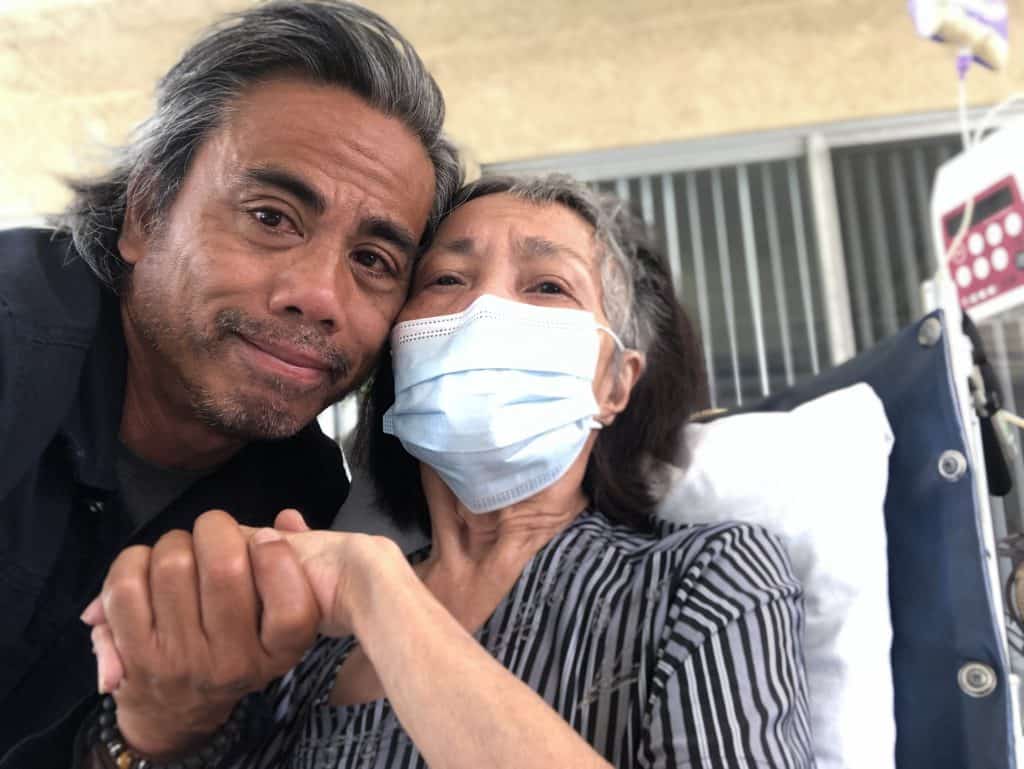
Meanwhile, I intended to reconcile my estranged relationship with my 75-year-old mom but in January of 2021, a massive stroke got to her before I did. She was immediately rendered unresponsive, and I painfully watched her lie in bed for months, barely human, until her passing in July. I was deeply traumatized by how things ended between us, that for much of 2021, I was not my best self.

In April 2021, Sarah broke up with me. I precipitated the situation with some asinine behavior, but in connecting those dots with other selective dots about our relationship on a global level (not incorporating dots that were integral to my narrative), she was done. I reacted with venom, spurred by my abandonment issues, which were already triggered in full tilt by mom’s stroke.

It was a tumultuous first half of 2021…but this unfortunate series of events became the catalyst that reignited my Paris dream into reality. I started to draft a plan…

Paris, I Am Finally Coming

Fully aware that any Paris flat would be a third smaller than a two-car parking garage, I planned to compress my 52-year-old life into five medium-sized boxes. But out of five decades worth of stuff — books, files, photos, memorabilia, a massive comic book collection, DVDs, CDs, clothes, and such — what would make the cut?

I hired an organizer to help me purge. I held yard sales and online sales which were part revenue-generating, part pop-up museum, part exorcism, part wake, and celebration of life. The stories behind every item unpredictably triggered me and cathartically so.

An acquaintance named Jimmy showed up at one of the yard sales and introduced me to a book called Foolproof Visas, serendipitously facilitating the next tangible step in my Paris move. 

Francemortified

I assumed from old wives’ tales and past experiences dealing with French bureaucracy that getting my French visa would be out-of-reach complicated. Cajoled by Foolproof Visas and the marketing campaign about the author’s online course called Franceformation, and also assured that her approach to prepare my application was virtually guaranteed, (no way was I staying in America for another three to six months to re-start the process), in June, I signed up on the spot and sent her 1900 €.

I found her program courses crude and confusing. Seeking clarification was difficult to come by. I’d soon discover that there were many before me who had similar experiences. 

Lacking confidence in her intel’s accuracy, I had to fight through my disdain for doing mundane research and forced myself to obsessively peruse the internet as well as post questions on the Facebook expat pages; these were all things that I had wanted to avoid by purchasing her program. An expat named Virginia led me to TAIP, where the blog entries not only proved incredibly valuable, but the information was FREE.

In July, I made the leap and secured a visa appointment to submit my paperwork for a profession libérale visa. I wanted a September 24 appointment, but December 7th was the only date available, so, all logistics considered, I earmarked the end of January 2022 for my flight to Paris, which was six months out.

Forced into action, I set out to pursue the myriad of required documents. I spent hours writing a business plan for my coaching practice complete with modest projections and a SWOT analysis. I sought proof that I had potential sources of income in France. I obtained a background check from the FBI to verify my clean record. I obtained travel insurance. The whole process was anxiety-inducing.

Not only was I paranoid that I was handling it all wrong, I was also nursing a broken heart, and having already postponed my dream for a year and a half, six more months rotting in L.A. felt like an eternity.

I was, in fact, still emotionally and mentally unsettled about leaving. I was reluctant to release myself from secure (and hard-earned) opportunities of the present in exchange for vague (and uncertain) opportunities of the future, particularly as a fifty-two-year-old, brown-skinned Filipino-American male plunging long-term into a new culture with its own rules and language. Money was a serious concern in particular, having weaned myself from the film business to focus on my fledgling coaching practice.

To add to my endless checklist, I also needed to get my cat Maddey to Paris. An EU-compliant chip and a current rabies certificate were required as part of the USDA requirements of Maddey’s health certificate, the validity of which was tied to a ten-day window within my actual flight, the date of which was tied to the approval of my visa, the date of which was tied to both my appointment and to the whims of the French Consulate.

I started doing mock run-throughs with Maddey in my car to prepare her for a long twenty-hour day in her carrier and her first-ever plane flight.

With six months to go, I started my Goodbye L.A. Tour, meeting old friends while simultaneously paying homage to my favorite L.A. haunts while introducing them to my French homie Antoine, a Parisien who recently moved to Los Angeles from Paris (via Shanghai). Antoine would rapid-fire French at me, giving me moments of oh merde, it’s serious now.

I crammed in as much French as possible, anxious that I wasn’t acquiring French fast enough to be capable of deftly handling the French administration upon arrival. I read L’Equipe and Slate.fr articles; I’d listen to a podcast called Little Talk in Slow French and watched Dix Pour Cent episodes in French subtitles to refine my listening and pronunciation skills.

A month after booking my initial appointment, I checked the VFS site again to see if more dates were available, and voila, September 24 was possible!  

It was time to batten down the hatches. Instead of four months, I now had only a month to assemble all my documents before my visa appointment, and, assuming my visa would be approved, only two more months to tie every single loose end before my new life – my authentic path – would finally begin. I was already feeling quite raw, and now, an emotionally and logistically tumultuous period loomed ahead as Paris was becoming very real.

Photo was of me and my mother on Mother’s Day 2021.  

Did you enjoy this article?  TAIP is 100% reader-supported through tipping.  If you want to leave us a tip of any amount it would be highly appreciated.  These tips help support our efforts to keep TAIP an ad-free environment.  Just as at a cafe, the tips are split evenly among the team.
prof lib visa renewal

How to Renew a Four Year Profession Libérale Visa

I always tell readers of the blog that getting a visa is usually much more challenging than renewing one, for the simple reason that for the former you are trying to prove to the French that something is at least plausible (this business will work, I am enrolled in this school, I am in a relationship with this person).  For the latter you are simply offering evidence that their original judgment was correct.

I remember how I felt in 2017 when I got a four-year card for the first time.  After three years of building my entire travel schedule for each year around a renewal, the idea of not seeing the immigration office for four years was a dream.  I said so at the time.

I’d like to say this article was four years in the making, but that isn’t true.  This is just the soonest I could write to tell you about a renewal.  And there’s not too much to say.

Below are a few key facts you should know about renewing your Profession Libérale Visa.

One Year Probation

All of us, when originally applying, are given a one-year visa (what attracts a lot of people to Passeport Talent is that it gives you the possibility of a four-year card to start).  With Prof Lib the French are using the “trust but verify” mentality: can you actually do what you said you could do in your original business plan?

Now, there’s nothing published on the internet from the French government about this (one of the many reasons this blog exists in the first place, to fill a gap of information), but if you don’t have a good first year, you are only going to get a one-year renewal, and are effectively on a sort of probation.  What does a “good first year” mean?

The French expectation is that your Prof Lib business does at least the SMIC, which at the time of this article is 1269€/month, or 15,228€/year.  For those who don’t know, SMIC is the nationally-established minimum wage.  The thinking in the French bureaucracy is, if you’re going to bother to start your own business, you should at least make the minimum wage.

Now, this doesn’t mean that if you have a “bad” first year you’ll lose your visa status.  If it’s very bad, you may.  Meaning, if you only bring in something like 2,000€ for the whole year, the French will consider this essentially a scammy method for you to stay in France, and without a wonderful explanation about how new clients are just around the corner or that you have had a major personal/professional issue, you will not get a renewal and will have to leave the country in 60 days.

But if it’s anything north of say, 12,000 € for the year, you have a decent chance of at least getting a one-year card, with the expectation that you make it above the SMIC the following year.  If it’s significantly above the SMIC, let’s say at 22,000 €/year or more, you have a good chance of getting a four-year card on your first renewal, as I did.

Renewing the Four-Year Card

Renewing the Four-Year Card follows the exact same process as obtaining it in the first place.  Your main evidence, apart from the usual proof of address, renter’s insurance, etc. will be your tax forms* and invoices.  The tax forms will be a shorthand for the health of your business and the person looking over your dossier can see in an instant your topline revenue and your take-home profit.

Many small businesses in France had an off year in 2020 (understandably) and it seems the authorities have been willing to give a pass on that year to pretty much everyone, as long as in 2021 there was an increase in revenues compared to 2020 and that there’s a through-line narrative from your previous years as well.

One reason I have seen people not get a four-year card for a few years was a lack of diversity of clients.  If you only have one whale client and no others, the French consider your business very fragile.  This doesn’t mean you need to have dozens, you just can’t have only one or two and expect them to necessarily sign off on a four-year card.

The big difference for me this time from 2017 was that instead of going to the big Paris prefecture I had come to know through two different visa classifications and three renewals, I would be going to Melun because of my recent move to the Seine-et-Marne department (77).  It would be a completely new experience for me, but that experience turned out to only differ in Covid-19 restrictions pushing a security guard out front to forbid entry to any people not already cleared on a list.

Two Complications (That Weren’t Really Complications)

I went for my appointment in September 2021 with the thought that surely I would get a new card before my planned three-month visit to the United States which would begin in January 2022.  That didn’t end up happening.

Yet, I wasn’t worried insofar as I had traveled without my residence card during the pandemic (because the card had been stolen and I didn’t want to pay to replace it) and the US authorities, which guarded the border I was focused on crossing next, didn’t care about my status in another country.

The récépissé I was given had a six-month validity, which was double the length I had been used to in the past, but I didn’t actually expect them to use that entire time. I thought to mitigate this by getting a new récépissé before leaving, but since you cannot apply for a new récépissé unless it’s 60 days from expiration, with a 17 March expiry that meant I couldn’t apply for a new one until 17 January, when I would already have been in America two weeks.  I found this out the hard way when they cancelled my appointment to get a new récépissé the morning of that appointment with an “ineligible” note in the cancellation.

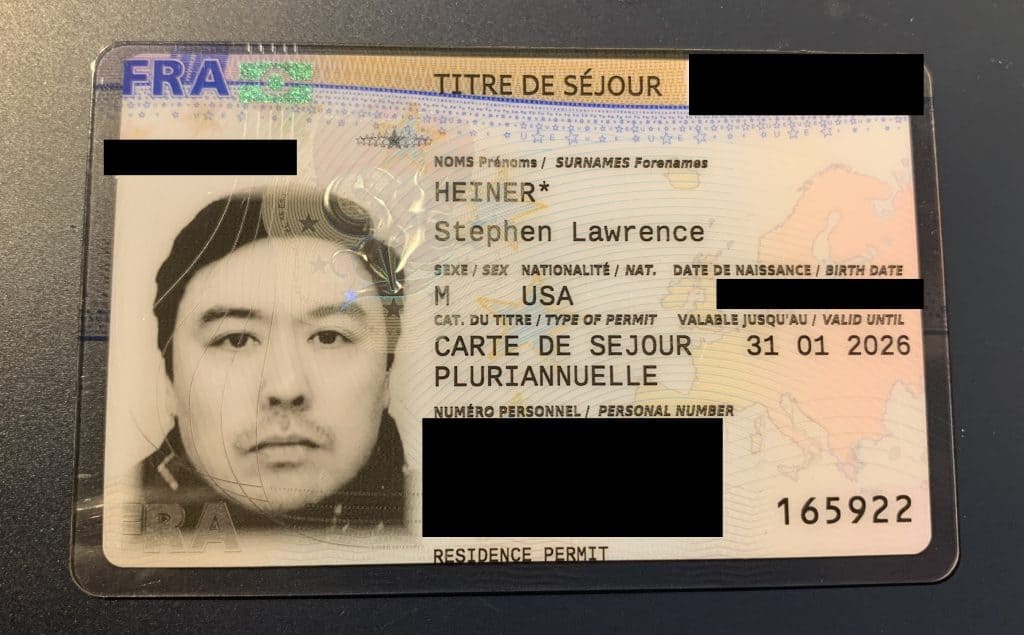
As you can see from the featured image for this article, the date of my new card is from 31 January of this year, but it wasn’t until 23 February that I received the text message from the government that I was welcome to pick up my new card and could I please bring a fiscal stamp to cover the 225 € it cost them to make it (you can purchase said stamp here; what a world of difference from 2014 when I bought a bunch of stamps at the tabac!).  You still need to make an appointment to pick up the residence card, and while I’ve heard that’s been hard to do lately in Paris, in Melun they had plenty of slots for me to book.  So from start to finish, it was six months from when I showed up for my renewal to when I could pick up a new card.

So the complications were:

  1. I didn’t have my residence permit: all I had was a police report which stated that my residence permit had been stolen.  I had carried that around while traveling for the last couple of years.  As I’ve shared elsewhere, I’ve come to realize that you need your residence card for exactly zero things in France and carrying it around only risks adding one more headache if your wallet is lost or stolen.  Keep it at home.  If and when you do need to show “ID” your passport will always win and if you want you can always store a picture of the front and back of the card in the cloud.  And as I told someone recently who worried that having her passport with her new visa sticker inside stolen invalidated her visa: your right to live in France lives inside the French bureaucracy, on a computer, not in your passport/residence card.
  2. My récépissé would expire on 17 March, but I wasn’t due to land in France until 1 April.  I knew the system well enough to know that I could flash my expired récépissé, with the text message, with the convocation that I had printed out to pick up the CDS, IF I was asked.  What happened at the French border?  Was I asked for my vaccination status?  No.  Was I asked for a PCR test?  No.  He asked me to remove my mask and stamp, I was in, just like old times.  As I often say: be prepared for the French to ask for everything, but realize they may not ask for anything.

So, like I said, there were two complications that weren’t really complications.

Today I picked up the card and voila, here’s the article explaining what you need to do to renew the card.

Now some of you may be thinking…wait, Stephen didn’t you take the A2 test last year so that you could get your ten-year card?  Yes.  But I also realized then that this was the last piece of the Prof Lib story I hadn’t told.  That if you had gotten a Prof Lib, renewed it, and gotten a four-year card, you would need to renew one more time before you were eligible to apply for a ten-year card (at least five years of fiscal residency)  Part of why I started this blog in the first place was to give information that isn’t out there, and I don’t think there’s an article on renewing a four-year card, so here it is, as brief as it might be.  I figured I could wait a bit before moving on with my own next step to put together an article with this info.

Related to a willingness to wait to apply for my next big status upgrade in France is that I’m no longer in a rush.  The pandemic has proven to me that residence gives you 99% of the privileges of citizenship, at least in France, as I was able to come and go as I pleased, and was even eligible for personal and business aid from the government.

When I first moved here, I was in a hurry to get citizenship, as I was under the delusion that the French were looking for any excuse to deport me at any moment, whether I mispronounced a word or forgot a piece of paper in my dossier.  Ten years have shown me the naïveté that that was and I try to pass on a sense of calm to people who hire me to consult with them or who take my courses**.  Citizenship is no guarantee that you won’t lose your rights (ask the Americans of Japanese descent what their citizenship meant in America after Dec 7, 1941, or what happened to people of a certain race in France the following year, in 1942) and the term “permanent resident” is a misnomer for the vast majority of resident visas worldwide: almost all require some kind of residence over some period of time, and then need to be renewed…not exactly “permanent” by any definition.

Just realize you’re going to be a foreigner in France for at least a while, and get comfortable with the “odd” feeling of being a long-term guest.  You may be kicked out at any time, but rest assured, it’s not going to be because you forgot a piece of paper in your dossier, and in fact, it’s not likely to happen at all.

What’s next for me, of course, is citizenship and/or a ten-year card.  Stay tuned; I’ll keep you in the loop and try to provide a template you can follow, as always.

I am certainly happier than the photo would indicate, but as you may know, you are not permitted to smile in official French photos. 🙂

*I don’t know how many times I have to say this: you MUST FILE TAXES if you live in France, even if you don’t earn any income in France!  I know it’s not told to any of us when we get here by the French government (I only learned, as I’ve learned so many important bits of information over the last decade, due to the newsletters of Jean Taquet), but your proof of filing taxes every year are the most important documents you must have if you ever want to apply for a ten-year carte de resident or for citizenship.

**Anyone who charges more than 1000 € to help you get a profession libérale status is probably running a scam.

Did you enjoy this article?  TAIP is 100% reader-supported through tipping.  If you want to leave us a tip of any amount it would be highly appreciated.  These tips help support our efforts to keep TAIP an ad-free environment.  Just as at a cafe, the tips are split evenly among the team.

Mailbag: the Non-Existent “American ban,” Work Possibilities with the PL Visa, & Snake Oil

In the last eight weeks I have received an avalanche of questions from those hoping to immigrate to France.  In the past when I received a lot of questions I would collect them into a post like this and call it the “mailbag.”  But since creating my Facebook group and videos on Visitor and Prof Lib status, I haven’t had to.  The last mailbag post was in 2016!  But there have been so many questions I’ve answered recently that I thought to collect just a few of them here to share.  The questioners have been anonymized and their questions have been corrected for spelling and grammar and/or redacted for privacy when necessary.

I keep hearing that due to COVID-19 Americans are not welcome in Europe right now.  Hence If I file for a long-stay visitor visa (greater than 1 year), am I wasting my time?

It is fake news that Americans are not welcome in Europe.  Very rarely, if ever, is an entire nationality banned from someplace, as that might also include expelling anyone of that nationality already in the country.  What the media isn’t saying, because it’s so intent on portraying an inept US response to Covid, is that US citizens, traveling for leisure, coming from the US, cannot currently enter France and some European countries.  Americans themselves are free to travel around Europe given that they have valid residence in a European country.  Those Americans who have never lived here but are confirmed on student status for this autumn are also welcome to come to France in particular and Europe in general.

That said, your application process will depend on where you are applying from.  In some countries consulates and embassies are running again at normal capacity, with certain safeguards in place, and in other places those consulates and embassies remain closed or unable to assist applicants at the moment.  But you won’t be denied just for being an American.

I have a long-term visitor visa but of course, I’m stuck here in the US. So I will have to renew it before 4/15/21 and I haven’t even left yet! Can you help?

Here you can again see the power of fake news at work.  Since the questioner only had access to mainstream news, she was paralyzed.  I explained to her that the long-term visitor visa, which for her became effective mid-April, gave her valid entry into France.  Even though she had never “lived” here, the visa gave her residence status, which was what she needed to travel.  After I assured her this would be fine she booked a ticket!  A late-breaking addition as of just this afternoon – a negative covid-19 test 72 hours before travel will be required on the US side before departure.  This may change in the weeks and months ahead, but as of now it’s a new requirement.

How many times can you renew a long-stay visitor visa? (Initial application would be for 1 year)

Indefinitely.  As I’ve said before, it’s one of the easiest visas to get, and even easier to renew and retain.  After five years and a language test, you can apply for a ten-year card.

What kind of work contract can one be hired under while on a VLS/TS Profession Libérale? I’m attempting to apply for this status as a video editor/motion graphics designer and animator. I’m unsure if this can be considered as a liberal profession, and moreover, my understanding is that audiovisual production companies hire people under CDDU (CDD d’usage contracts), meaning that it’s salarié. My hope is that I can get hired for contracted work under a different work contract. What kind of work contracts exist for your visa?

The Profession Libérale visa is a work visa, meaning you are allowed to work, but it is not the same as a salarié visa meaning the type of visa you get when sponsored by a company with which you have a CDI.  Should such a company wish to hire you, they would hire you as a contractor via your PL status.  As a contractor you don’t get any of the benefits of a regular employee, and rarely, if ever, sign “contracts” in the French work sense of the word (despite being a “contractor”).  You’re essentially acting as a consultant/freelancer.  That said, this could be an entrée into a job, as perhaps the company will like you enough and recognize that you have a set of skills that’s difficult enough to find in the job market that they are willing to go through the time and expense of sponsoring your work visa, to make you an employee.  To be clear, PL status does not allow you to be employed as an employee.  Should you get a bona fide job offer you are going to have to change visa status to accept it, which also means shutting down your URSSAF account and figuring out what to do with your pension (transition it or keep it in place).

Stephen….I am still weighing the pros and cons of freelance visas from about five different countries.  Could you please clarify something regarding the Profession Libérale?  Does France limit the amount of time that a Profession Libérale holder can physically be outside of France and still maintain his or her immigration status and path to citizenship?  Must a physical address always be maintained during Profession Libérale status (as opposed to a mailbox at the UPS store)? 

Once you have a long-term visa, be in Visitor or Prof Lib (or other classifications for that matter), there is not really any way that the French can track how long you are in the country.  For tax purposes you are essentially stating that you are in the country for 183 days+, but if you are there for less, the French wouldn’t know.  Now, I’m not encouraging you to do that, I’m just saying that for purposes of filing taxes and keeping your status, you have to assert that you are a fiscal resident of France.  There is no box on your French personal or business returns that asks you to indicate how many days you spent in France in the previous year.

To continue to renew your visa status as a long-term resident, regardless of your visa classification, you need to be a fiscal resident of France, and file returns here every single year.

You do need to maintain a physical address, as all correspondence (and trust me, there’s a lot) will be sent there until you get yourself set up virtually, and even then you’re going to receive a fair amount of physical correspondence from the agencies, like the Ministry of Finance, that still send paper notices for a number of things.  We don’t have a “UPS store” but there are various places that I know of that will allow you to maintain a physical address with them…for a fee.

Are you familiar with XXXXXXX XXXXXX, who also assists with visa applications and business formations, and if so, do you have an opinion about this person?   My wife and I were both getting a snake-oil-sales feeling about this person.

Yes, unfortunately I have heard many bad stories about this person, and XXXXXXX has a dreadful reputation in the Paris community.  This person is obsessed with Profession Libérale as the solution to every visa question, manages a Facebook group that is ruled like an absolute dictatorship (people get deleted for questioning/contradicting the narrative), and gives factually inaccurate advice by continuously asserting that a visitor visa does not allow you to have a remote job (it does, I’ve helped dozens of people to get visitor status who had a remote job as their proof of income), hence fueling the narrative that PL solves all.  Moreover, this person charges between $1800-$4900 to help you obtain a PL visa, despite the fact that this person married into his/her immigration status, and hence never had to obtain one of these visas on her own merit.  Your snake-oil feeling is confirmed.  I wouldn’t get within a country mile of this person, and it’s crazy to think that obtaining this visa should cost even 1/3 of what XXXXXXX charges.

TAIP is 100% reader-supported through tipping. If you want to leave us a tip of any amount it would be highly appreciated. These tips help support our efforts to keep TAIP an ad-free environment. Just as at a cafe, the tips are split evenly among the team.
Visa Video Courses Posted

One of the things I did this summer during a trip to the US was film some video courses about subjects I knew very well.  Two of those courses were about French immigration.  I did one on the Long Term Stay Visitor and one for Profession Libérale.  These courses represent a great deal of the knowledge I’ve accumulated on my journey here in France and were one way to deal with the increase in interest over the last few years of English speakers interested in coming to live here.

I learned a lot while shooting these courses, not least of which that recording on camera is significantly more difficult than radio or podcasts, both forms of media in which I have a lot more experience.  In video, you need to maintain eye contact with the camera, with walking-speed enthusiasm, all while keeping straight what you’d like to say.  Public speaking is more forgiving of mistakes or stumbles, because it’s live, but all those stumbles have to be reshot when you’re making a video course.

If you’ve been thinking about putting together a dossier to come to France, watching either of these courses would be the equivalent of your reading different websites for many hours (I know, because I used to have to do that!).  I hope they will be a useful tool for you as you prepare to come here.

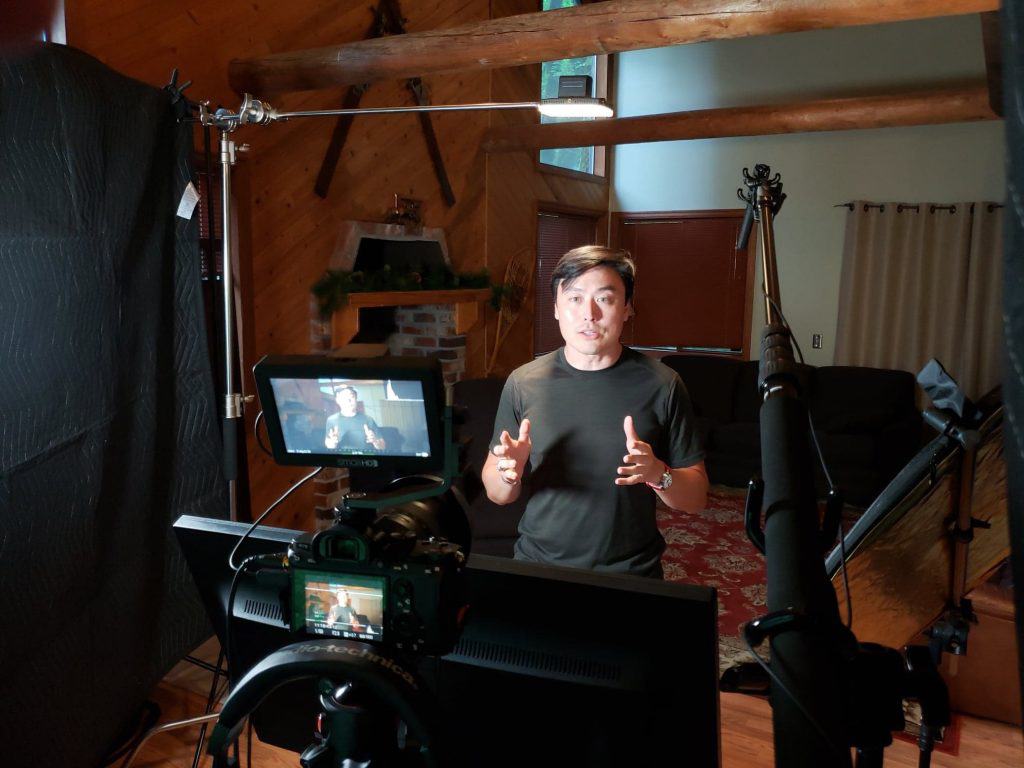
Photo by my producer and videographer Dan Fox, probably at the end of our 4th day of filming.  If I look tired…I was 🙂

TAIP is 100% reader-supported through tipping. If you want to leave us a tip of any amount it would be highly appreciated. These tips help support our efforts to keep TAIP an ad-free environment. Just as at a cafe, the tips are split evenly among the team.