
Building in Nice

Living in France as a Retiree: Part 3: Taxes and Succession

Don’t miss Part 1 and Part 2 of this series on Living in France as a Retiree

France has rather rigid laws, especially when it comes to taxation and succession. They are also quite unclear. Disclaimer: I am not an attorney, nor an accountant. However, I can inform any prospective retirees on issues to look out for. I used some of my own experience, but also that of other immigrants from the US to France with different financial and family situations.

Note of caution: French attorneys and tax accountants who deal with Americans tend to ask for a lot of money, and their advice is not always crystal clear. I don’t want to make a sweeping assumption, but this has been our experience.

Another note of caution: Laws change.

No Double Taxation

Who is a French tax resident? The French government uses several factors to determine whether or not you are a resident for tax purposes. A rough rule of thumb is that if you intend to spend more than 6 months of the year in France, you will probably be considered resident for tax purposes.

The good news is that there is a treaty between the US and France, and retirement income, at the very least, is not double-taxed.

Trusts

Many Americans have trusts. France does not recognize US revocable trusts as “transparent” for tax purposes, so every time you change or take a distribution of funds held in a trust, you will have to declare it to the tax authorities within 30 days. The penalties for not doing so are steep.

The current default position is that distributions are automatically treated as income and hence taxable. The onus is on you to prove that distributions are not income and thus not taxable, which means you will need a full accounting trail of the funds. If you have a revocable trust, you should consider removing any financial assets from the trust prior to moving to France.

Joint Ownership of Property

If you are buying property jointly (e.g., you and your spouse or partner), there are three ownership options:

1. En Indivision (Standard Joint Ownership)

This is the default and most common method. Each person owns a specific share (e.g., 50/50 or 60/40) based on their financial contribution.

  • Pros: Simple and flexible; reflects actual financial input.
  • Cons: If one (legal) partner dies, their share is subject to French inheritance laws. This means children (including those from previous relationships) automatically inherit a portion of that share, potentially making the surviving partner a co-owner with their children or stepchildren.
  • Best for couples with no children, or those who are comfortable with their children becoming immediate co-owners when one of the partners passes.

2. En Tontine (Survivorship Clause)

A specific clause is added to the sale deed stating that the survivor is deemed to have owned the entire property from the start. This needs to happen when the property purchase occurs.

  • Pros: The surviving partner becomes the sole owner automatically, bypassing “forced heirship” for that specific property. The children cannot claim their share until both partners have passed away.
  • Cons: It can be difficult to undo if the couple splits up, as both must agree to cancel it. There may also be higher tax implications if the property value is high and the couple is not married or in a PACS (official civil partnership)
  • Recommended for unmarried couples or those with children from previous marriages who want to ensure the survivor stays in the immediate family

3. SCI (Société Civile Immobilière) (Limited Liability Company)

You set up a French LLC to buy the property. The couple (and their children) then owns shares in the company rather than the real estate itself.

  • Pros: Offers the most flexibility for succession planning. Shares can be transferred more easily than real estate, and they can help non-residents manage French inheritance taxes.
  • Cons: Higher setup costs and ongoing administrative requirements (annual accounts). The shares must also be declared to the IRS every year.
  • Recommended for high-value properties or complex family situations where you want to avoid certain French succession rules.

Comparison of Couple Status & Protections

Status: Married

  • Inheritance Tax: Exempt (0%)
  • Automatic Rights: Strongest; can use a Communauté Universelle contract to protect the survivor

Status: PACS (Civil Union)

  • Inheritance Tax: Exempt (0%)
  • Automatic Rights: No automatic inheritance. You must write a French will, or the partner gets nothing

Status: Cohabiting

  • Inheritance Tax: 60% (yes, you read that correctly!)
  • Automatic Rights: None; the surviving partner is treated as a “stranger” for tax purposes

Inheritance Tax on Worldwide Income

When a French tax resident dies, their entire worldwide assets will be taxed by the French authorities. French inheritance tax rates and allowances depend entirely on the familial relationship between the deceased and the beneficiary.

  • Spouse/Civil partner: Fully exempt from inheritance taxes
  • Children/parents: biological, adopted: €100,000 tax-free allowance; above that threshold, a sliding scale: 5% to 45% (progressive)
  • Siblings: €15,932 tax-free allowance; above that threshold, a sliding scale: 35% to 45%
  • Nephews/Nieces: €7,967 tax-free allowance; above that threshold, 55%
  • Unrelated/Friends: €1,594 tax-free allowance; above that threshold, 60%. This category includes unofficial life partners, as well as stepchildren you may have raised, but are not officially your children

More notes of caution:

  • It is important to verify that adopted children will indeed inherit just like biological children; it isn’t always the case, especially if they were adopted as adults.
  • If you have a joint bank account, the wording in the title can determine what happens upon the death of one account holder. It is best to verify this when you open an account.
  • In France you cannot “disinherit” your children. If a couple jointly owns a property and one partner dies, the children of the deceased partner have automatic ownership rights on a portion of the assets and property of the deceased. This cannot be overridden by a legal contract.

The above is not a comprehensive account of all the details. However, at least this article can help retirees avoid some pitfalls and be prepared.

Photo of a building in Nice

Did you enjoy this article? TAIP is 100% reader-supported through tipping. If you want to leave us a tip of any amount it would be highly appreciated.  These tips help support our efforts to keep TAIP an ad-free environment. Just like at a cafe, the tips are split evenly among the team.

Coming down Mont Boron in Nice

Living in France as a Retiree: Part 2: Health Insurance, Medical Care, and Nursing Homes

Don’t miss Part 1 of this series on Living in France as a Retiree

Health Insurance

When you first apply for your long-stay visa for your first year in France, you are required to prove that you have health insurance. The less expensive way of getting it, for me, was via the visa website; it cost about $500 for the entire year, but it was not comprehensive, i.e., not for preventive healthcare, but rather for emergency situations.

Be aware that basic Medicare covers nothing outside of the United States. Some supplemental plans may cover expenses in other countries after a deductible is met.

After you have been residing in France for three months, you can apply for a numéro de sécurité sociale (social security number, which is not the same as Social Security in the United States). You’ll need proof of residence, a birth certificate, and your passport/visa. Usually the application is mailed to the local CPAM office. CPAM (Caisse Primaire d’Assurance Maladie: national health insurance) will probably request additional information by mail or have you fill in a questionnaire. 

The process can be quite daunting and appear illogical. You may be asked for the same document again and again, and then suddenly discover that you’ve been covered for a year! (You can request reimbursement for expenses incurred in the meantime.)

To apply:

  • Your name must be the same on your birth certificate and your passport. If not, you will need to prove that you are the same person through your consulate, and if there’s no consulate only an embassy.
  • If you live with someone without being married or “PACS‘ed” (officially partnered) you may be considered a concubine. It doesn’t have the same connotations as in English, or at least it’s not limited to those connotations. 
  • The CPAM agents usually answer any questions you may have on the phone, and while they are very polite they have little time to speak at length. Telephone number: 3646 (within France). You can request an English speaking agent when you call.
  • You’ll need a French RIB (Relevé d’Identité Bancaire, or bank identity) in order to be reimbursed.
  • To find your local branch, use the Adresses et Contacts (addresses and contacts) section on the Ameli website.
  • More information on French healthcare in English.

Once you have your French social security number, you must request the carte vitale, the health insurance card, which will then be mailed to you. The card is used by medical providers to enter your information, when you fill a prescription or visit a doctor.

Some areas of France are medical deserts, with few medical facilities. In larger towns, you’ll find many hospitals and medical practices, but wait times for specialists can be long and some don’t accept new patients. In Nice, where I live, it’s hard to find a dermatologist — they are often busy with cosmetic procedures!

There are different tiers of medical practices; for some, you don’t need to pay anything over the basic reimbursement offered by health insurance; for others, you’ll pay more. For tier 1 medical practices, you will often pay nothing out of pocket; the national health insurance will handle it.

You can also buy supplemental insurance, through a mutuelle, in a dizzying array of levels. A basic mutuelle subscription might cost €40 a month, and help pay for hospital stays, which can be very expensive. Higher premiums will help pay for hearing aids, glasses, higher-tier medical practice fees… the second year, I used a broker to help me choose.

Nursing Homes and Assistance for the Elderly

In the US, nursing homes often cost much more than many of us can afford, especially in larger cities on the coasts. In France, they are not inexpensive, but appear to be more affordable. There are a variety of systems.

There are senior living facilities for seniors who are well enough not to need assistance, mainly for people who would like to have a community, and in-house facilities.

EHPADs (Établissements d’Hébergement pour Personnes Âgées Dépendantes) are like our medicalized nursing homes. They are meant for people over 60 who need daily assistance. As far as I know, in 2025 they cost about €4,000 a month, but it varies. If you don’t have enough income, you may be able to stay at a lower cost, but when you pass, the difference will be taken out of your estate.

  • Public (government-run) homes cost less than privately-owned homes (nonprofit or for profit).
  • For more information (in French)
  • For a list of locations separated by area: Assistance Retraite (in French)

There are also agencies offering in-house care for a fee. I’m not sure, but if your income is below a certain level, and you are disabled or recovering from a hospital stay, you may be eligible for help paying for a nurse or a cleaning person.

In general, France is a good country to age in, once you have surmounted the bureaucratic hurdles! In my personal view, single-payer insurance is much better than the US system of many disparate for-profit insurance companies, especially as so many get left behind.

Some additional informational websites:

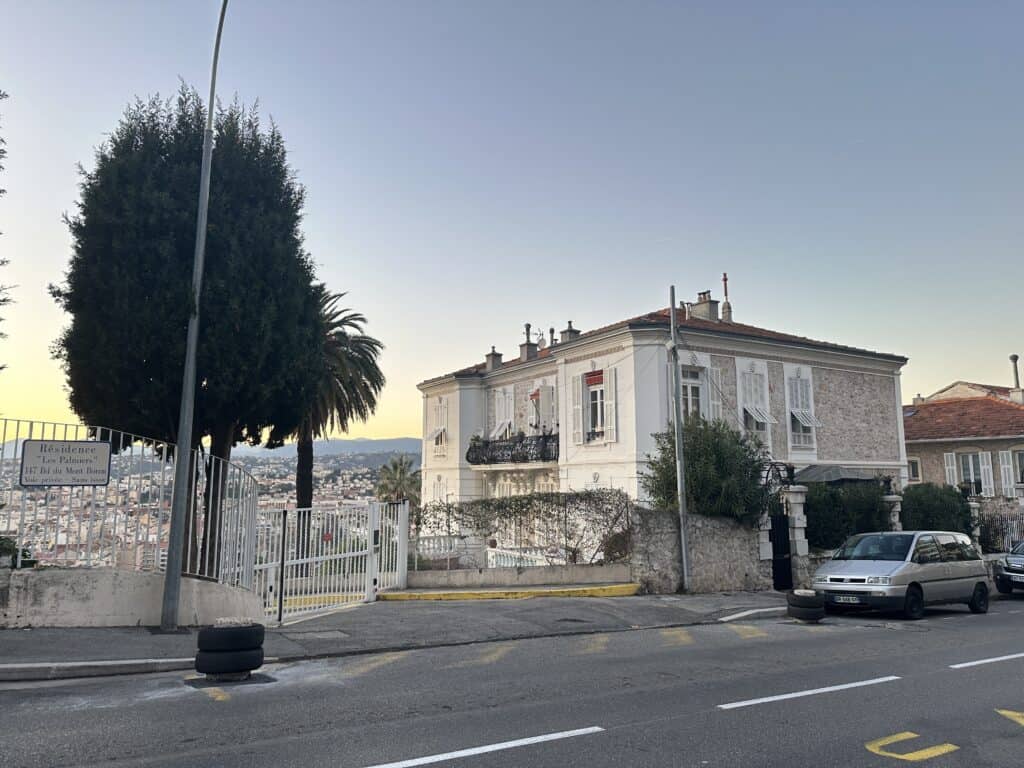
Photo of Mont Boron in Nice

Did you enjoy this article? TAIP is 100% reader-supported through tipping. If you want to leave us a tip of any amount it would be highly appreciated.  These tips help support our efforts to keep TAIP an ad-free environment. Just like at a cafe, the tips are split evenly among the team.

View of Nice

Living in France as a Retiree: Part 1: Participating in Daily Life in France

In two previous TAIP posts (here and here), I explained all the steps needed to start a life in France as a retiree.

In the next three posts, I will explain what you need to take into consideration… very carefully. There are issues that may change your mind, much as you’d like to move to France. 

Public Transportation and Driving

In many parts of France, even in smaller towns, there will be some type of public transportation, even if it’s just a small bus. There are, however, areas such as small villages where buses may be scarce or even nonexistent, and in such cases you will need a car.

I live in Nice, in the city (albeit not downtown), and transportation is very good, especially the closer you are to the coastal area. As a senior citizen, you can get half off the monthly or yearly card. If you use buses and trams every day, transportation becomes very cheap. In a city like Nice, you can also walk to many places (good for your health!). Otherwise, one ride costs 1,70 €  — still not bank-breaking.

Paris and the surrounding areas have a fantastic transportation network: the famous métro, the very fast RER, and many SNCF trains further out to Fontainebleau or Beauvais (where there is a small airport mostly used by RyanAir).

If you need to drive (or just want to drive) and your US driver’s license is not from a state that has an agreement with France, after a year of residence you’ll have to get a French driver’s license. That is an expensive, time-consuming, and difficult proposition, albeit useful to understand French driving laws. If you don’t want to go through that, you need to plan at least a year in advance to obtain an accepted driver’s license, which could entail establishing residence in another state. You’d be surprised which states are not accepted, such as New York and California!

Note: Before you cancel your US car insurance, ask for a letter that shows your claims history (in theory, 14 years’ worth). Otherwise, you’ll be treated as a beginner driver when you buy a car and need to get insurance.

Participating in Demonstrations

Some of us are more political than others. We may wish to march in the street for a variety of reasons, but we have to be prudent when we are not in our own country (even in your own country you have to be careful, but that’s a different story for a different day). I read about an Italian semi-well-known person who was deported from France after she was seen demonstrating, even though she is a citizen of another European Union country; that surprised and worried me.

The good news is that French police are usually (not always) not too aggressive. I have seen demonstrations go by and the police remain close to observe in case of a problem. Otherwise, I have not seen them interfere.

Learning and Speaking French

If you never learned any other language than English in your life, it’s not easy to start learning French as an older adult. But if you are really motivated, you can reach a reasonable level of fluency. It will usually take several years. If you’re in a village with nobody around who speaks English, fluency will be achieved much sooner.

You cannot afford to be ashamed of your pronunciation or incorrect grammar. Practice is key, but so are good classes. It’s hard not to be discouraged when you are convinced you’re saying “une demi-baguette, s’il vous plaît” (a half baguette, please) correctly, and the boulangère (the baker or bakery lady) keeps on saying “Je ne comprends pas” (I don’t understand). Do try practicing “millefeuille” if you love Napoleons! 

There are classes for all kinds of budgets, from a private school in Villefranche to the free version of online language courses. Each person will find their fit according to their budget and learning style; more expensive doesn’t necessarily mean better, although some outlay of cash is necessary, as Duolingo, for one, only goes so far (but it’s a good start). 

Similar to Duolingo, there is Babbel, and several more. I have started using Skool, which has human instructors; this keeps you on your toes. Lawless French is another fantastic tool; Ms. Lawless is a stickler for grammar. Grammar is very important in French, and very complex. The main Lawless French site is free, and there is a paid Kwiziq add-on which is excellent (but don’t believe it when you are told that you have reached C1 level). And of course, there are many private instructors, in person or online. In the US, I used to teach via TakeLessons.

I’ve looked into YouTube videos, and it’s a mixed bag. Learn French with Alexa has proven useful to me as a French teacher. You can thank her by subscribing to her Patreon channel. Videos from some other creators had me seething with rage as they’re just clickbait.

Stay tuned for Parts 2 and 3 on health insurance and medical care as well as taxes and succession laws!

Photo of a view of Nice from a hill.

Did you enjoy this article? TAIP is 100% reader-supported through tipping. If you want to leave us a tip of any amount it would be highly appreciated.  These tips help support our efforts to keep TAIP an ad-free environment. Just like at a cafe, the tips are split evenly among the team.
a field of purple flowers

On Living Two Lives

I’ve heard of people going back home after living abroad for a while and feeling self-conscious, out of place. As if they can no longer relate to the people from their hometown. It’s isolating, I imagine, to feel disconnected from the people and the place that witnessed their formative years.

For me, going back home for the first time since expatriating was disorienting, but I had a different experience.

Stepping back onto the soil I knew so well — the smells of Texas, the long stretches of overpasses that led to shopping plazas or nothing at all, and that heat, my God, that heat — transported me back to my adolescence. 

This was the town I hit puberty in. The town where I first learned what it was to like someone so much it hurts. The town where I spent almost all my weekends at the age of fourteen at the roller rink. The same town that I knew like the back of my hand — I could still drive the same mindless routes to the superstores that my friends and I wandered around in when we had nothing better to do (and in the suburbs we almost never had anything better to do). 

This was the town that I hated, that I so badly wanted to flee from, the town I associated with boredom, ignorance, bigotry. I remember so vividly feeling like an alien on my home planet.

But also, it was the town that raised me. I thought I always knew there was life outside of Katy, Texas but I didn’t really get to experience it and truly understand everything that it encompassed until I left for a while.

When I came back home for the first time I was awoken, rather briskly, by the realization that there was this other person inside of me, one that walked with her chin held high and in a confident posture. I felt unafraid of the world. 

Because in Texas, I have no shame. These people don’t impress me. They don’t intimidate me. I know them for who they are — so easily placeable in a tight, little box. Film bro, sorority girl, liberal, conservative, someone who gets me, someone who doesn’t. 

I’m the funniest when I’m at home. The most reckless. I have no care in the world. I’m happy, I’m generous, I speak up for myself effortlessly. 

In Paris, another less familiar, less well-acquainted side comes out. I’m shy. My self-advocacy is easily thrown out the door. It’s something I have to think about. Put energy into. Relearn every day.

I’m drawn into myself. I’m self-conscious. I can come off as mean. I like to think it’s because I’m protecting myself, but really, it’s because of all my nerves and how scared I am. How hard it all is.

So at first, I was shocked and also liberated to come home and release this lighter, funnier, kinder version of myself into the spotlight again. I exhaled, so incredibly relieved. I am layered. I am complex. I am not this way, or that. No one can fit me in a box because I’ve moved away from that possibility of being stuck there for too long. 

And finally it all starts to make sense — I am nice, I am adventurous, I am brave — moving to Paris, becoming an expat has made me believe I was one way, it hardened me, convinced me I’d be like this forever, but my life here is just starting out. Of course I’m acting like this. Of course all I can think about are the differences between home and here. There’s still so much room for my life to change. 

I feel immensely fortunate to have been struck by this sense of duality. While I know fear and anxiety well, I also know assurance, confidence, comfortability. Not everyone gets to feel these things. I am so lucky to have two lives, one that can nourish the other while in pain. One that discovers something that helps revitalize the broken side of myself. Not everyone has this same experience being an expatriate and I will always count my lucky stars for this.

And I’m not saying I felt this ease and comfort right after I stepped off the eleven-hour plane ride. I remember initially wincing at the loudness of public spaces. The airport, coffee shops, malls. I’d cover my ears and buckle down — bracing myself for all that noise. It was the first time I truly recognized how loud Americans tended to be. 

But eventually I embraced it. I rejoiced in it. These are my people. My silly, ignorant, superficially sweet people. 

I learned to collect the noise, open my heart up to it, and embrace that cafe culture in America wasn’t just about working on your laptop. It was also about eavesdropping too.

I learned to feel completely and utterly at peace. Despite all the noise. Because while I know people can sometimes feel lost going back home, I felt revitalized.

Photo by Roberta Guillen on Unsplash

Did you enjoy this article? TAIP is 100% reader-supported through tipping. If you want to leave us a tip of any amount it would be highly appreciated.  These tips help support our efforts to keep TAIP an ad-free environment. Just like at a cafe, the tips are split evenly among the team.

Place Garibaldi in Nice

Adventures and Misadventures in Renovating an Apartment in Nice, France

After trying for several months to find a long-term rental apartment in Nice (a losing proposition for various reasons), we decided to bite the bullet and purchase our home. We enjoyed living in Nice, having hopped from a Home Exchange to an Airbnb for several months, and pinpointed a couple of neighborhoods we liked.

Finally Finding the Apartment

We found an apartment near Mont Boron that had wonderful light and a large terrace, but it hadn’t been renovated in 50 years. The electrical setup was not compliant with current regulations and was in fact hazardous!

We stayed there in its original configuration for a month in order to get a feel for the space, and then started asking everyone we knew (not many people, at that point) if they knew trustworthy contractors. We ended up with quite a medley.

Note: Building and renovating is often a nightmare anywhere in the world. I don’t know of any building site that had zero problems (I used to work as an architect). However, you try to keep problems at an acceptable level.

Amongst the choices:

  1. A trio of professionals, who were accustomed to working together: an electrician, a plumber, and a mason, if I remember correctly. The electrician seemed very knowledgeable, but was also very bossy, so we were a bit worried and passed on the trio.
  2. Various contractors from Eastern European countries, who came recommended and whose prices were very low. We worried that the prices could change at any moment. In fact, on one estimate, it was clearly written that the prices could change!
  3. One “full” contractor who would handle everything except what we had already signed contracts for (double-glazed windows, shutters, and shades, and the kitchen outfitting).

Moving Forward with the Reno

We ended up deciding to hire the full contractor, even though his estimate was the highest. He was working on our upstairs neighbor’s apartment, and she had known him for several years. We felt it was worth the additional money to have someone with a lot of local experience (he wasn’t quite a local himself, as he was raised in the suburbs of Paris). We were asked to buy most of the materials ourselves: tiles, bathroom fixtures, and a couple of other things. He purchased plumbing infrastructure, electrical (except lamps).

He kicked us out of the apartment for 4 months, promising to be done by then. Luckily, we found a temporary vacation rental, about 15 minutes away on foot.

Once again, we asked around and researched outlets for flooring, bathrooms, and traipsed off all over town and to Cagnes-sur-Mer, about 15 km away, to make our choices.

The site was very dirty and messy, but we didn’t dare protest (we tried, but were shut down: “my workers need to be comfortable!” i.e., smoking cigarettes all over the place). Towards the end of the work, the kitchen installer came. He was a very strict and disciplined professional, and made a disparaging remark about the messiness. The next day, the apartment was cleaned up!

All in all, it was expensive, but there weren’t too many terrible incidents, and we remained within budget. Some reflections on our experience: 

  • We were shocked by the flimsiness of interior walls built in the 1970s: barely 7 cm thick, you could punch through them. We had to double up some for structural integrity.
  • The plumber assured us that we could use the bidet pipe for a toilet. He lied. After a few disgusting flooding incidents, we had to shut down the toilet. Fortunately, there are other toilets! When we protested to the main contractor, he answered that we had asked for the toilet. I was livid, but had no proof (see below).
  • The plumber (yes, him again) installed an “Insinkerator” (not my idea, but men like these things, I guess). It cost much more than his original quote, and then he told us we shouldn’t use it for more than a few seconds at a time because of the old building pipes.
  • The painters (I think) poured turpentine in the jasmine flower pot. The jasmine died.
  • The contractor promised the place would be perfectly clean when he left, but that wasn’t the case. We kept on finding bits and pieces of cement under the windows.
  • We bought toilets that are terrible at flushing. Every time I go to the US, toilets seem to flush without any issue.

However, all in all, it wasn’t too bad an experience, and our apartment is pleasant.

Feeling Lucky with Our Choice

A new friend arrived in Nice, speaking little French, and her luck was much worse, unfortunately. She went through several contractors, all flaky, leaving her in the lurch with unnecessary expenses. The first one came highly recommended from a member of an expat group on Facebook. As it turned out, he had only been hired until then as a handyman, not as a contractor. He was not prepared and had no equipment of his own. The next one wanted to go on vacation and wanted all his money, even though my friend was still waiting for the kitchen installers (the same ones I had used without a hitch), but parts were delayed. This contractor was so threatening that she gave up and paid him… and soon after he left, the bathrooms he installed were leaking.

The window installers (the same ones I had used) were delayed, but she couldn’t remain without windows, and they didn’t want to reimburse her deposit until she showed them the clause in their own contract.

The third contractor decided, after accepting to do the work, that he needed to go on vacation.

Well… months later, she is finally in her apartment, with a beautiful view, but what tribulations she went through! It seemed never-ending.

Another friend, who is French, returned to Nice from the United States and bought a beautiful old apartment. She hired a well-recommended contractor who ran into personal problems and disappeared with her money (I am not sure how much. A lot.) She didn’t react fast enough, and the police couldn’t help her. She had to hire another team, and fortunately, she now has an almost-finished apartment.

I’m not sure what other lessons to offer! One thing is certain: get as much as you can in writing. For example, if I had asked the plumber to put in writing that a toilet was feasible in that bathroom, he couldn’t pretend that I had insisted on a toilet.

In any case, if you do embark on a renovation journey… bon courage! You’ll need nerves of steel.

You could also hire an architect or an interior designer, budget permitting. Again, make sure you have a contract that specifies fees and what will be handled by the designer. The more detail, the better. I didn’t use one, as I was myself trained as an architect. I regretted giving away my T-square years ago and made do with a ruler and a triangle. It was very useful to lay out the tiles the way I wanted them, as well as the bathrooms. The kitchen outfitters handled the kitchen drawings (with our input and exact measurements).

If you need names of companies we used, please reach out.

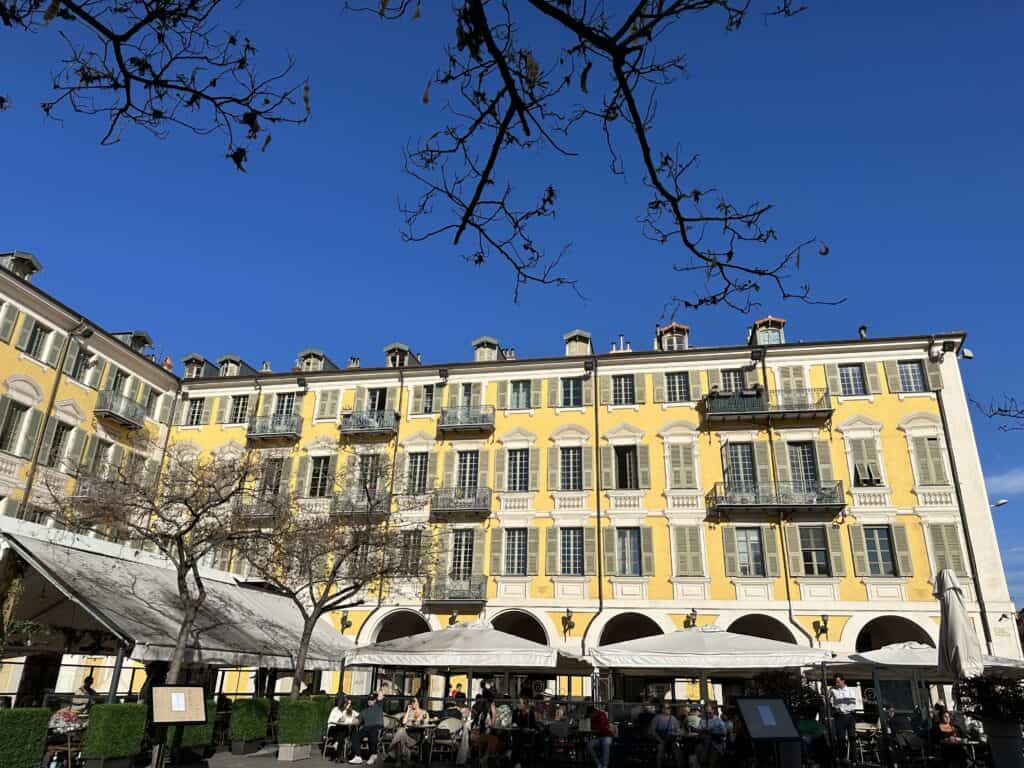
Photo of Place Garibaldi in Nice

Did you enjoy this article? TAIP is 100% reader-supported through tipping. If you want to leave us a tip of any amount it would be highly appreciated.  These tips help support our efforts to keep TAIP an ad-free environment. Just like at a cafe, the tips are split evenly among the team.
people walking past paintings in the Louvre, Paris

You Have to Make Your Life

Having to stand up for myself in a country where I’m trying to establish the rest of my life has been no easy feat. 

A thin layer of perspiration has formed and now permanently coats my face simply because I’m trying to work up the nerve to ask a follow-up question. 

Standing up for myself takes everything out of me. It takes all my guts. 

And yet, I still decide to get up every morning and do it again. And again. And again. 

When I’m lying on my bed at night, thinking about what little ground I’ve covered, yet how much energy I’ve used to defend my honor, I’m struck, asking myself the question: When does one learn to do this? When does one learn how to stand up for themselves? Because I think I might’ve missed the memo.

As children, it’s our parents’ job to be our biggest advocate. Defend our rights. Speak to our needs.

During adolescence, we often wade in a state of constant humiliation, so much so that it feels like we’re drowning in it. We’re barely hanging on. Dogging-paddling to stay afloat. We couldn’t care less about fighting for our rights, what we deserve, we’re living day-by-day and our friends are our safety floats.

Then one day we wake up and come to the jarring realization that we’re the adults now. It seems as if we’ve just been living as passerbys to our own lives until suddenly we’re thrown into the wild, taught to fight it out, and see if we come out alive. 

In adulthood we’re confronted with the desire to carve out a life of our own. And if you want to do that — to make your own life — it means getting used to confrontation and passive-aggressive responses and learning to be your biggest protector. 

When I moved to Paris in my early twenties, my question changed in accordance with my new context. Having to deal with bureaucracy, confrontations on the street, and landlords all in a foreign language on a foreign land, I wondered, “But who stands up for us?” I felt that someone should. 

Sticking up for myself within a new identity became an even bigger challenge, yet increasingly vital. 

Initially, I relied on handling administrative tasks in a group effort, surrounded by my closest expat friends. This way, if we worked together, chainlinked our arms around one another’s, no one could take us down. 

One thing led to another and the group eventually did collapse. 

Someone would ask for a raincheck the day we planned to meet up and check things off our to-do lists, so we’d take it as a sign to put our tasks off for another week. Another would fill our souls with hope by promising to look into something for the group and relay their findings. In the end, they’d never get around to it.

Relying on others to help cushion the embarrassment by being there with you when you fall from grace is undeniably nice, but it also tends to be a huge waste of time.

I even tried relying on my boyfriend for this sort of support, telling myself that once he got home from work he would sit by my side and help me as I called CAF. When he would come home, we’d make dinner while listening to music or turn on the TV in the guise of just wanting to watch the news for a few minutes, then like magic, a movie would switch on and we’d get sucked in. 

We always told each other tomorrow. Tomorrow is when we’ll spend countless hours on hold together. 

The thing is, time moves slowly when you’re always waiting on others. 

I watched as people made their own lives around me. Big things were happening to people. Law school. Jobs in fields that nourished them and some that even paid them well. Marriage. An evolving social status.

It felt like nothing was happening to me. People were moving around me, things were moving around me, but I wasn’t. I was stuck in the middle of a whirlwind. 

I was with one of my expat friends at the Musée de l’Orangerie, wandering around the Berthe Weill exhibit and reading about her legacy and the kind of life she led in Paris. I remember feeling low at the time. Bad news kept toppling onto my lap. Yet again, I was passing nights lying on my bed, questioning everything. The central one being: why am I here? Every bright light at the end of the tunnel seemed to be misleading. Caveats adorned everything I pursued, ultimately preventing me from simply living in the city where I wished to be. I couldn’t feel any relief. But then I saw this quote plastered above some of Weill’s collection and a smile couldn’t help but creep upon my face. My stomach felt warm. My giddiness started to rise. 

“I started out with just 50 francs in hand and went into debt to pay the costs involved in opening a shop. Obviously, the situation wasn’t ideal, but I couldn’t back out now. Besides, what was the worst that could happen? Not being able to hang on? I WILL HANG ON!” – Berthe Weill

Be brave. Do the thing. Bear the challenge. If anything, it won’t wear you down; you’ll wear it.

In the end, I sucked it up. I put on my big girl pants, and I learned how to fight for my life and how to find pride in saying that I made it my own. Learning to stick up for yourself in a “ce n’est pas possible” culture is not my kind of fun. In fact, I used to take offense to it. With nearly every interaction, I have to fight for what I want. As an American, having arguments, even little ones, doesn’t just brush off my back. I don’t call that an interaction. I call that a dispute, and it makes me feel icky. They stick with me. I feel ashamed, or if I’m lucky, I learn to think of the other person as evil. 

Here, it’s almost like a game. Oh, you want something? You’re gonna have to beg me for it. 

I now treat it as such. Once I crack the code and win the game, receiving what is rightfully mine, I become overjoyed. It’s made the reward feel even better. It’s turned it into a testament to my wit, my charm, my insatiable persistence. 

Still, I find it demanding to stick up for myself and fight for what is rightfully mine, but I’m happy to say that I try to take it less seriously these days. Laughing more about it helps. What do you mean it’s not possible to do something that is very clearly possible? 

In doing the hard work, I’ve felt a strange conglomeration of feelings: being absolutely on my own, yet feeling powerful because of it. I’ve learned, reluctantly, that I can’t wait and sit back and watch how my other expat friends have done it or wait till my French boyfriend can help me.

If I want things to happen for myself, I need to make them happen. And in the meantime, regardless of what will happen with my life, I WILL HANG ON!

Photo by Diogo Fagundes on Unsplash

Did you enjoy this article? TAIP is 100% reader-supported through tipping. If you want to leave us a tip of any amount it would be highly appreciated.  These tips help support our efforts to keep TAIP an ad-free environment. Just like at a cafe, the tips are split evenly among the team.
people walking in front of a restaurant at night in Paris

Paris is Still Just a City

In my final year at university, amidst the chaos of final exams, graduation, and a future being all mine for choosing, moving to Paris was all I could really think about. I didn’t care about making a name for myself or carving out a place in the land of interns, waiting eagerly to climb the corporate ladder. All I cared about was getting out of Texas, seeing something new.

I dreamt of the days I studied abroad here, drinking absurdly cheap wine, eating fresh pastries, discounts at the cinema, free entries to museums. I dreamt of a life Paris had afforded me when I was younger. One that was reckless, one where I had no responsibility besides to fall in love with the city, new friends, even a cute boy. 

When I graduated, I remember the world seeming so big, and I felt so lucky to have all these possibilities laid out in front of me. I had a degree now, even though I could hardly remember how I got it, and I naively believed that things would continue just as smoothly for me as they had been, given my life thus far. So, I took the leap, did the big, courageous thing it was for a well-off girl like me to do, and I made the big move to Europe. 

I emerged from the metro at Place d’Italie on a busy Sunday afternoon, with a suitcase in my hand, and an overstuffed backpack hanging from my shoulders. Police sirens rushed past, pedestrians made way for themselves regardless of others, and there stood directly in my line of vision, a big, metallic, soulless shopping mall that was the point of reference for my new neighborhood. Some residents have the Eiffel Tower. I had Italie Deux. 

I looked down at my jean shorts and sneakers, then up at the Parisians sporting black slacks and light summer jackets. An elderly lady came up to me, asking for directions. For a while, I tried to help. I looked at where she wanted to go on my phone and attempted to explain directions in French. She appeared frustrated, not being able to understand me, and gave a look like I was wasting her time. She walked off and demanded the next stranger for help.

I was breathless after having dragged my suitcase up several flights of stairs to my new apartment. After having unlocked the door with my comically long skeleton key, I immediately sank to the wood-paneled floor. I sat there, looking up at the crown molding on the ceiling and felt completely happy. A wave of warmth rushed over me. This is what I wanted, I thought. Crown molding, how lucky am I? Sure, there was an unbelievable amount of dust and mold bordering the windows, and the previous tenants had left a bunch of clutter, but here I was finally in my new place in the city I’ve been dreaming about ever since I left.

Weeks passed and I put off essential errands that would make my life feel more real and viable here. I needed a bank account, a social security number, a phone number, WiFi. But I was scared. 

Hidden within my fear were my memories, and suddenly, they all came flooding back. My face felt hot. I suddenly remembered what I was so quick to forget: how humiliated I felt when I was studying here, trying to disguise my Americanness yet it was inescapable. How I was still incapable of mastering the language. How it felt like anxiety was always trailing me, hiding behind every corner ready to pop out and remind me that this was not my home, things work differently here, and they don’t really work for you. 

I broke out into a cold sweat. What was I doing? I came over signed to a nannying agency, meanwhile I had spent the majority of my life working with kids and after finally having a college degree, I was longing to do something else. What was I doing? I was wasting time while everybody was back home applying for jobs that they could actually get. 

My panic broke me. I applied to so many jobs and internships, all of which were hindered by the fact that I wasn’t yet bilingual, nor was I enrolled in higher education. I felt trapped. I felt trapped in this undeniably beautiful, bustling, and some might say, I know I sure did, magical city. 

I remember looking for signs to bring me back to America. A cop out. A scapegoat. I began applying to these outrageously prestigious Master’s programs in America whose acceptance rates were laughable and exclusively marketed for geniuses. I convinced myself into believing they were targeted at me. I told myself, if I get into one, then it’s destiny. Then I’m going home and never looking back. They need me. America needs me.

The advertisements that fluttered the walls in metro stations began speaking to me. Women and men, children and the elderly, all those whose faces were plastered on these posters, urged me, begged me to come back. “You’ll be safe there,” they teased. “Life will be easier. You’ll get a nice job, one that fulfills you.” I ran to catch the stalled train before the doors shut, wanting to give in but also not wanting to give up. Making that decision to move back home would feel like both.

The image I held in my head of my study abroad days no longer held up. The lights dwindled, the magic faded. Paris is beautiful, yes, but there’s a lot of dog poop smeared across the sidewalks. And cigarette butts. And trash. There’s almost no relief from the heat in the summer, so it’s best to get away, if you can afford it. People can be mean and creepy. All of these things are not just exclusive to American cities — they are caveats of every major metropolitan area, including Paris. 

It took me two years. Two years of indecisiveness, of failed dreams and miraculous resurrections, to realize that fighting to live in Paris is worth it. 

I can’t exactly say what the catalyst was to deciding that I was going to stay, that I’ll fight to carve out a life for myself here. Maybe it was the political climate in America, making my idealization of the country come to a screeching halt. Maybe it was the realization that nostalgia is often manipulating, a poison for the brain to make the past seem so alluring when that’s exactly what it’s meant to be: something that builds our story, but remains there, stuck. 

Maybe it was the realization that the job market is incredibly difficult everywhere right now. Maybe it was (it definitely was) that the cute boy and I started to become even more serious in wanting to integrate our lives with each other’s. 

It was probably all of those things that made me decide to stay, despite the hardships, despite the seeming impossibility of it all, despite the all-consuming nostalgia, and, at times, maddening cultural differences. I was overly confident two years ago, I have to admit. I thought I was ready to move my life abroad back then, but in fact it took me two years of living here to confirm exactly that. 

Paris has been a city that I hate(d), that I love(d), that I couldn’t/can’t seem to get over. Paris is still just a city, with all its flaws and glamour. But now, it’s my city.

Photo by Elric Pxl on Unsplash

Did you enjoy this article? TAIP is 100% reader-supported through tipping. If you want to leave us a tip of any amount it would be highly appreciated.  These tips help support our efforts to keep TAIP an ad-free environment. Just like at a cafe, the tips are split evenly among the team.

The Week Before I Move to France

I’ve got my visa, a year’s supply of my favorite deodorant, and a one-way ticket to France. The countdown to my departure began when I returned to Texas from France four months ago, but I’m still struggling to fathom how those 120 days are now in the single digits. 

Last year, I worked as an English teaching assistant in this quaint town on the south side of the country. This year, I’m returning to the same program, the same lodging situation, and the same community I grew to love. It’s crazy to think that this time last year, I was preparing to live in a city where I didn’t know a soul! 

Round two of working in France has a lot fewer questions on the outset, or at least the questions have changed form. 

“Where will I live?” has become, “What will it look like to live with different people in the same place?” 

“How will I teach?” has become, “How will I serve my new co-workers and students?”

“Who will my community be?” has become, “How will my relationships grow in the months ahead?”

Now being more accustomed to the different language, culture, and daily rhythms of living abroad, I have noticed that my goals have also moved from the category of surviving to thriving. Last year, I learned how to get around using public transportation and my own two feet. This year, my goal is to trade in my US driver’s license for a French driver’s permit. Last year, I learned what a month’s worth of expenses could look like in France. This year, my goal is to live in awareness of my budget instead of relying on additional savings to pick up my slack. Last year, my goal was to keep my head above water and this year, I want to be a well of reassurance and knowledge for the new language assistants coming to my town from around the world.

So now that I’ve talked through the theoretical, let me share a bit of the practical. Here is my to-do list one week before I (re)move to France. 

  • Fill out as much of the paperwork as possible for my request for CAF lodging assistance
  • Purchase a professional translation of my driver’s license and driving record
  • Send in my rolls of film from this summer to be developed and returned to me digitally 
  • Buy a pair of jeans; mine are wearing out and there is nothing quite like American jeans
  • Finish one of the books I’m reading so I don’t have to travel with it; books weigh more than you think
  • Make a final trip to the pharmacy to stock up on my American medical needs
  • Buy a train ticket from Paris to Lyon
  • Plan my arrival
  • Start packing 

Knowing it will be a minute before I see my friends and family on this side of the world again, the logistics are balanced by the weighty work of being present to my community.  I’ve made plans with friends for our final lunch and dinner dates of 2025. Just the other day, I realized that my mom has never been to my favorite park, which is a 20-minute drive from her home. Naturally, we’ve chosen an evening to go together before I hop the pond. Making time for these shared moments is something I know I won’t regret down the line when being together in the flesh is simply not an option. Prioritizing relationships this month has meant pulling back from work projects and letting go of goals I had for this season stateside, but I’m learning that is okay. Choosing personal well-being over professional security, dare I say, even feels a little French. 

Starting a new chapter inevitably means finishing another, and so in this moment of turning the page, I’m also choosing to take the time to reflect. What have I learned from this time in the States? What am I grateful for? What do I want to take with me? What do I want to leave behind? These questions stand up against the metaphorical and the physical. Remember, packing is still on my to-do list. Though sometimes I wish my mind and heart had no luggage fee or weight limit, the reality is they do. The more I process and let go of here, the lighter I will go into the season that awaits me. And as I preach to my fellow travelers, and often stand in need of a reminder myself, “The lighter you are, the happier you will be.”

Cheers to taking flight and traveling light.

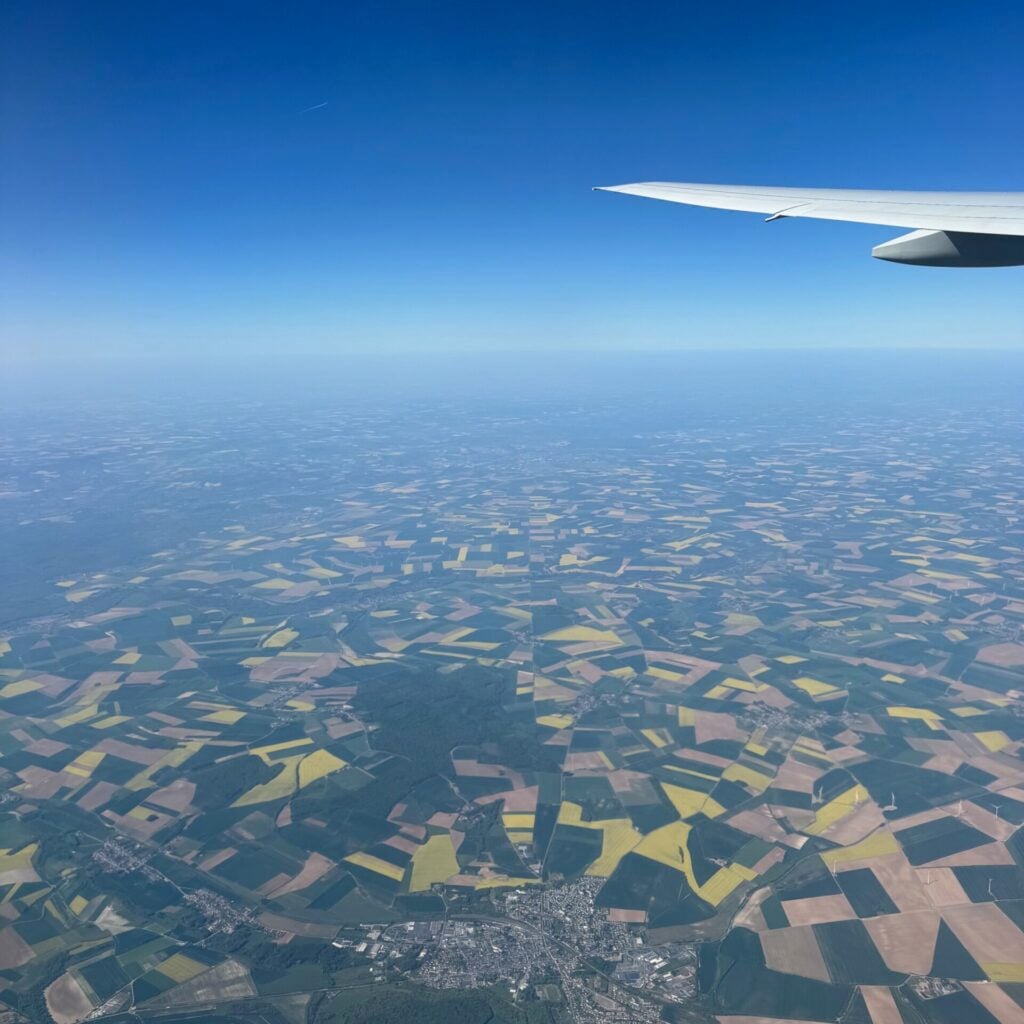
Photo from my last flight over France.

Did you enjoy this article? TAIP is 100% reader-supported through tipping. If you want to leave us a tip of any amount it would be highly appreciated.  These tips help support our efforts to keep TAIP an ad-free environment. Just like at a cafe, the tips are split evenly among the team.

a boat on the seine river in Paris at sunset

Finally Sharing Why I Left Paris

I have been, understandably, hesitant to share the story of why I left Paris here on TAIP.  As the owner of a website with a title that suggests I am indeed an American living in Paris, it felt like a major bomb to drop on what has been not only a creative outlet for me, but a place to help other Americans interested in following their dreams of moving abroad. It felt scary, dangerous even. What if no one wanted to read anymore once they found out I wasn’t actually living in France?

I’ve also been dealing with feelings of shame ever since the decision to leave was made. While I love the expat community in Paris, most of that shame was deeply tied to an interesting phenomenon amongst that particular group. Expats who have lived in the city for 10, 15, 20, or even 30 years wear their time spent like a badge of honor. I’ve been here forever and I’m never going back, the badge says. I write this as someone who was proud of her own, 9.5-year-long badge. I thought I was going to be someone who “never left,” who felt so comfortable in her new life in France that thoughts of going back to the States would never even dream of entering her ether. I was the girl who moved to Paris. And stayed.

Then the pandemic happened. And then I got married. And then I realized how quickly my parents were aging and even if I committed to going “home” once a year for the rest of my life, it would mean only seeing them 10 or 15 more times for the rest of my life. They wouldn’t be able to get to know my yet-to-be-born children or my very-much-alive new husband.

The idea of leaving floated into my mind slowly and quietly. It decided to camp out every time I felt different or like the étrangère that I was. It set up house with a foundation when I found out my dad was sick. And it battened down the hatches every time I felt lonely, misunderstood, and when I came to the realization that while I no longer felt American, I knew I wasn’t fully French either.

Then, my husband (who is French) started dreaming of his own life abroad. As his wife, I could give him that gift, if he really wanted it. We started daydreaming about what it would be like to move to idyllic southern Rhode Island, where I was born and raised and where my family still lives. Wouldn’t it be nice to go to the beach whenever we wanted, we wondered. To breathe fresh air, to watch my nieces grow up, see my childhood friends become mothers, and finally, finally be able to live in a spacious home without having to provide the dreaded dossier to do so.

I can’t remember now a specific conversation in which we said, “we’re doing this,” but I do remember getting connected with an immigration lawyer in the US through a friend of mine. At this point, I was so well-versed in how to move to France, but I had no clue how to move to the US as a foreigner. I remember having that first initial call with the lawyer, getting excited about our options, and booking a one-way flight almost immediately after. I guess that was the defining moment. “Yes, we’re actually doing this.”

We also ultimately knew that after Covid, we wanted everyone in our little family to have the same passport. I still didn’t have French nationality, but we knew that would be relatively painless, thanks to all of the years I had lived in France, having a master’s degree from a French uni, and the real golden ticket: being married to a French person. We also knew that getting Pierre a green card and then American nationality would likely be a bit painful. Might as well do the more difficult step first, right?

And so we packed up our apartment in Montmartre and moved in with my in-laws (again) for the last month we were to spend in France. We traveled around the country to say goodbye to Pierre’s family and then came back to Paris for a few weeks to celebrate with friends. We ended up having two farewell parties because one wasn’t enough. As our departure date grew closer, the more real it began to feel. Was I actually doing this? Was I actually leaving this dream life of mine that I built completely on my own, brick by brick?

Panicking, I told everyone the move back WASN’T PERMANENT, NO, DON’T WORRY, I’LL BE BACK BEFORE YOU KNOW IT! Those feelings of shame inadvertently caused me to downplay the move, act as if it were just a duty I was called to do. The mixture of emotions I experienced was incredible. One minute, I was so excited to be able to call my mom whenever I wanted to; the next, I wanted to scream that I felt like everything I had worked for was being taken from me.

I also knew that in order for Pierre and I to pursue this life we had been talking about pretty much since we met, we had to live in the US for at least a few years. We wanted to split our time between the two countries, as evenly as possible. To do that we both needed double nationality. And that required moving back for some time, dream life in Paris or not.

Now that there are three years between me and that decision, three years between a girl full of shame for hiding a part inside her that was aching to go home, three years between feeling like the world I had built was crashing down all around me, three years between feeling like a failure because I didn’t “have the guts” to stay, I’m finally talking about what it felt like to leave said dream life.

I’m happy to say that things feel so much less final than they did back then. As we get closer and closer to being able to apply for Pierre’s nationality — and strangely, being able to apply for my French nationality from the US — I’m realizing that we’re getting closer and closer to the original dream: spending half the year in France and the other half in the States. We can almost taste it, and it’s made the pain I felt leaving France in 2022 not seem as painful.

I’ll never be the girl who decided to leave everything behind for a brand new life, no matter the cost, again because that girl doesn’t exist anymore. But, she wouldn’t have existed even if I had decided to stay in France and never come back to the US again. That girl was my 23-year-old self, and I have now become me, my almost-34-year-old self. And that’s okay. Change is okay. Letting go of that brave, fearless girl is okay. Because who I am now is brave in ways that 23-year-old Molli would never believe. And I have that 11-years-in-the-past me to thank for a lot of that bravery.

So, dear readers, as I embark on this new chapter, I’d love to take you along with me. TAIP will always be a part of my life because France will always be a part of my life. I can’t wait to share all about getting my French nationality (from the US… crazy), deciding where to live when we do go back to France, and how to navigate a life truly split between two countries. We will of course continue to publish articles on visas and all of that good stuff, as something else that will always be a part of my life? A desire to help others pursue their hopes and dreams.

Thank you for following along until this point, and I’m so excited for what’s in store.

If you prefer video, I’m releasing a four-part series on why I left Paris over on our YouTube channel, taip on tape. Be sure to subscribe so you don’t miss a thing 🙂

Photo by Joe deSousa on Unsplash

Did you enjoy this article? TAIP is 100% reader-supported through tipping. If you want to leave us a tip of any amount it would be highly appreciated.  These tips help support our efforts to keep TAIP an ad-free environment. Just like at a cafe, the tips are split evenly among the team. 

an old book with the words 'a french course for schools' written on it

The Mindset Shifts That Helped Me Learn French Faster

Way back in 2014, I moved to France with little more than a couple of suitcases, a dream of living in Europe, and about three words of French. When I first stepped foot off the plane, I had no idea how hard — and how rewarding — learning the language would be. The rewarding piece is important. Learning and then mastering French as an adult is truly one of my life’s greatest accomplishments.

As I went along, something I quickly realized was that my success wouldn’t just come from memorizing vocabulary or drilling myself with grammar quizzes.

It would come from changing how I approached the entire process. 

Here are the mindset shifts that actually improved and then accelerated my French that I hope can help you too.

1. I Embraced Embarrassment Instead of Fearing It

If you’re not new here, you’ve heard me say this about a million times: I’m shy! Even in English, my native language, I tend to lean more towards the reserved side of the spectrum. I used to fight against it, but now I embrace it. Just like I embraced being embarrassed by my French level instead of being afraid to even try. 

When I first arrived, almost every conversation ended in confusion or blank stares — mostly on my end. I got used to pretending to listen and then making an educated guess based on the person in front of me’s body language to determine whether I should respond with a half-hearted oui or non. It worked out about half the time.

Something that really helped me was the French as a foreign language program I took at Nanterre. It was enough coursework to qualify for the student visa, and I was able to learn French with peers at the same level as me. This opened up a whole new world of possibilities because I was no longer ashamed to try and practice — two crucial aspects of learning a new language.

I was always so embarrassed by my accent, but the truth is most French speakers find it charmant and I’ve also started leaning into that, 10+ years on.

2. I Prioritized Progress over Perfection

This is another aspect of learning French that was very difficult for me. I’m a self-proclaimed perfectionist, and honestly? You just can’t hold on to that when learning a new language, skill, or anything else you’ve never done before. If you wait for perfection, you’ll be waiting forever.

So, the next mindset shift involved me pushing perfectionism out of the way so I could keep trying — and be okay with making mistakes as I went along. One of my first big wins in France wasn’t making a flawless speech in front of a room of French speakers. It was being able to order a meal without stumbling over my words, accent or not. It didn’t matter that I may have gotten a verb tense wrong. What mattered was that I was actually communicating in French.

I started telling myself that as long as the person in front of me understood the gist of what I was trying to say, I was making progress. I have to laugh when I think back to some of the very kind people who just let me go on and on, even if I was using the wrong words or conjugations. This shift kept me moving forward even when my French was nowhere near “perfect.”

3. I Leaned into Feeling Uncomfortable

This mindset shift can really apply to the entire experience of moving to a foreign country where I knew no one and didn’t speak the language. And while yes, being uncomfortable most of the time wasn’t always great, the feeling I got on the other side of that was incredible.

My belief is that putting yourself in places outside of your comfort zone will only help you grow. The first time I ever left the US to do my semester abroad was a little scary at first, but the experience went on to change my entire life — something that would have never happened if I stayed in my hometown.

In those early days, every time I spoke French with actual French speakers, I felt super uncomfortable. Is everyone staring at me? Did I use the right verb there? Is my accent so heinous that everyone is trying not to laugh? Of course, thoughts like those crossed my mind, but I had to ignore them to improve.

Straining to pay attention to a conversation is uncomfortable. Making mental notes to remember what to respond is uncomfortable. Not being able to find the word you’re looking for is uncomfortable. Sitting there as everyone easily converses around you while you’re still stuck on something that was said 10 minutes ago… is uncomfortable.

But, I had to go through these moments to learn French. And the good news? I did it. I started feeling much more comfortable after that intensive year of French courses at Nanterre, which, when all said and done, at the end of that, I had already been in France for 3.5 years.

So, yes, it can take time. But, I went over knowing nothing and my first few years were spent in an English-speaking bubble. As soon as I made the commitment to myself to actually study, I saw improvement within just a few months.

And today, 10+ years after touching down to live in France, I can confidently say that I am a French speaker. My husband and I only communicate in French, same with all of my in-laws. Most of my French friends like to try out their English with me, so we end up speaking in a funny franglish or franglais when we’re together, but I get plenty of practice with them too.

I’m able to navigate different accents, converse on a variety of topics, read a French novel, and take care of all of my paperwork myself. Some of that is thanks to years of practice and effort, but a lot of it is also due to the mindset shifts that had to happen in order to improve.

Listen. If I can learn French, anyone can — prove me wrong.

Photo by Erik Mclean on Unsplash

Did you enjoy this article? TAIP is 100% reader-supported through tipping. If you want to leave us a tip of any amount it would be highly appreciated.  These tips help support our efforts to keep TAIP an ad-free environment. Just like at a cafe, the tips are split evenly among the team.