rue cler street sign

Paris Neighborhood Guide: the 7th Arrondissement

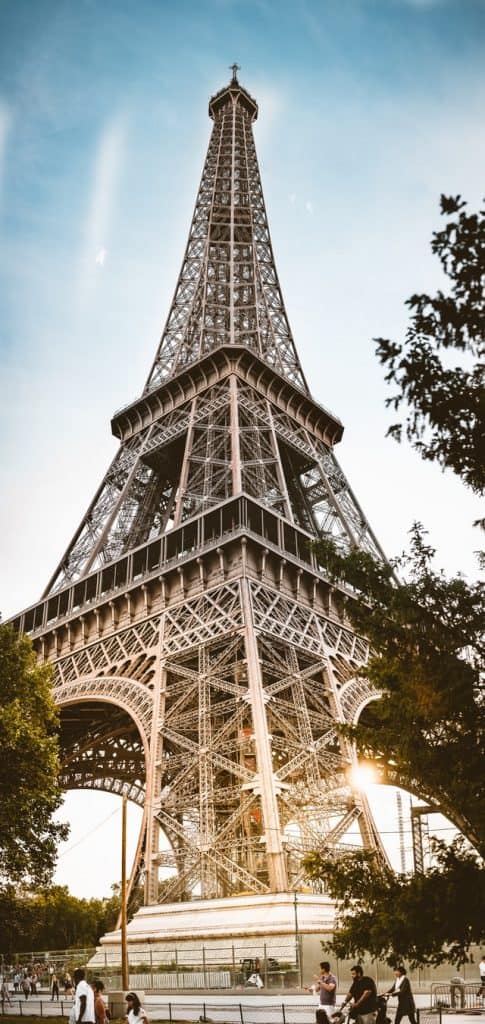
Home of undoubtedly the most famous Parisian landmark (she peeks out from the Haussmannian buildings to say coucou), the 7th arrondissement certainly does not get skipped by tourists.

But, this Left Bank quartier boasts so much more than the Eiffel Tower. You’ll also find the Orsay, Les Invalides, the Musée du Quai Branly, Le Bon Marché, and plenty of other less famous monuments, attractions, and sites to see.

Like the 6th arrondissement, I spent a lot of time here when I was a student. The 7th abuts the 6th and it’s easy to lose yourself, forgetting where les frontières begin and end. It’s relatively quiet and residential (once you get out of Madame Eiffel’s neighborhood), and as such is a wonderful place for a stroll.

If you’ve never explored the 7th at length, or are wondering if you may have missed something the first time around, this guide outlines exactly what there is to see, do, and eat.

The Eiffel Tower and Champs de Mars

I won’t spend too much time going over the Iron Lady — I’m assuming most TAIP readers have already visited. But, there are some fun facts that bear repeating to keep up your sleeves the next time someone is in town and you’re looking for something to do.

Built for the 1889 Paris Exposition and designed by Gustave Eiffel, it was actually quite controversial at the time. For starters, it was bright red and many feared it would dominate the city with its height and color. Many Parisians thought it was too expensive, and they also rejected it as a symbol of modernization.

Today the Tower is of course celebrated as the symbol of Paris — if not France — around the world. It’s close to 1,000 feet tall and 2.5 million rivets hold it together. It’s surrounded by the Champs de Mars gardens, which are usually teeming with tourists and picnickers alike, especially as it gets warmer and the sun starts setting later. If you do decide to picnic, grab une tradition from the PariSeven Boulangerie. Trust me.

There are several playgrounds, a merry-go-round, and a puppet theater for those with children. It’s also a wonderful place to watch the Eiffel Tower sparkle once the sun does go down.

Les Invalides

Here you’ll find the Army Museum and Napoleon’s comically enormous tomb, as well as sections of the area that are still used by the French military today. This was actually one of my last-explored monuments when I initially moved to Paris as I’m not that interested in military pomp and circumstance, but even I have to admit that it’s impressive.

The Dôme church where Napoleon is laid to rest has a beautiful interior and the massive gold dome itself is just as striking up close. There are also several fountains outside of the Invalides’ main building worth noting — Napoleon had them designed to compete with those in Rome.

I spend the most time here in the summer months as the grass lawns are open to the public and tend to be less crowded than the Champs de Mars, and less dirty than the riverside paths along the Seine. It’s also an excellent place to watch the fireworks on Bastille Day; again, it’s a lot less chaotic and crowded than squishing into the Champs gardens.

More Museums

I would be remiss not to mention all of the other museums in the 7th arrondissement:

  • Musée d’Orsay: One of my favorite Parisian museums by far, the Orsay is housed in a former railway station. Visit for its collection of Impressionist and Post-Impressionist masterpieces by Monet, Van Gogh, Degas, and more.
  • Musée Rodin: Another one of my preferred places to spend an afternoon, this museum is dedicated to the iconic French sculptor Auguste Rodin. Visit to see The Thinker and The Kiss in an 18th-century mansion with an equally beautiful garden.
  • Musée du quai Branly: Outfitted with an impressive vertical garden, the Branly highlights the indigenous art and cultures from Africa, Asia, Oceania, and the Americas. 
  • Musée Maillol: Tucked away in a Parisian townhouse and dedicated to the artist Aristide Maillol, here you’ll find a collection of sculptures, paintings, and prints.
  • Musée National Eugène Delacroix: Once the home and studio of Eugène Delacroix (whose works can also be seen in the Louvre), this museum displays the artist’s paintings, drawings, and personal objects.

Rue Cler

Similar to the rue Mouffetard in the 5th arrondissement, the rue Cler is a market street lined with cafés, boulangeries, fromageries, and specialty food shops. It’s pedestrian-friendly as well, so you don’t have to worry about getting run over while you peruse the shops filled with high-quality, fresh, and often local ingredients.

You can find anything from artisan cheeses and cured meats to flower stalls, gourmet chocolate, and wine. I usually head here when I get invited to a dinner party — I always feel good bringing along something fresh. Go to La Fromagerie Cler for cheese and Pralus for chocolate and pastries and you can’t go wrong.

Le Bon Marché

Finally, another place in the septième that’s perfect for strolling is none other than Le Bon Marché, the city’s oldest and arguably most stylish department store. It’s full of designer clothing (and people who like to buy designer clothing) and even carries items for the home. If you’re willing to splurge, it’s worth a stop. And if you’re not, it’s great people-watching.

It’s also home to the Grande Épicerie, a sprawling food hall. They carry everything from fresh seafood, cheese, and charcuterie to pastries and fine wines. The few times I have bought things from Le Bon Marché, they always came from the épicerie section. Again, they make for great gifts.

There are even places you can pick up sandwiches, specialty coffee, or other prepared foods if you’re craving something a little more luxe for a picnic. 

As with all of our neighborhood guides, this is just an overview of all there is to see in the 7th arrondissement in Paris. Give yourself a morning or afternoon to wander the streets yourself. You never know what you may see.

Photo by Tim Wildsmith on Unsplash

Did you enjoy this article? TAIP is 100% reader-supported through tipping. If you want to leave us a tip of any amount it would be highly appreciated. These tips help support our efforts to keep TAIP an ad-free environment. Just as at a cafe, the tips are split evenly among the team.
jill jonnes

Book Club: Eiffel’s Tower, by Jill Jonnes

“But there’s no such thing as Paris without the Eiffel Tower,” said my friend Florence the other day.  Locals have complicated views about the tower of iron, but perhaps she is right.  But the beginning of pondering that question should
start with Jill Jonnes’ fascinating book, Eiffel’s Tower: The Thrilling Story Behind Paris’ Beloved Monument and the Extraordinary World’s Fair That Introduced It.

In this book you learn just how much it took for Eiffel to overcome in order to build this true architectural achievement of its time.  It stood as the world’s tallest building for 30 years, and took only 2.5 years to complete (perhaps one of the few French building projects ever completed on time).  In contrast the previous “tallest building” in the world was the Washington Monument in Washington D.C., which was half the height of the Eiffel Tower and took 40 years to complete.  Mind you, there was a little thing called the War Between the States during that 1848-1888 period of construction, but still, you can imagine many Americans, including Thomas Edison, felt a bit of envy to have the French claim a technological achievement before America did.

Edison was feted when he visited the Tower he was the great man of innovation and ideas and Eiffel toasted him with champagne at the summit of the Eiffel Tower.  But he emptily boasted that for the upcoming Chicago World’s Fair that they would build something twice as tall at half the price.  The French raised their eyebrows, understandably so when what ended up being invented for that event was not some tall tower, but the Ferris Wheel.

Jonnes writes a compelling narrative, bringing all the characters together in a cohesive story that is, oddly, suspenseful, especially given that we already know how events turned out.  I shared this book with some local Parisians and they told me it forever changed how they saw and understood the Tower, which is just the sort of antidote you need, especially when you’re walking past the Selfie Nation on the Champs de Mars.

But perhaps you will be most edified to learn how well Eiffel bore up under the most vile and vicious attacks, before, during, and well after the construction of the Tower.  It is his entrepreneurial genius something the French could allow to flourish a bit more these days that is the true story behind this great little book.

Photo by Mika Baumeister on Unsplash

begin

Begin at the Beginning

So when people first find out I’m moving to Paris, there are usually looks and sounds of astonishment.  And it’s only now, when I’m about 60 days out from beginning my journey, that I truly understand that astonishment, because I’ve felt the full effects of just how hard it has been to pull this off.

Let me explain.  I’m a choleric.  An ENTJ.  People think of my personality as “ready, fire, aim.”  When I made the decision to move to Paris I bought a one-way ticket and started all my preparations.  But, as I was soon to discover (the “aim” part), the science of picking up and moving when you are in your mid-30s and fairly well-established, with numerous possessions, is one that requires a lot of patience and fortitude.  And now, when I’m so close, I finally have the mental real estate to start getting excited.

My love affair with France and the French language started eons ago.  My sisters and family seem very surprised to hear about it now, but the signs were all there.  When I was 15 I delivered an entire speech dressed as Louis XIV in French (I was coached by a good friend on the pronunciation).  I bought a French course on cassette tape when I was 18.  And the first time I returned to Europe since my study abroad, I went to Paris.

I can’t tell you when I first heard French spoken.  I’m sure you’d want me to name the day, time, and hour, but I honestly can’t remember.  I just remember being elevated by the way it sounded, and I was desperate to one day be educated enough to speak it myself.

I have a picture of the first time I stood under the Eiffel Tower.  You can see some flashing white spots on it.  This is the time of day when the lights come on the Tower and so for a period of time it flashes while it’s lighting up.  I just remember being incredibly entranced and happy.  I had wanted to come to this city for so long and I had worried that I had built it up too much in my head.

I hadn’t.  Paris was everything I thought it would be, and more.

There’s plenty more I’ll write over the next year, but I suppose I should end this first post at the beginning of this journey, which is what the title of this article promised anyway.

For those of you who haven’t read The Four Hour Work Week by Timothy Ferriss, stop reading this article right now, go buy it, read it, and then come back and finish reading my article.  For those of you who have (or who are unmoved by my hyperbole), the author lays out a number of thoughtful and stunning premises throughout the book.  The one I will share with you goes under the heading of “lifestyle design.”

The clue is in the name.  Instead of getting a good job or starting a business and then designing your life around that, Ferriss argues that the very FIRST questions you need to ask yourself are: What kind of life do I want to live?  What do I want to do with this life?  What will my legacy be when I leave this earth?  Once you’ve taken the time to answer these questions, then (and only then), do you get to figure out how you will make money.  The making money thing is secondary IF you are living the life you want to live.  Conversely, if you’re making all the money you want and you aren’t living the life you desire, what is the point?

So, at the end of one month off, which I used to spend traveling all around the lovely country of Australia, I had the answer to my question: I wanted to spend more time seeing Europe.  I didn’t want to have regrets later in my life that I didn’t take the time to see a part of the world I loved so much when I was still young (I figure you don’t get to call yourself that anymore when you hit 40, so I’ve still got a solid 6 years!).  I came home in mid-January, told everyone about my decision (nothing like telling everyone to paint yourself into a corner so that you HAVE to do something), and started my preparation.  I’ll tell you more about that preparation next time.

Photo by Brett Jordan on Unsplash

Did you enjoy this article? TAIP is 100% reader-supported through tipping. If you want to leave us a tip of any amount it would be highly appreciated. These tips help support our efforts to keep TAIP an ad-free environment. Just as at a cafe, the tips are split evenly among the team.