city view of paris

Paris Neighborhood Guide: the 18th Arrondissement

When most people think of the 18th arrondissement in Paris, one image comes to mind: cobblestoned Montmarte, with the white-domed Sacré-Cœur Basilica watching over the city, the Place du Tertre and its artists and easels, and cafés that look like they’re straight out of an Impressionist painting. 

I can’t blame them because I was one of them. Until I moved to the 18th and realized it was so much more. Don’t get me wrong, I love Montmartre (and wrote an entire article about it), but I would be remiss if I didn’t share all of the other things to see and do in the area.

Whether you know the dix-huitième like the back of your hand or you’ve only ever wandered next to the Sacré-Cœur, this arrondissement deserves a closer look.

Beyond Montmartre

Okay, Molli, we get it… the 18th is more than Montmartre! …is probably what all of you are thinking at this point, but let me explain.

While it’s true — Montmartre is one of the most famous spots in Paris, and for good reason. But if you limit yourself to the hilltop that looms over the rest of the city, you’ll miss a lot of the complexity and authentic, this-is-where-Parisians-actually-live energy to be found in the 18th.

This arrondissement has long been known for its artistic history and working-class roots. I mean, La Commune de Paris, a revolutionary government that seized power in Paris in 1871 did begin in Montmartre. Not to mention, Pablo Picasso, Claude Monet, Piet Mondrian, and Vincent Van Gogh all lived and worked there.

It should come as no surprise that today the area remains an eclectic mix of young families, immigrants, students, and creatives. Neighborhoods like Jules Joffrin (my stomping grounds!), Lamarck-Caulaincourt, Marx Dormoy, and Château Rouge all have their own unique vibe.

Once you get past the souvenir stands that crowd the area around the Sacré-Cœur, you’ll find winding streets and staircases where real Parisians spend their time in bakeries, cafés, local shops, and markets. It offers a good glimpse into real Parisian life.

Monuments in the 18th

I can’t talk about the 18th arrondissement without mentioning some of its most recognizable landmarks:

  • Sacré-Cœur Basilica: With its bright white façade and Byzantine architecture, the basilica is quite different from the other gothic cathedrals in the city. I definitely recommend stepping inside, even if there’s a line ot enter. Where the Notre-Dame is dark and moody, the Sacré-Cœur is bright and airy. You can also visit the dome, or simply enjoy a cup of coffee on the steps to admire the view.
  • Le Mur des Je t’aime (The I Love You Wall): Just outside the Abbessess metro station you’ll find the deep blue tiled wall with the words I love you written in hundreds of languages. It’s a touristy spot for sure — but also a great meeting place before going to one of the bars down the street. Le Chinon is my favorite local place, if you’re wondering.
  • Saint-Pierre de Montmartre Church: So few people know about this one! But, the Saint-Pierre is one of the oldest surviving churches in Paris. It’s a great place to spot in for some quiet respite, meditation, or prayer when the streets get too hectic.
  • Montmartre Cemetery: Much less intimidating than the Père Lachaise Cemetery, here you’ll find famous graves like Dalida and François Truffaut. You’ll also discover a community of cats, taken care of by a local charity group (really).

My Favorite Museums & Bookstore

While there aren’t a ton of museums in the 18th, there are still a few worth checking out, including one of my top recommendations for a fun day date:

  • Musée de Montmartre: I love taking visitors to this one as it’s so unexpected. Once you walk in off the bustling streets, you’re brought to a quiet and peaceful garden and a beautiful historic home (once occupied by the artist Renoir) that houses the museum. 
  • Dalí Paris: My now-husband and I went here for one of our earliest dates so it always brings back memories. If you love surrealism, you’ll want to pop inside this small but so fascinating museum. It’s just off the Place du Tertre and is full of sculptures, engravings, sketches, and even some films.
  • Halles Saint Pierre: Tucked away at the foot of the Sacré-Cœur, Halles Saint Pierre is a bookstore specializing in art books, exhibition catalogues, art publications, and books on design and architecture. There’s also a café — and thanks to the massive windows there’s also plenty of natural light to read by.

More Things to Do in the 18th Arrondissement

Just like nearly every arrondissement in Paris, there are monuments and museums to explore… but what I love most about the 18th is that it’s one of the rare areas in Paris that has maintained its “village within a city” feel. It’s also very multicultural and a good representation of what the actual population of France looks like.

The Goutte d’Or is a must-visit if you’re into cooking. The rue Dejean market is open daily and offers fresh produce, spices, and African specialties you won’t easily find elsewhere in the city.

The rue des Abbesses just may be the epicenter of the Montmartre “village” and is lined with cafés, bakeries, boutiques, and wine bars. It’s a perfect place to settle in for an afternoon people-watching or to pick up pastries from Maison Aleph or bread from Le Grenier à Pain (trust).

The Square Maurice Kriegel-Valrimont right in my Jules Joffrin neighborhood is the exact opposite of the touristy spots on the butte de Montmartre. A short walk from the rue du Poteau market street and surrounded by Haussmannian buildings, it’s my favorite place to take a midday break and admire everyday life unfold before my eyes. 

When I start dreaming of living in other places in Paris (Saint-Germain-des-Prés will always hold a special place in my heart), I let myself get caught up in the dream. Until I remember how incredible the 18th arrondissement is. I think I’ve found my favorite place for life.

Photo by Daniel Bi on Unsplash

Did you enjoy this article? TAIP is 100% reader-supported through tipping. If you want to leave us a tip of any amount it would be highly appreciated.  These tips help support our efforts to keep TAIP an ad-free environment. Just like at a cafe, the tips are split evenly among the team.

rue cler street sign

Paris Neighborhood Guide: the 7th Arrondissement

Home of undoubtedly the most famous Parisian landmark (she peeks out from the Haussmannian buildings to say coucou), the 7th arrondissement certainly does not get skipped by tourists.

But, this Left Bank quartier boasts so much more than the Eiffel Tower. You’ll also find the Orsay, Les Invalides, the Musée du Quai Branly, Le Bon Marché, and plenty of other less famous monuments, attractions, and sites to see.

Like the 6th arrondissement, I spent a lot of time here when I was a student. The 7th abuts the 6th and it’s easy to lose yourself, forgetting where les frontières begin and end. It’s relatively quiet and residential (once you get out of Madame Eiffel’s neighborhood), and as such is a wonderful place for a stroll.

If you’ve never explored the 7th at length, or are wondering if you may have missed something the first time around, this guide outlines exactly what there is to see, do, and eat.

The Eiffel Tower and Champs de Mars

I won’t spend too much time going over the Iron Lady — I’m assuming most TAIP readers have already visited. But, there are some fun facts that bear repeating to keep up your sleeves the next time someone is in town and you’re looking for something to do.

Built for the 1889 Paris Exposition and designed by Gustave Eiffel, it was actually quite controversial at the time. For starters, it was bright red and many feared it would dominate the city with its height and color. Many Parisians thought it was too expensive, and they also rejected it as a symbol of modernization.

Today the Tower is of course celebrated as the symbol of Paris — if not France — around the world. It’s close to 1,000 feet tall and 2.5 million rivets hold it together. It’s surrounded by the Champs de Mars gardens, which are usually teeming with tourists and picnickers alike, especially as it gets warmer and the sun starts setting later. If you do decide to picnic, grab une tradition from the PariSeven Boulangerie. Trust me.

There are several playgrounds, a merry-go-round, and a puppet theater for those with children. It’s also a wonderful place to watch the Eiffel Tower sparkle once the sun does go down.

Les Invalides

Here you’ll find the Army Museum and Napoleon’s comically enormous tomb, as well as sections of the area that are still used by the French military today. This was actually one of my last-explored monuments when I initially moved to Paris as I’m not that interested in military pomp and circumstance, but even I have to admit that it’s impressive.

The Dôme church where Napoleon is laid to rest has a beautiful interior and the massive gold dome itself is just as striking up close. There are also several fountains outside of the Invalides’ main building worth noting — Napoleon had them designed to compete with those in Rome.

I spend the most time here in the summer months as the grass lawns are open to the public and tend to be less crowded than the Champs de Mars, and less dirty than the riverside paths along the Seine. It’s also an excellent place to watch the fireworks on Bastille Day; again, it’s a lot less chaotic and crowded than squishing into the Champs gardens.

More Museums

I would be remiss not to mention all of the other museums in the 7th arrondissement:

  • Musée d’Orsay: One of my favorite Parisian museums by far, the Orsay is housed in a former railway station. Visit for its collection of Impressionist and Post-Impressionist masterpieces by Monet, Van Gogh, Degas, and more.
  • Musée Rodin: Another one of my preferred places to spend an afternoon, this museum is dedicated to the iconic French sculptor Auguste Rodin. Visit to see The Thinker and The Kiss in an 18th-century mansion with an equally beautiful garden.
  • Musée du quai Branly: Outfitted with an impressive vertical garden, the Branly highlights the indigenous art and cultures from Africa, Asia, Oceania, and the Americas. 
  • Musée Maillol: Tucked away in a Parisian townhouse and dedicated to the artist Aristide Maillol, here you’ll find a collection of sculptures, paintings, and prints.
  • Musée National Eugène Delacroix: Once the home and studio of Eugène Delacroix (whose works can also be seen in the Louvre), this museum displays the artist’s paintings, drawings, and personal objects.

Rue Cler

Similar to the rue Mouffetard in the 5th arrondissement, the rue Cler is a market street lined with cafés, boulangeries, fromageries, and specialty food shops. It’s pedestrian-friendly as well, so you don’t have to worry about getting run over while you peruse the shops filled with high-quality, fresh, and often local ingredients.

You can find anything from artisan cheeses and cured meats to flower stalls, gourmet chocolate, and wine. I usually head here when I get invited to a dinner party — I always feel good bringing along something fresh. Go to La Fromagerie Cler for cheese and Pralus for chocolate and pastries and you can’t go wrong.

Le Bon Marché

Finally, another place in the septième that’s perfect for strolling is none other than Le Bon Marché, the city’s oldest and arguably most stylish department store. It’s full of designer clothing (and people who like to buy designer clothing) and even carries items for the home. If you’re willing to splurge, it’s worth a stop. And if you’re not, it’s great people-watching.

It’s also home to the Grande Épicerie, a sprawling food hall. They carry everything from fresh seafood, cheese, and charcuterie to pastries and fine wines. The few times I have bought things from Le Bon Marché, they always came from the épicerie section. Again, they make for great gifts.

There are even places you can pick up sandwiches, specialty coffee, or other prepared foods if you’re craving something a little more luxe for a picnic. 

As with all of our neighborhood guides, this is just an overview of all there is to see in the 7th arrondissement in Paris. Give yourself a morning or afternoon to wander the streets yourself. You never know what you may see.

Photo by Tim Wildsmith on Unsplash

Did you enjoy this article? TAIP is 100% reader-supported through tipping. If you want to leave us a tip of any amount it would be highly appreciated. These tips help support our efforts to keep TAIP an ad-free environment. Just as at a cafe, the tips are split evenly among the team.

Paris Neighborhood Guide: the 16th Arrondissement

If you’re new here, the French capital comprises 20 “arrondissements,” a fancy French word for neighborhoods. They begin with the 1st arrondissement in the city’s center, and the others spiral out, resulting in what looks like a snail’s shell. It’s a nice image when you consider that escargots seem synonymous with French cuisine (eating snails isn’t as popular as you may think, but that’s another story for another article). 

Nestled in the western corner of Paris is the 16th, or seizième, arrondissement. It’s fairly residential when compared to other areas, especially the lively 10th and 11th arrondissements, and of course, neighborhoods 1-7, which boast monuments such as the Louvre, Notre-Dame de Paris, Panthéon, and Quartier Latin.

I lived in the 16th arrondissement for two years when I was a student. While it is certainly quiet, it’s one of the things I liked most about living there. And, “quiet” doesn’t mean totally removed from the hustle and bustle of Paris. The Place du Trocadero, which overlooks the Eiffel Tower, is in the 16th and was only a five minute walk from my apartment at the time.

There are a few other places in the 16th that are worth checking out, especially for those of you who either live here full-time or are a tourist looking to do things that are off the proverbial beaten path. 

Le Bois

Two large parks bookend Paris — the Bois de Boulogne to the west and the Bois de Vincennes to the east. Another reason why I loved living in the 16th so much was that I had such easy access to such a massive green space in an otherwise relatively urban landscape. Bois means “wood” in English, an apt word to describe it. The Bois de Boulogne covers an area of about 2,090 acres. 

There are walking paths, fields, lakes, smaller parks within the woods, places to exercise, restaurants, a nightclub (yes, you read that right), the Longchamp Hippodrome (a famous horse racing track), and bike paths. It’s a wonderful place to spend a sunny weekend, and you’ll often see Parisians out exercising or spending time with family.

You’ll also find one of my favorite museums, the Fondation Louis Vuitton. Designed by architect Frank Gehry, who is also responsible for the Guggenheim Museum Bilbao in Spain, it opened in 2014, the first year I came to Paris as an au pair. It’s a contemporary art museum, and some memorable exhibits I saw there include The Shchukin Collection, which highlighted artists like Picasso, Matisse, and Gaugin, as well as a collaboration with the MoMA in New York City. 

The modern building stands out amongst the oak and poplar trees — some Parisians don’t like it — so you won’t be able to miss it. 

More Museums

The Fondation Louis Vuitton isn’t the only museum in the 16th arrondissement. In fact, there are more than a dozen. I won’t bore you with information about them all (although I know most of you wouldn’t be bored!), but there are a few that I recommend you visit the next time you’re in the area.

  • Musée du Vin: Housed in a historic cellar, the Musée du Vin, or Wine Museum, boasts a rich collection of artifacts, tools, and more that trace the history of winemaking and its cultural significance in France. You can explore the cellars, gain insights into vine cultivation, enjoy tastings, and essentially immerse yourselves in the art and heritage of France’s preferred drink.
  • Musée Marmottan: Originally a private mansion, the Musée Marmottan houses the world’s largest ensemble of Claude Monet’s works, alongside pieces by other renowned artists. It’s located in a former hôtel particulier (a fancy name for a city mansion), meaning the building itself is just as impressive as the art inside it. Don’t forget to go downstairs — that’s where you’ll find the majority of Monet’s works. Stephen is a big fan of Berthe Morisot and he was first introduced to her at this museum.
  • Musée d’Art Moderne de Paris: Filled with contemporary and modern art, the Modern Art Museum of Paris has one of my favorite permanent collections in Paris. Works by artists like Picasso, Fernand Léger, Frida Khalo, Modigliani, and Sonia Delaunay grace the halls — I’ve spent many an afternoon admiring them.
  • Palais de Tokyo: Located just à côté of the Modern Art Museum is the Palais de Tokyo. Now, I must admit this museum isn’t my favorite as I don’t love contemporary art, but if you do it’s a must-visit. The large space is dedicated to avant-garde creativity at its utmost, and hosts ever-changing exhibitions, performances, and installations.

Take a Stroll

Like all Parisian neighborhoods, the seizième is a wonderful place to wander. There are plenty of places to grab a coffee or a bite — Le Franklin near the Passy métro station is great for people-watching, and Langousta is great for seafood — otherwise, take the time to admire the classic Parisian architecture as well as the local resident’s taste in clothing. 

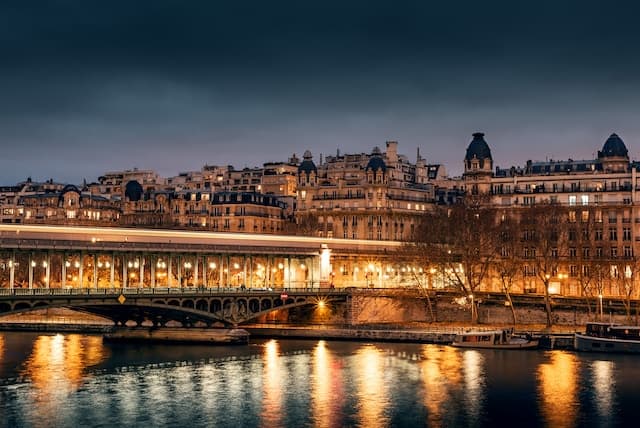
If you’ve seen the movie Inception, you’ll likely recognize the Pont du Bir Hakeim. Cross it and you’ll find yourself in front of the Eiffel Tower. About halfway across the bridge, take a moment to walk down the stairs to explore the Île des Cygnes — technically in the 15th arrondissement — and admire a unique view of the Tower from there.

While I no longer live in the 16th it holds a special place in my heart. I can’t help but feel like I’m home whenever I get off the line 6 at Passy.

Photo by Karl Köhler on Unsplash

Did you enjoy this article? TAIP is 100% reader-supported through tipping. If you want to leave us a tip of any amount it would be highly appreciated. These tips help support our efforts to keep TAIP an ad-free environment. Just as at a cafe, the tips are split evenly among the team.