French pastries

The Life of a French Pastry Chef

If you’ve been following my life here on TAIP, you know that I got married last year not once, not twice, but a whopping three times (you can read about the first two times here and here). Yes, all to the same person. Who happens to be French. Who also happens to be a professionally trained pastry chef. 

The typical reaction I get when I tell someone what he does is, “Wow! You’re so lucky to get homemade French pastries at home!” I don’t have much of a sweet tooth (pass me a plate of fries over a plate of cookies any day, thank you) but I have to admit I do enjoy having access to homemade croissants, macarons, chouquettes, and more whenever the mood strikes.

The life of a French pastry chef is not for the faint of heart — something I witness on a daily basis because I live with one. What kind of training do you need, you may be wondering? Is it as glamorous as it seems? Is it hard waking up at 1am to go to work every day? Is it worth it?

Let’s find out.

A Baker Does Not A French Pastry Chef Make

I was originally going to call this article The Life of a French Baker but my husband stopped me before I even started. “Je suis pas un boulanger,” he told me. I am not a baker

In France, a baker and a pastry chef aren’t one and the same. The baker bakes the bread and the pastry chef makes the pastries. There’s even a third person you have likely never heard of who is in charge of viennoiseriecroissants, pain au chocolat, etc. — called a tourier

Of course, there are bakeries in France that don’t have all three experts on staff. My husband says that lots of bakers and pastry chefs know how to make viennoiserie, and many touriers can bake bread. Are you still with me?

As you’ll discover if you ever learn the French language, this is a country full of contradictions and exceptions.

Training, Degrees, and Certifications

Like all French people our age, my husband had to have an idea of what he wanted to do as a career by age 15. It’s a bit different these days, but at the time, he had to decide whether to continue on to high school or start a trade school.

He decided to go to Centre d’Excellence des Professions Culinaires (CEPROC) in the 19th arrondissement in Paris to study pastry. At the time, he worked toward le Brevet d’études professionnelles (BEP), a three-year diploma that required him to split his time between classes at school and a job in a local bakery. 

Today, aspiring French pastry chefs have the choice between a certificat d’aptitude professionnelle (CAP) or a baccalauréat professionnel (BAC pro). The former is a degree program like my husband did — he bypassed high school and went straight into culinary school — but that also means he does not have a high school diploma. You have to go to high school if you hope to be accepted into a BAC pro program. 

There are several other certifications you can get as a pastry chef. Le Brevet de Maîtrise Pâtisserie, for example, is the highest diploma a French pastry chef can obtain. 

You could also become specialized in different aspects of pastry. Chocolate, ice cream, and 5-star restaurant-quality desserts are just a few areas you could go into.

All of this being said, you don’t technically need a degree, certificate, or special training to be a pastry chef. Many begin at a very young age and learn as they go. 

The (not so) Glamorous Lifestyle

You may imagine the life of the French pastry chef to be filled with sweet aromas, sneaky taste tests, and constant praise and accolades. It’s not. 

My husband often has to be up at 1am to be out the door at 2am. That means that he has to go to bed around 7pm. Not ideal when you live in a tiny studio in Paris. I don’t have to (or want to) go to bed before the sun goes down so I either need to make myself scarce (and be quiet when I come home) or hunker down in the kitchen so as not to bother my very own sleeping beauty. 

Fortunately, we no longer live in such a small space so this is no longer an issue. At the time I couldn’t help but feel a bit grouchy when everyone told me how “lucky” I was to live with a pastry chef. Don’t get me wrong, I feel very lucky to be with my husband, but living on totally opposite schedules does have its challenges.

Another thing to note is that most French pastry chefs work in local bakeries, not five-star restaurants and hotels. Their salaries are average at best, and seeing as though there is a bakery on nearly every street corner in this country, most French people aren’t super impressed. 

Conversely, every time my husband meets an American they shower him with compliments. They want — need — to know everything about his job. To the outsider and the foreigner, a French pastry chef must live a glamorous lifestyle. They must!

As you can imagine the hubs would prefer to create pastries for people who appreciate it for the art form that it is. For that reason he once worked in a cooking school that catered to English-speaking tourists who are looking to learn more about French cuisine. It was a breath of fresh air. 

So, is it worth it? In true French fashion, my husband says, “mouais” (mmm, yeah). He goes on to say that if you love the craft, then yes it’s worth it. But, there has to be some sort of passion there to make it through all the hard work. 

The next time you’re in a bakery in France, take a few extra moments to appreciate the craftsmanship of what you’re about to eat before you gobble it down. Pay a compliment to the chef — you never know just how much they may appreciate it.

Photo by Valeriano G on Unsplash

Did you enjoy this article? TAIP is 100% reader-supported through tipping. If you want to leave us a tip of any amount it would be highly appreciated. These tips help support our efforts to keep TAIP an ad-free environment. Just as at a cafe, the tips are split evenly among the team.
Marriage in France, Part I — Civil Ceremony

In March of last year, I officially became Madame. When I first came back to France to live, I never thought that just 7 years later I would be a married woman. Being in an intercultural relationship meant that my now-husband and I had to have a lot of serious conversations early on in our relationship. About three years in, I was coming to the end of my student visa, which meant I had to either leave France or figure out another way to legally stay here.  

After a lot of late-night talks, we decided to get married. It may not sound very romantic, but it was! If you want I can get super corny and say that it was love at first sight (it was) but I’ll refrain. 

Like any administrative task in France, getting married involves a lot of paperwork, and slightly more if you’re not French like me. And, yes, getting married can be considered an administrative task here. If you find yourself in the same situation as I did — an American marrying a French person — then you may find this article helpful.

Documents You’ll Need

The first step is to determine where you want to get married. Most people choose their local town hall (Mairie in French), however, it is possible to get married elsewhere — for example, my husband and I had our ceremony in the suburb where his parents live. 

The town hall that you choose is important as in order to get married you’ll be required to show proof of address. While there is no hard and fast rule that states that you must be married where you live, you may raise suspicions of a “mariage blanc” (the French version of a “green card marriage”) if you choose an obscure town that neither you nor your future spouse has ties to. 

In true French fashion, now you need to start gathering paperwork. But, before you do that, you’ll have to go to the town hall of your choice to make an appointment to drop off your file. Simply tell the person at the front desk that you want to get married there and that you’re ready to make an appointment to drop off your dossier, which is the French term for the pile of paperwork you’ll need to produce. They will give you a list of everything that you need. Be sure to include:

For the American:

  • Passport
  • Birth certificate — issued no more than three months before you drop off your paperwork. Remember to ask your town or city hall to include the apostille (here’s where I made a huge mistake — I forgot to ask for the apostille and it set me back at least a month!). You’ll also need to have your birth certificate and apostille officially translated into French.
  • Proof of address
  • Proof that you are not currently married — this document technically doesn’t exist in the United States, but you can find the equivalent on the US Embassy website here. I was not required to have my signature notarized, but you may be depending on the town hall. Follow the instructions on the page above if that is the case.

For the French person:

  • French ID card or passport
  • Birth certificate — issued no more than three months before you drop off your paperwork. This can be found in the town hall where your Frenchie was born.
  • Proof of address

You’ll also need to bring information about your witnesses. I personally had one witness and my husband had two. On a piece of paper, simply write down their names, birth dates, where they were born, current address, and profession. You’ll also need a copy of their IDs.

The Waiting Game

When you go to the town hall to drop off your paperwork, the person working there will sit down with you and your future spouse to make sure that you have everything you need. If everything checks out, you’ll be able to pick your tentative wedding date then and there! 

Once you’ve picked your date, you’ll have to wait at least a week for the town hall to double-check that you have all of the correct paperwork. I mentioned above that you’re allowed to choose a tentative wedding date as it can’t be confirmed until the mayor, or assistant mayor has gone over your file him or herself and signs off on it. 

Don’t be afraid to call the town hall if you haven’t heard back from them within a week’s time. We hadn’t heard anything ten days after we dropped our file off and so my husband called them to see what was going on. Again, in true French fashion, they had simply forgotten to call and tell us that we were all set. The longer you live in France, the more you’ll realize that a lot of administrative tasks involve patience and a little bit of pushiness. 

On the Day of the Wedding

The big day. Congratulations, your relationship is about to be officially recognized by France. On the day of the ceremony, you won’t have to worry about bringing any paperwork as all of that is already taken care of. You just need to show up with your future spouse, witnesses, friends, and family. 

The ceremony itself isn’t usually longer than 20 minutes. The assistant mayor (or mayor, if you’re lucky) will make a speech. Then, he or she will ask you and your future spouse if you consent to marry each other. After a few ouis, the newlyweds and the witnesses sign the marriage certificate. Then the fun can begin.

A Note on the “Wedding Contract”

As you do your research on what you need to get married in France, you’ll likely come across the words contrat de mariage or a certificat de notaire. If you don’t plan on drawing up a prenuptial agreement (or, at least, the French equivalent), then don’t worry about any of that. You are not required to have a wedding contract, but if you’re interested in one, you’ll have to talk to a certified notary. 

Molli offers private consultation services which range from help with visas and adjusting to life abroad to Paris travel itineraries. Fill out the contact form to learn more.

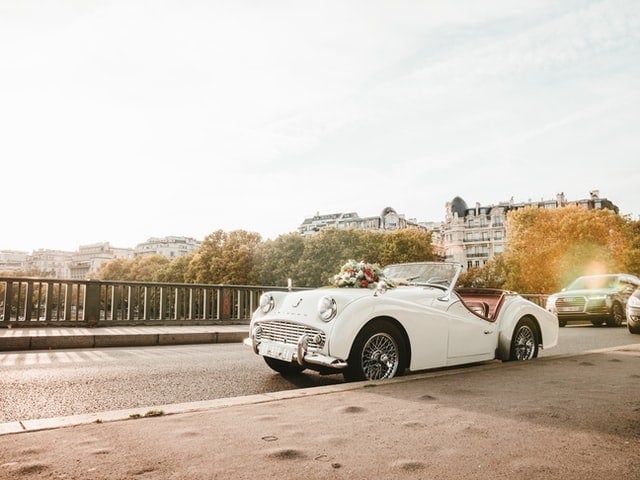
Photo by Yan Berthemy on Unsplash

Did you enjoy this article? TAIP is 100% reader-supported through tipping. If you want to leave us a tip of any amount it would be highly appreciated. These tips help support our efforts to keep TAIP an ad-free environment. Just as at a cafe, the tips are split evenly among the team.