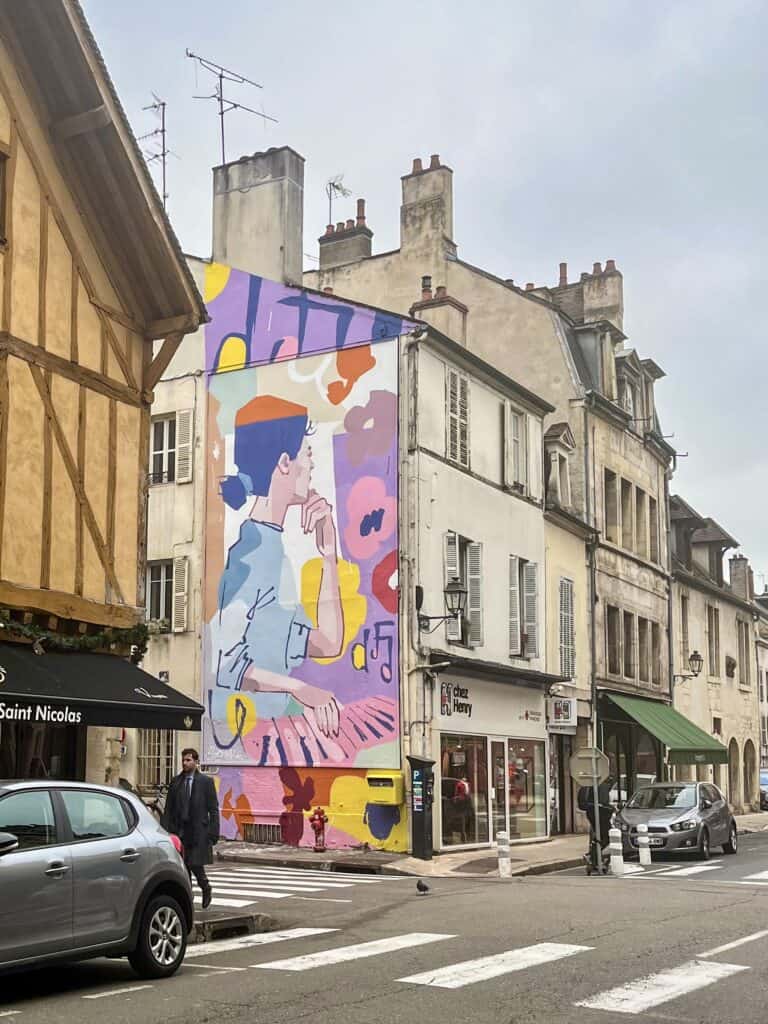
building in Dijon, France with hand painted mural

American Social Norms in France and Why They Don’t Always Translate

As children, we aren’t always taught that what is considered polite to you isn’t necessarily what is polite to another. As an American (especially one from the Midwest), I was raised with a distinct fear of being seen as rude, so when I moved to France this fear followed. It blossomed even more a few months into my new expat life when I realized that much to my surprise, what I was doing to be polite often had the opposite effect.

I did everything I had been taught to make connections, but time and time again conversations ended in tight, awkward smiles and a distinct feeling that things had not gone well despite my efforts. 

I would smile when passing someone by, and if greeted I would say bonjour and try to start a conversation with small talk on the weather or work. If you have spent much time in France maybe you can already see how this eagerness caught locals by surprise and didn’t help assimilation into the French lifestyle. 

Of course, I had been warned about the culture shock and mistranslations, but the sinking realization that I could speak the language but not communicate was heavier than anticipated. So much of what I knew to be polite at home came across as disingenuous, even tedious to my French peers. 

To be completely without cultural misunderstanding is unrealistic, but maybe knowing these social faux pas can help save you a headache or two.

General Conversation and Personal Questions

While living abroad, I found work to be a topic of conversation less welcomed in France. 

In America, work can be seen as a synonym for passion, and asking someone what they do for work is similar to asking what they’re passionate about, but in France that line is less direct. I once heard someone remark, “The French work to live and Americans live to work.” It’s a stereotype that rings true in my experience. 

When I would meet someone, one of the first questions I would ask was what they do for work. To be fair, this question is not always considered impolite, but more than once I would receive a look of someone humoring a child who didn’t know they had done something rude.

It wasn’t until I asked a coworker that they explained in France work is work and passion is passion; not inherently separate but never synonymous. So when asked what one does for a living, the underlying implication isn’t what are you passionate about? and more so, what is your social standing? which (for anyone wondering) is not polite. 

Personal Boundaries and Small Talk

Small talk is considered the necessary evil of getting to know someone in America. We ask questions to build connection, putting in effort and interest, which for many is a show of goodwill. 

However, this form of goodwill didn’t translate and more than once I caught myself outstaying the welcome of French pleasantries. I knew to say bonjour when entering a building, but I mistook this as an invitation for conversation as well, as it had been back home.  

The French show goodwill much longer after getting to know someone than Americans typically do when building a connection. They’re not the type to share as much with strangers and lack the knee-jerk reaction that Americans have to filling silence. Don’t be afraid to let silence sit, and know that most French people build relationships slowly, not through a lot of small talk. 

Performance Cues and Active Listening

Have you ever wondered why Americans do so much active listening? It wasn’t until I was comparing culture shock notes with another American expat that she brought up a conversation she had recently had with her French coworker. 

He mentioned how often Americans smile, nod, and mhmm in conversation and how silly it made them look. It’s true, active listening isn’t done as much in France, and the theories as to why we do this vary from America’s history as a country of immigration to the ever-present “corporate communication” in our daily life. In France however, the bobblehead-ness of active listening more often than not gives Americans an overly earnest appearance.

While at lunch a French friend once remarked that when we first met I had been akin to “Bambi the little deer,” wide-eyed and unsure. He credited the change to my growing confidence, but largely this difference came after I learned to converse without the constant show of attention.

Still show interest, but know the French don’t have to be convinced that you are listening to them. Additionally, know that just because a French person isn’t doing the typical actions we correlate with listening doesn’t mean they aren’t engaged.

Material Expression and Gift Giving

Even after I had finally gotten past the growing pains of forming a cross-cultural relationship, I found my way of showing politeness still tripped me up in terms of appearing overly concerned with material things and gift-giving. 

As an American, it’s often assumed the nicer (and more expensive) the item the better the sentiment. We go out of our way with housewarming events and holidays to show affection through gifts. In France however, the line between good taste and excessive wealth is much thinner. 

More than once I heard someone describe a neighbor or peer as boastful, and when asked why, they would mention something along the lines of how they only drink expensive bottles of wine, or post about fancy vacations and the expensive cars they drove.   

While gifts are still, of course, appreciated, there is more weight behind how much one might pay or “show off” in France. I once had a friend remark on the number of gifts I had given her. It was in an affectionate teasing way the French do when they like you, but it was also a reminder that something that felt so customary to me was not necessarily so for her. 

In all, it took me a while to really evaluate the type of politeness I was raised on and how Midwest manners might not mesh with the lifestyle and culture in France.

While what is polite does not always translate neatly, showing effort is at least a way to communicate that you mean well. When met with communication mishaps, that was one thing that could usually save me, and any expat will tell you all you can do is be patient and sincere in your efforts while living abroad.  

If you find yourself wanting to learn more about American vs French culture I highly recommend the book Cultural Misunderstandings: The French-American Experience by Raymonde Carroll. It’s a great resource and an interesting read filled with personal anecdotes by French anthropologist Carroll, who can possibly help explain why that interaction at the market ended so poorly.

Photo taken in Dijon, France

Did you enjoy this article? TAIP is 100% reader-supported through tipping. If you want to leave us a tip of any amount it would be highly appreciated. These tips help support our efforts to keep TAIP an ad-free environment. Just as at a cafe, the tips are split evenly among the team.

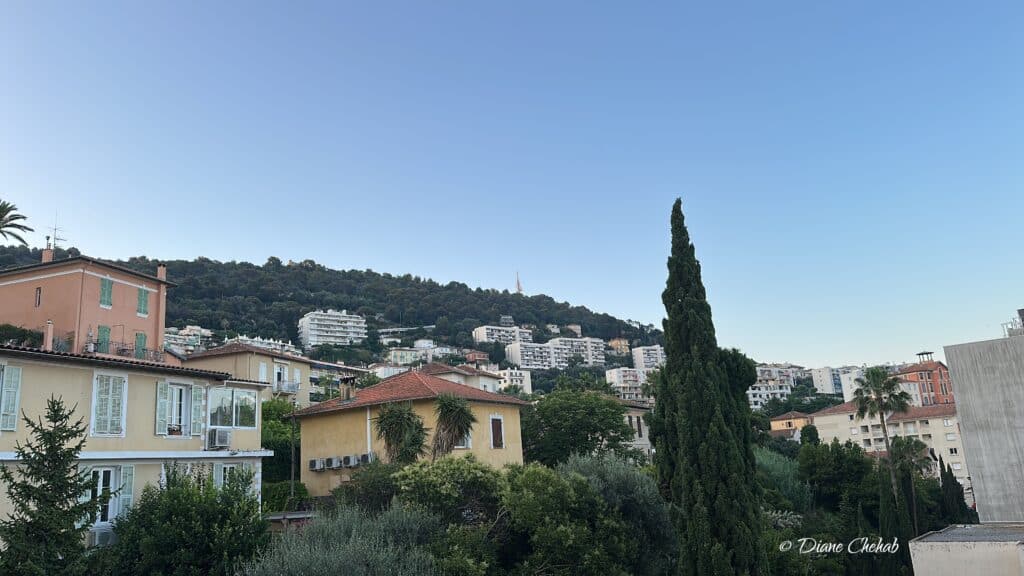
View of Mont Boron in Nice

Moving to France as a Retiree: The Journey (Part 1)

At the age of 69, I decided to move to France. 

I had already lived in the Paris area in my youth, first as the child of an expat working for a US company, and then as an architecture student at the Beaux Arts (Fine Arts). Until 2005, I only had French degrees (not on purpose, it just happened due to moving, wars, et al). 

This background is, however, of no interest whatsoever to the French government when I decided to move to France (definitely or indefinitely). I have US citizenship, and that’s it. No European ancestors to call upon, unless a crusader strayed into my forebears, but that would be too long ago, anyway.

I’ll provide the story of my journey (I don’t mean the plane journey, long enough from San Francisco to Nice), from decision to first residence card. A couple of things may have changed in the meantime, but not much, as far as I can tell. I wish I had known all the pitfalls before I started; at least I would have been better prepared.

My first bit of advice is to get on Americans in France blogs, Facebook groups, etc., before you start, rather than afterwards! You can’t believe everything (and you shouldn’t even believe me, without verifying first), but at least you get a lot of information about the pain points.

Before You Pull Up All Your US Roots

  • If you are selling your home, do it before you move to France. Otherwise, you may incur additional capital gains taxes in France.
  • Before you cancel your car insurance, ask for a letter that shows your claims history (in theory, 14 years’ worth). Otherwise, you’ll be treated as a beginner driver.
  • Only some US states have a reciprocity agreement for the driver’s license. 

The Start: the Long-Stay Visa

France is not a country that is especially welcoming to non-EU (European Union) immigrants. There are no golden visas and no special deals. There are many categories of immigrants, and the first action item is to figure out where you fit in. There is no official “retiree” visa: it is a visitor visa. It is only at the expiration of the 1-year visa that you can apply for a residence card.

You’d think the place to apply would be the French embassy or consulate in your area, but no. Visas had been outsourced to a company called VSF Global — now it’s another company, TLSContact. Visas are handled for a variety of countries; the person I interviewed with didn’t even speak French. Before booking an appointment, you fill in an application.

The visa requires health insurance. I got mine via the VFS website, with a company named Mutuaide. Possibly, TLScontact offers links to insurance companies. American insurance companies may be very expensive. **Note from the editor: we recommend Cigna Global for the health insurance needed for your visa application.

You register your account on the TLS site, find the appropriate visa type (VLS-TS), provide the documents they request, and ask for an appointment. Remember, there is no specific retired person visa; you apply as a visitor.

At the appointment, you’ll be asked some questions, get fingerprinted, and hand over your passport, which will be sent to the French Embassy. If the request is accepted, you’ll get it back in about a week or so, with a full page stamp that shows your “numéro d’étranger” (your “foreigner’s number”) that will follow you for the length of your time in France as a foreign resident.

Arrival in France

Once you have arrived in France, you will need to “validate” your visa online. There will be a fee.

Then you receive an email with an appointment for a health check. In 2023, I needed a recent chest scan, but this may not be the case any longer. My scan was a couple of months old, so I had to undergo a new X-ray at the government office on the day of my appointment.

You cannot choose your appointment. If it’s inconvenient, you can cancel it and wait for a new appointment. It took about 6 weeks for me. There is nothing you can do to speed it up. If it’s inconvenient again, well, too bad. I had to cancel a trip.

After the chest scan, you go to another location and fill in a couple of questionnaires. One of my questionnaires was about my mental health. Some questions were tricky: “Do you worry about your weight?” for example. “Have you ever been upset at your coworkers?” (I don’t recall the exact wording.) You undergo an interview with health professionals, and if you pass muster, you are given a receipt that is NOT TO BE LOST (even though nobody asked me for it again).

Health Coverage

After three months in France, you can apply for a Social Security number (this is for healthcare): “ouverture des droits.” 

You’ll need to prove that you live in France (usually via electrical invoices), and provide:

  • Notarized copy of birth certificate (may need to be translated by a certified translator)
  • Copy of passport 
  • Visa or receipt for residence application
  • Proof of residence: for example, a rental agreement, or 3 months of electrical invoices 
  • IBAN (French bank account info)

Make sure the name on your passport is the same as the name on your birth certificate. If you can’t, be prepared to be able to prove who you are!

Most probably, you will receive a questionnaire or a request for more documents. And then you wait, and you wait some more. You may have been approved without even knowing it. Sometimes it’s easy, and sometimes it’s very difficult. You can call them for updates; they have English-speaking agents, but you may not get the correct answer. 

In the meantime, it’s less expensive to get medical care in France than in the US without insurance. 

Taxes

Once you’ve been in France for over 6 months, you will be considered a tax resident. Income taxes are filed around May. The deadline works well for US taxpayers, as we file in April.

There may be a tax office in your town, and it is possible to talk with the counselors; it’s better to go before high tax season starts (I waited for an hour in the pouring rain in April, and at one point someone advised me in the lobby. They were very, very busy).

A Few More Notes

  • US Medicare does not cover overseas expenses
  • Beware requesting a 6-month visa instead of a 1-year visa on the TLS website; you won’t be able to request the carte de séjour (residence card)
  • American Express is not widely accepted in Europe, and they charge fees for overseas charges
  • US credit card companies will not automatically cover your overseas expenses in the unfortunate case of your card being stolen and used before you can block it
  • When you get money at an ATM, it is usually preferable to choose to get the money in euros, rather than have it converted by the bank managing the ATM. Unless the US dollar is in free fall. You never know

This first part covers my experience of getting your foot into France! Stay tuned for Part 2 for the next part of the saga. 

Photo of the view of Mont Boron in Nice.

Did you enjoy this article? TAIP is 100% reader-supported through tipping. If you want to leave us a tip of any amount it would be highly appreciated.  These tips help support our efforts to keep TAIP an ad-free environment. Just like at a cafe, the tips are split evenly among the team.

The Week Before I Move to France

I’ve got my visa, a year’s supply of my favorite deodorant, and a one-way ticket to France. The countdown to my departure began when I returned to Texas from France four months ago, but I’m still struggling to fathom how those 120 days are now in the single digits. 

Last year, I worked as an English teaching assistant in this quaint town on the south side of the country. This year, I’m returning to the same program, the same lodging situation, and the same community I grew to love. It’s crazy to think that this time last year, I was preparing to live in a city where I didn’t know a soul! 

Round two of working in France has a lot fewer questions on the outset, or at least the questions have changed form. 

“Where will I live?” has become, “What will it look like to live with different people in the same place?” 

“How will I teach?” has become, “How will I serve my new co-workers and students?”

“Who will my community be?” has become, “How will my relationships grow in the months ahead?”

Now being more accustomed to the different language, culture, and daily rhythms of living abroad, I have noticed that my goals have also moved from the category of surviving to thriving. Last year, I learned how to get around using public transportation and my own two feet. This year, my goal is to trade in my US driver’s license for a French driver’s permit. Last year, I learned what a month’s worth of expenses could look like in France. This year, my goal is to live in awareness of my budget instead of relying on additional savings to pick up my slack. Last year, my goal was to keep my head above water and this year, I want to be a well of reassurance and knowledge for the new language assistants coming to my town from around the world.

So now that I’ve talked through the theoretical, let me share a bit of the practical. Here is my to-do list one week before I (re)move to France. 

  • Fill out as much of the paperwork as possible for my request for CAF lodging assistance
  • Purchase a professional translation of my driver’s license and driving record
  • Send in my rolls of film from this summer to be developed and returned to me digitally 
  • Buy a pair of jeans; mine are wearing out and there is nothing quite like American jeans
  • Finish one of the books I’m reading so I don’t have to travel with it; books weigh more than you think
  • Make a final trip to the pharmacy to stock up on my American medical needs
  • Buy a train ticket from Paris to Lyon
  • Plan my arrival
  • Start packing 

Knowing it will be a minute before I see my friends and family on this side of the world again, the logistics are balanced by the weighty work of being present to my community.  I’ve made plans with friends for our final lunch and dinner dates of 2025. Just the other day, I realized that my mom has never been to my favorite park, which is a 20-minute drive from her home. Naturally, we’ve chosen an evening to go together before I hop the pond. Making time for these shared moments is something I know I won’t regret down the line when being together in the flesh is simply not an option. Prioritizing relationships this month has meant pulling back from work projects and letting go of goals I had for this season stateside, but I’m learning that is okay. Choosing personal well-being over professional security, dare I say, even feels a little French. 

Starting a new chapter inevitably means finishing another, and so in this moment of turning the page, I’m also choosing to take the time to reflect. What have I learned from this time in the States? What am I grateful for? What do I want to take with me? What do I want to leave behind? These questions stand up against the metaphorical and the physical. Remember, packing is still on my to-do list. Though sometimes I wish my mind and heart had no luggage fee or weight limit, the reality is they do. The more I process and let go of here, the lighter I will go into the season that awaits me. And as I preach to my fellow travelers, and often stand in need of a reminder myself, “The lighter you are, the happier you will be.”

Cheers to taking flight and traveling light.

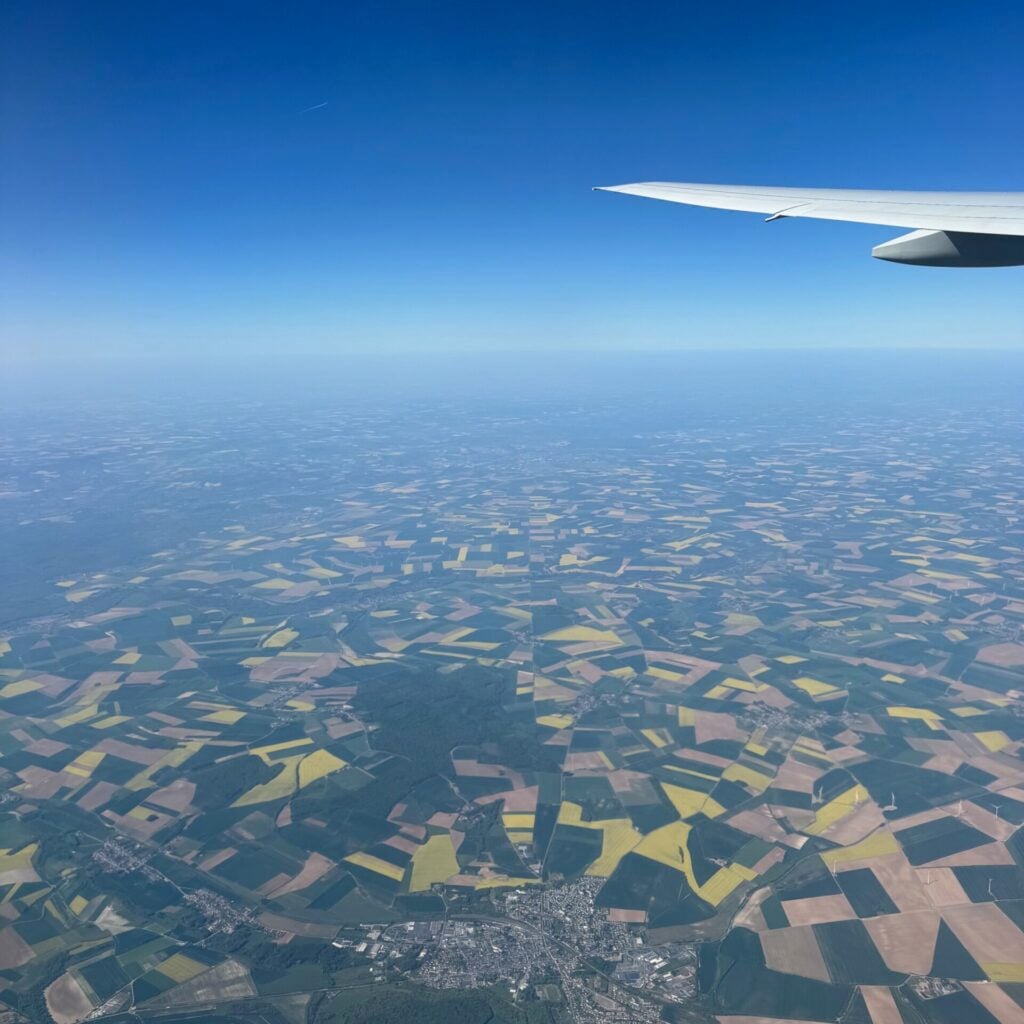
Photo from my last flight over France.

Did you enjoy this article? TAIP is 100% reader-supported through tipping. If you want to leave us a tip of any amount it would be highly appreciated.  These tips help support our efforts to keep TAIP an ad-free environment. Just like at a cafe, the tips are split evenly among the team.

closed shutters on a Parisian building

Why Everything Closes in France in August

If you’ve ever tried to do anything administrative in France during the month of August, you’ve probably hit a wall — or a closed door. Or maybe a handwritten note taped to a window that reads, “fermeture annuelle, réouverture le 2 septembre,” or something similar. 

Most shops close down too (with the exception of many places in Paris that cater to tourists), bakers disappear, your doctor and dentist seem to vanish, and entire neighborhoods go quiet. I remember being extremely confused the first summer I moved here. Why does everything close in France in August? I wondered. 

The short answer? Vacation is sacred here. The long answer is tied to French labor laws, cultural values, and a national love of slowing down. What was once very confusing to me makes total sense and has become just one more thing about the French I admire deeply.

The History Behind August Shutdowns in France

The long-standing tradition of closing up shop in August began in the early 20th century when France introduced paid vacation leave for all workers in 1936. At first, it was only two weeks (the unfortunate truth for most Americans à nos jours), but it eventually grew to the five weeks of paid leave the majority of French employees enjoy today.

For the working class, August was the logical time to take that break. School was out, the weather was nice across most of the country, and most factories and workplaces already had reduced activity. It soon became part of the social rhythm in France, where everyone from small business owners to government workers collectively stepped away from their responsibilities and headed out of town.

Even now, many companies shut down entirely for the month. Government offices operate on reduced staff and administrative processes grind to a near halt (good luck renewing your visa in August). Again, this is something I admire so much about the French, and is something that would never happen in the US. When Americans want something done, they want it done yesterday. In France, there’s a better understanding that, actually, we are human beings, and every human being deserves a break. Wild concept, isn’t it?

Where Does Everyone Go in August?

As they should, the French love their summer exodus, and in true French fashion they even have words for it:

  • Les juilletistes: those who vacation in July
  • Les aoûtiens: those who vacation in August

August is more popular, but I also understand why some people prefer to take their vacation in July — there’s something to be said about taking a holiday before everyone else does and a few of the families I used to babysit for leaned much more juilletiste.

Many French families have long-standing vacation traditions, like returning to the same small village year after year, maisons de campagne that have been in the family for generations (surprisingly, unlike in the US, families of nearly all social standings have “country homes,” another thing that initially shocked me), and spending time with the same neighbors who may have also fled the city. For others, it’s a chance to disconnect, travel internationally, or just step away from the daily grind.

So, What Actually Closes in August?

My American brain initially really could not comprehend the idea of the majority of businesses closing in August. But, how are they okay with nothing getting done for an entire month?! I wondered constantly. Growing up in a capitalist country where the bottom line is the most important thing, this cultural norm seemed impossible. 

But, folks… it is certainly possible and the country doesn’t fall apart at the seams every summer. The real answer to what actually closes is: more than you think, but technically, not everything. 

Here’s what you can expect to be closed:

  • Independent boulangeries and patisseries
  • Pharmacies (unless it’s their turn to be the “pharmacie de garde,” or an emergency pharmacy that’s required to stay open)
  • Family-run restaurants and cafés
  • Doctors, dentists, and specialists
  • Small boutiques and bookstores
  • Many post offices, banks, and local government buildings

Again, this isn’t always the case in Paris, where tourists have forced the city to Americanize in many ways. But, in smaller towns and residential areas in larger cities, it’s not unusual to find entire streets shut down.

Here’s what tends to stay open:

  • Large supermarkets like Carrefour, Monoprix, and Franprix
  • Chain restaurants and fast food restaurants
  • Tourist attractions, museums, and monuments
  • Major transportation hubs

What This Means for Daily Life

August in France definitely requires some adjustment, but once you hop on the vacances train you’ll see it’s not that complicated. Make a note to check your favorite store windows for handwritten closure signs. Refill any necessary prescriptions early and make doctor’s appointments well in advance (or simply wait for September). And, by all means, avoid anything involving French bureaucracy until la rentrée, for your own mental sanity. 

I often learned this the hard way, but once I did, I got used to it and the August closures became another part of my normal everyday French life.

These closures are a direct reflection of how the French think about time, work, and rest. Unlike many Anglophone cultures, where rest is earned through burnout, the French see vacation as a right, not a reward. And it’s not just a week or a long weekend, it’s a true break.

What’s more, there’s no guilt attached to this rest. No pressure to stay plugged in, and certainly no Slack messages coming through. No, “I’m technically on vacation, but feel free to reach out.” A French person would never say something like that, and I really respect them for it.

As such, TAIP will also be taking our summer holidays for the rest of the month of August. We’ll resume posting regularly after la rentrée — see you all on the other side 😉

Photo by Eric Prouzet on Unsplash

Did you enjoy this article? TAIP is 100% reader-supported through tipping. If you want to leave us a tip of any amount it would be highly appreciated. These tips help support our efforts to keep TAIP an ad-free environment. Just as at a cafe, the tips are split evenly among the team.

a woman standing in front of a colorful flower shop in Paris

Living in France Changed my Relationship with Time

To be honest, I never really thought much about my relationship with time. Until I moved to France and realized just how differently they approach it in terms of, well, almost everything.

Things that have become normalized in the US, like eating lunch at your desk, sandwich in one hand, typing away with the other, working multiple jobs to make sure I had some cash to enjoy the little time off I had, squeezing in dinner before a workout, falling into bed at night from pure exhaustion… the list could go on and on. 

The addiction to the hustle and “being busy” is very real in the States. Not to say I didn’t have to hustle a little to live in France (in fact, it’s how I met Stephen originally), there’s no denying that life moves at a much faster pace for the average American compared to the average French person.

When I moved to France, suddenly I was living in a country where “urgent” rarely means what you think it does, where many shops close for lunch, and where a vacation is treated as sacred, not optional. My busy American brain didn’t know what to do with this at first, but I got used to it very quickly, and ultimately learned to absolutely adore it.

This slower pace of life is something Stephen and I talk a lot about on our YouTube channel — it seems to come up time and time again. While some aspects certainly took getting used to, we both agree how refreshing it was to have more time and space in our lives… without feeling guilty about it.

Slowing Down, Whether You Want To or Not

One of my very first culture shocks was the fact that most shops and stores are closed on Sundays, even in a massive city like Paris. Now, that has changed a bit, and nowadays you’ll be able to find at least a grocery store or two open. But it’s nothing like in the US, where things seem to be open 24/7, or at least seven days a week.

In Paris, there aren’t many shops that close for lunch, but in smaller places (even Bordeaux, which is still a pretty major city for France standards), you’ll be hard pressed to find a pharmacy or boutique open from noon to 2pm. 

Not to mention the whole country seemingly shutting down for the entire month of August. I remember being in a panic one fateful summer, when I was waiting for a very important piece of administrative documentation needed for an upcoming student visa I had to apply for. The offices at the school were closed promptly at 4pm on July 31 and I unfortunately did not have the forethought to go pick up my paperwork before then. I had my visa appointment in mid-August and quickly began to panic.

Shockingly, when I explained the issue back at the Boston consulate, they totally understood and ended up issuing my visa anyway, thanks to a few other key pieces of paperwork I did manage to get my hands on. I do NOT recommend trying to do the same, but it just goes to show that not being able to get anything administrative done in August is a cultural and accepted norm in France.

My shift toward this new concept of time didn’t happen overnight and it was extremely frustrating at first. But slowly, I got used to it and even began to lean into it myself.

Learning to ‘Be’ in a Culture That Values ‘Being’

Everything takes more time in France and they like it that way. A two-hour dinner isn’t a luxury, it’s normal. Even average, weekday dinners at my in-laws are often at least one hour long. They do not rush through meals, and it’s something I personally love about the culture.

Weekends are for friends, relaxing, long walks, and markets. Sundays are for staying at home. And five weeks of paid vacation isn’t a perk or “benefit,” it’s your right. Coffee dates aren’t 20-30 minutes long, they often span over several hours and may even turn into a meal if you time it right. It’s better to take the scenic route. It’s okay to just… sit.

There’s less competition in France too, which I think influences this attitude of “it’s okay to take your time.” I don’t think all Americans are competitive in nature, but it’s so ingrained in our culture that we don’t see the little ways it affects our everyday lives. It’s also worth noting that France is not a capitalist country. Now, if you talk to most French people, they’ll say that this is changing (no thanks to American influence), but it still is nothing compared to the consumerism-obsessed États-Unis.

As someone who grew up in the US, it’s so, so refreshing.

Now that my French husband and I are back in the States (for now), I won’t lie: it’s been difficult to keep the slow-paced French lifestyle here. There are just so many more pressures. Pressures to earn more because the cost of living, at least in our situation, is four times what it cost us to live in Paris. Pressures to have the latest and greatest car/gadget/home/clothing/electronic/etc. Pressures to keep up with everyone else around us.

But, ultimately, I am so glad to be back here with my husband because he often reminds me to slow down and lean back into the French way of life. We’re slowly but surely creating our own little pocket of France in our little beach house on the East Coast. And constantly reminding ourselves: ‘more’ doesn’t always mean happier. Because it often doesn’t.

Photo by Eliott Goutard on Unsplash

Did you enjoy this article? TAIP is 100% reader-supported through tipping. If you want to leave us a tip of any amount it would be highly appreciated. These tips help support our efforts to keep TAIP an ad-free environment. Just as at a cafe, the tips are split evenly among the team.

The Secret of the South: Le Puy-en-Velay

“Le Puy-en-what?” This is often the response I receive when asked where I am living in France. Even many of my French friends from other regions of the country are unfamiliar with it.

As I write during my return flight to the US for the summer, I can tell you that just this morning a French travel inspector in Paris asked me what I had been doing in France and where I was going. I explained that I had been teaching English in a town called Le Puy-en-Velay. She seemed convinced I made it up, until I explained where it is on a map. 

Two hours south of Clermont-Ferrand and two hours west of Lyon, you could say it is in the middle of nowhere. I fell in love with Le Puy-en-Velay on my arrival, but what I didn’t realize then is that I was far from the first to be taken by the charm of this little village in the valley. While visiting the Orsay Museum in Paris last year, I stumbled across not one but two different works of art depicting scenes from my new town. After stumbling across the second, I remember thinking, “Okay, maybe I’m not crazy for loving this place.” 

Decidedly picturesque, Le Puy (as it is called for short) is riddled with impressive monuments and little alleys. Tucked in the heart of the French countryside, this medieval starting place for the Camino de Santiago has attracted artists and pilgrims seeking respite for centuries. This peaceful region, once dominated by volcanic activity, is now a haven of striking rock formations and ancient history. 

If it’s So Great, Why is it Still a Secret? 

Le Puy is not well connected by public transit. It’s relatively far from bigger cities, and even trains to Clermont and Lyon are not direct. Most locals have cars and visitors would be most comfortable renting one for an extended stay. The perk of this inconvenience is that the town has remained quiet and protected from the casual passerby. 

But as you may note by the grandeur of its Cathedral or its medieval architecture, there was a time this quiet town wasn’t so quiet. 

What to See

Notre Dame de France

When coming into Le Puy, the statue of Our Lady of France may just catch your eye. She’s situated on the center peak of town, and at night she casts a glow over the whole city. Made with the metal of 213 cannons taken from the Russians during the Crimean War, the statue was gifted to the city of Le Puy en Velay by Napoleon III in 1860. It was the tallest statue in the world until it was surpassed by the Statue of Liberty. I’ll remind you that it was a gift to the US from France. 

Cathedral du Puy

A famous site for pilgrimage since the 400s, its varied architecture reveals a history of construction over the centuries. Even Charlemagne made multiple visits to the Cathedral in the 8th century, and Isabelle Romée (the mother of Joan of Arc) made an appearance in 1429. Every morning from April to October, the Cathedral offers a send-off blessing for those embarking on the Camino de Santiago. I don’t want to give too much away, but I will say the “trap door” opening at the end is impressive. 

St. Michel’s Rock & Chapel

Come for the views, stay for the culture. The construction of this chapel in the sky was approved by Bishop Godesclac, the first person to walk to Santiago from outside of Spain in 961. A stone staircase of 268 steps brings you from the access road to its Romanesque entrance. A small museum kept by Le Puy’s office of tourism recounts the geographic anomaly of the mountain before you make your way up. 

St. Joseph of Good Hope Sanctuary

Built on the site of a chateau fortress in 1910, this Basilica provides a magnificent panoramic view of the valley (as pictured). Inside the church, a colorful tapestry behind the altar depicts the life of this remarkable saint. Pilgrims can visit a cave chapel beneath the statue, or even step inside the statue itself as of its reopening in 2025. 

Enjoy Nature

Surrounded by rich landscapes, Le Puy-en-Velay offers no shortage of excursions for nature lovers. Picture perfect lakes, off-the-path waterfalls, colorful mountains and a suspended forest bridge are all within an hour’s drive away. I’ll leave a list of recommendations here. 

When to Come

I may have lived here through the winter, but I can vouch that Le Puy shines in the summer. Literally, the whole town is illuminated at night from July to September. With a higher elevation, the region can see snowfall from late fall to early spring. Most of the tourist sites close or have very limited hours from October to March, so I would recommend coming outside of this window. Thanks to the market in the town center, Saturday mornings have become my favorite moment of the week. If you can swing being here during a weekend, you may have more fun.

Now, if you’re looking to celebrate with the locals, every year the town hosts a candlelit procession to the Cathedral on August 15th. This holiday in the French calendar marks the Assumption of Mary into heaven. Though I haven’t had the privilege of witnessing the celebration myself, many have told me this is a sight to see. 

Ever dreamed of living in the middle ages, or wondered what that would be like? Le Puy has hosted a renaissance festival called the Roi de l’Oiseau for over 40 years. The third weekend of September, the town transforms into a medieval village. My first week in town happened to land at this time and the spirit of imagination in the air was mesmerizing. Hotels and hostels fill up, so be sure to book early. 

Every November Le Puy hosts a weekend of hot air balloon lift-offs. This is not a cheap way to see the city, but I’ve heard it is magnificent. The town becomes magical as colorful spots fill the sky. My jaw dropped on the sidewalk when I stepped out of work and saw this surprise last year.

Should I Visit?

Now I’m not saying Le Puy should be your first place to visit in France, maybe not even your fifth. It’s pretty hard to get here, so you’ll likely have to stop at a few other cities on the way. However, if you’re looking to explore the countryside and can swing a central France getaway, I’m glad that this little gem is now on your radar. 

Learn more about Le Puy’s history and upcoming events at its official tourism website.

Photo of Le Puy-en-Velay taken on film from the viewpoint of St. Joseph’s Sanctuary

Did you enjoy this article? TAIP is 100% reader-supported through tipping. If you want to leave us a tip of any amount it would be highly appreciated.  These tips help support our efforts to keep TAIP an ad-free environment. Just like at a cafe, the tips are split evenly among the team. 

french flags outside a building

French Etiquette 101

When I first moved to France, many things surprised me initially. Most were pleasant — you mean I can order a 2€ coffee and sit at the same table undisturbed for hours on end? I can go grocery shopping without having to inspect every ingredient list? I can take a leisurely, 1-hour lunch break, and that’s the norm?

Then, there were things I wasn’t expecting, and most of those are wrapped up in the world of French Etiquette. It’s its own cultural code, and coming from the US, some of these social rules might surprise you, like they surprised me.

Where Americans value friendliness (real or not), casual conversation, and a general “easygoing” type of vibe, the French prefer formality, precision, and specific boundaries when it comes to social situations. As an American married to a French person, I’ll let you imagine just how many awkward moments I’ve found myself in over the years.

Some parts of French etiquette I really love and respect, and I look forward to raising my future children with many of its values. On the other hand, some others that make you feel like you’re living in a world since long passed — and I’m happy to blame my I’m-a-foreigner naïveté when I choose not to participate in them.

Understanding these differences can help you avoid awkward moments and start off on the right foot. I knew nothing before moving to France — allow me to help you not make the same mistakes I did.

Start Every Conversation with Bonjour

One way to be perceived as the rude American is to walk into a shop without saying bonjour as soon as you enter. The same goes for passing a neighbor in the hallway or just starting a conversation with someone. You should always begin with a bonjour during the day, or a bonsoir in the evening. 

Skipping this can come across as very abrupt and yes, rude. Even a quick trip to the bakery starts with bonjour, madame/monsieur — and only after saying that should you place your order.

The fact that this is not the norm in the US always shocks my French husband — he would never dream of entering a public place without a greeting. 

Use Formal Titles First

This is something else that doesn’t always occur in the States. Americans like to be on a “first-name basis” right away, but in France, it’s the opposite: formality is the default.

Always address new acquaintances (if they’re significantly older than you), shopkeepers, and service providers/professionals as madame or monsieur until they tell you otherwise. In my experience, even most French people find this to be a bit old-fashioned, and they will often tell you to call them by their first name after the first drop of a formal title. But it’s not considered polite to jump in without a little formality first.

The same goes for written communication. Whether it’s an email or a letter, begin formally and wait for cues before moving into a more casual tone.

It’s Vous until They Say So

One of the biggest differences between French and English is the whole tu vs. vous discussion. Tu is the informal you, while vous is the formal version, which shows respect. Unless you’re speaking to a child, someone your own age, or a person you know very well, always start with vous.

Switching to tu too soon can seem overfamiliar or even disrespectful, especially for the older generation. Let the French person make the first move if they decide they want to “tutoyer” instead of “vous voyez.”

This is something my French family doesn’t really hold me to — I do try my best to vous voyez everyone until they tell me otherwise, but often I don’t know what form is the correct one to use. 

The general rule is: if you don’t know them or they’re older than you, it’s always vous. I usually just follow my husband’s lead. I have been on the receiving end of some strange looks when I tutoyer right away without really thinking about it. But, it’s often followed up by a comment like, “Oh, I forgot in English you don’t have the same rules,” and I’m forgiven.

But, when in doubt? Vous voyez is the move.

Mind Your Table Manners

French dining culture is another world all its own. If you’re invited to a meal, here are some basics I would keep in mind:

  • Never show up right on time to a dinner party. 5-15 minutes late is expected.
  • Never start eating until everyone is served and the host says bon appétit.
  • Always trinquer (cheers) with everyone present before taking a sip of your drink.
  • Need a refill? Serve everyone else first.
  • Use your utensils for everything; eating with your hands (even pizza or fruit) is considered rude.
  • When it comes to digging into the cheese plate, follow the host’s lead. Or do what I do and just ask someone else to cut it for you because it’s too much pressure.
  • Don’t clear away any dishes until everyone is done eating.
  • Offer to help clean up.

Don’t Overshare

Something I discovered early on in France is that personal information is revealed slowly, over time. Asking too many questions about someone’s job, salary, or family life too early in a conversation can feel invasive to the French.

Small talk isn’t the same as it is in the US either. The French don’t tend to chat casually with strangers at the grocery store or on public transportation. Once you build a relationship, yes, conversations can go very deep — often much deeper than what I’ve experienced in the States — but until then, privacy is important.

My husband and I talk about this all the time. Say you’re out at a bar and you meet an American. Suddenly, you’re their “new best friend,” and “OMG, we definitely need to hang out, I love you so much!” But, will you ever see that person again? Probably not, they were just being friendly, fake or not. Any information they may have shared was likely very surface-level and a whole lot of fluff.

Conversely, making casual friends with a French person is much more difficult, and they would never consider a person they just met their best friend or someone they love. But, once you do start getting to know them, you’ll be able to rely on them, and when they say we, “definitely need to hang out,” they’ll actually mean it. Then they’ll tell you their whole life story over coffee at 10am with a side of existential conversation to boot.

The Art of La Bise

Saying goodbye (and hello) in France is its own mini-ceremony. Whether you’re leaving a dinner party or wrapping up a business meeting, it’s important to properly acknowledge everyone in the room.

In informal settings this almost always includes la bise — the French cheek kiss — though the exact number of kisses can vary by region (it’s usually two, but more in the south). It never, ever, ever, includes a hug unless you’re with family or very close friends… and even then, most French people do prefer la bise.

Of course this tradition was put into the spotlight during the pandemic and the years following. In my friend group, we were all not-so-secretly really happy to ditch la bise. But, in my opinion, it is officially back, and skipping it would be considered rude. Alas, I’ve had to suck it up and start kissing cheeks again when entering and leaving a room.

All of this said, French etiquette isn’t designed to be frustrating, cold, or annoying — it’s simply more structured than what we’re used to in the US. There are more rules, and where American culture values friendliness, French culture values politesse (politeness) and respect for social boundaries.

As we always say here at TAIP, if you approach your interactions with curiosity, most people will appreciate your effort, even if you don’t get every single rule right the first time.

And when in doubt, you can always blame your I’m-a-foreigner naïveté like I do.

Photo by Sébastien Bloesch on Unsplash

Did you enjoy this article? TAIP is 100% reader-supported through tipping. If you want to leave us a tip of any amount it would be highly appreciated.  These tips help support our efforts to keep TAIP an ad-free environment. Just like at a cafe, the tips are split evenly among the team.

mini eiffel tower on stone wall

A Page from 29 Days to France: Getting the Essentials Sorted

For those of us who have moved to France, we know there’s a moment that comes right after the dream becomes reality — when the plan lands, your feet finally hit French soil, and you realize… Okay, now what?

It’s where the idea of moving to France meets with the very real logistics of actually living in a foreign country. It’s also where a lot of people tend to freeze, and then the panic sets in. What comes first? What needs to be done? What’s “normal” in France compared to what you’re used to back home?

When we wrote 29 Days to France, we wanted to walk people through not just the big picture of immigration paperwork or visa timelines (which are also included, fear not😉), but also the smaller minutiae of getting settled into your new French life. Details like getting a cell phone. Setting up electricity. Opening a bank account.

Are they glamorous tasks? No. But they’re the foundation of pretty much everything else. So today, I wanted to share one full day from the book to give any of you preparing for a move to France a sneak peek at what’s inside. 

Day 13: Getting the Essentials Sorted

Congratulations, you’ve officially arrived in France! You’ve most likely spent the first few days soaking it all in: your new neighborhood, the sound of chattering French, and the smell of buttery croissants in the air. Now that you’ve touched ground and are ready to start your new French life, you need to take care of a few essentials.

What are the essentials? Your cell plan (and new French number), your electricity and gas (handled by the national carrier, EDF), and your French bank account (which will provide you with a debit card). This won’t be the most exciting part of getting settled, but it’s necessary.

Cell Phone Carrier

There are several French cell phone carriers to choose from, including Orange, SFR, Bouygues, and Free. If you’re coming from the United States, you’re in for a pleasant surprise. Cell phone plans in France are much less expensive. I personally have Free and I pay around 20 € per month for unlimited texts and calls within Europe, unlimited internet access, and 30 days of free calls and 25 GB of internet within the US, among other locations. You can sign up for most cell phone plans online, but you can also go to a store and practice your French, if you’d like.

Electricity & Gas

EDF, which stands for Electricité de France, is the leading supplier of electricity in the country. It is majority-owned by the state, which keeps prices affordable. You’ll want to set up your home’s electricity and gas directly with them.

Your landlord most likely will not arrange this for you, so you’ll have to make a few phone calls. Alternatively, you can sign up online, but you need to get used to making these kinds of calls in French so I suggest that you get all of the practice you can! Once you have your French cell phone sorted you can call EDF at 3004. Make sure you have your address on hand.

This is the single most important and reliable proof of residence in France: the attestation that you pay for electricity.

Bank Account

There are also several different French banks to choose from. I have Crédit Agricole and I am really happy with them. They are a smaller bank and I find that the fees are reasonable. To choose for yourself, you’ll need to think about your personal needs. Do you want a larger bank? One that’s foreigner-friendly? Or maybe a small, local bank?

If you want a bank with a reputation of friendliness to foreigners, go for BNP Paribas. Its headquarters are in Paris and it’s the largest bank in France. It’s also among the largest banks in Europe. BNP is used to working with foreigners and I know that they have several representatives who speak English well.

Exercise: Be aware of your needs and do your research, especially when it comes to what you’re looking for in a cell phone and bank account. Practice (write it down if you need to!) what you’ll need to say in French before you call EDF or head to the bank.

Questions to answer: What do I need in a cell phone plan? What do I need in a bank account?

Why This Page Matters

I chose to share this page because it’s such a real moment in the move-to-France journey — one that not many people online talk about. No matter what kind of visa you’re on, no matter your job, family status, or even the city where you live, everyone has to navigate these basics.

And if you’re feeling intimidated by the idea of making a phone call in French, or choosing between a dozen different banks, or not knowing whether you need to bring ID to the phone store (you do) — that’s normal!

The entire goal behind 29 Days to France is to make this process feel less overwhelming and more doable. Not perfect, and not even necessarily easy, but possible. One small, essential step at a time.

If you liked this little excerpt, the full book features 28 other mini-guides just like this one. Each is focused on a task, a mindset shift, or a key moment in the move-to-France journey.

As a special treat for our American in Paris readers, you can purchase the 29 Days to France ebook for just $10 with the coupon code TAIP. We wrote this book with all of you in mind, and hope you enjoy reading it as much as we did writing it 🙂

Photo by Kristina Tochilko on Unsplash

Did you enjoy this article? TAIP is 100% reader-supported through tipping. If you want to leave us a tip of any amount it would be highly appreciated.  These tips help support our efforts to keep TAIP an ad-free environment. Just like at a cafe, the tips are split evenly among the team.

fresh produce in baskets

How to Shop at an Outdoor Market in Paris

Visiting the marché is one of my favorite weekly activities, and I especially love going with either my French husband (a professional chef) or my French mother-in-law (an incredible cook herself). They seem to know exactly where to go, who to talk to, and what to choose. 

It’s almost as if they’ve lived here their whole lives… oh, wait.

Outdoor markets are a staple of daily life in France and Paris is no exception. You’ll find everything from farm-fresh produce to artisanal cheeses and even household goods, depending on where you go.

Shopping at an outdoor market in Paris is a must, whether you live here too or are just passing through. Here are a few things I wish I had known before going for the first time.

When to Go

Paris markets have specific opening times, so knowing when to go is the first step in planning your visit. Most operate two to three days a week, and the hours can vary from one market to another. Typically, they’re open in the morning and close by early afternoon — usually around 1 or 2pm.

I hate to say it for all of my fellow night owls, but to beat the crowds and get the best selection, you have to get there early in the morning when the vendors are just setting up. My mother-in-law lives and breathes by this. Oftentimes, if she can’t get there by 8am (her market opens at 7am), she won’t go at all. Quel est l’intérêt ? “What’s the point?” she’ll shrug when asked.

Now, there is a caveat to this if budget is a real concern. The other option would be to head out just before closing, as many vendors will be eager to clear out their stock before the next day — at reduced prices to boot.

To find the exact days and hours of the markets you’re interested in, check online or use the app Marcoo.

What Stalls to Expect

If you’ve never been to an outdoor market in Paris before, you’ll notice there’s a wide variety of stands that offer all kinds of things. Wandering through one is truly a feast for the senses — I don’t recommend shopping while you’re hungry or you may end up with a lot more than you originally planned for.

Here’s what you can typically find:

  • Seasonal fruits, vegetables, and herbs.
  • High-quality cuts of meat, poultry, fresh fish, and seafood.
  • A selection of French cheeses, farm-fresh eggs, and sometimes butter.
  • Freshly baked bread, pastries, and viennoiseries.
  • Rotisserie chicken, roasted potatoes, paella, and other prepared foods.
  • Olives, nuts, honey, jams, and spices.
  • Some also have stalls with flowers, kitchenware, linens, and apparel.

One of my top questions when shopping with my French fam is: how do you know which vendor to choose? There are often several stalls that sell the same or similar items… how can you tell which one is the best?

After insisting that, “Well I’ve been coming here so long I just know,” didn’t satisfy my curiosity, my husband broke it down a bit further.

Freshness and quality matter. Take a good look at the state of the produce — bright, vibrant colors and firm textures usually mean it’s fresh. Stalls with steady lines of locals are a great place to start, and if the vendors are talkative and friendly (yes, they exist in France) it’s also a good sign. Prices will vary, but steer clear of drastically lower ones as that could indicate, well, lower quality.

And, in the quintessentially French manner, the hubs says very simply that le feeling (the vibe, the ambiance) he gets when stepping in front of a stall determines where he’ll spend his money. 

I’ve somewhat stopped trying to understand what that really means, but that’s another story for another article.

How to Choose Your Produce

Shopping at a French market is different from grabbing groceries at a supermarket. Vendors take pride in their products, and bien sûr, there’s a bit of etiquette involved.

  • Look for seasonal produce: French markets focus on in-season fruits and vegetables, so don’t expect to find strawberries or tomatoes in December.
  • Check for quality: Remember to look for vibrant colors and firm textures, as well as fresh smells.
  • Know Thy Categories: Some markets label produce by origin — bio (organic), local, or imported. I typically go for the organic local stuff over anything imported, unless it’s from Spain, Italy, or another closeby country.
  • Let vendors choose for you: Unlike in the US, it’s considered rude to handle the produce yourself. Nothing against you or your cleanliness, but in France, interacting with the vendors is all a part of the experience. Tell them what you want, and they’ll pick the best items for you.
  • Ask for recommendations: They also know their products well. Don’t hesitate to ask which melon is the sweetest or what’s best for a recipe you have in mind.

The Best Outdoor Markets to Visit in Paris

There are more than a whopping 80 markets in Paris going on in a given week — from small neighborhood spots to sprawling marchés with stall after stall of goods. Here are a few of the most popular ones, plus one of my personal favorites:

  • Marché Bastille (75011): One of the biggest, with everything from organic produce to artisan bread.
  • Marché des Enfants Rouges (75003): The oldest covered market in Paris offers a mix of fresh produce, international foods, and one of the best sandwiches I’ve ever tried from Alain Miam Miam. Trust.
  • Marché d’Aligre (75012): Known for affordable produce and antiques.
  • Marché Raspail (75006): Great if you love organic food and other high-quality products.
  • Marché de la Place Monge (75005): My top choice for its intimate, small neighborhood feel and high-quality produce, fresh seafood, and cheeses. It’s right near the Arènes de Lutèce in the 5th arrondissement.

Before you walk out the door, make sure you have cash and reusable bags, and get ready to practice your French. A polite bonjour here and there will get you a really long way. So will a French friend, so bring one of those if you’ve got ‘em too.

Photo by Anurag Arora on Unsplash

Did you enjoy this article? TAIP is 100% reader-supported through tipping. If you want to leave us a tip of any amount it would be highly appreciated. These tips help support our efforts to keep TAIP an ad-free environment. Just as at a cafe, the tips are split evenly among the team.
blue l'apéritif sign

The Ritual of the French Apéro

If you’ve spent an extended amount of time in France with actual French people, you know all about the ritual of the apéro — and that ritual is the best word to describe it.

Consistently splitting my time between the United States and France basically ever since I made my big move in 2014, I can’t help but notice and reflect on the cultural differences between Americans and French people. 

One of the many things that the French do right is their attitude around socializing, entertaining, and hosting. The French are inherently social whereas Americans (at least the ones I know and love) are fundamentally individualist — this comes out in so, so many ways — something I would have never figured out if I hadn’t committed to splitting my life in two amongst the two cultures.

After some extended time with my French in-laws over the holidays, it suddenly hit my I-spend-too-much-time-online millennial brain: did the French invent yapping? For my less chronically online readers, to yap is to chat, and boy do the French love to chit-chat. It’s totally normal for a group of friends to meet up around 5pm to begin apéro, only to part in the wee hours of the morning. And what did they do for the past eight or nine hours, you may ask? They talked. And enjoyed their apéro.

The Meaning and History of l’Apéro

Apéro is the colloquial version of the word apéritif, which comes from the Latin word aperire, meaning “to open.” It makes sense — l’apéro “opens” the meal and is meant to stimulate the appetite. 

In the past, apéritifs were herbal or medicinal drinks like fortified wine or bitter liqueurs designed to help digestion. This practice dates back to the Middle Ages, but it grew in popularity with the masses in the 19th century when drinks like vermouth, pastis, and Suze became widely available and enjoyed.

Over time, l’apéro evolved beyond a simple pre-dinner drink into a full-fledged social event. Now, that’s not to say that most French people have parties every night of the week before dinner. My in-laws usually have a beer along with some savory snacks like chips or pretzels (the only time I ever see them snack, really) before dinner when my husband and I come over. They still call it apéro, but it’s not as elaborate.

As the tradition grew, it transformed into a moment of relaxation, conversation, and conviviality that is deeply embedded in French culture. Unlike American happy hours, where discounted drinks and quick socializing are the name of the game, the French apéro is about slowing down, savoring the moment, and participating in some good old-fashioned existential conversation.

Whenever I have evening plans with my French friends, 99% of the time we’re having l’apéro at someone’s apartment. It’s an opportunity to débriefer our weeks, catch up on gossip, and spend time together. Everyone is responsible for bringing something to eat and drink, and it often turns into an apéro dinatoire, in which snack food becomes more substantial so we don’t have to worry about cooking a big meal.

The Unspoken Apéro Rules

As I already alluded to, l’apéro is not about getting as drunk as quickly as you can, so one of the first rules every American should heed is to pace yourself. This isn’t pregaming or predrinks. It’s sipping and savoring. I have never taken shots at l’apéro.

Another unspoken rule I briefly mentioned is that everyone is expected to show up with something. I’ve found this to be true at any French social engagement, and it’s something that isn’t as engrained into American culture: if you’re invited somewhere, you bring something along, even if no one asked you to. My French husband was appalled when I told him, “We don’t really do that in the States.” Now, even when we are in the US, we always bring a little gift and I’m honestly glad we do even though it’s not the norm. People appreciate it.

I digress. The next rule to abide by is to prepare yourself for constant conversation for several hours straight. As the more reserved, American person I am, I have to admit that by hour six or seven I’m usually ready to go home, whereas my husband could keep yapping along for another five. Topics range from things like what’s going on in our day-to-day lives, things we got up to over the week, what’s going on at work, to politics, religion, and, yes, existential topics like life, death, and what happens next. I’m not kidding or exaggerating at all — this level of depth is what I like most about the French, and you really see it come out at l’apéro.

I think the last unspoken rule is to respect the ritual. Again, l’apéro is not a pregame for a wild night out and when done right you shouldn’t have a headache the next morning. It’s a moment to relax after a long day or week, to catch up with friends, family, and loved ones, to enjoy a great glass of wine, to share good conversation, and to bask in the fact that you are where you are without any other place to be. 

I don’t think we have anything like it in the US. Feel free to correct me if I’m wrong.

Photo by Etienne Girardet on Unsplash

Did you enjoy this article? TAIP is 100% reader-supported through tipping. If you want to leave us a tip of any amount it would be highly appreciated. These tips help support our efforts to keep TAIP an ad-free environment. Just as at a cafe, the tips are split evenly among the team.