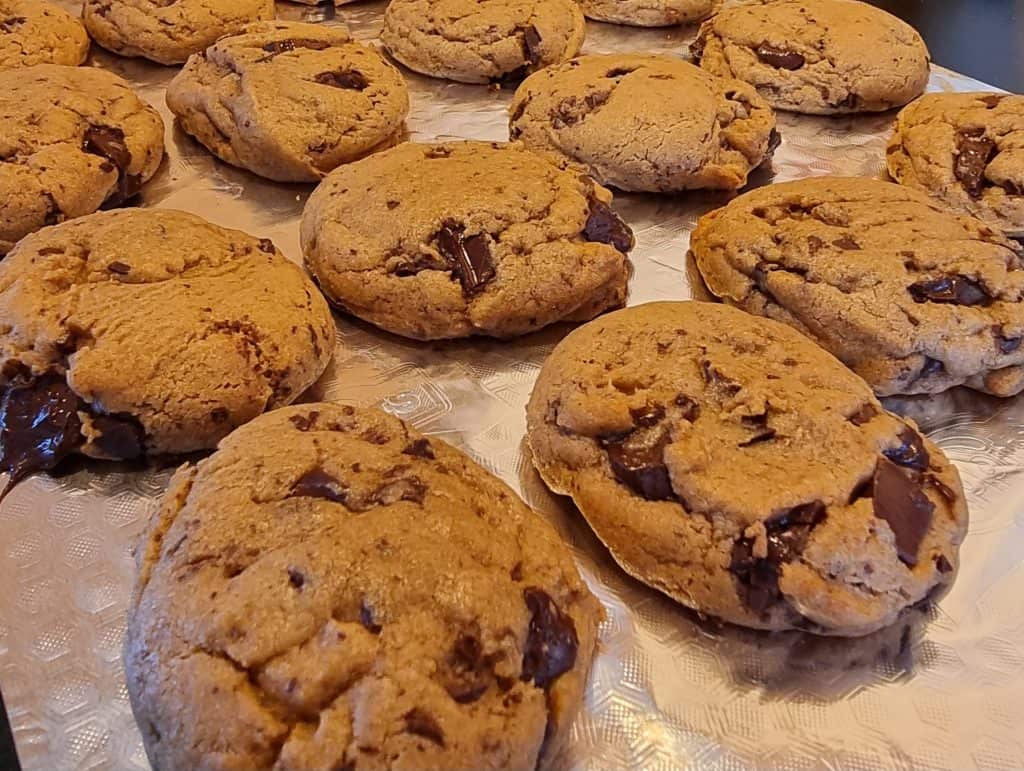
“If you give a mouse a cookie, he is going to ask you for a glass of milk.” Thus starts the children’s story, If You Give a Mouse a Cookie, by Laura Numeroff, a story I have read dozens, if not hundreds of times, to my three kids. Without fail they would laugh at the snowball effect of offering a cookie to this somehow adorable rodent. While I have my doubts about the plausibility of a mouse asking for a glass of milk, the concept of the story inspired this post on what can happen if you offer a French person a cookie.
The French are often unjustly characterized as a cold, unkind, and unwelcoming people (check out Molli’s personal experience that dispels this misconception). The French are reserved, but they are not unfriendly. Many are slow to warm up, but that does not mean they do not want to get to know you. My personal experience is that the French are incredibly loyal in their friendships. And while it can take time to move past the acquaintance stage into the depths of friendship, I have found that friendships here are true and long lasting.
When I moved back to France six years ago, I knew no one in the area. Thankfully, I quickly started meeting other parents as I took my kids to and from school on a daily basis. I wrestled with how to break past the cordial, “bonjour” (hello) and “bonne journée” (have a nice day) cordialities. When you are new to an area, it can feel quite isolating, intimidating, and overwhelming. There’s the real excitement of the new and exotic nature of settling into a foreign culture, but there are also many challenges; one of the greatest being the lack of close relationships with people. I did not set out to replicate the model from If You Give a Mouse a Cookie, but one day when baking cookies, I wondered with whom I could share my latest batch of American deliciousness.
I walked a couple hundred meters down to our village’s mairie (town hall) at goûter time (afternoon snack), warm and melty chocolate chip cookies in hand. I knocked on the administrative assistant’s office door and when I entered, she had a perplexed look on her face. I could see the wheels were turning as this was an impromptu visit. I quickly explained the reason for my arrival, that I had just baked some cookies and that I wanted to share a couple with her and the mayor, if he happened to be in his office.
If You Give a French Person a Cookie, He Will Likely Be Confused at First
She looked at me a bit suspiciously, maybe thinking that I had some ulterior motive for bringing baked goods. However, when it became clear that I was not there to ask for a favor, or anything else for that matter, her stoic look turned into a slightly disbelieving smile. Her smile turned to delightful groans as she took her first few bites. This was the first of many short walks for cookie deliveries to the mairie. The time spent in the office was always short, out of respect for the large amount of work that she and the mayor had on their plates. Each subsequent visit was met with, dare I say, a look of excitement knowing that I never came empty-handed.
My experience at the town hall spurred me on to share my cookies with parents I had met at my kids’ schools, with neighbors, with pretty much anyone I associated with, even my pizzaiolo. Unless you are invited into someone’s home, it is not normative in France to give anything, let alone cookies, to someone you barely know. Just as the administrative assistant from the mairie was confused at first, so others were surprised by such a simple gesture. For me, it was a small way of sharing a part of my passport culture with people I hoped to get to know better. Smiles, while they were a bit hesitant at first, quickly replaced the confused looks, especially upon tasting my authentically made American cookies.
If You Give a French Person a Cookie, He May Just Reciprocate
Shortly after buying our house, I wanted to get to know my new neighbors. As you likely guessed, based on the topic of this post, my first thought was to bring a plate of cookies to each of them. Upon offering my deliciously moist and warm cookies, two neighbors immediately invited me into their home, while the other graciously thanked me at his gate.
My 80-year-old widowed neighbor took it a step further. Within a few days, she was ringing our doorbell, with a plate full of warm crêpes in her hands. She wanted to reciprocate my gesture by offering us a treat for which she was well-known. Ever since this initial exchange, we have regularly shared our favorite desserts. Sometimes, we take time to eat them together, and when we do so, we often spend an hour or two around the table. I delight in listening to her share parts of the love story she lived with her late husband, or how her grandchildren are doing. She often asks questions about why I chose to move my family to France and how my kids are enjoying life here, as well as how they are doing in school and in their extracurricular activities. Other times we share our baking “secrets” that we have learned over the years. I am grateful that my first step toward my neighbor paved a way for a relationship filled with sweets and sweet discussion.
If You Give a French Person a Cookie, He May Ask You to Teach Him How to Make Them
Sharing cookies, of course, is far from the only way to break the ice with the French, but I have found it to be a simple and personal way to go about it. On multiple occasions, I have even been asked if I would not only share my recipe, but if I have the time to demonstrate how to make what many say are the best cookies they have ever tasted.
If you live in France, you have likely heard “je n’oserai pas” (I wouldn’t dare) or “je ne veux pas imposer” (I don’t want to be a bother). Privacy and courtesy are high cultural values here. So, while it may seem like a small thing to ask for a cookie making demonstration, to me such a request is huge honor and opportunity, knowing that most people here are typically very reserved and discreet.
I have gladly welcomed a number French families into my kitchen who wanted to learn the basics of cookie baking. Last year, I coached my daughter’s basketball team and invited the team over for a cookie baking day. Many of my players seemed hesitant at first, thinking that there is some great savoir-faire (know-how) needed, but they were surprised at the simplicity of the task. I have found that each moment shared in the kitchen while baking has led to guards being let down and relationships growing deeper.
If You Give a French Person a Cookie, He May Ask for More
The local basketball club where my kids play, and where I coach, organizes meals from time to time for its members to share time together off the court. I brought cookies to the very first meal we attended. After recovering my empty cookie tin, I was jokingly told to not bother showing up to future meals should I come without several batches of cookies. During the most recent meal that we shared, the cookies I had brought had somehow disappeared before it was time for the plat principal (main dish). Some of our young players had seen the plate of cookies and decided that they were for the apéritif (appetizer) rather than for dessert.
I am not saying that everyone seeking to break the ice with the French should start baking cookies, but if you like to bake it is certainly worth a try to share your latest batch with someone. For me it was a natural part of my life to share, and it has been incredibly well received. I am grateful for the doors that have opened because of such a simple gesture.
I was talking with one my French friends about this post and this is what he said:
“Les français aiment les bonnes choses et aiment partager. Ils aiment vivre des moments ensembles, coniviaux. Bonne bouffe. Bon vin.” The French love good things and they love to share. They enjoy quality time together. Good food. Good wine.
It was a simple, yet profound, take on some of the most basic French cultural values: quality time, quality food, and thoughtfulness. If you are looking to make friends here in France, you may finding find it just takes a little intentionality by engaging people through the lens of these three priorities.
I hope these few anecdotes encourage you as you move toward the French. Starting over in a new country is not easy, but sometimes we make it out to be a whole lot more complicated than it needs to be. There is no formula to relationship building in any culture, but when we bring something of worth (even small) to those around us, we will often be welcomed with open arms. At first, we may receive quizzical and distrusting looks, but don’t forget; if you give a French person a cookie, you might just make a friend.
Photo is of one of the more recent batches of these cookies.
Did you enjoy this article? TAIP is 100% reader-supported through tipping. If you want to leave us a tip of any amount it would be highly appreciated. These tips help support our efforts to keep TAIP an ad-free environment. Just like at a cafe, the tips are split evenly among the team.