
In Part 1, I described how I applied for a long-stay visa to France as an American retiree, without any EU citizenship or job.
I hadn’t mentioned two items in the visa application process:
- You will be asked to write and sign a letter promising not to work in France.
- You need to prove an income of at least the French minimum wage. I provided my pension 1099s, and the Embassy requested a few months of bank account statements to boot.
As you may have already read in the TAIP blog, receiving some work-related income in the US is frowned upon by the French tax authorities. France and the US have a tax agreement and last year I did not have to pay any income tax in France (I had already paid in the US).
Settling Down
With a few months’ respite until the next round of residence applications, it was time to figure out where to live on a long-term basis.
The first few weeks, I was in a series of home exchange apartments in several neighborhoods. I moved on to an Airbnb, then to a studio rented previously from friends of a friend, while looking for a longer-term rental. In Nice, my chosen city, it was just the wrong time: students were moving out of their nine-month rentals, and the apartments were being quickly rented out for the tourist season.
I paid a fee to a rental agency: money down the drain. I went to see a longer-term rental, but there was no kitchen equipment (often the case in some European countries), and I didn’t want to buy an oven and a refrigerator for just a few months, for an apartment I didn’t even like. Finally, the decision was made to buy an apartment, as my partner and I were going to stay in Nice anyway. We found by sheer good luck a wonderful realtor who patiently took us to a variety of places in our chosen neighborhoods (close to public transportation but not too close to tourist and second-home areas) until we found a place that checked many boxes.
Another warning: do your homework about the different ways to own property. In France, a notaire (notary) handles many legal issues that in the US would be handled by an attorney. Ours did not lay out the options for us.
Applying for a Carte de Séjour (Residence Card)
Two months before my visa expired, I went online on the immigration website — the same one where I validated my visa. Now I was in the system, but the site wouldn’t accept my password, and I made the terrible mistake of (in desperation) using my email as a user name. That took me down a rabbit hole, and I found out two months later that I had applied for refugee status! Warning: only log in with the numéro d’étranger!
The login area is on the upper right-hand side. Once you’re “in” you’ll see your history. I was asked for a list of documents, including an e-photo (there are specialized photography studios that will take your photo and provide you with a number.) When you enter the number, your photo pops up. That is a really nice digital feature.
Unfortunately, not everything is as polished. As it turns out, it is almost impossible to ask a question. There is a question area, but it feels like a bot is answering. If you attach the wrong item, you wait about a month before being able to modify it. If you try going to the Préfecture (regional administrative headquarters) without an appointment, you’ll stand in line for 2 hours for nothing, as they instruct you to go online. 15 months went by before I received my residence approval. In the meantime, sometimes I’d get a three-month document to prove that I was allowed to be on French territory. It was nerve-wracking every time I needed to travel outside the EU.
Things may go faster in other regions, where there are fewer foreigners. Southern France apparently is notorious for delays, even for other immigration matters.
There are consultants, but in my humble opinion, I am not convinced they can help things go faster. If you don’t speak/understand French, though, it may be worth it to get precise information. Avoid paying anyone you don’t know large amounts of money.
At the end, the system worked. Next year, I’ll start over for the next carte de séjour! I hope it will be easier, but immigration laws may change and I can’t take anything for granted.
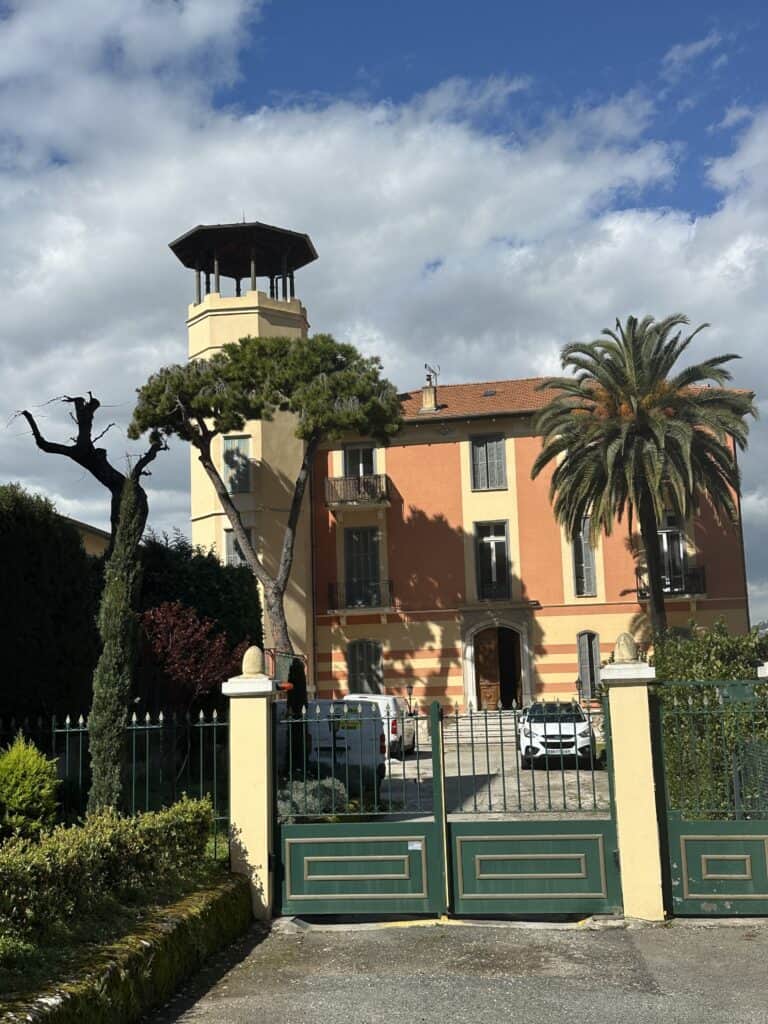
Photo of a building in Nice on Mont Boron
Did you enjoy this article? TAIP is 100% reader-supported through tipping. If you want to leave us a tip of any amount it would be highly appreciated. These tips help support our efforts to keep TAIP an ad-free environment. Just as at a cafe, the tips are split evenly among the team.