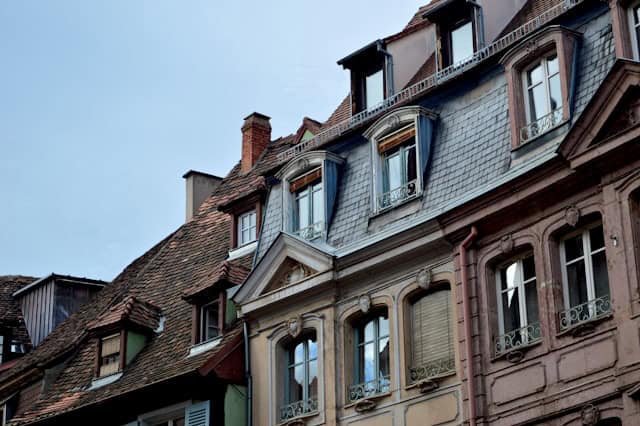
french house

How to Find an Apartment in France as an American

Note from the editor: We are constantly asked by our readers: how to find an apartment in France as an American? In this guest post, TAIP has partnered with EasyFranceNow, a platform for Americans looking to relocate and build their life in France. Enjoy their very detailed breakdown below, and be sure to tell them TAIP sent you when you contact them for assistance! — MS

Key Takeaways

  • The file decides it, not the budget. French landlords select on the completeness of your rental dossier, not a US credit score or bank balance that they cannot verify.
  • Income must be shown in euros, monthly, and regular. Agencies want a stable monthly income of about three times the rent, in euros rather than dollar figures or assets.
  • The free state guarantor rarely fits Americans. Visale is built around French employment, so most Americans on a visitor or long-stay visa use a paid guarantor service or pay rent in advance.
  • Deposits are capped by law. The security deposit is one month of rent (excluding charges) for an unfurnished lease and two months for a furnished lease, per service-public.fr.
  • A state-labeled dossier helps. The free government tool DossierFacile builds a verified, watermarked rental file that French agencies recognize and trust.
  • Speed and silence are normal. Well-priced apartments in Paris, Lyon, and Bordeaux receive many complete files within hours, and agencies often go silent instead of sending a rejection.
  • Help is operational. A relocation team runs the French outreach, packages your dossier, and coordinates viewings, while final decisions rest with landlords and agencies.

What Finding an Apartment in France Actually Involves for an American

Finding an apartment in France as an American means assembling a French-readable rental file, proving regular income in euros, solving the guarantor question, and moving fast enough to win a place before a dozen other complete files do. Americans usually discover them one at a time, after the search has stalled.

In the United States, renting runs on a credit check and proof of employment. France works differently. There is no national tenant credit score to pull, so the agency reads a paper file, the dossier de location, and checks whether your income is regular and large enough relative to the rent. A one-time balance counts far less than a verifiable monthly income.

If you would rather handle everything yourself, our step-by-step playbook for renting in France as an American covers the do-it-yourself path in full. This article is about what changes when you bring in help.

Why the French Rental Market Treats American Applicants Differently

French agencies are cautious with American applicants because the usual reference points, a French employment contract, a French-paid salary, and a French guarantor, are often missing, and they must assess an unfamiliar income source quickly in a market where demand outstrips supply.

Most agencies stop reading an application the moment they cannot see a stable, euro-denominated income up front. A remote worker, a retiree on a US pension, or a freelancer invoicing American clients all have a good income. Still, the proof arrives in dollars on US statements that the agent cannot scan in ten seconds, and a file that takes effort to read loses to one that is instantly legible. Most agencies expect net monthly income of around three times the rent, including charges, though it varies by city and landlord.

The Dossier is the Product: What a France-Ready Application Looks Like

A France-ready rental dossier is one clearly ordered file proving your identity, your right to live in France, and your ability to pay the rent each month in euros. Submitting it as a single labeled PDF in the order the agency expects changes whether it gets read. The free government tool DossierFacile is built for exactly this: it assembles your documents into a verified, watermarked file that French landlords and agencies recognize, which removes the agent’s fear that the paperwork is incomplete. The core set most agencies ask for:

  • Identity: a valid passport, plus your long-stay visa or residence permit (the VLS-TS or carte de sejour).
  • Proof of income: recent pay slips, pension statements, or freelance invoices and bank statements, ideally with euro equivalents noted. A US employment letter stating monthly gross pay helps a remote worker.
  • Tax document: a recent US tax return, or a French avis d’imposition, once you have one.
  • Proof of current address: see our guide to what counts as proof of address in France when you are still in an Airbnb, because this trips up almost every new arrival.
  • Guarantee: evidence of your guarantor solution, whether a paid guarantor service certificate, proof of rent paid in advance, or a Visale visa if you qualify.

Convert your key income figures to euros on a cover sheet and state the exchange rate and date you used. You are doing the agent’s mental math for them, removing the friction that gets American files set aside.

Guarantor, Deposit, and Money Questions Americans Ask First

A guarantor (a garant) is a person or service that pays your rent if you cannot, and in a tight market, most agencies expect one even when the law does not. Visale is a free state guarantor from Action Logement, but most Americans on a visitor or long-stay visa do not qualify, because the scheme is built around French employment. A reform effective January 6, 2026 kept Visale free and broadened access for some older salaried workers, but it still centers on people with French job contracts. That leaves a few realistic paths, which we cover in our guide to renting in France with no French guarantor:

  • A paid guarantor service. Private companies act as your guarantor for a fee, typically 3.5 to 5 percent of the annual rent, so an apartment at 1,200 euros per month usually costs around 500 to 650 euros a year.
  • Paying several months of rent in advance. Some landlords accept this in place of a guarantor. It is negotiable.
  • Visale, if you genuinely qualify. Worth checking eligibility, especially if you are under 30 or starting a French employment contract.

The security deposit (the depot de garantie) is capped by law: one month of rent excluding charges for an unfurnished lease, two months for a furnished lease, according to service-public.fr. Protecting it starts on day one, which is why our guide to protecting your security deposit and the move-in inspection is worth reading before you sign. For a furnished apartment, budget day-one cash for the first month of rent, a deposit of up to two months, agency fees, a guarantor service, and renter’s insurance, which must be in hand at signing.

How We Help Americans Find an Apartment in France

At EasyFranceNow, we run the French side of the search for you: building a France-ready dossier, contacting agencies and landlords in French, coordinating viewings, and pushing each promising lead to a concrete next step. We are not a real estate agency and we do not sign leases on your behalf. We remove the friction that makes the search slow when you are doing it from another time zone, in a second language, against applicants who already know the rules.

The work breaks down into a clear sequence:

  • Translate your situation into a France-ready file. We turn your income, status, and timeline into a dossier that a French agency can approve at a glance, with income in euros and the guarantor question solved.
  • Run the French outreach. We contact agencies and landlords, write the messages that get responses, and handle follow-ups in French so leads do not go cold while you sleep.
  • Coordinate viewings. Whether you are on the ground or still in the US, we line up viewings and help you see places quickly.
  • Keep the process moving. We chase responses, push for file review and viewing slots, and keep you credible and fast when an agency engages.
  • Support the move-in. Once you secure a place, we sequence renter’s insurance, the inspection, and the first administrative steps after signing.

If you are already in France and the constraint is speed, our Housing Fast-Track service is built for exactly that, including moving from an Airbnb to a long-term lease. If you want a single point of contact coordinating housing alongside the rest of your move, our end-to-end relocation support covers the whole picture. We do this every week for Americans moving to France: a disciplined process, a coherent file, and consistent follow-up in French. Final decisions still rest with landlords and agencies, so no honest team guarantees a specific apartment.

A Realistic Timeline: From Search to Keys

A realistic search runs about two to six weeks of active searching once your dossier is ready, plus a short window for signing and move-in, and the biggest variable is whether your file is ready before you start. Well-priced apartments in Paris, Lyon, and Bordeaux receive dozens of complete files within hours, so silence usually means someone faster and more complete got there first. If you are arriving with temporary housing, plan the transition deliberately: our seven-day action plan for moving from an Airbnb to a long-term lease shows how to compress the search once you are on the ground.

Different American Profiles, Different Paths

The right strategy depends on which kind of American mover you are. Retirees should lead with pension and Social Security income as a regular euro-equivalent monthly figure rather than assets; our guide to retiring in France as an American covers how housing fits with visa, healthcare, and taxes. Remote workers have a strong income but an unfamiliar contract, so an employment letter, pay slips, and statements showing regular deposits make the case, while a paid guarantor service fills the gap left by Visale. Families face a tighter market for larger apartments and should anchor the search around schools and neighborhoods first; our overview of how to choose where to live in France as an American is a useful starting point. Students often qualify for Visale, and unmarried partners should expect each adult’s income and status to be assessed.

Common Mistakes to Avoid

Most failed American searches fail for the same handful of reasons, and nearly all are avoidable:

  • Showing income only in dollars. The most common reason a file stalls is income shown only in dollars, on US statements, no one at the agency can read quickly. Convert to euros and label it clearly.
  • Leading with assets instead of monthly income. French agencies weigh regular monthly income far more heavily, so lead with it.
  • Assuming a US guarantor will work. A relative co-signing from the United States is almost never accepted.
  • Treating silence as a maybe. No response usually means the place is gone, so keep applying in parallel.
  • Sending a messy file. Loose photos and out-of-order documents get set aside. Submit one clean PDF or a DossierFacile link.
  • Paying before viewing. Never transfer money to reserve a place you have not seen. The Ministry of the Interior’s guidance on protecting your rental documents and avoiding scams is worth reading.

When to Get Help

You can handle the search yourself if you have time, some French, and a flexible move-in date, and our renting playbook is written for the do-it-yourself route. Help earns its cost when you are searching remotely and cannot attend viewings, when a short-term stay is running down, or when your income profile keeps getting your file set aside. In those cases, a bilingual team running the outreach and packaging the file is often the difference between weeks of silence and a signed lease.

Finding an apartment in France as an American comes down to one idea: the market selects on a clear, complete, euro-legible file that arrives fast. Solve the dossier, the income, and the guarantor question before you start, move quickly when a good place appears, and treat silence as a signal to keep applying, not a personal verdict.

If you would rather not do the French outreach and follow-up yourself, that is exactly the part we take off your plate. When you are ready, start with our Housing Fast-Track service if speed is the constraint, or our end-to-end relocation support to handle housing alongside everything else. Either way, you will not face the French rental market alone.

Photo by Emily Baruffaldi on Unsplash

Did you enjoy this article? TAIP is 100% reader-supported through tipping. If you want to leave us a tip of any amount it would be highly appreciated.  These tips help support our efforts to keep TAIP an ad-free environment. Just like at a cafe, the tips are split evenly among the team.

paris skyline

Finding an Apartment in Paris; It’s Not Them, It’s You. Tips to Secure Your Dream Digs

You’ve dreamt about this day for way too long. You’ve resent your application via La Poste (twice), you’ve signed the textbook-thick lease, and you’ve finally been given the keys to your dream Parisian home.

You walk up the 5 (read American 6) flights of stairs with a grin from ear to ear because when you reach the top level and insert that irreplaceable key into that beautiful door, you KNOW, it was all worth it.

Now lets go back, about 3-6 months, cue rewind montage.

Your time is ending in your Airbnb that you had to rent to fulfill the visa application requirements. You’ve had a great time playing house and are looking forward to bringing your own place to life with your own essence. But, where do you start?

Some might think you started a few weeks before you even moved over! But things are a bit different in our dear Paris. You see, finding an apartment in Paris, as a foreigner, is like finding a dinosaur fossil at an archaeological site. Not impossible, but it’s going to take time and you’re gonna need a fine-tooth comb. Yes, laugh, it’s okay, you’ll need to laugh to survive through this. 

Start Your Search

You have several options. The most popular route is renting a furnished flat through an agency. This is also the most expensive option because the rentals are overpriced from average, the furnishings are usually comfortable, but sometimes unkempt, and the agency takes a comfortable commission. The pros are that all communication is in English, you can access an online catalog and view the apartments online, making it much more streamlined to choose a place and have a “home” before you even step out of the CDG airport. A big con is that you don’t actually see the flat, or even the area in person, and that could yield an unfavorable disposition. Once you’ve signed a rental agreement, it’s nearly iron-clad, so breaking it is not much of an option.

Now, if you know a few things or two and are comfortable with speaking French, you might try your hand at sourcing a place on your own through the French version of Craigslist, Le Bon Coin. Here you can not only find your next dream apartment, but also a bicycle, clothes, instruments; absolutely anything under the sun has been or could be sold on Le Bon Coin. As the adventurous writer of this piece, who did not know a few things, I decided I didn’t need an agency and tried going down the rabbit hole of apartments listed by locals. And may I say, what. a. journey.

The Dossier

There are many inner workings to locking in a place, much more than scheduling a visit and meeting the owner. You can’t get any traction forward without a dossier, your application packet, essentially. You’ll learn quickly in this new French life that your dossier will be an invaluable collection of paperwork that you’ll use for finding a home, a job, opening a bank account, and more. The French like everything on paper and it’s important that you look excellent on paper.

But your experience and income may not translate through the language barrier. And if you don’t speak French, it will be difficult to garner confidence and gain trust that you, a foreigner, will be a worthy tenant who will never falter in paying their rent. If you’re wondering, no, I did not speak French at the time. It was just me and my blind confidence leading the way.

Asking For Help

After several weeks licking my wounds, I accepted that I needed a professional’s assistance, but I could not stomach paying the exorbitant fees of housing agencies, so I found a middle ground. A property search agency, Chasse immobilière, for freelancers and foreigners works exclusively with local realtors that speak English and know how to prepare an application packet best suited for a freelancer, non-native speaker, non-French person, and every other outside of the box scenario. They go through their network,  Le Bon Coin listings, and different realtor agency listings from all around the city (or country if you’re looking outside of Paris). I was fortunate enough to connect with a local realtor who sent me so many listings, made appointments, handled all communications with the owners, and honestly took off all of the burden. I just had to click through the photos, say yes or no, and we’d meet to view the listing. Thanks to her, I found my absolute dream apartment. With the big Brown door, on the top floor, with the gold lock, the ancient elevator, and the most Parisian view. There is a fee for this service, but I felt better knowing part of it went directly into my realtor’s pocket.

There is no wrong way to look for a home in Paris, but there are many more efficient ways, and I can’t recommend enough to consider hiring an agency to help you with the search. Alternatively, I’d be happy to recommend my realtor, now turned dear friend, who knows Paris inside and out.

Whatever path you choose, rest assured that your dream maison is waiting for you. Your Parisian home is only just around the corner.

Photo by Brian Potter

Did you enjoy this article? TAIP is 100% reader-supported through tipping. If you want to leave us a tip of any amount it would be highly appreciated.  These tips help support our efforts to keep TAIP an ad-free environment. Just like at a cafe, the tips are split evenly among the team.

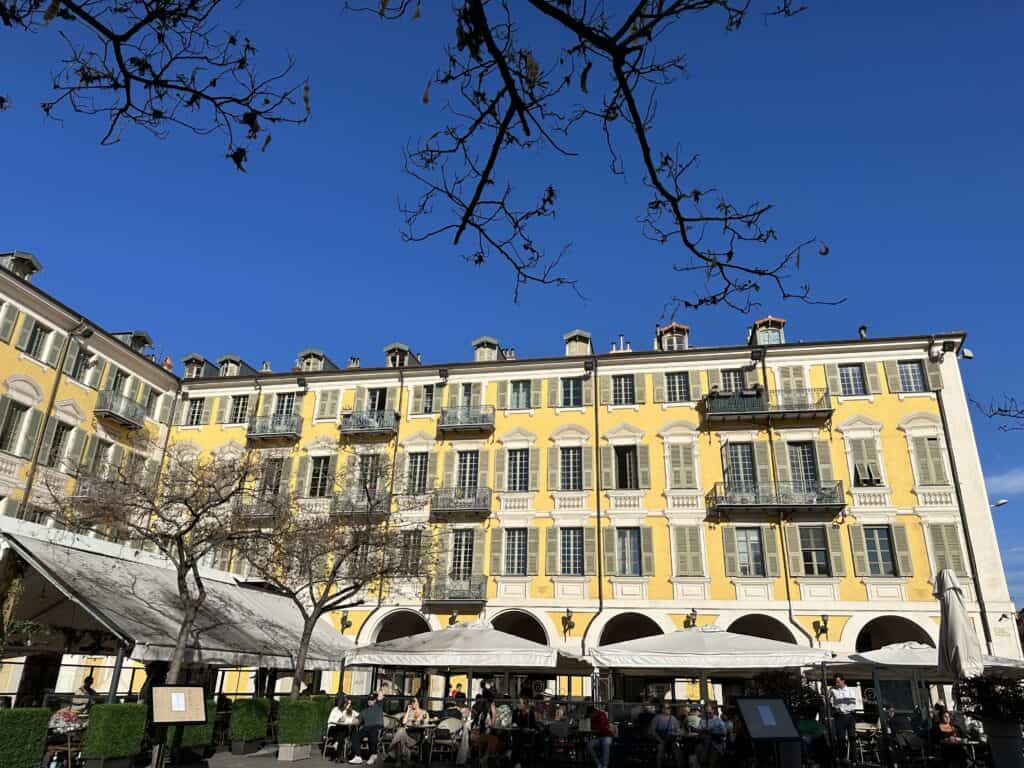
Place Garibaldi in Nice

Adventures and Misadventures in Renovating an Apartment in Nice, France

After trying for several months to find a long-term rental apartment in Nice (a losing proposition for various reasons), we decided to bite the bullet and purchase our home. We enjoyed living in Nice, having hopped from a Home Exchange to an Airbnb for several months, and pinpointed a couple of neighborhoods we liked.

Finally Finding the Apartment

We found an apartment near Mont Boron that had wonderful light and a large terrace, but it hadn’t been renovated in 50 years. The electrical setup was not compliant with current regulations and was in fact hazardous!

We stayed there in its original configuration for a month in order to get a feel for the space, and then started asking everyone we knew (not many people, at that point) if they knew trustworthy contractors. We ended up with quite a medley.

Note: Building and renovating is often a nightmare anywhere in the world. I don’t know of any building site that had zero problems (I used to work as an architect). However, you try to keep problems at an acceptable level.

Amongst the choices:

  1. A trio of professionals, who were accustomed to working together: an electrician, a plumber, and a mason, if I remember correctly. The electrician seemed very knowledgeable, but was also very bossy, so we were a bit worried and passed on the trio.
  2. Various contractors from Eastern European countries, who came recommended and whose prices were very low. We worried that the prices could change at any moment. In fact, on one estimate, it was clearly written that the prices could change!
  3. One “full” contractor who would handle everything except what we had already signed contracts for (double-glazed windows, shutters, and shades, and the kitchen outfitting).

Moving Forward with the Reno

We ended up deciding to hire the full contractor, even though his estimate was the highest. He was working on our upstairs neighbor’s apartment, and she had known him for several years. We felt it was worth the additional money to have someone with a lot of local experience (he wasn’t quite a local himself, as he was raised in the suburbs of Paris). We were asked to buy most of the materials ourselves: tiles, bathroom fixtures, and a couple of other things. He purchased plumbing infrastructure, electrical (except lamps).

He kicked us out of the apartment for 4 months, promising to be done by then. Luckily, we found a temporary vacation rental, about 15 minutes away on foot.

Once again, we asked around and researched outlets for flooring, bathrooms, and traipsed off all over town and to Cagnes-sur-Mer, about 15 km away, to make our choices.

The site was very dirty and messy, but we didn’t dare protest (we tried, but were shut down: “my workers need to be comfortable!” i.e., smoking cigarettes all over the place). Towards the end of the work, the kitchen installer came. He was a very strict and disciplined professional, and made a disparaging remark about the messiness. The next day, the apartment was cleaned up!

All in all, it was expensive, but there weren’t too many terrible incidents, and we remained within budget. Some reflections on our experience: 

  • We were shocked by the flimsiness of interior walls built in the 1970s: barely 7 cm thick, you could punch through them. We had to double up some for structural integrity.
  • The plumber assured us that we could use the bidet pipe for a toilet. He lied. After a few disgusting flooding incidents, we had to shut down the toilet. Fortunately, there are other toilets! When we protested to the main contractor, he answered that we had asked for the toilet. I was livid, but had no proof (see below).
  • The plumber (yes, him again) installed an “Insinkerator” (not my idea, but men like these things, I guess). It cost much more than his original quote, and then he told us we shouldn’t use it for more than a few seconds at a time because of the old building pipes.
  • The painters (I think) poured turpentine in the jasmine flower pot. The jasmine died.
  • The contractor promised the place would be perfectly clean when he left, but that wasn’t the case. We kept on finding bits and pieces of cement under the windows.
  • We bought toilets that are terrible at flushing. Every time I go to the US, toilets seem to flush without any issue.

However, all in all, it wasn’t too bad an experience, and our apartment is pleasant.

Feeling Lucky with Our Choice

A new friend arrived in Nice, speaking little French, and her luck was much worse, unfortunately. She went through several contractors, all flaky, leaving her in the lurch with unnecessary expenses. The first one came highly recommended from a member of an expat group on Facebook. As it turned out, he had only been hired until then as a handyman, not as a contractor. He was not prepared and had no equipment of his own. The next one wanted to go on vacation and wanted all his money, even though my friend was still waiting for the kitchen installers (the same ones I had used without a hitch), but parts were delayed. This contractor was so threatening that she gave up and paid him… and soon after he left, the bathrooms he installed were leaking.

The window installers (the same ones I had used) were delayed, but she couldn’t remain without windows, and they didn’t want to reimburse her deposit until she showed them the clause in their own contract.

The third contractor decided, after accepting to do the work, that he needed to go on vacation.

Well… months later, she is finally in her apartment, with a beautiful view, but what tribulations she went through! It seemed never-ending.

Another friend, who is French, returned to Nice from the United States and bought a beautiful old apartment. She hired a well-recommended contractor who ran into personal problems and disappeared with her money (I am not sure how much. A lot.) She didn’t react fast enough, and the police couldn’t help her. She had to hire another team, and fortunately, she now has an almost-finished apartment.

I’m not sure what other lessons to offer! One thing is certain: get as much as you can in writing. For example, if I had asked the plumber to put in writing that a toilet was feasible in that bathroom, he couldn’t pretend that I had insisted on a toilet.

In any case, if you do embark on a renovation journey… bon courage! You’ll need nerves of steel.

You could also hire an architect or an interior designer, budget permitting. Again, make sure you have a contract that specifies fees and what will be handled by the designer. The more detail, the better. I didn’t use one, as I was myself trained as an architect. I regretted giving away my T-square years ago and made do with a ruler and a triangle. It was very useful to lay out the tiles the way I wanted them, as well as the bathrooms. The kitchen outfitters handled the kitchen drawings (with our input and exact measurements).

If you need names of companies we used, please reach out.

Photo of Place Garibaldi in Nice

Did you enjoy this article? TAIP is 100% reader-supported through tipping. If you want to leave us a tip of any amount it would be highly appreciated.  These tips help support our efforts to keep TAIP an ad-free environment. Just like at a cafe, the tips are split evenly among the team.

top floor apartment in paris

What No One Tells You About Finding an Apartment in Paris

We often talk about the lengthy and sometimes complicated process of applying for a visa to live in France, what it’s like to move away from friends and family, and better ways to learn French. But, something we’ve discussed only a handful of times is perhaps one of the most important — and potentially most frustrating — parts of moving to France: finding an apartment in Paris.

The good news is that it’s not just you. Apartment hunting in Paris really is that hard. 

Thinking about all of this, a story comes to mind. Stephen and I have worked together on so many different things, from walking tours and picnics to Airbnb and beyond. One of those random projects and gigs included showing apartments in Paris together. He had some contacts with people who wanted someone trustworthy to actually show places to potential tenants and serve as an initial judge of whether said tenants would make a good fit.

He gave me RDV on rue Jacob in the 6th arrondissement — coincidentally right around the corner from where I lived as a student during my semester abroad and one of my favorite areas to walk around to this day. I was excited to go back to my old haunts and earn a little extra cash from helping him out.

I rounded the corner of the rue Bonaparte and saw a massive line of people, seemingly waiting to enter the Ladurée boutique. I kept walking towards the address I wrote down, and noticed that the line snaked up the street in the exact same direction I was going. Weird, I thought — but chalked it up to it being a busy part of town. Imagine my surprise when I saw the line of people waiting outside the address that Stephen told me to meet him at.

I skirted around them and headed up the stairs — I knocked on a door that was left slightly ajar and told Stephen about the line. He said he wasn’t surprised, there was a lot of interest. When all was said and done, we showed the place to more than 40 people.

So, why am I telling you this? Because this little walk down memory lane is a perfect example of how competitive the real estate market is in Paris, even for rentals. Now, that’s not to say it’s impossible. I’ve never been homeless in Paris, but I have had to shift my expectations since living there. 

And today, I’m sharing everything I’ve learned along the way so you don’t make the same mistakes I did.

Know What You’re Really Getting Into

As I’ve alluded to in the form of my story above, finding an apartment in Paris is nothing like what you may be used to in the US, or even elsewhere in Europe. Things move a lot more slowly, and it’s very competitive.

Many listings are already taken by the time you send your first message, and the best places are often only available if you know someone. You might tour an apartment, think it went great, and never hear from the landlord again (been there). As a note, French landlords can be extremely picky, especially with foreigners and expats. There’s a fear that you’ll just “leave the country” and never pay your rent. In a way, I get it.

Some also want proof that you already live in Paris and pay your current rent on time before they’ll rent to you. Like so many other French administrative processes (like getting a bank account or cell phone, though those are much easier nowadays), you basically need an apartment to get an apartment. 

Another big surprise? An unfurnished apartment likely won’t even have kitchen appliances (yes, not even a stove), and also means committing to a three-year lease, minimum

Decide Where (and How) You Want to Live

As we’ve noted in our Paris neighborhood guide series and in a recent YouTube episode, every arrondissement is different, boasting its own unique charm, vibe, lifestyle — and budget. So, before you really start your hunt, it’s important to have a general idea of where in the city you’d like to live and what kind of housing would work best for you.

Here are just some of the options:

  • With roommates (often called a ‘flatshare’ or colocation in French)
  • A small studio apartment (usually under 20m² or 215 square feet)
  • A chambre de bonne (tiny top-floor former maid’s quarters with shared bathrooms)
  • A traditional apartment (if you’ve got the budget/dossier for it)

You could also do what Stephen did for his most recent apartment. He couldn’t find anything, so he went to Airbnb to see if a host would be willing to rent to him more long-term. He met them for a coffee, talked things through, saw the apartment in person, and signed the lease. It’s an excellent example of how, sometimes, you need to be willing to be scrappy to snag the Parisian apartment of your dreams.

Now, as mentioned, finding an apartment in Paris isn’t always easy, so you also need to be prepared to take what you can get. I don’t mean you should settle for a shack in the middle of nowhere, but if you can’t find what you’re looking for in, say, the 5th arrondissement, be willing to look in, say, the 19th.

The All-Important Dossier

If you’ve managed to apply for and obtain a French visa, you already know the importance of paperwork in this country. France wants proof for everything — you can’t just show up for an apartment tour and say you’re a great tenant. They want to know your name, date of birth, occupation, how much you make, where you’ve lived in the past, and all of your deepest hopes and dreams. Okay, the last one is an exaggeration, but you get the gist.

In fact, most landlords or rental agencies will ask to see your dossier before they’re willing to even speak to you. At minimum, it should include:

  • A copy of your passport and visa
  • Proof of income (French pay stubs are strongest, or bank statements)
  • A work contract or school enrollment letter
  • Recent utility bills or proof of address
  • A French bank account to prove you have one
  • A ‘garanteur’ or someone who makes more money than you, who is willing to back you up, like a parent or relative

Here’s the catch: even people with great salaries or a chunky savings account struggle. French landlords want to see French paperwork, and without that, they may see you as too much of a risk. And, the truth is, I also know dozens, if not more, French people who struggle to provide solid dossiers too. I know many who use fake pay stubs and bank statements to make them look better off than they are. That’s how competitive this is!

There are services in place for foreigners or folks without well-off family members, like GarantMe or Visale, but I also know there are some landlords who won’t accept them.

I know it’s not fair, but it’s how the system works.

Where to Look

There are several rental platforms to choose from, but I’ve had the best luck personally on SeLoger, PAP, and Facebook. Craigslist Paris is also worth checking out, but it is full of scams, so be careful. HiPParis has some cool options, but mostly only for buying. Don’t forget Stephen’s Airbnb trick too. There are also rental agencies that specialize in helping expats (if there’s an interest, I can do some digging on ones to try!).

Your best bet? It’s all about word of mouth and people you know.

I know, I know — but, Molli, what if I just moved to Paris and I don’t know anyone yet? I get it! Building community and finding your people takes time, but once you do, a whole new world will open up to you. You never know who you may meet, who may have a friend looking for someone to take over their lease, or an aunt who needs someone to stay in their apartment for a year while they travel.

Like anything else, getting to a point where you can simply ask around and find an apartment in Paris will take some time.

And a lot of times, just when you think it’s never going to work out, it does. You’ll get the call. You’ll sign the lease. You’ll move in.

Prefer video? Watch us discuss finding an apartment in Paris on YouTube!

Photo by Doctor Tinieblas on Unsplash

Did you enjoy this article? TAIP is 100% reader-supported through tipping. If you want to leave us a tip of any amount it would be highly appreciated.  These tips help support our efforts to keep TAIP an ad-free environment. Just like at a cafe, the tips are split evenly among the team. 
What It’s Like Living In The “Worst” Part Of Paris

It’s no secret that finding an apartment is difficult in Paris. People don’t realize how small this city is. For comparison, London is 600 square miles while Paris is 40 square miles. Consider this, and then remember how much space is used for parks, hotels, shops, etc. There’s limited space, so when it’s time to search for a place to live, there are limited options. This is the reality, so have reasonable expectations when getting on your feet here.

The Dossier

If you’re unfamiliar, the French require a dossier (and a weighty one at that) for every apartment you apply for. To put into context the peculiarity of the French dossier, the first application I submitted was rejected because of the kind of work contract I have, which is a freelance contract. My employer even called the agent to explain and verify my contract, but it was to no avail. It stated indefinite work and my salary, but simply because it wasn’t a CDI, they found it “too complicated” to accept my file.

In brief, a dossier contains:

1) valid ID

2) visa

3) the last year’s tax documents (the more taxes you pay, the more money you make)

4) work contract

5) last three months of payslips

6) a garant

7) last three quittances de loyer

8) RIB of your French bank account

My Lack Thereof

I knew that my situation on paper wasn’t as strong as others applying for the same apartments. Landlords (understandably) favor French citizens over foreigners, and at the time, I didn’t even have a French bank account.

Basically, I was working with:

1) valid ID

2) visa

3) work contract (remember, freelance!)

4) tax documents from a year when I was hardly working

5) three months of payslips when I was, again, hardly working

I was missing integral parts of my file like a RIB, a guarantor, and proof of income. My options were even more limited than the average flat seeker.

Desperate Times Call For Desperate Measures

After some weeks went by without success on PAP.fr, I asked a friend if she knew anyone who had an apartment to rent. This question can seem nervy to some, but if you’re familiar with the “Aladdin Factor,” you can’t get what you don’t ask for. To my surprise, she actually did know someone, and I called that person up the moment her contact was sent to me. She happened to be a realtor who works for an agency that specializes in renting apartments to foreigners. It turned out the apartment in question was her own, thus allowing us to forgo agency fees and conclude a private contract.

I should mention that her willingness to rent to me came from the fact that she herself was once a foreigner getting on her feet in this city. The day we met, she was explaining how hard it was to get all the paperwork in order for a proper dossier when she first moved here. She was kind and understanding of my situation because of our shared experience. Once we signed the contract, I was then given the keys and promptly sent her my deposit. It was an accomplishment for someone in my shoes.

Wonderful, But Weird

The apartment is bright and clean and in a building with kind neighbors. I usually have plans in the evenings, but they frequently have apéros which I’m always welcome to join. They even included me in their building group chat when I first moved in.

When I began telling my friends and colleagues about the apartment, they were happy for me, until I told them which métro stop I lived on. My boss told me, “I have one rule for myself. I never go to La Chappelle or Goutte D’Or. You can’t move there.” I have a good friend who grew up in Montmartre, which is not far from me at all, who explained there are a few good streets and my apartment just so happened to be on one of them. The area is “un quartier populaire” which frankly I haven’t found a good translation for. It’s been described to me as a neighborhood mixed with working class, upper class, and immigrants. Some French speakers who use this term, however, might just be trying to be polite in calling your neighborhood the ghetto (and it isn’t always warranted).

You have to be careful wherever you are, and this place is no different. I personally haven’t been put in any situation in my neighborhood that made me feel in danger. I don’t feel more unsafe here than anywhere else.

The Pros

There’s a market along Rue de L’Olive which has fruits, vegetables, cheese, butter, flowers, etc. Chez Meunier is at the Marx Dormoy metro station on your immediate left. Lomi is down the street across the bridge heading to Montmartre. Lest we not forget the one and only Bob’s Bakehouse. There are other great spots nearby, I’m only listing a few. The intensely bad reputation that Marx Dormoy has is mostly outdated. As one would anywhere else, be aware of your surroundings and you’ll be fine.

As a single woman who often gets home after midnight, I haven’t been followed or harrassed. From what I’ve gathered by talking with people who have lived here much longer than me, the area has been cleaned up from what it once was. It’s still in the process of getting better. All this is to say, Paris as a whole is pretty safe. I feel more uncomfortable on the East Coast of the US in New York or in Philadelphia where I grew up.

I don’t live in a glamorous neighborhood, but I don’t fear for my life. Living in Marx Dormoy for me has its functional benefits. It’s less expensive than other areas and the apartments are a comfortable size. I’ve been inside a few, and I only have praise for the ones I’ve seen. They’re clean and spacious. For example on the main street there’s an apartment building with a shared garden, it’s shockingly quiet and smells amazing because of the flowers.

The Cons

The area isn’t as built up as other parts. It isn’t as beautiful or trendy. There’s underutilized space that people take advantage of for the wrong reason. It’s crowded with people either begging or selling cigarettes right outside of the métro. There’s a whole area along the main street which would be perfect for outdoor seating if it could be cleaned up. Along one of the streets heading to my apartment men at night like to sit along the fence, drink, and sometimes leave their trash behind.

It’s not central by any means. In my case this doesn’t pose too many issues since I mostly travel to central areas. When it’s time to go to places like Bastille, that’s where it gets a little annoying. Once I rode my bike to Supersonic and had to leave it there for a few days because of a flat tire. I eventually walked it back, but it was about an hour on foot.

In Conclusion

The worst part of Paris may be my next-door neighbor, but Paris is still Paris. As long as you’re careful then you should be fine. “Area” doesn’t always determine if you’re in danger or not. There are reports everywhere of pickpockets and people getting mugged, even in Bibliothèque François-Mitterrand.

Photo was taken near Rue de La Chapelle while heading to the Marx Dormoy metro.

Did you enjoy this article? TAIP is 100% reader-supported through tipping. If you want to leave us a tip of any amount it would be highly appreciated. These tips help support our efforts to keep TAIP an ad-free environment. Just as at a cafe, the tips are split evenly among the team.

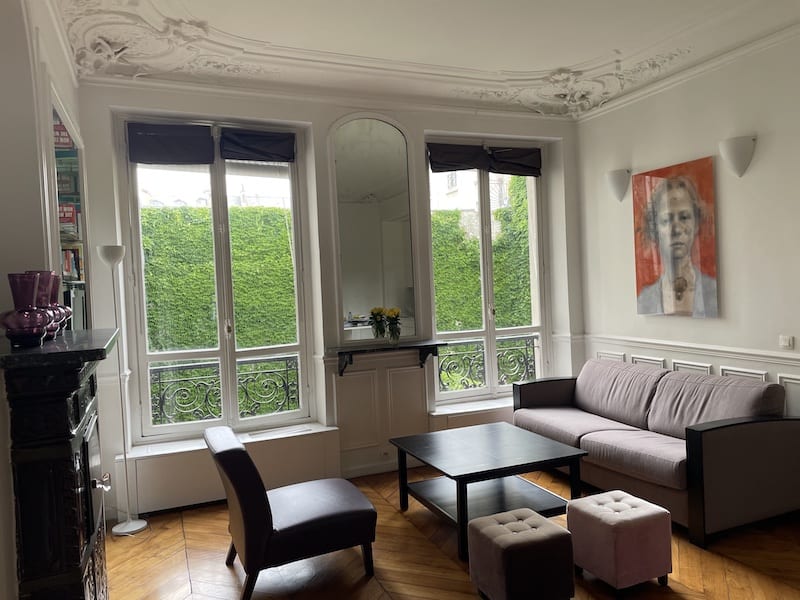
Paris apartment photo

Getting a Paris Apartment: My Story

Stephanie shows by this article that you don’t always have to have your plans figured out before you get here, as long as you’re willing to hustle a bit. 🙂 -SH

The many expats I’ve met in Paris all seem to have organized their move to France with precise detail, preparing months and months in advance. TAIP’s upcoming book is an example of that.

My experience was a little different.

I pretty much threw things together, gave myself just over a month to prepare (from applying for the visa to hopping on the plane), and left everything in my NYC apartment just in case my big Paris move did not go as planned.

Fortunately, everything worked out, with a few bumps here and there.

Pivoting to Paris

My decision to move to France came about after experiencing the sudden loss of a close member of my family. I was absolutely devastated and a tsunami of grief consumed my mind and soul.

I needed to get away from NYC. I needed to heal. Paris was the place I wanted to be.

Returning to live in France had been on my bucket list ever since spending a few years in Bordeaux right after college. The dream had remained on the back burner for years until the family crisis put everything into perspective.

France healed me many moons ago and I knew it could heal me now. And it was imperative to make things happen quickly before my logical brain tried to convince me to stay put.

While the move might have looked risky to those around me, it really wasn’t. My business is portable and I had tried on the digital nomad lifestyle the year before. It worked then and I knew it could work in Paris now.

After a helpful phone consult with the TAIP team, I moved full speed ahead with the visa paperwork and a little over a month later arrived in Paris with a reservation for a two-week stay in an Airbnb in the 2nd arrondissement, one large suitcase in hand and the goal to get an apartment of my own.

Because I spoke the language and had a good sense of the culture, I thought I could roll into Paris and things would come together quickly.

Nope.

In retrospect, things ended up coming together pretty quickly, but at the time, it was stressful with a lot of uncertainty and bumps along the way. It’s clear I underestimated what was entailed.

One Step At A Time

Almost immediately after landing in Paris, I began looking for permanent digs. My goal was a furnished one-bedroom apartment in central Paris, i.e. a single-digit arrondissement.

Coming from NYC, the land of small and expensive apartments, I found that rents in Paris were less than what I would expect to pay back home. Newcomers from less-pricey locales may experience sticker shock or surprise at the size of the average Parisian rental.

A friend who had lived in Paris suggested looking at the English-language site Fusac. Fusac is an online ad space with varied listings including rental apartments and sublets.

With Fusac, it’s a bit catch-as-catch-can. Listings are not extensive but one in the Marais (3rdarrondissement) caught my eye.

While the place turned out to only be available for a short-term sublet, it was perfect as a stop-gap as it allowed me to stop paying nightly Airbnb rates should the search drag on.

The owner’s son was able to show me the apartment right away; it turned out to be spacious, charming, and well-located. The Belgian owner lived in Bali, and rented his place out for a few months at a time at a nightly rate that was much less than what I was paying at the Airbnb.

I grabbed it right away as a short-term solution while I continued to look. No papers were signed on either side nor was a security deposit requested. I simply wired the money for the first month and picked up keys from the neighbor. Sending money without a written agreement might have seemed risky at the time — and I would certainly never recommend it — but it felt right and everything turned out great.

Having a reasonable place to stay for two months was a Godsend. I now had some breathing room while I continued to search for a permanent place.

Apps, Listings, and Unresponsive Brokers, Oh My!

Paris has a number of apartment listing apps where you can set up alerts with your desired criteria: neighborhood(s), apartment size, rent range, elevator or walk-up, furnished, etc. Some of the ones I used are seloger.com, pap.fr, nestoria.fr, and jinka.fr.

Pap is short for particulier à particulier, person to person, with the big bonus of no agency fees though there is a heightened risk of being scammed.

The other sites mainly have agency listings.

What’s terrific about Paris is the surfeit of furnished listings. And when I say furnished, we’re not just talking furniture. In the case of the apartment I eventually rented, it came with everything, including sheets, towels, pillows, and bedding, a fully-equipped kitchen with plates, glasses, and silverware, even an umbrella, iron, coat hangers, and cleaning supplies. It feels like an Airbnb where you roll up with your suitcase and you’re ready to go.

As a foreigner arriving in Paris with just a suitcase, furnished apartments are a godsend.

The one drawback is that the landlord can (but doesn’t always) ask for two months of security deposit for a furnished apartment as opposed to one month for a non-furnished apartment, but that seemed like a fair exchange compared to the savings in time, energy and money outfitting an apartment.

Upping My Chances

To rent an apartment in Paris, the barrier to entry is high, and not being French makes things harder. The market is competitive and because renters’ rights are very strong in France and it’s hard to kick out non-paying tenants, landlords are risk averse.

As a self-employed American without a CDI which proves that the person has a permanent job and a regular paycheck, I needed a guarantor to co-sign the lease alongside me, guaranteeing the rent would be covered if I stopped paying. French friends could have done this for me, but it seemed like too much of an ask to have them submit a ton of financial paperwork, so I went with the private guarantor service garantme.

The garantme process involved submitting a bunch of financial paperwork (tax returns, bank statements, and a letter from my accountant), but within about 24 hours I was approved and received a Certificate of Eligibility which stated that I was good to pay up to X amount per month. I then submitted the certificate number as part of my dossier for any apartment I was interested in.

Garantme does not come cheap. The tenant pays Garantme 3.5% of the annual rent including charges and this is for every year of the lease. The landlord pays nothing. There is no upfront fee with garantme; the fee is paid only at lease signing.

The Search Unfolds

The alerts I had set up were working and I was getting pinged several times a day with new listings. Some looked decent; some not so much.

Initially, I sent out messages and…crickets.

Things changed for the better once I had the garantme certificate in hand, which I made sure to mention in my outgoing messages to agents. Finally, some responses.

Eventually some apartments actually started being offered to me: through Fusac, a six-floor walk-up on the Left bank that was only available as a long-term sublet, and a duplex apartment in the Marais which looked amazing on video but could only be viewed via video, not in person.

Neither felt quite right and I wasn’t desperate yet thanks to the breathing room my two-month sublet gave me. I declined both.

Then through seloger came a listing for a super cute one-bedroom in the Marais just down the street from my sublet. It ticked all the boxes: great neighborhood, cute design, elevator, bike storage, and air conditioning. The biggest plus was that the agent actually responded to my message. A visit was set up.

The place was better than many I’d seen and by this point the search was wearing on me. I talked up the garantme certificate to the agent and he told me that there were three other interested parties. I just wanted to be done. I needed to get settled and start my business back up. To sweeten the deal, in typical NYC closer fashion I offered up an additional 100 euros a month beyond the advertised rent.

The landlord was making her decision later in a week.

In the interim, another option came in through PAP. Located in a landmark building in the heart of the Marais, the apartment was impeccable and could have easily appeared in a designer mag. It had everything I could have wanted and I would have given anything to live there. I sent the landlord a heartfelt note about why I would be an amazing tenant, but alas, she went with another applicant.

She had made it clear she was looking for a stable tenant who would stay for the long term, and in retrospect as a self-employed American having just arrived in Paris, I don’t think I quite fit the profile she was looking for.

Eureka!

Back to Plan A. The super cute Marais one bedroom was offered to me, and it was an immediate yes on my part. The idea of getting the apartment search off my to-do list was pure relief.

The next steps involved paying garantme, signing the lease, paying the security deposit, and then obtaining renters’ insurance, which my landlord required. The real estate agent connected me with a company that assisted with getting the electrical bill switched to my name and setting up wifi.

Having a signed lease in hand became the golden ticket allowing me to open a French bank account, which up to that point had been a time-consuming and fruitless quest.

At move-in I paid the agency fee and the first month’s rent.

Between all the fees and the two months of security, getting my Paris pad has required me to pony up quite a bit upfront. And it was practically a full-time endeavor when I was in the thick of it. But hearing about other expat’s nightmare stories of schlepping from one Airbnb or sublet to the next because they cannot get a landlord to rent to them, I consider myself lucky.  It’s been three months since move-in and now that the stress of the search is over, I couldn’t be happier with my new home.

Photo is of my new place!

Did you enjoy this article? TAIP is 100% reader-supported through tipping. If you want to leave us a tip of any amount it would be highly appreciated. These tips help support our efforts to keep TAIP an ad-free environment. Just as at a cafe, the tips are split evenly among the team.