a bicycle basket full of letters

When the Police Seize Your Bicycle: Part 2

What to do to avoid wasting time and energy if and when…


In April, five months after the police had seized my bicycle and broken my locks, I was “regretfully” informed that they found they were in no way responsible for this (costly for me) degradation of my property as the act was carried out in the name of security (which gives them any-and-every right to do whatever they want?). Originally, I gave up my quest for reimbursement figuring it was too hard to fight City Hall.

However, City Hall did not stop there and for some reason, the machine continued to churn. This prompted me to take up arms again and I can now share my learning experience of how to go about getting compensation for damage to property due to police action. 

At the end of May I got a letter from the Ministère de l’Intérieur et des Outre-Mer. In fact, while the Secretariat général pour l’administration Service des affaires juridiques et du contentieux had refused my quest, it was in fact the Préfecture de police de Paris – Dirction des usagers et des polices administratives – Bureau de la réglementation et de la gestion de l’espace public- Pôle réglementation et affaires juridiques to whom I should have sent my file. I was then invited to write to them.

I had let this sit a while. Just as I was going to address the question, about two months later, I got another letter from the Secretariat général pour l’administration at the Préfecture de Police inviting me to appeal the rejection within two months.

This got my dander up and I started to prepare a file to do so. I called the legal aid number attached to a magazine subscription I have and had a long talk with her. She found that the State was responsible for all damage to my property and suggested I even call the legal aid that comes with my house insurance. I decided to work on it myself for a while and looked up how to write letters of appeal online and found help here and here.

Then lo and behold, a week later I got a letter from the Secrétariat général pour l’administration offering me compensation, the sum of which was equivalent to the price of my two new locks. 

Getting Your Bike Back and Reimbursed for Damages

When police seize your bike for whatever reason, it will be brought to the commissariat of the arrondissement where it had been picked up. The only solution is to go there.

Once there, take pictures of proof of any damage, e.g. broken locks. Then go in to pick up the bicycle. You will be asked to sign the register. Insist, however, to draw up an état des lieux, or a description of the damages. You may have to insist very heavily, and even receive a rejection. Do not leave the commissariat without some written proof of their taking your bike. Refusing to leave, I finally got  a very ambiguous Mention de Service which did not recognize the damages, but could get nothing better (at approximately 10pm). It stated that “supposedly” (selon ses dires) three locks had been broken. Nobody was going to go out with me to check, although it would have been preferable to get a written statement of the damages. 

The next step is to collect every type of proof to defend the fact that you have been mistreated by the French administration, and to what measure: pictures, receipts for damages, proof of the seizure…

Then, take your file to the police department to lodge a complaint. It is illegal for the police to refuse a person’s complaint. If, like for me, they do refuse (I did not know that this was illegal), take a shot at another commissariat, for example the one your home address depends on, and try again.

Once you have established a nice, thick file, send your file registered mail with acknowledgement of receipt, along with a clear, polite explanatory letter of the circumstances, your grievances and a request for compensation to the Préfecture de Police, Service des Affaires Juridiques et du Ceontencieux, Bureau de Contencieux de la Résponsabilité  of the département where the bicycle was seized. If picked up in Paris, the address is 1 bis rue de Lutèce, 75195 Paris Cedex 04. 

Keep the tracking number, watch your mailbox for the acknowledgement receipt, hold on to it very carefully… and wait.

Obviously, in the simple Manichean universe of French administration there are only two possibilities: either they will offer you compensation, or they will refuse.

In the case of a refusal, you will be given two months to appeal. It will be best to get some competent French advice on how to phrase the responsibility of the administration not to damage private property. And again, the full file of documents should be sent along with your request to review the case again.

Should you be lucky and be offered compensation, bravo! This, of course, is not automatic. Be sure to read both sides of the letter and fulfil the requirements scrupulously. This includes signing two copies of an accord indemnitaire to be sent along with bank details and a copy of an ID card. 

Send in all the requested documents, with a polite message that you are responding to their letter. Again, post it registered mail with acknowledgement of receipt.

And I did all that. A little over a week later, I got another letter from the Préfecture de Police. Was this finally my check, although they had asked for bank identification? Of course not. It was one of the copies of my signed agreement to the compensation offered, this time with the signature of the Préfecture. Obviously what they had sent me previously was an unsigned form; the police don’t sign it until after they have our signature, never first. And still I waited for my money. 

Finally, the money arrived in my account a week later. For a process that began in November, a happy ending ten months later in September of the following year.

Of course, the best solution is to avoid having your bicycle seized at all. When I arrive somewhere, I might go all around the block to look for official bicycle racks to attach my bike these days. No lampposts or other railings for me.  

And, what the heck? I have chalked up this traumatic event to another learning experience in France.

Photo of said seized bike and some of the correspondence I’ve received about it.

Did you enjoy this article? TAIP is 100% reader-supported through tipping. If you want to leave us a tip of any amount it would be highly appreciated. These tips help support our efforts to keep TAIP an ad-free environment. Just as at a cafe, the tips are split evenly among the team.

How Living in Paris Turned Me into a Bike Convert

How Living in Paris Turned Me into a Bike Convert

The Motorcycle

Long, long ago in the early 1980’s I had a car that broke down. As, at the time, I often had to go way out to the suburbs, I wondered how I was going to get out there where the transportation was complicated, to say the least. It was then that a friend suggested I get a motorcycle. At the time, the law was that if you had a valid driver’s license, you could drive a motorcycle up to 125 cc without taking a special exam.

So I took some lessons, bought a second-hand motorcycle, and learned that motorcycling was not just a means of transportation but fun in itself. So next step was to get a license, and to move up to bigger and bigger bikes. My last love was an 800cc BMW twin. I drove it everywhere in Paris and France, on vacation, with motorcycle clubs.

A Car & Public Transportation

And then I got pregnant and had a son. Motorcycling was not the best way to get around with a baby. I joined the millions of Parisians on public transportation and in the most typical American tradition I decided that with a baby I needed a car. My criteria? Small enough to park in Paris, comfortable enough to travel in, and automatic. The managing director’s chauffeur of the company where I was working recommended I get a Peugeot 205, a national favorite at the time. So I followed his advice and have been very happy with the choice.

But parking has always been a headache. Public transportation became my main means of travel in the city. My car was used less and less. I would do my food shopping typically on Friday afternoon, knowing that there would be street parking when I got back as everyone left in their cars for the weekend. I never took the car after 3pm on Sunday to be sure it was parked before everyone got back from their weekend. 

After about 12 years of cat-and-mouse parking, they knocked down a small factory across the street and started to build an apartment building in its stead — with parking spaces! The workers were still putting nails in the sign when I called the builders to inquire about buying a parking space. I was quickly informed that they were not selling parking spaces, but condominiums with the possibility of buying a parking space with it. Within the time of a single breath, I decided to sign for a condo. The smallest in the residence, but still I got a parking space. While a friend remarked that it was a particularly expensive parking space, it turned out to be a good investment.

It has been nice to jump into a car parked just across the street if I did not want to take the metro for an evening outing or go food shopping, or pick up or deliver something cumbersome or heavy. Public transportation remained my main means of transport in the city.

The Paris Mayor and Her Crack-Down on Cars

Then our supposedly ecology-minded mayor (perhaps in cahoots with the automobile industry) created a policy of dividing cars into 5 ecological categories to determine whether or not the car could be driven in Paris. Studies have shown that the most ecological use of a car is to keep it as long as possible until it gives up the ghost. Notwithstanding, the law was based on age, the older the car, the less it could be legally driven in Paris on weekdays or high pollution days. Thus a new, large gas-guzzling diesel-run car was free to be driven in Paris, while a small, less-polluting, gasoline-run car, albeit old, could not. CO2 statistics did not enter into the new law.

But my car ran beautifully, had little mileage, and I did not need a car sufficiently to buy a new one. And, 30-plus years after the original purchase, the baby has got much bigger, the driving in Paris has got more and more difficult (not to mention parking!), and I have needed to cross the “périphérique” less and less; thus my use of a car has dwindled. 

Lucky for me is the loophole in the law whereby after 30 years a car can be declared a collector’s item and can be driven anytime, anywhere. So I picked up the end of France’s red tape and with a good amount of yanking turned the jalopy into a collector’s car

Meanwhile, our mayor has continued on her warpath against gas-powered vehicles (and cars in general) in Paris. Traffic has become horrendous with more and more draconian road policies for cars, thereby creating worse and worse traffic and — as an obvious result — more and more pollution from stagnant cars.

Bicycles in Paris: The Good, the Bad, and the In-Between 

On the other hand, Madame la maire has aggressively been installing bicycle paths. Perhaps she imagines Paris as a little Amsterdam

I had often thought of acquiring a bicycle, but I was too familiar with the hard ride up the Père Lachaise hill which I had been navigating for the past 20 years on the way back from the Friday night then Sunday organized skate tours of Paris. By the end of my roller-blading days, I would skate from bench to bench up the hill with a stop at each bench on the way up to catch my breath.

In a win-win solution, a friend who had moved to the far suburbs had bought an electric bicycle to get to the train station and then around Paris. His very legitimate fear was of having the bicycle stolen when he was away traveling.

The solution? He parked the bike in my inner courtyard garden and it was mine for the taking as long as it was there. So off and on for a year, I became a happy bicycle rider in Paris.

I rode through all the new street works as bicycle paths were slowly constructed, observed the growing traffic jams, and enjoyed viewing Paris above ground. I also became adept at watching out for thoughtless scooters,  pedestrians on their phones, and other bicyclists going through red lights. The upshot of the experience was that I got hooked on bicycling in Paris. So when my friend informed me he was leaving Paris for good for the U.S. and selling the bike that I was beginning to think of as my own, I jumped at the chance to really make it mine.

On a beautiful day, what a pleasure to pedal around Paris, and no worries about hills with an electric motor assist. On the other hand, having put up with rain in Paris for months, the metro is often to be preferred. And yet, if the walk from a station is to be long, and the ride otherwise short, I might just get the rain gear on and face the elements. It is good to have a choice.

With the new and many bicycle lanes, riders are relatively protected from automobile traffic, which is quite comfortable for us. The difficulty comes when cars need to turn right across the bike lane or as bicyclists we have to turn out of the lane and cross traffic. Too, cars tend to try to go through a crossing at the end of a light and we find them sitting on the bike lanes making it difficult to cross or even move into the pedestrian crossing. I have found a particularly dangerous spot at Place Gambetta where cars come careening off the roundabout, shooting toward the pedestrian crossing where they aim to stop short; unfortunately, the bicycle crossing that comes before is more often than not overlooked. These are examples of tricky situations.

Additionally, there are the incoherences of the lanes. For example, as I wheeled around the Place d’Italie, I somehow lost the path in front of the Galaxy shopping center. And there stood the police seemingly waiting to inform me that I had in some way ridden onto a pedestrian area where I could be fined 135€. I, of course, excused myself and explained that I had somehow lost the bicycle lane. They pointed to where it was (not too clearly marked), had me get off and walk the bike, and in parting, suggested that if I was having difficulties I should go to Amsterdam. 

One of the worst lane tracings can be found on the Boulevard des Maréchaux. For a quarter tour of Paris, from Porte de Bagnolet to Cité Universitaire there must be at least 10 crossings from the outer cycling rim to the inner rim. I cannot say how many times I have lost the path only to notice it has meandered off to the other side of the four car lanes and two tram lines. This means a number of riders (myself included) sometimes just stay on one side knowing we will be in the right lane soon enough. On the other hand, we find ourselves facing oncoming bicycles in a narrow single-bicycle lane or oblivious pedestrians.

Then, of course, there is parking. Now that so many Parisians have turned to bicycles it has become difficult to park, sometimes almost as difficult as to park as a car. Having had my bicycle seized by the police for attaching it to a mundane fence, I do not wish to leave it anywhere but in bicycle racks which are not always nearby or with free spaces. On the other hand, a friend always avoids racks as many cyclists pay no attention to other mounts when getting their own bike in or out of the rack, thus damaging nearby bikes. To each their own parking traumatism and parking choice.

But all in all, having learned to deal with the difficulties, I can only appreciate the freedom of bicycling in the city. It is always quicker than walking and often faster than the metro depending on the necessity of changing lines. And with Olympic fever, the metro has become a hassle with many closed stations and fewer trains in accordance with the summer season.

It is interesting to think that when we were kids in the U.S. we could not wait to get our driver’s license, give up the bicycles of childhood, and get a car, one of the first badges of adulthood. Now, at least in Paris, more and more adults are giving up their cars for the simplicity of a bicycle. 

With the city bicycle-renting possibilities (which I have never tried), it is worth giving this above-ground, Paris-friendly means of transportation a shot. Because, when we think about it, viewing the city is why we are here.  

Photo taken in front of the Comédie Française.

Did you enjoy this article? TAIP is 100% reader-supported through tipping. If you want to leave us a tip of any amount it would be highly appreciated. These tips help support our efforts to keep TAIP an ad-free environment. Just as at a cafe, the tips are split evenly among the team.
When the Police Seize Your Bicycle

It was a great evening, an invitation to the opening night of the Fine Arts Biennale at the Grand Palais Ephemère. The works for sale were museum-grade (with prices to go with them!) and champagne was being served to one and all. There is no better way to enjoy fine art than with a bottomless glass of champagne in hand!

But then, a whole section was cordoned off and an enormous crowd had formed; Macron had arrived. No sweat. I had visited the whole fair and was about to leave. When I finally retrieved my things from the cloakroom and got outside, there was the first hint of trouble. Macron was leaving with his eight-car cavalcade (we, the taxpayers, pay for all these cars, gas, and people for a single person to visit the fair) and we could not cross the driveway where his car and his court of cars were about to leave the underground parking lot. And my bicycle was just on the other side of that driveway.

And even worse, my electric bicycle was no longer attached to the railing I had locked it onto. What to do? The police informed me that the bicycles in the area had been taken away (in case of a riot, someone could take off a front tire and throw it at the president was the reasoning). I would find the bike at the Commissariat de Police of the 7th arrondissement, a 20-minute walk away or two metro stops and a walk. And all I had wanted to do was to get home and nurse my champagne high.

A cold walk in the dark later, there I recognized my bike chained up outside the commissariat. I was received inside by a young, indifferent police officer, who wanted nothing better than to see my back. But I wanted proof that the police had taken my bike for I wanted someone to pay for my broken locks. I was told to go the next day to the Town Hall of the 7th arrondissement and ask for the Contencieux. Fully aware of the need for proof for any administrative undertaking, I insisted on getting an official paper stating that the police had taken my bike. The officer handed over the night’s register of events and told me to take a photo which I duly did. But not finding it official enough (Hey! What’s a telephone photo worth? Although, in fact, later I learned that it was so official that it was illegal for me to have a copy!) I persisted in demanding a signed document asserting that the bike had been taken by the police and the locks broken. This I got, in the form of a letterhead document in administrative ambiguity.

When I finally got my bike unchained and started off, I found the front brake did not work at all. So I tried to get back into the commissariat, only to be told to come back the next day to file a complaint. Thus, home I pedaled with a simple back brake should I need to stop, the champagne euphoria of the evening long gone from my system. 

The next day armed with copies of the register, my receipts for the locks, the “main” document, and pictures of the broken locks in the bike basket in front of the police station, I left my far-flung home in the 20th arrondissement to cross Paris back to the chic 7th arrondissement town hall.

“No, Madame, there is nothing we can do for you. We do not handle such problems. You must telephone the Contencieux and explain the matter.” 

Putting the next turn of my administrative peregrination on hold for another day, I decided that while I was in the 7th arrondissement I might as well return to the police station to file my complaint against the police. 

At the entrance to the police station, I was questioned as to my reason for being there. The statement that I wanted to lodge a complaint against the police did not go over well with them. Unwilling to allow me into the station, they asked for proof concerning my bike’s removal, and at the shock of seeing my copy of the night’s register, which should in no way be in the hands of unauthorized individuals, they accompanied me to the information desk and duly confiscated the paper. 

At the information desk, I was greeted with disdain and a refusal. I was, of course, not in the right place, but in fact had to go to the “Contencieux.” As one person was trying to find where, in fact, I should address my complaint, I insisted with another that the night police shouldn’t be sending law-abiding citizens all over Paris to the wrong places and that we should be informed correctly, I was given all the reasons no fault could be found on their part which freed them not to take action: “It has nothing to do with us.” “They have their “chef” who should take care of them.” “We don’t see them as we don’t work at the same time….” To get me gone, they printed out an information sheet with whom I should contact.

Intrepid, the next day I took the risk and bicycled to the Musée d’Orsay. But not totally unconscious of possible peril, I stopped on my way home at my favorite bicycle repair shop to get the brakes taken care of. Obviously, the bike had been badly manhandled; the cable had been totally detached from the front brake. They fixed it in a jiffy while I aired my discontent with Macron and the police.

However, it seems that my administrative scavenger hunt was not over. While they sent me to call the préfecture, which I did, and after following all the six steps of pressing at least one of two numbers to choose from, none of them corresponded to the Contentieux. So I simply pressed for the switchboard. Surprisingly, they answered within seconds, put me through to someone who had nothing to do with the Contencieux, who then, finally put me through to someone who was well-informed on how to go about getting my dégradations de véhicule reimbursed. It had, like everything else, nothing to do with the telephone numbers I had originally been given. As at the commissariat, I mentioned that everyone should be informed correctly as to the procedure. He answered that they had been, but the recipients did not seem to have paid any attention to the information. It was then his turn to complain, that he was tired of getting phone calls like mine and having to waste his time which could be better spent. I commiserated profoundly and he gave me the correct e-mail address (no telephone) at, in fact, the service des affaires juridiques et du contentieux

I immediately got to work on the email explanation of the case complete with receipts, pictures, and official documents. An hour later I sent it off to my son to correct the French: no errors allowed in any official correspondence if we want to be taken seriously.

Three weeks later, no response. So I sent the email again asking for a confirmation that it had been received; a notification came back immediately that it had gone through. 

Tonight, five months later, to my great surprise I have received a reply. In predictable bureaucratese, they are sorry to inform me that “the outcome of the investigation in accordance with the elements which have been communicated by the judiciary authorities whereby the removal of [my] bicycle had been carried out by police services to ensure security near this sensitive site … that [they] cannot reserve a favorable follow-up of my application to be compensated, since no heavy fault by the public services of justice has been characterized” (my word-for-word translation). And if I disagree with this outcome, I can take them to court.

But we all know what happens when we try to fight city hall. Thus, a sad end to a story whose moral is: keep yourself and your bicycle as far away from Macron as possible, and don’t park any place near where he might want to drive by.

Photo is the picture of my bike the police kindly asked me to take the night it was damaged.

bikes in Paris

How Paris Quietly Became a Bike City

When I moved to Paris in 2013 one of the first things I did was obtain a Navigo card and after a couple of months of buying monthly passes manually via machines I switched to an annual pass and have not had to think about topping up again.  The métro was the way I moved about Paris.

But after getting to know the Métro fairly well you realize that it’s often just as easy to walk to a certain location and you start making choices about what form of transportation makes the most sense given the weather, your mood, what you’re carrying, and what else you still need to accomplish.  Vélib was already around when I arrived in 2013 and the shared bike boom followed by the rise in trottinette usage meant that options for transport have only multiplied since then.  The one form of transport that has received an explosive infusion of support from local government is bicycles.

Infrastructure

Now that bike lanes are so well-established in Paris, I wonder how so many of us were brave enough to ride with vehicle traffic for many years prior.  Cars and their drivers, convinced that everyone but them were simply “intruding” on their entitled space, didn’t make life easy for those of us on bicycles, but we figured that was simply the way it would be.  I mean, this wasn’t Amsterdam after all.  But little did most of us know that the Dutch model was exactly what Mayor Anne Hidalgo had in mind to transform Paris from the ground up.

Plan Vélo

Back in 2015, a year after Hidalgo’s first term began, the city started a project called Plan Vélo.  This was a big play to make it significantly easier for bicyclists to navigate the city by creating north-south and east-west réseaux express vélos (REVes), or “bike express lanes.”  Similar to what you are going to see on almost every street in the Netherlands, this is a protected bike lane that not only provides bidirectional traffic but also allows bikes to continue moving when their right-of-way is not impeded by traffic.  If you haven’t ridden in one of these before, you can’t possibly know how transformative it is.  It changes the experience of bicycling in the city from one analogous to driving a car, i.e. having to always pay attention while being subject to a lot of traffic and stoplights, to one of breezy insouciance: these north-south and east-west corridors make point-to-point travel significantly faster, safer, and more pleasant.

Plan Vélo has paid off in numerous ways, not least of which was featuring as the centerpiece of Hidalgo’s successful re-election bid as Mayor.  Paris jumped up into the top ten of bicycle-friendly cities in the world during her first term.  The infrastructure in place during the late 2019 transportation strike also allowed for an overnight 54% jump in bicycle use among Parisians, many of whom did not go back to the Metro even after the strike ceased.

Hidalgo also seized on Danton’s (in)famous notion of audacité during the early days of Covid-19 and took back Rue de Rivoli, the longest street in Paris, and limited it to one lane for buses and taxis.  She also created a number of “coronapistes” which created new protected bike lanes via removable plastic cones.  The reasoning given was that fewer cars were on the road because of lockdown and some people weren’t comfortable traveling in the confined spaces of the Métro.  But, just as with the accompanying “extended terrasse” permissions given to the restaurants, rights ceded were not going to simply be given back, and now Plan Velo 2 has arrived.

Plan Vélo, Acte 2

Part of the infrastructure changes needed to pérennisée both the so-called coronapistes and the extended restaurant outdoor terraces was the removal of the largest enemy of vibrant life in any city: cars.  Cars need a “home” in the form of parking places and 70% of the existing on-street parking spots designated for cars are being removed.

Hidalgo is running for President on the slimmest of chances and Plan Vélo Acte 2, released last month (two days before her announcement to run for President), has to be seen as part of her case for progressive measures to form economic and social life at a granular level.  The benefit is enormous for those of us who live in the city (Paris as 100% cyclable by 2026, it promises), but it’s doubtful that people outside of Paris really care, as life in the French countryside, like life almost everywhere in America, is unimaginable without cars.  Indeed, such denizens would snort at her proposed 2030 gas-powered car ban, which seems quite reasonable to those of us who live in the capital, but might seem very odd to those who don’t.

That said, this plan involves investing 250M euros to make the entire city bikeable by adding another 180km of dedicated two-way cycling paths in addition to making permanent the 52km Hidalgo and her team snuck in via the coronapistes last year (to put that in perspective, at the moment we already have more than 1,000 km of bike paths, quite a few snaking into the suburbs).  There’s also a budget for more passenger and cargo bike parking spots and cleaning and trash removal for cycling paths.

In addition there will be programs to teach children to ride bikes in schools, repair workshops in each arrondissement, and a cycling tourism push.

Mindset Shift

But having the infrastructure in place is only one part of the problem.  The second is getting Parisians to realize they are now living in a bike city and to make the changes in their behavior necessary.

In my early years of living in Europe I often said that the Netherlands was the only place in the world in which I was terrified of bikes.  The “ding ding” I heard struck fear into my heart as I wondered if I was standing in the wrong place, completely oblivious to my pending death at the hands of some kind person mounted on one of the country’s 23M bikes who would mutter “wat jammer” before moving my body to the side of the road and making a call to the relevant authorities to take care of my remains.

Often I was standing “in the wrong place” and quickly moved to avoid being mowed down.  Sometimes I wasn’t and it was someone else who was needing to be “dinged.”  The reason I was “terrified of bikes” in the Netherlands was because I didn’t have the right mindset.  After my first visit to what the French call the “low country” I flicked on a mental orange switch every time I came to the country (more than half a dozen times since 2014) that I was in a place where bikes, not cars, ruled.  I even, like a new car driver, ventured into the bike lanes on a borrowed bicycle and realized just how different the bicycling experience was when it was treated as a legitimate source of transportation.

Now that 95% of my trips in the city are on a bicycle (which Anne Hidalgo and her team helped pay for) I’m very aware that there are many Parisians who continue to remain as I was on my first trip to the Netherlands and thus have failed to install that mental switch.  This leads to near-misses with pedestrians including one time that I braked hard enough to simply gently bump into an instantly apologetic female pedestrian.

The lack of mindset shift is the same for Parisian bicyclists.  Many of them, like me, are new and don’t even use the proper hand signals for turning, thinking that a left turn means just putting your left hand out the way you do with your right hand to indicate a right-hand turn, or never thinking to signal for an unexpected stop.

This all leads to a sometimes dangerous mix of cars, pedestrians, and cyclists who are getting used to a new way of living with each other which leads to situations like the one well-captured in the tweet below at Bastille.

One of the reasons that bicycling is so safe in the Netherlands is that every single car driver is a bicyclist as well.  That leads to an awareness that is now normative in the entire country.

While I don’t expect the unbelievable growth in bicycles here in the capital to lead to changes everywhere in France, it’s clear to me that cities that protect bicycles necessarily change the mindsets of the pedestrians and the car drivers.  It only takes one near miss by a careless pedestrian in the bike lane to suddenly render visible to that pedestrian what was previously an “invisible” bike lane.

It’s also clear that whatever will happen to her presidential ambitions, Hidalgo’s mayoral legacy is assured, if only for the transformation she has achieved for bicycles in the City of Light, a transformation that she persevered in against the noisy protests of car owners and their lobbyists, who seem to have forgotten that Paris and the rest of the world managed to exist, and exist quite well, thank you very much, without personal cars, for centuries.  For her work on this issue, Hidalgo deserves every Parisian’s gratitude.

This change to our city will take time.  In the meantime I’m enjoying all the benefits that come with riding a bicycle in Paris: a different perspective, speed of transportation (I regularly beat friends who take the Métro and leave at the same time I do for a shared destination), and thanks to the aforementioned Plans Vélos, more protected infrastructure.

Ding ding.

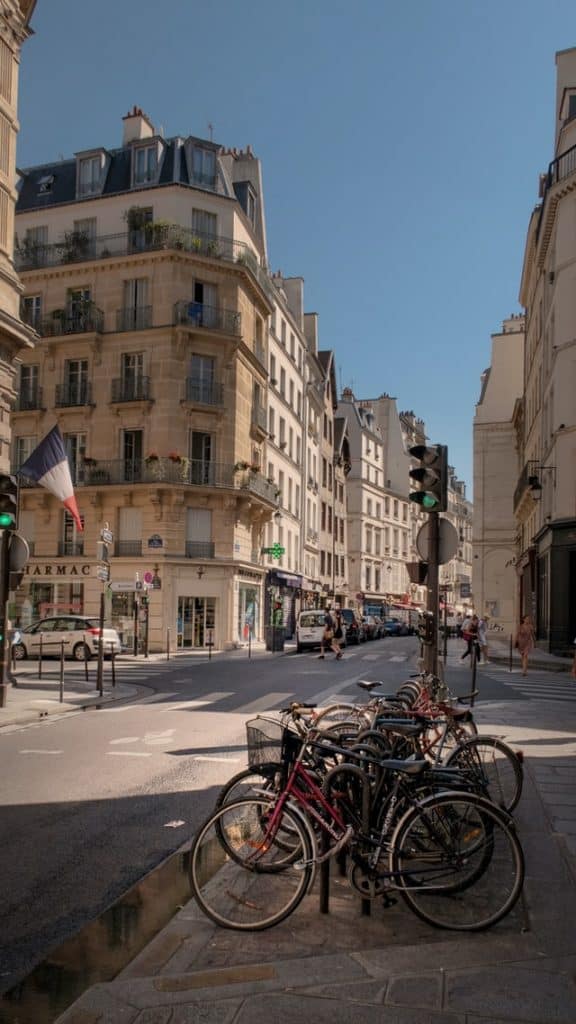
Photo by Svetlana Gumerova on Unsplash

Did you enjoy this article?  TAIP is 100% reader-supported through tipping.  If you want to leave us a tip of any amount it would be highly appreciated.  These tips help support our efforts to keep TAIP an ad-free environment.  Just like at a cafe, the tips are split evenly among the team.
This article also appeared on Medium.

euros

How to Get Free Money for Your New Electric Bike in France

One of the aspects of life in French that is perhaps underappreciated by its citizens is the number of benefits on offer at any given time.  Sure, the French will brag to you about all that’s available, but often, they are conquered by the paperwork before they ever begin.  I alluded to that in my article about free money for French classes some time ago.  The hundreds of euros I recently got rebated from various agencies to cover the purchase of my new electric bike only underlined the lesson: if you are willing to do the paperwork correctly, you’re usually going to get what you want in France.

Start with Your City

So I know that there are other municipalities that offer money towards your electric bike purchase, and even though I’m writing this as a Paris resident, the same principles I’ve outlined here are applicable to other areas of France.  That first principle is that all other reimbursement programs for an electric bike purchase look to how your municipality of residence dealt with your purchase.

Parisians start here.  You’re going to create an account.  Before you start excitedly filling out the application, make sure you have digital copies of the following:

  • a receipt with your name and address on it (I bought my bike at Decathlon and they are familiar with this process; once you finish checking out you can go with your receipt to the customer service window and have them print a formal receipt for you which has your name and address remember to bring something that proves that address)
  • a certificate from the place that you bought the bike certifying that this model meets the EU standards for electric bikes (you can see the one I used for my bike model here)
  • your electricity bill or attestation de hébergement (this proves your residency)
  • your ID (either passport or carte de séjour; no preference)
  • your RIB (reimbursements are, presumably, only to French bank accounts: one more reason you should get one)

It took me half an hour to fill out the paperwork for the City of Paris.  You have to keep in mind that this isn’t entirely “free money.”  Paris wants a lot of data from the people they are giving money to, specifically, data about your mobility habits.  They are wondering how often you take public transportation and how getting this bike is going to affect that, and whether you will be riding the bike in all types of weather or just on the weekends, etc.  They also ask whether you would have bought a new bike if this subsidy program did not exist.  I checked “no,” as I would have bought a used electric bike at half the price rather than a brand new one.

They also ask for a full itemization of your purchase.  I knew that the program offered reimbursements up to 500 € in total so I decided to max that out by also buying a helmet, basket, and lock, all of which are included in the programs.

The bike itself had cost 799 €, so when you add 56 € for the lock (one of the most expensive I could find), 35 € for the helmet, and 52 € for the saddlebags and basket, the total was 942 €.

I submitted on March 17th and got a response on April 23rd: 219.72 €.  They didn’t give any reasoning for the calculus.  While the email told me the money would hit my account within a maximum of two months, it ended up hitting within two weeks.

Also, I didn’t idly wait for the City to rule on my dossier.  I waited a month before sending a follow-up via the electronic system and Twitter.  Whoever is running the City’s social media account is paying attention and made sure that my request got answered more quickly and that’s why I think I got my response in five weeks instead of the six to eight you might read about online.  Use social media to your advantage!

Then Try Your Public Transportation Provider

After I submitted my dossier to the City of Paris, I started a simultaneous dossier with IDF Mobilités, which is the agency that is in charge of all the public transportation in the Île de France region (start here).  While you cannot get a final decision from them until you include the decision from your municipality, you can do every other step of the process in the meantime and submit an incomplete dossier.  Your dossier will then get flagged up for missing this documentation, but hopefully by that time you will have the decision from your municipality and can respond to the flag with the documentation.

While I had correctly done everything else, I had incorrectly submitted my RIB.  I had typed in my personal bank account information but had inexplicably submitted the electronic RIB for my business bank account.  Instead of letting me resubmit, they just trashed my dossier because the numbers didn’t match and made me start over.

So I started the process over with IDF Mobilités on May 10th.  The process and dossier are almost identical to the one for the City of Paris.  The second time I applied I was able to submit proof of the aid I had already received from the City of Paris, which was simply an email informing me of the decision.  While that didn’t strike me as “official” enough, I submitted it anyway.  I didn’t get immediate pushback.

Since I had already submitted before, I knew the time to a decision, once they had a complete dossier, was 17 calendar days.  Judging by the file number from my original application in comparison to my second one I calculated that they are getting 300+ applications per day.  That sounds like a lot, until you realize there are 12M people in the region, and not all those dossiers are complete or acceptable.  I submitted on May 18th and hadn’t heard by June 4th and so I sent a gently-worded tweet to their official account.  Three days later I got a decision: 251.28 €.  The notifying email gives an even longer lag time for the funds to hit your account: four months.  But again, that was just to give them a wide margin of error.  The money hit within 12 business days.  471 € towards my purchase meant that thanks to these two agencies, exactly half of my bike had been paid for.

When some people (who don’t pay taxes here) expressed dismay at these programs, I noted that not only am I an annual Navigo holder at IDF Mobilités, paying north of 700 € each year for my pass, I also pay various types of taxes to the City of Paris.  I saw these funds as customer/tax rebates for myself which, all told, only took a couple of hours of my time, including the actual purchase of the bike in the first place.

But Wait, There’s More!

There’s also a program called Bonus Vélo that operates at a national level (but you apply within your specific region: Paris is “Grand Est”) and, unlike the previous two programs I mentioned, is means-tested.  If your French income was below 13,489 € in the previous year, you can qualify.  You must also apply for the program within six months of the original purchase.  I happen to know someone who had applied for this program and asked him for the scoop.

Unlike the other programs, which are entirely online, this one operated in the old-fashioned way: a printed dossier sent by registered mail.  You will need all the same information that you did for the other two dossiers, along with a copy of your previous year’s tax return, but note that the email that you receive from the City of Paris informing you of a favorable decision isn’t considered sufficient “proof” by this agency.  That’s fine.  If you email the City and let them know you need proof for the Bonus Velo program they will send you a more “official” document than an email that conforms to what the Bonus Vélo program demands.  You will then have to print that up and include it with your dossier.

This process seems to be faster because if you have a completed dossier you will get a decision within one month of mailing it in.  The person who applied for this program also went through a similar process with the other two agencies (for the same model bike!) and got 200 €.  The money arrived within two weeks.

That meant he got 671 € of an original 942 € reimbursed, bringing his effective total for his brand new electric bike, helmet, lock, saddlebags, and basket to 271 €.  Not bad!  This is a perfect example of taking advantage of programs that many French people don’t even know about, much less apply for.  The processes just take a bit of time, but immigrants are so used to having to do paperwork just to legally stay in France, that doing paperwork to get money is almost fun, especially when you’ve come to understand how French bureaucracy works at every level.

There are several reasons why I got an electric bike in the first place (although, as I noted, the incentive to get a new one was the free money) even though I’ve been almost exclusively a métro rider and walker in the City for years now.  But I’ll talk about that more in another article.

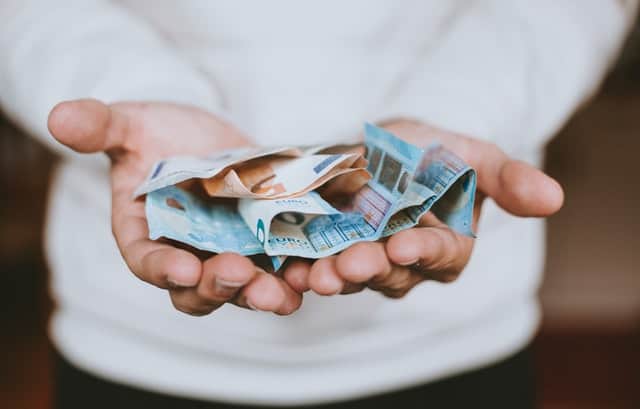
Photo by Christian Dubovan on Unsplash

This article also appeared on Dispatches Europe.

TAIP is 100% reader-supported through tipping. If you want to leave us a tip of any amount it would be highly appreciated. These tips help support our efforts to keep TAIP an ad-free environment. Just as at a cafe, the tips are split evenly among the team.