
Troubleshooting: Internet, Leaks, and Hot Water Heaters

There are things that are very simple in France.  One of my favorites is the “set it and forget it” auto-debit for most of your recurring expenses: your EDF (electricity bill), UGC pass, or your mobile phone, just to name a few.  Then there are those things that are not so simple, like getting internet.

Running water or internet?  Internet, please.

Now, I had been a bit misled on this point because establishing ultra-high speed Fibre internet at my chambre de bonne, the shoebox in the sky in the 17th where I spent my first year in Paris, had been a breeze.  I gave the internet company the necessary information, they scheduled the installation, and on the appointed day, the technician (with an apprentice) showed up, ran the wire, gave me the router, and just like that, I had some of the fastest internet in France.  Something no one ever tells you is that before you go in (or online) to establish service, you’re going to need a little code that’s just outside your apartment door.  This tells your internet provider the “location” of your apartment within the complex web that is the Parisian building ecosystem.
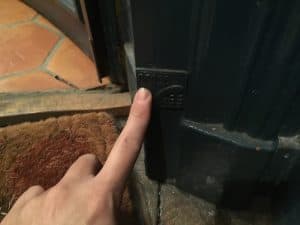
When I moved to the apartment I was in now, I told my landlady that I wanted the fastest internet possible.  Her first move was to ask the existing internet provider, named Free, to up the speed to Fibre.  They first sent a technician to run the wire, and then he told me when the box came it would simply be plug-and-play.  It was not.  After 2-3 weeks of back and forth on the phone and my at-the-time dreadful French (I would use phrases in French like “I am running the white wire into the green square in the back of the black box” which I would have easily said in English as “I’m running the fiber into the incoming slot on the router.”) I gave up on Free and ordered Bouygues.  They turned out to be even more incompetent (how is this possible, I wondered) and I gave up on them faster than I gave up on Free only giving them about a week to work.  SFR was the one who originally hooked up my Fibre back when I was living in the 17th, and so I told my landlady to order SFR.  And, just like that, I had high-speed internet within a week.  SFR has been my mobile provider since I arrived and has been the most reliable internet provider I could have hoped for.  This is to say nothing of the fact that my mobile plan allows me to use my data and phone in the USA when I visit (allowing me to cancel my T-mobile mi-fi subscription, which I mentioned here).

Degats des Eaux (Leaks)

So, one thing we all have in common in Paris is stories about leaks in our apartments.  When I first arrived I listened in horror as a date told me that she had had mold growing in her bedroom due to a leak for over a year and had a landlady who refused to work on the issue for her.  I’ve had a Canadian friend who persevered through numerous challenges here but finally gave up when the roof of her apartment caved in due to a leak from the upstairs neighbor.  And I myself have three different leak stories.

The first one is from my upstairs neighbor who is the near opposite of a model neighbor (think “likes to have loud parties on weeknights until 03h00”).  He was away in Brazil when a leak started to come in from, quite obviously, his shower, which is above my bathroom.  He sent in a friend to examine the issue and his tenant a nice Dutch kid who I was acquainted with, was very understanding and I let him use my shower and bathroom while we tried to investigate the leak.  It kept coming, but at a very slow rate, so we figured that there must be something wrong in the walls.  He had planned a complete gutting of his apartment in 6 months, so he wanted to delay destroying the walls of his shower to fix the problem until then.  As the leak was intermittent, and I didn’t see an effective way to press the issue (a tenant, not an owner, going to war with the syndic over a slow leak dispute with an absentee owner– that just sounded exhausting) so I waited patiently.  It would be another 6 months before the relevant paperwork had been completed (his insurance people came to visit, my insurance people came to visit, I had a handyman come out to estimate he told me I would need to wait at least 3 months after the leak ended so that the walls could dry so that he could then strip and repaint).  And my upstairs neighbor was in denial the whole time that he was at fault, until one day he, myself, and my next-door neighbor, Martine, who really had some words with him during the summer of renovation, went up into his apartment.  I pointed out to him the rusty main pipe which clearly was the source of the leaks.  He had been looking in the wrong place.  He immediately quieted down and never said anything more on the subject.  Eighteen months after the leak had started, the bathroom was restored, repainted, and frankly, was even better than before as there was a new main pipe which had been run all the way from my apartment into his.  About halfway through this process, sometime in 2015, I learned what all people in Paris who have apartments must know: this is normal.  And franchement, I had it pretty easy, as even though it was something to “endure,” I wasn’t out of pocket for anything my neighbor’s insurance picked up the bill for the renovation of the bathroom, and the Syndic paid for the new main pipe.  And I learned something essential to know when living in Paris: a leak is always going to take a long time to solve.

The second leak occurred while the last story I told you was still in progress.  My downstairs neighbor Virginie, who I’m on very good terms with (you can really bond with your good neighbors in common opposition to the bad ones), rang my doorbell at 06h00 one morning.  I sleep like the dead so I’m rather surprised I heard the doorbell at all but she had been pressing it for a while and when I showed up looking like I had just gotten out of bed, she asked me to “Please turn off your water.”  I simply obeyed her and gently turned the master water cut-off for my apartment.  I then followed her downstairs and stared in horror at her bathroom ceiling.  It had partially collapsed and was raining water.  This wasn’t an ongoing leak, but rather looked like a bunch of water that had accumulated and finally broken through.  My eyes mentally went up into my flat and I realized that the items above that part of her bathroom were my washing machine, kitchen sink, and dishwasher, all potential culprits.  The likeliest one was the washing machine, which had been installed some months before.  Perhaps a leaky slow drip?  The plumbers for our building came later that morning (after they too, woke up) and discovered that yes, the people who had installed the washing machine had failed to tighten something, leading to a slow drip which, after 6 months, had destroyed Virginie’s ceiling.  Another series of insurance visits later (I was becoming a pro) I found out that due to the repair costing less than 1000€, that the Syndic (or was it Virginie’s insurance?) would be taking care of the repairs I was off the hook.  Given that I was already developing the maturity from my own painful leak at this time, I took this one fully in stride.

I won’t bother you with the story of the third leak – suffice to say, I’m a leak expert 🙂

Chauffe-Non! (My Hot Water Heater — Chauffe-Eau — Breaks)

Last Saturday around 10h00 I got into my shower, only to discover that the hot water refused to come on.  After two minutes of penance in cold water, I got out to investigate.  My E.L.M. Leblanc water heater had a blinking red light, which could only mean one thing: it had finally died.  I say “finally” because last summer it had had a major “illness” and the repairman at the time stated that it was on its last legs.  My landlady, understandably, who had watched my oven, dishwasher, and washing machine all break down over the years (to be fair, she purchased the apartment in the mid-90s, so the fact that we were replacing in the mid-20-teens was to be expected) and then replaced them with brand new appliances, was reluctant to drop the nearly 2500€ that a new water heater would cost.  But alas, that’s what she ended up paying today when the same repairman was back, took out the old one, ostensibly to give it a decent burial, and put in one that resembled, rather like my washing machine, a spaceship.  It even had a wireless controller that uses your daily schedule to optimize the energy usage of the machine.

* * *

There are a few things to note here.

I have an exceptional landlady.  She’s always been there for me.  I’m sure she can’t have been happy about having to replace all these items, but she knows their breaking had more to do with their age than anything I did, and my patience with these issues and her diligence with all the repairs have made for a winning team.  It doesn’t hurt that I’ve befriended all the best neighbors and always pay the rent on time, and agree on marginal increases in rent each year.  I don’t take for granted that I live in one of the best locations in the city, in the heart of the 2nd.

I have wonderful neighbors.  While my neighbor upstairs likes to pretend he is the only one in the entire building, my next-door neighbor and downstairs neighbor are great people, and I’ve hosted them for dinner at my place, where they got to try my signature ginger sesame chicken on rice.  Getting to know your neighbors in Paris is a choice, but it’s a wise one considering how often you might need them (or they might need you Martine rang me up at midnight to let her into our building a few weeks ago because the pin pad for our building was on the fritz, and she couldn’t get in).

All of these are happy endings.  As I noted above, I’ve had friends finally give up on Paris after one incident too many regarding housing.  As you’ve read before on my blog, life in a foreign country is challenging enough without everyday incidents on top of them.  Americans are used to by and large being able to call and get these things fixed tout de suite, because the only thing that matters in that country, other than the state of the Kardashians, is the customer always being right, whereas in the most recent incident regarding my hot water heater, I just started laughing when I saw the blinking red light, as it was SATURDAY and there would be no one who would come out to my place to fix the hot water heater.  I knew I would just have to wait until 09h00 Monday morning, and I and my guests ended up taking showers at Virginie’s over the weekend.  Which reminds me, I need to bring her some speculoos cookies from Belgium, where I am writing this.

Like quicksand, the more you struggle, the worse it will be.  Last year I started doing mindfulness meditations using Headspace and it only helped reinforce a personal rule that, like the large breakfasts I cook, is out of place in France: refusing to complain.  I won’t even allow myself to complain in my head, privately.  Complaining accomplishes nothing (when you say this to French people 1 out of every 4 or so will cite some “scientific study” in which it was shown that complaining helps you be less stressed.  Color me skeptical.) and actually I think complaining makes things worse.  In all of your challenges in French life – not just with immigration but in living in apartments, it’s always best to remember how very first-world these problems are.  So your hot water heater is out.  Boo hoo.  At least you have running water into your Parisian apartment.  So there’s a leak.  Big deal.  Get over it.  Your internet isn’t working.  Wah.  Go to a Starbucks and get it for free in the meantime.

Don’t focus on your problems.  Focus on solutions.  Doing so gives you more time to wander in the Louvre, enjoy a coffee, and walk with a friend through our picturesque streets and parks, which are some of those simple pleasures that I wish everyone in Paris could enjoy as often as I do.

Did you enjoy this article? TAIP is 100% reader-supported through tipping. If you want to leave us a tip of any amount it would be highly appreciated. These tips help support our efforts to keep TAIP an ad-free environment. Just as at a cafe, the tips are split evenly among the team.
Unexpected Consequences of an International Move: Instant & Ongoing Decluttering

I’ve mentioned before on this blog that the Four Hour Work Week is a major influence on my life and was a big part of the “how” portion of the massive quality of life upgrade that was my move from America to Europe.  In the book Tim puts forth a notion called “mini retirements” in which instead of working and saving until some mythical age to sell everything and move to Thailand (for example) why not do that now for a few weeks and see if you actually like it.  There are other reasons to take mini-retirements, including not assuming you’re in control of your health or when you die, but what I want to focus on is Tim’s insistence that you dump pretty much everything.

Stuff.  It can define us.  And Americans in particular have so much room that nothing stops us from buying more.  We even define our “national holidays” by sales of stuff.  We even have a very healthy business category of self-storage, which is an embodiment of our hoarding mentality.  Alas, that industry is now kicking off in Paris (and probably greater France as well).

Tim’s points were simple: get rid of everything that doesn’t have a particular or sentimental value.  You can always buy another couch, or plates, but maybe you can’t buy that one pan Grandma taught you to cook with.  Dump the other stuff, keep that.

I decided pretty quickly that my “must keeps” consisted of roughly 100 framed prints that had mostly been painstakingly transported from Europe over the years and adorned all the spaces of my then-home in America, as well as the 4000 books that I had collected over many stops of library book sales and used and new bookstores over the years.  I spoke to a friend in Canada who had a large amount of space in a new home he had recently moved into, and who also happens to homeschool his kids.  He would get a teaching and parenting resource for free, as well as for his own enjoyment, and I would have free and safe storage of my treasures.  We agreed on a 5-year term, after which time we could discuss what was to follow.  I knew after 5 years in Europe (I’m 2 in now) I would either have a place to ship the books or have a long-term plan about what to do with them.

So books and art sorted.  I rented a large truck about 6 months before I left the USA and drove the books to Canada.  As a note, if you do this, the Canadians will ask you for a value, so they can tax you…on stuff you already own…because hey, you might choose to sell it!  So, cynically (and in keeping with American, and what I would find out, French traditions), I assessed the 4000 books at a value of $.01 each and the art at $1.00 each, to a value of roughly $200, which I still had to pay tax on.  Small price to pay honestly, but it does add an extra 30-45 minutes to your border crossing.

I then proceeded to dump all the furniture I had painstakingly picked out during my “I’m a grown-up now with a real salary” phase when my college furniture found the curb.  These were the delicious dark wood headboards, the plush suede couches, the tasteful (and useful) ottomans.  I even had a lovely Victorian double-sided desk.  All gone: happily mostly sold to friends and friends of friends, and what was still left over went onto Craigslist.  For the very last items (what was I doing with my own power drill?), I left them with my sisters to sell on their own or keep.

That left me with roughly 20 resealable tubs into which I mostly, but not exclusively, put items of real sentimental value.  Stuffed animals I had as a child which I kept in really great condition and which I wished to pass on to my children or to my nieces and nephews.  A report on birds I wrote as a ten-year-old.  A drawing my sister made for me.  That kind of stuff.  Some dear friends have been kind enough to keep those tubs in a spare room in their home.  I plan to keep reducing the quantity of tubs in that room every time I visit, loaded with goodies from Europe for my gracious caretakers.  And each year that passes that I don’t miss the stuff in those tubs, it makes it that much easier to get rid of when I do see it again.

In truth, limiting myself to the four full-sized pieces of luggage I ended up bringing to France was an enormous task that I totally underestimated.  I flew American Airlines to France in December 2013 and at that time the policy was: 1st bag free, 2nd bag $100, and bags 3-10, $289 each.  Hard to believe, but this is actually the cheapest and fastest way to move your stuff.  I checked into freight, believe me, and either my calls weren’t returned, or my emails weren’t returned, or it was prohibitively expensive when I did manage to get a price sheet.  Same for UPS, sea-freight even.  And then you have to go to Le Havre to pick it up.  Yeah, skip that.  Pack it with you.  It’s really cheap, comparatively.

Now, when you’re bringing that much stuff (my aforementioned four pieces of luggage…I won’t even share the absurd limits of carry-on that I stretched), you find a way to bring too much, so I want to encourage you to spend one month packing these 4 pieces (or fewer).  You’ll take more stuff out as you work on it every day and keep asking “Do I have to have this?”  I know when I showed up at the airport that I was at least five pounds over on each bag.  But I knew how to get around this: the skycap.

This profession doesn’t exist in Europe, oddly, though it is exactly the sort of profession you expect to exist there.  They are (for my Euro friends who might be reading) men and women who stand on the curbside to help those who wish to “skip the line” get boarding passes and check bags there instead.  For this “convenience” you are expected to tip anywhere from $5-$25/bag.

That morning that I left Kansas City the skycap picked up all 4 of my bags and gave a slight grunt for the last one, the heaviest.  “Where ya goin’?”  “Paris.”  His eyes widened as he looked back over the bags, quickly calculating how much it was going to cost me.  “I’m moving.”  “Ah.”  He started weighing the bags, and I watched each bag on the digital readout.

53 lbs

57 lbs

52 lbs

61 lbs

“They are all over.”  He was reminding me of the 50-pound weight limit I was already aware of.  Overweight would add $150 to each bag.  I nodded, putting on a guilty and downtrodden look.  I wanted my silence to speak.

“I can take care of this for you, if you make it worth my while,” he said after a beat or two.  I tried not to beam and high-five myself, as this was the exact response I was banking on.  I took out my last bit of American currency I was carrying, a $50 bill, and put it on the counter.  I still said nothing.

Given that he was about to save me $600, he was expecting more, I’m sure, but he probably realized that $50 was good pay for 5 minutes and a few key strokes that indicated that yes, these bags weighed no more than 50 pounds.

We were operating in that shadow economy, and little did I know that this was precisely the kind of hustle I needed to survive and thrive in my new country.

So, to sum up:

  1. Get rid of mostly everything.  Try to come up with creative, trade-based, non-recurring monthly cash flow ways of storing the rest.  You need to spend as little as necessary in your new country when you first get there.
  2. Take a long time to pack what you are bringing, in order to have a critical instead of a stressed and harried eye to look it over with.
  3. Don’t hesitate to leverage American idiosyncrasies to bring what you want.
  4. However, do be pragmatic and take the time necessary to figure out what you really need vs. what you can buy when you get there.

A giant move out of the country can be the impetus for that Spring Cleaning you always aspire to do (and which my sister Clare does roughly every 3 months) but never get around to.  Which is yet another reason to move abroad.

And when you do get here, the housing in Paris is small enough to prevent you from restarting that life of stuff you left behind.  When you shop, you constantly ask yourself, “where would I put that?” which is a practical question that you don’t have to answer in always too-big America.

* * *

For a great video to share with kids or anyone who cares about our planet and the absurd and unsustainable way of life in the First World, check out the work that these guys have been doing.

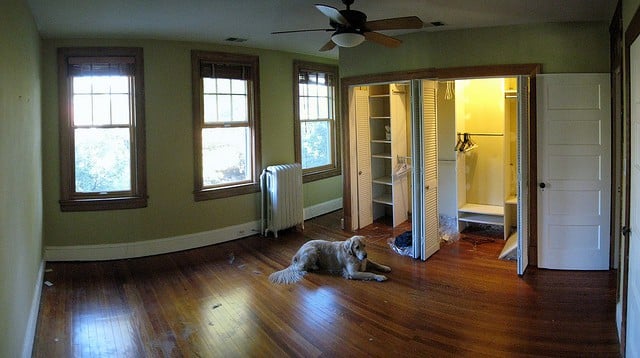
Photo from jsmjr.  Labeled for reuse.  What a cute dog.

Did you enjoy this article? TAIP is 100% reader-supported through tipping. If you want to leave us a tip of any amount it would be highly appreciated. These tips help support our efforts to keep TAIP an ad-free environment. Just as at a cafe, the tips are split evenly among the team.
My Worst Week in Paris

This is the “Part II” to my “finding an apartment in Paris” article, though it’s really more of an appendix.  Future parts will discuss what to bring with you when moving here.

They say that whether you are a native of France or a lovestruck visitor of Paris (comme moi) your first apartment in the City of Light will always be the worst.  It gets better from there.  There are a number of reasons why.  You don’t know the arrondissements.  You don’t know how you will feel about your commute.  You won’t know how you feel about your space.

One thing I did know, three months into my stay, as my landlady tried to charge me more for my already too-small space, was that I was done paying 800 euros a month for a studio (between $1000-$1100, depending on the state of the world economy at any given time).  In a week I had settled on a very cool art studio to which the resident artist had added a number of bedrooms.  It was very cool and the price 650 euros was great.

She, Sophie, my new potential landlord, was a bit flaky in setting up the appointment to see the place but I chalked it up to the “artiste” in her.  A writer and teacher at heart, I’m able to shush my inner businessman who (rightfully) whispers “accountability!” at necessary times.  But we got along okay at the first meeting and we shook hands on a move.

It was 30 days before my move when I gave notice to my then-current landlady.  I didn’t tell her all my grievances.  They had been kind and I was determined to leave on good terms. I found out, in drips and drabs, just how much had been missed in the handshake agreement that had sealed the deal.  Each new discovery, via email or text, was not in itself a dealbreaker but cumulatively it worried me a lot.  I think I was too excited about moving to the 11th and so close to Père Lachaise, as well as saving almost $225 a month, so I didn’t really blink as I discovered:

1) I would need a security deposit equal to one month’s rent (pretty standard here).

2) I would need to do one hour of chores per week or pay the cleaning lady 15 euros each week (no big).

3) I was not allowed to receive bills or bank statements what???  So I could get personal mail but not bills?  This would also complicate the immigration process but the concierge of my current place agreed to for 30 days collect my mail while I figured out an alternative.

4) I was to sign a contract and agreement, seven pages long, all in French.  I figured I would just have to hash that out with her after moving in.  I wasn’t going to pay for a translation nor was I going to sign something without fully understanding it. But all of these (what should have been blatantly waving red flags) paled in comparison to what I dealt with on February 28th, my worst day in Paris and the beginning of a tough week.  Please keep in mind that I use “worst” and “tough” purely in the First World sense.  At no time was I without the basic necessities of life nor was I being waterboarded, and incidents like these do great wonders for one’s sense of gratefulness.

I had asked two friends to help me.  I had four suitcases and two backpacks to take literally across town (17th to the 11th).  We would be able to stay on the (mostly for locals) Line 3 and just have one change at the very end.  Additionally, the metro stations at the starts and ends of the journey were roughly 500 meters or less from where we needed to be and all the bags had roller wheels.

The day started auspiciously enough.  I had woken up on time and lugged the bags down to the fourth floor where my landlady generously allowed me to use the building’s elevator to get down the final four floors.  My friends arrived on time and were treated to some excellent pastries and coffee from my soon-to-be-former landlord.  We made our way in and out of the Métro up and down quite a few steps huffing and puffing and laughing and grateful for the assistance of the (always polite) Parisians around us.

We arrived at my new place-to-be.  One of Sophie’s employees answered the door and she came out.  She had a look of surprise on her face.  “Well, you come tomorrow!” she said.  It was February 28th.  “Well, that’s fine,” I said.  “I’m not going to sleep here tonight, I just need to drop off these bags.  I’ll come back tomorrow.”  “Non, non, it’s just not possible,” she replied with the typical French shrug which said, “I don’t care” about your situation.

I kept my composure.  My colleagues very astutely just kept silent.  She was going to be a landlady for at least the next 6 months, so handle this well, I thought to myself.  I explained that we had come across town that these bags were not light that my friends were able to help me today and not necessarily tomorrow and that I was due to be out of my old apartment first thing tomorrow morning.  I also referenced a text I sent her last week saying I was coming Friday.  To my chagrin she pulled it up and pointed out that I said I was coming to drop off money on Friday, not drop bags.

Now, as an American I would have proffered one of two responses, in my experience as an erstwhile landlord:

a) Okay, you’re here a day early, but you’re going to be here the next six months and you’ve got 1300 euros in your pocket, so I can do a favor for you this one time.

OR

b) If your stuff is here I must charge you rent for today, pro-rated.  Is that okay?

Either of these would have been acceptable, but instead I got the French “sorry, I cannot do anything.”  She said she was in the middle of a photo shoot, she had no room, people always take advantage of her, etc.  But what you need to understand is that I picked this place precisely because it was ENORMOUS by Parisian standards.  If she had room in one place, surely it was in my room which anyone could reasonably expect was cleared out less than 24 hours before my arrival.  It was unoccupied when I had previously seen it. After 5 minutes of fruitless back-and-forth we agreed I would arrive at 09h00 the next day.  The door closed and the man not usually at a loss for words was.

Josh immediately and kindly offered storage at her place, about 14 blocks away.  A wheel had kindly broken off on one of the pieces cobblestones are murder on cheap luggage, and while I did have three Samsonites, that was not one of them which made the trudge just a bit more challenging.  Two of the three in our party were American and while we tried not to see this incident through the “customer is always right” lens, I was still shocked at such unaccommodating behavior.  “I’m not,” said Danyell, who was married to a Frenchman.  “My mother-in-law is the same.  Typical French.”

We agreed, in between huffs, puffs, and stops, that if I could not even leave my luggage there the day before I moved in that all that awaited me was more unpleasant surprises.  We got to Josh’s, where four more stories and the corresponding stairs awaited us.  I laughed bitterly as I lugged the luggage up those flights, marveling that what I imagined would be such an easy day instead had gone wrong in every conceivable way.

Danyell had to run off to another job, so I didn’t get to take her to lunch for all her troubles.  We parted and Josh and I grabbed some lunch and discussed the problem further.  She had some room and very kindly consented to let me leave my luggage there for a week while I scrambled to find a new place. I swung into action and had a place the following morning, for one week.

It was in Le Pré San Gervais, which is at the very edge of the 19th Arrondissement.  When I say edge, I mean outside of.  It was outside Paris city limits by about one km.  Good, I thought.  Let me find out what it’s like to live in the burbs for a week.  Gk, who owned the room, wanted 700 euros per month for a very sunny and lovely room but for someone living and working in Paris it wasn’t tenable, by my standards, for a long stay.  I paid for one week. It was at the edge of Paris transport, and door-to-door, with Vélib, bus, and metro, it would take at least 30 minutes to get to one of the “center” stations of Paris, like Châtelet, Opéra, or République (see, even right there in my list I can see how Right-Bank biased I am).

I loved the size of the room and the quiet of the building, as well as being on the 1st, not the 7th, floor, but I wasn’t going to pay that much and not even live inside Paris proper. Still, in my week “in exile” I came to appreciate just how spoiled I had become (and would remain my new apartment was in the same neighborhood as my old one 20 minutes by foot, or ten minutes by Vélib, or five minutes by Métro to the Arc de Triomphe, a beating heart of the city).

The happy ending to my alleged “worst week”?  I picked up my keys that Thursday and moved in over the next three days.  I had plenty of time to adjust to my new views.  Danyell and Josh valiantly joined me to “finish what they had started” a week ago.  I avoided moving into a place that had featured numerous warning signs and a disastrous move-in day.  I found out I had friends who were more kind and generous than I could have imagined or even deserve.  But most importantly, I had upgraded my housing while decreasing my cost of living which is a feat in any city, not just this one.

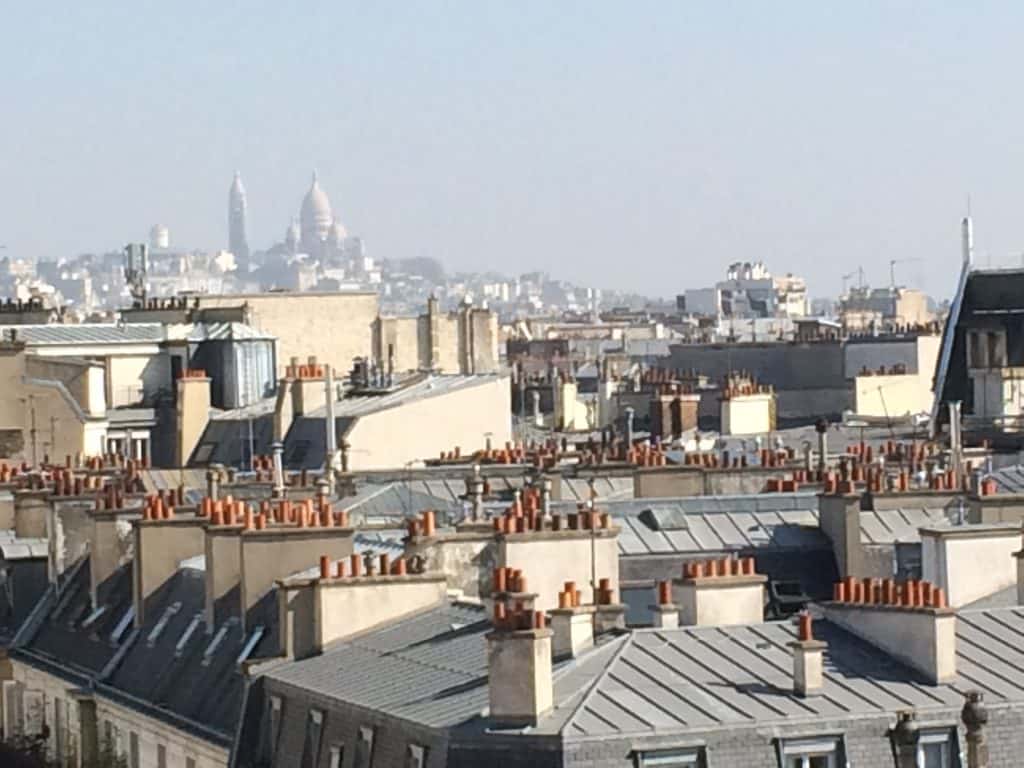
The photo is a view from the northeastern edge of Paris.

Did you enjoy this article? TAIP is 100% reader-supported through tipping. If you want to leave us a tip of any amount it would be highly appreciated. These tips help support our efforts to keep TAIP an ad-free environment. Just as at a cafe, the tips are split evenly among the team.
Finding an Apartment in Paris, Part I: Before You Get Here

Keep in mind that there is a reason the word “bureaucracy” has a French etymology.  The French love their paperwork.  Efficiency is not a vice, per se, but why be efficient when you can cloak yourself in the warmth of saying “non” to people, just because you feel like it? When I first started researching a move to Paris, in August 2012, my eyes glazed over at the stories I read: “Must provide paycheck stubs” (I’m an entrepreneur, so my cash flows don’t always come that way), “must sign a 6-12 month lease,” (I needed to maintain flexibility, especially if I didn’t like a place).  There had to be a good way to get an apartment in a foreign country before you got there.  There was.  Enter Airbnb.

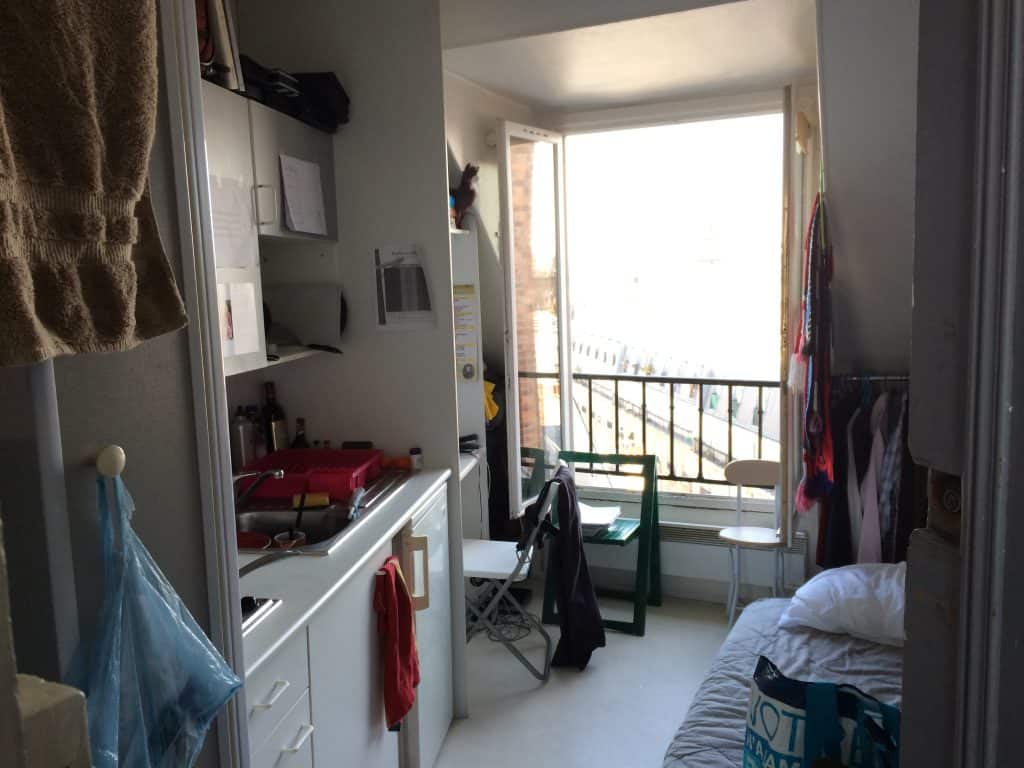
I was an early adopter of this service, staying at my first place in 2011 when I visited Austin.  I love the service and have used it frequently ever since.  I figured Paris would have a lot of options, and indeed, there were, but there was a reluctance on the part of many of the owners to take on a long-term renter, as there seemed to them to be less trouble and more money in the short-term renters.  After inquiries and searching, I settled on an 8×8 foot shoebox in the 17th arrondissement that would cost me 800 euros per month and would be all-inclusive (water, internet, gas, trash, electricity).  The toilet, a squat one, was down the hall but I did have my own shower and kitchenette, etc.  My host was used to a bevy of weekly guests so she took some time before assenting to my proposal to stay six months or maybe longer. I visited in November 2012 while on vacation in Europe and moved in over a year later, in December 2013.  It was as I had remembered perhaps a little smaller ;-).  I lasted a little under 3 months.

It wasn’t hell, by any means.  I came to realize that I was paying a high rate for the amount of space I had (24 square meters).  I also realized it was incredibly central (perfect for my day job) but also very quiet (not “hopping” as far as nightlife goes).  There was a nagging problem with the plumbing and backflow from my sink going into my shower.  Six weeks in I had had enough and started looking for other accommodations, again on Airbnb.

Why did I pick that site?  Less risk: Airbnb had insurance, and direct links to these people’s bank accounts so people were disincentivized to do you wrong.  Often times I also had access to testimonials from others and plenty of good photos.  I was also going to have something furnished and all-inclusive.  My second situation did not work out as planned (stay tuned for Part II, a harrowing but hilarious account of my worst week in Paris) but I am very pleased with where I am now.

I found the listing for my current place on, of all sites, Craigslist, which is nowhere near as popula(i)r(e) as its French equivalent, Le Bon Coin.  The apartment costs 690 euros, all-inclusive, and unbeknownst to me, had great views of Sacré-Cœur and The Eiffel Tower.  The listing led me to a service that caters to English-speaking expats.  They know our pain.  This place would be bigger AND cheaper than my last place.  Parfait.

I was able to see, decide, and pick up my keys for the place all within the space of six days.  It could have been sooner had I not had a request of the owner which was generously granted, and if I had not already paid for a week’s accommodations on the other side of town.

Here’s what you should expect (and Paris is a fairly stable market) as of March 2014. Outside the city, all-inclusive, 10×10 (29 square meters), with a minimum 30-minute commute by TRAIN (RER) not Metro, 500 euros. Inside the city (in one of the 20 arrondissements), 750 euros. Inside the city, with a private bathroom and a “living room” area, 1100 euros. Should you wish to have a roommate obviously all these prices come down, but then the paycheck stubs and all that come into play, which are not easy to produce for those of us here on non-working visas.

I’ll cover “cost of living” in another article but expect to pay a security deposit as well as an agency fee (be it through AirBNB or ParisExpat or any other service) equivalent to 5-10% of your entire lease.  You’ll need a good chunk of change in your pocket come moving day.  And some smiling faces and helping hands to help you up all those flights of stairs.  More on that, next time.

The photo: it’s not the biggest place, but it’s home.

Did you enjoy this article? TAIP is 100% reader-supported through tipping. If you want to leave us a tip of any amount it would be highly appreciated. These tips help support our efforts to keep TAIP an ad-free environment. Just as at a cafe, the tips are split evenly among the team.