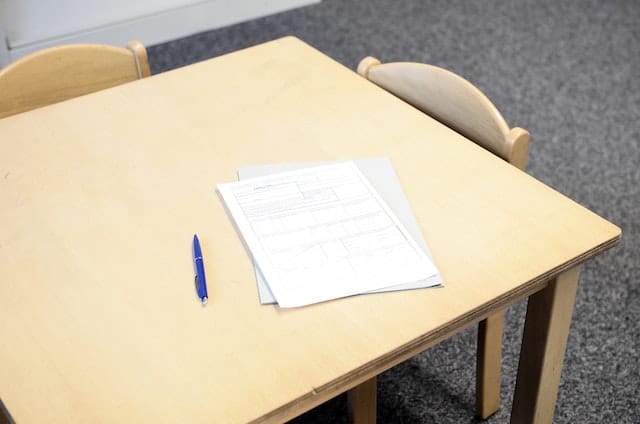
taking the delf test

How to Take a French B1 DELF Test

If you don’t know what the DELF system is, I explained it in my article on my first DELF experience, taking the A2 exam in Annecy. Gracie wrote an article about taking the B2, and now I’m filling in the gap by writing about B1.

Why Does B1 Matter?

One of the first questions that a student asked when our instructor was finished giving us our B1 exam briefing on test day was whether the official diploma was necessary for proof of B1 competency. The instructor had heard this question many times before and told all of us that for purposes of French administration, the test results were equivalent to the diploma. This was important because we could expect the results in 6-8 weeks but wouldn’t get the diploma for 2-3 months.

The room gave a sigh of relief as I was certain the overwhelming majority of my fellow testers were there for the same reason I was: certifying that we were at this level for our citizenship application. There are some French jobs that would require a B1 level of proficiency, but those employers are just as likely to informally assess you during an in-person interview than insist on a DELF certification, which would take some added time and small expense.

Taking My Own Advice

In the aforementioned article I mentioned that I chose the testing center I did last time because I wanted to see Annecy (awesome place) but also because that testing center had a very smooth registration process, including (gasp!) online payment. However, in April when I was looking for a summer test date, there didn’t seem to be any centers available with such an easy process. So I sent a check and printed registration form by postal mail to Prosodia, in the 20th in Paris.

I got an email about a week later telling me that the July date I had picked had already completely filled out but would I like the August date? No, I wanted the July date and was already planning travel around it.

But did I want to go through the hassle of finding a new testing center? And trying to register and getting the same potential result? No and no. So I accepted the date and adapted my travel plans. It turned out that in between a trip to Portugal and returning from the Baltics I’d stop in France for 48 hours to come home, sleep, take the test, and then fly out again.

Hiring a Tutor

I’ve never been as comfortable with my French as I am now, and I no longer get tired just from speaking it for hours, but I knew I wanted a refresher, not just because it had been a while since my last DELF, but because I wanted to do well. I met with a tutor once a week in July and focused on precisely what I’d be tested on.

Every DELF exam is the same, insofar as there’s an oral comprehension portion, followed by reading comprehension, and written production. After a break you will then be individually tested orally. At my test in Annecy that break was only ten minutes, as my slot for the oral examination had come right after the written, while others had to wait a couple of hours.

The difference between A2 and B1 are a few more tenses and a level of complexity in all these sections that indicate you’ve made progress beyond the basics of the A-levels, which are all about basic survival in France. At the B-levels you are expressing yourself more thoughtfully, sometimes running into conflict, and using more variety in your expressions.

What I found really valuable about this tutoring-for-the-test was the simple practice of doing the sections with my tutor. He had many copies of previously-administered exams and we were able to target where I was really strong and where I needed some polishing.

The oral and reading comprehension, comprised of short answer and true/false questions, were a breeze. We didn’t spend any more time after a first try of them and some homework.

The written production needed some work, for sure. Some of my expressions betrayed anglicisms, ways of saying, and thinking that we just wouldn’t use in France. The rubric used in the written production is “choix des temps et des modes” with a maximum of 2 out of 25 points, for “fait prevue d’un bon contrôle malgré de nettes influences de la langue maternelle.” Other parts of the 25 comprised use of vocabulary, proper orthography (punctuation, etc.), and coherence and cohesion of ideas.

After some diligent corrections (and some discursive discussions as I drilled into why the French would say something a particular way) we moved on to the last part, the oral exam.

There are three parts. The first is a simple presentation, i.e. my name is Stephen, I’m an American, etc. There’s no prep for that, as you should know who you are. 🙂

The second is a prepared presentation of an idea. Prior to walking into the room you are asked to pull two slips from a table and from those two slips to pick one topic that you wished to speak about. The topic is presented in 5-7 sentences. You’ll have seven minutes to prepare a presentation and when you go into the room you’ll be asked to present on this topic.

In between your personal presentation and this prepared presentation is an “unprepared” interaction. Once again you’ll pick two slips, and from those two pick one, and you’ll immediately begin the interaction. In my A2 test these interactions were quite simple, i.e. you’re going to a store and you wish to buy some souvenirs for a friend or family member.

What was universal about all the B1 scenarios was conflict. Something went wrong and you had to “negotiate” with your interlocutor to get to a result you want. Part of this was funny to me as I would have to effectively pretend to be upset, and then try to argue with a French person, who I am already convinced wouldn’t care and would be ready to shrug his/her shoulders and tell me it’s “not their problem.”

While I had some laughs with my tutor as we worked through different scenarios, he just kept reminding me to pretend and that the instructors were not looking to trip me up but would give me time and space. If I hesitated or took a little longer to articulate an idea or sentence, they would wait with me, not start writing down on the exam sheet, “responds too slowly.”

Game Day

The exam at Prosodia was at 10h00 on a Thursday and I showed up about two minutes before testing time, knowing that they would be registering people and we probably wouldn’t start until 10h30. I was right and I had plenty of time to sit at my desk and even review some notes while waiting.

The first three sections flew by: oral and reading comprehension and then the written production. My topic was ways that someone who was leaving the workforce to go back to school could earn some extra income.

My individual oral exam was scheduled for 14h00 and I was done with my test by 11h50 or so, so I took the opportunity to go to a favorite nearby place for lunch (The Hood) and was back in time for my slot.

I smiled as one of the two slips I picked up was on the Marie Kondo phenomenon, her book, and whether decluttering was a successful idea. I happen to love Marie Kondo (and her book) and my pen flew over the page. If these people didn’t love Marie Kondo before my presentation, they would know all about her after I was done.

I walked in, still slightly nervous as all people are in testing situations, and was asked to introduce myself. There was some follow-up from the instructors about some of what I did for a living and my clients before they asked me to pick my slip for the interaction.

The scenario was arriving at a rental car location and finding out that they did not have the rental car I needed. Remembering my tutor’s advice I gamed out a “pretend” scenario and remembered that the instructor had as little preparation for this as I did, given that I was going to be leading the interaction anyway.

My scenario was that I was renting an SUV to do some moving and he responded that all they had was a Twingo. I lost my bearing a bit at this and laughed because a Twingo is possibly the smallest car that Renault makes. Think of the Mr. Bean car, but slightly bigger.

The other instructor laughed at my laughter and I gathered myself and kept going, asking if there were other size possibilities before settling on asking if any of the other locations would have one. The instructor played along, pretending to search on a computer and saying that there was one vehicle that would work for me at a certain location, but it wouldn’t be ready before a particular time. I said that was fine, and asked for directions, etc. and the interaction played out.

Finally, it was time for me to share Marie Kondo with these people and they had their notebooks out. One would be grading my expression, the other would be noting questions to follow up with. Just from reading facial expressions I felt that one of my instructors was definitely going to check out the book sometime given my enthusiasm. But the best part was when I finished, they looked at each other to ask if there were any follow-up questions, and there were none. “The exam is finished,” they told me.

I felt great, as it meant I had expressed everything well and they didn’t need to give me any chances to redeem myself via follow-up questions.

That feeling when you really ace a test, that you might remember from your school days? I felt that walking out, and looked forward to getting my results in a few weeks. A few weeks after that, I’d be submitting my citizenship application.

Oh, and if you need a tutor to prep for your DELF, drop your email in the comments and I’ll connect you with mine. He’s strongly recommended!

Photo by Skylar Kang.

Did you enjoy this article? TAIP is 100% reader-supported through tipping. If you want to leave us a tip of any amount it would be highly appreciated. These tips help support our efforts to keep TAIP an ad-free environment. Just as at a cafe, the tips are split evenly among the team.
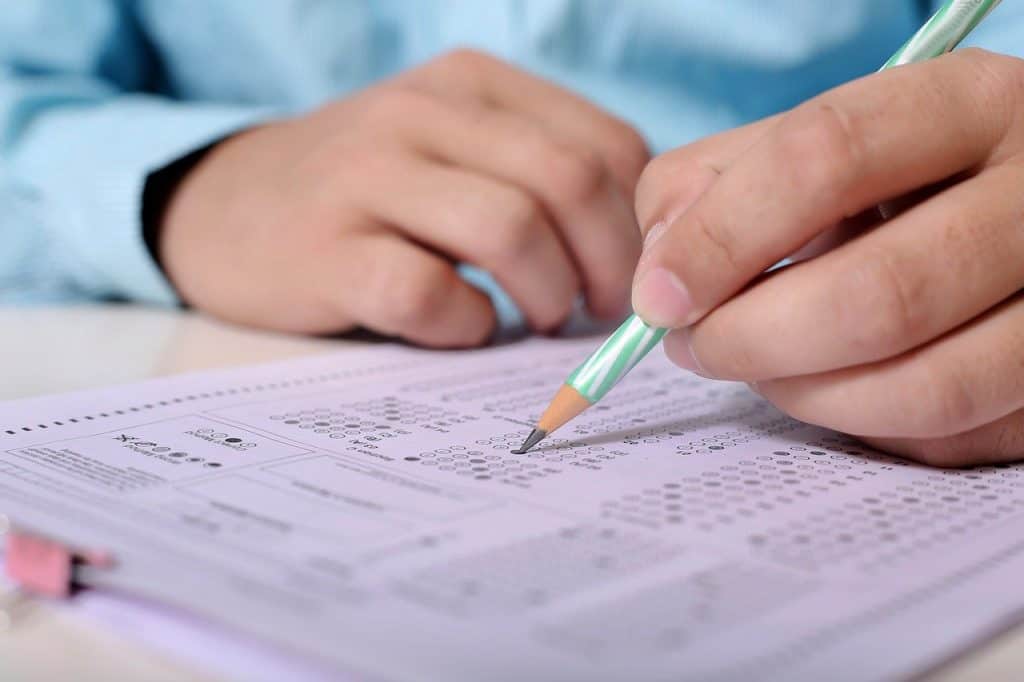
take A2 DELF test in French

How to Take a French A2 DELF Test

One of the misconceptions many have before moving to France is that living here will make us “fluent” in the language in a short time: 2-3 years at the very longest. Not only have I come to appreciate that fluency in any language, including your native tongue, comes after 15-20 years, but that fluency in French will take at least that long for me, if not longer. But that doesn’t mean I can’t get around or have conversations with strangers on a variety of topics. It just means I won’t be able to speak at great speed, have cultural landmarks and references readily at my command, and will sometimes lack the ability to speak about a complex idea. But that’s okay: those are not necessary parts of daily life in France.

There Will Be a Test

What I didn’t know before moving here is the high number of English speakers who do not speak French at even a basic level. This takes effort: you have to not take any classes to improve and you have to not speak French on a daily or even weekly basis. Naturally, the French expect you to speak French in their country and so they have two bars set in place to make life more inconvenient for those who choose not to develop basic competency in this language:

For those who aren’t familiar, these number and letter combinations refer to a classification system called DELF (Diplôme d’Etudes en Langue Française). The lowest level is A1 and the highest level is B2. From there it is taken up by DALF (Diplôme approfondi en Langue Française) which has levels C1 and C2. While B1 and B2 are often acceptable not just for citizenship but for many jobs in multilingual (but French-dominant) workplaces, C1 and C2 are part of the path to studying at the Master’s level without having to take additional language classes or for more technical jobs that require greater French proficiency. This isn’t the only type of test that is acceptable, but it is the most popular.

First, Getting to A1

My journey of learning French has had many way stations. I was 17 the first time I bought a “how to learn French” course on cassette. It wasn’t very advanced but it got me going on some basics. I also took a couple of courses at community college and made three weekend trips to Montreal to give some of that French a trot. In the last year before I moved here I was meeting with a private tutor at least twice a month. When I arrived in 2013 I registered for a class at Alliance Francaise, down in the 12th, and they gave me an assessment that placed me somewhere in A1. All of my previous studies led to my being classified as basically a beginner. But you have to start somewhere, right?

I was attracted to the pricing of the larger classes at Alliance Francaise, but the commute to the 12th took its toll, as did the fact that you could only move as fast as the slowest person in the class. But before too long our A1 class finished and we took a simulated DELF and I passed. A1 competency is normally achieved by roughly 80-100 hours of study time. I spent a few more classes at the A2 level but didn’t choose to continue on, as I was at a better level than when I had arrived, and that made me more comfortable interacting with the French in general.

How to Register for a DELF Test

Well even though I was in Paris, where we have a lot of DELF testing centers, I needed to find a date that worked for my schedule. I found a pretty comprehensive list of DELF testing sites in France and after some checking with dates that I expected to be traveling I found the best fit was a testing center in Annecy, snug up against the Alps, and just half an hour from the Swiss border. I had wanted to visit for some time, so why not for an exam?

The second reason I chose this testing center was because it was quite “advanced” in terms of registration for the test. A number of exam sites allowed you to “register” online for the test, but then they required you mail them documents and payment. No ability to pay online! So, I didn’t want to fuss with this: I wanted to register for the test and be done. I would still need to book a train and accommodations after that. So, if you would like that one-step online registration and payment convenience as well, and don’t “mind” trucking out to the Alps, I can recommend CILFA for DELF testing. Costs vary, but should not be much more than 100€ for A2 registration.

How to Study for the A2 DELF Test

I’m flabbergasted to say this, but the official government website has some absolutely fantastic resources. Not only do they essentially provide you with a practice test that has answers you can check, but that practice test is almost exactly like the actual exam you will take. You can get all the information you need right on their site.

The A2 level presumes another 100-120 hours of study, bringing your total hours to 180-200. Some of the things you’ll be expected to know include:

  • demonstrative adjectives (this, that, these, etc.)
  • personal pronouns (I, you, we, etc.)
  • possessive adjectives (mine, yours, hers, etc.)
  • relative and interrogative pronouns (who, where, etc.)
  • the imperfect tense (I routinely did something in the past)
  • the passé composé tense (I did something in the past that has been completed)
  • the future simple tense (I will do something)
  • the conditional present (I “have to” or would “like to” do something)
  • the imperative
  • variations of asking questions

If you can competently deal with all these issues, and you have the vocabulary to match that knowledge, the A2 level will be an absolute breeze.

How to Take the A2 DELF Test

It’s fascinating to watch the crowd milling around outside of the exam site because you know that every single one of you have the same thing in common: you are not native speakers of French and for some reason, need to formally prove your competency. Maybe it’s for a job, maybe, as it was for me, for a longer-term residency, or maybe just as a milestone in your journey forward in the language. I can genuinely say I saw every age group represented and overheard at least six different native languages.

You will be required to PRINT your convocation, in part because that’s the French being the French, but also because you will need it as part of identity certification at numerous stages of the exam.

After you’ve all made it into the waiting room you will be called into various classrooms (or, if your test site is big enough, one large classroom) for the first part of the exam. As you enter the classroom you have to present your convocation and your form of ID. You will then sign next to your name on a sheet of paper and be asked to sit at a desk which has your name and DELF ID on it. Once everyone has checked in and the proctor has read the instructions, the first part of the exam will begin.

The Oral Comprehension Portion

You are given four scenarios. The audio will play for you twice, with a thirty-second gap between playings. The example I will give was given in my practice materials and was also the one for my exam: Air France announces a delay for a certain flight number. The reason for the delay is given. A boarding gate is given. Certain classes of people are allowed to board first. People needing assistance will need to go to a certain location. You have 5-6 questions in front of you. Some of them are multiple choice with multiple correct answers (or a single correct answer) or have a space for you to write the answer. One of the questions might be, “What was the reason given for the delay?” or “Who will be allowed to board first?”

Three of the scenarios are in this format, in which the audio plays for anywhere between 30-60 seconds in total. The speakers are speaking at a natural pace, at the speed you are used to hearing at train stations and airports.

The final part of the oral comprehension involves four very short exchanges, of three sentences or phrases at the very most. One example featured two roommates talking about who was going to clean the kitchen. You then match these exchanges to four different possibilities, like “asking for information” or “making a decision,” etc.

The time is sufficient for you to answer everything, especially with the second playing of the audio.

The Written Comprehension Portion

Once this is done, the entire testing cohort continues on with the written portion, which has various documents and pieces of information in written French, with the same number of comprehension questions following. Once again you have four different portions and the 30 minutes you are given here is only slightly longer than the 25 you are given for the oral section, but here you aren’t constrained by waiting for an audio recording. You can go as quickly or slowly as you please.

Once again, the time is sufficient for you to answer everything.

The Composition Portion

You will now be given 45 minutes to produce two texts of at least 60 words for certain scenarios. The first one I had involved sending an email to a friend to tell him all about a “culinary journey through France” day. I felt very comfortable with this and ended up having to cut out a few regional cuisines I wanted to discuss just because of time and space constraints. The second involved an invitation to a picnic and I had to respond with appropriate questions and the proper etiquette.

Again, if you don’t overthink these sections, they will be pretty straightforward.

Break

Once you’ve completed all these sections, the proctor will pick up your exams as well as a piece of scratch paper each of you has been given to use. You’re then free to pick up your belongings which you will have stowed somewhere in the classroom. They are quite strict about electronics, even including smartwatches and mobility trackers, so the less you bring that day, the better.

Oral Examination Portion

You will have been given a time slot for your oral exam in advance and mine was ten minutes after the written portion ended so I had almost no waiting period. Others would have at least another hour before their slot. Just after exiting the written portion my name was called and I was ushered into a prep room where I was briefed on what was going to happen. There would be three portions:

  • A brief dialogue, in which I answered basic questions about myself and my life (1-2 mins)
  • A monologue, in which I spoke about a subject that I picked blindly from a pile of 12 choices and had 5 minutes to prepare (2-3 mins)
  • A role-play, again chosen blindly from a dozen possibilities and also had 5 minutes to prepare (4-5 mins)

My monologue was about a place I had visited recently and what I like to see when I travel, and my role-play was with a fictional French merchant (my examiner would play the part) about gifts I might buy for friends and family. Again, things went well, and while there’s always some level of nervousness whenever you’re in a formalized test setting, if you know this material it will be a breeze. My identity and convocation were again demanded, and I had to sign next to my name to certify that it was indeed me.

During this portion of the test you are being graded for pronunciation, vocabulary, and proper use of appropriate tenses: things you have done in the past, things you will do in the future, and things you do in the present. One examiner is watching and writing observations down the entire time, the other examiner is interacting with you.

Results!

You will get your pass/fail notification within four weeks, but the formal diploma that you’ll want to have on hand for your prefecture appointment will take a little longer, usually another four weeks after that. This is due in part to the fact that each exam is checked by two different examiners for the highest level of accuracy and fairness. The tests are also graded anonymously: the reason you have a DELF ID number is so that they can’t see your name while grading: you’re just a number.

It is a wonderful feeling to pass the exam. Yes, A2 isn’t a be-all-end-all, but it’s enough of a bar to keep thousands of English speakers from getting a ten-year card. For whatever reason, these English-speaking French residents have given up on making progress in French and are content to do annual renewals of their CDS, perhaps forever. I can only encourage you to put in the effort to get to at least this level. You won’t get long-term residence without it, to say nothing of citizenship, which requires an even higher level: B1.

Image by F1 Digitals from Pixabay

This article also appeared on Medium and on Dispatches Europe (in two parts)

TAIP is 100% reader-supported through tipping. If you want to leave us a tip of any amount it would be highly appreciated. These tips help support our efforts to keep TAIP an ad-free environment. Just as at a cafe, the tips are split evenly among the team.