OFII Checkboxes: Two Classes Done

In my last post chronicling a visit to OFII since getting on the path to citizenship, I attended the two classes which were mandated as part of my immigration classes: “Living and Working in France” and “Civic Formation.”

Both of these classes were unexciting eight-hour affairs, punctuated by lunch.  The lunch was provided for us and the training itself was completed by an agency known as SJT which was responsible for certifying that we were the persons we claimed to be, that we knew our stuff, and that we weren’t sleeping in class.

In both classes an English translator was provided to give a delayed translation to the English speakers in the room.  In both classes the English speakers comprised more than 35% of the class, and no doubt it could easily have been a half-day if the classes were separated into the languages that were easiest for the students to understand, but that would have ironically undermined the fact that these classes were to welcome immigrants to FRANCE where they speak FRENCH. 🙂

The classes themselves provided some interesting information and were deeper dives into themes discussed at our first briefing at OFII.  In the Civic Formation class we took a closer look at French history, from the time of the Romans and then Clovis all the way to present day and the French Republic.  We explored the themes of liberté, égalité, fratérnité, and laïcite.

The “living and working in France” class also included some 16 and 17-year-olds as the law only recently changed to exempt those who had emigrated to France at an early age from these classes.  And, indeed, it felt like a high school class, in some ways.  In the “getting a job” section we were instructed in granular ways on how to create a CV (that’s “curriculum vitae” and in Europe is often what they say when they mean “resumé.”  It’s not to be confused with the academic CV that’s often submitted when you apply to graduate programs in America.) as well as how to dress and act in an interview.  I was once again astonished at the amount of social help available to the French in terms of nursery schools, job finding, housing, and subsidies.

Social housing was a subject of a prolonged digression in our class, as one woman, an Ivorian, shared (thankfully, in quite deliberate and paced French) her travails in social housing with her three children in a 20-square-meter apartment.  The French State does guarantee very low rent for those who get social housing, but it can’t guarantee spacious accommodations.  Our instructor told us that the wait inside the périphérique (the 20 arrondissements) was roughly 8-10 years, and that you had to renew your place in line each year or you had to start over.  If you were willing to live in the suburbs you could get a place within 18 months or even sooner.

At the end of each class we were given a multiple choice quiz which was graded on completion, not accuracy, and we went over the answers as a class and noted whether we had known this information prior to taking the class.

So, all is now clear for me to pick up my actual carte de séjour, over 6 months since I obtained legal rights to work and live in France beyond my previous visitor status.  Apart from keeping up on my regular payments to the various social and governmental agencies I needed to as a French business owner, I wouldn’t need to start thinking about my next visit to the Préfecture for at least another…3 months. 🙂

Did you enjoy this article? TAIP is 100% reader-supported through tipping. If you want to leave us a tip of any amount it would be highly appreciated. These tips help support our efforts to keep TAIP an ad-free environment. Just as at a cafe, the tips are split evenly among the team.

FFF

Losing at Home to the Portuguese

My heart sank.  In the fan zone at the Eiffel Tower, tucked away behind one of the smaller screens I was standing in front of, the small group of Portuguese near us lost their minds in celebration.  I hadn’t ever been here before in France, watching the National Team play in a Final but I’d watched plenty of football, and given how the game had gone, I knew this was probably it.

* * *

The police were dressed in riot gear and were prepared for all manner of shenanigans.  What they got instead was a quietly compliant group of Parisians, eager to get home to perhaps more easily hide their disappointment.  As I got off at Opéra to change to Line 3, I observed a girl in her mid-20s quietly crying, the tears muddling the tricolor she had proudly painted on her cheeks that afternoon.

* * *

I do love football, especially the spectacle of an international tournament, but travel kept me out of France during most of the group stage play, though it did allow me to watch with thousands of Viennese as their national team played Portugal, or with the Swiss who live in Liechtenstein as they played Romania.  I watched the two semifinals on my street here in the 2nd arrondissement and while I was the only one in the entire bar watching Wales and Portugal, I had to make reservations and arrive an hour before the match to hold on to those seats before the France-Germany game, which was a treat to watch.  Further down the street is an axis where three sports bars are nearby and many people danced in the street to celebrate the heroic efforts of the French team that night.  The whole city was buoyed by it.

This morning it’s another Monday in what has been a tough twelve months for the French, and yet I sense resolve so often attributed to the British and known in their “keep calm and carry on” mantra.  Disappointment is part of football, but it’s part of life too and those of us who know football know that Portugal was defeated at home in the Finals of Euro 2004 by the Greeks.  They know what happened last night because they were on the losing end of such a situation once.  And they came back to fight another day and won their first European Championship.

* * *

More than anything in these days of political pygmies, as we see Australia divided by a General Election, a narrow Brexit, and an America eager to shoot itself to death, we can enjoy a simple thing like a football tournament, that brings together people from 24 different countries, to cheer, laugh, learn, and cry.  Among much disappointment, in football and otherwise, there are always opportunities to learn and grow.  It remains for us to take them.

Photo by Matthieu Joannon on Unsplash

Did you enjoy this article? TAIP is 100% reader-supported through tipping. If you want to leave us a tip of any amount it would be highly appreciated. These tips help support our efforts to keep TAIP an ad-free environment. Just as at a cafe, the tips are split evenly among the team.

London Calling

I often tell people I never expected to like London as much as I do.  Don’t get me wrong I would never, ever live there it’s too expensive, rushed, big, and dense.  But for a few days at a time, quietly sipped, it’s a wonderful retreat for a native English speaker.

For one, most of the museums are free.  Over eight or so visits I’ve gotten to see the great treasures of the National Gallery, the National Portrait Gallery, the British Museum, the Victoria and Albert, the Tate Britain and the Tate Modern, the Natural History Museum, as well as had the chance to venture out to Greenwich to see the marvelous nautical museums out there.

Then there’s the food.  Just saying the word “spicy” is enough to make French people reach for their throats, pre-emptively coughing.  It’s not their fault.  There’s not any native spicy food in France.  Same for the cuisines in Germany and Switzerland.  But the British palate, stretched by colonial ambitions, can tolerate quite a bit of spice, and so you see many more Indian and Malay restaurants here, done using authentic spice profiles.  You can find those cuisines, and dozens more, for bargain prices.  There’s also the theatre.  As a native speaker of the language I appreciate all the nuance, humo(u)r, and wordplay without the need for a translator or intermediary.

In a way, London is where I go to remind myself what it feels like to freely breathe in my native language, whereas in France, my French reading comprehension has far outpaced my speaking speed, so while I scan through Le Figaro or Le Monde at my regular English reading speed and truly understand what is written, my speed in discussing issues spoken about between those pages, or any issues in general, is slower.  I’m always a bit more cautious and held back with witticisms, jokes, or the casual jump-in of a serious conversation in my new language.

As for getting to London, having flown in and out of Luton, Gatwick, and Heathrow from Paris, I’m a very big advocate of taking the Eurostar.  If you book 6-8 weeks in advance, you can routinely pay around 50 € each way, which is not only competitive with the lowest rates you can pay to fly, but it’s one of those rare instances in which taking a train is actually faster than taking a plane.  The Eurostar is 2 hours and 20 minutes, Gare du Nord to Saint Pancras, and is city-center to city-center, connected by the Métro and Tube, respectively.  Even the fastest trip from Gare du Nord out to CDG is going to take you at least 30 minutes (slightly longer to get out to Orly), then you need to get through security, and then you need to be there at least one hour before your flight.  By the time you have done all that, you could have already been in London, and you haven’t even left Paris yet.  So, if you want to take a few days’ trip to London, you can get there and back pretty quickly, and pretty affordably.

The question might be accommodation.  And that’s a fair point.  Over the years I’ve developed a really wonderful group of friends in London and if they are in town I can often crash at their places.  But if everyone is out of town, I can find a hostel (25-35 €/night) or an Airbnb/hotel (55-75 €/night).  Just be prepared: in London they aren’t shy about renting out spaces that would be glorified closets in America.  You can get more space, of course, if you’re willing to pay for it.

You don’t need to regularly visit, as I do.  Just go once and see how you feel.  I definitely underestimated it when I first visited as a tourist, back in 2009.  Summer, with Wimbledon and sunshine everywhere, is a great time to give it your first try.

I took the picture from Westminster Bridge on the day after the Brexit Referendum, just some minutes after I had left College Green by Parliament, where I had been doing some short informal interviews with some MPs and MEPs on their reactions to the referendum result.  The article I wrote on it is here.

Did you enjoy this article? TAIP is 100% reader-supported through tipping. If you want to leave us a tip of any amount it would be highly appreciated. These tips help support our efforts to keep TAIP an ad-free environment. Just as at a cafe, the tips are split evenly among the team.

En Vacance

I’ve been taking a short vacation away from Paris and though later this week I will be heading to London to witness the referendum, Paris is still on my mind.  So here are my thoughts on the strikes.

Photo by Morgan Housel on Unsplash

Did you enjoy this article? TAIP is 100% reader-supported through tipping. If you want to leave us a tip of any amount it would be highly appreciated. These tips help support our efforts to keep TAIP an ad-free environment. Just as at a cafe, the tips are split evenly among the team.

Troubleshooting: Branchless Bank Accounts

Article updated July 2022 for accuracy.

Some time ago I was sitting with some friends and the conversation turned to banks and bank fees.  Both of my friends shared how much they hated “establishment” banks and described with relish how they had recently “fired” them.  They had chosen to move on to the “internet only” banks.  One banked at Fortuneo, the other recommended Boursorama.  I was happy with Société Générale and had long ago written off bank fees in France as “part of the deal.”  Turns out, as an American citizen, I don’t really have a choice.

I went through the process of applying for a basic checking account at both Fortuneo and Boursorama, banks that leveraged technology and virtual offices to offer low-to-no fee banking.  At the end of both applications I was rejected, in no uncertain terms.  Not because of my credit score (because there’s no such thing in Europe), but because unlike my friends, who possessed German and Czech citizenship, respectively, I was considered a “US person” for legal purposes, and was subject to FATCA.

FATCA (Foreign Account Tax Compliance Act) became law in 2010 in the US but came into force officially in France this year.  It places an enormous regulatory reporting burden on French banks servicing US citizens.  The “budget banks” mentioned above do not have the means or the staff to comply with this reporting requirement so they rejected me.  I was told by one person in the know that it costs French banks up to 10,000€/year to service someone like me (a “US person”).  This is all because the US government is determined to get its grubby hands on every last shred of our income, even if it was not earned in the USA.

Now, even if that number of 10,000 €/year is wildly exaggerated, something like 2,500 €/year is still a lot just to comply with US reporting requirements.  When you keep that in mind, you can smile your way through the two-hour process of opening a new checking account, as I had to do a few months ago for my new French business.  It’s not enough to sign a few forms and give the bank your money, as we often do in America.  The French want to know what kind of business you are operating, how much money you think you will make, the name of your most recently deceased pet, etc.

Part of this is simply a “get to know you” policy that French banks are encouraging these days.  But part of it is both French governmental compliance and now US regulatory compliance.  My poor counselor told me that I was his first “US” account and he called in backup from his colleagues no fewer than three times as unexpected screens kept popping up during my registration.

All in all, I was happy with the process and BNP Paribas offers the same level of service and convenience that I’ve become accustomed to with French banks but is (to my knowledge) not widespread in the US.

  1. RIB (relevé d’identité bancaire) This is an upgrade over traditional “online bill pay” as there is never a paper check issued.  The money leaves your account and 48 business hours later it is in another account, whether it’s the account of a friend or that of a regular payee of your household.  When you add a new payee you must key in a pin and every time you issue a RIB payment to someone you must key in a pin.
  2. App-based verification for online purchases.  When you make a credit card purchase on the web you will receive a push notification on your phone.  You must key in a pin in order to approve the purchase.  Then, and only then, is your purchase approved.
  3. No ATM fees.  By French law, you cannot be charged fees for withdrawing your own money, even if it’s from the ATM of another bank.  So you can use any ATM anywhere, anytime. Unfortunately, this is no longer the case, as of 2021.

It’s a lot of trouble to set up a French bank account as an American these days, but once you have that account, it’s a great thing, and it makes your life here that much easier.

Did you enjoy this article? TAIP is 100% reader-supported through tipping. If you want to leave us a tip of any amount it would be highly appreciated. These tips help support our efforts to keep TAIP an ad-free environment. Just as at a cafe, the tips are split evenly among the team.

Day Trips: Chantilly

I’ve always emphasized that this is a Paris blog first and foremost, but that picture of Paris is incomplete if it doesn’t include the day and weekend trips I take around this beautiful country.  I always tell Americans that France is 75% the size of Texas, which simultaneously conveys how large France is (because Texas is BIG) while giving a sense of how small it is in comparison to the continental 48 United States.  You can get almost anywhere in France within a day’s drive.

As I’ve said to many, after 500,000 miles (more than 1M kilometers) driven in the US, I’m retired from driving other than when I have absolutely no choice, and weekends away are no different.  I’m almost always going to take the train where I’m going.

On the border of Île-de-France is Oise, which has the stop Chantilly-Gouvieux within its borders.  Nine euros each way and about 45 minutes later on the train you will find yourself a 20-30 minute (scenic) walk, at a decent pace, from the stables and Château of Chantilly.

Most of the château dates from after the French Revolution, as during that disgusting and disgraceful time of French history the revolutionaries burned and destroyed so many beautiful things, and murdered so many people.  And yet, the history of the grounds, château, and stables, for anyone who bothers to read about it, is the typical story of noblesse oblige, conservation, and heritage that made France such a jewel of Europe.

I’ve been to Chantilly three times now, and each time I’ve been joined by friends for a picnic beforehand.  I bought an Annual Pass on my first visit as I could see that I would need a number of visits to properly see it.  On my first visit I thoroughly visited the gardens, designed by Andre Le Nôtre, who designed, among other masterpieces, the Gardens at Versailles.  On my second visit I visited the stables and the museum of the Grand Écuries, which is adjacent to the château.  I didn’t have time to go see a horse show, alas (the property famously hosts two major races each year, on par with America’s Kentucky Derby).  I also took a tour of the private apartments.  On my last visit, just this last month, I finally took in the château itself, with its very fine art collection.  Indeed, there are almost as many Poussins here as in the Louvre!

And no visit to Chantilly would be complete without tasting that famous Chantilly cream, which you can eat just out of the bowl, as my friend Linda did, or if you’re feeling more traditional, with some fruit and sorbet.

This was one of those photos that you can’t believe look so picturesque, even as you’re taking it.

Did you enjoy this article? TAIP is 100% reader-supported through tipping. If you want to leave us a tip of any amount it would be highly appreciated. These tips help support our efforts to keep TAIP an ad-free environment. Just as at a cafe, the tips are split evenly among the team.

walking in paris

Meet Your Paris Greeters

Every now and then my readers tell me about something interesting that I feel needs to be better known and I’ll often ask them to write about it themselves.  Craig Ziegler was actually kind enough to follow through.  Enjoy!

Before my last visit to Paris I learned of the International Greeters Association, a network of organizations around the world whose mission is to introduce visitors to volunteers who will take them on guided walks, at no charge, through their areas and give them a first-hand look at the places they call home. I was surprised to see how many cities had a Greeters organization and pleased to see that Paris had Paris Greeters.
Paris Greeters works like this: once you register with the website, you can request a walk (they don’t call them tours) with a volunteer. After taking into account your interests, language preference, mobility, the date of your availability, etc., a coordinator will assign you to a volunteer who will take you on a walk through his/her neighborhood in Paris. You don’t get to choose your walk; they choose it for you!
I signed up and received an offer of a guided walk through the Bastille quartier with Françoise. Even though I had walked through this area many times over my 15 years of visiting Paris, I accepted the assignment just for the experience. I couldn’t be happier with how it turned out.
I met Françoise at the Ledru-Rollin Metro stop at 10h00 on a Thursday. She was a wonderful walking companion and her English was excellent. Over the next 2 1/2 hours of strolling through the eastern Bastille area, she showed me beautiful courtyards that I had never seen, as well as artisan areas that dated back to the Revolution.  She was so knowledgeable about her neighborhood and she had access to all the private properties. We walked past a historic dance hall on rue de Lappe, the Balajo, that was closed that morning, but she unexpectedly talked the custodian into letting us go inside for a look around at this wonderful slice of Parisian life.
We ended our walk at the Marché d’Aligre, a historic, multi-cultural, covered market in the 12th arrondissement with an extensive flea market outside. She ended the walk there by telling me how proud she was that so many cultures lived together in Paris in peace. She believed that the market area demonstrated this better than her words could explain it.  Paris Greeters do not charge for these walks with visitors, but a visitor can make a contribution to the organization if one would like. I donated 20 € and received an email receipt from the organization shortly afterward.

My walk with Françoise was a wonderful experience and I will surely arrange another such walk in some quartier of Paris when I return this year.

Postscript: This walk occurred eight days before the attacks of November 13. I wanted to contact Françoise after the attacks to get her perspective; the Bataclan is only 2.5 kilometers from her Marché d’Aligre. I didn’t have the heart to call, but I know she was devastated.
Photo by Jeff Frenette on Unsplash
Did you enjoy this article? TAIP is 100% reader-supported through tipping. If you want to leave us a tip of any amount it would be highly appreciated. These tips help support our efforts to keep TAIP an ad-free environment. Just as at a cafe, the tips are split evenly among the team.

Why So Serious: French Advertising

More and more American audiences are getting used to something that has happened in French movie theaters for some years now: advertising that has nothing to do with movies, but is cinematic (and often quite serious) in scope.  The challenge is that it’s hard not to laugh at any of these pleas for you to buy stuff.  Sometimes it’s just so over the top.  As I’m often the only one laughing when this stuff comes on I try to laugh quietly so as not to be the obvious American who finds it ridiculous.  Take, for example this ad for Dior Sauvage starring Johnny Depp, which plays on all the mysterious and bad-boy tropes that the French love.

Depp manages to be Captain Jack Sparrow while fearing and loathing Las Vegas.  Oh, yes, and I’m supposed to want Dior after all this dark mystery.  Is this aimed at me or the ladies?

But, Dior has a diverse portfolio, and for the vampire types who like Led Zeppelin, you can watch Robert Pattinson.

Dior is playing the “get the girl” card that you normally associate with these male cologne ads.  Along with this, it’s now the mode to use English in your ads.  Witness this hilarity in which an advertisement designed for the French marketplace ends with a subtitle for the English catchphrase at the end of it.

Diesel ups the “get the girl” ante with Thor’s brother, Chris Hemsworth, in this ad.

Yes, buying cologne is now an act of bravery.

I understand I’ve only been focusing on the obvious (yes, Stephen we get that the French are into their cologne). But, coffee is also a pretty serious thing in La France.  When I was first in France the famous (now long past) campaign of George Clooney for Nespresso was part of my introductory French language class, as it featured some simple subtitled text for us to translate and practice. I found the campaign to be funny, intelligent, and perfect for Nespresso. Unlike the other commercials I’ve shown so far, the series that Clooney did was all about poking fun at himself he always thinks the women know who he is (and desperately want him), but they are always interested solely in the coffee.  For the record, this is my favorite one.

This campaign introduced an expression that’s part of pop vernacular now. Clooney says, “What else?” and in French this translates to “Quoi d’autre?” You can use this expression in situations and almost everyone knows what you are alluding to (the expression, as its equivalent in English, obviously stands alone apart from this ad, but the intelligence of the writers was in co-opting it).

The French take their advertising seriously. So, promise me not to laugh too hard when you watch it with them. 🙂

This story also appeared on Medium.

Photo by Alexis Fauvet on Unsplash

Did you enjoy this article? TAIP is 100% reader-supported through tipping. If you want to leave us a tip of any amount it would be highly appreciated. These tips help support our efforts to keep TAIP an ad-free environment. Just as at a cafe, the tips are split evenly among the team.

The Airbnb Wars Continue in Paris

I wrote some time back rather passionately about forces conspiring to stifle Airbnb and Uber in Paris.  The City of Paris recently upped the ante by publishing a website that shows all the properties that are “properly registered” as an Airbnb in the city.  Unsurprisingly, the French, operating from a cultural sensitivity to “denouncements” of neighbors during WWII, reacted strongly to this and labeled it a “rat on your neighbors” policy.  If anything, it will cause a backlash among even those neutral to slightly negative on Airbnb.

To catch up those who aren’t familiar with the intricacies of Parisian housing policy, anyone is allowed to rent space within their own personal home, for example a spare room or a couch in a living room, provided that they either own the space or have permission from the landlord.  In one recent landmark case, an owner sued a tenant and won for letting out an apartment without permission.  The law additionally allows you to rent a space you don’t occupy for up to 120 days a year, which would cover a long absence from Paris (or several) for whatever reason.

The argument goes that these short-term rentals are changing the makeup of the city and of particular neighborhoods, and to an extent, this is true.  And yet, all these short-term rentals represent opportunities for pure revenue for Paris everyone coming to the city is going to spend money and hotels and hostels alone don’t meet demand.  Indeed, Airbnb has moved the goalposts on what a travel stay consists of now no longer prisoner to the social desert of a hotel or the social overload of a hostel, people can choose a third way, in which they sometimes have an unofficial guide to the city, whether that be as simple as answering a few questions before arrival or as far as leading them on a cool walk about town.  Airbnb is now saying, “don’t just visit there, live there, if only for one night.”

Paris is unlikely to get Berlinian about Airbnb, but given that there are fewer than 200 properties on the “official” register out of over 40,000 listings makes it clear that there is still a gap in reality and expectation between a city being brutally lobbied by the hotel industry (and a république that is insistent on taxing everything it can touch, and even what it can’t) and a Parisian populace only too glad to get some help paying the bills by renting out some personal space.  In a way, it’s time for the residents of Paris to benefit from Paris’ reputation as well given that they have to put up with (without compensation) a neverending flow of tourists throughout the year.

For now, it seems clear that anyone who is renting out wholly unoccupied spaces on a short-term basis 100% of the year better watch out.  I suggest divesting yourself or pivoting into long-term rentals.  Otherwise, be warned that the city is coming for you, and it will cost you tens of thousands of euros if you get caught.

Did you enjoy this article? TAIP is 100% reader-supported through tipping. If you want to leave us a tip of any amount it would be highly appreciated. These tips help support our efforts to keep TAIP an ad-free environment. Just as at a cafe, the tips are split evenly among the team.
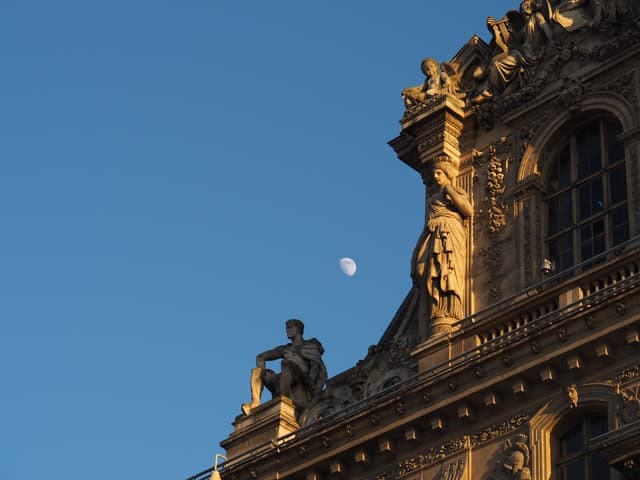
moon

Book Club: Paris to the Moon, by Adam Gopnik

My favorite book written about Paris from the expat perspective is the series of essays written for The New Yorker by Adam Gopnik that was later compiled into a book called Paris to the Moon.  As the book’s magical title promises, it is a thoughtful and earnest look at a city Gopnik never intended to permanently live in, but experienced more deeply in six years than some people do in a lifetime. 

Gopnik has gifted me with some ways to express feelings and sentiments I have in my new country, from saying that we “breathe in our native language, but swim in our second,” to his chapter on “Distant Errors” in which he deconstructs, albeit kindly, the French tendency to look at problems or errors as distant as something external rather than related to their own thinking and behaving, to his explanation of “white helicopter” thinking among the French (in contrast to the American “black helicopter” idiom, which is a meme for conspiracy theories) that there is always the possibility that a future government will offer a higher pension and a lower retirement age.

Adam’s approach to life in France is certainly one I wish to emulate, though my French needs to improve in order to do so.  He is at home as the American he will always be, while truly attempting to live life as the French do, day in and day out, in dealing with strikes, protesting the takeover of a favorite restaurant, by enjoying holidays enthusiastically (I wonder sometimes if the French love the planning and anticipation more than the holiday itself), and even in the ceremony of childbirth, which both he and his wife participate in.

I’ll leave you with a quote from the book particularly germane to the subjects covered in this blog: “Everything about moving to Paris has been wonderful, and everything about emigrating to France, difficult.”

As it perhaps, should be.  This life should only be available to those who truly want it.

Photo by Rafael Garcin on Unsplash

Did you enjoy this article? TAIP is 100% reader-supported through tipping. If you want to leave us a tip of any amount it would be highly appreciated. These tips help support our efforts to keep TAIP an ad-free environment. Just as at a cafe, the tips are split evenly among the team.