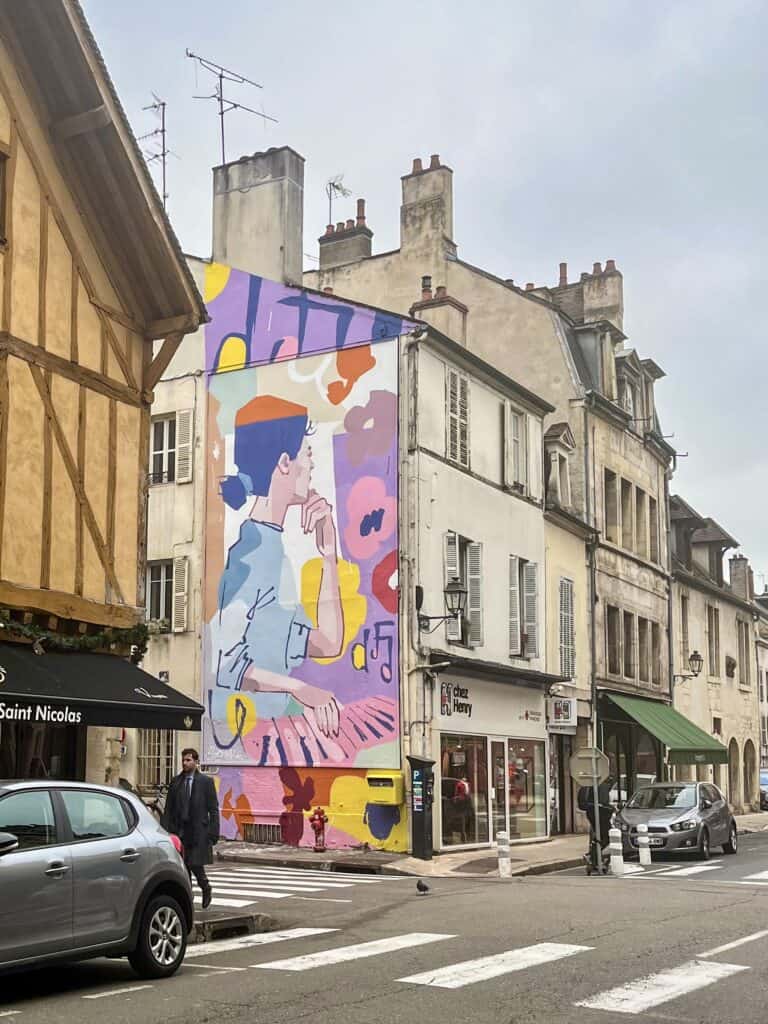
building in Dijon, France with hand painted mural

American Social Norms in France and Why They Don’t Always Translate

As children, we aren’t always taught that what is considered polite to you isn’t necessarily what is polite to another. As an American (especially one from the Midwest), I was raised with a distinct fear of being seen as rude, so when I moved to France this fear followed. It blossomed even more a few months into my new expat life when I realized that much to my surprise, what I was doing to be polite often had the opposite effect.

I did everything I had been taught to make connections, but time and time again conversations ended in tight, awkward smiles and a distinct feeling that things had not gone well despite my efforts. 

I would smile when passing someone by, and if greeted I would say bonjour and try to start a conversation with small talk on the weather or work. If you have spent much time in France maybe you can already see how this eagerness caught locals by surprise and didn’t help assimilation into the French lifestyle. 

Of course, I had been warned about the culture shock and mistranslations, but the sinking realization that I could speak the language but not communicate was heavier than anticipated. So much of what I knew to be polite at home came across as disingenuous, even tedious to my French peers. 

To be completely without cultural misunderstanding is unrealistic, but maybe knowing these social faux pas can help save you a headache or two.

General Conversation and Personal Questions

While living abroad, I found work to be a topic of conversation less welcomed in France. 

In America, work can be seen as a synonym for passion, and asking someone what they do for work is similar to asking what they’re passionate about, but in France that line is less direct. I once heard someone remark, “The French work to live and Americans live to work.” It’s a stereotype that rings true in my experience. 

When I would meet someone, one of the first questions I would ask was what they do for work. To be fair, this question is not always considered impolite, but more than once I would receive a look of someone humoring a child who didn’t know they had done something rude.

It wasn’t until I asked a coworker that they explained in France work is work and passion is passion; not inherently separate but never synonymous. So when asked what one does for a living, the underlying implication isn’t what are you passionate about? and more so, what is your social standing? which (for anyone wondering) is not polite. 

Personal Boundaries and Small Talk

Small talk is considered the necessary evil of getting to know someone in America. We ask questions to build connection, putting in effort and interest, which for many is a show of goodwill. 

However, this form of goodwill didn’t translate and more than once I caught myself outstaying the welcome of French pleasantries. I knew to say bonjour when entering a building, but I mistook this as an invitation for conversation as well, as it had been back home.  

The French show goodwill much longer after getting to know someone than Americans typically do when building a connection. They’re not the type to share as much with strangers and lack the knee-jerk reaction that Americans have to filling silence. Don’t be afraid to let silence sit, and know that most French people build relationships slowly, not through a lot of small talk. 

Performance Cues and Active Listening

Have you ever wondered why Americans do so much active listening? It wasn’t until I was comparing culture shock notes with another American expat that she brought up a conversation she had recently had with her French coworker. 

He mentioned how often Americans smile, nod, and mhmm in conversation and how silly it made them look. It’s true, active listening isn’t done as much in France, and the theories as to why we do this vary from America’s history as a country of immigration to the ever-present “corporate communication” in our daily life. In France however, the bobblehead-ness of active listening more often than not gives Americans an overly earnest appearance.

While at lunch a French friend once remarked that when we first met I had been akin to “Bambi the little deer,” wide-eyed and unsure. He credited the change to my growing confidence, but largely this difference came after I learned to converse without the constant show of attention.

Still show interest, but know the French don’t have to be convinced that you are listening to them. Additionally, know that just because a French person isn’t doing the typical actions we correlate with listening doesn’t mean they aren’t engaged.

Material Expression and Gift Giving

Even after I had finally gotten past the growing pains of forming a cross-cultural relationship, I found my way of showing politeness still tripped me up in terms of appearing overly concerned with material things and gift-giving. 

As an American, it’s often assumed the nicer (and more expensive) the item the better the sentiment. We go out of our way with housewarming events and holidays to show affection through gifts. In France however, the line between good taste and excessive wealth is much thinner. 

More than once I heard someone describe a neighbor or peer as boastful, and when asked why, they would mention something along the lines of how they only drink expensive bottles of wine, or post about fancy vacations and the expensive cars they drove.   

While gifts are still, of course, appreciated, there is more weight behind how much one might pay or “show off” in France. I once had a friend remark on the number of gifts I had given her. It was in an affectionate teasing way the French do when they like you, but it was also a reminder that something that felt so customary to me was not necessarily so for her. 

In all, it took me a while to really evaluate the type of politeness I was raised on and how Midwest manners might not mesh with the lifestyle and culture in France.

While what is polite does not always translate neatly, showing effort is at least a way to communicate that you mean well. When met with communication mishaps, that was one thing that could usually save me, and any expat will tell you all you can do is be patient and sincere in your efforts while living abroad.  

If you find yourself wanting to learn more about American vs French culture I highly recommend the book Cultural Misunderstandings: The French-American Experience by Raymonde Carroll. It’s a great resource and an interesting read filled with personal anecdotes by French anthropologist Carroll, who can possibly help explain why that interaction at the market ended so poorly.

Photo taken in Dijon, France

Did you enjoy this article? TAIP is 100% reader-supported through tipping. If you want to leave us a tip of any amount it would be highly appreciated. These tips help support our efforts to keep TAIP an ad-free environment. Just as at a cafe, the tips are split evenly among the team.

french flags outside a building

French Etiquette 101

When I first moved to France, many things surprised me initially. Most were pleasant — you mean I can order a 2€ coffee and sit at the same table undisturbed for hours on end? I can go grocery shopping without having to inspect every ingredient list? I can take a leisurely, 1-hour lunch break, and that’s the norm?

Then, there were things I wasn’t expecting, and most of those are wrapped up in the world of French Etiquette. It’s its own cultural code, and coming from the US, some of these social rules might surprise you, like they surprised me.

Where Americans value friendliness (real or not), casual conversation, and a general “easygoing” type of vibe, the French prefer formality, precision, and specific boundaries when it comes to social situations. As an American married to a French person, I’ll let you imagine just how many awkward moments I’ve found myself in over the years.

Some parts of French etiquette I really love and respect, and I look forward to raising my future children with many of its values. On the other hand, some others that make you feel like you’re living in a world since long passed — and I’m happy to blame my I’m-a-foreigner naïveté when I choose not to participate in them.

Understanding these differences can help you avoid awkward moments and start off on the right foot. I knew nothing before moving to France — allow me to help you not make the same mistakes I did.

Start Every Conversation with Bonjour

One way to be perceived as the rude American is to walk into a shop without saying bonjour as soon as you enter. The same goes for passing a neighbor in the hallway or just starting a conversation with someone. You should always begin with a bonjour during the day, or a bonsoir in the evening. 

Skipping this can come across as very abrupt and yes, rude. Even a quick trip to the bakery starts with bonjour, madame/monsieur — and only after saying that should you place your order.

The fact that this is not the norm in the US always shocks my French husband — he would never dream of entering a public place without a greeting. 

Use Formal Titles First

This is something else that doesn’t always occur in the States. Americans like to be on a “first-name basis” right away, but in France, it’s the opposite: formality is the default.

Always address new acquaintances (if they’re significantly older than you), shopkeepers, and service providers/professionals as madame or monsieur until they tell you otherwise. In my experience, even most French people find this to be a bit old-fashioned, and they will often tell you to call them by their first name after the first drop of a formal title. But it’s not considered polite to jump in without a little formality first.

The same goes for written communication. Whether it’s an email or a letter, begin formally and wait for cues before moving into a more casual tone.

It’s Vous until They Say So

One of the biggest differences between French and English is the whole tu vs. vous discussion. Tu is the informal you, while vous is the formal version, which shows respect. Unless you’re speaking to a child, someone your own age, or a person you know very well, always start with vous.

Switching to tu too soon can seem overfamiliar or even disrespectful, especially for the older generation. Let the French person make the first move if they decide they want to “tutoyer” instead of “vous voyez.”

This is something my French family doesn’t really hold me to — I do try my best to vous voyez everyone until they tell me otherwise, but often I don’t know what form is the correct one to use. 

The general rule is: if you don’t know them or they’re older than you, it’s always vous. I usually just follow my husband’s lead. I have been on the receiving end of some strange looks when I tutoyer right away without really thinking about it. But, it’s often followed up by a comment like, “Oh, I forgot in English you don’t have the same rules,” and I’m forgiven.

But, when in doubt? Vous voyez is the move.

Mind Your Table Manners

French dining culture is another world all its own. If you’re invited to a meal, here are some basics I would keep in mind:

  • Never show up right on time to a dinner party. 5-15 minutes late is expected.
  • Never start eating until everyone is served and the host says bon appétit.
  • Always trinquer (cheers) with everyone present before taking a sip of your drink.
  • Need a refill? Serve everyone else first.
  • Use your utensils for everything; eating with your hands (even pizza or fruit) is considered rude.
  • When it comes to digging into the cheese plate, follow the host’s lead. Or do what I do and just ask someone else to cut it for you because it’s too much pressure.
  • Don’t clear away any dishes until everyone is done eating.
  • Offer to help clean up.

Don’t Overshare

Something I discovered early on in France is that personal information is revealed slowly, over time. Asking too many questions about someone’s job, salary, or family life too early in a conversation can feel invasive to the French.

Small talk isn’t the same as it is in the US either. The French don’t tend to chat casually with strangers at the grocery store or on public transportation. Once you build a relationship, yes, conversations can go very deep — often much deeper than what I’ve experienced in the States — but until then, privacy is important.

My husband and I talk about this all the time. Say you’re out at a bar and you meet an American. Suddenly, you’re their “new best friend,” and “OMG, we definitely need to hang out, I love you so much!” But, will you ever see that person again? Probably not, they were just being friendly, fake or not. Any information they may have shared was likely very surface-level and a whole lot of fluff.

Conversely, making casual friends with a French person is much more difficult, and they would never consider a person they just met their best friend or someone they love. But, once you do start getting to know them, you’ll be able to rely on them, and when they say we, “definitely need to hang out,” they’ll actually mean it. Then they’ll tell you their whole life story over coffee at 10am with a side of existential conversation to boot.

The Art of La Bise

Saying goodbye (and hello) in France is its own mini-ceremony. Whether you’re leaving a dinner party or wrapping up a business meeting, it’s important to properly acknowledge everyone in the room.

In informal settings this almost always includes la bise — the French cheek kiss — though the exact number of kisses can vary by region (it’s usually two, but more in the south). It never, ever, ever, includes a hug unless you’re with family or very close friends… and even then, most French people do prefer la bise.

Of course this tradition was put into the spotlight during the pandemic and the years following. In my friend group, we were all not-so-secretly really happy to ditch la bise. But, in my opinion, it is officially back, and skipping it would be considered rude. Alas, I’ve had to suck it up and start kissing cheeks again when entering and leaving a room.

All of this said, French etiquette isn’t designed to be frustrating, cold, or annoying — it’s simply more structured than what we’re used to in the US. There are more rules, and where American culture values friendliness, French culture values politesse (politeness) and respect for social boundaries.

As we always say here at TAIP, if you approach your interactions with curiosity, most people will appreciate your effort, even if you don’t get every single rule right the first time.

And when in doubt, you can always blame your I’m-a-foreigner naïveté like I do.

Photo by Sébastien Bloesch on Unsplash

Did you enjoy this article? TAIP is 100% reader-supported through tipping. If you want to leave us a tip of any amount it would be highly appreciated.  These tips help support our efforts to keep TAIP an ad-free environment. Just like at a cafe, the tips are split evenly among the team.