Long Lost Luggage

“But why didn’t they load it on the flight?”

I was at Orly Airport, at the luggage desk for Vueling Airlines, or more properly speaking, at a desk that serviced 6 different airlines, one of which was Vueling, which if you don’t know, is one of the European ultra-low-cost carriers.  I was beginning to understand a number of facts about lost luggage, particularly when that luggage is lost by a budget airline, though I had no idea how much longer it would be before I would see my trusty Samsonite.

The Flight Left Early…

This all started after a few days away in Copenhagen, which I deeply regret not visiting sooner.  The city, and the country in general, is the embodiment of hygge, which is a concept of enjoyment wrapped within characteristic Danish “unhurriedness” that all of us could use more of in our life.  But on the way to the airport, I missed the train that would have gotten me there 2 hours early, and while the trains to the airport normally run every 20 minutes, the next one was delayed for a lengthy interval, so I took the one after that, which was 40 minutes after the train I originally wanted.  When I arrived I also had to make my way to a different terminal, so as it was I was barely able to make the cutoff for luggage check-in.  Unfortunately, the flight crew was anxious to pull back and we left 8 minutes before our scheduled departure, which would normally be great, except this is probably the primary reason that my bag did not make it onto the flight.

I have traveled a fair bit in my life, but I haven’t often experienced that unique dread that hits whenever you realize all the bags have been unloaded and your bag wasn’t among them.  What made this more worrisome was that fewer than 72 hours from that moment, I was due to leave for America for a three-week stay.  While I waited in line I googled “Vueling lost luggage” and read through a bunch of horror stories, mostly around luggage getting lost around their hub in Barcelona.  I was given a claim number and a website to log into to check the status.

What’s interesting is that while this website is ostensibly supposed to give you the most up-to-date information, you could always get the most current information by calling Vueling.  But that wasn’t free…

Outsourcing

The reason previous lost luggage situations felt so different for me is that they were almost always with a legacy carrier, like Air France or American Airlines, which have their own departments and teams that handle luggage and have at least a vague idea of where a bag is at any given moment.  Budget carriers don’t have such teams.  They outsource this function to private companies that handle luggage for many such airlines.  Needless to say, the phone numbers I was given were busy day and night.  But, I could call Vueling’s customer service number, for 15 cents per minute, to find out what was going on.  Sometimes the wait was a few minutes, sometimes 30 minutes, but this was the only way for me to get any kind of information, as the website was always updated 24-48 hours after events occurred.

I called everyone I could Vueling in Spain, as well as Menzies, the company that loaded the luggage in Denmark, as well as the Copenhagen and Orly airports, trying to get more information.  Every time I made it through to someone who had access to my record they added notes to my case number, which I hoped at some point would allow me to underline the urgency of getting me this luggage before my trip to the States.

I eventually discovered that the luggage was not “lost,” merely delayed, and was there in Denmark; however Vueling only had one inbound flight to Paris per day, and though I landed on Saturday evening and immediately filed a claim, the luggage was not loaded onto the Sunday or even the Monday flight.  I was told that luggage sometimes didn’t make it on because of weight restrictions.  Practically speaking, that meant that luggage that is already delayed has less priority than luggage accompanying actual fliers.  The airline would rather continue to upset someone who has already lost luggage than create a cascade of complaints by loading my luggage and bumping someone else’s, etc.

There Is No Phone Number

Showing my age, I constantly asked for a “telephone number” to the luggage “departments” of these airports, imagining a phone ringing somewhere in a vast warehouse space.  But there was no number.  The luggage tracing system called “World Tracer” has an internal messaging capability only.  You can continue to update a file that baggage handlers can read, but there’s no way for you to know that they’ve read it, and there’s not an immediately available way for you to use another means to reach them.

This dance become more complicated the minute I left Europe because Vueling isn’t in the US, which meant they would need to hand the luggage to another carrier.  The luggage did actually make it to Paris, about six hours after I left the continent.  I was headed to an event in Southern Utah, which meant that if they got the luggage to Las Vegas, which was the airport I flew into and was flying out of, within six days, all would be well.  But you can guess by now what happened.

As was the case before, when my luggage sat in Copenhagen for three days before being loaded onto a flight, this time it was two days before the bag made it to Newark, New Jersey.  Vueling told me that it was scheduled to come to Las Vegas, but they couldn’t tell me who would bring it, so I had to do my own detective research and called the airport in Las Vegas and asked for the numbers of the three big US legacy carriers: American, United, and Delta.  I guessed that the carrier would be United, as they hub out of there and were the most likely to have a direct flight to Las Vegas.  After calling a few times and getting busy signals, I finally got through to someone and they read through all the notes.

It says here that the bag was supposed to be turned over to us by British Airways yesterday and should have landed here last night.  But we haven’t taken the bag from BA yet.”

So you don’t have possession of the bag?

No sir, I’m sorry we don’t.”

Going to an internal place of zen, I thanked him and went about trying to find a telephone number for the British Airways luggage office in Newark.  The number is not publicly available, but lest all this learning go to waste, it is +1-973-849-0562.  I only found this out because the day before I was to take my flight out of Las Vegas to my next destination, they called me with a visible caller ID, ostensibly using the number I had on file in my claim.

Mr. Heiner, it says here in our notes that you’re leaving for Kansas City tomorrow, is that true?

Yes,” I smiled.  “What were you thinking?”  I assumed they would be sending it via another airline.

Can you give us an address that will accept a FedEx delivery?  I think that makes the most sense at this point.”

I audibly breathed a sigh of relief and gave her just such an address in the KC area, and hung up the phone, almost in disbelief.  She called back a few minutes later with a tracking number.

Patience and Perspective

Several times during this process I realized that not only was there nothing I could do, but nothing the staff could do either.  Lost luggage inhabits a strange universe in which hope is actually a strategy, and only the most tenacious people get answers, or know at any given time where their luggage actually is.

When the luggage arrived in Kansas City on Tuesday, a full eight days and thousands of miles from when I saw it last, I smiled in quiet relief.  I had spent intervening days reading up on Quora and other sites that explained how luggage got delayed, how unlikely it was that the bag would be permanently lost, etc.  That said, most bags are delivered within five days of being “lost” and I was at nearly double that number, though a continental change probably contributed to that.

Further, I realized that had I simply been at home in Paris, I would have gotten that bag just three days after it had been left in Denmark.  It wasn’t the airline’s fault that I had chosen such a short interval between travel, nor that I had arrived a little late that day and that the flight had left a little early.  Sometimes it’s just a combination of factors that makes the bag(s) miss a flight, and then continue to elude you over days.

I was grateful not to have permanently lost a trusty suitcase that had served me well over a decade, as well as some important and expensive items inside it.  I remain grateful for all the people who helped get the luggage back to me, despite what my “why isn’t it here now?” desires might have been.  I am most grateful to even have the first-world problem of delayed luggage, as it implies being able to travel somewhere because of my own desires and on my own means.

I’ll be even more patient and understanding the next time this happens.  That will serve you well if and when this happens to you too.

Photo by Chris Hardy on Unsplash

TAIP is 100% reader-supported through tipping. If you want to leave us a tip of any amount it would be highly appreciated. These tips help support our efforts to keep TAIP an ad-free environment. Just as at a cafe, the tips are split evenly among the team.

travel

Don’t Use Opodo

When I lived in the United States I unfailingly used the (now defunct) Hipmunk to search for flights.  They use an “agony index” which scores layovers, price, etc. to give you the best option for your journey, not necessarily just the best price (you can always click “sort by price” if you want).  They also have a simple and beautiful design interface that makes reading and understanding the fares simple.  Odd inclusion these days?  Amtrak.  Expected exclusion?  Southwest.  But you can always search Southwest in a separate tab.

Hipmunk simply doesn’t work in the European market as well as Skyscanner, which is the go-to travel website over here.  Skyscanner searches an absurd number of airlines you’ve never heard of, and then proposes all kinds of itineraries that don’t take into account any manner of logic.  Oh, you want to go to Budapest?  You probably want to stop in Dusseldorf for four hours on your way there.  No I don’t…wait, I mean, I’ve never been to Dusseldorf…and it looks like the direct flight is 100 € more.  Hmm.  Maybe I could go to Dusseldorf… (not a random example I did do this last year, and Dusseldorf is definitely worth a few hours of your time, at least).  Alternatively, you’ll also want to check out Kiwi, which dynamically shows cheap flights in real time geographically.

I was headed to Romania to see some friends recently and had difficulty finding direct flights to Bucharest, Romania’s only airport, at reasonable prices.  It was short notice and it was December, so I understood.  I spun the Skyscanner bottle and landed on…Munich or Frankfurt for 8 hours on the way.  I polled my friends in a large Facebook travel group and the vote was unanimously Munich.  Done.

I booked the ticket through Opodo for seats on Lufthansa.  Wait, what?  Why didn’t you go to Lufthansa?  Well I would have, but it wasn’t an option at that price point.  Skyscanner lists a number of resellers of varying levels of excellence which have bought seats in advance for the express purpose of reselling them.

Some you will recognize Expedia, for example.  Others, you will never have heard of, but like most Americans, will cautiously use because no one ever cheats you on the internet for flights, right?  I had used Opodo before, I think, with no serious issue.  I can also vouch for TravelGenio/Travel2Be, though they look shady and my bank initially denied my purchase due to “high fraud with that site” they told me later.

Anyway, I paid for the flight through Opodo, got a confirmation number via Lufthansa, and even went into Lufthansa’s system with the confirmation that showed that yes, indeed, I had a flight to and from Bucharest from Roissy (Paris CDG).

Until I didn’t.

I was in my online banking website, preparing for a meeting with my accountant when I noticed that Opodo had refunded all but $5 of my ticket.  Hmmm.  I called Lufthansa after a login to their system revealed my return flight still, but no outbound flight.  In its place was an ominous error message: there has been a change in your reservation.  I explained all this to the bemused customer service agent, who, after conferring with her supervisor, informed me that the reservation number was simply a hold.  No ticket number had been issued.

I checked my email and nothing had been sent to me from Lufthansa or Opodo.  Four days before my flight and I had been dropped without notice not even an email and I only noticed because I was, by chance, looking at one of my accounts in online banking.

Opodo which seems to be run like a vending machine great when it works, but useless when it doesn’t at the time simply had an FAQ page where there should have been a “contact us.”  As of January 2016 they’ve added an actual phone number on the site.  That’s at least some progress.

I didn’t want to bother over an issue of $5, which they had effectively stolen.  I did another search on Skyscanner, but this time I did a quick cross-check in my travel email for an aggregator that I had successfully used in the past TravelGenio won that lottery and I booked my ticket.  Again.

And now I’m telling you this story over dessert in a café in Munich.

I should note I’ve successfully used Opodo at least twice in the past, but such a catastrophic letdown, which led to me re-buying the exact same ticket I had bought originally, but this time for 50€ more, is a dealbreaker…and I didn’t want any of you to make the same mistake when you take your casual trips around the continent.  And trust me, mine isn’t an isolated tale.  These guys are muppets.

If you have any resellers you really like or have good experiences with, please share them with us in the comments.

Photo by Priscilla Du Preez on Unsplash

Did you enjoy this article? TAIP is 100% reader-supported through tipping. If you want to leave us a tip of any amount it would be highly appreciated. These tips help support our efforts to keep TAIP an ad-free environment. Just as at a cafe, the tips are split evenly among the team.
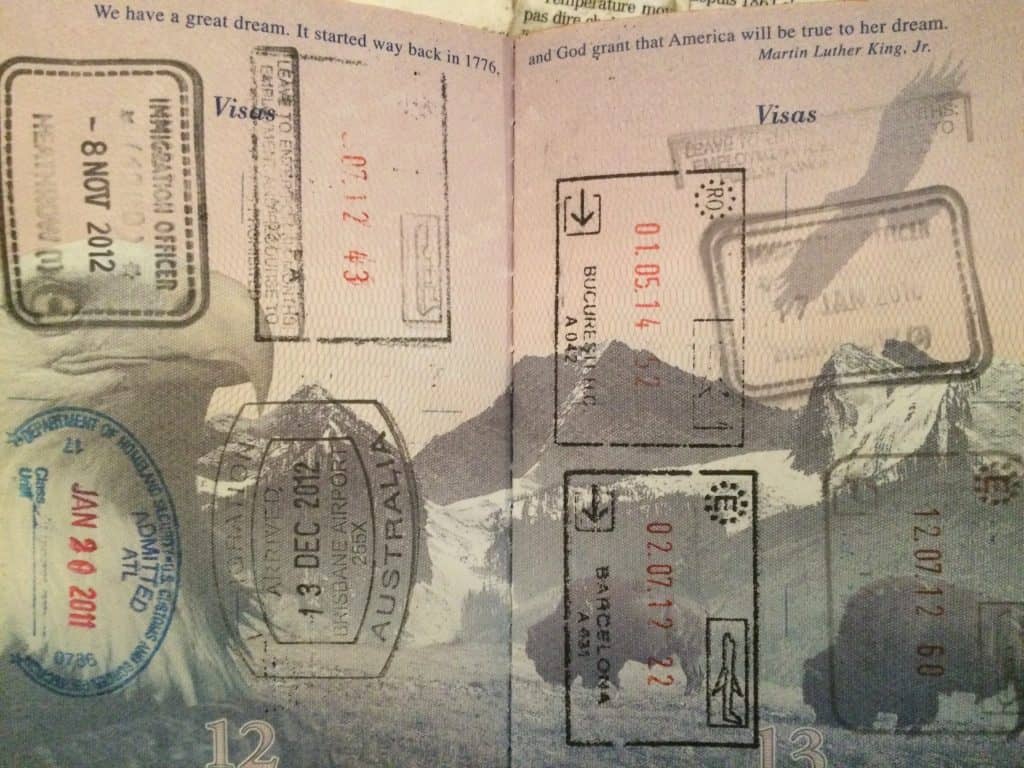
Forgetting My Passport

A huge pit formed at the very bottom of my stomach.  A hot flash of embarrassment started at my chin, ducked below my eyes, and lurched forward onto my forehead, spilling down my cheeks.  These physical reactions usually accompany the realization I have done something catastrophically wrong.  I said the words to myself, just for effect:

I forgot my passport.

I rehearsed quickly what I would tell my French cab driver, which would start with an apology and a request that he immediately turn around.

But my brain had already run ahead of me (as it is wont to do), presenting two factuals:

1)  If you turn around now, you will certainly miss your flight.

2)  On several occasions you have flown within the Schengen zone and not been asked for your passport.

This stood against the conditional:

1)  How do you know they will ask for your passport?

Since turning around to get my passport offered the same risk as trying to board my scheduled flight and being turned away (missing my flight), I decided to proceed.  My brain asked the conditional “But what about returning” question but answered it within seconds saying: “Let’s worry about this first.”

If the driver had looked back during the two-minute colloquy that had begun with that flush of embarrassment, he might have seen my furrowed brow accompanying my eyes glancing out the back window, moving side-to-side in a slow calculus, because surely part of me was wishing I took a short international flight more seriously than a bus ride.

Worse I still didn’t have my permanent carte de séjour I wouldn’t have it until April.  All I had was my temporary récépissé, which simply indicated that I would get an ID.

I showed up at Paris’ southern airport, Orly, about 30 minutes before boarding time.  It was a 07h20 flight to Rome.  It was my grad school friend Donald’s birthday, and he was due to be in Italy for a few days, so I thought to join him for dinner before coming back to Paris the next day.

As I passed through security the only thing they asked for was my boarding pass, which I was carrying electronically in Passbook.  I cleared security with a little bit of private nervous laughter.  As I moved towards the front of the boarding queue, I unfolded my récépissé and steeled myself with a confident insouciance (imagine a “What, I need a passport?” type of look).  The gate staff were really only looking to see that my name matched the one on the ticket so I’m not certain she even realized what class of ID I was presenting.  I shook my head after I passed through and wondered why I had been conditioned to think that in a 1st world country it was vitally important to always show ID.  Grateful for the nonchalance of the gate agents I started planning for hitting the ground in Italy.

Donald had booked a cooking class beginning at 10h00.  Since I was due to land a bit before 09h00 I knew I would have to take a cab.  Traffic cooperated and I arrived there and had a 6-hour culinary experience of learning, prepping, cooking, and eating.  It was lovely.

Since the theme of this blog has always been focused on Paris and France, I’ll perhaps share the details of the Rome trip at another time and in another place.  For now, know that I am writing this to you somewhere over northern Italy.  On my return to France the Italian gate agent had taken exception to my récépissé, but fortunately two (quite lovely) Russian ladies who also did not bring their passports had already been asked to stand aside while a supervisor was called.  I was asked to stand with them and we started speaking in French about the Schengen area.  “I didn’t forget,” said the older one, “I simply didn’t bring it.  You don’t need it in Europe.”  I shared that I had needed it in Romania, Poland, and Croatia, but then added, “but I’m not an EU citizen, you know, so I never go in your line.”  “Ah yes, she nodded.”  The gate agent returned and waved us through.

This time the cool wave of relief started at the top of my forehead and slid slowly and luxuriously down my head, cascading over my shoulders, and down the rest of my body.  I flipped to “music” on my iPhone, tabbed to David Gray, put on Shine, and slipped my noise-cancelling headphones on.

***

Moral of the story: write a huge note to yourself of DON’T FORGET YOUR PASSPORT YOU NON-EU CITIZEN and put it on your computer monitor the night before any international flight, Schengen or not.

Photo taken of some of the pages in my passport.

Did you enjoy this article? TAIP is 100% reader-supported through tipping. If you want to leave us a tip of any amount it would be highly appreciated. These tips help support our efforts to keep TAIP an ad-free environment. Just as at a cafe, the tips are split evenly among the team.

high line NYC

NYC: Parisians’ Delight

I’m always curious to know what fellow Parisians think of their visits to my beloved United States.  Often they have been to America, and usually, they have been to New York.  Now, when most people tell me they’ve visited New York, I tend to ask, “where” because I don’t assume they mean NYC.  And I certainly don’t mean what Parisians mean, which is Midtown Manhattan.

While Midtown has its own striking features, it’s hardly “New York” and worse, it’s hardly worthy of the answer to my follow-up question of “Why do you like it?” which is “Because it’s the most European city in America.”

The one time I was eating when someone said this to me I almost choked.  That statement is so untrue on a number of levels, and I usually have to ask a number of follow-up questions to clarify why my acquaintance or friend has come to such a strange point of view.  Some commonalities:

1.  NYC is the only American city he/she has visited

2.  While there, he/she never visited Brooklyn, Queens, or the other boroughs.

3.  He/she was there for a week or less

These circumstances, combined with an ignorance about what other American cities have to offer, or worse, an ignorance about European cities, inevitably lead some of these Parisians to an idolization of NYC which is unwarranted.

Don’t get me wrong.  I love the Cloisters.  And the High Line.  And Brooklyn.  The Park.  Washington Square.  The MET and all the things that make NYC great.  But it’s not our finest city.  That title firmly belongs in the hands of San Francisco (but that article is for another time).  For now I’ll confine my remarks to NYC.

The Cityscape Itself

NYC is part of an elite group of skyscraper cities, which includes Tokyo, Shanghai, Singapore, and the like.  There is nothing European about streetscapes and cityscapes of massively tall buildings that create wind tunnels.  Indeed, in Paris all such buildings are clustered outside the city limits, at La Defense, as if to say build these if you must, but please don’t invade our living space.

I’m not arguing that skylines need to look like Florence’s, where the majestic Duomo and the competing Medici Tower dominate and all other buildings rise to about the same level, significantly below both those buildings.  But NYC’s cityscape matches none in Europe.

The Melting Pot

On this point it’s important to note that London and Paris, like NYC, fall into the category of “international cities.”  Surely you will learn about England and France, respectively, upon visiting those cities, but if you want to really know Britain, you need to go out into the shires.  Or to neighboring countries within the United Kingdom, like Wales.  If you would know France you should visit Bordeaux.  Or Bayeux.  Or Grenoble.  Or Strasbourg.  Those are all “European cities.”  But they are not multi-cultural melting pots.

London and Paris are playgrounds for those of us who love to learn about other cultures, but as “European cities” they are outliers.  Most European cities have a dominant language, ethnic majority, cuisine, and culture.  And at least, at the end of the day, London and Paris can claim their own culture too.  But what is NYC, but the cathedral of change and the bastion of commercialism and the consumer culture?  NYC is in its own way, a celebration of no identity and no heritage and no culture because of the mistaken belief that since all cultures are “equal” (whatever that means) that a melange of all is a culture in and of itself.  It’s not, and the banal and ubiquitous “I love NY” shirts is perhaps representative of what NYC can be at times: tourist hype.

The Cost of Living

One of the magical things about Wimbledon is that it’s still one of the major sporting events that you can buy tickets for the day of, at face value.  You’ve got to queue, but that’s really a minor inconvenience. 🙂  It allows the groundlings to mix with the elite who never needed to queue to have an assured place.

A European city still has a place for the least affluent in our society (and I’m not talking about the homeless here: they manage to find spots all over the world).  Paris is on the margins of affordability, but NYC is in another solar system by comparison.

This is all to say that my fellow Parisians might look for some treasures off the beaten path the next time they decide to visit the US.  This HuffPo list might be the place to start.

NYC: hardly the most European city in America.  It’s not even the most American city in America. 🙂

Photo by Elizabeth Villalta on Unsplash

Did you enjoy this article? TAIP is 100% reader-supported through tipping. If you want to leave us a tip of any amount it would be highly appreciated. These tips help support our efforts to keep TAIP an ad-free environment. Just as at a cafe, the tips are split evenly among the team.

The Power of Old Churches

Wow, it sounds like you’re really into churches.”  My companion was to my right.  Corsica was outside our window and below, to our left.  He was a Spaniard and we were both headed to Romania that weekend.  I, for a wedding, he for a bachelor party.  Our conversation that afternoon had covered all kinds of ground but we had finally come on to why I had been in Madrid.  I told him I had taken opportunities to go on day trips to Ávila and Segovia.

“Honestly,” I said, “churches are the most important things to see.  They matter most, in a way.”  As the words left my mouth I realized I had never articulated such a thought before but that I believed it deep down in my bones.  I began to make my case.

“Think about whenever you visit a new place.  Apart from enjoying the language, food, culture, and customs, you want to enter into how these people are the way they are.  You can examine their buildings, see their art, and see their places of worship.

“Castles are majestic.  Museums are fascinating.  But they are, in their own way, simply an artifice.  The Louvre was a working palace before it became the world’s largest museum, and El Escorial (my favorite royal palace in Spain) is magnificent, but I’m only permitted to see it because it’s no longer the king’s residence.  If things were now how they were then, it would only be under some extraordinary circumstance that I would be able to so freely traverse the private apartments of the king.

“But the irony is that despite being constructed in the happiest times of monarchy, these churches are the most democratic of buildings.  Overwhelmingly they were built by the contributions of the whole community, be they great persons or small.  People contributed their time and expertise and money to raise these stony testaments to God.  Stained glass provided otherworldly lighting for the space and catechism to the illiterate.  Statues of wood or alabaster or marble brought the lives of the saints and stories of Scripture into real and convincing relief.  Some of the people were paid for their work as artisans, but many volunteered their time: these buildings would be legacies to be handed down from generation to generation.  They weren’t buildings frozen in amber, as museums often are, but these were living things, the pride and joy of the communities in which they were always located in the center.

“Go to any small town in the countries that comprised Christendom after the Protestant Revolt.  You will find inspiring cathedrals surely, but you will also find beautiful little churches, ironically proud in their humility.  People started their lives here when they were baptized.  They ended them here when they had a Requiem Mass.  They may have been joined to another human for life in the company and witness of all their beloved in the enduring tradition that is marriage.  Or they consecrated themselves to God’s service.  People gathered under those roofs in all times in peace and in war in plenty and in famine in good weather and foul and in times sad and happy.

“As you breathe in the incense and candle smoke of centuries in a place where so many spoke to God or didn’t or simply sat and listened, your senses can be afire.  Churches are places that remind us, by their majesty, that all things must end, no matter how glorious.  This is why I go to churches whenever I travel: to remember that I am immortal.”

He simply nodded.  I looked out the window at a beautiful bank of clouds.  I closed my eyes and was again in the dark beauty of a Spanish church.

Photo is of a side altar in one of those dark Spanish churches.

Did you enjoy this article? TAIP is 100% reader-supported through tipping. If you want to leave us a tip of any amount it would be highly appreciated. These tips help support our efforts to keep TAIP an ad-free environment. Just as at a cafe, the tips are split evenly among the team.