The State of Coffee in Paris (and what is Cafe Richard, anyway?)

So anyway, that’s part of why I think France has more of a cafe culture than a coffee culture,” I concluded, having just explained how much I appreciated the growth of specialty coffee in Paris.

We were dining outside of the cathedral at Chartres and I was enduring the prison coffee so often served in many otherwise lovely restaurants in France. One of the Baby Boomers in the party heartily disagreed with my sentiment. “I think this is very good coffee,” he sniffed. I wasn’t sure why he felt the need to defend the general state of coffee in France, but I certainly feel no such need, despite loving life here.

The General State of Coffee in France

The coffee in France in general and in Paris in particular is, at best, average. At worst, it’s dire, reminiscent of the strange brew you would find inside a Shell gas station in America in the late 1980s. No love, no care, just some grounds and hot water. And why have the French been okay with this? Because, as I contend, coffee in this country is, like a cigarette, more of a ritual. It’s about what is going on when you have a coffee, not the quality of the coffee itself. This isn’t to say that the French don’t know good coffee when they taste it. They just aren’t going to go out of their way to find it.

The Coffee Ritual

Coffee ticks so many boxes in France. Many Parisians push a button on their Nespresso machines every morning before going to work. That first sip of the hot, dark beverage helps to wake them, and if they are so disposed, to enlighten them about the possibilities of the day. At 10h00 and 14h00, coffee is often taken with colleagues: outside if the weather is nice, in a lounge area if not. Here the coffee is a lubricant for the conversation. It allows the French to hold something hot and comforting in their hands while they share the difficulties of their jobs. If you’re out during the day to meet with a friend, that coffee is a shared understanding — we’re here to talk about important details of our lives, and coffee often accompanies those conversations, whether those details be light or grave. After a coursed meal, coffee helps to summarize a culinary experience, and perhaps give you just what you need in stimulus to make it home on the métro before collapsing into a (lovely) food coma. In none of these circumstances is good coffee required, and hence, the French have never really asked for it.

Here you might reasonably argue, “Why are you being such a snob, Stephen…not everyone needs a V60 or a particular type of bean from Ethiopia.” It’s not about that. We have never had access to so much good coffee from around the world and so more and more people are getting to taste this good coffee and when they go back to the prison swill we so often experience (even in our favorite restaurants) the difference is palpable.

Add in the ever-growing number of places in Paris that care about coffee, and often, there’s no going back to the bad stuff, often made from robusta (instead of Arabica) beans. You’d rather just have a chocolat chaud or nothing.

What is Café Richard?

I’m sure I had my very first Café Richard coffee somewhere in Montmartre in 2009, when I first visited Paris as a tourist. I was starry-eyed, and at the time, not that interested in coffee, so I was enjoying the ritual of sitting on a Parisian terrasse, taking in the crowds, and feeling like everything was right in the world. That’s where Cafés Richard (pluriel for the corporate name) comes in.

This (still) family-owned business was founded in 1892 and is probably the single largest supplier of coffee in Paris. The thing is, they don’t just supply the coffee, they supply the whole infrastructure to deliver it.

There’s the machine. The cups. The saucers. The tools and implements. The beans. And if the machine breaks, they have someone who can come out right away to fix it.

Do you know how much that would cost if you had to cover it all yourself? As if starting a cafe or restaurant wasn’t already expensive enough? Cafés Richard knows, and they are very happy to solve this problem for you by letting you lease their machines and everything that goes with them. No upfront cost in tens of thousands of euros, no big bill when the machine goes bust. You pay one fee each month which correlates to all the services you might ask for.

Many a restaurateur gladly takes on this arrangement. Most French don’t care about good coffee and Cafés Richard has nourished a good reputation over the years such that the name is recognizable all throughout Paris. And, since the French don’t really care about the quality of the coffee, can we blame Cafés Richard for delivering a mediocre product? Non. They deliver a product and services that both restaurateurs and guests appreciate. Who am I to interfere?

The Particular State of Coffee in Paris

I first moved to Paris in 2013 and the specialty coffee scene was still quite new. All coffee lovers in Paris will know that many specialty coffee roads here in the capital lead back to le Cafeotheque near Notre-Dame and that many of the people who have continued on in coffee in Paris first got their start there. Here is a very short (not exhaustive) list of places (which reflects my unapologetic rive droite bias) where you can get excellent coffee in Paris. Please feel free to add more in the comments section.

  • 1er Kitsune — right by Palais Royale if I want to take a cup “to go” and sit by the fountain there.
  • 1er Kawa — if you want to feel totally out of your depth, surrounded by people very knowledgeable about coffee, and are willing to learn and try something you have likely never tried before, come to Kawa.
  • 3eme Maison Plisson — come for the amazing cheese and lovely comestibles, stay for the coffee and pastries? 🙂
  • 3eme Fringe — if you’re wandering around the Marais and need your coffee fix, duck into this lovely spot.
  • 4eme la Cafeotheque — does it get any more serious than this place for coffee in Paris? Not sure. 🙂
  • 4eme le Peloton — not too far from la Cafeotheque is the Peloton Cafe, which often has delicious baked goods for the sweet of tooth.
  • 5eme Shakespeare and Co Cafe — don’t let the swarm of tourists scare you off: the coffee is good and the view of Notre Dame is probably the best of any public cafe in the city.
  • 7eme Coutume — I know they have lots of locations, licensed and otherwise, in the city. I happen to like this (relatively) quieter location on rue Babylone.
  • 9eme KB — amazing coffee + lovely neighborhood = can’t miss (they also operate Back in Black just a few steps from Bastille, I think).
  • 10eme Holybelly — Craig Carlson (owner of Breakfast in America) and I were at some expat meetup years ago and someone complained to us about the lines outside Holybelly. “I enjoy eating at Craig’s,” I said, “but Holybelly might be the best breakfast in Paris.” Craig humbly nodded his assent. They make good coffee too. (fair disclosure: I’ve worked for Holybelly in the past)
  • 10eme Ten Belles — it’s a location that’s so cute some may squeak when they see it for the first time.
  • 11eme Passager — when I want a breakfast bagel sandwich and a V60 and people-watching on a quiet weekday, I come here. Too busy on the weekends.
  • 11eme The Hood — there’s so much I love about this place (and, fair disclosure, I’ve worked for them in the past as well) but apart from getting exposed to some foods you may have never tried before, you’re always going to get good coffee, made with love, here.
  • 14eme Hexagone — look, I’m never, ever, down this far south, but if I happen to be, I’ll be here.
  • 18eme Hardware Societe — you’re probably coming here for the food first, but if it’s a less busy time, stop in for the coffee.
  • 18eme Cafe Lomi — brightly lit, filled with friendly staff and attractive patrons, and so much good coffee.
  • 18eme la REcyclerie — I love this place for many reasons not just related to coffee, but they also offer a menu item that allows you to anonymously buy a coffee for someone in financial need (note that they are only open Fri-Sun).

Well, what if you’re not a coffee person? There are plenty of other options, and perhaps that’s an article for another time (and another writer). For now, I’ll just leave you with Plaq, on Rue du Nil (my favorite food street in Paris), which is a bean-to-bar chocolate shop that has some of the best chocolat chaud in the city (pace Angelina, which is an experience on its own).

Photo on Rue Reaumur near my old apartment in the 2nd.

Did you enjoy this article? TAIP is 100% reader-supported through tipping. If you want to leave us a tip of any amount it would be highly appreciated. These tips help support our efforts to keep TAIP an ad-free environment. Just as at a cafe, the tips are split evenly among the team.

Earful Tower Book Club Reboot

For those who don’t know about it, the Earful Tower podcast is one of the most popular, if not the most popular podcast about Paris in English. It has hundreds of audio and video episodes covering everything about life in Paris and France (just the sort of stuff we love).

For some years the host, Oliver Gee, had also run a book club side-by-side with the pod. But it’s been on hold for a number of years while he had a couple of children and released three children’s books, which can keep anyone busy! 🙂

That’s where I come in. As someone who has hosted hundreds of book club meetings in Paris over the years (two of which I have handed off to successors, Great Books and Shakespeare) I wanted to see a book club dedicated to books about Paris and France thrive. I’ve had a chance to catch up with Oliver over the years (the children’s books have been great gifts for my nieces and nephews) and he’s given me the chance to reboot the club.

I’ve got a clear vision for the types of books I want us to read and where I’d like to take us so it’s an honor to be able to work with an audience that has already read dozens of books with Oliver in years past. While this won’t be a book club hosted in Paris cafes and coworking spaces, as my previous book clubs were, the fact that it will be on Zoom means that anyone in the world can join (if they are time-zone compatible).

Our first meeting is on Paris Lost and Found by Scott Dominic Carpenter and the author will join us for the second half of the discussion. There’s still (not much!) time to get the book, read it, and join us for the discussion on October 23rd at 8pm US Eastern time. You can sign up here.

To see future book selections and sign up for the discussions, you’ll need to join the (free) Facebook group, though recordings of all these discussions will be available free to Earful Patreon members.

How to Apply for French Citizenship, Part I: Documents

I suppose ever since I began this blog in 2013, this article was in the works. But in my early days of life in France, I always thought I would apply for citizenship on the very day I became eligible. But that day passed more than four years ago. Why did I only just recently apply and what did I need to do in order to make that happen? Get comfortable; I’ll tell you all about it.

Why Didn’t I Apply Sooner?

When I first moved to France, I, like many fellow immigrants, felt great instability in my new home. I had no sense of my rights as a legal resident of France and I lived with an (irrational, unfounded) fear that I could be deported at any time for any reason. I truly feared that I might not get my visa renewed the first time because I might be missing a key piece of paperwork I would not be told about.

But then, with help, I figured out French bureaucracy and lost my fear. Once I got my first four-year card, I wasn’t dreaming of doing more paperwork (which is what applying for citizenship meant). I was enjoying my freedom! No trips to the prefecture for FOUR YEARS. 

Further, as I tell people often, if you are a French resident and you have a Class A passport, like my dark blue American one, French citizenship only really gives you the right to vote. It doesn’t really give you significantly more in the way of visa-free travel and it doesn’t convey any additional rights for your life in France. “I’ll get to that later,” I thought. Indeed, Covid had shown me that French residency was good enough to get me in and out of France in the middle of a worldwide crisis. Who needed to rush the citizenship process?

Yet, after some extensive travels outside France in the last two years doing research for a book, I decided it was high time to address this issue and I started the process (I alluded to some preliminary steps in a previous article). Citizenship would give me the option to be gone from France for an extended time — years, even — if I needed to work on a project. It also would mean I would never have to go to the prefecture for a visa issue again.

First, Get Your Papers

As you progress in your French residence and citizenship journey, you’ll need papers for renewals and new statuses that you didn’t need at the beginning.

For example, when it came time to renew my visitor visa the first time, they asked for a translated birth certificate. My story behind that is related here.

As I progressed in my Profession Liberale journey, they would ask for invoices and tax returns, the latter of which you couldn’t possibly have at the first application, because your business wasn’t yet open.

When you get to a ten-year card, you’ll need to show language competency at the A2 level, minimum.

Citizenship is all that paperwork, plus.

The plus is information about your family.

“Have a Folder”

There are many great lessons I take from my parents. One that I’ve very much adhered to over the years was my mother’s admonition to always “have a folder” with my key documents: birth certificate, baptism, confirmation, passport copies, etc. Not only do I have digital copies of all these items in a secure place in the cloud, accessible anytime around the world, but I have paper copies in a folder that is entrusted to one of my sisters.

So when it came time to get three necessary documents for my citizenship application, I thought it would be a breeze. Surely, I thought, my mom will have her birth certificate, my father’s birth certificate, and their marriage certificate, all in one folder, just like she always taught me.

She did not.

First, let me give you some context. My father passed away in 2018, and those who have gone through the bereavement of a loved one know that after the initial flurry of dealing with banks and credit cards and the government, you don’t necessarily think about nor keep track of the vital documents of your deceased loved one.

Further, my mom, for various reasons, did not have a need for official documents. Those of us who live outside our countries of citizenship always know where these documents are. For the rest of the world, life is much more simple. My mom currently lives a simpler life.

So, once I realized that not only did my mom not have a “folder,” but that she didn’t immediately have a solution to my needs, I realized I would need to work my own angles while she worked hers.

Look Online

My father was born in Los Angeles and a basic search led me to VitalChek, a website that looked like it had been designed about ten years ago, but had fairly decent reviews online.

I opted for a copy from the LA County Registrar ($32) + UPS Next Day Air Saver ($18.50) + VitalChek fee ($9) for a total of $59.50 USD

Once you place your order you will immediately be told your order is on hold pending a notarized document from you. I went the very next day to get the document notarized, and then I scanned and uploaded it.

Ten days passed, and they told me that they needed to verify the mother’s maiden name. I called in and verified it.

For some unknown reason, the case remained stuck for two more weeks until I called again to find out the status. The person I spoke to escalated the case, and less than a week later, I had a certified copy of my father’s birth certificate at a US address I had specified.

Keep in mind that this was only the first part of this process. The French would also need to see a translated version of this, because the French bureaucracy doesn’t “understand” English. It’s the same with countries worldwide, so it’s totally understandable.

Ask Other Family

My mom’s youngest sister, for her part, did adhere to the “keep a folder” routine, and she had a laminated copy of my mom’s birth certificate in a folder she had compiled when her mother, my maternal grandmother, had passed away some years ago. I wired her money and she sent that original to me by mail. It took a few days to arrive from Singapore to the States (I wanted all the documents going to a single location, and I would happen to be in the States when they arrived).

Hope Among the Boxes

In the meantime, my mother, who had responded originally with, “tell the French your mother doesn’t have a copy of the marriage certificate,” had started looking through boxes. A couple days later she found a certified true copy of their marriage. The part of me that pauses when looking at documents that are fundamental to my existence — this document was witnessed by people, including my parents, who at the time couldn’t know me or my part in their story — took a moment to look at the document lovingly. The practical side of me wanted an additional document in case the French didn’t like this one.

The Singapore government, efficient as always, got me a Certificate of Marriage (with a QR code, even!) within a couple weeks of requesting it.

Now with all these documents in my hand, the translator could move forward. But interestingly enough, Fields Granville, who has been my trusted translator for some time, didn’t need the originals to do their work. In fact, the entire process is digitized now, so I didn’t even need to send these originals to the prefecture (at least not right now). 

Within ten days they had all the documents translated and the one part of my application that wasn’t dependent solely on me was complete. The cost of translation varies based on your specific documents (it’s literally charged by the word) but you can expect costs to be anywhere between 200-400€. More if you are rushing. But why would you rush a citizenship application?

Moral: keep hope alive. In the meantime, do the work.

FBI Paperwork

If you have lived in France for fewer than ten years, you’ll need a fingerprint-based criminal background check from your home country. At the time I started the process I had been in France nine years and two months and I didn’t want to wait another ten months just so I could skip this process.

While some countries around the world now accept electronic fingerprints, at the time I went through the process, the FBI required traditional on-paper fingerprints for the background check. Thankfully, Eve Humrich of Fingerprints Paris was there for me, and I stopped by her office and got it done. Please follow her directions regarding your hands, i.e. unless your skin is very moist, try to use hand cream as much as possible before the appointment. Thinking that I had “no dry skin problems” I didn’t think I needed the cream, but the reality is that most problems with illegible fingerprints are due to dry skin. She had some lotion for me there and my skin was just moist enough for us to pull the prints necessary, but it would have been easier for us if I had just used lotion in the days before as she had directed me to.

You then send these fingerprint cards to the FBI (if you’re an American — to the equivalent agency if you’re not an American) along with your order (which has a barcode). Two weeks later I received an email saying that I had no criminal history. I printed out this email (no formal letter was mailed) and added this to the documents I needed Fields Granville to translate.

Next, Start the Process

Now, had I started this process four years ago when I first became eligible for citizenship, I most certainly would not have been able to go to an Etrangers site that has a specific button “Je demande la nationalité française.” But not only does that exist now, but you can periodically save and exit your application so that you don’t have to do everything all at once.

It’s hilarious that I’ve only been on this immigration journey for a decade and I can already say, “You people don’t know how easy you have it these days.”

If you do happen to have everything with you, even then the process shouldn’t take you more than an hour.

Your Information

You are going to need to provide the following:

  • Passport
  • Birth certificate (you will likely already have a translated version if you’ve been in France for this many years, but you will also need it to be apostilled).
  • Current CDS
  • Background/criminal check
  • Photo (after years of going to Photomaton machines in France for my official photos, imagine my surprise when they effectively allowed me to upload a selfie against a white wall).

Now, regarding the passport, don’t fall into the habit of your experience in France for all these years. This is the first and only time they want more than the identity pages. They want a photocopy of the entire passport. They want to know where a future citizen of France has been the last few years (e.g. have I been going to North Korea a lot?).

You might also be asking, what’s an apostille? Great question, and not something you would ever have to know, normally. An apostille certifies that the document you are handing to another authority has been certified as authentic by the issuing authority. In my particular case the apostille on my birth certificate was one of the earliest pieces of paperwork I prepared; I got the apostille at the end of 2022.

Your Family

I already mentioned the information I needed from my parents, but they also wanted to know some vital information about my siblings. They don’t require birth certificates or marriage certificates, thankfully.

If I were married and/or had children, that information would be needed too, but I got to skip this section, since I have never been married or had children.

Your Living Situation

This will again be familiar to anyone who has renewed visas in France. They want:

  • Your lease
  • An EDF
  • The identity card of your landlord
  • The last three quittance de loyers

All these documents are familiar to all who have lived in France for enough time to apply for citizenship.

Your Employment Situation

So here again, things are familiar. You need:

  • Proof of your employment situation (a CDI for those who have jobs or in my case, as a profession liberale, my certificate of inscription, the story of obtaining I detailed here)
  • A P237, which is a form you can request from the Impots site, which simply says you have paid your taxes the last three years and there are no problems. Because I had lived in Moret for two of those years I actually had to get two different P237s for the different tax jurisdictions, then scan them into one single document (the site can be very particular at times about only accepting one digital file). Each time I requested these documents I would receive them electronically within 24 hours. 
  • Your last three Avis d’Impots, which is the certificate you get every year after the Ministry of Finance reconciles your tax return around September.

Payment

You need to pay 55€ for your application. You can get the fiscal stamp you need here. Once again, it’s funny how much has changed since when I first came to France, when all this paperwork was done in person (you had to make an appointment to turn it in, even) and I would have bought fiscal stamps from a tabac in order to pay.

A Few More Things

Something I had prepared for some years was my “why” document: Why did I want to become a French citizen? I had also gotten letters of recommendation from two dear friends who were French citizens, as well as an essay on my integration into France.

I was not asked for any of those items in this part of the process, which leads me to believe that when I am called in for my interview not only will I be asked to turn in all the paper documents that up until now I have been scanning in, but I can also submit anything else I think would be helpful for my application. In the weeks to come I will find a way to get these documents added to my application (and tell you about it).

That was it. I hit submit and two months later (about a week ago) I received this:

Confirmation de dépôt

Bonjour STEPHEN HEINER,

Vous êtes informé-e qu’après avoir pris connaissance des pièces justificatives jointes à votre demande de naturalisation, la plateforme d’accès à la nationalité française atteste de son dépôt et va procéder à son examen afin d’en vérifier la complétude.

N.B. : dès lors que cet examen attestera du caractère complet de votre dossier, vous serez rendu-e destinataire d’un récépissé conformément à l’article 21-25-1 du code civil. À défaut, la plateforme d’accès à la nationalité française vous contactera afin de vous demander de compléter votre demande.

Dès lors qu’il sera considéré comme complet, votre dossier sera instruit par la Préfecture, siège de la plateforme d’accès à la nationalité française dont relève votre domicile. C’est dans ce cadre que vous serez reçu(e), au siège de la plateforme, pour un entretien d’assimilation.

Cordialement,

L’agent Instructeur

Ministère de l’Intérieur et des Outre-Mer

So now my file is in the hands of the Prefecture. Once they are satisfied with all the documents, they will send me a date for an in-person interview. If they are not happy with the documents they will ask for corrections/updates, and I’ll normally be given up to 60 days to file those amendments.

So that’s it my friends. I’ve started what might be potentially my last bureaucratic journey in France. It’s hard to believe it’s happening after that first blog entry back in 2013 when I authored one of the world’s first publicly-findable articles on how to get a French long-stay visitor visa. I’m glad to have you all with me on this last part of the journey as well.

There are no guarantees I will be awarded citizenship, and I do not take anything for granted in this process. But I will keep you posted every step of the way.

The next article in this series will be how I have been preparing for my in-person interview.

At current speed, based on what I’ve been hearing through the citizenship grapevine, I expect to receive communication from the prefecture within 2-3 months, and if all is satisfactory with my dossier, an interview date 2-3 months beyond that, meaning I could have a decision from the French government by early 2025, or at the very latest, by current Paris prefecture standards, the end of 2025.

You can find the next part in this series here.

The photo is from a visit I made to Vaux-le-Vicomte in July 2023. Like my citizenship application, that visit was long overdue.

Did you enjoy this article? TAIP is 100% reader-supported through tipping. If you want to leave us a tip of any amount it would be highly appreciated. These tips help support our efforts to keep TAIP an ad-free environment. Just as at a cafe, the tips are split evenly among the team.

Mailbag: No, You Can’t Do That

It’s hard to believe it’s been almost two years since our last mailbag, a series in which I answer questions that don’t necessarily make sense as an article, but provide useful information. Funnily enough, the last mailbag also had a two-year interval. Sometimes you have to wait for the mail to pile up, I guess.

“I’d like to travel around France for a year to decide where to live”

This was brought up in our Facebook group and I had to chuckle at the hopeful naiveté of the poster. This task would be something difficult to pull off even in the United States. Where are you going to get your mail? Where will you file taxes? Where will you bank? How will you get around if you don’t own a car? If you don’t have a French driver’s license, how will you insure your car? Those questions are valid in your home country should you decide to nomad around. Why would they not be relevant in France?

So, let’s be clear, while you might be able to find some crazy way to pull this off, it’s not something I would recommend. For those who are new to France, a prolonged stay at a single location, with plenty of vacations peppered in, is going to help you assimilate to France that much faster. Your language skills will have a chance to bloom in familiar surroundings with potential friends and neighbors and you’ll start to understand the rhythms of daily life in France. I’ve shared before that I was living in Paris for two years before I heard one day in the boulangerie someone ordering their baguette to a certain temperature and finish.

Even if I was dashing around France in a camper van or something similar, changing residence every month, how could I go through the administrative challenges of an OFII visit, which is tied to your address of record? Speaking of which, what address are you going to give the French if you keep changing it every month or quarter? Or to the French bank that you need to have statements from for your renewal? Or how about the renewal itself, which all of us on one-year cards dread until we qualify for a longer-term card and don’t have to go to the annual torture of renewal any more?

What might make more sense is, once a quarter, to spend a month in a different region of France you are considering living in. That allows you to maintain a single residence while getting to know France in an easy and unhurried way.

“I want to come to France as a visitor or Profession Liberale and then get a job”

While I fully understand the logic of this from someone who has never lived in Europe, it’s a thought process that is detached from the realities of the labor market in the European Union.

In short, the EU is a highly protectionist market. When I got a work permit two summers in a row in Switzerland (almost a decade ago now, wow), the process the Swiss followed then has similarities to what is followed in France now:

  • a detailed job listing has to be created and publicly posted
  • no one from Switzerland applies for the job, or if they do, it must be demonstrated that they are not sufficiently qualified
  • even after you are interviewed and found qualified, more time must be allowed to pass, in case anyone Swiss missed the listing
  • the work permit is issued weeks, not months, before the foreigner’s arrival
  • the employer must pay a bounty for hiring a foreigner, usually at least five figures for a full-timer, or four figures for a seasonal or part-timer
  • the employer must pay an additional tax every pay check for hiring a foreigner, as long as you are employed there, usually at least 10% of a paycheck

People used to being able to “find a job” in their industry in their home countries don’t realize just what kind of disadvantage they are at in the EU. The only reason I got the job in Switzerland two summers in a row was because I possessed a skill that no one in Switzerland (at the time) had: expertise in teaching American university entrance exams, specifically the ACT and the SAT.

So, if you are one of the few people trained in a particular field, or type of software, or have a particular security clearance (that would be relevant in the EU), or have NGO-specific experience, or have a particular set of skills a la Liam Neeson, you are not going to get a job here. That doesn’t make you any less of a person, it just means that the protectionist policies of the EU are working effectively, alas to your disadvantage.

Even should you land a job somehow, you won’t be able to keep your visitor or Prof Lib statuses. But thankfully, someone from the legal team of the company hiring you will, in all likelihood, help you apply for a change of status and wind up the previous statues you have.

As a final note, I must stress that a PL visa is not an employment visa. It is a freelancer visa, which allows you to work as an independent contractor, with an established annual income cap. An employment visa allows you to have a job, with no income cap.

“I’d like to count my URSSAF contributions as foreign taxes paid”

For those who don’t know, URSSAF charges are paid by business owners, large and small, to contribute to health care and other expenditures of the French state. They are social charges, not income taxes. Just as Americans don’t get any deductions for paying FICA or unemployment insurance, the French don’t get any credit for paying URSSAF charges, much less credit to a foreign government.

As always, consult your accountant on your business taxes in particular.

TAIP is 100% reader-supported through tipping. If you want to leave us a tip of any amount it would be highly appreciated. These tips help support our efforts to keep TAIP an ad-free environment. Just as at a cafe, the tips are split evenly among the team.
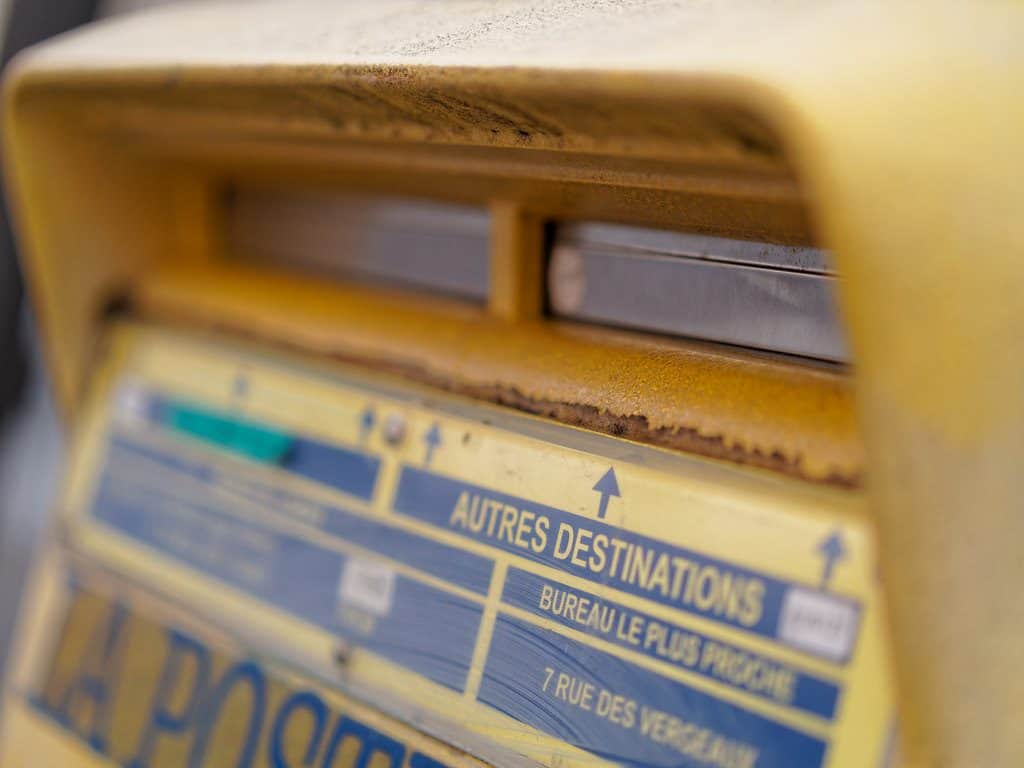
One Last Step Before Applying for Citizenship

I’ve been following forums and Facebook groups more closely in the last few years, knowing I was going to be applying for citizenship soon. There are some areas of the country that have notorious reputations for that process. Montpellier, for example, has been known to have a five-year average waiting period from depositing your dossier to your interview. For some years Paris had a 18-24 month reputation, which all things considered, wasn’t too bad, and since I had spent the majority of my French life in Paris, I had set that expectation in my head for years.

But that changed with Covid and the dematerialization of the citizenship process.

Now, with the possibility of submitting everything online (you used to have to make an appointment and deliver everything in a folder in person, and if there was anything not satisfactory you were sent back to get it and had to make a new appointment), Paris was, by all reports, consistently tracking at 6-8 months, whereas the Department where I was living, Seine et Marne (77) was tracking at 18 months. Save a year by moving back to Paris? No brainer.

Except I didn’t end up saving that year, for what should have been the simplest of changes, but ended up being a nightmare instead.

For context, I’ve been dealing with the French authorities for more than a decade now, and have become so comfortable that I charge money for consultations and have written a book about how to move to France. But France always finds a way to humble those who think they have it all figured out.

Turns out, the nine-month delay (cutting into the 12-month savings I thought I was going to get by making the change to Paris) I ended up experiencing in turning in my citizenship dossier was held up by a dual address change, one for me, one for my business. Let’s start with the simpler one first.

Personal Address Change

Now I’m not talking about the regular “civilian” logistics of changing your address which include notifying your bank, etc. That’s covered in this article. This about an administrative address change, which is different from a simple postal address change.

So what’s the good news? There’s a dreamy new website that, while not perfect, makes the whole process of living in France as a foreigner so much easier. The Etrangers en France website allows you to:

  • Apply to renew your visa
  • Apply for French citizenship
  • Ask for a work permit
  • Apply for a new card because
    • You lost your old one
    • You changed your address
    • You’ve gotten married (or divorced)
  • You need a travel document (this is for people with special statuses, like refugees (TVE) or minor foreigners (DCEM)

So I put in for the address change and it took under five minutes to submit the form. My experience with the French told me it should take 2-3 weeks for them to process this.

Wrong.

I submitted in March 2023, hoping to pick up my card in May. Instead, in late April, six weeks after my initial submission, I messaged them, asking (with typical French politesse) if perhaps this had gotten stuck in the system somewhere. Within 48 hours, I was told that the change would be made. Just like I had done many years ago when I stuck a post-it note to a letter to the Carte Vitale folks, a simple short follow-up nudged my request out of the gears of bureaucracy into which it had fallen.

Sometimes it’s that easy.

So what followed was another four weeks or so before I got a text message saying that my card was ready to be picked up in early July. It would cost 25€, to be paid by fiscal stamp (also, now available online). But the problem was that I had to make an appointment the old-fashioned Hunger Games way: by waiting with a bunch of other people here when new appointments were released, and then hoping I snagged one before they disappeared within four minutes or the system crashed, whichever came first.

I spent weeks trying to get an appointment before I landed one in mid-September (this was, of course, influenced by the aoutiens in the administration, who I can’t blame for their preference, since I’m of the same persuasion), in which I was able to come in and get the card. 

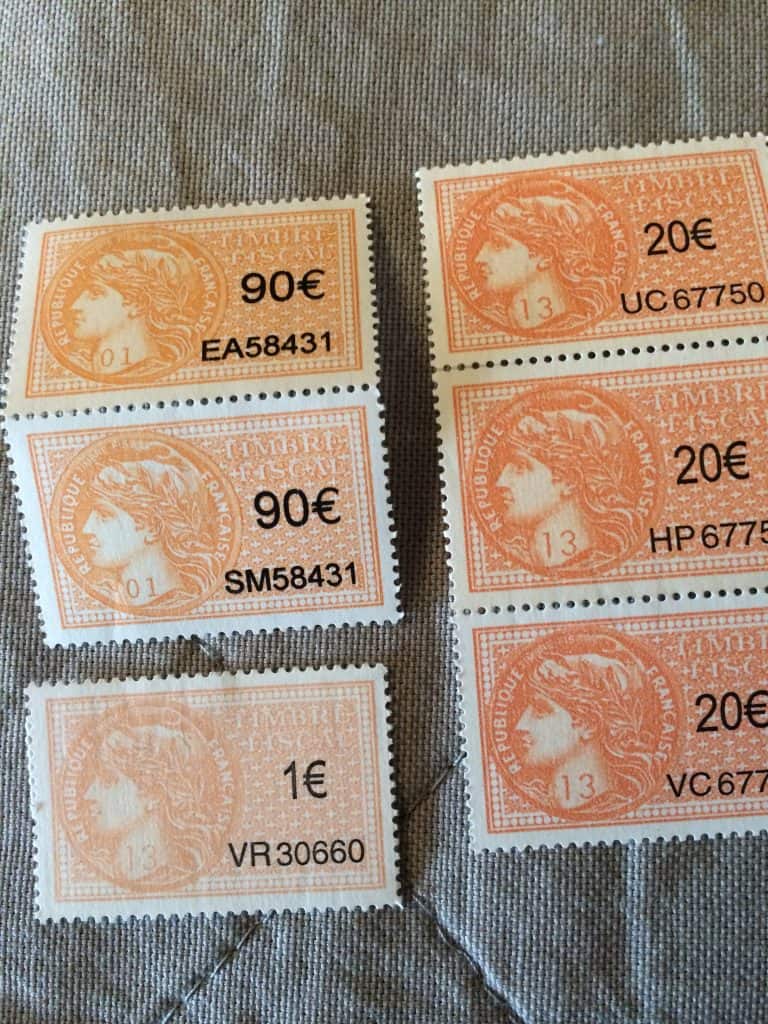
Make sure to get the right kind of stamp! We were witness to someone who had bought a stamp for a French citizen to get an identity card, which is not the type of stamp you need as a foreigner getting an identity card. People looked on as he haplessly held his phone on high, trying to get a cell phone signal so he could buy the stamp online, a signal which is elusive inside the Police Prefecture on Ile de la Cite. Select “titre pour etrangers” in step 1 to avoid this dilemma.

So, that problem was solved, six months after the initial request. 

Why did this matter in the first place? Because part of your citizenship dossier requires a current CDS, and since I wanted to apply for citizenship in Paris, my new Paris address, in the 12th, needed to be on my CDS.

As this was going on, another struggle was happening concurrently, that of my business address change.

Business Address Change

As I explain to my Profession Liberale clients who ask, when you move from one residence to another inside France, the authorities consider that your business has “closed” and “moved” to a new location too. Since you’re a sole proprietor/trader, that makes a certain amount of sense.

But this means that you will be issued a new SIRET, because the old SIRET was tied to the now “closed” location, which has implications for your invoices and tax returns.

But that’s okay. I’d actually changed my business address twice before, when I moved from the 2nd to the 19th, and when I moved from the 19th to Moret-sur-Loing, where I lived until March 2023. There was a fairly straightforward paper form known as a P2. You submitted it, the wheels of bureaucracy turned, and about a month later you would receive an all-important Certificat d’Inscription, with your new SIRET. You can take a look at it here, if you’d like, but it’s no use filling it out as it’s a now-defunct form.

A current Certificat d’Inscription is necessary for your citizenship application if you hold a PL visa, as I do.

The problem was that the dematerialization scheme which had created the new website I alluded to above had created one for small businesses as well. Welcome to INPI Connect.

The website is not intuitive, but with some trial and error I found the section that related to changing my business address. It took me about twenty minutes to figure out the forms, and then I attempted to submit my form but the website kept refusing to accept what I thought was a legitimately “signed” document.

Enter the QES.

Qualified Electronic Signature (QES)

So in the past, the P2 form worked like most administrative changes. I filled it out, signed it, and mailed it in. The idea that someone else would want to change my business address for nefarious reasons was as ridiculous then as it is now.

But that didn’t stop the French from requiring a level of security on an electronic signature that, unless you work in law, you have probably never heard of. If you want to get nerdy, you can read more here.

As I kept trying to upload the address change document that I had hand-signed, the website kept rejecting it (I thought this was like Docusign, like most e-signature systems that I had grown accustomed to.). I dug a bit deeper and saw that they tried to offer some helpful advice, along the lines of, “if you don’t have access to a QES, simply use FranceConnect+, which allows you to do this easily.”

FranceConnect+

So, FranceConnect is an awesome system that allows you to use some other user name/password to a website of French bureaucracy to login. It cuts down on having to maintain multiple passwords and gives the French confidence that it’s the same person. 

For example, for my login to the Etrangers en France website, I consistently use FranceConnect and my login and password for the Department of Finance (taxes). 

FranceConnect+ is heralded as an even more secure, even safer version of FranceConnect. The only problem? To use it, a foreigner needs a CDS that has more than 5 years validity. Well there’s only one such card, the golden 10-year Carte de Resident. Despite having lived in France ten years at that point, I didn’t qualify for this service though I was reminded once again that I should have gotten my ten year card years ago.

Which meant that I had to find a private service that would give me QES access. Enter ZealID.

Now I should pause for a moment. These discoveries did not all happen in one day. As with any project in life, you run into a frustrating wall and then you can pick up your task again when you have time and emotional stamina to try to overcome that wall. So this period of trying to make an address change, finding out that each of the changes had to be certified by a system that the French government had deemed I couldn’t have access to, then having to find such a system on my own, then finding out the address change had to be done in a certain order, was not something that occurred over a period of days, but over weeks which stretched into months.

And remember, I had thought I was going to save all this time by applying in Paris. 🙂

Anyway, I have nothing but wonderful things to say about the ZealID folks. They only charge something like 40€ for five signatures (when I bought it it was 25€ for three signatures) and their software is intuitive and easy to use. There may have been a fist pump (or three) when the INPI Connect at long last recognized that I had uploaded a document with a valid QES and queued it for processing.

Now I ran into my second problem.

I had mistakenly thought that I could change my personal address and my business address in the same form. I was told, in typical pedantic French bureaucro-speak that I was obviously too much of an idiot to realize that I needed first to change my personal address with one form, then submit a second form closing my old location and opening my new one, related to my new personal address.

How I could have found that out when no instructions existed on the site didn’t matter. And what mattered was that I had an answer, so I could move forward.

I had to wait some weeks for that first form to be processed before submitting the second form. Which also took some time to be processed.

Here’s where the digitalization came back into my my favor. They no longer mail a Certificat d’Inscription to you. You simply need to go to this site, enter your new SIRET and download the document that is generated. It’s not a Certificat d’Inscription but it is accepted as an equivalent. It is an “Extrait des inscription.” This is analogous to US state websites where you can print out certain forms that are equivalent to articles of incorporation, which you may need to open a bank account. 

About ten days after that final form was submitted, my new SIRET was active and I printed my form. It was the 19th of December. I had started the address change process for both my personal and business addresses in March of that year.

Now I was ready to apply for citizenship, humbly reminded that even ten years of experience doesn’t prevent papers from getting caught in the gears of bureaucracy. But the citizenship application process is a story for an upcoming article.

The photo is of the stamps that I first bought when I moved to France in 2013. They, like the Paris metro tickets, are history now.

29 days books

29% off 29 Days to France or BOGO with the new New Zealand Book

Well it’s Christmas Eve’s Eve and while some people are gearing up to have a one-day celebration of Christmas, here at TAIP we plan to celebrate for 29 days, starting today!

Our 29 Days to France book is only about 18 months old, but it’s already had a lasting impact on many readers who have written to tell us they’ve used it as a start-to-finish roadmap to get ready for their move to France. Here’s one review from Amazon:

29 Days to France is not only handy, it addresses not just the logistics, but the emotional and mental challenges involved with moving to this wonderful place that I have called home for 7 years. Many of the questions that the authors pose — like why do you want to move to France, which visa to obtain, what’s one’s long-term plan — are relevant for situations like obtaining French nationality. A move to France is not for the faint of heart, and this guides prospective residents through the entire residency process. Well-done!

Whether you’re thinking about making the move yourself or want to nudge a friend who has been talking about it for a bit too long, our book is a collection of at least 29 years of experience between the authors. Use our mistakes (and what we’ve learned) to your benefit.

The coupon code is TWENTY9 and you enter it after you’ve added the book to cart (you’ll see a link to “add coupon code”).

But wait, there’s more!

We have changed how we sell the book now and each paperback comes with a free digital and free autoresponder version. This means you’re effectively getting three books for the price of one. You can keep all of them for yourself or you can send two of them out as gifts to friends. While the paperback can’t get there before the 25th, these codes certainly can (codes are normally sent out within 12 hours of your order, if not sooner).

But wait, there’s another offer! (Promise, this is the last “but wait”)

I co-wrote a book about traveling to New Zealand after completing my third trip to that magical country earlier this year. It is (you guessed it) called 29 Days to New Zealand: Preparing for Your Journey to Aotearoa. If you don’t use the coupon above and instead buy a full-priced 29 Days to France, I will throw in a free 3-in-1 copy of the New Zealand book at no additional charge. We’re experiencing a redirect problem at the moment, so please send us an email at info@thelifeyouwant.io to let us know that you bought the book so we can send you a free copy. This promotion, as the one above, expires on January 20th, 2024. Just be a bit patient as the infrastructure for the two books is not seamless (they are both 29 Days books, but are promoted and sold differently) so you’ll probably get your codes for the digital and autoresponder within a day or so of your order rather than immediately.

In either case, you’ll get six books for the cost of one. That’s a hard deal to pass up, especially if you’ve even been slightly curious about ever making it to the wonderful place that is the Land of the Long White Cloud.

And there’s nothing like a new year to put a long-delayed plan into action, whether that’s a big move to France or a big trip to New Zealand.

Whether you take advantage of this sale or not, have a very blessed Christmas from the team here at TAIP.

France riots 2023

Is it Safe to Visit Paris?

Some months ago, at the height of the transportation strikes, several well-meaning acquaintances messaged me with concern or asked on behalf of friends who were considering travel plans whether it was indeed safe to visit Paris.

These people didn’t need a speech from me, I thought. My safest answer was, “Yes; don’t believe everything you hear from the mainstream media, whose business is built on chaos.”

But by the third time I was asked, I blurted out, “The people asking this live in the country which must be the most dangerous one for children in the entire developed world.” My fellow Americans, blissfully self-absorbed and aloof from the world, wonder if it’s safe to travel to Paris, which was dealing with strikes and riots (nothing new, something I’ve experienced regularly since moving to France). Yet in America, children are regularly gunned down in classrooms and people are choked to death on subways or on routine traffic stops. Those things don’t happen in France.

My unsafe answer concluded, “It’s certainly safer to visit France than an American elementary school.”

Do the trite words of “Thoughts and prayers,” which automatically and thoughtlessly escape the lips of many of my fellow countrymen after every tragedy simultaneously obliterate their common sense to such a degree that they consider the glossy camera-ready images of protestors lighting trash on fire to be a real threat? Was a single person reported killed as a result of these riots? Does it deter them from going to Target to buy their seed oil and GMO-infested food in military-sized vehicles after the latest murderous rampage of a public shooter, himself almost always medicated on selective serotonin reuptake inhibitors?

Indeed, if travel is meant to be something other than the tropical stay-in-a-resort-and-drink experience so many Americans know well, perhaps the occurrence of riots and strikes is the perfect time to visit France. You might learn about why the locals are angry (they’ll be willing to tell you). I’ve shared that I have no sympathy for the math-optional entitlement that some of the rioters have, but I do understand the underlying instinctive rejection of weaponized globalism, which demands that our entire human experience become essentially economic: we are here to be cogs in the machines constructed and maintained by BlackRock and Goldman Sachs, whose risks and losses are subsidized by the American taxpayer.

Perhaps as Americans visit and are shocked by trash sitting in the streets because garbage men are striking in solidarity with transportation workers, the dawning of “why” might begin to light in a corner of their minds.

If they follow that light with a humility that assumes that we might have something to learn, they may see a truth Europeans have known through centuries of Christendom: life is not about work or earning money. It is about discovering your purpose for living. When you know that, all else falls into place. If you don’t know it, your entire life is a charade.

Is it safe to visit Paris? Not for those open to questioning the narratives of their lives. But our greatest growth in life rarely comes in moments of comfortable safety. Danger, even only the imagined type in faraway foreign lands, might perhaps alert us to the dangers at home, around the corner, in our elementary schools and in the moral sickness killing Americans every single day.

Did you enjoy this article? TAIP is 100% reader-supported through tipping. If you want to leave us a tip of any amount it would be highly appreciated. These tips help support our efforts to keep TAIP an ad-free environment. Just as at a cafe, the tips are split evenly among the team.
retirement in France

Retirement, Strikes, and Spring in France

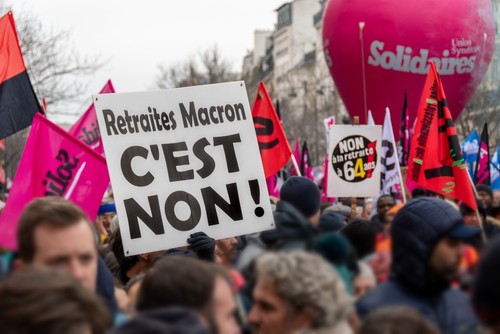
Well, to understand these protests, you have to understand how the French see their life and work narrative,” I told a client last week. “They go to school, get a degree or certification, work until they are 62, and then expect to get paid out for the rest of their lives. This is a ‘right’ that they imply is part of French life, but in truth, is younger than their grandparents.” I went on to discuss a bit more about how the French hire vendors and protect workers from being fired, giving greater context to how retirement fits into the French world of work. These protests are not entirely understandable to those of us in the Anglo-Saxon world.

A soundbite that has made its way onto both French and English-speaking media came from a worker who said something along the lines of these protests being about “Wanting to enjoy our lives, not just work” as if the French wait until 62 to enjoy their lives. The French have a 35-hour work week, generous days off and significant vacation, and some of the most unbelievable work benefits you’ll see in the developed world. They are not “waiting until 62” to “enjoy their lives.” They might be waiting until 62 to voluntarily stop working, but that’s a truly novel concept.

In fact, the more I examine the pension programs of many so-called democracies, the more I’m confused as to why people expect consistency or accountability for what is essentially a legalized and government-backed Ponzi scheme.

In my country of citizenship, the US, our “Social Security Trust Fund” is non-existent. It was raided so many times by improvident legislators that all we have now in America is a pass-through system. What money is paid into the system by current workers every week (some of whom, by the way, are also receiving Social Security benefits) goes right out the door to retirees that same week. Social Security, set up as a way to give dignity to impoverished elderly citizens, is now a de facto retirement plan for hundreds of millions of Americans. It was never meant to be that and the strains on the system only underline that every day.

While France’s welfare promises lies don’t date back to the 1930s, but only to the establishment of the Fifth Republic, which is younger than my mother, the French seem to have it firmly in their mind that they are entitled to a retirement, and at an age relatively younger than almost every country around them in Europe. The same problems with this narrative exist in the US:

  • The entire Ponzi scheme depends on a steady stream of workers, ideally, an increasing number, but the US and French birthrates are indicating an aging population, which means that the financial problems are only going to get worse sooner and faster.
  • “Retirement” in which you get paid close to what you earned during your productive years, during which the state pays you to be non-productive, is an ahistorical fantasy with no real track record of success. Indeed, all we see now are countries scrambling to keep the promises they originally made by raising the retirement age. We can expect that age to be moved upwards again when reality and mathematics catches up to a given calendar year.
  • Aging populations, the apparently “responsible” and “hard-working” generations that raised us, provided zero leadership to deal with this train wreck in the making, and are now simply insisting that they get what they paid for (never mind that their contributions never come close, even with theoretical interest, to their withdrawals) and damn the generations to come.

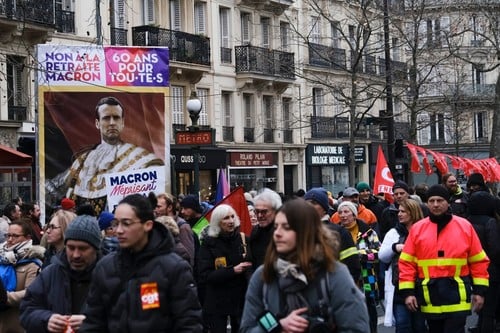
Somehow in my ten years in France I’ve only ever skirted on the edges of protests. I was out of town when the Yellow Vests kicked off, and even during the last big transportation strikes, in 2019, I was only around for a week or so of what was a month of misery for many of my fellow Parisians. Indeed, the biggest effect of the transportation strikes in 2019 for me and many other Parisians was a significant movement towards bikes, both shared and private ones. However, this time, with rolling strikes over the last weeks, I’ve been seriously affected, sometimes cancelling trips to Paris due to logistical nightmares. Some larger context first.

Now that I live in Moret I regularly take the RER to get into Paris. It’s an easy 45 minutes on a fast train, when all things are normal. When they aren’t, and the twice-ever-hour, four-times-during-peak-hours trains are reduced by a third or more in frequency, enormous queues pile up from commuters anxious to make sure they get on a train and don’t have to wait hours for the next one.

To offer a personal insight into this I can share what happened a few Saturdays ago as I prepared to head into Paris to discuss King Lear with some fellow Shakespeare lovers. I was going to leave around 12h25 to get in to meet some other friends at 14h00 before the discussion at 16h00. But since I’m the opposite of tuned-in to the news, I found out about the strike when I rolled into the station at 12h00, about 20 minutes before the train I thought I would take.

As I scrolled through my options on Citymapper (the station window was closed — they were on strike too) I saw I could head further away from Paris and then catch another inbound RER which was running on time. The alternatives were to take replacement buses, which were not only significantly slower but would slightly complicate bringing along my bike which I had with me. Knowing that I had no idea what could happen, I locked up my bike at the station in Moret and took the chance on going further out to come back in. I messaged my friends that I wouldn’t be able to see them but I felt confident I could still make it in time for 16h00 and Lear. It was noon after all.

Or so I thought.

Twenty minutes later I found myself at Montereau, where the train that I would take to Sens, then change platforms and take directly to Paris with no stops, would leave from. In the meantime I sat in the sunshine and read a book. An hour later I casually made my way to the platform where the display indicated the on-time arrival of the train I wanted. Until it started showing delays.

When it first started showing a five minute delay, I shrugged it off as no problem, because I had 25 some minutes to change trains in Sens. Then the delays started stacking until it showed more than 35 minutes. I realized Plan A was not going to work.

I looked at the monitors and saw a train that would come to Montereau by 15h13, but that would mean it would be 16h30 at the earliest that I could meet my group, especially since I would need to rely on the Metro instead of my bike.

That train was on time and by 16h10 or so I was in the Metro system of Paris, trying to navigate to the cafe I was meeting everyone at. Thankfully, someone who was already going to help me moderate the discussion had committed to starting it without me, helping me avoid the horror of making everyone wait while I moved in slow motion through my transportation nightmare.

As I stepped onto my Line 8 change at Bastille, I heard the announcement say as the Metro doors were closing (too late!) that because of the street protests that were running down that street towards Republique that all the stations between there and Strasbourg-Saint Denis were closed. I shrugged, realizing that at least I was in Paris and not stuck waiting for a train. About 50 yards from the Strasbourg-Saint Denis stop, our metro stopped, waiting for more distance from the train just now leaving the platform. Our driver had neglected to lock the doors and a homeless man decided he wasn’t going to wait, opened the doors, and casually walked down the track.

A huge collective groan came from our car as we realized the entire train would be “locked down” until the man could be positively identified as being out of harm’s way. A French person explained the situation to a tourist rather humorously, “Even the homeless here in Paris are in a hurry.”

Thankfully, though, it seemed as though positive identification was relayed that the man was spotted coming out of the tunnel and leaving the station so, a few minutes later we were cleared to proceed further. That meant that I could then exit the station, rent an e-scooter, and head towards Maison Plisson, where everyone had already been talking, over coffee, wine, and cocktails, about one of Shakespeare’s more difficult plays for the last hour.

I joined the discussion, doing my best not to think about the fact that I had started a journey at 12h00 and it was now 17h15. I wanted to focus on whether we found Regan and Goneril’s poor treatment of their father justified or if Cordelia was lying when she said, “No cause, no cause” in Act V instead of wondering what the CGT and other unions hoped to get from me by destroying my Saturday plans.

Do they think I’m going to call the government now and say, ‘Please give in to their demands?’” I asked a French friend the week after. “No, Stephen,” she responded. “The idea is that the French presidents usually don’t do well with civil discontent or unrest, and the government will make a U-turn.” A lot of hay has also been made of the specific article of the constitution that was used to push the legislation through, but anyone paying the slightest bit of attention knows that this procedure has been used almost 100 times since the inauguration of the Fifth Republic. Not exactly breaking news.

Yet strangely, this make-him-u-turn strategy was a plausible one with this president, as he’s rarely put forward a policy that he hasn’t immediately U-turned on, all the way back to the Yellow Vests’ dramatic first protest over the rise in fuel duties. And yet, a president who has accomplished close to nothing in his 6+ years in office has decided that the one thing he isn’t going to U-turn on is this issue. Strange indeed.

You have to give credit where credit is due. It’s unsurprising that a trained banker like Macron is going to ignore grim financial reports, though, given the recent bank failures in America and Switzerland, perhaps that’s precisely what trained (and untrained) bankers do. Macron is insisting that the French accept that the Fifth Republic made a promise that it couldn’t possibly keep, because everyone is ignoring a major premise it was based on: a growing native population. To cope with crashing birth rates Europe has decided to import that growth through immigration, causing understandable frictions as those non-native populations fail (or refuse to) assimilate to their new cultures.

As for what the locals are doing and saying, I’ve seen graffiti in Paris saying “vive la commune” and road signs by the freeway in Burgundy saying “retraite a 60” (talk about doubling-down!). It is true that there is general discontent but discontent is not itself righteous. Indeed, what we are seeing is collective delusion among the French who have a good life and think the party will go on forever, despite the laws of mathematics.

After Mass this last Sunday some of us mulled over our plans for week ahead, as sunny skies heralded a change in season. We knew that the unrest among the people would continue for a while longer, perhaps scuttling some of those plans. But never underestimate the ability of the weather to weaken the French “resolve” on this (and any) issue. Yes, they are discontented, but more than once I’ve watched “protests” melt away as the weather has improved.

The French, after all, prefer to enjoy that weather on a terrace with friends or at a picnic in the park than spend it en marche. They want to “enjoy their lives” after all, and don’t let anyone in the media make you believe they have to wait until 64 to do so.

Photo by user HJBC on Shutterstock.

Did you enjoy this article? TAIP is 100% reader-supported through tipping. If you want to leave us a tip of any amount it would be highly appreciated. These tips help support our efforts to keep TAIP an ad-free environment. Just as at a cafe, the tips are split evenly among the team.

Christmas Sale

Podcast Appearance and a 12 Days of Christmas Sale on Moving to France!

I recently appeared on Meet the Expats to talk about my ten years of living in France and my reflections on the journey. You can find it wherever you like to listen to your podcasts or via the direct player below. One of the themes that has been most on my mind recently is the question of citizenship vs. residency and there’s a segment of the episode devoted to that topic.

Earlier last month I also offered the Nomadic Matt community a webinar on moving to France which featured some ideas I outlined in 29 Days to France. The webinar was around 80 minutes long and is now available for purchase as a stand-alone item here. On that page you can watch a free 15-minute preview of the webinar I did.

This webinar is now available as free bonus content for those who are students of my Profession Liberale and Visitor Visa video courses. Next week we are also going to be sending free passes for the webinar to all those who have already bought the paperback edition of the book in gratitude for them supporting us. We also don’t want them to miss out on this offer just because they already bought the book!

In the meantime, to celebrate the end of the year and the festive season, starting on Christmas Day, also known as the First Day of Christmas, we will be offering that webinar ($20 value) for free for anyone who buys a paperback edition of our book. The offer will continue until Twelfth Night, the Epiphany, also known as the Twelfth Day of Christmas.

Use the content I share to springboard you into a New Year’s resolution: 2023 is the year that you plan your move to France!

Photo by Markus Spiske on Unsplash

Did you enjoy this article? TAIP is 100% reader-supported through tipping. If you want to leave us a tip of any amount it would be highly appreciated. These tips help support our efforts to keep TAIP an ad-free environment. Just as at a cafe, the tips are split evenly among the team.
remote work in France

Can I (Legally) Work Remotely in France?

Business owners who have conversations with accountants about classifying business expenses or certain depreciation strategies are used to hearing two words when we pose a question hoping for a yes or no answer: “it depends.” I fully understand this answer now, but the younger version of me just wanted a simple answer. I’ve come to realize that international living does not often offer simple answers.

The single most asked question I’ve run into in forums and Facebook groups in the last two years has been, “Can I work remotely in France?” Implied in this question is the adverb “legally” since, of course, anyone can open a laptop anywhere in France and work remotely. While I have my reasons for being in the “Yes” camp, I’ve run into a lot of “No” people online, who despite having no personal stake in the situation (they’re not remote workers) or no official status to speak for the French state (they’re just part-time online Karens), insist that their interpretation is the correct one. I’ve also run into a few people, one in particular who we have mentioned before on this blog, who insists that remote work is not permitted, which is why you need to take her $8000 course to help you get a Profession Liberale visa (which will allow you to work legally).

* * *

At the heart of this question is really an issue of taxation, which is a big deal in France. 

Your tax records are an important part of various applications you’ll have here, particularly for citizenship. 

You are required to file taxes as long as you are a resident of France. Even if you’re not resident in France, you will need to file taxes if you are earning any kind of income here. This most often applies to those who own rental property.

Filing taxes, of course, is different from paying taxes. You only pay taxes if you have taxable income, and there are certain policies and exclusions that can reduce that amount for any given individual.

What’s important for any tax authorities that come knocking is a narrative. You need to consult with an accountant and possibly an attorney on your own particular situation, but when it comes to France and many other countries in the world, the remote work question was never clearly anticipated in current law and doesn’t look to be the most important issue to be resolved as the world recovers from extreme and disproportionate measures taken during Covid-19 and is heading into an energy crisis centered in (and precipitated by the US and) Europe but that will be felt around the globe.

Here’s a scenario.

I’m an American businessman taking my family to Paris for a week-long vacation. While there I take two hours of business calls each day, which are billable hours to my client.

The “No” people would argue that I have now “worked in France” illegally.

Here’s another.

A South African businesswoman has a Chilean-based business but does a consulting call with someone living in Marseille. 

The “No” people might argue that this South African entrepreneur has now “worked in France” illegally.

As I already noted, the laws on the books in France (and in many other countries) never anticipated that “work” could be something digital and that billable conversations could be happening between countries, much less continents.

In both of these cases, the country where the business is domiciled can easily be considered the place where the business took place, and any income derived from those countries will need to be reported by the individual earning that income in those countries. Some may choose to construct or construe it another way, but that’s up to them.

In no way can these be construed as slam-dunk “working in France illegally” scenarios.

But let’s move from those hypothetical situations to a real-life ones I’ve witnessed as I’ve helped hundreds of people get their visas to come to France over the years: the French government, both before and after 2020, has consistently approved Long Term Stay Visitor Visas in which the “proof of income” the applicant presented came in the form of a letter from an employer who stated that his/her employee would be working remotely. Those visa applications have never been denied on the grounds of the applicant stating an explicit plan to work remotely in France.

So, at least as far as the visa-granting portion of the French government is concerned, it’s perfectly legal to work remotely in France.

The same is also true for real estate. If you own real estate in France, you are allowed to earn income from that real estate, even if you don’t live in the country. But you need to declare that income to the French government. This is an example of filing and paying taxes in France even when you don’t live here. That’s what happens when you live a multi-country life in any format: simplicity disappears.

US-based remote workers who are resident in France will end up declaring their US income to the French, albeit in an indirect way. When you file your taxes in France, as I have for almost a decade now, there’s a line item for worldwide income, which in my case, is mostly derived from other US-based companies I own. If I were a remote worker, my income would have originated there and I would have paid taxes in that jurisdiction.

***

According to the “no remote working in France” crowd the French government is wrong, at least the part of the French government that issues visas to those who are openly stating their intent to work remotely in France.

Let’s go back to the nuance I mentioned at the beginning of this article. While the “No” people tend to be unconditional surrender types, who cannot admit the possibility they could be wrong, I am willing to admit I might be wrong, despite being a “Yes” person. Here are two counterarguments I would make:

  • There could be a scenario in which the different departments (immigration and labor/taxation) of the government are in conflict with each other on policy and that a future court case and ruling would clarify this issue. It wouldn’t be the first time that this happened in a government, French or otherwise. But I don’t see this as a priority in a French state that is currently (and is for the foreseeable future) a chaotic mess politically.
  • It may also be the case that some of these people are taking the perspective of French jurisprudence, which requires specific permissions to do things. A lack of permission implies illegality. Anglo-Saxon law tends to the principle of “if it’s not forbidden, you may do it.” As with the conflicting-government-departments angle, I understand and appreciate this perspective. But it doesn’t change my mind.

For the moment, not only can you legally work remotely in France, you can even explicitly tell the French government you plan to do so before you move here. And they’ll give you a visa to do it legally.

Photo by Artem Maltsev on Unsplash

A version of this article originally appeared on Noobpreneur. It also appeared on Medium.