taking the delf test

How to Take a French B1 DELF Test

If you don’t know what the DELF system is, I explained it in my article on my first DELF experience, taking the A2 exam in Annecy. Gracie wrote an article about taking the B2, and now I’m filling in the gap by writing about B1.

Why Does B1 Matter?

One of the first questions that a student asked when our instructor was finished giving us our B1 exam briefing on test day was whether the official diploma was necessary for proof of B1 competency. The instructor had heard this question many times before and told all of us that for purposes of French administration, the test results were equivalent to the diploma. This was important because we could expect the results in 6-8 weeks but wouldn’t get the diploma for 2-3 months.

The room gave a sigh of relief as I was certain the overwhelming majority of my fellow testers were there for the same reason I was: certifying that we were at this level for our citizenship application. There are some French jobs that would require a B1 level of proficiency, but those employers are just as likely to informally assess you during an in-person interview than insist on a DELF certification, which would take some added time and small expense.

Taking My Own Advice

In the aforementioned article I mentioned that I chose the testing center I did last time because I wanted to see Annecy (awesome place) but also because that testing center had a very smooth registration process, including (gasp!) online payment. However, in April when I was looking for a summer test date, there didn’t seem to be any centers available with such an easy process. So I sent a check and printed registration form by postal mail to Prosodia, in the 20th in Paris.

I got an email about a week later telling me that the July date I had picked had already completely filled out but would I like the August date? No, I wanted the July date and was already planning travel around it.

But did I want to go through the hassle of finding a new testing center? And trying to register and getting the same potential result? No and no. So I accepted the date and adapted my travel plans. It turned out that in between a trip to Portugal and returning from the Baltics I’d stop in France for 48 hours to come home, sleep, take the test, and then fly out again.

Hiring a Tutor

I’ve never been as comfortable with my French as I am now, and I no longer get tired just from speaking it for hours, but I knew I wanted a refresher, not just because it had been a while since my last DELF, but because I wanted to do well. I met with a tutor once a week in July and focused on precisely what I’d be tested on.

Every DELF exam is the same, insofar as there’s an oral comprehension portion, followed by reading comprehension, and written production. After a break you will then be individually tested orally. At my test in Annecy that break was only ten minutes, as my slot for the oral examination had come right after the written, while others had to wait a couple of hours.

The difference between A2 and B1 are a few more tenses and a level of complexity in all these sections that indicate you’ve made progress beyond the basics of the A-levels, which are all about basic survival in France. At the B-levels you are expressing yourself more thoughtfully, sometimes running into conflict, and using more variety in your expressions.

What I found really valuable about this tutoring-for-the-test was the simple practice of doing the sections with my tutor. He had many copies of previously-administered exams and we were able to target where I was really strong and where I needed some polishing.

The oral and reading comprehension, comprised of short answer and true/false questions, were a breeze. We didn’t spend any more time after a first try of them and some homework.

The written production needed some work, for sure. Some of my expressions betrayed anglicisms, ways of saying, and thinking that we just wouldn’t use in France. The rubric used in the written production is “choix des temps et des modes” with a maximum of 2 out of 25 points, for “fait prevue d’un bon contrôle malgré de nettes influences de la langue maternelle.” Other parts of the 25 comprised use of vocabulary, proper orthography (punctuation, etc.), and coherence and cohesion of ideas.

After some diligent corrections (and some discursive discussions as I drilled into why the French would say something a particular way) we moved on to the last part, the oral exam.

There are three parts. The first is a simple presentation, i.e. my name is Stephen, I’m an American, etc. There’s no prep for that, as you should know who you are. 🙂

The second is a prepared presentation of an idea. Prior to walking into the room you are asked to pull two slips from a table and from those two slips to pick one topic that you wished to speak about. The topic is presented in 5-7 sentences. You’ll have seven minutes to prepare a presentation and when you go into the room you’ll be asked to present on this topic.

In between your personal presentation and this prepared presentation is an “unprepared” interaction. Once again you’ll pick two slips, and from those two pick one, and you’ll immediately begin the interaction. In my A2 test these interactions were quite simple, i.e. you’re going to a store and you wish to buy some souvenirs for a friend or family member.

What was universal about all the B1 scenarios was conflict. Something went wrong and you had to “negotiate” with your interlocutor to get to a result you want. Part of this was funny to me as I would have to effectively pretend to be upset, and then try to argue with a French person, who I am already convinced wouldn’t care and would be ready to shrug his/her shoulders and tell me it’s “not their problem.”

While I had some laughs with my tutor as we worked through different scenarios, he just kept reminding me to pretend and that the instructors were not looking to trip me up but would give me time and space. If I hesitated or took a little longer to articulate an idea or sentence, they would wait with me, not start writing down on the exam sheet, “responds too slowly.”

Game Day

The exam at Prosodia was at 10h00 on a Thursday and I showed up about two minutes before testing time, knowing that they would be registering people and we probably wouldn’t start until 10h30. I was right and I had plenty of time to sit at my desk and even review some notes while waiting.

The first three sections flew by: oral and reading comprehension and then the written production. My topic was ways that someone who was leaving the workforce to go back to school could earn some extra income.

My individual oral exam was scheduled for 14h00 and I was done with my test by 11h50 or so, so I took the opportunity to go to a favorite nearby place for lunch (The Hood) and was back in time for my slot.

I smiled as one of the two slips I picked up was on the Marie Kondo phenomenon, her book, and whether decluttering was a successful idea. I happen to love Marie Kondo (and her book) and my pen flew over the page. If these people didn’t love Marie Kondo before my presentation, they would know all about her after I was done.

I walked in, still slightly nervous as all people are in testing situations, and was asked to introduce myself. There was some follow-up from the instructors about some of what I did for a living and my clients before they asked me to pick my slip for the interaction.

The scenario was arriving at a rental car location and finding out that they did not have the rental car I needed. Remembering my tutor’s advice I gamed out a “pretend” scenario and remembered that the instructor had as little preparation for this as I did, given that I was going to be leading the interaction anyway.

My scenario was that I was renting an SUV to do some moving and he responded that all they had was a Twingo. I lost my bearing a bit at this and laughed because a Twingo is possibly the smallest car that Renault makes. Think of the Mr. Bean car, but slightly bigger.

The other instructor laughed at my laughter and I gathered myself and kept going, asking if there were other size possibilities before settling on asking if any of the other locations would have one. The instructor played along, pretending to search on a computer and saying that there was one vehicle that would work for me at a certain location, but it wouldn’t be ready before a particular time. I said that was fine, and asked for directions, etc. and the interaction played out.

Finally, it was time for me to share Marie Kondo with these people and they had their notebooks out. One would be grading my expression, the other would be noting questions to follow up with. Just from reading facial expressions I felt that one of my instructors was definitely going to check out the book sometime given my enthusiasm. But the best part was when I finished, they looked at each other to ask if there were any follow-up questions, and there were none. “The exam is finished,” they told me.

I felt great, as it meant I had expressed everything well and they didn’t need to give me any chances to redeem myself via follow-up questions.

That feeling when you really ace a test, that you might remember from your school days? I felt that walking out, and looked forward to getting my results in a few weeks. A few weeks after that, I’d be submitting my citizenship application.

Oh, and if you need a tutor to prep for your DELF, drop your email in the comments and I’ll connect you with mine. He’s strongly recommended!

Photo by Skylar Kang.

Did you enjoy this article? TAIP is 100% reader-supported through tipping. If you want to leave us a tip of any amount it would be highly appreciated. These tips help support our efforts to keep TAIP an ad-free environment. Just as at a cafe, the tips are split evenly among the team.

book promotion

We Wrote a Book, Part III: Promotion (Help Us Get the Word Out!)

So now that you’ve had a chance to hear Molli and I opine on the book-writing experience for 29 Days to France, we are asking for your help as we get closer to the “big” launch of the book.

This isn’t to say the book isn’t launched. We had a pre-order period restricted to readers of the blog earlier in the year and then officially listed the book for sale with more publicity last month.

But it’s been a busy few months personally for the authors, with moves and vacations and weddings (no kidding, between the weddings that Molli and Gracie have been invited to, more than half a dozen!) so we had planned a more formal launch of the book for later this year, October 1st to be exact.

We have plans to appear on podcasts, do webinars, collaborate with YouTubers, and write guest blogs, but we need your help.

You may know content creators or websites we don’t know about.

You might have relationships with independent bookstores in America that would be open to carrying our book (and/or having one of us come to give a talk).

You might have groups to whom we could offer a webinar.

The ideas are endless, really, and there’s no such thing as a bad idea during this phase. We are in our final few weeks before starting this media blitz and would love to hear your ideas for ways to promote the book that we may not have thought of!

All decent ideas will be rewarded with an autoresponder version of the book, and the best ideas will receive a paperback edition mailed to them!

We think this book can be a catalyst for a major life change for so many people by giving them information that turns something that initially seemed scary and difficult into something believable and achievable. Will you help us change lives?

Photo by aboodi vesakaran on Pexels

TAIP is 100% reader-supported through tipping. If you want to leave us a tip of any amount it would be highly appreciated. These tips help support our efforts to keep TAIP an ad-free environment. Just as at a cafe, the tips are split evenly among the team.

We Wrote a Book, Part I: Brainstorming, Writing, and Editing

I’ve said more than once that I never expected TAIP to grow into the resource it has become. I simply wanted to help others who, like myself, wanted to move to France but didn’t know how.

After ten years of helping people who were trying to figure out how to get here, I used that experience to put together a book that goes through how to do to move to France as a non-citizen, step-by-step.

Rather than offer detailed explanations of how to fill out specific visa applications (which can periodically become outdated and which we’ve already offered for free on the site) we took a higher perspective from: once I know that I want to move to France, what are all the things I need to think through in order to make that happen?

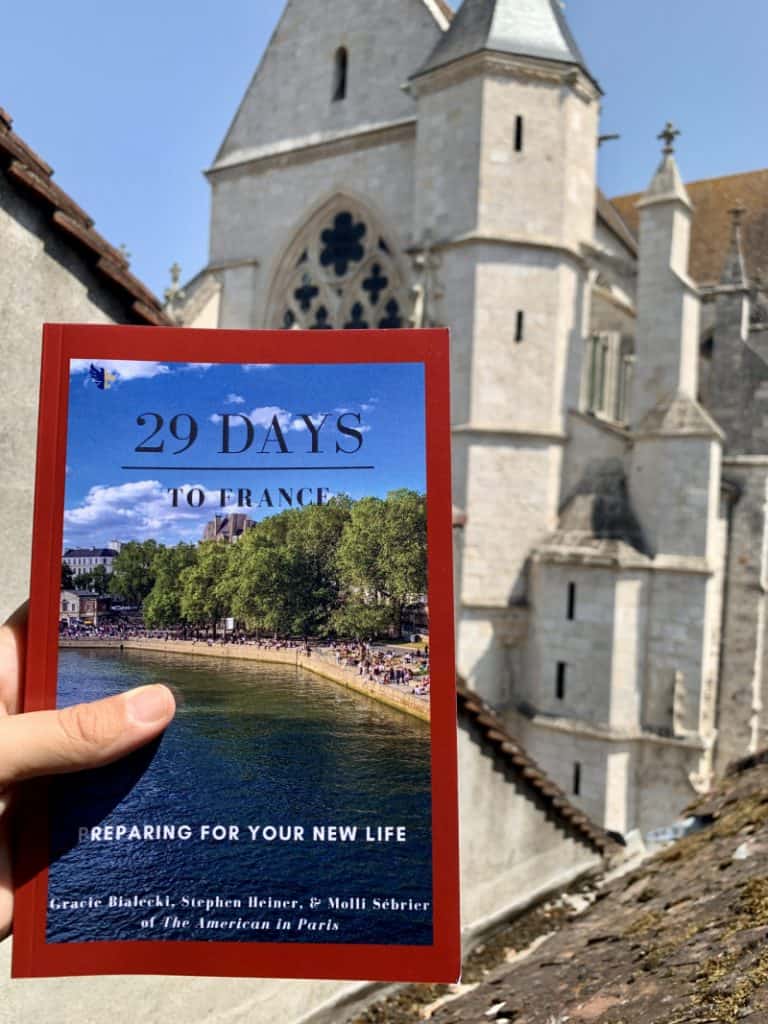
We created a set of 29 “Days” which serve as prompts and exercises to prepare you to move to France, broken into three parts, to help get you organized

  • before you arrive
  • when you arrive
  • after you’ve been here for a while

This is the book that I wish I had when I was preparing to move to France.

I didn’t write it alone. TAIP correspondents Molli Sébrier and Gracie Bialecki shared the load.

The book comes in three forms:

  • A traditional paperback, which comes with original photos and two appendices featuring a resource list for Paris residents (doctors, plumbers, accountants, etc.). This purchase also gives access to the digital version, which will be updated annually, and the email autoresponder version, which sends you the book in email form over 29 emails.
  • A digital copy for whichever e-reader you prefer. This version does not include photos or the appendices.
  • An email autoresponder which sends you the content in email form, spaced out over 29 consecutive days.

I’ve worked on publishing projects before, but only as a proofreader or as someone helping behind the scenes to get the project to press. This was my first time as an author, and even there I had help in the form of two co-authors.

There’s such a big gap between “I’d like to write a book” and “I wrote a book” and it’s not just work that fills that gap.

It’s the original brainstorming of what people really need to know before they get here, when they get here, and after they’ve been here a while.

It’s endless proofreading. For those of you who’ve edited work, you know the feeling of finding a typo (“another one?”) on what feels like the 27th pass of a text.

It’s sending galley copies out to reviewers (of which we had half a dozen from the TAIP audience step up and volunteer to help).

It’s personal events and travel that are also jockeying for attention (e.g. Molli left to get married the day after she sent a batch of edits to the publisher, then came right back to that text a couple of weeks later to finish up).

We also wanted to make the information useful but not overwhelmingly so, which led us to create single-page days with specific exercises at the end of each one.

We’ll be sharing more information on this book each month for the rest of the year. For now, I am very happy to have completed the project and am excited to get this book into the hands of those seriously considering a move here. It’s going to make the process so much more enjoyable, fun, and reflective.

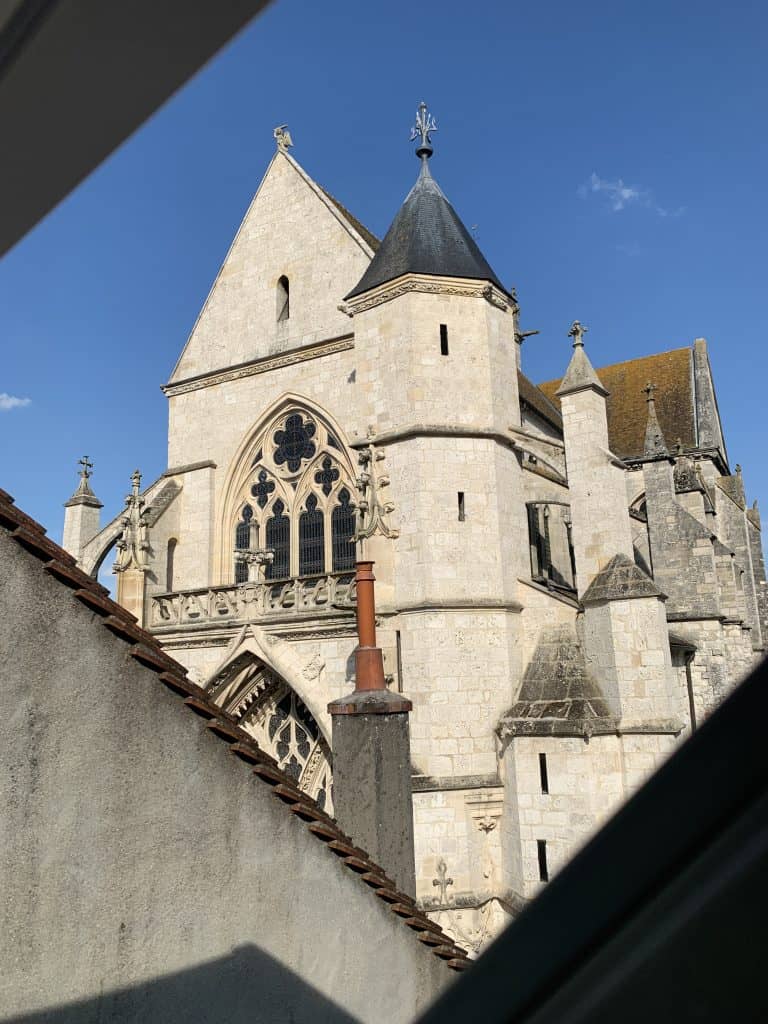
Photo taken outside one of the windows of my apartment in Moret, where almost all my chapters of the book were written.

Did you enjoy this article? TAIP is 100% reader-supported through tipping. If you want to leave us a tip of any amount it would be highly appreciated. These tips help support our efforts to keep TAIP an ad-free environment. Just as at a cafe, the tips are split evenly among the team.

Mailbag: Home Improvement, Crooks, and Real Estate Lawsuits in France

It’s been a couple of years since I’ve done a Mailbag article. Because so many questions are answered in the comments section of articles or in our Facebook group, I have less and less of a need to do one, but every now and then, I get an email that will be instructive for the general public. This one came earlier this year. The names have been changed and some edits have been made for grammatical consistency.

***

Dear Stephen

You probably don’t remember me but a few years ago you helped connect me with someone to help me with financial matters and I appreciated that. Now I have a new even bigger issue that I don’t think will be as easily solved, however. How do I handle a crook contractor who took my money and never finished the house?

I am an American and have been living in Montpellier since 2008. In 2019, I thought I knew the French system enough to build my own house. Wanting to be careful, I bought a plot with a home on it from a real state agency, Malhonnete Immobilier. The project was already underway (the builder and permits were ready) but the previous buyer had given up because they didn’t get a mortgage.

I bought the plot, but when it came time to sign the building contract, I got a little suspicious because the contractor didn’t have an obvious track record. This is when the immobilier’s general manager took me to see his own house that the same contractor was working on. He assured me that the guy was good and should finish my house in no time.

Well, I signed for the house and even added a pool to the plans. But work started and never finished.

For the past two years I’ve tried to negotiate with the contractor as everyone was saying that it was unlikely that I could get anything done by legal means. I refused to listen and hired lawyers who took my money and promised to get the contractor to finish the work. Two years on, the lawyer suddenly told me that it is a dead end!

In fact, six months ago, I had found out that the contractor had changed the name of his company and modified the registration number for business purposes, going from general constructions/menuiserie to just menuiserie. He had transferred everything from his old company (Menteur Construction) to a new one (Menuiserie 42) he had established a few years back.

I was the one to inform the lawyer and the Court d’Appel that was in process of checking the “Expertise” what has been done and not done. However, the contractor is still operating in the same office, with the same phone number, same email, and same team, doing the same type of work. He still drives expensive cars and has multiple houses. But apparently I only have to wait for the Juge de liquidation to find the money which I am told offers little chance of me getting anything.

The contractor (M. Voleur) when he responds to me, blames the real state agency manager (M. Escroc). Apparently they had a falling out and the agency stopped referring and giving him work, thus he had to close the old company.

I am broke because I have to pay my mortgages, the lawyers, the court, as well as fix the house in order to be able to live in it.

I am desperate. I trusted the French system and I still don’t understand how I have to be one to pay for the contractor’s mismanagement.

At this point, I will welcome any ideas or help! Do you know any good lawyers who can help?

Thank you
Sally

***

Dear Sally

I’m terribly sorry to hear about this. If I had not recently read L’Appart, by David Lebovitz, written in 2017 to chronicle the absolutely money-draining remodeling project of his apartment in Paris, I would not really have anything to say to you. But, after having read the more than 300 pages of that book, and knowing what he went through, here are some disheartening things you have to understand:

  • the law in France is not the same as the law in Anglo-Saxon countries
  • the laws in France are biased against the owners of the property
  • the people involved in homes, from the agents to contractors, are known by French society to be generally crooked and untrustworthy
  • you’ve learned the hard and expensive way that the legal route on these matters in France is expensive and in the end, gets you nowhere

My advice would be to cut your losses and figure out another path forward. You need to mentally divorce yourself from the idea that this will be resolved financially, legally, or even morally.

It’s tough to hear, I’m sure, but simply from reading David Lebovitz’s account and reading your details, I can’t think of another conclusion. I do think that the fact that you “refused to listen” to people and hired lawyers instead was your fatal, and very American, way of thinking.

We are not in America, anymore. The fact that after all this experience you end your letter by asking “if I know a good lawyer” makes me wonder…have you even learned from this experience, because you seem to keep going back, thinking you will get a different solution, when the answers are right in your face: the legal route in France regarding home contractors is a dead end!

***

Jean Taquet often features stories like this in his newsletter to give a broader perspective and after CCing him on my response to her, he CCed me on his own response.

Dear Sally

I want to make several small comments before I get to the legal issue which in France is totally different from the USA.

The worst horror stories I know about regarding contractors, real estate agents, and so on happened in the USA. I am not saying that everything regarding this matter is worse in the USA.

All I am saying is that at my level as a professional-helping-foreigners in France, I have dealt with plenty of awful situations happening in France, and I am aware of similar situations that exist in the USA.

It is absolutely true that the professional ethic benchmark for real-estate agents holding a license is much lower in France than in the USA. The good news is that there are more and more French laws being passed to limit the amount of lying they can do without legal or professional consequences. This said, this applies more to apartment transactions and less to the houses in the countryside.

I was about to buy a house in Burgundy when I discovered in studying the title that half of it was storage space, and a pottery shop which had been totally made over into a living room, bedroom, and so on without a building permit and neither the seller nor the real estate agent ever said a thing about it. And we were accused of bad faith when we walked out of the deal because this was not, in his words, a “big deal”!

Now the legal issue.

In the USA, when there is a liability issue with a professional the plaintiff just needs to prove the existence of damage and to hint that the professional is responsible to put the burden of proof on the professional. This means that the professional has to work hard to get out of this liability.

In France, the system is totally opposite. You as the victim and therefore the plaintiff have to prove “la faute civile” which is defined this way:

1 – prouver l’existence du dommage
2 – prouver l’existence de la faute dommageable
3 – prouver le lien de causalité

This translates to:
1 – proving the existence of a damage i.e., a financial loss
2 – proving the specific wrongdoing that caused the loss
3 – proving the direct and therefore the unique link between the damage and the wrongdoing

In short you cannot just go to court and state that:

  • these are all the awful things that have happened to me because of the work done on my property and
  • this is the company that is doing the work

What you were hoping for is that the court would sentence them and order damages to be paid to you.

This is the American way not the French one.

This is the extent of what I can help you with. I just thought that explaining this might help you better understand what you are going through.

Kindly
Jean

***

It goes without saying that laws around real estate are wildly different in many countries. For example, in Thailand, a foreigner cannot even own property. I hope this Mailbag entry properly cautions Americans and others who have a false perception of how real estate works in France. You’re not in Kansas anymore.

Did you enjoy this article? TAIP is 100% reader-supported through tipping. If you want to leave us a tip of any amount it would be highly appreciated. These tips help support our efforts to keep TAIP an ad-free environment. Just as at a cafe, the tips are split evenly among the team.

weight loss

How I Moved to France and Lost 20 Pounds

I’ve mentioned over the years that I lost weight when I moved to France, but I’ve never explained precisely how.  The truth is, it took me a while to figure it out, because “weight loss” wasn’t even on my radar when I moved here.

When I moved to France in 2013 I was heavier than I had been in my undergraduate days more than a decade earlier and definitely heavier than the leanest I’d ever been, when I graduated from boot camp with the United States Marine Corps.  But that weight gain happened so gradually that I really hadn’t noticed it.  A pound or two a year over years adds up, it seems.  Three months into my time living in France, twelve of those pounds had evaporated. Turns out that with all the other things I had going on in my new country, I hadn’t really noticed, as my first clue was when I went to OFII and they called out a weight when I stepped on the scale that didn’t seem right.  I stepped on it again to make sure, and yes, the equivalent of twelve pounds had disappeared.

Over the next three months another eight would go, mostly without my notice, though clothes that I had formerly “grown into” fit properly again, and I had to get a couple of suits altered that had accommodated the “old Stephen.”

The Secret

So, given that I didn’t go on a diet when I moved here, and in fact, I drink more wine, cook with more duck fat and butter, eat more cheese, more bread, more pastry, and more desserts than I’ve ever eaten in my life, something else was influencing these changes.

Portion Sizes

American portion sizes are unbelievable.  Americans are obsessed with paying low prices for food (but we have no problem spending a lot on cars and firearms) and this low price obsession also translates into wanting “good value for money” when we eat out.  If a big plate of food comes out and you don’t finish it, we have a culture of taking home leftovers and feeling even better about our night out (“free” meal for the next day).

We are also taught culturally that you should finish everything on your plate, because to do otherwise would be ungrateful.  While part of me accepts part of that sentiment, the culture then has to own that it should put a reasonable portion on the plate, not a portion that in France would easily serve two, sometimes three people.

We also eat our food in America very quickly, seeing mealtimes as less of an opportunity to relax and catch up on life and more of a tiresome task that has to be “accomplished” so we can move on to what really matters, which is watching Netflix or texting friends.

It doesn’t take a nutritionist to know that eating a lot of food quickly not only isn’t great for digestion, but expands your stomach to accept this as “normal” and then trains you to shovel more food into it in order to feel “full.”

In France we eat more slowly, so the stomach has enough time to send the message to the brain saying, “I’m full.”

In France the portion sizes are smaller, so you normally finish a meal content, not “in pain” because you “ate too much.”

In France meals aren’t tiresome tasks to dispose of efficiently, they are simple ways to celebrate seasonal pleasures.

Food Supply Chain

But even if you solve the portion size problem in America (an enormous, pun intended, cultural hurdle), you now are dealing with a Frankenfood-infected food supply chain.  If you’ve read Eric Schlosser’s Fast Food Nation you know that as one of the largest buyers of beef, chicken, lettuce, and tomatoes in America, McDonald’s indirectly decides what the rest of us eats, even if you don’t eat at the Golden Arches.  Farmers aren’t going to grow some lettuce for consumers and use another field for the lettuce they sell to Mac-Do, as it’s known in France.  The industrial choices that McDonald’s makes bleeds down into the supermarkets and consumers reach for produce that was genetically designed for long transportation and for shelf appeal.

Those industrial foods necessarily taste blander (one of the effects chronicled in Mark Schatzker’s aptly-named The Dorito Effect) and as a result Americans drown their sad, bland food in condiments, usually ranch dressing or hot sauce (and sometimes, both).

On that point, you’ll notice something curious if you sit down with some Americans for meals.  When their food arrives, they immediately add these condiments along with salt, pepper, etc.  Americans generally aren’t interested in how the food tastes on its own.  That doesn’t matter.  What matters is that they make the food taste like what they want it to taste like, which is apparently ranch and hot sauce flavored, much like the snack food that they eat incessantly.

In France seasonality is valued and celebrated, and when foods are in season you see them everywhere, from the farmer’s markets to the restaurant menus.

In France GMO crops are banned.

In France, the Big Snack Industrial Complex is making huge strides, but their “make potato chips taste like tomatoes and cheese” tricks are not yet wholly mainstream.

Snacking

Speaking of snacking, that’s simply not done here.  In America I snacked all the time, because it was culturally acceptable and facilitated.  I often tell the story of being at a gas station in Saint Louis around 11pm at night and going in to pay for the gas and smelling this wonderful aroma of cinnamon rolls.  No one has any business having a cinnamon roll that late at night, no matter how wonderful it might be.  But culturally that’s acceptable, so we all do it.

In France, it’s not culturally acceptable for adults to snack, so it’s not done.  Kids normally get a goûter around 16h00, but as they get older this custom goes away.  If you read Pamela Druckerman’s insightful Bringing Up Bebé you’ll find that this programming happens from infancy: babies are fed at set times, not “anytime they feel hungry.”

In France you don’t snack, because that would imply you were hungry, but you’re not hungry, because you are content and full from your last, leisured meal.

In France obesity is an oddity, causing you to stand out, and hence less culturally acceptable.

In France, one snack is allowed to kids per day, and ceasing to take this snack is part of their passage to adulthood.

Walking

This last benefit is Paris-specific, because once you leave the capital, or other towns like Lyon, Bordeaux, and Nantes, that have wonderful public transportation, you probably will own a car.  By contrast, car ownership is necessary for survival for the vast majority of Americans.

Indeed, whenever I have visited America in the last ten years the absurdity of this car obsession has been driven home to me as I run errands and watch my fellow Americans derive the only exercise of their day getting out of their car and going in and out of whatever buildings they visit.  The more disciplined ones may then drive to a building where they use a machine to run to nowhere, then get back in a vehicle to drive back to their home.  There is simply no “casual exercise” in the American way of life.  A car-dominated society leads to a culture that only exercises by choice, not by necessity.

Not so for the millions of people who live and work in Paris.  The overwhelming majority don’t own a car, and if they do, they don’t use it for their daily commute, because then they’d have to deal with traffic and parking, issues that only continue to get worse for drivers as Mayor Anne Hidalgo edges Paris into the top five of bike cities worldwide.  Instead, commuters hop onto their world-class public transportation network after having parked their car at one of those stations, and sleep, read, listen to music, watch a series or a movie, or occasionally, talk on the phone or with each other.  They then have to walk upstairs, downstairs, across stations, across streets.  My average day living in Paris (and I didn’t even have a commute!) always had a minimum of 5km of walking, and many days was easily 10km.

Walking a 10k every day means you don’t need a gym membership.  It also means that you, like your ancestors before you, didn’t need to do artificial exercises in order to stay “in shape.”  Those ancestors did so simply by living their daily lives.  Now, we’re not ploughing fields or working in the mines, but do you know what sort of weight loss revolution would happen in America if we had designed our cities and lives so that we walked even 3k a day, not for “fitness” but just to get about our days?

Instead we chose the nightmare chronicled by James Howard Kunstler in Home from Nowhere in which Americans drive by strip malls inhabited by Weight Watchers and Domino’s Pizza (sometimes next to each other) and then obsess over the next diet fad, sure that this time, it’ll be different.

In Paris, being outside and in sunshine and green space is coveted.

In Paris, parks are not places you drive to, but parts of your neighborhood.

In Paris, fitness isn’t something you have to pay a gym for, it’s just something you do every day by accident.

So, the cultural reasons why I gained those twenty pounds over the years while living in America are just as valid as the cultural reasons why I lost them all and am now at my “natural weight” here in France.

Culture is a great molder of minds and hearts and bodies.  Those cultures that have positive food cultures have positive health outcomes (it’s not solely genetics that leads to the Japanese — and Okinawans specifically — living so long).  Those cultures that have dire food cultures have negative health outcomes.  While my story is only my own and is hardly scientific research, it only takes a set of eyes to confirm that at least as far as food goes, we’re killing ourselves in America.

And in France, we’re not.

Photo by Samuel Ramos on Unsplash

Did you enjoy this article?  TAIP is 100% reader-supported through tipping.  If you want to leave us a tip of any amount it would be highly appreciated.  These tips help support our efforts to keep TAIP an ad-free environment.  Just as at a cafe, the tips are split evenly among the team.
Moving to Moret (During a Lockdown)

As I mentioned in my Why I Left Paris article, I never planned to leave Paris, and would not have known what a “lockdown” was if you had mentioned it to me prior to 2020.  But in May 2021 I found myself not just moving out of Paris, but doing so during our second lockdown.

Thankfully, this would be one of my easiest moves, not just because I’d previously lived in four apartments in Paris, but because, as always, things really fell into place.  I didn’t even bother to pay to change my address as so much of my French administrative life had become paperless by then.

Finding a Place

Finding an apartment in Paris was always a special challenge, but I assumed that finding an apartment outside of Paris would be much easier.  Wrong.

At first I checked with all the immobiliers (real estate agencies) in Moret.  There are about five, along with a community board near the town hall where you can see listings of apartments.  Unsurprisingly, not all of these immobiliers have websites or if they do, the sites aren’t updated with new listings.  I had to visit the town, look at the listings posted outside, and then make appointments to see apartments.

I managed to view at least two of them.  One was wonderful and perfect for me, but when I submitted my dossier, the owner had already accepted a new tenant without informing my agent, and I had to move on to the next prospect, which was far more dismal.  While viewing it I concealed my disappointment from Margot, the young girl who had shown me both apartments, and told her I would let her know whether I would apply within the coming week (I only took a couple of days to realize I couldn’t accept the layout of the new place, which would require guests to walk through my bedroom to access the only bathroom in the apartment).

Another immobilier requested that I turn in a dossier before I was even permitted to see the apartment.  The owner wasn’t satisfied with my means, and I confirmed by asking around that French landlords don’t really place any merit in your non-French assets and income: they might as well be science-fiction stories.  I’ve purposely kept my French business at a certain level of income, in part to avoid VAT, and as such its income seemed unimpressive to the owner.  A polite non was conveyed to me: I wouldn’t even be permitted to look at the apartment, thank you.

A bit discouraged, I started to expand my search to other nearby towns, including posh Fontainebleau, but even as I planned to stop by Fontainebleau to make the same blitz of immobiliers and their listings that I had accomplished in Moret, I hit upon an idea.

Airbnb Hosting

I had hosted hundreds of people over years in Paris as an Airbnb host (even becoming a Superhost) and personally knew that the market had dramatically shifted during the pandemic from tourists to French nationals.  I mused that the effect would have been even stronger in a “day trip” town like Moret and so I did a search of all the listings in Moret and studied their occupancy rates and most recent reviews.

One listing in particular seemed to suit me and I sent a message to the hosts, asking if they would consider a long-term rental.  I did this knowing as a fellow host that the tourist premium which causes a higher nightly rate had mostly vanished in the previous year and when it would precisely come back was unknown.  Why worry about now-uncertain short-term rental cash flow when you could have a reliable tenant?

My gambit paid off and the hosts agreed to meet me the following week to show me the apartment.  A charming penthouse at the top of a two-story townhome, located across the street from a church consecrated in the Middle Ages, the space was perfect for me, and I told the potential landlords so at once, refusing to play any sort of negotiating games.

Negotiating

I wanted a long-term lease right away, and they agreed to a three-year one.  My landlords-to-be were a young couple who had met on a work-abroad program in America, and they enjoyed switching between English and French while we worked out what was to be done with the furniture already in the space (I would move most of it downstairs to the shared cave, a giant unfinished community basement) and when the lease would start (I wanted to give my current landlady the maximum amount of notice, as I knew she planned to sell the apartment if I ever decided to move).  We eventually settled on May 1 and since we agreed to this at the end of January, I had about 90 days to pull off the move, plenty of time by Paris standards.

Selling

I started my adventure in Paris in 2013 in 6 square meters, then moved to 8 square meters, before a three-year stint in the 2nd, at what was then an enormous 39 square meters.  My last apartment in Paris, in the 19th, was 53 square meters and had two bedrooms, so a few things would need to go so I could fit into my new 23 square meter space in Moret.  Thankfully, the Internet helped, and I sold hundreds of euros of furniture, linens, and appliances on LeBonCoin, Facebook Marketplace, and Nextdoor.  Almost all of the buyers came to the apartment to pick up the items themselves.

In a city like Paris, there really is someone who wants pretty much anything decent you are selling (I even sold the planter boxes for my windows!).  The key to selling on these platforms is replying early and making an appointment with the potential buyer as soon as possible.  While the number of tire-kickers and those who will ghost you after showing a lot of interest is not insignificant, I had generally good experiences and sold 95% of what I wanted to, leaving the rest as “gifts” for the future owners of the apartment, who were likely to gut the place anyway (it seems everyone in France wants to completely makeover any apartment they buy).

Moving Day

I rented the largest moving truck I could find (I sold a lot of stuff, but I still had plenty of books and furniture that were going to come with me) and a couple of friends were kind enough to take a day off and help me load and unload the truck.  I finished up the following day on my own and then set about unpacking.  I had set up internet service and electricity weeks before so what remained was getting some shopping done (the markets are much bigger and feature cheaper pricing outside Paris) and taking a few walks around the town that was the center of my new French provincial life (one of my sisters, Clare, insists on referring to Belle’s song from Disney’s Beauty and the Beast to refer to my life now 🙂 ).

While all moves are tiring, I don’t think the momentousness of this move really hit until a week later, as during the move I was on autopilot knocking out tasks one after the other.  My previous Paris moves, believe it or not, had all been executed using the Métro, and all but one of them were pulled off solely with multiple suitcases.  I hadn’t acquired furniture and appliances until my most recent move to the 19th.

My French adventure was still continuing, but I had started a new, non-Parisian chapter.  I could still easily get into Paris 3-4 days a week (and have continued to do so) but I also appreciated being off in the countryside, by a river and a canal and a forest, in a town of 4,000 people.  Life is slower, less expensive, and friendlier.  My dry cleaner always wants to chat when I drop off shirts, and I dutifully wait outside while she catches up with other customers; I’ve even seen the local bus slow to a stop while the driver chats with a friend through his window for half a minute (or longer: no one honks at a bus).

But a near-decade of living in France meant that I had the experience to pull this off during a lockdown (which ended up causing no practical difficulties), by reverse-engineering Airbnb (because the “regular way” wasn’t working), while covering almost all of my moving costs by selling stuff I no longer needed (with just a little extra effort on my part others could find a good use for these items).  It was a dream exit to one of the happiest periods of my life.  Yet, a year on, I wonder if I haven’t entered an even happier one.

Photo is the east-facing view from my apartment in Moret.

Did you enjoy this article?  TAIP is 100% reader-supported through tipping.  If you want to leave us a tip of any amount it would be highly appreciated.  These tips help support our efforts to keep TAIP an ad-free environment.  Just as at a cafe, the tips are split evenly among the team.

prof lib visa renewal

How to Renew a Four Year Profession Libérale Visa

I always tell readers of the blog that getting a visa is usually much more challenging than renewing one, for the simple reason that for the former you are trying to prove to the French that something is at least plausible (this business will work, I am enrolled in this school, I am in a relationship with this person).  For the latter you are simply offering evidence that their original judgment was correct.

I remember how I felt in 2017 when I got a four-year card for the first time.  After three years of building my entire travel schedule for each year around a renewal, the idea of not seeing the immigration office for four years was a dream.  I said so at the time.

I’d like to say this article was four years in the making, but that isn’t true.  This is just the soonest I could write to tell you about a renewal.  And there’s not too much to say.

Below are a few key facts you should know about renewing your Profession Libérale Visa.

One Year Probation

All of us, when originally applying, are given a one-year visa (what attracts a lot of people to Passeport Talent is that it gives you the possibility of a four-year card to start).  With Prof Lib the French are using the “trust but verify” mentality: can you actually do what you said you could do in your original business plan?

Now, there’s nothing published on the internet from the French government about this (one of the many reasons this blog exists in the first place, to fill a gap of information), but if you don’t have a good first year, you are only going to get a one-year renewal, and are effectively on a sort of probation.  What does a “good first year” mean?

The French expectation is that your Prof Lib business does at least the SMIC, which at the time of this article is 1269€/month, or 15,228€/year.  For those who don’t know, SMIC is the nationally-established minimum wage.  The thinking in the French bureaucracy is, if you’re going to bother to start your own business, you should at least make the minimum wage.

Now, this doesn’t mean that if you have a “bad” first year you’ll lose your visa status.  If it’s very bad, you may.  Meaning, if you only bring in something like 2,000€ for the whole year, the French will consider this essentially a scammy method for you to stay in France, and without a wonderful explanation about how new clients are just around the corner or that you have had a major personal/professional issue, you will not get a renewal and will have to leave the country in 60 days.

But if it’s anything north of say, 12,000 € for the year, you have a decent chance of at least getting a one-year card, with the expectation that you make it above the SMIC the following year.  If it’s significantly above the SMIC, let’s say at 22,000 €/year or more, you have a good chance of getting a four-year card on your first renewal, as I did.

Renewing the Four-Year Card

Renewing the Four-Year Card follows the exact same process as obtaining it in the first place.  Your main evidence, apart from the usual proof of address, renter’s insurance, etc. will be your tax forms* and invoices.  The tax forms will be a shorthand for the health of your business and the person looking over your dossier can see in an instant your topline revenue and your take-home profit.

Many small businesses in France had an off year in 2020 (understandably) and it seems the authorities have been willing to give a pass on that year to pretty much everyone, as long as in 2021 there was an increase in revenues compared to 2020 and that there’s a through-line narrative from your previous years as well.

One reason I have seen people not get a four-year card for a few years was a lack of diversity of clients.  If you only have one whale client and no others, the French consider your business very fragile.  This doesn’t mean you need to have dozens, you just can’t have only one or two and expect them to necessarily sign off on a four-year card.

The big difference for me this time from 2017 was that instead of going to the big Paris prefecture I had come to know through two different visa classifications and three renewals, I would be going to Melun because of my recent move to the Seine-et-Marne department (77).  It would be a completely new experience for me, but that experience turned out to only differ in Covid-19 restrictions pushing a security guard out front to forbid entry to any people not already cleared on a list.

Two Complications (That Weren’t Really Complications)

I went for my appointment in September 2021 with the thought that surely I would get a new card before my planned three-month visit to the United States which would begin in January 2022.  That didn’t end up happening.

Yet, I wasn’t worried insofar as I had traveled without my residence card during the pandemic (because the card had been stolen and I didn’t want to pay to replace it) and the US authorities, which guarded the border I was focused on crossing next, didn’t care about my status in another country.

The récépissé I was given had a six-month validity, which was double the length I had been used to in the past, but I didn’t actually expect them to use that entire time. I thought to mitigate this by getting a new récépissé before leaving, but since you cannot apply for a new récépissé unless it’s 60 days from expiration, with a 17 March expiry that meant I couldn’t apply for a new one until 17 January, when I would already have been in America two weeks.  I found this out the hard way when they cancelled my appointment to get a new récépissé the morning of that appointment with an “ineligible” note in the cancellation.

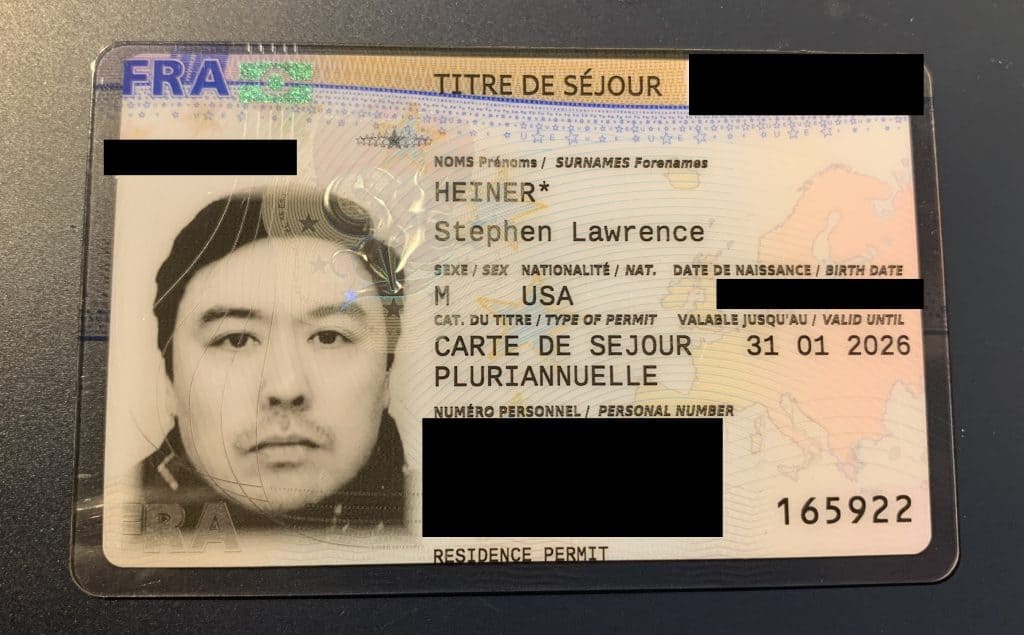
As you can see from the featured image for this article, the date of my new card is from 31 January of this year, but it wasn’t until 23 February that I received the text message from the government that I was welcome to pick up my new card and could I please bring a fiscal stamp to cover the 225 € it cost them to make it (you can purchase said stamp here; what a world of difference from 2014 when I bought a bunch of stamps at the tabac!).  You still need to make an appointment to pick up the residence card, and while I’ve heard that’s been hard to do lately in Paris, in Melun they had plenty of slots for me to book.  So from start to finish, it was six months from when I showed up for my renewal to when I could pick up a new card.

So the complications were:

  1. I didn’t have my residence permit: all I had was a police report which stated that my residence permit had been stolen.  I had carried that around while traveling for the last couple of years.  As I’ve shared elsewhere, I’ve come to realize that you need your residence card for exactly zero things in France and carrying it around only risks adding one more headache if your wallet is lost or stolen.  Keep it at home.  If and when you do need to show “ID” your passport will always win and if you want you can always store a picture of the front and back of the card in the cloud.  And as I told someone recently who worried that having her passport with her new visa sticker inside stolen invalidated her visa: your right to live in France lives inside the French bureaucracy, on a computer, not in your passport/residence card.
  2. My récépissé would expire on 17 March, but I wasn’t due to land in France until 1 April.  I knew the system well enough to know that I could flash my expired récépissé, with the text message, with the convocation that I had printed out to pick up the CDS, IF I was asked.  What happened at the French border?  Was I asked for my vaccination status?  No.  Was I asked for a PCR test?  No.  He asked me to remove my mask and stamp, I was in, just like old times.  As I often say: be prepared for the French to ask for everything, but realize they may not ask for anything.

So, like I said, there were two complications that weren’t really complications.

Today I picked up the card and voila, here’s the article explaining what you need to do to renew the card.

Now some of you may be thinking…wait, Stephen didn’t you take the A2 test last year so that you could get your ten-year card?  Yes.  But I also realized then that this was the last piece of the Prof Lib story I hadn’t told.  That if you had gotten a Prof Lib, renewed it, and gotten a four-year card, you would need to renew one more time before you were eligible to apply for a ten-year card (at least five years of fiscal residency)  Part of why I started this blog in the first place was to give information that isn’t out there, and I don’t think there’s an article on renewing a four-year card, so here it is, as brief as it might be.  I figured I could wait a bit before moving on with my own next step to put together an article with this info.

Related to a willingness to wait to apply for my next big status upgrade in France is that I’m no longer in a rush.  The pandemic has proven to me that residence gives you 99% of the privileges of citizenship, at least in France, as I was able to come and go as I pleased, and was even eligible for personal and business aid from the government.

When I first moved here, I was in a hurry to get citizenship, as I was under the delusion that the French were looking for any excuse to deport me at any moment, whether I mispronounced a word or forgot a piece of paper in my dossier.  Ten years have shown me the naïveté that that was and I try to pass on a sense of calm to people who hire me to consult with them or who take my courses**.  Citizenship is no guarantee that you won’t lose your rights (ask the Americans of Japanese descent what their citizenship meant in America after Dec 7, 1941, or what happened to people of a certain race in France the following year, in 1942) and the term “permanent resident” is a misnomer for the vast majority of resident visas worldwide: almost all require some kind of residence over some period of time, and then need to be renewed…not exactly “permanent” by any definition.

Just realize you’re going to be a foreigner in France for at least a while, and get comfortable with the “odd” feeling of being a long-term guest.  You may be kicked out at any time, but rest assured, it’s not going to be because you forgot a piece of paper in your dossier, and in fact, it’s not likely to happen at all.

What’s next for me, of course, is citizenship and/or a ten-year card.  Stay tuned; I’ll keep you in the loop and try to provide a template you can follow, as always.

I am certainly happier than the photo would indicate, but as you may know, you are not permitted to smile in official French photos. 🙂

*I don’t know how many times I have to say this: you MUST FILE TAXES if you live in France, even if you don’t earn any income in France!  I know it’s not told to any of us when we get here by the French government (I only learned, as I’ve learned so many important bits of information over the last decade, due to the newsletters of Jean Taquet), but your proof of filing taxes every year are the most important documents you must have if you ever want to apply for a ten-year carte de resident or for citizenship.

**Anyone who charges more than 1000 € to help you get a profession libérale status is probably running a scam.

Did you enjoy this article?  TAIP is 100% reader-supported through tipping.  If you want to leave us a tip of any amount it would be highly appreciated.  These tips help support our efforts to keep TAIP an ad-free environment.  Just as at a cafe, the tips are split evenly among the team.
Why I Left Paris

It’s coming up on a year since I moved out of my favorite city and enough time has passed to share my perspective on the move publicly.

If you had told me in March 2020 that I would ever, ever leave Paris, I would have laughed.  I was one step away from buying a burial plot.  But the world, and Paris changed.

Lockdowns

Most especially, I truly failed to realize what an integrated and essential part of our lives restaurants and cafés are, not just in France generally, but in Paris especially.  Our restaurants were closed for six months and so much happened as a result.

Social routines were interrupted.

Books that had been waiting to be read got read (and even more the following year).

Cash normally spent was saved.

Patterns of thought were broken.

Those of us who live in “world cities” like Paris, London, NYC, Singapore, etc. know and accept that we pay significantly more to live in those cities for the culinary and cultural access they offer, to say nothing of the fact that so many interesting people in those places.  It’s worth paying more to live there.

Until it isn’t.

I thought I was unique in making the decision to leave Paris after multiple lockdowns, but as I caught up with friends late last year, I had several, “oh you moved too?” conversations.  We shared a similar line of thinking: if we are ever going to be locked down in our apartments again, we would prefer to do it closer to nature.

It’s estimated that a third of Paris left for second homes during the lockdowns and some decided to make those second homes the now-primary ones, especially with the never-could-have-predicted dawn of teletravailler, remote working, in France.  What was once the domain of the French tech startup scene has become normative, even for workers in the we-haven’t-changed-procedures-since-the-days-of-the-monarchy French administration.

Remote work + lockdowns = life changes.

Moret-sur-Loing

In 2016 I was taking day trips with friends to various spots in Île-de-France that the guidebooks said were worth seeing, like Provins, Senlis, Fontainebleau, etc.  One of those spots was the medieval town of Moret-sur-Loing.  It borders both the Loing River and the forest of Fontainebleau and is connected to Paris by a high-speed 45-minute TER with connections every 30 minutes from 5 something in the morning to just after midnight most days.  If you have a monthly/annual Navigo, your travel there is covered.

I and my other Paris friends said the same thing on that (and subsequent visits): “What a charming little town!

We all thought, but didn’t verbalize, “But I could never live out in the countryside!

We lived in Paris for a reason.

In early 2021 I considered the previously unthinkable, moving out of Paris, for the reasons listed above.  My mind went to the memories of Moret, and I thought, if I was going to leave Paris, it wouldn’t be for a large roomy apartment in the suburbs, but it would be for an entirely different experience.

Getting an apartment in Moret (and moving in the middle of an official lockdown) was a new experience which I’ll share in a future article, but for now I’ll say I managed to be very fortunate in both my apartment and landlord.  And everything is significantly cheaper, from the rent to the bread to the meat to the eggs.  I absolutely love living in Moret, which has a twice-a-week farmer’s market about 100m from my apartment.

Routines are a bit different for me now.  Thanks to the ever-expanding bike infrastructure in the capital, now when my train pulls into Gare de Lyon, I unhook my electric bike and stay on the roads instead of using the Métro that I know and love.  It does mean that when it rains, I have to don my Aigle wellies and raincoat, but it also means that I get places faster, and see more of the city at street level than I used to.

As for TAIP, not to worry, I am still very much an American in Paris 2-3 times a week, seeing friends, chatting about books, running errands, attending Mass, and yeah, catching up in cafés with friends.  There is also a growing team of writers here who are resident in Paris who will continue to share their experiences which will blend in with those of us who now, like me, are now on a different road of their French experience, one that doesn’t include living in the City of Light.

I still consider my time in Paris as the greatest period of my life to date, particularly my three years in the 2nd arrondissement, in the beating center of the city.  But perhaps an even greater period is beckoning.  Time will tell.

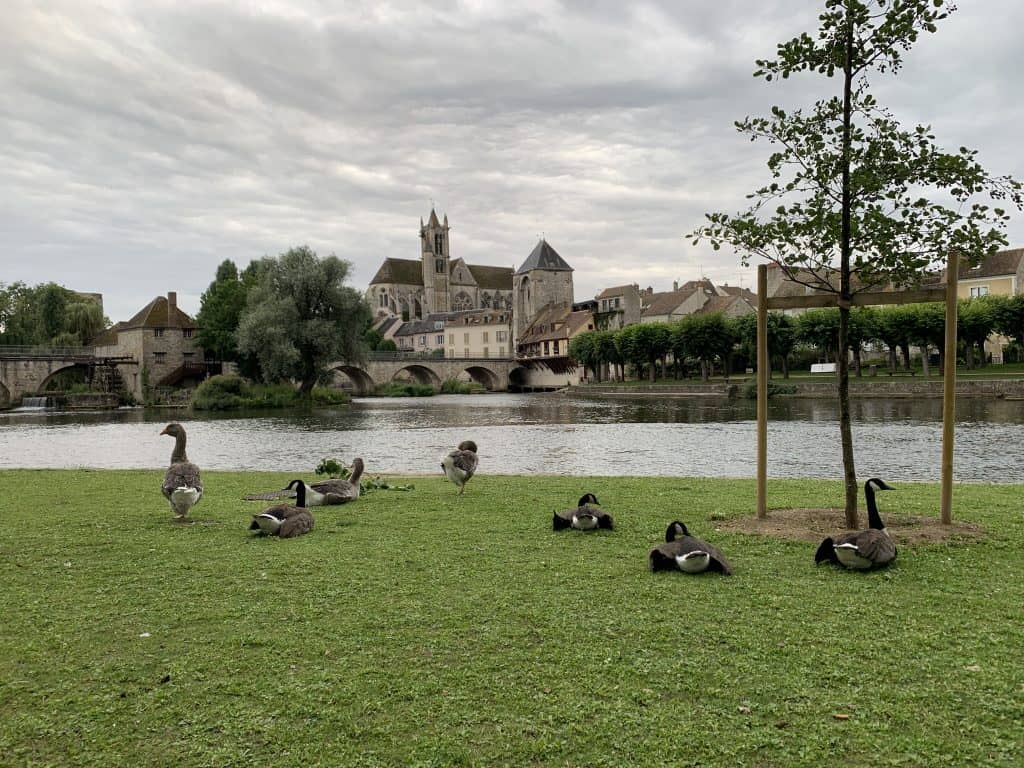
The photo gives one perspective of the medieval town of 4,000 I live in now.  My apartment is across the street from Notre Dame de la Nativité, which you can see in the center.

Did you enjoy this article? TAIP is 100% reader-supported through tipping. If you want to leave us a tip of any amount it would be highly appreciated. These tips help support our efforts to keep TAIP an ad-free environment. Just as at a cafe, the tips are split evenly among the team.
bicycode marking

Add a Bicycode to Your Bike

Once you’ve spent a lot on a brand new electric bike (even if you got much of it subsidized) you want to protect it from theft.  Unfortunately, not only is Paris a place where more than one of us have at least one “I got pickpocketed” story, but it’s also a place where bikes get stolen: in France 400,000 are stolen annually.  So apart from using one or two strong locks on your bike, what else can you do to protect yourself?  Enter Bicycode.

French Federation of Bicycle Users

When the authorities do manage to find stolen bicycles, it’s challenging to return the bikes to their rightful owners because of changes/damage to the bike.  The French Federation of Bicycle Users (FUB) set up Bicycode back in 2004 with the idea that a “tattoo” on the bike frame would offer a point of identification that could connect a stolen bike to its rightful owner.  It has since marked almost 250,000 bikes in France and Switzerland.

Now, this isn’t to say that your would-be thief is going to see a Bicycode sticker on your bike frame and be scared off from stealing your bike.  It’s just an additional measure you can take to make sure that if your bike is stolen, you’re at least giving yourself some chance of getting it back.  Of the 400,000 annually stolen bikes in France, 150,000 are recovered, and Bicycode at least gives you some kind of shot at recovering your wheels.

Getting Your Bicycode

Once I was sold on this short and easy measure I went to the interactive map showing who the retail providers are and made an appointment.  A number of shops in Paris are not doing them on a regular basis so I ended up going to Melun, which has a shop doing them all the time.

I had to do some basic paperwork (this is France, after all) to establish that I was the owner of this bike and was registering it at an address I had proof of living at. If you ever sell your bike in the future, you can give the buyer your registration material and Bicycode provides a way for the new owner to then register the bike in his/her own name.

Once all the paperwork was done (probably ten minutes of work in total), I handed over 10 € and he got to work.

The technology used is apparently resistant to weather, water, UV damage, and high-pressure washing.  The tech took 15 seconds to engrave it once he had the bike in the right position.  The code he put on the bike is unique and linked to my bike’s serial number, my name, and my email address.  If your bike is stolen you log onto your Bicycode account and declare the bike as stolen and give the address of the police station where you made the report (which assumes, of course, you’ve done that as well).

Add to Your Insurance As Well

I also contacted my renter’s insurance to ask them if a bicycle theft was covered and they said it was.  They just needed some paperwork (of course).  I sent them proof of purchase and the serial number of the bicycle and signed a rider to the policy adding the bike.  No change in my premium and the bike was now included.

You can’t prevent your bike from being stolen in all circumstances.  Basics include:

  • using at least one bike lock to secure your bike
  • securing the lock through the frame of your bike rather than the wheels
  • using one of the ever-increasing bike stalls throughout the capital, which have strong metal bars for you to use

But once you’ve added a Bicycode and added the bike to your insurance, there’s nothing more you can do to protect yourself.  Enjoy your ride!

Photo is of the technician marking my bike with its unique Bicycode.

Did you enjoy this article?  TAIP is 100% reader-supported through tipping.  If you want to leave us a tip of any amount it would be highly appreciated.  These tips help support our efforts to keep TAIP an ad-free environment.  Just as at a cafe, the tips are split evenly among the team.
France 365

In December 2020 I took a business trip to Eindhoven to check in with the editors of Dispatches Europe, which syndicates some of our content here at TAIP.  In November 2021 I took a two-week business trip to Hungary.  That means this week I hit 365 days in France out of the last 380 or so days, a feat I haven’t come remotely close to touching in my near-decade living in France.  As this milestone loomed, an uninterrupted period of time in France with almost no international travel, I was struck by a surprising idea: I didn’t miss it.

Let me give a bit of context first.

I am not a newshound.  I cultivate deliberate ignorance about current events and I do not seek to be “informed” about the “news.”  I have plenty to keep track of with my businesses and my own passions and pursuits without being told about issues that have nothing to do with me and which I can do nothing about.  I’ve only doubled down on that since March 2020.  That has allowed me to use the last two years to focus on what truly mattered to me, and one of those happened to be reading.  Last year I got to read around 150 books.  This year I’ll hit 200.

With that many books comes a flood of inspiration for personal and professional projects, none of which have required me to travel.  So, there’s been nothing to miss on that front.  A lot of time I used to spend traveling went right into reading.

I also did a lot of traveling here in Europe, from the very first month I landed in Paris.  I took my first international trip (to London, my favorite European city outside Paris) within two weeks of moving to Paris and my travels only expanded from there.   The twelve months leading up to March 2020 were the busiest travel period of my entire life, which included trips to Australia, New Zealand, Singapore, and the United States.  I have not been idle with the opportunity to travel in the past decade.  I’ve even used that experience to create a course teaching others how to travel cheaper, better, and longer.

Travel means many things to many people, but for me travel is first and foremost an opportunity to learn about cultures, other people, and myself.  I’ve taken the time I used to spend traveling and spent it working on personal projects, one of which has been a four-year project to read and discuss every Shakespeare play with a group in Paris.  I have been “traveling” with this group since January 2020, and we’ve learned so much together.

So why don’t I miss international travel?  Because I’ve got a lot of great stuff going on in my life, and I’m happy with who I am and where I am going.

A quote I often share is that you should “build the kind of life you don’t need to take a vacation from.”  Unfortunately, for a lot of people, travel represents what they imagine as their “real lives.”  While traveling they get to be who they want to be, do what they want to do, live where they want to live.  After this burst of exhilaration, they return to a life they don’t want, and start planning their next escape.

But if you are living the life you want to live and living where you want to live, what’s the rush to leave it?

Do I miss the opportunity to learn more about other cultures, other peoples, and about myself?  Sure.  But international travel is only one means to obtain those ends, and for most of my time here in Europe has been a very easy way to do so.  But the last two years have reminded me that there are many other such ways to learn, almost none of which involve scanning governmental and news websites for ever-changing rules or lining up to, for perhaps the only time in your life, get medically tested for something you are almost 100% certain that you don’t have.

That isn’t to say I didn’t continue to discover France this year.  I finally made it down to Montpellier after hearing people rave about it for years.  I was not disappointed.  I also got to explore Brittany more, including Vannes, the Gulf of Morbihan, and the dramatic seascape at Le Yaudet, just to name a few places I got to see for the first time.

Remember that wherever you travel to in the world, you’ll be bringing yourself, and if you’re not at peace with the person you are and are becoming, that should be the first order of business, not the wonderful sights and sounds that this world has to offer.  They’ll all be there waiting for you when you’re ready.

My best wishes for the next 365 days, wherever you are.

Photo by Pedro Lastra on Unsplash

Did you enjoy this article?  TAIP is 100% reader-supported through tipping.  If you want to leave us a tip of any amount it would be highly appreciated.  These tips help support our efforts to keep TAIP an ad-free environment.  Just like at a cafe, the tips are split evenly among the team.