My Journey to France, Part 1

I’ve lived in France on and off since 2014. I’m often asked, “How did you do it?” The short answer is a lot of determination and a refusal to take non as an answer. But, I know a lot of our TAIP readers hope to live in France permanently one day (or are already here and want to know how to stay), so I want to share, step-by-step, my own journey to France and how I made it all work. 

Let’s get right into it.

How it Started

I never imagined I’d ever study abroad, never mind live abroad. One day, when I was still in Rhode Island completing my undergrad, a friend of mine had to pick up some paperwork from the study abroad office. We had plans after so I decided to tag along. While I waited for her, an advisor approached me and asked if I was interested in learning more about my options. I shrugged and said, “Why not?” (if you’ve been in France a while, you’ll also find that this is a very frequently used idiom that indicates French willingness to try something new…another topic for another article) and joined him in his office.

I was studying fashion merchandising at the time, so after taking a look at my transcript he told me that my best options would be Milan or Paris. Was I interested in leaving for an entire semester? (no). Okay, how about the J-term in between the fall and spring semesters? (maybe…). He started pulling out pamphlets and I absentmindedly leafed through them. 

At the time, I had a steady job at a local boutique and a long-term boyfriend. I thought all of that was way too important to leave, even for just a few months. But, as the advisor continued to sell me on my options (do these people get a commission on sign-ups or something?) I slowly started to warm up to the idea. He asked me again, “Milan or Paris?” Without really thinking about it I said Paris — I’d seen movies, read books, heard about the French capital. I knew what it looked like at least, as compared to knowing nothing about Milan — a few taps on his keyboard as he took a closer look at my transcript and he told me that if I wanted to graduate on time, a full semester was my best bet. “What do you think?” 

Again, without really thinking about it I said, “Okay. How do I sign up?”

I didn’t even have a passport at the time and thoughts of my job and boyfriend fluttered through my mind; to be honest, even to this day I don’t know what made me say yes. Unlike some expats, I never had a lifelong dream of living in Paris, and yet, something urged me to do that semester abroad back in 2012. 

I ended up having the best six months of my life, completely fell in love with the city, French culture, the food… I’m sure half of my readership knows exactly what I mean. A group of four of us even ended up staying for an extra month down in Cannes because none of us were ready to leave. Alas, I did have to go back to the US to finish my undergrad, and that I did. Dreams of living in France full-time slowly but surely disappeared as I slipped right back into my former life. I graduated, got promoted at the boutique, and moved into a new apartment with my best friend. Life was “good,” though I couldn’t shake the feeling that something wasn’t right.

A Rare Opportunity

In the winter of 2013 I was still working at the boutique and was, to be frank, miserable. So what do miserable people do when they’re bored at work? They scroll through Facebook, naturally. A message popped up — it was from a girl whom I studied abroad with who had never left after our semester. She decided to stay to be an au pair with a Franco-American family because she wasn’t ready to go back to the US.

We were just chatting, catching up, when my curiosity got the best of me. “How were you able to stay?” I asked. Was it difficult? I can’t stop thinking about Paris myself…

She filled me a bit and then told me that in fact, she planned on leaving her au pair position in May of next year. She loved the family (and had been with them since June 2012. It was November 2013 at this point) and was helping them find her replacement. She ultimately wanted it to go to someone she knew — she really cared about the kids — was I interested? I hesitated. Maybe. I told her I’d think about it.

Life got busy with the upcoming holiday season and I soon forgot about the conversation. Fast-forward to March 2014 and my friend messaged me again. Did I have time to think about coming back to France as an au pair? The family still hadn’t found a replacement. Like most young women my age, I had plenty of babysitting experience and I even nannied for a few summers when I was a student

Just like that fateful moment in the study abroad office a year and a half earlier, without really thinking about it, I said, “Okay. What’s next?” 

A New Experience

While I’m the first to admit that I stayed in my English-speaking-au-pair bubble for longer than I maybe should have, living and working in France was much different than studying abroad. I had to navigate French culture much more often (I was living with a French person and French children, after all), and learning how to adapt was difficult at times.

I was often homesick after the first six months and the initial excitement wore off — I also struggled to find a core group of friends. But, I did adapt, grow, learn, and eventually, thrive. My years as an au pair were some of my favorite that I spent in Paris and when I did find my people I felt like I truly belonged.

The caveat(s)? I still couldn’t speak French, my au pair contract was running out, I knew I didn’t want to work in fashion anymore, and I also knew I wasn’t ready to go back to my life in Rhode Island.

I had to figure out a way to stay. 

Well, I did figure it out, but that story will have to wait until Part 2.

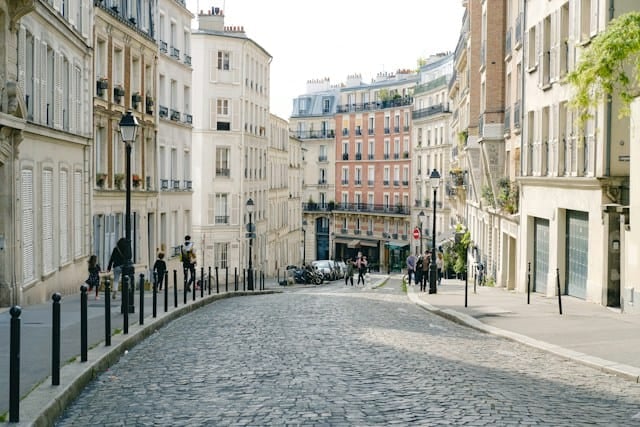
Photo by Clément Dellandrea on Unsplash

Did you enjoy this article? TAIP is 100% reader-supported through tipping. If you want to leave us a tip of any amount it would be highly appreciated. These tips help support our efforts to keep TAIP an ad-free environment. Just as at a cafe, the tips are split evenly among the team.
Using Cookies to Learn More About the French

If you give a mouse a cookie, he is going to ask you for a glass of milk.” Thus starts the children’s story, If You Give a Mouse a Cookie, by Laura Numeroff, a story I have read dozens, if not hundreds of times, to my three kids. Without fail they would laugh at the snowball effect of offering a cookie to this somehow adorable rodent. While I have my doubts about the plausibility of a mouse asking for a glass of milk, the concept of the story inspired this post on what can happen if you offer a French person a cookie.

The French are often unjustly characterized as a cold, unkind, and unwelcoming people (check out Molli’s personal experience that dispels this misconception). The French are reserved, but they are not unfriendly. Many are slow to warm up, but that does not mean they do not want to get to know you. My personal experience is that the French are incredibly loyal in their friendships. And while it can take time to move past the acquaintance stage into the depths of friendship, I have found that friendships here are true and long lasting.

When I moved back to France six years ago, I knew no one in the area. Thankfully, I quickly started meeting other parents as I took my kids to and from school on a daily basis. I wrestled with how to break past the cordial, “bonjour” (hello) and “bonne journée” (have a nice day) cordialities. When you are new to an area, it can feel quite isolating, intimidating, and overwhelming. There’s the real excitement of the new and exotic nature of settling into a foreign culture, but there are also many challenges; one of the greatest being the lack of close relationships with people. I did not set out to replicate the model from If You Give a Mouse a Cookie, but one day when baking cookies, I wondered with whom I could share my latest batch of American deliciousness.

I walked a couple hundred meters down to our village’s mairie (town hall) at goûter time (afternoon snack), warm and melty chocolate chip cookies in hand. I knocked on the administrative assistant’s office door and when I entered, she had a perplexed look on her face. I could see the wheels were turning as this was an impromptu visit. I quickly explained the reason for my arrival, that I had just baked some cookies and that I wanted to share a couple with her and the mayor, if he happened to be in his office.

If You Give a French Person a Cookie, He Will Likely Be Confused at First

She looked at me a bit suspiciously, maybe thinking that I had some ulterior motive for bringing baked goods. However, when it became clear that I was not there to ask for a favor, or anything else for that matter, her stoic look turned into a slightly disbelieving smile. Her smile turned to delightful groans as she took her first few bites. This was the first of many short walks for cookie deliveries to the mairie. The time spent in the office was always short, out of respect for the large amount of work that she and the mayor had on their plates. Each subsequent visit was met with, dare I say, a look of excitement knowing that I never came empty-handed.

My experience at the town hall spurred me on to share my cookies with parents I had met at my kids’ schools, with neighbors, with pretty much anyone I associated with, even my pizzaiolo. Unless you are invited into someone’s home, it is not normative in France to give anything, let alone cookies, to someone you barely know. Just as the administrative assistant from the mairie was confused at first, so others were surprised by such a simple gesture. For me, it was a small way of sharing a part of my passport culture with people I hoped to get to know better. Smiles, while they were a bit hesitant at first, quickly replaced the confused looks, especially upon tasting my authentically made American cookies.

If You Give a French Person a Cookie, He May Just Reciprocate

Shortly after buying our house, I wanted to get to know my new neighbors. As you likely guessed, based on the topic of this post, my first thought was to bring a plate of cookies to each of them. Upon offering my deliciously moist and warm cookies, two neighbors immediately invited me into their home, while the other graciously thanked me at his gate.

My 80-year-old widowed neighbor took it a step further. Within a few days, she was ringing our doorbell, with a plate full of warm crêpes in her hands. She wanted to reciprocate my gesture by offering us a treat for which she was well-known. Ever since this initial exchange, we have regularly shared our favorite desserts. Sometimes, we take time to eat them together, and when we do so, we often spend an hour or two around the table. I delight in listening to her share parts of the love story she lived with her late husband, or how her grandchildren are doing. She often asks questions about why I chose to move my family to France and how my kids are enjoying life here, as well as how they are doing in school and in their extracurricular activities. Other times we share our baking “secrets” that we have learned over the years. I am grateful that my first step toward my neighbor paved a way for a relationship filled with sweets and sweet discussion.

If You Give a French Person a Cookie, He May Ask You to Teach Him How to Make Them

Sharing cookies, of course, is far from the only way to break the ice with the French, but I have found it to be a simple and personal way to go about it. On multiple occasions, I have even been asked if I would not only share my recipe, but if I have the time to demonstrate how to make what many say are the best cookies they have ever tasted.

If you live in France, you have likely heard “je n’oserai pas” (I wouldn’t dare) or “je ne veux pas imposer” (I don’t want to be a bother). Privacy and courtesy are high cultural values here. So, while it may seem like a small thing to ask for a cookie making demonstration, to me such a request is huge honor and opportunity, knowing that most people here are typically very reserved and discreet.

I have gladly welcomed a number French families into my kitchen who wanted to learn the basics of cookie baking. Last year, I coached my daughter’s basketball team and invited the team over for a cookie baking day. Many of my players seemed hesitant at first, thinking that there is some great savoir-faire (know-how) needed, but they were surprised at the simplicity of the task. I have found that each moment shared in the kitchen while baking has led to guards being let down and relationships growing deeper.

If You Give a French Person a Cookie, He May Ask for More

The local basketball club where my kids play, and where I coach, organizes meals from time to time for its members to share time together off the court. I brought cookies to the very first meal we attended. After recovering my empty cookie tin, I was jokingly told to not bother showing up to future meals should I come without several batches of cookies. During the most recent meal that we shared, the cookies I had brought had somehow disappeared before it was time for the plat principal (main dish). Some of our young players had seen the plate of cookies and decided that they were for the apéritif (appetizer) rather than for dessert.

I am not saying that everyone seeking to break the ice with the French should start baking cookies, but if you like to bake it is certainly worth a try to share your latest batch with someone. For me it was a natural part of my life to share, and it has been incredibly well received. I am grateful for the doors that have opened because of such a simple gesture.

I was talking with one my French friends about this post and this is what he said:

Les français aiment les bonnes choses et aiment partager. Ils aiment vivre des moments ensembles, coniviaux. Bonne bouffe. Bon vin.” The French love good things and they love to share. They enjoy quality time together. Good food. Good wine.

It was a simple, yet profound, take on some of the most basic French cultural values: quality time, quality food, and thoughtfulness. If you are looking to make friends here in France, you may finding find it just takes a little intentionality by engaging people through the lens of these three priorities.

I hope these few anecdotes encourage you as you move toward the French. Starting over in a new country is not easy, but sometimes we make it out to be a whole lot more complicated than it needs to be. There is no formula to relationship building in any culture, but when we bring something of worth (even small) to those around us, we will often be welcomed with open arms. At first, we may receive quizzical and distrusting looks, but don’t forget; if you give a French person a cookie, you might just make a friend.

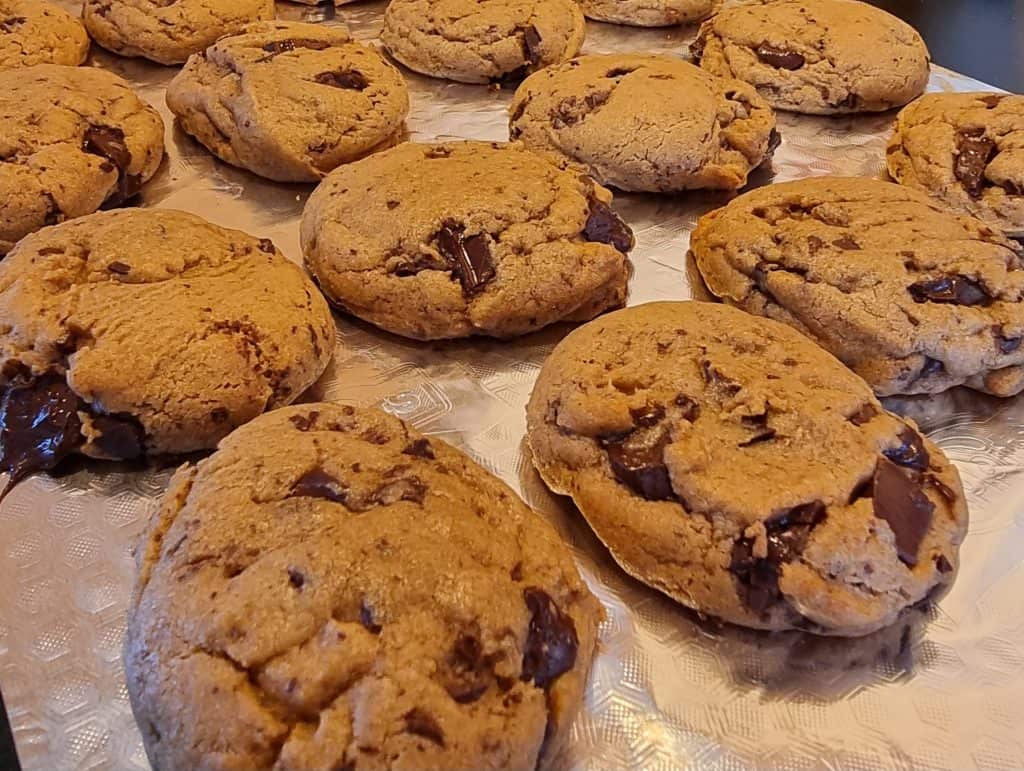
Photo is of one of the more recent batches of these cookies.

Did you enjoy this article? TAIP is 100% reader-supported through tipping. If you want to leave us a tip of any amount it would be highly appreciated.  These tips help support our efforts to keep TAIP an ad-free environment. Just like at a cafe, the tips are split evenly among the team.

Contemporary Art in Paris: Institutions

Once, when I had been asked to pick up the artist wife of a film-maker for “Festival America” (a biennial fair in American literature where numerous writers are invited to present their books and literary subjects in general), she asked me about where to see contemporary art. At the time I had to think a bit and did not get back to her until a few days later. Unfortunately she no longer had time to visit. Today, some years later, I have a plethora of recommendations, because, on the one hand I have been thinking about and following contemporary art, and on the other, because there are now so many venues that cater to contemporary art today. Beginning with Paris’ contemporary art museum, Palais de Tokyo and the regional contemporary art museum, Mac/Val, there are also a number of fondations, privately owned museums and museum-like galleries as well as various structures set up to encourage talented young artists.

Palais de Tokyo, Europe’s Largest Center for Contemporary Art Today

One of the three 1937 Universal Exhibition edifices built for posterity, the Palais de Tokyo is so called because it was constructed on the then “Quai de Tokyo.” While the street is now called “Avenue de New York,” the edifice has kept its original name. 

Originally slated to become a national art museum, the Palais has, during its turbulent history, also served as the Nazi’s collection point for looted art to be stored and inventoried before its transfer to Germany. 

After the war, it finally came into its own as a national museum of modern art until 1976 at which time the art it held was removed to the new Centre National d’Art et de Culture Georges-Pompidou. Employed for various purposes then, it fell into neglect until it became earmarked in 1999 as a contemporary art museum. The architects, Anne Lacaton and Jean-Philippe Vassal gutted the site down to its bare-bones cement structure, which is how we encounter the institution today.

Palais de Tokyo is devoted to exhibiting established contemporary artists, or those who are on the cusp of becoming so. Contemporary art being what it is today, I have seen extraordinary exhibitions of artists such as Le Parc, and Saraceno, Theaster Gates…a number of forgettables, and controversial others such as Miriam Cahn’s recent exhibition with her painting, Fuck Abstraction. Typically a number of artists will be exhibited at any one time and in the basement there is an area dedicated to video art. The museum also boasts a restaurant and a bookshop. 

The museum has also been used as a discotheque and for rave parties. Thus, locked under normal conditions, can be found walls and staircases covered with fantastic spontaneously-created art. These areas can only be visited on a specially organized guided tour.

A good place to go after other museums have closed, it can be visited until late at night (22h) and even later for evenings when an exhibition first opens. An added bonus for vernissage nights is that museum entry is free and therefore should be watched for.

Another important contemporary art museum, this one outside Paris, is MAC/VAL located in Vitry-sur-Seine. While a bit way out (approximately an hour by public transportation), this relatively new building houses a very good collection of specifically French contemporary art and presents two temporary exhibits per year. If time is not of a premium, this museum (free to the public), of very high caliber, is well worth a visit.

Establishments Exhibiting Contemporary Art

There exist both public and private organizations whose objective is to exhibit the work of living artists. 

In 1982 Jack Lang, the then-Minister of Culture, set up a network of institutions, named FRAC (Fonds Régionaux d’Art Contemporain) to encourage the collection and showing of contemporary art in all of France’s regions.  The FRAC of Ile de France is located at 22 rue des Alouettes, 75019.  Admission is free and it typically offers exhibits of living, contemporary artists, both French and international. It has a second location in the new, contemporary art center in Romainville. This extension is known as “Les réserves.” Although slightly outside Paris, it can be reached by metro line 5. 

The Cent-quatre-Paris is a multipurpose art space offering contemporary art exhibits (ticket fees apply) as one of many other activities. The center includes an auditorium for lectures and performances, various restaurants, a book exchange, activities for children…and a large central space where visitors can see various groups practicing their hip-hop dance moves and sequences. 

The beautiful 13th century College des Bernardins often provides a venue for artists to create and set up installations adapting and highlighting its Cistercian architecture. Whatever the exhibition, the sheer beauty of its rows of stone pillars and gothic arches offer the visitor a moment of tranquillity and spirituality. 

To create a marketable aura and gain a reputation as a patron of the arts, various private corporations have created exhibition spaces which can be as grand as a quasi museum. The largest and most famous of these have been created by France’s art-collecting billionaires: Bernard Arnaud who heads LVMH and François Pinault.  

The former had the architect, Frank Gehry, build an architecturally fantastic structure in the likeness of a ship in Neuilly, a near-western suburb of Paris. Visiting exhibits at the Fondation Louis Vuitton means following a bit of a labyrinthine course, but the tour offers artistic and architectural wonders around every corner. When there is no special temporary exhibit on show, the walls will be hung with Arnaud’s own collection of modern and contemporary art. This Fondation is also known for its blockbuster temporary exhibits, which are a must for any art lover.

The latter renovated the former Bourse de Commerce (Paris’ old stock market building) to create a center for exhibiting contemporary art, much of which is from his personal collection. Temporary exhibits may change every quarter or semester. Here can be seen the most well-known artists of today’s contemporary art scene. Constructed in a circle around a central atrium, this building is also well worth a visit for its architecture as well as for the art. For those on a tight art budget (and who isn’t?), it is important to note that the museum is free the first Saturday evening of every month where explainers are available to offer (sometimes very necessary) insights into the exhibitions. Be sure to reserve a time slot as early as possible for these tickets go quickly.

The Cartier Foundation for Contemporary Art hosts temporary exhibits of contemporary art both on the ground floor of Jean Nouvel’s modern, light-filled, high-ceilinged rooms on its ground floor and in a more muted locale in the basement. Artists are typically already well-known internationally, such as Damien Hirst, Ron Mueck, Fabrice Hyber … Out back, there is also a lovely garden with a cafe which is a great place to spend some time on a sunny afternoon and discuss the current exhibition with friends.

Galéries Lafayette has taken over a building in the Marais to produce ever-changing temporary exhibitions in its contemporary art space, Lafayette Anticipations. Each exhibit is typically devoted to a single artist. No reservations are needed, except for their guided tours every day (except Tuesday when it is closed) at five in the afternoon; these are well-worth signing up for. 

Fondation Pernod-Ricard has moved its small art quarters near the Concorde to a spacious new building just behind the Gare St Lazare. Here they offer free entrance to temporary exhibitions of hand-picked contemporary artists. Vernissages, which are always of particular interest, are indeed open to all where Ricard cocktails flow free and freely to celebrate the event.

With an aim to promote their culture, a number of countries have reserved a space for art exhibitions in their embassies or cultural centers. Thus without leaving the city, any art enthusiast can feel the pulse of artistic creation in various nations around the world. Countries particularly engaged in presenting their contemporary art include ItalyCzech Republic, Canada, Australia, Korea

Artists’ Compounds

Then there are artists’ residences, where young artists are given a studio to work in and create. They also offer venues for these young artists to exhibit. 

In the center of Paris right on the Seine is the Cité des Arts, a complex where promising young artists have won a residency. Every Wednesday is open house from 6pm to 9pm when the general public can visit artists in their studios and see their work in progress. Every so often exhibitions are staged to display the residents’ works. In the lower level, there is a small auditorium, which offers conferences and concerts. Attached to this residence is a second compound of studios overlooking gardens located way up on Montmartre.

And far off the beaten track, in Clichy, as part of Greater Paris, an industrial site has recently been repurposed into a new artists’ residence.  Entitled Poush, it also offers visits and exhibitions to the general public, promoting the artists who are living and working there.

Les Frigos (the refrigerators) was once just that, a refrigerating edifice on the left bank of the Seine to store perishable foodstuffs until they were brought to Paris’ central market, Les Halles. Each distributor had its own refrigerator in the building. When the market was moved out of Paris to Rungis the building was abandoned no longer serving a purpose. It was then that the artists moved in, created windows, dismantled the refrigerator doors, installed plumbing and in a word, undertook all the installations necessary to make the various rooms viable and to set up work studios.  Once or twice a year Les Frigos are opened to the public to visit the studios housed behind each disabled refrigerator door.  A curious and totally unconventional art scene not to be missed.

Then there are the various open house days set up independently in different sectors of Paris and its suburbs where artists might have studios. These include, among others, areas such as Belleville, Père Lachaise, Ménilmontant, Montmartre, Glacière … most of the districts of Paris and suburbs such as Montreuil. Each neighborhood is free to decide on the dates for this type of event although typically they occur during the Spring months.

While what has become a plethora of institutions and venues offering exhibits of contemporary art, the above-mentioned list, as daunting as it might seem, is certainly not exhaustive.  It is only the beginning for a foray into the present day’s contemporary art, both French and international.

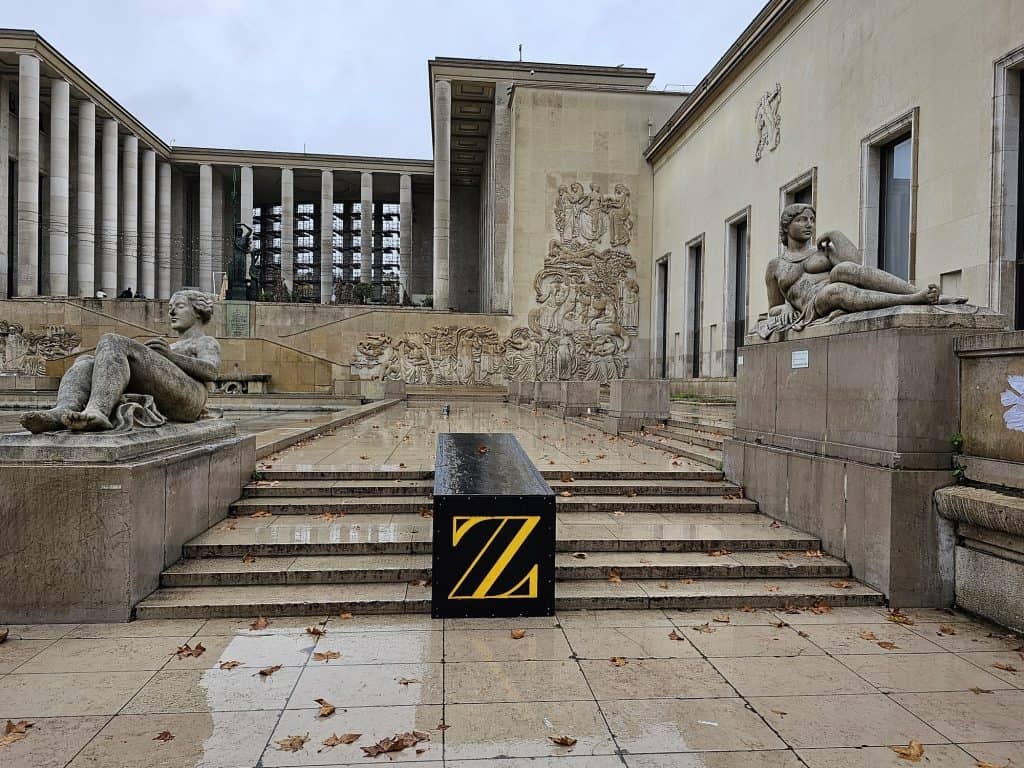
Photo taken outside the Palais de Tokyo/ Modern Art Museum in Paris.

Did you enjoy this article? TAIP is 100% reader-supported through tipping. If you want to leave us a tip of any amount it would be highly appreciated. These tips help support our efforts to keep TAIP an ad-free environment. Just as at a cafe, the tips are split evenly among the team.
What is the Galette des Rois?

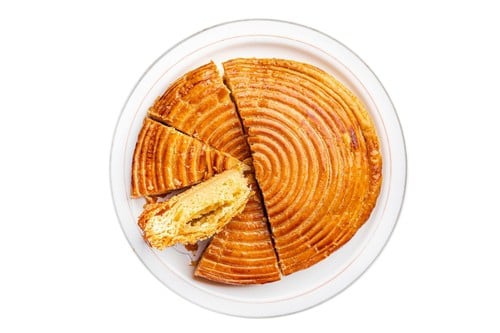
Those of you who have had the pleasure of visiting France in January have likely come across the galette des rois at a French bakery. Translating literally to “king’s cake,” it’s a specialty typically eaten on the Christian holiday of the Epiphany which occurs annually on January 6.

The Epiphany is also known as Twelfth Night or Three Kings’ Day, and it commemorates the visit of the Magi to the baby Jesus. Knowing this, it makes sense that they call the cake a galette des rois.

Most bakeries sell the cake throughout the month of January, and in true French baked goods’ fashion, these days there are several different flavors to choose from. That’s not all that makes this dessert special — let’s explore some other noteworthy facts about the incredibly tasty (in my humble opinion as a French pastry chef’s wife) galette des rois.

The History

The origins of the galette des rois can be traced back to the ancient Roman festival of Saturnalia, which was a time pour faire la fête during the winter solstice. Over the years, the tradition transformed — as Christianity spread across Europe, many pagan festivals were adapted and incorporated into Christian celebrations, and by the Middle Ages, the king’s cake became synonymous with the Feast of the Epiphany.

While the specific foods served at Saturnalia may not have included a cake exactly like the galette des rois, the festive atmosphere and the idea of indulging in special foods during this period laid the groundwork for later customs.

In France, the tradition of baking a special cake for the Epiphany gained popularity during the 14th century. Initially, a single bean was hidden in the cake to represent the Christ child. The person who discovered the bean in their slice was crowned the “king” or “queen” for the day. As the tradition evolved, porcelain figurines, known as fèves, or “favors,” gradually replaced beans. Today, these they come in various themes, ranging from religious symbols to whimsical characters. 

Most of the French people I know collect them — although just the other day, after finding a jar full of them in the cupboard, my father-in-law shook his head and said, pourquoi on garde ces trucs? (why do we keep these things?). Perhaps because they’re too cute to throw away?

The Hidden Fève Tradition

The practice of hiding a favor inside the galette des rois does have a fascinating history. Originally, the fève was a simple bean that symbolized fertility and prosperity. With the advent of the 16th century, porcelain emerged as the material of choice. The themes of the fèves soon grew beyond religious symbols to encompass a wide array of subjects, from mini moons and stars to small cats, dogs, and other animals.

I first discovered the pure joy of discovering the fève when I was an au pair. I sat around the table with my host family, and the dad began to slice the cake into equal parts. Then, the youngest in the family was tasked with deciding the order in which the slices were served. She quickly ran to hide under the table (as is tradition to avoid any cheating), made her choices, and we all dug in. The middle child shouted when he found the favor — he was officially king for the day.

Galette des Rois Today

Like many traditional pastries, the galette des rois has transcended its roots and modern bakeries now put their own unique twist on the almond-filled cake. While the classic version, made with pâte feuilletée, frangipane, and sweet almond cream, still reigns, many pastry chefs now create some truly unique versions.

My favorites? Pistachio from Babka Zana in the 9th and Ladurée’s version that reminds me of American pecan pie. This year I also can’t wait to try the French Bastard’s hommage to the pain au chocolat — the modern pastry shop’s galette looks like it’s covered in chocolate-filled croissants — it promises to be a délice. Bakeries tend to engage in friendly competition, each vying to produce the most unique and delectable version.

Flavors aside, the presentation of the king’s cake has also undergone a transformation. Artistic designs, intricate shapes, and even savory renditions have found a place. The galette de rois serves not only as a symbol of celebration but also as a testament to the ever-evolving world of French cuisine…and pastries, of course (hey, I told you I was a pastry chef’s wife).

Did you enjoy this article? TAIP is 100% reader-supported through tipping. If you want to leave us a tip of any amount it would be highly appreciated.  These tips help support our efforts to keep TAIP an ad-free environment. Just like at a cafe, the tips are split evenly among the team.

paperwork

How to Get a Ten-Year Residency Card in France

I had originally planned to write this article earlier this year, but with my focus on submitting my citizenship application (more on that soon) and the fact that I wasn’t even two years into my new four year card meant that the administration would not have looked approvingly on a request for an “early” renewal just to transition to ten-year status. In any case, I’m happy that Chris, a new writer for TAIP, had recently gone through the process and has written the article I would have wanted to.

Eye rolls, heavy sighs, hand gestures demonstrating a sense of resignation: these are just a few of the non-verbal responses I receive when I discuss l’administration francaise (French administration) with my French friends. And for good reason; for many years, and still to this day in many tasks, the process of getting governmental approvals in France has not exactly been a model of efficiency. Ask me sometime about my experience of exchanging my Maryland drivers’ license for a French one. And if you want a French satirical take on the frustration of getting official business done, check out this clip.

While some French laws and processes seem to not have changed since the 17th Century, others have taken huge leaps into the 21st Century. When I first renewed my visitor visa back in 2019, there was an antiquated online appointment reservation system that could make even the calmest of souls go berserk. Back then, new appointment slots to apply for visa renewals at our local préfecture were supposedly opened online every Sunday at midnight. But without fail they would all be gone within nanoseconds, thus restarting another week’s worth of time and stress wondering if I would ever get an appointment. 

Long-Term EU Residency Card

Thankfully, the visa renewal process has received a much-needed facelift through a website that has made everything much more streamlined. A relatively intuitive online portal means it’s no longer makes it necessary to plan for an in-person appointment at the préfecture to submit the documents needed for a visa renewal

While the streamlining of visa renewals is a welcome development, an even greater sense of relief is open to those who have lived in France for a minimum of 5 continuous years: an EU long-term (10-year) residency card. With the submission of a few extra documents beyond what is required for a long-term visitor visa, a 10-year card can be delivered, of which the benefits go well beyond the freedom from the annual visa renewal process.

Besides the length of validity, the biggest difference, between a long-term visitor visa and the EU long-term resident card is that the ten-year card makes it possible for its holders to work in France. As a result, income is no longer limited to foreign salaries or other non-French employment sources. The other major benefit of the EU long-term residency card is that it allows its holders to legally stay in certain states of the European Union beyond 3 months without a long-stay visa.  Even better? You can be gone up to three consecutive years of the ten, and avoid being a fiscal resident during that time, if you wish.

The Application Process  

While the Étrangers en France website is intuitive for long-term visitor visa renewals, it is less so when it comes time to applying for a ten-year residency card. In fact, nowhere is it indicated that you can even apply online for an EU long-term residency card. I personally made the mistake of taking this to mean that I needed to print out and send my application, along with all the supporting documents, by mail, to the préfecture. However, when my application was sent back to me in its entirety, I learned that to apply for the coveted ten-year card, I had to go about it as though I were renewing my long-term visitor visa. The only thing I needed to do differently was to write in the comments box that I was requesting a 10-year residency card. (Do be careful however, as the EU long-term resident card web page seems to imply that in some cases applications need to be sent by mail. Be sure to check with your local préfecture.) 

The beauty of the EU long-term resident application process is that there are only two proofs required above and beyond what is needed for 1-year visitor visas: (1) proof of residency in France for 5 consecutive years and (2) a language proficiency exam. 

Proof of Residency

The documents required to show proof of continuous residency in France for 5 years are the applicant’s avis d’impôts sur les revenus (French tax returns). Simply log in to your espace particulier on impots.gouv, click on the documents tab and separately download each of your avis d’impôts sur les revenus for the past five years. 

Proof of Language

Applicants seeking an EU long-term residency card, must also have a minimum of an A2 level in French proficiency. There are three ways for applicants to prove their A2, or above, level of language proficiency: (1) a linguistic certification; (2) a diploma attesting a minimum A2 level in French; (3) a national diploma with a minimum level 3 of professional certifications. For more details, click here.  

Within a couple of weeks of submitting my application, I received a link to upload the proof of continuous residency and language proficiency documents. A small frustration came in the form of only being able to upload one document through that link. This added a small, but what felt like an unnecessary, step of collating all the pages together before uploading them.   

The Wait

As my long-term visitor visa was set to expire, I received, without having to request it, an attestation de prolongement d’instruction, a document which extended the validity of my visa. Accompanied by my long-term visitor visa, this attestation allows me to continue to reside legally in France and to freely travel within the Schengen area while my application for the EU long-term residency card is being reviewed.

It’s been three months since I submitted my application for the EU long-term residency card, and I am still waiting for it to be approved. With the fêtes de fin d’année (holidays) right around the corner, I anticipate that it will be well after the New Year until I receive word that my residency card has been granted. After five years of living in France as an adult (I spent the majority of my childhood here), I have begun to learn that the slow process of government approvals will work itself out in due time. So I might as well enjoy a bûche de Noël (Yule log) instead of stressing about when I will finally have my card in hand.  

To read more of Chris’ musings on international living, click here.

Did you enjoy this article? TAIP is 100% reader-supported through tipping. If you want to leave us a tip of any amount it would be highly appreciated.  These tips help support our efforts to keep TAIP an ad-free environment. Just like at a cafe, the tips are split evenly among the team. 

29 days books

29% off 29 Days to France or BOGO with the new New Zealand Book

Well it’s Christmas Eve’s Eve and while some people are gearing up to have a one-day celebration of Christmas, here at TAIP we plan to celebrate for 29 days, starting today!

Our 29 Days to France book is only about 18 months old, but it’s already had a lasting impact on many readers who have written to tell us they’ve used it as a start-to-finish roadmap to get ready for their move to France. Here’s one review from Amazon:

29 Days to France is not only handy, it addresses not just the logistics, but the emotional and mental challenges involved with moving to this wonderful place that I have called home for 7 years. Many of the questions that the authors pose — like why do you want to move to France, which visa to obtain, what’s one’s long-term plan — are relevant for situations like obtaining French nationality. A move to France is not for the faint of heart, and this guides prospective residents through the entire residency process. Well-done!

Whether you’re thinking about making the move yourself or want to nudge a friend who has been talking about it for a bit too long, our book is a collection of at least 29 years of experience between the authors. Use our mistakes (and what we’ve learned) to your benefit.

The coupon code is TWENTY9 and you enter it after you’ve added the book to cart (you’ll see a link to “add coupon code”).

But wait, there’s more!

We have changed how we sell the book now and each paperback comes with a free digital and free autoresponder version. This means you’re effectively getting three books for the price of one. You can keep all of them for yourself or you can send two of them out as gifts to friends. While the paperback can’t get there before the 25th, these codes certainly can (codes are normally sent out within 12 hours of your order, if not sooner).

But wait, there’s another offer! (Promise, this is the last “but wait”)

I co-wrote a book about traveling to New Zealand after completing my third trip to that magical country earlier this year. It is (you guessed it) called 29 Days to New Zealand: Preparing for Your Journey to Aotearoa. If you don’t use the coupon above and instead buy a full-priced 29 Days to France, I will throw in a free 3-in-1 copy of the New Zealand book at no additional charge. We’re experiencing a redirect problem at the moment, so please send us an email at info@thelifeyouwant.io to let us know that you bought the book so we can send you a free copy. This promotion, as the one above, expires on January 20th, 2024. Just be a bit patient as the infrastructure for the two books is not seamless (they are both 29 Days books, but are promoted and sold differently) so you’ll probably get your codes for the digital and autoresponder within a day or so of your order rather than immediately.

In either case, you’ll get six books for the cost of one. That’s a hard deal to pass up, especially if you’ve even been slightly curious about ever making it to the wonderful place that is the Land of the Long White Cloud.

And there’s nothing like a new year to put a long-delayed plan into action, whether that’s a big move to France or a big trip to New Zealand.

Whether you take advantage of this sale or not, have a very blessed Christmas from the team here at TAIP.

Christmas Markets in Paris

We rarely touch on “things to do in Paris” beyond our neighborhood guide series as this blog is mainly for expats who live in Paris or people who hope to one day become an expat who lives in Paris. 

You don’t really need a list of things to do when you’re in a city long term — you hear about them from your friends, signage in the métro, social media, and the like. Most Parisians aren’t looking for advice on the best places to go. They go where their friends are and would never think twice about meandering through throngs of tourists to see the Eiffel Tower, etc.

But, when the Christmas season rolls around even the grouchiest Parisians like to peruse the stalls of a good market while enjoying a vin chaud. There are quite a few to choose from. Here are our favorites.

Village de Noël de Saint-Germain-des-Prés

This is one of my personal favorites as I love the Saint-Germain-des-Prés neighborhood. In fact, I used to live there when I was studying in Paris for my semester abroad. I think that’s why I like the area so much — it reminds me of my earliest days in the city when I was only 20 years old and had never lived away from my hometown.

Here you’ll find around 15 different vendors selling their wares, which range from gourmet food products to handmade decor, clothing, and jewelry. 

When you’re done browsing, pop into Café Flore or Deux Magots and pretend like you’re a tourist. Try not to balk at the price of a café au lait.

Where? Boulevard Saint-Germain

When? Monday-Friday 11am-9pm, Saturday-Sunday 10am-9pm until January 1

Marché de Noël des Tuileries

If you come to Paris during the winter months you’ve likely already visited this Christmas market. It’s one of the most popular and has been around for decades. 

In addition to the 80 vendors selling French foods from every region, artisanal creations, and plenty of hot wine, there are also other attractions. Amusement park rides, an ice skating rink, and games for children are just a few. Go in the evening and make a night out of it, just remember to dress warm.

Where? Jardin des Tuileries 

When? Everyday 11am-11:45pm until January 7

Village de Noël de Paris La Défense

If you’re willing to ride Line 1 until its terminus at La Défense, a financial district located just beyond Paris’ borders, you’ll find the largest Christmas market in the city. Okay, it’s not technically in Paris, but La Défense is a part of the “Grand Paris” you may have heard of (another article for another day!).

Here there are 150 vendors, including individuals who sell nativity scenes from Provence, fois gras, cheese, and honey, as well as products from Savoy, Alsace, and beyond. If you have children, there’s a petting zoo, puppet shows, and Santa Claus.

La Défense isn’t my favorite part of Paris — I once had a French course there and I really disliked making the trip — but even I have to admit that the Christmas Market there is one of the best, especially for kids.

Where? Paris La Défense

When? Monday-Thursday 11am-9pm, Friday 11am-10pm, Saturday 10am-10pm, Sunday 11am-9pm until December 27

Marché de Noël Alsacien

Alsace, a northeastern region of France, is known as being a winter wonderland in and of itself so it’s not surprising that there is an Alsatian Christmas Market in Paris. Strasbourg, one of the major cities in the region, has an incredible market throughout the holiday season — if you can’t make it there, this is a good substitute.

The stands sell Kougelhopf, a traditional Alsatian cake, gingerbread, brioche, potato pancakes, and Munster cheese, among other regional delights. This Christmas market is quite shorter than the others, so you may want to head here first. 

Where? In front of Gare de l’Est

When? Monday-Saturday 9am-7:30pm, Sunday 10am-7pm until December 18

Le marché de Noël de Notre-Dame

While the Notre-Dame may still be closed to the public (it makes me wonder if it really will open in time for the Olympics next year!), you can still visit the Christmas market that’s set up in the small park that is located just across the street from the cathedral. If you’ve already visited the infamous bookstore Shakespeare and Company, it’s practically next door.

There are 30 vendors, each selling their unique wares. I suggest you go at night so that you can see the Notre-Dame lit up in splendor.

Where? Square René Viviani

When? Monday-Thursday 10am-8pm, Friday-Sunday 10am-9pm until December 25

Photo by Dmitrii Eliuseev on Unsplash

Did you enjoy this article? TAIP is 100% reader-supported through tipping. If you want to leave us a tip of any amount it would be highly appreciated. These tips help support our efforts to keep TAIP an ad-free environment. Just as at a cafe, the tips are split evenly among the team.

mortgage in France

Focus on Real Estate Loans for Expatriates / Non-Residents in France

Continuing with our theme of investing/putting down roots in France is this guest post about how mortgages here work. -Ed.

An essential financing tool for any real estate project, your loan can be structured in different ways, including:

The “fixed-rate amortizable loan.” This is the most common type of real estate loan in France. The borrowed capital is repaid monthly until the end of the loan term. The monthly installment includes the interest. 

Both French citizens and non-residents tend to prefer fixed interest rates over variable rates. The concept of variable rates is that they will be adjusted based on a reference rate (e.g., the European Central Bank’s ECB rate) every 3 years. Choosing a variable rate requires a bit more analysis of the market situation at the time of subscription. For example, during the period from 2005-2010, when average rates were at 3-4%, it was conceivable that rates could decrease. In contrast, during the period from 2015-2020, with average rates at around 1%, it is reasonable to assume that rates would not go much lower.

Technically, the loan term can be up to 25 years, but the standard is typically 20 years, with an additional 20+2 years for newly built properties. Extending the term helps strike a balance between rent and monthly installments and also reduces the impact of the debt-to-income ratio.

In most cases, the loan term can be renegotiated as early as the second year. The levers for this include making an early repayment with a substantial amount (e.g., 50,000 euros), which allows for the extension of the term and/or adjustment of the installments, or, conversely, after a period of 5-10 years of repayment, extending the loan over a longer period (which automatically lowers the installments). Banks may apply fees, but these are limited to six months’ worth of interest, so it is not a significant obstacle. However, there are nuances, so it’s important to compare several offers before committing.

The “in-fine” loan. This is widely used in neighboring Switzerland and Anglo-Saxon countries, and involves only paying the interest over the loan term and repaying the entire loan at its maturity. This type of financing is suitable for a more experienced audience because technically, you do not own the property! However, this arrangement is very attractive for rental properties where rental income exceeds interest expenses. The duration of this type of loan is generally 10 years and up to 15 years. The interest rates are fixed and higher than those of an amortizable loan (about +0.25%). 

N.B. Even a non-resident of France can think about real estate projects. You have access to the full range of financing options (within your capacity). 

The 6 Financing Steps

  1. Contacting your broker
  2. Signing the brokerage mandate
  3. Collection and analysis of your documents
  4. Submission of the loan application to the banks
  5. Review of offers, negotiation, acceptance of conditions
  6. Issuance of offers and release of funds

How to Get a Mortgage Loan in France?

Getting a mortgage can be a challenge, and it can be even more complex when you are an expat. Financial institutions may be more hesitant to grant a loan when living abroad, but that doesn’t mean it’s impossible. Below are some items the banks will consider.

Financial Stability

Just as for a resident, the bank first examines your financial situation. Since mortgage loans are not very profitable for banks, it is even more important, in their eyes, to ensure that you will be able to repay this loan. Therefore, banks favor borrowers with stable financial situations. For residents on an employement contract, they will pay particular attention to the type of contract and the employer.

It is recommended to contact a broker. The role of a broker is to streamline the procedures for you and to make banks compete in order to obtain the best financing terms. The borrower will have a single point of contact who will handle all correspondence on their behalf.

Brokers are paid on a success basis, meaning a commission is payable after the funds are released at your notary’s office.

Building a Strong Application

As long as eligibility criteria are met, it is advisable to assemble your loan application as quickly as possible. Our “Societe2Courtage” team is at your service. To facilitate the review of the application, many banks may request document translations. The contents of the application may vary according to the bank’s requirements, but it should always include, in as much detail as possible, the following elements:

  • Identity
  • Current address
  • Marital and family status
  • Exact income
  • Current employment contract
  • Financial situation (debt, existing loans, etc.)
  • Status of assets

Required Down Payment

It is also important to expect that loan conditions will be stricter and different from those for residents. 

To ensure they cover their costs, banks may, for example, require an initial down payment representing between 20% and 30% of the property’s value, while a standard loan for a resident usually only requires a down payment equivalent to 10%. 

The maximum debt-to-income ratio of 35% applies even to expatriates. The bank may also require a real guarantee to secure the loan. For example, they may request the establishment of a conventional mortgage on the property in question. 

Finally, the bank may require the applicant to subscribe to another profitable financial product, such as a savings account or life insurance, in exchange for the loan. 

Please be aware of the deadlines and commitments made with the sellers. Expect a 2-3 month timeframe to obtain the issuance of offers.

If you need help getting a loan, feel free to contact us at Loan Brokerage France, we’re here to help!

Photo by Tierra Mallorca on Unsplash

Did you enjoy this article? TAIP is 100% reader-supported through tipping. If you want to leave us a tip of any amount it would be highly appreciated. These tips help support our efforts to keep TAIP an ad-free environment. Just as at a cafe, the tips are split evenly among the team.

investing in France

Investment Options for Americans Living in France

This article by Cedric Bernier of Harrison Brook takes a look at what you should know about when investing in France. If you have any questions or would like to learn more about cross-border financial advice for Americans living in France, feel free to reach out to them.

If you are an American living in France, you might have encountered a few roadblocks while trying to invest in your future. There are a few major reasons why American “persons” (as the financial lingo goes) need careful planning while investing as French residents. In this article, we will review your options so that you can understand what you should do, or more importantly, what you should avoid in your investment choices. 

Rules and Regulations Restricting US-Connected Expats in France 

It is important to know that the regulation adopted in the US called the Foreign Account Tax Compliance Act (FATCA) restricts many Americans from opening bank or investment accounts with foreign financial institutions. It requires all foreign financial institutions to identify accounts held by American customers and report them to the IRS. This restricts the number of firms wanting to service Americans. (This is a perennial topic here at TAIP. See what banks you can use here. -Ed.)

Tax Issues 

Another problem is that the IRS penalizes Americans who hold foreign funds. It discourages Americans from investing in European ETFs or mutual funds since there are special reporting requirements and higher taxes. Americans are taxed on their worldwide income so it is crucial to have a tax-efficient investment portfolio while living in France. Americans are left with few options and mostly invest in individual stocks or bonds. 

It is also important to use the US/France tax treaty to benefit your situation. Some US investments will be taxed only in the US at a favorable rate. Most fixed-income investments have higher rates of returns in the US compared to France. It is usually preferable for Americans to invest in US dollars. 

The only exception is when investing in a French (PER) or US Pension (IRA, 401k). Under the tax treaty, the French pension is only taxed in France and the US Pension is only taxed in the US. That means that you can hold any foreign funds inside the pension without worrying about the taxation of the investment. One mistake we see often is the French Assurance Vie. It is taxed yearly in the US and only taxed-deferred in France. 

Keeping an Account in the US 

We have been noticing a wave of US investment firms restricting accounts of Americans living in France. I personally worked for Wells Fargo Advisors in the US for many years and we were one of the first ones to close accounts for all American expats. While you may have your own reasons for maintaining a US address for personal or business reasons, if that’s not the case for you, we recommend using a firm that will allow you to use your French address. This will give you peace of mind that your account will not be closed. You might also wish to avoid paying US state taxes. 

So What are My Options? 

  • Investing in individual stocks and bonds. If you don’t have the experience doing it you might need the assistance of a Financial Advisor in order to create a diversified portfolio.
  • Investing in a US ETFs portfolio. This can be achieved by working with a cross-border Financial Advisor. 
  • Investing in European funds and platforms. This will most likely be more costly and taxed at a higher rate. We would not recommend it. 
  • Keep funds in a savings account (Livret A). The interest rate is below inflation and there are limitations on how much you can deposit. 

Did you enjoy this article? TAIP is 100% reader-supported through tipping. If you want to leave us a tip of any amount it would be highly appreciated. These tips help support our efforts to keep TAIP an ad-free environment. Just as at a cafe, the tips are split evenly among the team.

Place de la Bastille

Paris Neighborhood Guide: the 11th Arrondissement

When most tourists visit Paris, places like the Eiffel Tower, the Louvre, and the Moulin Rouge are often on the itinerary. There’s nothing wrong with that — especially if it’s your first time in the City of Light. But, those of us who live here know that there is so much more to discover. 

Many of those places can be found in one neighborhood in particular: the 11th arrondissement. Located to the east of the Seine River, it’s nestled between the Place de la Bastille, Père Lachaise, Belleville, and Place de la Nation. Lots of locals hang out in the 11th (read: good restaurants, few tourists) as opposed to, say, the 1st. The crowds are young, cool, and possess an actual je ne sais quoi that everyone’s always going on about.

Known amongst Parisians for its nightlife, concert venues, and restaurants, there is much to see and do in the onzième.

Bastille

There are small quartiers (quarters) within every arrondissement in Paris. Don’t get confused just yet — it’s similar to the American practice of designating separate villages within certain cities or towns.

Let’s begin with the most well-known quarter of the 11th arrondissement: Bastille. Home to the Place de la Bastille, a square that once held the famous Bastille prison. Said prison was stormed on July 14, 1789, an event that would mark the official beginning of the 18th-century French Revolution, a topic that will get my fellow TAIP author Stephen going, if you’re up for a coffee or a whiskey.

Today there is a monument called the Colonne de Juillet in the center of the place. After you’ve admired it up close, turn to see the Opéra Bastille, but know that the opera house is technically in the 12th arrondissement. 

From there I recommend heading to the Marché Bastille if it’s a Thursday or a Sunday — the market is open from 7am on both days. Take a shortcut through the picturesque cour Damoye to head to the rue de la Roquette. Continue to wander the small, winding cobblestone roads until you get lost. 

Oberkampf

When I was an au pair, Oberkampf was the place to go out. Drinks and food are cheap, there are a ton of young people, and there are several venues for live music. If that sounds like your vibe, head to the rue Oberkampf to start.

Keep your eyes peeled for street art as there is plenty of that in the area. The Bataclan is amazing for live shows — you likely recognize the name as it was unfortunately the target of a terrorist attack in 2015. Don’t let that keep you from buying tickets for a show. There is now a small memorial out front that’s dedicated to those who were lost if you’d like to pay your respects before you go inside.

My favorite Italian restaurant of all time is located in the Oberkampf area. It’s unassuming and very easy to miss and you must make a reservation if you hope to get in. No, it’s not the ultra-Instagram-famous Ober Mamma. It’s called L’Osteria Dell’Anima and the quality of the meals I’ve enjoyed there rivals actual Italian food I’ve eaten in Italy. Yes, it’s that good.

If you do want to go out and hit the town running, head to Oberkampf any time after 9pm and you’ll find students, au pairs, and other young people bar hopping. Follow the sound of laughter and the smell of cheap beer — you’re in the right place. 

Charonne

Charonne holds a special place in my heart. I spent a lot of time there with my now-husband when we first got together, as in a former life I frequently cleaned an Airbnb property there. It’s quaint, lively, and full of terraces that are perfect for people-watching.

It’s another Parisian neighborhood that’s made up mostly of locals. Duke, a café on the corner of rue de Charonne and Boulevard Voltaire, is located just outside the Charonne metro station and is a great option for coffee. 

Le Palais de la Femme further down the street is a homeless shelter for women that often hosts large vintage sales and other indoor markets to raise money. Waly Fay on rue Godefroy Cavaignac is one of my favorite places for West African food in the city. Septime La Cave, just a few minutes away on rue Basfroi, is my go-to wine bar in the 11th. If you want to get fancy, you can go to the Michelin-starred Septime (same owners, different location), but keep in mind reservations are weeks out, so you can’t just rock up and hope to get a table.

On the other side of the Boulevard Voltaire there’s Comets, a café and vinyl store that I’ve spent many a rainy afternoon in. Bar Outland, on a small side street, specializes in beer on tap and natural wines — it’s a fun place for a first date. 

When you’re done, continue to stroll down rue de Charonne until you reach the Père Lachaise, and officially cross the border into the 20th arrondissement, which is also full of sites to see. But, that’s another neighborhood for another blog article. 

Photo by VENUS MAJOR on Unsplash

Did you enjoy this article? TAIP is 100% reader-supported through tipping. If you want to leave us a tip of any amount it would be highly appreciated. These tips help support our efforts to keep TAIP an ad-free environment. Just as at a cafe, the tips are split evenly among the team.