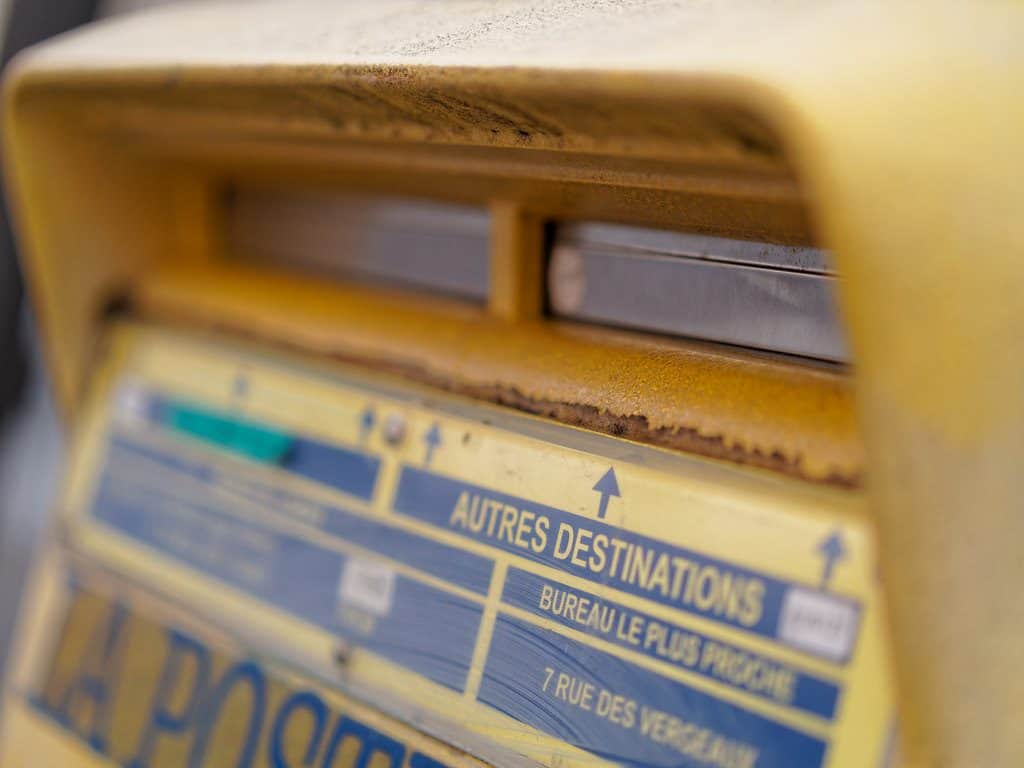
URSSAF’s Summer Robbery (and Autumn Reimbursement)

Back in 2016 I wrote my very first article about French taxes. I noted that I had to send two written corrections to the Ministry of Finance by registered mail, asserting (with my French accountant gently nudging me forward) that I, in fact, did not owe taxes to the French on my foreign income. It was only after the second letter (they had tried to get away with simply a reduction in the first reply) that they removed all liability.

Reflecting on that incident now, I remember being surprised that it could have happened. I had only been living in France for about three years at that point. I had the idea that tax returns go into a machine, and that the machine double-checks your own calculations, and then voila, you get your September attestation. This situation turned me on to the idea that sometimes, the machines can screw up, even with something so banal as number-crunching.

Summer 2024 marked a new milestone for me. As is the case for most of my summers in France since 2015, I was away from Paris for the majority of the time. That also meant if “administrative issues” occurred, I probably wouldn’t be able to deal with it until after the rentrée, for various reasons. In this particular case, URSSAF suddenly started pulling out seven times my normal monthly social contribution out of my business bank account.

I say “suddenly” but the truth is that URSSAF sends a “regularization” notice for your social contributions (just as the Ministry of Finance sends one for your personal taxes). The latter normally comes in September but with the new integration of URSSAF with your tax filings, the former came as part of a regular email notice that I ignored. Revenue for my French business had been more or less the same in relation to the previous year so I thought my contributions would remain the same.

Wrong.

For whatever reason, URSSAF had taken my foreign earnings amount, which I have to declare on my French personal return, and decided that all of it was taxable French business income. I only learned that because I sent an email to my personal and business accountants (in September, when I knew everyone would be back) asking what could have happened, and did I miss some new major tax that had been levied on small businesses?

The same accountant who all those years ago helped me stand up to the Ministry of Finance wrote back:

The XXX€ amount represents US source earnings for which you paid social charges in the US. URSSAF should not be using this amount in their calculation.

This happened to one other client and after correspondence with URSSAF by the client’s French accountant, he was able to correct his calculation.

The explanation should be that this is US source income and per the social security tax agreement (Totalization agreement) it is taxed in the US thus exempt from French social charges. 

She helpfully enclosed the link for me to share with URSSAF in correspondence.

I duly forwarded my objection to URSSAF and a couple of weeks later I got a new regularization and a large portion of the overcharge refunded to my bank account for the 2023 number. Now that I’ve gotten clarity on what happened, I’m going to restate estimated numbers for 2024 to URSSAF (quite easy since it’s almost the end of 2024), and once they process that, I will probably get the remaining amount of the overcharge refunded.

Two key takeaways:

  • As doli recently noted in her dogged pursuit of the French to pay her back for the locks they broke, it’s about persistence. Most people, even the French, often cave on personal administrative injustices, as confrontation with the authorities is emotionally draining, and life is hard enough. Stay dogged.
  • The French bureaucracy is going to make mistakes, even nonsensical ones sometimes. Stay patient and make sure you have good help.

Speaking of good help, for years we have been dogged by the question, “Do you know any good accountants?” My accountant (the one referred to in this story) stopped taking new clients in 2018 so I’ve not been very helpful in recent years other than to send links to some accountants we had found online but had not gotten to know. But thankfully, we now have a resource. You’ll see short interviews done with these firms in the weeks ahead to give you a bit more context. When you reach out to them, let them know The American in Paris sent you. It’s one more way you can support our work. 🙂

If you’d like a laugh from a fellow immigrant, Tatty Macleod, who understands the pain of URSSAF, click here.

Photo by George Becker.

Did you enjoy this article? TAIP is 100% reader-supported through tipping. If you want to leave us a tip of any amount it would be highly appreciated. These tips help support our efforts to keep TAIP an ad-free environment. Just as at a cafe, the tips are split evenly among the team.

This story also appeared on Medium.

A French Classroom

How I Got a Job Teaching in France (and How You Can Too)

In the fall of 2023, I was heartbroken. I had just returned to the United States after two months in France. I spent the summer interning with a mission organization abroad and fell in love with the country in the process. I knew the only long-term cure for my heartache was to get back to France. But how could I do that for only another three months? No, it needed to be for longer, which would mean needing a visa. Getting a visa would mean needing a job, and how was I going to get a job in France? 

Such was my plight when I met a friend of a friend who taught French in New York. She told me about a program she had done in Paris called TAPIF. After I got back to Texas from visiting my friend, I did a quick Google search and learned that TAPIF stands for Teaching Assistant Program in France. I also learned that it would come with a French visa for the duration of a school year. 

TAPIF is the American Embassy’s face of a French government program that solicits young people from all over the world to teach their native tongue in French public schools. The program currently partners with 77 countries and in 2024 welcomed 2,992 language assistants to France from all over the world.

Who Can Apply for TAPIF?

TAPIF asks applicants to be American citizens (or green card holders) between the ages of 20 and 35 and to prove a B1 level of fluency in French. Also to be included in the dossier (French for “file”) is a letter of motivation for why they want to participate and a letter of recommendation from a teacher or mentor — both in French. No previous teaching or foreign experience is required, though it certainly helps with one’s likelihood of acceptance. For the 2018-19 school year, TAPIF boasted over a 55% applicant acceptance rate for 1,100 positions scattered across France. 

My Application Experience

Finding myself within the program’s age limit, applying was a no-brainer. There was just one catch… I was definitely not at a B1 level of fluency at the time. Discovering the program in October of 2023 and with an application deadline in January of 2024, I was left to go from an A1-ish to a B1 in two and a half months. Having never studied French in a classroom, I had no French teacher or college transcript that could vouch for my knowledge of the language. Therefore, I would need to prove my fluency by a formal test like the DELF. 

A little research led me to discover there was a B1 DELF test offered by the Alliance Français in Dallas on December 12th, about a 45-minute drive from my home. This would render my results at the end of December, just in time for the application deadline in January. I quickly signed up for a course to start the next week and studying French became my job (in addition to my other job).

Passing the DELF means navigating an oral production, oral comprehension, written production, and written comprehension section with a comprehensive score of at least 50%. My scores were far from perfect, but I passed and received my unofficial B1 certificate in time to submit the application to TAPIF. Once it was submitted, the waiting game began. 

What’s the pay?

A language assistant’s average work week consists of teaching for 12 hours in up to three different schools for a modest stipend of €1,010.67 per month. Aside from the visa, perks include France’s generous vacation schedule and a generally lighter workload than an American may be used to. Language assistants are not allowed to give grades or to assign homework, so outside work solely consists of preparing for classes. 

What’s the catch?

One of the more challenging aspects of TAPIF is that applicants have little say in what age students they will teach and where in the country they will live. Postulants are asked for their top 3 academies of the 26 in France (think school districts), if they prefer to live in a big city or the countryside, and if they prefer to teach primary or secondary school. TAPIF clearly states that preferences are in no way promised and if accepted applicants are asked to promise to do the program no matter what assignment they receive. It’s a big ask, but at the end of the day, they can’t force anyone to buy a plane ticket to France and I know people that have turned down their acceptance offer. 

Getting the news

News of acceptance was promised sometime in April, and in natural French style on May 1st I received an apology email that results were not to be expected for another two weeks due to the high number of applications that year. So after a month and a half of holding my breath every time I opened my email, I got the news. I was accepted. 

A few weeks later, at the top of June, I received my assignment to the Academy of Clermont-Ferrand, third on my list of preferences. Naturally, I started sharing the news with friends and researching about the city; however, this was mostly in vain. About two weeks after that, I received news of the department I would work in, the name of one of the three schools where I would teach, and the contact of my liaison for the school district. The Haute-Loire department where I was placed could not be farther from Clermont-Ferrand. At first, I was upset, but on further research of the little town I was placed in, I realized I might not have it so bad. 

Le Puy-en-Velay, though little known by most French people, is a wonder for its beauty and history. The town is a medieval starting point for the Chemin de St. Jacques-de-Compostelle, aka the Camino, and boasts a 12th-century cathedral to match. It has a lively center and attracts artisans of all kinds for its beauty. Though admittedly remote, the landscape is spectacular, with surrounding views for nature lovers like myself. And even better, the level of English here is relatively low, so I am happily forced to use and grow my French vocabulary every day. In terms of a genuine French experience, I won the jackpot with TAPIF. 

Final Thoughts

For obvious reasons, this is not a program for everyone. Though possible, it is not practical to do with a spouse, much less with a family. TAPIF recognizes its salary is scarcely livable for one person and even then, they recommend having a few thousand in savings to make the move and enjoy any additional travel. That being said, it has been an excellent way for me to give living in France a go, and to have a fast-track for gaining employment as a non-native. Each year applications are open from mid fall to late winter. 

To learn more about TAPIF, its requirements, and this year’s deadlines visit their official website here.

Photo is of a French classroom from my first school visit.

Did you enjoy this article? TAIP is 100% reader-supported through tipping. If you want to leave us a tip of any amount it would be highly appreciated. These tips help support our efforts to keep TAIP an ad-free environment. Just as at a cafe, the tips are split evenly among the team.

a bookshelf of english and french books

Raising Children — Bilingually? Part 2

Note from the editor: If you haven’t already, be sure to read Raising Children — Bilingually? Part 1 before jumping into Part 2. — MS

Bilingual Native-Language Acquisition

Children who are brought up bilingually will acquire two native languages according to the same processes as children who acquire language in a monolingual environment. 

All children, whether they are brought up in monolingual or bilingual situations acquire language passing through the one-word and two-word stages as they build up language proficiency. However, bilinguals must learn to distinguish between two different streams of language and then develop their language accordingly. 

Whether due to early non-discrimination or to the difficulty of acquiring first words, children in the early one-word sentence stage in a bilingual situation will use either language without differentiation according to whom they are speaking. This is comparable to monolingual language acquisition, where children do not acquire synonyms immediately, sometimes hypothesized as a measure of efficiency in the language acquisition process.  At about the same time as when monolinguals start using synonyms, the bilingually-raised child then begins to use equivalents separately. This means that there should be no fear of a child’s ultimately “mixing” languages as long as caretakers specifically take heed not to mix languages themselves. What children hear, they imitate. 

Brain Studies and Cognition

Studies of brain functioning in bilinguals have been and are still being carried out extensively. After much research into language competence, it is generally accepted that bilinguals have a single, integrated language system. 

Also, “language and cognition may not be processed separately in the brain; instead they interact with and facilitate each other… Bilingualism appears to be associated with more effective cognitive control, particularly with executive control and executive function (EF) abilities.” (Higby et al.)

Experience with two languages tends to lead to greater cognitive efficiency. Bain has carried out a longitudinal study comparing two bilingual children and two monolingual children using cognitive testing as set up by Piaget and Vygotsky, He concludes that the bilingual brain is a better tool for learning. 

Children learning two languages from infancy are not impaired cognitively or academically. It may even be possible to conclude that bilinguals have superior language skills as well as other cognitive abilities as compared to those of monolinguals. For example, it seems the tendency for bilinguals to be better in mathematics than monolinguals might be due to their having learned to handle abstraction from an early age. For a monolingual, the object “bed” and the word /bed/ are bound together such that the word is the thing. Piaget once asked five-year-olds to give him a long word, and many of them answered “train.” On the other hand, a bilingual has learned that the object can be called either /bed/ or /li/; words, which are abstractions, are thus separate from the objects they designate. 

Code-Switching and Interference

That a bilingual’s two languages co-mingle in a single language system where both languages remain continually activated implies possible alternation between the two languages. One language needs to be inhibited when speaking in a context where the other language is being used. This imperfect separation leads to code-switching when bilinguals speak among themselves or to interference when speaking in a monolingual situation. The former refers to using elements of a different language within the speech stream of the language in which an exchange is taking place. In this case, these elements are not affected by the host language. “Interference” is the transference of elements of one language to another at various levels, namely phonological, grammatical, lexical, and orthographical. In this case, the foreign elements are modified to fit the host language (Amenorvi). Alternation in the case of code-switching is considered to be positive as it often refers to language choice; however, interference is viewed as negative as it is often involuntary.

The abundant code-switching observed in conversation between and among bilinguals has led to the recently developed concept of “translanguaging” whereby bilinguals express themselves across languages to best communicate nuances that may not exist in both languages. 

Bilingual communication may lead to what is referred to as “negotiation of language” whereby each participant tends to pull exchanges toward their preferred language. This can often be observed between children preferring to speak in the majority language as they converse with a parent or grandparent whose preference is the minority language. Often when my son came home from French public school, totally immersed in French, he immediately began telling me about his day in French. Pulled in this direction I found myself responding in French until at some point I had difficulty making my ideas clear in this language and wondered why I was even trying to do so. I then switched to English, pulling him in that linguistic direction.

Life-long Bilingualism

As bilinguals grow older their language experiences modify their language use. Language dominance may change over time, as they use one language more than another. They may learn other languages, or they may lose some ability in one of their languages, known as language attrition. Language dominance and attrition are dependent on language exposure and can evolve: more exposure at a given time will improve language ability, reduced exposure can lead to more or less attrition. Losing some vocabulary, for example, in a native language that is not being used, is not unusual and not to be worried about. Increased exposure would bring renewed competence. 

More and more research is being carried out on the relationship between bilingualism and dementia. It would seem that “actively using two languages seems to have a protective effect against age-related dementia.” The lifelong usage of two languages contributes to neuroplasticity and has been shown to delay cognitive decline “with a delayed age at onset of dementia” (Kamenetz). Furthermore, older bilingual adults are better able to cope with the pathology of neurodegeneration. One study shows that should bilinguals with dementia present greater neurodegeneration, their cognitive performance remains comparable to monolinguals with dementia. The hypothesis is that “Bilingualism recruits alternative brain networks to compensate for those that become damaged during aging and dementia (Marian and Shook, 2012). There would then exist a greater cognitive reserve to enhance brain functioning during aging. 

Some Anecdotes

I was very strict in my use of English until my son became much older and we fell into code-switching modes. When visiting friends, I even read French-language children’s books to him in English, at least until the simultaneous translation became too difficult. Once, friends remarked, “We didn’t know we had English books in the house.”

When bicycling in Finland with my two-year-old, and not keeping very regular meal hours, one day my son called out, “Mommy. Eat, mange.” Clearly, he was using every linguistic tool in his possession to cry out his hunger. It was definitely time for lunch. 

Once, when chatting with my neighbors, my three-year-old turned to me and asked, “Can I go to Maryse’s?” I said, “Ask Maryse.” He then turned to her and asked, “Je peux venir chez toi?” After her responding, “Oui,” he turned back to me saying, “She said ‘yes’.” 

When coming home from kindergarten with my son one day, we stopped at a Chinese take-out to get lunch. As the server prepared our dishes, she complimented my son on his bilingualism. I immediately asked her what language she spoke with her own little boy I had seen behind the counter. Looking down and hiding her face she responded, “Mandarin,” as if she were ashamed. I immediately launched into compliments on how wonderful she was to speak to him in Mandarin and the fantastic effects on the brain of being brought up in two such different languages. By the time our food was ready, she was standing much straighter and smiling broadly.   

If any of a child’s caretakers speak a native language other than French in this country, I implore you to speak with them and play with them in your own native language. It can only serve them well.

Photo of our bilingual bookshelf.

Did you enjoy this article? TAIP is 100% reader-supported through tipping. If you want to leave us a tip of any amount it would be highly appreciated. These tips help support our efforts to keep TAIP an ad-free environment. Just as at a cafe, the tips are split evenly among the team.

mini american and french flags in a cup on a wooden table

US Taxes for Americans Living in France

Note from the editor: One of our most asked questions here at TAIP is: how do I file my taxes as an American expat in France? Do you have any accountant recommendations? As such, I’ve made it a goal to come into contact with some reputable CPAs. Universal Tax Professionals specializes in US taxes for Americans living abroad. Josh Katz, CPA and Founder of UTP shared this very helpful overview of everything you need to know about filing as an expat in France, as well as ways UTP may be able to help. — MS

For Americans living in France, the issue of taxes can seem complex, as they need to address both French and US tax obligations. While living abroad provides many opportunities, it does not absolve US citizens from filing and paying US taxes. The US operates on a citizenship-based taxation system, meaning Americans must file a tax return annually, no matter where they live. 

Who Needs to File US Taxes?

All US citizens and Green Card holders living abroad must file a US tax return if they meet the below income thresholds:

  • $13,850 for single filers
  • $27,700 for married filing jointly
  • $5 for married filing separately
  • $20,800 for head of household
  • $400 for self-employed

This means if your worldwide income, including earnings from French sources, exceeds these amounts, you must file a US tax return, regardless of where you live.

Foreign Earned Income Exclusion (FEIE)

To reduce the burden of double taxation, the Foreign Earned Income Exclusion (FEIE) allows Americans living abroad to exclude a certain amount of their foreign-earned income from US taxation. For the 2023 tax year, this amount is $120,000. To qualify for this exclusion, you must pass either the Bona Fide Residence Test or the Physical Presence Test.

  • Bona Fide Residence Test: You must reside in a foreign country for an uninterrupted period that includes a full tax year
  • Physical Presence Test: You need to be physically present in a foreign country for at least 330 full days in any consecutive 12-month period

Foreign Tax Credit (FTC)

In addition to FEIE, US expats in France can also claim the Foreign Tax Credit (FTC). This credit allows you to offset taxes paid to the French government against your US tax liability. If you pay taxes in France, you may be able to avoid double taxation on the same income by claiming the FTC.

For instance, if you’re employed in France and pay French income taxes, the amount of tax you pay to the French government can be credited against the US taxes you owe. This credit applies to income, dividend, and interest taxes but not to social security contributions.

Reporting Foreign Bank Accounts: FBAR

If you have a foreign bank account, including accounts held at French banks, you may need to report this to the US government. The Foreign Bank Account Report (FBAR) is required if the total value of all your foreign financial accounts exceeds $10,000 at any point during the year. The FBAR must be filed electronically with the Financial Crimes Enforcement Network (FinCEN) by April 15 each year, though an automatic extension to October 15 is available.

FATCA Reporting

The Foreign Account Tax Compliance Act (FATCA) requires US expats to report their foreign assets if they exceed certain thresholds. For US taxpayers living abroad, the threshold is $200,000 for single filers and $400,000 for joint filers at the end of the year. This includes bank accounts, investment accounts, and other financial assets held in France.

FATCA reporting is done through Form 8938, which must be included with your US tax return.

Self-Employment Taxes

If you’re self-employed in France, you must pay US self-employment taxes, which cover Social Security and Medicare. The US self-employment tax rate is 15.3% of your net income. However, if you’re covered by the French social security system, the US-France Totalization Agreement can help you avoid paying social security taxes in both countries.

Under this agreement, if you contribute to the French social security system, you won’t be required to pay US self-employment taxes. However, you’ll still need to file your US tax return and report your income.

Double Taxation and the US-France Tax Treaty

The US-France Tax Treaty helps avoid double taxation by providing rules for which country has the right to tax specific types of income. For example, the treaty outlines how pensions, investment income, and wages should be taxed to prevent them from being taxed by both the US and France.

Understanding how the treaty applies to your situation is crucial, as it can affect your tax liability in both countries. 

Deadlines and Extensions

For Americans living abroad, the US tax filing deadline is June 15 — an automatic two-month extension beyond the standard April 15 deadline. However, if you owe any taxes, interest will still accrue from the April deadline. If you need more time, you can request an extension until October 15, but you must submit Form 4868 to do so.

Streamlined Filing Compliance Procedures

If you’ve fallen behind on your US tax filings while living in France, you may be able to catch up without facing penalties through the Streamlined Filing Compliance Procedures. This program is designed for expats who have not filed their tax returns due to non-willful neglect. To use the program, you must file three years of back taxes and six years of FBARs, along with a statement explaining your non-compliance.

How a Tax Professional Can Help with Your US Taxes

Handling US taxes while living in France can be challenging, especially with the complexity of filing requirements, credits, and exclusions available to expats. Working with a tax professional means you won’t have to worry about missing deadlines, filling out complicated forms, or determining whether you qualify for certain credits. They can help simplify the process and reduce the risk of penalties or overpayment.

Universal Tax Professionals has been offering tailored tax services to American expats in France for over ten years. Our experienced team specializes in US expat tax preparation, ensuring that you comply with US tax laws and maximize the credits and exclusions available to you. Whether you need help filing back taxes, claiming the right deductions, or understanding complex reporting requirements, UTP provides personalized support. Reach out to schedule a consultation today and let our team take the stress out of your US tax filing while living in France.

Photo by The Now Time on Unsplash

Did you enjoy this article? TAIP is 100% reader-supported through tipping. If you want to leave us a tip of any amount it would be highly appreciated. These tips help support our efforts to keep TAIP an ad-free environment. Just as at a cafe, the tips are split evenly among the team.

two wedges of cheese and scrabble pieces spelling out cheese and fromage

Raising Children — Bilingually? Part 1

Language choices in a mixed native-language family or one whose native language(s) is not that of the majority culture surrounding them


New country, new language, and maybe new family? Language, then, becomes an important issue. When two people get together they fall into what is a comfortable language of communication. However, when children come along, linguistic decisions, what is referred to now as Family Language Policy, need to be made as to their all-important language acquisition.

Some of the important questions to help plan for children’s linguistic upbringing include:

  • What language(s) do the parents speak together where French is the majority language of this relatively monolingual country?
  • What are their native languages?
  • Does one of them speak their native language when they are together?
  • Or do they speak a language of communication that is the native language of neither of them?
  • How well do they speak the majority language?
  • How important is it that the children learn each of the parents’ own native language?
  • And thus, what language(s) will the children be brought up with, and how? 

If at least one of the parents, or grandparents does not speak the majority language as a native speaker, the question of raising children bilingually is brought to the fore. 

Having carried out my thesis on child bilingualism and raising my son to be bilingual such that he has two native languages, this article is a continuation of my decades-long crusade to raise children bilingually in France because bilingualism matters.

Bilingualism as a Native Language

Long before Ronjat’s (the grandfather of child bilingualism) 1913 publication of Le Developpement du Langage Observé chez un Enfant Bilingue he had asked his own professor how to raise a child bilingually. The answer, which was “one person, one language,” has been the recommendation for parents ever since.

“Never switch roles. In this manner they will begin to speak two languages without noticing it and without having to put forth any special effort in learning them” (In: Bain Bruce 1996, p. 177). 

Although there has been some controversy on the subject, it remains that children need to anchor, in some way, a separation of the languages they are learning. Obviously, this differentiation will be inherent in their linguistic environment. For example, one caretaker might speak the majority language (the language of the community outside the home) and the other the minority language (a language different from that of the outside community). There should be no mixing in the caretakers’ language(s) so that the child will learn to keep the languages separate, even though language itself is learned as a whole. 

Raising Children Bilingually in a Monolingual Environment

Until recently, and somewhat even still, the typical attitude in France toward bilingualism (in spite of Ronjat) has been “Against.”

As of 30 years ago and much further in the past at least in the 70’s, when I was writing my thesis, how often was it said that children being brought up bilingually never learn their two languages well, that a second language would negatively affect the child’s French?

Of course, this was all hearsay in a language-political context where the French were defending their language against English as the language of communication. I remember when a very respected researcher in language acquisition, a friend of mine and a direct student of Piaget’s, said when my son was born, “Bilingualism doesn’t really exist.” I did not rise to the argument, but then what will we call it when people speak more than one language fluently? Obviously, she was thinking in terms of perfection; but then, how many monolinguals speak their (only!) language ‘perfectly’? The most widely used definition for bilingualism is Grosjean’s: “bilingualism is the use of two or more languages… in everyday life.” 

In fact, globally, there are more bilingual situations than monolingual ones, typically where in a country more than one language is spoken. This means that France is an exception rather than a rule. And then, when we think of France’s colonization in Africa, it was never asked whether it was good for children to learn French in addition to their heritage language. It was taken for granted that learning French could only be good for them. As Bain suggests, the results of research concerning whether bilingualism is positive or negative can be politically and ideologically motivated.

Language Ability

The question of children’s ability in their two languages is more complex than what has been suggested above.  Bilinguals are not just two monolinguals put together. Their ability in the two languages is rarely equal. Only exceptionally are children what I have heard called “perfectly bilingual,” sometimes called “balanced bilinguals” and which is what Valdes calls “mythical bilinguals.” Typically we will speak of a dominant language, the language the child is most proficient in, and the non-dominant, or weaker language. And even in this case, a bilingual can be more proficient in one context in one language and another context in the other language. 

Bilingualism is not just a question of Linguistics; Sociology and Psychology are also important factors in its development. From a sociological point of view, it is easier to raise a child bilingually French-English in France than, let’s say French-Arabic or French-Swahili. English is considered an “important” language and is encouraged in discrete ways. For example, I have had people stop me in the street with my three-year-old and say how wonderful it was that he would be bilingual.

On the other hand, I have never seen (nor have my students when I asked) people stopping in the street to compliment a mother speaking Arabic, Bambara, or Hindu. On the one hand, the child is receptive to compliments on their language ability, and on the other, parents are discouraged by school teachers to speak a language other than French to their children, especially when it is non-occidental European. And even for English, I was sometimes told to speak French to my child. No way would I listen; furthermore, I would give the person a half-hour lecture on child bilingualism. No one ever made the same suggestion twice. 

Sometimes children, however, refuse the minority language. Typically they are influenced by those around them and do not want to feel “different” from others, or rejected for the home language they might speak. In this case, the recommended course is to stubbornly continue to speak the minority language with the child even when they refuse to answer in that language. This creates what is called “passive bilingualism,” where the child understands but cannot/does not speak the language. The best way to improve competence in the minority language,  and to help the child to become an active speaker, is to take the child to a country where the minority language is spoken as the majority language. What typically happens then, is that the child will pick up the language very quickly, in fact in as little as a few weeks. 

Otherwise, it is important to try to bring the child in contact with people other than the parent who speaks the minority language. Reading to the child in the minority language is very important for language learning. Videos, too, help the child to advance their minority-language learning.

Stay tuned for Part 2, in which doli will cover how age, the brain, and cognition play a role in raising children bilingually.

Photo taken of arguably one of the most important words in French and English.

Did you enjoy this article? TAIP is 100% reader-supported through tipping. If you want to leave us a tip of any amount it would be highly appreciated. These tips help support our efforts to keep TAIP an ad-free environment. Just as at a cafe, the tips are split evenly among the team.

aerial photograph of buildings in monaco

A Weekend Guide to Nice, Monaco, and Cannes

Note from the editor: Toby Patrick is a freelance writer, currently interning with a Design Agency in Manchester, who has a love for traveling and writing. He has a love for traveling and writing and in this article talks about how to explore the glamorous side of France.

A large part of France’s beauty lies in the country’s ability to offer something for everyone. It’s no surprise that the nation’s capital is home to many of France’s most famous attractions, while Lyon offers a delightfully French experience, and Marseille is a great spot for a beach holiday. But if it’s glitz and glamor you want, there’s a clear winner.

The French Riviera, or Côte d’Azur as it’s known in its native tongue, isn’t just one of the most glamorous parts of France, it’s one of the most glamorous places in the entire world. Synonymous with high-profile events and five-star hotels, this part of the South of France is a popular choice with everyone from backpackers to honeymooners.

Whatever you’re reason for visiting, here’s how I’d spend a luxurious long weekend in the South of France.

Where to Start?

The beauty of the French Riviera is the close proximity of its towns and cities, allowing city hoppers and travel junkies to take in several parts of the region in a short space of time.

Nice is the main city and as such should form a big part of your visit to France’s most glamorous region. I’d recommend being based in Nice. Firstly, due to it being the largest city on the French Riviera and secondly, because you’ll find it nestled between Monaco and Cannes.

If you’re relying on public transport, you can travel to both Cannes and Monaco from Nice in under an hour.

Nice 

As the largest city on the French Riviera, you won’t be short of options when it comes to things to do in Nice. As one of the most scenic parts of France, it’s also great for backpackers and travelers on a tight budget; simply taking a stroll around Port Lympia, going for a run along the promenade, or working from one of Nice’s many wonderful cafes are affordable but enjoyable ways to spend your time there.

If you’re looking for something lively, you’ll find Nice offers a far more diverse nightlife than Monaco or Cannes. Whether it’s live music bars, rooftop cocktails, or buzzing nightclubs, Nice has something for everyone when it comes to nightlife including a famous beer festival every October.

The general consensus is that a day or two isn’t long enough in Nice, but if your visit is fleeting, you may want to focus your time on the famous Old Town. Here you can immerse yourself in the city’s historic culture by visiting the many churches and Cathedrals, take in a performance at the Nice Opera House, and sample the famous Cours Saleya market.

If you’ve recently tied the knot and are heading to Nice during your honeymoon, there are plenty of romantic activities you can partake in. I’d recommend checking out some of the vineyard tours on offer in Nice or, if you’re visiting in summer, consider a date night on one of Nice’s luxurious private beaches.

Monaco 

If you can time your visit with the F1 Grand Prix, you’ll probably find yourself rubbing shoulders with some of the world’s most famous faces as they enjoy the glitz and glamour of the world’s most famous race.

If not, you can still enjoy Monaco’s iconic F1 circuit. In fact, there’s something quite special about walking around such a famous track while the people of Monaco use the same roads to go about their daily lives. The track is around 4.5km (2.8 miles) so can easily be toured in an hour or so. Consider taking a walking tour which will stop at all the famous landmarks including Casino Square, La Rascasse, and the yacht-filled harbour.

If F1’s not your thing, other glamorous sightseeing stops include the Casino de Monte-Carlo and the Prince’s Palace. If you’re interested in learning more about the Monaco principality you may want to check out the National Museum of Monaco. Alternatively, the Museum of Stamps and Coins is another one of Monaco’s most well-known museums.

Finally, we couldn’t talk about Monaco without talking about wealth and luxury. Monaco has the largest density of millionaires, so where better to do some luxury shopping than in the home of luxury? At the La Promenade Monte-Carlo, you’ll find world-famous brands like Louis Vuitton, Dior, Prada, and Rolex.

Cannes

It might be best known for its film festival but there’s far more to see in Cannes. The Cannes and Cinema guided tour is a great option if you’re on limited time. This will take you to the most famous spots in the city, including its most famous hotels and casinos. This is a great way to see Cannes best bits in a couple of hours.

If Monaco is all about glamour then Cannes takes that and combines it with the vibrance of a seaside town. I’d definitely check out some of the fabulous beaches that Cannes has to offer for a very different experience to Monaco which in contrast only has one public beach. 

I’d also visit Le Suquet, or the Old Town, which is the perfect setting for a stroll or coffee date. There are plenty of cafes and bistros among the narrow, picturesque streets of what was formerly a fishing village. Like most places in this part of the world, you’ll find an array of wonderful places to eat offering stunning views. 

If you want to take in a few cities on your next visit to France, look no further than the French Riviera. While this part of France is well known for its glamour, don’t underestimate its history, culture, and abundance of things to do. 

Photo by Roxana Crusemire on Unsplash

Did you enjoy this article? TAIP is 100% reader-supported through tipping. If you want to leave us a tip of any amount it would be highly appreciated. These tips help support our efforts to keep TAIP an ad-free environment. Just as at a cafe, the tips are split evenly among the team.

yellow and orange buildings in perpignan

48 Hours in Perpignan

Note from the editor: Toby Patrick is a freelance writer, currently interning with a Design Agency in Manchester, who has a love for traveling and writing. In this article, he writes about one of his favorite places and future retirement home, Perpignan. — MS

When it comes to the South of France, the likes of Bordeaux, Monaco, and Marseille are usually the first recommendations on people’s lips. But nestled on the border of France and Spain in the historic territory of Catalonia is the hidden gem that is Perpignan.

Fabulously French with more than a hint of Spain, Perpignan really doesn’t get spoken about enough. With something for all ages and interests, and just over an hour-long train journey from the more talked about sights of Barcelona, it is also a great destination to fit into a tour of Europe. If you ever find yourself spending a couple of days in Perpignan however, here’s how I’d spend them.

The Cathedral of Saint John the Baptist 

Whether it’s for religious reasons, or just to admire the architectural beauty of this 14th-century masterpiece, paying a visit to the Cathedral of Saint John the Baptist should be top of your list of things to see. 

I’d recommend a tour of the cathedral to get a deeper understanding of its rich history. Admission is free too, so it’s a great activity to fit in if you’re working on a tight budget.

Palace of the Kings of Majorca

One thing I love about Perpignan is that its intriguing ancient history is still standing and well and truly still visible today. The Cathedral is a great starting point, but the Palace of the Kings of Majorca will leave you feeling like you’ve been transported back in time.

The palace was originally built for King Jacques II in the 13th century, and not a lot has changed! This means you can visit the same dining rooms, banquet halls, and the apartments where royalty once lived. 

Hôtel Pams

One of my favourite spots in Perpignan is Hôtel Pams. This 19th-century mansion is now owned by the city, but the building itself can be traced back to 1852 when it was purchased by the son of a successful businessman.

As for the luxurious mansion that you see today, you can thank French politician Jules Pams who remodelled the building in the late 1800s along with French architect Léopold Carlier. 

The interior will leave you in awe, and the grounds are the perfect place to take a short break before you carry on exploring the rest of what Perpignan has to offer.

Eat and Drink by Le Castillet 

Perpignan offers an abundance of plazas and squares, the main square being Place de la Loge, which gets pretty lively in the evening and is where younger visitors tend to end their nights. 

For a more relaxed atmosphere, and my personal favourite, head to the square located in front of Le Castillet. This isn’t as busy as some of the other squares yet still has plenty of shops, cafés, and bars. Le Castillet itself also offers a stunning backdrop to a lunchtime coffee or evening meal.

I find Perpignan’s food and drink scene to offer a great balance. The squares offer plenty of atmosphere without the hustle and bustle of the nation’s capital, yet also have that relaxed feel that’s synonymous with Southern France.  

French Sport

When it comes to French sport, Les Bleus (that’s France’s soccer team) are experiencing somewhat of a golden era at the minute. But in the city of Perpignan, it’s a different shaped ball that residents are more interested in.

I’d definitely recommend taking in a rugby game during your stay if you’ve got time, it’s a far more authentic French experience than heading to Paris to watch PSG which many tourists choose to do.

Your two best options are Perpignan Rugby Union team which plays in the Top 14 league, or the Catalans Dragons who play in the Super League, a rugby league competition made up predominantly of British teams.

So, whether you’re interested in architecture, history, food, and sports — if you’re in France I imagine you do — Perpignan is a wonderful place to spend a weekend.

Photo by Mathilde C on Unsplash

Did you enjoy this article? TAIP is 100% reader-supported through tipping. If you want to leave us a tip of any amount it would be highly appreciated. These tips help support our efforts to keep TAIP an ad-free environment. Just as at a cafe, the tips are split evenly among the team.

piggy bank next to gavel

Bank Accounts, Taxes, and New Legislation: a Quick Guide for the American Expat in France

Note from the editor: In this special guest post, Robert Levitt, a French licensed investment advisor at Levitt Capital Management, a tax and investment advisory firm established to work with US citizens in France and throughout Europe, shares news of two pieces of legislation that could have an impact on American expats in France. Follow the link above if you’re interested in working with Robert or his firm – MS

Americans who live in France may already know they are unique in the world of expats — they fall under two different tax regimes: the United States and France, and both tax you on your worldwide income.

You may also know that the US and France have some of the most favorable tax treaties in the world, especially when it comes to investment portfolio strategy. These treaties not only reduce double taxation but also allow you to take full advantage of the best of both countries’ tax rules.

So for most Americans in France, changes in US legislation can often be a huge setback, not an advance. At our investment and tax advisory firm, Levitt Capital Management, we closely follow the legislative activity in Washington that can impact expat Americans. Two proposals on the horizon are worth discussing.

New Legislation in DC Most Likely Won’t Impact Americans in France

A new bill, called the Overseas Americans Financial Access Act, is intended to provide relief for Americans who have trouble opening basic bank accounts in the country of their residence.  

I had the opportunity to catch up with Congresswoman Titus, the person who introduced the bill, and I’m impressed with her efforts. However, in my opinion, the bill will not be very helpful for a myriad of reasons.

Its basic premise, sometimes called the “Same Country Exemption,” proposes that Americans who live in a foreign country would not be subject to FATCA on their basic checking accounts open in the country where they live. 

Bills that provide relief for Americans abroad are a good thing and, again, I applaud Congresswoman Titus. But I don’t believe this particular bill will be helpful. Legislation in the United States famously doesn’t impact banks in Europe, and nobody involved seems to have asked the banks if it would change their view on Americans.  

I decided to do the research myself and have discussed the potential of a bill like this with banks throughout the UK and Europe. The answer? No, a bill of this type wouldn’t have any impact on what they do, because if they tried to determine who lived where it would just add to the bank’s burden. 

Most of the people I spoke with also mentioned there are logistical problems with the legislation as well. Each country has signed a specific agreement or treaty with the United States regarding FATCA. Meaning, that even if the bill were passed into law, it would not change the treaty agreement. 

It’s also an idea whose time has come and gone. Thankfully, opening a basic bank account is no longer an issue in Europe (particularly in France). Most banks have purchased the software needed to conform with the FATCA regulations. So, if a particular bank refuses an American, there are plenty of alternatives out there.

Better Legislation on the Horizon?

Far more interesting is legislation soon to be introduced called the Americans Abroad Tax Bill. It’s set to:

  • Combine tax and foreign bank and financial account reporting (FBAR and FATCA) 
  • Study and report on the simplification of currency exchange rates 
  • Increase the threshold for simplified foreign tax credit rules and reporting 
  • Give a time extension for persons outside the United States to request abatements of math errors 
  • Reduce the burden for lower-income dual citizens expatriates and more.  

Some of these issues are probably non-starters because combining the FBAR with the FATCA filings would be opposed by both the IRS and FinCEN, the financial crimes unit of the U.S. Treasury, so I’m not sure that portion will pass.

It’s complicated, but still, this is a bill that I can support and will advocate for in an upcoming trip to Washington — although it has a far better chance of passing in 2025 than in 2024.

There is far more involved in the bill, and if you’re interested in seeing the text, I’d be happy to discuss it with you. While tax and financial issues can seem overwhelming, more and more providers understand these issues and offer straightforward solutions. We are one of those providers, and would be happy to work with you!

In any case, whether these bills are passed or not, I applaud the efforts of all legislators who are trying to provide relief to Americans who live in France. It is needed and appreciated.

Photo by Sasun Bughdaryan on Unsplash

Did you enjoy this article? TAIP is 100% reader-supported through tipping. If you want to leave us a tip of any amount it would be highly appreciated. These tips help support our efforts to keep TAIP an ad-free environment. Just as at a cafe, the tips are split evenly among the team.

a dining table with glasses and plates

Navigating a Parisian Dinner Invitation

Note from the editor: Parisian for more than a decade, ex-chef turned food tour guide Chef Tris shares his passion for French food and life in Paris on his blog Eat Like the French. Tris has recently joined the TAIP team with the hope of guiding us through the culinary minefields of Paris to ensure you always eat like a local in France. — MS

“I’m never inviting young Americans to my house ever again,” said my wife, her voice tinged with exasperation, as our two new American friends left our Parisian flat. The evening, which began with excitement over a Dungeons and Dragons game, had devolved into a lesson in cultural missteps. This stark declaration was a wake-up call — a reminder that French dining etiquette is an art form, one that demands respect and understanding. I love sharing my passion for French food and the art de la table, and was delighted to write a blog post for TAIP to act as your guide to navigating a Parisian dinner invitation with grace and charm.

The Invitation

It is rare to be invited to a Parisian’s flat for dinner. Some think it’s due to the size of the apartments, while others claim it’s because Parisians much prefer to eat in the plethora of restaurants and bars that the city has to offer. If you’re lucky enough to receive an invitation to a Parisian’s home, the first rule is to RSVP promptly. A swift response shows respect for your host’s planning and reflects your appreciation for the invite.

Punctuality in Paris isn’t the same as in the US. Aim to arrive 10 to 20 minutes after the appointed time — this is known as the petit quart d’heure de politesse, a little buffer to allow your host those final moments of preparation.

Prepping for the Visit

Choosing the right outfit is crucial. Parisians have an innate sense of style — think smart-casual but with a touch of chic. And don’t forget a gift! While flowers are lovely, wine or beer is the norm. If wine seems daunting, especially in a country where it’s an art form, visit an independent caviste. Tell them your budget and trust their expertise to select a bottle that will impress. Champagne is always a hit if you’re unsure, although we prefer pét-nat or crémant for more bang for your buck. Rely on the expertise of your caviste; they all speak English and will offer excellent and honest advice. If children are present, bring something delightful for them — sweets or chocolates, or a unique treat from your home country. My daughter was over the moon with a box of Fruit Loops, a sugary cereal delight from America that struck fear into my wife’s heart.

Whatever you bring will be opened and eaten in front of you because the French think that’s the polite way to do it.

The Arrival

Walking into a Parisian home is an exercise in social grace. The moment you cross the threshold, greet everyone with a warm “bonsoir” and the customary bise — two cheek kisses. This isn’t just a formality; it’s a way to break the ice and show respect. Your host will likely take your coat and offer you a drink. Engage in small talk, and make it a point to remember names. An easy icebreaker is to ask, “How do you know our host?” Avoid the banality of questions about work, as the French work to live, not the other way around.

Dining Etiquette

Dinner in Paris is a dance of manners and tradition. Your host will indicate where to sit, so wait for their cue. Keep your hands visible on the table, but never your elbows. When it comes to serving yourself, take modest portions. It’s polite to leave a bit on the serving plate in front of you, signaling that you’re satisfied but respectful of the host’s effort.

The table may be set with many glasses and different types of cutlery; do not be scared to ask questions if you do not know. My wife’s eyebrows hit the ceiling on seeing one of our guests pour wine into a water glass. What ensued was a long conversation about the glassware and which you should use for what.

Do not be scared to ask questions. If there is one thing every French person I know loves to talk about, it is the food and the traditions around it. Teaching you how to act at a dinner table is something they love, and they will always be happy to educate you.

The highlight of the meal is often the cheese course. In France, cheese isn’t just food; it’s a cultural icon. Treat it with reverence. Take small portions from the cheese board onto your plate using the cheese knife provided, and then put more cheese onto a tiny piece of bread so that the bread acts as a vessel for the cheese, not the other way around.

Never mix different types of drinks in the same glass, especially not wine. If in doubt, don’t hesitate to ask your host for guidance.

The Conversation

Parisians value authenticity and depth in conversation. Be prepared for directness. Parisians will always avoid superficial topics and will always tell you what they are thinking. Engage genuinely, listen attentively, and don’t shy away from intellectual discussions. They can spot insincerity from a mile away, so it’s best to be yourself.

The Departure

When the evening winds down, thank your host sincerely. While a Parisian will never request for you to leave, and an evening at a Parisian’s house may last into the early hours, pay attention to the stifled yawn or the question of how you are planning to get home. The metro rules the transport roof in Paris, so if in doubt, explain you must get the last metro home and ask for advice on how to get there. Before you leave, offer to clean the table or carry a few dishes to the kitchen. A follow-up message the next day expressing your gratitude will leave a lasting positive impression.

Being invited to a Parisian home is more than a social event — it’s an immersion into French culture. With these tips, you can navigate the evening with confidence, leaving your hosts impressed by your respect and understanding of their customs.

Photo by Nils Stahl on Unsplash

Did you enjoy this article? TAIP is 100% reader-supported through tipping. If you want to leave us a tip of any amount it would be highly appreciated. These tips help support our efforts to keep TAIP an ad-free environment. Just as at a cafe, the tips are split evenly among the team.

Mailbag: No, You Can’t Do That

It’s hard to believe it’s been almost two years since our last mailbag, a series in which I answer questions that don’t necessarily make sense as an article, but provide useful information. Funnily enough, the last mailbag also had a two-year interval. Sometimes you have to wait for the mail to pile up, I guess.

“I’d like to travel around France for a year to decide where to live”

This was brought up in our Facebook group and I had to chuckle at the hopeful naiveté of the poster. This task would be something difficult to pull off even in the United States. Where are you going to get your mail? Where will you file taxes? Where will you bank? How will you get around if you don’t own a car? If you don’t have a French driver’s license, how will you insure your car? Those questions are valid in your home country should you decide to nomad around. Why would they not be relevant in France?

So, let’s be clear, while you might be able to find some crazy way to pull this off, it’s not something I would recommend. For those who are new to France, a prolonged stay at a single location, with plenty of vacations peppered in, is going to help you assimilate to France that much faster. Your language skills will have a chance to bloom in familiar surroundings with potential friends and neighbors and you’ll start to understand the rhythms of daily life in France. I’ve shared before that I was living in Paris for two years before I heard one day in the boulangerie someone ordering their baguette to a certain temperature and finish.

Even if I was dashing around France in a camper van or something similar, changing residence every month, how could I go through the administrative challenges of an OFII visit, which is tied to your address of record? Speaking of which, what address are you going to give the French if you keep changing it every month or quarter? Or to the French bank that you need to have statements from for your renewal? Or how about the renewal itself, which all of us on one-year cards dread until we qualify for a longer-term card and don’t have to go to the annual torture of renewal any more?

What might make more sense is, once a quarter, to spend a month in a different region of France you are considering living in. That allows you to maintain a single residence while getting to know France in an easy and unhurried way.

“I want to come to France as a visitor or Profession Liberale and then get a job”

While I fully understand the logic of this from someone who has never lived in Europe, it’s a thought process that is detached from the realities of the labor market in the European Union.

In short, the EU is a highly protectionist market. When I got a work permit two summers in a row in Switzerland (almost a decade ago now, wow), the process the Swiss followed then has similarities to what is followed in France now:

  • a detailed job listing has to be created and publicly posted
  • no one from Switzerland applies for the job, or if they do, it must be demonstrated that they are not sufficiently qualified
  • even after you are interviewed and found qualified, more time must be allowed to pass, in case anyone Swiss missed the listing
  • the work permit is issued weeks, not months, before the foreigner’s arrival
  • the employer must pay a bounty for hiring a foreigner, usually at least five figures for a full-timer, or four figures for a seasonal or part-timer
  • the employer must pay an additional tax every pay check for hiring a foreigner, as long as you are employed there, usually at least 10% of a paycheck

People used to being able to “find a job” in their industry in their home countries don’t realize just what kind of disadvantage they are at in the EU. The only reason I got the job in Switzerland two summers in a row was because I possessed a skill that no one in Switzerland (at the time) had: expertise in teaching American university entrance exams, specifically the ACT and the SAT.

So, if you are one of the few people trained in a particular field, or type of software, or have a particular security clearance (that would be relevant in the EU), or have NGO-specific experience, or have a particular set of skills a la Liam Neeson, you are not going to get a job here. That doesn’t make you any less of a person, it just means that the protectionist policies of the EU are working effectively, alas to your disadvantage.

Even should you land a job somehow, you won’t be able to keep your visitor or Prof Lib statuses. But thankfully, someone from the legal team of the company hiring you will, in all likelihood, help you apply for a change of status and wind up the previous statues you have.

As a final note, I must stress that a PL visa is not an employment visa. It is a freelancer visa, which allows you to work as an independent contractor, with an established annual income cap. An employment visa allows you to have a job, with no income cap.

“I’d like to count my URSSAF contributions as foreign taxes paid”

For those who don’t know, URSSAF charges are paid by business owners, large and small, to contribute to health care and other expenditures of the French state. They are social charges, not income taxes. Just as Americans don’t get any deductions for paying FICA or unemployment insurance, the French don’t get any credit for paying URSSAF charges, much less credit to a foreign government.

As always, consult your accountant on your business taxes in particular.

TAIP is 100% reader-supported through tipping. If you want to leave us a tip of any amount it would be highly appreciated. These tips help support our efforts to keep TAIP an ad-free environment. Just as at a cafe, the tips are split evenly among the team.