
red car

How to Trade a US Driver’s License for a French Permit

In France, having a car is often not a necessity. Driving is not typically a part of daily life, except for in the most rural regions. This was quite the opposite of my experience of growing up in Texas, where having a car is essential for the simplest tasks like going to work, getting groceries, and meeting up with friends. This difference is one of my favorite things about living here. However, being in the French countryside, I was naturally curious if my American driver’s license had a French equivalent. 

France has an agreement between certain states that allows for the trade of one’s driver’s license for a French permit. As of 2026, there are 18 states on this list. You can check your state’s exchange status here. I was happy to discover that my home state of Texas was on the list, and therefore, my license was eligible for exchange. Although I was in no rush to start driving in France, this exchange of license must be made within the first year of a consecutive visa. Despite being on a temporary visa at the time, I met the minimum six-month visa requirement and decided that I would give the trade a try.

Preparing the Documents

As a part of my application I needed proof of identity (my US passport), proof of legal residence (my housing agreement), proof of address less than six months old (a bill with my name and address), my current driver’s license (issued by the state of Texas), a certificate of entitlement to drive less than 6 months old issued by the foreign authorities that issued the driving license (aka the state of Texas), certified translations of both english documents, and a passport-size photo less than six months old. Everything seemed pretty evident, except the “certificate of entitlement to drive.” I had a license but didn’t know where this document would be found. 

A little deeper dive led me to learn that each state’s respective driving authority distributes this record. For the state of Texas, it is the Department of Public Safety. Before leaving US soil, I made an online request for my driving rights from the state of Texas to prove I was in good standing. This was done through an online portal and cost approximately $12. If you are looking for a driving record from another state, be sure that you land on a webpage that ends in .gov to avoid being upcharged by a third-party. Shortly thereafter, I received the document by email reporting that I was in good standing. 

From there, I sought out the translation of my driver’s license and my driving record. I made the mistake of purchasing a certified translation from English to French while I was in Texas. The translation was correct, but the certification was made in the eyes of the US government and not in France. This put a delay on my permit exchange and cost me the fee for another translation that was certified in the eyes of the French court. When in need of translation for an administrative task in France, be sure to look for “traduction assermentée. 

Submitting the Application

Once in France, I headed to the ANTS website (Agence Nationale des Titres Securisés) to make my formal demand. One by one, I answered their questions and made my way through the form. When asked which state had issued my license, being from one of the states that are accepted kind of felt like winning the lottery. Eventually, I made it to a question asking for my AGDREF. My what? A little research led me to understand that it is the Application de gestion des dossiers des ressortissants étrangers en France. Specifically, it is a code connected with my titre de sejour, aka the visa. However, it was not on my VLS-TS. I managed to locate this identifier on my visa validation receipt. Thankfully, after a little file hunting, a quick copy and paste was sufficient. 

Later, I began to stress over the proof of residence, because none of the options laid out through their automatic approval matched what I had on hand. However, after reading the fine print, I realized that uploading from their selections was optional. Later in the form, I was able to upload a bill from my phone provider as another proof of residence. From there, I uploaded each document as requested, including the translations of my license and my driving rights certificate. I hit submit and the wait began. 

Staying in Touch

ANTS has an automated text messaging service to keep you informed on the state of your file. This has been handy as the wait has been long. When I mailed in my photo, I was notified it was received, and when my translation was rejected, I was flagged. This made it easy to watch as my application makes its way through the system, and perform any changes as needed. In an extended period of waiting like mine, keep both hands on the wheel and keep driving. Your proof of application gives you the clearance to continue to use your license just as any tourist. 

Have you traded in your US driver’s license for a French permit? Tell us about your experience below.

Photo by Sean Whelan on Unsplash

Did you enjoy this article? TAIP is 100% reader-supported through tipping. If you want to leave us a tip of any amount it would be highly appreciated.  These tips help support our efforts to keep TAIP an ad-free environment. Just like at a cafe, the tips are split evenly among the team.

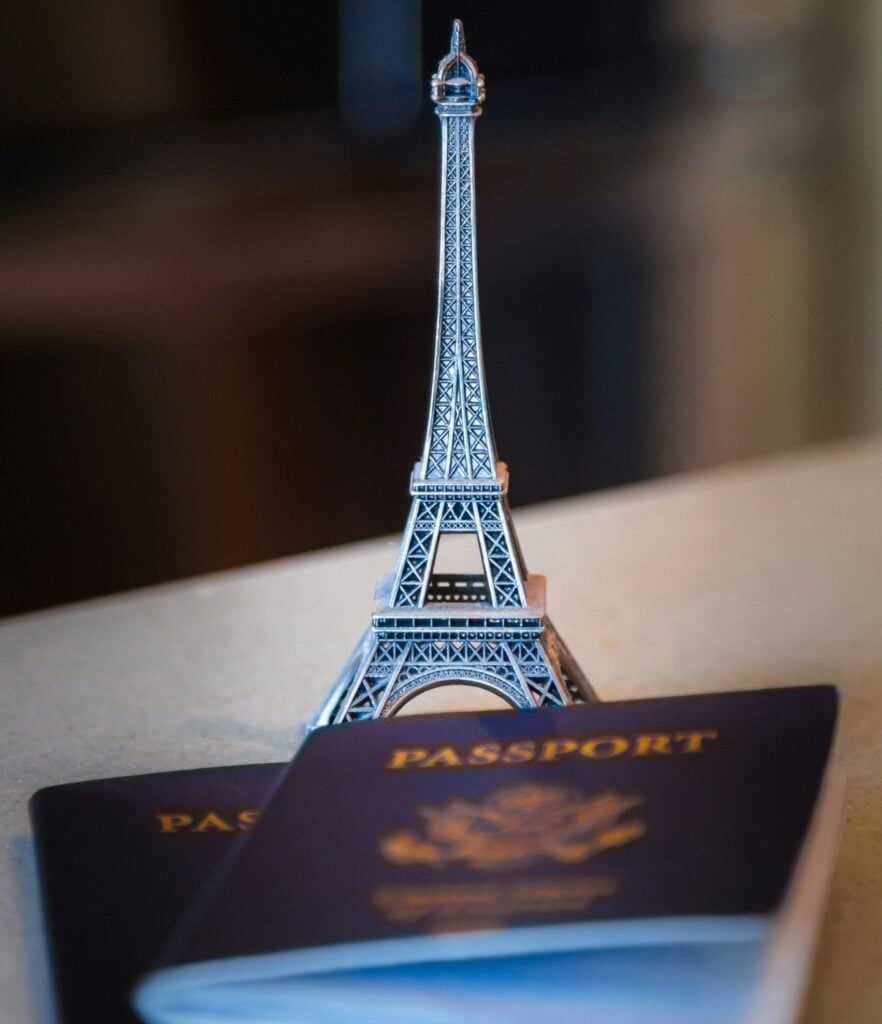
How to Find a Certified French Translator

My search for a certified French translator began when I decided to trade in my American driver’s license for a French permit. I am still in the middle of that process, thanks to a few mistakes I made in the documents I submitted as part of my dossier (French for file). However, that’s a reflection for another day. For now I want to share my journey of attaining a certified translation of my English documents from the United States for my numerous French bureaucratic ventures. 

My first bit of research led me to a company that created certified translations based in Dallas, Texas. The price was $62 for two pages, which felt reasonable. Great, I thought. As I already alluded to, I thought wrong. Yes, it’s true, I went on to purchase a certified translation; however, that certification was in the eyes of the US government — and not the French. I thought I was ahead of the game to try to start this process before I left the States, but I was mistaken. A certified French translator will most likely offer their services in French. I made the blunder of searching the internet in English. 

It was not until many months later that I realized my error on receiving a notification from ANTS (l’Agence Nationale des Titres Sécurisés) that my file was on hold due to “uncertified translation.” They informed me that I needed a “Traduction Assermentée,” a translation certified by a court-certified translator. Cue deep sigh. Their reply pointed me down a rabbit hole that ended in a PDF list of certified translators in France —a 356-page document with translators of every language imaginable. From the extensive list, I chose to reach out to two who were certified to translate from English to French. From one, I received no response. The other quoted me 66 € per page of translation. I had two pages, so this was going to be a 132 € expense for a translation I technically already had.

Solving the Problem

In the midst of my regret and indecision, I decided to search “traduction assermentée” on the internet to see what I could find, this time in French. Sure enough, I found plenty of translation services, with promises to have a quoted price before the end of the day. The first quoted me 66 € total, 39 € for my rights as a driver in the state of Texas, and 27 € to translate my driver’s license from English to French. Their reviews were fine and the price was right, so I used their services. Five days later I received an email with the translations attached. I added them to my driver’s permit request and reactivated the online request.

Recently in need of translation for documents concerning my upcoming marriage in France, the stakes felt much higher. Instead of using the company I had used previously, or even searching on Google, I searched on Trustpilot. I found companies with high reviews, quick turnarounds, and reasonable prices. I ended up going with ML Traduction. Though they claim a 48-hour turnaround, I received a digital copy of the translation I needed in less than 24 hours.

Additionally, in search of a full-time teaching position, it became apparent that I would need a translation of my university diploma. This process of approval for foreign studies requires a certified translation of the diploma and the corresponding transcript; however, the submission portal specifies that the certification can be made in the eyes of France or the issuing country. If this had also been the case for my driver’s license application, my original translation would have been as good as gold, but I digress. 

Takeaways

This may seem obvious — it certainly does to me in hindsight — but if you’re looking for a “traduction assermentée,” you’ll most likely be navigating a website originally in French and be charged in euros. Average prices run from 25-70 € a page, depending on the word count and complexity of the document in question. When seeking out a translation for a legal process, ensure that your document can be a digital copy, or find a service that will send you the original signed version by post. This additional service could cost somewhere between 3 and 15 €. For an American in Paris, or any part of France for that matter, you’ll likely find yourself in need of certified translation sooner or later. Finding a provider you trust is one less reason to stress as you navigate the kinds of legal procedures that require them. 

Have you acquired a certified translation while in France? Would you recommend your translator to our community? We would love to hear about your experience. 

Photo taken of an English to French dictionary by your truly. 

Did you enjoy this article? TAIP is 100% reader-supported through tipping. If you want to leave us a tip of any amount it would be highly appreciated.  These tips help support our efforts to keep TAIP an ad-free environment. Just like at a cafe, the tips are split evenly among the team.

Applying for a Temporary Work Visa, TAPIF Edition

I am approaching the end of my second year teaching English in France as a language assistant through TAPIF, the Teaching Assistant Program in France. You can learn more about the program or read my demystifying reflections on teaching in France, respectively. However, today I want to zoom in on the visa application process that takes place after acceptance. This was extremely intimidating to me the first time I applied. My second go around, I took it so casually I almost messed the whole thing up. You could say I’m like Goldilocks, over-prepared, under-prepared, and finally — just right.

What Do You Need?

Language Assistants through TAPIF are eligible for a visa travailleur temporaire P2 VLS-TS. It is generally good for eight months, from September to June, depending on your personal travel plans and the entry date of the plane ticket presented by the assistant at the appointment. Considering that the work contract is from October to April, this leaves about a month buffer on either side of teaching. The golden ticket for this visa is the “arrêté de nomination” (official work contract) signed and provided by the language assistant’s hiring academy. An academy in France is the equivalent of a regional school district. These work contracts are distributed on ADELE, the teaching assistant application platform. In the best-case scenario, a hiring academy will provide this before the August vacations start, and most teaching assistant managers (though not all) are sensitive to the need to provide it sooner rather than later. The visa application process should not be launched until you have this in hand. 

Choosing a Visa Center

As of 2026, there are ten French visa application offices in the United States operated by TLS Contact, an outsourced management company. The office closest to me during both years of application was in Houston, Texas. In 2024, the building was dingy and cramped. I honestly wondered if I had the right address on my arrival. In the second year in 2025, the French application center had a change of address, and the building was remarkably well kept with less overlap of services between other countries. There was even free sparkling water and coffee in the waiting room, but you didn’t hear it from me.

The Timeline

Given the longterm cooperation of the US embassy with this program, the documents required for application are admittedly less than for other temporary situations. For example, language assistants don’t need proof of prior accommodation nor pay the TLS appointment fee. In 2025, a fee exemption letter was provided by my employer that I emailed to TLS upon booking my appointment through their portal. I received my work contract in July, which then permitted me to launch my visa application through France-Visas and to book a TLS appointment in August, roughly one month before my purchased flight to Paris in September. The tightness of this timeline certainly gave me reason to stress, but both years I received my temporary visa (a sticker inserted into my US Passport) by mail within a week of my appointment date with no issues. 

Confessions

My first year of application, I had all my ducks in a row. The second time around, I made the blunder of forgetting to hit the final submit button on my visa application until 72 hours before my appointment. You may wonder, how did that happen? I forgot that in the application process, when you are triggered to book an appointment with TLS, it requires you to exit the France-Visas website. After registering your visa application number and booking your appointment with TLS, the person is required to return to the France-Visas website to hit submit a final time. I was traveling at the time of submitting my paperwork and I’ll blame my error on being out of my normal environment and therefore, slightly distracted. A few weeks later, I double-checked my submission the week of my appointment to make sure that everything was correct. That was when I realized my mistake. I hit submit and thankfully there were no issues at my appointment three days later. I would not recommend testing the system as I have.

Other Tips

Both years, I opted to have my visa photo taken at the TLS office during my appointment. This removed the stress of wondering if an outside-provided photo would have been accepted, due to lighting, hair placement, recentness, etc. This extra service is totally worth the $20 charge and took less than a minute on site. Come to your meeting with extra copies of your proof of work (diplomas, emails, plane ticket receipt, and that golden arrêté). You’ll be grateful when you don’t need the extras, and even more so if you do. Lastly, take a deep breath. You’re gonna be just fine. 

Photo by Ian Taylor on Unsplash

Did you enjoy this article? TAIP is 100% reader-supported through tipping. If you want to leave us a tip of any amount it would be highly appreciated.  These tips help support our efforts to keep TAIP an ad-free environment. Just like at a cafe, the tips are split evenly among the team.

True or False: Teaching English in France

When I first learned of TAPIF, the Teaching Assistant Program in France, it was the fall of 2023. I had been on the hunt for a way to work in France for a few months by that time and meeting someone who had done the program felt like an answer to my prayers. At the end of the day, whether or not teaching English was my passion, this was a short-term work contract that required a minimal level of French to give living in my dream country a go, without selling my freedom to a family as an au pair. Now, in the middle of my second year of teaching English in French public schools, you could say I’ve lost some of the starry-eyed perspective I had at first. Nonetheless, I can tell you I would do it again. 

TAPIF is the American Embassy’s face of a French government program that solicits young people from all over the world to teach their native tongue in French public schools. The program currently partners with 77 countries and in 2024 welcomed 2,992 language assistants to France from all over the world. Currently, applications for the next academic year are open to young professionals between the ages of 18 and 35. To learn more about TAPIF, its requirements, and this year’s deadlines, visit their official website here.

Thinking back to myself scouring the internet for information on TAPIF around this time just a few years ago, I am going to endeavor to give an honest and clear-eyed review as a second-year assistant. Bursting the bubble where necessary and reinforcing suspicions as able, here are some conclusions (true & false) that I have drawn from my experience. Let’s start with the false.

1. The program provides a livable wage.

False. During my first year, I burned through my savings with incredible speed. Inflation has hit France, and the wage of an assistant has not sufficiently taken this into account. About half of the 830 euros that hit my bank account each month go to pay my rent, and the other half pay for my groceries. Considering what it takes to move and settle into a new place, not mention in a new country, other expenses in the first two months should be expected. With six weeks of paid vacation during the school year, one naturally is going to want to travel, which is also not free. The French Education International boasts that language assistants have the right to demand lodging assistance by means of the CAF. However, even if you have your renter’s contract and all your paperwork submitted by October 1st, the wait for approval could be upwards of 2 months before receiving additional aid. 

2. It is a sustainable way to begin a long-term move. 

False. The proposal of TAPIF is not truly sustainable. It has a 3-year limit for renewing assistants and they clearly advise $3,000 in savings on top of the plane ticket to get here. Each year, assistants are obliged to return to their native country to renew their temporary work visa, an expense that is assumed by the assistant. Additionally, if French citizenship is the goal, you’ll need a long-term visa with renewable options. TAPIF is not that. Your yearly clock towards citizenship will not start with this program.

3. The paid vacation is generous. 

True. Today I am writing on day one of a two-week break in the middle of February, one of the four vacation periods that occur during the language assistant contract from October to April. Instead of favoring an extended summer, the public school system is built on six-week cycles that give students and teachers an opportunity to rest and refocus between periods. Being on paid vacation in Europe is certainly not a bad deal. I’ve taken advantage of these times by visiting many different parts of France, as well as its neighboring countries.

4. You will grow. 

True. One’s French can only improve in proportion to one’s courage to use it. In any case, you’re going to strengthen your resilience as you navigate French bureaucracy and the general discomfort that comes with living in a new country. Nothing causes growth like getting out of your comfort zone. I can assure you that living in a foreign country will mean getting out of your comfort zone.

5. It is the experience of a lifetime.

True. I have made friends for life and found a community that has become like family. This is by no means the experience of all who participate in TAPIF, but if you come with an open heart and seek out opportunities to integrate, you may just be shocked at the warm welcome you find. I was quick to join a choir, seek out a community of faith, and find other opportunities to explore my personal interests locally. I don’t know of an easier way to work less than part-time in a country as beautiful as France. Your bank account may not thank you, but your memory bank certainly will.

Have you participated in TAPIF or another teaching program in France? Share your wisdom with our community below. 

Photo by Ben Mullins on Unsplash

Did you enjoy this article? TAIP is 100% reader-supported through tipping. If you want to leave us a tip of any amount it would be highly appreciated.  These tips help support our efforts to keep TAIP an ad-free environment. Just like at a cafe, the tips are split evenly among the team.
a red phone booth on top of a mountain

How I Keep My American Phone Number While Living in France

My first year of living abroad in France, I was quick to get a French phone number. Not only is it necessary for banking and other local services, but French phone plans are very reasonably priced. However, instead of ditching my American number, I decided to keep it as well. After all, I still had my American bank, and with 2-factor authentication everywhere these days, having an American number remained essential. I was on T-Mobile’s Experience Beyond plan at the time, which came with plenty of foreign data every month, and no up-charges for being abroad. Since my phone has a dual e-SIM capacity, like most new smartphones, living with two numbers was a no-brainer. Thus, my double number life began. 

While I was in the States this summer, my family and I decided to all switch to AT&T for our phone plans. I followed the crowd and thought the package would be comparable on the foreign front. I was wrong. On arriving back in France, I received a notification that I would be charged $10 a day while traveling. That simply was not going to work for me, so I turned off my American number and looked into what my options were after I finished unpacking. 

Solving the Problem

My research led me to find US Mobile and Tello, both cost-efficient mobile companies that boast good customer service and cell service while abroad. I opted for Tello, bought a cheap $6 a month plan to test it out, and tried to activate the new e-SIM. The prompts online and on my phone made it look pretty easy, but after a moment it was clear that my new number wasn’t going to activate on its own. I gave customer service a call on my French number and explained my situation. They were kind and regretted to inform me that an American number could only be activated on American soil. I wouldn’t be able to start using my newly purchased number until I was back in the States. 

I accepted the reality and swallowed my pride. After all, it was my own fault for not being more proactive about this from the outset. Thankfully, I had a trip planned back to the States in three months, so I transferred my iMessage account to my French number, asked all my friends and family to contact me through WhatsApp, and lived without my American number until my return. 

Once back in the US, I did my research, updated my account through Tello and activated the number that had been patiently waiting for me. I called another friendly customer service representative and asked her all the details about how foreign roaming would work on my account when I was back in France. I purchased the additional “buy as you go” credit that is necessary for their foreign travel (this was a $20 charge) and I took a deep breath — grateful to have my phone problems behind me, or so I thought. 

Rubber Meets the Road

When I landed in Paris a week later, I turned off airplane mode to find only my French number receiving service. The American number showed no signal. I searched in my phone settings and enabled roaming while abroad on the new number. Hours later, and still nothing. 

Frustrated, a week later I finally logged into my Tello account to see what the issue was. I scrolled through my settings to discover that I had missed checking the box to authorize foreign service while abroad. I checked the box, hit refresh, laughed at myself, and turned off my phone for the reset. When I turned it back on a few minutes later, there were those little bars I had been searching for the last three months. 

So far, I have had both numbers activated on my phone for a week. As my French phone plan is my primary source of data, I have only used five cents worth of data on my Tello plan. This is incredibly reasonable for a safety net in case I should need to receive pass keys or other identifying information that can only be sent to an American number. Overall, I am very pleased with my experience with Tello, minus the hiccups of getting my service activated in the beginning. 

Whether you are traveling abroad or starting a new life for yourself in France, be sure to do research on the allowances of your phone plan well before you land on the other side of the ocean. You may even consider activating a new SIM beforehand accordingly. We live and we learn, so with all this learning I guess I can be sure that I’m living. Do you have another American service provider that you’ve used abroad? We’d love to hear about your experience. 

Photo by Maxence Pira on Unsplash

Did you enjoy this article? TAIP is 100% reader-supported through tipping. If you want to leave us a tip of any amount it would be highly appreciated.  These tips help support our efforts to keep TAIP an ad-free environment. Just like at a cafe, the tips are split evenly among the team.
My First Trip to the ER in France

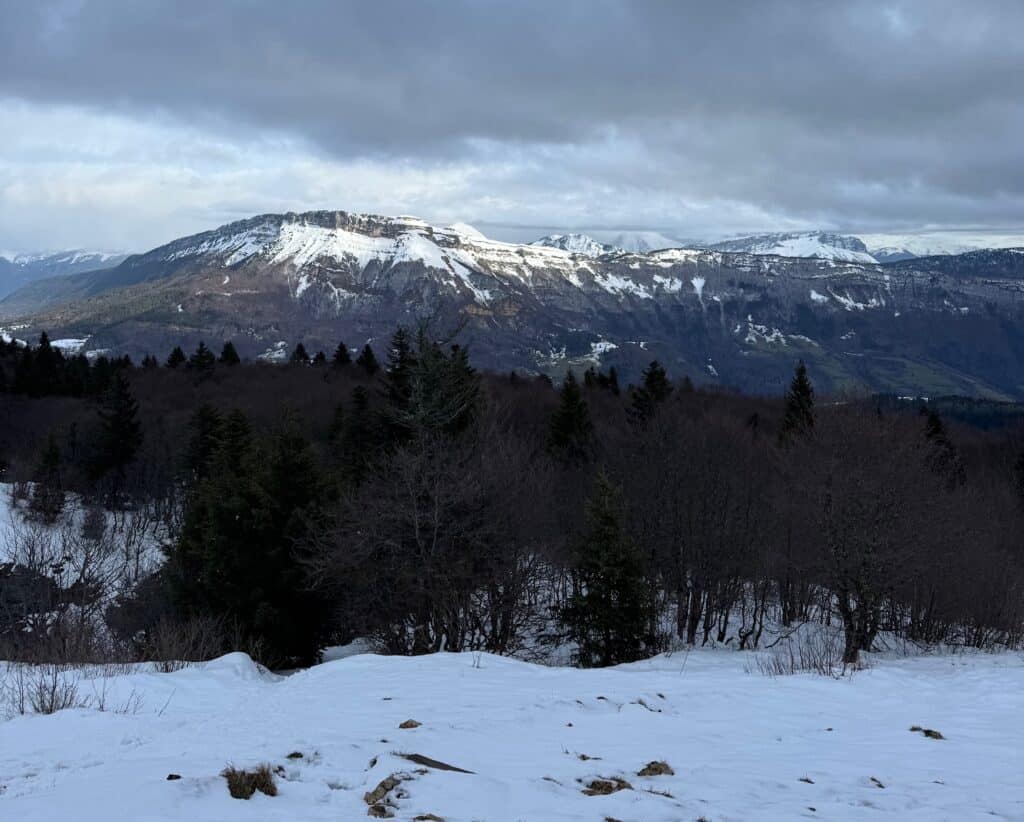
Last month, I went on a four-hour hike through the snow in Chambéry, France. I put on my oversized jacket, layered up in every way, and put on my best wool socks. Equipped with a pair of leather, wool-lined boots, I thought this was going to be a walk in the park (or the woods). What I didn’t account for was the snow melting as soon as it touched my boots and my feet sitting wet for hours in the cold. The next night I discovered a small open wound had appeared by my toenail. By the next morning it was undoubtedly infected. 

Instead of immediately booking a doctor’s appointment, as I had just seen my doctor the day before the hike, I thought it would be fine if I tried to treat the wound myself. Given the title of this article, you can probably guess that wasn’t the best idea. 

By day two I was miserable, by the end of the week, I was in severe pain. No number of Manuka honey presses, green clay masks, red-light sessions, or bleach baths was healing me. So by the time I finally came to my senses on Sunday night, I realized my only option was to go to the hospital to get immediate care, only four days before my international flight to go home for the holidays. 

My French friends (pretty much family), advised I go early, so I arrived at the ER in my town at about 8:20am on Monday morning. There were 4 people waiting to be seen ahead of me. I approached the window to address the intake nurse. When she called me forward, I explained my injury. She took my carte vitale and told me she would return it after I was seen to complete payment. The carte vitale is the social healthcare card in France. It tracks healthcare visits and prescription fills, facilitating reimbursement when eligible. As a language assistant for the French public school system, I was provided one, first digitally, and eventually in card form once all my paperwork was processed. After I answered a handful of questions, I took a seat in a waiting chair. 

I was called back after about 15 minutes, this time met by a male nurse and a female assistant. Both looked relieved when they realized that I spoke French. I explained my situation and when I showed them my foot, they were immediately compassionate. They gave me a wristband to be processed as a patient and told me the doctor would call me back shortly. I returned to the waiting room for about 30 minutes. Soon enough, I was called into another room. There, a friendly young doctor of about my age explained that she would be doing an immediate procedure to remove as much of the infection as possible and to cut back the side of my ingrown toenail. 

I should probably preface this by saying that not only was this my first trip to the ER in France, but it was my first trip to the ER — ever. I took a deep breath and lay back on the operating table. We started with just local anesthesia, but the pain of the infection was quite intense, so another nurse was called in to give me laughing gas. Soon enough the procedure was over and I was able to sit up to receive my care instructions. 

I received my paperwork documenting the procedure and prescriptions to fill at the pharmacy. The doctor spoke slowly and I asked for clarification for the one word that was outside of my vocabulary. Limping back to the intake nurse to see what the damage was, she asked if I had a mutuelle, an additional private healthcare insurance to complement the social system. I replied no. She looked disappointed by the news, so I braced myself for the worst. Then she said, “That’ll be 19.98 euros,” the equivalent of about twenty dollars. Cue my sigh of relief. 

My prescriptions at the pharmacy came to another 30 euros, making my total expenditure about 50 euros. As an American, these numbers were simply astounding. I have never been so grateful for the French healthcare system. 

I won’t fool you and say it was all blue skies and rainbows from there. The following days, the pain returned and I was put on an antibiotic that contained pork and gluten — both of which I am allergic to. Passing through Paris with my suitcase and post-op foot was also not the most fun I’ve ever had. By the time I made it back to the States, I visited a doctor and received another antibiotic for $150. I guess that’s the difference between French and American healthcare, about 200%. 

My toe is fully on the mend and you can bet I’m watching my nails for any signs of ingrowth like a hawk. What a memory made! Though I’d be glad to have missed out on this experience altogether, I’m quite proud to have proven my French proficiency equal to the occasion. Have you ever gone to the ER or sought healthcare while in France? We’d love to hear about your experience. Cheers to firsts (and hopefully lasts)!

Photo taken by yours truly on the hike that started it all. Was the view worth it?

Did you enjoy this article? TAIP is 100% reader-supported through tipping. If you want to leave us a tip of any amount it would be highly appreciated.  These tips help support our efforts to keep TAIP an ad-free environment. Just like at a cafe, the tips are split evenly among the team.
The Most Beautiful Place in France

I know the title may be a contestable claim, and so I will add a tiny disclaimer. The Calanque de Sugiton is the most beautiful nature reserve in France that I have seen with my own eyes.

What is a calanque anyway? It is a geologic formation of a steep valley, submerged in part by the ocean. The Calanque de Sugiton is about a 45-minute drive southeast of the Marseille Saint-Charles train station, positioned on the Mediterranean Sea. 

Of the many calanques found in this region, my local friends advised that I see this one in particular for a few reasons. The first being its beauty. Secondly, as I did not have a car during my stay, it is reachable by public transit (and a bit of willpower). Apart from their advice and a pin on Google Maps, I did no research on where to go once I arrived at my final bus stop. This was admittedly very outside my type-A tendencies. In this guide, I will recount the roundabout way I eventually got where I was trying to go and hopefully provide a clearer path for those looking to explore this magnificent nature preserve.

Getting to the Water

When I got off the B1 bus at the stop “Luminy – Parc National des Calanques,” thankfully, I was not alone. On a Thursday morning at 11 am there were about 15 people headed into the park. We were all equipped with our hiking gear, a backpack of snacks, and water for the journey. Although Google insisted that I stay on the road to arrive at the head of the path, I followed the crowd uphill on the sidewalk to a foot path that was marked with a map of the calanques. At this point, I knew I was in the right place. The wide path continued straight ahead, and so did I. 

About a 30-minute walk through the shaded forest led me to a gravel lot with three options of where to go. To my right led a lookout over the calanque. I was anxious to get down to the water and eat my picnic, so I saved the lookout for later and headed left. I chose a path that was marked for pedestrians only. I figured this must be the way to go. The descent led me around an opening in the cliffs. The view was spectacular in the truest sense. Eventually, I reached another fork in the road. To the right was a steep rocky path that offered a shorter descent to the western beach. However, to the left was a slightly longer path to what was marked as the eastern beach. I figured a longer distance would mean fewer people, and so I continued east on the less steep road. 

My instinct was right; there were fewer people, but the smooth descent soon turned into a tricky maneuver along the cliff and over an unwelcoming patch of rocks. My climbing skills were tested and a friendly older woman, who clearly knew her way around, showed me how to get down onto the farther beach. She continued on her way, and I had the rocks and the ocean to myself — for a moment. 

Since it was a little after noon, I started to eat my salad on the shore. I was a few bites in when I noticed a man coming around the rocks I had just come from. A moment later he emerged from around a carving in the shore, now completely naked, to inform me that I was at the nudist beach. He was nice enough to leave me laughing to myself as I packed up my lunch and headed back to the rocky path. I remember thinking, “That’s what I get for not doing my research!”

I retraced my steps and found my way to a shaded overlook above what I could see was the western beach. I sat on the rocks, finished my lunch, and took in the magnificent scenery. When I finally had the courage to continue my search for the right path, I made my way to the last fork in the road that I remembered was labeled with the path to the west. I found a steep rocky way up that rejoined with the road. When I arrived at the road, I turned around to see that the path I had come from was explicitly labeled for the beach I was looking for. Confused, I asked for directions from some fellow hikers beginning their descent. They said that I had come from the correct path, but to hug the right as I made my way down. 

This time I noticed a red marking on the rocks that indicated a steeper descent. Just when I thought I was going too far right and surely going off the path, I happened upon a set of cement stairs that led the way down securely. Finally, this was promising! My hopes were not disappointed and in no time I was at the calm waters, with many a happy pilgrim that had beat me there. I scoped out a spot to leave my things and got in the water as fast as I could. 

When to Go

Being the middle of September, the water was particularly cold, but the sun remained strong enough to encourage me to dive in. I enjoyed a swim around the rocks in the cleanest water I have ever been in. When I made it back to the shore, I warmed up in the sun with a book. At this point I was surrounded by people of all tongues and cultures, fellow explorers and locals alike. It’s hard to keep beauty a secret. I was thankful that it was during the week and off-season. I learned later on that if I had come in summer or even the weekend before, I would have needed to make a reservation. 

After enjoying a few hours by the water, I packed up my things, said goodbye to my moment in paradise, and made my final ascent. After the 30-minute hike uphill, I opted to detour to the lookout that I skipped at the beginning. It was a stunning view and well worth the 40 minutes it took me to get out and back. It was about 4pm by the time I returned to the gravel lot, ready to make the final 30-minute stroll through the forest to return to the bus stop. I arrived with just a 10-minute wait to catch a ride back into town. 

Words of Wisdom

For those willing and able, the Calanque de Sugiton is a generous reward for a day’s hike. The challenge of arriving there revived my spirit of adventure, and I reckon it has done likewise for many. There is no cell signal once the descent begins, so I’d recommend turning your phone to airplane mode and planning a truly unplugged afternoon. If public transit is your chosen method, I’d also advise reviewing bus times in advance to ensure a smooth return.

Have you been to the calanques in Southern France? Has your experience come with other insights? Better yet, do you have another hike in France you recommend? I’d love to hear in the comments below. 

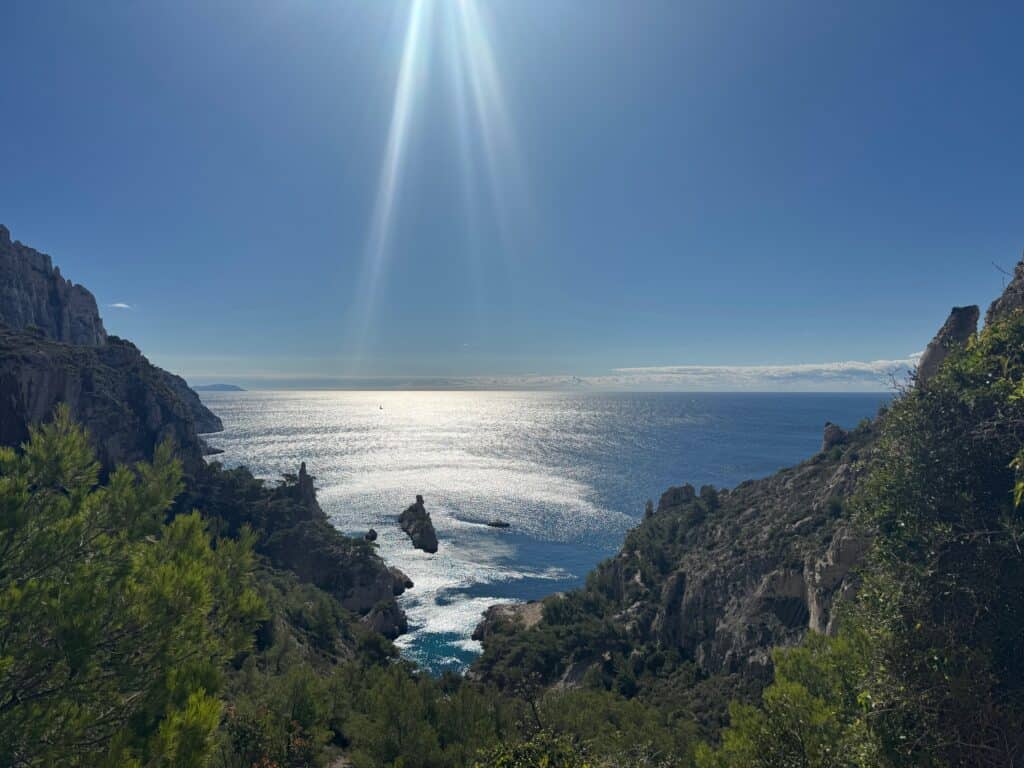
Photo by yours truly, taken before my descent to the water.

Did you enjoy this article? TAIP is 100% reader-supported through tipping. If you want to leave us a tip of any amount it would be highly appreciated.  These tips help support our efforts to keep TAIP an ad-free environment. Just like at a cafe, the tips are split evenly among the team.

The Week Before I Move to France

I’ve got my visa, a year’s supply of my favorite deodorant, and a one-way ticket to France. The countdown to my departure began when I returned to Texas from France four months ago, but I’m still struggling to fathom how those 120 days are now in the single digits. 

Last year, I worked as an English teaching assistant in this quaint town on the south side of the country. This year, I’m returning to the same program, the same lodging situation, and the same community I grew to love. It’s crazy to think that this time last year, I was preparing to live in a city where I didn’t know a soul! 

Round two of working in France has a lot fewer questions on the outset, or at least the questions have changed form. 

“Where will I live?” has become, “What will it look like to live with different people in the same place?” 

“How will I teach?” has become, “How will I serve my new co-workers and students?”

“Who will my community be?” has become, “How will my relationships grow in the months ahead?”

Now being more accustomed to the different language, culture, and daily rhythms of living abroad, I have noticed that my goals have also moved from the category of surviving to thriving. Last year, I learned how to get around using public transportation and my own two feet. This year, my goal is to trade in my US driver’s license for a French driver’s permit. Last year, I learned what a month’s worth of expenses could look like in France. This year, my goal is to live in awareness of my budget instead of relying on additional savings to pick up my slack. Last year, my goal was to keep my head above water and this year, I want to be a well of reassurance and knowledge for the new language assistants coming to my town from around the world.

So now that I’ve talked through the theoretical, let me share a bit of the practical. Here is my to-do list one week before I (re)move to France. 

  • Fill out as much of the paperwork as possible for my request for CAF lodging assistance
  • Purchase a professional translation of my driver’s license and driving record
  • Send in my rolls of film from this summer to be developed and returned to me digitally 
  • Buy a pair of jeans; mine are wearing out and there is nothing quite like American jeans
  • Finish one of the books I’m reading so I don’t have to travel with it; books weigh more than you think
  • Make a final trip to the pharmacy to stock up on my American medical needs
  • Buy a train ticket from Paris to Lyon
  • Plan my arrival
  • Start packing 

Knowing it will be a minute before I see my friends and family on this side of the world again, the logistics are balanced by the weighty work of being present to my community.  I’ve made plans with friends for our final lunch and dinner dates of 2025. Just the other day, I realized that my mom has never been to my favorite park, which is a 20-minute drive from her home. Naturally, we’ve chosen an evening to go together before I hop the pond. Making time for these shared moments is something I know I won’t regret down the line when being together in the flesh is simply not an option. Prioritizing relationships this month has meant pulling back from work projects and letting go of goals I had for this season stateside, but I’m learning that is okay. Choosing personal well-being over professional security, dare I say, even feels a little French. 

Starting a new chapter inevitably means finishing another, and so in this moment of turning the page, I’m also choosing to take the time to reflect. What have I learned from this time in the States? What am I grateful for? What do I want to take with me? What do I want to leave behind? These questions stand up against the metaphorical and the physical. Remember, packing is still on my to-do list. Though sometimes I wish my mind and heart had no luggage fee or weight limit, the reality is they do. The more I process and let go of here, the lighter I will go into the season that awaits me. And as I preach to my fellow travelers, and often stand in need of a reminder myself, “The lighter you are, the happier you will be.”

Cheers to taking flight and traveling light.

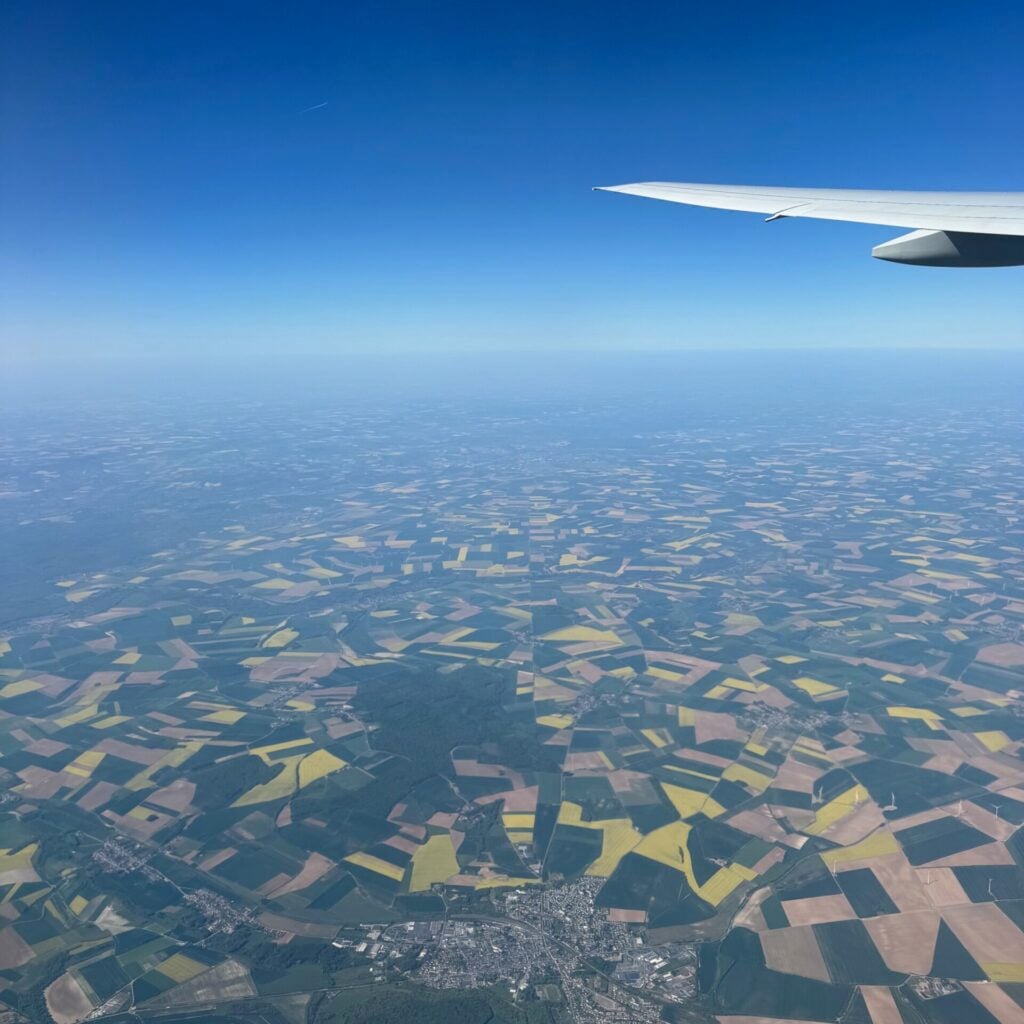
Photo from my last flight over France.

Did you enjoy this article? TAIP is 100% reader-supported through tipping. If you want to leave us a tip of any amount it would be highly appreciated.  These tips help support our efforts to keep TAIP an ad-free environment. Just like at a cafe, the tips are split evenly among the team.

a white car parked on a street corner in France

BlaBlaCar: a Nomad’s Best Friend

When I first used BlaBlaCar in 2024, I knew I was taking my chances: getting in a complete stranger’s car for a three-and-a-half-hour drive through the French countryside, with the better part of my belongings. It was stressful enough moving to a foreign country, and I accepted that trusting strangers along the way was going to be a beautiful, necessary part of the process. What would have been an expensive, long, and indirect train route to my destination became a few hours’ drive thanks to this ride-sharing app (and the generous soul who shared their trip for the exact day and time I was hoping to travel). 

What is BlaBlaCar?

Think of it like Uber or Lyft in reverse. Instead of ordering a driver to take you from point A to point B, BlaBlaCar connects drivers already planning to be on the road with potential passengers. Every day people can post a route they plan to take, at a certain time, to a certain place, and offer empty space in their car to passengers who want to join them for a small fee. This fee helps compensate the cost of gas and tolls, allowing drivers to minimize or eradicate traveling costs while simultaneously helping people who don’t have a vehicle to travel with convince and efficiency. This is carpooling on a whole new level. 

Is it Safe?

In my personal experience, yes. There are a few features that help ensure the safety of drivers and passengers alike. Users can verify themselves with a form of ID and choose only to interact with users who have done likewise. Women can also choose to only ride with women drivers, men with men, etc.  

I’ve never felt unsafe during a trip using BlaBlaCar. However, I know someone who has. They reported the incident, and BlaBlaCar was quick to not just apologize, but promptly remove the driver from their system. The app’s active response time reassured my confidence in the service they provide. This is the only negative experience I have heard of among the many people I know who use the app. 

You can get a sense of someone’s character based on their recent reviews (left by both drivers and passengers). Preferences can also be displayed by users who prefer not to drive in a smoking environment or travel with pets. Most importantly, you can see a driver’s dependability in how often (if ever) they’ve canceled a trip. 

Ride-Sharing on the Rise

The ride-sharing market size in France is estimated at $2.64 billion in 2025, and is expected to reach $4.20 billion by 2030, according to a study by Mordor Intelligence. Cultural environmental concerns and governmental pricing regulations have kept prices down and users active. The practical and environmental benefits of ride-sharing are evident. BlaBlaCar is present in many European countries and has since expanded into the international bus and local daily commuting scene.

Tips from a Pro

After just a few months of using the app, BlaBlaCar bumped my level of experience from “beginner” to “expert.” To be fair, I had traveled a considerable distance using their service and had a number of 5-star reviews.

To use BlaBlaCar in France, I’d recommend having a minimum of A2 level French. This would make practical directions clearer and navigating cultural differences smoother. However, like anything in France, the better your understanding of the language, the better your experience will be. When drivers have seen that I am a foreigner, they often express interest in my journey and have given me a generous welcome. 

Drives are often posted no more than a week or two in advance of the travel date and can go up as late as a few days before. I’d advise starting to search for a route no more than two weeks in advance and booking the most suitable option no later than 3 days before you are looking to travel. Good spots do go quick, so if you see something that works well for you, don’t hesitate to claim the space. However, I have broken my own advice with success, occasionally booking a drive only 24 hours beforehand in a pinch. 

If you are planning to travel with more than a personal item, it is always good to inform the driver of your luggage situation in your first request to join the drive. This way, if they don’t have space for your bags, they can refuse the request, and you won’t be charged for a ride you can’t take. I’ve never been refused a ride due to my bags, but when I am traveling less light, I keep an eye on the size of the car the person is driving. In my experience, even when someone has shown up unexpectedly loaded down, I’ve seen many drivers and co-passengers handle these situations with grace.

Should I Really Try This?

Like any form of transportation, ride-sharing offers a number of benefits, not without risks. Though I’ve never had a ride canceled on me, it is possible. Like any drive, a ride is also susceptible to traffic and road conditions. Travelers with tight timetables may opt for trains to minimize this risk. However, I’ve never seen BlaBlaCar drivers strike, and if your travel day is on a suspected SNCF strike day, you may want to consider opting for a ride-share with this in mind.

Have you used BlaBlaCar or another ride-sharing service in France? Leave us a comment and share your experience! 

Photo by Zhu Yunxiao on Unsplash

Did you enjoy this article? TAIP is 100% reader-supported through tipping. If you want to leave us a tip of any amount it would be highly appreciated.  These tips help support our efforts to keep TAIP an ad-free environment. Just like at a cafe, the tips are split evenly among the team. 

The Secret of the South: Le Puy-en-Velay

“Le Puy-en-what?” This is often the response I receive when asked where I am living in France. Even many of my French friends from other regions of the country are unfamiliar with it.

As I write during my return flight to the US for the summer, I can tell you that just this morning a French travel inspector in Paris asked me what I had been doing in France and where I was going. I explained that I had been teaching English in a town called Le Puy-en-Velay. She seemed convinced I made it up, until I explained where it is on a map. 

Two hours south of Clermont-Ferrand and two hours west of Lyon, you could say it is in the middle of nowhere. I fell in love with Le Puy-en-Velay on my arrival, but what I didn’t realize then is that I was far from the first to be taken by the charm of this little village in the valley. While visiting the Orsay Museum in Paris last year, I stumbled across not one but two different works of art depicting scenes from my new town. After stumbling across the second, I remember thinking, “Okay, maybe I’m not crazy for loving this place.” 

Decidedly picturesque, Le Puy (as it is called for short) is riddled with impressive monuments and little alleys. Tucked in the heart of the French countryside, this medieval starting place for the Camino de Santiago has attracted artists and pilgrims seeking respite for centuries. This peaceful region, once dominated by volcanic activity, is now a haven of striking rock formations and ancient history. 

If it’s So Great, Why is it Still a Secret? 

Le Puy is not well connected by public transit. It’s relatively far from bigger cities, and even trains to Clermont and Lyon are not direct. Most locals have cars and visitors would be most comfortable renting one for an extended stay. The perk of this inconvenience is that the town has remained quiet and protected from the casual passerby. 

But as you may note by the grandeur of its Cathedral or its medieval architecture, there was a time this quiet town wasn’t so quiet. 

What to See

Notre Dame de France

When coming into Le Puy, the statue of Our Lady of France may just catch your eye. She’s situated on the center peak of town, and at night she casts a glow over the whole city. Made with the metal of 213 cannons taken from the Russians during the Crimean War, the statue was gifted to the city of Le Puy en Velay by Napoleon III in 1860. It was the tallest statue in the world until it was surpassed by the Statue of Liberty. I’ll remind you that it was a gift to the US from France. 

Cathedral du Puy

A famous site for pilgrimage since the 400s, its varied architecture reveals a history of construction over the centuries. Even Charlemagne made multiple visits to the Cathedral in the 8th century, and Isabelle Romée (the mother of Joan of Arc) made an appearance in 1429. Every morning from April to October, the Cathedral offers a send-off blessing for those embarking on the Camino de Santiago. I don’t want to give too much away, but I will say the “trap door” opening at the end is impressive. 

St. Michel’s Rock & Chapel

Come for the views, stay for the culture. The construction of this chapel in the sky was approved by Bishop Godesclac, the first person to walk to Santiago from outside of Spain in 961. A stone staircase of 268 steps brings you from the access road to its Romanesque entrance. A small museum kept by Le Puy’s office of tourism recounts the geographic anomaly of the mountain before you make your way up. 

St. Joseph of Good Hope Sanctuary

Built on the site of a chateau fortress in 1910, this Basilica provides a magnificent panoramic view of the valley (as pictured). Inside the church, a colorful tapestry behind the altar depicts the life of this remarkable saint. Pilgrims can visit a cave chapel beneath the statue, or even step inside the statue itself as of its reopening in 2025. 

Enjoy Nature

Surrounded by rich landscapes, Le Puy-en-Velay offers no shortage of excursions for nature lovers. Picture perfect lakes, off-the-path waterfalls, colorful mountains and a suspended forest bridge are all within an hour’s drive away. I’ll leave a list of recommendations here. 

When to Come

I may have lived here through the winter, but I can vouch that Le Puy shines in the summer. Literally, the whole town is illuminated at night from July to September. With a higher elevation, the region can see snowfall from late fall to early spring. Most of the tourist sites close or have very limited hours from October to March, so I would recommend coming outside of this window. Thanks to the market in the town center, Saturday mornings have become my favorite moment of the week. If you can swing being here during a weekend, you may have more fun.

Now, if you’re looking to celebrate with the locals, every year the town hosts a candlelit procession to the Cathedral on August 15th. This holiday in the French calendar marks the Assumption of Mary into heaven. Though I haven’t had the privilege of witnessing the celebration myself, many have told me this is a sight to see. 

Ever dreamed of living in the middle ages, or wondered what that would be like? Le Puy has hosted a renaissance festival called the Roi de l’Oiseau for over 40 years. The third weekend of September, the town transforms into a medieval village. My first week in town happened to land at this time and the spirit of imagination in the air was mesmerizing. Hotels and hostels fill up, so be sure to book early. 

Every November Le Puy hosts a weekend of hot air balloon lift-offs. This is not a cheap way to see the city, but I’ve heard it is magnificent. The town becomes magical as colorful spots fill the sky. My jaw dropped on the sidewalk when I stepped out of work and saw this surprise last year.

Should I Visit?

Now I’m not saying Le Puy should be your first place to visit in France, maybe not even your fifth. It’s pretty hard to get here, so you’ll likely have to stop at a few other cities on the way. However, if you’re looking to explore the countryside and can swing a central France getaway, I’m glad that this little gem is now on your radar. 

Learn more about Le Puy’s history and upcoming events at its official tourism website.

Photo of Le Puy-en-Velay taken on film from the viewpoint of St. Joseph’s Sanctuary

Did you enjoy this article? TAIP is 100% reader-supported through tipping. If you want to leave us a tip of any amount it would be highly appreciated.  These tips help support our efforts to keep TAIP an ad-free environment. Just like at a cafe, the tips are split evenly among the team.