How to Renew Your French Long-Term Stay Visitor Visa

Note from the editor: In light of new guidance on remote working in France as shared by the official French tax office in June 2025, we have also officially changed our stance on remote working for a US company while living in France under the visitor visa. Read more here, and contact us with any questions or concerns. We’re here to help! — MS

The heavy, ancient printer started printing my récépissé.  I closed my eyes.  Whenever the old printer starts running in a French immigration office, you’re in the clear.  I had done it.  I had survived my first year in France and I had just renewed my visa too.  The relief and triumph wasn’t nearly what I felt when I first got one or confirmed it.  But it was relief.  Palpable relief.  I could go on about my year without having to think about this again for a while.

Because I had originally moved to Paris in December 2013 my one-year visa was up that same month in 2014.  Trouble was it was around the time I needed to go back to see my family, take care of some business, etc.  I could have chosen to renew it earlier, or I could have just chosen to move to France sometime other than in December, but there it is.  Think about where you will be in one year whenever you do apply for your visa.  I think December and January make a lot of sense for many, though, because the move has all the notes of a “new start” and you give yourself a whole year of runway (although some of our readers need only two months!)

To be fair, I had to make two visits, because they asked for some things I didn’t have on hand the first time.

You can make your appointment for renewal online at this link.  I should make the point that I am speaking to people applying for a long-term visitor visa.  Students and workers should consult their own subcategories when preparing their dossiers.

I did have a list of what was needed at the time, but this constantly changes and the Préfecture has stopped providing an online link to such a list.  On that list is marked the need for the original and one photocopy for each of the documents listed.  However, if you have forgotten or the copies get damaged on your way there, there are large commercial copying machines that charge you ten cent(imes) per copy in the vestibule of the office you have to go to.  There are also two Photomaton booths to take your pictures should you have forgotten them.  They honestly do have your bases covered here.

Where to Go

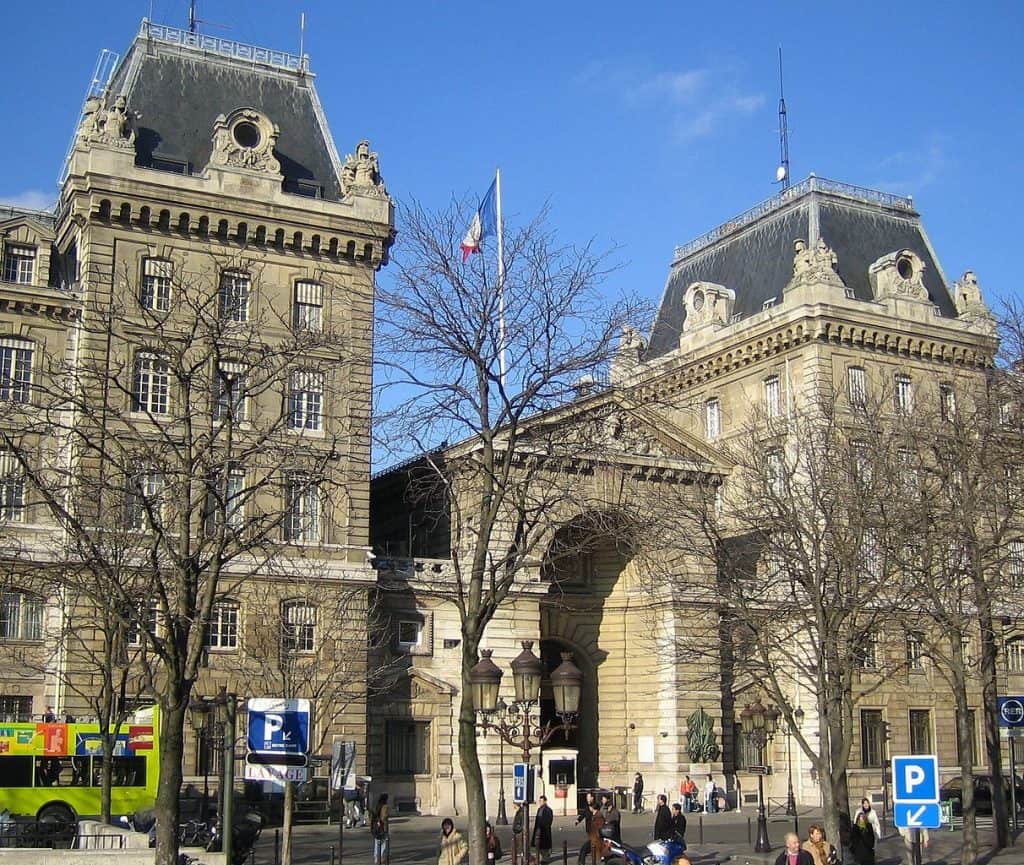
It faces Notre Dame directly and is easily accessible via the Cité stop on the Métro.  Bring water, snacks, a nice book to dig into, a charger for your phone, and block out your whole day for whenever your appointment is.  Some say mornings are better, others afternoons I only chose afternoons because I’m not a morning person and in both instances I “checked in” an hour before my appointment which allowed me to actually be seen only 30 minutes after my scheduled appointment time.  Be early or you may not even get seen that day.  I’m serious.

Paperwork you MUST have:

1.  A copy of your original titre de séjour as well as the passport which contains it.  This is the sticker you would have gotten on your follow-up visit when you first arrived in France.  For visitors your first year titre de séjour resides simply in your passport.  Come renewal time, you actually get issued a card.

2.  Your birth certificate.  You’ll need a certified French translation of it.  Mine was written in English by the Singaporean government and the French translation cost 72€.  If you need the translator’s contact info, simply send me an email.

So, about that birth certificate.  If you’re like me, you keep all your important documents in a folder somewhere.  The trouble was, up to the point when my eyes first looked upon these requirements, I thought I had brought them with me to France.  My birth certificate, immunization record, baptismal certificate, all that jazz.  After the search that starts with, “I’m sure it’s around here somewhere,” turned to, “Goodness, did I actually not bring it to France?” I ended with the eye-closed panic of, “Oh no, it must be with my stuff in storage.”

Before I went to the nuclear option of having to order new copies I called up reliable people in my life a business partner, a sister, and my mother: “Did I leave any documents with you or do you happen to have a copy of my birth certificate?”  They all replied in the negative.

The boxes of “stuff” that comprised my life when I had an enormous townhome in the United States were currently peacefully residing in the spare room of a dear friend in Kansas City.  It was already enough that he was storing these things for me at no charge.  I wasn’t going to ask him to do the dreaded task ahead: go through all the boxes looking for a manilla or green folder that has a bunch of important documents in it.

Who could I call?  My ex-girlfriend.  I know, this sounds odd, but hear me out.  She is one of the sweetest, best girls I’ve ever dated and she can tell you herself that the move to Paris was perhaps the biggest reason we broke up.  So, could she now assist me in helping to prolong said stay in Paris?  Yes, she’s actually that awesome.

After work one day she drove 30 minutes to my friend’s house and audibly inhaled when she saw the roughly 20 boxes and rubbermaid tubs she had committed to going through.  She called me.  “You’re kidding, right?”  Chagrined, I replied, “Look, if you find it, great.  If you don’t find it, I still owe you.”  Various words of affection were exchanged and she commenced.  Two hours later, no dice.  She hadn’t found it.  (Postscript to the story: when I visited last month to clear out those boxes I found the documents, in a green folder, in a box closest to the doorway.  It might have been in a state of fatigue that she missed the closest possible option.)

So I was officially out of luck, and given that I had only pulled up the requirements six weeks before renewal (how hard could it be, right?  Wrong!) I now had to convince either the American government or the Singaporean government to get me a certified copy of my birth certificate.  Why would both of them have one?  Well, I was born in Singapore, so that’s why the Singaporean government would have one.  But I was born as an American citizen abroad, by virtue of my father, so we had a Consular Report of Birth Abroad as well.  Either would suffice.  I decided to bet on both simultaneously.

I went to the American Embassy the Monday after Meghan’s unsuccessful search and got a notarization for a request for the certified copy of my consular report.  I enclosed an American check with the $14.95 overnight mailing fee.  The Singapore process was a little more complicated, but more automated.  I would have to request a copy of my birth extract, which would contain my birth certificate number.  Then I could use the birth certificate number in conjunction with other documents to request a certified copy of my birth certificate.

What had my failure to bring this single document to France with me cost, apart from the emotional distress of waiting?  Roughly 300USD.  So, don’t forget, kids.

Ultimately, Singapore won my bet.  A registered letter containing my birth certificate arrived the day before my appointment at the Prefecture.  The American one had arrived at my American post office box (I use US Global Mail to receive mail and packages while I’m in Europe) a day before but because it was around the Thanksgiving holiday I would not get it overnighted to Europe in time.  And you can’t ask them to ship your certificate outside the US.

3.  Three photos of standard size.  As I said in previous articles, you can find these literally all around Paris and even if you don’t, they have two machines out in the vestibule you can use.  Five euros gets you five photos.  Keep the photos.  You’ll need them for other documents and applications while here.

4.  If you are married or have children you will need proof of marriage as well as the birth certificates for your whole family.

5.  EDF or QDL.  EDF is short for “Électricité de France,” the monopoly state-run organization and one of the many providers who can give you an attestation you can use for pretty much EVERYTHING in France.  If you rent, like I do, you might not get an EDF, so you’ll bring an up-to-date Quittance de Loyer which is simply proof from your landlord that you are paying rent and have done so faithfully, etc.

So those are the basics for all visas.  Now, let’s look at page 2 and what we long-term visitors additionally need.

6.  Twelve months of bank statements.  I hope you saved yours or get them digitally.  These should come from a French bank account and you need to ensure that you are not receiving any income from any French companies.  Make sure any wire transfers that come in come from a corresponding account in your name.

Remember that you signed an attestation when you got your visa that you would not do work while here and the careless forgot that (or just stupidly got jobs) and the careful civil servant may look at your statements line-by-line.  All my paperwork had been in order up to this point so when my agent started flipping through my bank statements she looked up and asked, “Where do you get your money?”  “I tutor on the internet and I also write.”  She nodded, flipped through to October 2014, which was the last statement I could provide, and promptly turned them all over to her “done” pile.  If you don’t have sufficient cash flows in said bank account (they like to see a minimum of 1.5-2k € a month of revenue) you may have to produce other evidence of means be it a savings account, etc.  As I’ve written before, a simple letter from your bank will not be sufficient.  They will want statements.  (A previous version of this article implied that your foreign, i.e. non-French, account would be sufficient, but that is not the case anymore.  They want to see a French bank account for renewal.  If you have experienced otherwise for a renewal of this visa, please share with us in the comments.)

7.  Health Insurance.  When I was in America, it was okay to provide proof for this in English.  Not now.  You’re in France now, so just as my birth certificate needed an official translation, I needed one for my medical policy as well.  I had originally selected Cigna Global and while I only found out later that they did have French translations of all the relevant documents, the agent on the phone told me that the “front page” of declarations would be sufficient.  Unsurprisingly, it wasn’t.  The cost of translating my whole policy would have been more than simply buying a French policy of health insurance for foreigners.  So I did just that, and in my cancellation call with Cigna (with a very courteous and apologetic Irish girl) I was told that they did indeed have French docs.  Sorry, I told them.  Maybe next year.  If you want a French policy, I can put you in contact with my agent.  Great lady.

8.  Renter’s insurance for my apartment.  Ohhhhhh.  Well, despite the fact that my lease had stipulated that I carry this, I had simply forgotten.  This held me up at my first appointment and led to a “follow-up” at which time I would bring said documentation proving I did have it.  Rather than admit straight out that I didn’t have such insurance I simply said that I didn’t bring it, which was true I hadn’t. 🙂  We scheduled a time seven weeks out, when I would have been safely and actually back from my Stateside visit, and when I came back, having secured insurance (if you need that, my guy is great), I handed said docs to her.  She stamped a couple of things, had me sign the document for my new carte de séjour and the old printer started printing.

What was printing was my “récépissé.”  It was a “temporary ID” that was valid for two months.  In two months I could come back to the prefecture, drop 106 €, and pick up my permanent card (which I’ll have to renew again).  This was the final separation of my passport from the act of flashing “ID” when asked in France.  To be honest, my American driver’s license worked most times.  But if you’re writing a check, they will prefer a French ID, though some smiling and hand wringing will usually allow for the exceptional passport to be used as proof.

I was, of course, relieved.  I didn’t do this entirely by myself, though.  I consulted with someone who specializes in helping expats, Jean Taquet.  I first started speaking to him last year as part of a long-term strategy to build a business and stay in France.  If you want he will hold your hand every step of the way through the titre de séjour process, up to and including coming with you to the Prefecture.  It’s not free but I’ll leave it to you to discuss fees with him.  I’ll also talk more about Jean and his help for those who want to make a long-term living here in a future blog post.

As always remember that if you have your stuff in order and are polite you’ll have success.  Speak the French you’ve hopefully been learning all year with even a measured diffidence, and you’ll go further.

Photo is of the eastern-facing entrance to the Prefecture, which is where you will exit from whether your visit was successful or not.

Did you enjoy this article? TAIP is 100% reader-supported through tipping. If you want to leave us a tip of any amount it would be highly appreciated. These tips help support our efforts to keep TAIP an ad-free environment. Just as at a cafe, the tips are split evenly among the team.
Mailbag: Long Term Stay Visa Q&A

So as I was getting ready to go back to the States in December I started corresponding with a Lauren L. who had some visa questions for me which originated from this article.  Here were her questions:

 I have an appointment for the long stay visitor visa in New York in three weeks and I’m noticing differences in the requirements between the NY and Chicago consulates. Is this normal? NY seems to require fewer documents and doesn’t mention needing notarized statements or forms for my application.

This is totally possible.  There isn’t a uniformity of observing standards, even though there are universal standards.  If there are fewer documents, that’s great.  If you feel you need backup, there’s nothing wrong with having that with you as well.  Just don’t give stuff you’re not asked for.

 I’m only 24 and am coming to join my French boyfriend, travel around Europe, and improve my French. Is this going to be a red flag if I write this in my personal statement as I am still young? I worry they will have a hard time believing I won’t be working or trying to find work.

No, I think this is fine.  Remember you are applying as a visitor so they don’t necessarily expect you to be looking for a job.  Remember that it’s illegal for visitors to even think about getting a job so they take you at your word that you are “visiting,” which dovetails into your last question…

 My “means of income” will be coming from my parents, who are submitting three months of their bank statements along with letters stating their intent to fully support me financially while I am abroad. Is this enough proof?

This should be fine.  Those of us not in such a situation will generally want the funds to be in our own name, but I think for you this will work.

Lauren was actually visiting Paris in December but we weren’t able to meet before my vacation stateside.  I told her by email that based on what she told me she should be fine but here are the specific answers for anyone else who has the same concerns.  (And happy ending: Lauren got it!)

When I was already stateside I got this tweet.

I wrote her back and come to find out that she had some of her own visa travails and some of my articles helped out.  Part of why I wrote some of these articles was precisely to help others as I found the content out there not the most helpful or up-to-date.  It’s really neat to see some of those exact people thanking you for the advice.

Photo courtesy of m43photos, via creative commons.

Did you enjoy this article? TAIP is 100% reader-supported through tipping. If you want to leave us a tip of any amount it would be highly appreciated. These tips help support our efforts to keep TAIP an ad-free environment. Just as at a cafe, the tips are split evenly among the team.

Charlie Hebdo

Je ne suis pas Charlie: Why I’m Not Marching in Paris Tomorrow

This shrine, among others, was set up around Place de République this evening. I had used the spot as a convenient place to meet two friends before dinner at my favorite Cambodian place in Paris. I had completely forgotten République’s status as a shrine for the Left (there is a huge monument to “Liberty” in the middle of the square) and since I had not been avidly following the Charlie Hebdo news, I didn’t realize how decked out it would be: candles, pictures, drawings, graffiti. People had plastered bulletins of Voltaire mouthing the now eponymous, “Je suis Charlie” all around the monument. The devotion reminded me of a much smaller “shrine” in the largest cemetery in Paris, in Père Lachaise, at the grave of Oscar Wilde. When I first gazed at all the lipstick marks at his grave, I felt the same feeling I felt just a few hours ago witnessing all the people milling around the monument, around all the reporters doing stand-up interviews with whomever was around (hopefully you would be holding a child, showing that you were “teaching” your kids how to “stand up” to violence): bemusement.

While I will be the first to admit that I’m not the most empathetic of souls, I did feel the normal disgust at the senseless loss of human life. Any civilized person would. But then there’s what comes after. Would I stand up for or march in “solidarity” with “free speech,” for a disgusting magazine, and for a national security policy that is essentially tone-deaf to the unique and challenging situation that is militant Islam (hopefully France doesn’t call it “workplace violence“)? Quite definitely, non. If I’m going to march it’s not going to be to soak myself in some gooey sentiment of “solidarity,” but because I truly and deeply believe in something. Because I would be willing to be tear-gassed and arrested for it. Was I going to march for people who taunted Muslims with outrageous cartoons? No way. But before we even get to that, I suppose we should address what this is being universally painted as: an attack on capital F, capital S: Free Speech.

The media and governments and many of the “Je suis Charlie” drones (some of whom I count as friends!) push the idea that this was an attack on free speech. I dispute that, but I suppose I should admit at the outset that I don’t accept the notion of free speech, either intellectually or practically. It’s gospel to many people, as certain a value as 2+2 equaling 4 or the sun rising in the east, but to me it’s an abhorrent and dishonest modern fantasy: something that protects the prose of a child molester extolling the virtues of pedophilia in the same manner as that of a nun speaking about outreach to the poor and abused. In a nation (and city) in which egalité is literally carved into stone, the concept of many ideas having “equal value” resonates but perhaps because it is taken for granted it is never truly scrutinized. “Free Speech” is a lie the West tells itself, and then is shocked when others don’t accept it as gospel truth.

So there’s my first stumbling block to the #jesuischarlie movement: I don’t accept the so-called “Western value” of “free speech.” I think that there are ideas that are dangerous and words that are beyond the most foul and disgusting and rather than buy into a system where I accept that all ideas are equal (something I can barely type!) I accept that some things are beautiful and should be protected and some things are vile and disgusting and should be discarded. The cartoons of Charlie Hebdo fall into the latter category.

That’s the second problem while I find their cartoons disgusting (I cannot even bring myself to describe the Christian “satire” that this rag of a publication has served up) I do not believe that their pictures should have carried a death sentence. But I do think the editorial staff knew what they were doing and in the French tradition of “brave journalism” were “daring” to do things that upset people, and they knew what might happen. A true “Western value” (read: values derived from Christianity) is respect for life and we try, prosecute, and in some places in the world, execute murderers. We don’t tolerate the wanton murder of people. Yet, saying Je suis Charlie precisely means you are standing up for the disgusting values this magazine propagated (calling the magazine the French version of the American Onion is not just American oversimplification at its worst, it’s simply inaccurate). Saying “Je suis Charlie” extends beyond the borders of empathy for the murdered to solidarity for their work, which was, at its very best, highly questionable, and at its worst despicable and wantonly provocative.

Finally, “Je suis Charlie” insouciantly marches with banners of “we are not afraid” while failing to examine the real problem: militant Islam. NPR Americans whose “Muslim friends” eat bacon will tell you that Islam is a religion of peace, but those who have read history, have actually read the Koran, and know the violent arc that is the founding and ongoing mission that is Islam know otherwise. When someone in New York whose name isn’t even remembered does an art exhibit depicting a crucifix in a jar of urine, does anyone fear reprisals from Christian terror groups? No. Because there aren’t any roaming around or training in special terrorist training camps! There isn’t anything in the Christian New Testament that instructs Christians to convert people by any means necessary, up to and including the threat of murder. This week France, when confronted with an Islamic terrorist attack, reacted the same way that England and Spain did when they experienced their own attacks in their own cities: explained how this had nothing to do with Islam, took no responsibility for military policy in the Middle East that stirred up such hatred and violence, and then pivoted to say this is a “terrorist” issue, without taking the time to point out this is a uniquely ISLAMIC issue.

Something that the West does well, for better or for worse, is tolerance. We may not agree with you and may even disagree with you on fundamental human matters, but we will live in peace with you as long as you observe our laws. The people who committed these murders trained in places where it is a crime to possess a crucifix! Western governments have the opportunity to take a long hard look at this and ask if this is a problem of “religious fundamentalism” (something bland and generic that implies there could be such things as Buddhist terrorists or Hindu terrorists that are operating on even a fraction of the scale of Islamic terrorists) or of “Islam and the West.” Those who’ve read history know that the Muslims tried and failed dozens of times over centuries to militarily invade Western Europe, conquer it, and put it under the Crescent. It failed, perhaps most famously, on a 9/11 few know about, the night in 1683 when Jan Sobieski, King of Poland, arrived at the gates of Vienna to successfully repel the Muslim invasion.

The Muslims are no longer at the gates of Vienna. They don’t need to invade Europe because they are already here and they will simply not permit “free speech” that mocks their religious beliefs. You can say what you want about these men, but they truly believe in what their religion professes in its scriptures. As for the West, it has to decide whether it will keep pretending to be shocked when these things occur or actually start to formulate public policies that take into account the realities of Islam instead of the lies we tell ourselves about that religion. The march tomorrow blithely ignores that reality, preferring instead sentiment and tears. There is a time for such things. Then there is the time to fix public policy so that such things don’t happen again. Je suis Charlie sure is catchy, but it doesn’t even begin to address any of the problems this horrific event has laid bare.

Photo is taken from WikiCommons

Did you enjoy this article? TAIP is 100% reader-supported through tipping. If you want to leave us a tip of any amount it would be highly appreciated. These tips help support our efforts to keep TAIP an ad-free environment. Just as at a cafe, the tips are split evenly among the team.

cafe paris

7 Tips for the Paris Café Experience

One of the most famous aspects of Paris is the café culture.  Keep in mind, this is not the same as a coffee culture (to be discussed in the future).  There are some unwritten rules that you learn over the years.  Here are a few I’ve compiled to help you the next time you find yourself at one of these treasures.

1) Be polite

In the States, as well as Anglo-culture in general, there is a traditional belief that the French are generally stuck up and rude. The reality is exactly the opposite. The French are very polite, provided that you are polite to them to start with. When entering a café, do not get agitated if you are not served right away. Eating is a totally different culture here. It’s not meant to be a time to stuff your face and run on to the next activity. It’s meant to be a passage. An enjoyment, a respite, culminating in good, peaceful digestion. Appreciate this difference and be patient, be sure to be polite to the waiter (who is not your slave, rather he has condescended to assist you… for a price), beginning with “Bonjour.” This auspicious start will help provide good service.

2) Know what you want

Many French cafés do not have menus, since they more or less serve the same thing. Coffee, naturally, bread and cheese, sandwiches, pastries, and small savory offerings. The local café is not a full-service restaurant. You should already know what you want before you go to order, because it is very inconsiderate of you to make your server stand there while you mutter, “Ummmm…. nah. Hmmm… maybe… nah.”

3) Drink what you want

A café in Paris does not only serve coffee. Here in Paris, as in most of Europe, a café serves coffee, mineral water, beer, or wine. The waiter will most likely take your drink order first. Be prepared for what you want (see above).

4) Blend in

Whether you stand or sit, there is a certain level of decorum with which the French conduct themselves in cafés which it would be good to observe. It is cheaper, price-wise, to stand at the bar to eat or drink than to sit down at a table, but if you do sit, you should not sip your coffee loudly, nor chug your beer like you were back in college.  Enjoy your food and concentrate on enjoying it. Chew softly, maybe while reading a book. This is leisure time!

5) Take your time

If you sit down, plan on taking your time. You aren’t just buying food, you are buying an experience, an atmosphere. Plan on hanging around for a while, the staff expects you to take your time. They are not trying to frantically turn tables to get as much money out of the clientele as possible. You are invited and encouraged to take time, read a book, do nothing, people-watch, write out some postcards to family back home, etc.

6) Perpetuate the gentle hum of conversation

It’s best to keep the quiet atmosphere of the café: set the ringer on your phone off, laugh more quietly at jokes. When you are ready to go, the normal signal that the French use here is to place their fork and knife on their plate, or, one can use the symbol which works just about everywhere in Europe, to pretend to write on your palm when/if you can catch the eye of your waiter.  You’ll want to ask for the bill 10-15 minutes before you really want it. 😉

7) Be graceful

Gratuity is already factored in, therefore leaving another 15% tip immediately identifies you as a tourist. A little extra for outstanding service would not be out of place, however.

If you do not speak French very well, the French are appreciative of those who try to use basic polite phrases without asking if they speak English. Once the initial effort is made, more often than not, they will kindly offer to speak to you in English if you begin in French.

The Paris café experience has been memorialized in books, films, poetry, and art.  Take the chance to insert yourself into those narratives in a harmonious way.

Photo by Alex Harmuth on Unsplash

Did you enjoy this article? TAIP is 100% reader-supported through tipping. If you want to leave us a tip of any amount it would be highly appreciated. These tips help support our efforts to keep TAIP an ad-free environment. Just as at a cafe, the tips are split evenly among the team.

Rolle

The Summer that Changed My Life, or “Now I Get to Stay”

I think at any point in a film or a book there is a major crisis point at which the protagonist either succeeds or fails and the rest of the journey rises and falls on that moment.  My moment for my French adventure arrived this summer.  This is the story.

I have now come to believe that naivete can sometimes be a blessing in disguise.  When I made the decision in January 2013 to move to France in 12 months there were dozens of unknowns.  Would the French grant me a visa?  Would I be able to renew it?  How would I get a bank account?  My more detail-oriented friends asked all these sensible questions before I left America.  Some things I knew the answer to.  Other things I had to figure out for myself.  What I couldn’t answer, because I couldn’t possibly know, was whether I would stay beyond my original 12-month visa, even after it was confirmed months after my visit.

In fact, I can say now, after the incredible summer that I had, that when I went to the States for a three-week work trip in June, I was almost certain that I would return to the States.  But it was that very trip, and all that followed, that led to where I am now, certain to stay here in France, happier than I have ever been in my life, and buoyed on a number of fronts.

It all started on LinkedIn, of all places.  The website that still hasn’t figured out what it is managed to function well enough for what I consider it to be, a dynamic online resume, and landed me an unsolicited interview for a project in Florida and Switzerland during Summer 2014.  It was for test prep, something I’ve been doing since 2004 and which ended (so I thought) with the sale in late 2012 of a company I built from scratch.

Anytime you are in an industry for over a decade you inevitably build a long referral line and many potential clients are still willing to work with you, though you may live an ocean away and be many time zones apart.  I figured this demand would taper off over time, and given my management of my other companies, I welcomed that compartmentalization.

Florida

Since I had been teaching in one-on-one or two-on-one formats for years, I had forgotten the sheer joy I felt being in front of a classroom.  I had felt that as recently as 2013, when I had a chance to teach my second MBA-level class on Entrepreneurship at Rockhurst University, my undergraduate alma mater.

The three-week intense SAT prep camp offered by JCT4Education reminded me of how much I enjoyed classroom teaching, and how those roots branched into my other pursuits (writing, tour guiding, interviewing).

Alas, this trip also reminded me that, for the moment, I missed nearly nothing about the USA save my friends and family.  Boca Raton was perhaps not the best representative of the States, but all the regular national themes were present: requirement of a car for basic daily functions, endless strip malls populated by Panera/Starbucks/Target/Outback/Barnes & Noble, and the unending hamster wheel of living to work that so many Americans accept without knowing there is an alternative.

Switzerland

A bigger contrast from Boca Raton could not be found in my four weeks in Rolle, in the French-speaking part of Switzerland.  Beautiful vistas.  A sense of life, not work, as the dominating principle, and an efficient and intelligent rail system.

Indeed, it was during a visit to the capital, Bern, as I was taking in this view, that I said to myself, almost reflexively, but audibly, “I’m not leaving this.”

And I began, as any Catholic might, to pray and work towards my goal.  “If you want me to stay, open the windows.  If you want me to return, shut them,” I prayed.  I then proceeded to work on opening those windows myself.  I ran two separate crowdfunders one for a walking tour business and the other for my media company (both got funded).  I saw a significant uptick in my tutoring practice, which I realized would need to be incorporated as a solopreneur venture.  Indeed, even my blogging and social media firm took on new clients.  And my French attorney assured me that given the things I had in place, that the road to the next step in the visa process would not be overly onerous.

I wrote these words while I was in Scotland for the referendum, watching history unfold.  But I want, if nothing else, to remind my dear readers that you are solely in charge of whether you live a remarkable life or if not at least have a wondrous time in the attempt.  While I believe God definitively answered my prayers in June and throughout my summer, I also believe that God helps those who help themselves.

It is always darkest before the dawn.  I re-learned that this summer, and what followed will shape my life for years to come.

Photo by Xavier von Erlach on Unsplash

Did you enjoy this article? TAIP is 100% reader-supported through tipping. If you want to leave us a tip of any amount it would be highly appreciated. These tips help support our efforts to keep TAIP an ad-free environment. Just as at a cafe, the tips are split evenly among the team.

arc de triomphe paris

The Paris Museum Pass: Worth it?

One of the things I’ve come to appreciate about working with accountants and lawyers over the years is their most frequent response to what a layman would consider a fairly innocent and straightforward question: “It depends.”

That “it depends” has many possible follow-ups.  “It depends on what you want your tax exposure to be,” or “It depends what your long terms goals are,” etc.  The “it depends” for the Paris Museum Pass isn’t dependent on how much you like art, but rather on how quickly you like to see your art.

For those who want to see their art “efficiently” (which was me once upon a time), read on for why the Paris Museum Pass is for you.  For those who prefer to see their art slowly, don’t worry, I’ve still got some helpful suggestions for you.

You Get to Skip the Line

For some of the museums there is a special entrance just for pass holders the one at the Louvre is particularly skip-tacular.  If there’s one thing no traveler really enjoys, it’s standing in long lines to get into places.  Often this is down to poor planning as today so many places offer online booking and so many internet reviews tell people exactly when the lines get ridiculous.

It Covers Monuments and Museums that Are Short Visits

When people hear the word “Museum Pass” they may think of museums, but they don’t think of National Monuments be they the Arc de Triomphe or Sainte-Chapelle.  Both of those are excellent short visits (your Museum Pass gets you to the top of the Arc, one of the best views of the city) and can be accomplished in under 30 minutes, if you time your entrance well.  Separate admission to these two places alone goes a long way to covering the value of your Pass.

Then there’s a museum like the Orangerie, which has a decent permanent collection but a spectacular “custom-designed” collection of Monets, which you can fully appreciate within half an hour.  There’s also Petit Palais, which does have a magnificent permanent collection, and can be comfortably seen in 2-3 hours, and that’s even with a break in its lovely inner courtyard.

You Save $$$/€€€/£££

The Museum Pass allows you to get into the “biggies” (think Louvre + Orsay + Invalides) but also gets you into dozens of lovely and under-appreciated museums as well.  This is a testament to Paris itself, as a city like New York doesn’t have anything like it, despite having many wonderful museums.  The existence of such a pass in a city known for its territorial curators is almost unbelievable.  Someone herded all the art cats into a room and got them to agree on this idea, to the benefit of all of us.

For locals, the next best thing to the Museum Pass is Free Museum Sunday (the first Sunday of the month).  That’s when we get into almost all the museums for free (the Louvre is seasonally on that list).  Serious value seekers have been known to time their Museum Passes to expire the day before that Sunday and add one more day onto their museum binge.  However, it’s a very crowded day so consider using Free Museum Sunday as a day to circle back to places you might have already seen, or luxuriously use it as a way to go into a place, see one or two things, then leave.

It Doesn’t Commit or Obligate You

When you buy tickets ahead of time for particular days and times at specific museums, you sometimes feel trapped should you feel ill or like doing something else on the appointed day(s).  If you realize the true value of the Paris Museum Pass, plan the three or four visits upon which you will immediately recoup the cost: you will see each additional visit as extra gravy for your Parisian “meal” of culture.

But It Doesn’t Cover Every Place Worth Visiting

Three favorites of mine that are not covered by the Museum Pass are the Musee Marmottan Monet, on the edge of the 16th, the Caillebotte Estates in Yerres, and Monet’s place in Giverny.  This is to say nothing of the Museum of the Liberation of Paris, the newly opened Bourse de Commerce, or the (finally) re-opened Carnavalet Museum in the Marais, one of the very best museums in the city.  And, just like the best things in life, all three of those are free.

Photo by Marcos Pena Jr on Unsplash

Did you enjoy this article? TAIP is 100% reader-supported through tipping. If you want to leave us a tip of any amount it would be highly appreciated. These tips help support our efforts to keep TAIP an ad-free environment. Just as at a cafe, the tips are split evenly among the team.

Work — Life — Space

I think work/life balance is a lie modern man talks about because he has lost his way.  He thinks that if work and life is strictly separated, and then “balanced,” that all will be well.

What should be our mission and goal is not only to see work as a positive good and normal part of our existence as humans, but also to see all of our existence as life, pure and simple, and try to grapple and take hold of it.

I run several businesses, none of which require me to be inside, so it’s easy to be outside in the lingering remains of a Parisian summer.

The cafe is a classic place to work.  Pay a couple euros, stay as long as you want, and if you know your wifi spots or if your data plan is good, you’re set up.

I choose some quieter places, as the day and inclination invite me.

How about an out-of-the-way hidden neighborhood garden?  Quiet.  Flowers to inspire you.  A bench to yourself.

Perhaps a more crowded park?  Hang with the ducks?  Watch people feed them.

Or my personal favorite: a lesser-known, beautiful church.  You have room and quiet.  You have unmatched views.

Want something really unconventional?  A cemetery.

A workspace can’t and shouldn’t be a sanitized “clean space” where you have no distractions.  You should bring discipline and purpose to your work and choose a workspace that will invite the brightest distractions and recollections, whenever you need to take a break from your work life.

I was asked to write this for WeWork.com and their recent “Where do you work?” campaign.

Photo by Antoine Similon on Unsplash

Did you enjoy this article? TAIP is 100% reader-supported through tipping. If you want to leave us a tip of any amount it would be highly appreciated. These tips help support our efforts to keep TAIP an ad-free environment. Just as at a cafe, the tips are split evenly among the team.

high line NYC

NYC: Parisians’ Delight

I’m always curious to know what fellow Parisians think of their visits to my beloved United States.  Often they have been to America, and usually, they have been to New York.  Now, when most people tell me they’ve visited New York, I tend to ask, “where” because I don’t assume they mean NYC.  And I certainly don’t mean what Parisians mean, which is Midtown Manhattan.

While Midtown has its own striking features, it’s hardly “New York” and worse, it’s hardly worthy of the answer to my follow-up question of “Why do you like it?” which is “Because it’s the most European city in America.”

The one time I was eating when someone said this to me I almost choked.  That statement is so untrue on a number of levels, and I usually have to ask a number of follow-up questions to clarify why my acquaintance or friend has come to such a strange point of view.  Some commonalities:

1.  NYC is the only American city he/she has visited

2.  While there, he/she never visited Brooklyn, Queens, or the other boroughs.

3.  He/she was there for a week or less

These circumstances, combined with an ignorance about what other American cities have to offer, or worse, an ignorance about European cities, inevitably lead some of these Parisians to an idolization of NYC which is unwarranted.

Don’t get me wrong.  I love the Cloisters.  And the High Line.  And Brooklyn.  The Park.  Washington Square.  The MET and all the things that make NYC great.  But it’s not our finest city.  That title firmly belongs in the hands of San Francisco (but that article is for another time).  For now I’ll confine my remarks to NYC.

The Cityscape Itself

NYC is part of an elite group of skyscraper cities, which includes Tokyo, Shanghai, Singapore, and the like.  There is nothing European about streetscapes and cityscapes of massively tall buildings that create wind tunnels.  Indeed, in Paris all such buildings are clustered outside the city limits, at La Defense, as if to say build these if you must, but please don’t invade our living space.

I’m not arguing that skylines need to look like Florence’s, where the majestic Duomo and the competing Medici Tower dominate and all other buildings rise to about the same level, significantly below both those buildings.  But NYC’s cityscape matches none in Europe.

The Melting Pot

On this point it’s important to note that London and Paris, like NYC, fall into the category of “international cities.”  Surely you will learn about England and France, respectively, upon visiting those cities, but if you want to really know Britain, you need to go out into the shires.  Or to neighboring countries within the United Kingdom, like Wales.  If you would know France you should visit Bordeaux.  Or Bayeux.  Or Grenoble.  Or Strasbourg.  Those are all “European cities.”  But they are not multi-cultural melting pots.

London and Paris are playgrounds for those of us who love to learn about other cultures, but as “European cities” they are outliers.  Most European cities have a dominant language, ethnic majority, cuisine, and culture.  And at least, at the end of the day, London and Paris can claim their own culture too.  But what is NYC, but the cathedral of change and the bastion of commercialism and the consumer culture?  NYC is in its own way, a celebration of no identity and no heritage and no culture because of the mistaken belief that since all cultures are “equal” (whatever that means) that a melange of all is a culture in and of itself.  It’s not, and the banal and ubiquitous “I love NY” shirts is perhaps representative of what NYC can be at times: tourist hype.

The Cost of Living

One of the magical things about Wimbledon is that it’s still one of the major sporting events that you can buy tickets for the day of, at face value.  You’ve got to queue, but that’s really a minor inconvenience. 🙂  It allows the groundlings to mix with the elite who never needed to queue to have an assured place.

A European city still has a place for the least affluent in our society (and I’m not talking about the homeless here: they manage to find spots all over the world).  Paris is on the margins of affordability, but NYC is in another solar system by comparison.

This is all to say that my fellow Parisians might look for some treasures off the beaten path the next time they decide to visit the US.  This HuffPo list might be the place to start.

NYC: hardly the most European city in America.  It’s not even the most American city in America. 🙂

Photo by Elizabeth Villalta on Unsplash

Did you enjoy this article? TAIP is 100% reader-supported through tipping. If you want to leave us a tip of any amount it would be highly appreciated. These tips help support our efforts to keep TAIP an ad-free environment. Just as at a cafe, the tips are split evenly among the team.

Paris in summer

August: Dead For Parisians, But Plenty Lively For Visitors

When I first came to Paris I was told that the city was deserted in August.  I bemusedly nodded my assent to the theory of a “group vacation” because, like most Americans, it was hard to conceive of the concept of a month-long vacation at the end of summer, much less a city-wide version of one.  But in many ways, it’s a self-fulfilling prophecy.

You come out of your flat in the morning to head to your patisserie and your morning bread fix.  But it’s closed.  So is your backup a street over.  And your third choice.  Your pharmacy is closed.  Your fruit market.  The gal who cuts your hair.  The guy who cuts your keys.  Yes, even the cobbler.  The gardien(ne) of your building (if you have one) is on the act too.  You start to ask yourself, “What the heck am I doing here?  I should probably go too!”  And just like that, many years ago, the August holiday was born.

What does all this mean for those visiting Paris for whom August is perfect for any number of reasons related to their personal and work lives?  Well, keep in mind that there are always two Parises: the tourist Paris and the working Paris.  There are major intersections between the two, like the Champs, the Tuileries, Rue Montorgueil, and the Luxembourg Gardens, to name a few.  With fewer Parisians in Paris in August, the tourists will have a bit more space to themselves, though they’ll hardly notice.  Yes, some restaurants and shops will be closed, but almost everything a visitor wants to see here will be open.

And, if you venture out to the less touristy parts of Paris, like Stalingrad or Montparnasse, you’ll find a subdued and sleepy atmosphere that will give you an entirely different impression than the heaving bustle that the city normally offers.

I maintain that the shoulder months of May and September are the best to see Paris for a number of reasons but the weather in August is still lovely, the sunsets are spectacular, and Versailles does water shows unavailable any other time of the year.

So come, and have the place to yourself.  If you want to see what I’m talking about, I don’t know if anything captures the languorous August mood (just as much for the mournful notes from Sidney Bechet as for the shots picked by Darius Khondji) better than the opening montage from Midnight in Paris.  

Photo by Rodrigo Kugnharski on Unsplash

Did you enjoy this article? TAIP is 100% reader-supported through tipping. If you want to leave us a tip of any amount it would be highly appreciated. These tips help support our efforts to keep TAIP an ad-free environment. Just as at a cafe, the tips are split evenly among the team.
Paris: The Most Beautiful City in the World

I understand that in a world that thrives on relativity (“everyone’s opinion is equal,” and other such tripe) such a declarative statement as the title of this essay makes may rankle.  Let’s start at the outset by admitting that the world is full of beautiful cities.  But before you get upset, let me make my case.  Save your furrowed brows for after you’ve read my piece.

I have been deeply blessed to have been to many capitals all over the world.  The capital of any country is a place where the country may, like a peacock, strut with feathers in full view.  There may be monuments to national moments and heroes, and churches where many gathered for centuries, and streets with countless stories.  Paris is one of those capitals, and yet for all the vaunted pride of the French, Paris never struts, as it is supremely confident in itself.

When people ask me why I think Paris is the most beautiful city in the world, I always start by talking about the beaver dam.  The beaver dam is an artificial construct made by animals within a natural environment.  The beaver dam is useful, aesthetically pleasing, and sustainable.  When viewed in nature it does stand out and yet it is harmonious.  When it is at its best, the human city is much like the beaver dam.

It’s Beautiful

Beauty isn’t uniformity or conformity.  It’s the respect paid by those creating to those who will view it, throughout all time.  In the construct of a city, this means sidewalks that invite and welcome walking, paths for bikes to buffer those pedestrians, and limited access to cars.  Cars cannot be allowed to be the defining principle of city planning and growth.  It’s not that cars are ugly it’s that in being overly accommodating to them we impinge on everyone else and part of beauty in a cityscape is balance.  Despite being built long before the automobile’s ascendancy, Paris does an excellent job of giving cars freedom to roam without allowing them to own the road.

It’s Accessible

A beautiful city can’t be unreachable.  It has to be accessible to all.  Paris has every mode of transportation imaginable, at reasonable prices (for the resident it can be a bit pricey for tourists) and with a high level of reliability.  If you can’t afford these modes of travel, the city is built for you to walk;  businesses, diffuse in their location and variety, are everywhere to accommodate you.

It’s Not Sprawling

Still-intact medieval cities like Toledo in Spain give us a good idea of what “size” should mean in relation to the human scale of cities.  Some cities, like Portland, Oregon, are experimenting with this in our modern milieu.  Whether they can be successful in the era of speculative real estate is less relevant than the effort itself.  A city like Paris which is relatively small (I’m only examining the 20 arrondissements that properly comprise the city) allows you to get to know your neighbors and run into people all the time.  Those sorts of occurrences build that social fabric that makes a civitas, not just a group of people living in proximity to each other.

It Lets Nature In

Paris has trees down nearly every boulevard and more parks than you can shake a fallen tree branch at.  Nature is seen as a harmonious and necessary part of the city not something you keep on the outskirts or in the countryside.

It Melds Old and New

As much as I may dislike the Georges Pompidou or Bibliotheque Francois Mitterand, they, and other structures like them remind us that the human project is never finished.  Some periods are clearly better than others (you’re never going to get me to like the Rococo or Mannerist periods) but yet all of it still, in its own way, works.

It Has Water

An homage to an era before we could steal water from far away places and create cities that should not exist (Las Vegas), a river reminds us of the reason why humans came together to live in the first place to be near a resource so integral to our daily lives.  Now, I should admit that the dirtiness of the Seine is a disgrace and has a number of not-easily-resolvable causes, but the way the river and its constant traffic both on it and along its banks, winds through the city is fundamentally arterial, and, if it were removed, its loss would completely change the character and city for the worse.

Public Spaces Play Host to Private Pride

Many homes in Paris are small and are not built for large-scale entertaining.  As such, many parts of the city are de facto extensions of the home.  Those public spaces are more beautiful than even the most extravagant private places might be, and so you can take a stroll through what were once the private demesne of the king and his family, and see how staggering such beauty, kept to oneself, might have been like.  You live within a small home because what is outside and available to you for free is so priceless.

It Has an Identity

It’s only a virtue to be an “international city” if you have your own clear identity.  If you walk away and know what the identity of the city is what it has left within you.  Paris is the most visited city in the world for a number of reasons, but I suspect that part of it has to do with the fact that not only does Paris promise so much to those who learn of it, but it so overwhelmingly delivers that we lovers of it are forever haunted by its soul, even if circumstances do not allow us to make a permanent home here.

Many cities are beautiful in their own way.  But Paris, for all these reasons and more, is the world’s most beautiful.

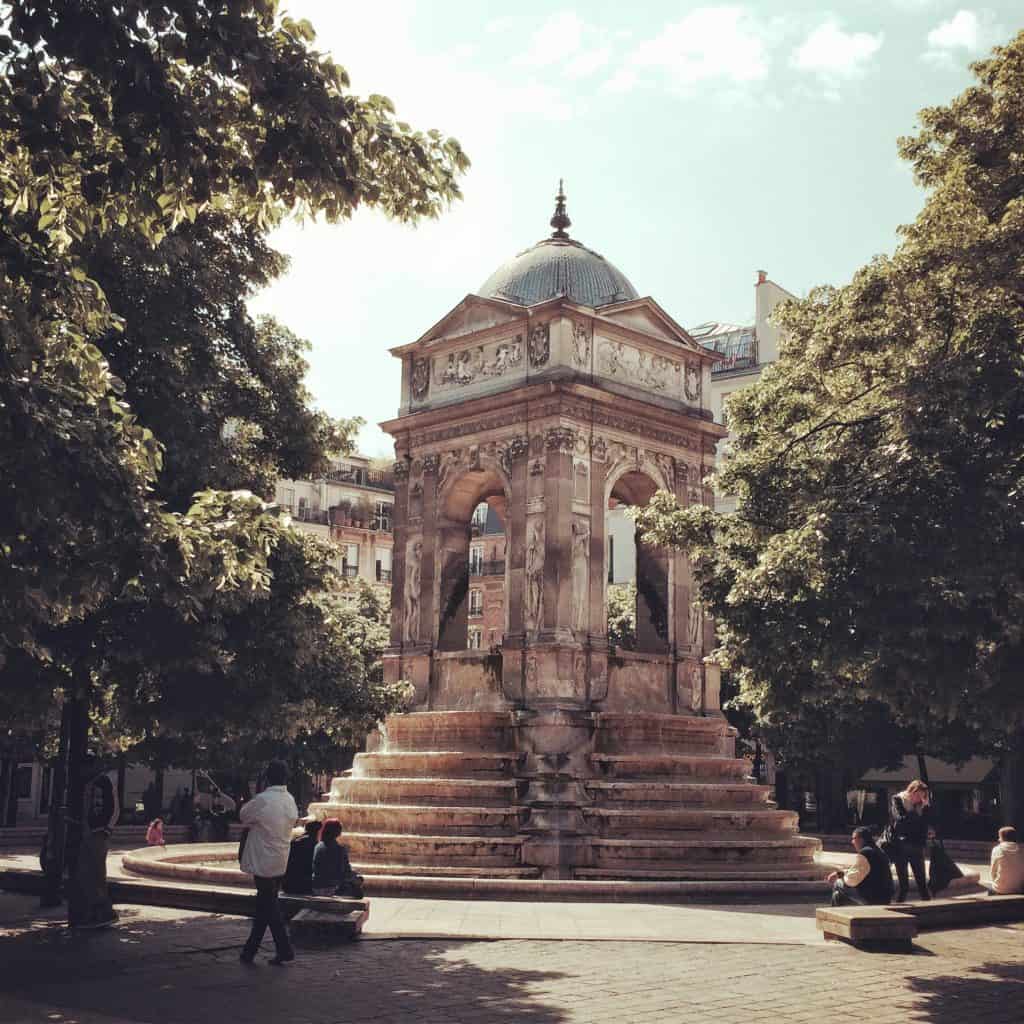
A summer photo of the Fontaine des Innocents, about a ten-minute walk south of my apartment in the 2nd.

Did you enjoy this article? TAIP is 100% reader-supported through tipping. If you want to leave us a tip of any amount it would be highly appreciated. These tips help support our efforts to keep TAIP an ad-free environment. Just as at a cafe, the tips are split evenly among the team.