line at the Elysee

Journées du Patrimoine (Skip the Elysée)

Around this time last year I made plans with two friends to visit the Elysée Palace.  Once a year, in September, the French celebrate Heritage Days (les Journées du Patrimoine) and many places are open to the public which are not normally so, including the President’s residence, the Elysée.  While we thought we would “beat the crowd” by getting in line at 7am, two hours before they started letting people in, many, many other people thought similarly and we were in a very long line even though it was still dark when we found the line of people snaking through the edges of the Champs-Elysées, near the American Embassy.

Heritage Days started as a French idea, in 1984.  The Ministry of Culture sponsored something called “La Journée Portes Ourvertes” and it was so successful that other countries started their own versions.  The Netherlands, Sweden, Ireland, Belgium, and Scotland all held their own events until in 1991 the Council of Europe created an EU-wide “European Heritage Days” which happen the second weekend of September each year.

I had just by chance been out of Paris the past couple of years on those dates so last year I decided to seize my chance and asked some of my French friends if they had tried to go to the Elysée before and most had not, had never been, actually, but one who had told me to get there at least two hours early.  “It’s worth it,” she nodded.  I took her advice, and yet it was six hours before I stepped foot inside the former royal residence.

Yeah, six hours.  There were some security precautions that had been put in place since my friend had visited, including body pat-downs and as such the wait was truly mind-bending.  In fact, I would say that my main cultural experience was witnessing so many French wait for so many hours.  It was a miracle!

All joking aside, I say skip the Elysée because there are so many other places you can go where the crowd won’t be as absurd and the wait won’t be so long.  Why use the whole day for one building?  When you do finally get into the Palace you can stop and linger without too much harrying from the staff, but to be honest, it’s not a very large or impressive house, by Head of State standards, though perhaps that’s the point of the “one of us” stances of the 3rd-5th Republics.  Need ideas?  Click here to be dazzled.  When making your plans, try not to buzz all over town, but rather stay in one or two adjacent arrondissements.  You’ll enjoy yourself more and what’s the rush?  You live here now, so there’s always next year to hear that concert, take that tour, or see the Hotel de Salm (one of my targets for next year, as I’m out of town for this year’s festivities).

The photo was taken 2/3 of the way through our six-hour vigil.

TAIP is 100% reader-supported through tipping. If you want to leave us a tip of any amount it would be highly appreciated. These tips help support our efforts to keep TAIP an ad-free environment. Just as at a cafe, the tips are split evenly among the team.

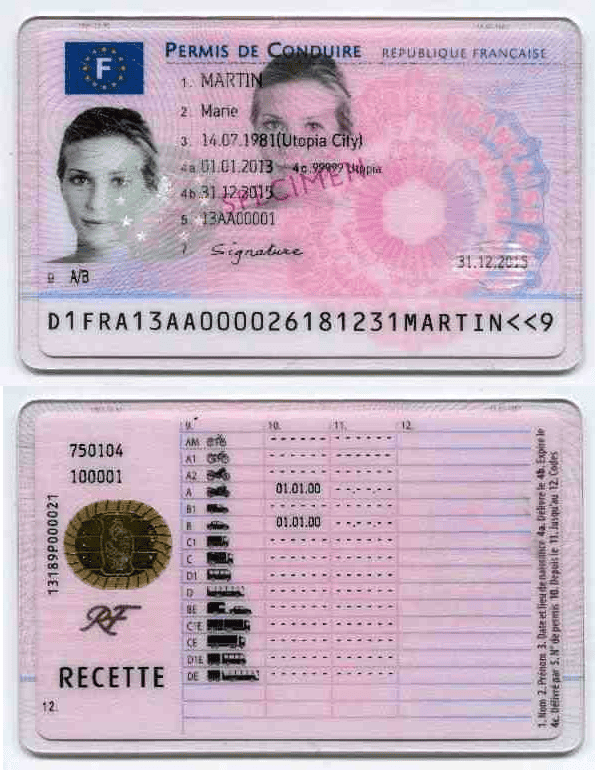
No, I Don’t Have a French Driver’s License (And Probably Never Shall)

I hadn’t written about this before, but a number of people have emailed me about it more recently and I also just finished a book called French License by Joe Start which chronicles just how challenging it can be to get one of these.

So, why haven’t I written about it?

I’m writing this article while visiting Singapore, the city-state I was born into and where my mother’s entire side of the family lives.  It has a world-class public transportation system and I was taking the metro (known here as the MRT) by myself as early as six years old.

I love living in a city where not only do I not need a car, but even the costs of owning a car are a deterrent to ownership.  Apart from purchasing, there’s a flurry of licensing fees and taxes that go along with standard car costs, not to mention parking fees and gasoline that costs at least double what it does in America.  Did I mention the ticket-happy Parisian meter maids?

In the five years I’ve lived in France I’ve driven precisely 28 days, on vacations in Bordeaux, Provence, and the Basque country, as well as a work trip in Brittany.  These are all places you cannot truly get around without a personal vehicle.  Each time I drove I rented a vehicle using my American license.  In fact, the one time I got pulled over in France (I stupidly overtook a cop in a small town it didn’t look like a cop car) I decided to pull the “dumb foreigner” act and spoke heavily-accented American English, handing over a US license, all while looking suitably scared, penitent, and compliant.  They had no wish to do paperwork as they thought I would probably never pay the fine anyway, and there doesn’t seem to be a mechanism to chase down foreigners (as they imagined I was).  I promised to pay more attention to the signs and slowly drove off with a smile and a wave.  Driving a vehicle without a French license is a letter of the law illegal, as I am a resident of France past my one-year grace period, but my insouciant attitude on the matter confirms that indeed, I have adopted the French spirit entirely. 🙂

Yeah, Yeah, Yeah, But…

So assuming that, like me, you love that hole in your budget where auto expenditures used to go, but are constrained by your circumstances and hence need a car and requisite license of your own, what are your choices?

The easy way

Trade in your US license during your first year in France.  The following states offer a straight swap of your license for a French one: Arkansas, Colorado, Connecticut, Delaware, Florida, Illinois, Iowa, Kansas, Maryland, Massachusetts, Michigan, New Hampshire, Ohio, Oklahoma, Pennsylvania, South Carolina, Texas, Virginia, and West Virginia.  If getting a driver’s license in France had been a priority in my first year I would have swapped my Kansas license then and then did what I advise my visa consulting clients to do, report their US license as lost (and it honestly was lost to the hands of the French government) and get a new one.  Two licenses for the price of one.

The hard way

It’s too depressing to relate, and why bother when the US government has a handy PDF that you can peruse at your leisure?  If you want to get more depressed, read the book I referenced above.  The work I’ve done at the prefecture for French residency seems to pale in comparison to the work for a license, and given that 1/3 of the French nation doesn’t have a license, the written and practical portions, as well as the cost of the schools themselves, drive most people off from the process entirely, and keep in mind that these are native speakers who play games like Mille Bornes from their youth and have insight into just how arcane and impossible the French licensing process can be.

But why be depressed at all?  France’s infrastructure is advanced enough for you not to have a private car, and with services like BlaBlaCar more closely connecting us all the time, you won’t need to.  In a driverless future, no one will need driver’s licenses, and that future will come to France, albeit slowly, I’m sure.

TAIP is 100% reader-supported through tipping. If you want to leave us a tip of any amount it would be highly appreciated. These tips help support our efforts to keep TAIP an ad-free environment. Just as at a cafe, the tips are split evenly among the team.

Osteo & Chiro in France

“We’re not covered by the French insurance system.”

I was only slightly surprised when my osteopath said this to me at the end of our visit.  As someone who has spent most of his life outside of a single-payer healthcare system, and has confessed that he only goes to the doctor occasionally, I expect to always pay a little something when I have medical needs in France.

Part of my lower spine had been troubling me for several weeks and my exercise regimen wasn’t helping it to heal but stopping exercise, even for just a couple weeks, was not an option I was willing to consider.  In a past life, upon feeling this way, I would have immediately gone to my chiropractor in the US.  Those visits were covered by my US insurance at the time.  But I never had insurance in a post-Obamacare America.  I left the US in 2013, before the changes to the insurance system began, and as such, have no idea whether chiropractic care is still covered in the way it might have been back then.  But whatever might be the policies of the US insurance companies, it seemed that chiropractors really didn’t have a presence in France in general, and in Paris in particular, and so I made an appointment with “the next best thing,” an osteopath.

What’s the Difference?

The osteopath who saw me took a few minutes to quickly parse the two disciplines.  “It’s a vast oversimplification, but you might say that chiros are more exclusively spinally focused, whereas in addition to the spine we are concerned with respiratory and digestive issues.  We also won’t see our patients as frequently.”  She went on to tell me that the founder of chiropractic was actually a student of the founder of osteopathy for a short 6 weeks.  However divergent their paths are now, both disciplines are a reaction to “traditional” treatments of the time in which they were invented, at the end of the 1800s.

In the end, because of my travel schedule last month, I double-dipped.  The osteopath I saw in Paris made some helpful adjustments just 2 days before a trip I made stateside, and while I was in America I had 4 adjustments over a 2 week period with a chiropractor, including some time on a traction table.  On all these visits on both sides of the Atlantic I paid cash (70 € for my French visit, and $50 USD for each of my American visits), as I have no US insurance, and as I said, French insurance does not cover osteopathy.  But, some mutuelle plans do.  Would I finally be motivated to get one of those “top-up” plans that the French are so attached to?  Not yet.  But seeing both the osteo and chiro helped tremendously, and my back feels a lot better now.  I also managed to learn more about a field I didn’t know about and what the French system will pay for.  So, the pain was worth it, if only to remind me to be grateful that I live in a country in which I can easily see a doctor when I have a problem, and not pay an exorbitant amount to do so.

TAIP is 100% reader-supported through tipping. If you want to leave us a tip of any amount it would be highly appreciated. These tips help support our efforts to keep TAIP an ad-free environment. Just as at a cafe, the tips are split evenly among the team.
Gas Pains

“Do you want an electric stove, a gas one, or a hybrid?”

My (new) landlady asked me this question over the telephone as we were negotiating deal points on the new lease.  We had found the current stove to be not functional.  I paused for a moment.  I had really grown to love cooking on gas ranges in my then-current apartment, but I had also never had to set up gas for the first time in France.  While I always welcome new opportunities to learn about life in my adopted country, moving had its own headaches and my stoicism failed me for a moment.  She sensed my hesitation, “I don’t think it’s had gas for a while, but I can understand if you want it.”  There really wasn’t a difference in the price points of the new stoves she was planning to buy for me.  After a bit of hesitation, I hedged: “Let’s go with a hybrid.”  In this case that meant that one of the 4 ranges, as well as the oven, was electric, but the remaining 3 ranges were gas-powered.  That was the easiest part of the process.

The Detective Work Begins

In France a copy of your EDF (it technically stands for “Électricité de France” but may or may not actually be from EDF more on that later) is an integral part of your bureaucratic life.  You can use it to prove residence and can use it for something as complicated as a citizenship dossier to something as (seemingly) simple as changing your address with your bank (more on that in a future article).  On the left-hand side of an EDF bill (I’ve never used another provider) towards the bottom you’ll see something called, “point de livraison” (PDL for short).  This is a 14-digit number that tells EDF exactly where your domicile is (and hence where their staff needs to travel to).  Since almost everyone has to have electricity (not everyone has Tesla solar panels and power walls installed yet!) this is usually not difficult to obtain.  In the overwhelming majority of cases, your landlord/landlady (propriétaire en français) will have an old bill and can give you the PDL.  In the minority of cases where it’s not readily available, if you have at least the last name of the previous tenant, or even the last dates they were there, plus the street address, that should be enough.

But I didn’t have any problem setting up electricity.  I was trying to set up gas service, and for that I needed a 10-digit PCE (point de comptage).  There had not been gas service since 2009 at this location and I had failed to note that while there was a “gas pipe” coming into the kitchen it didn’t look anything like the gas hookup I had at my then-current apartment.  Oh well, they would take care of that (I thought).  With gas last being used in the place before my current landlady owned the apartment, it was off to GrDF to try to find out the PCE.

Deregulated Utilities

Now, let me explain.  GrDF (Gaz Reseau Distribution France) does not actually provide you with gas.  They are simply responsible for the infrastructure that delivers the gas to your provider.  If gas goes out in a neighborhood they are the ones who will fix it.  The minute the gas enters your house it is the concern of the “fournisseur,” or provider of the gas.  As with electricity, the market is very deregulated (the irony of the socialist country having many options for utilities whereas the US, which touts itself as very market-based, often has only 1 or 2 choices if any for utilities) and you can choose lots of providers.  I wanted to keep my life simple, so after we found out where the PCE was (about 15 minutes of questioning and digging) we ordered gas service, even as the lady tried to talk me into buying a bottle that I could manually attach and get refilled.  EDF serves as both the infrastructure provider and as a “fournisseur.” Hence, I opted for simplicity and made EDF the provider for both electricity and gas, not bothering to shop around because I felt my time could be better spent than comparing costs per kilowatt hour, and variable vs flat billing.

About 10 days later, I met someone from EDF at an appointed time who had a meter with him ready to install, but he looked at me blankly when I showed him where to install it.  “But, this isn’t right,” he sputtered.  After he spoke really quickly, with hand gestures, I asked him to slow down his French and perhaps assist me with a drawing.  He went on to explain that the meter had an input valve and an output valve and it was configured in a very specific way, and that I could hire a plumber who was certified to install and/or work on gas pipes and he could help further.

Armed with the drawing, we had a handyman install the necessary pipes and reschedule a visit for the meter installation another 10 days later.  In the meantime, I was grateful for the decision to go hybrid, as in the absence of the working gas ranges, the electric range was doing all the duties for cooking.  This time the meter man came and installed the meter (you can see the picture, though I did go on to paint the pipes a few weeks later) and a short time later, the first gas flames were firing in the apartment.

One More Thing, of Course

Given that it had been a number of years since gas had been installed in the apartment, for safety reasons the city of Paris demands that the installation be certified, and about 6 weeks after the meter was installed and working, a functionary came by, examined the installation, gave it a score, and left.  I “passed.”  All in all, it took nearly 10 weeks to get working gas in the house for one single appliance (the rest of the appliances in the house are electric) but as someone who enjoys cooking very much, and on gas particularly so, the hassle was worth it, and hopefully, a lesson learned for you all as well: if you’re going to be installing gas for the first time in a while in your apartment, be prepared for some pains.

I want to take a moment to thank in particular my friend Jenny, who helped during a particularly painful appointment process one afternoon when we were shuttled by telephone between GrDF and EDF as each tried to pass the buck to the other as to who would make the appointment for the meter installation.  It took one hour in total and culminated with the “French blowout” of frustration as Jenny let one of the “it’s not my problème” clerks have a piece of her (French) mind.  The French are not known to be patient in general, even less so with utilities, so I appreciated the help as I didn’t have the technical vocabulary to navigate between the two agencies.  Yet another reason it pays to have French friends?  To help you with your French problems. 🙂

TAIP is 100% reader-supported through tipping. If you want to leave us a tip of any amount it would be highly appreciated. These tips help support our efforts to keep TAIP an ad-free environment. Just as at a cafe, the tips are split evenly among the team.

Troubleshooting: Internet, Leaks, and Hot Water Heaters

There are things that are very simple in France.  One of my favorites is the “set it and forget it” auto-debit for most of your recurring expenses: your EDF (electricity bill), UGC pass, or your mobile phone, just to name a few.  Then there are those things that are not so simple, like getting internet.

Running water or internet?  Internet, please.

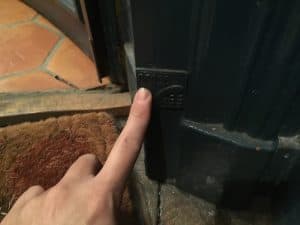
Now, I had been a bit misled on this point because establishing ultra-high speed Fibre internet at my chambre de bonne, the shoebox in the sky in the 17th where I spent my first year in Paris, had been a breeze.  I gave the internet company the necessary information, they scheduled the installation, and on the appointed day, the technician (with an apprentice) showed up, ran the wire, gave me the router, and just like that, I had some of the fastest internet in France.  Something no one ever tells you is that before you go in (or online) to establish service, you’re going to need a little code that’s just outside your apartment door.  This tells your internet provider the “location” of your apartment within the complex web that is the Parisian building ecosystem.

When I moved to the apartment I was in now, I told my landlady that I wanted the fastest internet possible.  Her first move was to ask the existing internet provider, named Free, to up the speed to Fibre.  They first sent a technician to run the wire, and then he told me when the box came it would simply be plug-and-play.  It was not.  After 2-3 weeks of back and forth on the phone and my at-the-time dreadful French (I would use phrases in French like “I am running the white wire into the green square in the back of the black box” which I would have easily said in English as “I’m running the fiber into the incoming slot on the router.”) I gave up on Free and ordered Bouygues.  They turned out to be even more incompetent (how is this possible, I wondered) and I gave up on them faster than I gave up on Free only giving them about a week to work.  SFR was the one who originally hooked up my Fibre back when I was living in the 17th, and so I told my landlady to order SFR.  And, just like that, I had high-speed internet within a week.  SFR has been my mobile provider since I arrived and has been the most reliable internet provider I could have hoped for.  This is to say nothing of the fact that my mobile plan allows me to use my data and phone in the USA when I visit (allowing me to cancel my T-mobile mi-fi subscription, which I mentioned here).

Degats des Eaux (Leaks)

So, one thing we all have in common in Paris is stories about leaks in our apartments.  When I first arrived I listened in horror as a date told me that she had had mold growing in her bedroom due to a leak for over a year and had a landlady who refused to work on the issue for her.  I’ve had a Canadian friend who persevered through numerous challenges here but finally gave up when the roof of her apartment caved in due to a leak from the upstairs neighbor.  And I myself have three different leak stories.

The first one is from my upstairs neighbor who is the near opposite of a model neighbor (think “likes to have loud parties on weeknights until 03h00”).  He was away in Brazil when a leak started to come in from, quite obviously, his shower, which is above my bathroom.  He sent in a friend to examine the issue and his tenant a nice Dutch kid who I was acquainted with, was very understanding and I let him use my shower and bathroom while we tried to investigate the leak.  It kept coming, but at a very slow rate, so we figured that there must be something wrong in the walls.  He had planned a complete gutting of his apartment in 6 months, so he wanted to delay destroying the walls of his shower to fix the problem until then.  As the leak was intermittent, and I didn’t see an effective way to press the issue (a tenant, not an owner, going to war with the syndic over a slow leak dispute with an absentee owner– that just sounded exhausting) so I waited patiently.  It would be another 6 months before the relevant paperwork had been completed (his insurance people came to visit, my insurance people came to visit, I had a handyman come out to estimate he told me I would need to wait at least 3 months after the leak ended so that the walls could dry so that he could then strip and repaint).  And my upstairs neighbor was in denial the whole time that he was at fault, until one day he, myself, and my next-door neighbor, Martine, who really had some words with him during the summer of renovation, went up into his apartment.  I pointed out to him the rusty main pipe which clearly was the source of the leaks.  He had been looking in the wrong place.  He immediately quieted down and never said anything more on the subject.  Eighteen months after the leak had started, the bathroom was restored, repainted, and frankly, was even better than before as there was a new main pipe which had been run all the way from my apartment into his.  About halfway through this process, sometime in 2015, I learned what all people in Paris who have apartments must know: this is normal.  And franchement, I had it pretty easy, as even though it was something to “endure,” I wasn’t out of pocket for anything my neighbor’s insurance picked up the bill for the renovation of the bathroom, and the Syndic paid for the new main pipe.  And I learned something essential to know when living in Paris: a leak is always going to take a long time to solve.

The second leak occurred while the last story I told you was still in progress.  My downstairs neighbor Virginie, who I’m on very good terms with (you can really bond with your good neighbors in common opposition to the bad ones), rang my doorbell at 06h00 one morning.  I sleep like the dead so I’m rather surprised I heard the doorbell at all but she had been pressing it for a while and when I showed up looking like I had just gotten out of bed, she asked me to “Please turn off your water.”  I simply obeyed her and gently turned the master water cut-off for my apartment.  I then followed her downstairs and stared in horror at her bathroom ceiling.  It had partially collapsed and was raining water.  This wasn’t an ongoing leak, but rather looked like a bunch of water that had accumulated and finally broken through.  My eyes mentally went up into my flat and I realized that the items above that part of her bathroom were my washing machine, kitchen sink, and dishwasher, all potential culprits.  The likeliest one was the washing machine, which had been installed some months before.  Perhaps a leaky slow drip?  The plumbers for our building came later that morning (after they too, woke up) and discovered that yes, the people who had installed the washing machine had failed to tighten something, leading to a slow drip which, after 6 months, had destroyed Virginie’s ceiling.  Another series of insurance visits later (I was becoming a pro) I found out that due to the repair costing less than 1000€, that the Syndic (or was it Virginie’s insurance?) would be taking care of the repairs I was off the hook.  Given that I was already developing the maturity from my own painful leak at this time, I took this one fully in stride.

I won’t bother you with the story of the third leak – suffice to say, I’m a leak expert 🙂

Chauffe-Non! (My Hot Water Heater — Chauffe-Eau — Breaks)

Last Saturday around 10h00 I got into my shower, only to discover that the hot water refused to come on.  After two minutes of penance in cold water, I got out to investigate.  My E.L.M. Leblanc water heater had a blinking red light, which could only mean one thing: it had finally died.  I say “finally” because last summer it had had a major “illness” and the repairman at the time stated that it was on its last legs.  My landlady, understandably, who had watched my oven, dishwasher, and washing machine all break down over the years (to be fair, she purchased the apartment in the mid-90s, so the fact that we were replacing in the mid-20-teens was to be expected) and then replaced them with brand new appliances, was reluctant to drop the nearly 2500€ that a new water heater would cost.  But alas, that’s what she ended up paying today when the same repairman was back, took out the old one, ostensibly to give it a decent burial, and put in one that resembled, rather like my washing machine, a spaceship.  It even had a wireless controller that uses your daily schedule to optimize the energy usage of the machine.

* * *

There are a few things to note here.

I have an exceptional landlady.  She’s always been there for me.  I’m sure she can’t have been happy about having to replace all these items, but she knows their breaking had more to do with their age than anything I did, and my patience with these issues and her diligence with all the repairs have made for a winning team.  It doesn’t hurt that I’ve befriended all the best neighbors and always pay the rent on time, and agree on marginal increases in rent each year.  I don’t take for granted that I live in one of the best locations in the city, in the heart of the 2nd.

I have wonderful neighbors.  While my neighbor upstairs likes to pretend he is the only one in the entire building, my next-door neighbor and downstairs neighbor are great people, and I’ve hosted them for dinner at my place, where they got to try my signature ginger sesame chicken on rice.  Getting to know your neighbors in Paris is a choice, but it’s a wise one considering how often you might need them (or they might need you Martine rang me up at midnight to let her into our building a few weeks ago because the pin pad for our building was on the fritz, and she couldn’t get in).

All of these are happy endings.  As I noted above, I’ve had friends finally give up on Paris after one incident too many regarding housing.  As you’ve read before on my blog, life in a foreign country is challenging enough without everyday incidents on top of them.  Americans are used to by and large being able to call and get these things fixed tout de suite, because the only thing that matters in that country, other than the state of the Kardashians, is the customer always being right, whereas in the most recent incident regarding my hot water heater, I just started laughing when I saw the blinking red light, as it was SATURDAY and there would be no one who would come out to my place to fix the hot water heater.  I knew I would just have to wait until 09h00 Monday morning, and I and my guests ended up taking showers at Virginie’s over the weekend.  Which reminds me, I need to bring her some speculoos cookies from Belgium, where I am writing this.

Like quicksand, the more you struggle, the worse it will be.  Last year I started doing mindfulness meditations using Headspace and it only helped reinforce a personal rule that, like the large breakfasts I cook, is out of place in France: refusing to complain.  I won’t even allow myself to complain in my head, privately.  Complaining accomplishes nothing (when you say this to French people 1 out of every 4 or so will cite some “scientific study” in which it was shown that complaining helps you be less stressed.  Color me skeptical.) and actually I think complaining makes things worse.  In all of your challenges in French life – not just with immigration but in living in apartments, it’s always best to remember how very first-world these problems are.  So your hot water heater is out.  Boo hoo.  At least you have running water into your Parisian apartment.  So there’s a leak.  Big deal.  Get over it.  Your internet isn’t working.  Wah.  Go to a Starbucks and get it for free in the meantime.

Don’t focus on your problems.  Focus on solutions.  Doing so gives you more time to wander in the Louvre, enjoy a coffee, and walk with a friend through our picturesque streets and parks, which are some of those simple pleasures that I wish everyone in Paris could enjoy as often as I do.

Did you enjoy this article? TAIP is 100% reader-supported through tipping. If you want to leave us a tip of any amount it would be highly appreciated. These tips help support our efforts to keep TAIP an ad-free environment. Just as at a cafe, the tips are split evenly among the team.

French Work Benefits Are Truly Unbelievable

We were in line to pay for our portions of the meal.  It was in Grenoble and many of my native French companions had opted for raclette, the delicious and hearty mountain food of the Alps.  I wanted to encounter Savoyarde cuisine a bit more “head on” and opted for tête de veau.  As the guest in front of me paid, she ripped off a sequence of cheques, each denominated in 10€.  My eyes drifted to the bottom of the cheque: it read “cheque vacance.”  I made the mental connection, and then incredulous, I started laughing.  “Quoi?” my friend nudged.  “You…you…you people get money to go on vacation?” I queried.  Julien laughed, “Oui, mon ami.”  As we got into the car to drive back to Paris after a weekend of skiing, I made a note in my journal: “Hunt down all French work benefits.”  That was almost two years ago, and it’s high time I finally shared my findings with you.  Americans, please take a seat.  You’re not going to believe this.

I’ve divided the benefits into two categories.  There are the benefits that are required by law, which everyone gets, and there are those “optional” benefits which are only provided by certain companies.  I’m going to leave aside the discussion of cadre/non-cadre as well as CDD vs. CDI for another time.  I just want to focus on benefits.

Standard Benefits (required by law)

RTT (Réduction du Temps de Travail)

Everyone knows about the 35-hour work week, but what you don’t know is that the French are required to be compensated for the time they work beyond those 35 hours, and that comes out to a minimum of 2.5 days per month, every month of the year, at most large companies for those on a CDI.  That adds up to 30 days per year using that accounting though some have told me they get as “few” as 10 days per year as they are only on the clock for 38.5 hours per week.

CP (Congés Payés)

Everyone is required, after the first year of work, to be provided with an additional five weeks of paid vacation per year.  If you add the RTT and CP, you can begin to understand why the entire country is gone from roughly July 15-September 1st, and still has leftovers for personal vacations in the Winter and Spring.

Fêtes Nationales

The National Holidays were actually more numerous before the disestablishment of the Catholic Church (“holiday” is simply an elision of “Holy Day”) and because Napoleon wanted to show his power over the Church, in the Concordat he signed with Pope Pius VII in 1801, he suppressed a number of ancient feast days.  So, the number of national holidays would be even higher if it weren’t for Napoleon, who had a bit of a workaholic streak in him.  As it is, the national holidays of France, long called “bank holidays” in England, to commemorate that country’s true religion, finance, include:

  • The Circumcision (January 1st)
  • Easter Monday
  • Labor Day (May 1st)
  • Ascension Thursday
  • V-E Day (May 8th)
  • Pentecost Monday
  • July 14th
  • The Assumption (August 15th)
  • All Saints (November 1st)
  • Armistice Day (November 11th)
  • Christmas (December 25th)

If you were keeping track, that’s 11 days.  For a so-called secular state, the French do keep an overwhelming majority of ancient Catholic feast days, with only one “commemoration” of the bloodthirsty revolution.  I suppose you could count Armistice Day and V-E Days as commemorations of the wars that democracy gave us.

Public Transport subsidy

If you take public transportation to work, your employer must subsidize at least 50% of the cost of your pass.

Food subsidy

I couldn’t get a clear answer on the exact amounts, but you get vouchers called “ticket restaurant,” which are a 50/50 split between you and your employer.  This means if you get a series of 10 € daily vouchers, you have contributed 5 € and your employer has matched 5 €, making for 10 €.  Some, like my friend Adam, get as much as 19 €/day, and keep in mind, you aren’t limited to buying lunch only with those vouchers: you can use them for grocery shopping.  There is some movement away from the vouchers into an electronic debit card-based system (to prevent hoarding and mass-cashing at the end of the year), but that will take a while.

American reaction: “You get free money!”
French response (glumly, with a frown): “Yeah, we pay half.”

American glares at French person.
French person shrugs, repeats and says, “What, it’s true!”

Tuition Reimbursement

If you wish to take classes or training, possibly even training to change your career and quit your current job, your employer has to pause your job and allow you to take those classes.  Your employer may refuse twice, but may not refuse if you request a third time.

Compte Professionnel de Formation (formerly droit individuel à la formation)

You earn points in a personal account even via part-time work.  You can use these points towards paid training and certifications either in your career or to change careers.  These points do not expire and belong to you, not your employer.

Wait, there’s more: Maternity and Paternity Leave

French women are entitled to 16 weeks of paid maternity leave and French men are entitled to 11 days of paid paternity leave, though the French men are having to be encouraged to use this benefit as its culturally quite new.

Life Days Off (yes, more vacation)

If you get married, you are entitled to 4 days off, if you get into a civil union, you can get 1 day off.  If there is a death in your direct family (spouse or children), you can get 2 days off.  If one of your children is getting married, you can get one day off.

Mutuelle (because inexpensive health care wasn’t good enough)

Beginning this year, the mutuelle, which was a paid private plan you could acquire (from a number of different companies) to make up the balance of payments of the 30% of medical costs you often handle (the State takes on 70%) now has to be provided for you by your employer.  So that bit of health care you did have to pay for?  That’s been taken care of as well.

Optional Benefits (yeah, there’s even more)

Treizième mois

So, some companies pay you for a “13th month” each year.  The purpose?  So you don’t have to set aside savings to pay for your taxes.

Cheques Vacance

You heard about this already this kicked off the idea for this article years ago.

Cheques Cadeau

Well, because at Christmastime, you can’t actually be expected to pull from your savings to buy gifts.  Grab your chequebook, with 10-15 cheques denominated in, you guessed it, 10 € increments.

Comité d’enterprise

If you have at least 50 employees, this is required and .2% of the company wages must be diverted to fund the benefits it provides, which include discounted movie and theater tickets, among other things.  Smaller companies do not necessarily have this.

* * *

So, whenever I begin to catalog this list of benefits to the French, I get some silly speech about how they “fought” for these “rights” and that they have been “earned.”  This is, of course, absurd.  No one has a “right” to a job.  Those of us who have actually signed the front of a paycheck, not just the back, know that.  These laws are coercive measures that are leveled by the French government on companies that do business in France.  It is to maintain a standard of living in this magnificent jewel of a country.  The only price?  Innovation.

The reason that the US and other countries so far outdistance not just France, but Europe, in innovation, is because startups are allowed to figure life out before they are yoked with the duties of taxation.  France, as the laws are currently construed, is a fundamentally anti-business country.  There is no balance whatsoever it is all about the responsibilities and obligations of the employers, which must take all the risk, while the State and the citizens/employees are completely shielded.  This is not real life.  This is the artificial reality created in France.

What do the French retain in exchange for losing the ability to innovate at the speed of the internet?  Stability.  The French have a really good life, thank you very much, and they don’t care if they aren’t keeping up with the rest of the world.  And that’s what those of us who come to this country to make our lives are fundamentally at peace with: the unbelievable burden carried solely by the private sector of the French economy is the price that is paid to have such a good life.  No one forces these French companies to stay here they can leave and go anytime they want and the young French don’t have to create companies here they can go to the US or other friendlier climes.  This isn’t to say that there is no startup scene here in France.  There is it’s exciting and I’ve been pleased and privileged to work with and interact with some of these startups in the guise of my own small French startup.  These French are earnest about the opportunities, okay with the lack of a safety net, and grateful for the flexibility that the startup universe offers.  But they face challenges they simply would not have to face in America and it slows them down.

But that’s the question at the heart of this: is speed what you’re after?  If so, then France isn’t for you, anyway.  Come here for stability, tradition, and pride.  But let’s be clear: these benefits cannot reasonably be construed into a narrative of “rights” that were “earned.”  It’s a ransom that is extorted.  It is paid perhaps reluctantly, but it is paid, nonetheless.  Because life really is that good here, despite all the hassles, paperwork, and these days, bombs and bullets.

The photo was taken at the hottest times of the protests against the new reform of labor laws this year, back in May.  That was, of course, before severe flooding prematurely dampened the resolve of people complaining about gold-plated privileges they never earned and consider “rights.”

TAIP is 100% reader-supported through tipping. If you want to leave us a tip of any amount it would be highly appreciated. These tips help support our efforts to keep TAIP an ad-free environment. Just as at a cafe, the tips are split evenly among the team.

August in France

It is quiet.  Wonderfully quiet.  Not just in Paris but everywhere you go in France.  On July 15th, after some national holiday that will go unnamed, the French decide that it’s been a solid 10.5 months of work, and that it’s close enough to 12 to round up and call it a year.  They depart in all directions, with a plan to return on or around September 1st.

Effectively this means you’re on your own if you choose to stay in your particular part of France.  90% of the local restaurants and shops close, and here in Paris, it’s the tourists who now outnumber the locals.  Everything feels slower because everything is slower.  Normally I would say this is in part due to the weather, but given the fluctuations of the last six months, I’m uncertain as to whether there is a correlation any longer between the season of the year and the expected climate.

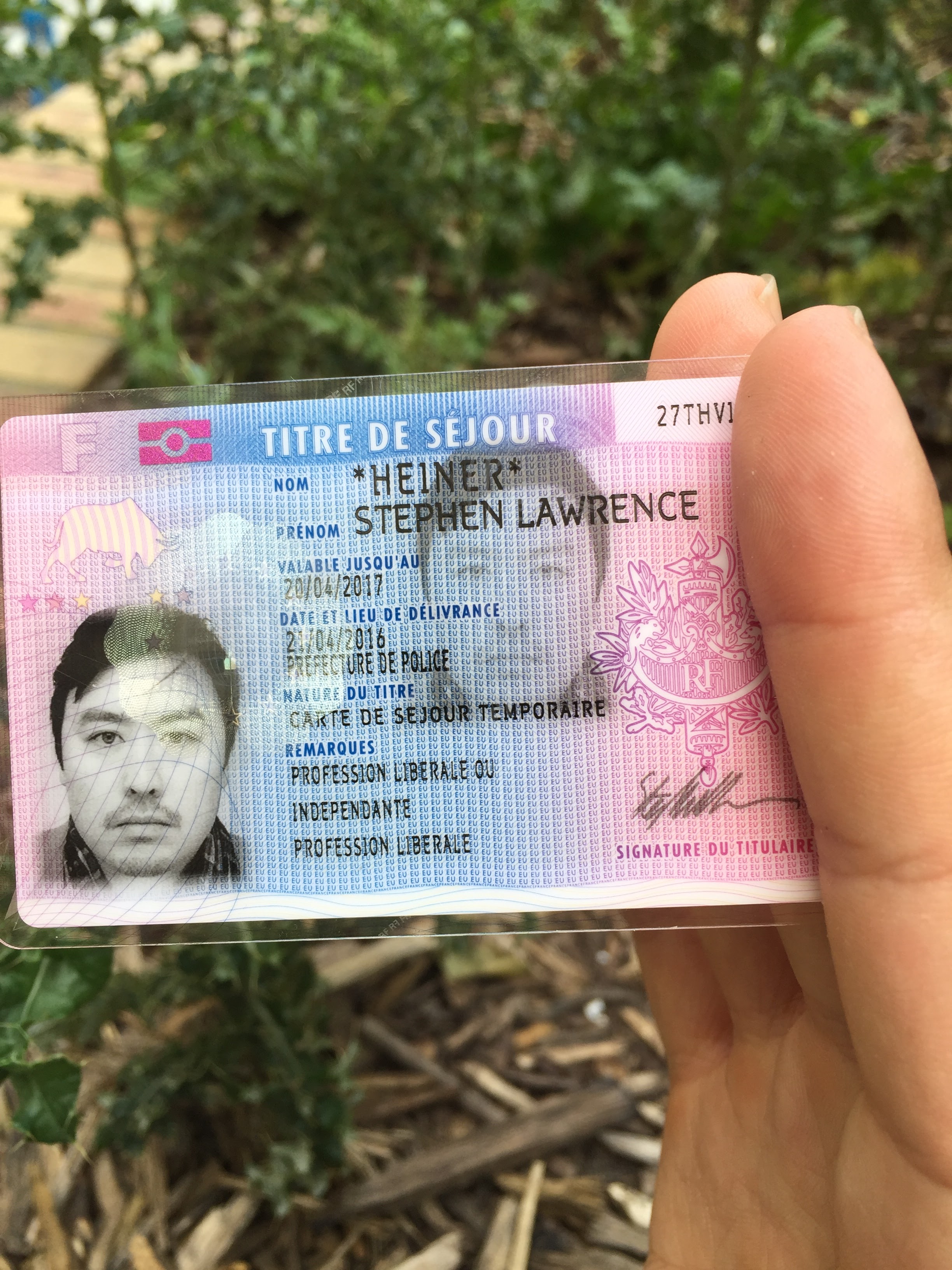
My Second Card

The last card said “Visitor” and specifically prohibited working.  This one recognized my new status and interestingly was dated from the date of my follow-up visit to the Prefecture in April, not the date I received my first récépissé, in January.  This permanently shifts my renewal date to April, which is nice as I can now avoid the end-of-the-year congestion that I have grown used to.  You’ll also see a new permanent entrance to the Prefecture at Cite.

It ostensibly provides more safety via a double-doored security-controlled entrance.  It’s just to the right, about 50 meters from the entrance you are used to.

IMG_2499

No, I’m not mad, bro.

Interestingly, the lady who issued me my carte took about five minutes (which felt longer due to the dread) rechecking all the paperwork from the previous two visits.  I remained stoic and impassive, and I kept telling myself, “Don’t sweat it, you’ve got everything in order.”  Sure enough, she stamped and signed all that was needed and that was “case closed.”

Please don’t make too much of my facial expression.  You’re specifically prohibited from smiling in official French photos. 🙂

Grand Train

Last weekend I took one of my meetup groups to Grand Train.  It’s part of an 8-year redevelopment project and rather than just have a boring old construction site, some smarties got together and created essentially a pop-up party that reminded me of the gently convivial atmospheres of the ruin pubs of Budapest.

Entrance is free and in addition to numerous train exhibits there are pop-up food shacks and indoor and outdoor seating galore.  It runs through October and you would do well to get in early (around 15h-17h) and leave early (before 22h) as it starts to get very crowded at that point.

Outdoor Film Festival is Back on…But Not Outdoors

La Villette, on the edges of the 19th, usually plays host to an outdoor film festival all summer long.  However, following the attacks in Nice, the Mairie de Paris laid down specific security expectations for outdoor events and the film festival couldn’t comply and it was tentatively suspended “until further notice.”  After a couple of weeks of hand-wringing it was decided not to waste all the planning that had gone into selecting the films and organizing showing dates and the festival has been moved indoors to the Grand Halle.  If you want to join our Film and Supper Club we are going to watch Akira Kurosawa’s Ran next week.

Happy to be Here

Despite this being my third year in France, this is my first full August in Paris, as the last two summers I was working in Switzerland.  Alas, they passed a law that went into effect earlier this year that restricted the number of non-EU persons that could work on temporary summer contracts, and my wings were clipped.  I was certainly down the first week I got the news, back in March, but the summer has proved what I suspected to be true back then: more opportunities would arise while I was in Paris, not in Switzerland, during July and August, and I would have more of a chance to explore parts of France that I have not before.  There are still two weeks to go before the Rentreé and I’m very glad to have these quiet summer days pretty much to myself (or to accompany friends who have never had Five Guys to taste their first one).

Photo was taken in the middle of multiple conversations at Grand Train.

Did you enjoy this article? TAIP is 100% reader-supported through tipping. If you want to leave us a tip of any amount it would be highly appreciated. These tips help support our efforts to keep TAIP an ad-free environment. Just as at a cafe, the tips are split evenly among the team.

The Clothing Inventory: How I Escaped the French Sales Season

The “official sales dates” in France are roughly January 6-February 16 and June 22-August 2.

SOLDES!  The all caps scream out at you from all the shops in Paris then there’s the deuxième démarque, and the dernier…at each stage the frantic pace increases, and stores get progressively messier as the “regular” sizes sell out.

Paris will up your fashion IQ even if you never planned for it.  Scarves, shoes, jackets…I had definitely upgraded since moving, and there’s always something you can add…or is there?

I wrote some time ago about forced decluttering and about how a small Paris apartment forces you to be thoughtful about your “stuff.”  Combine that with a recent shine I’ve taken to the Minimalists and their ideas, and I was doing my best to resist…must not buy…clothes on sale…I tried to remind myself that he/she saves the most when nothing is spent.

But willpower wasn’t enough.  I took a clothing inventory.  Apart from socks/underwear I simply counted every piece of clothing I had.  Every scarf, tie, shirt, shoe, jacket, etc.  I typed it all up and printed out the 2-page document and looked it over.  There were no spots I needed to fill.  I had a great wardrobe.  Indeed, I realized that still some might go away via the 90-day rule I’ve observed since 2010 if it’s in season (ex: sweaters in winter) and I haven’t worn it in 90 days, it has to be given to someone else who will use it better than I will, or to a place that takes clothing donations.  So, instead of getting sucked into the sales season I took an opportunity to remind myself that I might be getting rid of some clothes as we move from Winter to Spring.

If making the clothing inventory isn’t enough print it out and carry it with you so that every time you want to make a purchase during the sales season you can pull it out and check yourself. 🙂

“Soldes” photo from pterjan.  Creative Commons.

Did you enjoy this article? TAIP is 100% reader-supported through tipping. If you want to leave us a tip of any amount it would be highly appreciated. These tips help support our efforts to keep TAIP an ad-free environment. Just as at a cafe, the tips are split evenly among the team.

Picard France

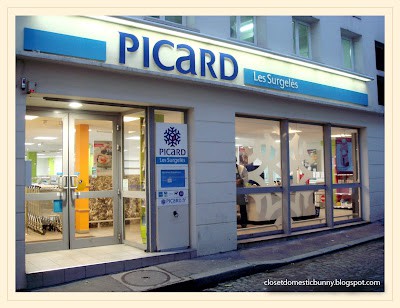
Picard: a Dirty Little Secret of the French

So before we arrive in La France, we non-French perhaps imagine that all French people have an advanced knowledge of wines and cheeses, and while we don’t expect the full Julia Child/Jacques Pepin experience, we expect that most native French should be able to make a few classic French dishes from scratch, from maman‘s recipes or perhaps from grand-mère.  This is not an unreasonable expectation.

What you don’t expect, what you can’t possibly believe, is that a store like Picard exists.

It only sells frozen food.  To be warmed up in an oven or microwave.  No, this isn’t some monstrosity dreamed up by an American.  This. Is. In. France.  And it’s wildly popular.

“I, I just can’t believe Picard exists,” I sputter to my French friends.  A slow smile often creeps into their mien but Stephen, it has good food, bio (organic), you know I wave my hand dismissively.  “Do you realize your word for kitchen (cuisine) means, essentially, thoughtful or good food in my language?  And then I find out that you guys are warming up premade food?”

“Oh, but Stephen, you know, no time, metro, boulot, dodo, etc.”

“In the land of the 35-hour work week?” I ask plaintively.

Now, I’m being a bit unfair about that 35-hour work week as I’ll explain in a future article about the work lives of the French.  Suffice to say I have more than one French or expat friend who works until 20h00 on weeknights, so I fully understand and believe the, “I’m too tired to cook” response.  I know, because I’ve been there.  I’ve come home later than 22h00 many nights when I lived in America.

But when life becomes a succession of warming up food (or buying takeaway), what is the point of living here, or anywhere, for that matter?  One of the things I enjoy so much about France is the superabundance of fresh food and produce; butchers, fishmongers, cheesemongers, produce sellers, bakers: they are out at all hours, replicating what has been done for centuries, giving you the key ingredients to make food for yourself.

The thirty minutes you spend warming up some second-rate boxed lasagna, organic or not, could be spent making an omelette or a salad.  Or pasta.  Or grilling some veal, or rabbit, or lamb, while boiling some potatoes or steaming some veg for garnish.  In fact, 30 minutes would be long for “end of workday” versions of any of those suggestions.

I don’t expect all to take as much pleasure as I do in buying food, making my mise-en-place, and delighting in the cooking process, down to the colors of my food in correspondence and interplay with whatever season we find ourselves in.  But I do expect those who inhabit a country conscious enough of their own pride in everything to put a cock on the crest of the national sports teams to live up to the inheritance, the patrimony, they have been bequeathed, and has been bequeathed to the whole world.  The whole world looks to France as a (perhaps the) standard of cooking.

Which means Picard is simply not good enough.  Ever.  Generations who worked in the fields and offices long before Picard existed managed to cook and eat well.  You should too…whatever country or galaxy you live in.

PS: I should note that it’s simply more expensive to eat processed food, both in terms of financial cost and health cost.  However, I tend to see these as “last ditch” arguments.  People should accept the premise that cooking their own food is a good to be desired in and of itself.

An even more fun PS: my evolution on Picard, five years after I first wrote this article.

Photo from the still-running cooking. eating. carousing. blog

Did you enjoy this article? TAIP is 100% reader-supported through tipping. If you want to leave us a tip of any amount it would be highly appreciated. These tips help support our efforts to keep TAIP an ad-free environment. Just as at a cafe, the tips are split evenly among the team.
The UGC Pass Illimité or “Netflix Live”

In an earlier post I made reference to the fact that something had finally forced me to get a French bank account, after two months of holding out.  And it’s related to my being a cinephile: the movies.

Many movies are effectively “imported” from the States and hence cost a lot more than they do back home.  Indeed, a Sunday matinee in at least one place in Kansas City will only set you back about $4.25 a little under 3 euros.  For four times that sum 11 euros a seat can be had for the same movie in Paris.

How do you fix this, especially if you love movies?  Enter the UGC Pass Illimité, or “Netflix Live” as I like to call it.

You pay 20 euros a month and get access every single day to any movie you want.  For 10 euros more a month you can get tickets for two.

Restrictions

You need to show your pass along with your ticket.  The pass has a photo of you.  You also can’t enter until 10 minutes before the séance (viewing/showing).  Incidentally the “bon séance” the ticket taker says to me after tearing my ticket still sounds funny whereas “bon match” at a sporting event sounds totally normal.

Advantages

You can make advance reservations ahead of time (via an app or online) and pick up your tickets 10-60 minutes ahead of the show (in the final 10 minutes if you haven’t picked up those tickets they get released and you have to try again at the box office hoping someone hasn’t scooped them up).

Where do I sign

Well, that’s what I said as I headed to a UGC (theater brand pronounced you-jay-say) to buy a pass, armed with my passport and a credit card, full of the confidence that any American has when in possession of these two items.  The very attractive girl who waited on me who some weeks later I found out spoke British-accented English played dumb for the perceived tourist and shook her head as I asked, haltingly, in French, for a “Pass Illimité.”  She replied, slowly, that I needed a French bank account.

You see, the French are really into automatic debits, so much so that when you open a bank account you are given a sheet of paper which contains 6 “cards” that you can cut out and hand to relevant vendors.  It contains all your relevant info and poof, problem solved.

The problem was that I had been holding out on getting a French bank account and so I just paid regular admission that night to go see Le Hobbit.  I mulled over just how many movies I would watch while in France and thought through the numbers again.  A weekly movie meant each film was just 5 euros, but any more in a month and it would be effectively even less.  As the year promised new Spider Man, Captain America, and even Bible movies, it was a no-brainer for me to get the bank account and provide her with my RIB the next time I saw her.

The trend in France at current is to subtitle original format (VO: version originale) which is awesome for those of us on the path to fluency.  I bring a notebook with me to jot down new vocabulary words as they flash in front of me.  Where it gets comical is the instances in which a character speaks Elvish or another tongue non-native to me and the subtitles are still in French.  It’s a bit of Kabuki, unless the characters are Orcs, in which case you can pretty easily figure it out.

Downside

As with any “unmetered” commodity, you will be willing to see “borderline” movies that you might have taken a pass on in real life.  If it’s effectively already “paid for” you think “why not?”  Two horrible movies I’ve seen courtesy of my pass include The Ryan Initiative and the new Hercules movie.  Also, depending on any number of weird factors, you sometimes have to wait a week or two to see a movie already out in the States, but sometimes it releases here first.  I guess it’s upside if it’s the latter, right?

Pass Illimité, like Vélib, is a program that makes living here not just affordable, but at least in one aspect cheaper and more innovative than back home.  And that’s rare enough to deserve a mention. 🙂

Did you enjoy this article? TAIP is 100% reader-supported through tipping. If you want to leave us a tip of any amount it would be highly appreciated. These tips help support our efforts to keep TAIP an ad-free environment. Just as at a cafe, the tips are split evenly among the team.