streaming services

The Loss of Netflix and Hulu, or “How I Started Reading Again”

I’m an early adopter.  Not the “have it first” type, but the “that’s really cool I’d like to try that” type.  Sometimes this works out well, other times one accepts bad experiences as the cost of being among the first to try them.

Those of us in our 30s are not “digital natives.”  Email and the internet really hit their stride after our undergraduate years.  But it doesn’t mean we take to “appification” any less, particularly ones that involve video.  Some of those video apps that I have particularly become attached to in previous years include:

  • Amazon Prime
  • Hulu Plus
  • NBC Sports (meant I could watch Premier League matches)
  • Netflix
  • Pandora

I knew before I arrived in France that none of these applications were ordinarily available and had started to cogitate about work-arounds or (gasp!) the possibility that I would simply “go without” while I was in Europe.

My degree is in Literature and I have thousands of dead-tree books carefully collected through years of library book sales, out-of-control spending at Half-Price Books, or at any other known honeypot for a bookhound like myself.  The smell of those pages old and new were pheromones for me.  They woke me up excited me made me simply happy.

However, in the final two years of my residence in America my reading pace had slowed to a trickle.  Instead of the usual 2-3-4 books a month I had slowed to not even finishing one book per month.  I would sometimes go a week or longer without even touching a book.  It wasn’t until I was out of the warm comfort zone that was my American existence (that I created for myself I don’t blame anyone else!) that I realized what had happened: Netflix and its imitators.

It wasn’t entirely Netflix’s fault.  I should say it was the fault of having easy access to a nearly infinite library of video titles.  While I’m happy to doff my hat to the era of television that played host to the original Twilight Zone or produced my beloved The Prisoner, I have to say that the current era of television is perhaps the finest in history.  If we look strictly at script and writer-driven shows, like Boardwalk Empire, Treme, The Wire, Mad Men, Breaking Bad, Justified, Luther, Sherlock, and the like, we are witnessing the marriage of what any reader loves, whether he/she knows it or not: real, meaningful stories combined with expert costuming, cinematography, and directing.  There are many moments in any of the series I’ve listed above where one could freeze a frame and give an hour-long lecture on everything occurring in that sequence.

In a sense, I didn’t realize I had abandoned reading because I was still occupying my time with ideas and stories and concepts that mattered to me.  It was only when I had to confront having to get a VPN workaround and its own challenges like only working 85% of the time made it so that I accepted that I would just go without for a while.  There’s always time to catch up on those series at some point in my life.

What happened in that going without?  Reading, like the waters of spring coming forth from a snowmelt, burst in through all the well-known stream beds of my free time.  Public transportation facilitated this by giving me countless chances to get in a “quickie” with some novel or work I had downloaded for free (because it was in the public domain) and read on my Kindle app on my iPhone or iPad.  That led to even more reading (I was foolish enough to bring a number of dead tree books with me to Europe) and before I knew it, the old paradigm had reasserted itself in my life: free time spent in large part reading, with a tiny bit of TV via the free Fox app and a weekly movie in the theaters.  Unwilling to pay for any premium services like Netflix, I simply enjoy Pandora (I still haven’t converted to Spotify, but I am open to listening to you tell me why I should) and the occasional guilty pleasure of Masterchef or Hell’s Kitchen (I love cooking and I love Gordon Ramsay).  Last week my mother told me I should watch the new Jack Bauer 24 series and I haven’t yet told her that I already watched the first episode, having failed to stop watching 24  as I should have after the 3rd season.  Remind me to tell you about my feelings on the art of non-finishing some time.

So, can I ask you to try something?  Something that can be done from the comfort of your own home?  Give up Netflix, Amazon, and Hulu Plus for one month.  Watch what happens.  I’m not on a crusade here.  I just want you to experience what I wasn’t able to until I left everything I knew to move to a place where I only knew a handful of people.  All those programs you’re terrified you’ll miss will still be there for you.

If you ever go back.

Photo by Glenn Carstens-Peters on Unsplash

Did you enjoy this article? TAIP is 100% reader-supported through tipping. If you want to leave us a tip of any amount it would be highly appreciated. These tips help support our efforts to keep TAIP an ad-free environment. Just as at a cafe, the tips are split evenly among the team.

The Power of Old Churches

Wow, it sounds like you’re really into churches.”  My companion was to my right.  Corsica was outside our window and below, to our left.  He was a Spaniard and we were both headed to Romania that weekend.  I, for a wedding, he for a bachelor party.  Our conversation that afternoon had covered all kinds of ground but we had finally come on to why I had been in Madrid.  I told him I had taken opportunities to go on day trips to Ávila and Segovia.

“Honestly,” I said, “churches are the most important things to see.  They matter most, in a way.”  As the words left my mouth I realized I had never articulated such a thought before but that I believed it deep down in my bones.  I began to make my case.

“Think about whenever you visit a new place.  Apart from enjoying the language, food, culture, and customs, you want to enter into how these people are the way they are.  You can examine their buildings, see their art, and see their places of worship.

“Castles are majestic.  Museums are fascinating.  But they are, in their own way, simply an artifice.  The Louvre was a working palace before it became the world’s largest museum, and El Escorial (my favorite royal palace in Spain) is magnificent, but I’m only permitted to see it because it’s no longer the king’s residence.  If things were now how they were then, it would only be under some extraordinary circumstance that I would be able to so freely traverse the private apartments of the king.

“But the irony is that despite being constructed in the happiest times of monarchy, these churches are the most democratic of buildings.  Overwhelmingly they were built by the contributions of the whole community, be they great persons or small.  People contributed their time and expertise and money to raise these stony testaments to God.  Stained glass provided otherworldly lighting for the space and catechism to the illiterate.  Statues of wood or alabaster or marble brought the lives of the saints and stories of Scripture into real and convincing relief.  Some of the people were paid for their work as artisans, but many volunteered their time: these buildings would be legacies to be handed down from generation to generation.  They weren’t buildings frozen in amber, as museums often are, but these were living things, the pride and joy of the communities in which they were always located in the center.

“Go to any small town in the countries that comprised Christendom after the Protestant Revolt.  You will find inspiring cathedrals surely, but you will also find beautiful little churches, ironically proud in their humility.  People started their lives here when they were baptized.  They ended them here when they had a Requiem Mass.  They may have been joined to another human for life in the company and witness of all their beloved in the enduring tradition that is marriage.  Or they consecrated themselves to God’s service.  People gathered under those roofs in all times in peace and in war in plenty and in famine in good weather and foul and in times sad and happy.

“As you breathe in the incense and candle smoke of centuries in a place where so many spoke to God or didn’t or simply sat and listened, your senses can be afire.  Churches are places that remind us, by their majesty, that all things must end, no matter how glorious.  This is why I go to churches whenever I travel: to remember that I am immortal.”

He simply nodded.  I looked out the window at a beautiful bank of clouds.  I closed my eyes and was again in the dark beauty of a Spanish church.

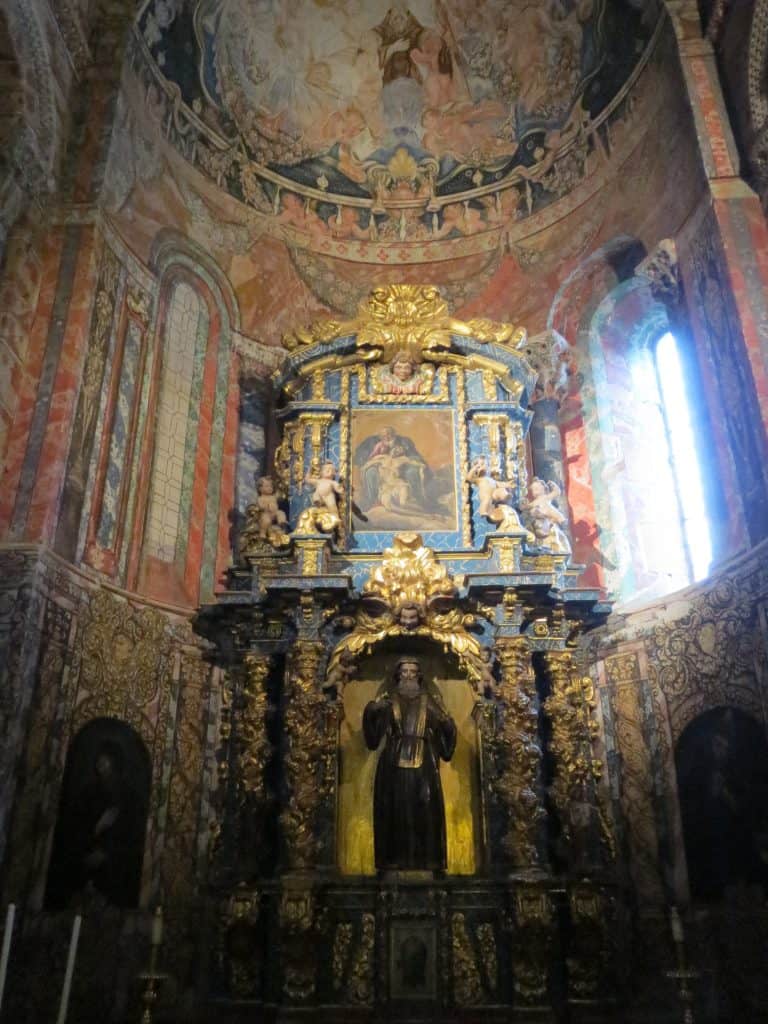
Photo is of a side altar in one of those dark Spanish churches.

Did you enjoy this article? TAIP is 100% reader-supported through tipping. If you want to leave us a tip of any amount it would be highly appreciated. These tips help support our efforts to keep TAIP an ad-free environment. Just as at a cafe, the tips are split evenly among the team.

Death in the Afternoon, or Sunday Chess in the Jardin du Luxembourg

Meetup is a great website.  If you don’t know it, it is a site that allows you to create a group based around a particular love or passion.  Want to play bridge?  Or go hiking?  How about practicing your English and French?  All you want, and then some.

The burden is on the organizer.  He/she pay$ to start the group and is responsible for its ups and downs.  The better the organizer, the better the group.  I’ve started two groups here.  One for soccer inside the city (there are a couple of excellent groups that play in the big parks just outside the city…I can play soccer in a big field anywhere in the world.  But in front of Les Invalides?  Not too often.).  The other one is for chess, and has been pretty successful in its early days.  Our first get-together found 8 strangers from all over the world drawn together by a common love for the game of black and white squares, and the pieces that inhabit them.

That first meeting was at Anti-Cafe, a “co-working” space.  More on that another time.  A great time was had by all and we played timed and untimed games.  We also took time to school a novice on the rules and some basic strategy.

Chess is fascinating on many levels, and during the year I lived in Saint Louis I was a member of the Saint Louis Chess Club, which hosts the US Championship every year and where you can get tutored by grandmasters.

Basic principles beyond the names and movement of pieces are manifold, but here are three that I share with any fellow novice:

1.  Try to capture/attack the center of the board

2.  Try to develop your pieces (move back-rank players forward)

3.  Try to consider each move through the two-fold criteria of what is this piece attacking and how is it attacked

These principles were on my mind last Sunday, during our latest meetup our first outdoors at the Jardin du Luxembourg.  After three successful meetups, where we had built up a strong core, I thought a fun tournament, with some euros on the line, might be fun.  5 euro buy-in.  We would see who would show up.

As a group becomes more carefully curated over time (again, depending on the organizer), the percentage of who signs up for an event vs who shows up may improve; my basic rule was 50%.  That is, if eight people said they were coming, then four people, at best, would be actually coming.

Today was a bit better.  Ten committed, including myself.  We had five plus myself actually show up.  There was an alleged “beginner” but as we played a quick game it became obvious he was just being modest.  I drew up a quick series of brackets that ensured everyone would play at least three games before we got to the final “money” matches.  It was imperfect for sure.  I had always played in well-organized round robins but as the sole organizer unsure of the number of attendees I hadn’t troubled too much with an elaborate schedule of matches.

Indeed, my focus (perhaps wrongly!) had been on bringing terrine, crackers, oranges, and vin rouge.  Who can play chess without drinking, surely?  But that is the least of the tournament transgressions we committed.

No one else had brought clocks so I loaned out my iPad and iPhone, both of which had chess clock apps.  The iPhone sadly gave up the ghost midway through the 3rd match, though the iPad lasted longer.  Some couldn’t play a timed match due to the paucity of clocks.

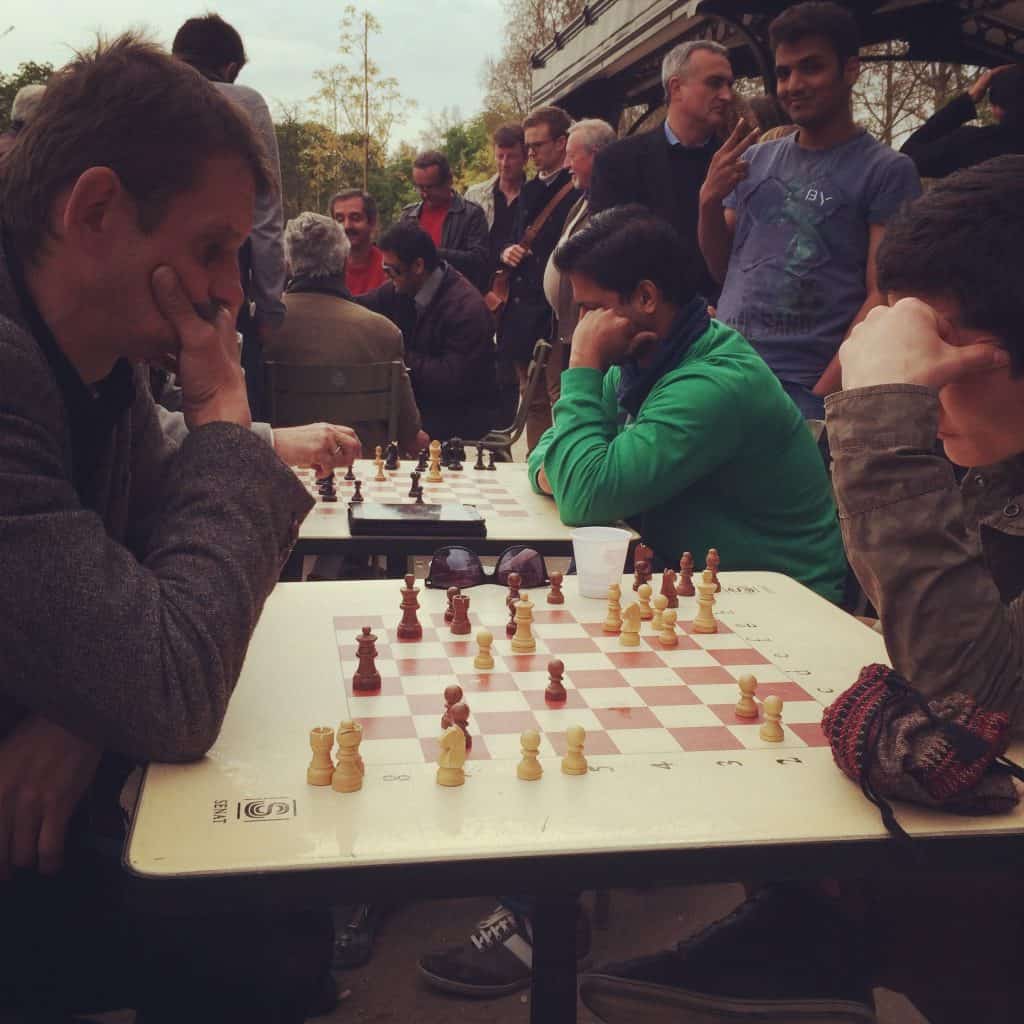
You also shouldn’t talk during tournaments, but the French are quite disposed to comment on everything, whether they know you or not, much less chess.  We were just a few feet away from the most popular players in the Jardin.  One of them was an old man with a grizzled salt-and-pepper beard.  The other was a man with palsy.

They played 3-5 minute blitz games, where moves were almost instinctive.  Winner stayed, loser walked.  Occasionally bets would be taken.  A group of 15 always surrounded whomever was playing a variation on a nerd cage-fight.

Everyone was commenting on the game: some jeering, some offering officious (or kind) advice.  Players got into it also: “Allez, putain!”  I laughed heartily and leaned across to my adversary, “Les français sont très polis, non?”  He laughed also.

Tourists, taking in what had started as a beautiful day, continued to mill by even as it got overcast and slightly chilly.  I heard the snap and click of cameras and I wondered how my horrible losing positions might look on someone’s Facebook, captioned, as, “what a moron: mate in 7!”

I had placed four of the six players in “advanced” brackets.  Yves, the self-proclaimed beginner, and I, occupied the “knockout” brackets, where we would play each other and the losers of the upper brackets (As an aside, I love names like Yves and Ombeline that we just don’t have in English).

Some played faster than others and in between Yves and I’s second matches, some parents cooed their precocious children our way.  The children looked reluctant and somewhat embarrassés about their French “tiger mom” who would take them to the tables of the Jardin to make them play chess with adults.

We looked friendly enough, as usual my goofy American smile was the “over here” beacon that allowed a French parent to come over and ask, “peut-il jouer avec vous?

Oui.”  Chess keeps you humble, I thought to myself as I reached out to sake the paw of the (I guessed) 10-year-old, also remembering to switch all my you-singulars to the familiar.  Children and animals get the “tu” treatment automatically.  “Tu” though he might be I figured that no kid who was going to come play with adults was a slouch.  I expected to lose.  I’m only in the mid-hundreds in USCF ratings, after returning to the game in 2011 after a nearly 2-decade absence.

“He’s terribly aggressive,” I thought to myself as he brought out his Queen in move 8.  Yes, I had people asking me questions, people wanted to know who played next, my own vin to pour, bien sûr, but all credit to the kid, he beat me handily, in fewer than 20 moves (I wasn’t notating, but that’s a fair guess).  I was a bit distracted but he beat me fair and square!

His sister was playing a slower, less aggressive game against Prem.  “Be careful, ah?” I said with a smile.  “He beat you?” Prem asked, almost astonished.  “Oui.”

An English father came up and asked in halting French if his kid who looked 8 could play.  After a bit of discussion, I let the battle of les enfants terribles commence and I chatted with the parents.

From London, and Arsenal fans, even better!  The kid was rated 1700, with the father in the 2000s.  Even mom was an 1100.

“We don’t have anything like this in London.”  “Yes, it’s wonderful, isn’t it?  Put some beautiful boards down and people will come.”

There was a bocce ball “field” right by a park in my arrondissement at the Square de Batignolles.  It was often occupied by Italian expats who took their native game quite seriously, grazie mille.  Angry Italian spewed out whenever a teammate was supposed to have made a poor throw.  No angry Italian, or angry any language here, really.

We laughed and looked back at the game at hand.  “Your son’s quite deliberative.”  “Yes, well, I blame his coach.”  “You, no doubt,” I surmised.  He didn’t say anything.  He was analyzing his son’s current position.  The mother was being indulgent.  She wanted to move on after the first game but we encouraged them to play one more.

To keep her amused I switched into tour guide mode and told her a bit about the garden itself, its founding, and recent history.  “You love this place,” she remarked.  “It’s my favorite big park in the city, yes,” I replied.

The kids wrapped up, I wished them well, and I notified all my players of the final matchups, collecting the euros and placing them under the clocks of the respective games: 15 euros for the top winner, 10 euros for the next bracket, and 5 euros for the final bracket.

Aranya (giving the peace sign here) actually won the final between him and an elderly gentleman who went by the Meetup handle of “Whynot.”  Instead of taking the money and running, they went for 2 out of 3 and Aranya conceded the next two matches, and the 15 euros.  Why not stop? 🙂

Erkhem, who had only been knocked into the second bracket by one loss, took a bit longer to take out Prem.  They too played at least one more game, but Erkhem had the sense to confirm his winning after the first game.

Much of the food and drink I brought was uneaten (note for next time: food not so important for chess nerds) and as we shook hands almost four hours after we started, I promised more meetings for the months ahead.

Did you enjoy this article? TAIP is 100% reader-supported through tipping. If you want to leave us a tip of any amount it would be highly appreciated. These tips help support our efforts to keep TAIP an ad-free environment. Just as at a cafe, the tips are split evenly among the team.
paris

My 35th.

We can only be said to be alive in those moments when our hearts are conscious of our treasures.

-Thornton Wilder

I was born at 4:04am Singapore time on March 28th, 1979, nearly two weeks past my original due date.  That meant that around 21h00 on the 27th, Paris time, my 35th year had commenced.  I wanted to give you a 24-hour snapshot of the day, which was not really different from many Fridays in Paris, except for the fact that I had completed most of my work projects for the week and had no students to tutor.

***

21h00

It was the end of the month so I was sending emails to my staff at Word Works, as well as to some vendors and one follow-up with a potential new client.

I tidied up some things, checked my watch again, and decided to be early for my movie at UGC George V on the Champs Élyseés.  It would also allow a leisurely walk and I sometimes left too late.  I took a small volume of Robert Frost’s poetry in tribute to the bit of Winter that had stubbornly stayed on these last few days.  I also brought my language journal.  The Grand Budapest Hotel would be subtitled in French, and I would be able to jot down a few new words as they flashed across the screen.

It was quiet as I stepped onto my street.  Paris is, in many places, quiet after 20h00.  Even more so in my neighborhood, the 17th arrondissement.  I was equidistant between Wagram and Monceau, but Line 2 and Monceau suited me well for my destination.

I clicked along in my high-top black leather shoes that told of my approach along the old cobblestones.  I had the beginnings of a smile on my lips for any stranger who might make eye contact with me.  I hadn’t become Parisian enough yet to completely avoid eye contact!

I was carrying a water bottle with me.  I had brought it with me from the States.  People use them all the time there but here very few people carried such bottles around externally.  I had to remember not to set it down, lest I forget to pick it up.

I clicked down the steps to my side of the metro station.  The timers read 04 and 10.  Four minutes to the next train, ten minutes to the one after that.  I adore the Paris Métro.  I often feel that it’s faster and better than a private driver.  Well…almost.

I sat down on a seat and cracked open my Frost.  Many American schoolchildren know “The Road Not Taken” but my real love for his poetry began in 1998 when I studied his work in his beloved New Hampshire at Thomas More College.  Poetry can be read in a thousand different ways.  Tonight I flipped through somewhat indifferently.  I was looking for resonance so I could stop reading and reflect.  I found it here.

Caught up in my thoughts I automatically rose to get onto my train, then alight at Étoile, and then out onto the Champs, and almost carelessly walked past this, which I always try to stop and admire.  After a moment or two I did an about-face and walked to the theater.  I chuckled to myself as I had once remarked that only people in San Francisco read while walking, but I realized, nose in my book, that lots of people in dense urban settings do that.

I retrieved my ticket using my UGC card and descended into the lobby to wait for my showtime.  It was Lent and I had already had my two collations and main meal for the day.  I just tried to keep my eyes on Frost instead of the candy palace before me.

An efficient young man came up some time later and asked me in French what movie I was waiting for.  “L’hôtel grand de Budapest.”  “Vous pouvez aller maintenant.”  “Merci.

22h00

I chose “orchestra” seating.  In some of the theaters in France, as in Singapore, where I first watched movies, they had “balcony” and “orchestra” seating.  For most of my life I’ve preferred orchestra.

I settled into my seat.  As I’ve grown older I’ve tried to avoid the rush and crowds of a theater by carefully selecting a showtime guaranteed to be less crowded.

The movie was typical Wes Anderson.  Fun and detailed backgrounds, signage, and models (Darjeeling Limited).  Some foreign language usage but no subtitles (Life Aquatic).  Cheekiness (Rushmore).  Relationships (Bottle Rocket).  Family (Royal Tannenbaums).

I walked home slowly and deliberately, almost as if in the opposite of a race.  In the hustle and bustle of the day you can’t always enjoy a walk and now as I had the streets to myself, my clicking footsteps slowed.

As I came out of the Metro and turned towards the treasure that is Parc Monceau I saw the sweep of a spotlight in the sky.  It was coming from the Eiffel Tower, of course.  In the evening a giant floodlight rotates at the top of that thing, imitating a lighthouse.

Look, I can’t get as excited about the Tour Eiffel as the newbie visitor might.  For many who have never been or will never go to Paris, it is the source and summit of their Parisian dreamings, if they have any.  My thrill comes when I show first-time visitors or my friends and watch their reaction.  Enjoyable, to say the least.

What’s Paris to me?  Square John XXIII.  Place des Vosges.  Petit Palais.  The Diana Statue in the Louvre and at the Jardin du Luxembourg.  Kids and boats.  Any cafe.  St. Francis Xavier.  St. Etienne du Mont.  Notre Dame de Lorette.  The Orsay Clocks.  Alexandre Dumas.  Molière.  Pastries.  Canards.  Notre-Dame, original edition.  Père Lachaise.  Sunsets on the steps of Sacré-Cœur.  Music on the Seine.

The sensory overload can cause some to switch off.  They go about their day oblivious.  And believe me this can happen as easily in Paris as in any other city.  But when you let Paris speak to you she’ll disclose wonders.

00h20

As I was almost to my apartment I got a text from a colleague who was hosting a podcast.  His show had started and his call screener had no-showed.  I sprinted up the seven flights of stairs (when you walk it multiple times a day it isn’t as bad as it sounds) and called into the studio and screened his calls for about 30 minutes as I got ready for bed.

I thought I would be tired as I tucked in some time later.  I had said my prayers and had been texting with a few friends.  I put on the beginning of the anticipated Nick Clegg/Nigel Farage debate and fell asleep (not because I wasn’t interested but because I finally let myself go).

***

10h00

The morning provided a slow wakeup.  I had forgotten to turn on my space heater so I drew my blankets in closer to myself to stay warm.  Fridays were typically days off, anyway, so I was content to sleep in.  I flipped over, pulled up The Guardian’s Politics Weekly podcast, and heard what the Left had to say about Nigel vs. Nick.

One of the criticisms that crept into my don’t-want-to-get-up-yet ear was that “He (Nigel) clearly can get flustered and he made that crazy statement about the EU having blood on its hands over the Ukraine.”  The conversation proceeded apace, and Farage’s foil was the nearly professorial Clegg, who as a “professional member of the political class,” as Nigel is wont to call most MPs, was unflappable as he dodged parry after parry from the UKIP Leader.

“That’s because he’s a normal person,” I thought aloud, to no one in particular.  I was much like Nigel a big idea person content to leave details to those smarter than myself confident in my ability to rather lead, motivate, and inspire.

11h00

I finally roused myself.  I made a petit déjeuner and sat in front of my computer to pay the regular end of the month bills.  Funnily enough, my landlady prefers to be paid via PayPal, which makes paying rent a breeze.

I also ran down my budget vs. expenditures spreadsheet, now well into Month 5.  It was the first month my projections had actually hit their targets.  At some point I’ll write a post about the cost of living here.  In some ways, it’s expensive, sure, but in many ways having a constrained budget helps you realize just how little one needs to survive in a modern society.

I then turned to some personal and business correspondence, and made out my to-do list for the day.  It’s a simple system that works for me.  I make a list of 10 things that have to get done by the end of the day and what doesn’t make it goes into the “extra” list.  Whatever doesn’t get done that day, together with the extras, helps comprise the next day’s list.  Conversely, if I’m ahead of schedule I can pick off some items from the “extra” list.

12h00

My friend Justin FaceTimed me.  We would not change to Daylight Savings here in France until Sunday, so he was only 5 hours behind me in Florida.  It was 07h00 for him and as a coffee lover he was moving past the stupor which first light brings to lovers of the bean.

He’s a business partner and we discussed some matters while I packed up my messenger bag for the day.  Books, journals, iPhone/iPad charger, iPad mini.  We switched to the telephone as he began his commute and I got ready to go out.

It was a truly beautiful morning.  I have a really helpful list of cafes that purports to offer expressos for 1 euro or less.  This is generally reliable.  Indeed at Le Trois Pieces the other day I got a café crème (French for latte) and half a baguette for 3 euros 20.  But that’s to be expected deep in the 17th, where no English speakers or tourists lurk.  Here the locals will complain about high prices.  But hey, if you want to pay eight euros for a coffee to get no better view than many other places in Paris, head to Saint-Germain-des-Prés.  There you can sit at Deux Magots and Café Flore and many other places famous for being famous, which specialize in parting tourists from their money.  For me, I’m done standing outside in a line to get into a club: paying to sit in a cafe that offered nothing spectacular, something quite similar, did not make my list.

I set out, to-do list in hand.  My chosen cafe today was not far from my front door.

As always, I was treated to sites like this one.  But there’s ugly architecture in Paris too, pictured below it, just a block away.

As I headed down the street it turned into a “market” street.  This is great for people-watching, but terrible for reading and writing, which were my intended activities for the afternoon.

So I turned around from that market street view, looked at the cafe behind me, and spotted that open table at the end, under the red awning.  You have to confidently walk up and grab your spot in a cafe.  I lowered my bag and the waiter asked if I was going to eat.  No, “un petit café seulement” which is French for “I just want to order a coffee  and sit here for as long as possible.”  He apologized and told me that only the interior was available.

13h00

My timing was off.  It was lunchtime.  Of course they needed the tables.  I couldn’t go to my first or second choice cafe, so I was going to engage in flânerie now.  I wandered.  I still kept an eye out for a possible spot.  Everywhere was packed, however, and they don’t really even want to spare an interior spot at lunchtime unless you’re eating.  Totally understandable.

I walked into a café and gestured to an empty two-top.  “C’est libre?”  The lady sized me up: “Oui, pour le déjeuner.”  “Non, je voudrais un café, seulement.”  She gestured to the bar and I was content to stand there, drink, and perhaps read for a bit.  As she began to pull the espresso she asked, “Voulez-vous installer sur la terrasse?” “Bien sûr.

I wrote and read for a couple of hours.  People would stare at me writing just as I would stare at their chiens.  Parisians love their dogs.

At some point a French girl in her mid-20s, in all black, sat down next to me.  She ordered a soda and started smoking American Spirits.  Smoking is under attack in France (just as e-cigarettes are on a meteoric rise) but don’t doubt that it’s still very much the national pastime.  If you do doubt it, sit outside at a café.  Smoke will find you as you will the ash which now fluttered onto the pages of my journal.

She struck the typical pose cigarette carelessly held between the index and middle fingers of her left hand.  Sunglasses.  No frown but certainly no smile.  She was thinking not really observing much.  I was positioned to observe without being obvious.

After smoking three cigarettes and downing her diet coke, she abruptly got up and crossed the street, off to her next destination.  She had paid for her drink when it was delivered, which is often the custom when you sit outdoors.

I checked my watch.  I had a podcast I was hosting at 16h00 and it was 15h00.  I wrapped up my work and walked out.  Among the sites I saw on the way was this.  Great advertising.

15h15

My sister messaged me saying the children wanted to wish me a happy birthday.  Sure.

FaceTime gave me a moment with her and two of the cuties in my life.  I got a happy birthday song and caught up a bit.

“What are you getting for yourself?” she asked.  I was looking for a scarf, I thought.  Scarves really are everything in this town and finding the right one, and tying it the right way, does matter.

I didn’t want her to buy me anything, so I told her instead, “Clare, I’m living in Paris.  That is my gift.”

So it was.  My last birthday in Europe had been 14 years ago, in 2000.  Despite the fact that we had been able to drink for months my friends insisted it was “legal in America” night and I made it home that night, despite the tricky cobblestones in Trastevere, thanks to the sturdy left shoulder of my college sweetheart.

16h00

The podcast had a few technical glitches but we got them handled.  I then had a call with a new hire for one of my businesses, firmed up some weekend plans with friends the new Captain America was coming out a week earlier here in France and I planned to take advantage.

I got dressed for dinner at a great Indian restaurant (Vallée du Kashmir, in case you’re wondering).  And just like that, my first 24 hours of my 35th year lapsed.

Some years ago the Lees Summit Chamber of Commerce conference room contained 20 of us who were sitting in a meeting room trying to organize a “young person’s” group.  One of the first questions the group posed was “How old is young?”  A couple of eminences grises had tentatively asked, “25 to 45?”

An attractive girl I had been flirting with snickered, and I raised my hand to speak.  At 28 I was less diplomatic than I should have been, and blurted out, “I mean honestly, who considers 40 young?”  The 20-somethings in the room nodded their heads and the few 40-somethings in the room wilted.

It’s an unfortunate American trait that considers youth the greatest time of life and seeks to chase it indefinitely.  At dinner this night I would hear the phrase “James Dean” float over from an adjoining table (in an Indian restaurant, in a Muslim neighborhood, in France) and as I recounted this anecdote to my friend I was told the French have this problem as well.

Whatever happened to aging gracefully?  For my part the oldest person is always the coolest person in the room.  They have great stories and so much more experience.

At 35 I suppose some would still consider me young – and since I had done so much (I had hoped) to disprove George Bernard Shaw’s (oft correct) “It is too bad that youth was wasted on the young,” it didn’t matter what you called me.  I still thought it was a laugh that anyone in their 40s would call themselves young, but I did feel truly blessed that, whatever age I had lived to, I woke up this morning in Paris, having accomplished almost everything I’ve ever dreamed of.

Time for some new dreams.

I want to thank my parents, who gave me life, God who gave me my soul, and my family and friends who give me so much love and encouragement every single day.

Photo by JOHN TOWNER on Unsplash

Did you enjoy this article? TAIP is 100% reader-supported through tipping. If you want to leave us a tip of any amount it would be highly appreciated. These tips help support our efforts to keep TAIP an ad-free environment. Just as at a cafe, the tips are split evenly among the team.
Long Term Stay Visitor Visa, Part 2

Note from the editor: In light of new guidance on remote working in France as shared by the official French tax office in June 2025, we have also officially changed our stance on remote working for a US company while living in France under the visitor visa. Read more here, and contact us with any questions or concerns. We’re here to help! — MS

Despite the work it took to obtain my visa in the first place, my paperwork was not completed.  This is what happens when you get here.

I will admit, I was planning for a full-day affair on March 12th.  That was the 90-day mark of my arrival and OFII (Office Français de l’Immigration et de l’Intégration) wanted my bright shining face in the 10th arrondissement at 09h00.

I needed to bring the following with me:

1.  The letter which had been mailed (and emailed) to me providing proof of my appointment.  Easy enough.

2.  My passport.  Of course.

3.  My quittance de loyer or attestation d’hébergement.  Asked my landlord, piece of cake.

4.  A photo.  They have photomatons all over the city where you can step into a booth and knock this out.  5 euros for five pictures.  You can use them for all sorts of things.  Notice how happy I look!  But in all seriousness, you’re not allowed to smile.

5.  Fiscal stamps.  This was hilarious.  I needed to go to a Tabac a store that sells tobacco which is often a café and buy these.  You use them for all sorts of taxes and fees.  There were two and then soon ten anxious smokers behind me in line, as the lady kindly counted out 241 euros in fiscal stamps.  To be fair you can now, mirabile dictu, buy these online!

6.  A vaccination card. This was proof that I had gotten all the basic stuff.  The kind folks at Sunflower Medical Group faxed that to me the same day I requested it.

So I had a bit of work I had to do in the days leading up to my appointment.  Day of, I packed snacks, sandwiches, a book, my journal, etc.  I was ready to be there all day.  Boy was I wrong.

Perhaps it is the repetitive nature of what they do, but this group of French civil servants are among the most efficient I have seen in any country, ever.

I was checked in downstairs by a security guard, who sent me upstairs to my first waiting area.  I had arrived at 08h50, about 10 minutes before my appointment window.  I was seated for about three minutes before I was moved to another area.  Instead of the first room, which had 30 seats and only six people seated, this oval room had 40 seats and all but three were taken.  These were immediately taken by myself and the other two aliens/immigrants who had been walked down the hall from Room #1.

I got comfortable, got out my book (Msgr. Robert Hugh Benson’s Lord of the World, an excellent read, by the way, and free on your Kindle or Kindle app) and got ready to be there for a while.

After 20 minutes of reading I looked up to get used to the flow of traffic.  Immediately to my left there were nurse practitioners or equivalents calling out names.  After going into that room, you are a little later called into another room, then another, then you leave to go back to the front.

One of the interesting aspects of the morning was hearing the French try to pronounce non-French names.  “Stephen Heiner” comes out as “Steve-fen Eye-Nehr.”  I’ve often thought of creating a “stage name” during my time in France something like “Etienne Henry.”  Etienne is French for Stephen and Henry would just be an elision of Heiner.  Oh well, next time perhaps.  When I didn’t have to show documentation that I was someone else 🙂

I heard my name amid the buzzing French conversations and stood up and went into the first room.  I was asked to take off my coat and scarf and was weighed, measured, and given an eye test.  There didn’t seem to be any problems, and as a bonus I found I had dropped 5 kg, about 12 pounds, since I had been in France.  I could keep this up and be at my ideal weight after nine more months! 🙂

I should note here that I’ve very much taken on French rhythms and customs of eating, with a paleo twist.  I don’t snack in between meals, my portion sizes are sensible (read: not American), and I cook my own food most of the time.  My paleo twists are frequent use of butter and meats, and a reversal of my age-old practice of increasing meal size as the day goes on.  I now have a huge breakfast (when it isn’t Lent, of course), a medium-sized lunch, and a modest dinner, with the dinner taken before 19h00.  Of course, when I go out with friends for meals we usually don’t even get to the restaurant until 20h00.  But most days this is the regimen and that, combined with my having to walk and bike everywhere an average of 3 miles per day was probably the main reason I lost that winter weight that had been storing up during my car-dependent life in America.

I sat down after this felicitous weigh-in and dug back into my book.  09h45.

The next station was the radiologist.  There were three changing rooms we lined up outside of.  We would step in and lock the door, which would activate a light on the other side to let the radiologist know there was a new “customer” waiting.

We were to strip above the waist and wait patiently.  After a few minutes my door opened and I was walked to an x-ray machine.  The radiologist said “Breathe-in” in French and I took a deep breath and held it.

At around 10h30 I was called for my last stop in the oval room: the doctor.

She asked if I spoke French and I said that if she spoke slowly, please, I would be able to keep up.  Fluents, by nature, speak quickly.  I do so unconsciously in English all the time.

She laughed and obliged.  She looked over my files, asked for my vaccination card, and ticked off some other questions like was I taking any medications, etc.

She stamped and signed a sheet one for my records and one to hand to my final stop.

I was back in the room I started in.  I sat down just in time to watch the exchange between the woman in charge and another person, like me, getting ready to check out.

(In French)

“Your papers, please”

(girl hands them over)

“Photo, proof of residence, and fiscal stamps, please”

(girl hands them over)

Woman takes everything, then frowns and hands back a piece of paper.

“This is not sufficient.”

Now, the girl had handed her an SFR cell phone bill, which everyone knows isn’t good enough for anything.  The woman asked for a quittance de loyer or attestation d’hébergement, or the single most important piece of paper for your administrative life in France, an EDF (Électricité de France) bill.

(girl stammers back in halting French that she doesn’t have it)

Bien, revenir, alors,” the woman said, annoyed.

The girl stammered, in English, “I come back?”

Oui, oui, cet après-midi, demain, ce n’est pas grave.”  She was more annoyed now.

The girl made it into a statement, “I come back.”

The woman stared her into going away.

That girl left without the one thing we all were there for today: the sticker in the passport saying we were “legal.”  I was scared.  I triple-checked all my stuff.  But I had everything.  She smiled and handled my papers, put this all-important sticker in my passport, and stamped it.

She handed me a sheet of paper which instructed me to go to my police station in my prefecture, which is the final step in this process.  And she demonstrated what I’ve come to realize:  if you come prepared with all you need, the French are happy to help you on your way.

So, I’m not totally done, but mostly done, and the second step was a total breeze compared to the first.

Photo by Hush Naidoo Jade Photography on Unsplash

Did you enjoy this article? TAIP is 100% reader-supported through tipping. If you want to leave us a tip of any amount it would be highly appreciated. These tips help support our efforts to keep TAIP an ad-free environment. Just as at a cafe, the tips are split evenly among the team.
The UGC Pass Illimité or “Netflix Live”

In an earlier post I made reference to the fact that something had finally forced me to get a French bank account, after two months of holding out.  And it’s related to my being a cinephile: the movies.

Many movies are effectively “imported” from the States and hence cost a lot more than they do back home.  Indeed, a Sunday matinee in at least one place in Kansas City will only set you back about $4.25 a little under 3 euros.  For four times that sum 11 euros a seat can be had for the same movie in Paris.

How do you fix this, especially if you love movies?  Enter the UGC Pass Illimité, or “Netflix Live” as I like to call it.

You pay 20 euros a month and get access every single day to any movie you want.  For 10 euros more a month you can get tickets for two.

Restrictions

You need to show your pass along with your ticket.  The pass has a photo of you.  You also can’t enter until 10 minutes before the séance (viewing/showing).  Incidentally the “bon séance” the ticket taker says to me after tearing my ticket still sounds funny whereas “bon match” at a sporting event sounds totally normal.

Advantages

You can make advance reservations ahead of time (via an app or online) and pick up your tickets 10-60 minutes ahead of the show (in the final 10 minutes if you haven’t picked up those tickets they get released and you have to try again at the box office hoping someone hasn’t scooped them up).

Where do I sign

Well, that’s what I said as I headed to a UGC (theater brand pronounced you-jay-say) to buy a pass, armed with my passport and a credit card, full of the confidence that any American has when in possession of these two items.  The very attractive girl who waited on me who some weeks later I found out spoke British-accented English played dumb for the perceived tourist and shook her head as I asked, haltingly, in French, for a “Pass Illimité.”  She replied, slowly, that I needed a French bank account.

You see, the French are really into automatic debits, so much so that when you open a bank account you are given a sheet of paper which contains 6 “cards” that you can cut out and hand to relevant vendors.  It contains all your relevant info and poof, problem solved.

The problem was that I had been holding out on getting a French bank account and so I just paid regular admission that night to go see Le Hobbit.  I mulled over just how many movies I would watch while in France and thought through the numbers again.  A weekly movie meant each film was just 5 euros, but any more in a month and it would be effectively even less.  As the year promised new Spider Man, Captain America, and even Bible movies, it was a no-brainer for me to get the bank account and provide her with my RIB the next time I saw her.

The trend in France at current is to subtitle original format (VO: version originale) which is awesome for those of us on the path to fluency.  I bring a notebook with me to jot down new vocabulary words as they flash in front of me.  Where it gets comical is the instances in which a character speaks Elvish or another tongue non-native to me and the subtitles are still in French.  It’s a bit of Kabuki, unless the characters are Orcs, in which case you can pretty easily figure it out.

Downside

As with any “unmetered” commodity, you will be willing to see “borderline” movies that you might have taken a pass on in real life.  If it’s effectively already “paid for” you think “why not?”  Two horrible movies I’ve seen courtesy of my pass include The Ryan Initiative and the new Hercules movie.  Also, depending on any number of weird factors, you sometimes have to wait a week or two to see a movie already out in the States, but sometimes it releases here first.  I guess it’s upside if it’s the latter, right?

Pass Illimité, like Vélib, is a program that makes living here not just affordable, but at least in one aspect cheaper and more innovative than back home.  And that’s rare enough to deserve a mention. 🙂

Did you enjoy this article? TAIP is 100% reader-supported through tipping. If you want to leave us a tip of any amount it would be highly appreciated. These tips help support our efforts to keep TAIP an ad-free environment. Just as at a cafe, the tips are split evenly among the team.

Lifestyle Design: My Own Case Study

The Four Hour Work Week has been out for many years now and in fact, the author, Tim Ferriss, has gone on to author the Four Hour Body, Four Hour Chef, etc.  Of course “four hour” is not literal.  It’s about a mentality.

While Ferriss presents a number of interesting assertions in the book, a number of which I disagree with, I accept the central premise on which the entire book is based: lifestyle design.  The upshot of the idea is that you control what kind of life you want to live through your own choices.  So design that life along with a  means to make an income that fits into that lifestyle.  Such a concept doesn’t just turn traditional 9-5 on its head, it throws it out the window after lighting it on fire.  It discards the idea of having a “good job” or “good business” as a priori considerations.

What do you want to do with your life?

How do you want to live it?

Ferriss says that only after you answer these questions have you earned the right to then ask yourself how you’re going to make a living.  Indeed, these questions are deeply revelatory, and I’m always surprised to share this concept with people older than myself who cannot answer these questions (or worse, have never asked themselves anything remotely close).  They’ve just taken to living their life perhaps very successful lives in many measures but there’s not an intentionality behind those lives.  Lifestyle Design demands that intentionality (and accountability).

As I said, I reject several of Ferriss’ assertions, such as the idea that the truth of a religion cannot be known or some of the gimmicky advice he gives regarding automating a certain type of internet business.  The meta with Ferriss is what matters.  There are dozens hundreds dare I say thousands of ways to make a living.  Be bold and fearless and you will reap the rewards. And even failure will teach you so much more than conventional success will.  Ask for safety and 3-4-5 weeks of vacation a year and you may – or may not – get it.  And even if you get it you may lose it.  The days of 20 years at one company may be gone but there have never been more fun and innovative places to do something you’re passionate about or more cool opportunities to start your own thing.

Ferris encourages, as a starter plan, making a low to median First World income and then living in Second World situations (Thailand, for some reason, is a popular pick, which is odd as I’ve always considered it to fit well within the “nice to visit” oeuvre), using time differences to your advantage and the saved income as arbitrage towards your next venture.

Ferris holds this out to the everyman, just as the excitable Amway dupe does when he draws circles for you on a flip chart in someone’s home. But lifestyle design, much like entrepreneurship, is not for everyone nor can it be accomplished by everyone.

There are dozens of inspiring case studies (even for my married-with-kids friends who would call this impossible), none of which I can say I’ve ever read – mostly because I didn’t need proof to believe that this would work.

***

In October 2012 I sold a business.  It was not the first I had built or said goodbye to, either at a profit or at a loss, but it was the largest profit I had ever made, and after such a long and hard push (6 years) I took some time off.  Starting in November I went to Grand Cayman, London, and then Paris.  In December I arrived in Australia for a 34-day, 5-state, 2-territory trip of a lifetime.

As I stood on top of Mount Wellington in Tasmania, at the very bottom of the world, in the opening days of 2013, I was overcome with emotion at how deeply God has seen fit to bless someone so unworthy.  I resolved to continue to try to be worthy every single day.

Throughout all these trips I had the opportunity to be deeply grateful, meet amazing new friends, and think about my life up to this point, and reflect on what was ahead.

Rather impetuously in January, while still in Oz, I had settled on a move to Paris.  It had been a city of my dreams for so long.  If not now, when, I mused.

It took one full year (all of 2013) and all of my effort, concentration, and focus to pull it off.  And I submit that had I not bought a one-way ticket in January of that year I might not have actually done it.  More than once last summer I thought if only I could delay this a few more months…  Living in America, as an American citizen, is desperately easy and cheap.  As articles on this blog have pointed out and continue to do so: life in France is “harder” and more expensive in many ways most Americans would find unacceptable and intolerable.

There is also the issue of a built life. It is no accomplishment for the unattached, still-keep-stuff-at-my-parents 20-something to quit a job and see the world.  But someone in his/her 30s, with big boy/girl furniture not self-assembled, with a deep and rich social network, memberships to art museums, subscriptions to the ballet and symphony, etc. would find it hard to leave all these things behind.

This is to say nothing of the fact that you may have young ones in your life, like this cutie, who would miss you.  I’m unmarried and have no children but those nieces and nephews are the closest things and it’s tough not to be there as they grow up so much more quickly than you thought they would.

There’s also the perception, for the first few months, that you’re just on some kind of vacation.  People don’t realize you’ve moved and that you have to work in order to pay for your new life.  At times it will be as basic as “What are you doing working you are in Paris!!”  Other times I laugh myself at what would be outrageous dream material for an American girl: dinner in Paris followed by a walk on the Seine in the shadow of Notre Dame.  It’s just a typical weeknight date with a French girl here (I confessed as much the last time such an incident occurred with said French girl.  “I’ll never take this for granted,” I said in French while standing on Pont Neuf.  She made the typical expressive pout-cum-eyebrow-raise that parsed the attitude of “is that cute or just annoying?”).

It’s now over three months into my adventure and I’ve loved every minute even the alleged “hard days.”  It’s also the first time in my life that I have been out of my home country for a period longer than 90 days (my Rome study abroad semester came with a visa that was good for exactly 90 days and no longer).  I cannot begin to tell you the questions you will ask yourself when you are completely immersed in an alien culture and language even one you may love and be conversational in.  You find yourself re-examining basic questions, like, “What do I actually like to eat?” or “What do I do for leisure?” or “What do I want out of my life and work?” not because you are unhappy with the answers you’ve always known but because you’re completely out of context here (well, except, happily, for access to the Traditional Latin Mass which will always make you feel at home anywhere in the world).  You also experience this cheek-by-jowl with whatever businesses you are owning and running.

The final consideration that an American so used to freedom of movement must keep in mind, no matter where you are thinking of relocating to, is immigration policy.  I managed to obtain a long-term-stay visa which is not at all easy to get.  My renewal is by no means assured and I’m not even allowed to apply for it until 60 days before my current one expires.  I had read and understood, through various sources, before my visit, that it was easier for someone already here to stay, but your own thought process has to tie into the state of the businesses you are running.  Will I get to be in Paris long-term?  Only the immigration authorities know. 🙂

What I do know is that this was one of the five most significant choices of my adult life, and I couldn’t be happier that I made it.

In future articles on this theme I’ll talk about what it took to get here in terms of breaking up my life in America.

Photo was taken as I stood on the top of Mount Wellington, looking down on Hobart, Tasmania.

Did you enjoy this article? TAIP is 100% reader-supported through tipping. If you want to leave us a tip of any amount it would be highly appreciated. These tips help support our efforts to keep TAIP an ad-free environment. Just as at a cafe, the tips are split evenly among the team.

Getting a Bank Debit Card in France

It’s actually not that hard to get a bank account in France.  What’s hard is getting your debit card.  To open an account, stop in at your local bank of choice (I chose Société Générale because it was and is close to my place) with your passport, some money, and proof of residence (this will be a quittance de loyer or attéstation de hébergement).

To get a debit card you will need to transfer a substantial sum of money into your account.  They will ask for 1000 euros I talked them down to 500 which will have the excitement of your American bank charging you for a wire transfer, your French bank account charging you for your own wire transfer, and the transaction fee of converting dollars into euros.  My personal expat experience has allowed me to conduct most of my life using American bank accounts, allowing my French bank account to deal with minor day-to-day expenses which would help me avoid carrying cash around all the time (like the UGC Pass Illimité, which occasioned my getting an account in the first place, something I originally resisted.  More about the Pass in a future piece.).  Unless you have a phenomenal bank in America (like mine) you’re going to get killed in foreign transaction fees, so beware.

Only after I got a wire transfer in did I get my debit card with a pre-assigned PIN.  That PIN, by the way, can’t be changed unless you want to pay to change it.  Brilliant or cruel?  You decide.

My account came standard with a ton of limits that a regular bank account in America wouldn’t correspondingly have.  I could only withdraw 50 euros at a time from an ATM, up to 100 euros a day.  I could only charge so much on my debit card every seven days, etc.

Even when you want to change your address you have to show proof.  In America I would call and change it, end of.  Not here.  The French love their paperwork.  Don’t you forget it!

If you are here for any period over three months, get a French bank account.  It will be a bit of trouble, but well worth it!

Did you enjoy this article? TAIP is 100% reader-supported through tipping. If you want to leave us a tip of any amount it would be highly appreciated. These tips help support our efforts to keep TAIP an ad-free environment. Just as at a cafe, the tips are split evenly among the team.

My Worst Week in Paris

This is the “Part II” to my “finding an apartment in Paris” article, though it’s really more of an appendix.  Future parts will discuss what to bring with you when moving here.

They say that whether you are a native of France or a lovestruck visitor of Paris (comme moi) your first apartment in the City of Light will always be the worst.  It gets better from there.  There are a number of reasons why.  You don’t know the arrondissements.  You don’t know how you will feel about your commute.  You won’t know how you feel about your space.

One thing I did know, three months into my stay, as my landlady tried to charge me more for my already too-small space, was that I was done paying 800 euros a month for a studio (between $1000-$1100, depending on the state of the world economy at any given time).  In a week I had settled on a very cool art studio to which the resident artist had added a number of bedrooms.  It was very cool and the price 650 euros was great.

She, Sophie, my new potential landlord, was a bit flaky in setting up the appointment to see the place but I chalked it up to the “artiste” in her.  A writer and teacher at heart, I’m able to shush my inner businessman who (rightfully) whispers “accountability!” at necessary times.  But we got along okay at the first meeting and we shook hands on a move.

It was 30 days before my move when I gave notice to my then-current landlady.  I didn’t tell her all my grievances.  They had been kind and I was determined to leave on good terms. I found out, in drips and drabs, just how much had been missed in the handshake agreement that had sealed the deal.  Each new discovery, via email or text, was not in itself a dealbreaker but cumulatively it worried me a lot.  I think I was too excited about moving to the 11th and so close to Père Lachaise, as well as saving almost $225 a month, so I didn’t really blink as I discovered:

1) I would need a security deposit equal to one month’s rent (pretty standard here).

2) I would need to do one hour of chores per week or pay the cleaning lady 15 euros each week (no big).

3) I was not allowed to receive bills or bank statements what???  So I could get personal mail but not bills?  This would also complicate the immigration process but the concierge of my current place agreed to for 30 days collect my mail while I figured out an alternative.

4) I was to sign a contract and agreement, seven pages long, all in French.  I figured I would just have to hash that out with her after moving in.  I wasn’t going to pay for a translation nor was I going to sign something without fully understanding it. But all of these (what should have been blatantly waving red flags) paled in comparison to what I dealt with on February 28th, my worst day in Paris and the beginning of a tough week.  Please keep in mind that I use “worst” and “tough” purely in the First World sense.  At no time was I without the basic necessities of life nor was I being waterboarded, and incidents like these do great wonders for one’s sense of gratefulness.

I had asked two friends to help me.  I had four suitcases and two backpacks to take literally across town (17th to the 11th).  We would be able to stay on the (mostly for locals) Line 3 and just have one change at the very end.  Additionally, the metro stations at the starts and ends of the journey were roughly 500 meters or less from where we needed to be and all the bags had roller wheels.

The day started auspiciously enough.  I had woken up on time and lugged the bags down to the fourth floor where my landlady generously allowed me to use the building’s elevator to get down the final four floors.  My friends arrived on time and were treated to some excellent pastries and coffee from my soon-to-be-former landlord.  We made our way in and out of the Métro up and down quite a few steps huffing and puffing and laughing and grateful for the assistance of the (always polite) Parisians around us.

We arrived at my new place-to-be.  One of Sophie’s employees answered the door and she came out.  She had a look of surprise on her face.  “Well, you come tomorrow!” she said.  It was February 28th.  “Well, that’s fine,” I said.  “I’m not going to sleep here tonight, I just need to drop off these bags.  I’ll come back tomorrow.”  “Non, non, it’s just not possible,” she replied with the typical French shrug which said, “I don’t care” about your situation.

I kept my composure.  My colleagues very astutely just kept silent.  She was going to be a landlady for at least the next 6 months, so handle this well, I thought to myself.  I explained that we had come across town that these bags were not light that my friends were able to help me today and not necessarily tomorrow and that I was due to be out of my old apartment first thing tomorrow morning.  I also referenced a text I sent her last week saying I was coming Friday.  To my chagrin she pulled it up and pointed out that I said I was coming to drop off money on Friday, not drop bags.

Now, as an American I would have proffered one of two responses, in my experience as an erstwhile landlord:

a) Okay, you’re here a day early, but you’re going to be here the next six months and you’ve got 1300 euros in your pocket, so I can do a favor for you this one time.

OR

b) If your stuff is here I must charge you rent for today, pro-rated.  Is that okay?

Either of these would have been acceptable, but instead I got the French “sorry, I cannot do anything.”  She said she was in the middle of a photo shoot, she had no room, people always take advantage of her, etc.  But what you need to understand is that I picked this place precisely because it was ENORMOUS by Parisian standards.  If she had room in one place, surely it was in my room which anyone could reasonably expect was cleared out less than 24 hours before my arrival.  It was unoccupied when I had previously seen it. After 5 minutes of fruitless back-and-forth we agreed I would arrive at 09h00 the next day.  The door closed and the man not usually at a loss for words was.

Josh immediately and kindly offered storage at her place, about 14 blocks away.  A wheel had kindly broken off on one of the pieces cobblestones are murder on cheap luggage, and while I did have three Samsonites, that was not one of them which made the trudge just a bit more challenging.  Two of the three in our party were American and while we tried not to see this incident through the “customer is always right” lens, I was still shocked at such unaccommodating behavior.  “I’m not,” said Danyell, who was married to a Frenchman.  “My mother-in-law is the same.  Typical French.”

We agreed, in between huffs, puffs, and stops, that if I could not even leave my luggage there the day before I moved in that all that awaited me was more unpleasant surprises.  We got to Josh’s, where four more stories and the corresponding stairs awaited us.  I laughed bitterly as I lugged the luggage up those flights, marveling that what I imagined would be such an easy day instead had gone wrong in every conceivable way.

Danyell had to run off to another job, so I didn’t get to take her to lunch for all her troubles.  We parted and Josh and I grabbed some lunch and discussed the problem further.  She had some room and very kindly consented to let me leave my luggage there for a week while I scrambled to find a new place. I swung into action and had a place the following morning, for one week.

It was in Le Pré San Gervais, which is at the very edge of the 19th Arrondissement.  When I say edge, I mean outside of.  It was outside Paris city limits by about one km.  Good, I thought.  Let me find out what it’s like to live in the burbs for a week.  Gk, who owned the room, wanted 700 euros per month for a very sunny and lovely room but for someone living and working in Paris it wasn’t tenable, by my standards, for a long stay.  I paid for one week. It was at the edge of Paris transport, and door-to-door, with Vélib, bus, and metro, it would take at least 30 minutes to get to one of the “center” stations of Paris, like Châtelet, Opéra, or République (see, even right there in my list I can see how Right-Bank biased I am).

I loved the size of the room and the quiet of the building, as well as being on the 1st, not the 7th, floor, but I wasn’t going to pay that much and not even live inside Paris proper. Still, in my week “in exile” I came to appreciate just how spoiled I had become (and would remain my new apartment was in the same neighborhood as my old one 20 minutes by foot, or ten minutes by Vélib, or five minutes by Métro to the Arc de Triomphe, a beating heart of the city).

The happy ending to my alleged “worst week”?  I picked up my keys that Thursday and moved in over the next three days.  I had plenty of time to adjust to my new views.  Danyell and Josh valiantly joined me to “finish what they had started” a week ago.  I avoided moving into a place that had featured numerous warning signs and a disastrous move-in day.  I found out I had friends who were more kind and generous than I could have imagined or even deserve.  But most importantly, I had upgraded my housing while decreasing my cost of living which is a feat in any city, not just this one.

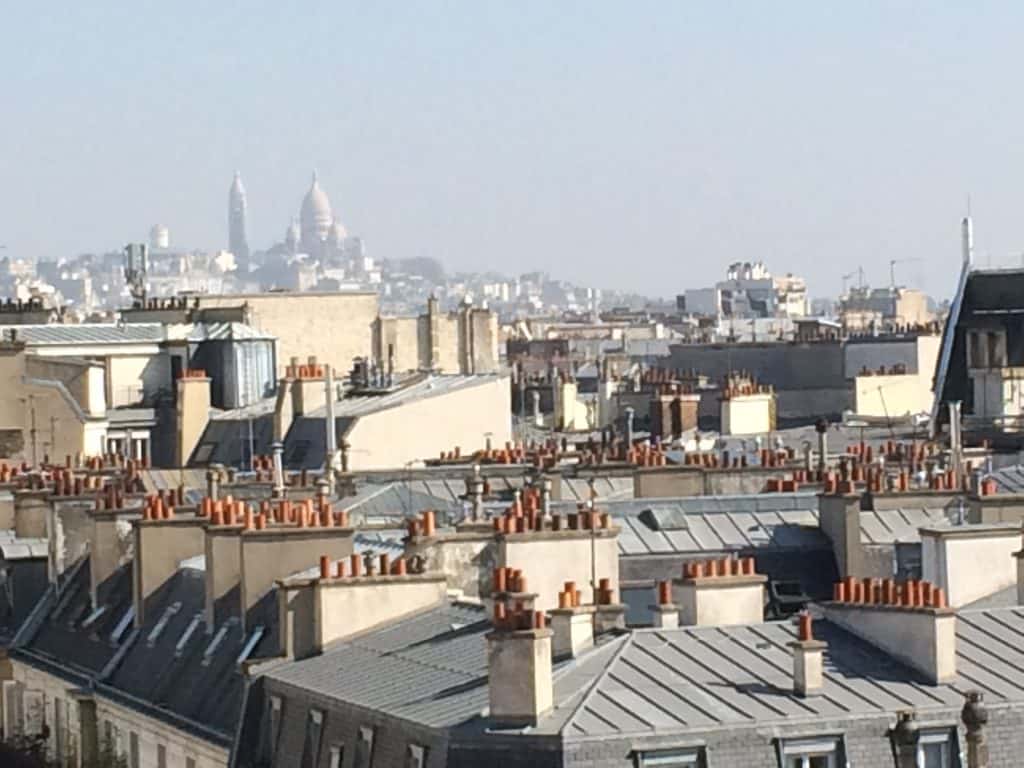
The photo is a view from the northeastern edge of Paris.

Did you enjoy this article? TAIP is 100% reader-supported through tipping. If you want to leave us a tip of any amount it would be highly appreciated. These tips help support our efforts to keep TAIP an ad-free environment. Just as at a cafe, the tips are split evenly among the team.

Finding an Apartment in Paris, Part I: Before You Get Here

Keep in mind that there is a reason the word “bureaucracy” has a French etymology.  The French love their paperwork.  Efficiency is not a vice, per se, but why be efficient when you can cloak yourself in the warmth of saying “non” to people, just because you feel like it? When I first started researching a move to Paris, in August 2012, my eyes glazed over at the stories I read: “Must provide paycheck stubs” (I’m an entrepreneur, so my cash flows don’t always come that way), “must sign a 6-12 month lease,” (I needed to maintain flexibility, especially if I didn’t like a place).  There had to be a good way to get an apartment in a foreign country before you got there.  There was.  Enter Airbnb.

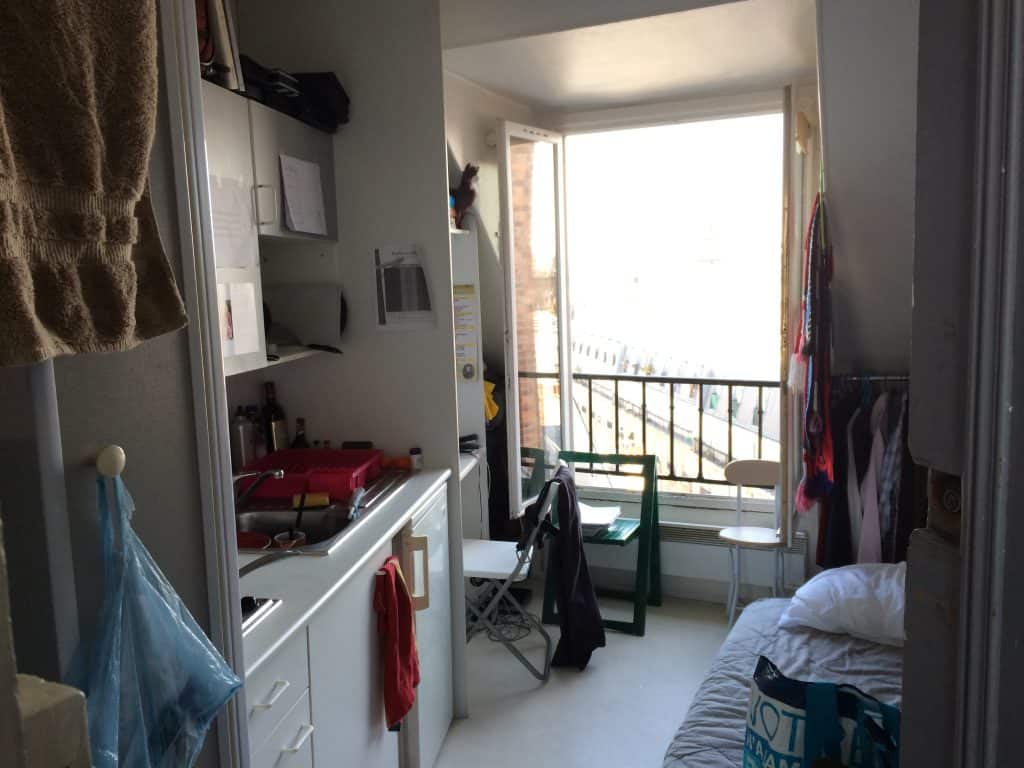
I was an early adopter of this service, staying at my first place in 2011 when I visited Austin.  I love the service and have used it frequently ever since.  I figured Paris would have a lot of options, and indeed, there were, but there was a reluctance on the part of many of the owners to take on a long-term renter, as there seemed to them to be less trouble and more money in the short-term renters.  After inquiries and searching, I settled on an 8×8 foot shoebox in the 17th arrondissement that would cost me 800 euros per month and would be all-inclusive (water, internet, gas, trash, electricity).  The toilet, a squat one, was down the hall but I did have my own shower and kitchenette, etc.  My host was used to a bevy of weekly guests so she took some time before assenting to my proposal to stay six months or maybe longer. I visited in November 2012 while on vacation in Europe and moved in over a year later, in December 2013.  It was as I had remembered perhaps a little smaller ;-).  I lasted a little under 3 months.

It wasn’t hell, by any means.  I came to realize that I was paying a high rate for the amount of space I had (24 square meters).  I also realized it was incredibly central (perfect for my day job) but also very quiet (not “hopping” as far as nightlife goes).  There was a nagging problem with the plumbing and backflow from my sink going into my shower.  Six weeks in I had had enough and started looking for other accommodations, again on Airbnb.

Why did I pick that site?  Less risk: Airbnb had insurance, and direct links to these people’s bank accounts so people were disincentivized to do you wrong.  Often times I also had access to testimonials from others and plenty of good photos.  I was also going to have something furnished and all-inclusive.  My second situation did not work out as planned (stay tuned for Part II, a harrowing but hilarious account of my worst week in Paris) but I am very pleased with where I am now.

I found the listing for my current place on, of all sites, Craigslist, which is nowhere near as popula(i)r(e) as its French equivalent, Le Bon Coin.  The apartment costs 690 euros, all-inclusive, and unbeknownst to me, had great views of Sacré-Cœur and The Eiffel Tower.  The listing led me to a service that caters to English-speaking expats.  They know our pain.  This place would be bigger AND cheaper than my last place.  Parfait.

I was able to see, decide, and pick up my keys for the place all within the space of six days.  It could have been sooner had I not had a request of the owner which was generously granted, and if I had not already paid for a week’s accommodations on the other side of town.

Here’s what you should expect (and Paris is a fairly stable market) as of March 2014. Outside the city, all-inclusive, 10×10 (29 square meters), with a minimum 30-minute commute by TRAIN (RER) not Metro, 500 euros. Inside the city (in one of the 20 arrondissements), 750 euros. Inside the city, with a private bathroom and a “living room” area, 1100 euros. Should you wish to have a roommate obviously all these prices come down, but then the paycheck stubs and all that come into play, which are not easy to produce for those of us here on non-working visas.

I’ll cover “cost of living” in another article but expect to pay a security deposit as well as an agency fee (be it through AirBNB or ParisExpat or any other service) equivalent to 5-10% of your entire lease.  You’ll need a good chunk of change in your pocket come moving day.  And some smiling faces and helping hands to help you up all those flights of stairs.  More on that, next time.

The photo: it’s not the biggest place, but it’s home.

Did you enjoy this article? TAIP is 100% reader-supported through tipping. If you want to leave us a tip of any amount it would be highly appreciated. These tips help support our efforts to keep TAIP an ad-free environment. Just as at a cafe, the tips are split evenly among the team.