
a field of purple flowers

On Living Two Lives

I’ve heard of people going back home after living abroad for a while and feeling self-conscious, out of place. As if they can no longer relate to the people from their hometown. It’s isolating, I imagine, to feel disconnected from the people and the place that witnessed their formative years.

For me, going back home for the first time since expatriating was disorienting, but I had a different experience.

Stepping back onto the soil I knew so well — the smells of Texas, the long stretches of overpasses that led to shopping plazas or nothing at all, and that heat, my God, that heat — transported me back to my adolescence. 

This was the town I hit puberty in. The town where I first learned what it was to like someone so much it hurts. The town where I spent almost all my weekends at the age of fourteen at the roller rink. The same town that I knew like the back of my hand — I could still drive the same mindless routes to the superstores that my friends and I wandered around in when we had nothing better to do (and in the suburbs we almost never had anything better to do). 

This was the town that I hated, that I so badly wanted to flee from, the town I associated with boredom, ignorance, bigotry. I remember so vividly feeling like an alien on my home planet.

But also, it was the town that raised me. I thought I always knew there was life outside of Katy, Texas but I didn’t really get to experience it and truly understand everything that it encompassed until I left for a while.

When I came back home for the first time I was awoken, rather briskly, by the realization that there was this other person inside of me, one that walked with her chin held high and in a confident posture. I felt unafraid of the world. 

Because in Texas, I have no shame. These people don’t impress me. They don’t intimidate me. I know them for who they are — so easily placeable in a tight, little box. Film bro, sorority girl, liberal, conservative, someone who gets me, someone who doesn’t. 

I’m the funniest when I’m at home. The most reckless. I have no care in the world. I’m happy, I’m generous, I speak up for myself effortlessly. 

In Paris, another less familiar, less well-acquainted side comes out. I’m shy. My self-advocacy is easily thrown out the door. It’s something I have to think about. Put energy into. Relearn every day.

I’m drawn into myself. I’m self-conscious. I can come off as mean. I like to think it’s because I’m protecting myself, but really, it’s because of all my nerves and how scared I am. How hard it all is.

So at first, I was shocked and also liberated to come home and release this lighter, funnier, kinder version of myself into the spotlight again. I exhaled, so incredibly relieved. I am layered. I am complex. I am not this way, or that. No one can fit me in a box because I’ve moved away from that possibility of being stuck there for too long. 

And finally it all starts to make sense — I am nice, I am adventurous, I am brave — moving to Paris, becoming an expat has made me believe I was one way, it hardened me, convinced me I’d be like this forever, but my life here is just starting out. Of course I’m acting like this. Of course all I can think about are the differences between home and here. There’s still so much room for my life to change. 

I feel immensely fortunate to have been struck by this sense of duality. While I know fear and anxiety well, I also know assurance, confidence, comfortability. Not everyone gets to feel these things. I am so lucky to have two lives, one that can nourish the other while in pain. One that discovers something that helps revitalize the broken side of myself. Not everyone has this same experience being an expatriate and I will always count my lucky stars for this.

And I’m not saying I felt this ease and comfort right after I stepped off the eleven-hour plane ride. I remember initially wincing at the loudness of public spaces. The airport, coffee shops, malls. I’d cover my ears and buckle down — bracing myself for all that noise. It was the first time I truly recognized how loud Americans tended to be. 

But eventually I embraced it. I rejoiced in it. These are my people. My silly, ignorant, superficially sweet people. 

I learned to collect the noise, open my heart up to it, and embrace that cafe culture in America wasn’t just about working on your laptop. It was also about eavesdropping too.

I learned to feel completely and utterly at peace. Despite all the noise. Because while I know people can sometimes feel lost going back home, I felt revitalized.

Photo by Roberta Guillen on Unsplash

Did you enjoy this article? TAIP is 100% reader-supported through tipping. If you want to leave us a tip of any amount it would be highly appreciated.  These tips help support our efforts to keep TAIP an ad-free environment. Just like at a cafe, the tips are split evenly among the team.
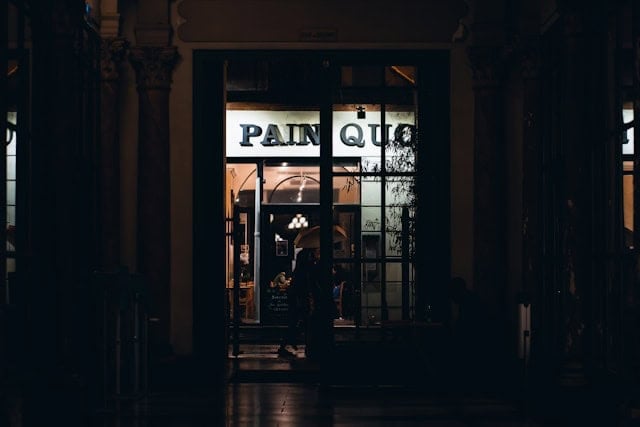
people walking in front of a restaurant at night in Paris

Paris is Still Just a City

In my final year at university, amidst the chaos of final exams, graduation, and a future being all mine for choosing, moving to Paris was all I could really think about. I didn’t care about making a name for myself or carving out a place in the land of interns, waiting eagerly to climb the corporate ladder. All I cared about was getting out of Texas, seeing something new.

I dreamt of the days I studied abroad here, drinking absurdly cheap wine, eating fresh pastries, discounts at the cinema, free entries to museums. I dreamt of a life Paris had afforded me when I was younger. One that was reckless, one where I had no responsibility besides to fall in love with the city, new friends, even a cute boy. 

When I graduated, I remember the world seeming so big, and I felt so lucky to have all these possibilities laid out in front of me. I had a degree now, even though I could hardly remember how I got it, and I naively believed that things would continue just as smoothly for me as they had been, given my life thus far. So, I took the leap, did the big, courageous thing it was for a well-off girl like me to do, and I made the big move to Europe. 

I emerged from the metro at Place d’Italie on a busy Sunday afternoon, with a suitcase in my hand, and an overstuffed backpack hanging from my shoulders. Police sirens rushed past, pedestrians made way for themselves regardless of others, and there stood directly in my line of vision, a big, metallic, soulless shopping mall that was the point of reference for my new neighborhood. Some residents have the Eiffel Tower. I had Italie Deux. 

I looked down at my jean shorts and sneakers, then up at the Parisians sporting black slacks and light summer jackets. An elderly lady came up to me, asking for directions. For a while, I tried to help. I looked at where she wanted to go on my phone and attempted to explain directions in French. She appeared frustrated, not being able to understand me, and gave a look like I was wasting her time. She walked off and demanded the next stranger for help.

I was breathless after having dragged my suitcase up several flights of stairs to my new apartment. After having unlocked the door with my comically long skeleton key, I immediately sank to the wood-paneled floor. I sat there, looking up at the crown molding on the ceiling and felt completely happy. A wave of warmth rushed over me. This is what I wanted, I thought. Crown molding, how lucky am I? Sure, there was an unbelievable amount of dust and mold bordering the windows, and the previous tenants had left a bunch of clutter, but here I was finally in my new place in the city I’ve been dreaming about ever since I left.

Weeks passed and I put off essential errands that would make my life feel more real and viable here. I needed a bank account, a social security number, a phone number, WiFi. But I was scared. 

Hidden within my fear were my memories, and suddenly, they all came flooding back. My face felt hot. I suddenly remembered what I was so quick to forget: how humiliated I felt when I was studying here, trying to disguise my Americanness yet it was inescapable. How I was still incapable of mastering the language. How it felt like anxiety was always trailing me, hiding behind every corner ready to pop out and remind me that this was not my home, things work differently here, and they don’t really work for you. 

I broke out into a cold sweat. What was I doing? I came over signed to a nannying agency, meanwhile I had spent the majority of my life working with kids and after finally having a college degree, I was longing to do something else. What was I doing? I was wasting time while everybody was back home applying for jobs that they could actually get. 

My panic broke me. I applied to so many jobs and internships, all of which were hindered by the fact that I wasn’t yet bilingual, nor was I enrolled in higher education. I felt trapped. I felt trapped in this undeniably beautiful, bustling, and some might say, I know I sure did, magical city. 

I remember looking for signs to bring me back to America. A cop out. A scapegoat. I began applying to these outrageously prestigious Master’s programs in America whose acceptance rates were laughable and exclusively marketed for geniuses. I convinced myself into believing they were targeted at me. I told myself, if I get into one, then it’s destiny. Then I’m going home and never looking back. They need me. America needs me.

The advertisements that fluttered the walls in metro stations began speaking to me. Women and men, children and the elderly, all those whose faces were plastered on these posters, urged me, begged me to come back. “You’ll be safe there,” they teased. “Life will be easier. You’ll get a nice job, one that fulfills you.” I ran to catch the stalled train before the doors shut, wanting to give in but also not wanting to give up. Making that decision to move back home would feel like both.

The image I held in my head of my study abroad days no longer held up. The lights dwindled, the magic faded. Paris is beautiful, yes, but there’s a lot of dog poop smeared across the sidewalks. And cigarette butts. And trash. There’s almost no relief from the heat in the summer, so it’s best to get away, if you can afford it. People can be mean and creepy. All of these things are not just exclusive to American cities — they are caveats of every major metropolitan area, including Paris. 

It took me two years. Two years of indecisiveness, of failed dreams and miraculous resurrections, to realize that fighting to live in Paris is worth it. 

I can’t exactly say what the catalyst was to deciding that I was going to stay, that I’ll fight to carve out a life for myself here. Maybe it was the political climate in America, making my idealization of the country come to a screeching halt. Maybe it was the realization that nostalgia is often manipulating, a poison for the brain to make the past seem so alluring when that’s exactly what it’s meant to be: something that builds our story, but remains there, stuck. 

Maybe it was the realization that the job market is incredibly difficult everywhere right now. Maybe it was (it definitely was) that the cute boy and I started to become even more serious in wanting to integrate our lives with each other’s. 

It was probably all of those things that made me decide to stay, despite the hardships, despite the seeming impossibility of it all, despite the all-consuming nostalgia, and, at times, maddening cultural differences. I was overly confident two years ago, I have to admit. I thought I was ready to move my life abroad back then, but in fact it took me two years of living here to confirm exactly that. 

Paris has been a city that I hate(d), that I love(d), that I couldn’t/can’t seem to get over. Paris is still just a city, with all its flaws and glamour. But now, it’s my city.

Photo by Elric Pxl on Unsplash

Did you enjoy this article? TAIP is 100% reader-supported through tipping. If you want to leave us a tip of any amount it would be highly appreciated.  These tips help support our efforts to keep TAIP an ad-free environment. Just like at a cafe, the tips are split evenly among the team.

fresh produce in baskets

How to Shop at an Outdoor Market in Paris

Visiting the marché is one of my favorite weekly activities, and I especially love going with either my French husband (a professional chef) or my French mother-in-law (an incredible cook herself). They seem to know exactly where to go, who to talk to, and what to choose. 

It’s almost as if they’ve lived here their whole lives… oh, wait.

Outdoor markets are a staple of daily life in France and Paris is no exception. You’ll find everything from farm-fresh produce to artisanal cheeses and even household goods, depending on where you go.

Shopping at an outdoor market in Paris is a must, whether you live here too or are just passing through. Here are a few things I wish I had known before going for the first time.

When to Go

Paris markets have specific opening times, so knowing when to go is the first step in planning your visit. Most operate two to three days a week, and the hours can vary from one market to another. Typically, they’re open in the morning and close by early afternoon — usually around 1 or 2pm.

I hate to say it for all of my fellow night owls, but to beat the crowds and get the best selection, you have to get there early in the morning when the vendors are just setting up. My mother-in-law lives and breathes by this. Oftentimes, if she can’t get there by 8am (her market opens at 7am), she won’t go at all. Quel est l’intérêt ? “What’s the point?” she’ll shrug when asked.

Now, there is a caveat to this if budget is a real concern. The other option would be to head out just before closing, as many vendors will be eager to clear out their stock before the next day — at reduced prices to boot.

To find the exact days and hours of the markets you’re interested in, check online or use the app Marcoo.

What Stalls to Expect

If you’ve never been to an outdoor market in Paris before, you’ll notice there’s a wide variety of stands that offer all kinds of things. Wandering through one is truly a feast for the senses — I don’t recommend shopping while you’re hungry or you may end up with a lot more than you originally planned for.

Here’s what you can typically find:

  • Seasonal fruits, vegetables, and herbs.
  • High-quality cuts of meat, poultry, fresh fish, and seafood.
  • A selection of French cheeses, farm-fresh eggs, and sometimes butter.
  • Freshly baked bread, pastries, and viennoiseries.
  • Rotisserie chicken, roasted potatoes, paella, and other prepared foods.
  • Olives, nuts, honey, jams, and spices.
  • Some also have stalls with flowers, kitchenware, linens, and apparel.

One of my top questions when shopping with my French fam is: how do you know which vendor to choose? There are often several stalls that sell the same or similar items… how can you tell which one is the best?

After insisting that, “Well I’ve been coming here so long I just know,” didn’t satisfy my curiosity, my husband broke it down a bit further.

Freshness and quality matter. Take a good look at the state of the produce — bright, vibrant colors and firm textures usually mean it’s fresh. Stalls with steady lines of locals are a great place to start, and if the vendors are talkative and friendly (yes, they exist in France) it’s also a good sign. Prices will vary, but steer clear of drastically lower ones as that could indicate, well, lower quality.

And, in the quintessentially French manner, the hubs says very simply that le feeling (the vibe, the ambiance) he gets when stepping in front of a stall determines where he’ll spend his money. 

I’ve somewhat stopped trying to understand what that really means, but that’s another story for another article.

How to Choose Your Produce

Shopping at a French market is different from grabbing groceries at a supermarket. Vendors take pride in their products, and bien sûr, there’s a bit of etiquette involved.

  • Look for seasonal produce: French markets focus on in-season fruits and vegetables, so don’t expect to find strawberries or tomatoes in December.
  • Check for quality: Remember to look for vibrant colors and firm textures, as well as fresh smells.
  • Know Thy Categories: Some markets label produce by origin — bio (organic), local, or imported. I typically go for the organic local stuff over anything imported, unless it’s from Spain, Italy, or another closeby country.
  • Let vendors choose for you: Unlike in the US, it’s considered rude to handle the produce yourself. Nothing against you or your cleanliness, but in France, interacting with the vendors is all a part of the experience. Tell them what you want, and they’ll pick the best items for you.
  • Ask for recommendations: They also know their products well. Don’t hesitate to ask which melon is the sweetest or what’s best for a recipe you have in mind.

The Best Outdoor Markets to Visit in Paris

There are more than a whopping 80 markets in Paris going on in a given week — from small neighborhood spots to sprawling marchés with stall after stall of goods. Here are a few of the most popular ones, plus one of my personal favorites:

  • Marché Bastille (75011): One of the biggest, with everything from organic produce to artisan bread.
  • Marché des Enfants Rouges (75003): The oldest covered market in Paris offers a mix of fresh produce, international foods, and one of the best sandwiches I’ve ever tried from Alain Miam Miam. Trust.
  • Marché d’Aligre (75012): Known for affordable produce and antiques.
  • Marché Raspail (75006): Great if you love organic food and other high-quality products.
  • Marché de la Place Monge (75005): My top choice for its intimate, small neighborhood feel and high-quality produce, fresh seafood, and cheeses. It’s right near the Arènes de Lutèce in the 5th arrondissement.

Before you walk out the door, make sure you have cash and reusable bags, and get ready to practice your French. A polite bonjour here and there will get you a really long way. So will a French friend, so bring one of those if you’ve got ‘em too.

Photo by Anurag Arora on Unsplash

Did you enjoy this article? TAIP is 100% reader-supported through tipping. If you want to leave us a tip of any amount it would be highly appreciated. These tips help support our efforts to keep TAIP an ad-free environment. Just as at a cafe, the tips are split evenly among the team.

blue l'apéritif sign

The Ritual of the French Apéro

If you’ve spent an extended amount of time in France with actual French people, you know all about the ritual of the apéro — and that ritual is the best word to describe it.

Consistently splitting my time between the United States and France basically ever since I made my big move in 2014, I can’t help but notice and reflect on the cultural differences between Americans and French people. 

One of the many things that the French do right is their attitude around socializing, entertaining, and hosting. The French are inherently social whereas Americans (at least the ones I know and love) are fundamentally individualist — this comes out in so, so many ways — something I would have never figured out if I hadn’t committed to splitting my life in two amongst the two cultures.

After some extended time with my French in-laws over the holidays, it suddenly hit my I-spend-too-much-time-online millennial brain: did the French invent yapping? For my less chronically online readers, to yap is to chat, and boy do the French love to chit-chat. It’s totally normal for a group of friends to meet up around 5pm to begin apéro, only to part in the wee hours of the morning. And what did they do for the past eight or nine hours, you may ask? They talked. And enjoyed their apéro.

The Meaning and History of l’Apéro

Apéro is the colloquial version of the word apéritif, which comes from the Latin word aperire, meaning “to open.” It makes sense — l’apéro “opens” the meal and is meant to stimulate the appetite. 

In the past, apéritifs were herbal or medicinal drinks like fortified wine or bitter liqueurs designed to help digestion. This practice dates back to the Middle Ages, but it grew in popularity with the masses in the 19th century when drinks like vermouth, pastis, and Suze became widely available and enjoyed.

Over time, l’apéro evolved beyond a simple pre-dinner drink into a full-fledged social event. Now, that’s not to say that most French people have parties every night of the week before dinner. My in-laws usually have a beer along with some savory snacks like chips or pretzels (the only time I ever see them snack, really) before dinner when my husband and I come over. They still call it apéro, but it’s not as elaborate.

As the tradition grew, it transformed into a moment of relaxation, conversation, and conviviality that is deeply embedded in French culture. Unlike American happy hours, where discounted drinks and quick socializing are the name of the game, the French apéro is about slowing down, savoring the moment, and participating in some good old-fashioned existential conversation.

Whenever I have evening plans with my French friends, 99% of the time we’re having l’apéro at someone’s apartment. It’s an opportunity to débriefer our weeks, catch up on gossip, and spend time together. Everyone is responsible for bringing something to eat and drink, and it often turns into an apéro dinatoire, in which snack food becomes more substantial so we don’t have to worry about cooking a big meal.

The Unspoken Apéro Rules

As I already alluded to, l’apéro is not about getting as drunk as quickly as you can, so one of the first rules every American should heed is to pace yourself. This isn’t pregaming or predrinks. It’s sipping and savoring. I have never taken shots at l’apéro.

Another unspoken rule I briefly mentioned is that everyone is expected to show up with something. I’ve found this to be true at any French social engagement, and it’s something that isn’t as engrained into American culture: if you’re invited somewhere, you bring something along, even if no one asked you to. My French husband was appalled when I told him, “We don’t really do that in the States.” Now, even when we are in the US, we always bring a little gift and I’m honestly glad we do even though it’s not the norm. People appreciate it.

I digress. The next rule to abide by is to prepare yourself for constant conversation for several hours straight. As the more reserved, American person I am, I have to admit that by hour six or seven I’m usually ready to go home, whereas my husband could keep yapping along for another five. Topics range from things like what’s going on in our day-to-day lives, things we got up to over the week, what’s going on at work, to politics, religion, and, yes, existential topics like life, death, and what happens next. I’m not kidding or exaggerating at all — this level of depth is what I like most about the French, and you really see it come out at l’apéro.

I think the last unspoken rule is to respect the ritual. Again, l’apéro is not a pregame for a wild night out and when done right you shouldn’t have a headache the next morning. It’s a moment to relax after a long day or week, to catch up with friends, family, and loved ones, to enjoy a great glass of wine, to share good conversation, and to bask in the fact that you are where you are without any other place to be. 

I don’t think we have anything like it in the US. Feel free to correct me if I’m wrong.

Photo by Etienne Girardet on Unsplash

Did you enjoy this article? TAIP is 100% reader-supported through tipping. If you want to leave us a tip of any amount it would be highly appreciated. These tips help support our efforts to keep TAIP an ad-free environment. Just as at a cafe, the tips are split evenly among the team.