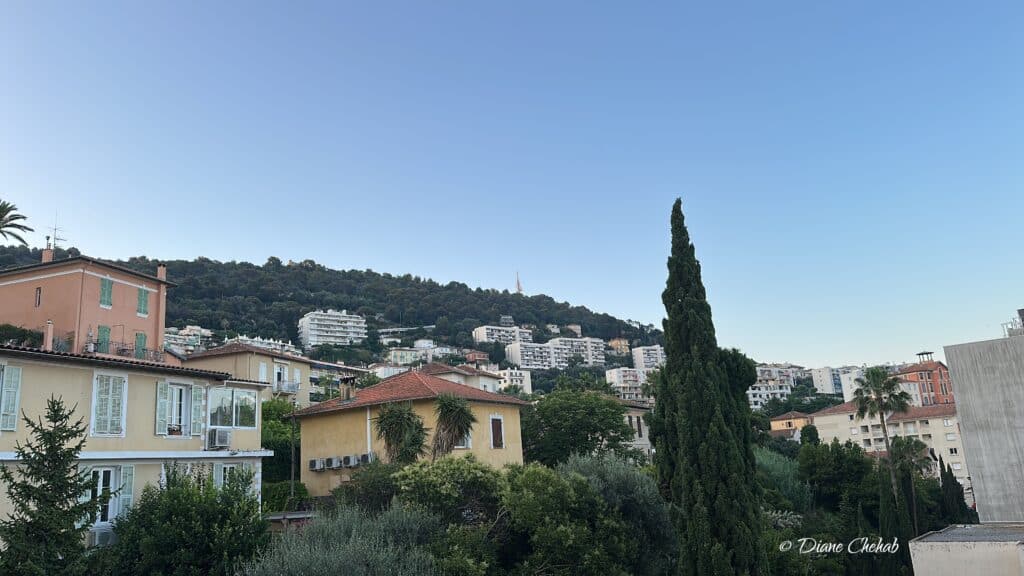
View of Mont Boron in Nice

Moving to France as a Retiree: The Journey (Part 1)

At the age of 69, I decided to move to France. 

I had already lived in the Paris area in my youth, first as the child of an expat working for a US company, and then as an architecture student at the Beaux Arts (Fine Arts). Until 2005, I only had French degrees (not on purpose, it just happened due to moving, wars, et al). 

This background is, however, of no interest whatsoever to the French government when I decided to move to France (definitely or indefinitely). I have US citizenship, and that’s it. No European ancestors to call upon, unless a crusader strayed into my forebears, but that would be too long ago, anyway.

I’ll provide the story of my journey (I don’t mean the plane journey, long enough from San Francisco to Nice), from decision to first residence card. A couple of things may have changed in the meantime, but not much, as far as I can tell. I wish I had known all the pitfalls before I started; at least I would have been better prepared.

My first bit of advice is to get on Americans in France blogs, Facebook groups, etc., before you start, rather than afterwards! You can’t believe everything (and you shouldn’t even believe me, without verifying first), but at least you get a lot of information about the pain points.

Before You Pull Up All Your US Roots

  • If you are selling your home, do it before you move to France. Otherwise, you may incur additional capital gains taxes in France.
  • Before you cancel your car insurance, ask for a letter that shows your claims history (in theory, 14 years’ worth). Otherwise, you’ll be treated as a beginner driver.
  • Only some US states have a reciprocity agreement for the driver’s license. 

The Start: the Long-Stay Visa

France is not a country that is especially welcoming to non-EU (European Union) immigrants. There are no golden visas and no special deals. There are many categories of immigrants, and the first action item is to figure out where you fit in. There is no official “retiree” visa: it is a visitor visa. It is only at the expiration of the 1-year visa that you can apply for a residence card.

You’d think the place to apply would be the French embassy or consulate in your area, but no. Visas had been outsourced to a company called VSF Global — now it’s another company, TLSContact. Visas are handled for a variety of countries; the person I interviewed with didn’t even speak French. Before booking an appointment, you fill in an application.

The visa requires health insurance. I got mine via the VFS website, with a company named Mutuaide. Possibly, TLScontact offers links to insurance companies. American insurance companies may be very expensive. **Note from the editor: we recommend Cigna Global for the health insurance needed for your visa application.

You register your account on the TLS site, find the appropriate visa type (VLS-TS), provide the documents they request, and ask for an appointment. Remember, there is no specific retired person visa; you apply as a visitor.

At the appointment, you’ll be asked some questions, get fingerprinted, and hand over your passport, which will be sent to the French Embassy. If the request is accepted, you’ll get it back in about a week or so, with a full page stamp that shows your “numéro d’étranger” (your “foreigner’s number”) that will follow you for the length of your time in France as a foreign resident.

Arrival in France

Once you have arrived in France, you will need to “validate” your visa online. There will be a fee.

Then you receive an email with an appointment for a health check. In 2023, I needed a recent chest scan, but this may not be the case any longer. My scan was a couple of months old, so I had to undergo a new X-ray at the government office on the day of my appointment.

You cannot choose your appointment. If it’s inconvenient, you can cancel it and wait for a new appointment. It took about 6 weeks for me. There is nothing you can do to speed it up. If it’s inconvenient again, well, too bad. I had to cancel a trip.

After the chest scan, you go to another location and fill in a couple of questionnaires. One of my questionnaires was about my mental health. Some questions were tricky: “Do you worry about your weight?” for example. “Have you ever been upset at your coworkers?” (I don’t recall the exact wording.) You undergo an interview with health professionals, and if you pass muster, you are given a receipt that is NOT TO BE LOST (even though nobody asked me for it again).

Health Coverage

After three months in France, you can apply for a Social Security number (this is for healthcare): “ouverture des droits.” 

You’ll need to prove that you live in France (usually via electrical invoices), and provide:

  • Notarized copy of birth certificate (may need to be translated by a certified translator)
  • Copy of passport 
  • Visa or receipt for residence application
  • Proof of residence: for example, a rental agreement, or 3 months of electrical invoices 
  • IBAN (French bank account info)

Make sure the name on your passport is the same as the name on your birth certificate. If you can’t, be prepared to be able to prove who you are!

Most probably, you will receive a questionnaire or a request for more documents. And then you wait, and you wait some more. You may have been approved without even knowing it. Sometimes it’s easy, and sometimes it’s very difficult. You can call them for updates; they have English-speaking agents, but you may not get the correct answer. 

In the meantime, it’s less expensive to get medical care in France than in the US without insurance. 

Taxes

Once you’ve been in France for over 6 months, you will be considered a tax resident. Income taxes are filed around May. The deadline works well for US taxpayers, as we file in April.

There may be a tax office in your town, and it is possible to talk with the counselors; it’s better to go before high tax season starts (I waited for an hour in the pouring rain in April, and at one point someone advised me in the lobby. They were very, very busy).

A Few More Notes

  • US Medicare does not cover overseas expenses
  • Beware requesting a 6-month visa instead of a 1-year visa on the TLS website; you won’t be able to request the carte de séjour (residence card)
  • American Express is not widely accepted in Europe, and they charge fees for overseas charges
  • US credit card companies will not automatically cover your overseas expenses in the unfortunate case of your card being stolen and used before you can block it
  • When you get money at an ATM, it is usually preferable to choose to get the money in euros, rather than have it converted by the bank managing the ATM. Unless the US dollar is in free fall. You never know

This first part covers my experience of getting your foot into France! Stay tuned for Part 2 for the next part of the saga. 

Photo of the view of Mont Boron in Nice.

Did you enjoy this article? TAIP is 100% reader-supported through tipping. If you want to leave us a tip of any amount it would be highly appreciated.  These tips help support our efforts to keep TAIP an ad-free environment. Just like at a cafe, the tips are split evenly among the team.
The Week Before I Move to France

I’ve got my visa, a year’s supply of my favorite deodorant, and a one-way ticket to France. The countdown to my departure began when I returned to Texas from France four months ago, but I’m still struggling to fathom how those 120 days are now in the single digits. 

Last year, I worked as an English teaching assistant in this quaint town on the south side of the country. This year, I’m returning to the same program, the same lodging situation, and the same community I grew to love. It’s crazy to think that this time last year, I was preparing to live in a city where I didn’t know a soul! 

Round two of working in France has a lot fewer questions on the outset, or at least the questions have changed form. 

“Where will I live?” has become, “What will it look like to live with different people in the same place?” 

“How will I teach?” has become, “How will I serve my new co-workers and students?”

“Who will my community be?” has become, “How will my relationships grow in the months ahead?”

Now being more accustomed to the different language, culture, and daily rhythms of living abroad, I have noticed that my goals have also moved from the category of surviving to thriving. Last year, I learned how to get around using public transportation and my own two feet. This year, my goal is to trade in my US driver’s license for a French driver’s permit. Last year, I learned what a month’s worth of expenses could look like in France. This year, my goal is to live in awareness of my budget instead of relying on additional savings to pick up my slack. Last year, my goal was to keep my head above water and this year, I want to be a well of reassurance and knowledge for the new language assistants coming to my town from around the world.

So now that I’ve talked through the theoretical, let me share a bit of the practical. Here is my to-do list one week before I (re)move to France. 

  • Fill out as much of the paperwork as possible for my request for CAF lodging assistance
  • Purchase a professional translation of my driver’s license and driving record
  • Send in my rolls of film from this summer to be developed and returned to me digitally 
  • Buy a pair of jeans; mine are wearing out and there is nothing quite like American jeans
  • Finish one of the books I’m reading so I don’t have to travel with it; books weigh more than you think
  • Make a final trip to the pharmacy to stock up on my American medical needs
  • Buy a train ticket from Paris to Lyon
  • Plan my arrival
  • Start packing 

Knowing it will be a minute before I see my friends and family on this side of the world again, the logistics are balanced by the weighty work of being present to my community.  I’ve made plans with friends for our final lunch and dinner dates of 2025. Just the other day, I realized that my mom has never been to my favorite park, which is a 20-minute drive from her home. Naturally, we’ve chosen an evening to go together before I hop the pond. Making time for these shared moments is something I know I won’t regret down the line when being together in the flesh is simply not an option. Prioritizing relationships this month has meant pulling back from work projects and letting go of goals I had for this season stateside, but I’m learning that is okay. Choosing personal well-being over professional security, dare I say, even feels a little French. 

Starting a new chapter inevitably means finishing another, and so in this moment of turning the page, I’m also choosing to take the time to reflect. What have I learned from this time in the States? What am I grateful for? What do I want to take with me? What do I want to leave behind? These questions stand up against the metaphorical and the physical. Remember, packing is still on my to-do list. Though sometimes I wish my mind and heart had no luggage fee or weight limit, the reality is they do. The more I process and let go of here, the lighter I will go into the season that awaits me. And as I preach to my fellow travelers, and often stand in need of a reminder myself, “The lighter you are, the happier you will be.”

Cheers to taking flight and traveling light.

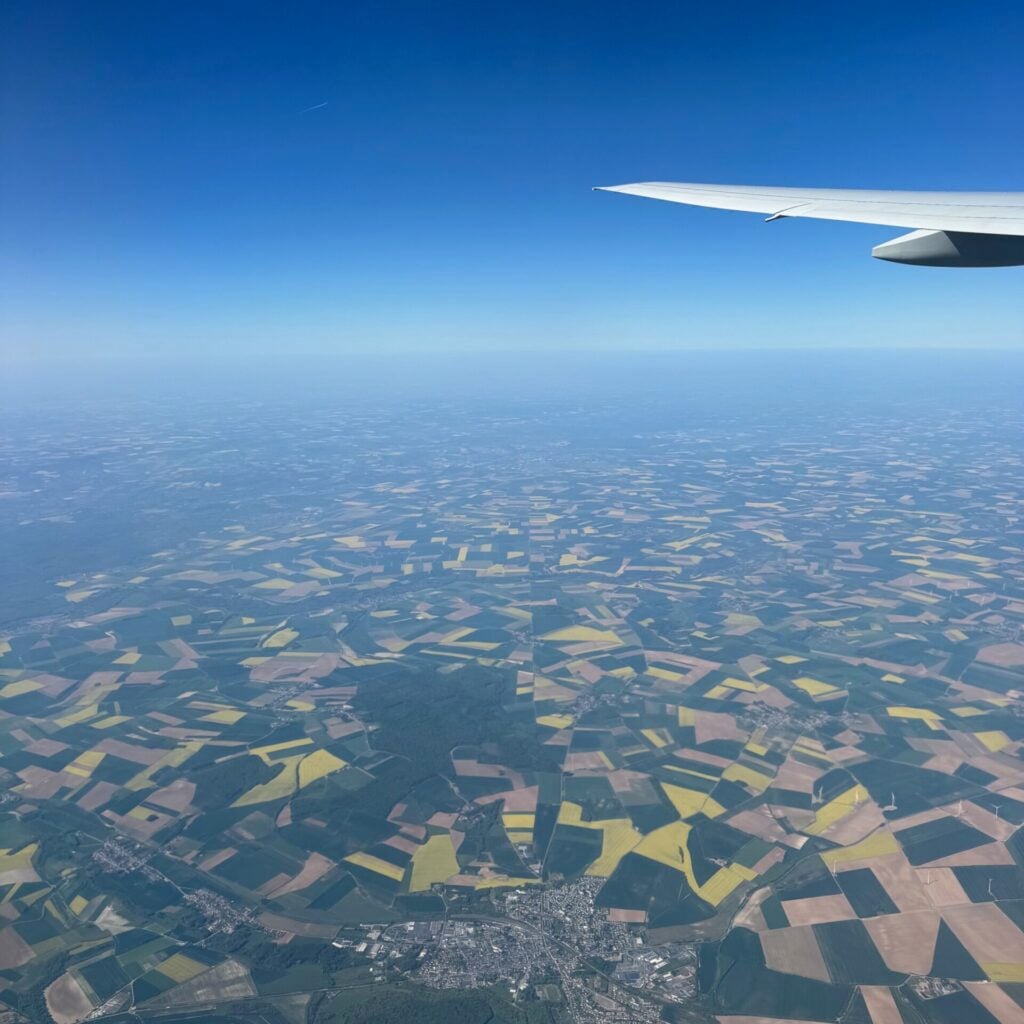
Photo from my last flight over France.

Did you enjoy this article? TAIP is 100% reader-supported through tipping. If you want to leave us a tip of any amount it would be highly appreciated.  These tips help support our efforts to keep TAIP an ad-free environment. Just like at a cafe, the tips are split evenly among the team.

mini eiffel tower on stone wall

A Page from 29 Days to France: Getting the Essentials Sorted

For those of us who have moved to France, we know there’s a moment that comes right after the dream becomes reality — when the plan lands, your feet finally hit French soil, and you realize… Okay, now what?

It’s where the idea of moving to France meets with the very real logistics of actually living in a foreign country. It’s also where a lot of people tend to freeze, and then the panic sets in. What comes first? What needs to be done? What’s “normal” in France compared to what you’re used to back home?

When we wrote 29 Days to France, we wanted to walk people through not just the big picture of immigration paperwork or visa timelines (which are also included, fear not😉), but also the smaller minutiae of getting settled into your new French life. Details like getting a cell phone. Setting up electricity. Opening a bank account.

Are they glamorous tasks? No. But they’re the foundation of pretty much everything else. So today, I wanted to share one full day from the book to give any of you preparing for a move to France a sneak peek at what’s inside. 

Day 13: Getting the Essentials Sorted

Congratulations, you’ve officially arrived in France! You’ve most likely spent the first few days soaking it all in: your new neighborhood, the sound of chattering French, and the smell of buttery croissants in the air. Now that you’ve touched ground and are ready to start your new French life, you need to take care of a few essentials.

What are the essentials? Your cell plan (and new French number), your electricity and gas (handled by the national carrier, EDF), and your French bank account (which will provide you with a debit card). This won’t be the most exciting part of getting settled, but it’s necessary.

Cell Phone Carrier

There are several French cell phone carriers to choose from, including Orange, SFR, Bouygues, and Free. If you’re coming from the United States, you’re in for a pleasant surprise. Cell phone plans in France are much less expensive. I personally have Free and I pay around 20 € per month for unlimited texts and calls within Europe, unlimited internet access, and 30 days of free calls and 25 GB of internet within the US, among other locations. You can sign up for most cell phone plans online, but you can also go to a store and practice your French, if you’d like.

Electricity & Gas

EDF, which stands for Electricité de France, is the leading supplier of electricity in the country. It is majority-owned by the state, which keeps prices affordable. You’ll want to set up your home’s electricity and gas directly with them.

Your landlord most likely will not arrange this for you, so you’ll have to make a few phone calls. Alternatively, you can sign up online, but you need to get used to making these kinds of calls in French so I suggest that you get all of the practice you can! Once you have your French cell phone sorted you can call EDF at 3004. Make sure you have your address on hand.

This is the single most important and reliable proof of residence in France: the attestation that you pay for electricity.

Bank Account

There are also several different French banks to choose from. I have Crédit Agricole and I am really happy with them. They are a smaller bank and I find that the fees are reasonable. To choose for yourself, you’ll need to think about your personal needs. Do you want a larger bank? One that’s foreigner-friendly? Or maybe a small, local bank?

If you want a bank with a reputation of friendliness to foreigners, go for BNP Paribas. Its headquarters are in Paris and it’s the largest bank in France. It’s also among the largest banks in Europe. BNP is used to working with foreigners and I know that they have several representatives who speak English well.

Exercise: Be aware of your needs and do your research, especially when it comes to what you’re looking for in a cell phone and bank account. Practice (write it down if you need to!) what you’ll need to say in French before you call EDF or head to the bank.

Questions to answer: What do I need in a cell phone plan? What do I need in a bank account?

Why This Page Matters

I chose to share this page because it’s such a real moment in the move-to-France journey — one that not many people online talk about. No matter what kind of visa you’re on, no matter your job, family status, or even the city where you live, everyone has to navigate these basics.

And if you’re feeling intimidated by the idea of making a phone call in French, or choosing between a dozen different banks, or not knowing whether you need to bring ID to the phone store (you do) — that’s normal!

The entire goal behind 29 Days to France is to make this process feel less overwhelming and more doable. Not perfect, and not even necessarily easy, but possible. One small, essential step at a time.

If you liked this little excerpt, the full book features 28 other mini-guides just like this one. Each is focused on a task, a mindset shift, or a key moment in the move-to-France journey.

As a special treat for our American in Paris readers, you can purchase the 29 Days to France ebook for just $10 with the coupon code TAIP. We wrote this book with all of you in mind, and hope you enjoy reading it as much as we did writing it 🙂

Photo by Kristina Tochilko on Unsplash

Did you enjoy this article? TAIP is 100% reader-supported through tipping. If you want to leave us a tip of any amount it would be highly appreciated.  These tips help support our efforts to keep TAIP an ad-free environment. Just like at a cafe, the tips are split evenly among the team.

My First Three Months in France

This is part of a series of articles about the final days of preparing for moving to France and what happens when you get here, and those articles are part of a promotional series launching our new book, 29 Days to France, a book that all the writers wish they had had before we started our French adventures.  It’s now available for preorder, and those preorders come with a free 15-minute Q&A personal session about your French immigration plans.  Click here to learn more.

As a human being it goes without saying that I am possessed of my share of vices, but until moving to France jealousy was not usually one of them. In America at least, where every desire has been commodified and put on clearance, most of what we want or are told to want can be afforded by the average person, or got anyway on credit. But here, every French person, no matter how humble or poor possesses something which can’t be bought for any price: the ability to speak.

Even the small five-year-old on the street babbling to his mother about Père Noël filled me with envy. If only I could speak as well as a five-year-old, what high social circles would I then be soaring in?

In fact I had started studying informally even before my arrival. I did all the usual suspects like Coffee Break French, French in Action, and Comme une Française. I was sure I must have learned something, but whatever it was seemed to evaporate immediately the instant I needed to use it.

Once in France I re-doubled my efforts with Pimsleur, iTalki, and online courses from l’Institut Francais. When I wasn’t studying I had the news playing in the background. Whether I was desperately trying to learn it, or desperately trying to avoid having to use it, the French language became a ceaseless obsession.

Surprisingly along the way I felt I was learning as much about my native tongue as anything else. I was astounded to realize just how much we say with so little, and by comparison, how little I could communicate in French even with the substantial vocabulary I had theoretically memorized.

I was well aware of the cautionary tales of those who had moved to France, proceeded to surround themselves with a circle of Anglophone friends, and found themselves three years in without having ever made progress in the language. I was well aware of these cautionary tales because like anyone else in my situation, I had sat around in America watching expat YouTube for months on end before I arrived.

In my utter lack of perspective I concluded this was a serious hazard very much to be avoided. But I wasn’t long in France before I changed my mind and decided I could probably survive the risk of being ensnared by a cloistered group of Americans, if only it meant having a normal conversation for once. I told myself that the acquisition of a new language is a long-term undertaking and at each stage there has to be some concession to reality.

I got on Meetup. I created a Facebook account for the first time in my life. I was soon meeting exchange students, au pairs, and expats from all around the world. No matter how wildly different our backgrounds, as foreigners in France we all had at least one thing in common over which we could bond. We commiserated about the various idiosyncrasies of French life and regaled each other with our humorous stories of language failures and disaster.

I even encountered that breed of person, the complete inverse of myself, and strangely not so uncommon as might be imagined. Whereas I was waiting for perfection to say anything in French, they seemed to have started from day one with complete self-assurance. With little apparent concern for when, or if ever, their speaking abilities would catch up, they daily set off and traipsed unfazed through language landmines I had hitherto believed impossible to survive. Their willingness to place themselves into precarious situations meant they had faced far more difficult challenges than I had, and yet here they were, alive and still in good spirits.

“How could this be?!” I wondered in amazement. That almost seemed like cheating. But far from being jealous, I came to greatly appreciate these acquaintances and the many other types I met as well. From them I learned the important lesson that confidence and competence do not always walk hand in hand.

As I wasn’t expecting to achieve fluency much earlier than I was expecting to attain nirvana, this came as a significant relief.

My own meager confidence improved almost immediately simply by seeing that my predicaments were hardly unique. Even if I went alone to the barber shop, the doctor’s office, or the immigration bureau, I was no longer alone in an existential sense. I was buoyed by the knowledge that I was in good company, that others had tread these paths before, and that, so far as anyone could remember, no one had died from using the wrong verb tense at any of these places.

With this reassurance I found myself becoming less flustered, even though my ability to speak hadn’t changed at all. And in a virtuous circle, feeling slightly more at ease helped considerably with speaking.

Elsewhere in life, I had begun traveling weekends to visit the glorious gothic cathedrals of northern France. In a further sign of changing perspectives I had a surreal experience when I returned from my first trip out of town. Greeting me as I exited the train station back in Amiens were all the same sights I had encountered on my first day in France: the vaulted glass canopy of Place Alphonse, the Tour Perret, the neon Ferris wheel, and the slippery beige stones of La Rue des Trois Cailloux.

All the emotions and memories of that first introduction were brought to mind anew, only now all that had been so recently foreign was tinged with the warm glow of familiarity. No longer was this little town an unknown dot on the far side of the globe. Indeed, just at the other end of Three Pebble Street, and waiting for me to come in from the rain, sat my cozy apartment.

I was home.

Photo taken as I exited the Amiens train station on my first day in France.

Did you enjoy this article?  TAIP is 100% reader-supported through tipping.  If you want to leave us a tip of any amount it would be highly appreciated.  These tips help support our efforts to keep TAIP an ad-free environment.  Just as at a cafe, the tips are split evenly among the team.