
Unexpected Consequences of an International Move: Instant & Ongoing Decluttering

I’ve mentioned before on this blog that the Four Hour Work Week is a major influence on my life and was a big part of the “how” portion of the massive quality of life upgrade that was my move from America to Europe.  In the book Tim puts forth a notion called “mini retirements” in which instead of working and saving until some mythical age to sell everything and move to Thailand (for example) why not do that now for a few weeks and see if you actually like it.  There are other reasons to take mini-retirements, including not assuming you’re in control of your health or when you die, but what I want to focus on is Tim’s insistence that you dump pretty much everything.

Stuff.  It can define us.  And Americans in particular have so much room that nothing stops us from buying more.  We even define our “national holidays” by sales of stuff.  We even have a very healthy business category of self-storage, which is an embodiment of our hoarding mentality.  Alas, that industry is now kicking off in Paris (and probably greater France as well).

Tim’s points were simple: get rid of everything that doesn’t have a particular or sentimental value.  You can always buy another couch, or plates, but maybe you can’t buy that one pan Grandma taught you to cook with.  Dump the other stuff, keep that.

I decided pretty quickly that my “must keeps” consisted of roughly 100 framed prints that had mostly been painstakingly transported from Europe over the years and adorned all the spaces of my then-home in America, as well as the 4000 books that I had collected over many stops of library book sales and used and new bookstores over the years.  I spoke to a friend in Canada who had a large amount of space in a new home he had recently moved into, and who also happens to homeschool his kids.  He would get a teaching and parenting resource for free, as well as for his own enjoyment, and I would have free and safe storage of my treasures.  We agreed on a 5-year term, after which time we could discuss what was to follow.  I knew after 5 years in Europe (I’m 2 in now) I would either have a place to ship the books or have a long-term plan about what to do with them.

So books and art sorted.  I rented a large truck about 6 months before I left the USA and drove the books to Canada.  As a note, if you do this, the Canadians will ask you for a value, so they can tax you…on stuff you already own…because hey, you might choose to sell it!  So, cynically (and in keeping with American, and what I would find out, French traditions), I assessed the 4000 books at a value of $.01 each and the art at $1.00 each, to a value of roughly $200, which I still had to pay tax on.  Small price to pay honestly, but it does add an extra 30-45 minutes to your border crossing.

I then proceeded to dump all the furniture I had painstakingly picked out during my “I’m a grown-up now with a real salary” phase when my college furniture found the curb.  These were the delicious dark wood headboards, the plush suede couches, the tasteful (and useful) ottomans.  I even had a lovely Victorian double-sided desk.  All gone: happily mostly sold to friends and friends of friends, and what was still left over went onto Craigslist.  For the very last items (what was I doing with my own power drill?), I left them with my sisters to sell on their own or keep.

That left me with roughly 20 resealable tubs into which I mostly, but not exclusively, put items of real sentimental value.  Stuffed animals I had as a child which I kept in really great condition and which I wished to pass on to my children or to my nieces and nephews.  A report on birds I wrote as a ten-year-old.  A drawing my sister made for me.  That kind of stuff.  Some dear friends have been kind enough to keep those tubs in a spare room in their home.  I plan to keep reducing the quantity of tubs in that room every time I visit, loaded with goodies from Europe for my gracious caretakers.  And each year that passes that I don’t miss the stuff in those tubs, it makes it that much easier to get rid of when I do see it again.

In truth, limiting myself to the four full-sized pieces of luggage I ended up bringing to France was an enormous task that I totally underestimated.  I flew American Airlines to France in December 2013 and at that time the policy was: 1st bag free, 2nd bag $100, and bags 3-10, $289 each.  Hard to believe, but this is actually the cheapest and fastest way to move your stuff.  I checked into freight, believe me, and either my calls weren’t returned, or my emails weren’t returned, or it was prohibitively expensive when I did manage to get a price sheet.  Same for UPS, sea-freight even.  And then you have to go to Le Havre to pick it up.  Yeah, skip that.  Pack it with you.  It’s really cheap, comparatively.

Now, when you’re bringing that much stuff (my aforementioned four pieces of luggage…I won’t even share the absurd limits of carry-on that I stretched), you find a way to bring too much, so I want to encourage you to spend one month packing these 4 pieces (or fewer).  You’ll take more stuff out as you work on it every day and keep asking “Do I have to have this?”  I know when I showed up at the airport that I was at least five pounds over on each bag.  But I knew how to get around this: the skycap.

This profession doesn’t exist in Europe, oddly, though it is exactly the sort of profession you expect to exist there.  They are (for my Euro friends who might be reading) men and women who stand on the curbside to help those who wish to “skip the line” get boarding passes and check bags there instead.  For this “convenience” you are expected to tip anywhere from $5-$25/bag.

That morning that I left Kansas City the skycap picked up all 4 of my bags and gave a slight grunt for the last one, the heaviest.  “Where ya goin’?”  “Paris.”  His eyes widened as he looked back over the bags, quickly calculating how much it was going to cost me.  “I’m moving.”  “Ah.”  He started weighing the bags, and I watched each bag on the digital readout.

53 lbs

57 lbs

52 lbs

61 lbs

“They are all over.”  He was reminding me of the 50-pound weight limit I was already aware of.  Overweight would add $150 to each bag.  I nodded, putting on a guilty and downtrodden look.  I wanted my silence to speak.

“I can take care of this for you, if you make it worth my while,” he said after a beat or two.  I tried not to beam and high-five myself, as this was the exact response I was banking on.  I took out my last bit of American currency I was carrying, a $50 bill, and put it on the counter.  I still said nothing.

Given that he was about to save me $600, he was expecting more, I’m sure, but he probably realized that $50 was good pay for 5 minutes and a few key strokes that indicated that yes, these bags weighed no more than 50 pounds.

We were operating in that shadow economy, and little did I know that this was precisely the kind of hustle I needed to survive and thrive in my new country.

So, to sum up:

  1. Get rid of mostly everything.  Try to come up with creative, trade-based, non-recurring monthly cash flow ways of storing the rest.  You need to spend as little as necessary in your new country when you first get there.
  2. Take a long time to pack what you are bringing, in order to have a critical instead of a stressed and harried eye to look it over with.
  3. Don’t hesitate to leverage American idiosyncrasies to bring what you want.
  4. However, do be pragmatic and take the time necessary to figure out what you really need vs. what you can buy when you get there.

A giant move out of the country can be the impetus for that Spring Cleaning you always aspire to do (and which my sister Clare does roughly every 3 months) but never get around to.  Which is yet another reason to move abroad.

And when you do get here, the housing in Paris is small enough to prevent you from restarting that life of stuff you left behind.  When you shop, you constantly ask yourself, “where would I put that?” which is a practical question that you don’t have to answer in always too-big America.

* * *

For a great video to share with kids or anyone who cares about our planet and the absurd and unsustainable way of life in the First World, check out the work that these guys have been doing.

Photo from jsmjr.  Labeled for reuse.  What a cute dog.

Did you enjoy this article? TAIP is 100% reader-supported through tipping. If you want to leave us a tip of any amount it would be highly appreciated. These tips help support our efforts to keep TAIP an ad-free environment. Just as at a cafe, the tips are split evenly among the team.
Meetup: a Great Way to Build a Core of Diverse Friends

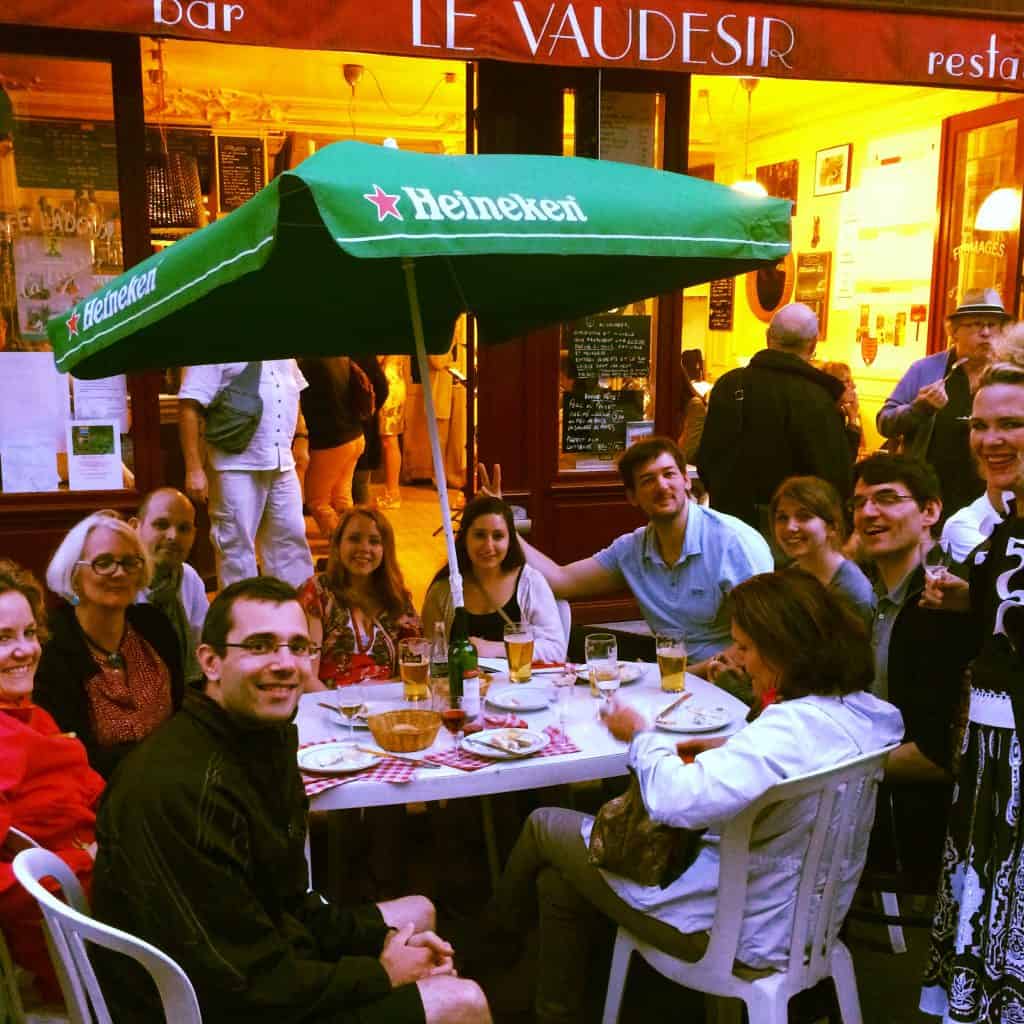
This summer I went to the Fête de la Musique with a large group of friends.  Though it originally started in France it’s now a worldwide annual event.  As the evening closed out at our fourth musical venue out of hundreds we could have chosen, I took a moment to be thankful for a platform that has connected me with so many wonderful people.

Meetup is a company that started in NYC in mid-2001, but really gained traction after 9/11 as New Yorkers tried to connect with people who wanted to talk and process the disaster that had befallen their city, their nation, and the world.  It has grown quickly in the US, and as a result it can cost north of $100USD/year to start a group.

For those who aren’t familiar with the concept, Meetup is a “just add internet” for any type of group.  Want to “jog on Wednesdays” or “knit on Tuesdays” or “club on Saturdays”?  There’s a group for you to join.  Can’t find the group you want?  Start your own.

For the casual browser it’s a dazzling arena of fun activities with strangers who might become friends.  For the organizer type (comme moi) at only 12€/year to start up to three groups, it’s a bargain that pays back massive dividends.

I created a group called Paris Culture Lovers as a way to find people like me who love art, film, books, conversation, food, and day trips.  We are closing in on our first year as a group and have done almost 90 events, some of which were among my most treasured memories of 2015.

So what’s the bad news?

  1. Many groups are ephemeral.  People get enthusiastic, start a group, never do an event or do one and give up.  That’s okay.  It happens.
  2. Because Meetup has created a “buffet” culture, and because society worldwide becoming less accountable about events and invitations, many people feel they can no-call and no-show an event they have RSVPed for, or cancel hours or minutes before an event, for frivolous reasons or for no reasons whatsoever.  You might not do that to friends but you may be inclined to do that to strangers (At PCL we have invented a ranking system that measures and ranks you by the number of events attended and gives senior members priority for events).

But neither of these things are dealbreakers and as this year ends, a group of the core of Paris Culture Lovers has become good friends and strong acquaintances, which means a lot to a stranger in a strange land even more so to the type like me, who isn’t seeking to surround himself with expats to build an anglo island in France.  There are meetup groups for that…if that’s what you want.  But when I want to feel like America or be with Americans…I visit that country.

* * *

P.S. I should note that I had two Meetups fail due to lack of interest a casual kick-around soccer group and a chess players group.  But you have to try in order to see what works 🙂

Photo was a crew of friends at the end of a fun and rambling Fête de la Musique.

Did you enjoy this article? TAIP is 100% reader-supported through tipping. If you want to leave us a tip of any amount it would be highly appreciated. These tips help support our efforts to keep TAIP an ad-free environment. Just as at a cafe, the tips are split evenly among the team.
You Can(‘t) Go Home Again

“What do you miss the most?”  My friends smile, anticipating a favorite dish, a favorite place, or a particular time of year.  “Well, you guys, of course,” I say quickly, hoping to deflect the question from my true answer: “Nothing.”

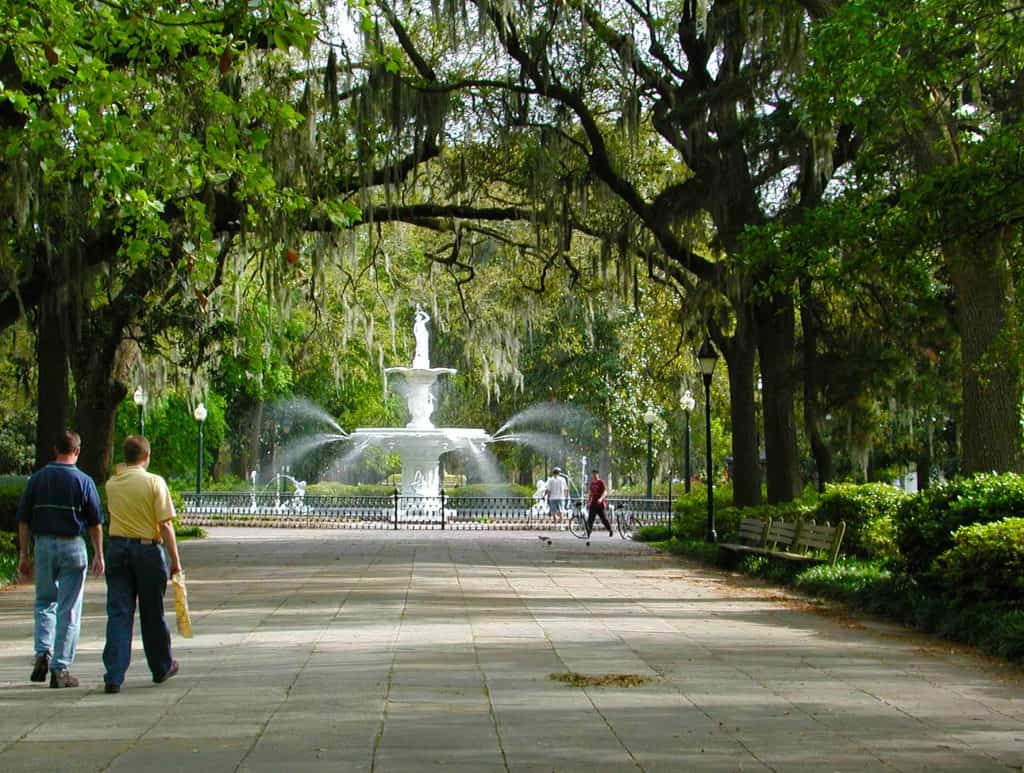
Of course there are things that are wonderful that one could miss but I “miss” them in the same way that I “miss” anything from a place I have been to like missing dim sum in Hong Kong or missing walking the beaches of Sydney.  But I don’t miss anything in the “think about it all the time” way that I think they probably mean.  But in fairness to a country that played host to many happy years of my life, I miss walks in the Huntington Gardens in California.  Food trucks in Austin.  Baseball in Saint Louis.  Hot chicken in Nashville.  The squares of Savannah.  BYOB restaurants in Montreal.  Autumn in New Hampshire.

Next month will mark the beginning of my third year in Paris and I’m “in between.”  America is no longer “home” for many reasons but I still can’t believe I really get to call this place home.  I’m Parisian in my bones in a way I always have been and I marvel every day that I get to live in my dream city.  I’ve often been alone on a quiet street and stifled a laugh as I took in that crooked winding view of centuries.  Two years on, I still have “pinch me” moments.

Going to the United States has become a rather elaborate production.  As part of my visa requirements, I have to spend at least 270 days a year in France, so you can’t go back for too long but if you’re going to cross an ocean, it’s 3 weeks’ minimum for me.  I’ve also hit upon the strategy of visiting my friends and family during “non-holiday” periods so I don’t have to share them with other commitments they have.  I’ve also found this makes for finding absurdly cheap flights (I just booked the cheapest Europe-America flight of my life recently).

I haven’t yet chosen to ditch seven years of medical/dental/accounting services and technology and occasional travel stateside means I don’t have to.  The PPO (insurance plan) I once had in the United States cost $135/month and covered me for pretty much everything for years.  The “affordable care act” in America has not only cancelled that plan, but the closest current equivalent costs $570/month.  So I just pay cash to see my old doctors for my annual checkup, etc.

Dental insurance remains extremely reasonable ($35/month in my case) so it’s cheaper to retain it solely for your cleanings twice a year.  Just those two cleanings will cost more in cash than the entire annual premium for your insurance and that’s assuming you have no other problems.  Do the math.

I couldn’t help but laugh at the times I would put a car into park and then stare mutely at the dashboard, wondering if I hadn’t forgotten to do something.  Not driving for months and months makes you a bit cagey when you do finally slip behind the wheel again.

***

The more assertive variation on the question “What do you miss?” is “When are you coming back?”  This led to a very long and fruitful exchange with a close friend in which I enunciated advantages I have now that effectively prevent me from returning to the United States for the foreseeable future.

  1. Physical health I finally gave in and got a Fitbit to document what I’ve always suspected: I walk a moving average of 10 km/day.  I do this at various speeds, up and down stairs, on cobblestones or grass, all around this city.  Not only did this regime of walking contribute to my losing 30 lbs/13 kg when I moved here, but it has established a new weight standard which would be impossible for me to retain in most American cities.  During my recent visit to Kansas City, I experimented by refusing to take and elevators, and as often as I could remember I parked my vehicle as far away from a store entrance as possible.  I even tried not to use carts to carry my purchases.  With these “extreme” measures I couldn’t even get close to 4km/day as an average.  I’m simply healthier here in Europe.
  2. Access to Europe I used to treasure an annual trip to Europe to see places new and old.  But now that I live here, all of Europe is at my doorstep, for pennies, either by flight, train, bus, or ridesharing (think uber but for long distances).  When living in America I experienced a variation on these sorts of fun possibilities only during my two years in New Hampshire, when Boston, Philly, NYC, and even Montreal were just road trips away, and in some cases, by train or bus too!  On this recent trip I had some business up by Chicago and elected to take the train (Amtrak) but perhaps had forgotten that there’s only one departure a day and when it gets delayed, it really gets delayed.  An engine on the train coming to Kansas City blew up in Arizona and they had to run another engine out there from California.  It delayed my journey by 7 hours and Amtrak had to pay to transport me to and from a hotel and put me up in it so I could connect to the bus to Rockford in the morning.  Not too shabby a recovery from the taxpayer-supported Amtrak, but a far cry from the dozens of departures and arrivals all around Europe every day.
  3. Constant challenge of language Every day I make progress in French, but my work and life brings me into contact with the whole world.  During the summer I had a date with a Brazilian girl who didn’t speak English and we laughed our way through our makeshift Spanish and an occasional assist from Google Translate.  Expressing yourself in a foreign language is one of the most difficult, fun, rewarding, humbling, and interesting experiences in life.  You get opportunities like that every day here.
  4. A built life Next year I transition from my visitor visa to one that puts me on the path to citizenship.  I continue to maintain that the EU passport is simply the most valuable passport obtainable by the average person in the world.  The only ones more valuable are the Vatican and Swiss passports and they are very, very difficult to obtain for various reasons (as an aside I was recently asked at a dinner party what I liked most about having an American passport and I replied that it was the knowledge that Navy Seals will come for me if Somali pirates ever commandeer a vessel I’m on.  I’m sorry, no country can top that!).  I’ve started something wonderful here, and it would be nuts to leave it especially when I’ve gone through all the hard stuff.  Indeed, as I looked over the list of requirements for my dossier for my new visa which will be far more difficult to obtain than the visitor one I said to a friend, “Is this it?”  The list had 28 requirements.  I realized after 2 years I am simply unfazed by the French government.

So my answer to my friend was, “Why would I come back?  I’m healthier and happier than I have been for many years, possibly more than I have ever been in my life.”

The caveat is, of course, family.  My nieces and nephews continue to grow by leaps and bounds and I measure their skill in their improvements in art and coloring, Parcheesi, and sports.

On more than one occasion I’ve heard someone say, “I have to live here, because I love my family.”  I get that, I truly do.  But ultimately I moved because I placed my happiness first.  Of course I’m happy when I am with my family but I know that part of the reason I get to contribute to their lives, bring them presents from all around the world, and share great stories with them, is precisely because I’ve built and chosen an intentional path for my life that doesn’t defer a dream life to some unknown future that no one has guaranteed that I will live to obtain.

There’s no right answer here and I’m not proposing that I have the right one.  I can only say that I can spend more quality time with my family now and treasure it more deeply because I know our opportunities are so precious and limited and because I am well and truly happy, and that speaks volumes to children.

***

There’s nothing more satisfying than waking up every day knowing in your bones that you are on the right path.  And while two years isn’t yet enough for me to claim “Parisian” status yet, it does feel like home.

The picture is of one of the fountains in one of the many lovely squares of Savannah, Georgia.

Did you enjoy this article? TAIP is 100% reader-supported through tipping. If you want to leave us a tip of any amount it would be highly appreciated. These tips help support our efforts to keep TAIP an ad-free environment. Just as at a cafe, the tips are split evenly among the team.

Rolle

The Summer that Changed My Life, or “Now I Get to Stay”

I think at any point in a film or a book there is a major crisis point at which the protagonist either succeeds or fails and the rest of the journey rises and falls on that moment.  My moment for my French adventure arrived this summer.  This is the story.

I have now come to believe that naivete can sometimes be a blessing in disguise.  When I made the decision in January 2013 to move to France in 12 months there were dozens of unknowns.  Would the French grant me a visa?  Would I be able to renew it?  How would I get a bank account?  My more detail-oriented friends asked all these sensible questions before I left America.  Some things I knew the answer to.  Other things I had to figure out for myself.  What I couldn’t answer, because I couldn’t possibly know, was whether I would stay beyond my original 12-month visa, even after it was confirmed months after my visit.

In fact, I can say now, after the incredible summer that I had, that when I went to the States for a three-week work trip in June, I was almost certain that I would return to the States.  But it was that very trip, and all that followed, that led to where I am now, certain to stay here in France, happier than I have ever been in my life, and buoyed on a number of fronts.

It all started on LinkedIn, of all places.  The website that still hasn’t figured out what it is managed to function well enough for what I consider it to be, a dynamic online resume, and landed me an unsolicited interview for a project in Florida and Switzerland during Summer 2014.  It was for test prep, something I’ve been doing since 2004 and which ended (so I thought) with the sale in late 2012 of a company I built from scratch.

Anytime you are in an industry for over a decade you inevitably build a long referral line and many potential clients are still willing to work with you, though you may live an ocean away and be many time zones apart.  I figured this demand would taper off over time, and given my management of my other companies, I welcomed that compartmentalization.

Florida

Since I had been teaching in one-on-one or two-on-one formats for years, I had forgotten the sheer joy I felt being in front of a classroom.  I had felt that as recently as 2013, when I had a chance to teach my second MBA-level class on Entrepreneurship at Rockhurst University, my undergraduate alma mater.

The three-week intense SAT prep camp offered by JCT4Education reminded me of how much I enjoyed classroom teaching, and how those roots branched into my other pursuits (writing, tour guiding, interviewing).

Alas, this trip also reminded me that, for the moment, I missed nearly nothing about the USA save my friends and family.  Boca Raton was perhaps not the best representative of the States, but all the regular national themes were present: requirement of a car for basic daily functions, endless strip malls populated by Panera/Starbucks/Target/Outback/Barnes & Noble, and the unending hamster wheel of living to work that so many Americans accept without knowing there is an alternative.

Switzerland

A bigger contrast from Boca Raton could not be found in my four weeks in Rolle, in the French-speaking part of Switzerland.  Beautiful vistas.  A sense of life, not work, as the dominating principle, and an efficient and intelligent rail system.

Indeed, it was during a visit to the capital, Bern, as I was taking in this view, that I said to myself, almost reflexively, but audibly, “I’m not leaving this.”

And I began, as any Catholic might, to pray and work towards my goal.  “If you want me to stay, open the windows.  If you want me to return, shut them,” I prayed.  I then proceeded to work on opening those windows myself.  I ran two separate crowdfunders one for a walking tour business and the other for my media company (both got funded).  I saw a significant uptick in my tutoring practice, which I realized would need to be incorporated as a solopreneur venture.  Indeed, even my blogging and social media firm took on new clients.  And my French attorney assured me that given the things I had in place, that the road to the next step in the visa process would not be overly onerous.

I wrote these words while I was in Scotland for the referendum, watching history unfold.  But I want, if nothing else, to remind my dear readers that you are solely in charge of whether you live a remarkable life or if not at least have a wondrous time in the attempt.  While I believe God definitively answered my prayers in June and throughout my summer, I also believe that God helps those who help themselves.

It is always darkest before the dawn.  I re-learned that this summer, and what followed will shape my life for years to come.

Photo by Xavier von Erlach on Unsplash

Did you enjoy this article? TAIP is 100% reader-supported through tipping. If you want to leave us a tip of any amount it would be highly appreciated. These tips help support our efforts to keep TAIP an ad-free environment. Just as at a cafe, the tips are split evenly among the team.

streaming services

The Loss of Netflix and Hulu, or “How I Started Reading Again”

I’m an early adopter.  Not the “have it first” type, but the “that’s really cool I’d like to try that” type.  Sometimes this works out well, other times one accepts bad experiences as the cost of being among the first to try them.

Those of us in our 30s are not “digital natives.”  Email and the internet really hit their stride after our undergraduate years.  But it doesn’t mean we take to “appification” any less, particularly ones that involve video.  Some of those video apps that I have particularly become attached to in previous years include:

  • Amazon Prime
  • Hulu Plus
  • NBC Sports (meant I could watch Premier League matches)
  • Netflix
  • Pandora

I knew before I arrived in France that none of these applications were ordinarily available and had started to cogitate about work-arounds or (gasp!) the possibility that I would simply “go without” while I was in Europe.

My degree is in Literature and I have thousands of dead-tree books carefully collected through years of library book sales, out-of-control spending at Half-Price Books, or at any other known honeypot for a bookhound like myself.  The smell of those pages old and new were pheromones for me.  They woke me up excited me made me simply happy.

However, in the final two years of my residence in America my reading pace had slowed to a trickle.  Instead of the usual 2-3-4 books a month I had slowed to not even finishing one book per month.  I would sometimes go a week or longer without even touching a book.  It wasn’t until I was out of the warm comfort zone that was my American existence (that I created for myself I don’t blame anyone else!) that I realized what had happened: Netflix and its imitators.

It wasn’t entirely Netflix’s fault.  I should say it was the fault of having easy access to a nearly infinite library of video titles.  While I’m happy to doff my hat to the era of television that played host to the original Twilight Zone or produced my beloved The Prisoner, I have to say that the current era of television is perhaps the finest in history.  If we look strictly at script and writer-driven shows, like Boardwalk Empire, Treme, The Wire, Mad Men, Breaking Bad, Justified, Luther, Sherlock, and the like, we are witnessing the marriage of what any reader loves, whether he/she knows it or not: real, meaningful stories combined with expert costuming, cinematography, and directing.  There are many moments in any of the series I’ve listed above where one could freeze a frame and give an hour-long lecture on everything occurring in that sequence.

In a sense, I didn’t realize I had abandoned reading because I was still occupying my time with ideas and stories and concepts that mattered to me.  It was only when I had to confront having to get a VPN workaround and its own challenges like only working 85% of the time made it so that I accepted that I would just go without for a while.  There’s always time to catch up on those series at some point in my life.

What happened in that going without?  Reading, like the waters of spring coming forth from a snowmelt, burst in through all the well-known stream beds of my free time.  Public transportation facilitated this by giving me countless chances to get in a “quickie” with some novel or work I had downloaded for free (because it was in the public domain) and read on my Kindle app on my iPhone or iPad.  That led to even more reading (I was foolish enough to bring a number of dead tree books with me to Europe) and before I knew it, the old paradigm had reasserted itself in my life: free time spent in large part reading, with a tiny bit of TV via the free Fox app and a weekly movie in the theaters.  Unwilling to pay for any premium services like Netflix, I simply enjoy Pandora (I still haven’t converted to Spotify, but I am open to listening to you tell me why I should) and the occasional guilty pleasure of Masterchef or Hell’s Kitchen (I love cooking and I love Gordon Ramsay).  Last week my mother told me I should watch the new Jack Bauer 24 series and I haven’t yet told her that I already watched the first episode, having failed to stop watching 24  as I should have after the 3rd season.  Remind me to tell you about my feelings on the art of non-finishing some time.

So, can I ask you to try something?  Something that can be done from the comfort of your own home?  Give up Netflix, Amazon, and Hulu Plus for one month.  Watch what happens.  I’m not on a crusade here.  I just want you to experience what I wasn’t able to until I left everything I knew to move to a place where I only knew a handful of people.  All those programs you’re terrified you’ll miss will still be there for you.

If you ever go back.

Photo by Glenn Carstens-Peters on Unsplash

Did you enjoy this article? TAIP is 100% reader-supported through tipping. If you want to leave us a tip of any amount it would be highly appreciated. These tips help support our efforts to keep TAIP an ad-free environment. Just as at a cafe, the tips are split evenly among the team.

Lifestyle Design: My Own Case Study

The Four Hour Work Week has been out for many years now and in fact, the author, Tim Ferriss, has gone on to author the Four Hour Body, Four Hour Chef, etc.  Of course “four hour” is not literal.  It’s about a mentality.

While Ferriss presents a number of interesting assertions in the book, a number of which I disagree with, I accept the central premise on which the entire book is based: lifestyle design.  The upshot of the idea is that you control what kind of life you want to live through your own choices.  So design that life along with a  means to make an income that fits into that lifestyle.  Such a concept doesn’t just turn traditional 9-5 on its head, it throws it out the window after lighting it on fire.  It discards the idea of having a “good job” or “good business” as a priori considerations.

What do you want to do with your life?

How do you want to live it?

Ferriss says that only after you answer these questions have you earned the right to then ask yourself how you’re going to make a living.  Indeed, these questions are deeply revelatory, and I’m always surprised to share this concept with people older than myself who cannot answer these questions (or worse, have never asked themselves anything remotely close).  They’ve just taken to living their life perhaps very successful lives in many measures but there’s not an intentionality behind those lives.  Lifestyle Design demands that intentionality (and accountability).

As I said, I reject several of Ferriss’ assertions, such as the idea that the truth of a religion cannot be known or some of the gimmicky advice he gives regarding automating a certain type of internet business.  The meta with Ferriss is what matters.  There are dozens hundreds dare I say thousands of ways to make a living.  Be bold and fearless and you will reap the rewards. And even failure will teach you so much more than conventional success will.  Ask for safety and 3-4-5 weeks of vacation a year and you may – or may not – get it.  And even if you get it you may lose it.  The days of 20 years at one company may be gone but there have never been more fun and innovative places to do something you’re passionate about or more cool opportunities to start your own thing.

Ferris encourages, as a starter plan, making a low to median First World income and then living in Second World situations (Thailand, for some reason, is a popular pick, which is odd as I’ve always considered it to fit well within the “nice to visit” oeuvre), using time differences to your advantage and the saved income as arbitrage towards your next venture.

Ferris holds this out to the everyman, just as the excitable Amway dupe does when he draws circles for you on a flip chart in someone’s home. But lifestyle design, much like entrepreneurship, is not for everyone nor can it be accomplished by everyone.

There are dozens of inspiring case studies (even for my married-with-kids friends who would call this impossible), none of which I can say I’ve ever read – mostly because I didn’t need proof to believe that this would work.

***

In October 2012 I sold a business.  It was not the first I had built or said goodbye to, either at a profit or at a loss, but it was the largest profit I had ever made, and after such a long and hard push (6 years) I took some time off.  Starting in November I went to Grand Cayman, London, and then Paris.  In December I arrived in Australia for a 34-day, 5-state, 2-territory trip of a lifetime.

As I stood on top of Mount Wellington in Tasmania, at the very bottom of the world, in the opening days of 2013, I was overcome with emotion at how deeply God has seen fit to bless someone so unworthy.  I resolved to continue to try to be worthy every single day.

Throughout all these trips I had the opportunity to be deeply grateful, meet amazing new friends, and think about my life up to this point, and reflect on what was ahead.

Rather impetuously in January, while still in Oz, I had settled on a move to Paris.  It had been a city of my dreams for so long.  If not now, when, I mused.

It took one full year (all of 2013) and all of my effort, concentration, and focus to pull it off.  And I submit that had I not bought a one-way ticket in January of that year I might not have actually done it.  More than once last summer I thought if only I could delay this a few more months…  Living in America, as an American citizen, is desperately easy and cheap.  As articles on this blog have pointed out and continue to do so: life in France is “harder” and more expensive in many ways most Americans would find unacceptable and intolerable.

There is also the issue of a built life. It is no accomplishment for the unattached, still-keep-stuff-at-my-parents 20-something to quit a job and see the world.  But someone in his/her 30s, with big boy/girl furniture not self-assembled, with a deep and rich social network, memberships to art museums, subscriptions to the ballet and symphony, etc. would find it hard to leave all these things behind.

This is to say nothing of the fact that you may have young ones in your life, like this cutie, who would miss you.  I’m unmarried and have no children but those nieces and nephews are the closest things and it’s tough not to be there as they grow up so much more quickly than you thought they would.

There’s also the perception, for the first few months, that you’re just on some kind of vacation.  People don’t realize you’ve moved and that you have to work in order to pay for your new life.  At times it will be as basic as “What are you doing working you are in Paris!!”  Other times I laugh myself at what would be outrageous dream material for an American girl: dinner in Paris followed by a walk on the Seine in the shadow of Notre Dame.  It’s just a typical weeknight date with a French girl here (I confessed as much the last time such an incident occurred with said French girl.  “I’ll never take this for granted,” I said in French while standing on Pont Neuf.  She made the typical expressive pout-cum-eyebrow-raise that parsed the attitude of “is that cute or just annoying?”).

It’s now over three months into my adventure and I’ve loved every minute even the alleged “hard days.”  It’s also the first time in my life that I have been out of my home country for a period longer than 90 days (my Rome study abroad semester came with a visa that was good for exactly 90 days and no longer).  I cannot begin to tell you the questions you will ask yourself when you are completely immersed in an alien culture and language even one you may love and be conversational in.  You find yourself re-examining basic questions, like, “What do I actually like to eat?” or “What do I do for leisure?” or “What do I want out of my life and work?” not because you are unhappy with the answers you’ve always known but because you’re completely out of context here (well, except, happily, for access to the Traditional Latin Mass which will always make you feel at home anywhere in the world).  You also experience this cheek-by-jowl with whatever businesses you are owning and running.

The final consideration that an American so used to freedom of movement must keep in mind, no matter where you are thinking of relocating to, is immigration policy.  I managed to obtain a long-term-stay visa which is not at all easy to get.  My renewal is by no means assured and I’m not even allowed to apply for it until 60 days before my current one expires.  I had read and understood, through various sources, before my visit, that it was easier for someone already here to stay, but your own thought process has to tie into the state of the businesses you are running.  Will I get to be in Paris long-term?  Only the immigration authorities know. 🙂

What I do know is that this was one of the five most significant choices of my adult life, and I couldn’t be happier that I made it.

In future articles on this theme I’ll talk about what it took to get here in terms of breaking up my life in America.

Photo was taken as I stood on the top of Mount Wellington, looking down on Hobart, Tasmania.

Did you enjoy this article? TAIP is 100% reader-supported through tipping. If you want to leave us a tip of any amount it would be highly appreciated. These tips help support our efforts to keep TAIP an ad-free environment. Just as at a cafe, the tips are split evenly among the team.
paris arrondissements

Three Big Changes (A Month In to My Life in France)

This particular move features three major changes for me: a different country, a different language, and a different environment.  I’ll start with the last one first.

The City

I was born into one of the densest cities in the modern world: Singapore.  This tiny nation-state has 5.4 million people packed into 276 square miles (Americans might consider that 8.5 million people inhabit the five boroughs that comprise NYC, which sits on 303 square miles).  Singapore taught me at an early age that a city can be a safe place for a kid.  As a six-year-old, I excitedly rode the MRT (subway system) by myself on Mondays when I had altar boy duties at our parish across town.  I heard different languages (Malay, Chinese, Tagalog) swirl around me.  I saw every color of person imaginable.  And the food.  Well, let’s just say that in 2009, my first visit back to the island since I was 11, I gained ten pounds in three weeks.  I firmly believe Singapore has the best food in the world, and still do, despite living in the country that literally gave the world the word cuisine.  However, for all my love of cities, most of my life has been spent in suburban settings.

Because America west of the Mississippi was imagined and built around the car, my stints in Texas (Dallas), California (Los Angeles, Orange County), Kansas (Overland Park), and Missouri (St. Louis) all accepted as prima facie access to a vehicle.  Access to this vehicle not only defined your everyday schedule but by and large, your entire lifestyle.  This lifestyle, the suburban lifestyle, while comfortable, safe, and warm is a novelty in human affairs and is premised upon the lie of ongoing, infinite access to cheap and easy oil.

The rural life has some splendid isolation and the city is a collective of the culture of a society but the lukewarm suburbs are no real part of either.  James Howard Kuntsler, in a myriad of jeremiads against the “noplace” that is suburbia, has made this case numerous times far more eloquently than I can.  Take a read through his Home from Nowhere if you want to be confronted with the (un)reality of the modern suburb.

This is all to say that city living is radically different from suburban living, in so many ways.  We can start with one of the costs of living: housing.  It’s almost always more expensive to live in a city.  A 10×10 room in Paris (I’m talking feet, not meters), as in NYC, will cost you at least $1,000 per month, and that is with no promise of either a shower or toilet ensuite.  Unless you share a home or apartment, you will also be lugging your laundry to a laundromat.

But after you’ve exhaled, realize the disappearance, or the decrease, at least, of another cost of living: transportation.  I save roughly $120 (accounting for exchange rates) by not owning a car in Paris.  I owned my last car free and clear so I didn’t have a monthly car payment, but I still paid $125/month in car insurance and at least $75/month in gas.  This is to say nothing of car washes, oil changes, tire changes, routine maintenance, and of course, annual registration.  I am now in possession of a monthly Metro pass which allows me to go anywhere that matters in Paris by train, tram, or bus.  For an additional 29 euros per year, I’m also allowed to use the bikes all over the city for the first 30 minutes of my journey for free (the locations can easily be found on Velib, a smartphone app).  I have never waited more than six minutes for a metro anywhere in the city, and because Paris is such an old city, it is eminently walkable (for an intact example of a medieval city, visit Assisi in Italy or Toledo in Spain, both of which can be traversed from one end to another in 20 minutes).  Because of its layout you often won’t realize that you’re covering 3-4 miles per day on foot (though, if you’re not used to those distances, don’t worry: your body will inform you very shortly!).

This foot-driven travel forces you to meet your fellow city-dwellers.  Americans prefer the quiet isolation of their cars.  They have their own agendas and itineraries that are subject to no one else.  City living doesn’t allow you that choice (well not without the hassle of traffic and not-free parking).  You have to deal with the homeless, the musicians, the weirdos, the deviants, the children, the elderly, and all the fascinating tapestry of humanity that comprises any big city.

What makes Paris, and some big cities, special, is the architecture and history all around you.  Architecture inspires and uplifts.  It’s difficult to walk by things like the Arc de Triomphe or Notre Dame, or inside any number of the hundreds of churches in Paris, and not feel inspired (well, unless you’re already dead inside – but even then these can provide powerful return-from-death shots).  The magnificence and beauty in those structures remind the ordered mind that building things that are worthwhile in this passing world is perhaps the most relevant harbinger of the eternity that is ahead for all of us.

The last opportunity I had to live in a city environment was during the year I finished my MBA in Saint Louis.  I was in the Lou Monday-Friday and in Kansas City on the weekends (I drove the dreadful I-70 stretch twice a week.  I know.  Ugh.).  In Saint Louis I lived in Lafayette Square, near the oldest park west of the Mississippi, in the largest collection of Victorian homes in the country.  I loved it, and have always dreamed of a return to St. Louis since my 2011 departure (on a separate note, while beautiful churches are on the mind, I believe that the Cathedral Basilica of St. Louis is the most beautiful church in the United States.  Check it out sometime).

It is perhaps the parks that are omnipresent in any well-planned city that are the greatest consolation for nature lovers.  There is no shortage of places of quiet contemplation amidst the city that accepts 27 million visitors per year.  Perhaps the reason this change has not been so drastic for me is that I’ve always despised suburban life, despite having existed in it most of my life.  Humans have a remarkable capability to thrive even in the most spiritually impoverished environments.

The Language

The #1 stated reason for my move to France is and always has been to acquire an extremely high level of fluency in the language.  I never thought this could be done outside of an immersive environment.  I took a short holiday in London about 10 days after my move to France and I remember sharing with some friends that my French had advanced more during my ten days immersed in Paris than in my four previous trips to Paris and my five previous visits to Montreal (all of which were fewer than five days in duration).  French, particularly for English speakers, has the double challenge of masculine/feminine words and unusual sounds.  Too often those of us trying to speak the language fall into the trap of simply trying to mimic a sound we hear instead of accepting that sound on its own terms (my classic example is the word “un,” which means “one” in French.  I don’t hesitate with the pronunciation now but I always did in the past.).

Perhaps even more fun than the disorientation of transitioning from being a native speaker of a language to being the primary school étudiant in another is the cultural exchange that happens as you explain idioms to new friends.  These expressions don’t just define a way of thinking, but also can, in some ways, define a people.  Speaking another language also helps you realize how grateful you are for the fun you can have as a native speaker with wordplay, puns, and literary allusions.

The Country

It would take too long to talk about all the misconceptions the French have about Americans and vice versa.  That’s something I hope to cover in a future article.  For now, I’ll leave you with two important facts: 1) the first treaty ever signed by the US government was with the France of King Louis XVI, without whose naval and military assistance the United States would quite possibly have never come into existence; 2) in the 1990s, Ambassador Walter Curley, perhaps on behalf of all Americans who have taken the time to study history, laid a wreath on the tomb of King Louis XVI in tribute of all he did for America.

While it is true that I love France it is perhaps more true to say that I love the France of old.  As a monarchist, I am drawn to the history of the kings in France while being simultaneously repulsed by the unmitigated horror show that was (and is) the French Revolution, with its disgusting tri-color flag, its monuments to murder, and its national anthem celebrating revolution and all the blood that flowed from it.  Even though France is now in its 5th Republic (apparently the kings weren’t entirely clueless) the French remain a people and a country unable to fully accept the Revolution in all its implications.  Over a million marched here in Paris just last year in protest against homosexual “marriage,” and a law just passed that outlawed “free shipping” of books in France.

Both of these events can help instruct those who are not familiar with the concepts of the two Frances: the two countries created within the minds of the French when Louis XVI’s head was separated from his body on that mournful day in 1793.  There is the notion of the “real” France, which is Catholic and royalist, and the “legal” France, which is anticlerical and republican (this distinction does not exist in Anglo countries, due to Henry VIII’s dramatic unification of the church and state within his person – and the subsequent irrelevancy of the former during the ascendancy of the latter: by the time it came to the founding of America the masonic dream had been realized.  America was a country founded on the absurd notion that God and His laws were a matter of taste, not fact).  While since the 1960s the “legal” country has gained a decisive upper hand, the “real” France still manifests itself in conscious and subconscious ways.  The march on behalf of traditional marriage is an obvious example of a conscious manifestation.  As for the free shipping thing, we have to go further back in history, and we’ll also have to cut through the lies you were told about guilds and protectionism.

“Protectionism” as it might be understood broadly, accepts the fundamental premise that those who are close to you whether they are family or simply your fellow citizens are more important than foreigners or strangers.  The subsequent principle that also follows is that money the most important value in the modern world can never trump that sensibility.  Guilds were a medieval expression of those principles within the marketplace.  Guilds helped to control prices in a particular trade or craft so that no one newcomer could come and destabilize the entire industry through disruption.  Innovations were shared so that the entire industry moved forward together (we see this in contemporary Japanese patent practice all patents are published 6 months before the patent is put in place, which means all the competitors can adapt.  The patent filing is hence more an object of pride that makes the entire industry move up together rather than the ossifying force it can be in US markets).  People could come and apprentice in an industry (think internships, except you got paid and actually did work).  They would, after a period of time, produce a “master-piece” (yes, that’s where the word comes from) which, if judged worthy, would launch their own independent career separate from the Master who apprenticed them.  This also provided exit strategies for Masters to retire (there was a stream of capable people you had personal knowledge of who could buy your business or help you expand it).  It also provided protection for those within the guild.  If you became sick, injured, or God forbid, died in an untimely fashion, the guild would take care of your wife and children monetarily.  After hundreds of years of this kind of thinking you can well imagine that the French, despite being a host country of the European Union, find it difficult to shake off the protectionist streak within themselves.  Indeed, that is why Pandora, Netflix, and now Amazon’s free shipping, are outlawed.

France is trying to protect its market from foreign innovations.  But coupled with a largely socialist mentality of the past decades one arrives at a swamp of indifference and inertia.  The EU, a worldwide leader in free trade and open borders, is continuously pushing universalization “in diversity.”  The French fancy themselves part of this as well, but their protectionist practices in the environment of hold-your-hand socialism provides an environment in which the young French are happy to enjoy every American innovation while not having any hunger to start their own copycats, even.  The “anti-Amazon law,” as the French newspapers call it, is coming into existence to protect Frances’ many (and lovely) independent bookstores, bookstores which are considered part of the country’s “cultural heritage.”  Free shipping from Amazon, coupled with the legally-mandated 5% maximum discount on book prices, gave Amazon an unfair competitive advantage.  And this was unacceptable (although don’t doubt for a second that there wasn’t some political payback involved).  But the reality of being unable to escape the French subconscious (sustainable and protectionist) traps the French in a self-satisfied dream of the past.

As with all rich and colorful dreams, the memories linger.  Effects of the French domination of culture through its cuisine, language, art, and literature, still linger worldwide.  But as the French celebrate the remnants of their past successes the world moves inexorably forward, led for better or worse by the country that France helped birth: Les Etats-Unis.

It is these three changes the city of Paris itself, its language, and its history within France that will linger with me long after I return to the New World.  For now they are the changes I most celebrate and subsume myself in, because to understand the future we have to know the past.

Photo by Oksana Gogu on Unsplash

Did you enjoy this article? TAIP is 100% reader-supported through tipping. If you want to leave us a tip of any amount it would be highly appreciated. These tips help support our efforts to keep TAIP an ad-free environment. Just as at a cafe, the tips are split evenly among the team.