quarantine in Paris

Cracks in the Quarantine

Two weekends ago the weather was particularly lovely and while I was out for a Sunday stroll in my neighborhood what I had already been sensing over the previous weeks became crystal clear: many Parisians were not abiding by the draconian rules of quarantine that had been laid down in March, which almost seems like another lifetime ago now.  The French have received some favorable press abroad and even from the French Prime Minister for being generally “well behaved” during the lockdown, but there’s a good reason for that: they’ve been paid off.

Not Disciplined Normally

The French are not scrupulous rule-followers.  At all.  I know, I’ve lived here with them for years now.  If you want rule followers all you need to do is cross the border into Germany where people will wait on an empty street in the pouring rain rather than cross it without a proper signal.  Three of the four landlords I’ve had in my time in France have either wanted to be paid in cash or wanted me to conceal that I was paying rent (and hence avoid the taxes) by telling me not to put anything in the memo section of the monthly bank transfer.  I know at least half a dozen people who have used someone else’s payslip in order to qualify for the apartment that they live in now.  Then there’s the bragging about methods of tax evasion that can happen at a casual apéro during the week or when you are on vacation in Provence.  Did the French suddenly become rule-followers and acolytes of the government because of a viral scare, just weeks after a transportation strike that ruined Christmas and New Year’s plans for the entire country?  Non.

What the French did get, due to the systems and mechanisms in place, is money, and lots of it.  In almost every field the French were paid off so that they were not losing money at the rate that businesses in many other countries have been.  Those who needed additional aid had ways to apply for it, right down to small business owners like myself, as I wrote about earlier this week.  When you’re being paid to stay home, you can still get fresh bread, tobacco, alcohol, lottery tickets, and food, all while your high-speed internet is working, why fight?

Like the Occupation

It hasn’t even been 100 years since the Occupation of France during World War II, and while President Macron has famously evoked the term “war” to refer to what is going on in France and throughout the world, the reality is that the last war wasn’t really that rough on the capital and it was famously preserved by the commanding Nazi general because he was persuaded that the war was lost and Hitler had lost his mind (to learn more check out Is Paris Burning? and the film of the same name).

So too, life hasn’t really been that bad under the virtual house arrest we have been under for the last eight weeks.  Yes, we have to print out a humorous attestation in which we give permission to ourselves to be out for whatever reason, but we have had access to food, shelter, and information.  Our borders are closed and you must have permission to travel even inside the country.  Such restrictions over such a relatively short period as eight weeks are not the stuff of which revolutions are made (despite the fact that there have been a dozen forms of government in France since 1789).

More importantly, just like during the Occupation, the French have figured out the ways around the laws.  After the stings of fines in early weeks, Parisians have figured out when and where the police are patrolling and how to make sure they have a plausible story if caught.  More than a million fines have been handed out during the last eight weeks so you can reasonably guess that at least double that number were not caught by the police, which means there are literally millions of people in France not obeying the law (if you want to read some of the more creative excuses given to the police, The Local collected them in this article), so please, don’t tell me about how much the French are “respecting the quarantine.”

Different in America

While many are eager to exploit the current explosive and divisive politics of America to point out how “wrong” the US is getting public policy, I can only hope it has been an instructive civics lesson for those who are less familiar with how the United States has been governed since 1789 (when it tried out its third form of government, which is the one that still prevails).  While many thought the “states’ rights” question was answered in 1865, many more have started to see that this issue has always been the central question of how the US is governed (and indeed, is the intellectual framework of its founding).  It is the question that will not go away.  So you have coastal states that have used strict lockdown measures, other states that have milder forms of it, and some states that have not locked down at all, along with lawsuits against governors, with more to come under the aegis of the Department of Justice.  It turns out that state Governors, not the US President, have been the focus of the attention of many of the restless in the United States.

While the $1200 checks that went out eased some of the pain for some people, and some federal business loans and grants backed by the SBA helped some business owners, the United States is a large and sprawling country with hundreds of millions of inhabitants.  The health care system is famously broken in many ways and even with plenty of advance notice could not have done anything like what Germany has been doing or what France is planning in terms of mass testing.  Yet, even as heralded as France’s health care system is, there has been no system of testing, and as such the lockdown was simply a time-buying measure.  Things are different in America for many reasons, not just because of one man, no matter how much the media would like us to believe otherwise.

You Probably Had It

Several of my friends who, like me, were traveling in December and January, suspect that we might have had the virus already, but are asymptomatic.  We have 27 million visitors to Paris each year, and at least one-third of them are Chinese.  Is it likely that one of those millions brought the disease to France as early as December, that it has spread through the population, and that hundreds of thousands, if not millions, already have the disease and are asymptomatic?  Yes, quite.  But we won’t know until we test, and as we prepare to open up next week, I suspect that this upcoming weekend will have scenes like we saw just two weeks ago:

This video (featuring a Dalida song Laissez-moi danser released the year I was born), viewed almost 8 million times now, was of an impromptu dance party in Montmartre which the police came to break up but gave fines to absolutely no one.  It’s technically not illegal to dance on the street to music coming from someone’s apartment, and many people were observing some kind of social distancing.  Six weeks in, the police have learned which battles to fight and which to pretend they don’t see.

A story I tell along these lines was from Fete de la Musique in 2014 or 2015 when I was lounging in the lazy afternoon sun in Place des Vosges with some friends and one of the park guardians came up to let me know that alcohol could not be consumed inside this park.  But he said it in such a friendly way that I suspected that if I reached for a paper bag and put the bottle inside, he would consider his duty done.  I did precisely that and he smiled and said, “Merci” and walked off.

As I stroll around on Sundays there are groups of friends standing and talking in the sunshine, clearly ignoring the rule that they are not supposed to meet friends (or are we to believe that they all coincidentally came to the same spot in the sunshine?).  Others are a bit more covert: I saw three young men gathered around a car, all with takeaway food and while one sat in the passenger seat the other two stood next to him outside of the car, ostensibly so that if the police did come, they could say they were just eating some takeaway that had gotten and were getting ready to drive off.

As far as masks go, it’s a pretty even split outside, though inside the metro I’ve observed 75% of the people are masked or gloved, and as of Monday it’s going to be required if you want to use public transportation, though how so-called “social distancing” will be enforced at rush hour is less clear.  I’ll have to wear one for my (already scheduled) haircut this Tuesday.  My barber is talented enough to work around the ear straps (though I suspect they will be removed at a certain point during the haircut) and she’ll have plenty of practice for all the willing Samsons that will be lining up starting first thing this Monday.

The French have mostly kept their heads down for the last eight weeks, but who knows what will happen on Monday, when for the first time we will be permitted to be outside of our homes without our “papers”?  I’ve stopped predicting anything in these times, but I do know that without our restaurants and cafés, which are a core part of life here in France and not slated to be opened until June at the earliest, this will be the oddest May that has occurred in France in centuries.

Photo by Andrea Piacquadio from Pexels

TAIP is 100% reader-supported through tipping. If you want to leave us a tip of any amount it would be highly appreciated. These tips help support our efforts to keep TAIP an ad-free environment. Just as at a cafe, the tips are split evenly among the team.

French aid coronavirus

Coronavirus Financial Aid for Small Businesses Arrives

This is the time of year when I often have to remind non-EU nationals who live in France most of the year that they need to file taxes.  With all that has been going on I was particularly glad that not only had my US personal and corporate returns been filed, but that my American business accountant had quickly filed for the small business aid package offered by the US government and two of my US corporations had gotten the initial grant ahead of possible additional loan consideration.  Additionally the much-trumpeted $1200 American bailout check has arrived at a US address and will be deposited this week.  My French business has also received aid for the month of March.  At a time of year when I’m used to having to calculate what I owe to two different countries, it’s an odd feeling, to say the least, to be receiving funds from two different governments, but hey, when you pay taxes in two different countries, it’s not an unreasonable (nor undeserved) outcome.

French Small Business Aid

I’m a member of the National Union of Journalists (a UK-based organization) and the Paris chapter was incredibly helpful in getting information out to members early on and throughout the shutdown here in France.  The aid which came through from the French government last week was the result of a fairly straightforward form available at the French tax site.  You log into your account (which you have if you’ve ever filed a return here in France) and then navigate to your secure inbox and select a dropdown specifically designed for Covid-19 aid for your small business.

You are then taken to a one-page digital form in which you attest that:

  • Your business was open before 1 February 2020
  • It was not in liquidation before 1 March 2020
  • Its workforce was less than or equal to ten employees
  • Your turnover last year was less than 1,000,000 €
  • As a managing partner of the company, you did not take more than 60,000 € in dividend income last year
  • You do not hold either a CDI (employment contract) or a pension which results in your receiving more than 800 €/month
  • If you own multiple companies, you are still subject to the above attestations (meaning that if you had more than ten employees among your multiple businesses, or if their combined turnover was more than $1M, etc. you are disqualified)

You then fill in your name, address, email, phone number, and SIRET (tax ID number for your business) and then state whether your business was closed or suffered a loss of turnover of at least 50% from a comparable time last year.

Now interestingly enough the lockdown occurred in the middle of March and while it did interrupt the onboarding of a new writing client I had in Paris, my March 2020 wasn’t a particularly bad month, but March 2019 had happened to be a very good month for the business, and as such, I was able to apply for aid.  The money was directly deposited into my bank account last month, and I just repeated the same process for the month of April.  The French government has said that this program will be in place until the end of May, so that’s been a big help to small business owners like myself.

This program served as a gatekeeper for a second funding program, which offered assistance to anyone who didn’t qualify under the first program.  Since I had qualified for the first program I was ineligible to apply for the second program, but the application was simple and straightforward as well.  It was one page and was to be submitted through the URSSAF system.  The questions were more probing, however, as they wanted 2018 business income as well as certification that this was your only stream of income and that losing it jeopardized your ability to cover your basic needs.

Outside of small business owners, millions of French are on 75-85% of their regular pay (or more) due to government programs so while others have marveled at how “calm” the French have been during lockdown, I can guarantee that such calmness would not have been on display if these programs were not in place and being efficiently executed, which begs the question, if the French can have such efficient bureaucracy in a crisis, what’s the problem during “normal” times? 🙂

Photo by Matthew Waring on Unsplash

This article originally appeared as part of a series for Dispatches Europe.

TAIP is 100% reader-supported through tipping. If you want to leave us a tip of any amount it would be highly appreciated. These tips help support our efforts to keep TAIP an ad-free environment. Just as at a cafe, the tips are split evenly among the team.

the challenges of French bureaucracy

Administrative Adventures in France

To maintain order in your bureaucratic life, you more or less have to stay home; go away for any length of time and you’re always likely to run foul of some agency or another.” – Michel Houellebecq, Submission

One of the realities of life in France is that you never really know when something is going to come from some agency that requires your (more or less) immediate attention.  Sometimes you expect it, like the tax forms that are released in May and expected to be filed in early summer, followed by the official government acknowledgment of the correctness of your sums in late September.  Sometimes these documents and declarations arrive on time, sometimes not, because, after all, this is France.

Taxes

But sometimes you’ll get something for an unexpected reason.  One such correspondence arrived towards the end of 2018.  It came in an envelope from the Direction Générale des Finances Publiques, which never contains good news, and can be paralyzing enough to some of my French friends that they tell me they set aside such envelopes to read a week or two in the future, when they have “gotten up the strength” for it.  I’m a “bad news first” sort of person so I will sometimes tear into the envelope on the way up the stairs from my mailbox.

This note contained a request for my taxe d’habitation as well as a “contribution à l’audiovisual public” which was a charge I was liable to if my building had a television antenna on top of it, even if I didn’t use the connection to that antenna.  I know, you can’t make it up.  But right away I knew that my taxe d’habitation would be less as in 2018 I was no longer living in the flashy and central 2nd, but in the quiet gardens and parks of the 19th.  I replied, letting them know that I had moved and to please tax me appropriately at my new address.

Keeping in mind I had lived in France for over five years at that point, I should have known to include PROOF that I had moved.  Hence I was not all surprised to receive a response in late February from my note in January saying that if I might please provide my “état des lieux” I might get the administrative result I wanted.  I’ve spoken about this document before and it also relates to another adventure later on in this article, but in case you don’t know, this is a document completed between you and your landlord that certifies you moved out on such and such a date and sometimes includes an inventory and notes of a walk through upon your departure.  This is a key document.  Thankfully, I keep all of these sorts of things, both in hard copy and digital form and happily sent it on to a M. Cavaro who had sent the reply to me.  All good, I thought.

The next exciting letter from the Direction Générale was actually two notices, one for my taxe d’habitation which was, as I had guessed, 33% less, as well as the silly TV tax, which was exactly the same.  But I had a majoration, which is a “late fee,” attached.  How could I have gotten a late fee when this is the first time I was properly billed, and only due to my own intervention?  Now, keep in mind I have lived here long enough to have a corrective French voice living inside my brain.  “Now, Stephen, let’s be fair, hein?  If you had told the Mairie when you ‘ad moved into ze 19th, none of zis would ‘ave ‘appened!”  It’s true, there is a twisted logic to the administrative game, so I bowed to the logic of my internal Gallic voice, and went on playing it.

I composed a letter which explained that I had only recently received these billings, and included previous correspondence which documented the paper trail.  I also enclosed two cheques (that’s how Commonwealth countries and the French spell what we call “checks” in America) for the proper amounts, less the “majorations,” hoping my explanation would be sufficient.

In early June, seven months after this correspondence began, I was returned both cheques under a cover letter of a M. Guigues who let me know that as of 18 March 2019 neither of those charges applied to me, and I dumbly examined the cheques which were for more than 400 euros back in my hands.  Very rarely does the Direction Générale send you money you had written off but I wasn’t going to question it.

Carte Vitale

Last year those of us who were in the Profession Libérale classification (think solopreneurs) and paid an agency called La Ram for our health care costs were rolled into the CPAM agency, which covers all the rest of France.  It was part of the efficiency measures Macron had campaigned on, and I for one, was generally happy to have one regime instead of two.  That said, my Carte was programmed to bill La Ram for my health care charges.  The only problem was, when I went to an orthopedist and dentist in early February, the change had taken place.  I was supposed to stop by a pharmacy and get the card reprogrammed, but I had neglected to.

I thought this was solved by my orthopedist’s assistant, who punched away information into the handheld device which was asking her questions, probably forcing her to do what I should have done at the pharmacy. And, as usual, within a week, my reimbursement was in my account.  I went to the dentist the day after the orthopedist and for some reason or another his terminal sent the charge to La Ram, which, as a defunct agency, meant that the bill went nowhere.  I sent a letter to CPAM explaining this issue, with a terminal printout from my dentist, asking for reimbursement, but that was shortly before the entire Covid shutdown here in France, so who knows what limbo it is in now?  As an extra precaution, I went to a pharmacy that same day and ensured that the card was, indeed, switched over to the new (for me) CPAM regime.

I then realized I needed to change over to the CPAM system online so I could track these charges and registered, as I was instructed, at Ameli.  It asked me to create a login and at the bottom showed an option called “FranceConnect”.  What is FranceConnect?  It’s a service that allows you to automatically log into one of your government accounts using information from one of the other accounts you already have a login for.  To put it in US consumer terms, it’s like the “login with Facebook” feature that allows you to bypass filling in all the normal fields when you establish a new account somewhere.  I was incredulous, as this is very convenient, but why fight the future?

The shock would continue.  After establishing my account I found out that there was an iOS app for health insurance which I could log into using facial recognition.  In the app I could see what charges had gone through, when, for what amounts, and when my reimbursements were sent.  I also took a moment to request my EU “Carte Vitale” which was something I could use for emergencies within the EU.  That took about four days to arrive, despite them warning it might take two weeks.

Office Depot

I recently took the chance to grab some office supplies and with free delivery from Office Depot on order for purchases of 75 € and above, I added some toner to my purchases of batteries and pens.  The very next day a package arrived.  I stood outside the vehicle as my socially-distant delivery driver handed me the package and told me “there’s another box coming, this is only one” in French.  I looked down at the delivery receipt and saw that yes, this had been marked one of two.  Fine, I thought.  I understood just-in-time logistics and thought that perhaps the toner would be coming from a different warehouse or even via the mail.

That afternoon I got a follow-up phone call from Office Depot asking how my delivery went.  I told him fine, except that there was an item missing, using the meandering flâneur French I use when trying to describe something I consider technical using everyday terminology.  I heard keys tapping away, “C’est noté,” he responded amiably, and told me that if nothing arrived in the next 24 hours to give them a call or email, then kindly gave me the details for both.  The next day I sent an email and the day after I made a phone call.  That day I was told by a recording that I should call back during normal office hours, listing a closing time of 18h30.  I looked down at my phone.  It was 17h05.  I chalked up the inconsistency to changed Corona hours.  I tried again the next day, but much earlier, and the person who answered had that smooth, comforting customer service voice (what former FBI negotiator Chris Voss calls the “late night FM DJ voice”) and I almost wanted to prolong the interaction to get just a bit more zen for my Friday.

He told me that I should hear something in the next day and that my toner would be with me soon.  When I pressed for precision, he simply said, “as soon as possible.”  Alas, that was contradicted by the email I received later that day from someone in the same department who told me that the item was back ordered and that is why it was not sent.  She wanted to know what I would like done.  I asked for a refund and she complied, letting me know that it would arrive within 48 hours.  We’ll see if I need to follow up, but as you can see, even in private corporations in France, the left hand sometimes has absolutely no idea what the right hand is doing.

Groupama

I’ve often recommended Groupama for renter’s insurance over the years, but after 3-4 consecutive incidents in which the franchise (read “deductible,” my fellow Americans) was higher than the cost of the repair, I figured that I didn’t need the renter’s insurance any longer after moving from the 2nd to the 19th.  I went in person into my agency, as instructed by the kind lady on the telephone who told me no, I couldn’t cancel with her by phone.  When I repeated the story there, they said, “That’s fine, send us a letter requesting that.”  I’m sure you can guess that despite my years in France, I laughed.

I calmly explained the only reason I was all the way here, in the 17th, was because this was the arrondissement I first moved into in 2013, and I was here because one of her colleagues had instructed me to come here to cancel the insurance in person.  Insert Gallic shrug.  “In any case, monsieur, we need a letter with these elements included to show why you are cancelling.”  I’m cancelling because I moved out of that apartment, I replied.  “Do you have proof of that?”  I laughed, remembering that my word is insufficient in this country.  Proof is what matters.

Suspicious, I sent a letter “suivie” (which is simple tracking, not registered mail) with all the proper wording and completely forgot about it.  A year passed, at the end of which I received an email from Groupama regarding my new billing schedule.  Not only had they not refunded me for the months up to the time I received this notice, they continued to charge me, and had eaten up my billing credit.  Now, they wanted to bill me again.  “Ça suffit,” I resignedly chortled, and printed out the billing schedule and took the métro to the agency.

I began as nicely as possible to explain the entire situation.  After politely hearing my explanation, the young man at the office told me I needed to send a letter.  I stopped him mid-explanation, presenting my tracking number for the letter.  His brows furrowed and he went back into my account.  “Hmmm,” then he turned the laptop around so that I could see it.  “Est-ce que c’est toi?” he asked.  There I could see what was clearly a scan of my long-lost letter, sent almost one year prior.  He apologetically U-turned from his previous recommendation that I write a letter and as he banged away at the keys I understood his rapid French to say that, essentially, the request had been scanned in but not completed, and that he would ensure that would happen, and to follow up with him in the next 48 hours.  A bit taken back by such a reversal, I asked about the money owed from the cancellation.  He frowned again, then said he would do what he could.

I did indeed email him exactly 48 hours later, CCing the colleague he told me that was in charge of such requests.  A week after that I received a final cancellation notice, but no word about the 175 some euros I was owed.  Grateful to have had it put behind me, I put it in the collective mental “gain/loss” account whenever one decides how to respond to administrative injustice.  Would it be worth my time to chase down this money?  Would I even get it should I put in the effort, given how much it had taken just to cancel my account and stop them charging me more?  Groupama had always been responsive when I was a client in the past, but was almost entirely useless when I was no longer a client.  This brings me to the final point which I alluded to in a previous article about cancelling my Société Générale bank account.

“It’s not worth it”

In America we often love to tell stories about amazing and dreadful customer service.  Indeed, one of the more recent ones in my repertoire is, “Why I’ll never fly Qatar Airlines again,” but that’s another story for another time.  For us as Americans, these are parables of good vs. evil.  The agent who goes out of her way to make sure we get on a flight, or get that corner suite, or allow us to return an item, she is good!  The airline that lost our bags, the hotel that didn’t have our reservation and was sold out, the store that won’t accept our return, they are evil!  These parables reinforce a quintessential American value: the customer is always right.

No equivalent value exists in France, though I have noted in the past that this doesn’t mean there isn’t customer service here.  It’s just based on a different set of assumptions which live cheek-by-jowl with the administrative realities I’ve outlined above.  So, when the French complain about how terrible their bank is, or how worthless their internet company is, or how bad their phone service can be, it’s simply to vent their spleen, not to ask you for advice.  I long ago learned that the proper response is not to ask, “Why don’t you change?” but simply to nod my head in solidarity.  The answer is simple: “it’s too hard.”  The French in question would have to go through the (relative) administrative adventures I’ve outlined above, which also include going changing all the direct debit (autopay, my fellow countrymen) information for all the companies that access that bank account, which for an average French person, is perhaps in the dozen.  Why do that when you can just leave things status quo, and have one more reason to complain?

So much of the French economy trudges along in inefficiency and mediocrity simply because the French cannot be bothered to change providers.  While the customer isn’t always right in France, vigilant customers do get what they want, in the end, as long as they are willing to put in at least double the effort they would normally have to in America.

As with quicksand, the more you struggle against the realities of France and its administrative adventures, the more you sink.  Instead, accept the realities and dutifully trudge on.  You’ll still get to your destination in the end.  And remember, you’re living in one of the most amazing places in the world.  Consider it part of the price of admission.

Photo by Jukan Tateisi on Unsplash

TAIP is 100% reader-supported through tipping. If you want to leave us a tip of any amount it would be highly appreciated. These tips help support our efforts to keep TAIP an ad-free environment. Just as at a cafe, the tips are split evenly among the team.

Firing Société Générale

One of the earliest articles for this blog was about my experience getting my first French bank account at Société Générale.  The process was relatively painless, but that was before FATCA came into force and made life more challenging for US citizens living abroad.  Still, possession of any form of long-term visa will allow you to get a bank account here, as I shared some years later.  When it came time for me to open a bank account for my French business, I decided to hedge my bets and audition another company, BNP Paribas.  Time has shown them to be the better bank for me, and armed with additional European bank accounts at N26 and Wise, I fired Société Générale from my life in February.

Mais pourquoi?

Given how challenging it can be to open accounts these days, why would I get rid of one I had?  Well, firstly, bank accounts in France are rarely free.  There’s a monthly service fee (in this case, 17 euros a month for a very basic account) whether you have any activity or not.  Secondly, I had already had exceptional service from BNP that Société Générale couldn’t match.  When I moved from the 2nd to the 19th, I was able to change my “home agency” using the BNP Paribas app.  With Société Générale, it was a nine-month saga, with multiple trips to my original agence in the 17th.  But the last straw was a denial of a loan.

Americans are used to having a “credit score” which tells lending institutions how worthy we are of being loaned money, and at what rate of interest.  There’s no such thing in France.  Indeed, there’s not even a centralized place for banks to know you have loans at other banks.  I found all this out when BNP Paribas sent me a flyer some years ago offering a 2% loan for my business account.  I didn’t need any funds at that time, but I was intrigued by an opportunity to build my relationship and profile with the bank and thought it might make for a good future article.  The truth was that the process was so speedy, there wasn’t enough meat for the article.  I made an appointment (online, using the app), showed up, and after 15 minutes of us getting to know each other and how we ended up in Paris, he asked what the loan was for.  I told him I actually didn’t need a loan, but was more interested in seeing how the process worked.  He nodded and said, “Okay, how about for working capital?”  I nodded and asked if there was any early repayment penalty.  He shook his head.  Ten minutes after that I was out the door, and 48 hours after that, the funds were in my account.  BNP had once again shown me that they were forward-looking, easy to work with, and fast.

As I audited my expenses for 2019 I wondered about Société Générale and my personal account there, which is what I paid my French taxes out of and was an account I deposited some sources of income into.  Should I really be paying 17 € a month for my personal account there when my account at BNP cost 7 € a month?  But I wanted to give them one final test to confirm my gut instinct: asking for a loan.

There’s no way to make an appointment with your counselor online with SG, so I had to go into my agence.  That’s fine.  I made an appointment in January.  The day of the appointment, he cancelled on me.  Okay, I rescheduled for the next available time, which was two weeks later.  When that day arrived, I brought all the paperwork I might be expected of to get a loan, which includes the “Avis d’impot” (the government document that verifies the veracity of your last filed return) of the last three years, my business tax returns, my business bank accounts, and the usual ID, lease, etc.  Two hours later, he “didn’t have enough information” and told me he would email me for more info.

Of course he didn’t email me.  I had to follow up with him over a two-week period and he kept asking for more info before finally saying flatly, “Non.”  I was appalled.  “Tu rigoles,” I began, and told him that BNP had had the exact same info (actually, BNP had asked for less info) and gave me a decision in five minutes, and I had only been banking with them since 2016, whereas I had been with Société Générale since 2014.  He shrugged and told me that different banks have different practices.

Okay, then I need to close my account,” I replied.  He was nonplussed.  We made an appointment for the following week.  You can guess what happened next.  I arrived only to find out that he was too busy to keep the appointment he had made and I was traveling the following week and he was in conferences the week after, so yes, I had to delay closing my account by three weeks, giving them another month of bank fees.

It took nearly an hour to actually close the account.  I was forced to sign several papers closing both my Livret A (savings account) and the checking account as well as ending the agreements that went with them.  The final action was to transfer the remaining funds at SG into my newly opened additional bank account at BNP (which took all of ten minutes to open, since they just copied all my information over from my existing account). Ridiculous to the end, offering no apology or regret for losing me as a customer, both my counselor and the bank vindicated my decision to fire them.  I’m literally now doubly happy as a BNP client, having two accounts with them and a solid and respectful relationship with my counselor.

Why don’t more French people fire their banks?  That’s part of a larger administrative issue that I’ll address in a future article.

TAIP is 100% reader-supported through tipping. If you want to leave us a tip of any amount it would be highly appreciated. These tips help support our efforts to keep TAIP an ad-free environment. Just as at a cafe, the tips are split evenly among the team.

Quarantined in the City of Light

While Paris started the year in the midst of a transportation strike that the strikers by and large lost in the end, there was only a brief respite for the hospitality industry as the specter of the global panic pandemic landed in Europe and then worked its way west.  It’s now our second week in a “lockdown” that seems to get progressively more stringent.

For those who follow the news you may be familiar with the attestation that now needs to be either written by hand or printed and filled out: it’s our “permission slip” we laughably sign ourselves and though I have not yet been asked for one, it will be the first time in my life someone other than a customs official has asked me for “my papers.”  It’s an unusual thought for someone who has spent most of his life in the West.  Out here in the 19th the instances of stopping by police (sometimes in plainclothes) are certainly less than what my friends who live in the Marais are seeing (5-10 stops per hour on one particular street).

Our permission slip states that we are outside (and asks us to check a box for) one of these reasons:

  • Essential work that cannot be done from home your work has to be on the “essential” list.  Restaurants are not considered “essential” but the most nimble of them have rapidly iterated to offer delivery and pickup service when they previously did not (like one of my faves, The Hood).
  • Shopping for “essential” items humorously tobacco shops are considered “essential” but wine shops are not, though to be fair, you can find alcohol in every single grocery store, which is an essential business where it looks and feels like, given the crowds, holiday shopping every single day.  I’ve only been shopping in there a few times in the last 10 days but it was amusing to see that when the French panic buy, it’s the yogurt, butter, and cheese that disappear, not the toilet paper and snack chips.  Even then, the very next day the shelves are restocked 100%.
  • Non-routine and urgent medical appointments (all routine appointments were ordered cancelled some time ago) or for urgent care for the elderly (“visiting” family isn’t permitted this is more like doing shopping for someone who is an invalid, etc.)
  • Reporting for a court or police appointment
  • The most flouted one  physical exercise.  Apparently it is permitted for a maximum of one hour, within 1 km of your home.  But there is no way to see if you’ve already been “checked” for the day so you could ostensibly be stopped 6 times per day and as long as you have a newly dated and timed attestation, the same officer didn’t stop you previously, or you’re constantly wearing different disguises, you could pull it off.  There are more than 100,000 fines that have been already been issued but that’s a minuscule number (think in terms of a country of 66 million, or even in a city of 2 million) who are willing to be caught without their permission slip or for insufficient cause.  Minimum fine is 135 €.  No thanks, I’ll just stay in and continue to work on projects and read.

On the governmental side of things there’s been some help, but no explanation of what happens next.  EDF (Électricité de France, our electric provider) has announced there would not be a bill this month, but not what would happen to that payment.  URSSAF, who is the governmental body that handles social payments from small businesses like mine, has said there would not be a payment this month, but not whether we would owe it later.  Even the Ministry of Finance has told us we can instruct our banks to refuse the monthly debit, or go into the online system and stop it for this month.  There’s money promised for small businesses but it’s not entirely clear yet how we would apply and even what would be forthcoming, as there’s no “date of return to normal” that anyone in government would even consider saying to the press.

I’ve been checking in with local friends periodically by text message.  This is new for many of us.  Though many of us were here during the bombings and restaurant shootings in November 2015, we either went out the very next night, or, as I did, hosted a gathering where some of us could share our thoughts over some wine.  My regular slew of book clubs and even my film clubs have continued on in virtual format, and after some basic explanations to some who’ve never used Zoom or been in any kind of online meeting with more than two people, we have enjoyed a bit of normalcy (discussing thoughtful books or films) in what is otherwise best characterized as strange times.

I honestly did not think the French (or the Italians) could stay indoors this long.  They are quintessentially café and restaurant people.  It’s only when the streets are dead silent (and it’s not August) that you realize just what an integral part everyday contact with humans plays in a city, and in a city like Paris above all.  Even some of my introverted friends who originally ironically rejoiced at their new “dreamy normal” have started to find a new desire to connect.

It was just announced this week that this lockdown will continue until Easter Week, more than two weeks from now, at a minimum.  For now, it seems like, just as during the strike, many Parisians are taking this stoically.  I’ve even learned it’s actually possible for French people to stand in a queue for something other than a baguette!  But, in all seriousness, it’s generally quiet here and while there are plenty of people like me who consider this the most draconian out of multiple options we could have pursued, there aren’t really too many voices of protest in the sometimes land of revolution.  Many of us are settling down with a good long read.

My fondest hope for many who are taking what is perhaps the most unexpected of “vacations” is the examination of whether their “normal” is something they ever want to return to.  If one good thing can come from this time it might be the chance to reflect and count our blessings.  Even in “lockdown” many of us have access to food and shelter, and there are many others in the world who can count on neither in the most “normal” of circumstances.

Photo by Matt Seymour on Unsplash

TAIP is 100% reader-supported through tipping. If you want to leave us a tip of any amount it would be highly appreciated. These tips help support our efforts to keep TAIP an ad-free environment. Just as at a cafe, the tips are split evenly among the team.

Strike Hype

So I should confess that I’ve mostly avoided any experience of the strikes here in Paris.  I flew out of Paris on December 4th for a long-planned holiday Down Under.  The next day, the strikes began.  I just arrived back a few days ago and the strikers, worn down by almost a month with no pay, have mostly given up.  Just yesterday all the métro lines were running (albeit for a limited service).

There are knock-on effects of a métro strike, of course.  With everyone pushed out of reliable public transportation, e-scooters (called trottinettes) are in high demand.  I spent 15 minutes yesterday walking to try to get a scooter and I was checking three different scooter apps as I did so.  So too today when I was taking the tram (3b) it was absolutely packed like I’ve never seen it before.

Friends have been messaging, asking about the strikes, and I try to remind them that just like the Gilet Jaunes, the international news media are in full hype mode.  The Gilet Jaunes have been in nonstop decline since their very first protest in November 2018.  French people (somewhat) understandably sided with them on the fuel tax, the government u-turned, and the public promptly lost interest.  Parisians have dealt with these outsiders showing up to our city (often committing acts of violence) week after week for over a year, but in ever dwindling numbers.  It’s all well and good to boast that it’s the XXth consecutive week of striking…but most of us go about our Saturdays not even remembering that anyone is striking about anything.

And as for this current transportation strike, it was again at its worst at the beginning, but it has been in nonstop decline ever since.  Public support continues to decline and the number of drivers returning to work continues to increase.  The problem is one of leverage.  The strikers thought that Macron would U-turn, but he didn’t, which meant everyone’s Christmas and New Year’s were affected.  There are no holidays in January, just people trying to work, and I haven’t met a single French person who would march in solidarity with the RATP workers for a “right to retire at 52.”  Sorry kids, life expectancy has gone up, which means you have to work longer, just like the rest of us do.  If Macron didn’t give in for Christmas, why would he give in now?

The strike has also hit hardest in Paris, as public transport in the other big cities of France is fully operational, and SNCF trains are now running at 85% of regular capacity or higher.  Can it go on much longer?  The question is how much have the transportation workers saved up.  There was a much bragged-about crowdfunder the other day that raised 1,000,000 euros for the workers, but if you divide that 1000 ways, you only have 1000 euros each, and there may be even more than 1000 workers staying out on an extended strike.  1000 euros isn’t going to make up for a month of missed pay that will not be paid in arrears whenever this ends.

What has impressed me is the willingness of the Parisians to just get on with things.  They are carpooling, buying or renting e-scooters, using the Vélib system, using the (more available than metros) buses, or simply walking more.  There’s also, in the background, the reality that lines 1 and 14 (which are run by computers, not humans) have been running for 100% of the entire strike, and with station upgrades for lines 4 and 11 which happened all of last year, we can’t be too far off from a future when automated lines remove the last bit of pressure these unions can apply.  The 2024 Olympics which we will host are creating an environment to accelerate the building of lines for express trains from Orly and CDG to come directly into the city.  We might see the same thing happen with the métro lines as well.

One thing remains clear to me, the media always manage to hype things up enough that my friends outside of France are more worried about the situation than those of us actually living here.  It’s just a strike.  The problem with the French doing it so often is that, like any “threat,” the overuse leads to indifference.  You can’t scare anyone in France with a strike, not least of whom, it seems, President Macron.

We will see what happens…

The photo is from a 2007 strike, on the line 9 stop for the Franklin Roosevelt station.

TAIP is 100% reader-supported through tipping. If you want to leave us a tip of any amount it would be highly appreciated. These tips help support our efforts to keep TAIP an ad-free environment. Just as at a cafe, the tips are split evenly among the team.

Visa Video Courses Posted

One of the things I did this summer during a trip to the US was film some video courses about subjects I knew very well.  Two of those courses were about French immigration.  I did one on the Long Term Stay Visitor and one for Profession Libérale.  These courses represent a great deal of the knowledge I’ve accumulated on my journey here in France and were one way to deal with the increase in interest over the last few years of English speakers interested in coming to live here.

I learned a lot while shooting these courses, not least of which that recording on camera is significantly more difficult than radio or podcasts, both forms of media in which I have a lot more experience.  In video, you need to maintain eye contact with the camera, with walking-speed enthusiasm, all while keeping straight what you’d like to say.  Public speaking is more forgiving of mistakes or stumbles, because it’s live, but all those stumbles have to be reshot when you’re making a video course.

If you’ve been thinking about putting together a dossier to come to France, watching either of these courses would be the equivalent of your reading different websites for many hours (I know, because I used to have to do that!).  I hope they will be a useful tool for you as you prepare to come here.

Photo by my producer and videographer Dan Fox, probably at the end of our 4th day of filming.  If I look tired…I was 🙂

TAIP is 100% reader-supported through tipping. If you want to leave us a tip of any amount it would be highly appreciated. These tips help support our efforts to keep TAIP an ad-free environment. Just as at a cafe, the tips are split evenly among the team.
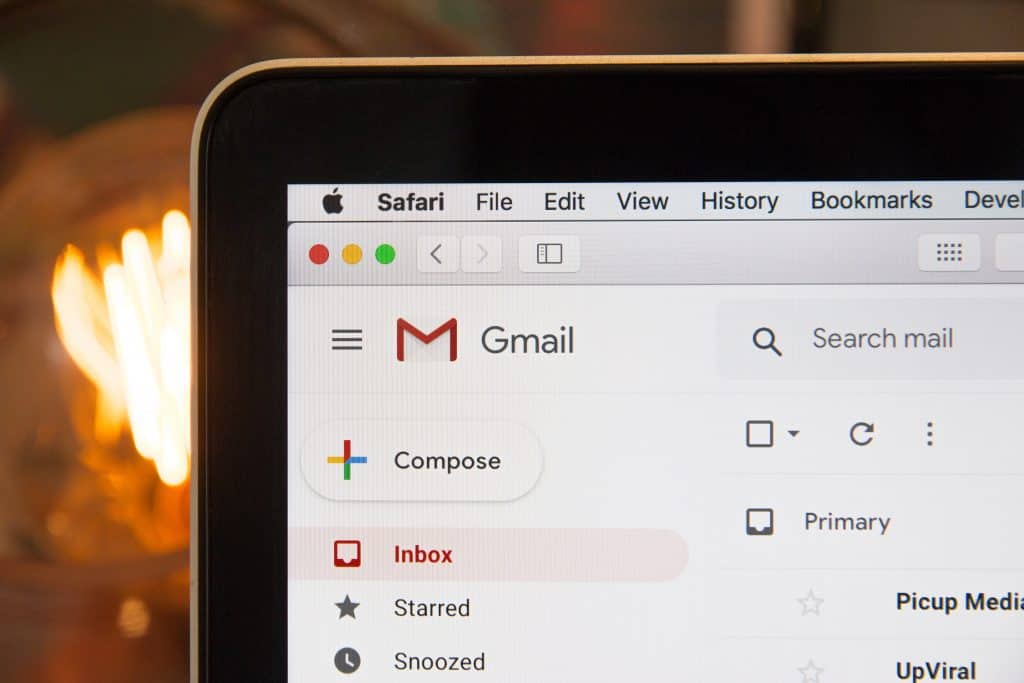
Five Must-Subscribe Newsletters for Your life in Paris and France

A big part of how I keep up with all the latest developments in my adopted country is, of course, living here.  I organize almost a dozen monthly business and social events and am always learning how to integrate more deeply into my life here.  I suspect I’ll always be learning, even as the end of my sixth year in France approaches.

But another part of how I learn about France in general and Paris in particular is through great email newsletters.  Now, I am a person who hits “unsubscribe” pretty regularly, so I’m not idly sending you these recommendations.  These are newsletters I read regularly and tell people about who want consistent sources of valuable information.  I don’t think you’ll be unsubscribing to any of them soon, and like me, you’ll probably tell others about them.

Jean Taquet

I’ve mentioned his name numerous times on this site and he’s permanently featured in my sidebar.  Jean has been a mentor and friend in my immigration journey and I would not be here without him.  But before I ever met him in person I started reading his newsletter about a year after I arrived.  It comes out once a month and is primarily oriented to those who are seeking to immigrate or maintain a life in France, but is also full of insights into how the French think, work, and relax and is almost always headlined by a musical song Jean uses as his muse for that particular issue.  You can find many archives as well as subscribe to the newsletter by going to his website.

Heather Stimmler

Heather runs the very well-known (but now ironically named) Secrets of Paris newsletter.  I say ironically because it’s no secret to those in the know that Heather saves us a lot of time.  She keeps up on the latest cultural news, but also the “oh this just opened” happenings.  A perfect example?  The newly opened “Liberation of Paris” Museum, which she visited, gave useful tips for, and documented for us here.  You can subscribe to her newsletter and get these and other treasures each month.

Adrian Leeds

If Jean Taquet shares some of his personal life, and Heather Stimmler a few more details, Adrian Leeds shares everything with you.  Adrian’s style is not for everyone, but when it comes to property and property trends in Paris, she’s really made a name for herself and has been very helpful in helping me understand leases, rights, and the rental market here in Paris.  I told her the last time we corresponded that the best piece she shared with us last year was a précis of an insightful presentation she was asked to give to the Ministry of Foreign Affairs on the subject of making Americans feel more welcome at the 2024 Olympics.  Adrian has not one, but two newsletters, and you can find them on her home page under “publications.”

Parisian Fields

As someone who will often mention “architecture” as one of the reasons I love living here (something at least partially attributable to studying abroad in Rome as an undergrad), Parisian Fields is an absolute jewel of leisurely long-form writing.  It features photos and commentary from Philippa Campsie, and is a no-holds-barred deep dive into urban design, history, and life here and now in Paris.  Check out this recent article which talks all about the different styles of benches we have in the city and how they evolved in relation to gardens in France.  Or how about this one, which as you can tell by its title, sheds no tears about the loss of the Trocadero Palace many years ago.  She’s only recently back after a hiatus from blogging, so become a (free) subscriber and encourage her to keep at it!

The Local

I saved The Local for last because I thought…doesn’t everyone know about The Local?  They do an excellent job of promoting their pieces through social media, but in case you don’t know, they also have a newsletter.  The Local is all about providing “on the ground” news and information by scanning the French magazines and newspapers and providing what is relevant to English speakers who cannot easily do the same, be it through time or language barriers.  Subscribe to their newsletter here.

Any favorites of yours that should have made this list?  Please share in the comments!

Photo courtesy of Webaroo

TAIP is 100% reader-supported through tipping. If you want to leave us a tip of any amount it would be highly appreciated. These tips help support our efforts to keep TAIP an ad-free environment. Just as at a cafe, the tips are split evenly among the team.

First Visit to Paris: Arc de Triomphe

I sometimes share with people that I moved to Paris on eight total days of evidence: three days in 2009, two days in 2010, and three days in 2012.  It wasn’t until the third trip that I had any truly developed idea of possibly ever living in this city, and was thus, on the previous trips, engaged in the typical “see all the things” behavior of the tourist afraid he/she is never coming back.  But since living here I’ve been asked countless times for my recommendations, not just for monuments and museums, but for restaurants, secret places, coffee shops, etc.  I’ve written down all these places on a list that I would have handed to Stephen back in 2009 with a note at the top which would have read: “I can’t promise you two more visits, but I can promise you that you’ll remember this one a lot more if you slow down.”  In this occasional series I’ll share the places on that list with you.

The Arc de Triomphe

Yes, I know it’s touristy.  But it’s important for so many reasons.  It lies along something called the Axis of History, which runs from the Grande Arche de la Défense, built in 1989 for the bicentennial of the wretched Revolution, all the way to the Arch de la Carrousel, which was also built by Napoleon, but is topped by statuary commemorating the Bourbon Restoration.  This axis, which also runs through the formerly blood-ridden square at Place de la Concorde and ends at the Pyramid in front of the Louvre, encapsulates centuries of French history.  On a clear day, as long as that terrible Ferris wheel is not at the entrance of the Tuileries, you can easily see all the way to the Arc de Triomphe from the Louvre-side entrance to the gardens.

The Arc(h), built to handle the monumental hubris and ego of Napoleon, himself being crowned in one of the reliefs on its front side, was not completed in his lifetime.  Indeed, it was only completed under the reign of Louis Philippe.  Anyone familiar with Napoleon can’t help but smile at the idea of a giant monument to what is arguably the greatest military victory of all time (Austerlitz, in 1805) being completed decades after the “empire” declared by Napoleon was gone and defeated.  Indeed, for a while at least, thanks to the Congress of Vienna and Count Metternich, Europe was as it was, with no marauding French armies bringing “democracy” at the point of a bayonet to all of Europe.

The Arc became a military monument and it now has the Tomb of the Unknown Soldier beneath it.  It is Ground Zero for Armistice Day celebrations, held on November 11th with great pomp and solemnity (arrive early in the morning if you want a seat on the bleachers).  Americans who never experienced Nazi invasion of our land will find it hard to imagine those same Nazis marching around this monument, celebrating the surrender of the city, to the despair of the residents, who did not know when they would have a free city once again.

It’s also a great vantage point to observe Haussmannian architecture and the extent of the bulldozing that had to take place in order to bring about Napoleon III’s vision of Paris.  The twelve roads that terminate in this roundabout of Chevy Chase’s nightmares create a graceful chaos, and will provide you with an opportunity to see one of the rare times that incoming traffic to a roundabout has the right of way.

It’s definitely worth it to pay to go to the top of the Arc, not because it has the best view of Paris (that’s at the top of the Montparnasse Tower) but because there’s a small but helpful museum before you walk up the last few stairs to the terrace that documents the building and history of the Arc.

Practical Information

It’s best seen early in the morning when you can have it to yourself, before all the selfie sticks show up.  You access it by a subterranean tunnel which you’ll find just a few steps forward from the Qatari embassy on the Champs.  If you see a line in that tunnel, it’s to buy tickets to go to the top, so if you don’t intend to do that, just follow alongside the line until it goes towards a ticket booth on the left and you continue on, on their right, and ascend the steps to street level.

It’s just as lovely, graceful, and imposing at night as in the evening, and at 18h30 every evening the flame is rekindled by one of the many Veterans Associations in France, and it’s worth seeing if you’ve never done so.

If you’re staying on the other side of the city, but near an RER A stop, you can turbo boost your way to the Etoile stop in roughly 5-10 minutes using it instead of Line 1.  Same cost, different method.

What are your favorite things about this monument?  Share in the comments.

Image by Anton Lovász from Pixabay

TAIP is 100% reader-supported through tipping. If you want to leave us a tip of any amount it would be highly appreciated. These tips help support our efforts to keep TAIP an ad-free environment. Just as at a cafe, the tips are split evenly among the team.

Notre Drame: the Fire

I was in a train back into Paris from Frankfurt when the news started to trickle in about our disaster here in Paris.  We’ve had various shocks during the time I’ve lived here, whether it was terrorist attacks in years past or yellow-vested “protestors” in more recent months, but this was of another kind entirely.

Friends who were there as it burned told me they stood in a sea of dismayed silence.  What could lay bare the thoughts of so many hearts at that moment?  The President referred to the idea that part of “us” had burned that night.

There’s been plenty of ink spilled on what should be done with the now more than € 1B pledged for Notre Dame, the symbolism of such an overtly Catholic building being destroyed in what is purportedly a secular country, and the growing suspicions regarding the origins of the fire.  But I’ll leave those matters to those with more breath than I have at the moment.

For me, more than anything, this was a lesson in losing the things you take for granted.  Just two weeks earlier, I took a friend inside to explain the genius of gothic engineering and architecture and to bask in the stunning beauty of those (still intact) rose windows.  I felt what I’d always felt since I first stepped foot inside the church in 2009: I’ll always have you.  But that’s not true.  We are not promised tomorrow.  Even centuries-old buildings made of stone are not promised tomorrow.

When you have an opportunity, take it.  If there’s a place in your locality that you’ve been meaning to see, go.  You have no guarantee that it will be there for you, or that you will have the health to see it in the future.  If you do take these opportunities, you’ll create lasting memories which thieves cannot steal, moths cannot eat, and fire cannot burn.

Part of the title for this article was lifted from a headline on one of the Paris newspapers the next day: indeed it was just as much “our drama” as “Our Lady.”

I took the photo in November 2015, on one of those nights when the light, the sky, and the night were perfect.

This story was also published on Medium.

TAIP is 100% reader-supported through tipping. If you want to leave us a tip of any amount it would be highly appreciated. These tips help support our efforts to keep TAIP an ad-free environment. Just as at a cafe, the tips are split evenly among the team.