Air France’s Cabin Bag Allowance and CDG Airport

For those who may not know, Delta Airlines, an American carrier, is in an alliance with Air France. That means that when you book a ticket from the US to France, regardless of whose website you end up using to book the ticket, you may end up on a Delta flight instead of an Air France one and vice versa. This can sometimes be known ahead of time (for example, flights out of Atlanta tend to be Delta flights but flights out of JFK tend to be Air France ones), but even then the airlines always reserve the right to change, even as you’re at the airport checking in. Usually the only main difference you’ll find is that of service (I prefer Air France’s in-air service). But a big difference you will face, and the focus of this short article, is the strict enforcement of the limitation on 12kg (26.4 pounds) of cabin luggage by Air France at Charles de Gaulle Airport.

I’ve had occasion in the last year or so to fly Air France in and out of JFK Airport more than once and the Air France team there does not check your cabin bags at all. The first time I experienced the strictness of Air France out of Paris, I was maybe about 2-3 kg over. At the time I was flying, I had already paid for a second checked bag so the policy that could have been enforced at that time was a third bag, at 240 euros. I managed to find a sympathetic Air France employee, who somehow managed to let me check those extra 2-3 kilos at no charge.

That incident actually informed the most recent trip and flying out of New York, loaded with gifts for friends, I left room in my checked luggage such that if I was stopped at the counter, I could simply transfer the extra weight to the checked bags. No such check occurred, and I’ll be honest, I managed to completely forget about this policy for a flight from CDG to JFK. I only realized this when I was in line and checking my luggage.

I managed to check my bags using the automated kiosk and proceeded to the gate where there was a team of people weighing luggage, EasyJet style. “Oh no,” I thought. “I forgot about this.” They duly weighed my luggage, acted shocked, and told me to go back.

I went back to the desk and pleaded my case. She then sent me to a line of people, who like me, had not banked on this policy. When it was my turn, I remembered the importance of staying calm and polite, not just in general, but particularly with the French:

  • I noted that originally my flight was a Delta flight and that Delta doesn’t have these policies. She countered that I could have changed to another Delta flight but I reminded her that the change was made automatically, without my consent, and I can’t possibly keep up with all the changes, which might even happen while we are in the airport. This didn’t go anywhere.
  • I pointed out that no one with Air France in New York made such a big deal, and that I had flown to France from JFK twice in the last year with the same experience. “They are not doing their job,” she pouted.
  • I appealed to the fact that sometimes cabin bags are offered a complimentary check-in when the flight is crowded, so this isn’t a red line. “Yes, but this flight is not crowded, so we don’t need to do that here.”

I think had it only been 70 or even 150 euros for a third bag, I would have just paid then, but I had chosen to fly with Delta because I had managed to get status with them in the last year which allowed me two free checked bags with a regular fare. A third bag was 240 euros. I remonstrated with her that this was a lot of money. She was unmoved.

I then went back to the entrance to the boarding gates, wondering if I could stop someone and say, “Hey could you hold this for me for 30 seconds while we walk towards the customs booths and then hand it back to me,” but quickly realized how silly that sounded. I went back through and played dumb with the people weighing the luggage but they would have none of it. I got sent back to the check-in desk.

I was back in line, this time with someone different who had just been yelled at by an angry German lady. I restated some of the elements of my case above, but I already had my wallet out. The man was quite gruff until he rung up the bill and his eyebrows shot up at the 240 euros. “Ah, yes, sir, I agree with you on this.” But his agreement didn’t come with a discount, so I paid up, and walked past the people who had stopped me twice, ten kilos lighter for my visit to the US.

Moral of the story: If you are flying Air France in economy out of CDG you will be strictly held to the 12kg cabin bag allowance. This can be spread out across two or even three bags, but they must weigh 12kg or less in total. Let my mistake be your savings. 🙂

Photo by Adam Khan on Unsplash

Did you enjoy this article? TAIP is 100% reader-supported through tipping. If you want to leave us a tip of any amount it would be highly appreciated. These tips help support our efforts to keep TAIP an ad-free environment. Just as at a cafe, the tips are split evenly among the team.

french outdoor market

Living in France on a Budget

Note from the editor: Writer Susan Jordan is an American who has been living on her own in Europe since she left the US in 2012. She has lived in France since 2019 and is currently working on her 10-year card application. As a lawyer in the US, she was accustomed to dealing with government bureaucracies and paperwork, but getting accurate information in a foreign country can be overwhelming. She has survived so far and now shares her knowledge with the hopes of helping others. — MS

Where to Live

Americans moving to France, if they are in a position to pay cash, ideally should buy a home here. Since that is not an option for me, I have lived in four French rental apartments in four different departments. I’ve heard that buying a home is much easier than renting, which would not be surprising given my experience.

As a “candidate” for an apartment, one must submit a dossier before viewing a potential rental. This will usually include a document showing monthly income paid in France, three utility bills for the past three months showing a French address, tax returns, an employment contract, and identification (a passport will do). A family guarantor (and resident of France) would be helpful. Sometimes commercial guarantors are acceptable. Of course, buying a home requires substantial paperwork, too, but if you are a cash buyer with sufficient proof of income, the path to moving in should be easier. 

How to Get Around

If you are comfortable with public transportation, living without a car in France is possible. Choosing a city with tram systems is best as many areas of France are quite car-dependent. Bus lines vary a great deal in scope and reliability depending on the commercial operator. French trains have increased their fares since the pandemic and service on some lines has even been dropped. For that reason, I like ride-sharing, otherwise known as covoiturage. 

For intercity travel, blablacar works well if you are selective about the drivers you choose, following reviews and ratings carefully. Flexibility in terms of travel dates and destinations also is helpful when using blablacar. I have known some French people who simply rent a vehicle when they need to travel as a family. This eliminates some bureaucracy involved with car ownership, insurance coverage, as well as the necessity of finding parking near one’s home. Why pay to maintain a deteriorating asset like a car when it can be rented as needed? 

What to Eat and Drink

Food and drink are often less expensive and of higher quality than what is available at the typical US supermarket. Even villages in France have weekly or bi-weekly marchés offering fresh fruit and vegetables in the center of town. Large chain supermarkets like Lidl, Aldi, Leclerc, and Intermarche are usually located on the outer rims of cities, requiring a bus for access. Lidl and Aldi are the best bets for low-priced but generally good-quality products. Sometimes small appliances and clothing can be found at Lidl and Aldi if you don’t mind some searching. 

How and Where to Shop

For furniture and other items for the home, Ikea and other home decor stores can be found on the outskirts of most cities. Brocantes (secondhand shops) and some marchés have less expensive secondhand furniture, with more style options and better quality. Or, if your French is sufficient, you can deal with individuals selling on sites like leboncoin.com but be careful that whatever you buy is actually functional. I prefer payment on delivery rather than ahead of delivery, which can be risky. 

This brings me to one basic French shop with which I have had good consumer experiences. Monoprix has frequent sales beyond the normal  January and June sales and, for my money, the best customer service.  Returning products is just not a common function of most French stores. However, if you show a sales slip (and one time it worked for me without one),  Monoprix will give a cash return within 30 days. Leclerc may give store credit within two weeks with a receipt but this is not a consistent practice across all Leclerc stores. They operate individually, despite the common ownership, so items must be returned only to the store where purchased. The concept of easy cash returns, so familiar to American consumers, has not crossed the Atlantic! 

Living in France on Minimum Wage

Although it’s no doubt more fun and less stressful to live in France with loads of disposable income, it is possible to live on SMIC (salaire minimum de croissance). At the time of writing, SMIC is 1500 euros per month, subject to change when the French budget is passed. If you are of a certain age, discounts can be found for train travel (30%) but not the cinema, oddly. If you have a carte vitale and are lucky enough to not live in a medical desert (at present, unfortunately, I do), most medical costs are covered, except dental and vision.

I am always looking for inexpensive solutions for day-to-day living in France. I will pass on tips as I find them, though that can be as quixotic as an untrained pig hunting for truffles. 

Photo by Jade Marchand on Unsplash

Did you enjoy this article? TAIP is 100% reader-supported through tipping. If you want to leave us a tip of any amount it would be highly appreciated. These tips help support our efforts to keep TAIP an ad-free environment. Just as at a cafe, the tips are split evenly among the team.

a dining table with glasses and plates

Navigating a Parisian Dinner Invitation

Note from the editor: Parisian for more than a decade, ex-chef turned food tour guide Chef Tris shares his passion for French food and life in Paris on his blog Eat Like the French. Tris has recently joined the TAIP team with the hope of guiding us through the culinary minefields of Paris to ensure you always eat like a local in France. — MS

“I’m never inviting young Americans to my house ever again,” said my wife, her voice tinged with exasperation, as our two new American friends left our Parisian flat. The evening, which began with excitement over a Dungeons and Dragons game, had devolved into a lesson in cultural missteps. This stark declaration was a wake-up call — a reminder that French dining etiquette is an art form, one that demands respect and understanding. I love sharing my passion for French food and the art de la table, and was delighted to write a blog post for TAIP to act as your guide to navigating a Parisian dinner invitation with grace and charm.

The Invitation

It is rare to be invited to a Parisian’s flat for dinner. Some think it’s due to the size of the apartments, while others claim it’s because Parisians much prefer to eat in the plethora of restaurants and bars that the city has to offer. If you’re lucky enough to receive an invitation to a Parisian’s home, the first rule is to RSVP promptly. A swift response shows respect for your host’s planning and reflects your appreciation for the invite.

Punctuality in Paris isn’t the same as in the US. Aim to arrive 10 to 20 minutes after the appointed time — this is known as the petit quart d’heure de politesse, a little buffer to allow your host those final moments of preparation.

Prepping for the Visit

Choosing the right outfit is crucial. Parisians have an innate sense of style — think smart-casual but with a touch of chic. And don’t forget a gift! While flowers are lovely, wine or beer is the norm. If wine seems daunting, especially in a country where it’s an art form, visit an independent caviste. Tell them your budget and trust their expertise to select a bottle that will impress. Champagne is always a hit if you’re unsure, although we prefer pĂ©t-nat or crĂ©mant for more bang for your buck. Rely on the expertise of your caviste; they all speak English and will offer excellent and honest advice. If children are present, bring something delightful for them — sweets or chocolates, or a unique treat from your home country. My daughter was over the moon with a box of Fruit Loops, a sugary cereal delight from America that struck fear into my wife’s heart.

Whatever you bring will be opened and eaten in front of you because the French think that’s the polite way to do it.

The Arrival

Walking into a Parisian home is an exercise in social grace. The moment you cross the threshold, greet everyone with a warm “bonsoir” and the customary bise — two cheek kisses. This isn’t just a formality; it’s a way to break the ice and show respect. Your host will likely take your coat and offer you a drink. Engage in small talk, and make it a point to remember names. An easy icebreaker is to ask, “How do you know our host?” Avoid the banality of questions about work, as the French work to live, not the other way around.

Dining Etiquette

Dinner in Paris is a dance of manners and tradition. Your host will indicate where to sit, so wait for their cue. Keep your hands visible on the table, but never your elbows. When it comes to serving yourself, take modest portions. It’s polite to leave a bit on the serving plate in front of you, signaling that you’re satisfied but respectful of the host’s effort.

The table may be set with many glasses and different types of cutlery; do not be scared to ask questions if you do not know. My wife’s eyebrows hit the ceiling on seeing one of our guests pour wine into a water glass. What ensued was a long conversation about the glassware and which you should use for what.

Do not be scared to ask questions. If there is one thing every French person I know loves to talk about, it is the food and the traditions around it. Teaching you how to act at a dinner table is something they love, and they will always be happy to educate you.

The highlight of the meal is often the cheese course. In France, cheese isn’t just food; it’s a cultural icon. Treat it with reverence. Take small portions from the cheese board onto your plate using the cheese knife provided, and then put more cheese onto a tiny piece of bread so that the bread acts as a vessel for the cheese, not the other way around.

Never mix different types of drinks in the same glass, especially not wine. If in doubt, don’t hesitate to ask your host for guidance.

The Conversation

Parisians value authenticity and depth in conversation. Be prepared for directness. Parisians will always avoid superficial topics and will always tell you what they are thinking. Engage genuinely, listen attentively, and don’t shy away from intellectual discussions. They can spot insincerity from a mile away, so it’s best to be yourself.

The Departure

When the evening winds down, thank your host sincerely. While a Parisian will never request for you to leave, and an evening at a Parisian’s house may last into the early hours, pay attention to the stifled yawn or the question of how you are planning to get home. The metro rules the transport roof in Paris, so if in doubt, explain you must get the last metro home and ask for advice on how to get there. Before you leave, offer to clean the table or carry a few dishes to the kitchen. A follow-up message the next day expressing your gratitude will leave a lasting positive impression.

Being invited to a Parisian home is more than a social event — it’s an immersion into French culture. With these tips, you can navigate the evening with confidence, leaving your hosts impressed by your respect and understanding of their customs.

Photo by Nils Stahl on Unsplash

Did you enjoy this article? TAIP is 100% reader-supported through tipping. If you want to leave us a tip of any amount it would be highly appreciated. These tips help support our efforts to keep TAIP an ad-free environment. Just as at a cafe, the tips are split evenly among the team.

Using Cookies to Learn More About the French

“If you give a mouse a cookie, he is going to ask you for a glass of milk.” Thus starts the children’s story, If You Give a Mouse a Cookie, by Laura Numeroff, a story I have read dozens, if not hundreds of times, to my three kids. Without fail they would laugh at the snowball effect of offering a cookie to this somehow adorable rodent. While I have my doubts about the plausibility of a mouse asking for a glass of milk, the concept of the story inspired this post on what can happen if you offer a French person a cookie.

The French are often unjustly characterized as a cold, unkind, and unwelcoming people (check out Molli’s personal experience that dispels this misconception). The French are reserved, but they are not unfriendly. Many are slow to warm up, but that does not mean they do not want to get to know you. My personal experience is that the French are incredibly loyal in their friendships. And while it can take time to move past the acquaintance stage into the depths of friendship, I have found that friendships here are true and long lasting.

When I moved back to France six years ago, I knew no one in the area. Thankfully, I quickly started meeting other parents as I took my kids to and from school on a daily basis. I wrestled with how to break past the cordial, “bonjour” (hello) and “bonne journée” (have a nice day) cordialities. When you are new to an area, it can feel quite isolating, intimidating, and overwhelming. There’s the real excitement of the new and exotic nature of settling into a foreign culture, but there are also many challenges; one of the greatest being the lack of close relationships with people. I did not set out to replicate the model from If You Give a Mouse a Cookie, but one day when baking cookies, I wondered with whom I could share my latest batch of American deliciousness.

I walked a couple hundred meters down to our village’s mairie (town hall) at goûter time (afternoon snack), warm and melty chocolate chip cookies in hand. I knocked on the administrative assistant’s office door and when I entered, she had a perplexed look on her face. I could see the wheels were turning as this was an impromptu visit. I quickly explained the reason for my arrival, that I had just baked some cookies and that I wanted to share a couple with her and the mayor, if he happened to be in his office.

If You Give a French Person a Cookie, He Will Likely Be Confused at First

She looked at me a bit suspiciously, maybe thinking that I had some ulterior motive for bringing baked goods. However, when it became clear that I was not there to ask for a favor, or anything else for that matter, her stoic look turned into a slightly disbelieving smile. Her smile turned to delightful groans as she took her first few bites. This was the first of many short walks for cookie deliveries to the mairie. The time spent in the office was always short, out of respect for the large amount of work that she and the mayor had on their plates. Each subsequent visit was met with, dare I say, a look of excitement knowing that I never came empty-handed.

My experience at the town hall spurred me on to share my cookies with parents I had met at my kids’ schools, with neighbors, with pretty much anyone I associated with, even my pizzaiolo. Unless you are invited into someone’s home, it is not normative in France to give anything, let alone cookies, to someone you barely know. Just as the administrative assistant from the mairie was confused at first, so others were surprised by such a simple gesture. For me, it was a small way of sharing a part of my passport culture with people I hoped to get to know better. Smiles, while they were a bit hesitant at first, quickly replaced the confused looks, especially upon tasting my authentically made American cookies.

If You Give a French Person a Cookie, He May Just Reciprocate

Shortly after buying our house, I wanted to get to know my new neighbors. As you likely guessed, based on the topic of this post, my first thought was to bring a plate of cookies to each of them. Upon offering my deliciously moist and warm cookies, two neighbors immediately invited me into their home, while the other graciously thanked me at his gate.

My 80-year-old widowed neighbor took it a step further. Within a few days, she was ringing our doorbell, with a plate full of warm crêpes in her hands. She wanted to reciprocate my gesture by offering us a treat for which she was well-known. Ever since this initial exchange, we have regularly shared our favorite desserts. Sometimes, we take time to eat them together, and when we do so, we often spend an hour or two around the table. I delight in listening to her share parts of the love story she lived with her late husband, or how her grandchildren are doing. She often asks questions about why I chose to move my family to France and how my kids are enjoying life here, as well as how they are doing in school and in their extracurricular activities. Other times we share our baking “secrets” that we have learned over the years. I am grateful that my first step toward my neighbor paved a way for a relationship filled with sweets and sweet discussion.

If You Give a French Person a Cookie, He May Ask You to Teach Him How to Make Them

Sharing cookies, of course, is far from the only way to break the ice with the French, but I have found it to be a simple and personal way to go about it. On multiple occasions, I have even been asked if I would not only share my recipe, but if I have the time to demonstrate how to make what many say are the best cookies they have ever tasted.

If you live in France, you have likely heard “je n’oserai pas” (I wouldn’t dare) or “je ne veux pas imposer” (I don’t want to be a bother). Privacy and courtesy are high cultural values here. So, while it may seem like a small thing to ask for a cookie making demonstration, to me such a request is huge honor and opportunity, knowing that most people here are typically very reserved and discreet.

I have gladly welcomed a number French families into my kitchen who wanted to learn the basics of cookie baking. Last year, I coached my daughter’s basketball team and invited the team over for a cookie baking day. Many of my players seemed hesitant at first, thinking that there is some great savoir-faire (know-how) needed, but they were surprised at the simplicity of the task. I have found that each moment shared in the kitchen while baking has led to guards being let down and relationships growing deeper.

If You Give a French Person a Cookie, He May Ask for More

The local basketball club where my kids play, and where I coach, organizes meals from time to time for its members to share time together off the court. I brought cookies to the very first meal we attended. After recovering my empty cookie tin, I was jokingly told to not bother showing up to future meals should I come without several batches of cookies. During the most recent meal that we shared, the cookies I had brought had somehow disappeared before it was time for the plat principal (main dish). Some of our young players had seen the plate of cookies and decided that they were for the apéritif (appetizer) rather than for dessert.

I am not saying that everyone seeking to break the ice with the French should start baking cookies, but if you like to bake it is certainly worth a try to share your latest batch with someone. For me it was a natural part of my life to share, and it has been incredibly well received. I am grateful for the doors that have opened because of such a simple gesture.

I was talking with one my French friends about this post and this is what he said:

“Les français aiment les bonnes choses et aiment partager. Ils aiment vivre des moments ensembles, coniviaux. Bonne bouffe. Bon vin.” The French love good things and they love to share. They enjoy quality time together. Good food. Good wine.

It was a simple, yet profound, take on some of the most basic French cultural values: quality time, quality food, and thoughtfulness. If you are looking to make friends here in France, you may finding find it just takes a little intentionality by engaging people through the lens of these three priorities.

I hope these few anecdotes encourage you as you move toward the French. Starting over in a new country is not easy, but sometimes we make it out to be a whole lot more complicated than it needs to be. There is no formula to relationship building in any culture, but when we bring something of worth (even small) to those around us, we will often be welcomed with open arms. At first, we may receive quizzical and distrusting looks, but don’t forget; if you give a French person a cookie, you might just make a friend.

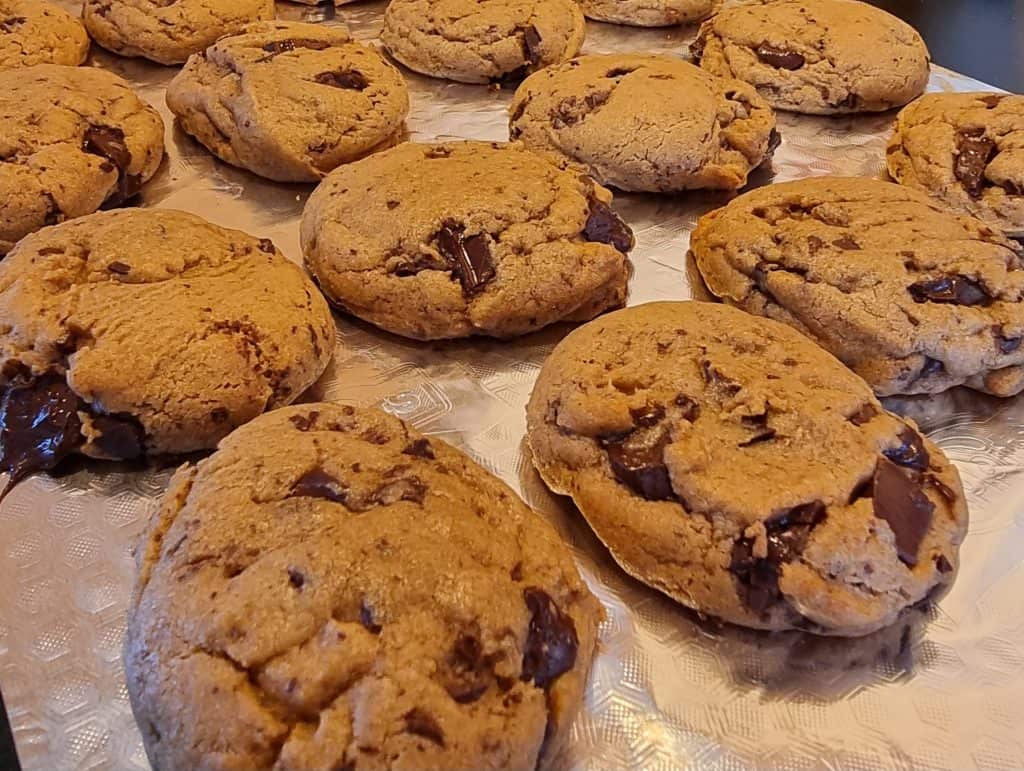
Photo is of one of the more recent batches of these cookies.

Did you enjoy this article? TAIP is 100% reader-supported through tipping. If you want to leave us a tip of any amount it would be highly appreciated.  These tips help support our efforts to keep TAIP an ad-free environment. Just like at a cafe, the tips are split evenly among the team.

Mailbag: Home Improvement, Crooks, and Real Estate Lawsuits in France

It’s been a couple of years since I’ve done a Mailbag article. Because so many questions are answered in the comments section of articles or in our Facebook group, I have less and less of a need to do one, but every now and then, I get an email that will be instructive for the general public. This one came earlier this year. The names have been changed and some edits have been made for grammatical consistency.

***

Dear Stephen

You probably don’t remember me but a few years ago you helped connect me with someone to help me with financial matters and I appreciated that. Now I have a new even bigger issue that I don’t think will be as easily solved, however. How do I handle a crook contractor who took my money and never finished the house?

I am an American and have been living in Montpellier since 2008. In 2019, I thought I knew the French system enough to build my own house. Wanting to be careful, I bought a plot with a home on it from a real state agency, Malhonnete Immobilier. The project was already underway (the builder and permits were ready) but the previous buyer had given up because they didn’t get a mortgage.

I bought the plot, but when it came time to sign the building contract, I got a little suspicious because the contractor didn’t have an obvious track record. This is when the immobilier’s general manager took me to see his own house that the same contractor was working on. He assured me that the guy was good and should finish my house in no time.

Well, I signed for the house and even added a pool to the plans. But work started and never finished.

For the past two years I’ve tried to negotiate with the contractor as everyone was saying that it was unlikely that I could get anything done by legal means. I refused to listen and hired lawyers who took my money and promised to get the contractor to finish the work. Two years on, the lawyer suddenly told me that it is a dead end!

In fact, six months ago, I had found out that the contractor had changed the name of his company and modified the registration number for business purposes, going from general constructions/menuiserie to just menuiserie. He had transferred everything from his old company (Menteur Construction) to a new one (Menuiserie 42) he had established a few years back.

I was the one to inform the lawyer and the Court d’Appel that was in process of checking the “Expertise” what has been done and not done. However, the contractor is still operating in the same office, with the same phone number, same email, and same team, doing the same type of work. He still drives expensive cars and has multiple houses. But apparently I only have to wait for the Juge de liquidation to find the money which I am told offers little chance of me getting anything.

The contractor (M. Voleur) when he responds to me, blames the real state agency manager (M. Escroc). Apparently they had a falling out and the agency stopped referring and giving him work, thus he had to close the old company.

I am broke because I have to pay my mortgages, the lawyers, the court, as well as fix the house in order to be able to live in it.

I am desperate. I trusted the French system and I still don’t understand how I have to be one to pay for the contractor’s mismanagement.

At this point, I will welcome any ideas or help! Do you know any good lawyers who can help?

Thank you
Sally

***

Dear Sally

I’m terribly sorry to hear about this. If I had not recently read L’Appart, by David Lebovitz, written in 2017 to chronicle the absolutely money-draining remodeling project of his apartment in Paris, I would not really have anything to say to you. But, after having read the more than 300 pages of that book, and knowing what he went through, here are some disheartening things you have to understand:

  • the law in France is not the same as the law in Anglo-Saxon countries
  • the laws in France are biased against the owners of the property
  • the people involved in homes, from the agents to contractors, are known by French society to be generally crooked and untrustworthy
  • you’ve learned the hard and expensive way that the legal route on these matters in France is expensive and in the end, gets you nowhere

My advice would be to cut your losses and figure out another path forward. You need to mentally divorce yourself from the idea that this will be resolved financially, legally, or even morally.

It’s tough to hear, I’m sure, but simply from reading David Lebovitz’s account and reading your details, I can’t think of another conclusion. I do think that the fact that you “refused to listen” to people and hired lawyers instead was your fatal, and very American, way of thinking.

We are not in America, anymore. The fact that after all this experience you end your letter by asking “if I know a good lawyer” makes me wonder…have you even learned from this experience, because you seem to keep going back, thinking you will get a different solution, when the answers are right in your face: the legal route in France regarding home contractors is a dead end!

***

Jean Taquet often features stories like this in his newsletter to give a broader perspective and after CCing him on my response to her, he CCed me on his own response.

Dear Sally

I want to make several small comments before I get to the legal issue which in France is totally different from the USA.

The worst horror stories I know about regarding contractors, real estate agents, and so on happened in the USA. I am not saying that everything regarding this matter is worse in the USA.

All I am saying is that at my level as a professional-helping-foreigners in France, I have dealt with plenty of awful situations happening in France, and I am aware of similar situations that exist in the USA.

It is absolutely true that the professional ethic benchmark for real-estate agents holding a license is much lower in France than in the USA. The good news is that there are more and more French laws being passed to limit the amount of lying they can do without legal or professional consequences. This said, this applies more to apartment transactions and less to the houses in the countryside.

I was about to buy a house in Burgundy when I discovered in studying the title that half of it was storage space, and a pottery shop which had been totally made over into a living room, bedroom, and so on without a building permit and neither the seller nor the real estate agent ever said a thing about it. And we were accused of bad faith when we walked out of the deal because this was not, in his words, a “big deal”!

Now the legal issue.

In the USA, when there is a liability issue with a professional the plaintiff just needs to prove the existence of damage and to hint that the professional is responsible to put the burden of proof on the professional. This means that the professional has to work hard to get out of this liability.

In France, the system is totally opposite. You as the victim and therefore the plaintiff have to prove “la faute civile” which is defined this way:

1 – prouver l’existence du dommage
2 – prouver l’existence de la faute dommageable
3 – prouver le lien de causalitĂ©

This translates to:
1 – proving the existence of a damage i.e., a financial loss
2 – proving the specific wrongdoing that caused the loss
3 – proving the direct and therefore the unique link between the damage and the wrongdoing

In short you cannot just go to court and state that:

  • these are all the awful things that have happened to me because of the work done on my property and
  • this is the company that is doing the work

What you were hoping for is that the court would sentence them and order damages to be paid to you.

This is the American way not the French one.

This is the extent of what I can help you with. I just thought that explaining this might help you better understand what you are going through.

Kindly
Jean

***

It goes without saying that laws around real estate are wildly different in many countries. For example, in Thailand, a foreigner cannot even own property. I hope this Mailbag entry properly cautions Americans and others who have a false perception of how real estate works in France. You’re not in Kansas anymore.

Did you enjoy this article? TAIP is 100% reader-supported through tipping. If you want to leave us a tip of any amount it would be highly appreciated. These tips help support our efforts to keep TAIP an ad-free environment. Just as at a cafe, the tips are split evenly among the team.

French Customer Service

Another Take on “French for ‘Customer Service'”

Unlike Stephen’s article on French customer service, my experiences have not been nearly as rosy. It’s interesting that one or two specific events can stick out in our minds as indicative of an entire system. There are enough tales and tropes about French waiters and service in restaurants that I’m not going to address that genre of customer service here. Rather, I thought it’d be helpful to share some of my experiences of French customer service via the telephone, as I’ve had the joy of sorting through various appointments, banking mishaps, and healthcare struggles.

Be Prepared

One of my most memorable customer service experiences was with assurance maladie. I’d called to check on the status of my carte vitale – my application had already been rejected twice for reasons unclear, and I wanted to confirm that it was finally being processed.

In order to verify my identity, they asked for the last four digits of my IBAN. This is not something I have as a handy PDF on my computer, and it took me a while to access my account. While I explained to the woman that I was in the process of finding the number, she coldly told me that she would hang up if I had to keep looking. I managed to keep her on the line, and we worked through my request despite her hostility. Clearly in France, it’s the agent not the customer who’s always right.

Practice Patience

The answer to many of my customer service questions has simply been to wait. After months of waiting, I’ve called assurance maladie about the status of my CSS only to receive an update in the mail later that week. Generally speaking, it takes several months for the French government to do anything.

At the same time, follow up on important appointments. At my visa appointment in October, I was told I’d be convoked to sign a contrat d’integration and never received that notice. When I was emailed about my titre de séjour being ready (in March) I mentioned this, and was immediately emailed a convocation. Although this all seems like it should be automated, my sense was that if I hadn’t said anything, I never would’ve received a summons, and I would have been French toast at my next visa appointment.

Your French Will Never Be Good Enough

At one point I asked my partner to call the office of immigration for me, and he succeeded in having a conversation (what a concept) with a secretary who had previously told me to send an email, then repeated this as the answer to every question I asked. She understood my French, and I was being polite, but somehow a native speaker got further. Or maybe Fred is just more charming than I am.

Pick up the Phone (Or Your Pen)

As I will mention in an upcoming post about the DELF B2, in my four years since arriving in France, I’ve sent more official mail than in my entire American life. The technology of virtual chatting or even filling out customer service forms is still being implemented in France. In general, the easiest way to get an answer is to call. Even with my fluent French, this usually means explaining myself multiple times and hacking my way to an answer. Often, this also means sending a letter –– it took six months of calls until I sent a letter to my phone company demanding they change the address on my bill. (An address change which I needed as proof of residence for my visa). And I’ve even had to send letters to get concert tickets refunded.

My advice when it comes to French customer service is also useful advice for the world at large: be polite, prepared, and persistent. It may take that (and more) to get what you want.

Photo by Icons8 Team on Unsplash

Did you enjoy this article?  TAIP is 100% reader-supported through tipping.  If you want to leave us a tip of any amount it would be highly appreciated.  These tips help support our efforts to keep TAIP an ad-free environment.  Just like at a cafe, the tips are split evenly among the team. 

Why So Serious: French Advertising

More and more American audiences are getting used to something that has happened in French movie theaters for some years now: advertising that has nothing to do with movies, but is cinematic (and often quite serious) in scope.  The challenge is that it’s hard not to laugh at any of these pleas for you to buy stuff.  Sometimes it’s just so over the top.  As I’m often the only one laughing when this stuff comes on I try to laugh quietly so as not to be the obvious American who finds it ridiculous.  Take, for example this ad for Dior Sauvage starring Johnny Depp, which plays on all the mysterious and bad-boy tropes that the French love.

Depp manages to be Captain Jack Sparrow while fearing and loathing Las Vegas.  Oh, yes, and I’m supposed to want Dior after all this dark mystery.  Is this aimed at me or the ladies?

But, Dior has a diverse portfolio, and for the vampire types who like Led Zeppelin, you can watch Robert Pattinson.

Dior is playing the “get the girl” card that you normally associate with these male cologne ads.  Along with this, it’s now the mode to use English in your ads.  Witness this hilarity in which an advertisement designed for the French marketplace ends with a subtitle for the English catchphrase at the end of it.

Diesel ups the “get the girl” ante with Thor’s brother, Chris Hemsworth, in this ad.

Yes, buying cologne is now an act of bravery.

I understand I’ve only been focusing on the obvious (yes, Stephen we get that the French are into their cologne). But, coffee is also a pretty serious thing in La France.  When I was first in France the famous (now long past) campaign of George Clooney for Nespresso was part of my introductory French language class, as it featured some simple subtitled text for us to translate and practice. I found the campaign to be funny, intelligent, and perfect for Nespresso. Unlike the other commercials I’ve shown so far, the series that Clooney did was all about poking fun at himself — he always thinks the women know who he is (and desperately want him), but they are always interested solely in the coffee.  For the record, this is my favorite one.

This campaign introduced an expression that’s part of pop vernacular now. Clooney says, “What else?” and in French this translates to “Quoi d’autre?” You can use this expression in situations and almost everyone knows what you are alluding to (the expression, as its equivalent in English, obviously stands alone apart from this ad, but the intelligence of the writers was in co-opting it).

The French take their advertising seriously. So, promise me not to laugh too hard when you watch it with them. 🙂

This story also appeared on Medium.

Photo by Alexis Fauvet on Unsplash

Did you enjoy this article? TAIP is 100% reader-supported through tipping. If you want to leave us a tip of any amount it would be highly appreciated. These tips help support our efforts to keep TAIP an ad-free environment. Just as at a cafe, the tips are split evenly among the team.
French for “Customer Service”

“It’s not my problem”

— accompanied by a shrug, said by almost every French person ever to a customer in need of help.

The quote above is a caricature, surely, but my French friends will admit it’s pretty close to the truth.  It’s my third year here in Paris, and when your expectations are so very low, when you get surprised, you want to share it.  So, here are two such stories.

Groupama

Groupama provides my renter’s insurance, something that is helpful in itself, but is also a requirement of most of my visa visits, including my recent one to move away from visitor status to a path to citizenship.

However, they, like many French insurers, make it impossible to cancel a policy online.  You have to go in person and provide a signed état de lieu as proof you have moved out.  Your word is not enough (same thing happens at the bank when you try to change your address).  Do you have proof?

In any event I had moved out of this place roughly 6 months before I managed to get to my insurer.  I took the blame, as other things always seemed to take priority.  Not only was the cancellation smooth, only taking a few minutes, but the agent marked the cancellation to the end of the lease, and credited my account with 6 months of premiums!

As the French write: “Waoh!

Decathlon

The next mission was already impossible in my mind before I attempted it, but in the spirit of “try everything once” I took back two inflatable mattresses to Decathlon.  I had purchased the first one for guests who might stay at my apartment and it worked fine for months.  Until it started to slowly deflate.  I spent some time trying to find the slow leak so I could patch it, but no dice.  It was only 15 € and I hadn’t kept the receipt.  I bought another.  This one started deflating almost immediately.

I called it a day on the inflatable mattress plan and bought a Japanese-style fold-out bed at Castorama.  No deflation possible!  But I still had two non-functional inflatable mattresses.

I suggested to a couple of French friends that I would try to return the beds without a receipt (I had idiotically not kept the second one, either).  They laughed derisively.

“I’ll just play the dumb American,” I said.  “Plus, I’m willing to accept store credit.”  Turns out I didn’t have to.

I arrived at the enormous subterranean Decathlon near the Madeleine (Americans, think Dick’s Sporting Goods or Sports Chalet) and got into the returns line.  When it got to be my turn I explained that I didn’t want an exchange, but that I wanted to return these mattresses for store credit.  The young girl called a colleague over, who then walked with me to the camping department, where the inflatable mattresses lived, in order to observe the malfunction.  And to my dismay, the same thing happened as whenever I brought an Apple device to an Apple store for troubleshooting: nothing.  I almost wonder if the Apple Store is a stern father figure for my Apple devices and they suddenly “behave” when they are at home.

I watched, bemused, as the inflated mattress which had deflated over and over in my home held the air intact.  We even tried sitting on it to force the leak.  Not a peep.  Resolute as Churchill on the beaches.

The kid read my incredulous expression.  “Don’t worry,” he said in French.  He walked me to the counter, got me a gift card for the value of both mattresses, and as I walked out of the store and held the gift card in my hand, contemplating the imposing facade of the Madeleine, I smiled.

Maybe there is a French word for “customer service” after all.

P.S.  Don’t worry, I have a horror story to share in the future for those who wish to further the paradigm of “the French just don’t care about customer service.” 🙂

Did you enjoy this article? TAIP is 100% reader-supported through tipping. If you want to leave us a tip of any amount it would be highly appreciated. These tips help support our efforts to keep TAIP an ad-free environment. Just as at a cafe, the tips are split evenly among the team.