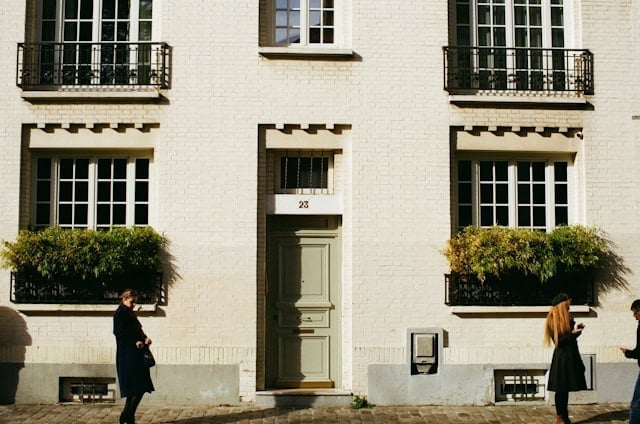
students in front of a building for La Rentrée in France

Understanding La Rentrée in France

I’ve always loved late summer and early fall — “back-to-school” season if you will, though I’ve been out of school for many years at this point. It feels like a fresh start in many ways. My adopted country seems to feel the same, which you’ve likely noticed if you’ve spent an extended amount of time there. La rentrée in France, literally “the return,” permeates nearly every part of French life. 

After the mass exodus of the August holidays, the country seems to come alive, student or not. For my American readers, the closest comparison might be the energy in early January, but in France, it feels like September is the true reset button. Just like I’ve always liked it (no wonder I love it there so much).

The Meaning of La Rentrée in France

While the literal meaning of la rentrée isn’t anything special, in practice, it seems to represent a shift in energy that defines the year — again, even more so than January 1. In France, New Year’s Eve and Day are more about spending time with family and continuing to indulge after the December holidays, not heading to the gym and starting a new diet. Now, I won’t say every French person chooses September to get in shape, but it does feel like a time of new beginnings.

It’s the end of those slow August days when most of the country is on vacation and the moment when schools, workplaces, and even cultural institutions all realign and restart — together. Unlike in the US, where September can feel like just another month on the calendar (especially if you don’t have children), it’s a cultural moment in France.

Back-to-School During La Rentrée in France

That’s not to say that school isn’t a major player in la rentrée. Also unlike in the US, it’s a nationwide return to school. Nearly all of them begin on the same day, no matter where you live. Whether you’re in Paris, Provence, Brittany, or even Corsica, you’ll see crowds of children and adolescents heading back to class at the same time, which contributes to the feeling of it being a shared national moment.

And then there’s the school supply list, which I just have to mention. French parents aren’t just told to buy notebooks and pencils. I was an au pair the first time I was introduced to the extensive liste des fournitures scolaires — a long, detailed list from teachers that often includes specific brands, colors, and paper sizes. Indications like “a blue notebook with large squares, not small,” a very particular pen style, and of course the trousse — the pencil case that’s practically the holy grail for every French child. 

Many families spend the last few weeks of August rushing around to track down the right supplies (I’ve been tasked to help with this bona fide scavenger hunt when I was a nanny). For those on a tight budget, the French government even offers allowances to help cover costs, acknowledging la rentrée in France can be a financial burden for some.

Work Life After Summer

Walk through a French city in August and you’ll often find businesses shuttered or short-staffed. Come September, it can feel like someone switched a proverbial switch. Meetings get scheduled, emails are finally answered, and projects move forward after weeks of delay.

For American expats used to life in the US where vacation is more spread out and work doesn’t slow to a crawl in August, this can feel jarring… but again, I love it. In my opinion, the long break helps get the creative juices flowing again, and once September hits I’m ready and raring to go. That’s exactly how I feel this year, thanks to giving myself most of August off from the TAIP website and our YouTube channel. Very un-American of me, I know.

The Cultural Rentrée

Another thing that makes la rentée in France unique is how far it spills beyond school and work, and right into culture. September is also when French theaters, concert halls, and museums launch their new seasons. You’ll often see posters plastered across the streets of Paris and in the métro for new plays, opéras, movies, and exhibitions all beginning around the same time.

There’s also the rentrée littéraire. Every September, hundreds of new books are released to coincide with la rentrée. Bookstores feature fresh new titles and the publishing world begins to announce nominations for literary prizes like the Prix Goncourt.

In true French fashion it’s quite symbolic — as children go back to school with fresh notebooks, adults start new novels.

To live comfortably amongst the French is to live with the rhythm of la rentrée. And it’s just one of many cultural phenomena that make me feel at home. So, America, you can keep your New Year’s resolutions. You’ll find me making big changes in September.

Photo by Rad Pozniakov on Unsplash

Did you enjoy this article? TAIP is 100% reader-supported through tipping. If you want to leave us a tip of any amount it would be highly appreciated.  These tips help support our efforts to keep TAIP an ad-free environment. Just like at a cafe, the tips are split evenly among the team.

closed shutters on a Parisian building

Why Everything Closes in France in August

If you’ve ever tried to do anything administrative in France during the month of August, you’ve probably hit a wall — or a closed door. Or maybe a handwritten note taped to a window that reads, “fermeture annuelle, réouverture le 2 septembre,” or something similar. 

Most shops close down too (with the exception of many places in Paris that cater to tourists), bakers disappear, your doctor and dentist seem to vanish, and entire neighborhoods go quiet. I remember being extremely confused the first summer I moved here. Why does everything close in France in August? I wondered. 

The short answer? Vacation is sacred here. The long answer is tied to French labor laws, cultural values, and a national love of slowing down. What was once very confusing to me makes total sense and has become just one more thing about the French I admire deeply.

The History Behind August Shutdowns in France

The long-standing tradition of closing up shop in August began in the early 20th century when France introduced paid vacation leave for all workers in 1936. At first, it was only two weeks (the unfortunate truth for most Americans à nos jours), but it eventually grew to the five weeks of paid leave the majority of French employees enjoy today.

For the working class, August was the logical time to take that break. School was out, the weather was nice across most of the country, and most factories and workplaces already had reduced activity. It soon became part of the social rhythm in France, where everyone from small business owners to government workers collectively stepped away from their responsibilities and headed out of town.

Even now, many companies shut down entirely for the month. Government offices operate on reduced staff and administrative processes grind to a near halt (good luck renewing your visa in August). Again, this is something I admire so much about the French, and is something that would never happen in the US. When Americans want something done, they want it done yesterday. In France, there’s a better understanding that, actually, we are human beings, and every human being deserves a break. Wild concept, isn’t it?

Where Does Everyone Go in August?

As they should, the French love their summer exodus, and in true French fashion they even have words for it:

  • Les juilletistes: those who vacation in July
  • Les aoûtiens: those who vacation in August

August is more popular, but I also understand why some people prefer to take their vacation in July — there’s something to be said about taking a holiday before everyone else does and a few of the families I used to babysit for leaned much more juilletiste.

Many French families have long-standing vacation traditions, like returning to the same small village year after year, maisons de campagne that have been in the family for generations (surprisingly, unlike in the US, families of nearly all social standings have “country homes,” another thing that initially shocked me), and spending time with the same neighbors who may have also fled the city. For others, it’s a chance to disconnect, travel internationally, or just step away from the daily grind.

So, What Actually Closes in August?

My American brain initially really could not comprehend the idea of the majority of businesses closing in August. But, how are they okay with nothing getting done for an entire month?! I wondered constantly. Growing up in a capitalist country where the bottom line is the most important thing, this cultural norm seemed impossible. 

But, folks… it is certainly possible and the country doesn’t fall apart at the seams every summer. The real answer to what actually closes is: more than you think, but technically, not everything. 

Here’s what you can expect to be closed:

  • Independent boulangeries and patisseries
  • Pharmacies (unless it’s their turn to be the “pharmacie de garde,” or an emergency pharmacy that’s required to stay open)
  • Family-run restaurants and cafés
  • Doctors, dentists, and specialists
  • Small boutiques and bookstores
  • Many post offices, banks, and local government buildings

Again, this isn’t always the case in Paris, where tourists have forced the city to Americanize in many ways. But, in smaller towns and residential areas in larger cities, it’s not unusual to find entire streets shut down.

Here’s what tends to stay open:

  • Large supermarkets like Carrefour, Monoprix, and Franprix
  • Chain restaurants and fast food restaurants
  • Tourist attractions, museums, and monuments
  • Major transportation hubs

What This Means for Daily Life

August in France definitely requires some adjustment, but once you hop on the vacances train you’ll see it’s not that complicated. Make a note to check your favorite store windows for handwritten closure signs. Refill any necessary prescriptions early and make doctor’s appointments well in advance (or simply wait for September). And, by all means, avoid anything involving French bureaucracy until la rentrée, for your own mental sanity. 

I often learned this the hard way, but once I did, I got used to it and the August closures became another part of my normal everyday French life.

These closures are a direct reflection of how the French think about time, work, and rest. Unlike many Anglophone cultures, where rest is earned through burnout, the French see vacation as a right, not a reward. And it’s not just a week or a long weekend, it’s a true break.

What’s more, there’s no guilt attached to this rest. No pressure to stay plugged in, and certainly no Slack messages coming through. No, “I’m technically on vacation, but feel free to reach out.” A French person would never say something like that, and I really respect them for it.

As such, TAIP will also be taking our summer holidays for the rest of the month of August. We’ll resume posting regularly after la rentrée — see you all on the other side 😉

Photo by Eric Prouzet on Unsplash

Did you enjoy this article? TAIP is 100% reader-supported through tipping. If you want to leave us a tip of any amount it would be highly appreciated. These tips help support our efforts to keep TAIP an ad-free environment. Just as at a cafe, the tips are split evenly among the team.

a woman standing in front of a colorful flower shop in Paris

Living in France Changed my Relationship with Time

To be honest, I never really thought much about my relationship with time. Until I moved to France and realized just how differently they approach it in terms of, well, almost everything.

Things that have become normalized in the US, like eating lunch at your desk, sandwich in one hand, typing away with the other, working multiple jobs to make sure I had some cash to enjoy the little time off I had, squeezing in dinner before a workout, falling into bed at night from pure exhaustion… the list could go on and on. 

The addiction to the hustle and “being busy” is very real in the States. Not to say I didn’t have to hustle a little to live in France (in fact, it’s how I met Stephen originally), there’s no denying that life moves at a much faster pace for the average American compared to the average French person.

When I moved to France, suddenly I was living in a country where “urgent” rarely means what you think it does, where many shops close for lunch, and where a vacation is treated as sacred, not optional. My busy American brain didn’t know what to do with this at first, but I got used to it very quickly, and ultimately learned to absolutely adore it.

This slower pace of life is something Stephen and I talk a lot about on our YouTube channel — it seems to come up time and time again. While some aspects certainly took getting used to, we both agree how refreshing it was to have more time and space in our lives… without feeling guilty about it.

Slowing Down, Whether You Want To or Not

One of my very first culture shocks was the fact that most shops and stores are closed on Sundays, even in a massive city like Paris. Now, that has changed a bit, and nowadays you’ll be able to find at least a grocery store or two open. But it’s nothing like in the US, where things seem to be open 24/7, or at least seven days a week.

In Paris, there aren’t many shops that close for lunch, but in smaller places (even Bordeaux, which is still a pretty major city for France standards), you’ll be hard pressed to find a pharmacy or boutique open from noon to 2pm. 

Not to mention the whole country seemingly shutting down for the entire month of August. I remember being in a panic one fateful summer, when I was waiting for a very important piece of administrative documentation needed for an upcoming student visa I had to apply for. The offices at the school were closed promptly at 4pm on July 31 and I unfortunately did not have the forethought to go pick up my paperwork before then. I had my visa appointment in mid-August and quickly began to panic.

Shockingly, when I explained the issue back at the Boston consulate, they totally understood and ended up issuing my visa anyway, thanks to a few other key pieces of paperwork I did manage to get my hands on. I do NOT recommend trying to do the same, but it just goes to show that not being able to get anything administrative done in August is a cultural and accepted norm in France.

My shift toward this new concept of time didn’t happen overnight and it was extremely frustrating at first. But slowly, I got used to it and even began to lean into it myself.

Learning to ‘Be’ in a Culture That Values ‘Being’

Everything takes more time in France and they like it that way. A two-hour dinner isn’t a luxury, it’s normal. Even average, weekday dinners at my in-laws are often at least one hour long. They do not rush through meals, and it’s something I personally love about the culture.

Weekends are for friends, relaxing, long walks, and markets. Sundays are for staying at home. And five weeks of paid vacation isn’t a perk or “benefit,” it’s your right. Coffee dates aren’t 20-30 minutes long, they often span over several hours and may even turn into a meal if you time it right. It’s better to take the scenic route. It’s okay to just… sit.

There’s less competition in France too, which I think influences this attitude of “it’s okay to take your time.” I don’t think all Americans are competitive in nature, but it’s so ingrained in our culture that we don’t see the little ways it affects our everyday lives. It’s also worth noting that France is not a capitalist country. Now, if you talk to most French people, they’ll say that this is changing (no thanks to American influence), but it still is nothing compared to the consumerism-obsessed États-Unis.

As someone who grew up in the US, it’s so, so refreshing.

Now that my French husband and I are back in the States (for now), I won’t lie: it’s been difficult to keep the slow-paced French lifestyle here. There are just so many more pressures. Pressures to earn more because the cost of living, at least in our situation, is four times what it cost us to live in Paris. Pressures to have the latest and greatest car/gadget/home/clothing/electronic/etc. Pressures to keep up with everyone else around us.

But, ultimately, I am so glad to be back here with my husband because he often reminds me to slow down and lean back into the French way of life. We’re slowly but surely creating our own little pocket of France in our little beach house on the East Coast. And constantly reminding ourselves: ‘more’ doesn’t always mean happier. Because it often doesn’t.

Photo by Eliott Goutard on Unsplash

Did you enjoy this article? TAIP is 100% reader-supported through tipping. If you want to leave us a tip of any amount it would be highly appreciated. These tips help support our efforts to keep TAIP an ad-free environment. Just as at a cafe, the tips are split evenly among the team.

a small table and chairs in front of a stone building covered in vines

Living the French Life, Wherever You Are

Something that kept me in France for nearly a decade was my appreciation for the French way of life. There’s no denying that it’s slower and more intentional than the fast-paced ambiance you find in the US. I like to think of myself as an intentional type of person, so it’s not that surprising that I felt so at home there.

Maybe that’s one of the things that brought you to France and ultimately kept you there like me, or perhaps you’ve only ever visited, but are itching to go back and make a real life for yourself there. Either way, you’ll want to get to know Jane Dieu. 

Jane is a UK-born artist and YouTube content creator living in the French countryside with her family. Her channel, Living Well in France, is dedicated to helping people bring more French beauty into their everyday lives. She recently interviewed Stephen and I on her channel, and as soon as we started chatting, I knew her message would resonate with all of you, dear TAIP readers. Especially the many retirees in our audience who are thinking deeply about how they want their next chapter to feel.

Because while yes, I want to encourage everyone of you to live in France, Jane’s philosophy isn’t just about moving there. She urges that you can indeed live like the French wherever you are in the world, and I can’t help but agree.

Life as an Artist in France

Jane lives in a quiet part of France and splits her time between painting and making videos that share what it’s really like to adopt a French lifestyle. Her artwork features detailed renderings of boats and seascapes, inspired by her time working in luxury yacht marketing. She says that during these years she “developed a passion for the beauty and craftsmanship of these vessels” and has since created some very impressive works.

In a handful of her videos, she invites viewers into her studio to watch her paint, talk through creative routines, and share what it’s like to live as an artist in a country and culture that deeply values beauty and craft.

It’s a side of French life reminiscent of what we sometimes read about when exploring the history of artists who made their home there — Van Gogh, Picasso, Monet, and many other greats, to name a few. There’s a reason why artists of all shapes and sizes (including myself) flock to France. The reverence for art, conversation, and the idea that life isn’t meant to be rushed through, but enjoyed, is something that I personally can’t get enough of. And it seems Jane feels the same.

Why the French Lifestyle Resonates

You’ll all remember I moved to France thinking I’d only stay a year, and ended up living there for nearly a decade. When I reflect on why, it was the culture that kept me. The way people make time for themselves and each other. The ritual of long, shared meals. The sense that life is happening right now, and it’s meant to be appreciated in the moment instead of worrying about the next thing on my to-do list.

Jane talks about these same values on her channel: how the French prioritize connection, how they prepare simple but beautiful meals, how they stay active in ways that feel joyful, not punishing. And for retirees, especially, many of whom have already spent years in busy, career-focused environments. This outlook on life can feel incredibly appealing. And incredibly different from what we experience in the US.

Living Like the French Wherever You Are

Jane filled me in that she is working on an online course full of guidance on how to adopt a more French lifestyle without having to pack up and move across the world (unless you want to do that… because you all know I’m all for it). Topics will include everything from learning to enjoy cooking again to rediscovering the art of conversation, choosing a form of movement you actually love, and finding beauty in everyday life.

She also shared that she is developing a second course focused on integrating into French culture, which would be ideal for those planning a move, or folks who are already in France and want to feel more comfortable in their new home abroad. 

I know I personally often struggled with an odd feeling of otherness — like I was almost on the outside of French culture looking in, even after months or years in there (I even spoke about this in a recent taip on tape YouTube episode). Jane’s course will offer a way in, in what promises to be a very thoughtful way.

But, I have to say, what I love most about Jane’s work is that it aligns so closely with what I — and what TAIP — believe in. That French culture has something to teach us, whether we live there full-time or not. That our quality of life improves when we slow down, talk more, and surround ourselves with beautiful things. That aging can be graceful, food can be simple, and joy should come naturally instead of being forced.

You can find Jane’s channel here, and I highly recommend subscribing, especially if you’re someone who’s craving a little more beauty, more ease, and more, well, joie de vivre. She publishes thoughtful videos on everything from painting to aging well, and her recent conversation with Stephen is now live there as well, plus some additional videos with me that will be coming out soon.

Whether you’re already living in France, planning your move, or just want some advice on how to slow down and appreciate life, I know you’ll enjoy it.

Photo by V2F on Unsplash

Did you enjoy this article? TAIP is 100% reader-supported through tipping. If you want to leave us a tip of any amount it would be highly appreciated.  These tips help support our efforts to keep TAIP an ad-free environment. Just like at a cafe, the tips are split evenly among the team.

top floor apartment in paris

What No One Tells You About Finding an Apartment in Paris

We often talk about the lengthy and sometimes complicated process of applying for a visa to live in France, what it’s like to move away from friends and family, and better ways to learn French. But, something we’ve discussed only a handful of times is perhaps one of the most important — and potentially most frustrating — parts of moving to France: finding an apartment in Paris.

The good news is that it’s not just you. Apartment hunting in Paris really is that hard. 

Thinking about all of this, a story comes to mind. Stephen and I have worked together on so many different things, from walking tours and picnics to Airbnb and beyond. One of those random projects and gigs included showing apartments in Paris together. He had some contacts with people who wanted someone trustworthy to actually show places to potential tenants and serve as an initial judge of whether said tenants would make a good fit.

He gave me RDV on rue Jacob in the 6th arrondissement — coincidentally right around the corner from where I lived as a student during my semester abroad and one of my favorite areas to walk around to this day. I was excited to go back to my old haunts and earn a little extra cash from helping him out.

I rounded the corner of the rue Bonaparte and saw a massive line of people, seemingly waiting to enter the Ladurée boutique. I kept walking towards the address I wrote down, and noticed that the line snaked up the street in the exact same direction I was going. Weird, I thought — but chalked it up to it being a busy part of town. Imagine my surprise when I saw the line of people waiting outside the address that Stephen told me to meet him at.

I skirted around them and headed up the stairs — I knocked on a door that was left slightly ajar and told Stephen about the line. He said he wasn’t surprised, there was a lot of interest. When all was said and done, we showed the place to more than 40 people.

So, why am I telling you this? Because this little walk down memory lane is a perfect example of how competitive the real estate market is in Paris, even for rentals. Now, that’s not to say it’s impossible. I’ve never been homeless in Paris, but I have had to shift my expectations since living there. 

And today, I’m sharing everything I’ve learned along the way so you don’t make the same mistakes I did.

Know What You’re Really Getting Into

As I’ve alluded to in the form of my story above, finding an apartment in Paris is nothing like what you may be used to in the US, or even elsewhere in Europe. Things move a lot more slowly, and it’s very competitive.

Many listings are already taken by the time you send your first message, and the best places are often only available if you know someone. You might tour an apartment, think it went great, and never hear from the landlord again (been there). As a note, French landlords can be extremely picky, especially with foreigners and expats. There’s a fear that you’ll just “leave the country” and never pay your rent. In a way, I get it.

Some also want proof that you already live in Paris and pay your current rent on time before they’ll rent to you. Like so many other French administrative processes (like getting a bank account or cell phone, though those are much easier nowadays), you basically need an apartment to get an apartment. 

Another big surprise? An unfurnished apartment likely won’t even have kitchen appliances (yes, not even a stove), and also means committing to a three-year lease, minimum

Decide Where (and How) You Want to Live

As we’ve noted in our Paris neighborhood guide series and in a recent YouTube episode, every arrondissement is different, boasting its own unique charm, vibe, lifestyle — and budget. So, before you really start your hunt, it’s important to have a general idea of where in the city you’d like to live and what kind of housing would work best for you.

Here are just some of the options:

  • With roommates (often called a ‘flatshare’ or colocation in French)
  • A small studio apartment (usually under 20m² or 215 square feet)
  • A chambre de bonne (tiny top-floor former maid’s quarters with shared bathrooms)
  • A traditional apartment (if you’ve got the budget/dossier for it)

You could also do what Stephen did for his most recent apartment. He couldn’t find anything, so he went to Airbnb to see if a host would be willing to rent to him more long-term. He met them for a coffee, talked things through, saw the apartment in person, and signed the lease. It’s an excellent example of how, sometimes, you need to be willing to be scrappy to snag the Parisian apartment of your dreams.

Now, as mentioned, finding an apartment in Paris isn’t always easy, so you also need to be prepared to take what you can get. I don’t mean you should settle for a shack in the middle of nowhere, but if you can’t find what you’re looking for in, say, the 5th arrondissement, be willing to look in, say, the 19th.

The All-Important Dossier

If you’ve managed to apply for and obtain a French visa, you already know the importance of paperwork in this country. France wants proof for everything — you can’t just show up for an apartment tour and say you’re a great tenant. They want to know your name, date of birth, occupation, how much you make, where you’ve lived in the past, and all of your deepest hopes and dreams. Okay, the last one is an exaggeration, but you get the gist.

In fact, most landlords or rental agencies will ask to see your dossier before they’re willing to even speak to you. At minimum, it should include:

  • A copy of your passport and visa
  • Proof of income (French pay stubs are strongest, or bank statements)
  • A work contract or school enrollment letter
  • Recent utility bills or proof of address
  • A French bank account to prove you have one
  • A ‘garanteur’ or someone who makes more money than you, who is willing to back you up, like a parent or relative

Here’s the catch: even people with great salaries or a chunky savings account struggle. French landlords want to see French paperwork, and without that, they may see you as too much of a risk. And, the truth is, I also know dozens, if not more, French people who struggle to provide solid dossiers too. I know many who use fake pay stubs and bank statements to make them look better off than they are. That’s how competitive this is!

There are services in place for foreigners or folks without well-off family members, like GarantMe or Visale, but I also know there are some landlords who won’t accept them.

I know it’s not fair, but it’s how the system works.

Where to Look

There are several rental platforms to choose from, but I’ve had the best luck personally on SeLoger, PAP, and Facebook. Craigslist Paris is also worth checking out, but it is full of scams, so be careful. HiPParis has some cool options, but mostly only for buying. Don’t forget Stephen’s Airbnb trick too. There are also rental agencies that specialize in helping expats (if there’s an interest, I can do some digging on ones to try!).

Your best bet? It’s all about word of mouth and people you know.

I know, I know — but, Molli, what if I just moved to Paris and I don’t know anyone yet? I get it! Building community and finding your people takes time, but once you do, a whole new world will open up to you. You never know who you may meet, who may have a friend looking for someone to take over their lease, or an aunt who needs someone to stay in their apartment for a year while they travel.

Like anything else, getting to a point where you can simply ask around and find an apartment in Paris will take some time.

And a lot of times, just when you think it’s never going to work out, it does. You’ll get the call. You’ll sign the lease. You’ll move in.

Prefer video? Watch us discuss finding an apartment in Paris on YouTube!

Photo by Doctor Tinieblas on Unsplash

Did you enjoy this article? TAIP is 100% reader-supported through tipping. If you want to leave us a tip of any amount it would be highly appreciated.  These tips help support our efforts to keep TAIP an ad-free environment. Just like at a cafe, the tips are split evenly among the team. 

french flags outside a building

French Etiquette 101

When I first moved to France, many things surprised me initially. Most were pleasant — you mean I can order a 2€ coffee and sit at the same table undisturbed for hours on end? I can go grocery shopping without having to inspect every ingredient list? I can take a leisurely, 1-hour lunch break, and that’s the norm?

Then, there were things I wasn’t expecting, and most of those are wrapped up in the world of French Etiquette. It’s its own cultural code, and coming from the US, some of these social rules might surprise you, like they surprised me.

Where Americans value friendliness (real or not), casual conversation, and a general “easygoing” type of vibe, the French prefer formality, precision, and specific boundaries when it comes to social situations. As an American married to a French person, I’ll let you imagine just how many awkward moments I’ve found myself in over the years.

Some parts of French etiquette I really love and respect, and I look forward to raising my future children with many of its values. On the other hand, some others that make you feel like you’re living in a world since long passed — and I’m happy to blame my I’m-a-foreigner naïveté when I choose not to participate in them.

Understanding these differences can help you avoid awkward moments and start off on the right foot. I knew nothing before moving to France — allow me to help you not make the same mistakes I did.

Start Every Conversation with Bonjour

One way to be perceived as the rude American is to walk into a shop without saying bonjour as soon as you enter. The same goes for passing a neighbor in the hallway or just starting a conversation with someone. You should always begin with a bonjour during the day, or a bonsoir in the evening. 

Skipping this can come across as very abrupt and yes, rude. Even a quick trip to the bakery starts with bonjour, madame/monsieur — and only after saying that should you place your order.

The fact that this is not the norm in the US always shocks my French husband — he would never dream of entering a public place without a greeting. 

Use Formal Titles First

This is something else that doesn’t always occur in the States. Americans like to be on a “first-name basis” right away, but in France, it’s the opposite: formality is the default.

Always address new acquaintances (if they’re significantly older than you), shopkeepers, and service providers/professionals as madame or monsieur until they tell you otherwise. In my experience, even most French people find this to be a bit old-fashioned, and they will often tell you to call them by their first name after the first drop of a formal title. But it’s not considered polite to jump in without a little formality first.

The same goes for written communication. Whether it’s an email or a letter, begin formally and wait for cues before moving into a more casual tone.

It’s Vous until They Say So

One of the biggest differences between French and English is the whole tu vs. vous discussion. Tu is the informal you, while vous is the formal version, which shows respect. Unless you’re speaking to a child, someone your own age, or a person you know very well, always start with vous.

Switching to tu too soon can seem overfamiliar or even disrespectful, especially for the older generation. Let the French person make the first move if they decide they want to “tutoyer” instead of “vous voyez.”

This is something my French family doesn’t really hold me to — I do try my best to vous voyez everyone until they tell me otherwise, but often I don’t know what form is the correct one to use. 

The general rule is: if you don’t know them or they’re older than you, it’s always vous. I usually just follow my husband’s lead. I have been on the receiving end of some strange looks when I tutoyer right away without really thinking about it. But, it’s often followed up by a comment like, “Oh, I forgot in English you don’t have the same rules,” and I’m forgiven.

But, when in doubt? Vous voyez is the move.

Mind Your Table Manners

French dining culture is another world all its own. If you’re invited to a meal, here are some basics I would keep in mind:

  • Never show up right on time to a dinner party. 5-15 minutes late is expected.
  • Never start eating until everyone is served and the host says bon appétit.
  • Always trinquer (cheers) with everyone present before taking a sip of your drink.
  • Need a refill? Serve everyone else first.
  • Use your utensils for everything; eating with your hands (even pizza or fruit) is considered rude.
  • When it comes to digging into the cheese plate, follow the host’s lead. Or do what I do and just ask someone else to cut it for you because it’s too much pressure.
  • Don’t clear away any dishes until everyone is done eating.
  • Offer to help clean up.

Don’t Overshare

Something I discovered early on in France is that personal information is revealed slowly, over time. Asking too many questions about someone’s job, salary, or family life too early in a conversation can feel invasive to the French.

Small talk isn’t the same as it is in the US either. The French don’t tend to chat casually with strangers at the grocery store or on public transportation. Once you build a relationship, yes, conversations can go very deep — often much deeper than what I’ve experienced in the States — but until then, privacy is important.

My husband and I talk about this all the time. Say you’re out at a bar and you meet an American. Suddenly, you’re their “new best friend,” and “OMG, we definitely need to hang out, I love you so much!” But, will you ever see that person again? Probably not, they were just being friendly, fake or not. Any information they may have shared was likely very surface-level and a whole lot of fluff.

Conversely, making casual friends with a French person is much more difficult, and they would never consider a person they just met their best friend or someone they love. But, once you do start getting to know them, you’ll be able to rely on them, and when they say we, “definitely need to hang out,” they’ll actually mean it. Then they’ll tell you their whole life story over coffee at 10am with a side of existential conversation to boot.

The Art of La Bise

Saying goodbye (and hello) in France is its own mini-ceremony. Whether you’re leaving a dinner party or wrapping up a business meeting, it’s important to properly acknowledge everyone in the room.

In informal settings this almost always includes la bise — the French cheek kiss — though the exact number of kisses can vary by region (it’s usually two, but more in the south). It never, ever, ever, includes a hug unless you’re with family or very close friends… and even then, most French people do prefer la bise.

Of course this tradition was put into the spotlight during the pandemic and the years following. In my friend group, we were all not-so-secretly really happy to ditch la bise. But, in my opinion, it is officially back, and skipping it would be considered rude. Alas, I’ve had to suck it up and start kissing cheeks again when entering and leaving a room.

All of this said, French etiquette isn’t designed to be frustrating, cold, or annoying — it’s simply more structured than what we’re used to in the US. There are more rules, and where American culture values friendliness, French culture values politesse (politeness) and respect for social boundaries.

As we always say here at TAIP, if you approach your interactions with curiosity, most people will appreciate your effort, even if you don’t get every single rule right the first time.

And when in doubt, you can always blame your I’m-a-foreigner naïveté like I do.

Photo by Sébastien Bloesch on Unsplash

Did you enjoy this article? TAIP is 100% reader-supported through tipping. If you want to leave us a tip of any amount it would be highly appreciated.  These tips help support our efforts to keep TAIP an ad-free environment. Just like at a cafe, the tips are split evenly among the team.

several euro bills in an envelope

Cost of Living in Paris vs. Other French Cities

Something that always seems to shock other Americans is when I tell them how low the cost of living in France is compared to the US. You pay HOW MUCH for internet?! I’m usually met with, when I tell people I’ve never paid more than about 30€ per month.

Internet, phone bills, groceries, going out, restaurants, housing, health care… the list goes on and on, and the one thing they all have in common is that they come at a much lower price tag when I look at what many of my compatriots have to pay in the States.

Now, all of this being said, the cost of living in Paris as compared to other French cities is quite high in the scheme of things. If you’re coming from an already-expensive area, you may not seem phased. You may even decide to stay in the capital because at the end of the day, it’s more affordable than someplace like New York, San Francisco, or Boston.

But, if you’re interested in looking into other areas, the good news is that Paris isn’t your only option. France is a diverse, well-connected country with cities that boast rich culture, excellent food, and plenty of charm in their own right.

Housing

Almost always the single largest expense in France (or anywhere else, really), and Paris is known for its higher prices. If you want to rent a one-bedroom apartment in the center of the city, you can expect to pay anywhere from 1,300-2,800€, depending on the neighborhood. Even a studio can easily reach 1,000€ or more.

In comparison, cities like Lyon, Bordeaux, Montpellier, Rennes, and Nantes have much more breathing room — in square meters and budget. In most of these cities, a similar one-bedroom will range from 600-1,200€, or even less if you choose somewhere outside of the center.

Of course, the trade-off is location and lifestyle, but there is still plenty to do and see in places like Bordeaux (where nearly half of all my formerly-Parisian friends now live) and Lyon. A lot of the time, what you give up in cultural activities, you gain back in space, quiet, and a slower pace.

Groceries & Other Essentials

The difference in cost between Paris and smaller cities re: groceries is more subtle but still worth noting. Grocery bills in the capital can definitely run higher than in provincial cities.

However, local markets tend to have more options. Differences in produce and specialty items might even be better in smaller cities, where the supply chain is shorter and prices are less inflated simply because they’re in Paris. 

For example, a kilo of tomatoes might cost 3.50€ in a Parisian market and 2.50€ in a small-town marché.

Utility costs (electricity, gas, water) are pretty similar across France (thanks socialism!), but older Parisian buildings almost always have poor insulation, which makes winter heating costs higher. Internet is around €30-40/month in Paris, while some smaller towns may have deals as low as €20/month, especially if fiber optic hasn’t made it out there yet.

Transportation Costs

One of my favorite things about living in Paris is the robust metro system. I hated being a car owner in the US, so being able to survive vehicle-free has been a major blessing. What’s more, public transportation here is a fraction of what some friends of mine pay in places like NYC. 

My handy Navigo pass covers unlimited metro, bus, tram, and RER (suburban trains) within the Île-de-France region, and currently costs 86.40 € per month.

Other French cities like Lyon, Rennes, or Strasbourg typically have monthly transit passes that cost between 40-65€. If you’re living in a more rural area, you’ll almost certainly need a car, which can get expensive. Gas is around 1.80-2€ per liter, and French car insurance is higher than what you’ll see in the US.

Going Out and Socializing

Another one of my favorite parts of French life is its café culture and general attitude toward socializing. 

Interestingly enough, the price difference for a cup of coffee is very noticeable once you leave Paris. One in the city of lights could set you back 4.50-6€, especially somewhere like Café Flore. In places like Rennes or Angers, that same coffee might only cost 2.50-3.50€.

The same applies to dining out, drinks, and other entertainment. Smaller cities will have more affordable menus and the overall cost of a night out is generally lower. That said, Paris of course gives you more variety… but it comes at a premium.

Healthcare

France’s universal healthcare system, AKA the sécurité sociale ensures that medical costs are fairly consistent across the country. Whether you live in Paris or a countryside village, your reimbursements for doctor appointments and medication will follow the same rates.

The only real caveat here is that finding an English-speaking doctor will likely be much more difficult as opposed to in Paris. If you speak French well, this shouldn’t be an issue.

Paris does boast an unmatched blend of history, culture, and access — but it’s not the only French city worth looking into. 

Ultimately the choice isn’t only about the finances. You need to really think about the kind of life you want to build in France. I know for myself, Paris is irreplaceable and I do not regret a minute I’ve lived here. That said, looking toward the future, now that many of my friends have moved away, I’m no longer in my 20s, and even my French in-laws are planning to move, I do have my eye on some different French cities and towns.

Luckily, there are so many places to choose from, right? 🙂

Photo by Markus Spiske on Unsplash

Did you enjoy this article? TAIP is 100% reader-supported through tipping. If you want to leave us a tip of any amount it would be highly appreciated.  These tips help support our efforts to keep TAIP an ad-free environment. Just like at a cafe, the tips are split evenly among the team.

mini eiffel tower on stone wall

A Page from 29 Days to France: Getting the Essentials Sorted

For those of us who have moved to France, we know there’s a moment that comes right after the dream becomes reality — when the plan lands, your feet finally hit French soil, and you realize… Okay, now what?

It’s where the idea of moving to France meets with the very real logistics of actually living in a foreign country. It’s also where a lot of people tend to freeze, and then the panic sets in. What comes first? What needs to be done? What’s “normal” in France compared to what you’re used to back home?

When we wrote 29 Days to France, we wanted to walk people through not just the big picture of immigration paperwork or visa timelines (which are also included, fear not😉), but also the smaller minutiae of getting settled into your new French life. Details like getting a cell phone. Setting up electricity. Opening a bank account.

Are they glamorous tasks? No. But they’re the foundation of pretty much everything else. So today, I wanted to share one full day from the book to give any of you preparing for a move to France a sneak peek at what’s inside. 

Day 13: Getting the Essentials Sorted

Congratulations, you’ve officially arrived in France! You’ve most likely spent the first few days soaking it all in: your new neighborhood, the sound of chattering French, and the smell of buttery croissants in the air. Now that you’ve touched ground and are ready to start your new French life, you need to take care of a few essentials.

What are the essentials? Your cell plan (and new French number), your electricity and gas (handled by the national carrier, EDF), and your French bank account (which will provide you with a debit card). This won’t be the most exciting part of getting settled, but it’s necessary.

Cell Phone Carrier

There are several French cell phone carriers to choose from, including Orange, SFR, Bouygues, and Free. If you’re coming from the United States, you’re in for a pleasant surprise. Cell phone plans in France are much less expensive. I personally have Free and I pay around 20 € per month for unlimited texts and calls within Europe, unlimited internet access, and 30 days of free calls and 25 GB of internet within the US, among other locations. You can sign up for most cell phone plans online, but you can also go to a store and practice your French, if you’d like.

Electricity & Gas

EDF, which stands for Electricité de France, is the leading supplier of electricity in the country. It is majority-owned by the state, which keeps prices affordable. You’ll want to set up your home’s electricity and gas directly with them.

Your landlord most likely will not arrange this for you, so you’ll have to make a few phone calls. Alternatively, you can sign up online, but you need to get used to making these kinds of calls in French so I suggest that you get all of the practice you can! Once you have your French cell phone sorted you can call EDF at 3004. Make sure you have your address on hand.

This is the single most important and reliable proof of residence in France: the attestation that you pay for electricity.

Bank Account

There are also several different French banks to choose from. I have Crédit Agricole and I am really happy with them. They are a smaller bank and I find that the fees are reasonable. To choose for yourself, you’ll need to think about your personal needs. Do you want a larger bank? One that’s foreigner-friendly? Or maybe a small, local bank?

If you want a bank with a reputation of friendliness to foreigners, go for BNP Paribas. Its headquarters are in Paris and it’s the largest bank in France. It’s also among the largest banks in Europe. BNP is used to working with foreigners and I know that they have several representatives who speak English well.

Exercise: Be aware of your needs and do your research, especially when it comes to what you’re looking for in a cell phone and bank account. Practice (write it down if you need to!) what you’ll need to say in French before you call EDF or head to the bank.

Questions to answer: What do I need in a cell phone plan? What do I need in a bank account?

Why This Page Matters

I chose to share this page because it’s such a real moment in the move-to-France journey — one that not many people online talk about. No matter what kind of visa you’re on, no matter your job, family status, or even the city where you live, everyone has to navigate these basics.

And if you’re feeling intimidated by the idea of making a phone call in French, or choosing between a dozen different banks, or not knowing whether you need to bring ID to the phone store (you do) — that’s normal!

The entire goal behind 29 Days to France is to make this process feel less overwhelming and more doable. Not perfect, and not even necessarily easy, but possible. One small, essential step at a time.

If you liked this little excerpt, the full book features 28 other mini-guides just like this one. Each is focused on a task, a mindset shift, or a key moment in the move-to-France journey.

As a special treat for our American in Paris readers, you can purchase the 29 Days to France ebook for just $10 with the coupon code TAIP. We wrote this book with all of you in mind, and hope you enjoy reading it as much as we did writing it 🙂

Photo by Kristina Tochilko on Unsplash

Did you enjoy this article? TAIP is 100% reader-supported through tipping. If you want to leave us a tip of any amount it would be highly appreciated.  These tips help support our efforts to keep TAIP an ad-free environment. Just like at a cafe, the tips are split evenly among the team.

5 Lessons I Learned from the French

I’ve learned a few lessons during my first 6 months of living in France. Over the past few in particular, I’ve noticed myself starting to adopt mindsets and approaches that inherently go against my cultural grain. To be honest, many things about French life feel more natural to me than my old habits. But like any fish in a new pond, I can still tell the water is different.

Here are a few of the lessons I’m taking with me as I return to the US for the summer.

1. Beauty is important.

The first time I stumbled into the park in my French neighborhood, I was stunned. Not only is it beautifully laid out, complete with a volcanic rock fountain and swans, but it is also incredibly well-kept. The flowers are changed out seasonally; the peacocks in its wildlife preserve are fed and tended to. This kind of beauty requires intentional planning, committed workers, and a generous budget. This is city money we are talking about. The idea of this kind of prioritization of beauty in local government blew my mind. 

Voting for beauty with time, effort, and generosity isn’t something reserved for my local park. Thriving flower shops around every other corner remind me that the French will spend their hard-earned money on bringing a little bit of beauty into their home or a friend’s. 

2. To be is worth more than to do.

This mindset is particularly put on display when it comes to French business hours. A two-hour lunch break is not uncommon for stores in smaller towns. This is because shop owners are often the ones working in their stores, and there isn’t someone else to take over for them during lunch. What’s more, they figure you (the customer) would like to eat lunch, too. So the pharmacy, the bank, the post office, and the little craft shop on the corner may take a break midday.

To my American mind, the idea of a store not being open continuously almost felt offensive on my arrival. I can happily say that is no longer the case. I see the value in taking a pause and appreciate that this allows shop owners to attend to other matters while offering a smaller overhead for their business. 

Though lived in the practical, this cultural foothold can also be seen in French behavior. On a sunny day, it’s normal to see people lying in the grass, sitting on a bench with a book, or walking tranquilly —without the goal of getting steps in. When I think about the idea of seeing someone lying in the grass at a park in my American suburban neighborhood, I would be worried that they weren’t okay. The art of being is something largely lost to the society I was raised in, and I am grateful to have rediscovered my identity as a human being, not as a human-doing, thanks to the French.

3. Conviction is not offensive, it is necessary.

Being convicted of one’s perspective and needs is a part of French society. In customer service situations, it is downright necessary.  You can feel the conviction of the French people everywhere. Walking down the street, you’ll hear the young and the old alike use the word franchement (French for frankly) before launching into their perspective on any given subject. 

There is a confrontational forwardness present in the culture that is refreshing. The French love to “talk it out” and understand the way that those close to them think. I’ve witnessed many a French conversation that could seem like a heated argument resolve in continued, and strengthened friendship. Having been conditioned to not talk about disagreements as an American, this particularly strikes a chord with my understanding of relationships. In the last six months, I have become more acutely aware of the beauty that comes from hashing things out. 

4. Sit down and share.

If you want a drink, you should have it sitting down in the company of others. Water bottles do exist in France, but they are not widely used and are typically smaller than those found in the States. Coffee and tea to go is also a rather recent novelty, that again, is not widely adopted. Beverages and meals are not meant to be consumed quickly, but are rather rituals to facilitate encounters. 

My first meal after moving to France was had over a three-hour conversation in a café. And at the end the three hours, I still had to ask for the check. There is an expectation of slowness that provides the space to share not just coffee, nor merely an afternoon, but one’s very life. 

5. To do a little very well is better than to do a lot.

This mentality can be found in the art of specialty. Every town in France has at least one artisan for each craft of the table: la formagerie, la boucherie, la chocolaterie, la pâtisserie, and let us not forget the oh-so-essential boulangerie. There is a sacredness to the art of making that is protected culturally. Sure, you can get cheese and meat and bread from the supermarket, and perhaps for a cheaper price, but the best of the best is available for purchase just around the corner from the craftsmen themselves. 

This principle is even more evident at the local market. I’ve seen vendors with a singular (massive) wheel of cheese, sharing a piece of their months of work with their community. They’ve mastered one thing, and that’s enough. 

To some, the lessons I’ve learned may seem surprisingly simple, or obscenely obvious. My takeaways speak specifically to my experiences here and stateside. Another person in another town would naturally notice other differences according to their cultural palate.

I think if someone had proposed these ideas to me a year ago, I would have assented to them on a mental plane. But as someone raised in suburban America, my agreement would have been colored with a somewhat utilitarian vision of parks, stores and time. I look forward to carrying these ideas into the way I approach my day-to-day living as I continue to be a student of this lovely land. 

Photo of the pond in my neighborhood park.

Did you enjoy this article? TAIP is 100% reader-supported through tipping. If you want to leave us a tip of any amount it would be highly appreciated.  These tips help support our efforts to keep TAIP an ad-free environment. Just like at a cafe, the tips are split evenly among the team.

blue l'apéritif sign

The Ritual of the French Apéro

If you’ve spent an extended amount of time in France with actual French people, you know all about the ritual of the apéro — and that ritual is the best word to describe it.

Consistently splitting my time between the United States and France basically ever since I made my big move in 2014, I can’t help but notice and reflect on the cultural differences between Americans and French people. 

One of the many things that the French do right is their attitude around socializing, entertaining, and hosting. The French are inherently social whereas Americans (at least the ones I know and love) are fundamentally individualist — this comes out in so, so many ways — something I would have never figured out if I hadn’t committed to splitting my life in two amongst the two cultures.

After some extended time with my French in-laws over the holidays, it suddenly hit my I-spend-too-much-time-online millennial brain: did the French invent yapping? For my less chronically online readers, to yap is to chat, and boy do the French love to chit-chat. It’s totally normal for a group of friends to meet up around 5pm to begin apéro, only to part in the wee hours of the morning. And what did they do for the past eight or nine hours, you may ask? They talked. And enjoyed their apéro.

The Meaning and History of l’Apéro

Apéro is the colloquial version of the word apéritif, which comes from the Latin word aperire, meaning “to open.” It makes sense — l’apéro “opens” the meal and is meant to stimulate the appetite. 

In the past, apéritifs were herbal or medicinal drinks like fortified wine or bitter liqueurs designed to help digestion. This practice dates back to the Middle Ages, but it grew in popularity with the masses in the 19th century when drinks like vermouth, pastis, and Suze became widely available and enjoyed.

Over time, l’apéro evolved beyond a simple pre-dinner drink into a full-fledged social event. Now, that’s not to say that most French people have parties every night of the week before dinner. My in-laws usually have a beer along with some savory snacks like chips or pretzels (the only time I ever see them snack, really) before dinner when my husband and I come over. They still call it apéro, but it’s not as elaborate.

As the tradition grew, it transformed into a moment of relaxation, conversation, and conviviality that is deeply embedded in French culture. Unlike American happy hours, where discounted drinks and quick socializing are the name of the game, the French apéro is about slowing down, savoring the moment, and participating in some good old-fashioned existential conversation.

Whenever I have evening plans with my French friends, 99% of the time we’re having l’apéro at someone’s apartment. It’s an opportunity to débriefer our weeks, catch up on gossip, and spend time together. Everyone is responsible for bringing something to eat and drink, and it often turns into an apéro dinatoire, in which snack food becomes more substantial so we don’t have to worry about cooking a big meal.

The Unspoken Apéro Rules

As I already alluded to, l’apéro is not about getting as drunk as quickly as you can, so one of the first rules every American should heed is to pace yourself. This isn’t pregaming or predrinks. It’s sipping and savoring. I have never taken shots at l’apéro.

Another unspoken rule I briefly mentioned is that everyone is expected to show up with something. I’ve found this to be true at any French social engagement, and it’s something that isn’t as engrained into American culture: if you’re invited somewhere, you bring something along, even if no one asked you to. My French husband was appalled when I told him, “We don’t really do that in the States.” Now, even when we are in the US, we always bring a little gift and I’m honestly glad we do even though it’s not the norm. People appreciate it.

I digress. The next rule to abide by is to prepare yourself for constant conversation for several hours straight. As the more reserved, American person I am, I have to admit that by hour six or seven I’m usually ready to go home, whereas my husband could keep yapping along for another five. Topics range from things like what’s going on in our day-to-day lives, things we got up to over the week, what’s going on at work, to politics, religion, and, yes, existential topics like life, death, and what happens next. I’m not kidding or exaggerating at all — this level of depth is what I like most about the French, and you really see it come out at l’apéro.

I think the last unspoken rule is to respect the ritual. Again, l’apéro is not a pregame for a wild night out and when done right you shouldn’t have a headache the next morning. It’s a moment to relax after a long day or week, to catch up with friends, family, and loved ones, to enjoy a great glass of wine, to share good conversation, and to bask in the fact that you are where you are without any other place to be. 

I don’t think we have anything like it in the US. Feel free to correct me if I’m wrong.

Photo by Etienne Girardet on Unsplash

Did you enjoy this article? TAIP is 100% reader-supported through tipping. If you want to leave us a tip of any amount it would be highly appreciated. These tips help support our efforts to keep TAIP an ad-free environment. Just as at a cafe, the tips are split evenly among the team.