How to Get a Complémentaire Santé Solidaire (CSS)

After I successfully enrolled in France’s health insurance system and got my temporary social security number or numéro provisoire, I went to see many doctors. At the beginning of the appointment, they would look at my certificate of registration and ask if I had a complementaire. I’d say no, because I didn’t, and I also had no idea what that term meant.

Then they’d ask if I had a mutuelle, and I would say no again. I knew that was additional health insurance offered by French businesses, but I didn’t have a French job. I didn’t even have a working visa. I was already thrilled to be enrolled in government health care, wasn’t that enough?

But they were asking because it wasn’t. Assurance maladie works in tiers of reimbursement, and only fully reimburses its users for a select few medical visits. For other expenses, they might cover a small percentage of the cost, which is why most French people have a mutuelle as well. After six months of being disappointed by the meager refunds trickling into my bank account, my general practitioner kindly explained all this to me. She also told me I could get a mutuelle without being employed by a French company, but advised that I apply for a complémentaire santé solidaire or CSS. And so my health insurance journey continued.

What Is a Complémentaire Santé Solidaire?

A complémentaire santé solidaire or CSS is an additional insurance that covers your medical costs at the doctor, dentist, and hospital. It also covers most glasses, prosthetics, and hearing aids.

Who Qualifies?

In order to qualify for a CSS, you must have already enrolled in the health care system and be a regular resident of France. In my reading, this means you must have a long-term visa as well as other documents tying you to a fixed address here.
Note: Even if you have a temporary social security number, numéro provisoire, you can still apply for a CSS.

Beyond residency, you qualify based on your income or resources, which include salary, government aid and donations, commercial sales of objects, and gambling gains. Depending on your annual total, you can either qualify for full government aid or you’ll pay less than 1 € per person per day. I was given full aid so I’m not sure what the annual payment would be. It seems safe to assume it’d be under 365 € annually or 30 € monthly, which is equivalent to the cheapest monthly mutuelle.

As you can see below, your income must be quite small in order to qualify:

How Do You Apply?

To apply you fill out a form with your personal and financial information, as well as information about the rest of your household and any dependents. Since Fred and I are PACSed, he’s considered part of my foyer, and his income was included in the calculations.

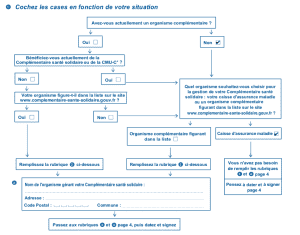
As I mentioned in the list of requirements, you’re also asked to declare any additional government aid you’re receiving such as unemployment or pension. After quite a few boxes pertaining to income sources, there is a deeply puzzling flowchart.

In a very convoluted way, all it’s asking is if you want to have your CSS directly with assurance maladie or through a mutuelle company.

Note: You also need to include your titre de séjour with the application, as this is proof that you’re a current French resident.

How Long Does It Take?

Great question. The assurance maladie website says the application will be processed in two months, which I rounded up to three.

How Long Is It Valid For?

Since the complémentaire is contingent on your income and “need” you must renew your request each year by sending proof of income, as well as your tax documents.

What Happens Next?

  • The short answer: Go to the doctor and get reimbursed.
  • The long answer: Now I can go back to the dentist and not have to worry about how much she’s charging to take X-rays of my teeth. Actually, doctors in France are always upfront about costs, and they must be listed on the doctor’s website so you usually know exactly how much you’re paying before you walk in. In the case of my dentist, she explained that assurance maladie would only cover eighty percent of the cost of the 50 € x-rays, and wanted to make sure I was okay with that. The bill was laughably small compared to my dentist back in New York where I paid $300 for a cleaning.

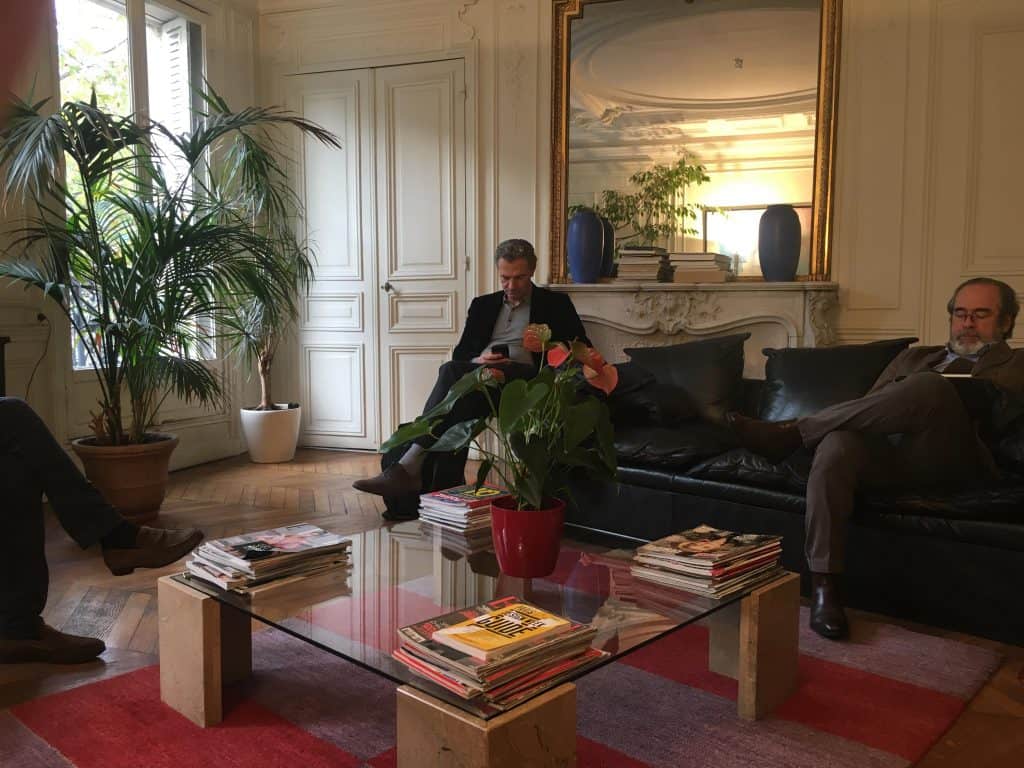
Photo was taken in the tastefully appointed waiting room of my knee doctor.

Did you enjoy this article?  TAIP is 100% reader-supported through tipping.  If you want to leave us a tip of any amount it would be highly appreciated.  These tips help support our efforts to keep TAIP an ad-free environment.  Just as at a cafe, the tips are split evenly among the team.

An Expat Discussion of Study Abroad Experiences

Editor’s Note: In these articles, Molli Sébrier (MS) & Gracie Bialecki (GB) discuss their study abroad experiences, particularly in the light of later on becoming Paris residents.

MS: I was never someone who imagined herself in a foreign country. But, when I found myself in the study abroad office of my university in the fall of 2011 and the advisor suggested Paris in January 2012, I said yes. When I think back to that gloomy afternoon on my New England campus, I know now that it was a defining moment in my life. If I had never said “yes” to Paris almost ten years ago, I most likely would have never gotten my master’s degree, learned a foreign language, or said “yes” to my French husband

I’m getting ahead of myself. I needed a passport (I never had the need for one before), to apply for financial aid, tell my parents, quit my job…all of these seemingly onerous tasks stood in the way of me and my great escape. But, none of that mattered because I was going to Paris. The more I thought about it, the more I realized how much I did want to live abroad. I had just never let myself have those feelings because it seemed impossible. A lesson in never saying never, for sure. 

Gracie, did you always know that you wanted to study abroad, or was it a spur-of-the-moment decision like it was for me? What prompted you to spend a semester in Paris?

GB: I’m pretty much on the exact opposite end of the study abroad spectrum. At age twelve, I decisively chose to study French over Spanish, and I fell even more in love with the country when I visited with my family the following year. On that trip, I also met our French family friends who continue to play an integral part in my life and my expat experience.

Clearly, I had the France bug from a young age, and I continued to study it in college with the goal of spending a semester abroad. There were programs in other French cities and countries, but I was all eyes on Paris. To me, it was incredible to have an opportunity to live in the city for an entire semester, and it was something I’d wanted to do for as long as I could remember.

I’m interested in what you imagined Paris would be like before you left — did you have a clear idea of what you were getting into? Any specific hopes and dreams for your first extended stay outside of the US?

MS: I honestly went into the entire experience blindly, with next to zero expectations. The week before I was set to leave, it suddenly hit me that I was actually going to be living in a foreign country for the next 6 months, and I got really emotional about leaving friends and family behind. I was so caught up in spending time with everyone, that I didn’t really have time to imagine what I was getting myself into!

I definitely did have certain expectations once I did arrive in Europe — I remember getting to my host family’s apartment with my roommate and we were both really disappointed. We looked out of our window, looked at each other, and said, “We can’t even see the Eiffel Tower from here!” when in reality, we were in the beautiful and quintessentially Parisian neighborhood Saint-Germain-des-Prés.

But, looking back, I’m happy that I didn’t spend much time imagining what Paris was going to be like (other than assuming that you could see the Eiffel Tower from every window in the city). Going into it so blindly meant that I was shocked and awed by nearly everything I saw. One thing that I loved about Paris at the time (and still do!) is the fact that everything is just so old. I’m from New England, the oldest part of the United States, but nothing can compare to the thousand-year-old buildings that are around every corner here.

I imagine that you must have had certain expectations about France since you had been dreaming about coming here for years. Did Paris live up to your expectations? Did anything surprise you about living abroad? 

GB: My study abroad experience was quite stereotypical in that it had a mixture of joyful-loving-Paris highs as well as frustrated-at-foreign-living-lows. Unlike you, my host family lived in Boulogne which is in the west of Paris at the end of the Line 9. While the subway goes there, it’s not in an arrondissement and wouldn’t be considered part of Paris proper. 

So while you could walk many places from Saint-Germain-des-Prés, I was at least a forty-minute subway ride from everything I wanted to do. On top of that, the métro closes around midnight on the weekdays at one a.m. on the weekends. This meant I was constantly watching the clock and making sure I could get home. Keep in mind that I studied abroad before Uber, electric scooters, and all the transportation options we have today. And at that time, there was no way I could’ve afforded a taxi from the center of Paris out to Boulogne.

Transportation struggles aside, I did the most I could to immerse myself in French language and culture. I spoke exclusively French with my host family and prioritized spending time with my French friends. My main goal was to be as “French” as possible. Many of the other students in my program spent all their time together, which meant they were speaking English and exploring the city in a way that felt overly touristy. As I mentioned in my other article on studying abroad, I only took one class at a French university, so I struggled a bit with being in a program that was teaching us about the city while also not necessarily integrating us into it.

On a personal note, I was also in a relationship with my boyfriend who lived in Los Angeles which is nine time zones away from France. It was hard to be that far apart and I spent a lot of time and energy missing him even though I was only gone for three months. It’s interesting that your program was twice as long as mine. How did you feel after six months in Paris? At the end of your stay, did you consider yourself comfortably “Parisian”?

MS: At the end of my program a group of friends and I actually ended up moving to the South of France because we weren’t ready to go back to America and reality. I wasn’t ready to leave my newfound French life behind just yet! 

But, funnily enough, I was a lot like the other students in your study abroad program — I stuck with the group and didn’t have any French friends until I moved to the south. I think a lot of it had to do with the fact that I was so comfortable in our little “English bubble,” and breaking away from that felt scary! I barely spoke French and had a hard enough time trying to communicate with my “host mom” that just the thought of trying to make friends in French made me break out into a cold sweat.

So, in that way, I don’t think that I felt Parisian after my 6-month study abroad program, no. I feel much more French and Parisian now after my 7+ years here, mostly because I had a completely different mindset the second time I moved to France. But, that’s another story for another article

You mentioned that your host family was located outside the city. Were you disappointed when you learned that or excited that you were going to be with a “real” French family in a “real” Parisian suburb? I already told you that I was pretty terrified of my host mom, what was your relationship with your host family like?

GB: I had mixed feelings about living in Boulogne rather than Paris “proper.” Part of me was quite disappointed to be that far outside of the city, especially since other students on the program were located centrally, like you in Saint-Germain-des-Près. To anyone familiar with Paris, it seems cruel and unfair. At the same time, my other French “family,” who I met through my father when I was thirteen, also live in Boulogne. So in a crazy coincidence, I ended up having both my official and my unofficial French parents in the same neighborhood. That said, being so far outside of Paris did significantly change my experience, and I think it’d be hard for anyone to get the most out of the city while navigating métro closings and public transportation schedules, especially in the time before smartphones. 

My relationship with my host family was fairly cordial — they were considerate and certainly took good care of me, though they didn’t seem particularly interested in learning about my life or my American perspective. They’d been hosting students for many years, and it felt more like a way to fill an empty room in their house than to have a cultural exchange. In retrospect, this is totally reasonable, though going into the program, I expected to be greeted with slightly more open arms. Then again, that’s also a cultural difference. My family had two sons who lived at home, and though they weren’t around much, they always chatted with me. Everyone spoke French which gave me lots of practice — I don’t remember ever once reverting to English. In that regard, being immersed with a family who doesn’t speak much English can be a blessing. Since the easy way to improve a language is to slog through the daily communication in order to be understood. Overall, I’m grateful for my experience and the way my French improved in those three short months.

Do you have any final thoughts on your time studying abroad in France? Any takeaways that stick out to you as you look back?

MS: The major takeaway for me is how important it is for anyone to leave their home country and live abroad. I mentioned that it was never something that I thought I would do, I wasn’t encouraged to do it by my family, or by anyone around me, really. If it wasn’t for that one persistent study abroad advisor, I honestly don’t know where I would be today! 

Studying abroad was totally life-changing for me. That’s not to say that I think everyone who studies abroad should eventually leave their home country for good, but it is an eye-opening experience. Even going from one Western country to another, there are immense differences between France and the United States, and it was really important for me to see that with my own eyes. I think this is especially true for Americans. We tend to grow up in a bubble, quite separate from the rest of the world — both in terms of geography and in terms of mindset. It can be helpful to realize that there are other ways of life out there.

So, if you’re waiting for a sign — this is it! We encourage everyone reading this article to visit the study abroad offices at their university and to think seriously about their options. You never know where a semester or two in a foreign country could lead you.

Photo was taken from the bell towers of Notre Dame, when such views were available to anyone willing to stand in line.

Did you enjoy this article?  TAIP is 100% reader-supported through tipping.  If you want to leave us a tip of any amount it would be highly appreciated.  These tips help support our efforts to keep TAIP an ad-free environment.  Just like at a cafe, the tips are split evenly among the team.
carte vitale

How to Get a Numéro Provisoire or How to Sign up for Assurance Maladie

For the first year after I arrived in France, every time I went to the pharmacy or doctor, they’d ask for my carte vitale. This is the health insurance card every French person has which allows them to be reimbursed for medical expenses, and each time I politely explained I didn’t have one, the person checking me out would be shocked. To be paying out of pocket for my medical costs was unheard of, even though they were fractions of what I was used to in the U.S.

It took me longer than it could’ve to realize I also qualified for medical insurance or assurance maladie. After going through the process, the first document I received was a temporary social security number or numéro provisoire. If you’re in France on a carte de séjour visiteur, this is the only number you’ll be assigned. However, if you are here on a talent visa or vie privée visa, you’ll be eligible for a permanent social security number, as well as a carte vitale.

Who Qualifies?

Anyone living in France in a “stable and regular manner” qualifies to be covered by France’s healthcare system. This means you do not have to be born in France, married in France, or even working in France to register. However, it means you do have to have spent at least three months in the country and have a valid titre de séjour.

How do I Register?

To register you need to send copies of the following documents to the closest health insurance office. You can look up which one here.

Required Documents:

  • National Identity Card or passport or residence permit, as well as any documentation of your civil status.
  • Extract of birth certificate with filiation or full copy of your birth certificate
  • Completed “Demande d’ouverture des droits d’assurance maladie.” (The second page of the form also lists the necessary documents to include.)

In my case, I sent copies of my passport and current titre de séjour, as well as the récépissé of my PACS — all documents which showed I was a ‘permanent’ resident in France. I also included a long-form copy of my birth certificate which had an apostille and had been translated into French, as well as a letter d’hébergement saying I lived with Fred. Luckily, I was doing this process soon after being PACSed and had all these documents on hand. Proving you live in France usually all boils down to the same set.

Why is it Taking so Long?

  • The Short Answer: Assurance Maladie is a single government health agency that serves the entire country of France. Unsurprisingly, it can take them a long time to process documents, especially since you’re required to mail in your application.
  • The Long Answer: There are many reasons why an application can be deemed incomplete –– perhaps you sent an abbreviated version of your birth certificate, perhaps you forgot to sign a certain form, perhaps your dossier is inexplicably missing. This was the case for my first attempt, and after waiting three months and without a word from the health insurance office, I went back and discovered they had no record of my ever having filed for a numéro provisoire. Whenever possible, try to keep track of who you’re speaking to, their name and contact info, and any trace that could be helpful in tracking down your file. In my case, I simply resubmitted everything and waited a few more months. As you can see, it’s always worth it to follow up and be on top of these processes.

Bonus Question: What’s the difference between a temporary and permanent number?

Your temporary number allows you to be reimbursed for expenses, assuming to keep the form the doctor or pharmacy fills out, as well as any prescriptions, and mail them to assurance maladie. The reimbursement is done directly to your French bank account on file, though the entire process can take up to a month.

With a permanent number, you qualify for a carte vitale which acts as a debit card and means the French government is paying the upfront costs, or at least the percentage of costs covered by the health care system.  You can create an online account on Ameli (the French government’s healthcare site) which means you no longer have to mail completed forms and proof of doctor visits to be reimbursed. That said, as I’ll talk about in a future article, being reimbursed doesn’t mean that one hundred percent of the costs are covered.

If, like me, and you’ve assumed that you don’t qualify for healthcare because you’re not French, I hope this article is helpful. As you can see, the process of applying is relatively straightforward and worth it from a financial sense and for the mental relief of being “covered.”

Photo is of my new card when it finally arrived!

Did you enjoy this article?  TAIP is 100% reader-supported through tipping.  If you want to leave us a tip of any amount it would be highly appreciated.  These tips help support our efforts to keep TAIP an ad-free environment.  Just like at a cafe, the tips are split evenly among the team.
Why Study Abroad in Paris?

My first visit to France was with my family when I was thirteen. We were the classic sweaty tourists in late-July Paris, dragging ourselves from monument to museum. But I loved old buildings, narrow streets, and outdoor cafés — everything we walked by was tinged with foreign magic. And when we met French friends of my father who had a daughter my age, I knew I would be back.

I kept studying French and visited over a few high school summers, but I was waiting for study abroad so I could live in the city. It would be my chance to speak French until my accent didn’t mar my words. My chance to drink wine in cafés, take the métro to non-touristy neighborhoods, and meet real Parisians.

While I had a few specific reasons why I wanted to study in Paris, it was less of a rational choice and more of an emotional one. I’d been in love with the city for so long, that the thought of spending time there was a dream come true. Here are some of the more (and less) concrete reasons why I chose Paris:

To Speak French

The easiest way to get better at a language is to speak it, hear it, and live it. I already knew this from the time I’d spent with our French friends, and I also knew I needed more practice before I could be anywhere close to fluent. Since I’d started studying French in middle school, speaking it was a comfortable challenge — something I’d already made progress in and knew I wanted to keep working on. Of course, there are other study abroad programs in other French cities, so my other reasons for choosing Paris are specific to it.

To Spend Time in a Beautiful City

If I ever make a list of stunning cities, Paris will be near the top. The historic buildings, tree-lined boulevards, myriad gardens, the Seine cutting through the city and forming two surprise islands — it’s hard to argue against these aesthetics. What’s more, because it was built before cars were invented, Paris is highly walkable (assuming you’re measuring within the bounds of the périphérique). Even better, as you make your way through the city, each neighborhood has a distinct character.

To Learn More About French Culture

American media has a tendency to idealize French culture — carelessly beautiful women, artists in cafés with their endless cigarettes, fine wine, renowned food. It all adds up to a half-glamorous, half-bohemian lifestyle that had me entirely enthralled.

While the rational part of me knew French life couldn’t be this dreamy, I’d fallen for it years ago. What was most fulfilling about my study abroad experience was deepening my relationship — I took a course on architecture in which we toured the city and visited specific buildings. And another on theater where we read French plays before seeing them performed in a variety of venues. Rather than being on the outside of the city looking in, I was immersed in its offerings.

You Never Know What Will Happen

No, this isn’t the part where I say I fell in love with a Frenchman who is now my husband. My study abroad program had us take a single course at a French university while the rest of our school time was with the American cohort. This meant that we glommed together and spent most of our time wandering Paris and speaking English in a sort of extended tourist outing.

I was lucky in that I already had two French friends, and I was able to tag-along to their truly “French” life. While I did spend a good amount of time exploring the city, I only lived in Paris for one semester — from September to mid-December. In order to have truly felt like I was committing to this adventure, I would’ve needed to stay longer. This is one of the reasons why I decided to move back in 2018 and have another go.

When I think back on my study abroad experience, it’s a distant blur. But I’m grateful for the way my French improved and all I learned about the city. And instead of worrying that I didn’t make the most of my time, I see my experience as a stepping stone to my current Paris life.

If you’re thinking about studying abroad in Paris, it might be helpful to make a list of reasons why you’re attracted to the city. Is it to speak French? To have access to its museums and rich cultural history? Or simply to go on an adventure? What’s your why for studying abroad in Paris?

Photo is from a French classroom which will be dramatically different from a US university setting. 🙂

Did you enjoy this article?  TAIP is 100% reader-supported through tipping.  If you want to leave us a tip of any amount it would be highly appreciated.  These tips help support our efforts to keep TAIP an ad-free environment.  Just like at a cafe, the tips are split evenly among the team.
How To Take a French B2 DELF Test

As Stephen mentioned in his article about the DELF A2, the DELF is an internationally recognized competency exam, and one that I hadn’t heard of until 2020. When I was at the appointment for my first vié privée et familiale visa, the prefecture employee mentioned that if I had a French diploma or a DELF certificate, it would allow me to apply for a multi-year visa. Since taking a French exam was less time-consuming than going to university, I decided to sign up for the DELF. I’d already been studying French since age thirteen, so it felt like another strange, slightly-fun step on my immigration path.

Signing Up

Like all many things French, signing up for the DELF was not as easy as I assumed it would be. Depending on the test you’re taking (there are levels A1 to C2), the exam is only given a few times per year. While there is a list of official test centers, each center has different registration dates, requirements, and turnaround times for their results.

After doing a bit of research in January and then dropping the project without setting myself any calendar reminders (mistake), I found myself scrambling in early April to sign up for a May test. The only other B2 offered was in October, which would be after my visa renewal. The centers had limited capacity due to Covid, and all the ones I found in Paris were already full. This left me mailing my application to a center in Ivry (a southern banlieue). As an American who is used to everything happening via the internet, it constantly amazes me how many official letters and registrations I’ve had to send via mail since moving to France. It is truly a step backward in terms of convenience and efficiency.

You Will be Convoked

I have also never received so many “convocations” or summons since moving abroad. These official notices are used by the prefecture, as well as in other formal capacities to tell you what time you have to be somewhere without you having any say in it. Although I had called the exam center and confirmed the two testing dates, I ended up receiving a convocation for the written part on Thursday and the oral part on Friday. In other words not the dates they’d told me. Since the exam was full, and the slots were pre-assigned there was no way to change my time to one that worked with my schedule. On top of this, the exam took place in Juvisy-sur-Orge not at the company’s mailing address which was much closer to Paris.

Lesson Learned: Make sure your schedule is clear all day on testing days (the exam sites often list three separate days) and be prepared to be summoned at any given time. Also, determine where the test center is before signing up. As someone who bikes everywhere, I ultimately decided that 26 km ride through Paris’ industrial zones Juvisy-sur-Orge was not the way I wanted to arrive so I took the RER even though two-round trip tickets ended up adding another 15 € to my test costs.

Preparing

Since the DELF is a standardized test, it’s easy to find practice tests and other resources online. My spoken French is fluent, and I had to write essays in French in college so I wasn’t concerned about my proficiency. Regardless, I decided to take two practice tests simply to know what I was getting into and to be prepared for the process on test day.

One practice test later, I decided that was enough. The oral comprehension was fairly straightforward, the reading comprehension was even easier, and although my partner found plenty of errors in my written response, he deemed it at least a 20/25. Since all I needed was 50/100 to pass the test, I decided not to worry about getting a perfect score.

Exam Day

I arrived early and the exam started late which made the wait feel long. The proctor checked our convocations along with our IDs before we went into an upstairs classroom. It had been over ten years since I’d taken any form of test, so sitting at a desk and waiting for instructions was quite surreal.

Written Exam

They had changed the format of the exam since I’d taken the practice version, and the listening section of the exam had more questions per recording, moved faster than I remembered, and was more challenging than the one I’d taken at home. I would recommend practicing this section at least twice (and in the most current format) to familiarize yourself with the number of questions as well as the recording speed.

Once we got past that, the reading comprehension and writing were straightforward. I finished with forty minutes to spare and wasn’t allowed to leave. This was both strange and frustrating, as the best part about finishing a test is being able to go home. The proctors also collected our scrap paper, which was mildly upsetting since I’d written a poem on mine.

Oral Exam

Inconveniently, the next day I made the trip back to Juvisy-sur-Orge back for the oral exam. In this section of the test, you pull two topics at random and then choose one to present. I knew I’d be given twenty minutes to prepare, which felt unnecessarily long, especially given my confidence in speaking French.

But once I’d chosen the topic of online versus in-person tutoring and sat down with scrap paper, I realized I had no idea what I was supposed to do with this paragraph of information. In a moment of unprepared panic, I stopped the proctor as she was leaving the room, and asked her to clarify. She explained that I was supposed to present this topic and then be prepared to debate it with the examiners. I ended up using the full twenty minutes to make sure was absolutely clear on what the text was saying and write out arguments for different methods of learning.

The preparation time and idea of having to debate the topic made me nervous but as soon as I started talking, that all fell away. One woman asked me questions while the other took notes and occasionally interjected. Their questions were easy to understand in the context of our conversation, and I talked through the different arguments.

Near the end of the exam, my interviewers asked where I learned French and how long I’d been studying. I explained that I started in middle school and had more or less continued ever since. Only when they complimented my French did I realize that the oral part was over, and they’d been impressed by my language skills. It was an affirming moment after two days of RER rides and fussy testing requirements.

Lessons Learned

My main lesson was to give myself more time to find a test center that was easy to access and easy to work with. In retrospect, following Stephen’s lead and applying via the internet would’ve saved me many headaches. Also, confirm that the registration address is the same address as the test center. I’d also recommend taking two practice tests that are current, and having a clear understanding of all the instructions before showing up. Other than that, the process was quite straightforward, and I’m happy to have proof of my French proficiency to add to my resumé.

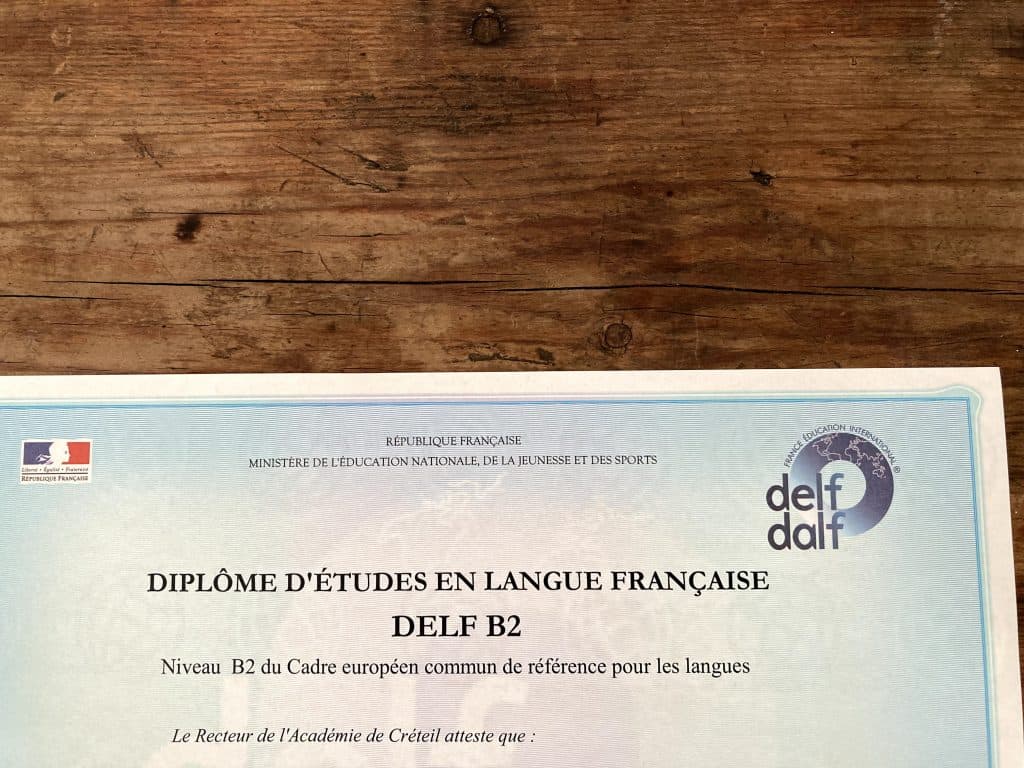
Photo is of my certificate: one more for the wall!

Did you enjoy this article?  TAIP is 100% reader-supported through tipping.  If you want to leave us a tip of any amount it would be highly appreciated.  These tips help support our efforts to keep TAIP an ad-free environment.  Just like at a cafe, the tips are split evenly among the team.

pastry

La Formation Civique or My Adventures in French Integration

I already wrote about signing a contrat d’intégration républicaine (CIR) and attending the first day of civics training, so I’ll continue my integration journey here by covering the remaining days.

Day 2

It’s hard for me to differentiate what was taught on Day 2 from Day 1 since so much of the information was facts I already knew, or were so straightforward that I had already assumed their existence. We were taught about freedom of speech and religion or the concept of laïcité which is a particularly French republican form of secularism. None of this was new information, and I would’ve been surprised to learn these concepts didn’t apply in France.

At the end of the day, what stuck out to me was somewhat random information, and laws I wasn’t sure existed in the United States. For example, we learned there is a minimum requirement for apartment size (in meters-squared) based on the number of occupants. While this might be the case in some cities, as far as I know, the US doesn’t have a national housing requirement. That said, I’ve never taken American civics training or classes.

At the end of Day 2 we also had to complete a chemin de route which listed three tasks we would complete by the following session. The tasks ranged from administrative (researching government procedures) to cultural (attending a museum). Since I’d been living in France long enough to have gotten, as well as established myself working remote, most of the tasks on the list didn’t apply to me. Most of the other attendees had been in France five to ten years, and I imagined that had already done these procedures as well. I’m not sure if it’s exclusively a vie privée et familial visa which requires a CIR, and I wondered if it was part of the renewal process for another visa as well.

Day 3

Much like Day 2, we spent the first part of class reviewing the subjects we’d already covered: The country of France, health, employment, parenthood, and housing.

When it came to French history, we studied a timeline of the country’s most important rulers and politicians, along with their corresponding monarchies, empires, and republics. As an American whose country’s constitution hasn’t changed in almost 250 years, it is hard to fathom that much political upheaval. France is now in their cinquieme république which began after World War II — in other words, this system of government has only been in place for seventy years.

Our teacher also had us go around as a group, share our chemin de route and give updates on the tasks. Most of the group had completed a few simple things, though again, I wondered about the timing of these courses since I’d opened a bank account and enrolled in the medical system years ago at this point.

We also signed up for our Day 4 classes which would theoretically have been more active and in-the-field except that all cultural visits had stopped due to Covid and were now taking place in the OFII center. The only option left involved a pastry-making class in Clichy where we would also learn the history of pâte sablé. Even though I have celiac disease and am gluten-free, I signed up for this one since I couldn’t face another day of presentations.

Day 4

We started the day in a crowded classroom and the instructor has us introduce ourselves, say how long we’d been in France, and what country we were from. This was the first time this type of sharing or cross-cultural exchange had been instigated, and it was interesting to learn at least a bit about everyone else in the room. The instructor also established that quite a few immigrants spoke very little French and she paired them with those who spoke their language or English, which is always a common denominator (it hasn’t stopped surprising me how prevalent my native language is).

From there, we moved to an industrial kitchen where I worked with a man from Afghanistan to make pâte sablé. He ended up being very talented at crumbling the butter and flour together and must have had previous pastry experience. As soon as we established this, I let him handle the dough and focused on gathering the necessary ingredients and explaining the next steps.

The kitchen was crowded and hectic. There weren’t enough digital scales to go around, and the instructor oscillated between jovial and chastising how long we were taking. But amidst the clouds of flour, we were working together, explaining what to do next, and integrating in a way none of the other courses had achieved.

At the end of the day as we stood around munching cookies, another Afghani man about my age asked where I was from. “America,” I told him.

Do you know what’s happening in our country right now?” he asked with a mixture of contempt and disbelief.

I nodded apologetically and said yes, I was aware.

This was the realest moment in my many tedious hours of civic integration. Here we were in a foreign country — me by choice, him by necessity — as he questioned the American intervention which had ultimately left their country in shambles. Our paths would never have crossed if the French government hadn’t forced us together.

Closing Musings

While I can’t say I enjoyed or found the civics classes particularly useful, I do appreciate the fact that they were provided by the French government. (I can’t say they were offered, because they were mandated.) The experience would have been significantly less stressful had the scheduling system been online and not involved paper convocations for fixed dates months in advance. As I’ve mentioned before, I didn’t even know the word convocation existed before arriving in France.

I also wish there had been more emphasis on getting to know the other people in the courses, as we had on the last day. Although I understand the goal was to teach us about France, I think we were all interested in knowing why the other people were there and how we could help each other. There was at least one moment in each class where an immigrant mentioned an administrative problem and we all chimed in with how to handle that. What better way to make us feel comfortable in our new home than by supporting and learning from each other?

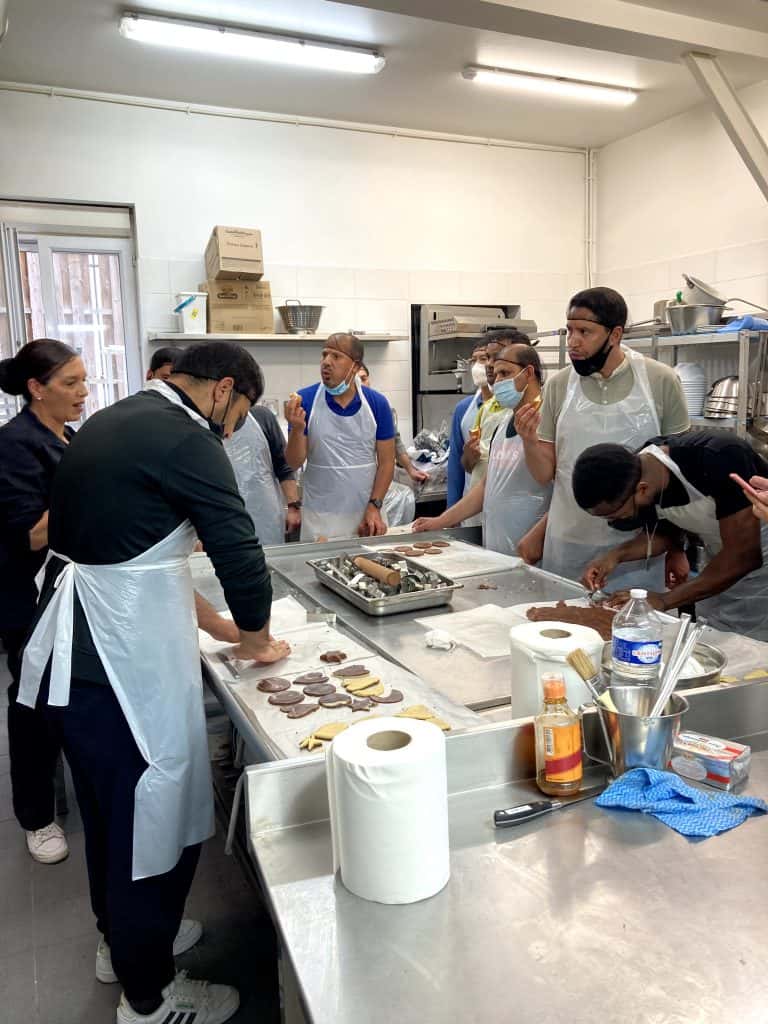
Photo was from our day making pastry.

Did you enjoy this article?  TAIP is 100% reader-supported through tipping.  If you want to leave us a tip of any amount it would be highly appreciated.  These tips help support our efforts to keep TAIP an ad-free environment.  Just like at a cafe, the tips are split evenly among the team. 

French Customer Service

Another Take on “French for ‘Customer Service'”

Unlike Stephen’s article on French customer service, my experiences have not been nearly as rosy. It’s interesting that one or two specific events can stick out in our minds as indicative of an entire system. There are enough tales and tropes about French waiters and service in restaurants that I’m not going to address that genre of customer service here. Rather, I thought it’d be helpful to share some of my experiences of French customer service via the telephone, as I’ve had the joy of sorting through various appointments, banking mishaps, and healthcare struggles.

Be Prepared

One of my most memorable customer service experiences was with assurance maladie. I’d called to check on the status of my carte vitale – my application had already been rejected twice for reasons unclear, and I wanted to confirm that it was finally being processed.

In order to verify my identity, they asked for the last four digits of my IBAN. This is not something I have as a handy PDF on my computer, and it took me a while to access my account. While I explained to the woman that I was in the process of finding the number, she coldly told me that she would hang up if I had to keep looking. I managed to keep her on the line, and we worked through my request despite her hostility. Clearly in France, it’s the agent not the customer who’s always right.

Practice Patience

The answer to many of my customer service questions has simply been to wait. After months of waiting, I’ve called assurance maladie about the status of my CSS only to receive an update in the mail later that week. Generally speaking, it takes several months for the French government to do anything.

At the same time, follow up on important appointments. At my visa appointment in October, I was told I’d be convoked to sign a contrat d’integration and never received that notice. When I was emailed about my titre de séjour being ready (in March) I mentioned this, and was immediately emailed a convocation. Although this all seems like it should be automated, my sense was that if I hadn’t said anything, I never would’ve received a summons, and I would have been French toast at my next visa appointment.

Your French Will Never Be Good Enough

At one point I asked my partner to call the office of immigration for me, and he succeeded in having a conversation (what a concept) with a secretary who had previously told me to send an email, then repeated this as the answer to every question I asked. She understood my French, and I was being polite, but somehow a native speaker got further. Or maybe Fred is just more charming than I am.

Pick up the Phone (Or Your Pen)

As I will mention in an upcoming post about the DELF B2, in my four years since arriving in France, I’ve sent more official mail than in my entire American life. The technology of virtual chatting or even filling out customer service forms is still being implemented in France. In general, the easiest way to get an answer is to call. Even with my fluent French, this usually means explaining myself multiple times and hacking my way to an answer. Often, this also means sending a letter –– it took six months of calls until I sent a letter to my phone company demanding they change the address on my bill. (An address change which I needed as proof of residence for my visa). And I’ve even had to send letters to get concert tickets refunded.

My advice when it comes to French customer service is also useful advice for the world at large: be polite, prepared, and persistent. It may take that (and more) to get what you want.

Photo by Icons8 Team on Unsplash

Did you enjoy this article?  TAIP is 100% reader-supported through tipping.  If you want to leave us a tip of any amount it would be highly appreciated.  These tips help support our efforts to keep TAIP an ad-free environment.  Just like at a cafe, the tips are split evenly among the team. 

What Is a Contrat d’intégration Républicaine (or CIR)?

As with many things involving French bureaucracy, when I received my vie privée et familial visa, the process was not truly over. In addition to coming back to pick up my titre de séjour, the administrator told me that I’d be summoned by OFII to sign a contrat d’intégration républicaine, have a language proficiency interview, and take four days of civic training.

What is a contrat d’intégration républicaine (CIR) you ask? I wondered the same thing even as I was waiting to sign it. A CIR is an agreement between any non-European foreigners who wish to live in France permanently and the French government –– you’re agreeing to attend the courses on French government, society, and culture, as well as attain an A1 proficiency (the lowest level) while they’re agreeing to provide you with language classes, as well as employment and other integration services. The concept of such an arrangement is very foreign to me, and I’m not sure if any such thing exists in the US.

The Process

The process of my CIR technically begin in October 2020 when I received my VPF visa, however, I wasn’t summoned by OFII until March 2021. Five months after the appointment, when I was in contact with the prefecture to pick up my new carte de séjour, I mentioned that I hadn’t received a date and they immediately sent one. Never trust French bureaucracy to function as they say it will — it’s always best to follow up since you’ll still be required to have the paperwork, even if they never sent it.

Once I had the interview scheduled with OFII, I knew there would also be four days of civic training where I learned about France.

There is also an exit interview which no one mentioned to me throughout the process, and I only discovered it when doing research for this article. Since the civic classes are typically scheduled a month apart, and the exit interview is done within three months of completing those, it’s best to assume the entire process will take 6-8 months.

OFII Visit

The OFII visit took place at their office in the 13ème, a different location from where I’d gone to have my medical exam for my first long-stay visa. No one gave us an official explanation of the afternoon’s agenda or why we’d been summoned, which made the experience even more Kafka-esque. After waiting for what felt like a long time, we were given a basic French proficiency exam which, along with the spoken interview, would assess if we were at least A1 French.

I couldn’t remember the last time I’d taken a written exam, so while it was very easy, it was also surreal. My French is fluent thanks to French classes from middle school through college, a study abroad semester, and my French friends and partner. That said, I don’t have any degrees to prove this (in France or the US) so the proficiency exam was both required and necessary for my visa. In fact, in order to have French citizenship, you must have passed a level B1.

After the test was over, we were called one by one for our language interviews. In a moment of foolhardy optimism, I’d left the apartment without a book. Thankfully, I still had a notebook and pen — the wait was so long I wrote my friend back home a letter. When the man who was interviewing me asked what I did, I told him about my writing and he pulled up my website. We talked about literature for quite a while, and he was clearly pleased to be having a fluent, interesting conversation. Before leaving, we scheduled my first two civic courses at OFII and he printed me convocations for two Fridays in May.

Day One

I arrived at the OFII office of the twentieth arrondissement. It was across the péripherique which I’d always thought meant the address would be outside of Paris and the arrondissement numbering. Enough of us were puzzled by this that we asked the teacher who explained that this street managed to make it “into” Paris while the next block hadn’t. Like French grammar, there are the rules and there are the exceptions.

The classroom was fluorescent, unpleasant, and had tightly sealed windows. None of the twenty-or-so other immigrants looked particularly thrilled to be there either. I’d been intrigued by what they’d serve us for lunch but it was a sandwich, apple sauce, and bottled water. I’m not sure why I thought it would be something more interesting.

The day’s lessons were divided into the following sections:

  • The Nation: General information about geography, population, economic standing, and government structure
  • Health: Emergency phone numbers, health insurance, mutuelles
  • Employment: Searching for jobs, national employment agency or pôle emploi, CVs and letter de motivation, starting your own business
  • Parenthood: Parental rights, protecting children, types of childcare
  • Housing: Types of housing, finding housing, requesting government housing

Since I’ve lived in France for over three years, most of this information was a review to me, though in each section, there was at least something I didn’t know. For example, I never learned any of the emergency numbers here. And whenever I saw the phrase “France mêtropole” I’d translate it to “French metropolitan” in my head without knowing its second definition as “parent state of a colony.”

Reflections

As tedious as these days of slideshows and infographics were, I’m grateful the French government offered them. Or rather, required them. Maybe I’m still used to the United States form of capitalism where nothing is free, especially in terms of services. The cynical part of me thinks these courses wouldn’t exist in the US because they focused in large part on government services, and we don’t have many of those.

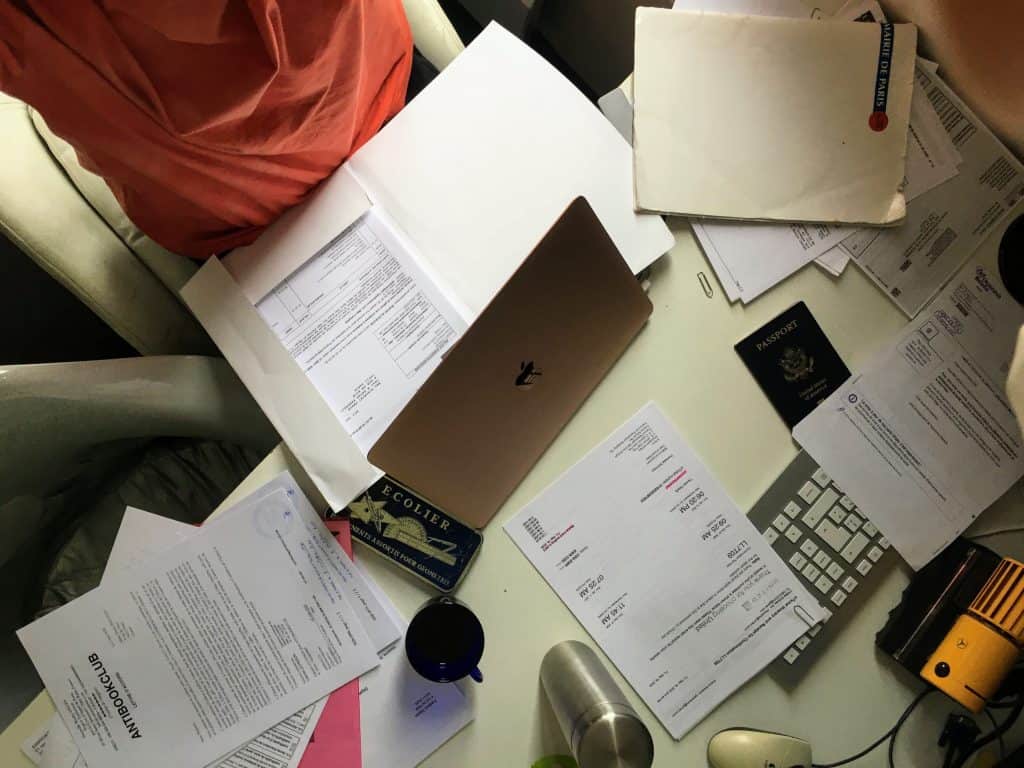
Featured photo is of my contract: I can’t say I ever expected to have to sign a contract with France… 🙂

Did you enjoy this article?  TAIP is 100% reader-supported through tipping.  If you want to leave us a tip of any amount it would be highly appreciated.  These tips help support our efforts to keep TAIP an ad-free environment.  Just like at a cafe, the tips are split evenly among the team. 
prefecture documents

How to Get a Vie Privée et Familiale (VPF) Visa

I first met Gracie over coffee at the end of 2018.  She had some minor questions about visa issues but seemed supremely in command of what she needed to do.  Turned out my impression was true.  Now it’s her turn to help others in this article about how to get a VPF visa. – SH

I’ll never forget the interview for my first long-term stay visitor visa. It was December 2017, and even though I’d quit my desk job and was preparing for the move, the visa was the first real step — it would give me the legal approval to embark on my Paris dreams.

The French Embassy in New York City is just off Central Park East on a block of regal brownstones. I biked there from Brooklyn and switched into low heels and a blazer on the sidewalk: if I was over-dressed at least I would match the buildings.

The last question the woman asked during my interview was if I’d return to the U.S. at the end of the year. “If I don’t meet a Frenchman,” flashed through my mind. But I was being quizzed and this was the final question, so I nodded politely and kept my hypothetical romances to myself.

My Frenchman, Frédéric, appeared four months into my first visa, and we were PACSed (PACS stands for pacte civil de solidarité and is judicially one step below marriage in France) a year-and-a-half later. With my third visitor visa expiring in February 2021, applying for a Vie Privée et Familiale (otherwise known as VPF) visa was the next step in my immigration journey.

A Bit of Background

The differences between the two visas are tied to the rights they give you: a VPF visa allows you to work, to receive a Carte Vitale, and to leave the country for one to four years (depending on the length of stay you’re granted). The long-term stay visitor visa allows you to spend a year in the country, and…that’s about it. It’s simple when you think about the names — the VPF visa proves you have a (private or familial) tie with the country while the visitor visa means, well, you’re a visitor.

Since Fred and I are PACSed, please keep in mind I’m writing from that perspective. (This visa is also available to married couples with slightly different requirements, which I’ll include where possible.) Since I knew getting PACSed allowed me to apply for this visa, when I was starting that process in June 2019, I was also taking steps for my future VPF visa application. This means I’d spent nineteen months getting ready.

Preparation: A Year Out

Check the visa requirements

In order to apply for a VPF visa, you must be married or PACSed.  If the former, you need to have proof of your marriage, as well as six months of residence if you didn’t arrive on a long-stay visitor visa.  If you did arrive on a visitor visa, there’s no waiting period.  For those who are PACSed, you have to, as you do with so many things in France, prove the validity of this relationship, and that you’ve lived together for at least a year (though you can begin the process before those 12 months are up). The list of documents the prefecture sends after you book your appointment is more arcane, while the government site simply asks for the following documents:

    1. Your long-stay visa or residence permit
    2. Your passport (with photocopies of the pages relating to civil status, validity dates, and entry stamps)
    3. Your birth certificate
    4. Three standard-sized photos
    5. Identity card or certificate of French nationality of your spouse/partner
    6. Marriage certificate or PACS agreement of fewer than 3 months (or certificate of PACS fewer than 3 months old if the PACS is older)
    7. Proof of community of life: joint declaration on the honor of the couple attesting to their common life and all documents allowing to establish the community of life (lease, EDF bill, bank statement, etc.) over at least one year

Get your documents in the right names

You’ll need to add both your names to the EDF bill, lease statement, and internet bill, as well as possibly open a joint bank account.  Whenever it’s possible, it’s best to have both your and your partner’s names on the document.

Note: This is not as easy as it sounds, and may take at least a month for everything to be in place. Be patient and steadfast in the daunting task of navigating French customer service.

Request birth certificate

You may already have one from a former visa or your PACS. If not, request it now since it needs to have an apostille which adds an additional step, depending on what state you were born in.

Note: If you don’t know about an apostille is, read more about them here. I naively thought they were unimportant only to have my birth certificate rejected when submitting the paperwork for my PACS.

Four Months Out

Make the appointment

Again, this might sound simple, but I spent two weeks in July 2020 calling the prefecture before getting through to a secretary.

(Note: If you’re switching visas, you’re required to make an appointment by phone.)

Wait times were abnormally high due to the backup caused by the confinement of March – May 2020. Regardless, the prefecture may be fully booked for appointments three-four months ahead, and with all things French government-related, it’s best to assume the worst-case scenario.

Note: Your spouse/partner must come to the appointment as well, so make sure it works with both of your schedules. Once you received your convocation, it’s difficult to change the time.

Review Prefecture List

You’ll receive your appointment confirmation via email, as well as the list of documents. In addition to the standard IDs listed above, here are the ones requested pertaining to my situation, which was “Proof of Personal and Family Ties in France”:

    • For the married: your marriage certificate
    • For those who are PACSed:
      • A copy of the PACS and certificate of non-dissolution of fewer than 3 months etc.
      • Proof of continuous relations with the members of the family living in France: cohabiting partner or civil partnership.
      • Justification by any means of the duration of continuous residence in France: visa, receipt of an application for the residence permit, documents from a public administration (prefecture, social service), documents from a private institution (medical certificate, bank statements), personal writings (letters, certificates from relatives).
      • Supporting documents on the applicant’s living conditions (income, salaries, bank statements, etc.).
      • Proof of its integration into French society (certificates from friendly circles, membership of associations, voluntary activity, participation in children’s school activities, etc.).

As you can see, the prefecture list is lengthier and less document-specific than the online list. My takeaways were:

    • The prefecture is still looking for proof of your and your partner’s shared life, as well as your commitment to your life in France.
    • The fact that I already had three years’ worth of visas, and was a member of two societies was in my favor.
    • I’d also need proof of my US income.
    • And, as always, for the French, the more documents, the better.

One Month Out

Request “Certificat de non-dissolution de PACS

This can be done via email (pacs.scec@diplomatie.gouv.fr): read more here. In the response to my request, the bureau said there was no record of our PACS, and I needed to have the mairie send a copy. At the mairie where we were PACSed, they found the certificate which had never actually been sent to Nantes. These bureaucratic mishaps are quite common, hence the generous timeline.

Submit Translations

Since I couldn’t legally work in France with my visitor visa, and am self-employed in the US, I had a recent freelance agreement and my book royalty contract translated from English. Whenever possible, the original documents must be submitted to the translator and stamped along with the translation. The Minister of Justice has a list of certified translators, and you’re expected to use one of them.

Note: If you’re getting a birth certificate, this must be translated as well.

Week Out

Print and organize all documents

I’m not exaggerating when I say this took hours, and I’m grateful I gave myself time to do it. In the end, I had four different folders sorted into:

  • personal ID documents
  • shared documents
  • personal financial documents
  • bonus documents.

Note: This level of organization calmed my visa anxiety, and might not be necessary if you’re less intimidated by the process.

Make sure you have photocopies

Whenever you know you’ll be keeping the original document (i.e. your passport), you’ll need to make a photocopy to give to the prefecture.

Note: Be sure to make copies of the front and back of any ID cards or other two-sided documents.

Appointment Day

Arrive at least a half hour early

This will give you time to go through security, find your appointment room, and wait. As always, I dress my best when the most is at stake, and wore a blazer and a button-up blouse to soothe my bureaucratic anxieties.

Bring those documents; this was my final list:

    1. Convocation with my appointment time
    2. List of documents
    3. Request for the Titre de Séjour (you’re usually given this form at the prefecture)
    4. My passport (which also contains my first visa, along with photocopies)
    5. Three standard-sized photos
    6. My current carte de séjour (plus photocopies)
    7. Photocopies of all my visas and récépissés
    8. My birth certificate (with apostille and translation, plus photocopy)
    9. Fred’s French passport (plus photocopy)
    10. PACS récépissé
    11. Attestation de non-dissolution de PACS
    12. Joint bank statements
    13. EDF Bills
    14. Personal French bank statements (with our shared address)
    15. US bank statements
    16. Translated US income documents
    17. Attestations from the two French societies where I’m a member
    18. Credit card statements with flights to the US and tires we’d bought for our van
    19. Letter from Fred’s business partners corroborating our relationship
    20. Letter from my former roommate corroborating my and Fred’s relationship and co-habitation

At the Appointment

The man was most interested in the “shared” documents we had proving our life together aka our vie commune. When I mentioned I had additional documents, he wasn’t interested and only asked for 12 items of the 20 I had with me:

    1. Request for the Titre de Séjour (you’re usually given this form at the prefecture)
    2. My passport (which also contains my first two visas, plus photocopies)
    3. Three standard-sized photos
    4. My current carte de séjour (plus photocopies)
    5. Photocopies of all my visas and récépissés
    6. My birth certificate (with apostille and translation, plus photocopy)
    7. Fred’s French passport (plus photocopy)
    8. PACS récépissé
    9. Attestation de non-dissolution de PACS
    10. Joint bank statements
    11. EDF bills
    12. Personal French bank statements (for both partners)

Since neither of the document lists mentioned #12, Fred didn’t bring anything besides his passport and a copy of his deed. But the man asked Fred for twelve months of bank statements: our joint bank account was less than twelve months old, and he wasn’t interested in the deed.

When we didn’t have them, the man said we could bring them back that afternoon, and wrote a note on my original convocation which let me re-enter the prefecture. After I came back with the statements and bypassed the line, he printed the récépissé for my new one-year VPF visa.

During the appointment, he also asked if I had a degree in French. Although I speak the language fluently, I’ve only studied it in America. When I went back, I asked him about this and he said if I had a degree or had taken the DELF (which Stephen has written about) I’d be eligible for a longer-term visa.

For all its horror stories, I’ve never had an unreasonably negative experience at the prefecture. That said, I’m also aggressively prepared and speak unfailingly courteous French. Though I wish I hadn’t wasted paper in printing those extra documents, I’d rather be over than under-prepared.

Government Stamped Dreams

Back in 2017, when I floated out of the French Embassy, New York City sparkled around me. I biked to Central Park, found a bench in the sun, and basked in the feeling of being closer to my goal. Leaving the prefecture this past October, I was no less ecstatic. Even if they involve months of planning and paperwork, for me, each visa is a new lease on life, a government-stamped document promising I can keep pursuing my dreams.

Gracie Bialecki is a writer and literary coach who lives in Paris, France. She is the co-founder of the storytelling series Thirst, a poetry editor at Paris Lit Up, and the author of the novel Purple Gold (ANTIBOOKCLUB).

Photo used with permission of the author.

TAIP is 100% reader-supported through tipping. If you want to leave us a tip of any amount it would be highly appreciated. These tips help support our efforts to keep TAIP an ad-free environment. Just as at a cafe, the tips are split evenly among the team.