We Wrote a Book, Part II: Publishing

When Stephen first asked me to come on board as a guest writer for The American in Paris I was thrilled — I had long wished for a space where I could speak about my experiences as an expat in France. 

I wrote my first few articles and the feedback we received helped us realize there was a need for more information on getting the student visa, au pair visa, and APS visa, all of which I’ve successfully applied for and received. 

The more we worked together the more we realized the need for a manual — or a guide, really — for Americans who were interested in moving to France from the United States. We did it ourselves (as did our other co-author Gracie Bialecki) and we wanted to help others with the process. Stephen mentioned it before and I’ll say it again: it’s the book that we wish we had at the start of our journeys

What started with an idea to create a 29-day email autoresponder morphed into something much larger: we decided to create an actual paperback book and ebook version to go along with it. We knew that it could potentially help a lot of people and were prepared for the amount of work it would take to get it published. 

Famous last words. At the beginning of our publishing journey, I did a quick Google search: how to self-publish. A slew of articles came up and I skimmed a few. All of them said how easy it would be. I quickly let Stephen and Gracie know that I would be happy to take care of the publishing process myself — I had just opened my native English creative boutique Plume and I was eager to get some publishing experience under my belt. I tend to be optimistic when starting a new project. My motto: How hard could it be?

Well, it turns out a lot harder than you would think! I want to preface this by saying that I am so grateful for the opportunity to be an actual published-in-print writer and I am thrilled with how everything came out. That said, something that I figured would take me ten hours tops ended up taking double, even triple the amount of time.

Figuring out margins, bleed, what quality printing we wanted to go with, page numbers, and crafting areas to take notes inside the book was a long and arduous process. I tried and tried and tried again, uploading manuscript after manuscript into the self-publishing platform we used. After over a dozen attempts, success! Our manuscript was accepted and under review.

With the paperback version taken care of, it was time to figure out the ebook. Because the paperback manuscript was done and dusted this part of the publishing undertaking was a lot easier. That’s not to say that I didn’t spend at least an hour lining up the bullet points. Again, I want to express my gratitude for this project but, phew, who knew publishing could be so complicated? (Anyone in publishing who is reading this article is likely chuckling to themselves).

At this point, the email autoresponder was a piece of cake. Unsurprisingly, it was the easiest part of the project. That’s not to say that I didn’t have to test it out with several different services before finally settling on one that I liked. But, en fin, our project was ready to launch!

And here we are today. Stay tuned for more updates on our book and if you purchase it, please do let us know what you think. We’re so happy and honored to be able to help so many others make their I-want-to-move-to-France dreams come true, as we did.

Molli offers private consultation services which range from help with visas and adjusting to life abroad to Paris travel itineraries. Fill out the contact form to learn more.

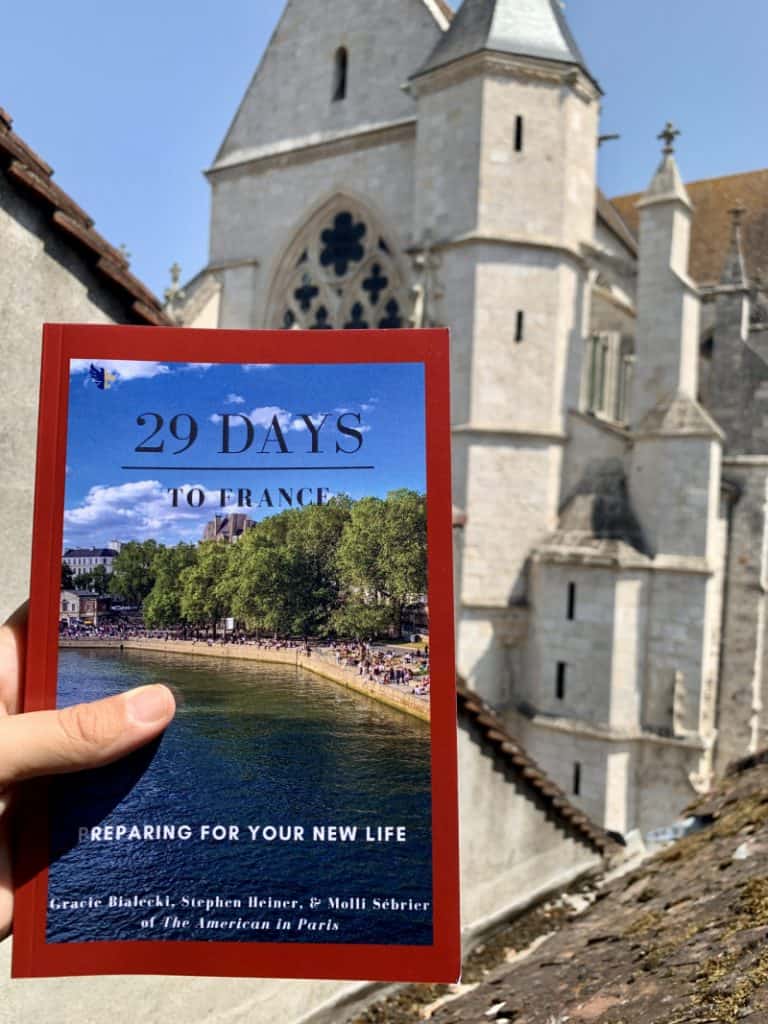
Photo taken outside San Francisco Book Company near the Luxembourg Gardens, after we (finally) got our approved proofs back!

Did you enjoy this article? TAIP is 100% reader-supported through tipping. If you want to leave us a tip of any amount it would be highly appreciated. These tips help support our efforts to keep TAIP an ad-free environment. Just as at a cafe, the tips are split evenly among the team.

We Wrote a Book, Part I: Brainstorming, Writing, and Editing

I’ve said more than once that I never expected TAIP to grow into the resource it has become. I simply wanted to help others who, like myself, wanted to move to France but didn’t know how.

After ten years of helping people who were trying to figure out how to get here, I used that experience to put together a book that goes through how to do to move to France as a non-citizen, step-by-step.

Rather than offer detailed explanations of how to fill out specific visa applications (which can periodically become outdated and which we’ve already offered for free on the site) we took a higher perspective from: once I know that I want to move to France, what are all the things I need to think through in order to make that happen?

We created a set of 29 “Days” which serve as prompts and exercises to prepare you to move to France, broken into three parts, to help get you organized

  • before you arrive
  • when you arrive
  • after you’ve been here for a while

This is the book that I wish I had when I was preparing to move to France.

I didn’t write it alone. TAIP correspondents Molli Sébrier and Gracie Bialecki shared the load.

The book comes in three forms:

  • A traditional paperback, which comes with original photos and two appendices featuring a resource list for Paris residents (doctors, plumbers, accountants, etc.). This purchase also gives access to the digital version, which will be updated annually, and the email autoresponder version, which sends you the book in email form over 29 emails.
  • A digital copy for whichever e-reader you prefer. This version does not include photos or the appendices.
  • An email autoresponder which sends you the content in email form, spaced out over 29 consecutive days.

I’ve worked on publishing projects before, but only as a proofreader or as someone helping behind the scenes to get the project to press. This was my first time as an author, and even there I had help in the form of two co-authors.

There’s such a big gap between “I’d like to write a book” and “I wrote a book” and it’s not just work that fills that gap.

It’s the original brainstorming of what people really need to know before they get here, when they get here, and after they’ve been here a while.

It’s endless proofreading. For those of you who’ve edited work, you know the feeling of finding a typo (“another one?”) on what feels like the 27th pass of a text.

It’s sending galley copies out to reviewers (of which we had half a dozen from the TAIP audience step up and volunteer to help).

It’s personal events and travel that are also jockeying for attention (e.g. Molli left to get married the day after she sent a batch of edits to the publisher, then came right back to that text a couple of weeks later to finish up).

We also wanted to make the information useful but not overwhelmingly so, which led us to create single-page days with specific exercises at the end of each one.

We’ll be sharing more information on this book each month for the rest of the year. For now, I am very happy to have completed the project and am excited to get this book into the hands of those seriously considering a move here. It’s going to make the process so much more enjoyable, fun, and reflective.

Photo taken outside one of the windows of my apartment in Moret, where almost all my chapters of the book were written.

Did you enjoy this article? TAIP is 100% reader-supported through tipping. If you want to leave us a tip of any amount it would be highly appreciated. These tips help support our efforts to keep TAIP an ad-free environment. Just as at a cafe, the tips are split evenly among the team.

Marriage in France, Part II — Religious Ceremony and Reception

If you’ve been following along as I share more about the life I have created for myself in France, you know that I got married (civilly) last March. It was a major step in my personal life as well as my administrative life here in Paris. In the most literal sense, the French government has been very much involved in my relationship. If you’re not in an intercultural relationship like I am this may sound odd to you. For my fellow cross-continental couples, I’m sure you get it.

My now-husband and I had to make a lot of serious decisions somewhat early on in our relationship. When my student visa was about to expire, we had to decide whether we were “for real” or not. We always knew that we didn’t want to do long distance for a variety of reasons. In order for us to be able to legally live in the same place, I needed to figure out my visa situation. 

We decided to get married: we loved each other and knew we wanted to stay together forever. It would also enable me to get the vie privée et familiale (VPF) visa, which would allow me to live and work in France. Eventually, I do plan on getting French nationality, but it’s a long process that I’m not quite ready to embark on just yet. 

You can read all about how to get married civilly in France in the article linked above, so I’ll give you the TL;DR version: you have to gather a lot of paperwork, head to your local town or city hall (la mairie), make your case, and then attend the actual ceremony. It lasts around 20 minutes and it’s legally required in France. Anyone and everyone can also have a religious ceremony if they like, but the marriage won’t be recognized by the state unless you also do the civil ceremony. In fact, you need that marriage certificate to start the religious marriage process (more on that later). 

We always knew that we wanted to have a religious ceremony to celebrate our marriage, but with the last few years of lockdowns and border restrictions, it wasn’t possible for my American friends and family to come to France. After two long years of waiting, I got married in the Catholic Church and had a reception with loved ones on June 4, 2022. I wanted to share the process, and what it was like to bring my two (very separate) lives together at the reception. 

As a note, the information I’ll be providing is for a Catholic wedding between an American and French person. Other religions or nationalities may require different documents and processes.

Documents You’ll Need

So, you thought the document-gathering process was over after the civil ceremony? I hate to burst your bubble, but nope. Luckily, most of the documents required are the same so you shouldn’t have to do much hunting. That said, you will need to provide a few more specific pieces of information before you get started:

For the American:

  • Passport
  • Birth certificate — it needs to be no less than three months old and you need an official apostille as well. Then, you’ll have to get it translated into French by a certified translator. 
  • Baptism certificate — again, officially translated.

For the French person:

  • Passport
  • Birth certificate — remember that it needs to be no less than three months old.
  • Baptism certificate 

You also need to provide your marriage certificate. This is why it’s essential to get married at the town hall before the church. Most people don’t wait over a year to do it as I did, but many do at least a few months before. My in-laws actually did the civil ceremony the same day as the religious one. I suggest that you give yourself at least a few weeks between the two as otherwise, you’ll be setting yourself up for a very long and stressful day. The marriage certificate is the last piece of the puzzle that you’ll need on the actual day of the religious ceremony, and so most parishes are used to receiving this part of your dossier last.

One hiccup that I hit when gathering my paperwork was that I was under the impression that only one of us needed to provide a baptism certificate in order to get married in the Catholic Church. Although I am baptized, I figured it would be one less thing to get translated so I was happy about that. The church where we got married insisted that BOTH my husband and I show proof of baptism for reasons that are still unclear to me. Maybe they just wanted to see what an American baptism certificate looked like? Who knows, but I complied. 

Going Through Pre-Cana

Pre-Cana is the preparation process required by the Catholic Church in order to get married. In French, they simply refer to it as the préparation du mariage. It is a long and at times arduous procedure but overall we both really enjoyed it. We were also sponsored by a couple in the church, who happened to be my sister-in-law’s in-laws which made me feel really comfortable. 

We were required to attend four meetings:

  1. First meeting — a few hours long presentation on the four pillars of marriage. This was by far the largest and the longest meeting we attended. Between 15-20 other couples were there with us.
  2. Second meeting — a more intimate meeting between our sponsors and three other couples. We had to do it over Zoom for health concern reasons, unfortunately.
  3. Third meeting — another intimate meeting with our sponsors and our fellow couples. Again, it was done via Zoom but normally these rendez-vous are conducted in person.
  4. Fourth meeting — we were back with the large group for the last meeting. A priest was present and he spoke more about the four pillars of marriage.

We also had to meet with the priest who was going to marry us. My husband is quite close with the priest that he grew up going to Mass with and it was really important to him that he marry us. He happily obliged (I really appreciate this priest so I was thrilled as well) and it was decided, he would be there to consecrate our union.

This part was really fun: we traveled down to Lyon where Father lives and stayed with him in the rectory for the weekend. We got our own private room and we shared our meals with the other priests that live there. We also got to explore a new city, one that is lovingly referred to as the Gastronomy Capital of France. Needless to say, it was a great weekend.

Father also worked with us on our lettre d’intention (letter of intention), another essential part of Pre-Cana. I wrote one addressed to my husband and he did the same for me. Inside, we shared our expectations of our union: our hopes and dreams, how we want to raise our children, and what the four pillars of marriage mean to us. It’s private and to be shared only with the couple and the priest. It’s actually legally required for a religious ceremony, but it also holds a lot of sentimental value. We would have written them even if it wasn’t mandatory.

Once you’ve gone through Pre-Cana, the priest marrying you will take care of the rest. He will need to send off your completed dossier to the diocese where you live as well as to the parish where you plan to get married so that it can be verified. You’ll sign another (religious) marriage certificate on the day of your wedding, in front of your friends and family.

Bringing My Two Worlds Together

As I mentioned, we were forced to wait a year and a half after our civil ceremony to get married in the church. I say “forced,” but it was really because my American loved ones weren’t legally allowed to enter France for many years due to border restrictions. As soon as the borders opened back up we jumped back into planning mode: the wedding was on!

Logistically, bringing 30 Americans (who are scattered across the US) over to France was easier said than done. I didn’t get married in Paris, but rather ​​in Mouthiers-sur-Boëme in the Charente department. If you’re familiar with the area, the closest “big city” is Angoulême. It’s a beautiful area (my husband grew up there), but it also meant having to guide folks from the CDG airport, down to Montparnasse station, and then on to Angoulême. Yeah. Easier said than done.

No matter how difficult and stressful the whole thing was, being able to share this day with everyone who mattered to us was one of the most special moments I’ve ever experienced. It was a rollercoaster of emotions: stress (so real I have to say it twice), joy, surprise, grief (for those who weren’t there), relief, comfort, and of course, love. 

I never thought I would see everyone I love gathered in the same place; they traveled across continents and oceans and time zones just to be there for me and my husband. It was a lot of work to make it happen, but I don’t regret a single second of it. 

Now, I’m starting a new phase of my life in France and to that I say, bring it on.

Molli offers private consultation services which range from help with visas and adjusting to life abroad to Paris travel itineraries. Fill out the contact form to learn more.

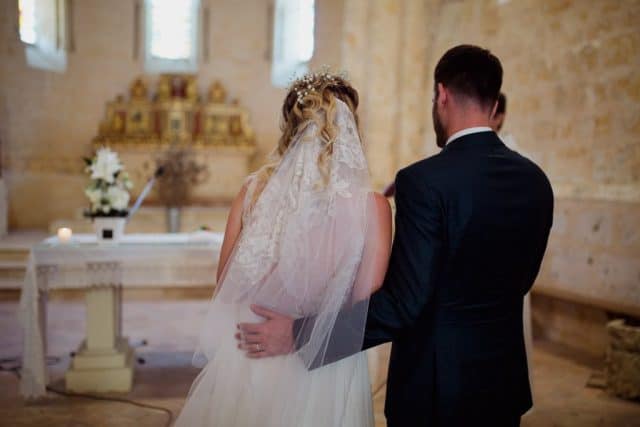
Photo from Molli’s wedding taken by the talented Pauline Maroussia P.

Did you enjoy this article? TAIP is 100% reader-supported through tipping. If you want to leave us a tip of any amount it would be highly appreciated. These tips help support our efforts to keep TAIP an ad-free environment. Just as at a cafe, the tips are split evenly among the team.
Mailbag: Home Improvement, Crooks, and Real Estate Lawsuits in France

It’s been a couple of years since I’ve done a Mailbag article. Because so many questions are answered in the comments section of articles or in our Facebook group, I have less and less of a need to do one, but every now and then, I get an email that will be instructive for the general public. This one came earlier this year. The names have been changed and some edits have been made for grammatical consistency.

***

Dear Stephen

You probably don’t remember me but a few years ago you helped connect me with someone to help me with financial matters and I appreciated that. Now I have a new even bigger issue that I don’t think will be as easily solved, however. How do I handle a crook contractor who took my money and never finished the house?

I am an American and have been living in Montpellier since 2008. In 2019, I thought I knew the French system enough to build my own house. Wanting to be careful, I bought a plot with a home on it from a real state agency, Malhonnete Immobilier. The project was already underway (the builder and permits were ready) but the previous buyer had given up because they didn’t get a mortgage.

I bought the plot, but when it came time to sign the building contract, I got a little suspicious because the contractor didn’t have an obvious track record. This is when the immobilier’s general manager took me to see his own house that the same contractor was working on. He assured me that the guy was good and should finish my house in no time.

Well, I signed for the house and even added a pool to the plans. But work started and never finished.

For the past two years I’ve tried to negotiate with the contractor as everyone was saying that it was unlikely that I could get anything done by legal means. I refused to listen and hired lawyers who took my money and promised to get the contractor to finish the work. Two years on, the lawyer suddenly told me that it is a dead end!

In fact, six months ago, I had found out that the contractor had changed the name of his company and modified the registration number for business purposes, going from general constructions/menuiserie to just menuiserie. He had transferred everything from his old company (Menteur Construction) to a new one (Menuiserie 42) he had established a few years back.

I was the one to inform the lawyer and the Court d’Appel that was in process of checking the “Expertise” what has been done and not done. However, the contractor is still operating in the same office, with the same phone number, same email, and same team, doing the same type of work. He still drives expensive cars and has multiple houses. But apparently I only have to wait for the Juge de liquidation to find the money which I am told offers little chance of me getting anything.

The contractor (M. Voleur) when he responds to me, blames the real state agency manager (M. Escroc). Apparently they had a falling out and the agency stopped referring and giving him work, thus he had to close the old company.

I am broke because I have to pay my mortgages, the lawyers, the court, as well as fix the house in order to be able to live in it.

I am desperate. I trusted the French system and I still don’t understand how I have to be one to pay for the contractor’s mismanagement.

At this point, I will welcome any ideas or help! Do you know any good lawyers who can help?

Thank you
Sally

***

Dear Sally

I’m terribly sorry to hear about this. If I had not recently read L’Appart, by David Lebovitz, written in 2017 to chronicle the absolutely money-draining remodeling project of his apartment in Paris, I would not really have anything to say to you. But, after having read the more than 300 pages of that book, and knowing what he went through, here are some disheartening things you have to understand:

  • the law in France is not the same as the law in Anglo-Saxon countries
  • the laws in France are biased against the owners of the property
  • the people involved in homes, from the agents to contractors, are known by French society to be generally crooked and untrustworthy
  • you’ve learned the hard and expensive way that the legal route on these matters in France is expensive and in the end, gets you nowhere

My advice would be to cut your losses and figure out another path forward. You need to mentally divorce yourself from the idea that this will be resolved financially, legally, or even morally.

It’s tough to hear, I’m sure, but simply from reading David Lebovitz’s account and reading your details, I can’t think of another conclusion. I do think that the fact that you “refused to listen” to people and hired lawyers instead was your fatal, and very American, way of thinking.

We are not in America, anymore. The fact that after all this experience you end your letter by asking “if I know a good lawyer” makes me wonder…have you even learned from this experience, because you seem to keep going back, thinking you will get a different solution, when the answers are right in your face: the legal route in France regarding home contractors is a dead end!

***

Jean Taquet often features stories like this in his newsletter to give a broader perspective and after CCing him on my response to her, he CCed me on his own response.

Dear Sally

I want to make several small comments before I get to the legal issue which in France is totally different from the USA.

The worst horror stories I know about regarding contractors, real estate agents, and so on happened in the USA. I am not saying that everything regarding this matter is worse in the USA.

All I am saying is that at my level as a professional-helping-foreigners in France, I have dealt with plenty of awful situations happening in France, and I am aware of similar situations that exist in the USA.

It is absolutely true that the professional ethic benchmark for real-estate agents holding a license is much lower in France than in the USA. The good news is that there are more and more French laws being passed to limit the amount of lying they can do without legal or professional consequences. This said, this applies more to apartment transactions and less to the houses in the countryside.

I was about to buy a house in Burgundy when I discovered in studying the title that half of it was storage space, and a pottery shop which had been totally made over into a living room, bedroom, and so on without a building permit and neither the seller nor the real estate agent ever said a thing about it. And we were accused of bad faith when we walked out of the deal because this was not, in his words, a “big deal”!

Now the legal issue.

In the USA, when there is a liability issue with a professional the plaintiff just needs to prove the existence of damage and to hint that the professional is responsible to put the burden of proof on the professional. This means that the professional has to work hard to get out of this liability.

In France, the system is totally opposite. You as the victim and therefore the plaintiff have to prove “la faute civile” which is defined this way:

1 – prouver l’existence du dommage
2 – prouver l’existence de la faute dommageable
3 – prouver le lien de causalité

This translates to:
1 – proving the existence of a damage i.e., a financial loss
2 – proving the specific wrongdoing that caused the loss
3 – proving the direct and therefore the unique link between the damage and the wrongdoing

In short you cannot just go to court and state that:

  • these are all the awful things that have happened to me because of the work done on my property and
  • this is the company that is doing the work

What you were hoping for is that the court would sentence them and order damages to be paid to you.

This is the American way not the French one.

This is the extent of what I can help you with. I just thought that explaining this might help you better understand what you are going through.

Kindly
Jean

***

It goes without saying that laws around real estate are wildly different in many countries. For example, in Thailand, a foreigner cannot even own property. I hope this Mailbag entry properly cautions Americans and others who have a false perception of how real estate works in France. You’re not in Kansas anymore.

Did you enjoy this article? TAIP is 100% reader-supported through tipping. If you want to leave us a tip of any amount it would be highly appreciated. These tips help support our efforts to keep TAIP an ad-free environment. Just as at a cafe, the tips are split evenly among the team.
Marriage in France, Part I — Civil Ceremony

In March of last year, I officially became Madame. When I first came back to France to live, I never thought that just 7 years later I would be a married woman. Being in an intercultural relationship meant that my now-husband and I had to have a lot of serious conversations early on in our relationship. About three years in, I was coming to the end of my student visa, which meant I had to either leave France or figure out another way to legally stay here.  

After a lot of late-night talks, we decided to get married. It may not sound very romantic, but it was! If you want I can get super corny and say that it was love at first sight (it was) but I’ll refrain. 

Like any administrative task in France, getting married involves a lot of paperwork, and slightly more if you’re not French like me. And, yes, getting married can be considered an administrative task here. If you find yourself in the same situation as I did — an American marrying a French person — then you may find this article helpful.

Documents You’ll Need

The first step is to determine where you want to get married. Most people choose their local town hall (Mairie in French), however, it is possible to get married elsewhere — for example, my husband and I had our ceremony in the suburb where his parents live. 

The town hall that you choose is important as in order to get married you’ll be required to show proof of address. While there is no hard and fast rule that states that you must be married where you live, you may raise suspicions of a “mariage blanc” (the French version of a “green card marriage”) if you choose an obscure town that neither you nor your future spouse has ties to. 

In true French fashion, now you need to start gathering paperwork. But, before you do that, you’ll have to go to the town hall of your choice to make an appointment to drop off your file. Simply tell the person at the front desk that you want to get married there and that you’re ready to make an appointment to drop off your dossier, which is the French term for the pile of paperwork you’ll need to produce. They will give you a list of everything that you need. Be sure to include:

For the American:

  • Passport
  • Birth certificate — issued no more than three months before you drop off your paperwork. Remember to ask your town or city hall to include the apostille (here’s where I made a huge mistake — I forgot to ask for the apostille and it set me back at least a month!). You’ll also need to have your birth certificate and apostille officially translated into French.
  • Proof of address
  • Proof that you are not currently married — this document technically doesn’t exist in the United States, but you can find the equivalent on the US Embassy website here. I was not required to have my signature notarized, but you may be depending on the town hall. Follow the instructions on the page above if that is the case.

For the French person:

  • French ID card or passport
  • Birth certificate — issued no more than three months before you drop off your paperwork. This can be found in the town hall where your Frenchie was born.
  • Proof of address

You’ll also need to bring information about your witnesses. I personally had one witness and my husband had two. On a piece of paper, simply write down their names, birth dates, where they were born, current address, and profession. You’ll also need a copy of their IDs.

The Waiting Game

When you go to the town hall to drop off your paperwork, the person working there will sit down with you and your future spouse to make sure that you have everything you need. If everything checks out, you’ll be able to pick your tentative wedding date then and there! 

Once you’ve picked your date, you’ll have to wait at least a week for the town hall to double-check that you have all of the correct paperwork. I mentioned above that you’re allowed to choose a tentative wedding date as it can’t be confirmed until the mayor, or assistant mayor has gone over your file him or herself and signs off on it. 

Don’t be afraid to call the town hall if you haven’t heard back from them within a week’s time. We hadn’t heard anything ten days after we dropped our file off and so my husband called them to see what was going on. Again, in true French fashion, they had simply forgotten to call and tell us that we were all set. The longer you live in France, the more you’ll realize that a lot of administrative tasks involve patience and a little bit of pushiness. 

On the Day of the Wedding

The big day. Congratulations, your relationship is about to be officially recognized by France. On the day of the ceremony, you won’t have to worry about bringing any paperwork as all of that is already taken care of. You just need to show up with your future spouse, witnesses, friends, and family. 

The ceremony itself isn’t usually longer than 20 minutes. The assistant mayor (or mayor, if you’re lucky) will make a speech. Then, he or she will ask you and your future spouse if you consent to marry each other. After a few ouis, the newlyweds and the witnesses sign the marriage certificate. Then the fun can begin.

A Note on the “Wedding Contract”

As you do your research on what you need to get married in France, you’ll likely come across the words contrat de mariage or a certificat de notaire. If you don’t plan on drawing up a prenuptial agreement (or, at least, the French equivalent), then don’t worry about any of that. You are not required to have a wedding contract, but if you’re interested in one, you’ll have to talk to a certified notary. 

Molli offers private consultation services which range from help with visas and adjusting to life abroad to Paris travel itineraries. Fill out the contact form to learn more.

Photo by Yan Berthemy on Unsplash

Did you enjoy this article? TAIP is 100% reader-supported through tipping. If you want to leave us a tip of any amount it would be highly appreciated. These tips help support our efforts to keep TAIP an ad-free environment. Just as at a cafe, the tips are split evenly among the team.
Paris apartment photo

Getting a Paris Apartment: My Story

Stephanie shows by this article that you don’t always have to have your plans figured out before you get here, as long as you’re willing to hustle a bit. 🙂 -SH

The many expats I’ve met in Paris all seem to have organized their move to France with precise detail, preparing months and months in advance. TAIP’s upcoming book is an example of that.

My experience was a little different.

I pretty much threw things together, gave myself just over a month to prepare (from applying for the visa to hopping on the plane), and left everything in my NYC apartment just in case my big Paris move did not go as planned.

Fortunately, everything worked out, with a few bumps here and there.

Pivoting to Paris

My decision to move to France came about after experiencing the sudden loss of a close member of my family. I was absolutely devastated and a tsunami of grief consumed my mind and soul.

I needed to get away from NYC. I needed to heal. Paris was the place I wanted to be.

Returning to live in France had been on my bucket list ever since spending a few years in Bordeaux right after college. The dream had remained on the back burner for years until the family crisis put everything into perspective.

France healed me many moons ago and I knew it could heal me now. And it was imperative to make things happen quickly before my logical brain tried to convince me to stay put.

While the move might have looked risky to those around me, it really wasn’t. My business is portable and I had tried on the digital nomad lifestyle the year before. It worked then and I knew it could work in Paris now.

After a helpful phone consult with the TAIP team, I moved full speed ahead with the visa paperwork and a little over a month later arrived in Paris with a reservation for a two-week stay in an Airbnb in the 2nd arrondissement, one large suitcase in hand and the goal to get an apartment of my own.

Because I spoke the language and had a good sense of the culture, I thought I could roll into Paris and things would come together quickly.

Nope.

In retrospect, things ended up coming together pretty quickly, but at the time, it was stressful with a lot of uncertainty and bumps along the way. It’s clear I underestimated what was entailed.

One Step At A Time

Almost immediately after landing in Paris, I began looking for permanent digs. My goal was a furnished one-bedroom apartment in central Paris, i.e. a single-digit arrondissement.

Coming from NYC, the land of small and expensive apartments, I found that rents in Paris were less than what I would expect to pay back home. Newcomers from less-pricey locales may experience sticker shock or surprise at the size of the average Parisian rental.

A friend who had lived in Paris suggested looking at the English-language site Fusac. Fusac is an online ad space with varied listings including rental apartments and sublets.

With Fusac, it’s a bit catch-as-catch-can. Listings are not extensive but one in the Marais (3rdarrondissement) caught my eye.

While the place turned out to only be available for a short-term sublet, it was perfect as a stop-gap as it allowed me to stop paying nightly Airbnb rates should the search drag on.

The owner’s son was able to show me the apartment right away; it turned out to be spacious, charming, and well-located. The Belgian owner lived in Bali, and rented his place out for a few months at a time at a nightly rate that was much less than what I was paying at the Airbnb.

I grabbed it right away as a short-term solution while I continued to look. No papers were signed on either side nor was a security deposit requested. I simply wired the money for the first month and picked up keys from the neighbor. Sending money without a written agreement might have seemed risky at the time — and I would certainly never recommend it — but it felt right and everything turned out great.

Having a reasonable place to stay for two months was a Godsend. I now had some breathing room while I continued to search for a permanent place.

Apps, Listings, and Unresponsive Brokers, Oh My!

Paris has a number of apartment listing apps where you can set up alerts with your desired criteria: neighborhood(s), apartment size, rent range, elevator or walk-up, furnished, etc. Some of the ones I used are seloger.com, pap.fr, nestoria.fr, and jinka.fr.

Pap is short for particulier à particulier, person to person, with the big bonus of no agency fees though there is a heightened risk of being scammed.

The other sites mainly have agency listings.

What’s terrific about Paris is the surfeit of furnished listings. And when I say furnished, we’re not just talking furniture. In the case of the apartment I eventually rented, it came with everything, including sheets, towels, pillows, and bedding, a fully-equipped kitchen with plates, glasses, and silverware, even an umbrella, iron, coat hangers, and cleaning supplies. It feels like an Airbnb where you roll up with your suitcase and you’re ready to go.

As a foreigner arriving in Paris with just a suitcase, furnished apartments are a godsend.

The one drawback is that the landlord can (but doesn’t always) ask for two months of security deposit for a furnished apartment as opposed to one month for a non-furnished apartment, but that seemed like a fair exchange compared to the savings in time, energy and money outfitting an apartment.

Upping My Chances

To rent an apartment in Paris, the barrier to entry is high, and not being French makes things harder. The market is competitive and because renters’ rights are very strong in France and it’s hard to kick out non-paying tenants, landlords are risk averse.

As a self-employed American without a CDI which proves that the person has a permanent job and a regular paycheck, I needed a guarantor to co-sign the lease alongside me, guaranteeing the rent would be covered if I stopped paying. French friends could have done this for me, but it seemed like too much of an ask to have them submit a ton of financial paperwork, so I went with the private guarantor service garantme.

The garantme process involved submitting a bunch of financial paperwork (tax returns, bank statements, and a letter from my accountant), but within about 24 hours I was approved and received a Certificate of Eligibility which stated that I was good to pay up to X amount per month. I then submitted the certificate number as part of my dossier for any apartment I was interested in.

Garantme does not come cheap. The tenant pays Garantme 3.5% of the annual rent including charges and this is for every year of the lease. The landlord pays nothing. There is no upfront fee with garantme; the fee is paid only at lease signing.

The Search Unfolds

The alerts I had set up were working and I was getting pinged several times a day with new listings. Some looked decent; some not so much.

Initially, I sent out messages and…crickets.

Things changed for the better once I had the garantme certificate in hand, which I made sure to mention in my outgoing messages to agents. Finally, some responses.

Eventually some apartments actually started being offered to me: through Fusac, a six-floor walk-up on the Left bank that was only available as a long-term sublet, and a duplex apartment in the Marais which looked amazing on video but could only be viewed via video, not in person.

Neither felt quite right and I wasn’t desperate yet thanks to the breathing room my two-month sublet gave me. I declined both.

Then through seloger came a listing for a super cute one-bedroom in the Marais just down the street from my sublet. It ticked all the boxes: great neighborhood, cute design, elevator, bike storage, and air conditioning. The biggest plus was that the agent actually responded to my message. A visit was set up.

The place was better than many I’d seen and by this point the search was wearing on me. I talked up the garantme certificate to the agent and he told me that there were three other interested parties. I just wanted to be done. I needed to get settled and start my business back up. To sweeten the deal, in typical NYC closer fashion I offered up an additional 100 euros a month beyond the advertised rent.

The landlord was making her decision later in a week.

In the interim, another option came in through PAP. Located in a landmark building in the heart of the Marais, the apartment was impeccable and could have easily appeared in a designer mag. It had everything I could have wanted and I would have given anything to live there. I sent the landlord a heartfelt note about why I would be an amazing tenant, but alas, she went with another applicant.

She had made it clear she was looking for a stable tenant who would stay for the long term, and in retrospect as a self-employed American having just arrived in Paris, I don’t think I quite fit the profile she was looking for.

Eureka!

Back to Plan A. The super cute Marais one bedroom was offered to me, and it was an immediate yes on my part. The idea of getting the apartment search off my to-do list was pure relief.

The next steps involved paying garantme, signing the lease, paying the security deposit, and then obtaining renters’ insurance, which my landlord required. The real estate agent connected me with a company that assisted with getting the electrical bill switched to my name and setting up wifi.

Having a signed lease in hand became the golden ticket allowing me to open a French bank account, which up to that point had been a time-consuming and fruitless quest.

At move-in I paid the agency fee and the first month’s rent.

Between all the fees and the two months of security, getting my Paris pad has required me to pony up quite a bit upfront. And it was practically a full-time endeavor when I was in the thick of it. But hearing about other expat’s nightmare stories of schlepping from one Airbnb or sublet to the next because they cannot get a landlord to rent to them, I consider myself lucky.  It’s been three months since move-in and now that the stress of the search is over, I couldn’t be happier with my new home.

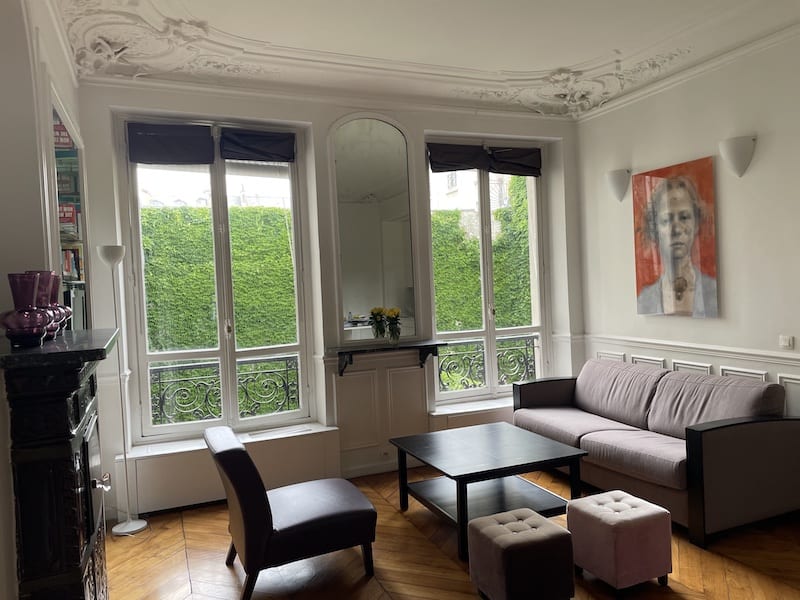
Photo is of my new place!

Did you enjoy this article? TAIP is 100% reader-supported through tipping. If you want to leave us a tip of any amount it would be highly appreciated. These tips help support our efforts to keep TAIP an ad-free environment. Just as at a cafe, the tips are split evenly among the team.

collector car

How to Get the Collectors’ Car Status in France

I first met Marlene some years ago when she started coming to my Paris Shakespeare Project. We’ve since become good friends and recently were in Stratford-on-Avon together to take in a couple of plays from the Bard at the Royal Shakespeare Company. This non-Shakespearean article is her first one for TAIP, though her fifty years here in France dwarfs that of any of our other writers, and I hope she will continue to write many more for us. This article illustrates that even when you’ve lived in France for fifty years, you may have to literally scale fences to get French bureaucracy to work for you. -SH

As you drive out of the car dealer’s in your shiny, brand-new car, do you wonder how long until it will seem to be getting old? When does it become an old wreck and when, by magic, will it become a collector’s item worth more than you originally paid for it, inflation notwithstanding? 

Cars lose 20-25% of their value after the first year, and continue dwindling every year thereafter.

There exists in France what once was a magazine and has now become an internet site called L’Argus, analogous to what Americans know as the Kelley Blue Book. Since its inception in 1927, it gives an average/fair price for a second-hand car according to make, model, age, and condition. All negotiations for buying and selling a used car begin with the Argus. A new car dealer may offer “the Argus + 10%” as a trade-in incentive for an old car. A car with fewer than the average 10,000 km/year on the meter should be worth “more than the Argus.” Insurance companies reimburse the Argus value (and no more!) in case of an accident. During WW2 the French government used the Argus value to determine how much an owner would receive if their car was requisitioned.

Obviously, as a car gets older its Argus value declines until at 15 years of age it slides off the charts. At this point insurance companies will give nothing for it in case of an accident, or a nominal sum as junk-yard material.

My Peugeot

So consider the case of my beloved Peugeot 205. I bought it when my son was born with basic criteria: automatic, 4-door, small enough to park in Paris (a survival criterium), yet comfortable enough for travel. With no second thoughts concerning its age on one occasion I drove from Paris to the boot of Italy with my two 7-year-olds: car and son. No disasters occurred.

As the car aged (along with my son and myself) there was no reason to change. I drove it less and less as Paris traffic and parking became worse and worse and my preferred travelling means was by train and plane. The car became a simple convenience to do twice-a-month shopping. I get it tuned up every two years according to French law and have bought a parking place for it in the garage across the street where it sleeps mostly collecting dust, getting washed only every few years. I figured there was no reason to get a new car as this one works and responds to my few needs. 

However, with the recent ban on old cars in Paris during work hours, I was awakened to a conundrum: I have a perfectly functional car that suits me, with less than 90,000 km on the dial, whose use has become restricted; what should I do? Living near the Paris borders and only using the car for short runs to the supermarket, I did as all the French do and depended on “tolerance” in the law: If I got stopped by the police I would look them sadly in the eye and say, “I’m so sorry officer, but at my age what do I want with a new car to do my once-a-month shopping?” So far I’ve never been stopped for the age of my car and haven’t been able to try out my line.

Solution

But a new solution eventually came to light. If the car is declared a collectible, it can be driven anywhere, anytime. The other perks of this denomination are that it must pass a compulsory vehicle inspection every five years instead of two, and, wonder of wonders, the cost of insurance goes down, even as the value of the car goes up!

In a country where every aspect of life is regulated from cradle to grave and everything in-between (my father once asked, “Don’t they let you breathe over there?”) car collectability is not neglected. Only in France, does a car become a collector’s item through the government administration whether the collectors are out there or not!

A car becomes eligible as a collector’s vehicle at 30 years old. However, this is not automatic. Interestingly, before the administration will even consider a car as a collectable the government depends on its being vetted by a private organisation, the Fédération Française des Vehicule d’Epoque (FFVE). This association pools together 1,300 vintage vehicle clubs and museums in France. But the private process smacks very much of government bureaucracy and includes filling in an application form identifying the car in detail: make, model, series, color, weight, horsepower, license number, ownership history …sending copies of the owner’s ID, insurance card, registration (carte grise) … and hardest of all, enclosing five pictures of the car from front, back, sides, inside. For a car that hadn’t been washed in five years, this was the most burdensome! 

Car Wash + Attestation

So off we went to a high-end car wash to get her spruced up for her photo session. Do we only want her hand-cleaned inside and out (60 €) or the full works: cleaning, polishing, simonizing…for big bucks and three days of work (they said). I was promised the car would look like new. And what’s a couple hundred euros spread over 31 years, and for a good cause? To their credit, the car did look like new. They had even fixed up some spots with paint I gave them, and vacuumed the area under the hatchback seats, which hadn’t been touched since I had bought the car. They even filled out the complicated application form for me and took the pictures. 

This being done, I could finally start unwinding the first strand of red tape leading down the road to collectability. The copies, photos, and forms could be sent, snail mail no less, to be scrutinized as to whether my little old sub-compact was collectable material.

Six weeks later I received the coveted “Attestation pour l’obtention d’un certificat d’immatriculation vehicule de collection,” the key idea being that it only certifies that the former jalopy is now worthy of collectable status, but that obtaining that status can only come from the powers that be. 

ANTS

The next, but first official administrative step, toward collectable status, is to contact ANTS (Agence nationale des titres sécurisés), the national highway safety department, a sub-department of the Préfecture de Police, the central administration of any given département (French province). The prequel to using the online services of the ANTS is to create a France Connect identity. According to the official government site, France Connect:

“simplifies all governmental procedures. It is the solution offered by the State to simplify one’s connection to more than 1,000 services online. Save time. Keep your information secure. You no longer need to create new accounts.” (my translation) 

This waits to be seen. Not to mention that this might be a way for government agencies to collate information on a single person.

France Connect Hurdles

To create a France Connect account, you need to already have (prequel to the prequel?) an online account with either the Post Office, the Income Tax Bureau, or the French National Health (Sécurité Sociale whose online designation is Améli). In my particular case, one that falls through the cracks, the Post Office sent me on a vicious Sartrean circle with no exit whereby when I filled in my email but clicked on “forgot your password,” I received a message saying the account did not exist. On the other hand when I tried to create an account, I was informed that the email address belonged to an existing account. No solution for France Connect there. 

When I did the same on my income tax account, the problem was that they sent the mail allowing me to change my password to an email account that had been closed 3 years earlier. Thus there was no way for me to receive a password to enter my account.

Thirdly, as my National Health ID is affiliated with the National Education Health platform, I have no Ameli account and thus I am not part of the general Sécurité Sociale.

Meanwhile, at each aborted try, I sent a mail to the France Connect help site, but never, ever received an answer. All requests for help fell into some dead-letter box. 

Totally frustrated, I headed to my local town hall for help. Once upon a time, before the government services went to the internet, it was there that car registration was effected. But no longer; all the help I got was a sheet of telephone numbers, with the one for the Préfecture de Paris where I could ask for help.

To my surprise, after going through various boxes and numbers, a real person answered and set up an appointment for me to go in to take care of my ANTS (without France Connect).

Scaling the Police Station’s Fence (Seriously!)

The following week I was right on time outside the Préfecture de Police, a modern unassuming building with a small fence around the stairs down into the entrance. However the gate was locked and there was no bell to ring. After going around looking for a “real” entrance, this seemed to be the only one. As it was getting late, and I saw no other solution in spite of my fear of being bawled out by the police, but to clamber over the fence and start down the stairs. As I entered the building, the receptionist looked up. When I tried to excuse myself and explain the difficulty, he answered, yes, the electronic lock was out of order, and scaling the fence is the only way to enter.

All went well when I found the person to take care of my ANTS account. I had brought over reams of documents, well above and beyond the few I had been told to take, and I was right. Otherwise, we would have got nothing done. Experience had taught me that one brings to the French administration every document we think might possibly be needed, not only the few we are told to bring. 

I was given a receipt of my application and sent off with the recommendation to get my France Connect account in order at the Income Tax Bureau.

The Ministry of Finance

Next morning, still running on my administrative momentum I showed up at my income tax bureau which was operating under strict Covid regulations: a two-meter fence barricaded all approach to the door. All visitors had to wait for a guard to come to the security barrier who then asked the reason for our being there before letting us into the front courtyard of the building where we lined up outdoors in freezing weather a meter away from the next in line. Should two clients approach each other to chat, we were quickly brought into line (literally) to heed the mandatory distance. 

As we waited outside in the cold, apparently so as not to catch Covid, nothing prevented our catching pneumonia!

About a half-hour later I was allowed to enter the building and remain standing in line as the chairs of the waiting room had all been pushed into a corner with barricade tape extended over the lot. 

When my turn finally came I found myself in front of an unexpectedly friendly and competent representative who quickly got my France Connect account set up and with whom I had an interesting exchange on the names of punctuation marks in English and in French as I wanted to include some in my password.

Back at the ANTS site, France Connect got me into my account and after scrounging around (more like scuba-diving than surfing) I found the coveted Certificat Provisoire d’Immatriculation (Temporary automobile registration certificate) which I printed out. And only a couple of days later, the permanent carte grise arrived by registered mail. 

Still More to Do!

My old license plate number had been stricken from the books and my car now had its new (collectable!) registration number. But what now, if I am stopped by the police? My car is still sporting the old plate numbers, but it is registered with another number. Obviously I had to get new plates. 

So I called my garage to get the black back-grounded plates for collectable cars. The head mechanic, did not seem to know what I was talking about and suggested I just bring the car in. This left me quite doubtful as to the results. So I called other garages to find no one in Paris to create these rare plates. Thus, it was back to the internet. 

There I found a few sites that specialize in these plates, one in Spain and a few in France. I finally chose the Rebel Car site, located in France, where all I had to do was type in the brand, the type of car, and the date and they came up with the exact size of plates to fit my car. I even had a small choice of fonts & whether I wanted hyphens or not between numbers. Of course I had to include a copy of my car registration certificate with the order. Less than a week later, within minutes and between more major repairs on other cars, my auto mechanic had secured my bright black plates announcing to the world that this car was a collectible!

Insurance, Too!

Lucky for me this had all taken place at the end of the year, for then I received my insurance sticker for the car. No rest for the wicked, I still had not completed the changeover. Now the insurance had to be modified, beginning by changing the registration number, as well as the description of the car, i.e., as a collectable. 

As the car is insured by my bank, lucky for me, my banker also has a “young-timer” (the French expression to refer to a vintage car that is not yet an antique) and we had a pleasant conversation on the joys of belonging to the young-timer community in France. Besides, he knows all about the special insurance, with the great finding that the cost of my insurance policy for a collectable is 1/3 of that for an older car.

Four months after beginning the procedure, the old jalopy has metamorphosed into a black-licensed, rare collectable that hordes of drivers can (enviously?) contemplate when I drive my privileged son to the airport. 

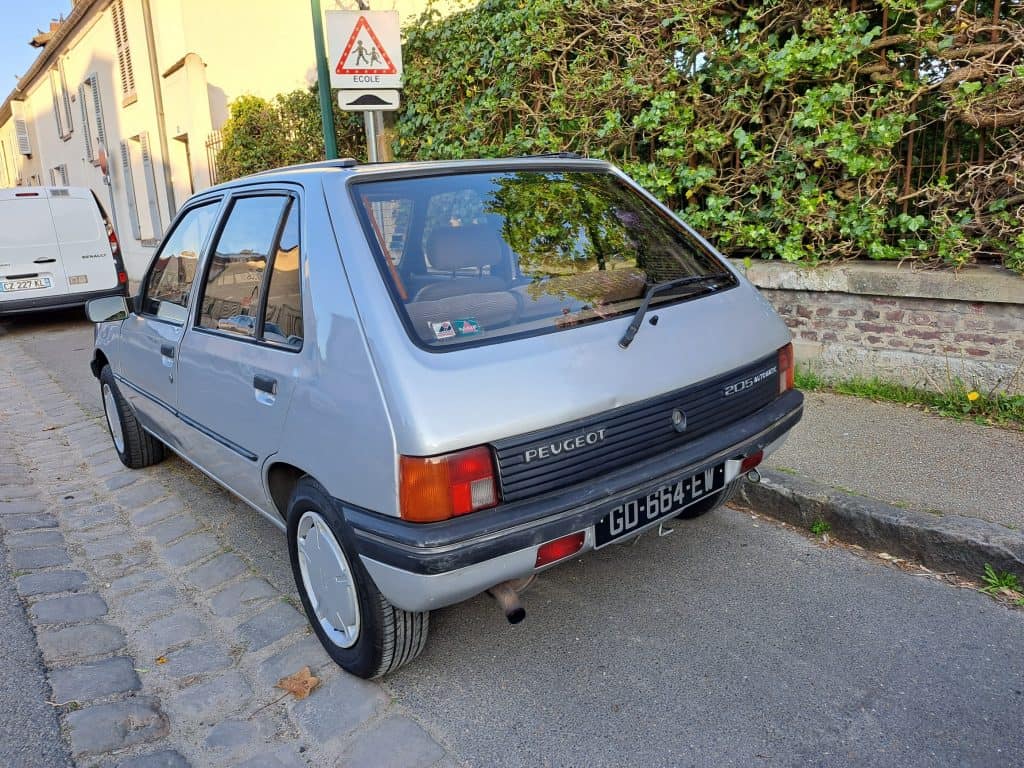
Photo is of the car with the new “fancy” collector’s license plate.

Did you enjoy this article? TAIP is 100% reader-supported through tipping. If you want to leave us a tip of any amount it would be highly appreciated. These tips help support our efforts to keep TAIP an ad-free environment. Just as at a cafe, the tips are split evenly among the team.
indoor cafe

How I Got A Job In France (And How You Can Too)

Do you remember the quote from Alice in Wonderland that goes:

Door: “Why, it’s simply impassible!

Alice: Why, don’t you mean impossible?

Door: No, I do mean impassible. (chuckles) Nothing’s impossible!

Keep this in mind if landing a French work visa is your goal.

To be frank, it isn’t a matter of finding a nice company that will sponsor you. There are tons of those, but they’re not in control of whether you’re granted one or not. It’s quite nuanced, in fact. The number of jobs that can provide the needed prerequisites where the French government will allow you to work for a French company is very few, but they do exist. Even for the (seemingly) disadvantaged.

I don’t have a degree from a university and have few formal qualifications. If you feel your working background will hold you back, don’t. There are more options than you might guess.

The Dream vs. The Reality

A couple of weeks before my arrival in Paris, a friend called me to share a job listing she stumbled upon. Actually, she was looking for a new job herself, so it was touching she thought of me at all. And to my surprise, the position forwarded to me was work I could realistically be hired for in France: Customer Care Specialist USA.

It wasn’t the most glamorous job description, but it sounded like something I could qualify for. I was really excited.

Living in Paris, I’ve often met French people who have cool jobs. I have multiple friends who work for Chanel, friends who are lawyers, illustrators…I learned a friend was recently written up in Vogue.

The French job market is primarily reserved for the French, and if you’re shooting for a position like one of those I mentioned, you’ll have to stand out in greater, arguably unreachable, ways. Be reasonable about what kind of work will suit you here. What qualifies you for work in the States may not qualify you for work here in France.

Ask yourself, what can you bring to the table that a qualified French person can’t? Maybe it’s your command of the English language (though many Parisians speak English well) One step further, maybe it’s your understanding of American culture which sets you apart.

The “geared towards the US market” job description is crucial because companies need to justify why a foreigner is the best choice for their available position. They must prove to the government that a foreigner is more qualified for this role than a French citizen. They’re required to be thorough to the point of advertising their listing in the post for three weeks. Since the vast majority of French citizens are not (also) American, I felt I had an advantage with these jobs.

Use Growing Up in America to Your Advantage

American culture is generally optimistic compared to other cultures. We are often willing to take risks in ways people from other parts of the world simply wouldn’t. It could stem from the idea that Americans can’t afford to be lazy. I mean this literally. Healthcare isn’t heavily subsidized (unless you’re elderly or destitute), government aid isn’t as accessible (see healthcare), university beyond community colleges are outrageously priced (and tied to the sweet slush funds of student loans), etc. If you don’t work, you simply do not eat.

In the case of the position I was going for, why would they go to such great lengths to find someone for this position, and why was it so difficult to fill? It requires no degree and little to no experience.

The official statement is, they need an American who understands American culture.

The unofficial statement is, they need an American to deal with the Karens.

My company is a tech startup, which meant it was possible I could qualify for a French Tech Visa. A quick Google search showed this visa is valid for four years and renewable. If I could go this route, I could bypass the “justification” step in applying for my work visa.

Customer service is a developing concept here in France (here on the blog we’ve got both positive and negative experiences with it). According to my French friends, it’s much better than in the past, but hasn’t matured to the point we know so well in the States. Although French culture has a rich emotional vocabulary, it’s still developing the necessary skills to handle the demands of the very odd “customer is always right” mentality.

Teaching English is a go-to for many Americans. However, your chances of being able to settle in France while teaching English are slim. There is no shortage of English teachers (getting paid right around minimum wage). Being a native English speaker can still earn you a valuable place here, however.

Tourism is huge in Paris. I met a German guy who settled in Paris working for German tourism. There is no shortage of Americans working in the tourism sector, which is coming back strong after its toughest two years since probably the Second World War. Frankly, there are plenty of avenues an American could take in that field.

I had already received my Long-Term Visitor Visa and gotten rid of all my stuff, so I didn’t know what to expect if I chose to move forward with this job posting. I decided it couldn’t hurt to send them my CV.

It’s important to note that to obtain the visitor visa, you must write and sign a letter to the French government promising not to work for a French company in France. Since I was attempting to do exactly what I attested to not doing, I would only move forward if everything was legal. 

A few days after sending them my CV and cover letter, the company emailed me to set up my first interview. We met on FaceTime, and I was upfront and transparent about my legal status in France. I was happy to find out they were willing to work with me on this, so we continued to the next part of the hiring process. I mentioned I would be in Paris the following week, so we had our second interview in person.

I’m the first person to fill this position so my company let me choose my schedule and my salary. I can work from home, or anywhere for that matter. Although I was hired, and was ready to start as soon as possible, my current visa status meant I couldn’t be contracted with the much sought-after CDI. They suggested a band-aid solution that could work long-term, freelancing, which is one more piece of evidence that contradicts the line given by many in Facebook groups and other places that one cannot legally work remotely while in France on a visitor visa. In this case, I was working remotely for a French company, and happened to choose to live in France. I never said I wouldn’t work remotely for a French company, and you need to have no legal status in France (or any country) in order to work remotely for a French company.

Freelancing involved writing a contract between me and the company outlining the terms of indefinite freelance (and in my case, also remote) work. In order to get paid, I simply personally invoice the company through their US subsidiary. I don’t get paid in Euros and since income paid to a US citizen for a remote French job isn’t directly concerned with French taxation, that’s one less wrinkle. That income will indirectly show up, as part of filing taxes in France as a foreigner is declaring your overseas income, but that’s a single line item, and collects all my sources of income without further details, and in any case, as already noted, it’s not possible, legally, morally (or logistically), for the French government to audit where the remote workers of French companies live or work. What they are concerned with is the legal status of those who do live in France, and I was (and am) in France on a valid visa.

As long as your pay for a given remote employer is connected to your fiscal address in the US, you’re good to go

The Reality

There are a few disadvantages to the freelancing option, but if you’re looking to settle in France, this is a good first step. Like I mentioned earlier, it doesn’t provide you with the magical CDI and many landlords won’t accept tenants who freelance. I obviously don’t have the famous five paid weeks of vacation either. Don’t get me wrong, there are many pros that outweigh the cons. The most obvious being stable work.

Thankfully, for the sake of training, everything is in English. This doesn’t help my French at all, but I mention this because of a valid point my friend brought up the other day. We were talking about a possible relocation for her to Paris, and she was hesitant about working for a French company speaking French. The idea is intimidating, but the reality is not so.

You were hired because you possess a skill that others here don’t. You’re an asset. Further, they’ve jumped through the hoops necessary to get you here, so they want to keep you. Even if it means for a while they speak English, so be it. The reality in French tech, by the way, is that the office language usually is English, even if the majority of the workers are French.

The fact that you’re a foreigner is not a surprise to them, and generally (minus the stubborn few) people are quite nice here. The changes and transitions involved can be uncomfortable, but if you’re determined to grow past all that, take my experience and move through it. If it’s right for you, it’ll work out, and it’ll be easy.

I have to return to the States to change my visa next year (I failed to check the 12+ month box when applying, and clicked the 6-12 month one, which gave me a nonrenewable visa), so my next steps won’t concern me for a while. And if I do pick up that French Tech visa, I promise I’ll explain how to get that too.

In the meantime, I’m enjoying carving my own way in this country and city.

Photo was taken while working remotely in Montmartre.

Did you enjoy this article? TAIP is 100% reader-supported through tipping. If you want to leave us a tip of any amount it would be highly appreciated. These tips help support our efforts to keep TAIP an ad-free environment. Just as at a cafe, the tips are split evenly among the team.
My First Week in France

This is part of a series of articles about the final days of preparing for moving to France and what happens when you get here, and those articles are part of a promotional series launching our new book, 29 Days to France, a book that all the writers wish they had had before we started our French adventures.  It’s now available for preorder, and those preorders come with a free 15-minute Q&A personal session about your French immigration plans.  Click here to learn more.

This is Luke’s final in a trilogy of articles sharing his first three months in France.  The account of his first three months can be found here, and his first month here

I recently learned that France is the most visited nation on the planet. If we look just at Americans, approximately 13,000 of us step off a plane here every single day. Most come for vacation, others for business, but for the few who have chosen to immigrate, our arrival marks the moment life starts over at zero. 

A new country! A new beginning! How exciting! 

Later, but perhaps not much later, we might begin to appreciate just how far down zero really is…

I arrived in France the greenest of greenhorns possible. I spoke essentially no French and certainly comprehended none. I had 150 pounds of luggage and three trains to catch in the middle of a nationwide transportation strike. Somehow I made it from the airport to Gare du Nord in downtown Paris, but then spent hours wandering all over that place unable to find my next train or even where or how to buy a ticket. 

On that day Gare du Nord seemed the most immense and confusing building in all the world, a kind of real-life M.C. Escher maze on a colossal scale. When I next happened to be in Paris almost two months later, I was genuinely surprised to see that it had shrunk considerably from my first impression. It was almost as if on that first day I had seen everything from the eyes of a small child — which in fact was not far from the truth.

The rest of that day I remember only as I might the images from a fever dream. My strength was depleted early on from shouldering and dragging so much weight up and down stairs and on and off trains. My hands were bleeding. All the exertion dehydrated me nearly to delirium, yet somehow I never had the sense of mind to buy a bottle of water. Although I did not recognize it then, I was already in a state of shock.

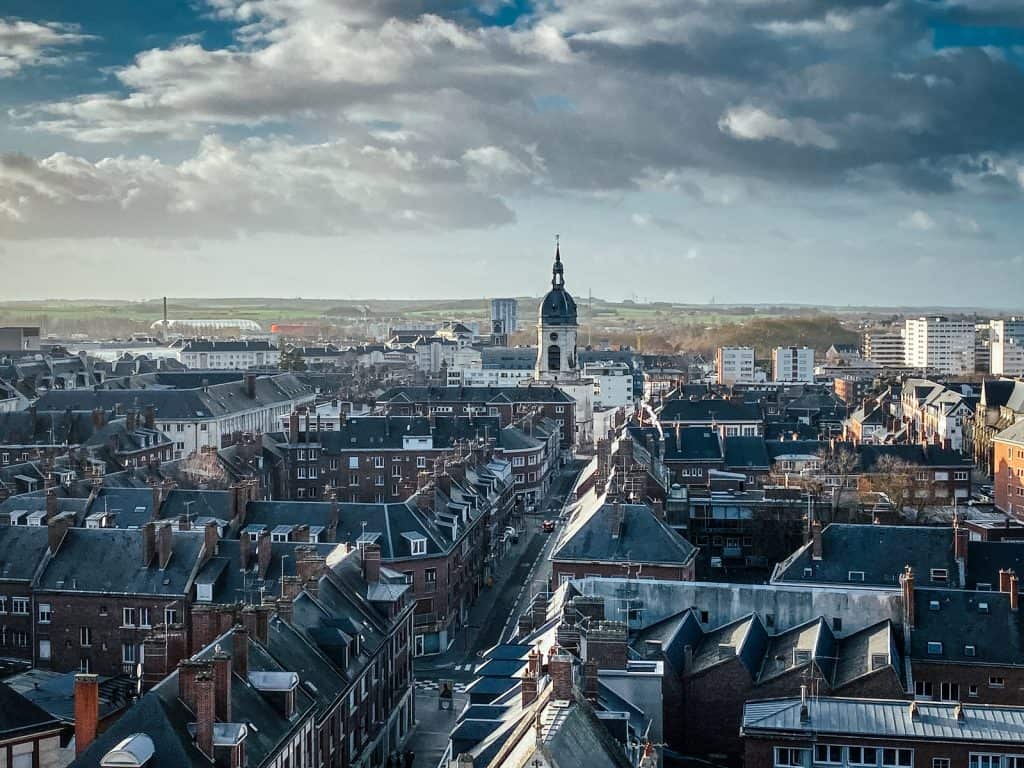
By some miracle I did eventually arrive at my destination of Amiens, long past dark and after having traveled through the fog the whole way there. I found my hotel and slept as if I would never wake again, having seen essentially nothing of France to that point.

Dreamland

The next morning, only very slightly recuperated and still very jet-lagged, I shyly ventured outside to see what my new surroundings had to show me. For someone coming from the suburbs of Kansas, I may as well have discovered a new planet. Down every cobblestone street was revealed a new and astonishing gift to the senses — the fanciful buildings, the canals, the little cafés, the unusual mode of dress, the smell of perfume and baked bread, the unintelligible language I heard all around me, and finally, the cathedral of Amiens which was by far the most beautiful thing I had ever seen. If this was a dream — and it certainly felt like it — I did not want to wake up. 

I had made an appointment at a student lodging complex to see about getting an apartment. The manager spoke no English but invited me into her little office and we communicated by taking turns at her keyboard typing our conversation into Google Translate. She agreed to rent me an apartment even though I was not a student and wouldn’t be there during the usual term. The true extent of her kindness and generosity, not to mention my great good fortune, wasn’t fully appreciated until much later when I better understood the bureaucratic frustrations that more usually attend to this process. 

The apartment was furnished but still lacked many day-to-day amenities, to say nothing of food. In America we drive our car to the massive big box place and buy everything we want all in one trip. Not so when your life is lived on foot. There is a limit to how much you can carry in your two hands, or on your back, and that is the limit to what you are going to bring home. In the early days it is never enough, and my first week in France was largely spent being a literal pack mule. I found myself resenting certain inanimate objects for the space or weight they took. Toilet paper weighs nothing but takes up a lot of space, meaning this particular trip isn’t going to accomplish much. Forget buying cases of your favorite soft drink, that’s too bulky and too heavy. Just as well, you’re not going to find your favorite soft drink in France anyway. What about a floor lamp? Not only is that going to be a single-item shopping trip, but afterward you are going to be walking down the street in the rain carrying a lamp over your head. However I learned this is not the most unusual thing you will see in France… 

It was frustrating, to say nothing of physically exhausting, to leave the store with my heavy burdens for the umpteenth time, knowing that half of what I wanted was still sitting in the store. The good news is that life in France, for this and many other reasons, is very conducive to weight loss

In the midst of all the logistical challenges to “installing myself” (as the French say), I was also trying to navigate the human and cultural dimensions of this foreign world, almost invariably with spectacular failure. An example symbolic of so many others was the door handles. 

Push (or Pull)

In my long life in America I had learned that handles on doors are meant for pulling. If instead a door needs to be pushed, Americans typically install a flat metal plate that, you know, you push. But in France the same pully-handle is very frequently installed on both sides of the door. How many times (I can’t even begin to count) would I approach a shop door on a gloomy winter day and see a nice warm interior through the glass, with cheerful humans doing happy humans things that I too wanted to partake of, and so to enter I pulled on the door handle — and nothing.

But it can’t be locked, the shop is clearly open, I can see everyone inside laughing at me. Maybe if I pull harder…nope, not budging. The thought of trying to push never entered my mind. What might have entered my mind was, By God I’ll show these Frenchies what American muscle looks like! If I have to grab this thing with both hands, lean back, and brace myself against the curb, this door is coming off! But the door didn’t come off, nor did it open, and never would it open until some exasperated occupant within did it for me, effortlessly and with the helpful comment that “Monsieur needs to push.”

In foreign environments it is necessary to bend or break, the problem is that at the beginning we don’t yet know enough to see when or how we should do that. But never fear: swiftly and painfully, the world is going to teach us. 

They Speak French in France

The doors were embarrassing enough, but by far the worst experiences involved any kind of communication. I suppose I had a vague idea that navigating the world in a foreign language would pose some kind of challenge, but having never been in that situation before I had no concept of just how bad it could be. 

Let me tell you: it was bad.

Before going anywhere I would memorize a phrase or two to get me through whatever I needed to do next. On my first night I walked into my hotel and said in French “Hello Ma’am, I have a reservation for tonight.” The receptionist behind the counter immediately broke into laughter. I looked around…was there a monkey behind me? Then she replied to my statement with a long monologue of which I understood precisely nothing. 

Other times someone would appear sincerely annoyed or even upset at something I had said, but in either case (both no doubt well deserved), I never had the first clue about what I had done to elicit the response I received. This added to a general sense of disorientation and regularly made me question my sanity.

Once, and I can assure you it was only once, I memorized a question for my apartment manager which I skillfully posed to her down in the office. Possibly my stupidity will surprise you, but it wasn’t until the very moment I had finished my question that I realized that whether she replied with a nursery rhyme, the formula to cure cancer, or even the answer to my question, it would make no difference — I couldn’t understand any of it. She did respond with something, I know not what, and I left feeling both like a moron and also completely helpless.

Worst of all was being asked a question by someone else. My first time at the grocery store I was hoping to just swipe my credit card and get out of there, but before ringing me up the cashier asked me something incomprehensible. 

I froze in terror. In an act of stupidity equal to the prior example, I finally croaked back “Pardon?” As if repeating unintelligible sounds a second time would make any difference! Yet she did repeat them, and I still didn’t have an answer. The people in line behind me were already getting impatient (it happens fast in France), and the cashier started to look as confused as I did. What did I do? Nothing. I just stood there with a dumb look on my face and prayed I would wake up from this awful nightmare, back in my warm bed with a binky. 

I know, you’re yelling at your screen right now — why didn’t you memorize the phrase for “Sorry, I don’t speak French”? Or just pipe up in clear English and say the same thing? Good idea, and sometimes I did just that, but what I am describing here are deer-in-the-headlight moments. It’s not that the deer has run out of options while he stands in the path of the oncoming car. It’s that some sudden fright has disengaged his brain completely. 

These moments were daily occurrences that first week (and well beyond). Within a very short period of time I had quite effectively been conditioned to associate any verbal interaction with embarrassment and panic. Like one of Pavlov’s dogs, I soon reached a state where even the thought of going to the bakery in the morning, and having to speak or hear even a few words of French, filled me with so much dread I felt physically ill. These emotions were often all out of proportion with reality (the bakery for example was always a pleasant place), and they persisted long after my French improved to where I was better able to communicate. These unwanted but involuntary responses, as well as my vain and often absurd attempts to avoid them, colored a good deal of my early experiences in France. 

At the end of my first week I was overwhelmed. I felt that I knew absolutely nothing about anything. I felt as if I had regressed back to a toddler of two years old: I could walk, I could feed myself, probably I was more or less potty-trained. But that was it. Into thin air had evaporated all the other competencies I as a grown man had once prided myself on, and before me lay the task of reacquiring the most basic of life skills. 

There was some good news. Underneath mental bewilderment and emotional mayhem, this daunting challenge served to order and simplify a more profound facet of being. In the midst of countless obstacles, life had begun to acquire a tinge of those things we often seek the most: purpose and direction. 

That manifested in the growing conviction, even that first week, that I was in the right place, on the right path, despite all the challenges and adversity (often self-imposed) that I was running into.

Photo of the Amiens belfry as seen from the cathedral tower.

Did you enjoy this article?  TAIP is 100% reader-supported through tipping.  If you want to leave us a tip of any amount it would be highly appreciated.  These tips help support our efforts to keep TAIP an ad-free environment.  Just as at a cafe, the tips are split evenly among the team.

7 Days Before I Put LA in My Rear View

This is part of a series of articles about the final days of preparing for moving to France and what happens when you get here, and those articles are part of a promotional series launching our new book, 29 Days to France, a book that all the writers wish they had had before we started our French adventures.  It’s now available for preorder, and those preorders come with a free 15-minute Q&A personal session about your French immigration plans.  Click here to learn more.

This is Vince’s final in a trilogy of articles counting down his move to France from Los Angeles.  Part 1 can be found here, Part 2 here.

A professional film set requires a period before the actual shooting called pre-production. Prep for short, it involves not only the glamorous departments like camera or costumes to be primed for the demands of the film shoot, but equally, the mundane tasks like organizing payroll and the on-set office supplies.

As a 1st Assistant Director, my prep starts with breaking down the script by scenes and their associated departmental elements and parsing them out for all the allotted shoot days. I present a rough plan in a company-wide meeting, after which I continue to revise the plan, gathering as much information through departmental meetings…all working toward an ideal plan of attack.

I also analyze contingencies, as there will always be surprises, for instance when the shark didn’t work in Jaws or when Tarantino deviates from the script with a sudden idea not scheduled for work that day.

The secret to successful film production — content value notwithstanding — is good prep. Being prepared for 85% of the possible scenarios of that shoot is good prep for me.

A week before principal photography, prep exponentially accelerates. The screws get tighter. The work days start earlier. They become even longer. People’s true colors surface as pressure to make the creatives happy begins to build.

There’s a lot of hurry up and wait for new information to come in, but in between, there are intermittent smoke-break-sized moments of calm. It never feels totally tranquil, because taking your foot off the gas exposes you to moments in which something falls through the cracks. When I am distracted by my personal issues I’m more susceptible to sloppy decision-making.

Prepping Paris

I was approaching the move like prepping a film. Gathering information, making a plan, gathering different information, listening to the specialists about various aspects of the move, being surprised by new discoveries and bad intel, dealing with incompetence but also the serendipity of having nice people help me along — also being distracted by my own personal life — causing me to make questionable decisions at times. It was madness. Some of it in my own head.

A French Dress Rehearsal in Hollywood

Of course, as I do, I put yet even more on my plate and that sets me back even further, timewise. In the first week of November, at Paris minus 14 days, I shoehorned a week-long French Film Festival called COLCOA (City of Lights City of Angels) held at the Directors Guild of America (DGA) headquarters. I had too much on my plate, bien sûr, but French films, French film community, French people for a whole week? I surmised that investing time for COLCOA might very well give me the head-start for Paris that would make Phase 2 a little easier. Besides, DGA headquarters was the epicenter of my long film career. At the very least, it deserved a proper farewell.

I saw a few French films such as Eiffel, ate some fromage with Sancerre and of course, had some café allongé and beignets. I even tried out my French with Nicolas Maury (Hervé on the Netflix comedy Dix Pour Cent, called Call My Agent in America) who was at COLCOA for a movie he directed. I asked him a question in French about his directing approach and he was kind enough to suffer through my French, but sensing he was in a bit of a rush, I panicked and reverted to English…but in a French accent. With my good friend Antoine as a guide to things French, COLCOA was absolutely the perfect full-dress Paris rehearsal — a perfect way to say goodbye to Hollywood and bonjour to Paris in the building that has been in my professional life for over two decades.

P-6: One Week Left Before My Flight to Paris

It was now seven days before Paris Day: P-Day. That made today P-6 (six working days left to prep). I was feeling on edge as I typically do in the last week of prep on any show, except in this show, I didn’t have a team. I had my cat Maddey, my French friends overseas, and expats on Facebook casually passing on advice.

The following big-ticket items remained on the board:

  • shoving my entire life in five boxes
  • storing, selling, giving, or throwing away what didn’t make the cut for Paris
  • getting Maddey’s USDA certificate and prepping her for the twelve-hour flight
  • continuing my L.A. Goodbye Tour
  • reconciling domestic accounts.

Simultaneously, I was still maintaining my normal life: writing projects, creative coaching sessions with clients, and training for future tennis tournaments. Overstretched on multiple fronts, I was struggling to keep all the plates spinning on my fingers while wrestling with the emotions of leaving my hometown, the anxiety of moving to a new one, and the grief of both losing my mom earlier this year and breaking up with Sarah who was, just three months prior, the other half of our to-be-determined Paris dream. As such, I was losing control over all the systems that were orchestrating and executing my Paris move.

It wasn’t a type of control in wanting everything my way or seeking elusive perfection. At my college gymnastics meets, I fell off the pommel horse a lot, so I am not one who is accustomed to any notion of perfection. But I am accustomed to pursuing high standards. I orchestrated the McDreamy car crash in Grey’s Anatomy. I was a tank platoon leader managing four M1-A1 tanks and sixteen men. I threw a double-back somersault with a full-twist on-the-floor exercise event. In fact, what I was feeling was less about control and more about the conscientiousness needed to maximize my odds of a successful fresh start.

I have big dreams for myself in Paris and unfortunately, I’m not Emily in Paris where it all goes swimmingly. As a man with a Filipino upbringing, I’m not quite the typical American in Paris, n’est-ce pas? I was bracing to face many hardships.

Jumping right into the poorly-built program I mentioned in my piece being 90 days out was a result of not being in control. If I had been in control, I would’ve seen the hundreds of complaints about the owner of this program who was such a polarizing figure that an entire Facebook group was created from the cascade of people who left her page. Her Facebook page was called Americans in France. The breakaway group was called Americans in France: The Open and Kind Group. How could I have missed this blatant clue? In my right mind, I would’ve have seen that train wreck a mile away and instead found TAIP and other non-scammy resources much earlier in the planning process, resources that show a genuine exuberance and passion for helping Americans settle in France. Instead, I dumped a chunk of money I could have used for essentials I needed to flourish in one of the more expensive cities in the world. I got sloppy.

I couldn’t — cannot — afford to be sloppy. With so many moving pieces to manage for a successful life in Paris, a few potential situations relative to scarcity can bite me in the butt and have me back on a plane to the States if I don’t ground myself and take better control of my chessboard.

It wasn’t until now, seven days before Paris, that I was starting to get more locked in. I was well aware I’d only be crossing the finish line for Phase 1. Once I’d get to Paris, Phase 2 would commence and be more intense than Phase 1.

Phase 2 had been lurking in the back of my mind; after all, Paris wasn’t a vacation. I was going to live there, which meant mundane tasks such as validating my visa in France, registering my coaching business in the French system, establishing a bank account, acquiring a carte vitale (for health insurance), getting a French phone number, and perhaps most importantly, generating revenue — getting my coaching business back up and running with my American clients. Just as important for my well-being, I would need to get back to a regular tennis training schedule.

I was probably struggling through a post-project depression after running on adrenaline (and fumes) to obtain my profession libérale visa a few weeks ago. That entire ordeal was intense.

I was still raw from unpredictable emotions triggered by who knows what. I’d be driving on the 405 Freeway, for example, listening to a song lyric like guard your innocence from hallucination, and I’d lose it, driving in the fast lane at 75 mph, tears gushing down my face, because I was cathartically relieved that Paris was finally in my sights, or I’d be missing Sarah, or I was pondering the complexity of my relationship with my mom and her final six months. After fifteen minutes of a good cry, I’d wipe my eyes like nothing happened.

I knew I needed a long break to recharge but at P-6, just like in last week of prep to make a movie, I was burning the candle at both ends to keep up.

Getting Maddey Ready for Paris

For weeks I was jarred awake by nightmares in which my cat Maddey wasn’t being allowed into France by a nonplussed Inspector Clouseau-like customs officer. Another nightmare entailed Maddey slipping out of my grasp while carrying her through the metal detector, zipping toward the far end of the terminal, and disappearing, which causes me to miss my flight, as if it was the last one ever for Paris.

Early Tuesday morning, I took Maddey to the veterinarian to begin the health certificate process. Thanks to heads-up advice from an expat named Jena, I saved invaluable time, which I needed because only three business days remained for the USDA to receive the certificate from the vet, endorse it, then send me the physical copy. As I would not be able to get Maddey on the plane without it, I was nervous. I called and e-mailed the L.A. office multiple times in the next two days to obtain updates, to no avail.

Packing My Life in Five Boxes

I started weeks ago by casually making piles of things I was bringing to Paris but reducing my life to five containers felt so daunting that I kept putting it off. Because I didn’t want to manage too many pieces of luggage at the airports on both ends AND look after Maddey, I paid $450 for a shipping service called Send My Bag to pick up and ship 3 16x16x16 boxes. I stayed up until 4:00 AM to finish packing the boxes in time for their pickup the next morning.

I had read stories about how Send My Bag might not show up on the arranged pick-up day (I planned for this scenario by allowing a buffer of a few days) or that the boxes might get held up at customs for reasons like packing too many items with lithium batteries (TSA only permitted one), or getting stopped over prescription bottles (forbidden), or tearing or breaking in transit, or getting delivered at the wrong place. “Just follow the instructions to the T, and it will be fine,” an expat on Facebook told me.

Even so, I also learned that Send My Bag was just the middleman. FedEx, who had recently traumatized me in delivering my visa, was actually picking up my boxes. I went into crisis prevention mode, only sleeping four hours that night to visualize possible not-so-ideal scenarios and devising more contingency plans. As such, I didn’t pack anything in the boxes that I’d need to access within seven days after my arrival.

P-5

Sleep-deprived, I put the boxes outside the gate of my townhouse (the gate phone didn’t work) with a big sign for FedEx to call me because I wanted to make sure I handed the driver the paperwork as per the instructions. The driver didn’t call; he just took the boxes and went on his way. If I hadn’t left out the boxes, the driver would have reported that I wasn’t available for pickup. As in the case of my visa, FedEx was up to no good once again and yet again, I had to stay ahead of them.

My beloved U2 books, favorite spatula, 1988 Dodger jersey, microphone, ten pairs of shoes, blender, and label maker were heading to Paris which genuinely meant that the move was truly happening.

Later that day, Sarah texted me. I hadn’t heard from her for months, but she broke radio silence because she felt weird about not saying goodbye. It was a sweet text, and, another reminder that Paris was becoming real. I pleaded for one last in-person goodbye, but she didn’t respond. I was a wreck.

P-4

Sarah sent me a video on the Marco Polo app telling me that a sixty-second video was the best she could do. Experiencing her face and voice brought me to tears. I sent back a long Marco Polo, pleading to see her. She told me she had worked hard to get over me and it would be a massive setback to see me in person. She reinstated her radio silence.

I shut down for a couple of hours, until I was jarred out of my stupor, having just remembered that Maddey’s certificate still hadn’t yet arrived with only one more business day remaining to receive it before my flight.

I called the main USDA office in Sacramento, expecting more indifference. To my surprise, someone picked up. After patiently listening to a five-minute plea, desperate for the certificate before my flight on Tuesday, she said to me, “Are you Vince?”

“YES!” I said.

“I’m filling it out right now. It’ll go out to FedEx today and you should be getting it by Monday.” A sighed a deep exhale of relief, but still, Monday was cutting it too close — I was flying out Tuesday morning. The next most important document besides my visa would be arriving on the last possible day with my favorite shipping company, Federal Express? It was an exercise in extreme patience.

I went to tennis practice later for a bit of release but as it was my last day at Silva Tennis Academy with my young teammates, I cried as I said goodbye to them. Training with them for the past year, I rediscovered the passion to go for big dreams again the way a teenager goes for dreams, and now that this special time was over, I continued to cry the entire forty-minute drive home.

That night, with all the mishigas of the last few days, I went on a bit of a bender. Beaucoup sake and gin and tonics were consumed deep into the night. Part release, part celebration of my last days in America.

P-3

At a tennis match the next morning, I received a text:

“Hey man, I have your wallet. It was in the gutter and I saw it as I was getting in the Uber.”

This was the sort of thing that I was afraid of — getting derailed by the small stuff.  I was grateful — and quite lucky — for the kindness of strangers.

P-2

I threw a Celebration of Life gathering in which friends from various parts of my life came to see me off; solid proof that one should have their Celebration of Life when alive, not at their funeral.

P-1

Monday was the last day before my flight. I waited outside the gated fence at 9 am for the FedEx driver with Ruthie, my childhood pal, hours I actually needed to finish packing my suitcases; but I was not going to let FedEx screw things up. By 11:30 am, the driver arrived with Maddey’s endorsed certificate, and voila, I had everything I needed for Paris. I could finally let my guard down a bit.

That night, I took Maddey to the actual airline terminal for her final rehearsal and asked the information desk clerk where the nearest pet rest area was located; he hadn’t a clue it existed. I anticipated that. Searching for the rest area on the actual travel day for her to do her business just hours before we hopped on the plane would’ve thrown things off track. This is what scouts and rehearsals are for: minimizing surprises.

I took Maddey out of her carrier and cradled her in my arms to see how she might react. This was a full-dress rehearsal — she was wearing the harness and leash just like she would on the day. She didn’t squirm, didn’t seem on edge. She was calm, quiet, and pensive and so was I. We were 100% ready for Paris.

Prep was officially over. P-Day was upon us in less than ten hours. I didn’t get to tie all my loose ends, but overall, it was a good prep. I achieved about 85% on my checklist. Maddey and I were both sad we didn’t say goodbye to Sarah in person, but I had a feeling that the door wasn’t closed forever.

I took my last Los Angeles hours to spend time with my 95-year-old grandma. We sat in relative silence. She can’t speak English. I can’t speak Filipino. Reflecting on her life, I was sad for her. She had never had any romantic love since I had known her and she had been acrimonious with my mom — her daughter — up until mom suffered her stroke. Grandma didn’t get to say goodbye to her, same as me. I never really got to know my grandma and I wanted to ask questions about her. But there was no more time. I hugged her tightly and told her I loved her. She knew those words. I sighed. I accepted that I might never see her again.

Paris Day

A friend told me, “You can come back. It’s not like you’re leaving forever.”

Anything’s possible. I don’t see myself coming back to the States for a long, long time. Paris is the grand experiment for me to stay on my authentic path and pursue the big audacious dreams of expressing my authentic voice toward something meaningful. Paris is going to be my home now and its joie de vivre is the butterfly moment I vowed to experience more often since I tried to die. If I cultivate the right support community and don’t get in my own way, my Paris story could be everything I want it to be.

Photo of my garage fifteen days before having to ship my life in five boxes.

Did you enjoy this article?  TAIP is 100% reader-supported through tipping.  If you want to leave us a tip of any amount it would be highly appreciated.  These tips help support our efforts to keep TAIP an ad-free environment.  Just like at a cafe, the tips are split evenly among the team.