a dining table with glasses and plates

Navigating a Parisian Dinner Invitation

Note from the editor: Parisian for more than a decade, ex-chef turned food tour guide Chef Tris shares his passion for French food and life in Paris on his blog Eat Like the French. Tris has recently joined the TAIP team with the hope of guiding us through the culinary minefields of Paris to ensure you always eat like a local in France. — MS

“I’m never inviting young Americans to my house ever again,” said my wife, her voice tinged with exasperation, as our two new American friends left our Parisian flat. The evening, which began with excitement over a Dungeons and Dragons game, had devolved into a lesson in cultural missteps. This stark declaration was a wake-up call — a reminder that French dining etiquette is an art form, one that demands respect and understanding. I love sharing my passion for French food and the art de la table, and was delighted to write a blog post for TAIP to act as your guide to navigating a Parisian dinner invitation with grace and charm.

The Invitation

It is rare to be invited to a Parisian’s flat for dinner. Some think it’s due to the size of the apartments, while others claim it’s because Parisians much prefer to eat in the plethora of restaurants and bars that the city has to offer. If you’re lucky enough to receive an invitation to a Parisian’s home, the first rule is to RSVP promptly. A swift response shows respect for your host’s planning and reflects your appreciation for the invite.

Punctuality in Paris isn’t the same as in the US. Aim to arrive 10 to 20 minutes after the appointed time — this is known as the petit quart d’heure de politesse, a little buffer to allow your host those final moments of preparation.

Prepping for the Visit

Choosing the right outfit is crucial. Parisians have an innate sense of style — think smart-casual but with a touch of chic. And don’t forget a gift! While flowers are lovely, wine or beer is the norm. If wine seems daunting, especially in a country where it’s an art form, visit an independent caviste. Tell them your budget and trust their expertise to select a bottle that will impress. Champagne is always a hit if you’re unsure, although we prefer pét-nat or crémant for more bang for your buck. Rely on the expertise of your caviste; they all speak English and will offer excellent and honest advice. If children are present, bring something delightful for them — sweets or chocolates, or a unique treat from your home country. My daughter was over the moon with a box of Fruit Loops, a sugary cereal delight from America that struck fear into my wife’s heart.

Whatever you bring will be opened and eaten in front of you because the French think that’s the polite way to do it.

The Arrival

Walking into a Parisian home is an exercise in social grace. The moment you cross the threshold, greet everyone with a warm “bonsoir” and the customary bise — two cheek kisses. This isn’t just a formality; it’s a way to break the ice and show respect. Your host will likely take your coat and offer you a drink. Engage in small talk, and make it a point to remember names. An easy icebreaker is to ask, “How do you know our host?” Avoid the banality of questions about work, as the French work to live, not the other way around.

Dining Etiquette

Dinner in Paris is a dance of manners and tradition. Your host will indicate where to sit, so wait for their cue. Keep your hands visible on the table, but never your elbows. When it comes to serving yourself, take modest portions. It’s polite to leave a bit on the serving plate in front of you, signaling that you’re satisfied but respectful of the host’s effort.

The table may be set with many glasses and different types of cutlery; do not be scared to ask questions if you do not know. My wife’s eyebrows hit the ceiling on seeing one of our guests pour wine into a water glass. What ensued was a long conversation about the glassware and which you should use for what.

Do not be scared to ask questions. If there is one thing every French person I know loves to talk about, it is the food and the traditions around it. Teaching you how to act at a dinner table is something they love, and they will always be happy to educate you.

The highlight of the meal is often the cheese course. In France, cheese isn’t just food; it’s a cultural icon. Treat it with reverence. Take small portions from the cheese board onto your plate using the cheese knife provided, and then put more cheese onto a tiny piece of bread so that the bread acts as a vessel for the cheese, not the other way around.

Never mix different types of drinks in the same glass, especially not wine. If in doubt, don’t hesitate to ask your host for guidance.

The Conversation

Parisians value authenticity and depth in conversation. Be prepared for directness. Parisians will always avoid superficial topics and will always tell you what they are thinking. Engage genuinely, listen attentively, and don’t shy away from intellectual discussions. They can spot insincerity from a mile away, so it’s best to be yourself.

The Departure

When the evening winds down, thank your host sincerely. While a Parisian will never request for you to leave, and an evening at a Parisian’s house may last into the early hours, pay attention to the stifled yawn or the question of how you are planning to get home. The metro rules the transport roof in Paris, so if in doubt, explain you must get the last metro home and ask for advice on how to get there. Before you leave, offer to clean the table or carry a few dishes to the kitchen. A follow-up message the next day expressing your gratitude will leave a lasting positive impression.

Being invited to a Parisian home is more than a social event — it’s an immersion into French culture. With these tips, you can navigate the evening with confidence, leaving your hosts impressed by your respect and understanding of their customs.

Photo by Nils Stahl on Unsplash

Did you enjoy this article? TAIP is 100% reader-supported through tipping. If you want to leave us a tip of any amount it would be highly appreciated. These tips help support our efforts to keep TAIP an ad-free environment. Just as at a cafe, the tips are split evenly among the team.

Sotheby April 2024 evening sale

Art Fairs and Auctions to Explore in Paris

If you are thinking of collecting art, much thought should go into your choices before purchasing. First, you need to know what you like, what moves you. Visit galleries, go to art exhibitions and fairs. Discuss art with friends; define your tastes. Then you can follow artists that interest you. 

Trade Fairs

Fairs are a concentrated marketplace for art. The visitor can see much of what is currently occurring internationally within a given time and place. 

Paris hosts a number of art trade fairs during the year where booths are set up for galleries to display their wares.  The major fairs typically occupy the Grand Palais during their short tenure, although between 2021 and April 2024, while the Grand Palais underwent massive renovations, they relocated to the Grand Palais Ephémère. Other regular fair sites include the Carreau du Temple and the Carrousel du Louvre

As a rule, many fairs will take place at the same time, organized as satellites around a renowned central fair, thus creating an “art week” with its overwhelming offer of fairs, exhibitions, and events throughout the city. If you are lucky enough to find a way to beg, borrow, or steal a VIP pass to the main fair, you will also be invited to free museum entrances, private visits to artists’ studios, museum exhibitions, and various openings. Even without the coveted pass, art weeks can become quite an overwhelming whirlwind of art with all that is happening during the same short week.

There are two major art weeks in Paris: the first built around Paris+ by Art Basel which takes place in October, and the second around ArtParis which occurs at the beginning of April. 

Of the two, Paris+ is THE major art fair in France with the world’s most high-flying galleries participating. While this very exclusive fair is particularly parsimonious with its invitations (even a reporter friend was not let in free of charge), there are enough satellite events to keep the most hyperactive of art lovers sufficiently busy.

For example, in 2023 satellite fairs (some of which are free) included Moderne Art Fair, AsiaNow (at the Monnaie museum), Paris Internationale (free), AKAA (Also Known as Africa), Offscreen (free — mainly showing video art and situated interestingly in a garage with the advantage of having no stairs but ramps up to the various floors of the “showroom”), and Art Shopping (free with invitation on its internet site). Traditionally during the Paris+ art week Palais d’Iena (free) offers an exhibition of renowned artists, the Tuilleries (free, outdoor) is turned into a contemporary sculpture park and galleries show off the best of their blue-chip artists.

Art fairs covering specific art media are Salon du Dessin and ParisPhoto, each with their satellite exhibitions, some free some for a fee. Salon de Dessin is the central exhibition with Drawing Now as the secondary one. During drawing week (La semaine du dessin), free visits are offered for the general public in various museums and institutions if you sign up quickly enough after they are announced. Orbiting around ParisPhoto is the gallery fair, Photo St. Germain where many galleries give their space over to photo exhibitions. Another is the Urban Art Fair, with no satellites (to my knowledge) although many galleries will give themselves over to urban art at the time of the fair.

The historical Salon de Paris and the Salon des Independants seem to have receded into a more general contemporary art fair known as Art Capital, which is subdivided into four constituent art fairs. For the most part at each of these fairs’ works are arranged according to various themes, and only a few pieces of any given artist will be found. Such an agglomeration of so many little-related artists can be quite mind-boggling.

While most fairs are more often than not an aggregate of galleries, the atmosphere at a fair is generally more hard-sell than at the galleries’ premises. Prices are rarely posted, but there is always a sheet nearby with a price list or the gallery’s representatives have a crib sheet of prices on hand. And whether you are a purchaser or not, it is a great pleasure to see all the art concentrated in a single, limited space. Of all the thousands of works on view, see what styles, palettes, strokes, forms, lines, and movements grab you — and which do not. They are a great place to clarify your personal taste.

Auctions

Auctions are the number crunchers of the art world. They are the reference point of the value of an artist’s work which is calculated according to the latest prices paid for pieces created by that artist. Auctions are the kings of the secondary art market, i.e. when works are not sold directly by an artist or their gallery, but by previous owners of the work in question whether they had bought it at a gallery or through auction.

Visit a pre-exhibition of an auction and the plate describing the work will typically offer an estimation of its value in the form of a price bracket. This valuation is typically set on the suggestion of the auction house’s expert as compared to other works by the same artist previously sold at auction.  Bidders, then, are the final decision-makers concerning the value of an artwork.

There are a number of auction houses in Paris. The big names include Sotheby’s, Cristie’s, Artcurial, Piasa, Tajan, Bonhams, and Aguttes. All of these have their own premises to exhibit and auction off art. These auction houses will announce the type of art they will be selling, e.g. Modern and Contemporary, Works on paper, Urban art, and 17th-19th-century art. Often a sale may consist of a given individual’s complete collection. Depending on your interests, these exhibits are well worth visiting for your viewing pleasure.

Of particular interest to everyone, whether a potential purchaser or not, there are times when an auction house hosts the sale of a single artist’s work. The exhibit before this type of sale can be especially enticing as it is equivalent to a museum’s temporary exhibition of the artist. I will never forget Artcurial’s sale of Utrillo — three floors of nothing but this artist’s works, none of which I could afford, but a wonderful exhibit all the same.

And just like for trade fairs, if you can get on to a big auction house’s VIP list, there are invitations to openings of a sale’s exhibit, whereby a pleasant visit of the works can be enjoyed, full champagne glass in hand. 

Hotel Drouot, often considered a monolithic auction house, is in fact a building consisting of 16 rooms where 70 independent auction firms affiliated with the Hotel Drouot exhibit and hold their auctions. They maintain offices elsewhere, for the most part, nearby. Thus there is a large turnover as to who will be occupying the various rooms in the building on any given day. One might pop in to see particular works that have been advertised, or just to take a look around at whatever might be on sale. I once went for just a look around and ended up bidding on and winning a beautiful Christian Lacroix set of dishes for twelve, which I set out every Thanksgiving and for other special occasions. 

Auctions are not the place to start collecting. Once you have an idea of those artists you would like to collect you can register on the Drouot site and ask to be alerted to sales of those artists. A myriad of auction houses throughout Europe have enrolled with Drouot and register their upcoming catalogs with them. The site scans all the artwork for sale and sends out alerts when the work of an artist or category of art you have subscribed to comes up for sale. 

Bidding at auction can be done in person, by phone, or online. Concerning auctions, it is recommended to see the work before it goes up for bidding. Check for flaws — ask to pick up a piece or to see the back of a work which will often have information about galleries from which it was sold, or even other auction sales. Think ahead on your ceiling price keeping in mind the added fees which will include tax and commission, typically 30% above the hammer price. During the auction, you will need to make up your mind very quickly, within seconds, as concerns the price — raise or drop out? It is hard to resist the temptation from within and from the auctioneer to go higher than the maximum you have set. On the other hand, I have mourned years for some works I have let get away.  

And of course, be careful. I have just heard from a friend who was watching an auction online at Christie’s, and it seems that just as he was cleaning his touch-screen, he found himself the top bidder for a work he did not particularly want. He is now figuring out what he wants to do with the work. Personally, I like it, and he got it (albeit unwillingly) under the low estimate. He might have made the right purchase for the wrong reason, but that waits to be seen.

Sometimes the lower estimate acts as the reserve price, the price below which the consignor will not sell. While sometimes the reserve is even less than this estimate, the reserve cannot, by law, be higher. 

One interesting possibility, on the other hand, is not to take part in the auction at all, but to wait to see if the work sells. If it does not reach its reserve price, it is considered unsold. In this case, you can contact the auction house and make an offer within a few days; this is called an after-sale offer. The auction house will contact the consignor to see if they accept. One reasonable offer is the low estimate commission included, which means 30% lower than if you’d taken part in the bidding war. A friend often offers 50% of the lower estimate, plus commission. It’s for you to decide on an acceptable price for you and for the consignor to accept or not.

When considering the secondary market, some ask, “Which is better, buying at auction or from galleries?” As a friend once said, “In an auction, the price only goes up; in galleries, you can negotiate down.” True, but… galleries sometimes put prices up higher than an auction estimate. On the other hand, galleries sometimes let you pay over time, or even trade from your collection to offset the price of a work. Also, you can take time to think. Auction houses demand full payment within a few weeks, as they need to pay the consignor. Obviously, this all depends on how much you want a work, and how much you can afford.

Investing in art is a bit like the stock market: works can go up or down in price. But contrary to cold numbers you get the pleasure of living with a work that speaks to you. 

And remember, too, should you be stirred by art (purchaser or not) and thirsty to learn more, art fairs and auctions, while they exist for selling, are also great places to see art that will soon be outside the public domain. Take advantage of these possibilities, and enjoy!

Photo taken at Sotheby’s April 2024 evening sale.

Did you enjoy this article? TAIP is 100% reader-supported through tipping. If you want to leave us a tip of any amount it would be highly appreciated. These tips help support our efforts to keep TAIP an ad-free environment. Just as at a cafe, the tips are split evenly among the team.

When the Police Seize Your Bicycle

It was a great evening, an invitation to the opening night of the Fine Arts Biennale at the Grand Palais Ephemère. The works for sale were museum-grade (with prices to go with them!) and champagne was being served to one and all. There is no better way to enjoy fine art than with a bottomless glass of champagne in hand!

But then, a whole section was cordoned off and an enormous crowd had formed; Macron had arrived. No sweat. I had visited the whole fair and was about to leave. When I finally retrieved my things from the cloakroom and got outside, there was the first hint of trouble. Macron was leaving with his eight-car cavalcade (we, the taxpayers, pay for all these cars, gas, and people for a single person to visit the fair) and we could not cross the driveway where his car and his court of cars were about to leave the underground parking lot. And my bicycle was just on the other side of that driveway.

And even worse, my electric bicycle was no longer attached to the railing I had locked it onto. What to do? The police informed me that the bicycles in the area had been taken away (in case of a riot, someone could take off a front tire and throw it at the president was the reasoning). I would find the bike at the Commissariat de Police of the 7th arrondissement, a 20-minute walk away or two metro stops and a walk. And all I had wanted to do was to get home and nurse my champagne high.

A cold walk in the dark later, there I recognized my bike chained up outside the commissariat. I was received inside by a young, indifferent police officer, who wanted nothing better than to see my back. But I wanted proof that the police had taken my bike for I wanted someone to pay for my broken locks. I was told to go the next day to the Town Hall of the 7th arrondissement and ask for the Contencieux. Fully aware of the need for proof for any administrative undertaking, I insisted on getting an official paper stating that the police had taken my bike. The officer handed over the night’s register of events and told me to take a photo which I duly did. But not finding it official enough (Hey! What’s a telephone photo worth? Although, in fact, later I learned that it was so official that it was illegal for me to have a copy!) I persisted in demanding a signed document asserting that the bike had been taken by the police and the locks broken. This I got, in the form of a letterhead document in administrative ambiguity.

When I finally got my bike unchained and started off, I found the front brake did not work at all. So I tried to get back into the commissariat, only to be told to come back the next day to file a complaint. Thus, home I pedaled with a simple back brake should I need to stop, the champagne euphoria of the evening long gone from my system. 

The next day armed with copies of the register, my receipts for the locks, the “main” document, and pictures of the broken locks in the bike basket in front of the police station, I left my far-flung home in the 20th arrondissement to cross Paris back to the chic 7th arrondissement town hall.

“No, Madame, there is nothing we can do for you. We do not handle such problems. You must telephone the Contencieux and explain the matter.” 

Putting the next turn of my administrative peregrination on hold for another day, I decided that while I was in the 7th arrondissement I might as well return to the police station to file my complaint against the police. 

At the entrance to the police station, I was questioned as to my reason for being there. The statement that I wanted to lodge a complaint against the police did not go over well with them. Unwilling to allow me into the station, they asked for proof concerning my bike’s removal, and at the shock of seeing my copy of the night’s register, which should in no way be in the hands of unauthorized individuals, they accompanied me to the information desk and duly confiscated the paper. 

At the information desk, I was greeted with disdain and a refusal. I was, of course, not in the right place, but in fact had to go to the “Contencieux.” As one person was trying to find where, in fact, I should address my complaint, I insisted with another that the night police shouldn’t be sending law-abiding citizens all over Paris to the wrong places and that we should be informed correctly, I was given all the reasons no fault could be found on their part which freed them not to take action: “It has nothing to do with us.” “They have their “chef” who should take care of them.” “We don’t see them as we don’t work at the same time….” To get me gone, they printed out an information sheet with whom I should contact.

Intrepid, the next day I took the risk and bicycled to the Musée d’Orsay. But not totally unconscious of possible peril, I stopped on my way home at my favorite bicycle repair shop to get the brakes taken care of. Obviously, the bike had been badly manhandled; the cable had been totally detached from the front brake. They fixed it in a jiffy while I aired my discontent with Macron and the police.

However, it seems that my administrative scavenger hunt was not over. While they sent me to call the préfecture, which I did, and after following all the six steps of pressing at least one of two numbers to choose from, none of them corresponded to the Contentieux. So I simply pressed for the switchboard. Surprisingly, they answered within seconds, put me through to someone who had nothing to do with the Contencieux, who then, finally put me through to someone who was well-informed on how to go about getting my dégradations de véhicule reimbursed. It had, like everything else, nothing to do with the telephone numbers I had originally been given. As at the commissariat, I mentioned that everyone should be informed correctly as to the procedure. He answered that they had been, but the recipients did not seem to have paid any attention to the information. It was then his turn to complain, that he was tired of getting phone calls like mine and having to waste his time which could be better spent. I commiserated profoundly and he gave me the correct e-mail address (no telephone) at, in fact, the service des affaires juridiques et du contentieux

I immediately got to work on the email explanation of the case complete with receipts, pictures, and official documents. An hour later I sent it off to my son to correct the French: no errors allowed in any official correspondence if we want to be taken seriously.

Three weeks later, no response. So I sent the email again asking for a confirmation that it had been received; a notification came back immediately that it had gone through. 

Tonight, five months later, to my great surprise I have received a reply. In predictable bureaucratese, they are sorry to inform me that “the outcome of the investigation in accordance with the elements which have been communicated by the judiciary authorities whereby the removal of [my] bicycle had been carried out by police services to ensure security near this sensitive site … that [they] cannot reserve a favorable follow-up of my application to be compensated, since no heavy fault by the public services of justice has been characterized” (my word-for-word translation). And if I disagree with this outcome, I can take them to court.

But we all know what happens when we try to fight city hall. Thus, a sad end to a story whose moral is: keep yourself and your bicycle as far away from Macron as possible, and don’t park any place near where he might want to drive by.

Photo is the picture of my bike the police kindly asked me to take the night it was damaged.

How to Apply for French Citizenship, Part I: Documents

I suppose ever since I began this blog in 2013, this article was in the works. But in my early days of life in France, I always thought I would apply for citizenship on the very day I became eligible. But that day passed more than four years ago. Why did I only just recently apply and what did I need to do in order to make that happen? Get comfortable; I’ll tell you all about it.

Why Didn’t I Apply Sooner?

When I first moved to France, I, like many fellow immigrants, felt great instability in my new home. I had no sense of my rights as a legal resident of France and I lived with an (irrational, unfounded) fear that I could be deported at any time for any reason. I truly feared that I might not get my visa renewed the first time because I might be missing a key piece of paperwork I would not be told about.

But then, with help, I figured out French bureaucracy and lost my fear. Once I got my first four-year card, I wasn’t dreaming of doing more paperwork (which is what applying for citizenship meant). I was enjoying my freedom! No trips to the prefecture for FOUR YEARS. 

Further, as I tell people often, if you are a French resident and you have a Class A passport, like my dark blue American one, French citizenship only really gives you the right to vote. It doesn’t really give you significantly more in the way of visa-free travel and it doesn’t convey any additional rights for your life in France. “I’ll get to that later,” I thought. Indeed, Covid had shown me that French residency was good enough to get me in and out of France in the middle of a worldwide crisis. Who needed to rush the citizenship process?

Yet, after some extensive travels outside France in the last two years doing research for a book, I decided it was high time to address this issue and I started the process (I alluded to some preliminary steps in a previous article). Citizenship would give me the option to be gone from France for an extended time — years, even — if I needed to work on a project. It also would mean I would never have to go to the prefecture for a visa issue again.

First, Get Your Papers

As you progress in your French residence and citizenship journey, you’ll need papers for renewals and new statuses that you didn’t need at the beginning.

For example, when it came time to renew my visitor visa the first time, they asked for a translated birth certificate. My story behind that is related here.

As I progressed in my Profession Liberale journey, they would ask for invoices and tax returns, the latter of which you couldn’t possibly have at the first application, because your business wasn’t yet open.

When you get to a ten-year card, you’ll need to show language competency at the A2 level, minimum.

Citizenship is all that paperwork, plus.

The plus is information about your family.

“Have a Folder”

There are many great lessons I take from my parents. One that I’ve very much adhered to over the years was my mother’s admonition to always “have a folder” with my key documents: birth certificate, baptism, confirmation, passport copies, etc. Not only do I have digital copies of all these items in a secure place in the cloud, accessible anytime around the world, but I have paper copies in a folder that is entrusted to one of my sisters.

So when it came time to get three necessary documents for my citizenship application, I thought it would be a breeze. Surely, I thought, my mom will have her birth certificate, my father’s birth certificate, and their marriage certificate, all in one folder, just like she always taught me.

She did not.

First, let me give you some context. My father passed away in 2018, and those who have gone through the bereavement of a loved one know that after the initial flurry of dealing with banks and credit cards and the government, you don’t necessarily think about nor keep track of the vital documents of your deceased loved one.

Further, my mom, for various reasons, did not have a need for official documents. Those of us who live outside our countries of citizenship always know where these documents are. For the rest of the world, life is much more simple. My mom currently lives a simpler life.

So, once I realized that not only did my mom not have a “folder,” but that she didn’t immediately have a solution to my needs, I realized I would need to work my own angles while she worked hers.

Look Online

My father was born in Los Angeles and a basic search led me to VitalChek, a website that looked like it had been designed about ten years ago, but had fairly decent reviews online.

I opted for a copy from the LA County Registrar ($32) + UPS Next Day Air Saver ($18.50) + VitalChek fee ($9) for a total of $59.50 USD

Once you place your order you will immediately be told your order is on hold pending a notarized document from you. I went the very next day to get the document notarized, and then I scanned and uploaded it.

Ten days passed, and they told me that they needed to verify the mother’s maiden name. I called in and verified it.

For some unknown reason, the case remained stuck for two more weeks until I called again to find out the status. The person I spoke to escalated the case, and less than a week later, I had a certified copy of my father’s birth certificate at a US address I had specified.

Keep in mind that this was only the first part of this process. The French would also need to see a translated version of this, because the French bureaucracy doesn’t “understand” English. It’s the same with countries worldwide, so it’s totally understandable.

Ask Other Family

My mom’s youngest sister, for her part, did adhere to the “keep a folder” routine, and she had a laminated copy of my mom’s birth certificate in a folder she had compiled when her mother, my maternal grandmother, had passed away some years ago. I wired her money and she sent that original to me by mail. It took a few days to arrive from Singapore to the States (I wanted all the documents going to a single location, and I would happen to be in the States when they arrived).

Hope Among the Boxes

In the meantime, my mother, who had responded originally with, “tell the French your mother doesn’t have a copy of the marriage certificate,” had started looking through boxes. A couple days later she found a certified true copy of their marriage. The part of me that pauses when looking at documents that are fundamental to my existence — this document was witnessed by people, including my parents, who at the time couldn’t know me or my part in their story — took a moment to look at the document lovingly. The practical side of me wanted an additional document in case the French didn’t like this one.

The Singapore government, efficient as always, got me a Certificate of Marriage (with a QR code, even!) within a couple weeks of requesting it.

Now with all these documents in my hand, the translator could move forward. But interestingly enough, Fields Granville, who has been my trusted translator for some time, didn’t need the originals to do their work. In fact, the entire process is digitized now, so I didn’t even need to send these originals to the prefecture (at least not right now). 

Within ten days they had all the documents translated and the one part of my application that wasn’t dependent solely on me was complete. The cost of translation varies based on your specific documents (it’s literally charged by the word) but you can expect costs to be anywhere between 200-400€. More if you are rushing. But why would you rush a citizenship application?

Moral: keep hope alive. In the meantime, do the work.

FBI Paperwork

If you have lived in France for fewer than ten years, you’ll need a fingerprint-based criminal background check from your home country. At the time I started the process I had been in France nine years and two months and I didn’t want to wait another ten months just so I could skip this process.

While some countries around the world now accept electronic fingerprints, at the time I went through the process, the FBI required traditional on-paper fingerprints for the background check. Thankfully, Eve Humrich of Fingerprints Paris was there for me, and I stopped by her office and got it done. Please follow her directions regarding your hands, i.e. unless your skin is very moist, try to use hand cream as much as possible before the appointment. Thinking that I had “no dry skin problems” I didn’t think I needed the cream, but the reality is that most problems with illegible fingerprints are due to dry skin. She had some lotion for me there and my skin was just moist enough for us to pull the prints necessary, but it would have been easier for us if I had just used lotion in the days before as she had directed me to.

You then send these fingerprint cards to the FBI (if you’re an American — to the equivalent agency if you’re not an American) along with your order (which has a barcode). Two weeks later I received an email saying that I had no criminal history. I printed out this email (no formal letter was mailed) and added this to the documents I needed Fields Granville to translate.

Next, Start the Process

Now, had I started this process four years ago when I first became eligible for citizenship, I most certainly would not have been able to go to an Etrangers site that has a specific button “Je demande la nationalité française.” But not only does that exist now, but you can periodically save and exit your application so that you don’t have to do everything all at once.

It’s hilarious that I’ve only been on this immigration journey for a decade and I can already say, “You people don’t know how easy you have it these days.”

If you do happen to have everything with you, even then the process shouldn’t take you more than an hour.

Your Information

You are going to need to provide the following:

  • Passport
  • Birth certificate (you will likely already have a translated version if you’ve been in France for this many years, but you will also need it to be apostilled).
  • Current CDS
  • Background/criminal check
  • Photo (after years of going to Photomaton machines in France for my official photos, imagine my surprise when they effectively allowed me to upload a selfie against a white wall).

Now, regarding the passport, don’t fall into the habit of your experience in France for all these years. This is the first and only time they want more than the identity pages. They want a photocopy of the entire passport. They want to know where a future citizen of France has been the last few years (e.g. have I been going to North Korea a lot?).

You might also be asking, what’s an apostille? Great question, and not something you would ever have to know, normally. An apostille certifies that the document you are handing to another authority has been certified as authentic by the issuing authority. In my particular case the apostille on my birth certificate was one of the earliest pieces of paperwork I prepared; I got the apostille at the end of 2022.

Your Family

I already mentioned the information I needed from my parents, but they also wanted to know some vital information about my siblings. They don’t require birth certificates or marriage certificates, thankfully.

If I were married and/or had children, that information would be needed too, but I got to skip this section, since I have never been married or had children.

Your Living Situation

This will again be familiar to anyone who has renewed visas in France. They want:

  • Your lease
  • An EDF
  • The identity card of your landlord
  • The last three quittance de loyers

All these documents are familiar to all who have lived in France for enough time to apply for citizenship.

Your Employment Situation

So here again, things are familiar. You need:

  • Proof of your employment situation (a CDI for those who have jobs or in my case, as a profession liberale, my certificate of inscription, the story of obtaining I detailed here)
  • A P237, which is a form you can request from the Impots site, which simply says you have paid your taxes the last three years and there are no problems. Because I had lived in Moret for two of those years I actually had to get two different P237s for the different tax jurisdictions, then scan them into one single document (the site can be very particular at times about only accepting one digital file). Each time I requested these documents I would receive them electronically within 24 hours. 
  • Your last three Avis d’Impots, which is the certificate you get every year after the Ministry of Finance reconciles your tax return around September.

Payment

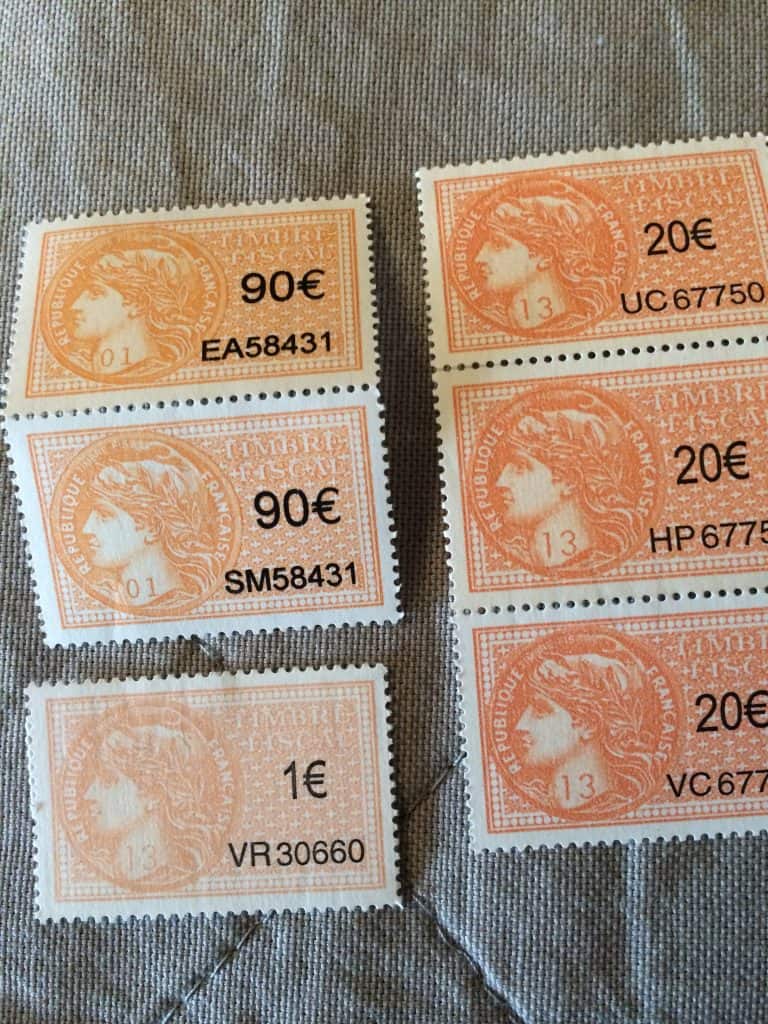
You need to pay 55€ for your application. You can get the fiscal stamp you need here. Once again, it’s funny how much has changed since when I first came to France, when all this paperwork was done in person (you had to make an appointment to turn it in, even) and I would have bought fiscal stamps from a tabac in order to pay.

A Few More Things

Something I had prepared for some years was my “why” document: Why did I want to become a French citizen? I had also gotten letters of recommendation from two dear friends who were French citizens, as well as an essay on my integration into France.

I was not asked for any of those items in this part of the process, which leads me to believe that when I am called in for my interview not only will I be asked to turn in all the paper documents that up until now I have been scanning in, but I can also submit anything else I think would be helpful for my application. In the weeks to come I will find a way to get these documents added to my application (and tell you about it).

That was it. I hit submit and two months later (about a week ago) I received this:

Confirmation de dépôt

Bonjour STEPHEN HEINER,

Vous êtes informé-e qu’après avoir pris connaissance des pièces justificatives jointes à votre demande de naturalisation, la plateforme d’accès à la nationalité française atteste de son dépôt et va procéder à son examen afin d’en vérifier la complétude.

N.B. : dès lors que cet examen attestera du caractère complet de votre dossier, vous serez rendu-e destinataire d’un récépissé conformément à l’article 21-25-1 du code civil. À défaut, la plateforme d’accès à la nationalité française vous contactera afin de vous demander de compléter votre demande.

Dès lors qu’il sera considéré comme complet, votre dossier sera instruit par la Préfecture, siège de la plateforme d’accès à la nationalité française dont relève votre domicile. C’est dans ce cadre que vous serez reçu(e), au siège de la plateforme, pour un entretien d’assimilation.

Cordialement,

L’agent Instructeur

Ministère de l’Intérieur et des Outre-Mer

So now my file is in the hands of the Prefecture. Once they are satisfied with all the documents, they will send me a date for an in-person interview. If they are not happy with the documents they will ask for corrections/updates, and I’ll normally be given up to 60 days to file those amendments.

So that’s it my friends. I’ve started what might be potentially my last bureaucratic journey in France. It’s hard to believe it’s happening after that first blog entry back in 2013 when I authored one of the world’s first publicly-findable articles on how to get a French long-stay visitor visa. I’m glad to have you all with me on this last part of the journey as well.

There are no guarantees I will be awarded citizenship, and I do not take anything for granted in this process. But I will keep you posted every step of the way.

The next article in this series will be how I have been preparing for my in-person interview.

At current speed, based on what I’ve been hearing through the citizenship grapevine, I expect to receive communication from the prefecture within 2-3 months, and if all is satisfactory with my dossier, an interview date 2-3 months beyond that, meaning I could have a decision from the French government by early 2025, or at the very latest, by current Paris prefecture standards, the end of 2025.

You can find the next part in this series here.

The photo is from a visit I made to Vaux-le-Vicomte in July 2023. Like my citizenship application, that visit was long overdue.

Did you enjoy this article? TAIP is 100% reader-supported through tipping. If you want to leave us a tip of any amount it would be highly appreciated. These tips help support our efforts to keep TAIP an ad-free environment. Just as at a cafe, the tips are split evenly among the team.

Mailbag: No, You Can’t Do That

It’s hard to believe it’s been almost two years since our last mailbag, a series in which I answer questions that don’t necessarily make sense as an article, but provide useful information. Funnily enough, the last mailbag also had a two-year interval. Sometimes you have to wait for the mail to pile up, I guess.

“I’d like to travel around France for a year to decide where to live”

This was brought up in our Facebook group and I had to chuckle at the hopeful naiveté of the poster. This task would be something difficult to pull off even in the United States. Where are you going to get your mail? Where will you file taxes? Where will you bank? How will you get around if you don’t own a car? If you don’t have a French driver’s license, how will you insure your car? Those questions are valid in your home country should you decide to nomad around. Why would they not be relevant in France?

So, let’s be clear, while you might be able to find some crazy way to pull this off, it’s not something I would recommend. For those who are new to France, a prolonged stay at a single location, with plenty of vacations peppered in, is going to help you assimilate to France that much faster. Your language skills will have a chance to bloom in familiar surroundings with potential friends and neighbors and you’ll start to understand the rhythms of daily life in France. I’ve shared before that I was living in Paris for two years before I heard one day in the boulangerie someone ordering their baguette to a certain temperature and finish.

Even if I was dashing around France in a camper van or something similar, changing residence every month, how could I go through the administrative challenges of an OFII visit, which is tied to your address of record? Speaking of which, what address are you going to give the French if you keep changing it every month or quarter? Or to the French bank that you need to have statements from for your renewal? Or how about the renewal itself, which all of us on one-year cards dread until we qualify for a longer-term card and don’t have to go to the annual torture of renewal any more?

What might make more sense is, once a quarter, to spend a month in a different region of France you are considering living in. That allows you to maintain a single residence while getting to know France in an easy and unhurried way.

“I want to come to France as a visitor or Profession Liberale and then get a job”

While I fully understand the logic of this from someone who has never lived in Europe, it’s a thought process that is detached from the realities of the labor market in the European Union.

In short, the EU is a highly protectionist market. When I got a work permit two summers in a row in Switzerland (almost a decade ago now, wow), the process the Swiss followed then has similarities to what is followed in France now:

  • a detailed job listing has to be created and publicly posted
  • no one from Switzerland applies for the job, or if they do, it must be demonstrated that they are not sufficiently qualified
  • even after you are interviewed and found qualified, more time must be allowed to pass, in case anyone Swiss missed the listing
  • the work permit is issued weeks, not months, before the foreigner’s arrival
  • the employer must pay a bounty for hiring a foreigner, usually at least five figures for a full-timer, or four figures for a seasonal or part-timer
  • the employer must pay an additional tax every pay check for hiring a foreigner, as long as you are employed there, usually at least 10% of a paycheck

People used to being able to “find a job” in their industry in their home countries don’t realize just what kind of disadvantage they are at in the EU. The only reason I got the job in Switzerland two summers in a row was because I possessed a skill that no one in Switzerland (at the time) had: expertise in teaching American university entrance exams, specifically the ACT and the SAT.

So, if you are one of the few people trained in a particular field, or type of software, or have a particular security clearance (that would be relevant in the EU), or have NGO-specific experience, or have a particular set of skills a la Liam Neeson, you are not going to get a job here. That doesn’t make you any less of a person, it just means that the protectionist policies of the EU are working effectively, alas to your disadvantage.

Even should you land a job somehow, you won’t be able to keep your visitor or Prof Lib statuses. But thankfully, someone from the legal team of the company hiring you will, in all likelihood, help you apply for a change of status and wind up the previous statues you have.

As a final note, I must stress that a PL visa is not an employment visa. It is a freelancer visa, which allows you to work as an independent contractor, with an established annual income cap. An employment visa allows you to have a job, with no income cap.

“I’d like to count my URSSAF contributions as foreign taxes paid”

For those who don’t know, URSSAF charges are paid by business owners, large and small, to contribute to health care and other expenditures of the French state. They are social charges, not income taxes. Just as Americans don’t get any deductions for paying FICA or unemployment insurance, the French don’t get any credit for paying URSSAF charges, much less credit to a foreign government.

As always, consult your accountant on your business taxes in particular.

TAIP is 100% reader-supported through tipping. If you want to leave us a tip of any amount it would be highly appreciated. These tips help support our efforts to keep TAIP an ad-free environment. Just as at a cafe, the tips are split evenly among the team.

6th arrondissement

Paris Neighborhood Guide: the 6th Arrondissement

The 6th arrondissement, or as I like to call it, quintessential Paris-ville, is one of the most central neighborhoods in the city. It’s also one of the oldest — the Left Bank of the Seine has been inhabited since ancient times and was once called Lutetia — and is home to the Église Saint-Germain-des-Prés, one of the oldest churches in Paris.

It also happens to be the first place I lived, the first time I lived in Paris when I did my semester abroad here. I call it “quintessential Paris” because it looks exactly as you would imagine Paris to look if you’ve never visited before. Haussmanian buildings line the streets, Ernest Hemingway and F. Scott Fitzgerald were known to congregate in a few of the cafés, and there’s no shortage of picturesque photo opportunities. 

While I could never imagine myself living in the area now for a myriad of different reasons, it remains one of my favorite areas to walk around. I don’t know if it’s nostalgia for a simpler time, or a desire to walk in the footsteps of some of my preferred literary stars, but I’ve spent many an afternoon in the sixième.

There’s much to see in the 6th arrondissement for both expats and tourists alike. My advice? Check out a few of the touristy attractions, then give yourself a few hours of free time to wander.

Saint-Germain-des-Prés

Visit the (recently restored) church and the neighborhood-within-a-neighborhood. Saint-Germain-des-Prés is a small quartier in the 6th. You’ll of course find the église (that was built in the 6th century AD), as well as some famous cafés that are known for their famous clientele:

  • Café de Flore: Centrally located on the boulevard Saint-Germain, Café de Flore has been frequented by intellectuals, writers, and artists since the 19th century. Jean-Paul Sartre, Simone de Beauvoir, Albery Camus, and Pablo Picasso are just a few. The terrasse is great for people-watching, but be prepared to pay for it.
  • Les Deux Magots: Just next door to the Café de Flore is Les Deux Magots. Like its neighbor, it was a gathering place for great thinkers, philosophers, writers, and artists. Hemingway and Fitzgerald, as well as James Joyce and André Gide, were all regulars.

My personal favorite place for people-watching in Saint-Germain-des-Prés is a very unassuming café on the corner of rue des Saints-Pères and rue Jacob called Le Comptoir des Saints-Pères. It’s usually quiet — except on the random nights they have live music.

Musée d’Orsay

Unpopular opinion: if you’re only in Paris for a few days or a week, skip the Louvre and go to the Orsay instead. 

I know a lot of people probably wouldn’t agree, but unless you have an obsession with Egyptian art (the Louvre’s collection really is incredible), or have a burning desire to see what all of the fuss about the Mona Lisa is about, I don’t recommend going to the Louvre. It’s always crowded, overwhelming, and honestly kind of a letdown. I prefer the Orsay ten times over.

It’s the home to famous pieces by Manet, Renoir, Rodin, Degas, van Gogh, and more. I’m always moved when I see “Starry Night Over the Rhône” by van Gogh and “Bal du moulin de la Galette” by Renoir in person.

When visitors ask me which museum they should visit first, I always say the Orsay.

Shakespeare and Company

A guide on the 6th arrondissement wouldn’t be complete without a shoutout to the OG English bookstore of Paris. While its current location isn’t the same as its first incarnation, the store lived in the 6th for many years. Now, it is technically in the 5th arrondissement… but let’s call it the 6th for the sake of this article.

Shakespeare and Company was first opened by Sylvia Beach in 1919 and was soon a gathering place for writers like Gertrude Stein, Hemingway, Fitzgerald, Joyce, and many others. Beach actually took it upon herself to publish Joyce’s Ulysses when no other publishers would take the risk.

The bookstore shut down during the German occupation of Paris during World War II, and was reopened in 1951 by George Whitman in its current location, 37 rue de la Bûcherie. Today it’s made up of a café and a separate shop exclusively for antique books and some small apartments that budding writers can stay in (though I’ve heard the application process is a bit erroneous). 

It also hosts events, chats with writers, and book signings, and there’s an area upstairs to read in. The first book club I ever joined in Paris met there every Sunday — it really was the perfect place for it.

Jardin du Luxembourg

Finally, the massive green space that is the Jardin du Luxembourg. There are plenty of paths to wander, fountains, sculptures, and playgrounds for children. The French Senate is housed in the Luxembourg Palace on the edge of the park, with the Musée du Luxembourg just next door.

It gets very crowded on nicer days as the garden is smack dab in the middle of student central — La Sorbonne is a few streets over. But, I have enjoyed many peaceful moments here, away from the throngs of étudiants.

As such there are a ton of inexpensive cafés and places to grab food that surround the Jardin du Luxembourg. A crêpe stand, aptly called Crêperie at 34 Rue Gay-Lussac (though technically in the 5th arrondissement) was a favorite of mine and my classmates during our semester abroad.

There are of course many other things to discover in the 6th arrondissement that I haven’t covered — the Églist Saint-Sulpice, Marché Saint-Germain, Pont des Arts, and the Institut de France are all located there as well — but use this guide as a jumping-off point before you go. 

And don’t forget to give yourself ample strolling time to discover everything else there is to see in the area. You’re going to need it.

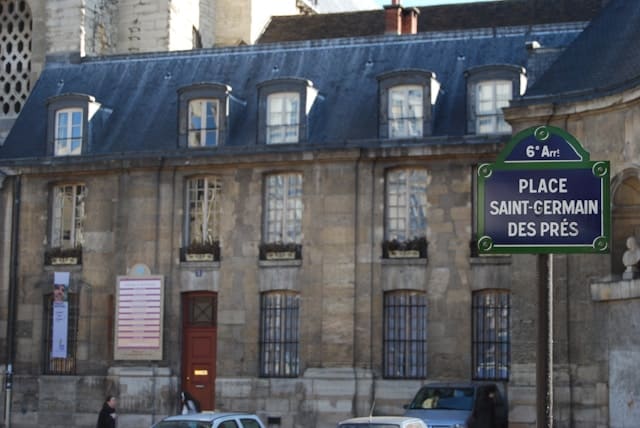
Photo by Emilio Sánchez Lozano on Unsplash

Did you enjoy this article? TAIP is 100% reader-supported through tipping. If you want to leave us a tip of any amount it would be highly appreciated. These tips help support our efforts to keep TAIP an ad-free environment. Just as at a cafe, the tips are split evenly among the team.

One Last Step Before Applying for Citizenship

I’ve been following forums and Facebook groups more closely in the last few years, knowing I was going to be applying for citizenship soon. There are some areas of the country that have notorious reputations for that process. Montpellier, for example, has been known to have a five-year average waiting period from depositing your dossier to your interview. For some years Paris had a 18-24 month reputation, which all things considered, wasn’t too bad, and since I had spent the majority of my French life in Paris, I had set that expectation in my head for years.

But that changed with Covid and the dematerialization of the citizenship process.

Now, with the possibility of submitting everything online (you used to have to make an appointment and deliver everything in a folder in person, and if there was anything not satisfactory you were sent back to get it and had to make a new appointment), Paris was, by all reports, consistently tracking at 6-8 months, whereas the Department where I was living, Seine et Marne (77) was tracking at 18 months. Save a year by moving back to Paris? No brainer.

Except I didn’t end up saving that year, for what should have been the simplest of changes, but ended up being a nightmare instead.

For context, I’ve been dealing with the French authorities for more than a decade now, and have become so comfortable that I charge money for consultations and have written a book about how to move to France. But France always finds a way to humble those who think they have it all figured out.

Turns out, the nine-month delay (cutting into the 12-month savings I thought I was going to get by making the change to Paris) I ended up experiencing in turning in my citizenship dossier was held up by a dual address change, one for me, one for my business. Let’s start with the simpler one first.

Personal Address Change

Now I’m not talking about the regular “civilian” logistics of changing your address which include notifying your bank, etc. That’s covered in this article. This about an administrative address change, which is different from a simple postal address change.

So what’s the good news? There’s a dreamy new website that, while not perfect, makes the whole process of living in France as a foreigner so much easier. The Etrangers en France website allows you to:

  • Apply to renew your visa
  • Apply for French citizenship
  • Ask for a work permit
  • Apply for a new card because
    • You lost your old one
    • You changed your address
    • You’ve gotten married (or divorced)
  • You need a travel document (this is for people with special statuses, like refugees (TVE) or minor foreigners (DCEM)

So I put in for the address change and it took under five minutes to submit the form. My experience with the French told me it should take 2-3 weeks for them to process this.

Wrong.

I submitted in March 2023, hoping to pick up my card in May. Instead, in late April, six weeks after my initial submission, I messaged them, asking (with typical French politesse) if perhaps this had gotten stuck in the system somewhere. Within 48 hours, I was told that the change would be made. Just like I had done many years ago when I stuck a post-it note to a letter to the Carte Vitale folks, a simple short follow-up nudged my request out of the gears of bureaucracy into which it had fallen.

Sometimes it’s that easy.

So what followed was another four weeks or so before I got a text message saying that my card was ready to be picked up in early July. It would cost 25€, to be paid by fiscal stamp (also, now available online). But the problem was that I had to make an appointment the old-fashioned Hunger Games way: by waiting with a bunch of other people here when new appointments were released, and then hoping I snagged one before they disappeared within four minutes or the system crashed, whichever came first.

I spent weeks trying to get an appointment before I landed one in mid-September (this was, of course, influenced by the aoutiens in the administration, who I can’t blame for their preference, since I’m of the same persuasion), in which I was able to come in and get the card. 

Make sure to get the right kind of stamp! We were witness to someone who had bought a stamp for a French citizen to get an identity card, which is not the type of stamp you need as a foreigner getting an identity card. People looked on as he haplessly held his phone on high, trying to get a cell phone signal so he could buy the stamp online, a signal which is elusive inside the Police Prefecture on Ile de la Cite. Select “titre pour etrangers” in step 1 to avoid this dilemma.

So, that problem was solved, six months after the initial request. 

Why did this matter in the first place? Because part of your citizenship dossier requires a current CDS, and since I wanted to apply for citizenship in Paris, my new Paris address, in the 12th, needed to be on my CDS.

As this was going on, another struggle was happening concurrently, that of my business address change.

Business Address Change

As I explain to my Profession Liberale clients who ask, when you move from one residence to another inside France, the authorities consider that your business has “closed” and “moved” to a new location too. Since you’re a sole proprietor/trader, that makes a certain amount of sense.

But this means that you will be issued a new SIRET, because the old SIRET was tied to the now “closed” location, which has implications for your invoices and tax returns.

But that’s okay. I’d actually changed my business address twice before, when I moved from the 2nd to the 19th, and when I moved from the 19th to Moret-sur-Loing, where I lived until March 2023. There was a fairly straightforward paper form known as a P2. You submitted it, the wheels of bureaucracy turned, and about a month later you would receive an all-important Certificat d’Inscription, with your new SIRET. You can take a look at it here, if you’d like, but it’s no use filling it out as it’s a now-defunct form.

A current Certificat d’Inscription is necessary for your citizenship application if you hold a PL visa, as I do.

The problem was that the dematerialization scheme which had created the new website I alluded to above had created one for small businesses as well. Welcome to INPI Connect.

The website is not intuitive, but with some trial and error I found the section that related to changing my business address. It took me about twenty minutes to figure out the forms, and then I attempted to submit my form but the website kept refusing to accept what I thought was a legitimately “signed” document.

Enter the QES.

Qualified Electronic Signature (QES)

So in the past, the P2 form worked like most administrative changes. I filled it out, signed it, and mailed it in. The idea that someone else would want to change my business address for nefarious reasons was as ridiculous then as it is now.

But that didn’t stop the French from requiring a level of security on an electronic signature that, unless you work in law, you have probably never heard of. If you want to get nerdy, you can read more here.

As I kept trying to upload the address change document that I had hand-signed, the website kept rejecting it (I thought this was like Docusign, like most e-signature systems that I had grown accustomed to.). I dug a bit deeper and saw that they tried to offer some helpful advice, along the lines of, “if you don’t have access to a QES, simply use FranceConnect+, which allows you to do this easily.”

FranceConnect+

So, FranceConnect is an awesome system that allows you to use some other user name/password to a website of French bureaucracy to login. It cuts down on having to maintain multiple passwords and gives the French confidence that it’s the same person. 

For example, for my login to the Etrangers en France website, I consistently use FranceConnect and my login and password for the Department of Finance (taxes). 

FranceConnect+ is heralded as an even more secure, even safer version of FranceConnect. The only problem? To use it, a foreigner needs a CDS that has more than 5 years validity. Well there’s only one such card, the golden 10-year Carte de Resident. Despite having lived in France ten years at that point, I didn’t qualify for this service though I was reminded once again that I should have gotten my ten year card years ago.

Which meant that I had to find a private service that would give me QES access. Enter ZealID.

Now I should pause for a moment. These discoveries did not all happen in one day. As with any project in life, you run into a frustrating wall and then you can pick up your task again when you have time and emotional stamina to try to overcome that wall. So this period of trying to make an address change, finding out that each of the changes had to be certified by a system that the French government had deemed I couldn’t have access to, then having to find such a system on my own, then finding out the address change had to be done in a certain order, was not something that occurred over a period of days, but over weeks which stretched into months.

And remember, I had thought I was going to save all this time by applying in Paris. 🙂

Anyway, I have nothing but wonderful things to say about the ZealID folks. They only charge something like 40€ for five signatures (when I bought it it was 25€ for three signatures) and their software is intuitive and easy to use. There may have been a fist pump (or three) when the INPI Connect at long last recognized that I had uploaded a document with a valid QES and queued it for processing.

Now I ran into my second problem.

I had mistakenly thought that I could change my personal address and my business address in the same form. I was told, in typical pedantic French bureaucro-speak that I was obviously too much of an idiot to realize that I needed first to change my personal address with one form, then submit a second form closing my old location and opening my new one, related to my new personal address.

How I could have found that out when no instructions existed on the site didn’t matter. And what mattered was that I had an answer, so I could move forward.

I had to wait some weeks for that first form to be processed before submitting the second form. Which also took some time to be processed.

Here’s where the digitalization came back into my my favor. They no longer mail a Certificat d’Inscription to you. You simply need to go to this site, enter your new SIRET and download the document that is generated. It’s not a Certificat d’Inscription but it is accepted as an equivalent. It is an “Extrait des inscription.” This is analogous to US state websites where you can print out certain forms that are equivalent to articles of incorporation, which you may need to open a bank account. 

About ten days after that final form was submitted, my new SIRET was active and I printed my form. It was the 19th of December. I had started the address change process for both my personal and business addresses in March of that year.

Now I was ready to apply for citizenship, humbly reminded that even ten years of experience doesn’t prevent papers from getting caught in the gears of bureaucracy. But the citizenship application process is a story for an upcoming article.

The photo is of the stamps that I first bought when I moved to France in 2013. They, like the Paris metro tickets, are history now.

Contemporary Art in Paris: Galleries

The association of art and Paris is well deserved. Beyond its exceptional art museums, Paris is teeming with a plethora of galleries. 

Any type of art can be seen in Paris’ galleries, from ancient Greek statues through renaissance works to the latest contemporary performances and installations.

Contemporary art galleries serve a double function in the art world. Art dealers scout young talent whose work they feel is worthy. If they decide to represent an artist they will take on all kinds of responsibilities to help the artist grow in the art market. They will incubate these artists, support them in many ways, promote them and get their work shown and out into the public eye. They act as a middle figure between artist and collector. This approach is referred to as the primary art market, i.e. the purchaser of such a piece is the first ever owner of that piece. Often, promising artists owe their coming out thanks to some gallery. Galleries are considered to be the “primary market,” where work that is on sale comes directly from the artist. It has been said that when buying a work on the primary market the purchaser creates a relationship with artist. When buying on the secondary market (i.e. from a previous purchaser,  someone other that the artist or their gallery) the purchaser acquires an object.

Galleries are open to the public, to purchasers and visitors alike.  While, of course, catering to collectors, they also welcome visitors who are interested in taking the pulse of the status quo of art and trying to snuff out the direction the art world is headed without necessarily looking to purchase. 

It has been said that Paris’ galleries might be intimidating. Many are uncomfortable opening the door. One gallery owner on the rue Quincampoix that I spoke with after I dropped in by chance informed me that his American customers complained about (un)welcoming gallery personnel. He, of course, was the opposite: as soon as I stepped in he came over to ask me what I knew about the art and the artist, and as I knew nothing, he immediately offered to explain her technique. This is obviously a best case scenario, and in fact the most pleasant stop on my route that day. 

Some galleries cannot even be seen from the street; they might be in a courtyard such as Perrotin, Templon, Mitterand, Aline Reche … or even upstairs like Putnam. Most visitors either know what particular big-league gallery is behind what door or they have read recommendations to see the artwork and learned the address. You may even have to ring a bell to have the gallerist ring you in to the gallery or to get into a building and find your way to the gallery. Obviously it does take some art world self-assurance to ring that bell if you are not really on a buying trip, knowing that the gallerist will be paying special attention to your presence.

So what can happen when you open the door of a gallery? Dealers know that most of those who come in are not purchasers but art enthusiasts. Clearly not many people can or are willing to pay, 50 000€ (or more) for a painting, 10 000€ for a small sculpture in plastic or even 2500€ for a small work.  The basic assumption is that if you have entered, you are interested in the art and might simply be curious. Therefore, they leave you alone unless you open the conversation with a comment or a question. While all galleries exist to sell the art, they are well aware of their role to make the art they show available to be appreciated by the general public. The bigger, more important and international the gallery, the less they will notice who enters. So do step in. 

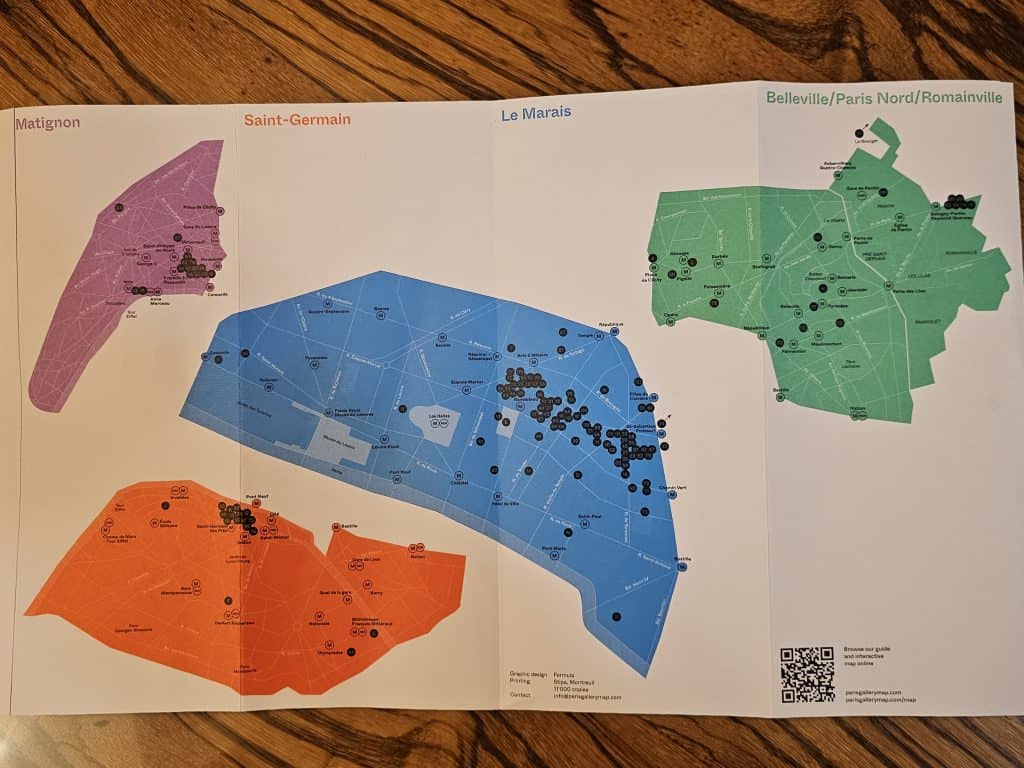
While one can always find a gallery or two in any area of the city, there are three main areas in Paris where galleries are concentrated and a fourth on the rise: the Marais (and the new Haut-Marais near the Place de la République), St Germain, Avenue Matignon and surrounding streets the east of Paris is slowly evolving. This loosely bound zone includes the Belleville area and extends beyond the ring road to Romainville and Pantin. Around Belleville the galleries are young and recently set up, showing emerging artists. Romainville presents a sort of art campus in a quadrangle with four galleries along one side, the FRAC reserve on another. The area is earmarked to become an art center. In nearby Pantin a few galleries have opened, spearheaded by the internationally famous Ropac Gallery. 

While some galleries have closed their physical space to go digital, such as the urban art gallery Sakura, and the iconic Galerie Denise Renée where kinetic art got its lift into art history, others are moving in. And, as City Hall makes parking and driving in the Marais more and more difficult, some of the largest, international galleries originally established in the Marais have opened a (or another) site around Matignon catering to collectors who want to drive to their art spree expedition and park nearby. 

Also, since Brexit, London is gradually yielding its position as the art center of Europe to Paris. Many internationally known galleries who have heretofore had bases in London, are now also opening shop in Paris. And besides these, new, emerging galleries are blooming in the city. 

It is always a pleasure to stroll in any one of these areas and to pop into the galleries to feel invigorated by communicating with the art of the day. Slash is the perfect site to help plan such a walk. The home page will offer suggestions of galleries to visit and if something strikes your fancy, check out what else there is to visit in the area and go take a turn there. Even better, look up the openings that will take place. These are typically held on Thursday evening and sometimes on Saturday afternoon. Thursday evenings can range from a crowded celebration with drinks and even sometimes nibbles, to a quiet display undistinguished from any other day.

The traditional art nexus of the Marais, near the Centre Pompidou is particularly lively where crowds throng to its cafés, restaurants, trendy shops and, of course, its eclectic mix of galleries that can be large or small,  unrenowned or prominent, French or international.  Almost all the artwork being shown is by living, sometimes well-established (or not) artists using a multitude of techniques, with highly diverse materials and in wide-ranging styles. 

The crescent-shaped Rue Debellyme has a particularly high number of galleries in a short distance including the particularly friendly Galerie Pierre-Alain Challier, the international Thaddeus Ropac and Galerie Karston Grève which has two separate spaces side by side. The small Rue Chapon is lined with many small galleries.   On the Rue de Turenne are situated some of the largest international galleries such as Perrotin and Almine Rech with David Zwirner just off on the rue Vielle du Temple. 

The international Galerie Continua, decorated in modern industrial style on Rue du Temple, is a bit of a labyrinthine affair with rooms going round and back on the ground floor and upper floor and sometimes the basement. It has a number of highly visible, internationally known artists on its roster.  Strangely, and singularly, it even boasts a small café and ice cream parlor (an easy place on your itinerary to take a pit stop) which from the front windows overshadows the fact that this is indeed an art gallery.  And the gallery continues and greatly expands its show space way out in the French countryside on two different former industrial sites in Les Moulins and Sainte-Marie. Unique in its business plan, once a year it offers a free bus excursion for an opening out to its two provincial galleries. Of a Sunday morning art enthusiasts are bussed out to Les Moulins, then around lunch time bussed from there to the Sainte-Marie site where they are served a picnic lunch. After lunch they have a couple of hours to visit the artwork and then get on a bus back to Paris. Follow the gallery on eventbrite to know of future events of this type.

Further north is what is now called the Upper Marais, a much trendier designation than “République area”, allowing galleries to psychologically annexe their location to the more fashionable Marais district. Here, an increasing number of emerging galleries are setting up shop where they can have more space at a lower rent with the advantage of a shopfront right at street level. The main streets for art exploration are the rue Béranger and rue Notre Dame de Nazareth. Also in this area, just behind the 3rd district town hall is the exhibition hall, Carreau du Temple, a complete transformation from what was once a leather goods market.  

The galleries in the St Germain area tend to be small each with its own speciality: antiques, modern, contemporary, primary … Rue de Seine has become virtually generic to refer to this gallery area. The other most gallery-laden streets of this quarter are rue des Beaux Arts, rue Guénégaud and rue Mazarine. 

Off the beaten path, and surprisingly so, but still in the sixth district, is the high-end, luxury department store, Bon Marché, which invites renowned artists to create works filling the height of its atrium space above and beyond the central escalators. The windows will also display works of the chosen artist. Artists who have exhibited in situ in this unusual space include, Ai Weiwei, Joanna Vasconcelos  Suboth Gupta, Daniel Buren… These temporary exhibits are well worth the visit to the department store, where you can also shop for (expensive) items to take back home.

The highest end of the gallery quarters is on and around the Avenue Matignon, a short walk or even just across from the Elysées Palace where the president resides. Get off the metro at Miromesnil and start down Rue Déclassé and you nave entered the golden triangle of art galleries of Paris. Galleries line the street on the left side as you head toward the Champs Elysées. One of the first is Galerie Slato-Parra which specializes in Latin American artists and is run by a very knowledgeable Venezuelan. Don’t miss her openings with the pleasure of drinks in the back courtyard on a lovely summer’s evening. The side-streets toward the left: rue Mirosmenil,  rue Penthievre, also boast numerous galleries. Most important is the Rue Faubourg St Honoré, on which is located the entrance to the Elysées Palace, with Sotheby’s right across from it. But if you are not side-tracked,  Rue Déclassé turns into Avenue Matignon with some of the  most prestigious international galleries coming to Perrotin’s three-floor gallery as you almost reach the Champs Elysées. And just before the Rond-Point is Strouk, which, although not a heavy-weight internationally, has some wonderful exhibitions. Immediately on the other side of the street is Christie’s auction house and Gagosian just around the corner on rue Ponthieu. 

The galleries in the east are far-between, and more suitable to a hike than to a short walk. But when you reach Pantin, there is a nice stroll to take along the canal on a lovely, summer day.

Most galleries have,  lying around somewhere (e.g. window-sill, floor, shelf, desk …), a free Paris Gallery Guide, which comes out four times a year and lists virtually every gallery in the main gallery areas, the artists on view, openings that are coming up and a relatively clear, colorful, coded map to find them.

So choose a gallery and an area, pick up a Gallery Guide, and enjoy  “a pleasant walk, a pleasant talk” into Paris’ gallery culture.

Photo of a Gallery Guide.

Did you enjoy this article? TAIP is 100% reader-supported through tipping. If you want to leave us a tip of any amount it would be highly appreciated. These tips help support our efforts to keep TAIP an ad-free environment. Just as at a cafe, the tips are split evenly among the team.

Paris Neighborhood Guide: the 16th Arrondissement

If you’re new here, the French capital comprises 20 “arrondissements,” a fancy French word for neighborhoods. They begin with the 1st arrondissement in the city’s center, and the others spiral out, resulting in what looks like a snail’s shell. It’s a nice image when you consider that escargots seem synonymous with French cuisine (eating snails isn’t as popular as you may think, but that’s another story for another article). 

Nestled in the western corner of Paris is the 16th, or seizième, arrondissement. It’s fairly residential when compared to other areas, especially the lively 10th and 11th arrondissements, and of course, neighborhoods 1-7, which boast monuments such as the Louvre, Notre-Dame de Paris, Panthéon, and Quartier Latin.

I lived in the 16th arrondissement for two years when I was a student. While it is certainly quiet, it’s one of the things I liked most about living there. And, “quiet” doesn’t mean totally removed from the hustle and bustle of Paris. The Place du Trocadero, which overlooks the Eiffel Tower, is in the 16th and was only a five minute walk from my apartment at the time.

There are a few other places in the 16th that are worth checking out, especially for those of you who either live here full-time or are a tourist looking to do things that are off the proverbial beaten path. 

Le Bois

Two large parks bookend Paris — the Bois de Boulogne to the west and the Bois de Vincennes to the east. Another reason why I loved living in the 16th so much was that I had such easy access to such a massive green space in an otherwise relatively urban landscape. Bois means “wood” in English, an apt word to describe it. The Bois de Boulogne covers an area of about 2,090 acres. 

There are walking paths, fields, lakes, smaller parks within the woods, places to exercise, restaurants, a nightclub (yes, you read that right), the Longchamp Hippodrome (a famous horse racing track), and bike paths. It’s a wonderful place to spend a sunny weekend, and you’ll often see Parisians out exercising or spending time with family.

You’ll also find one of my favorite museums, the Fondation Louis Vuitton. Designed by architect Frank Gehry, who is also responsible for the Guggenheim Museum Bilbao in Spain, it opened in 2014, the first year I came to Paris as an au pair. It’s a contemporary art museum, and some memorable exhibits I saw there include The Shchukin Collection, which highlighted artists like Picasso, Matisse, and Gaugin, as well as a collaboration with the MoMA in New York City. 

The modern building stands out amongst the oak and poplar trees — some Parisians don’t like it — so you won’t be able to miss it. 

More Museums

The Fondation Louis Vuitton isn’t the only museum in the 16th arrondissement. In fact, there are more than a dozen. I won’t bore you with information about them all (although I know most of you wouldn’t be bored!), but there are a few that I recommend you visit the next time you’re in the area.

  • Musée du Vin: Housed in a historic cellar, the Musée du Vin, or Wine Museum, boasts a rich collection of artifacts, tools, and more that trace the history of winemaking and its cultural significance in France. You can explore the cellars, gain insights into vine cultivation, enjoy tastings, and essentially immerse yourselves in the art and heritage of France’s preferred drink.
  • Musée Marmottan: Originally a private mansion, the Musée Marmottan houses the world’s largest ensemble of Claude Monet’s works, alongside pieces by other renowned artists. It’s located in a former hôtel particulier (a fancy name for a city mansion), meaning the building itself is just as impressive as the art inside it. Don’t forget to go downstairs — that’s where you’ll find the majority of Monet’s works. Stephen is a big fan of Berthe Morisot and he was first introduced to her at this museum.
  • Musée d’Art Moderne de Paris: Filled with contemporary and modern art, the Modern Art Museum of Paris has one of my favorite permanent collections in Paris. Works by artists like Picasso, Fernand Léger, Frida Khalo, Modigliani, and Sonia Delaunay grace the halls — I’ve spent many an afternoon admiring them.
  • Palais de Tokyo: Located just à côté of the Modern Art Museum is the Palais de Tokyo. Now, I must admit this museum isn’t my favorite as I don’t love contemporary art, but if you do it’s a must-visit. The large space is dedicated to avant-garde creativity at its utmost, and hosts ever-changing exhibitions, performances, and installations.

Take a Stroll

Like all Parisian neighborhoods, the seizième is a wonderful place to wander. There are plenty of places to grab a coffee or a bite — Le Franklin near the Passy métro station is great for people-watching, and Langousta is great for seafood — otherwise, take the time to admire the classic Parisian architecture as well as the local resident’s taste in clothing. 

If you’ve seen the movie Inception, you’ll likely recognize the Pont du Bir Hakeim. Cross it and you’ll find yourself in front of the Eiffel Tower. About halfway across the bridge, take a moment to walk down the stairs to explore the Île des Cygnes — technically in the 15th arrondissement — and admire a unique view of the Tower from there.

While I no longer live in the 16th it holds a special place in my heart. I can’t help but feel like I’m home whenever I get off the line 6 at Passy.

Photo by Karl Köhler on Unsplash

Did you enjoy this article? TAIP is 100% reader-supported through tipping. If you want to leave us a tip of any amount it would be highly appreciated. These tips help support our efforts to keep TAIP an ad-free environment. Just as at a cafe, the tips are split evenly among the team.

My Journey to France Part 2

In case you missed Part 1, I’m sharing my unique journey from I’ll-never-live-abroad to nearly-10-years-in-France-and-counting. 

I’m often asked how I did it — and while several of my articles on TAIP touch on how I’ve been able to stay, I wanted to write it all out in a way that could be copied by anyone reading. Okay, maybe not anyone. It took a lot of hard work to build my life here in France, and it isn’t over yet. I’ll be starting my journey to citizenship next, which promises to be full of paperwork and even more determination.

But, I’m getting ahead of myself. Below I’m picking up where I left off on Part 2: I was an au pair, didn’t want to continue on as an au pair, but didn’t want to go back to the US just yet. Here’s how I figured out a way to stay.

Back to School, It Is

I was always one of those people who said, “Never again!” after finishing my undergrad. It wasn’t that I didn’t like school — on the contrary, I’ve always enjoyed learning — but I was sick of papers and tests and all of the other coursework that went along with it.

Famous last words. As I finished up my second year as an au pair, I didn’t have many options other than the easy-to-obtain student visa. I decided I wanted to get my master’s degree. Public education is cheap here and I knew I’d regret it if I didn’t. This time, however, I was going to study something I was actually interested in, not something that would lead to a job one day.

I settled on French Literature. I’ve always loved reading and writing and I figured I might as well study the greats while I was in the city where many of them worked and lived. The only wrench in my plan? I still, after 2.5 years, could not speak or read French. In my defense, I came over here only knowing the basics, and as an American au pair, I was required to speak English with the children I took care of. At this point, I knew could understand about 75% of what was said to me, but I couldn’t speak back. It was a combination of a lack of vocabulary and confidence.

What’s more, I knew I wanted to go to a public school (again, cheap), and to do so as a foreigner I had to have a certain level of French, with a certificate to prove it. So, I looked around for some programs that would meet the student visa requirement of 20 hours per week. I found two: one at the famous La Sorbonne and one at the also famous Université Nanterre. I missed the deadline for La Sorbonne so that left me with Nanterre.

I applied, got in, looked for housing (and found the deal of a lifetime: I traded 10 hours of English lessons per week for a 9m2 sardine box in the sky), went back to America for a few weeks, got my student visa, and returned to home to Paris. Back to school, I went.

(Finally) Learning the Language

And so began my year-long journey to learning French. I loved my program — and recommend it to anyone who wants to live here long-term — I was the only Anglophone and so the only common language my classmates and I had was (broken) French. Our teachers also insisted that we speak in French instead of our native language. It was difficult, but it also felt like the best place to do it. Everyone had an accent, and everyone was trying to learn.

I met some very kind people, finally learned French, and also discovered more about French culture. We went on field trips in Paris and the Île-de-France region and ultimately all became quite close. Spending 20+ hours per week together will do that.

With my B2 certificate in hand, I was finally ready to apply for my master’s. I still wanted to study French Literature, and so started to look at those kinds of programs. I had a couple of informational interviews at various universities in town, before sitting down with one guidance counselor in particular. 

She looked over my resume and experiences and asked why I didn’t want to study English Literature instead of French. At this point, I had started dabbling in freelance writing and had indicated that on my CV, and well…the whole “native English speaker” thing. I told her it felt silly to come all the way to France only to study English. Mais non! she assured me, and encouraged me to look into English Literature programs instead.

The meeting piqued my interest, and soon the curse of the missed deadline struck again — but it was for the best. Nanterre University, where I completed my French course, had a bilingual English Literature master’s program. Because I was already in their system, it was very easy to apply. I was accepted almost immediately (again, native English speaker), paid my tuition (400 € for the year), and began.

I loved my teachers, loved my program, and bonded with my peers. No, I never wanted to go back to school, but completing my master’s at a French public university was one of the best experiences I’ve ever had. I’ll never regret it. 

But Wait, I Don’t Want to Leave

After my two-year program, spoiler alert, I still wasn’t ready to go home. I met my now-husband about halfway through year one and things had gotten very serious very quickly, in true French dating fashion. We were making serious plans for the future. But…what about my visa?

I obtained the APS visa, which gives you a year to look for work after you graduate from a French institution. I did look for a job but I knew I wanted to work in English (even to this day I can’t write in French beyond simply texting), and finding a job that aligned with that was difficult. I had no issue finding Anglophone clients, but there wasn’t a need for full-time English writers in Paris — or at least, the jobs that I found didn’t pay very well.

The APS visa was quickly running out, so what’s a girl in a relationship with a French person to do? The marriage conversation happens. I’m lucky that I was with someone who I knew I wanted to spend my life with, visa issue or not. So, we made plans to quickly marry at the town hall so that I could obtain the vie privée et familiale visa.

Long story short, I did get that visa and so my future in France was secured for life. I’m not saying that everyone needs to meet a French person and marry them in order to stay here (indeed, there’s an entire shady trade in this which we may write about in the future) — there are a lot of other options out there including the profession libérale visa, or even a long-stay visitor visa if citizenship isn’t important — but in my unique situation, my husband is the reason I was allowed to stay.

That’s the gist of it — a couple thousand words on my journey to France. I hope it will serve as inspiration for anyone else who may find themselves thinking, but wait, I don’t want to leave too.

Photo by Salomé Watel on Unsplash

Did you enjoy this article? TAIP is 100% reader-supported through tipping. If you want to leave us a tip of any amount it would be highly appreciated. These tips help support our efforts to keep TAIP an ad-free environment. Just as at a cafe, the tips are split evenly among the team.