How to Become an Auto-Entrepreneur in France

Many people dream of living and working in France, and while I was right there with you when I first got here, I know that I had a tendency to put the logistical side of everything on the back burner. Thinking about taxes and the like just didn’t fit into my Midnight in Paris vision of what I wanted my life to be like here. 

I was soon brought back down to reality when I finally got settled into my new post-master’s-degree life. I had already been in France for some time at that point, but I worked as an au pair (the family I worked for paid taxes on me), and after I was a full-time student (I traded English lessons for my apartment and took other odd jobs to make a little cash on the side). I knew I wanted to pursue freelance writing as a career, but I was unsure how to do so legally (plus how to get the benefits that I knew came from paying taxes here). 

I was soon introduced to the concept of the auto-entrepreneur. There is no literal translation for the term, but it should be understood as a one-person business. If you’ve also seen the term micro-entrepreneur floating around, it’s because in 2016 the French government officially changed the term from “auto” to micro-entrepreneur. However, although it’s been officially changed for five years now, most people continue to call it the latter and even the website you’ll use to open your business and pay your social charges features the word auto-entrepreneur. That’s France for you!

Similar to the 1040 freelancer tax status in the United States, opening your own one-person business is a great way to freelance legally in France. If you have a valid residence permit that permits you to work in France (sorry Visitor visa holders!), you’re eligible. When I got started myself, I found the process confusing and so I created this guide to help anyone else who may be in the same position.

Registering as an Auto-entrepreneur

I want to clarify one more time that the terms auto-entreprise and micro-entreprise are one and the same, and both signify a one-person business in France. Once you open your business, you become an auto, or micro, entrepreneur. There are a few different ways to open your business:

  • In-person, at the Centre de Formalités des Entreprises (CFE) closest to your residence (a quick Google search will help you determine which one).
  • By mail, but filling out the form on this website (click on accéder au formulaire) and sending it to the correct CFE.
  • Online, by visiting this website.

I recommend you do the online option unless you’re eager to practice your French or use your printer and pay for postage. Once you visit the website, follow these instructions:

  1. The first question is asking if you are already an “independent worker,” which is yet another term for auto-entrepreneur. You are allowed to have up to two small businesses, but if you’re reading this how-to article I’m assuming you don’t have one already! Check the box that says “non.” Then, click the button that says “déclarer mon auto-entreprise.” 
  2. You’ll be asked to create an account, which you’ll need to pay your social charges, and to have access to any sort of information related to your new small business. Fill in your personal information and then click on “créer mon compte.” You’ll have to confirm your email address and then sign in to your new account before you can move on to the next step.
  3. Once you’ve signed in, you’ll see a message at the top of the page asking you to complete the process to create your small business (Pour effectuer votre formalité…). Click on it.
  4. You can now finally get down to business. Fill in the necessary information, including what you plan on doing, when you want to start, and some other questions. The nice thing about the process (which didn’t exist when I opened my small business) is the small question marks next to each step that you can click on if you’re confused. 
  5. Below is a screenshot for reference, of what I would put if I were to sign up for a small business for freelance writing:
  6. Click on “Suivant.” Here, you’ll be required to fill in your personal information like your address, date of birth, and the like. You’ll also need to put your nationality, and here you’ll be prompted to put in your residency permit number.
  7. Click on “Suivant.” This next section has to do with your marital status and your monthly social charges. If you already have a social security number you can put it here, otherwise, click on the box that says “Ce numéro ne m’a jamais été attribué.” You’ll be able to choose the frequency of your social charge payments. I personally prefer monthly payments, but you can also opt to pay each trimester. There is also the option to pay your yearly taxes at the same time as your monthly social charges. Again, this is all preference! If you’d like to separate yourself legally from your business (similar to an LLC in the US), check “oui” next to the option to become an EIRL. 
  8. Click on “Suivant.” You’ll want to check “non” for the first question as you’re creating the business for yourself. Check “oui” for the second question, you’ll need the SIRENE for your future business dealings!
  9. Click on “Suivant.” You’ll be brought to a summary of all of the information that you’ve filled in so far. Review it and edit if necessary. 
  10. Click on “Suivant.” Here you’ll be required to upload a copy of your ID and your valid residency permit. This next part is a bit tedious, but you’ll have to scan and print out your documents and sign with the words, “J’atteste sur l’honneur que cette pièce d’identité est conforme à l’original,” Plus, “Fait à … le …” with your location as well as the date. Then, re-scan this document and upload it onto the site. Make sure you click on “Joindre le fichier” after you’ve selected the document from your computer. You should then see it below like this:
  11. Click on “Suivant.” You’ll be taken to a confirmation page with the option of downloading your application and I recommend that you do so for your own records! If you followed the steps above, you should receive a confirmation letter from INSEE, the institute responsible for managing all small businesses in France. In the letter is your SIRET, which is the ID number assigned to your business. You’ll be required to put that number on any invoices you send to your future clients!

Paying Your Social Charges as an Auto-entrepreneur

Now that you’ve set up your new small business in France the next step is to start working! I wanted to include a note on paying your charges. Whether you opt for monthly payments or each trimester, you need to stay on top of them to avoid paying late fees. You can use the same website that you used to create your business to tell the French government how much money you made and to pay the social charges based on how much you earned. 

  1. Sign in to your account. You’ll be brought to the homepage:
  2. Under “Déclarer et payer” click on “mes échéances en cours.” You’ll see a red “1” if you haven’t filled yours out yet (like me, as of writing this article!). Click on the month that you need to pay. Here you’ll fill out your earnings. There are different categories depending on what your small business does. If you offer a service, such as writing, put your income in the first box. If you make things, like pastries, for example, put how much you took in as a salary in the second box, and in the third box how much money you made from actually selling the pastries. 
  3. Click on “Suivant.” You’ll see here how much you owe the government. As a small business owner in France, you’re required to pay about 23% of your income to social charges. This is the price of advantages like low-cost health care and other such benefits. Click on “Valider” to confirm that you agree with the amount.
  4. Here you can enter your bank information if you haven’t already. I usually click on “Payer via ce mandat” right away so that it’s taken care of. You won’t see it deducted from your account until the beginning of the next month.

Congratulations, you’re officially a small business owner in France!

Molli offers private consultation services which range from help with visas and adjusting to life abroad to Paris travel itineraries. Fill out the contact form to learn more.

Did you enjoy this article? TAIP is 100% reader-supported through tipping. If you want to leave us a tip of any amount it would be highly appreciated. These tips help support our efforts to keep TAIP an ad-free environment. Just as at a cafe, the tips are split evenly among the team.
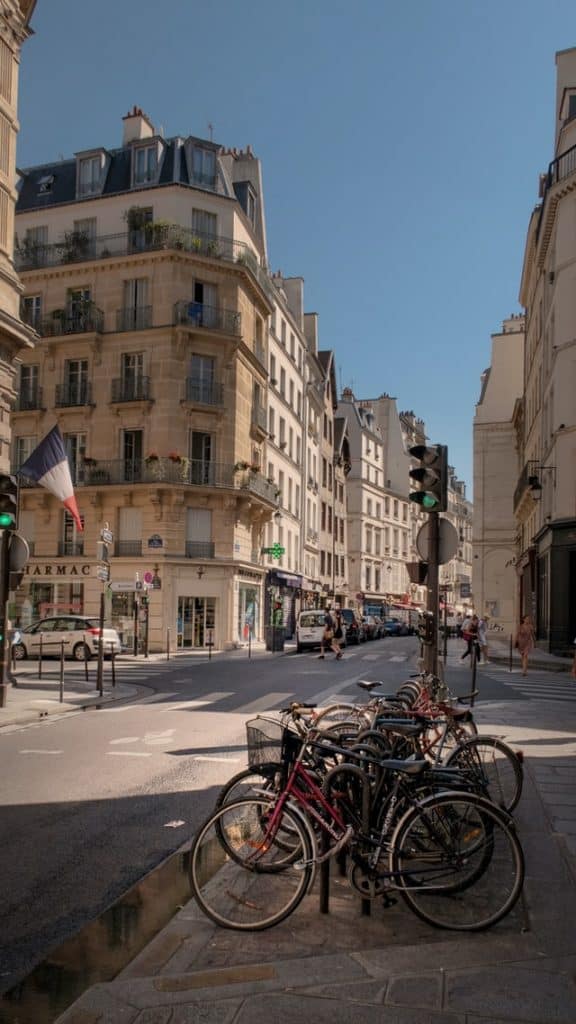
bikes in Paris

How Paris Quietly Became a Bike City

When I moved to Paris in 2013 one of the first things I did was obtain a Navigo card and after a couple of months of buying monthly passes manually via machines I switched to an annual pass and have not had to think about topping up again.  The métro was the way I moved about Paris.

But after getting to know the Métro fairly well you realize that it’s often just as easy to walk to a certain location and you start making choices about what form of transportation makes the most sense given the weather, your mood, what you’re carrying, and what else you still need to accomplish.  Vélib was already around when I arrived in 2013 and the shared bike boom followed by the rise in trottinette usage meant that options for transport have only multiplied since then.  The one form of transport that has received an explosive infusion of support from local government is bicycles.

Infrastructure

Now that bike lanes are so well-established in Paris, I wonder how so many of us were brave enough to ride with vehicle traffic for many years prior.  Cars and their drivers, convinced that everyone but them were simply “intruding” on their entitled space, didn’t make life easy for those of us on bicycles, but we figured that was simply the way it would be.  I mean, this wasn’t Amsterdam after all.  But little did most of us know that the Dutch model was exactly what Mayor Anne Hidalgo had in mind to transform Paris from the ground up.

Plan Vélo

Back in 2015, a year after Hidalgo’s first term began, the city started a project called Plan Vélo.  This was a big play to make it significantly easier for bicyclists to navigate the city by creating north-south and east-west réseaux express vélos (REVes), or “bike express lanes.”  Similar to what you are going to see on almost every street in the Netherlands, this is a protected bike lane that not only provides bidirectional traffic but also allows bikes to continue moving when their right-of-way is not impeded by traffic.  If you haven’t ridden in one of these before, you can’t possibly know how transformative it is.  It changes the experience of bicycling in the city from one analogous to driving a car, i.e. having to always pay attention while being subject to a lot of traffic and stoplights, to one of breezy insouciance: these north-south and east-west corridors make point-to-point travel significantly faster, safer, and more pleasant.

Plan Vélo has paid off in numerous ways, not least of which was featuring as the centerpiece of Hidalgo’s successful re-election bid as Mayor.  Paris jumped up into the top ten of bicycle-friendly cities in the world during her first term.  The infrastructure in place during the late 2019 transportation strike also allowed for an overnight 54% jump in bicycle use among Parisians, many of whom did not go back to the Metro even after the strike ceased.

Hidalgo also seized on Danton’s (in)famous notion of audacité during the early days of Covid-19 and took back Rue de Rivoli, the longest street in Paris, and limited it to one lane for buses and taxis.  She also created a number of “coronapistes” which created new protected bike lanes via removable plastic cones.  The reasoning given was that fewer cars were on the road because of lockdown and some people weren’t comfortable traveling in the confined spaces of the Métro.  But, just as with the accompanying “extended terrasse” permissions given to the restaurants, rights ceded were not going to simply be given back, and now Plan Velo 2 has arrived.

Plan Vélo, Acte 2

Part of the infrastructure changes needed to pérennisée both the so-called coronapistes and the extended restaurant outdoor terraces was the removal of the largest enemy of vibrant life in any city: cars.  Cars need a “home” in the form of parking places and 70% of the existing on-street parking spots designated for cars are being removed.

Hidalgo is running for President on the slimmest of chances and Plan Vélo Acte 2, released last month (two days before her announcement to run for President), has to be seen as part of her case for progressive measures to form economic and social life at a granular level.  The benefit is enormous for those of us who live in the city (Paris as 100% cyclable by 2026, it promises), but it’s doubtful that people outside of Paris really care, as life in the French countryside, like life almost everywhere in America, is unimaginable without cars.  Indeed, such denizens would snort at her proposed 2030 gas-powered car ban, which seems quite reasonable to those of us who live in the capital, but might seem very odd to those who don’t.

That said, this plan involves investing 250M euros to make the entire city bikeable by adding another 180km of dedicated two-way cycling paths in addition to making permanent the 52km Hidalgo and her team snuck in via the coronapistes last year (to put that in perspective, at the moment we already have more than 1,000 km of bike paths, quite a few snaking into the suburbs).  There’s also a budget for more passenger and cargo bike parking spots and cleaning and trash removal for cycling paths.

In addition there will be programs to teach children to ride bikes in schools, repair workshops in each arrondissement, and a cycling tourism push.

Mindset Shift

But having the infrastructure in place is only one part of the problem.  The second is getting Parisians to realize they are now living in a bike city and to make the changes in their behavior necessary.

In my early years of living in Europe I often said that the Netherlands was the only place in the world in which I was terrified of bikes.  The “ding ding” I heard struck fear into my heart as I wondered if I was standing in the wrong place, completely oblivious to my pending death at the hands of some kind person mounted on one of the country’s 23M bikes who would mutter “wat jammer” before moving my body to the side of the road and making a call to the relevant authorities to take care of my remains.

Often I was standing “in the wrong place” and quickly moved to avoid being mowed down.  Sometimes I wasn’t and it was someone else who was needing to be “dinged.”  The reason I was “terrified of bikes” in the Netherlands was because I didn’t have the right mindset.  After my first visit to what the French call the “low country” I flicked on a mental orange switch every time I came to the country (more than half a dozen times since 2014) that I was in a place where bikes, not cars, ruled.  I even, like a new car driver, ventured into the bike lanes on a borrowed bicycle and realized just how different the bicycling experience was when it was treated as a legitimate source of transportation.

Now that 95% of my trips in the city are on a bicycle (which Anne Hidalgo and her team helped pay for) I’m very aware that there are many Parisians who continue to remain as I was on my first trip to the Netherlands and thus have failed to install that mental switch.  This leads to near-misses with pedestrians including one time that I braked hard enough to simply gently bump into an instantly apologetic female pedestrian.

The lack of mindset shift is the same for Parisian bicyclists.  Many of them, like me, are new and don’t even use the proper hand signals for turning, thinking that a left turn means just putting your left hand out the way you do with your right hand to indicate a right-hand turn, or never thinking to signal for an unexpected stop.

This all leads to a sometimes dangerous mix of cars, pedestrians, and cyclists who are getting used to a new way of living with each other which leads to situations like the one well-captured in the tweet below at Bastille.

One of the reasons that bicycling is so safe in the Netherlands is that every single car driver is a bicyclist as well.  That leads to an awareness that is now normative in the entire country.

While I don’t expect the unbelievable growth in bicycles here in the capital to lead to changes everywhere in France, it’s clear to me that cities that protect bicycles necessarily change the mindsets of the pedestrians and the car drivers.  It only takes one near miss by a careless pedestrian in the bike lane to suddenly render visible to that pedestrian what was previously an “invisible” bike lane.

It’s also clear that whatever will happen to her presidential ambitions, Hidalgo’s mayoral legacy is assured, if only for the transformation she has achieved for bicycles in the City of Light, a transformation that she persevered in against the noisy protests of car owners and their lobbyists, who seem to have forgotten that Paris and the rest of the world managed to exist, and exist quite well, thank you very much, without personal cars, for centuries.  For her work on this issue, Hidalgo deserves every Parisian’s gratitude.

This change to our city will take time.  In the meantime I’m enjoying all the benefits that come with riding a bicycle in Paris: a different perspective, speed of transportation (I regularly beat friends who take the Métro and leave at the same time I do for a shared destination), and thanks to the aforementioned Plans Vélos, more protected infrastructure.

Ding ding.

Photo by Svetlana Gumerova on Unsplash

Did you enjoy this article?  TAIP is 100% reader-supported through tipping.  If you want to leave us a tip of any amount it would be highly appreciated.  These tips help support our efforts to keep TAIP an ad-free environment.  Just like at a cafe, the tips are split evenly among the team.

This article also appeared on Medium.

Reflections after 7 years

Reflections After More Than 7 Years in France

Sometimes it’s still hard for me to believe that I have lived abroad for so long. If you’ve read any of my other articles for The American in Paris, you know that my journey to France never involved years of dreaming or yearning to live in a different country. I’m from southern Rhode Island, which is filled with small beach towns and people who rarely leave. I was content with this idea until the first time I left the United States.

I found myself in France for the first time in early 2012 when I came here for my semester abroad. If you would have asked me in September 2011 if I thought I would ever travel internationally, never mind live abroad, I would have laughed and said no way. To put things into perspective, I had never left the country before (no, not even to go to Canada or Mexico), I didn’t have a passport, and I thought the life I was starting to build was too important to ever even consider leaving, even if for a few months. 

And yet.

Something was pulling me in the direction of France and I couldn’t really shake it. A study abroad advisor at my university very easily convinced me to come to Paris for six months. I loved my time abroad and when I got home I became that girl, starting all of my stories with “This one time in Paris,” but at the same time, I didn’t believe that I would come back to live here. I thought it may be nice, but that life that I had started to build in 2011 kept sneaking back up on me: it was way too important to ever leave long-term. 

And yet.

I found myself yet again in France in 2014 and this time it stuck. I’ve been here ever since and now have a master’s degree from a French university under my belt as well as a French husband. Lately, I’ve been reflecting on the past seven years more and more. 

What I don’t miss

I don’t miss the fast-paced American life.

I don’t miss 60-hour work weeks and I definitely don’t miss the standard two weeks a year off (and being expected to be happy with/grateful for that).

I don’t miss the materialism and capitalism and consumerism and all of those other -isms that seem to be such essential parts of American life.

I don’t miss the competitiveness that spills over and swells through every facet of that life.

I don’t own a car or a home and I don’t feel judged for it.

I don’t miss being bombarded with advertisements everywhere I look.

I don’t miss hearing “Ask your doctor if this pill/cream/potion is right for you” on television.

I don’t miss worrying about what I would have to pay if I end up in the hospital, and I feel fortunate that I was able to continue my education without thinking about the price tag.

I don’t miss being chased out of restaurants the moment I put my fork down on an empty plate.

I take long lunch breaks. I walk everywhere and I enjoy a glass of wine after a day at work. I like to spend hours at a time in cafés, people-watching, reading, and chatting with other café-goers around me.

What I miss the most

I do miss my family and my friends.

I do miss being able to call my mom whenever I want without having to calculate the time difference.

I do miss going to dinner at my dad’s house on Wednesdays and eating dinner with him on his deck.

I do miss having a backyard.

I do miss the beach, the ocean, the pier, New England, and I miss having access to so much natural beauty at all times.

Sometimes I do miss driving, although I don’t miss owning a car.

I do miss the wide-open spaces that the United States is so famous for.

I do miss paying less in taxes.

I do miss good, quality coffee and inexpensive beer.

I do miss breakfast and hot sauce and good Mexican food. 

I have missed seeing some of my closest friends get married, buy a house, and get pregnant. I can’t get any of those moments back.

A different kind of homesickness

These days, newly married to a French guy who my parents have only met a handful of times, I’ve been considering what it would be like to go back home for a year or two. Between my selfish decision to spend 2019 in Europe to “Not spend all of my money and time on a trip home,” and the pandemic of 2020-2021, I haven’t stepped foot on US soil since the summer of 2018. 

Enter what I’ve been calling, a different kind of homesickness. I have, like any expat, of course, felt homesick before. It was the worst when I first arrived in France for the long haul in 2014, and I remember it getting bad again 9 or so months in. That kind of homesickness was pretty standard: I missed my family and friends and I ached to be in the place where I grew up and everyone knew my name (cue the Cheers theme song).

The homesickness I’ve been feeling recently goes a lot deeper and is even harder to describe. On one hand, I love my life in Paris and I feel like I’ve started to hit my stride here. I’m married, have a great group of friends, and I consider myself bilingual. When I walk through my neighborhood I see people who I know and say hello to. I know how to get around the city and I rarely find myself confused or disoriented. I have mastered the métro and even know how to rent a bike using my Navigo.

No, this homesickness goes beyond all of that. I am fully integrated into French culture and yet so far from it at the same time. I get frustrated when I don’t understand certain types of slang or cultural references. Much of this comes down to the simple fact that I am American. I grew up in the United States. In the same way that most of my French friends wouldn’t understand some of the vernacular that I use with my friends back home, or won’t know the obscure reference to some YouTube video that went viral in high school, sometimes I can feel lost. I feel misunderstood, simply because I am not French and I will never be.

It’s been hard but I’ve also started to realize, is it so bad that I will never be French? I have been striving, working, climbing, and scratching to be more French, but I can’t turn back time and change the fact that I wasn’t born here. And I’m becoming more and more okay with the fact that I am and may always be, an American in Paris.

Molli offers private consultation services which range from help with visas and adjusting to life abroad to Paris travel itineraries. Fill out the contact form to learn more.

Photo by Rafael Garcin on Unsplash

Did you enjoy this article?  TAIP is 100% reader-supported through tipping.  If you want to leave us a tip of any amount it would be highly appreciated.  These tips help support our efforts to keep TAIP an ad-free environment.  Just like at a cafe, the tips are split evenly among the team.

Why Study Abroad in Paris?

My first visit to France was with my family when I was thirteen. We were the classic sweaty tourists in late-July Paris, dragging ourselves from monument to museum. But I loved old buildings, narrow streets, and outdoor cafés — everything we walked by was tinged with foreign magic. And when we met French friends of my father who had a daughter my age, I knew I would be back.

I kept studying French and visited over a few high school summers, but I was waiting for study abroad so I could live in the city. It would be my chance to speak French until my accent didn’t mar my words. My chance to drink wine in cafés, take the métro to non-touristy neighborhoods, and meet real Parisians.

While I had a few specific reasons why I wanted to study in Paris, it was less of a rational choice and more of an emotional one. I’d been in love with the city for so long, that the thought of spending time there was a dream come true. Here are some of the more (and less) concrete reasons why I chose Paris:

To Speak French

The easiest way to get better at a language is to speak it, hear it, and live it. I already knew this from the time I’d spent with our French friends, and I also knew I needed more practice before I could be anywhere close to fluent. Since I’d started studying French in middle school, speaking it was a comfortable challenge — something I’d already made progress in and knew I wanted to keep working on. Of course, there are other study abroad programs in other French cities, so my other reasons for choosing Paris are specific to it.

To Spend Time in a Beautiful City

If I ever make a list of stunning cities, Paris will be near the top. The historic buildings, tree-lined boulevards, myriad gardens, the Seine cutting through the city and forming two surprise islands — it’s hard to argue against these aesthetics. What’s more, because it was built before cars were invented, Paris is highly walkable (assuming you’re measuring within the bounds of the périphérique). Even better, as you make your way through the city, each neighborhood has a distinct character.

To Learn More About French Culture

American media has a tendency to idealize French culture — carelessly beautiful women, artists in cafés with their endless cigarettes, fine wine, renowned food. It all adds up to a half-glamorous, half-bohemian lifestyle that had me entirely enthralled.

While the rational part of me knew French life couldn’t be this dreamy, I’d fallen for it years ago. What was most fulfilling about my study abroad experience was deepening my relationship — I took a course on architecture in which we toured the city and visited specific buildings. And another on theater where we read French plays before seeing them performed in a variety of venues. Rather than being on the outside of the city looking in, I was immersed in its offerings.

You Never Know What Will Happen

No, this isn’t the part where I say I fell in love with a Frenchman who is now my husband. My study abroad program had us take a single course at a French university while the rest of our school time was with the American cohort. This meant that we glommed together and spent most of our time wandering Paris and speaking English in a sort of extended tourist outing.

I was lucky in that I already had two French friends, and I was able to tag-along to their truly “French” life. While I did spend a good amount of time exploring the city, I only lived in Paris for one semester — from September to mid-December. In order to have truly felt like I was committing to this adventure, I would’ve needed to stay longer. This is one of the reasons why I decided to move back in 2018 and have another go.

When I think back on my study abroad experience, it’s a distant blur. But I’m grateful for the way my French improved and all I learned about the city. And instead of worrying that I didn’t make the most of my time, I see my experience as a stepping stone to my current Paris life.

If you’re thinking about studying abroad in Paris, it might be helpful to make a list of reasons why you’re attracted to the city. Is it to speak French? To have access to its museums and rich cultural history? Or simply to go on an adventure? What’s your why for studying abroad in Paris?

Photo is from a French classroom which will be dramatically different from a US university setting. 🙂

Did you enjoy this article?  TAIP is 100% reader-supported through tipping.  If you want to leave us a tip of any amount it would be highly appreciated.  These tips help support our efforts to keep TAIP an ad-free environment.  Just like at a cafe, the tips are split evenly among the team.
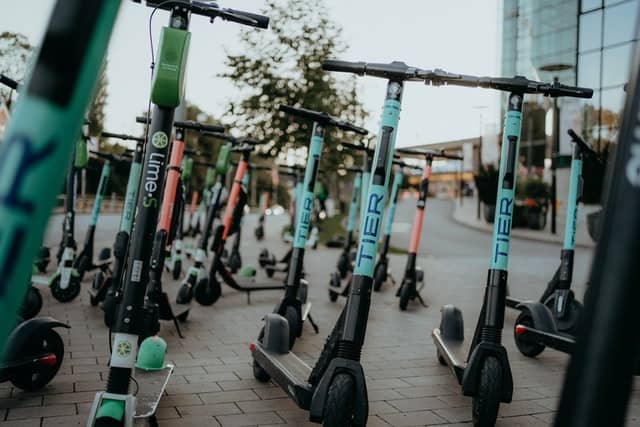
scooters in Paris

The Trottinette Life in Paris

I first looked into a trottinette (what the French call the platform-with-wheels-and-a-stick electric scooters) in January 2020, in the throes of yet another transportation strike (oh, for those good old days when strikes were our big problems!).  I wasn’t alone.  Many people were tired of the CGT and the disruptions and as such a first big move in Paris towards using bicycles and trottinettes began.  With many people choosing these new options, the shared biking system (Vélib) and the various shared scooters (Lime, Dott, etc.) were strained.  They simply couldn’t keep up with the new demand and those who were trying to get away from the frustrations of the transportation strike didn’t want to leap into another frustrating situation (no bikes or scooters available) and so they opted to buy their own bikes and scooters.

It was sometime in Spring 2020 when I bought what is the most popular model of trottinette in Paris, the Xiaomi Pro.  While this model is inexpensive (new for about 400 €, used for around half that) the key feature that has made many go for it is its foldability.  This means that users can take them on the metro with them, an option not available to most on bikes, as the majority of Parisian bicyclists do not have the folding Brompton ones.

This form of “multimodal” transport, in which someone walks, takes a métro/bus, then finishes the “last mile” of the journey on a trottinette, is a dream of transportation experts.  However, some studies point out (rightfully) that those riding trottinettes are not people who would otherwise have driven cars.  They are usually pedestrians who don’t want to walk anymore or just want to get somewhere faster.  There’s nothing wrong with that, and it is good to pull some pedestrians out and put them into the ever-expanding bike lane system in Paris.  But it cannot be argued that trottinettes do anything to ease vehicle congestion in the city.

Not Such a Deal

The thing is, the cobbled streets of Paris are tough on the small-wheeled trottinettes.  And the Xiaomi Pro, as I found out, is not the most stable and strong scooter platform you can buy.  So I’ve had numerous repairs to pay for in the last 18 months.

The first was a new tire tube after some stray glass had flattened the existing one.  Broken glass is an issue that you have to deal with even as a pedestrian, but the consequences are more significant for those who are rolling along on rubber tires.  When I got a second flat, the repairman suggested a tubeless tire.  “What, a tire that can’t deflate?  What’s the catch?”  The smoothness of the ride.  By having a very hard, reinforced tire that doesn’t inflate (or deflate) and can take as many nails or pieces of glass you throw at it, you necessarily have a ride that now treats you to every bump and curve of the road.  This isn’t a problem when you’re on a flat, well-paved, perfect road.  Those are not the majority of the roads in Paris, particularly in the center, though the bike lanes which I alluded to above very often are and that network seems to get bigger every single day.

I had only gotten a tubeless tire on the back tire and the ride still felt pretty smooth in general, but after my third flat, I had enough and made the front tire tubeless as well.  The cost of two tubeless tires and the original flat + installation = 225 €, which is more than I had paid for my used trottinette (150 €), but no matter, I thought.  No more flats (just intolerably bumpy rides when you hit cobbles).

But there were other costs.  A small part in the front broke (59 €) as did another piece (59 €) and at one point I had to get the battery replaced (200 €).

This is when I decided to get my electric bike: I was motivated by the subsidies on offer, but I also liked the idea of being outside in Paris without a mask (this was permitted to anyone on a bike during the old days of an external mask mandate).  My trottinette, which had accompanied me in all sorts of weather and traffic situations, and up and down countless metro stations, is soon to go on Le Bon Coin (the French Craigslist) and hopefully give someone else some good use, as I’m done with the money pit the Xiaomi platform became.  Once you’ve gotten used to riding your bike in Paris, you can go as fast as these scooters and get the exercise your body needs too.

Alternatives

You could choose to get an unlock pass for one of the floating shared trottinettes.  I periodically get a pass for the Dott platform which is around 5 € and that gives you unlimited free “unlocks” for 90 days.  The cost of a ride is usually a 1 € unlock fee and then 20 cents for each minute you are on the trottinette.  I am now very rarely out in Paris without my bicycle but if I do need to use one of these Dott scooters I’m usually on for under ten minutes, which means 2 € for the ride, and even three times a week, every week, that would be 24 €/month or 288 €/year.  That’s definitely the route I would recommend for the more casual user.  While the theory of “having your own” trottinette in Paris is plausible, much depends on the quality of the platform you choose, and by delaying an immediate purchase you can give yourself time to shop around and figure out what you like, using a shared system in the meantime.

If you are committed to buying your own, knowing what I know now, I would recommend a brand new Wegoboard trottinette.  I’ve been to their store in the 11th a couple of times and the scooters are made in France, are much sturdier and stabler than the Xiaomi, and come with a two-year guarantee.  If you’re stuck with a Xiaomi, the fastest/best repairs are going to be up in the 18th at Smartinette.

Photo by Jonas Jacobsson on Unsplash

Did you enjoy this article?  TAIP is 100% reader-supported through tipping.  If you want to leave us a tip of any amount it would be highly appreciated.  These tips help support our efforts to keep TAIP an ad-free environment.  Just like at a cafe, the tips are split evenly among the team.

How to Earn Money as an Expat Student in Paris

I’ve had almost every student job imaginable since I’ve been in Paris. I’ve traded daily English lessons for my apartment and picked up a child after school while speaking exclusively in English. I’ve cleaned Airbnb properties and met guests to hand over the keys. I’ve done babysitting, dog sitting, cat sitting, and housesitting. 

As a student, you’re legally allowed to work “up to 964 hours per year, or the equivalent of 60% of the maximum working hours permitted.” That’s around 20 hours per week. 

If you’re an expat student in Paris who wants to start earning an extra euro or two, below you’ll find several different options that aren’t soul-crushing and actually kind of fun.

Childcare

Providing childcare is one of the easiest and most common ways to earn extra money as an expat student. There are a lot of French families who want their children to learn English, and a great way to do so is through an English-speaking babysitter:

  • Au pair “lite:” one of the biggest benefits of being an au pair is that your “host family,” or the family you’re working for, provides your housing. If you don’t want all of the responsibilities of a traditional au pair, like dinner, bathtime, and bedtime, keep your eye out for what I like to call au pair “lite.” I’ve had several of these types of positions. One was 10 hours of English lessons/babysitting per week in exchange for a tiny apartment. Another featured the same hours but in exchange for a salary.
  • English lessons: this doesn’t mean you’ll have to come up with a strict lesson plan. If you cringe at the thought, opt for families with younger children, who learn much better through games and simply speaking in English around them. Those 10 hours of English that I mentioned above? Those were 10 sweet hours of simply speaking in English while playing with a 5-year-old. 
  • After-school pick-up: my favorite childcare student job in Paris was so simple that I couldn’t believe someone paid me to do it. I was required to pick up a 10-year-old from school, walk him home, and stay with him until his mom got home from work. All in all, it was about an hour and a half per day. The caveat? I was required to speak in English the entire time, which wasn’t a problem. 

If you’re interested in childcare and have control over your class schedule, you’ll want to try and keep your Wednesdays free. Most French children don’t have school on Wednesdays, or only for half a day, so, it’s a great day to get in those hours!

You can find childcare jobs in several different places online. First and foremost I would look on Facebook for groups of au pairs, students, and parents in Paris. Then, you may want to check out other websites such as MisterBilingue, Mômji, or Angloinfo. You’ll find a lot of French families who are looking for a helping hand who can also teach their kids a new language. Or, you may find Anglophone families who are looking for a babysitter who can speak their language. Either way, it pays to be an English-speaking babysitter in the French capital. 

Pet sitting and dog walking

Another one of my favorite student jobs in Paris was dog walker. If you miss your pets from back home but don’t want the responsibility of owning one here, the next best thing is pet care! I’ve walked dogs of all shapes, sizes, and ages, and it is one of the easiest and most rewarding student jobs I’ve ever had. Pet care is a great option if you don’t like kids or don’t want to teach English:

  • Dog walker: there are several different dog walker jobs out there. I’ve had everyday gigs and others just one or two days a week. Some people will want to pay you hourly, others, a weekly flat rate. Dog walking is also a great way to get outside and enjoy the city — while getting paid for it.
  • Pet sitter: whether it’s for a dog, cat, or both, pet sitting is another easy way to earn extra money as an expat student. Most pet owners will require that you stay in their house or apartment, but I have also come across some people who are willing to take their animal to you. However, most people who want a pet sitter will also want you to be their house sitter — but more on that later. 

I’ve had great luck as a pet sitter in Paris, and, in addition to being a way to make money, it also gave me the opportunity to explore certain areas of the city I would have never gone to. And, for those of you with teeny tiny apartments, it will give you the chance to stay somewhere with a little bit more room, while getting paid to do it.

I found most of my gigs in a Facebook group called Paris Expat Dog and Cat Owners.

Housesitting and Airbnb

If you don’t want to work with children or pets, you may consider housesitting or working as an Airbnb cleaner and/or greeter. I’ve done all three in Paris and, again, it’s a nice way to earn money and explore different areas of the city:

  • Housesitter: as mentioned, a lot of potential pet sitting jobs will involve housesitting as well. But, there are also people without pets who are simply looking for someone to water their plants and keep an eye on their place while they’re out of town. Sometimes you’ll be asked to stop by a few days a week to check in on things, other times you may be asked to sleep there.
  • Airbnb: Paris is one of the most visited cities in the world, but did you know it has more than 50,000 Airbnb listings? What do all of these properties have in common? They need to be cleaned between each guest. Some Airbnb properties will also require that someone be there to meet the guests for a key handover. 

Again, I found most of these types of jobs in Facebook groups and on Craigslist. Similar to childcare and pet care, once you build up a good reputation you’ll also be able to find more gigs through word of mouth. 

These options are not the end all be all for making extra money in Paris — far from it. Other options include working in a bar, restaurant, café, or even at walking or bike tour companies. Rest assured, there are plenty of ways to make money as an expat student in Paris. 

Molli offers private consultation services which range from help with visas and adjusting to life abroad to Paris travel itineraries. Fill out the contact form to learn more.

Photo by Steven Lasry on Unsplash

Did you enjoy this article?  TAIP is 100% reader-supported through tipping.  If you want to leave us a tip of any amount it would be highly appreciated.  These tips help support our efforts to keep TAIP an ad-free environment.  Just like at a cafe, the tips are split evenly among the team.
How To Take a French B2 DELF Test

As Stephen mentioned in his article about the DELF A2, the DELF is an internationally recognized competency exam, and one that I hadn’t heard of until 2020. When I was at the appointment for my first vié privée et familiale visa, the prefecture employee mentioned that if I had a French diploma or a DELF certificate, it would allow me to apply for a multi-year visa. Since taking a French exam was less time-consuming than going to university, I decided to sign up for the DELF. I’d already been studying French since age thirteen, so it felt like another strange, slightly-fun step on my immigration path.

Signing Up

Like all many things French, signing up for the DELF was not as easy as I assumed it would be. Depending on the test you’re taking (there are levels A1 to C2), the exam is only given a few times per year. While there is a list of official test centers, each center has different registration dates, requirements, and turnaround times for their results.

After doing a bit of research in January and then dropping the project without setting myself any calendar reminders (mistake), I found myself scrambling in early April to sign up for a May test. The only other B2 offered was in October, which would be after my visa renewal. The centers had limited capacity due to Covid, and all the ones I found in Paris were already full. This left me mailing my application to a center in Ivry (a southern banlieue). As an American who is used to everything happening via the internet, it constantly amazes me how many official letters and registrations I’ve had to send via mail since moving to France. It is truly a step backward in terms of convenience and efficiency.

You Will be Convoked

I have also never received so many “convocations” or summons since moving abroad. These official notices are used by the prefecture, as well as in other formal capacities to tell you what time you have to be somewhere without you having any say in it. Although I had called the exam center and confirmed the two testing dates, I ended up receiving a convocation for the written part on Thursday and the oral part on Friday. In other words not the dates they’d told me. Since the exam was full, and the slots were pre-assigned there was no way to change my time to one that worked with my schedule. On top of this, the exam took place in Juvisy-sur-Orge not at the company’s mailing address which was much closer to Paris.

Lesson Learned: Make sure your schedule is clear all day on testing days (the exam sites often list three separate days) and be prepared to be summoned at any given time. Also, determine where the test center is before signing up. As someone who bikes everywhere, I ultimately decided that 26 km ride through Paris’ industrial zones Juvisy-sur-Orge was not the way I wanted to arrive so I took the RER even though two-round trip tickets ended up adding another 15 € to my test costs.

Preparing

Since the DELF is a standardized test, it’s easy to find practice tests and other resources online. My spoken French is fluent, and I had to write essays in French in college so I wasn’t concerned about my proficiency. Regardless, I decided to take two practice tests simply to know what I was getting into and to be prepared for the process on test day.

One practice test later, I decided that was enough. The oral comprehension was fairly straightforward, the reading comprehension was even easier, and although my partner found plenty of errors in my written response, he deemed it at least a 20/25. Since all I needed was 50/100 to pass the test, I decided not to worry about getting a perfect score.

Exam Day

I arrived early and the exam started late which made the wait feel long. The proctor checked our convocations along with our IDs before we went into an upstairs classroom. It had been over ten years since I’d taken any form of test, so sitting at a desk and waiting for instructions was quite surreal.

Written Exam

They had changed the format of the exam since I’d taken the practice version, and the listening section of the exam had more questions per recording, moved faster than I remembered, and was more challenging than the one I’d taken at home. I would recommend practicing this section at least twice (and in the most current format) to familiarize yourself with the number of questions as well as the recording speed.

Once we got past that, the reading comprehension and writing were straightforward. I finished with forty minutes to spare and wasn’t allowed to leave. This was both strange and frustrating, as the best part about finishing a test is being able to go home. The proctors also collected our scrap paper, which was mildly upsetting since I’d written a poem on mine.

Oral Exam

Inconveniently, the next day I made the trip back to Juvisy-sur-Orge back for the oral exam. In this section of the test, you pull two topics at random and then choose one to present. I knew I’d be given twenty minutes to prepare, which felt unnecessarily long, especially given my confidence in speaking French.

But once I’d chosen the topic of online versus in-person tutoring and sat down with scrap paper, I realized I had no idea what I was supposed to do with this paragraph of information. In a moment of unprepared panic, I stopped the proctor as she was leaving the room, and asked her to clarify. She explained that I was supposed to present this topic and then be prepared to debate it with the examiners. I ended up using the full twenty minutes to make sure was absolutely clear on what the text was saying and write out arguments for different methods of learning.

The preparation time and idea of having to debate the topic made me nervous but as soon as I started talking, that all fell away. One woman asked me questions while the other took notes and occasionally interjected. Their questions were easy to understand in the context of our conversation, and I talked through the different arguments.

Near the end of the exam, my interviewers asked where I learned French and how long I’d been studying. I explained that I started in middle school and had more or less continued ever since. Only when they complimented my French did I realize that the oral part was over, and they’d been impressed by my language skills. It was an affirming moment after two days of RER rides and fussy testing requirements.

Lessons Learned

My main lesson was to give myself more time to find a test center that was easy to access and easy to work with. In retrospect, following Stephen’s lead and applying via the internet would’ve saved me many headaches. Also, confirm that the registration address is the same address as the test center. I’d also recommend taking two practice tests that are current, and having a clear understanding of all the instructions before showing up. Other than that, the process was quite straightforward, and I’m happy to have proof of my French proficiency to add to my resumé.

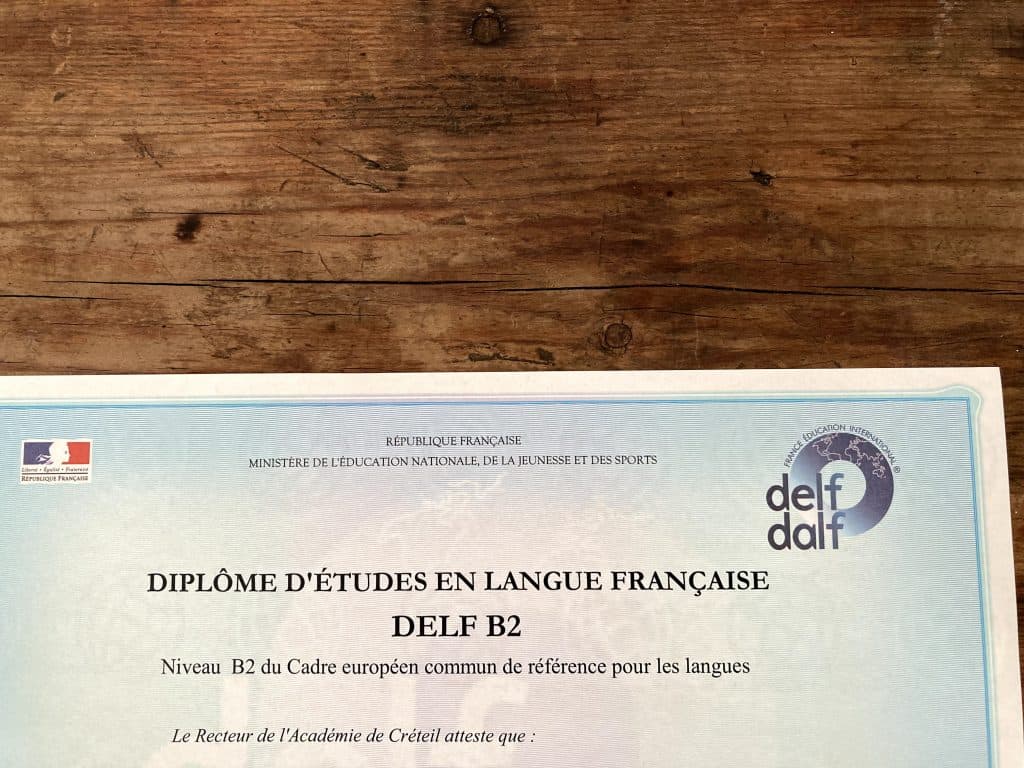
Photo is of my certificate: one more for the wall!

Did you enjoy this article?  TAIP is 100% reader-supported through tipping.  If you want to leave us a tip of any amount it would be highly appreciated.  These tips help support our efforts to keep TAIP an ad-free environment.  Just like at a cafe, the tips are split evenly among the team.
Making Friends With The French

Making Friends With The French

One of the things that I was happiest to leave behind in the US is the idea that there’s something wrong with you if you’re not an outgoing extrovert. Throughout my childhood, teenage years, and even into young adulthood I was constantly called shy. My closest friends always laughed at comments like that because I’m a very talkative person once you get to know me. That’s the difference between being reserved and shy, and so you can imagine my frustration at being falsely labeled for most of my life.

Then I showed up in France and, spoiler alert, I’ve never been called shy here. France is the place where being discreet is the penultimate. Consider this: have you ever been on the métro in Paris? Have you noticed that most of the time, you could hear a pin drop? Take a moment to really think about it. 

Now, have you ever been on the subway in New York City? I’ll admit that there’s an energy there that you’ll never find in Paris, but one thing that sticks out the most in my mind is the noise. Once, I landed at JFK and had to take the subway out to Brooklyn to meet the friend I was staying with. The shock of just how loud the subway was hit me like a ton of bricks. My jetlag probably didn’t help, but I think you get the idea. 

So in France I feel more at home than I ever have because the fact that I’m reserved is not only accepted here but sought after. When I first got here, I lived with a Franco-American family out in the Parisian suburbs. Almost immediately after I arrived, I got on Meetup and Facebook and got out there to meet people. I was lucky in that I was an au pair, and similarly to international students, au pairs flock together. Just two weeks after stepping foot on French territory, I had found a group of girls with whom I really bonded.

But (le sigh), we were all American. I started meeting more people and they were, second spoiler alert, more English speakers. Australian, Irish, English, and even some German people, but all Anglophones. In some way, it felt good to be surrounded by this comfort of a shared language because I was so far from home. But I couldn’t shake the feeling that this wasn’t what I came here to do. I came here to learn new things, meet new (French) people, and, to be honest, I was struggling to do so.

Fast forward to my second year as an au pair. At this point, my group of friends had dwindled down to a solid six people, all English speakers. Once you start living the life of an expat, you realize that other foreigners come and go and you have to be ready to adapt and make new friends at all times. The group that I became close with was also interested in sticking around for the long haul, which is why we gravitated toward each other. And, we were all frustrated that we hadn’t made any solid French friends yet.

After 2.5 years as an au pair, I was ready to make a change and yet not at all ready to go back to the United States. I still couldn’t speak French at this point and so I decided to take the plunge and go back to school — in French. Before I could do that I needed to seriously step my French skills up, so I enrolled in an intensive year-long program that promised to get me to the level that I would need to go on and apply for a master’s program. 

So, I moved into my apartment in the sky, otherwise known as an under 100-square-foot shoebox on the seventh floor of a Parisian apartment building, and started trading English lessons for free rent (another story for another day!) so that I could focus all of my attention on finally learning French and hopefully making French friends. The learning French thing happened fairly quickly, as it turned out I just needed a little encouragement, a lot of practice, and to be in a classroom where I was the only English speaker. The French friends took much longer.

As it turns out, there aren’t many French people who take intensive French classes (read: none). So while I was happy to have new friends that I could practice my French with, I still ached to truly integrate into French life, and for me, that meant a shiny new group of French friends. I finally got my chance through my best friend here, who is English. She started dating a guy and a few months in, wanted me to meet his group of (French!) friends. 

And so I got ready to meet a bunch of new people, took a deep breath, walked down my seven flights of stairs, and started to walk to the club we were supposed to meet at. I had a great night, was finally able to meet a group of Parisians with whom I could connect and speak in French, and no one called me shy. It was also the first time I met my now-husband

The French are notorious for being hard to connect with and well, I used to agree. But, I also think of it like this: when you’re out with your friends, are you on the lookout to meet new people? Probably not. You’re probably just enjoying being with your people and this was a realization that I came to the hard way. I’m also grateful for my experience because it served as another helpful reminder that the world doesn’t revolve around me or my needs. 

Don’t feel discouraged if you’re a fellow expat reading this article. You don’t need to wait three years to learn French and meet French friends. I will say it’s a lot easier if you have an in with at least one French person. If you hit it off, they’ll likely introduce you to the rest of their friends. Once you do have that in, the French are kind and welcoming, and will most likely cook you delicious meals as well as teach you how to pick out a good bottle of wine. And, when you think about it, finding just one French friend is a lot less intimidating than finding a whole group of them, isn’t it?

Molli offers private consultation services which range from help with visas and adjusting to life abroad to Paris travel itineraries. Fill out the contact form to learn more.

Photo by Steven Lasry on Unsplash

Did you enjoy this article?  TAIP is 100% reader-supported through tipping.  If you want to leave us a tip of any amount it would be highly appreciated.  These tips help support our efforts to keep TAIP an ad-free environment.  Just like at a cafe, the tips are split evenly among the team. 
pastry

La Formation Civique or My Adventures in French Integration

I already wrote about signing a contrat d’intégration républicaine (CIR) and attending the first day of civics training, so I’ll continue my integration journey here by covering the remaining days.

Day 2

It’s hard for me to differentiate what was taught on Day 2 from Day 1 since so much of the information was facts I already knew, or were so straightforward that I had already assumed their existence. We were taught about freedom of speech and religion or the concept of laïcité which is a particularly French republican form of secularism. None of this was new information, and I would’ve been surprised to learn these concepts didn’t apply in France.

At the end of the day, what stuck out to me was somewhat random information, and laws I wasn’t sure existed in the United States. For example, we learned there is a minimum requirement for apartment size (in meters-squared) based on the number of occupants. While this might be the case in some cities, as far as I know, the US doesn’t have a national housing requirement. That said, I’ve never taken American civics training or classes.

At the end of Day 2 we also had to complete a chemin de route which listed three tasks we would complete by the following session. The tasks ranged from administrative (researching government procedures) to cultural (attending a museum). Since I’d been living in France long enough to have gotten, as well as established myself working remote, most of the tasks on the list didn’t apply to me. Most of the other attendees had been in France five to ten years, and I imagined that had already done these procedures as well. I’m not sure if it’s exclusively a vie privée et familial visa which requires a CIR, and I wondered if it was part of the renewal process for another visa as well.

Day 3

Much like Day 2, we spent the first part of class reviewing the subjects we’d already covered: The country of France, health, employment, parenthood, and housing.

When it came to French history, we studied a timeline of the country’s most important rulers and politicians, along with their corresponding monarchies, empires, and republics. As an American whose country’s constitution hasn’t changed in almost 250 years, it is hard to fathom that much political upheaval. France is now in their cinquieme république which began after World War II — in other words, this system of government has only been in place for seventy years.

Our teacher also had us go around as a group, share our chemin de route and give updates on the tasks. Most of the group had completed a few simple things, though again, I wondered about the timing of these courses since I’d opened a bank account and enrolled in the medical system years ago at this point.

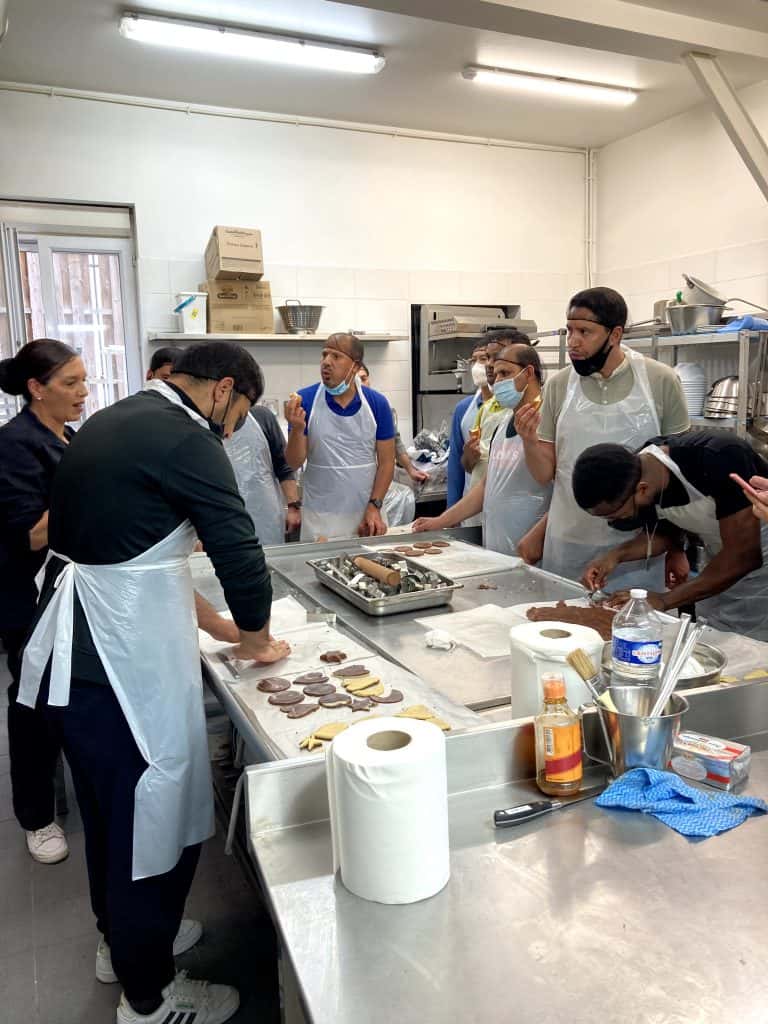
We also signed up for our Day 4 classes which would theoretically have been more active and in-the-field except that all cultural visits had stopped due to Covid and were now taking place in the OFII center. The only option left involved a pastry-making class in Clichy where we would also learn the history of pâte sablé. Even though I have celiac disease and am gluten-free, I signed up for this one since I couldn’t face another day of presentations.

Day 4

We started the day in a crowded classroom and the instructor has us introduce ourselves, say how long we’d been in France, and what country we were from. This was the first time this type of sharing or cross-cultural exchange had been instigated, and it was interesting to learn at least a bit about everyone else in the room. The instructor also established that quite a few immigrants spoke very little French and she paired them with those who spoke their language or English, which is always a common denominator (it hasn’t stopped surprising me how prevalent my native language is).

From there, we moved to an industrial kitchen where I worked with a man from Afghanistan to make pâte sablé. He ended up being very talented at crumbling the butter and flour together and must have had previous pastry experience. As soon as we established this, I let him handle the dough and focused on gathering the necessary ingredients and explaining the next steps.

The kitchen was crowded and hectic. There weren’t enough digital scales to go around, and the instructor oscillated between jovial and chastising how long we were taking. But amidst the clouds of flour, we were working together, explaining what to do next, and integrating in a way none of the other courses had achieved.

At the end of the day as we stood around munching cookies, another Afghani man about my age asked where I was from. “America,” I told him.

Do you know what’s happening in our country right now?” he asked with a mixture of contempt and disbelief.

I nodded apologetically and said yes, I was aware.

This was the realest moment in my many tedious hours of civic integration. Here we were in a foreign country — me by choice, him by necessity — as he questioned the American intervention which had ultimately left their country in shambles. Our paths would never have crossed if the French government hadn’t forced us together.

Closing Musings

While I can’t say I enjoyed or found the civics classes particularly useful, I do appreciate the fact that they were provided by the French government. (I can’t say they were offered, because they were mandated.) The experience would have been significantly less stressful had the scheduling system been online and not involved paper convocations for fixed dates months in advance. As I’ve mentioned before, I didn’t even know the word convocation existed before arriving in France.

I also wish there had been more emphasis on getting to know the other people in the courses, as we had on the last day. Although I understand the goal was to teach us about France, I think we were all interested in knowing why the other people were there and how we could help each other. There was at least one moment in each class where an immigrant mentioned an administrative problem and we all chimed in with how to handle that. What better way to make us feel comfortable in our new home than by supporting and learning from each other?

Photo was from our day making pastry.

Did you enjoy this article?  TAIP is 100% reader-supported through tipping.  If you want to leave us a tip of any amount it would be highly appreciated.  These tips help support our efforts to keep TAIP an ad-free environment.  Just like at a cafe, the tips are split evenly among the team. 

How to Go to University in France as a Foreigner

When I graduated with my bachelor’s degree I was one of those “I’m free!” people. I was so happy to have finally wrapped up my schooling after what seemed like 16 long years. I truly never thought I would go back to school.

Fast forward to 2017 and I found myself in the admissions office of Université de Nanterre in a suburb just outside of Paris. I had already spent one year here studying French in order to a) be able to carry on a conversation instead of just responding with “oui” or “non” and hoping for the best, and b) to obtain the B2 level of French that I need to get into the master’s program I had my eye on.

Say what? The girl who basically ran off stage after she was handed her bachelor’s degree now had grand plans to get her master’s degree? In a foreign country? Guilty.

Why I Made the Decision to go to University in France 

Let me back up a little. When I first arrived in France I was an au pair for a Franco-American family. I was required to speak in English with the children which was both a blessing and a curse. A blessing because I knew next to no French, and a curse because I was able to stay in what I like to call my “English bubble” for too long. 

I was speaking in English with the children, the American mom, and even with the French dad because he wanted to practice. My friend group included other Americans, an Irish girl, and several Australian girls. We spent our time together and we often went to English and Irish pubs with other Anglophones.

In some ways, it was a relief to be able to speak my own language in the midst of a foreign country. Moving abroad is filled with ups and downs, and it can be lonely. Plus, all of the sudden change is…intense, to say the least. My English bubble was comforting and so I stayed there for two and a half years.

After those years of nannying, I decided that I wanted to move on, but that didn’t mean moving back to the US. I wanted to stay in my newfound country but I knew at this point that I needed to start speaking the language, not to mention think about what I wanted to do with my life. I realized that I couldn’t be a nanny or live in my English bubble anymore.

And so I started the process of determining how I could legally stay in France. I found out that if I had a valid visa, I could go back to school for the same price as a European. 

This has now, unfortunately, changed. In 2018, the government announced that foreigners would need to pay 2,770 euros for an undergraduate degree and 3,770 euros for a master’s degree. Most universities disagree with the new rule and refuse to comply, other universities have gone forward with it. Before you decide on which university you’d like to go to, make sure you’re aware of the admission fees for foreigners! However, the new admissions fee for foreigners is still a fraction of what I would have paid in the US.

Things to Consider Before you go to University in France

I started thinking about what I wanted to do for work, as I had lost all interest in the field in which I got my undergrad degree in. I finally settled on becoming a writer (how do you think I’m doing?), and so I started looking into master’s programs in French literature. At almost the same exact moment, I realized that I not only needed to prove that I had a B2 level in French, but I would be completely lost at university if I didn’t have at least that. 

I recalibrated my search for a program that would help me learn French as well as give me a diploma with my new French level on it. In Paris, there are two well-regarded programs: one at La Sorbonne and the other at Nanterre. I settled on Nanterre because I had already missed the deadline to apply for La Sorbonne.

I ended up having an amazing year at Nanterre in their FETE program, which I recommend to anyone looking to up their French skills. Not only was I on a university campus (which just made it feel more legitimate), the teachers are qualified and helpful and the curriculum is interesting and relevant. 

I finished the year with my B2 in French and decided that I wanted to stay at Nanterre for my master’s for a few different reasons. I enjoyed my time there, I understood how their administrative procedures worked, and I knew that the admission process would be easier seeing as though I was already in their system.

I headed to the literature department to speak to an advisor to make sure that I had the right requirements. We got to talking, and she asked me about my plans, she looked at my resume, and she also asked me about my interests. She told me that although I had the correct level of French to enroll, I would probably have a hard time with the course material. Did I know that the school had an English Studies department? That offered a bilingual literature program?

My eyes lit up — that sounded right up my alley. 

Ultimately, I’m so happy that I decided to speak with that advisor before I enrolled in the French literature program and that she was so honest with me. I would be able to handle the course material now, but that’s because I have four more years of speaking and reading French under my belt. 

Although I technically had the correct level to enter into the program, I did not have the brain capacity or level of vocabulary to seriously study, analyze, and write French texts. And, because I decided to go for the bilingual English/French program, I was able to write my 80-page thesis in English (what a relief!).

I ended up thriving in the English Studies program and I finished my degree with a mention très bien. I also scored because my program was truly bilingual and most of the English or bilingual master’s programs in Paris are at private universities — which come with a much higher price tag. 

So, what should you consider before you go to university in France?

  • Why you want to go to university — if it’s to simply obtain a student visa there are other options, like the intensive French course that I took
  • Your level of French — be brutally honest with yourself
  • How much you want to pay — private is much more expensive than public (don’t forget to be sure of the admission fee for foreigners at whichever institution you decide on!)
  • What you want to study — again, be honest with yourself!
  • Whether you want to go for a license (bachelor’s) or master (master’s)

Tick off these boxes before you start looking into French universities and you’ll set yourself up for success. 

Molli offers private consultation services which range from help with visas and adjusting to life abroad to Paris travel itineraries. Fill out the contact form to learn more.

Photo by Edwin Andrade on Unsplash

Did you enjoy this article?  TAIP is 100% reader-supported through tipping.  If you want to leave us a tip of any amount it would be highly appreciated.  These tips help support our efforts to keep TAIP an ad-free environment.  Just like at a cafe, the tips are split evenly among the team.