remote work in France

Can I (Legally) Work Remotely in France?

Business owners who have conversations with accountants about classifying business expenses or certain depreciation strategies are used to hearing two words when we pose a question hoping for a yes or no answer: “it depends.” I fully understand this answer now, but the younger version of me just wanted a simple answer. I’ve come to realize that international living does not often offer simple answers.

The single most asked question I’ve run into in forums and Facebook groups in the last two years has been, “Can I work remotely in France?” Implied in this question is the adverb “legally” since, of course, anyone can open a laptop anywhere in France and work remotely. While I have my reasons for being in the “Yes” camp, I’ve run into a lot of “No” people online, who despite having no personal stake in the situation (they’re not remote workers) or no official status to speak for the French state (they’re just part-time online Karens), insist that their interpretation is the correct one. I’ve also run into a few people, one in particular who we have mentioned before on this blog, who insists that remote work is not permitted, which is why you need to take her $8000 course to help you get a Profession Liberale visa (which will allow you to work legally).

* * *

At the heart of this question is really an issue of taxation, which is a big deal in France. 

Your tax records are an important part of various applications you’ll have here, particularly for citizenship. 

You are required to file taxes as long as you are a resident of France. Even if you’re not resident in France, you will need to file taxes if you are earning any kind of income here. This most often applies to those who own rental property.

Filing taxes, of course, is different from paying taxes. You only pay taxes if you have taxable income, and there are certain policies and exclusions that can reduce that amount for any given individual.

What’s important for any tax authorities that come knocking is a narrative. You need to consult with an accountant and possibly an attorney on your own particular situation, but when it comes to France and many other countries in the world, the remote work question was never clearly anticipated in current law and doesn’t look to be the most important issue to be resolved as the world recovers from extreme and disproportionate measures taken during Covid-19 and is heading into an energy crisis centered in (and precipitated by the US and) Europe but that will be felt around the globe.

Here’s a scenario.

I’m an American businessman taking my family to Paris for a week-long vacation. While there I take two hours of business calls each day, which are billable hours to my client.

The “No” people would argue that I have now “worked in France” illegally.

Here’s another.

A South African businesswoman has a Chilean-based business but does a consulting call with someone living in Marseille. 

The “No” people might argue that this South African entrepreneur has now “worked in France” illegally.

As I already noted, the laws on the books in France (and in many other countries) never anticipated that “work” could be something digital and that billable conversations could be happening between countries, much less continents.

In both of these cases, the country where the business is domiciled can easily be considered the place where the business took place, and any income derived from those countries will need to be reported by the individual earning that income in those countries. Some may choose to construct or construe it another way, but that’s up to them.

In no way can these be construed as slam-dunk “working in France illegally” scenarios.

But let’s move from those hypothetical situations to a real-life ones I’ve witnessed as I’ve helped hundreds of people get their visas to come to France over the years: the French government, both before and after 2020, has consistently approved Long Term Stay Visitor Visas in which the “proof of income” the applicant presented came in the form of a letter from an employer who stated that his/her employee would be working remotely. Those visa applications have never been denied on the grounds of the applicant stating an explicit plan to work remotely in France.

So, at least as far as the visa-granting portion of the French government is concerned, it’s perfectly legal to work remotely in France.

The same is also true for real estate. If you own real estate in France, you are allowed to earn income from that real estate, even if you don’t live in the country. But you need to declare that income to the French government. This is an example of filing and paying taxes in France even when you don’t live here. That’s what happens when you live a multi-country life in any format: simplicity disappears.

US-based remote workers who are resident in France will end up declaring their US income to the French, albeit in an indirect way. When you file your taxes in France, as I have for almost a decade now, there’s a line item for worldwide income, which in my case, is mostly derived from other US-based companies I own. If I were a remote worker, my income would have originated there and I would have paid taxes in that jurisdiction.

***

According to the “no remote working in France” crowd the French government is wrong, at least the part of the French government that issues visas to those who are openly stating their intent to work remotely in France.

Let’s go back to the nuance I mentioned at the beginning of this article. While the “No” people tend to be unconditional surrender types, who cannot admit the possibility they could be wrong, I am willing to admit I might be wrong, despite being a “Yes” person. Here are two counterarguments I would make:

  • There could be a scenario in which the different departments (immigration and labor/taxation) of the government are in conflict with each other on policy and that a future court case and ruling would clarify this issue. It wouldn’t be the first time that this happened in a government, French or otherwise. But I don’t see this as a priority in a French state that is currently (and is for the foreseeable future) a chaotic mess politically.
  • It may also be the case that some of these people are taking the perspective of French jurisprudence, which requires specific permissions to do things. A lack of permission implies illegality. Anglo-Saxon law tends to the principle of “if it’s not forbidden, you may do it.” As with the conflicting-government-departments angle, I understand and appreciate this perspective. But it doesn’t change my mind.

For the moment, not only can you legally work remotely in France, you can even explicitly tell the French government you plan to do so before you move here. And they’ll give you a visa to do it legally.

Photo by Artem Maltsev on Unsplash

A version of this article originally appeared on Noobpreneur. It also appeared on Medium.

Enlarging a Condo in Paris

As the owner of a condominium in Paris, have you ever wanted to figure out how to get more space without moving out? 

There are various ways this can be done. For example, you can try to buy the unused attic area of a building if you live on the top floor, in which way you can create an extra floor under the roof. Or you might try to buy a piece of a hallway attached to your condominium that is unused by other owners to add square meters to your living space. In a condominium context, and particularly in Paris and France, the key word here is try. And with luck, patience, euros, and most of all the goodwill of the other owners, you’ll succeed. 

How does this work? First of all you’ll need an architect and a surveyor to measure the exact number of square meters you want to transform from common ownership to private ownership.  Then the owners’ association must vote unanimously to sell you the desired square meters and, of course, set a price. Once this is accepted, the buyer will pay for those square meters, all the renovations, the legal fees of the purchase, and for the cost of changing the co-ownership regulations. The new regulations will now include a new private lot equivalent to the purchased square meters. The owner will then have a higher percentage than before of the general condominium and will thus pay more in condominium association dues forever after.  

My case is relatively rare: I live in one of the 3,500 houses that still exist in Paris. And fewer still are condominium houses typically located in a courtyard behind a street side apartment building. 

What I originally bought was a small, two-room house (more a cottage than a house) behind a four-story building: about 50 square meters of living space with a small living room, kitchen, and WC on the ground floor and a bedroom and bathroom (no WC) above those rooms on the second floor. There is a basement below, but the best of all was the 75 square meter garden, facing south toward other gardens and all that at 100 meters from a metro station within Paris boundaries. 

Condominium housing normally is divided into “parties communes,” belonging to the condominium as a whole, and “parties privatives,” belonging to a specific condominium lot. However there is a third possibility for some spaces which are considered to belong to the condominium as a whole, but whose use is attached to only one private lot. This is the case of my garden: it is mine to enjoy exclusively, but does not belong to me. 

Making Changes

While I lived alone in the house, the two rooms were sufficient for my needs. However, when my son was born, space became tight. My first course of action was to make use of the empty stairwell where I had someone come in and create a two-part deck, each 120 x 120 cm: the lower part would contain the crib and a little standing space; on the higher one I had a dresser built in.  

This was a perfect temporary solution, but I knew there would come a time when the baby would outgrow this space. To plan for the future three options presented themselves:

  1. sell the house and buy a condominium apartment in Paris
  2. sell the house in Paris and buy a house in the suburbs
  3. enlarge the house

Options 1 and 2 held no appeal for me, so I went for (what I didn’t know at the time was) the most challenging one, door number three.

Probably, had I known what I was up against, I would have given up before starting. But I was only ever informed of each step as it came up. And no single step was unsurmountable, although the whole process would easily have seemed so. 

Find Your Architect

The first step was finding someone to help me with design. After speaking with one architect and then another, I finally found one who was (somewhat) interested in the project and got started with him. He was not the best, I was to learn in hindsight, and one more interested in the Van Gogh museum for which he’d been retained by the State than in my little enlargement. I was later to find that he and his maître d’oeuvre (the overseer of the project to try and put it simply) were padding my estimate in unnecessary ways, akin to a government contract. 

Before accepting the project, he sent me off to the Paris urban planning office (Centre d’information, de Documentation et d’Exposition d’Urbanisme et d’Architecture de Paris et de la Métropole parisienne). In this building, where free exhibitions concerning Paris architecture often take place, and which is easily reached by metro Sully-Morland, I wandered a bit. Most of the offices were empty due to it being an extended weekend in May. However I did encounter a relatively relaxed city architect who, when hearing of my project responded, “If that is your dream, go ahead.” And this I reported back to the architect. 

Find Your Limitations

Next you’ll need to learn about all the constraints that Paris urban planning will set on the construction. In this case, I was required to be set back a minimum twenty meters from the street, and could build no higher than eight meters (on account of the building situated behind the house). My criteria was that the new wing would look as if it had been built with the original house, and when moving around within the house I would not feel as if I were going into a different building.  

In agreement with all these criteria, a plan was drafted by the architect which included the contractor he wanted to work with. Because the ground floor of the original house is raised, this height unfortunately did not allow for two floors in the new wing. While the architect was only going to give me a single room of normal height, I told him that if the urbanisme allows up to eight meters, I wanted eight meters. I would decide how to fill the space of the cathedral ceiling later.  

As he could not figure out how to attach the new wing to the original house owing to a very complicated roofing pattern, he decided to simply attach the wing at ground level, and leave a  balcony upstairs with a skylight over what would become the dining room.  

These plans were then submitted to Paris urban planning and he did what he had to do to get the proposal accepted. I have heard there was a lunch involved, which can be a solution to quite a few problems with bureaucracy in France.

Put It to a Vote

Once accepted, the plans had to be voted on with the owners’ committee and the price for the land the wing would be built on had to be negotiated. I probably could have negotiated better and saved a bit of money, but no one helped and it was me against the rest of the owners. The important point is that the vote came out in my favor and I could move on with the official purchase of the land at the notary’s and the construction.  

It so happened that before signing on with the contractor, my central heater broke down. A friend whose father had worked at a company making central heaters recommended what I should get. I ordered the heater and water heater he recommended.

However to finish the installation, an electrician needed to come by. As I was about to work with a contractor, I asked him to send someone to take care of it without asking for an estimate. Big mistake. When the invoice came in I had been billed at the price of three hours for the work of a full-fledged engineer and not just an electrician. This got me wondering as to the billing for the enlargement. 

Lucky for me, by chance I met an architect who recommended a contractor. I gave him a copy of my estimate, minus costs, and had him fill in his prices. The result was about a third less than the architect’s contractor

Final Meeting

Not long after we had a meeting at my house for the final signature. Being a lone woman, and knowing I would be at a disadvantage with these people, I had a male friend come in a back me up.  First I attacked the price of their electrician, whereby they immediately accepted the average price for the work. Then I presented the second estimate. Both contractor and architect noted immediately it was exactly the same work (minus details like setting up a pre-fab temporary housing for the workers in the street — after all I said they could change in my house and use the bathroom!). Both architect and contractor refused the lower price and withdrew from the job.  

This left me as my own “maître d’oeuvre” in spite of my knowing little about architecture. Not really the best state of affairs. But who knew? 

At this point, approximately four years after the enlargement was simply a glint in the back of my eye, the construction of the wing began while I continued to live in the main house. This wasn’t a problem while the foundation was being dug, the walls built up, and the roof was laid on both old and new structure. But when

  • the old oak, ironwork, and glass door and the oculus window were to be repositioned into their new frames, and
  • the kitchen window was to become the opening into what would be a small dining area, and 
  • a door was to be created onto the new balcony 

we began living with the dust and dirt of these transformations and the interior work.

Get Me an Estimate

And there were those changes in plans that needed to be estimated and negotiated.

“Only a two-meter window in the room? No, I want three meters.” “That will cost you,” said the contractor. “OK, get me an estimate.”

The electrician found antique 1930’s textile-covered wiring in the original house. “Spaghetti!” he called it. And you cannot put new wiring on old; all the wiring had to be redone. “OK, get me an estimate.”

I wanted a second toilet room to be put in upstairs as they built the balcony. “Costly” said the contractor. “Get me an estimate.”  

Then the neighbors next door did not want to look onto a blind cement wall, “Please put in face brick. And do something to break it up.” Again I turned to the contractor, “Get me an estimate.”

We decided on putting in a meter of glass brick to break up the wall. But, it was only sold in two square-meter boxes. What to do? “Put it all in!” And so, I now have light streaming in through two square meters of glass brick on my south wall.  

Mistakes

When I gave the brand name “Acova” for the radiators, the contractor said we could get others that were less expensive and “the same”. Not really; I had to change radiators down the line. 

For the tile in the toilet room, the contractor handed me a single type of tile and said to choose the color I wanted. I should have gone to a tile place and chosen from all the existing possibilities. 

Four years for administrative work, four months for construction. Time for a house-warming party in the totally empty new wing and to begin living in the enlarged house. 

Was the work finished? Not by a long shot. 

More to Do

When I went to install a new fitted kitchen, and all had been removed, the plaster was found to be humid and failing. Taking out all the plasterboard down to the beams, we discovered a crack in the “party wall” of the house, the wall that separates our condominium property with the one next door.  

According to law, this wall does not belong to me, but is part of the common property of the condominium as a whole. That meant calling in the insurance experts and getting the co-owners to accept the estimate for repairs. These were three months my five-year-old and I spent with no kitchen at all, just a refrigerator and microwave in the new living room. Dishes were done in the sink upstairs.

Later the ceiling under the new balcony began leaking. I called in the contractor to fix it. He never did get it repaired. We found that in fact, he had never put in water-proofing, so where the cement met the wall, water came through. Meanwhile, his company filed for bankruptcy.

After putting up with two years of leaking while I worked to get a decent estimate to waterproof the balcony (no roofing companies want to do the small stuff of an eight-square-meter roof) I got the roofers doing the new building across the street to write up a detailed four-page estimate of the work. I signed.

But the roof began leaking again because of faulty workmanship. I refused to pay and had to sue the company before I could bring in another roofer. Two years later, the roofing finally got done correctly and I have had no problems ever since. “Jamais deux sans trois” (Never two without a third) as the French say. I continue to keep my fingers crossed every time it rains. 

And only recently I learned that the contractor had cut corners on the flashing on the roof, literally. His lead flashing was too narrow and was not even of a minimum regulation width. With humidity entering the roofing and the prospect of leaks, I have just had the flashing changed.  

What About the Ceiling?

Then there was the high cathedral ceiling. My plans were clear; I would get a cabinetmaker friend to build a deck that would become my office. The challenge was to create a floor that looked good both from above and below. He did a beautiful job using a mix of oak and maple wood for the deck and the shelves. Happy and ready to install my computer equipment, I suddenly realized there was no electricity up there. You know the score by now: recommendations and estimates to bring the electricity to that floor. 

One contractor who came around looked up and said, “If I were you I would put in a skylight, too.”  Wow, what an idea! And so, estimates for a skylight were called in. Today I work in a light-filled “eyrie,” as a friend calls my office. 

Almost “Done”

Over time I have had other work done: I had stained glass created for my oculus window as well as for my door.

My son’s room needed to be rewired because after 40 years in this house, we only just discovered the electricity was not grounded.

I’ve put in air-conditioning.

I have had the wooden stairs leading to the basement removed to be replaced by cement, as I could not get rid of the woodworm that had set in.  

Big stuff, small stuff, a house remains forever a work-in-progress. But more importantly, as other authors have often shared on the blog, it’s about the willpower to complete a project paired with the patience to put up with the lunacy of how building works in a country like France and a city like Paris compared to how it can in America.

Still and all, it was worth it, and my friends love the “garden parties” they can attend with me without having to leave the city.

Photo is the home as seen from the entrance to the garden. The building on the right is the “addition.”

Did you enjoy this article? TAIP is 100% reader-supported through tipping. If you want to leave us a tip of any amount it would be highly appreciated. These tips help support our efforts to keep TAIP an ad-free environment. Just as at a cafe, the tips are split evenly among the team.

collector car

How to Get the Collectors’ Car Status in France

I first met Marlene some years ago when she started coming to my Paris Shakespeare Project. We’ve since become good friends and recently were in Stratford-on-Avon together to take in a couple of plays from the Bard at the Royal Shakespeare Company. This non-Shakespearean article is her first one for TAIP, though her fifty years here in France dwarfs that of any of our other writers, and I hope she will continue to write many more for us. This article illustrates that even when you’ve lived in France for fifty years, you may have to literally scale fences to get French bureaucracy to work for you. -SH

As you drive out of the car dealer’s in your shiny, brand-new car, do you wonder how long until it will seem to be getting old? When does it become an old wreck and when, by magic, will it become a collector’s item worth more than you originally paid for it, inflation notwithstanding? 

Cars lose 20-25% of their value after the first year, and continue dwindling every year thereafter.

There exists in France what once was a magazine and has now become an internet site called L’Argus, analogous to what Americans know as the Kelley Blue Book. Since its inception in 1927, it gives an average/fair price for a second-hand car according to make, model, age, and condition. All negotiations for buying and selling a used car begin with the Argus. A new car dealer may offer “the Argus + 10%” as a trade-in incentive for an old car. A car with fewer than the average 10,000 km/year on the meter should be worth “more than the Argus.” Insurance companies reimburse the Argus value (and no more!) in case of an accident. During WW2 the French government used the Argus value to determine how much an owner would receive if their car was requisitioned.

Obviously, as a car gets older its Argus value declines until at 15 years of age it slides off the charts. At this point insurance companies will give nothing for it in case of an accident, or a nominal sum as junk-yard material.

My Peugeot

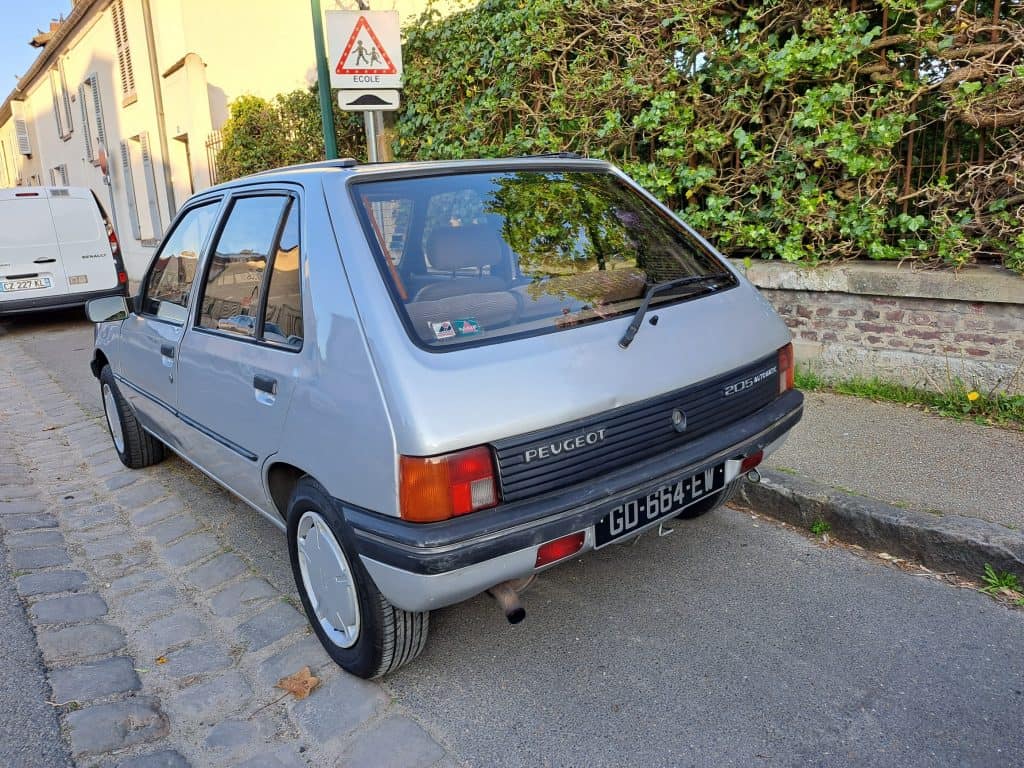
So consider the case of my beloved Peugeot 205. I bought it when my son was born with basic criteria: automatic, 4-door, small enough to park in Paris (a survival criterium), yet comfortable enough for travel. With no second thoughts concerning its age on one occasion I drove from Paris to the boot of Italy with my two 7-year-olds: car and son. No disasters occurred.

As the car aged (along with my son and myself) there was no reason to change. I drove it less and less as Paris traffic and parking became worse and worse and my preferred travelling means was by train and plane. The car became a simple convenience to do twice-a-month shopping. I get it tuned up every two years according to French law and have bought a parking place for it in the garage across the street where it sleeps mostly collecting dust, getting washed only every few years. I figured there was no reason to get a new car as this one works and responds to my few needs. 

However, with the recent ban on old cars in Paris during work hours, I was awakened to a conundrum: I have a perfectly functional car that suits me, with less than 90,000 km on the dial, whose use has become restricted; what should I do? Living near the Paris borders and only using the car for short runs to the supermarket, I did as all the French do and depended on “tolerance” in the law: If I got stopped by the police I would look them sadly in the eye and say, “I’m so sorry officer, but at my age what do I want with a new car to do my once-a-month shopping?” So far I’ve never been stopped for the age of my car and haven’t been able to try out my line.

Solution

But a new solution eventually came to light. If the car is declared a collectible, it can be driven anywhere, anytime. The other perks of this denomination are that it must pass a compulsory vehicle inspection every five years instead of two, and, wonder of wonders, the cost of insurance goes down, even as the value of the car goes up!

In a country where every aspect of life is regulated from cradle to grave and everything in-between (my father once asked, “Don’t they let you breathe over there?”) car collectability is not neglected. Only in France, does a car become a collector’s item through the government administration whether the collectors are out there or not!

A car becomes eligible as a collector’s vehicle at 30 years old. However, this is not automatic. Interestingly, before the administration will even consider a car as a collectable the government depends on its being vetted by a private organisation, the Fédération Française des Vehicule d’Epoque (FFVE). This association pools together 1,300 vintage vehicle clubs and museums in France. But the private process smacks very much of government bureaucracy and includes filling in an application form identifying the car in detail: make, model, series, color, weight, horsepower, license number, ownership history …sending copies of the owner’s ID, insurance card, registration (carte grise) … and hardest of all, enclosing five pictures of the car from front, back, sides, inside. For a car that hadn’t been washed in five years, this was the most burdensome! 

Car Wash + Attestation

So off we went to a high-end car wash to get her spruced up for her photo session. Do we only want her hand-cleaned inside and out (60 €) or the full works: cleaning, polishing, simonizing…for big bucks and three days of work (they said). I was promised the car would look like new. And what’s a couple hundred euros spread over 31 years, and for a good cause? To their credit, the car did look like new. They had even fixed up some spots with paint I gave them, and vacuumed the area under the hatchback seats, which hadn’t been touched since I had bought the car. They even filled out the complicated application form for me and took the pictures. 

This being done, I could finally start unwinding the first strand of red tape leading down the road to collectability. The copies, photos, and forms could be sent, snail mail no less, to be scrutinized as to whether my little old sub-compact was collectable material.

Six weeks later I received the coveted “Attestation pour l’obtention d’un certificat d’immatriculation vehicule de collection,” the key idea being that it only certifies that the former jalopy is now worthy of collectable status, but that obtaining that status can only come from the powers that be. 

ANTS

The next, but first official administrative step, toward collectable status, is to contact ANTS (Agence nationale des titres sécurisés), the national highway safety department, a sub-department of the Préfecture de Police, the central administration of any given département (French province). The prequel to using the online services of the ANTS is to create a France Connect identity. According to the official government site, France Connect:

“simplifies all governmental procedures. It is the solution offered by the State to simplify one’s connection to more than 1,000 services online. Save time. Keep your information secure. You no longer need to create new accounts.” (my translation) 

This waits to be seen. Not to mention that this might be a way for government agencies to collate information on a single person.

France Connect Hurdles

To create a France Connect account, you need to already have (prequel to the prequel?) an online account with either the Post Office, the Income Tax Bureau, or the French National Health (Sécurité Sociale whose online designation is Améli). In my particular case, one that falls through the cracks, the Post Office sent me on a vicious Sartrean circle with no exit whereby when I filled in my email but clicked on “forgot your password,” I received a message saying the account did not exist. On the other hand when I tried to create an account, I was informed that the email address belonged to an existing account. No solution for France Connect there. 

When I did the same on my income tax account, the problem was that they sent the mail allowing me to change my password to an email account that had been closed 3 years earlier. Thus there was no way for me to receive a password to enter my account.

Thirdly, as my National Health ID is affiliated with the National Education Health platform, I have no Ameli account and thus I am not part of the general Sécurité Sociale.

Meanwhile, at each aborted try, I sent a mail to the France Connect help site, but never, ever received an answer. All requests for help fell into some dead-letter box. 

Totally frustrated, I headed to my local town hall for help. Once upon a time, before the government services went to the internet, it was there that car registration was effected. But no longer; all the help I got was a sheet of telephone numbers, with the one for the Préfecture de Paris where I could ask for help.

To my surprise, after going through various boxes and numbers, a real person answered and set up an appointment for me to go in to take care of my ANTS (without France Connect).

Scaling the Police Station’s Fence (Seriously!)

The following week I was right on time outside the Préfecture de Police, a modern unassuming building with a small fence around the stairs down into the entrance. However the gate was locked and there was no bell to ring. After going around looking for a “real” entrance, this seemed to be the only one. As it was getting late, and I saw no other solution in spite of my fear of being bawled out by the police, but to clamber over the fence and start down the stairs. As I entered the building, the receptionist looked up. When I tried to excuse myself and explain the difficulty, he answered, yes, the electronic lock was out of order, and scaling the fence is the only way to enter.

All went well when I found the person to take care of my ANTS account. I had brought over reams of documents, well above and beyond the few I had been told to take, and I was right. Otherwise, we would have got nothing done. Experience had taught me that one brings to the French administration every document we think might possibly be needed, not only the few we are told to bring. 

I was given a receipt of my application and sent off with the recommendation to get my France Connect account in order at the Income Tax Bureau.

The Ministry of Finance

Next morning, still running on my administrative momentum I showed up at my income tax bureau which was operating under strict Covid regulations: a two-meter fence barricaded all approach to the door. All visitors had to wait for a guard to come to the security barrier who then asked the reason for our being there before letting us into the front courtyard of the building where we lined up outdoors in freezing weather a meter away from the next in line. Should two clients approach each other to chat, we were quickly brought into line (literally) to heed the mandatory distance. 

As we waited outside in the cold, apparently so as not to catch Covid, nothing prevented our catching pneumonia!

About a half-hour later I was allowed to enter the building and remain standing in line as the chairs of the waiting room had all been pushed into a corner with barricade tape extended over the lot. 

When my turn finally came I found myself in front of an unexpectedly friendly and competent representative who quickly got my France Connect account set up and with whom I had an interesting exchange on the names of punctuation marks in English and in French as I wanted to include some in my password.

Back at the ANTS site, France Connect got me into my account and after scrounging around (more like scuba-diving than surfing) I found the coveted Certificat Provisoire d’Immatriculation (Temporary automobile registration certificate) which I printed out. And only a couple of days later, the permanent carte grise arrived by registered mail. 

Still More to Do!

My old license plate number had been stricken from the books and my car now had its new (collectable!) registration number. But what now, if I am stopped by the police? My car is still sporting the old plate numbers, but it is registered with another number. Obviously I had to get new plates. 

So I called my garage to get the black back-grounded plates for collectable cars. The head mechanic, did not seem to know what I was talking about and suggested I just bring the car in. This left me quite doubtful as to the results. So I called other garages to find no one in Paris to create these rare plates. Thus, it was back to the internet. 

There I found a few sites that specialize in these plates, one in Spain and a few in France. I finally chose the Rebel Car site, located in France, where all I had to do was type in the brand, the type of car, and the date and they came up with the exact size of plates to fit my car. I even had a small choice of fonts & whether I wanted hyphens or not between numbers. Of course I had to include a copy of my car registration certificate with the order. Less than a week later, within minutes and between more major repairs on other cars, my auto mechanic had secured my bright black plates announcing to the world that this car was a collectible!

Insurance, Too!

Lucky for me this had all taken place at the end of the year, for then I received my insurance sticker for the car. No rest for the wicked, I still had not completed the changeover. Now the insurance had to be modified, beginning by changing the registration number, as well as the description of the car, i.e., as a collectable. 

As the car is insured by my bank, lucky for me, my banker also has a “young-timer” (the French expression to refer to a vintage car that is not yet an antique) and we had a pleasant conversation on the joys of belonging to the young-timer community in France. Besides, he knows all about the special insurance, with the great finding that the cost of my insurance policy for a collectable is 1/3 of that for an older car.

Four months after beginning the procedure, the old jalopy has metamorphosed into a black-licensed, rare collectable that hordes of drivers can (enviously?) contemplate when I drive my privileged son to the airport. 

Photo is of the car with the new “fancy” collector’s license plate.

Did you enjoy this article? TAIP is 100% reader-supported through tipping. If you want to leave us a tip of any amount it would be highly appreciated. These tips help support our efforts to keep TAIP an ad-free environment. Just as at a cafe, the tips are split evenly among the team.

indoor cafe

How I Got A Job In France (And How You Can Too)

Do you remember the quote from Alice in Wonderland that goes:

Door: “Why, it’s simply impassible!

Alice: Why, don’t you mean impossible?

Door: No, I do mean impassible. (chuckles) Nothing’s impossible!

Keep this in mind if landing a French work visa is your goal.

To be frank, it isn’t a matter of finding a nice company that will sponsor you. There are tons of those, but they’re not in control of whether you’re granted one or not. It’s quite nuanced, in fact. The number of jobs that can provide the needed prerequisites where the French government will allow you to work for a French company is very few, but they do exist. Even for the (seemingly) disadvantaged.

I don’t have a degree from a university and have few formal qualifications. If you feel your working background will hold you back, don’t. There are more options than you might guess.

The Dream vs. The Reality

A couple of weeks before my arrival in Paris, a friend called me to share a job listing she stumbled upon. Actually, she was looking for a new job herself, so it was touching she thought of me at all. And to my surprise, the position forwarded to me was work I could realistically be hired for in France: Customer Care Specialist USA.

It wasn’t the most glamorous job description, but it sounded like something I could qualify for. I was really excited.

Living in Paris, I’ve often met French people who have cool jobs. I have multiple friends who work for Chanel, friends who are lawyers, illustrators…I learned a friend was recently written up in Vogue.

The French job market is primarily reserved for the French, and if you’re shooting for a position like one of those I mentioned, you’ll have to stand out in greater, arguably unreachable, ways. Be reasonable about what kind of work will suit you here. What qualifies you for work in the States may not qualify you for work here in France.

Ask yourself, what can you bring to the table that a qualified French person can’t? Maybe it’s your command of the English language (though many Parisians speak English well) One step further, maybe it’s your understanding of American culture which sets you apart.

The “geared towards the US market” job description is crucial because companies need to justify why a foreigner is the best choice for their available position. They must prove to the government that a foreigner is more qualified for this role than a French citizen. They’re required to be thorough to the point of advertising their listing in the post for three weeks. Since the vast majority of French citizens are not (also) American, I felt I had an advantage with these jobs.

Use Growing Up in America to Your Advantage

American culture is generally optimistic compared to other cultures. We are often willing to take risks in ways people from other parts of the world simply wouldn’t. It could stem from the idea that Americans can’t afford to be lazy. I mean this literally. Healthcare isn’t heavily subsidized (unless you’re elderly or destitute), government aid isn’t as accessible (see healthcare), university beyond community colleges are outrageously priced (and tied to the sweet slush funds of student loans), etc. If you don’t work, you simply do not eat.

In the case of the position I was going for, why would they go to such great lengths to find someone for this position, and why was it so difficult to fill? It requires no degree and little to no experience.

The official statement is, they need an American who understands American culture.

The unofficial statement is, they need an American to deal with the Karens.

My company is a tech startup, which meant it was possible I could qualify for a French Tech Visa. A quick Google search showed this visa is valid for four years and renewable. If I could go this route, I could bypass the “justification” step in applying for my work visa.

Customer service is a developing concept here in France (here on the blog we’ve got both positive and negative experiences with it). According to my French friends, it’s much better than in the past, but hasn’t matured to the point we know so well in the States. Although French culture has a rich emotional vocabulary, it’s still developing the necessary skills to handle the demands of the very odd “customer is always right” mentality.

Teaching English is a go-to for many Americans. However, your chances of being able to settle in France while teaching English are slim. There is no shortage of English teachers (getting paid right around minimum wage). Being a native English speaker can still earn you a valuable place here, however.

Tourism is huge in Paris. I met a German guy who settled in Paris working for German tourism. There is no shortage of Americans working in the tourism sector, which is coming back strong after its toughest two years since probably the Second World War. Frankly, there are plenty of avenues an American could take in that field.

I had already received my Long-Term Visitor Visa and gotten rid of all my stuff, so I didn’t know what to expect if I chose to move forward with this job posting. I decided it couldn’t hurt to send them my CV.

It’s important to note that to obtain the visitor visa, you must write and sign a letter to the French government promising not to work for a French company in France. Since I was attempting to do exactly what I attested to not doing, I would only move forward if everything was legal. 

A few days after sending them my CV and cover letter, the company emailed me to set up my first interview. We met on FaceTime, and I was upfront and transparent about my legal status in France. I was happy to find out they were willing to work with me on this, so we continued to the next part of the hiring process. I mentioned I would be in Paris the following week, so we had our second interview in person.

I’m the first person to fill this position so my company let me choose my schedule and my salary. I can work from home, or anywhere for that matter. Although I was hired, and was ready to start as soon as possible, my current visa status meant I couldn’t be contracted with the much sought-after CDI. They suggested a band-aid solution that could work long-term, freelancing, which is one more piece of evidence that contradicts the line given by many in Facebook groups and other places that one cannot legally work remotely while in France on a visitor visa. In this case, I was working remotely for a French company, and happened to choose to live in France. I never said I wouldn’t work remotely for a French company, and you need to have no legal status in France (or any country) in order to work remotely for a French company.

Freelancing involved writing a contract between me and the company outlining the terms of indefinite freelance (and in my case, also remote) work. In order to get paid, I simply personally invoice the company through their US subsidiary. I don’t get paid in Euros and since income paid to a US citizen for a remote French job isn’t directly concerned with French taxation, that’s one less wrinkle. That income will indirectly show up, as part of filing taxes in France as a foreigner is declaring your overseas income, but that’s a single line item, and collects all my sources of income without further details, and in any case, as already noted, it’s not possible, legally, morally (or logistically), for the French government to audit where the remote workers of French companies live or work. What they are concerned with is the legal status of those who do live in France, and I was (and am) in France on a valid visa.

As long as your pay for a given remote employer is connected to your fiscal address in the US, you’re good to go

The Reality

There are a few disadvantages to the freelancing option, but if you’re looking to settle in France, this is a good first step. Like I mentioned earlier, it doesn’t provide you with the magical CDI and many landlords won’t accept tenants who freelance. I obviously don’t have the famous five paid weeks of vacation either. Don’t get me wrong, there are many pros that outweigh the cons. The most obvious being stable work.

Thankfully, for the sake of training, everything is in English. This doesn’t help my French at all, but I mention this because of a valid point my friend brought up the other day. We were talking about a possible relocation for her to Paris, and she was hesitant about working for a French company speaking French. The idea is intimidating, but the reality is not so.

You were hired because you possess a skill that others here don’t. You’re an asset. Further, they’ve jumped through the hoops necessary to get you here, so they want to keep you. Even if it means for a while they speak English, so be it. The reality in French tech, by the way, is that the office language usually is English, even if the majority of the workers are French.

The fact that you’re a foreigner is not a surprise to them, and generally (minus the stubborn few) people are quite nice here. The changes and transitions involved can be uncomfortable, but if you’re determined to grow past all that, take my experience and move through it. If it’s right for you, it’ll work out, and it’ll be easy.

I have to return to the States to change my visa next year (I failed to check the 12+ month box when applying, and clicked the 6-12 month one, which gave me a nonrenewable visa), so my next steps won’t concern me for a while. And if I do pick up that French Tech visa, I promise I’ll explain how to get that too.

In the meantime, I’m enjoying carving my own way in this country and city.

Photo was taken while working remotely in Montmartre.

Did you enjoy this article? TAIP is 100% reader-supported through tipping. If you want to leave us a tip of any amount it would be highly appreciated. These tips help support our efforts to keep TAIP an ad-free environment. Just as at a cafe, the tips are split evenly among the team.

My First Week in France

This is part of a series of articles about the final days of preparing for moving to France and what happens when you get here, and those articles are part of a promotional series launching our new book, 29 Days to France, a book that all the writers wish they had had before we started our French adventures.  It’s now available for preorder, and those preorders come with a free 15-minute Q&A personal session about your French immigration plans.  Click here to learn more.

This is Luke’s final in a trilogy of articles sharing his first three months in France.  The account of his first three months can be found here, and his first month here

I recently learned that France is the most visited nation on the planet. If we look just at Americans, approximately 13,000 of us step off a plane here every single day. Most come for vacation, others for business, but for the few who have chosen to immigrate, our arrival marks the moment life starts over at zero. 

A new country! A new beginning! How exciting! 

Later, but perhaps not much later, we might begin to appreciate just how far down zero really is…

I arrived in France the greenest of greenhorns possible. I spoke essentially no French and certainly comprehended none. I had 150 pounds of luggage and three trains to catch in the middle of a nationwide transportation strike. Somehow I made it from the airport to Gare du Nord in downtown Paris, but then spent hours wandering all over that place unable to find my next train or even where or how to buy a ticket. 

On that day Gare du Nord seemed the most immense and confusing building in all the world, a kind of real-life M.C. Escher maze on a colossal scale. When I next happened to be in Paris almost two months later, I was genuinely surprised to see that it had shrunk considerably from my first impression. It was almost as if on that first day I had seen everything from the eyes of a small child — which in fact was not far from the truth.

The rest of that day I remember only as I might the images from a fever dream. My strength was depleted early on from shouldering and dragging so much weight up and down stairs and on and off trains. My hands were bleeding. All the exertion dehydrated me nearly to delirium, yet somehow I never had the sense of mind to buy a bottle of water. Although I did not recognize it then, I was already in a state of shock.

By some miracle I did eventually arrive at my destination of Amiens, long past dark and after having traveled through the fog the whole way there. I found my hotel and slept as if I would never wake again, having seen essentially nothing of France to that point.

Dreamland

The next morning, only very slightly recuperated and still very jet-lagged, I shyly ventured outside to see what my new surroundings had to show me. For someone coming from the suburbs of Kansas, I may as well have discovered a new planet. Down every cobblestone street was revealed a new and astonishing gift to the senses — the fanciful buildings, the canals, the little cafés, the unusual mode of dress, the smell of perfume and baked bread, the unintelligible language I heard all around me, and finally, the cathedral of Amiens which was by far the most beautiful thing I had ever seen. If this was a dream — and it certainly felt like it — I did not want to wake up. 

I had made an appointment at a student lodging complex to see about getting an apartment. The manager spoke no English but invited me into her little office and we communicated by taking turns at her keyboard typing our conversation into Google Translate. She agreed to rent me an apartment even though I was not a student and wouldn’t be there during the usual term. The true extent of her kindness and generosity, not to mention my great good fortune, wasn’t fully appreciated until much later when I better understood the bureaucratic frustrations that more usually attend to this process. 

The apartment was furnished but still lacked many day-to-day amenities, to say nothing of food. In America we drive our car to the massive big box place and buy everything we want all in one trip. Not so when your life is lived on foot. There is a limit to how much you can carry in your two hands, or on your back, and that is the limit to what you are going to bring home. In the early days it is never enough, and my first week in France was largely spent being a literal pack mule. I found myself resenting certain inanimate objects for the space or weight they took. Toilet paper weighs nothing but takes up a lot of space, meaning this particular trip isn’t going to accomplish much. Forget buying cases of your favorite soft drink, that’s too bulky and too heavy. Just as well, you’re not going to find your favorite soft drink in France anyway. What about a floor lamp? Not only is that going to be a single-item shopping trip, but afterward you are going to be walking down the street in the rain carrying a lamp over your head. However I learned this is not the most unusual thing you will see in France… 

It was frustrating, to say nothing of physically exhausting, to leave the store with my heavy burdens for the umpteenth time, knowing that half of what I wanted was still sitting in the store. The good news is that life in France, for this and many other reasons, is very conducive to weight loss

In the midst of all the logistical challenges to “installing myself” (as the French say), I was also trying to navigate the human and cultural dimensions of this foreign world, almost invariably with spectacular failure. An example symbolic of so many others was the door handles. 

Push (or Pull)

In my long life in America I had learned that handles on doors are meant for pulling. If instead a door needs to be pushed, Americans typically install a flat metal plate that, you know, you push. But in France the same pully-handle is very frequently installed on both sides of the door. How many times (I can’t even begin to count) would I approach a shop door on a gloomy winter day and see a nice warm interior through the glass, with cheerful humans doing happy humans things that I too wanted to partake of, and so to enter I pulled on the door handle — and nothing.

But it can’t be locked, the shop is clearly open, I can see everyone inside laughing at me. Maybe if I pull harder…nope, not budging. The thought of trying to push never entered my mind. What might have entered my mind was, By God I’ll show these Frenchies what American muscle looks like! If I have to grab this thing with both hands, lean back, and brace myself against the curb, this door is coming off! But the door didn’t come off, nor did it open, and never would it open until some exasperated occupant within did it for me, effortlessly and with the helpful comment that “Monsieur needs to push.”

In foreign environments it is necessary to bend or break, the problem is that at the beginning we don’t yet know enough to see when or how we should do that. But never fear: swiftly and painfully, the world is going to teach us. 

They Speak French in France

The doors were embarrassing enough, but by far the worst experiences involved any kind of communication. I suppose I had a vague idea that navigating the world in a foreign language would pose some kind of challenge, but having never been in that situation before I had no concept of just how bad it could be. 

Let me tell you: it was bad.

Before going anywhere I would memorize a phrase or two to get me through whatever I needed to do next. On my first night I walked into my hotel and said in French “Hello Ma’am, I have a reservation for tonight.” The receptionist behind the counter immediately broke into laughter. I looked around…was there a monkey behind me? Then she replied to my statement with a long monologue of which I understood precisely nothing. 

Other times someone would appear sincerely annoyed or even upset at something I had said, but in either case (both no doubt well deserved), I never had the first clue about what I had done to elicit the response I received. This added to a general sense of disorientation and regularly made me question my sanity.

Once, and I can assure you it was only once, I memorized a question for my apartment manager which I skillfully posed to her down in the office. Possibly my stupidity will surprise you, but it wasn’t until the very moment I had finished my question that I realized that whether she replied with a nursery rhyme, the formula to cure cancer, or even the answer to my question, it would make no difference — I couldn’t understand any of it. She did respond with something, I know not what, and I left feeling both like a moron and also completely helpless.

Worst of all was being asked a question by someone else. My first time at the grocery store I was hoping to just swipe my credit card and get out of there, but before ringing me up the cashier asked me something incomprehensible. 

I froze in terror. In an act of stupidity equal to the prior example, I finally croaked back “Pardon?” As if repeating unintelligible sounds a second time would make any difference! Yet she did repeat them, and I still didn’t have an answer. The people in line behind me were already getting impatient (it happens fast in France), and the cashier started to look as confused as I did. What did I do? Nothing. I just stood there with a dumb look on my face and prayed I would wake up from this awful nightmare, back in my warm bed with a binky. 

I know, you’re yelling at your screen right now — why didn’t you memorize the phrase for “Sorry, I don’t speak French”? Or just pipe up in clear English and say the same thing? Good idea, and sometimes I did just that, but what I am describing here are deer-in-the-headlight moments. It’s not that the deer has run out of options while he stands in the path of the oncoming car. It’s that some sudden fright has disengaged his brain completely. 

These moments were daily occurrences that first week (and well beyond). Within a very short period of time I had quite effectively been conditioned to associate any verbal interaction with embarrassment and panic. Like one of Pavlov’s dogs, I soon reached a state where even the thought of going to the bakery in the morning, and having to speak or hear even a few words of French, filled me with so much dread I felt physically ill. These emotions were often all out of proportion with reality (the bakery for example was always a pleasant place), and they persisted long after my French improved to where I was better able to communicate. These unwanted but involuntary responses, as well as my vain and often absurd attempts to avoid them, colored a good deal of my early experiences in France. 

At the end of my first week I was overwhelmed. I felt that I knew absolutely nothing about anything. I felt as if I had regressed back to a toddler of two years old: I could walk, I could feed myself, probably I was more or less potty-trained. But that was it. Into thin air had evaporated all the other competencies I as a grown man had once prided myself on, and before me lay the task of reacquiring the most basic of life skills. 

There was some good news. Underneath mental bewilderment and emotional mayhem, this daunting challenge served to order and simplify a more profound facet of being. In the midst of countless obstacles, life had begun to acquire a tinge of those things we often seek the most: purpose and direction. 

That manifested in the growing conviction, even that first week, that I was in the right place, on the right path, despite all the challenges and adversity (often self-imposed) that I was running into.

Photo of the Amiens belfry as seen from the cathedral tower.

Did you enjoy this article?  TAIP is 100% reader-supported through tipping.  If you want to leave us a tip of any amount it would be highly appreciated.  These tips help support our efforts to keep TAIP an ad-free environment.  Just as at a cafe, the tips are split evenly among the team.

My First Month in France

This is part of a series of articles about the final days of preparing for moving to France and what happens when you get here, and those articles are part of a promotional series launching our new book, 29 Days to France, a book that all the writers wish they had had before we started our French adventures.  It’s now available for preorder, and those preorders come with a free 15-minute Q&A personal session about your French immigration plans.  Click here to learn more.

You can find Luke’s first article in this series, about his first three months in France, here.

By the end of my first month in France I had experienced a good deal of the classic signs of culture shock, including strange food cravings, wild mood swings, and the ability to sleep more hours a night than I thought humanly possible.

But I was also making progress in this new world. I was no longer getting lost a few blocks from my own apartment. My ability to open doors was improving. I could more or less manage the bakery and went every morning for my croissant and daily bread.

My furnished studio had an impressive coffee maker and an electric kettle, but neither a stove nor microwave. There was instead a tiny oven with the outward appearance of a microwave (if we were making them for dwarves), and it didn’t seem to get very hot. What its purpose was I had no clue. I mostly used it to melt butter.

Having arrived at the planetary center of culinary excellence, my diet for a long time consisted almost entirely of baguettes and ramen. There were beautiful fruits and vegetables at the grocery store, but I observed that you had to take your produce to a guy behind a special counter to have it weighed. That was obviously far too terrifying to contemplate, but the internet informed me it took at least three months to develop scurvy and it was probably that long before I ever ate a nutrient. It took me a good month before I even had the courage to buy a crêpe from a street vendor.

Once again showing my naiveté, I decided to rent a car for a few days in order to get some things I thought I needed out in the suburbs at the hypermarché (these are basically like Walmart with the addition of a huge dead fish section). The topic of cars and driving in France could fill an entire book (Stephen reviewed an entire book just on the driver’s license issue), but suffice to say every hour in that car took about a year off my life — and I’m a car nut even by American standards. I returned it as soon as I could and was charged an extra 60 euros for an invisible scratch on the rear wheel, even though I had already bought their expensive insurance which cost as much as the rental itself. Had I understood French I might have better appreciated the beautiful French contours of this ripoff, but in the event I was just relieved the car hadn’t been totaled. I think driving in France is basically like being in a demolition derby, and navigating a French parking garage is to grapple with lunacy itself.

That odd experience led me to brave the buses. Yes I held up the line trying to figure out the QR code scanning deal (no I didn’t understand the possibly helpful advice from the bus driver) and of course I felt and looked like a moron. Even simple things are nerve-racking the first time, but with enough repetition they do get easier. Pushing myself over the initial hurdle usually took more energy than I thought I really had, and I admit there were times I wished I could just spend one day back in the easy world.

France too has Amazon and thank goodness, but the delivery process was a challenge for me. After being trapped at home all day long waiting for the package to arrive, not daring to leave even for a quick run to the bakery, I was informed late in the evening that “Sorry! Your package couldn’t be delivered because you weren’t home.” A rain-smeared paper slip would be found in the mailbox, with an indecipherable scribble telling me where I might go to pick it up. I learned to avoid having anything delivered to my apartment if at all possible, but thankfully in France you can frequently ship to a point relais (pickup place). These locations are quite random, they include the post office of course (usually also to be avoided), but also Carrefour, the wine shop, the book store, the vape store, the tailor or key maker, the weird printer cartridge place, and of course to the ubiquitous and versatile tabacs. There it waits until you have time to retrieve it on your own schedule — that is if you don’t forget your passport, and if the shop owner hasn’t decided to go fishing for the day.

Amidst all this running about what struck me as the biggest difference from the suburbs of America from whence I had appeared, were the vast quantity of people in…well I was about to say “in my life,” but that is not exactly correct. They were in my presence; or anyway, I was in theirs. They were out and about.

The sidewalks and pedestrian streets were every day crowded with what seemed like half the town. In America the main reason to go outdoors is to immediately get into our cars, and when we get out of the car, it is usually to go immediately inside somewhere else. This kind of lifestyle would scarcely be possible in France; even with a car one would end up doing a great deal of walking by American standards. There is most certainly no parking lot in front of your favorite French café.

Consequently being outside with hundreds of others is just part of everyday life, and not only in the big cities. It is no exaggeration to say that on any Saturday afternoon in the small French town where I live, I could leave my apartment and see more flesh-and-blood human beings in ten minutes than I saw in the last ten years combined in America.

I soon learned that it was practical and even (sometimes) enjoyable to walk distances far greater than I would ever have guessed. All that exercise and fresh air had a salutary influence on my health, and my waistline. Most notably, being in the presence of so many others in real life — not just people on Zoom, or in the car next to me on the freeway — provided a glimpse into community living that I had not seen in the US.

At the end of my first month I had learned how to get by, but my glimpse into French society remained just that. A crowd alone does not a community make, and to be present in the midst of one is not necessarily to be a participant. If anything I discovered a new type of isolation only possible to experience in the company of others, something which I think many expats can attest to.

Obviously my next objective was to get out and meet people, somehow. 

Photo of Notre-Dame d’Amiens as snow begins to fall. 

Did you enjoy this article?  TAIP is 100% reader-supported through tipping.  If you want to leave us a tip of any amount it would be highly appreciated.  These tips help support our efforts to keep TAIP an ad-free environment.  Just as at a cafe, the tips are split evenly among the team.
My First Three Months in France

This is part of a series of articles about the final days of preparing for moving to France and what happens when you get here, and those articles are part of a promotional series launching our new book, 29 Days to France, a book that all the writers wish they had had before we started our French adventures.  It’s now available for preorder, and those preorders come with a free 15-minute Q&A personal session about your French immigration plans.  Click here to learn more.

As a human being it goes without saying that I am possessed of my share of vices, but until moving to France jealousy was not usually one of them. In America at least, where every desire has been commodified and put on clearance, most of what we want or are told to want can be afforded by the average person, or got anyway on credit. But here, every French person, no matter how humble or poor possesses something which can’t be bought for any price: the ability to speak.

Even the small five-year-old on the street babbling to his mother about Père Noël filled me with envy. If only I could speak as well as a five-year-old, what high social circles would I then be soaring in?

In fact I had started studying informally even before my arrival. I did all the usual suspects like Coffee Break French, French in Action, and Comme une Française. I was sure I must have learned something, but whatever it was seemed to evaporate immediately the instant I needed to use it.

Once in France I re-doubled my efforts with Pimsleur, iTalki, and online courses from l’Institut Francais. When I wasn’t studying I had the news playing in the background. Whether I was desperately trying to learn it, or desperately trying to avoid having to use it, the French language became a ceaseless obsession.

Surprisingly along the way I felt I was learning as much about my native tongue as anything else. I was astounded to realize just how much we say with so little, and by comparison, how little I could communicate in French even with the substantial vocabulary I had theoretically memorized.

I was well aware of the cautionary tales of those who had moved to France, proceeded to surround themselves with a circle of Anglophone friends, and found themselves three years in without having ever made progress in the language. I was well aware of these cautionary tales because like anyone else in my situation, I had sat around in America watching expat YouTube for months on end before I arrived.

In my utter lack of perspective I concluded this was a serious hazard very much to be avoided. But I wasn’t long in France before I changed my mind and decided I could probably survive the risk of being ensnared by a cloistered group of Americans, if only it meant having a normal conversation for once. I told myself that the acquisition of a new language is a long-term undertaking and at each stage there has to be some concession to reality.

I got on Meetup. I created a Facebook account for the first time in my life. I was soon meeting exchange students, au pairs, and expats from all around the world. No matter how wildly different our backgrounds, as foreigners in France we all had at least one thing in common over which we could bond. We commiserated about the various idiosyncrasies of French life and regaled each other with our humorous stories of language failures and disaster.

I even encountered that breed of person, the complete inverse of myself, and strangely not so uncommon as might be imagined. Whereas I was waiting for perfection to say anything in French, they seemed to have started from day one with complete self-assurance. With little apparent concern for when, or if ever, their speaking abilities would catch up, they daily set off and traipsed unfazed through language landmines I had hitherto believed impossible to survive. Their willingness to place themselves into precarious situations meant they had faced far more difficult challenges than I had, and yet here they were, alive and still in good spirits.

“How could this be?!” I wondered in amazement. That almost seemed like cheating. But far from being jealous, I came to greatly appreciate these acquaintances and the many other types I met as well. From them I learned the important lesson that confidence and competence do not always walk hand in hand.

As I wasn’t expecting to achieve fluency much earlier than I was expecting to attain nirvana, this came as a significant relief.

My own meager confidence improved almost immediately simply by seeing that my predicaments were hardly unique. Even if I went alone to the barber shop, the doctor’s office, or the immigration bureau, I was no longer alone in an existential sense. I was buoyed by the knowledge that I was in good company, that others had tread these paths before, and that, so far as anyone could remember, no one had died from using the wrong verb tense at any of these places.

With this reassurance I found myself becoming less flustered, even though my ability to speak hadn’t changed at all. And in a virtuous circle, feeling slightly more at ease helped considerably with speaking.

Elsewhere in life, I had begun traveling weekends to visit the glorious gothic cathedrals of northern France. In a further sign of changing perspectives I had a surreal experience when I returned from my first trip out of town. Greeting me as I exited the train station back in Amiens were all the same sights I had encountered on my first day in France: the vaulted glass canopy of Place Alphonse, the Tour Perret, the neon Ferris wheel, and the slippery beige stones of La Rue des Trois Cailloux.

All the emotions and memories of that first introduction were brought to mind anew, only now all that had been so recently foreign was tinged with the warm glow of familiarity. No longer was this little town an unknown dot on the far side of the globe. Indeed, just at the other end of Three Pebble Street, and waiting for me to come in from the rain, sat my cozy apartment.

I was home.

Photo taken as I exited the Amiens train station on my first day in France.

Did you enjoy this article?  TAIP is 100% reader-supported through tipping.  If you want to leave us a tip of any amount it would be highly appreciated.  These tips help support our efforts to keep TAIP an ad-free environment.  Just as at a cafe, the tips are split evenly among the team.

weight loss

How I Moved to France and Lost 20 Pounds

I’ve mentioned over the years that I lost weight when I moved to France, but I’ve never explained precisely how.  The truth is, it took me a while to figure it out, because “weight loss” wasn’t even on my radar when I moved here.

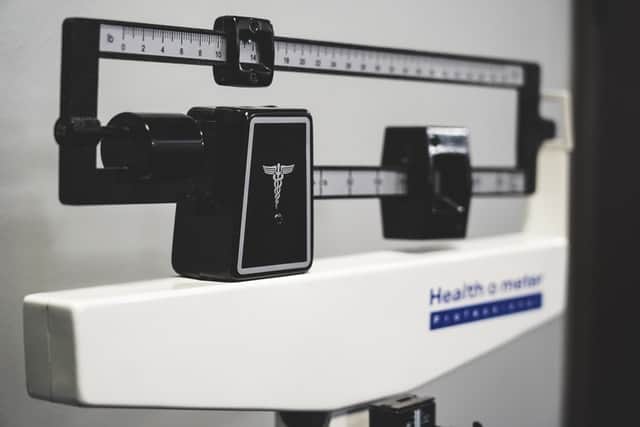
When I moved to France in 2013 I was heavier than I had been in my undergraduate days more than a decade earlier and definitely heavier than the leanest I’d ever been, when I graduated from boot camp with the United States Marine Corps.  But that weight gain happened so gradually that I really hadn’t noticed it.  A pound or two a year over years adds up, it seems.  Three months into my time living in France, twelve of those pounds had evaporated. Turns out that with all the other things I had going on in my new country, I hadn’t really noticed, as my first clue was when I went to OFII and they called out a weight when I stepped on the scale that didn’t seem right.  I stepped on it again to make sure, and yes, the equivalent of twelve pounds had disappeared.

Over the next three months another eight would go, mostly without my notice, though clothes that I had formerly “grown into” fit properly again, and I had to get a couple of suits altered that had accommodated the “old Stephen.”

The Secret

So, given that I didn’t go on a diet when I moved here, and in fact, I drink more wine, cook with more duck fat and butter, eat more cheese, more bread, more pastry, and more desserts than I’ve ever eaten in my life, something else was influencing these changes.

Portion Sizes

American portion sizes are unbelievable.  Americans are obsessed with paying low prices for food (but we have no problem spending a lot on cars and firearms) and this low price obsession also translates into wanting “good value for money” when we eat out.  If a big plate of food comes out and you don’t finish it, we have a culture of taking home leftovers and feeling even better about our night out (“free” meal for the next day).

We are also taught culturally that you should finish everything on your plate, because to do otherwise would be ungrateful.  While part of me accepts part of that sentiment, the culture then has to own that it should put a reasonable portion on the plate, not a portion that in France would easily serve two, sometimes three people.

We also eat our food in America very quickly, seeing mealtimes as less of an opportunity to relax and catch up on life and more of a tiresome task that has to be “accomplished” so we can move on to what really matters, which is watching Netflix or texting friends.

It doesn’t take a nutritionist to know that eating a lot of food quickly not only isn’t great for digestion, but expands your stomach to accept this as “normal” and then trains you to shovel more food into it in order to feel “full.”

In France we eat more slowly, so the stomach has enough time to send the message to the brain saying, “I’m full.”

In France the portion sizes are smaller, so you normally finish a meal content, not “in pain” because you “ate too much.”

In France meals aren’t tiresome tasks to dispose of efficiently, they are simple ways to celebrate seasonal pleasures.

Food Supply Chain

But even if you solve the portion size problem in America (an enormous, pun intended, cultural hurdle), you now are dealing with a Frankenfood-infected food supply chain.  If you’ve read Eric Schlosser’s Fast Food Nation you know that as one of the largest buyers of beef, chicken, lettuce, and tomatoes in America, McDonald’s indirectly decides what the rest of us eats, even if you don’t eat at the Golden Arches.  Farmers aren’t going to grow some lettuce for consumers and use another field for the lettuce they sell to Mac-Do, as it’s known in France.  The industrial choices that McDonald’s makes bleeds down into the supermarkets and consumers reach for produce that was genetically designed for long transportation and for shelf appeal.

Those industrial foods necessarily taste blander (one of the effects chronicled in Mark Schatzker’s aptly-named The Dorito Effect) and as a result Americans drown their sad, bland food in condiments, usually ranch dressing or hot sauce (and sometimes, both).

On that point, you’ll notice something curious if you sit down with some Americans for meals.  When their food arrives, they immediately add these condiments along with salt, pepper, etc.  Americans generally aren’t interested in how the food tastes on its own.  That doesn’t matter.  What matters is that they make the food taste like what they want it to taste like, which is apparently ranch and hot sauce flavored, much like the snack food that they eat incessantly.

In France seasonality is valued and celebrated, and when foods are in season you see them everywhere, from the farmer’s markets to the restaurant menus.

In France GMO crops are banned.

In France, the Big Snack Industrial Complex is making huge strides, but their “make potato chips taste like tomatoes and cheese” tricks are not yet wholly mainstream.

Snacking

Speaking of snacking, that’s simply not done here.  In America I snacked all the time, because it was culturally acceptable and facilitated.  I often tell the story of being at a gas station in Saint Louis around 11pm at night and going in to pay for the gas and smelling this wonderful aroma of cinnamon rolls.  No one has any business having a cinnamon roll that late at night, no matter how wonderful it might be.  But culturally that’s acceptable, so we all do it.

In France, it’s not culturally acceptable for adults to snack, so it’s not done.  Kids normally get a goûter around 16h00, but as they get older this custom goes away.  If you read Pamela Druckerman’s insightful Bringing Up Bebé you’ll find that this programming happens from infancy: babies are fed at set times, not “anytime they feel hungry.”

In France you don’t snack, because that would imply you were hungry, but you’re not hungry, because you are content and full from your last, leisured meal.

In France obesity is an oddity, causing you to stand out, and hence less culturally acceptable.

In France, one snack is allowed to kids per day, and ceasing to take this snack is part of their passage to adulthood.

Walking

This last benefit is Paris-specific, because once you leave the capital, or other towns like Lyon, Bordeaux, and Nantes, that have wonderful public transportation, you probably will own a car.  By contrast, car ownership is necessary for survival for the vast majority of Americans.

Indeed, whenever I have visited America in the last ten years the absurdity of this car obsession has been driven home to me as I run errands and watch my fellow Americans derive the only exercise of their day getting out of their car and going in and out of whatever buildings they visit.  The more disciplined ones may then drive to a building where they use a machine to run to nowhere, then get back in a vehicle to drive back to their home.  There is simply no “casual exercise” in the American way of life.  A car-dominated society leads to a culture that only exercises by choice, not by necessity.

Not so for the millions of people who live and work in Paris.  The overwhelming majority don’t own a car, and if they do, they don’t use it for their daily commute, because then they’d have to deal with traffic and parking, issues that only continue to get worse for drivers as Mayor Anne Hidalgo edges Paris into the top five of bike cities worldwide.  Instead, commuters hop onto their world-class public transportation network after having parked their car at one of those stations, and sleep, read, listen to music, watch a series or a movie, or occasionally, talk on the phone or with each other.  They then have to walk upstairs, downstairs, across stations, across streets.  My average day living in Paris (and I didn’t even have a commute!) always had a minimum of 5km of walking, and many days was easily 10km.

Walking a 10k every day means you don’t need a gym membership.  It also means that you, like your ancestors before you, didn’t need to do artificial exercises in order to stay “in shape.”  Those ancestors did so simply by living their daily lives.  Now, we’re not ploughing fields or working in the mines, but do you know what sort of weight loss revolution would happen in America if we had designed our cities and lives so that we walked even 3k a day, not for “fitness” but just to get about our days?

Instead we chose the nightmare chronicled by James Howard Kunstler in Home from Nowhere in which Americans drive by strip malls inhabited by Weight Watchers and Domino’s Pizza (sometimes next to each other) and then obsess over the next diet fad, sure that this time, it’ll be different.

In Paris, being outside and in sunshine and green space is coveted.

In Paris, parks are not places you drive to, but parts of your neighborhood.

In Paris, fitness isn’t something you have to pay a gym for, it’s just something you do every day by accident.

So, the cultural reasons why I gained those twenty pounds over the years while living in America are just as valid as the cultural reasons why I lost them all and am now at my “natural weight” here in France.

Culture is a great molder of minds and hearts and bodies.  Those cultures that have positive food cultures have positive health outcomes (it’s not solely genetics that leads to the Japanese — and Okinawans specifically — living so long).  Those cultures that have dire food cultures have negative health outcomes.  While my story is only my own and is hardly scientific research, it only takes a set of eyes to confirm that at least as far as food goes, we’re killing ourselves in America.

And in France, we’re not.

Photo by Samuel Ramos on Unsplash

Did you enjoy this article?  TAIP is 100% reader-supported through tipping.  If you want to leave us a tip of any amount it would be highly appreciated.  These tips help support our efforts to keep TAIP an ad-free environment.  Just as at a cafe, the tips are split evenly among the team.
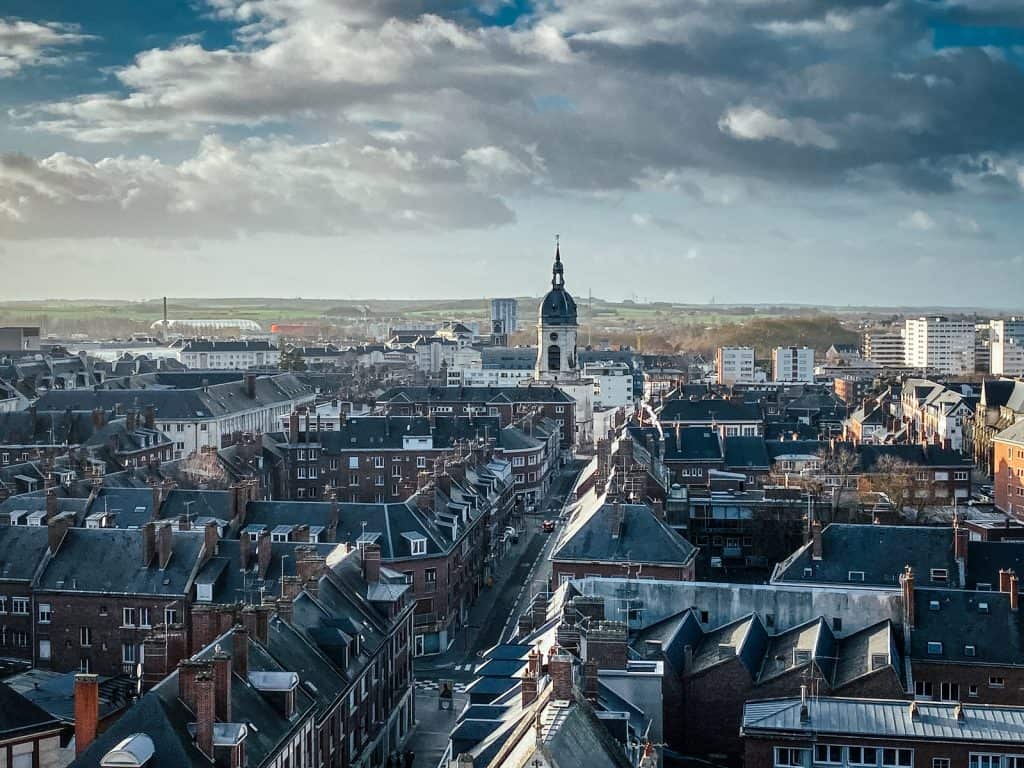
Moving to Moret (During a Lockdown)

As I mentioned in my Why I Left Paris article, I never planned to leave Paris, and would not have known what a “lockdown” was if you had mentioned it to me prior to 2020.  But in May 2021 I found myself not just moving out of Paris, but doing so during our second lockdown.

Thankfully, this would be one of my easiest moves, not just because I’d previously lived in four apartments in Paris, but because, as always, things really fell into place.  I didn’t even bother to pay to change my address as so much of my French administrative life had become paperless by then.

Finding a Place

Finding an apartment in Paris was always a special challenge, but I assumed that finding an apartment outside of Paris would be much easier.  Wrong.

At first I checked with all the immobiliers (real estate agencies) in Moret.  There are about five, along with a community board near the town hall where you can see listings of apartments.  Unsurprisingly, not all of these immobiliers have websites or if they do, the sites aren’t updated with new listings.  I had to visit the town, look at the listings posted outside, and then make appointments to see apartments.

I managed to view at least two of them.  One was wonderful and perfect for me, but when I submitted my dossier, the owner had already accepted a new tenant without informing my agent, and I had to move on to the next prospect, which was far more dismal.  While viewing it I concealed my disappointment from Margot, the young girl who had shown me both apartments, and told her I would let her know whether I would apply within the coming week (I only took a couple of days to realize I couldn’t accept the layout of the new place, which would require guests to walk through my bedroom to access the only bathroom in the apartment).

Another immobilier requested that I turn in a dossier before I was even permitted to see the apartment.  The owner wasn’t satisfied with my means, and I confirmed by asking around that French landlords don’t really place any merit in your non-French assets and income: they might as well be science-fiction stories.  I’ve purposely kept my French business at a certain level of income, in part to avoid VAT, and as such its income seemed unimpressive to the owner.  A polite non was conveyed to me: I wouldn’t even be permitted to look at the apartment, thank you.

A bit discouraged, I started to expand my search to other nearby towns, including posh Fontainebleau, but even as I planned to stop by Fontainebleau to make the same blitz of immobiliers and their listings that I had accomplished in Moret, I hit upon an idea.

Airbnb Hosting

I had hosted hundreds of people over years in Paris as an Airbnb host (even becoming a Superhost) and personally knew that the market had dramatically shifted during the pandemic from tourists to French nationals.  I mused that the effect would have been even stronger in a “day trip” town like Moret and so I did a search of all the listings in Moret and studied their occupancy rates and most recent reviews.

One listing in particular seemed to suit me and I sent a message to the hosts, asking if they would consider a long-term rental.  I did this knowing as a fellow host that the tourist premium which causes a higher nightly rate had mostly vanished in the previous year and when it would precisely come back was unknown.  Why worry about now-uncertain short-term rental cash flow when you could have a reliable tenant?

My gambit paid off and the hosts agreed to meet me the following week to show me the apartment.  A charming penthouse at the top of a two-story townhome, located across the street from a church consecrated in the Middle Ages, the space was perfect for me, and I told the potential landlords so at once, refusing to play any sort of negotiating games.

Negotiating

I wanted a long-term lease right away, and they agreed to a three-year one.  My landlords-to-be were a young couple who had met on a work-abroad program in America, and they enjoyed switching between English and French while we worked out what was to be done with the furniture already in the space (I would move most of it downstairs to the shared cave, a giant unfinished community basement) and when the lease would start (I wanted to give my current landlady the maximum amount of notice, as I knew she planned to sell the apartment if I ever decided to move).  We eventually settled on May 1 and since we agreed to this at the end of January, I had about 90 days to pull off the move, plenty of time by Paris standards.

Selling

I started my adventure in Paris in 2013 in 6 square meters, then moved to 8 square meters, before a three-year stint in the 2nd, at what was then an enormous 39 square meters.  My last apartment in Paris, in the 19th, was 53 square meters and had two bedrooms, so a few things would need to go so I could fit into my new 23 square meter space in Moret.  Thankfully, the Internet helped, and I sold hundreds of euros of furniture, linens, and appliances on LeBonCoin, Facebook Marketplace, and Nextdoor.  Almost all of the buyers came to the apartment to pick up the items themselves.

In a city like Paris, there really is someone who wants pretty much anything decent you are selling (I even sold the planter boxes for my windows!).  The key to selling on these platforms is replying early and making an appointment with the potential buyer as soon as possible.  While the number of tire-kickers and those who will ghost you after showing a lot of interest is not insignificant, I had generally good experiences and sold 95% of what I wanted to, leaving the rest as “gifts” for the future owners of the apartment, who were likely to gut the place anyway (it seems everyone in France wants to completely makeover any apartment they buy).

Moving Day

I rented the largest moving truck I could find (I sold a lot of stuff, but I still had plenty of books and furniture that were going to come with me) and a couple of friends were kind enough to take a day off and help me load and unload the truck.  I finished up the following day on my own and then set about unpacking.  I had set up internet service and electricity weeks before so what remained was getting some shopping done (the markets are much bigger and feature cheaper pricing outside Paris) and taking a few walks around the town that was the center of my new French provincial life (one of my sisters, Clare, insists on referring to Belle’s song from Disney’s Beauty and the Beast to refer to my life now 🙂 ).

While all moves are tiring, I don’t think the momentousness of this move really hit until a week later, as during the move I was on autopilot knocking out tasks one after the other.  My previous Paris moves, believe it or not, had all been executed using the Métro, and all but one of them were pulled off solely with multiple suitcases.  I hadn’t acquired furniture and appliances until my most recent move to the 19th.

My French adventure was still continuing, but I had started a new, non-Parisian chapter.  I could still easily get into Paris 3-4 days a week (and have continued to do so) but I also appreciated being off in the countryside, by a river and a canal and a forest, in a town of 4,000 people.  Life is slower, less expensive, and friendlier.  My dry cleaner always wants to chat when I drop off shirts, and I dutifully wait outside while she catches up with other customers; I’ve even seen the local bus slow to a stop while the driver chats with a friend through his window for half a minute (or longer: no one honks at a bus).

But a near-decade of living in France meant that I had the experience to pull this off during a lockdown (which ended up causing no practical difficulties), by reverse-engineering Airbnb (because the “regular way” wasn’t working), while covering almost all of my moving costs by selling stuff I no longer needed (with just a little extra effort on my part others could find a good use for these items).  It was a dream exit to one of the happiest periods of my life.  Yet, a year on, I wonder if I haven’t entered an even happier one.

Photo is the east-facing view from my apartment in Moret.

Did you enjoy this article?  TAIP is 100% reader-supported through tipping.  If you want to leave us a tip of any amount it would be highly appreciated.  These tips help support our efforts to keep TAIP an ad-free environment.  Just as at a cafe, the tips are split evenly among the team.
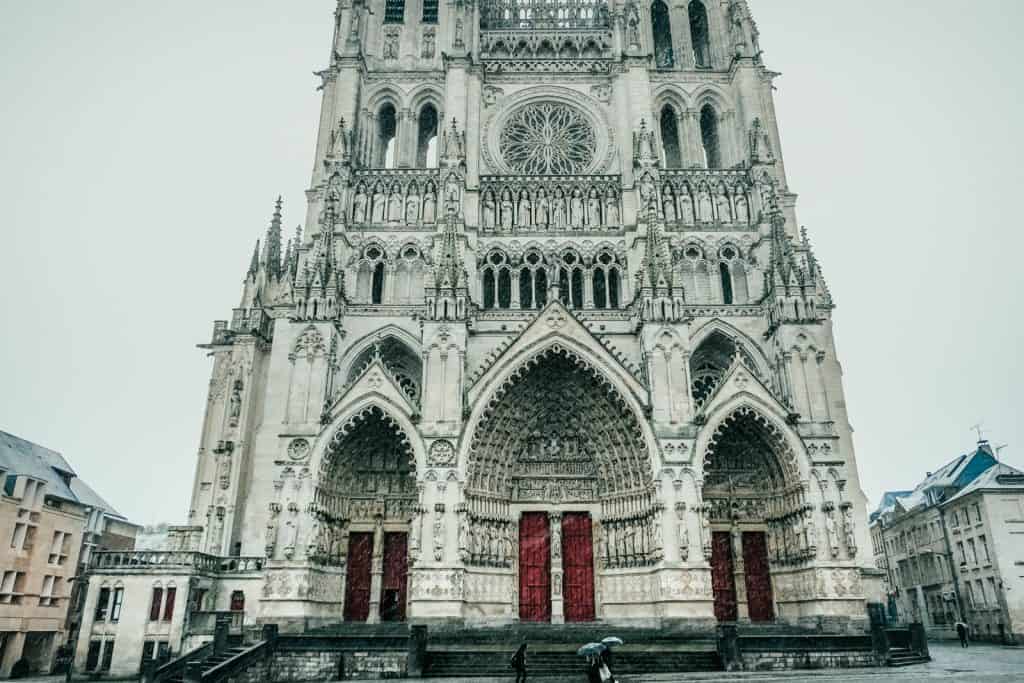
bicycode marking

Add a Bicycode to Your Bike

Once you’ve spent a lot on a brand new electric bike (even if you got much of it subsidized) you want to protect it from theft.  Unfortunately, not only is Paris a place where more than one of us have at least one “I got pickpocketed” story, but it’s also a place where bikes get stolen: in France 400,000 are stolen annually.  So apart from using one or two strong locks on your bike, what else can you do to protect yourself?  Enter Bicycode.

French Federation of Bicycle Users

When the authorities do manage to find stolen bicycles, it’s challenging to return the bikes to their rightful owners because of changes/damage to the bike.  The French Federation of Bicycle Users (FUB) set up Bicycode back in 2004 with the idea that a “tattoo” on the bike frame would offer a point of identification that could connect a stolen bike to its rightful owner.  It has since marked almost 250,000 bikes in France and Switzerland.

Now, this isn’t to say that your would-be thief is going to see a Bicycode sticker on your bike frame and be scared off from stealing your bike.  It’s just an additional measure you can take to make sure that if your bike is stolen, you’re at least giving yourself some chance of getting it back.  Of the 400,000 annually stolen bikes in France, 150,000 are recovered, and Bicycode at least gives you some kind of shot at recovering your wheels.

Getting Your Bicycode

Once I was sold on this short and easy measure I went to the interactive map showing who the retail providers are and made an appointment.  A number of shops in Paris are not doing them on a regular basis so I ended up going to Melun, which has a shop doing them all the time.

I had to do some basic paperwork (this is France, after all) to establish that I was the owner of this bike and was registering it at an address I had proof of living at. If you ever sell your bike in the future, you can give the buyer your registration material and Bicycode provides a way for the new owner to then register the bike in his/her own name.

Once all the paperwork was done (probably ten minutes of work in total), I handed over 10 € and he got to work.

The technology used is apparently resistant to weather, water, UV damage, and high-pressure washing.  The tech took 15 seconds to engrave it once he had the bike in the right position.  The code he put on the bike is unique and linked to my bike’s serial number, my name, and my email address.  If your bike is stolen you log onto your Bicycode account and declare the bike as stolen and give the address of the police station where you made the report (which assumes, of course, you’ve done that as well).

Add to Your Insurance As Well

I also contacted my renter’s insurance to ask them if a bicycle theft was covered and they said it was.  They just needed some paperwork (of course).  I sent them proof of purchase and the serial number of the bicycle and signed a rider to the policy adding the bike.  No change in my premium and the bike was now included.

You can’t prevent your bike from being stolen in all circumstances.  Basics include:

  • using at least one bike lock to secure your bike
  • securing the lock through the frame of your bike rather than the wheels
  • using one of the ever-increasing bike stalls throughout the capital, which have strong metal bars for you to use

But once you’ve added a Bicycode and added the bike to your insurance, there’s nothing more you can do to protect yourself.  Enjoy your ride!

Photo is of the technician marking my bike with its unique Bicycode.

Did you enjoy this article?  TAIP is 100% reader-supported through tipping.  If you want to leave us a tip of any amount it would be highly appreciated.  These tips help support our efforts to keep TAIP an ad-free environment.  Just as at a cafe, the tips are split evenly among the team.