Getting Pickpocketed

So I’ve been pickpocketed three times in the seven years that I’ve been in Paris.  Once in 2015 and twice in the last quarter of 2019, when pickpocketing was at an all-time high in the city.  Nothing irreplaceable was taken; it was more a chance to learn weaknesses and correct behavior.

The Wallet

I was helping a friend get to Gare du Nord to catch a train.  We got onto line 4 at the Cité métro stop and just before the door closed we felt a crush of people get onto the carriage.  I felt a strong hand at my back as we felt people try to squeeze in, which was probably all that was necessary to distract me from a hand reaching into the inside left pocket of my overcoat, where my wallet was.  I didn’t notice until Gare du Nord, which of course was far too late to do anything about it.

My pulse quickened; chemicals swam into my bloodstream to “help” my body cope with panic.  I tried to clear my head and quickly used my phone to cancel credit cards that I remembered were inside (including one that wasn’t inside!).  I didn’t think there was anything that could really be done so many wallets get lifted in any given day in a big city, not just in Paris but there was one crucial card in that wallet whose loss I would have to document for the French authorities: my four-year carte de séjour.

I had learned this some years back when I had left my wallet on an airplane, again, with a carte de séjour inside.  You have to file a police report to certify the “missing” status of the card.  Having that report allows you to get a new card.  You can’t start the process of replacing a missing carte de séjour unless you’ve filed a police report.  The sooner the better.

I was already in Gare du Nord, so I made my way down to the lower level branch police station that I knew was inside the station.  I briefly explained to the cop at the front desk what had happened.  He told me to take a seat and that it would probably be an hour (which in French bureaucratic speak means at least one hour).  The effects of the “panic chemicals,” cortisol and adrenaline, were ebbing away, and I smiled, nodded, sat down, and pulled a book out of my bag (always have a book to read when you’re walking around in Paris).

I had started to feel a bit sorry for myself when a girl in her early 20s came into the station escorted by a couple of officers.  One of them walked up to the front desk clerk and quietly said a few words.  The front desk clerk grimly nodded and the other officer walked the girl over towards me and put her into the seat next to me. He then said they would take her statement shortly.

The girl was shaken, and had either just been crying or was holding back tears.  I realized that however “poorly” my day was going, that others were having worse days, and I abruptly stopped feeling sorry for myself.

About an hour later, I was asked to come into the office and explain what had been lost.  The officer was very efficient and in about 15 minutes I was out of there with two crucial documents: the one-page police report with an inventory of all that had been in my wallet, signed by me and sealed by the attending officer, and a recipisse that the declaration had been filed, again signed by me and sealed by the attending officer.

I could have used this to go in and get a récépissé, which would have given me a “legal ID.”  But something had changed in the years since I had first started getting those coveted thick plastic ID cards: I had realized I didn’t really need them for daily life in France.  If I needed to rent a car, I would give the rental agency my US driver’s license.  If I needed to travel, I would use my US passport.  I might occasionally present the carte de séjour (CDS) if I needed to pick up a package, but I could just as easily bring my passport as well.  The cost of a replacement card is the exact same as the cost of the original card, and a part of my personality which has served me very well in past years, a character I call “frugal Stephen,” objected to the idea of paying for a new card with fewer than 24 months left.  “Why not just try to get by without one?”

Why not indeed?  I hadn’t foreseen that there might have been some sort of global crisis that would make the actual hard plastic card very important indeed.  More on that another time.

The iPhone

I am not the guy who gets the new flashy gadget.  I’ll gently use something until it gives up on me.  Case in point, Apple was offering double trade-in value on what was then my four-year-old iPhone 6 Plus.  Because of software upgrades (which would lead to a class action lawsuit some years later, which would lead to me also getting a payout) the phone simply couldn’t perform anymore and crashed all the time.  I took the double trade-in value and got a shiny new iPhone XS.  The phone was dreamy in comparison to my faithful old 6 Plus.  Until it got stolen a couple of months later.

I’ve mentally tracked down the 60 likeliest seconds in which it happened.  I have a habit of keeping my hand in my coat pockets during the winter season, and usually have my phone in one of those pockets.  The last time I remember using the phone was to show a friend of mine a funny meme.  We were on Line 2 and changed at Jaurès for the line in my neighborhood, 7bis.  Somewhere between changing from those lines is when I got pickpocketed.

The thing is I offer ready advice all the time to friends and travelers about how to stand in the métro and on buses to be more protected against such a thing (have your back to at least one area/part so that no one can stand behind you, don’t leave zippers or pockets exposed, etc.).  Predictably, as I had in 2015, I got mad and turned on “find my iPhone” to once again turn into the angry vigilante to track down my phone.  I shut down all the Apple Pay rights and started quickly changing various passwords when I got a note that my Facebook password had been changed!  These guys were good.

I used a combination of the location features offered by my local carrier, SFR, and Apple itself to triangulate where the phone was last seen, in the Barbès neighborhood, thirty minutes earlier.  Who did I think I was to go wander there?  Was I just going to approach anyone who I thought might have it and kindly ask that they return it to me?  Silly as it was, I went anyway, and found the street mostly deserted, with an empty kabob shop nearby.  At some point the foolishness of the endeavor caught up to me and I headed home.

The next day I bought a replacement at SFR and the kid helping me commiserated, telling me this happens pretty regularly and asked why I didn’t have insurance.  After explaining that after some time the insurance costs as much as a new phone he reasoned with me to carry it for two years and then dump the insurance.  I saw his point and agreed.  This particular insurance would allow for two full-price replacements in any given year.  Later that afternoon I got a taunting text from a number telling me in French, “thanks for the phone.”  I blocked the number and all the subsequent spoofed emails that clearly showed this was a group of professionals who regularly grabbed phones on the Métro and looked to spin the grief/anger/desire of the victim to get the phone back into even more “profit.”

Adjustments

So, what happened as a result?  I bought an even thinner wallet than the minimalist one that I had stolen, one small enough that it could fit in my front pocket (good luck with that, thieves!).  I also created a new habit of always putting my phone in my back pocket when traveling on the métro, usually with my messenger bag additionally slid over that pocket (you’re going to have to work harder if you want it!).  I can’t say I became ever more alert, because like anything in life, your guard goes down after a while.  But I was reminded that yes, unfortunate things can happen at times, but never forget someone may be having a worse day than you, so keep everything in context, and keep smiling.

Photo by Andrea Natali on Unsplash

Notre Drame: the Fire

I was in a train back into Paris from Frankfurt when the news started to trickle in about our disaster here in Paris.  We’ve had various shocks during the time I’ve lived here, whether it was terrorist attacks in years past or yellow-vested “protestors” in more recent months, but this was of another kind entirely.

Friends who were there as it burned told me they stood in a sea of dismayed silence.  What could lay bare the thoughts of so many hearts at that moment?  The President referred to the idea that part of “us” had burned that night.

There’s been plenty of ink spilled on what should be done with the now more than € 1B pledged for Notre Dame, the symbolism of such an overtly Catholic building being destroyed in what is purportedly a secular country, and the growing suspicions regarding the origins of the fire.  But I’ll leave those matters to those with more breath than I have at the moment.

For me, more than anything, this was a lesson in losing the things you take for granted.  Just two weeks earlier, I took a friend inside to explain the genius of gothic engineering and architecture and to bask in the stunning beauty of those (still intact) rose windows.  I felt what I’d always felt since I first stepped foot inside the church in 2009: I’ll always have you.  But that’s not true.  We are not promised tomorrow.  Even centuries-old buildings made of stone are not promised tomorrow.

When you have an opportunity, take it.  If there’s a place in your locality that you’ve been meaning to see, go.  You have no guarantee that it will be there for you, or that you will have the health to see it in the future.  If you do take these opportunities, you’ll create lasting memories which thieves cannot steal, moths cannot eat, and fire cannot burn.

Part of the title for this article was lifted from a headline on one of the Paris newspapers the next day: indeed it was just as much “our drama” as “Our Lady.”

I took the photo in November 2015, on one of those nights when the light, the sky, and the night were perfect.

This story was also published on Medium.

TAIP is 100% reader-supported through tipping. If you want to leave us a tip of any amount it would be highly appreciated. These tips help support our efforts to keep TAIP an ad-free environment. Just as at a cafe, the tips are split evenly among the team.

Pinch Me, I Live in Paris

There are hundreds of postcards I’ve made of Paris in my mind.  I’ll stop, clear my head of whatever I was thinking of, and be truly and appreciatively, in the moment.

A soft sunset on Île de la Cité seen from the Pont des Arts.

Sunshine down a narrow medieval street in the Marais.

Birdsong in the trees of Buttes-Chaumont.

This is my sixth year in Paris and I’ll still be caught randomly in moments of disbelief: “Do I really live here, here in Paris?”  As humans we have a remarkable ability to adjust to circumstances and take what was once all-consuming and relegate it to background noise.  Part of this is helpful it can help you change the Métro three times without really looking where you’re going, because you’re avidly listening to an audiobook or occasionally walk-reading with a dead-tree book.  Part of this is harmful we can fail to look up and see those beautiful moments that are just waiting for us if we aren’t living by our smartphones.

I was waiting for some friends last weekend outside a Senegalese restaurant in the 11th.  A couple of friends had arrived early and we chatted and people-watched.  I noticed a girl taking a photo of…my eyes followed the trajectory of her phone to a second-floor window where a cat, paws imperiously perched on the window sill, calmly surveyed the street below.  The girl snapped the picture, laughingly looking around her to see if anyone else had seen the moment of feline curiosity.  Our eyes met and my smile acknowledged the joint secret.  We then turned back to the window where the cat had briefly retired only to once again emerge, missing only a cigarette dangling from its mouth to mark him (or her?) out as the casual Saturday evening street-watcher in the neighborhood.

Something else which slowly, then suddenly happens is the march of French into your ear.  As my French skills have progressed, what used to be background noise the French slowly and quickly spoken around me is now contending with my own thoughts.  The casual confessions in the métro, the heated disagreements in the street, the chatter in cafes.  I never feel like an eavesdropper in my native language, but when I’m in an English-speaking country, I feel like everyone is talking all the time because I don’t have to pay attention in order to understand English.  But as my French gets better, the volume around me is turning up.  Often times I’ll surreptitiously write down a word or expression I haven’t heard in order to look it up later.

For non-EU citizens, immigration occupies such an unreasonable portion of our mental real estate in the early years of living here that we sometimes miss the special elements of the city we are fighting to stay in.  One of the biggest benefits of a four-year card is the disappearance of the immigration question from your mind entirely.  That frees up room for all those moments that you’ll still need to fight to appreciate, not allowing yourself to take this dream city for granted.

Photo taken by me on a not-crowded day at Buttes Chaumont, which will be less and less attainable as the weather warms up. 🙂

TAIP is 100% reader-supported through tipping. If you want to leave us a tip of any amount it would be highly appreciated. These tips help support our efforts to keep TAIP an ad-free environment. Just as at a cafe, the tips are split evenly among the team.

To Rent or To Own in Paris?

The most important fact to begin this discussion which is directed at those who wish to live in Paris, not those who wish to buy rental properties in Paris is that the current interest rates for fixed mortgages are between 2-3%.  When interest rates are so low, buying becomes attractive, even in Paris.  Add in the fact that tenants of properties have right of first refusal on a property to be sold and buying becomes easier.  But attractive and easy do not necessarily equal simple.  There are a few things to keep in mind.

Selection

I would not recommend buying in a neighborhood that you have never lived in.  With Airbnb and other such options, you have the ability, like never before, to stay some weeks in a neighborhood or arrondissement to get a sense of the scale and speed of it.  Meet the shopowners.  Take a coffee.  Walk around.

Primary vs Secondary

One of the ways that the French state discourages real estate speculation is by levying a significantly higher tax on the sale of a secondary residence vs your primary one.  The “buy and flip” model doesn’t really work here, as a result.

Roots

If, like me, you reject modern notions like “starter home” or the idea that your home is an “investment” that you can sell, like a piece of art or a watch, when the price is right, selection becomes even more important.  What are my neighbors like?  The noise level?  Cleanliness?  This is where you will spend most of your time so it should be better than just tolerable.

Paperwork

The dossier you prepare when you’re renting will remind you of that for the prefecture, except unlike at the prefecture, where if you follow directions you stand a good chance of gaining what you went in there for, when renting you’re competing against others in a zero-sum game if you get the apartment, they can’t, and vice versa.  You’re going to need:

  • Photocopies of your ID(s) = passport + carte de séjour
  • Photocopy of your CDI or CDD if employed, as well as your last three payslips
  • If you are self-employed, your most recent tax filings and/or bank statements from your business account can serve as substitutes for the CDI + payslips
  • Your last three rental receipts from your last landlord, whether that was in France or elsewhere
  • If you think you need a guarantor, you’ll need their EDF and the last three payslips as well

You’ll make multiple copies of this dossier, both in hard copy and digitally, so that you can send them in the format that your potential landlord prefers.

The French, because the law is so dramatically in favor of tenants, really want assurance that they will have the rent reliably paid and in full, and as such will usually pick the highest-earning dossier.  As such there is a common practice of forging/using a friend’s high-income pay slip to “enrich” your dossier.  Many Parisians know at least one person who has done this to get an apartment, if they have not done so themselves!

In extreme cases some landlords will require a year’s rent to be held as escrow as security against a default but I’ve only read about this, and have never actually met anyone who had to do this.

The guarantor (or cosigner, as we would call it in America) is the most frequently-used device, however, for the risk-averse landlord, and a friend recently told me that despite the dual incomes of her and her husband which totaled far above the rule-of-thumb “three times the monthly rent” at least one potential landlord asked her if she also had a guarantor.

All leases in France are governed by the 2015 Alur Law and you cannot simply make up your own lease.  If you want to do the simplest thing, which I did while negotiating my recently-signed three-year lease, just click here to use a free template which conforms to the law.

Some Recent Prices I’ve Seen

Apart from the Syndic, which I discuss below, there’s also property tax for owners, which is really pretty low on my apartment it’s around 1000 € a year.  I often stop when passing by an immobilier (real estate agent) on a Paris street, just to get a sense of prices in whatever neighborhood I’m in, and to continue to hone my sense of the market overall.  I am sharing these three examples to give you a sample:

6 rue Guenot, in the 11th, 2 bedrooms, 27 square meters, 240,000 €

161 rue des Pyrenees, in the 20th, 3 bedrooms, 52 square meters, 374,000 €

5 passage du chemin vert, in the 11th, 4 bedrooms, 94 square meters, 810,000 €

Yes, I know I’m exposing a Right Bank bias, but I’ve never seriously looked on the Other Side of the river.

Last Things

When you become an owner, not just a renter, apart from the maintenance of the apartment itself, you will be subject to charges from the Syndic similar to an HOA in America that can sometimes be very costly.  They recently installed some new piping in the hallways of our apartment and my landlady’s share was 15,000 €!  If you don’t pay, the Syndic can start legal action against you, though it is so ponderously slow that you’ve got enough time to put together the cash you need before it ever goes to court.  Your monthly fees can be around 50 €/square meter per year, so my 53 square meter apartment costs around 2650 € in Syndic fees which are paid by the owner, not by you.  The Syndic is usually hired by the association of co-owners of the building i.e. all of the separate owners and is a managing agent of sorts.  They ensure that maintenance is done, that the building is cleaned, and if necessary, hire a guardian/concierge (our building doesn’t have one, though my last two apartments did, and we seem to get along fine without one).

I’ve said before that I’d like to get a small place just outside Paris for the occasional weekend retreat, but with the recent signing of this lease, and with my landlady’s indication that she may very well wish to sell at the end of the term, I may be in the market to buy in Paris sooner than I expected.  But the dominant thought on my mind as I signed the lease last week was that it would be three years before I would need to think about either my living or immigration situation again, and that allows me time to focus on other, less paperwork-intensive, subjects.

Photo by JOHN TOWNER on Unsplash

TAIP is 100% reader-supported through tipping. If you want to leave us a tip of any amount it would be highly appreciated. These tips help support our efforts to keep TAIP an ad-free environment. Just as at a cafe, the tips are split evenly among the team.

Goodbye to Living in the 2nd Arrondissement

So, here’s the thing.  I never actually planned to live in the 2nd.  After a year on the eighth floor in the 17th, it had come time for me to graduate to a “real” Parisian apartment instead of just living in former servants’ quarters.  My search first led me to a ground-floor apartment in the 15th, near the Sevres-Lecourbe Métro on line 6.  I was not such an established Right-Banker at the time, with routines and rhythms that I preferred, and I really loved that apartment and the neighborhood.  Alas, during the application process I was competing against an American college student who also wanted the apartment, who first raised her offer (the apartment was going for 1200 €/mo and she offered 1400 €/mo) to try to beat me.  When I matched, she pulled out the nuclear option and had her father pay the entire year’s lease in advance.  I couldn’t come close to matching it, didn’t want it that badly, and let it go.

I tell people there are two rules in Parisian real estate rentals: 1) you don’t get the apartment you want, you get the apartment you get, and 2) it’s always better to jump before you’re pushed.  I’ll start with the second rule first.

Dig Your Well Before You’re Thirsty

It’s not an exaggeration that getting an apartment in Paris is tough.  As I’ve shared here before, there are many applicants for the most desirable locations, and there may be nothing wrong with your dossier someone else’s may just be slightly better.  Hence, if you know you’re going to move, don’t wait until your lease is up.  Get active start looking, and bargain with both your current and new landlord as needed.  When I got my place in the 2nd, there was a lag of about six weeks in between when my lease was up in the 17th and the new apartment was available.  I had been on good terms with my previous landlady (pay your rent on time and this becomes simple) and so we easily negotiated a six-week extension to get me to my move-in date at the new place, and my new landlady was kind enough to give me the keys a week before my move-in as she was going to be out of town.  I had liked this apartment in the dead center of Paris (Metro Réaumur-Sébastopol, on Lines 3 and 4) after being used to a 10-15 metro ride to get to Châtelet, but I was rather hoping the American girl would find out the apartment in the 15th wasn’t for her, nor was Paris, and I’d be there to comfort that landlord by moving in right away.  I negotiated a one-year lease with a 60-day notice to end it with no penalty, and I moved into the apartment in the 2nd, seeing it as a temporary hardship.

I have to say, I didn’t realize just how wrong I was in those early days.  Those first three months were spent rearranging everything.  I now had a kitchen that was almost the size of my entire previous apartment.  I no longer had to take the Métro into central Paris, as I was in central Paris.  I could have friends over for dinner parties or board game nights (and did!).  It was one night months later, the apartment in the 15th long forgotten, as I was pushing open the enormous old door to the set of buildings that comprised my apartments, that I realized, “Wow, I love this neighborhood.”  My address was on Rue Saint-Denis, an ancient pilgrimage route but now home to many of the trendiest restaurants in the center of Paris as well as adjacent to a whole host of cocktail bars that were part of the nascent mixology culture here in the capital.  I had gone from 8 square meters to 39 square meters, from the quiet and wealthy outskirts of the 17th to the bohemian beating heart of the 2nd.  I was never going to leave…or so I thought.

About a year ago my landlady told me of some changes in her personal life that would necessitate a sale in the medium term the next 2-3 years and she was floating the idea of selling to me because, by law, I had first right of refusal as the current tenant if she planned to sell, but also because we had developed an exceptional relationship tried by all the challenges you could have (like leaks) in a landlord/tenant relationship.  We split standard wear/tear items 50/50 (like a broken faucet) and she 100% covered irregular items (like the stove, washing machine, dishwasher, and hot water heater all breaking during my three-year stay).  I would maybe have to meet the delivery man (or occasionally, help him carry these backbreakingly-heavy appliances up 5 flights of stairs) but she was prompt and courteous which from horror stories told by my fellow denizens is not the norm in this town (or perhaps, anywhere).

I weighed the decision to buy, but it was mostly academic, because of the cost, and started to cast around for an alternative.  I found it in September of last year and signed a lease.  A friend of mine only needed an apartment for a few months before leaving for an internship in New York, and so she moved in right away and helped to defray the cost before I moved in last weekend, in the waning days of my lease, and she moved into my old apartment, with a prearrangement with my (now former) landlady for special 60-day extension of my old lease, to cover my friend until the day she was leaving Paris.

You Can Have What’s Available

When I say you “don’t get the apartment you want,” I don’t mean that you can only get into undesirable places, but rather that the idea of picking a neighborhood and style of apartment you want is an irrational act of hope rather than a thoughtful and realistic strategy.  Paris is a very particular market because it features almost-fixed inventory against enormous demand.  There are very few new buildings going up inside the Périphérique, and hence rents have to escalate in order to deal with demand.  So when I say you “get the apartment you get,” I also refer to happy accidents like my place in the 2nd.  It was perfectly adequate as an apartment, but the secret I didn’t know (because I was still too new in town) was what an amazing neighborhood it was.  That is true for many parts of Paris, not just the part that was formerly “mine.”

As the weeks approached for my move it began to weigh on me…I was “missing it already” and telling my friends any chance I could get.  I was probably pre-grieving.  The funny thing is I wasn’t moving out of Paris but I knew that when I moved I would settle into the same routine I did in the 2nd.  When I first moved to the 2nd, I made trips out to my familiar haunts in the 17th, especially one of the first cafés I fell in love with (Le Poncelet: good, simple, no-fuss food, staff that smiled and knew your name, and never got mad when I sat and wrote for hours).  But over time, that kind of behavior dies as you develop new routines, and begin to love the three blocks around your apartment.  Most of Paris is really just a collection of neighborhoods within neighborhoods in that way.  This was my place for the last three years of my journey, and I will miss it.

But the new beginning, and the new neighborhood, is already winning me over.  More about that, soon.

Photo by Yannis Papanastasopoulos on Unsplash

Did you enjoy this article? TAIP is 100% reader-supported through tipping. If you want to leave us a tip of any amount it would be highly appreciated. These tips help support our efforts to keep TAIP an ad-free environment. Just as at a cafe, the tips are split evenly among the team.

The Bike Explosion Happening During the Vélib Transition

While it’s true that you often don’t know how good something is until it’s gone, you also don’t realize how much better things can be until you get to try alternatives, and during the last 60 days, as Vélib stations have been slowly but surely been deactivated and then ripped up for refurbishment, the dockless solutions of Gobee, Ofo, and Obike have cropped up seemingly everywhere.

Vélib

Before we talk about the new kids on the boulevard, it’s probably best to understand how we got here in the first place, and that is because of the dreadful performance of JCDecaux, who had the Vélib contract from the beginning.  It was their complacency that brought us to this exciting (though painful) new start.  For those who don’t know, Vélib is Paris’ docked bike-sharing system and was originally pitched not only as a system that wouldn’t cost Parisians a penny, but would make the city money.  I know, don’t laugh too hard at socialists promising to turn a profit on a capital-intense venture.

But the reality wasn’t just that Vélib failed to be revenue neutral.  It seems that for at least the last 5 years, Velib’s 24,000 bikes have cost the city of Paris about 15 million euros per year.  Those costs can be broken down into vandalism repair (10%), deployment to far-flung suburbs (75%), and maintenance (15%).  As most French firms sitting on a fat contract do, JCDecaux failed to proactively fix the system and predictably they were replaced at the first opportunity by a Montpellier-based company called Smoove which will offer a lighter bike, with over 1/3 of the inventory of the bikes in Paris being electric, which will surely help with the uphill/downhill problem in places like Montmartre and La Villette (people are happy to ride the bikes downhill, but uphill, not so much).  Unsurprisingly, JCDecaux reacted in a predictable French way when they lost the contract: crying, appeals, and attempted striking.

Dockless Options

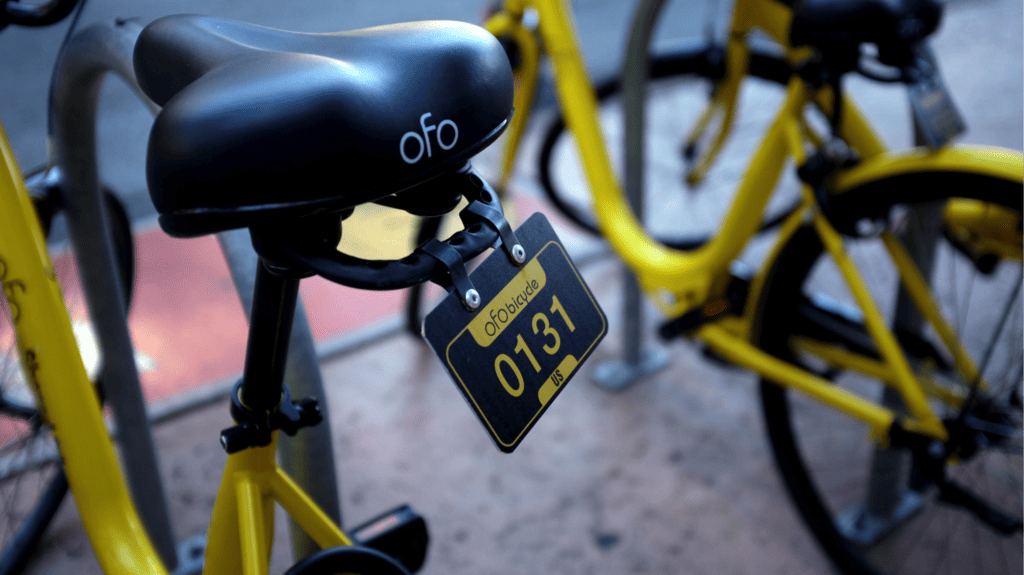
While this has been going on in the foreground, regular Vélib users like myself, reluctant to change from a system we knew well (though didn’t especially love), started to see some of the dockless bikes show up in the city.  Velib is docked meaning the bikes are parked at specific stations, whereas the dockless ones can be parked, well, anywhere.  Now, while the apps all give you ways to find appropriate places to “park” the bikes not everyone pays attention, and at the moment at any given moment you could find a rainbow of bikes around you (Gobee is bright green, Ofo is bright yellow, and Obike is a subdued yellow).  I didn’t switch to trying dockless bikes until it became impossible to reliably use Vélib.  The native Vélib app and apps like Citymapper that scraped from the information provided by that app were not indicating which stations had been shut for maintenance, so sometimes you would have to hunt for a place to park your bike, with no reliable guide other than trial and error.

That’s what led me to first try Hong Kong-owned Gobee’s system first.  They had flooded the inner city of Paris with bikes and I needed a reliable bike system as I went about Paris on a daily basis and Vélib in complete rebuild mode wasn’t going to cut it.  For flat riding in short distances, the bike is certainly adequate.  When you download the app you put in a 20 € deposit and then add money to your account.  With most rides costing around 50 cents, 5 € is plenty to get started with.  The downside?  They clearly didn’t adequately plan for this deployment.  A couple of weeks ago I tried to unlock 9 different bikes in the span of 15 minutes and each time I was told that the bike was broken, though the status of the bikes had not been updated in the app, leading to a waste of time for the end user as he/she tries to unlock a bike that is showing in the system as available when it really isn’t.  Such unreliability has meant that I’ve tried to unlock bikes that are not only off the system but have a hanging tag that says “I’m broken” but still managed to unlock and work for me.  The QR scanner technology is also not great and almost always you will have to manually enter your bike number to unlock it.  Will Gobee figure it out?  We’ll see.

Taking a much more cautious approach was venture-backed Ofo out of China.  They had been in talks with the City of Paris to make sure that the deployment of the bikes was something that the city approved of and they sought a collaborative process.  Given the speed of the French government, this meant that they were slower to deploy their bikes (they’ve only got about 1000 out at the moment).  Because they are pretty rare I only rode my first one a few days ago, but I have to say these bikes are dreamy.  Unlike the single-speed Gobee bikes, the Ofo bikes have three speeds and simply feel stronger and sturdier.  This does make them a little heavier than the Gobee bikes, but the Ofo bikes are superior to the old Velib bikes, with the new Vélib bikes not due to make their appearance until early next year.  As far as their app goes, unlike Gobee, their QR scanner works flawlessly in well-lit conditions and I have yet to run into a situation in which I scan a bike and then the app apologizes, telling me that the bike is actually broken, not available.  They also don’t require a 20 € deposit (for now).

There’s also Singapore-based Obike, but I’ve really only seen those bikes in the Marais, so alas, I don’t have anything to report there.  I do know that their bikes and pricing are the same as Gobees: single-speed and 50 cents per 30 minutes, as opposed to Ofo’s multi-speed bikes costing 50 cents per 20 minutes.

What’s fascinating is that studies show that dockless solutions do not necessarily eat into the revenues of an existing docked solution, but create more user demand for bikes overall.  This makes sense as I very readily joined up to two dockless schemes despite being a Vélib user since 2014.  Will I go back to docked once I’ve gone dockless?  The 29 € annual rate for a Vélib subscription is likely to rise, and given my current rate of use on the dockless schemes, Vélib, even with a price increase, is likely to remain the most economical.  What has changed is that Parisians have been freed from the staid shackles of one “okay” choice in bike sharing and have multiple options of varying quality.  Instead of solely relying on Vélib, active users like myself are likely to retain accounts with whatever solutions are out there and use them as time and occasion dictate.  Whatever 2018 holds for bike sharing in Paris, it’s going to be orders of magnitude better than what we’ve had until now.

Did you enjoy this article? TAIP is 100% reader-supported through tipping. If you want to leave us a tip of any amount it would be highly appreciated. These tips help support our efforts to keep TAIP an ad-free environment. Just as at a cafe, the tips are split evenly among the team.

Cobblers, Tailors, & Their Side Hustles

If you pay attention and spend a bit of time thinking through the economics, you’ll see that there are dozens of ways that people build incomes for themselves in Paris.  I wanted to tell you about two of them.

Cobblers and Keys

In America there are automatic key-cutting machines which can be operated by a 16-year-old employee, can be found in both drug stores and hardware stores, and produce keys at a cost between $1-$9 USD.  To be fair, American house keys tend to be small and not particularly complicated.

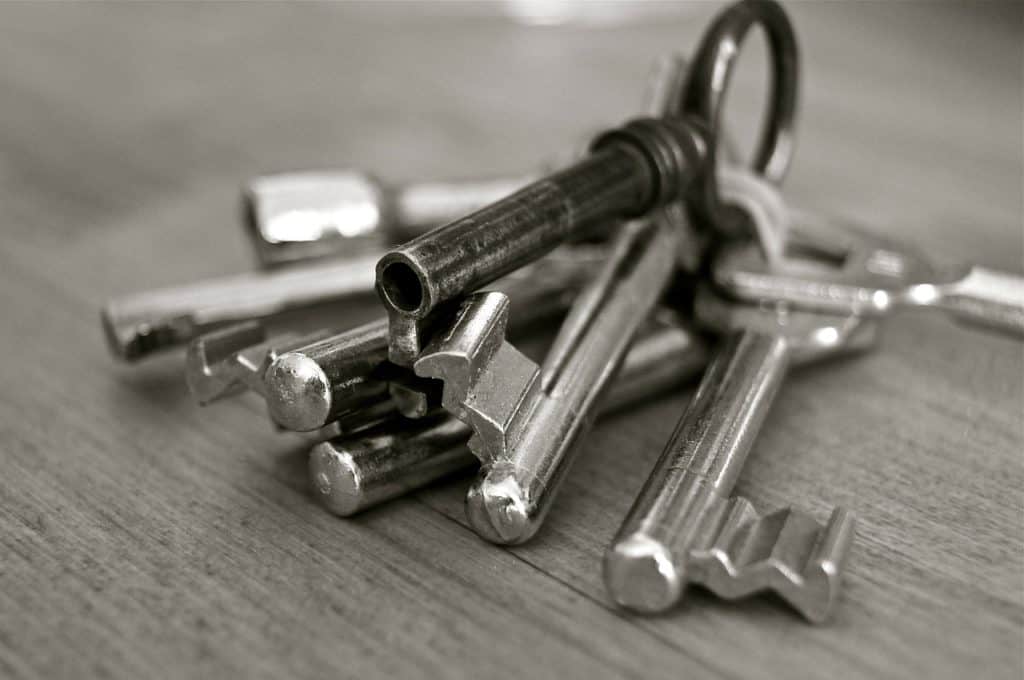
But, as far as I can tell, machines such as these are illegal/unknown in France (knowing the power of strikes, more likely illegal).  Every place I’ve been to in order to get keys cut has a professional-grade key machine, with access to even more.  The “even more” refers to the high-end computer-encoded keys that take a couple of weeks can cost 125 euros to make and require a copy of your ID and lease, or the badges, which run 20-40 € that some people use in order to save having to remember their key codes.  Paris has a very particular key market, with skeleton keys playing a prominent role, and the cheapest you’ll pay for any key reproduction is 6 €.

This is all to say that rarely will you find someone who only does keys.  The most common combination you will see is a cobbler who also makes keys.  Because there’s more skill required for cobbling than for key making, I’m assuming these are cobblers who simply added key-making to their repertoire.

I’ve estimated by observing business at several locations, that between these two income streams, someone could easily take in a minimum of 70k €/year at such establishments, and they probably take in much more, given that they have rent and often have at least one employee.  Not to mention our favorite: French social charges.

Tailors and Packages

In France, as in the US, not all dry cleaners do alterations.  You’ll often see signs for “retouches” that indicate someone who does alterations and sometimes tailoring from scratch.  My tailor does a lot of trade-ins dry cleaning as well, but it’s clear that he has it done by one of the dry cleaners nearby, and then simply adds his markup.  Many dry cleaners don’t do alterations here, so the convenience of dropping something off that needs patching, then having it cleaned for you after, is what you are paying for.

But apart from the dry cleaning side hustle, my tailor also provides what can best be understood as “Amazon locker” services.  For years before Amazon mainstreamed such a concept, people in big cities needed places to drop off and pick up packages: essentially a storage place without shipping services.  For example, if you are moving out of an apartment and need to return your modem/router, you will often be asked to print out a prepaid shipping label.  You slap it on a box and bring it to a location like my tailor’s, which is listed as one of the possible drop-off locations (along with optician shops or sometimes small boutiques).  He gets some marginal extra income for no investment (he’s provided with the scanner and software to accept your package) and he’s happy to pile the boxes around what could generously be called his “reception area.”  He also has a cross-marketing opportunity to snag some customers who may not otherwise have known of his existence, and are happy with his nice demeanor.

Both my tailor and my cobbler make decent livings, make their own hours, and never worry about business.  They always have smiles on their faces.  Yet, they were smart enough to dig their wells before they were thirsty, and created multiple streams of income without being distracted from their core line of work.  You can still hustle here in France.  They just do it with a more leisurely attitude.

Photo by Dương Trần Quốc on Unsplash

Did you enjoy this article? TAIP is 100% reader-supported through tipping. If you want to leave us a tip of any amount it would be highly appreciated. These tips help support our efforts to keep TAIP an ad-free environment. Just as at a cafe, the tips are split evenly among the team.

An Honest Locksmith

“Does anyone know any locksmiths who are not crooks?”

This was a question I posed over a year ago to a Paris & France Facebook group that I help moderate that has a fair number of Parisian residents in it.  While the post yielded some laughter and plenty of chagrin, I got no direct leads from it, but mentioning it to a friend got access to a very honest one who then was quite curious as to how I got his name, as he normally only works directly with concierges/gardiens of buildings.  The chase for an honest locksmith all started because a friend couldn’t get into her apartment.  The lock was very old and had never been replaced, and just finally gave up the ghost.  However, it gave up the ghost while she was outside and no one in our friend circle had someone reliable we could call on a Saturday night (of course, that’s when the key had to stop working).

I had had someone add a bedroom lock for me a few years back at my current apartment, and I tried him, but he was a regular weekday 9-5 type and didn’t do “emergency” visits.  That left us with the only option, which is to call one of those dreadful numbers that are left for you in the hallways of your apartment.

Every day and every week some building in Paris is getting flyered or stickered.  Some people with backpacks or trolleys go from building to building and leave cards (or small stickers) that have helpful telephone numbers printed on them, like for the police (dial 18), or the firemen (17) or for the paramedics (15).  But the other “helpful” include plumbers, electricians, and the people in question, “serruriers” or locksmiths.

I had never called any of these numbers because in Paris, as in many other places in the world, you ask your friends for trusted providers.  There is no screening or certification process for the numbers on these flyers they don’t even have names.  They just say, “plombier” and have a phone number.  No name, no hours, nothing else.

Alas, needs must, and we called one of these numbers and yes, of course, he could come, in the next two hours, for…300 €.  I called around to a couple of my friends who confirmed that yes, this was standard on a Saturday night.  She bit the bullet and agreed to pay and on the way there they told her that it would cost 400 €, actually.  While my friend is from the American South and hence disposed to be kindly, she’s also lived in NYC and doesn’t respond well to being scammed.  She politely informed them that she only had 300 € and could they please hurry up.  They did show up and she told me that they jimmied the lock like a couple of thugs, which they also happened to look like, and left pretty quickly after taking her money.  She was told that she would be getting a new lock for that cost, but no, that didn’t happen either.

We got a trustworthy locksmith through a friend to come Monday and install a new lock, for 120 €.  He was on time and was, unsurprisingly, not a thug.  He also didn’t “advertise in one of these flyers.

The moral of the story is dig your well before you’re thirsty.  If you don’t have names for handymen, plumbers, electricians, and locksmiths that can be trusted, ask your friends and put them away for a rainy day.  If you don’t get any from those friends, ask me, I have a few.  But don’t wait for something bad to happen, and please, please, don’t rely on those “handy” cards that show up in your mailbox every single week.  Most of the time, they are anything but.

Did you enjoy this article? TAIP is 100% reader-supported through tipping. If you want to leave us a tip of any amount it would be highly appreciated. These tips help support our efforts to keep TAIP an ad-free environment. Just as at a cafe, the tips are split evenly among the team.

Paris airports

The “Three” Paris Airports

I promised myself for ages that I wasn’t ever going to use the Beauvais Airport.  “Paris Beauvais Airport” is a farce.  Not only is Beauvais not in Paris, but it’s also not even in Île-de-France!  It’s in Oise, not far from Chantilly, except it’s far easier to get to that château than it is to get to this airport.  But earlier this summer the only convenient way to get to Cluj-Napoca was to take a direct (and not terribly pricey) flight from Beauvais, so I accepted a friend’s invitation to check out the Transylvanian International Film Festival (TIFF, not to be confused with TIFF in Canada, where the “T” is Toronto).  While I was giving in for the first time in four years by using this airport, I took consolation that on the day I left to go back to Paris from Romania, Alain Delon was taking the opposite flight from me on WizzAir to come to TIFF for a Lifetime Achievement award.  He was proving my point: better to take a direct flight with a bit more hassle on the front end than pay (significantly) more and have a layover.

Keep in mind that this is not just a first-world problem, this is a “first city” problem.  There are people in dozens of cities around Paris that travel into Paris by bus or train to take flights out of CDG.  Those of us who live here can just take local public transportation.  So, on these 80-minute bus rides I mused that this is not really a “problem” but rather just a challenge of the first world order.  It led me to want to share some thoughts on our airports with you, starting with the least convenient and least comfortable one: Beauvais (no, I will not call it “Paris Beauvais”) Airport.

Beauvais

How to get there: There are buses that leave every 20 minutes that are timed to flights.  You’ll see the timetables here.  For example, there is a flight that leaves at 08h35 going to Milan via RyanAir.  The bus leaves Paris at 05h35 and arrives in Beauvais at 06h50.  Don’t panic if you miss the 05h35 bus you can catch the next one leaving within 20 minutes (or sooner) and still make your flight.  It’s 17€ each way, with slight discounts if you buy a roundtrip or online.  There are no other public transportation methods to get to Beauvais Airport.

Amenities: There are some okay food choices before you go through security, but it’s pretty dire on the other side (I’ve been in both terminals).  If you’re hungry, eat before you go through security.  On the other side of security you are going to face hard metal chairs which will fill up early.  If you want to sit, get there early, otherwise be prepared to stand.  The WiFi is barely functional, so don’t count on it.

Main idea: It’s budget.  Don’t expect more, because you won’t get it 🙂

Orly

This is my second favorite airport simply because I live on the Right Bank (and probably always will) and so CDG is easy for me.  If I lived on The Other Side I’m certain I would enjoy Orly, but the truth is that even the budget airlines have as many flights going out of CDG as they do ORY these days.  I’ll explain more in the CDG section.

How to get there: You can use our public transportation system, though there is a catch.  If you use the OrlyBus, which leaves frequently out of the Denfert-Rochereau Metro, your fare is covered by your Navigo (if you are a Monthly or Annual, which has all zones by default).  However, if you take the RER B to Antony you will see signs EVERYWHERE that remind you that your Navigo won’t work, and you’ll need to pay around 8€ for a 10-minute ride into Orly.  It’s the single most expensive ride, per minute, in the entire transport system.  Is it noticeably faster?  I would say it’s at least 25% faster than OrlyBus and there’s no traffic.

Amenities: Plenty of food on both sides of security, very good wifi, and comfortable places to sit and eat.

Main idea: It is the southern Paris airport, and caters to European destinations generally but it still accepts some long-haul traffic.

Charles-de-Gaulle (Roissy)

One of the earliest anecdotes I was told about life in Paris was that as tourists would ask métro staff about how to get to “Charles de Gaulle” the staff in return would ask “Roissy ou Étoile?” as both are places you can get to in the public transportation system.  The former is the town in which the airport is housed and is still used as a term by locals.  You can get into a cab and say “Roissy, SVP.”  The latter is, of course, the plaza on which the Napoleonic Arc de Triomphe stands and onto which 12 streets flow (hence “star”).  “Étoile,” however, is not used frequently, and if you told your taxi driver you needed to go to “Étoile,” it might take him a moment, but he would figure it out eventually.

I have never understood the hate poured upon this airport by both tourists and locals alike.  I’ve flown in and out of CDG at least 30 times at this point, at all hours of the day and night, and in and out of each terminal.  It’s our best airport by far, with the most extensive services and often the cheapest and best flights.  I’ve heard horror stories, but perhaps those people are just unlucky, alas.  I’ve got a pretty large data set, and I haven’t been let down, ever.

The newest developments at CDG are Terminals 2G and 3.  The single most expensive costs for airlines outside of the plane itself and the staff to run it are the gate fees that need to be paid if you use a jetbridge.  The jetbridges are a large capital investment on the part of the airports, and can cost upwards of 200,000 € each.  The budget airlines long ago figured out that they would rather pay to rent a couple buses and a set of stairs to let you board the plane on the tarmac, away from the jetbridge.  RyanAir goes one step further by building the stairs in a pull-out format into the front of their planes so they don’t even have to pay to rent the stairs.  These terminals are CDG’s hedge and competition with Orly.  By rolling out the option for budget airlines to come to CDG, the airport has continued to make itself a competitor with the German airports, which are the only real competition for continental dominance.  If London had ever managed to get its act together instead of dithering on Heathrow and spreading their traffic across five airports, they would be able to compete more effectively, but that’s likely to never happen, especially with Brexit inbound.

How to get there: It’s connected by train and bus and unlike Orly, there is no special 8 € train.  Your Navigo covers both the bus and train.  The train is often jam-packed leaving Gare du Nord, and there are express trains (no stops other than the airport) that run frequently in the mornings, but it’s the fastest, cheapest connection to any of our airports, and even if you leave from the left bank I doubt you could get to Orly faster unless you lived in the 13th or 14th.  There is also the Roissybus which leaves from Opéra, which can take between 45-60, and while it’s subject to traffic it has better data connectivity.

Amenities: It’s one of the most important airports in the world, so the food, shopping, and amenities are all world-class, with great wifi connectivity.  There are hotels in the terminals there should you miss a flight and need to crash, or even if you have a long layover and want a nap.  They also have a “left luggage” center for you to store your luggage should you need.

Main idea: Ignore the negative reviews.  This is our best airport, for dozens of reasons, and I’m always relieved to see when it is the best price option.  If it’s only 10-15% more than Orly, I’ll still choose it.

Photo courtesy of Steven Thompson on Unsplash

Did you enjoy this article? TAIP is 100% reader-supported through tipping. If you want to leave us a tip of any amount it would be highly appreciated. These tips help support our efforts to keep TAIP an ad-free environment. Just as at a cafe, the tips are split evenly among the team.

Three Years On, Part III: Cost of Living

Next month I begin my fourth year in Paris.  I wanted to use the milestone to share some reflections on how I have changed and ongoing tips on how to make the move yourself.  This is the third in a series of four.  You can find the first one here and the second one here.

People are always a bit shocked when I say it’s “not that expensive” to live here.  I say that because I am thinking of places like NYC, SF, Tokyo, Hong Kong, London, etc. where it really is shockingly expensive to live.  Paris isn’t, and rather than just tell you my “feelings” I have put together a spreadsheet for you based on my basic expenses across the last three years (I have not included weekend trips/vacations because that really varies per person).

Category Year 1 (2014) Years 2-3 (2015-2016) Comments
Rent 8 m^2, 650€/mo 39 m^2, 1350€/mo both apartments furnished
Location 17eme 2eme I don’t see the point of living in the suburbs; Paris is worth paying for.
Taxe d’habitation n/a 80€/mo this varies based on where you are in the city
Utilities & internet 40€/mo 80€/mo sometimes these are included in your rental
Food 100€/mo 200€/mo in Year 1 that was 90% canned, whereas now it’s 100% fresh
Cellphone 70€/mo 70€/mo I’ve never skimped on this because I make a lot of calls to the US and travel in Europe a lot. This package comes with unlimited calls to the USA and 20 gigs of data which I can use anywhere in Europe AND the USA.
Health Insurance 35€/mo 70€/mo I now participate in the French health care system so those payments are quite a bit more than my “foreigner’s insurance” (roughly double) but it means I am fully covered.
Renter’s Insurance 20€/mo 22€/mo some landlords don’t require this, but the prefecture almost always does.
Metro 25€/mo 75€/mo In my first year I just tried to make do with the occasional ticket purchase, but it’s just too much nuisance. I don’t use the metro all the time, but the annual pass gives me access to all of Ile de France for free on the weekends
Legal and Accounting 100€/mo 100€/mo Unless you possess a very special set of skills you will need help filing your French tax return as well as dealing with specific questions on your dossier for the prefecture
Etc 100€/mo 200€/mo this is for haircuts or clothing or spending money and varies per person.   I’m a single male in my 30s with strong minimalist tendencies, so keep that in mind.
Monthly Totals 1140€/mo 2197€/mo you can see that as a visitor, it’s not a big burden if you’re willing to sacrifice (e.g. canned food), but when you’ve decided to settle in here, it’s going to cost a lot more.
Annual Totals 13680€/year 26364€/year The French government will require access to more than 13k€ per year for the long-term stay visa. I’m just pointing out you won’t actually need more.

What are some expenses you didn’t plan for?  Feel free to share in the comments below.

Did you enjoy this article? TAIP is 100% reader-supported through tipping. If you want to leave us a tip of any amount it would be highly appreciated. These tips help support our efforts to keep TAIP an ad-free environment. Just as at a cafe, the tips are split evenly among the team.