a field of purple flowers

On Living Two Lives

I’ve heard of people going back home after living abroad for a while and feeling self-conscious, out of place. As if they can no longer relate to the people from their hometown. It’s isolating, I imagine, to feel disconnected from the people and the place that witnessed their formative years.

For me, going back home for the first time since expatriating was disorienting, but I had a different experience.

Stepping back onto the soil I knew so well — the smells of Texas, the long stretches of overpasses that led to shopping plazas or nothing at all, and that heat, my God, that heat — transported me back to my adolescence. 

This was the town I hit puberty in. The town where I first learned what it was to like someone so much it hurts. The town where I spent almost all my weekends at the age of fourteen at the roller rink. The same town that I knew like the back of my hand — I could still drive the same mindless routes to the superstores that my friends and I wandered around in when we had nothing better to do (and in the suburbs we almost never had anything better to do). 

This was the town that I hated, that I so badly wanted to flee from, the town I associated with boredom, ignorance, bigotry. I remember so vividly feeling like an alien on my home planet.

But also, it was the town that raised me. I thought I always knew there was life outside of Katy, Texas but I didn’t really get to experience it and truly understand everything that it encompassed until I left for a while.

When I came back home for the first time I was awoken, rather briskly, by the realization that there was this other person inside of me, one that walked with her chin held high and in a confident posture. I felt unafraid of the world. 

Because in Texas, I have no shame. These people don’t impress me. They don’t intimidate me. I know them for who they are — so easily placeable in a tight, little box. Film bro, sorority girl, liberal, conservative, someone who gets me, someone who doesn’t. 

I’m the funniest when I’m at home. The most reckless. I have no care in the world. I’m happy, I’m generous, I speak up for myself effortlessly. 

In Paris, another less familiar, less well-acquainted side comes out. I’m shy. My self-advocacy is easily thrown out the door. It’s something I have to think about. Put energy into. Relearn every day.

I’m drawn into myself. I’m self-conscious. I can come off as mean. I like to think it’s because I’m protecting myself, but really, it’s because of all my nerves and how scared I am. How hard it all is.

So at first, I was shocked and also liberated to come home and release this lighter, funnier, kinder version of myself into the spotlight again. I exhaled, so incredibly relieved. I am layered. I am complex. I am not this way, or that. No one can fit me in a box because I’ve moved away from that possibility of being stuck there for too long. 

And finally it all starts to make sense — I am nice, I am adventurous, I am brave — moving to Paris, becoming an expat has made me believe I was one way, it hardened me, convinced me I’d be like this forever, but my life here is just starting out. Of course I’m acting like this. Of course all I can think about are the differences between home and here. There’s still so much room for my life to change. 

I feel immensely fortunate to have been struck by this sense of duality. While I know fear and anxiety well, I also know assurance, confidence, comfortability. Not everyone gets to feel these things. I am so lucky to have two lives, one that can nourish the other while in pain. One that discovers something that helps revitalize the broken side of myself. Not everyone has this same experience being an expatriate and I will always count my lucky stars for this.

And I’m not saying I felt this ease and comfort right after I stepped off the eleven-hour plane ride. I remember initially wincing at the loudness of public spaces. The airport, coffee shops, malls. I’d cover my ears and buckle down — bracing myself for all that noise. It was the first time I truly recognized how loud Americans tended to be. 

But eventually I embraced it. I rejoiced in it. These are my people. My silly, ignorant, superficially sweet people. 

I learned to collect the noise, open my heart up to it, and embrace that cafe culture in America wasn’t just about working on your laptop. It was also about eavesdropping too.

I learned to feel completely and utterly at peace. Despite all the noise. Because while I know people can sometimes feel lost going back home, I felt revitalized.

Photo by Roberta Guillen on Unsplash

Did you enjoy this article? TAIP is 100% reader-supported through tipping. If you want to leave us a tip of any amount it would be highly appreciated.  These tips help support our efforts to keep TAIP an ad-free environment. Just like at a cafe, the tips are split evenly among the team.

a red phone booth on top of a mountain

How I Keep My American Phone Number While Living in France

My first year of living abroad in France, I was quick to get a French phone number. Not only is it necessary for banking and other local services, but French phone plans are very reasonably priced. However, instead of ditching my American number, I decided to keep it as well. After all, I still had my American bank, and with 2-factor authentication everywhere these days, having an American number remained essential. I was on T-Mobile’s Experience Beyond plan at the time, which came with plenty of foreign data every month, and no up-charges for being abroad. Since my phone has a dual e-SIM capacity, like most new smartphones, living with two numbers was a no-brainer. Thus, my double number life began. 

While I was in the States this summer, my family and I decided to all switch to AT&T for our phone plans. I followed the crowd and thought the package would be comparable on the foreign front. I was wrong. On arriving back in France, I received a notification that I would be charged $10 a day while traveling. That simply was not going to work for me, so I turned off my American number and looked into what my options were after I finished unpacking. 

Solving the Problem

My research led me to find US Mobile and Tello, both cost-efficient mobile companies that boast good customer service and cell service while abroad. I opted for Tello, bought a cheap $6 a month plan to test it out, and tried to activate the new e-SIM. The prompts online and on my phone made it look pretty easy, but after a moment it was clear that my new number wasn’t going to activate on its own. I gave customer service a call on my French number and explained my situation. They were kind and regretted to inform me that an American number could only be activated on American soil. I wouldn’t be able to start using my newly purchased number until I was back in the States. 

I accepted the reality and swallowed my pride. After all, it was my own fault for not being more proactive about this from the outset. Thankfully, I had a trip planned back to the States in three months, so I transferred my iMessage account to my French number, asked all my friends and family to contact me through WhatsApp, and lived without my American number until my return. 

Once back in the US, I did my research, updated my account through Tello and activated the number that had been patiently waiting for me. I called another friendly customer service representative and asked her all the details about how foreign roaming would work on my account when I was back in France. I purchased the additional “buy as you go” credit that is necessary for their foreign travel (this was a $20 charge) and I took a deep breath — grateful to have my phone problems behind me, or so I thought. 

Rubber Meets the Road

When I landed in Paris a week later, I turned off airplane mode to find only my French number receiving service. The American number showed no signal. I searched in my phone settings and enabled roaming while abroad on the new number. Hours later, and still nothing. 

Frustrated, a week later I finally logged into my Tello account to see what the issue was. I scrolled through my settings to discover that I had missed checking the box to authorize foreign service while abroad. I checked the box, hit refresh, laughed at myself, and turned off my phone for the reset. When I turned it back on a few minutes later, there were those little bars I had been searching for the last three months. 

So far, I have had both numbers activated on my phone for a week. As my French phone plan is my primary source of data, I have only used five cents worth of data on my Tello plan. This is incredibly reasonable for a safety net in case I should need to receive pass keys or other identifying information that can only be sent to an American number. Overall, I am very pleased with my experience with Tello, minus the hiccups of getting my service activated in the beginning. 

Whether you are traveling abroad or starting a new life for yourself in France, be sure to do research on the allowances of your phone plan well before you land on the other side of the ocean. You may even consider activating a new SIM beforehand accordingly. We live and we learn, so with all this learning I guess I can be sure that I’m living. Do you have another American service provider that you’ve used abroad? We’d love to hear about your experience. 

Photo by Maxence Pira on Unsplash

Did you enjoy this article? TAIP is 100% reader-supported through tipping. If you want to leave us a tip of any amount it would be highly appreciated.  These tips help support our efforts to keep TAIP an ad-free environment. Just like at a cafe, the tips are split evenly among the team.
Life in France with Dogs

Once you’ve figured out how to move to France with dogs, the real question begins: what is it actually like to live there with them? Beyond paperwork and logistics, living abroad with pets means navigating daily routines such as walking, transportation, vet visits, and finding care when you want to travel.

There are many similarities between owning a dog in France and in the US, but also a few important differences to understand before your move. Though, overall, the transition has been easier than we expected. 

Dog Sitting Options

One of the reasons I chose France was its central location within Europe. I was excited to explore nearby cities and countries while living here. As such, it was a big priority for me to find a safe place to leave my dogs while I was traveling. 

In France, there are essentially two categories when it comes to dog sitting: a private dog sitter or a professional dog boarding business. We looked at both options to find the perfect fit for us. Rover is a popular application in France that connects pet owners to local sitters. Pet owners can easily message potential dog sitters and read reviews from previous stays. I found that the cost of pet sitting is similar to US prices.

Professional dog boarding kennels can also be a great option depending on your dog’s specific needs. However, many professional boarding facilities require additional vaccines that are standard in France but less commonly given in the States, such as leptospirosis. For this reason, we chose a private sitter instead. It would be beneficial to research the vaccination requirements of any potential dog boarding facilities if you plan on using their services. These vaccines can be given by either an American or a French veterinarian. 

Food and Veterinary Care

Moving to another country can be a traumatizing experience for pets as it involves a lot of different changes all at once. It is recommended that you check if your current dog food can be bought in France. If not, it would be beneficial to transition to a dog food that can easily be found in France before the move. There are many boutique and large chain pet stores in every French city. It is also possible to purchase dog food from French veterinarian offices and in the large supermarkets. 

There are many veterinary offices available, just as there are in America. It is possible to find a vet that speaks English, especially in larger cities and expat-heavy areas. I do strongly encourage studying and trying to use the French language while in France whenever possible. However, having the option to communicate in English during a possibly stressful veterinarian visit can be beneficial.

Walking Etiquette and Off Leash Culture

France is a dog-friendly country. You will likely encounter multiple dogs every time you leave your accommodation. One noticeable difference from the US is the prevalence of off-leash dogs. Although often illegal in public spaces, many dog owners allow their dogs to walk freely without a leash. 

In my experience, French dogs are very calm and well-behaved. They will typically not interact with humans or other dogs and happily walk down the street next to their owners. Unfortunately, there are some exceptions and some are simply curious. This can be challenging if you have an anxious or reactive dog. If this applies to you, it may be better to walk your dogs at slower times of the day, including early mornings and late evenings. 

There are dog parks available within most cities in France that allow your dog the opportunity to run freely. In Nice, where I live, two beaches allow dogs, though access is seasonal. Dogs are generally permitted in winter, while specific beaches are designated during busier months.

Transportation with Dogs

Dogs are allowed on public transportation here in Nice. They can ride trains and trams while wearing a leash and muzzle. Although France is dog-friendly in general, rules may vary slightly by city and transport provider. It is best to check local regulations before attempting any travel with your pets.

A Few Extra Things to Know

  • Many cafes and restaurants allow dogs and you will often see them quietly sitting under tables
  • Dog waste bags are often provided in public spaces, parks, and along popular walking routes
  • Pet insurance is common and generally more affordable than in the United States
  • Dog grooming services are widely available and reasonably priced in most cities

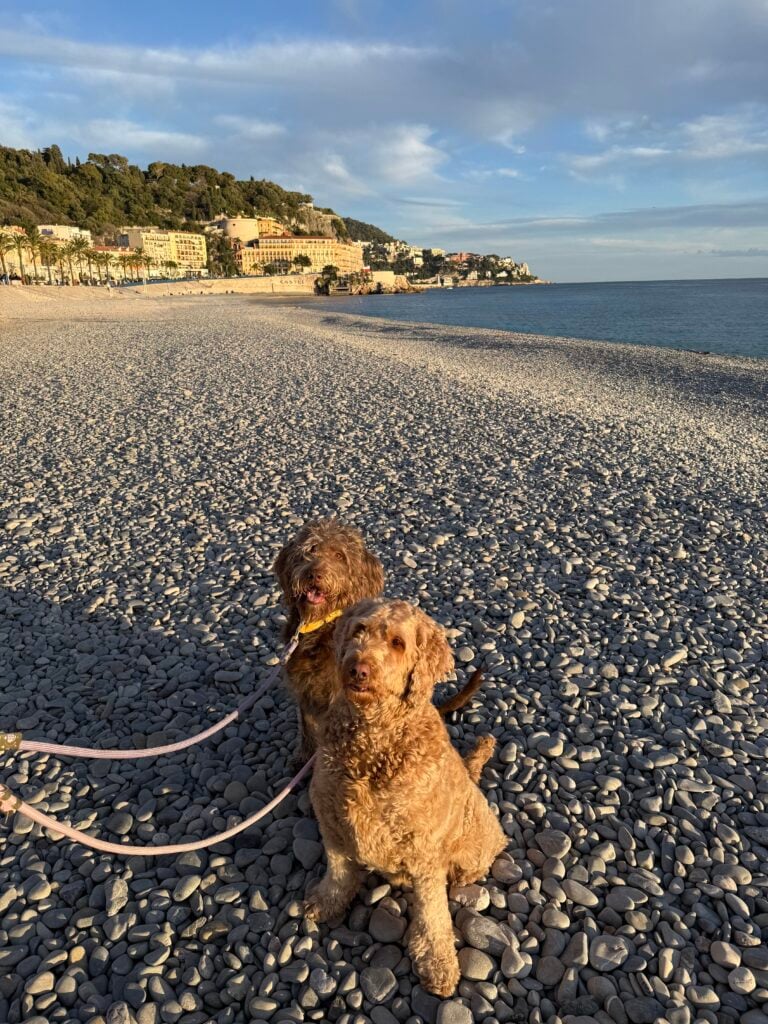
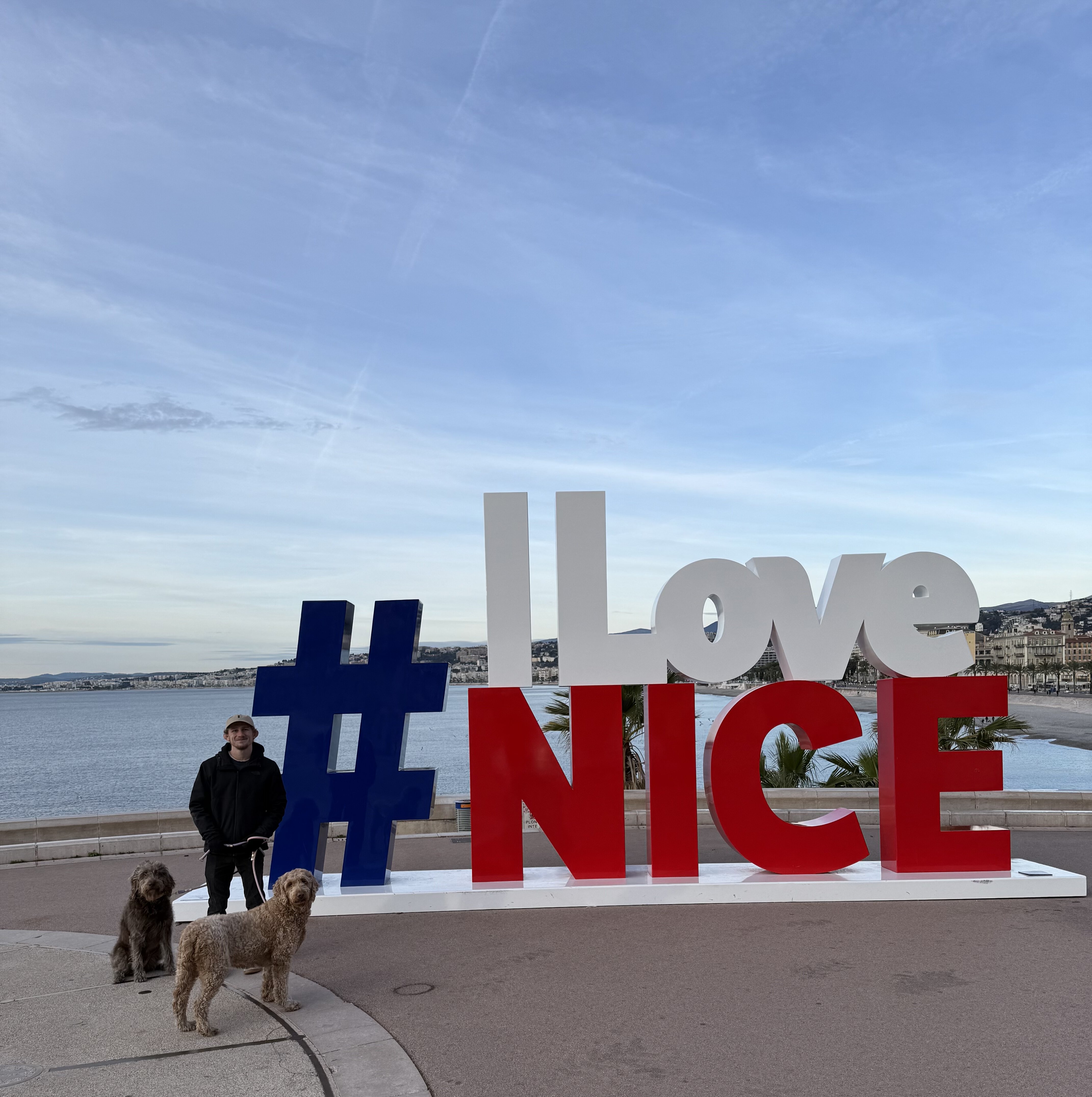
Photo of my husband with our dogs in Nice

Did you enjoy this article? TAIP is 100% reader-supported through tipping. If you want to leave us a tip of any amount it would be highly appreciated.  These tips help support our efforts to keep TAIP an ad-free environment. Just like at a cafe, the tips are split evenly among the team.

two dogs on a beach in Nice, France

Moving to France with Dogs: Finding a Dog-Friendly City and Apartment

About a year ago, my husband and I sat down at the dining room table and mapped out a checklist of the characteristics we wanted in our next city. “Dog-friendly city” was one of the first things we wrote down. We have two of our own and we felt it was essential that we move somewhere where they would be welcomed. 

We quickly Googled “most dog-friendly cities in Europe” and started checking out the various cities on the list. Nice, France was ranked number three and caught our attention as my husband has been studying French for many years. After lots of research, we felt confident that the atmosphere in Nice was perfect for us. 

Fast forward a year from that conversation and we are now living here with our two dogs. I would argue that Nice is the most dog-friendly city that I have ever experienced.

Dogs are welcome on public transportation, in restaurants, on the beach, and in many grocery stores. We have noticed a few grocery stores that discourage them in the store, but these places have a “dog garage,” which is essentially a designated area outside the store to hook up their leashes while you shop. Some well-manicured parks do not allow dogs, but these account for a relatively small percentage of the city’s available green space. Overall, they’re welcome in most public spaces around the city. The locals have also been very kind to our dogs, and it has been a great conversation starter when meeting new people in our area. 

Aside from Nice, France is known to be extremely dog-friendly as a whole. I remember visiting Paris many years ago and being surprised to see many dogs sitting outside a cafe while their owners enjoyed lunch. Americans love their dogs, but rarely do they bring them along on simple errands or outings. In contrast, the French seem to bring their dogs everywhere with them. We have only recently moved to France and have not had an opportunity to travel to many other cities with the dogs. However, I look forward to adventuring around the country with the dogs in the near future and I expect they will be embraced as they have been here. 

What French Law Says About Pets and Rentals

Apartment hunting is fun for a moment before it becomes daunting. The process is quickly complicated by looking for the perfect location, amenities, monthly payments, etc. The search becomes even more challenging when you remember that most landlords aren’t exactly fond of pets. We look at our dogs and think, “You are perfect, who couldn’t love that face?” A landlord looks at them and thinks, “ Stained carpets, scratched up walls, and dirt EVERYWHERE”. 

This is why many landlords in America include “NO DOGS, NO CATS” in their apartment listings. As pet owners, we simply have to frown at the listing and move on. However, this is not the case in France. It’s illegal in France for a landlord to forbid pets in a long-term rental. Some French listings may still include similar verbiage but the renter is not obligated to respect this clause thanks to French law. I am not encouraging you to sneak pets into your accommodations in France. However, it is known that many French citizens will simply not tell their landlord about their pets before moving in. Although French landlords can not forbid pets, it is important that the dogs do not cause damage or noise disturbances in the apartment. 

With all rules, there are exceptions. In this case, landlords do have the right to refuse dogs if they are either category 1 or category 2. These dogs are classified as “dangerous” under French law and include Stafford Terriers, American Staffordshire Terriers, Rottweilers, and Tosas.  

The French law is absolutely in your favor while searching for a long-term rental in France. Despite this, it is still extremely challenging for expats to secure a French apartment. Short-term “vacation” rentals are one of the options that I would personally recommend to anyone trying to start a new life in France. The eventual goal would be to find the perfect long-term rental, but it may take some time before everything falls into place.  

Start with a Short-Term Rental

Many people choose to start their French life on Airbnb for a multitude of reasons. The Airbnb website makes it very easy to browse accommodations, read reviews, and message owners. That said, Airbnb listings are considered “short-term” rentals, and therefore, the hosts can refuse to accept pets per French law. There is a feature of the Airbnb website to filter search by Airbnb hosts that allow dogs, but I would encourage you to look at all available listings. In my personal experience, I messaged an Airbnb host who did not allow dogs and asked them to make an exception. They accepted the rental offer with an agreement that I would hire their cleaner to clean the apartment every two weeks for a small fee. 

Life in France with Dogs

I am now sitting in my dog-friendly apartment in the dog-friendly city of Nice, France, writing this article. My dogs are napping, one on the couch and the other on the bed, without a care in the world. Getting to this point was not easy; it included hours of research and many moments of extreme frustration. However, it was 100% worth it, and I would do it again in a heartbeat. These moments are worth all the effort and more.

Photo of our adorable dogs on the beach in Nice

Did you enjoy this article? TAIP is 100% reader-supported through tipping. If you want to leave us a tip of any amount it would be highly appreciated.  These tips help support our efforts to keep TAIP an ad-free environment. Just like at a cafe, the tips are split evenly among the team.

My First Trip to the ER in France

Last month, I went on a four-hour hike through the snow in Chambéry, France. I put on my oversized jacket, layered up in every way, and put on my best wool socks. Equipped with a pair of leather, wool-lined boots, I thought this was going to be a walk in the park (or the woods). What I didn’t account for was the snow melting as soon as it touched my boots and my feet sitting wet for hours in the cold. The next night I discovered a small open wound had appeared by my toenail. By the next morning it was undoubtedly infected. 

Instead of immediately booking a doctor’s appointment, as I had just seen my doctor the day before the hike, I thought it would be fine if I tried to treat the wound myself. Given the title of this article, you can probably guess that wasn’t the best idea. 

By day two I was miserable, by the end of the week, I was in severe pain. No number of Manuka honey presses, green clay masks, red-light sessions, or bleach baths was healing me. So by the time I finally came to my senses on Sunday night, I realized my only option was to go to the hospital to get immediate care, only four days before my international flight to go home for the holidays. 

My French friends (pretty much family), advised I go early, so I arrived at the ER in my town at about 8:20am on Monday morning. There were 4 people waiting to be seen ahead of me. I approached the window to address the intake nurse. When she called me forward, I explained my injury. She took my carte vitale and told me she would return it after I was seen to complete payment. The carte vitale is the social healthcare card in France. It tracks healthcare visits and prescription fills, facilitating reimbursement when eligible. As a language assistant for the French public school system, I was provided one, first digitally, and eventually in card form once all my paperwork was processed. After I answered a handful of questions, I took a seat in a waiting chair. 

I was called back after about 15 minutes, this time met by a male nurse and a female assistant. Both looked relieved when they realized that I spoke French. I explained my situation and when I showed them my foot, they were immediately compassionate. They gave me a wristband to be processed as a patient and told me the doctor would call me back shortly. I returned to the waiting room for about 30 minutes. Soon enough, I was called into another room. There, a friendly young doctor of about my age explained that she would be doing an immediate procedure to remove as much of the infection as possible and to cut back the side of my ingrown toenail. 

I should probably preface this by saying that not only was this my first trip to the ER in France, but it was my first trip to the ER — ever. I took a deep breath and lay back on the operating table. We started with just local anesthesia, but the pain of the infection was quite intense, so another nurse was called in to give me laughing gas. Soon enough the procedure was over and I was able to sit up to receive my care instructions. 

I received my paperwork documenting the procedure and prescriptions to fill at the pharmacy. The doctor spoke slowly and I asked for clarification for the one word that was outside of my vocabulary. Limping back to the intake nurse to see what the damage was, she asked if I had a mutuelle, an additional private healthcare insurance to complement the social system. I replied no. She looked disappointed by the news, so I braced myself for the worst. Then she said, “That’ll be 19.98 euros,” the equivalent of about twenty dollars. Cue my sigh of relief. 

My prescriptions at the pharmacy came to another 30 euros, making my total expenditure about 50 euros. As an American, these numbers were simply astounding. I have never been so grateful for the French healthcare system. 

I won’t fool you and say it was all blue skies and rainbows from there. The following days, the pain returned and I was put on an antibiotic that contained pork and gluten — both of which I am allergic to. Passing through Paris with my suitcase and post-op foot was also not the most fun I’ve ever had. By the time I made it back to the States, I visited a doctor and received another antibiotic for $150. I guess that’s the difference between French and American healthcare, about 200%. 

My toe is fully on the mend and you can bet I’m watching my nails for any signs of ingrowth like a hawk. What a memory made! Though I’d be glad to have missed out on this experience altogether, I’m quite proud to have proven my French proficiency equal to the occasion. Have you ever gone to the ER or sought healthcare while in France? We’d love to hear about your experience. Cheers to firsts (and hopefully lasts)!

Photo taken by yours truly on the hike that started it all. Was the view worth it?

Did you enjoy this article? TAIP is 100% reader-supported through tipping. If you want to leave us a tip of any amount it would be highly appreciated.  These tips help support our efforts to keep TAIP an ad-free environment. Just like at a cafe, the tips are split evenly among the team.

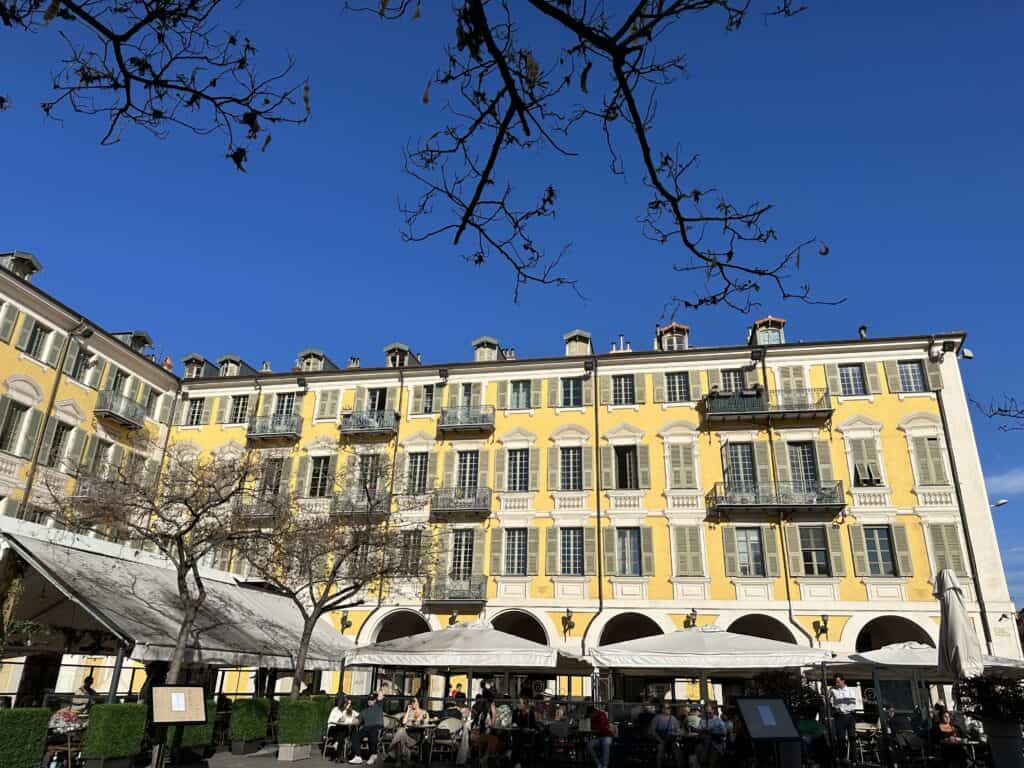
Place Garibaldi in Nice

Adventures and Misadventures in Renovating an Apartment in Nice, France

After trying for several months to find a long-term rental apartment in Nice (a losing proposition for various reasons), we decided to bite the bullet and purchase our home. We enjoyed living in Nice, having hopped from a Home Exchange to an Airbnb for several months, and pinpointed a couple of neighborhoods we liked.

Finally Finding the Apartment

We found an apartment near Mont Boron that had wonderful light and a large terrace, but it hadn’t been renovated in 50 years. The electrical setup was not compliant with current regulations and was in fact hazardous!

We stayed there in its original configuration for a month in order to get a feel for the space, and then started asking everyone we knew (not many people, at that point) if they knew trustworthy contractors. We ended up with quite a medley.

Note: Building and renovating is often a nightmare anywhere in the world. I don’t know of any building site that had zero problems (I used to work as an architect). However, you try to keep problems at an acceptable level.

Amongst the choices:

  1. A trio of professionals, who were accustomed to working together: an electrician, a plumber, and a mason, if I remember correctly. The electrician seemed very knowledgeable, but was also very bossy, so we were a bit worried and passed on the trio.
  2. Various contractors from Eastern European countries, who came recommended and whose prices were very low. We worried that the prices could change at any moment. In fact, on one estimate, it was clearly written that the prices could change!
  3. One “full” contractor who would handle everything except what we had already signed contracts for (double-glazed windows, shutters, and shades, and the kitchen outfitting).

Moving Forward with the Reno

We ended up deciding to hire the full contractor, even though his estimate was the highest. He was working on our upstairs neighbor’s apartment, and she had known him for several years. We felt it was worth the additional money to have someone with a lot of local experience (he wasn’t quite a local himself, as he was raised in the suburbs of Paris). We were asked to buy most of the materials ourselves: tiles, bathroom fixtures, and a couple of other things. He purchased plumbing infrastructure, electrical (except lamps).

He kicked us out of the apartment for 4 months, promising to be done by then. Luckily, we found a temporary vacation rental, about 15 minutes away on foot.

Once again, we asked around and researched outlets for flooring, bathrooms, and traipsed off all over town and to Cagnes-sur-Mer, about 15 km away, to make our choices.

The site was very dirty and messy, but we didn’t dare protest (we tried, but were shut down: “my workers need to be comfortable!” i.e., smoking cigarettes all over the place). Towards the end of the work, the kitchen installer came. He was a very strict and disciplined professional, and made a disparaging remark about the messiness. The next day, the apartment was cleaned up!

All in all, it was expensive, but there weren’t too many terrible incidents, and we remained within budget. Some reflections on our experience: 

  • We were shocked by the flimsiness of interior walls built in the 1970s: barely 7 cm thick, you could punch through them. We had to double up some for structural integrity.
  • The plumber assured us that we could use the bidet pipe for a toilet. He lied. After a few disgusting flooding incidents, we had to shut down the toilet. Fortunately, there are other toilets! When we protested to the main contractor, he answered that we had asked for the toilet. I was livid, but had no proof (see below).
  • The plumber (yes, him again) installed an “Insinkerator” (not my idea, but men like these things, I guess). It cost much more than his original quote, and then he told us we shouldn’t use it for more than a few seconds at a time because of the old building pipes.
  • The painters (I think) poured turpentine in the jasmine flower pot. The jasmine died.
  • The contractor promised the place would be perfectly clean when he left, but that wasn’t the case. We kept on finding bits and pieces of cement under the windows.
  • We bought toilets that are terrible at flushing. Every time I go to the US, toilets seem to flush without any issue.

However, all in all, it wasn’t too bad an experience, and our apartment is pleasant.

Feeling Lucky with Our Choice

A new friend arrived in Nice, speaking little French, and her luck was much worse, unfortunately. She went through several contractors, all flaky, leaving her in the lurch with unnecessary expenses. The first one came highly recommended from a member of an expat group on Facebook. As it turned out, he had only been hired until then as a handyman, not as a contractor. He was not prepared and had no equipment of his own. The next one wanted to go on vacation and wanted all his money, even though my friend was still waiting for the kitchen installers (the same ones I had used without a hitch), but parts were delayed. This contractor was so threatening that she gave up and paid him… and soon after he left, the bathrooms he installed were leaking.

The window installers (the same ones I had used) were delayed, but she couldn’t remain without windows, and they didn’t want to reimburse her deposit until she showed them the clause in their own contract.

The third contractor decided, after accepting to do the work, that he needed to go on vacation.

Well… months later, she is finally in her apartment, with a beautiful view, but what tribulations she went through! It seemed never-ending.

Another friend, who is French, returned to Nice from the United States and bought a beautiful old apartment. She hired a well-recommended contractor who ran into personal problems and disappeared with her money (I am not sure how much. A lot.) She didn’t react fast enough, and the police couldn’t help her. She had to hire another team, and fortunately, she now has an almost-finished apartment.

I’m not sure what other lessons to offer! One thing is certain: get as much as you can in writing. For example, if I had asked the plumber to put in writing that a toilet was feasible in that bathroom, he couldn’t pretend that I had insisted on a toilet.

In any case, if you do embark on a renovation journey… bon courage! You’ll need nerves of steel.

You could also hire an architect or an interior designer, budget permitting. Again, make sure you have a contract that specifies fees and what will be handled by the designer. The more detail, the better. I didn’t use one, as I was myself trained as an architect. I regretted giving away my T-square years ago and made do with a ruler and a triangle. It was very useful to lay out the tiles the way I wanted them, as well as the bathrooms. The kitchen outfitters handled the kitchen drawings (with our input and exact measurements).

If you need names of companies we used, please reach out.

Photo of Place Garibaldi in Nice

Did you enjoy this article? TAIP is 100% reader-supported through tipping. If you want to leave us a tip of any amount it would be highly appreciated.  These tips help support our efforts to keep TAIP an ad-free environment. Just like at a cafe, the tips are split evenly among the team.

people walking past paintings in the Louvre, Paris

You Have to Make Your Life

Having to stand up for myself in a country where I’m trying to establish the rest of my life has been no easy feat. 

A thin layer of perspiration has formed and now permanently coats my face simply because I’m trying to work up the nerve to ask a follow-up question. 

Standing up for myself takes everything out of me. It takes all my guts. 

And yet, I still decide to get up every morning and do it again. And again. And again. 

When I’m lying on my bed at night, thinking about what little ground I’ve covered, yet how much energy I’ve used to defend my honor, I’m struck, asking myself the question: When does one learn to do this? When does one learn how to stand up for themselves? Because I think I might’ve missed the memo.

As children, it’s our parents’ job to be our biggest advocate. Defend our rights. Speak to our needs.

During adolescence, we often wade in a state of constant humiliation, so much so that it feels like we’re drowning in it. We’re barely hanging on. Dogging-paddling to stay afloat. We couldn’t care less about fighting for our rights, what we deserve, we’re living day-by-day and our friends are our safety floats.

Then one day we wake up and come to the jarring realization that we’re the adults now. It seems as if we’ve just been living as passerbys to our own lives until suddenly we’re thrown into the wild, taught to fight it out, and see if we come out alive. 

In adulthood we’re confronted with the desire to carve out a life of our own. And if you want to do that — to make your own life — it means getting used to confrontation and passive-aggressive responses and learning to be your biggest protector. 

When I moved to Paris in my early twenties, my question changed in accordance with my new context. Having to deal with bureaucracy, confrontations on the street, and landlords all in a foreign language on a foreign land, I wondered, “But who stands up for us?” I felt that someone should. 

Sticking up for myself within a new identity became an even bigger challenge, yet increasingly vital. 

Initially, I relied on handling administrative tasks in a group effort, surrounded by my closest expat friends. This way, if we worked together, chainlinked our arms around one another’s, no one could take us down. 

One thing led to another and the group eventually did collapse. 

Someone would ask for a raincheck the day we planned to meet up and check things off our to-do lists, so we’d take it as a sign to put our tasks off for another week. Another would fill our souls with hope by promising to look into something for the group and relay their findings. In the end, they’d never get around to it.

Relying on others to help cushion the embarrassment by being there with you when you fall from grace is undeniably nice, but it also tends to be a huge waste of time.

I even tried relying on my boyfriend for this sort of support, telling myself that once he got home from work he would sit by my side and help me as I called CAF. When he would come home, we’d make dinner while listening to music or turn on the TV in the guise of just wanting to watch the news for a few minutes, then like magic, a movie would switch on and we’d get sucked in. 

We always told each other tomorrow. Tomorrow is when we’ll spend countless hours on hold together. 

The thing is, time moves slowly when you’re always waiting on others. 

I watched as people made their own lives around me. Big things were happening to people. Law school. Jobs in fields that nourished them and some that even paid them well. Marriage. An evolving social status.

It felt like nothing was happening to me. People were moving around me, things were moving around me, but I wasn’t. I was stuck in the middle of a whirlwind. 

I was with one of my expat friends at the Musée de l’Orangerie, wandering around the Berthe Weill exhibit and reading about her legacy and the kind of life she led in Paris. I remember feeling low at the time. Bad news kept toppling onto my lap. Yet again, I was passing nights lying on my bed, questioning everything. The central one being: why am I here? Every bright light at the end of the tunnel seemed to be misleading. Caveats adorned everything I pursued, ultimately preventing me from simply living in the city where I wished to be. I couldn’t feel any relief. But then I saw this quote plastered above some of Weill’s collection and a smile couldn’t help but creep upon my face. My stomach felt warm. My giddiness started to rise. 

“I started out with just 50 francs in hand and went into debt to pay the costs involved in opening a shop. Obviously, the situation wasn’t ideal, but I couldn’t back out now. Besides, what was the worst that could happen? Not being able to hang on? I WILL HANG ON!” – Berthe Weill

Be brave. Do the thing. Bear the challenge. If anything, it won’t wear you down; you’ll wear it.

In the end, I sucked it up. I put on my big girl pants, and I learned how to fight for my life and how to find pride in saying that I made it my own. Learning to stick up for yourself in a “ce n’est pas possible” culture is not my kind of fun. In fact, I used to take offense to it. With nearly every interaction, I have to fight for what I want. As an American, having arguments, even little ones, doesn’t just brush off my back. I don’t call that an interaction. I call that a dispute, and it makes me feel icky. They stick with me. I feel ashamed, or if I’m lucky, I learn to think of the other person as evil. 

Here, it’s almost like a game. Oh, you want something? You’re gonna have to beg me for it. 

I now treat it as such. Once I crack the code and win the game, receiving what is rightfully mine, I become overjoyed. It’s made the reward feel even better. It’s turned it into a testament to my wit, my charm, my insatiable persistence. 

Still, I find it demanding to stick up for myself and fight for what is rightfully mine, but I’m happy to say that I try to take it less seriously these days. Laughing more about it helps. What do you mean it’s not possible to do something that is very clearly possible? 

In doing the hard work, I’ve felt a strange conglomeration of feelings: being absolutely on my own, yet feeling powerful because of it. I’ve learned, reluctantly, that I can’t wait and sit back and watch how my other expat friends have done it or wait till my French boyfriend can help me.

If I want things to happen for myself, I need to make them happen. And in the meantime, regardless of what will happen with my life, I WILL HANG ON!

Photo by Diogo Fagundes on Unsplash

Did you enjoy this article? TAIP is 100% reader-supported through tipping. If you want to leave us a tip of any amount it would be highly appreciated.  These tips help support our efforts to keep TAIP an ad-free environment. Just like at a cafe, the tips are split evenly among the team.

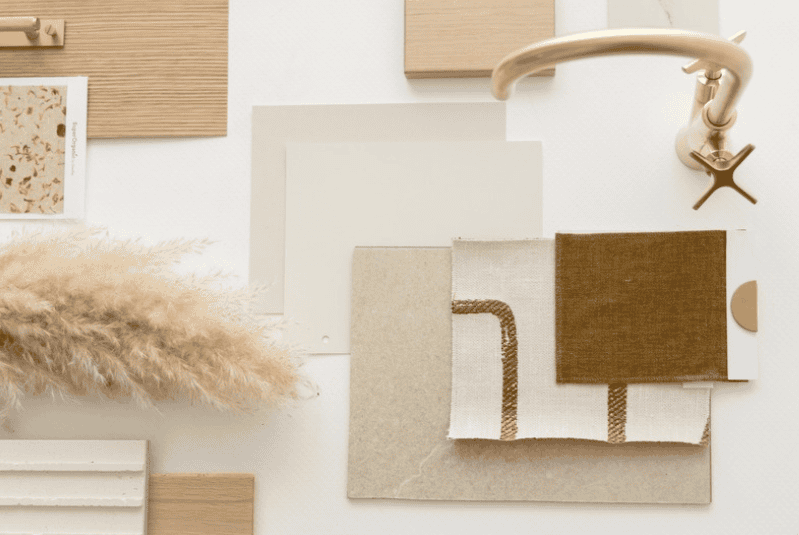
cindy petitprez design details

Want to Renovate or Build a Property in France? Start Here

Note from the editor: Cindy Petitprez is an interior architect and decorator from the north of France, a place, she says, “where warmhearted people go hand in hand with beautiful landscapes.” Cindy contacted me with an interest in connecting with more American clients, as she would love to work with expats. She shared her work with me and I was blown away. Keep reading to discover her story and how to get in touch with her. — MS

Fifteen years ago, at twenty-five, I felt the urge to explore the world. Overnight, the decision was made — I was moving to New York. After a first experience as an exchange student in Atlanta, I wanted to dive in again, but this time on my own terms.

I found a room for rent in Brooklyn with roommates. I soaked up the New York vibe, explored every neighborhood, and felt amazed at every corner. I joined networking events because back then, I was dreaming of launching my own business. I met wonderful people. I fell for the simplicity and spontaneity of Americans — so easy-going, never overthinking it before talking to a stranger, complimenting someone on the subway about their outfit, wishing a passerby a great day in the street…

After that experience, I wanted to settle in the United States for good. Aside from my tiny chance at the green card lottery, I did not have many options. Unless I fell in love with a charming American… but that romantic quest turned out to be a total flop, even with my very dedicated detective work. Moving on!

Today, fifteen years later, I have unpacked my suitcases in the Pink City, Toulouse. I found my prince charming, but a French one. We have two wonderful children. We love our life here, with the mountains and the sea both within reach.

I became a freelance interior architect and decorator, a job I am truly passionate about. I mostly work with private clients, on projects ranging from renovations to new builds. I work all over the country.

My clients were 100% French until the day Chrissy and Michael contacted me from Texas — what a joy. They wanted to renovate their newly purchased apartment in Luchon, in the heart of the Pyrenees. I got started right away, and they were so enthusiastic. Michael would reply to my designs with “J’aime!!” So simple! No French person would ever answer “J’aime !!” In France, people tend to hold back.

Days went by, and Chrissy and Michael kept brightening them. On the morning of October 31st, my phone rang. It was Michael: “Happy Halloween Cindy!!” No one would have wished me a happy Halloween that day, but I was thrilled to receive that message. Michael had just made my day again.

Working with Americans is pure joy, and I’d love to do it more. Who’s in?

I am now looking to expand my services to expatriates who want to renovate or build property in France. I speak fluent English, which makes the process a lot easier. If you are American and you have a real estate project in France, I’d love to work with you. Let’s have fun while being serious!

I help you transform your new homes through a turnkey and highly personalized approach. My services include full renovation design, space planning, furniture and décor sourcing, bespoke joinery, and on-site coordination with trusted local artisans.

My aim is to offer expats a smooth and reassuring experience, helping you navigate French renovation standards, local suppliers and practical steps with clarity and comfort. The result is a refined and welcoming home that reflects your lifestyle! 

Discover my work as an interior designer in Toulouse and throughout France.

Cindy is reachable by email contact@cindypetitprez.com or through her Instagram account.

Photo of details of one of Cindy’s designs

Did you enjoy this article? TAIP is 100% reader-supported through tipping. If you want to leave us a tip of any amount it would be highly appreciated.  These tips help support our efforts to keep TAIP an ad-free environment. Just like at a cafe, the tips are split evenly among the team.

french flag

How to Renew the Passeport Talent

Bonjour tout le monde! I’m excited to share with you a brief guide to the beloved (read dreaded) passeport talent renewal process for first timers. I’m new around here, so I’ll share a bit of backstory.

Initially, my passeport talent was approved for 12 months; this time frame is different for everyone. Some people receive two to four years their first time; it’s mainly dependent on what subcategory you fall into and your work experience.

My renewable visa was approved for 18 months, which is less than I had hoped, but reasonable as they wanted to give me more time to grow my business.

When your renewal application is being processed, several factors are taken into consideration, not only how much income was earned and if it met the minimum 70% of the French minimum wage. But also, what type of work did you do? For example, if you are a musician and the majority of your declared work was as a barista, then that income might not count towards your renewal. Your visa will clearly stipulate what kind of work you’re allowed to do. If it states you can only receive income as a musical performer, then you’d be hindering yourself by accepting work as a barista.

My particular visa was passeport talent artistique et culturelle. As a producer, I could do photography, video, writing, and consulting as long as it fell within the scope of a production entertainment agency. I drafted a business plan explaining the breadth of what I could accomplish in France along with a track record of what I had already done in the US. I made this intentionally because I wanted to have more options on how to earn an income. As a producer, I knew I could get the projects done, but I needed the flexibility to show that on paper.

When the time for renewal came, I provided proof of all my work and it was successful. So, let’s dive in, step by step, into how I obtained the renewal for myself and my husband.

Step 1: Know Your Timeline! 

You are eligible to apply for your visa renewal up to four months before its expiration BUT NO LESS THAN two months before its expiration. Confusing? Welcome to France!

If you submit your renewal application within 60 days of its expiration, you are now in a penalty period and will be charged a late fee for the now late processing of your application. Ask me how I know…

So, familiarize yourself and understand your active dates so that you aren’t paying extra fees and so that you give yourself enough time to collect and produce all your documents appropriately. 

Step 2: Read the Directions and Then Double It

Review the application rules thoroughly, but use it as a guide, not a bible. In my experience, the more proof provided, the more perceived readiness your dossier has. When applying for my first visa, I submitted a business plan, but this was not requested in the application. During my appointment with the consulate, they reviewed it and asked for an additional copy, which I gleefully provided; thankful for the tedious research I had done beforehand, making copies of everything. When renewing, you want to show how well you did during your first season in France; sometimes that is difficult to do as an artist or performer, or in a non-traditional career. But nothing is impossible! 

I know, how dare I bring that attitude around here, but it’s true. I provided printed screenshots of Instagram DM’s with potential and locked clients, reaching out asking for services and availability. I included written letters explaining my work and expertise and hyperlinked to videos produced, photoshoots, etc, so that if my documents were reviewed on a computer, the agent could click the hyperlink and view my work. Did they do this? Who knows! But I wanted to ensure that if there was a way to prove myself, they could see it in every medium.

Additional documents in my dossier were letters from former, current, and future clients. This was important because it showcases that I made a footprint in Paris and garnered interest in my work.

When reviewing the application guidelines, you’ll see that they simply request proof of work, which could have been sufficient with a copy of an invoice and a bank statement showing payment received.

My intention was to provide as much as possible from the beginning to reduce requests for additional paperwork. Essentially, if you deem it relevant to your work or portfolio, make a copy and send it in. You have everything to gain.

Step 3: Don’t Worry About the Trees

Since you’re renewing your visa, you should already know this, but here is your reminder. The French LOVE paperwork, now is not the time to conserve and submit only what’s necessary. Ensure that you make at least one copy of every document you are submitting and print everything in a simple font, one-sided, and in the correct size. For example, when you submit a photocopy of your carte de séjour, it must not be thumbprint size, nor should it be two pages wide. Keep it looking clean, smart, and orderly. Ideally the true size, or half page, usually is a good rule of thumb for image copies.

Step 4: Print the RIGHT Photo

How naïve I was in the early years. I assumed the metro photo booths provided passport photos exclusively. Now we all know that you have several options alongside the fun vertical keepsake.

When selecting the required passport-sized photos for your application, ensure that you select the option for visa renewal for foreigners. I had to redo this because I got too confident and subsequently lost 10 euros’ worth of metro rides to the photobooth.

Step 5: Submit Certified Mail

When you’ve finally collected all your documents and are standing in the never-ending La Poste line, know that everything should be sent via certified mail. This is your French life at stake! Keep a track of it and rest easy at night knowing that if something gets lost, it’s not on you, and you have a copy.

Step 6: Be Patient, All Good Things Come to Those Who Wait!

Is this the hardest part? Maybe you’ll hear back in one month; maybe in 4, maybe your current visa will expire, and they’ll give you an extension while they review your case, and you’ll be floating in a nervous limbo. This is when you laugh and eat your croissant and take a deep breath. Tout va bien, it’s all good!  You’ll know when you know, and hopefully, that beloved email notifying you of a new message in your account will be the light to illuminate your next chapter. The one where you get to stay and keep living where you want to be.

Photo by Amin Zabardast on Unsplash

Did you enjoy this article? TAIP is 100% reader-supported through tipping. If you want to leave us a tip of any amount it would be highly appreciated.  These tips help support our efforts to keep TAIP an ad-free environment. Just like at a cafe, the tips are split evenly among the team.

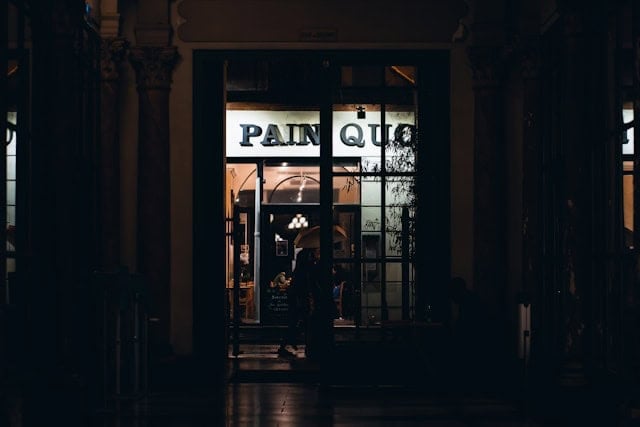
people walking in front of a restaurant at night in Paris

Paris is Still Just a City

In my final year at university, amidst the chaos of final exams, graduation, and a future being all mine for choosing, moving to Paris was all I could really think about. I didn’t care about making a name for myself or carving out a place in the land of interns, waiting eagerly to climb the corporate ladder. All I cared about was getting out of Texas, seeing something new.

I dreamt of the days I studied abroad here, drinking absurdly cheap wine, eating fresh pastries, discounts at the cinema, free entries to museums. I dreamt of a life Paris had afforded me when I was younger. One that was reckless, one where I had no responsibility besides to fall in love with the city, new friends, even a cute boy. 

When I graduated, I remember the world seeming so big, and I felt so lucky to have all these possibilities laid out in front of me. I had a degree now, even though I could hardly remember how I got it, and I naively believed that things would continue just as smoothly for me as they had been, given my life thus far. So, I took the leap, did the big, courageous thing it was for a well-off girl like me to do, and I made the big move to Europe. 

I emerged from the metro at Place d’Italie on a busy Sunday afternoon, with a suitcase in my hand, and an overstuffed backpack hanging from my shoulders. Police sirens rushed past, pedestrians made way for themselves regardless of others, and there stood directly in my line of vision, a big, metallic, soulless shopping mall that was the point of reference for my new neighborhood. Some residents have the Eiffel Tower. I had Italie Deux. 

I looked down at my jean shorts and sneakers, then up at the Parisians sporting black slacks and light summer jackets. An elderly lady came up to me, asking for directions. For a while, I tried to help. I looked at where she wanted to go on my phone and attempted to explain directions in French. She appeared frustrated, not being able to understand me, and gave a look like I was wasting her time. She walked off and demanded the next stranger for help.

I was breathless after having dragged my suitcase up several flights of stairs to my new apartment. After having unlocked the door with my comically long skeleton key, I immediately sank to the wood-paneled floor. I sat there, looking up at the crown molding on the ceiling and felt completely happy. A wave of warmth rushed over me. This is what I wanted, I thought. Crown molding, how lucky am I? Sure, there was an unbelievable amount of dust and mold bordering the windows, and the previous tenants had left a bunch of clutter, but here I was finally in my new place in the city I’ve been dreaming about ever since I left.

Weeks passed and I put off essential errands that would make my life feel more real and viable here. I needed a bank account, a social security number, a phone number, WiFi. But I was scared. 

Hidden within my fear were my memories, and suddenly, they all came flooding back. My face felt hot. I suddenly remembered what I was so quick to forget: how humiliated I felt when I was studying here, trying to disguise my Americanness yet it was inescapable. How I was still incapable of mastering the language. How it felt like anxiety was always trailing me, hiding behind every corner ready to pop out and remind me that this was not my home, things work differently here, and they don’t really work for you. 

I broke out into a cold sweat. What was I doing? I came over signed to a nannying agency, meanwhile I had spent the majority of my life working with kids and after finally having a college degree, I was longing to do something else. What was I doing? I was wasting time while everybody was back home applying for jobs that they could actually get. 

My panic broke me. I applied to so many jobs and internships, all of which were hindered by the fact that I wasn’t yet bilingual, nor was I enrolled in higher education. I felt trapped. I felt trapped in this undeniably beautiful, bustling, and some might say, I know I sure did, magical city. 

I remember looking for signs to bring me back to America. A cop out. A scapegoat. I began applying to these outrageously prestigious Master’s programs in America whose acceptance rates were laughable and exclusively marketed for geniuses. I convinced myself into believing they were targeted at me. I told myself, if I get into one, then it’s destiny. Then I’m going home and never looking back. They need me. America needs me.

The advertisements that fluttered the walls in metro stations began speaking to me. Women and men, children and the elderly, all those whose faces were plastered on these posters, urged me, begged me to come back. “You’ll be safe there,” they teased. “Life will be easier. You’ll get a nice job, one that fulfills you.” I ran to catch the stalled train before the doors shut, wanting to give in but also not wanting to give up. Making that decision to move back home would feel like both.

The image I held in my head of my study abroad days no longer held up. The lights dwindled, the magic faded. Paris is beautiful, yes, but there’s a lot of dog poop smeared across the sidewalks. And cigarette butts. And trash. There’s almost no relief from the heat in the summer, so it’s best to get away, if you can afford it. People can be mean and creepy. All of these things are not just exclusive to American cities — they are caveats of every major metropolitan area, including Paris. 

It took me two years. Two years of indecisiveness, of failed dreams and miraculous resurrections, to realize that fighting to live in Paris is worth it. 

I can’t exactly say what the catalyst was to deciding that I was going to stay, that I’ll fight to carve out a life for myself here. Maybe it was the political climate in America, making my idealization of the country come to a screeching halt. Maybe it was the realization that nostalgia is often manipulating, a poison for the brain to make the past seem so alluring when that’s exactly what it’s meant to be: something that builds our story, but remains there, stuck. 

Maybe it was the realization that the job market is incredibly difficult everywhere right now. Maybe it was (it definitely was) that the cute boy and I started to become even more serious in wanting to integrate our lives with each other’s. 

It was probably all of those things that made me decide to stay, despite the hardships, despite the seeming impossibility of it all, despite the all-consuming nostalgia, and, at times, maddening cultural differences. I was overly confident two years ago, I have to admit. I thought I was ready to move my life abroad back then, but in fact it took me two years of living here to confirm exactly that. 

Paris has been a city that I hate(d), that I love(d), that I couldn’t/can’t seem to get over. Paris is still just a city, with all its flaws and glamour. But now, it’s my city.

Photo by Elric Pxl on Unsplash

Did you enjoy this article? TAIP is 100% reader-supported through tipping. If you want to leave us a tip of any amount it would be highly appreciated.  These tips help support our efforts to keep TAIP an ad-free environment. Just like at a cafe, the tips are split evenly among the team.